14 Trending Curtains Living Room Ideas for Every Window Style
Picking curtains for a living room involves more than matching a color to the walls. Fabric weight, mounting height, and panel length all affect how a room feels and functions. This guide covers 14 living room curtain ideas, from classic linen panels to bold pattern choices, so you can find an option that fits your windows, your light needs, and your overall style, no matter the size of the room.
Trend & Background
Curtain trends in the living room have moved toward natural, textured fabrics like linen and cotton blends, replacing the heavier, formal drapery that was common in past decades. Homeowners are also mounting curtain rods higher and wider than the window frame itself, a trick that makes ceilings feel taller and windows feel larger without any construction work. Layered window treatments, combining sheer and blackout panels, have become more popular too, as people look for both natural light during the day and full privacy at night.
Key Takeaways
- The right curtains living room choice depends on window height, light needs, and the room’s overall color palette.
- Floor-length panels mounted close to the ceiling make a room feel taller than the window actually is.
- Fabric weight matters as much as color, since it affects both light control and how the curtains drape.
- Layering sheer and blackout panels gives the most flexibility for privacy, light, and style throughout the day.
1. Floor-Length Linen Panels
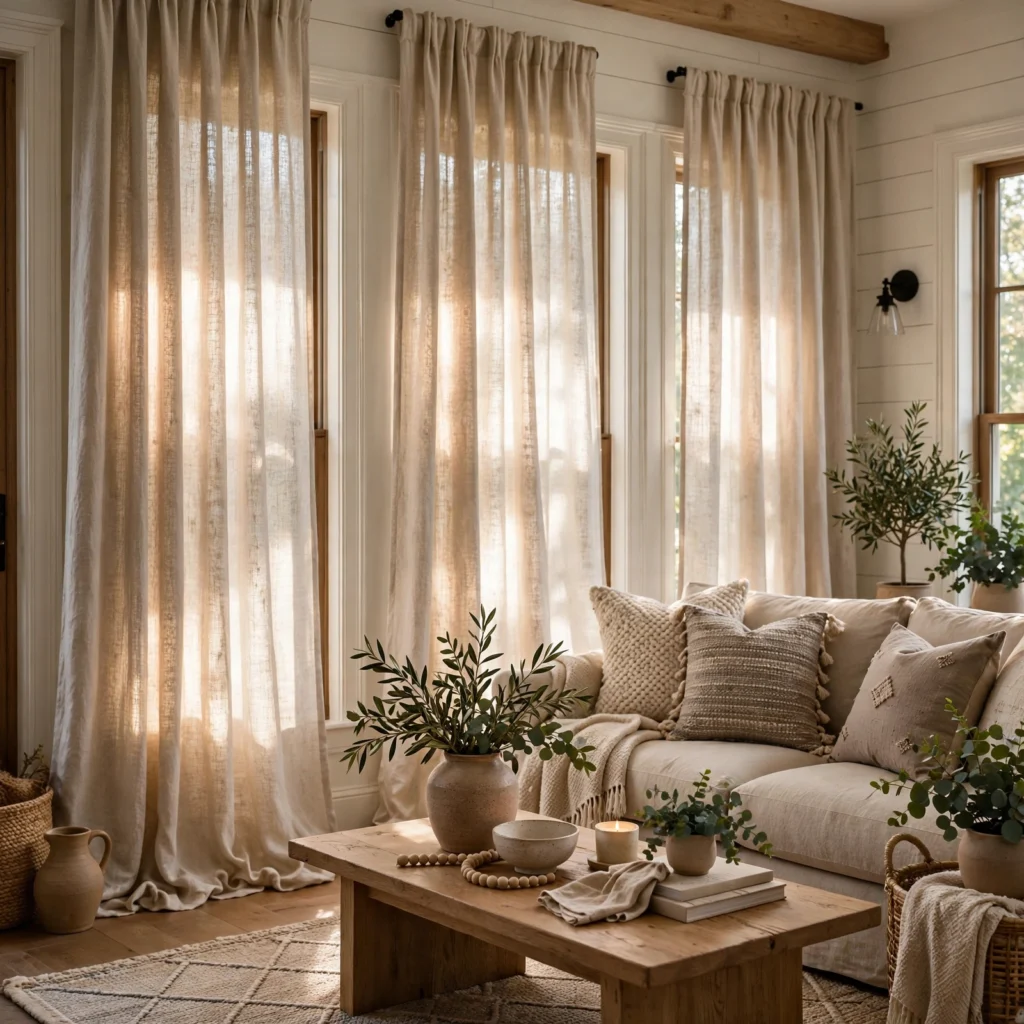
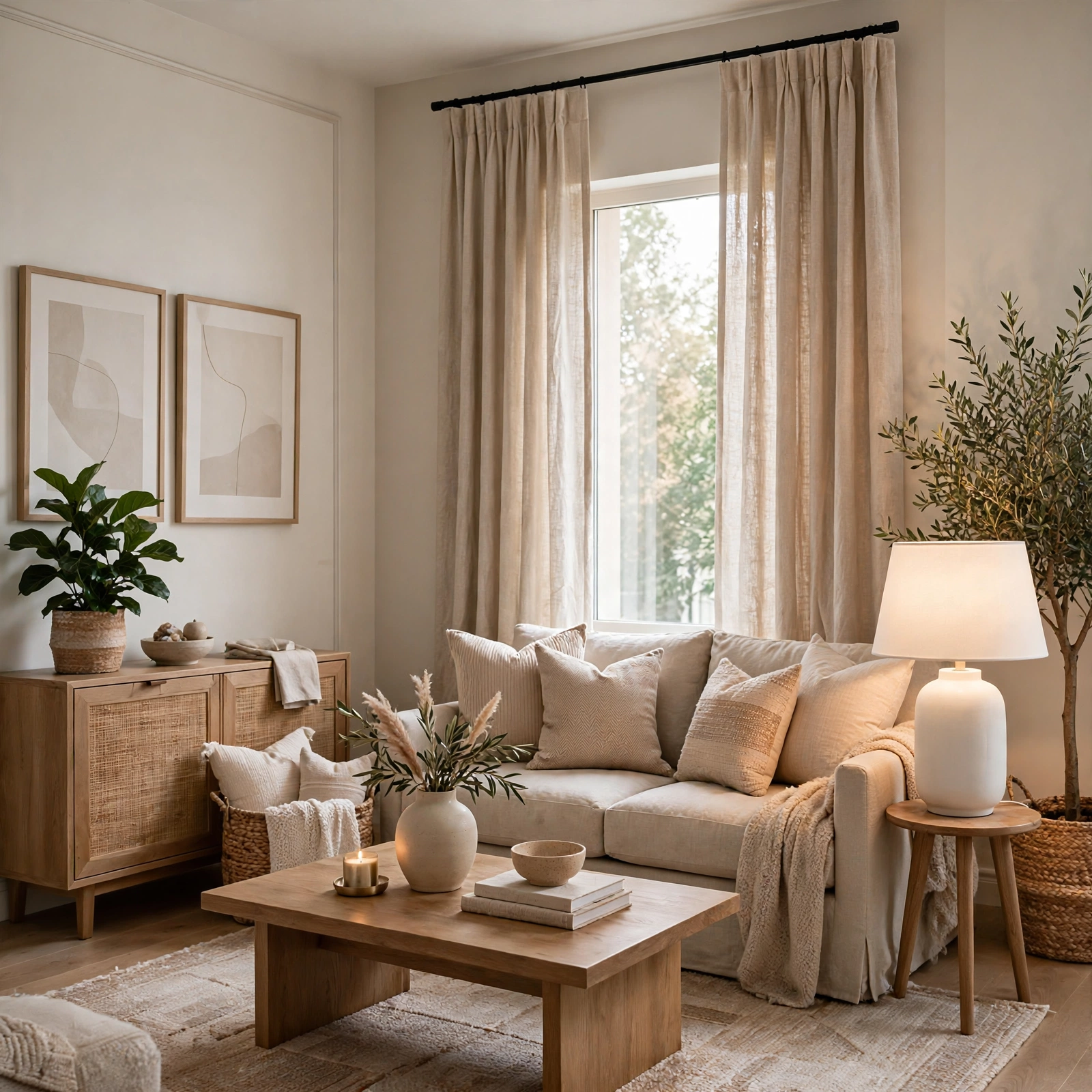
Floor-length linen panels are one of the most versatile curtains living room ideas, since the natural texture works with nearly any decor style. Linen drapes softly and lets in filtered light even when closed, which keeps a room from feeling dark during the day. Choosing panels that just brush the floor, rather than pooling or hovering above it, gives the cleanest and most intentional finished look.
2. Blackout Curtain Layer
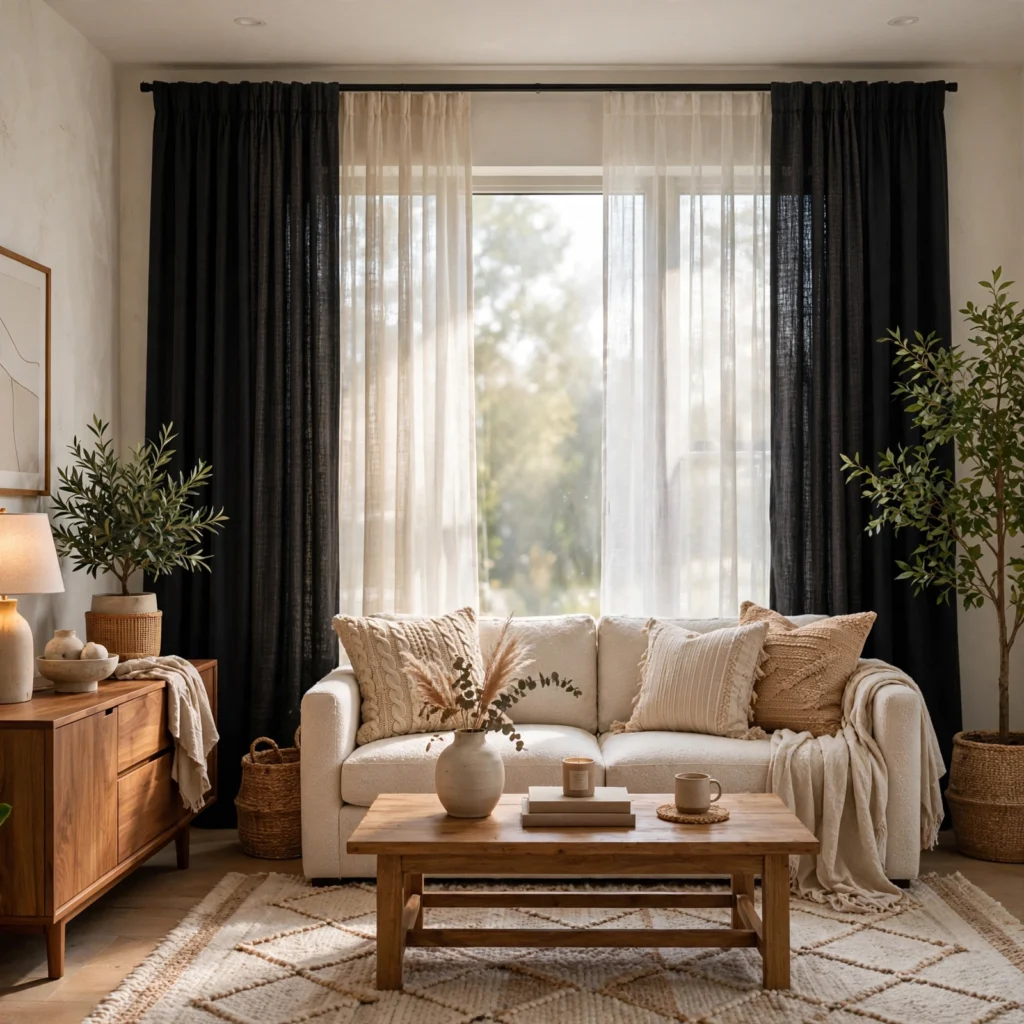
A blackout curtain layer, hung behind or alongside a lighter sheer panel, gives full control over light in a living room used for movie nights or afternoon naps. These panels are typically made from a tightly woven fabric with a foam or acrylic backing that blocks light almost completely. Choosing a blackout layer in the same color family as the sheer panel keeps the combined look cohesive rather than mismatched.
3. Sheer White Panels
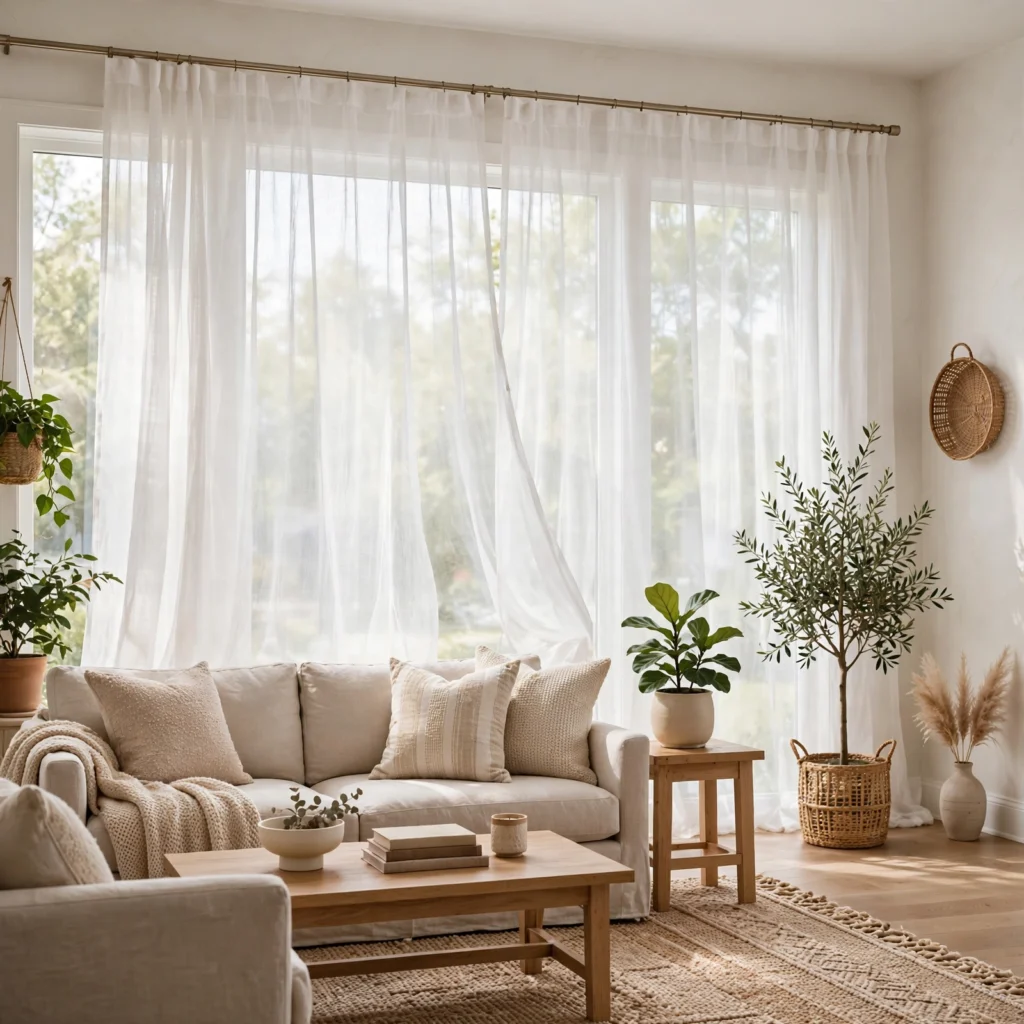
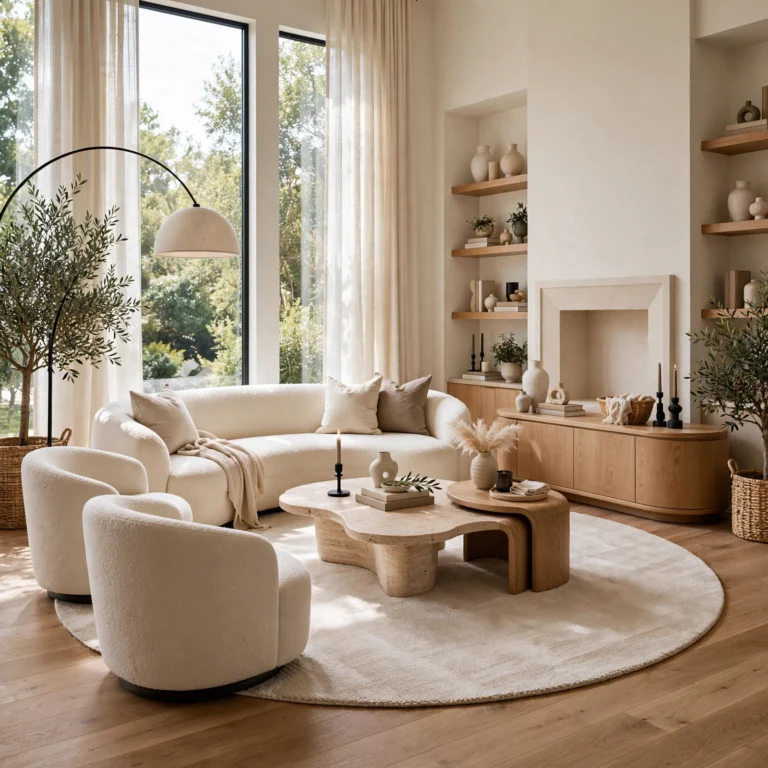
Sheer white panels let in soft, diffused natural light while still offering a layer of privacy from outside. They work particularly well in living rooms with a lot of natural light or a view worth softening rather than blocking entirely. Pairing sheers with a heavier curtain on the same rod, or using them alone in a bright, airy room, are both common approaches depending on the amount of privacy needed.
4. High-Mounted Curtain Rod
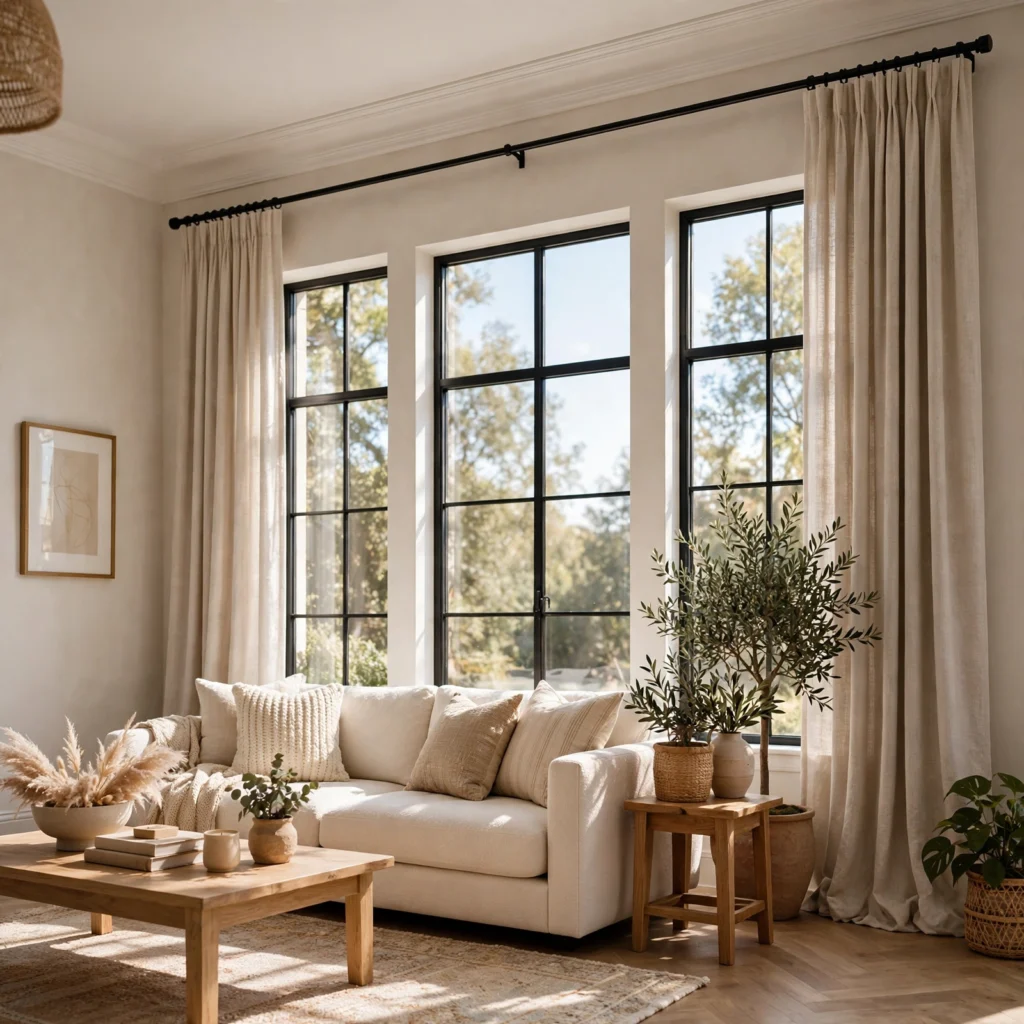
A high-mounted curtain rod, installed several inches above the window frame and closer to the ceiling, is one of the simplest curtains living room ideas for making a room feel taller. This trick works regardless of the fabric or color chosen, since the visual height comes from the mounting position rather than the panel itself. Extending the rod a few inches beyond each side of the window also makes the window appear wider when the panels are open.
Looking for more inspiration? Explore our collection of living room designs to create a space that’s both stylish and functional.
| Ceiling Height | Rod Mount Height Above Window | Effect |
| 8 ft | 4-6 in | Subtle height boost |
| 9 ft | 6-8 in | Noticeable height boost |
| 10+ ft | 8-12 in | Dramatic height boost |
5. Bold Patterned Drapery
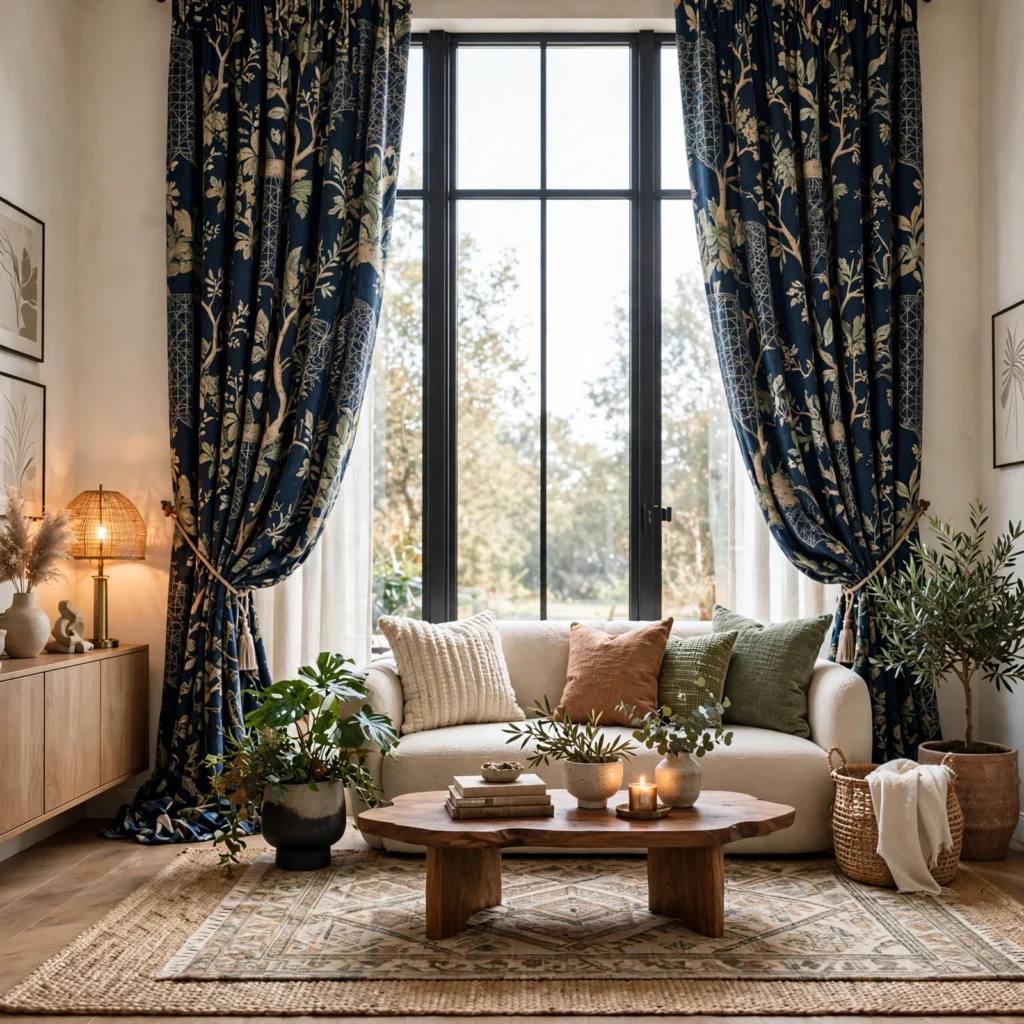
Bold patterned drapery introduces color and print into a living room that otherwise relies on neutral furniture and walls. Large-scale botanical or geometric prints tend to read as more intentional than small busy patterns, especially on floor-length panels. Because patterned curtains draw a lot of visual attention, they work best as the single statement element in the room rather than paired with other bold patterns nearby.
6. Velvet Drapery Panels
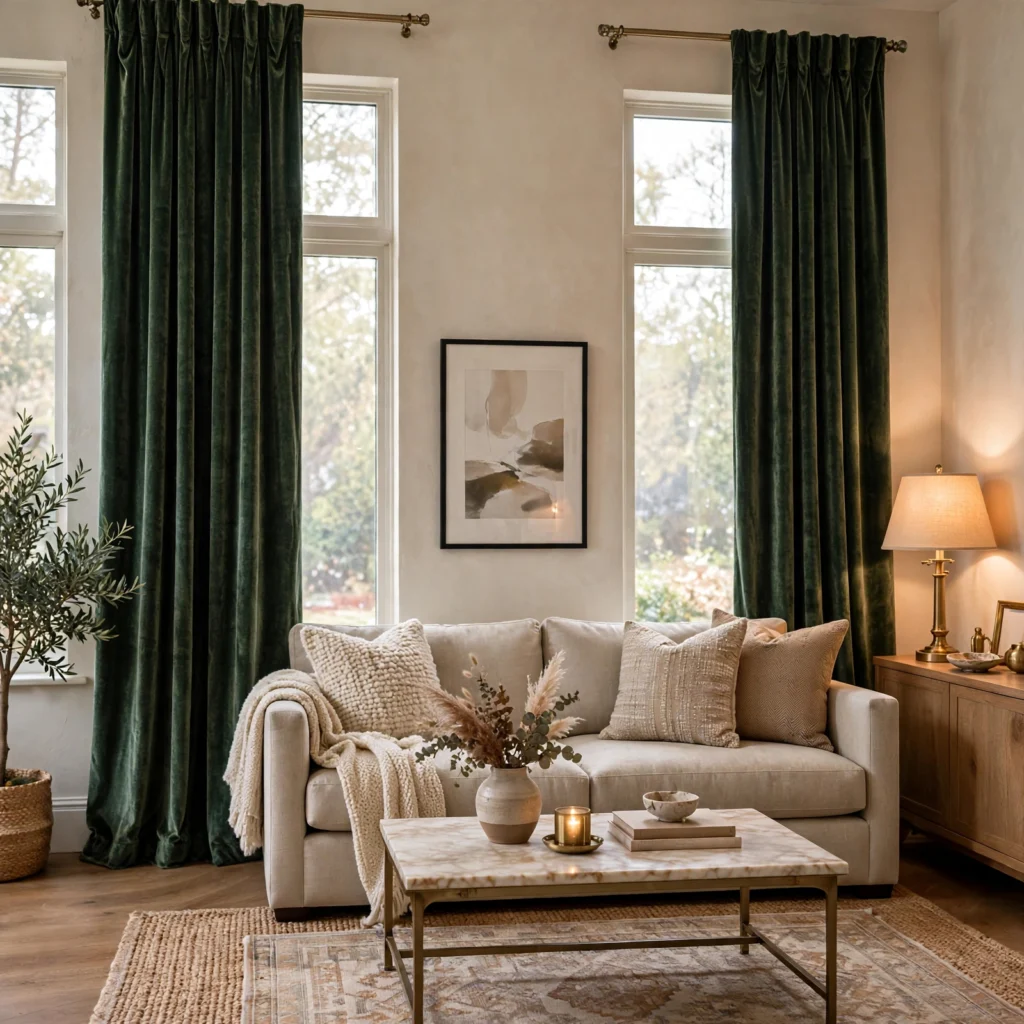
Velvet drapery panels add richness and a slightly formal feel to a living room, particularly in deep tones like emerald, navy, or burgundy. The fabric’s weight also gives it better light-blocking and sound-dampening properties than lighter materials like linen or cotton. Velvet works especially well in living rooms with higher ceilings, since the fabric’s drape looks more intentional over a longer panel length.
7. Cafe-Style Curtains
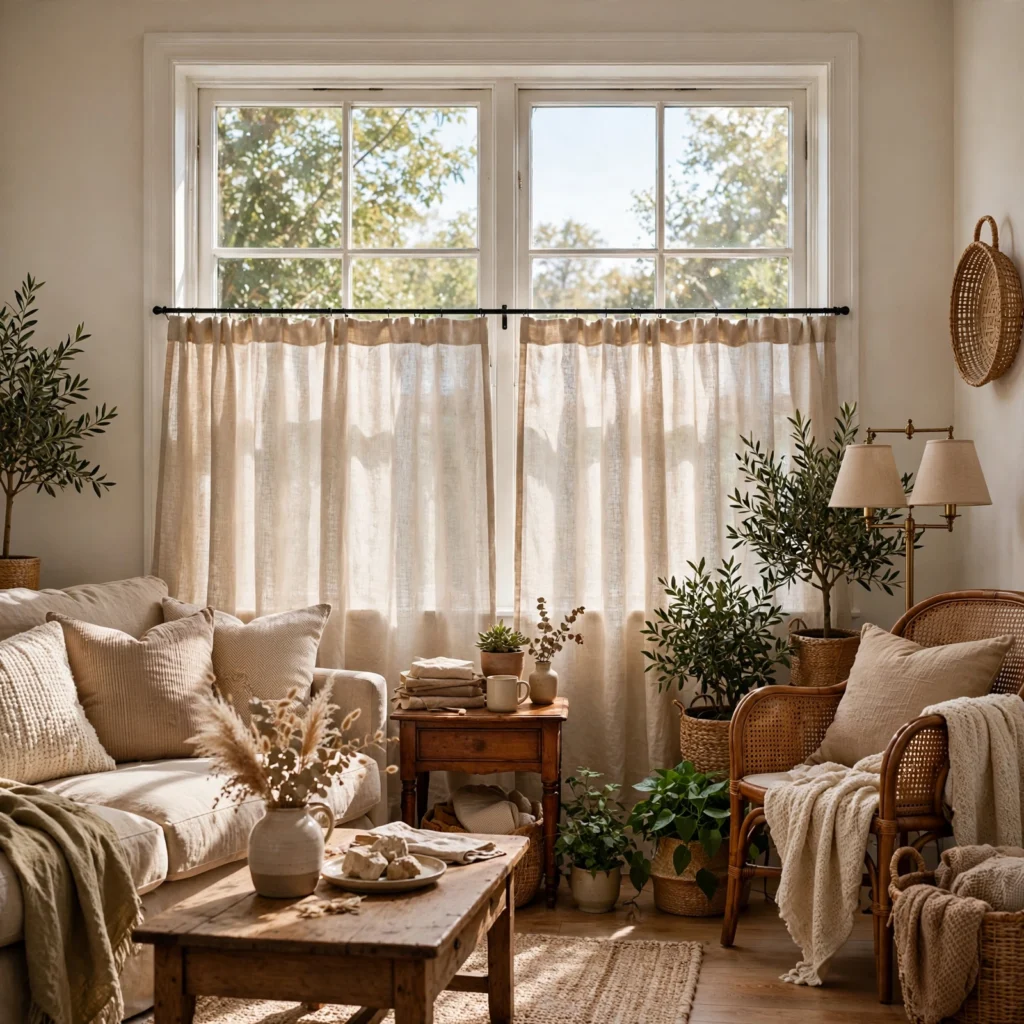
Cafe-style curtains cover only the lower half of a window, leaving the top portion uncovered for natural light while still offering privacy at eye level. This style suits living rooms on the ground floor or facing a street, where full coverage isn’t always necessary. A simple cotton or linen fabric on a slim rod keeps the look casual rather than overly formal.
8. Grommet-Top Curtains
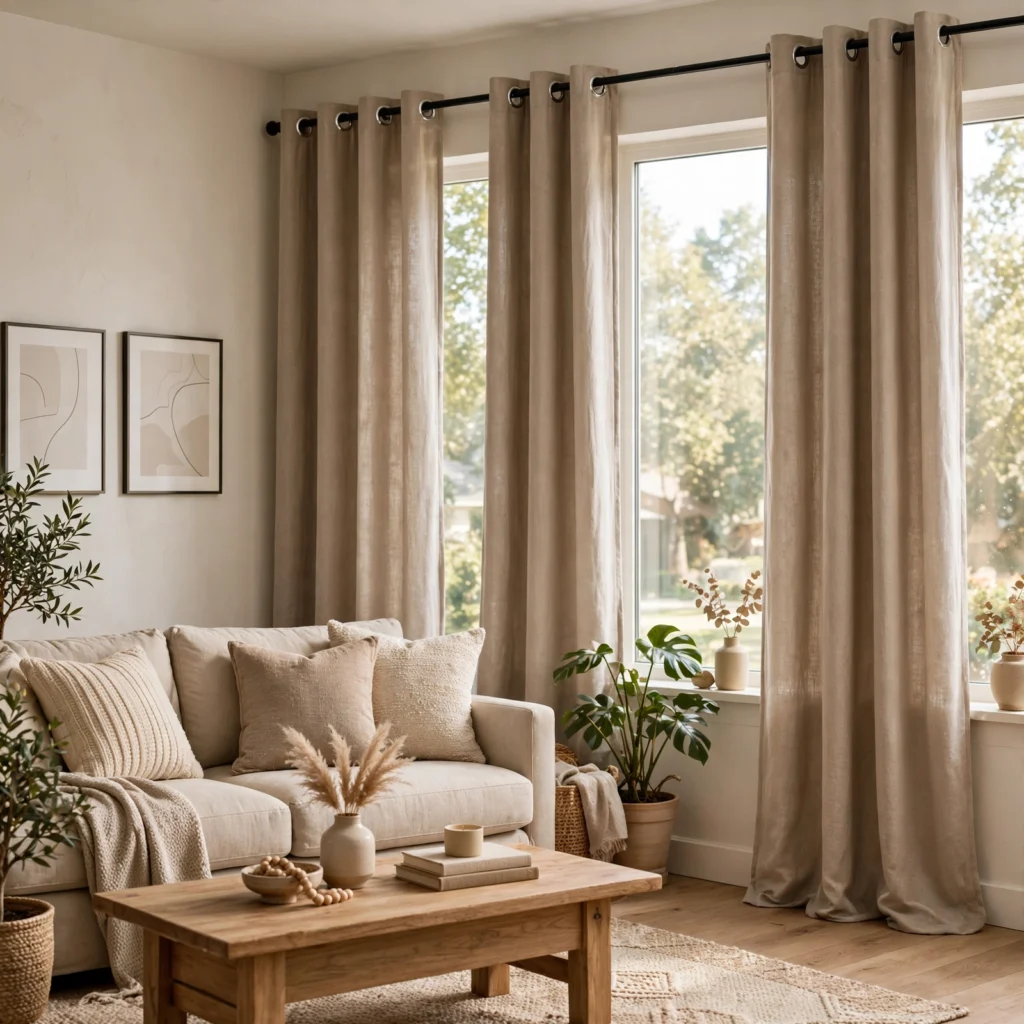
Grommet-top curtains use metal rings sewn into the top of the panel, which slide directly onto the rod for a clean, structured fold. This style tends to suit a more modern living room, since the fold pattern is more uniform than pinch-pleat or rod-pocket styles. Grommet panels also open and close more smoothly, which is a practical benefit in a room where curtains get adjusted throughout the day.
9. Pinch-Pleat Drapery
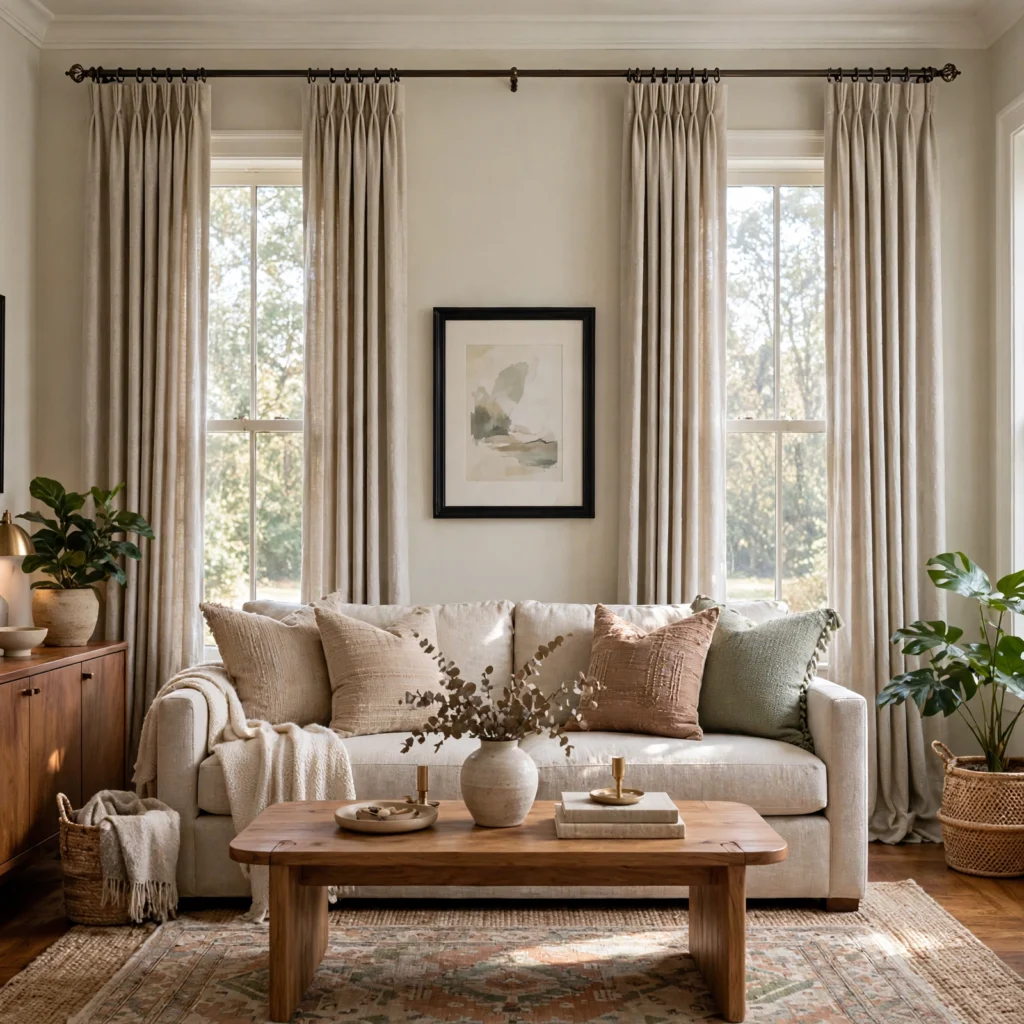
Pinch-pleat drapery uses tailored folds gathered at the top of the panel, giving a more structured, tailored look than a simple rod-pocket curtain. This style suits a traditional or transitional living room and pairs especially well with heavier fabrics like velvet or a substantial cotton-linen blend. Pinch-pleat panels typically require a separate traverse rod or curtain rings, which adds a bit more cost than simpler curtain styles.
10. Neutral Curtains With Bold Trim
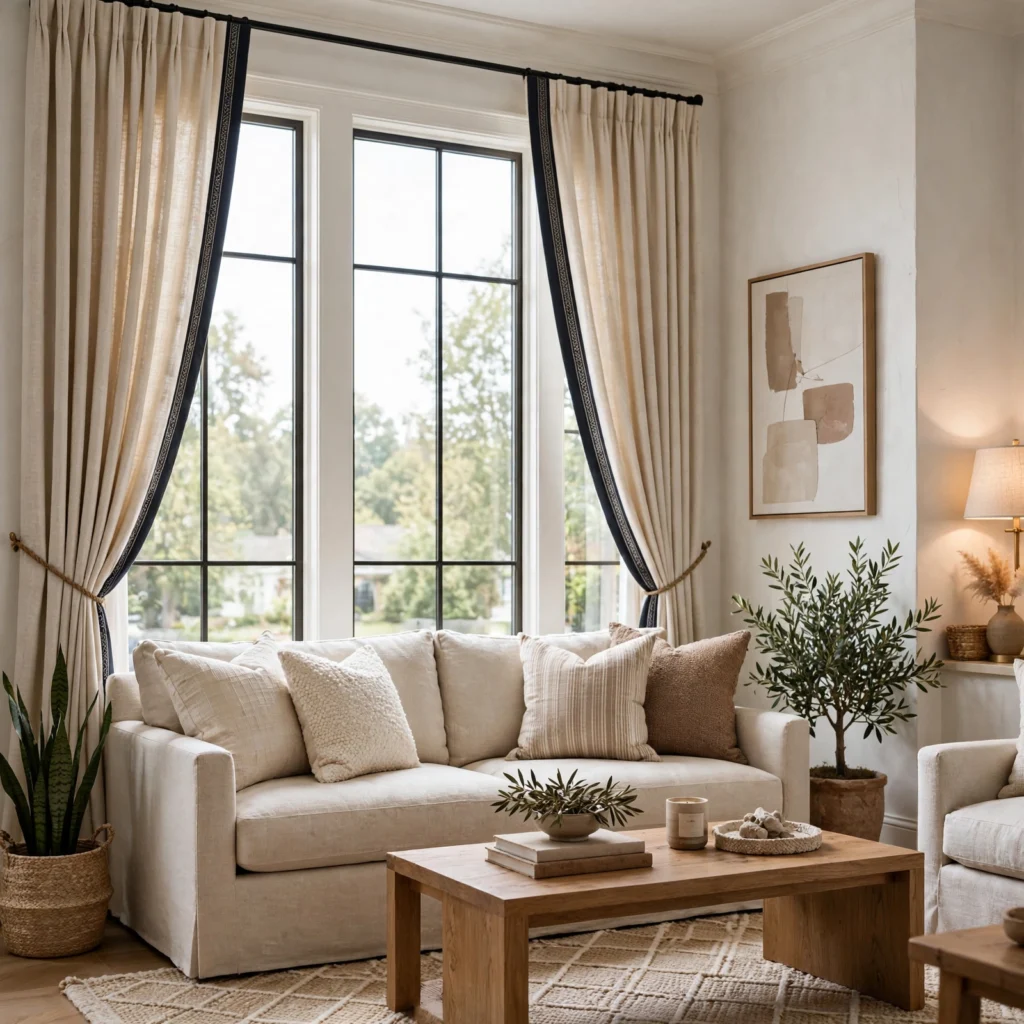
Neutral curtains with a bold trim, such as a contrasting fabric band along the leading edge or bottom hem, add a custom detail without committing to an all-over pattern. This works well for a living room where the walls or furniture already carry color, since the trim adds just enough interest without competing. A contrast trim in a solid color, rather than a second pattern, keeps the look clean.
11. Curtains That Match Wall Color
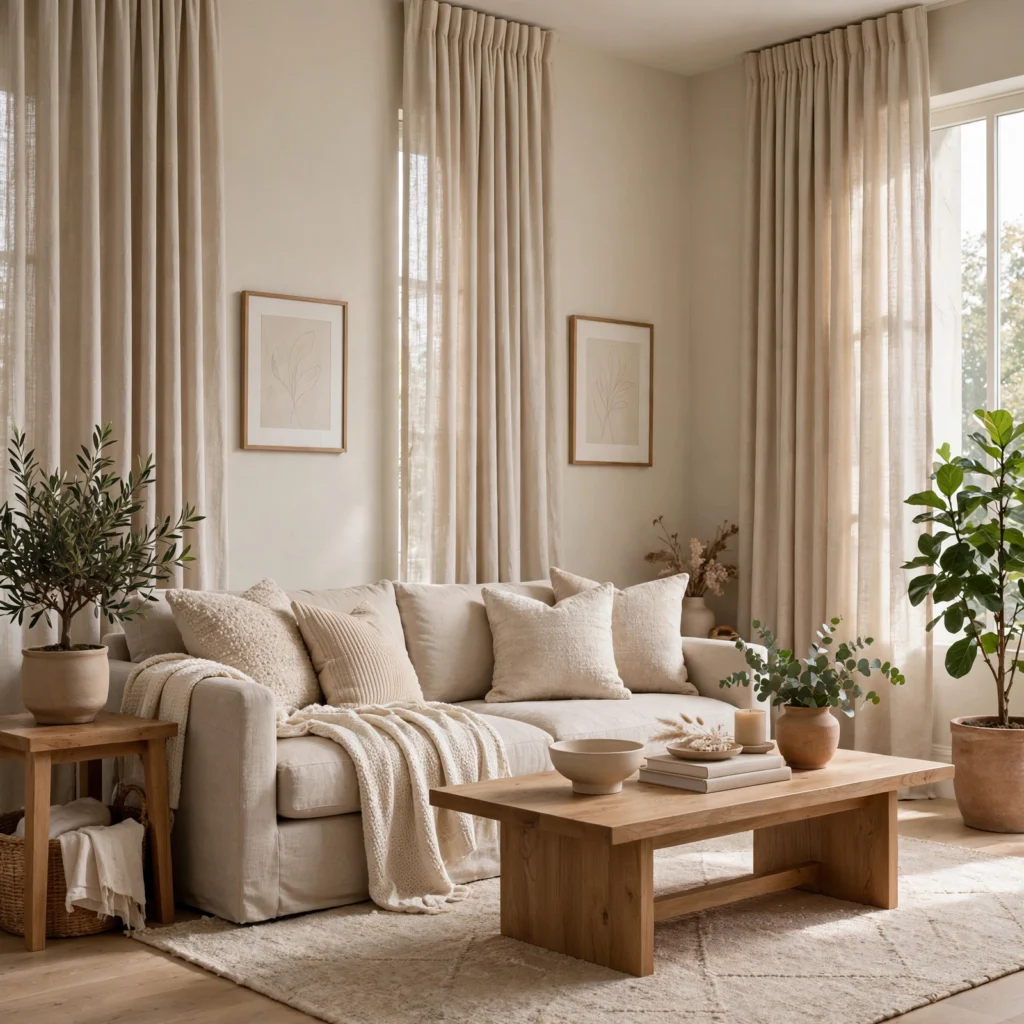
Curtains that match wall color create a seamless, enveloping look in a living room, especially when paired with matching trim or ceiling color. This approach works particularly well in smaller rooms, since removing the visual break between wall and window makes the whole space feel larger and more continuous. A slightly different texture between the wall paint and curtain fabric keeps the room from feeling flat despite the matching tone.
12. Wide Window Curtain Layout
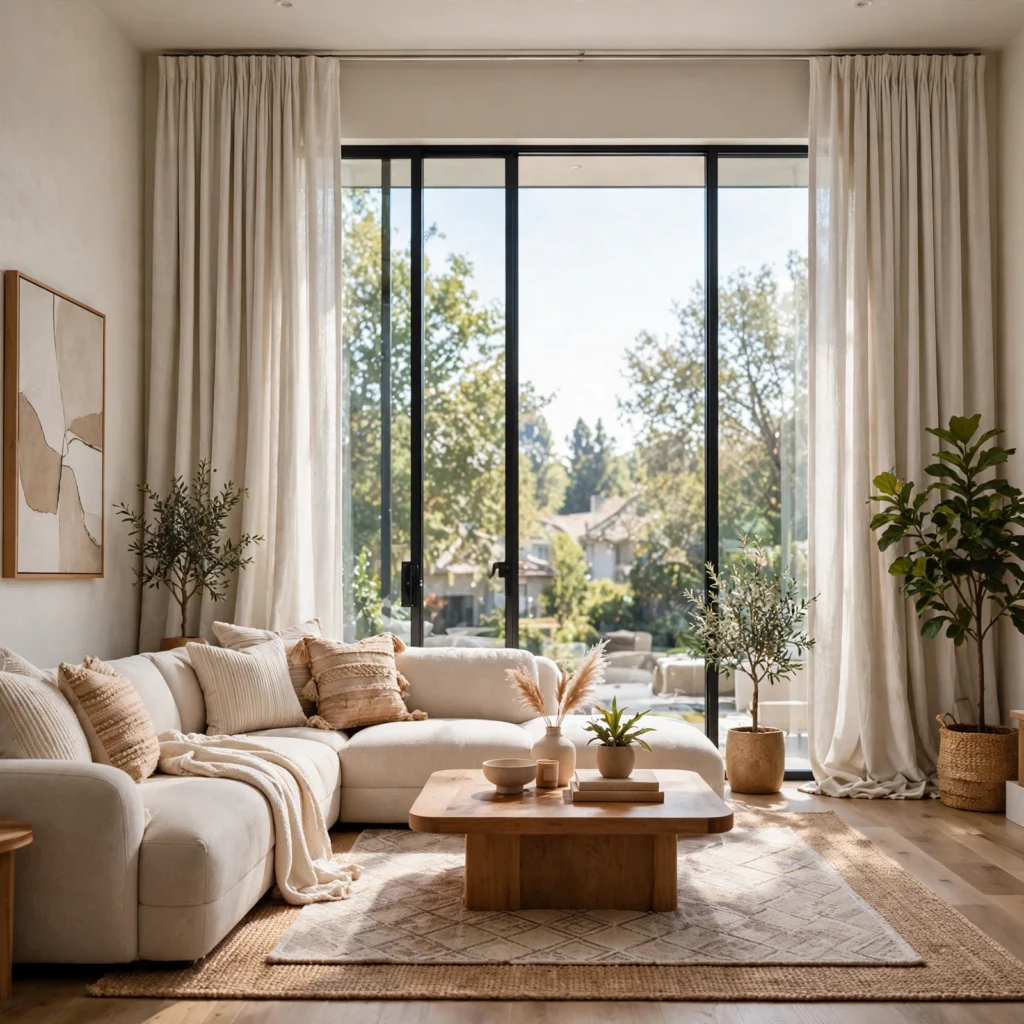
A wide window curtain layout extends the curtain rod several inches to a foot beyond each side of the window frame, so the panels can fully open without covering any glass. This living room idea makes the window appear larger and lets in maximum natural light during the day. It also gives the curtains room to stack neatly to the sides rather than bunching against the window trim.
| Window Width | Recommended Rod Extension Each Side | Total Rod Length |
| 36 in | 8-10 in | 52-56 in |
| 48 in | 10-12 in | 68-72 in |
| 60 in | 12-15 in | 84-90 in |
13. Tab-Top Curtain Style
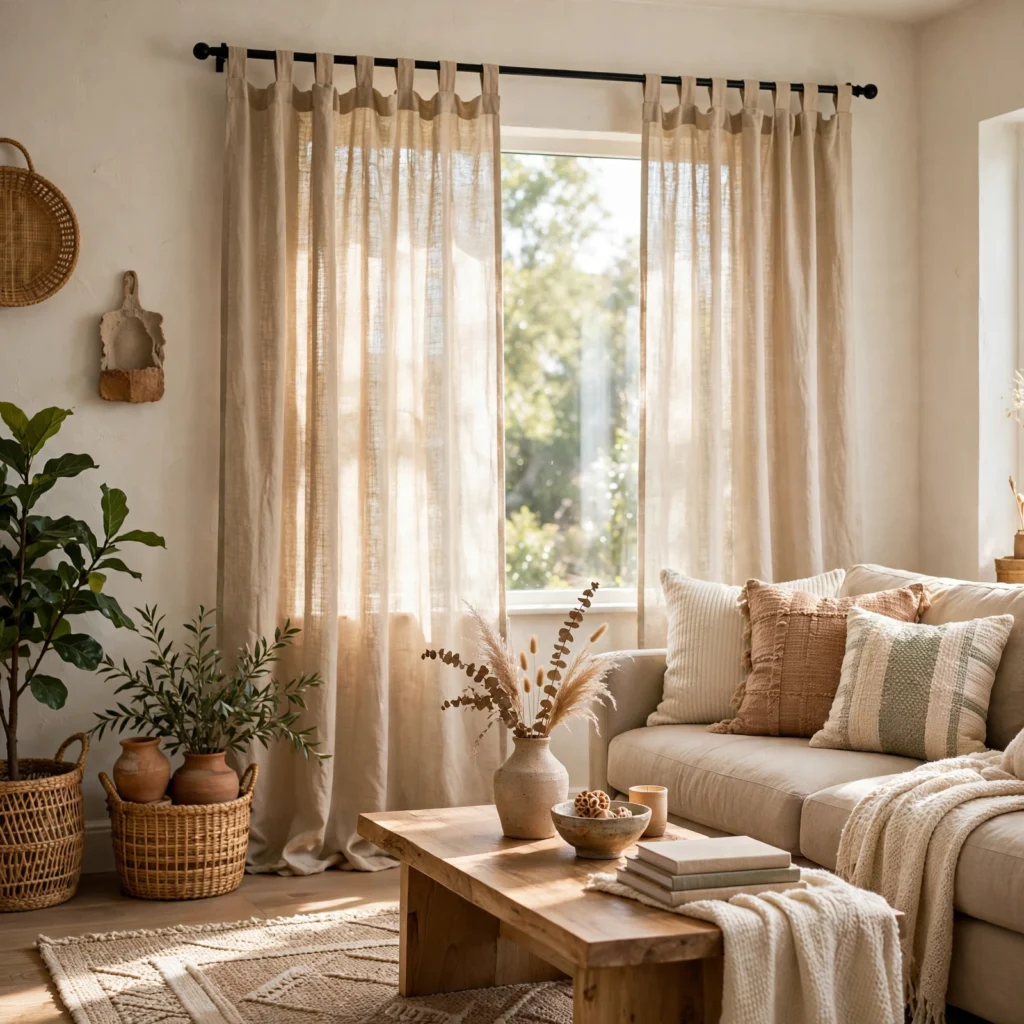
Tab-top curtains use fabric loops sewn into the top of the panel that slide directly onto the rod, giving a relaxed, slightly casual fold. This style suits a living room with a more laid-back, cottage, or coastal aesthetic rather than a formal one. Because the fabric hangs in soft, loose folds rather than tight pleats, tab-top curtains tend to work best in lightweight materials like cotton or linen.
14. Curtains Living Room Color Coordination
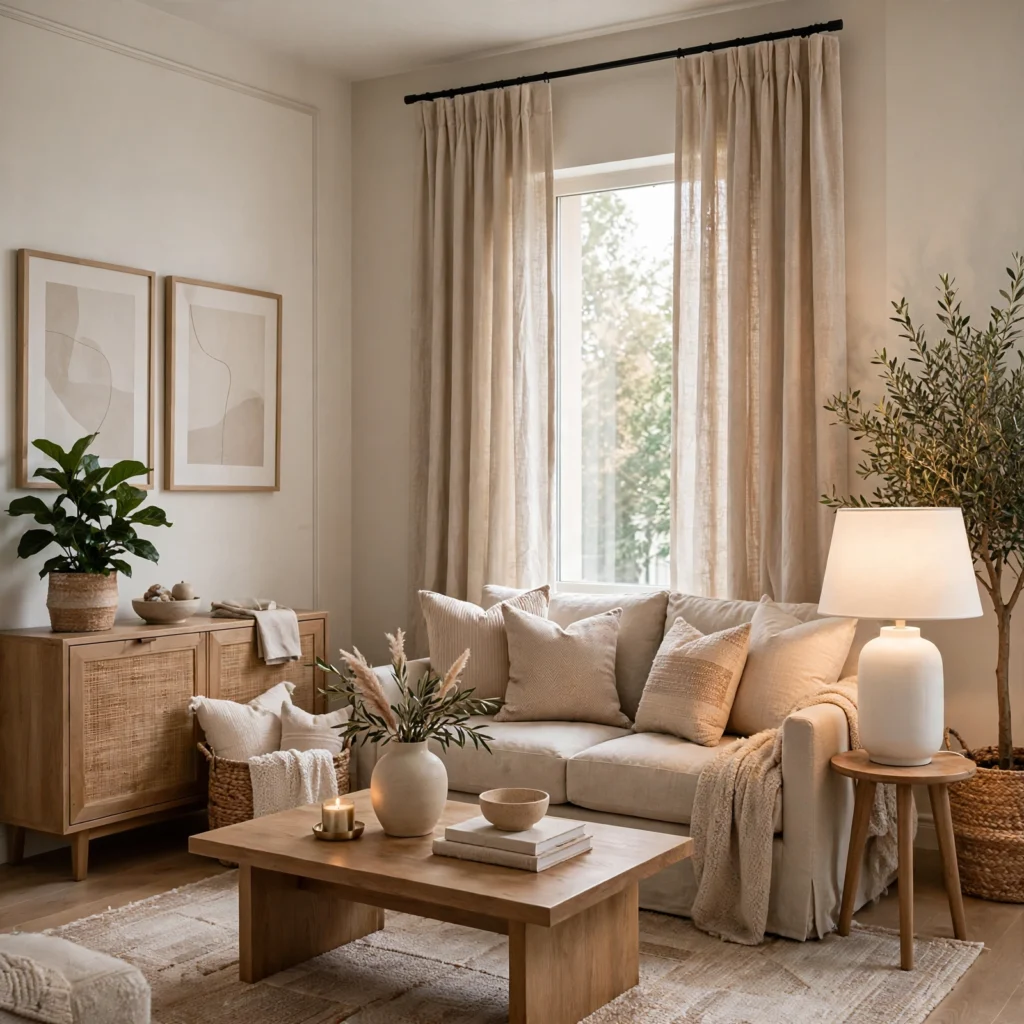
Curtains living room color coordination involves pulling one existing color from the sofa, rug, or accent pillows into the window treatment, rather than introducing an unrelated new tone. This keeps the room’s palette feeling planned rather than randomly assembled. A muted or slightly deeper version of an existing accent color often reads better than an exact match, since it adds depth without looking too matchy.
Shop the Look
A few pieces make it simple to put these ideas into practice. Consider floor-length linen panels in warm white, a blackout liner panel in a matching tone, a slim brass curtain rod extended beyond the window frame, and a set of grommet-top panels in a deep neutral for a more structured living room look.
Common Mistake to Avoid
A common mistake with living room curtains is choosing panels that are too short for the window, which can make the whole wall feel unfinished. Panels should reach the floor, or come close to it, rather than stopping several inches above the ground. Curtains that are too short also tend to look like an afterthought rather than an intentional design choice, even when the fabric and color are otherwise well chosen.
FAQs
What length should living room curtains be?
Living room curtains generally look best when they reach the floor or just barely brush it, roughly half an inch above the ground. A slight break, where the fabric pools an inch or two on the floor, can also work in a more relaxed or formal room, depending on the style. Curtains that stop short of the floor tend to read as too small for the window.
Should living room curtains match the walls or stand out?
Both approaches work, depending on the look you want. Matching curtains to the wall color creates a seamless, larger-feeling room, while contrasting curtains add a deliberate pop of color or pattern. The right choice usually depends on whether the room already has strong color elsewhere, like a bold sofa or an accent wall.
How wide should a curtain rod be for a living room window?
A curtain rod should typically extend at least four to twelve inches beyond each side of the window frame, depending on the window’s size and the room’s proportions. This allows the panels to fully clear the glass when open, letting in maximum natural light and making the window appear wider than its actual frame.
Do I need both sheer and blackout curtains in a living room?
Layering sheer and blackout panels isn’t required, but it does offer more flexibility for light and privacy throughout the day. Sheers alone work well in rooms with plenty of privacy already, while a single blackout panel suits a room where light control matters more than daytime softness. The choice depends on the room’s use and window exposure.
What fabric is best for living room curtains?
Linen and cotton-linen blends are among the most versatile fabrics for living room curtains, offering a relaxed drape and enough texture to work with most decor styles. Velvet suits a more formal or moody room and offers better light blocking, while lightweight cotton or sheer fabrics work best in bright, airy spaces where filtered light is the goal.
Conclusion
These 14 curtains living room ideas show that the right window treatment comes down to fabric weight, mounting height, and how the panels work with the rest of the room’s palette. Save this guide to Pinterest for later, or check out a related post on minimalist living room ideas for more window styling tips.