15 Modern Living Room Ideas for a Clean, Current Look
A modern living room is defined by simplicity, function, and clean geometry, but that doesn’t mean it has to feel impersonal. This guide covers 15 modern living room ideas, from furniture shapes to lighting and color choices, that work together to create a current, livable space. Each idea is adaptable to different room sizes and budgets, whether you’re redoing an entire room or updating a few key pieces.
Trend & Background
Modern living room design has shifted away from the all-white, minimal-color rooms that were popular several years ago, moving toward warmer neutrals paired with natural materials like wood and stone. Curved furniture silhouettes have also gained traction alongside the traditional straight-lined modern pieces, softening the overall look. Smart home integration, from lighting to entertainment systems, continues to shape furniture layout too, since more rooms need to accommodate hidden wiring and device placement without disrupting the clean aesthetic modern design depends on.
Key Takeaways
- A modern living room relies on clean lines, a restrained color palette, and functional furniture over ornate details.
- Mixing warm materials like wood and leather keeps a modern space from feeling cold or overly sterile.
- Open floor plans and multi-purpose furniture are central to how modern living rooms function today.
- Lighting design plays a bigger role in a modern look than most homeowners initially expect.
1. Low-Profile Sectional Sofa
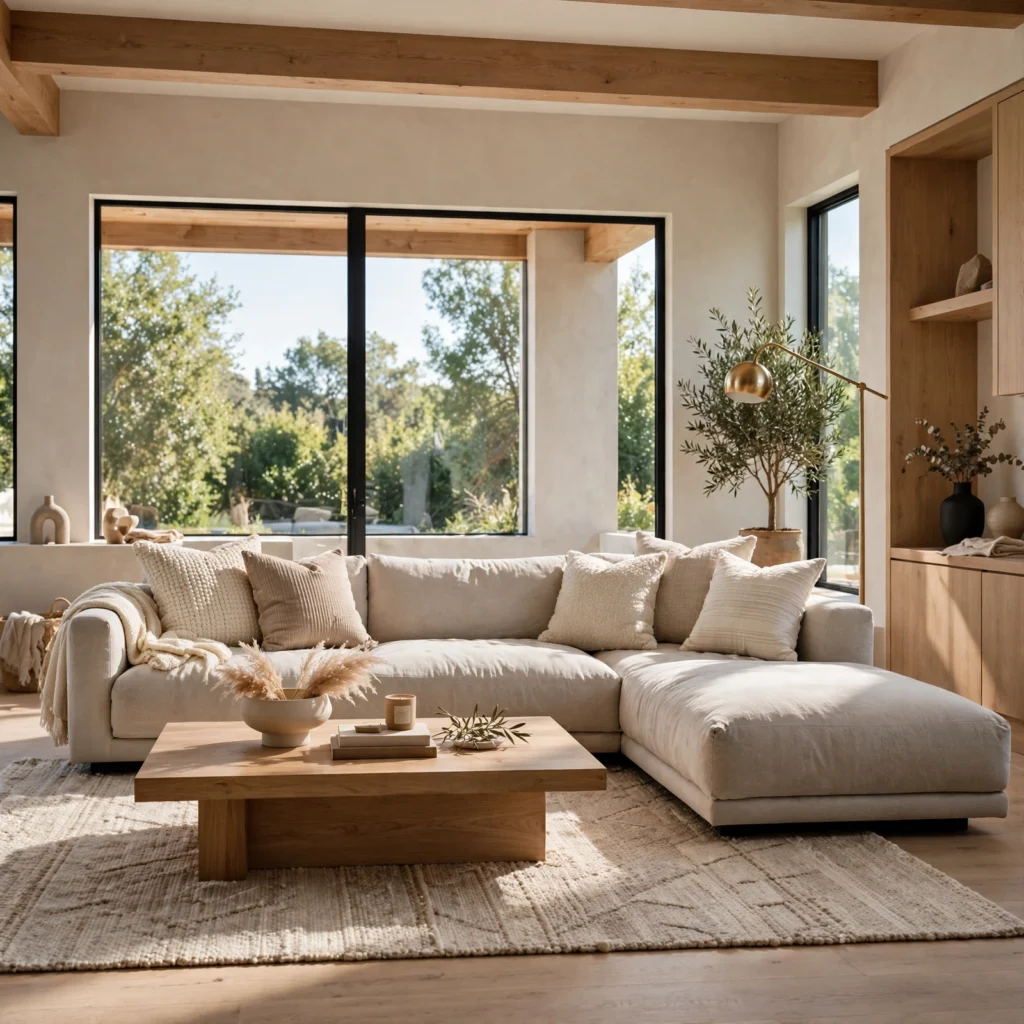
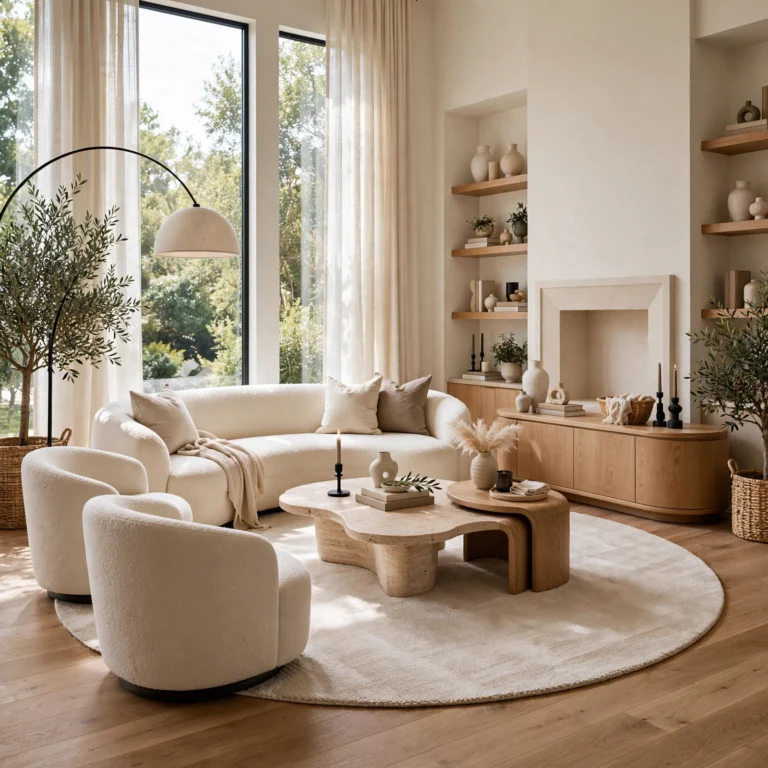
A low-profile sectional sofa is a foundational piece in most modern living rooms, offering flexible seating without the visual bulk of a taller, boxier frame. Clean-lined arms and legs, paired with a solid neutral fabric like charcoal or oatmeal, keep the piece feeling current rather than trend-driven. Choosing a modular sectional also allows the layout to be reconfigured later if the room’s use or furniture arrangement changes.
2. Matte Black Accents
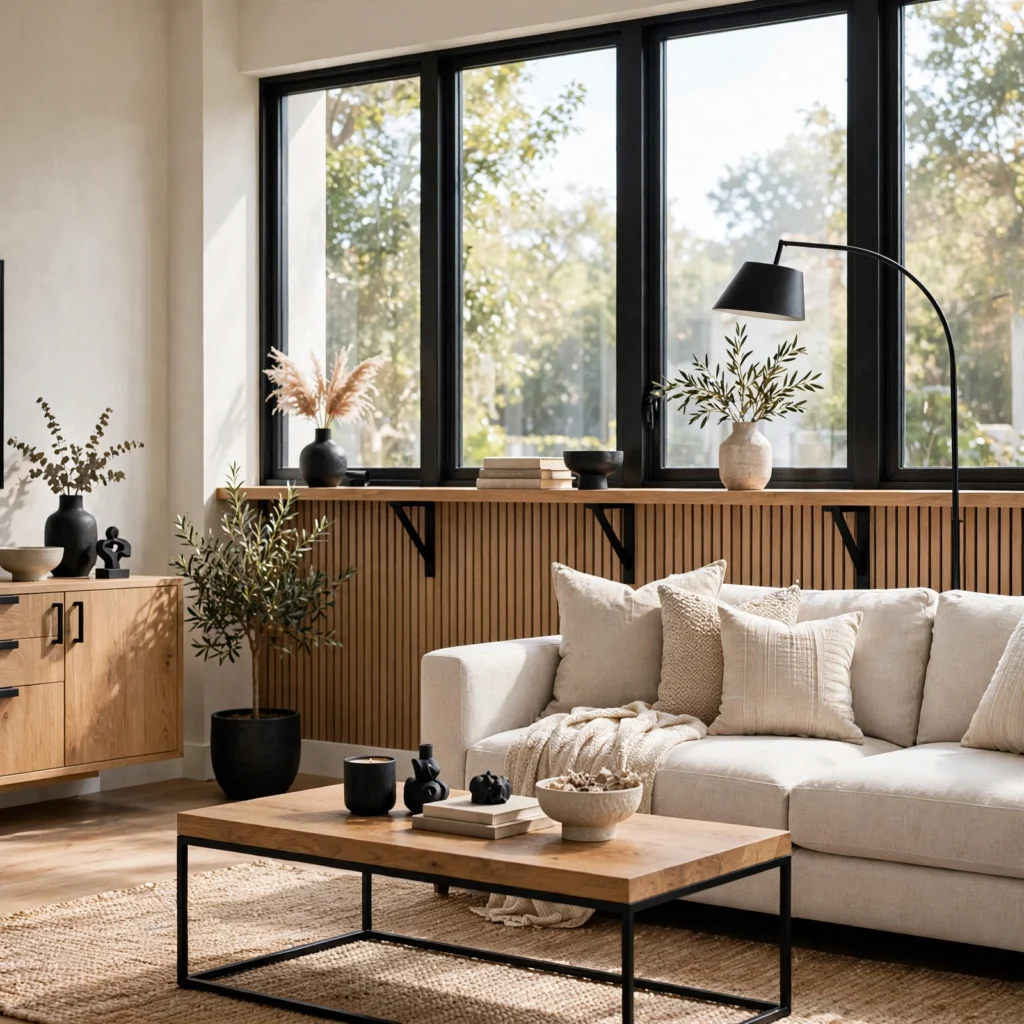
Matte black accents, used on window hardware, light fixtures, or furniture legs, add contrast to a modern living room without introducing extra color. This finish reads as cleaner and more current than glossy black or chrome, and it pairs well with both warm wood tones and cooler gray palettes. Repeating the finish two or three times across the room keeps it feeling intentional rather than scattered.
3. Curved Accent Chair
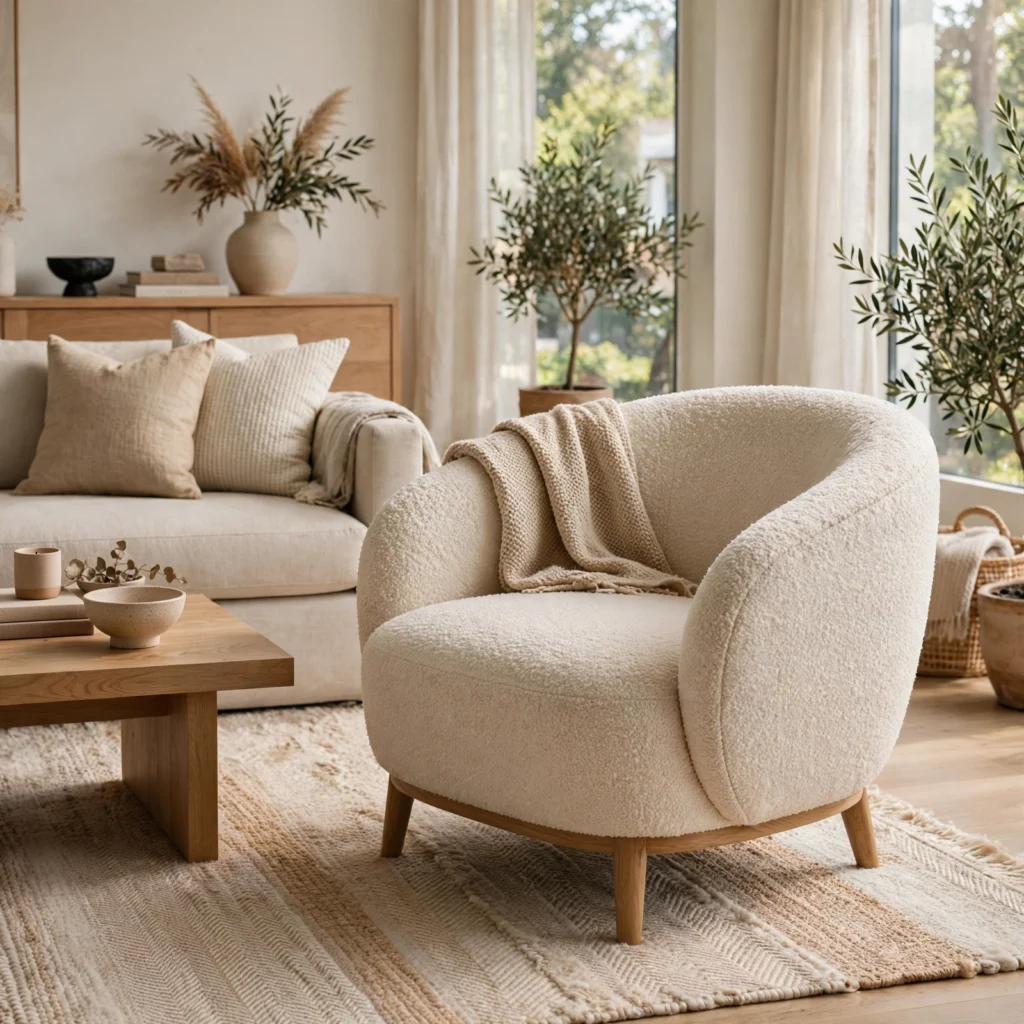
A curved accent chair softens the straight lines that typically dominate a modern living room, adding visual interest without breaking from the overall style. Boucle or leather upholstery in a neutral tone keeps the chair from becoming too busy on its own. Placing it near a window or in an empty corner also gives the room a secondary seating option beyond the main sofa.
4. Open Shelving Display
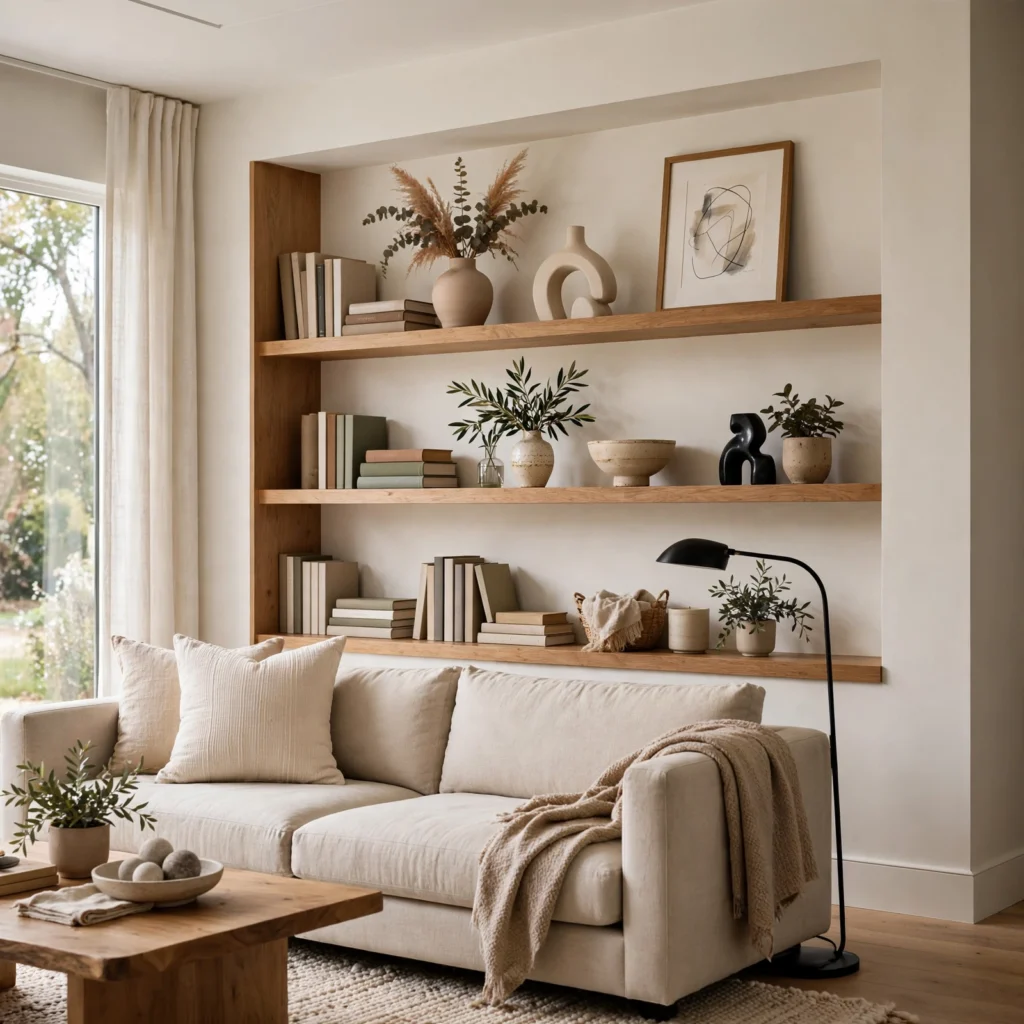
Open shelving display, whether built-in or a freestanding unit, gives a modern living room a place for books and objects without the bulk of a traditional bookcase with doors. Keeping the shelves styled with fewer items, spaced with intentional gaps, prevents the display from feeling cluttered. Mixing in a small number of plants or ceramic pieces adds texture without disrupting the room’s clean lines.
If you’re updating your home, don’t miss these curtains for the living room for a fresh and elegant look.
5. Statement Pendant Lighting
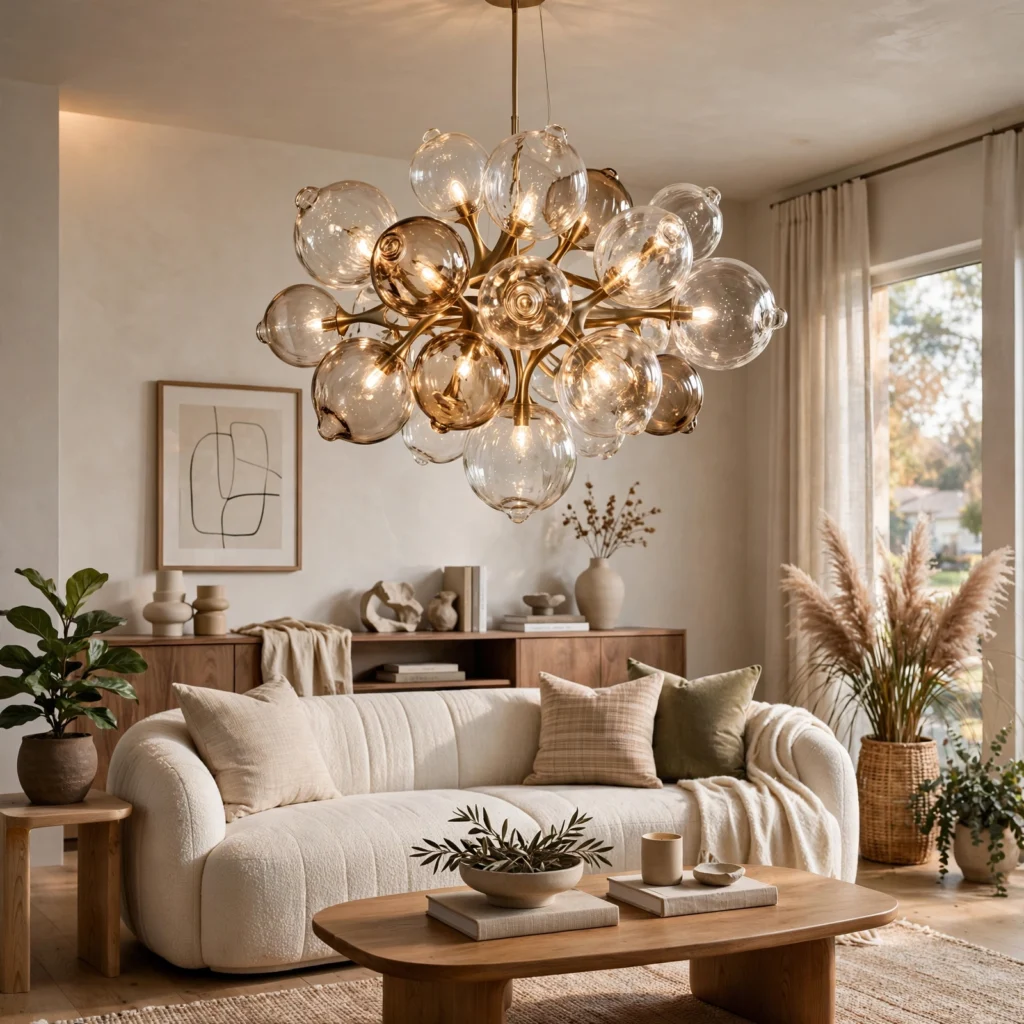
Statement pendant lighting, hung above a seating area or reading nook, gives a modern living room a focal point that ceiling-mounted fixtures alone can’t achieve. Sculptural shapes in matte black, brass, or frosted glass tend to suit this style best. Positioning the pendant at a height that clears sightlines when seated keeps the fixture functional as well as decorative.
| Ceiling Height | Recommended Pendant Drop | Placement |
| 8 ft | 12-18 in below ceiling | Above side table or reading chair |
| 9 ft | 18-24 in below ceiling | Above coffee table zone |
| 10+ ft | 24-30 in below ceiling | Above conversation area |
6. Neutral Color Blocking
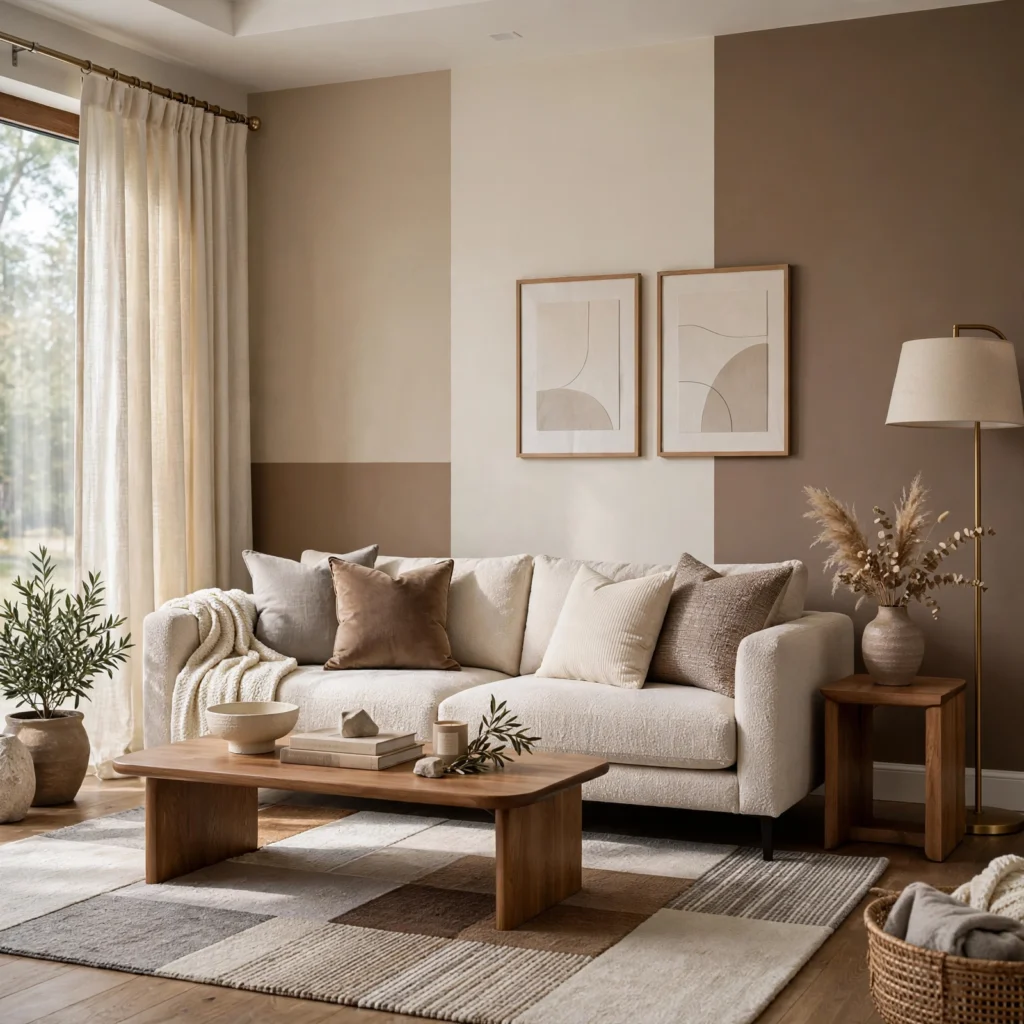
Neutral color blocking uses distinct but related tones, like a warm white wall paired with a charcoal media wall, to add depth to a modern living room without introducing bold color. This technique works especially well behind a television or fireplace, where a slightly darker tone helps the feature blend rather than stand out too sharply. Keeping the rest of the room in lighter neutrals balances the contrast.
7. Floating Media Wall
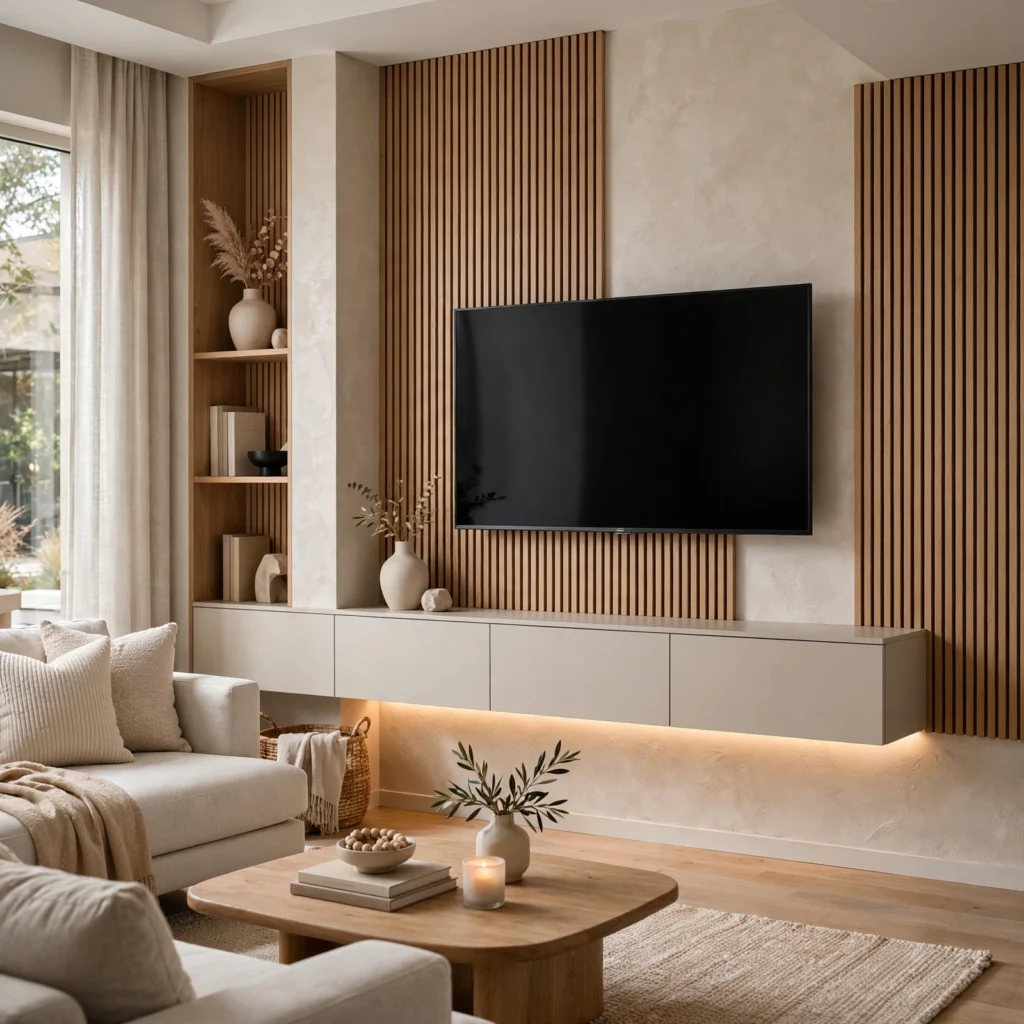
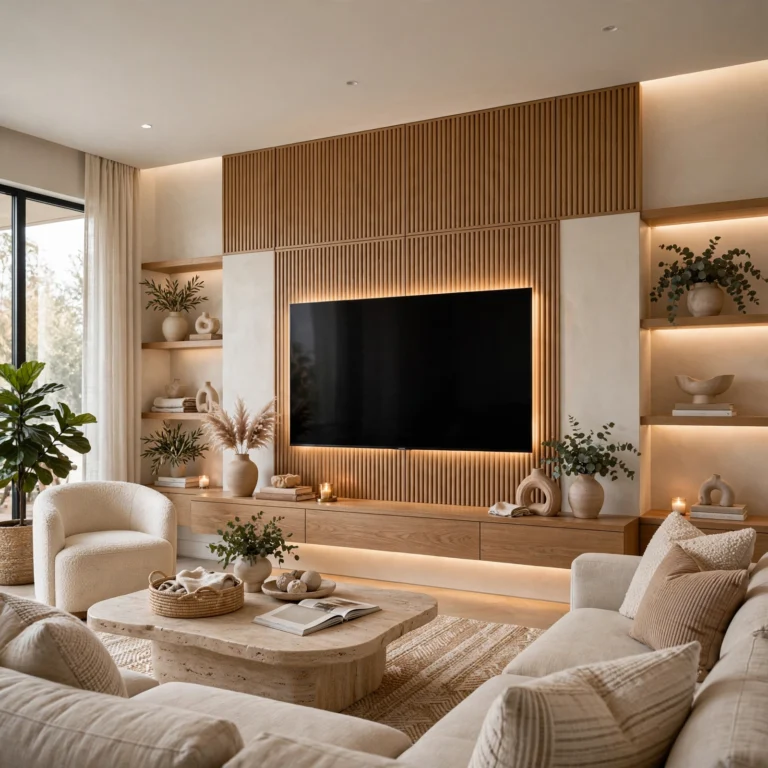
A floating media wall mounts the television and surrounding storage directly to the wall, eliminating the need for a floor-standing console in a modern living room. This setup keeps the floor visually clear and works particularly well with hidden cable management built into the wall. Adding a few closed cabinets on either side of the television keeps electronics and clutter out of view.
8. Textured Area Rug
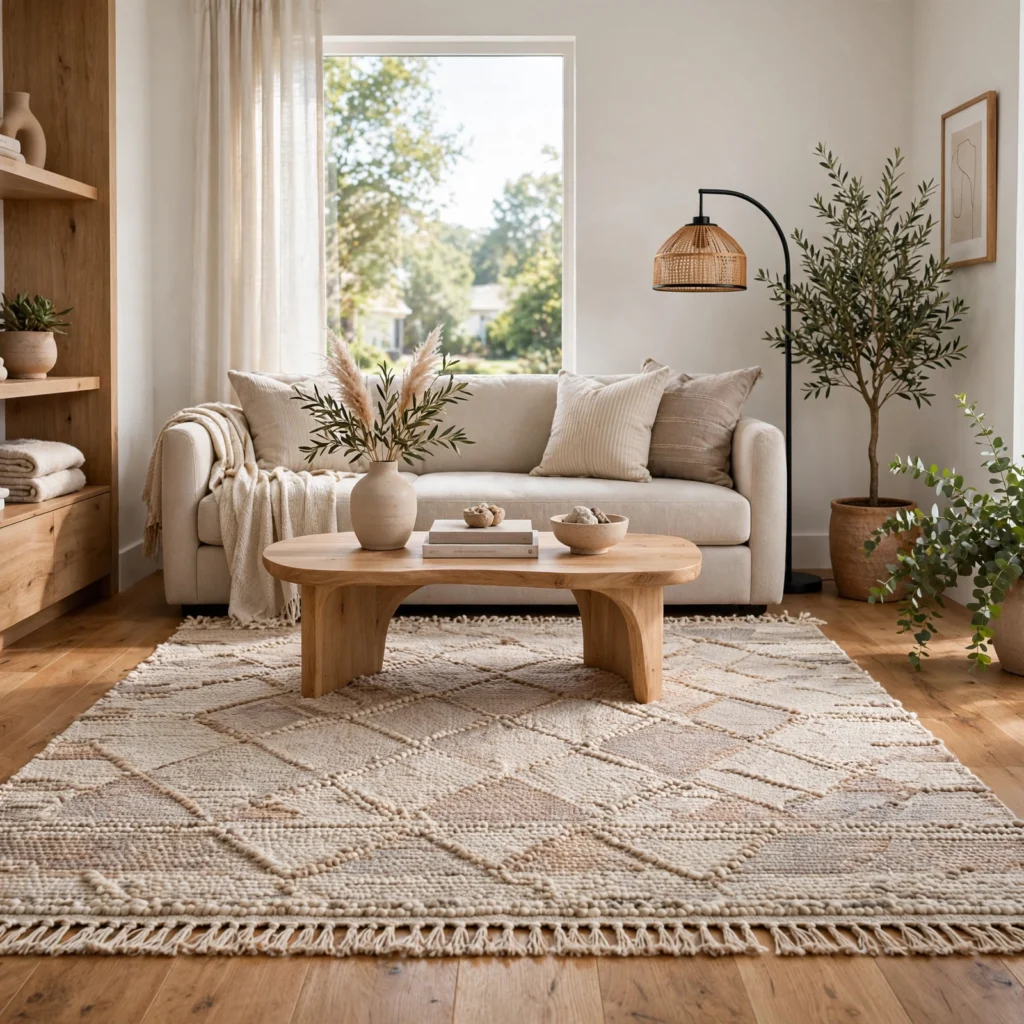
A textured area rug, such as a high-low wool weave or a subtle geometric pattern, adds depth to a modern living room without relying on bold color. Because modern furniture often leans toward solid, neutral upholstery, the rug becomes one of the few places pattern or texture can be introduced. Sizing the rug so all furniture legs sit at least partially on it keeps the layout feeling grounded.
9. Mixed Metal Finishes
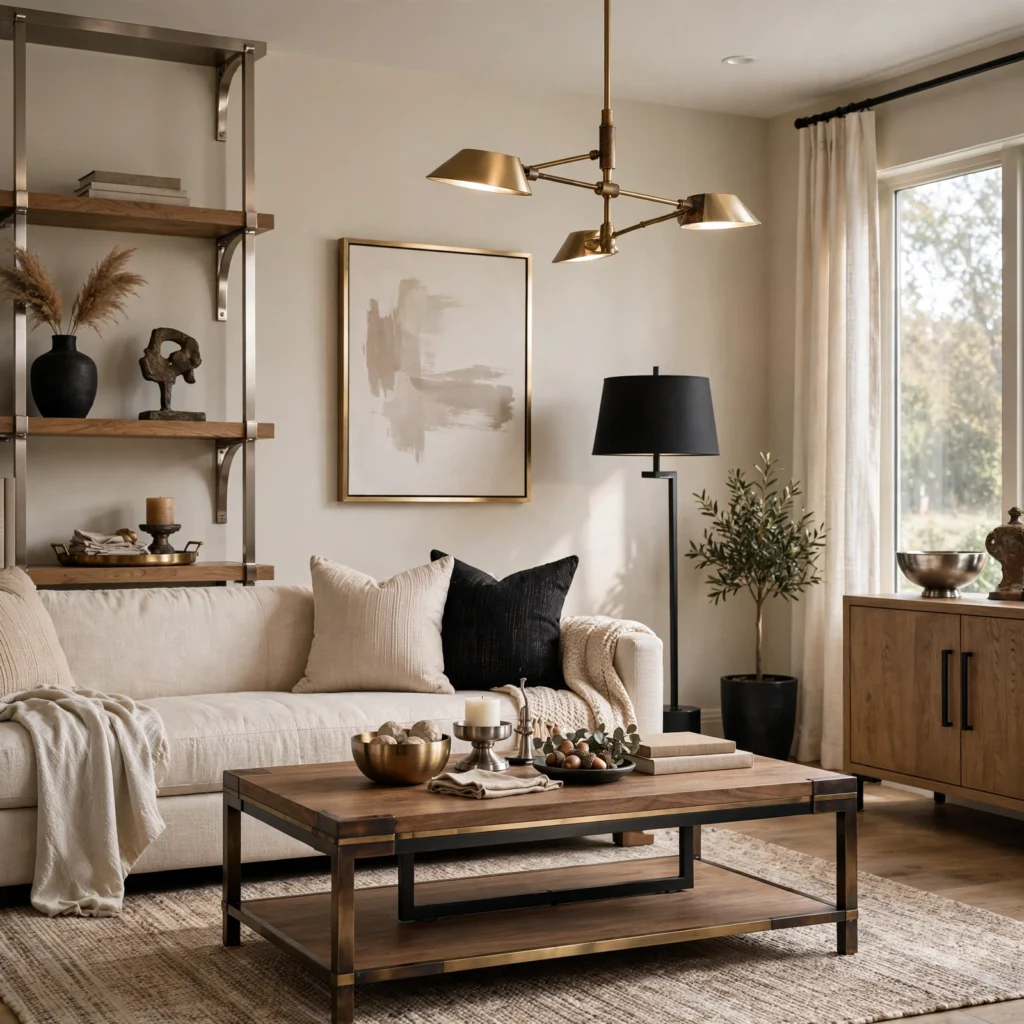
Mixed metal finishes, when used deliberately, can work in a modern living room despite general design advice to stick to one metal tone. Pairing warm brass on lighting with matte black on furniture hardware, for example, adds dimension as long as each finish is repeated at least twice across the room. This approach requires more planning than a single-metal scheme but reads as more collected when done well.
10. Slim Profile Furniture Legs
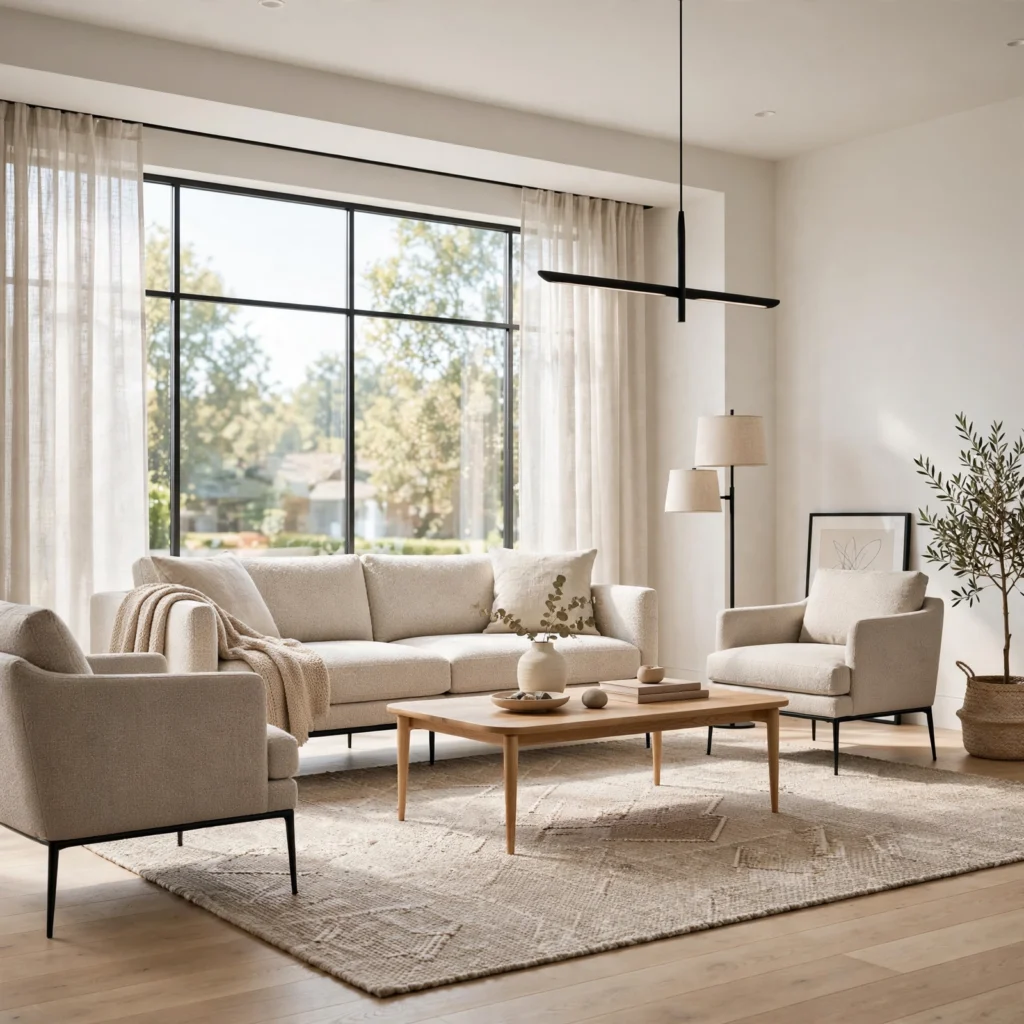
Slim profile furniture legs, whether tapered wood or thin metal, keep a modern living room feeling light and open rather than heavy. This detail matters most in smaller rooms, where furniture with visible legs and open space underneath reads as less bulky than pieces with skirted or boxy bases. Consistent leg style across the sofa, chairs, and coffee table also ties the room together visually.
11. Indoor Plant Grouping
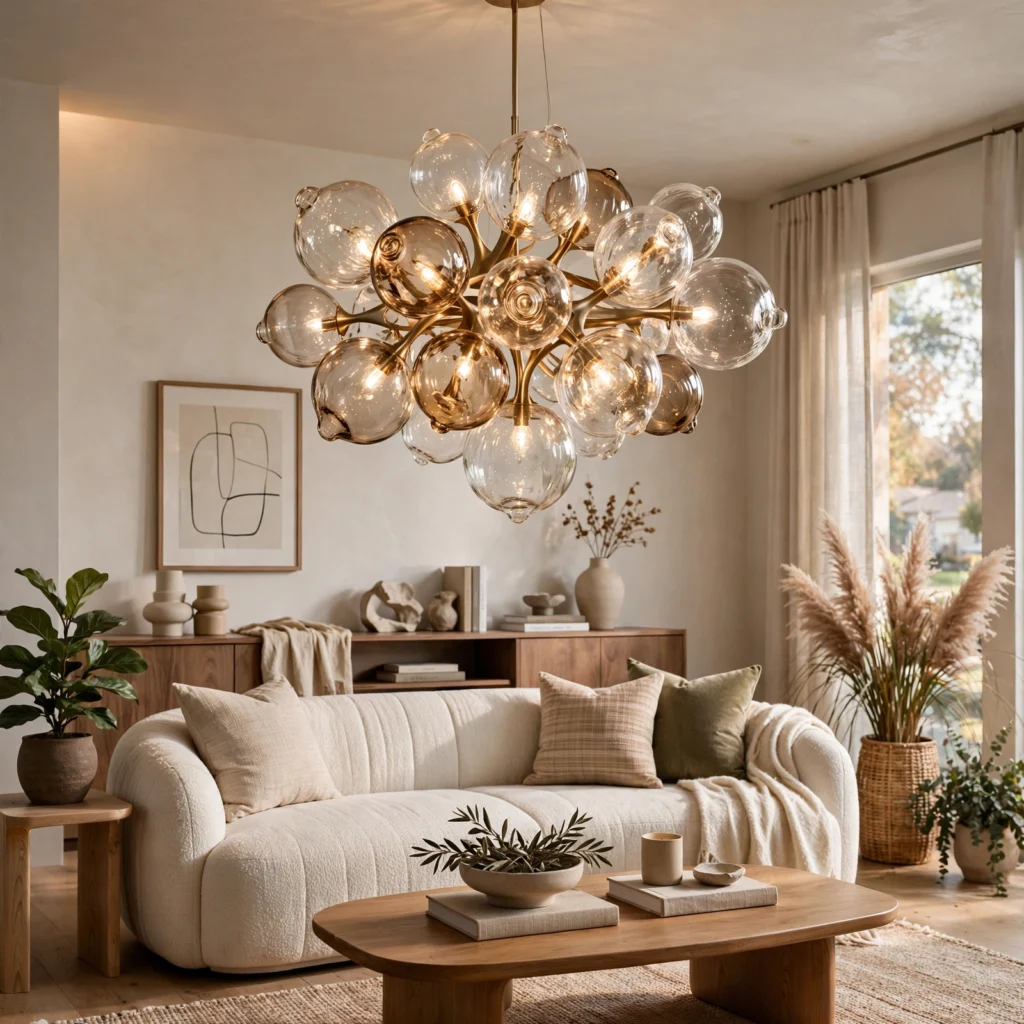
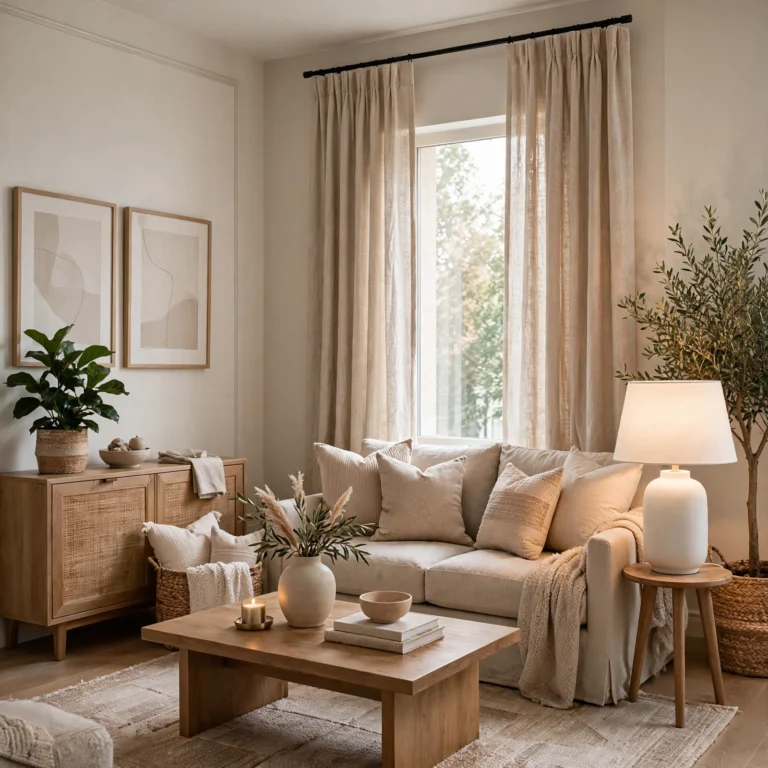
An indoor plant grouping, using two or three plants of varying height in simple ceramic pots, softens the hard lines typical of a modern living room. Species like snake plants, rubber plants, or a small olive tree require relatively low maintenance while still adding visual texture and a sense of life to the space. Clustering the plants in one corner tends to read as more intentional than scattering single plants throughout the room.
12. Geometric Wall Art
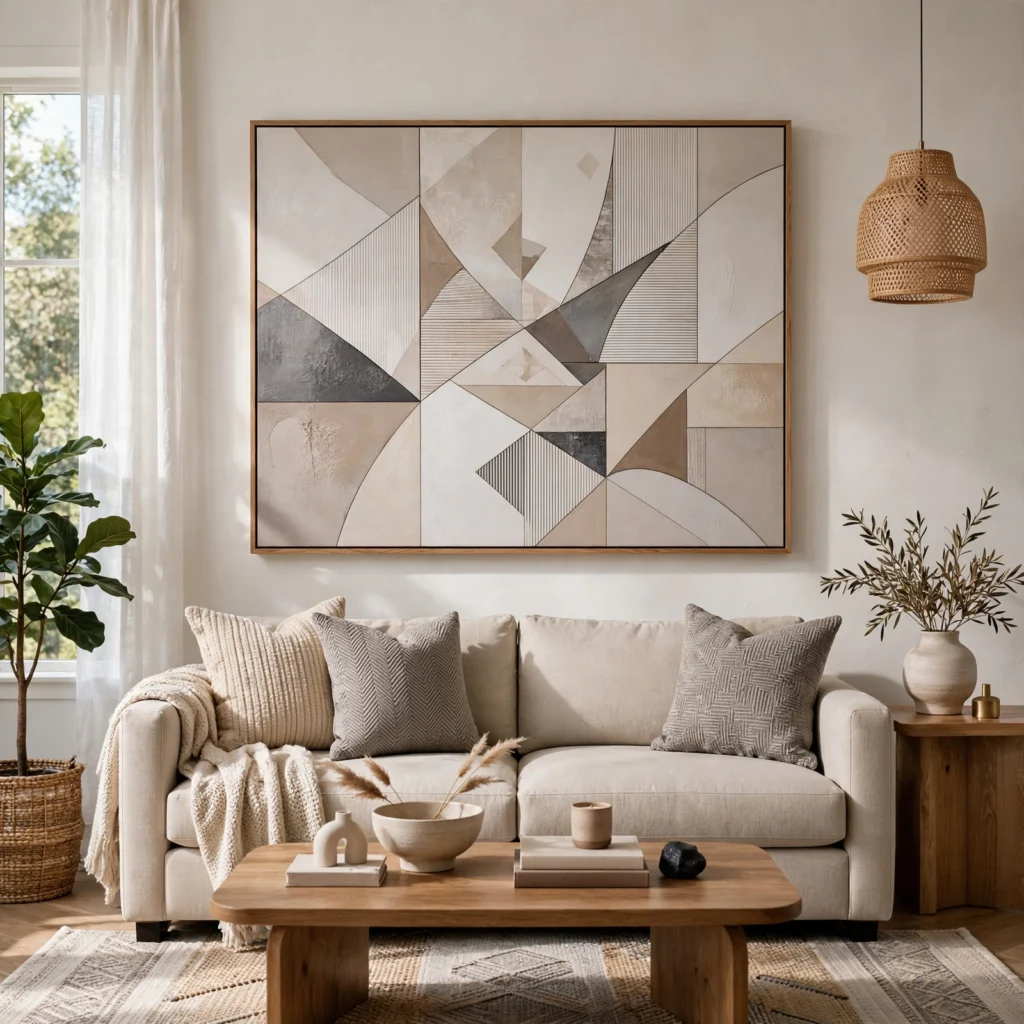
Geometric wall art, in a large-scale format with clean shapes and a limited color palette, suits a modern living room better than ornate or traditional framed pieces. A single oversized piece above the sofa often has more visual impact than a cluster of smaller frames. Choosing artwork that echoes one or two colors already present in the room helps it feel connected rather than randomly placed.
13. Concealed Storage Ottoman
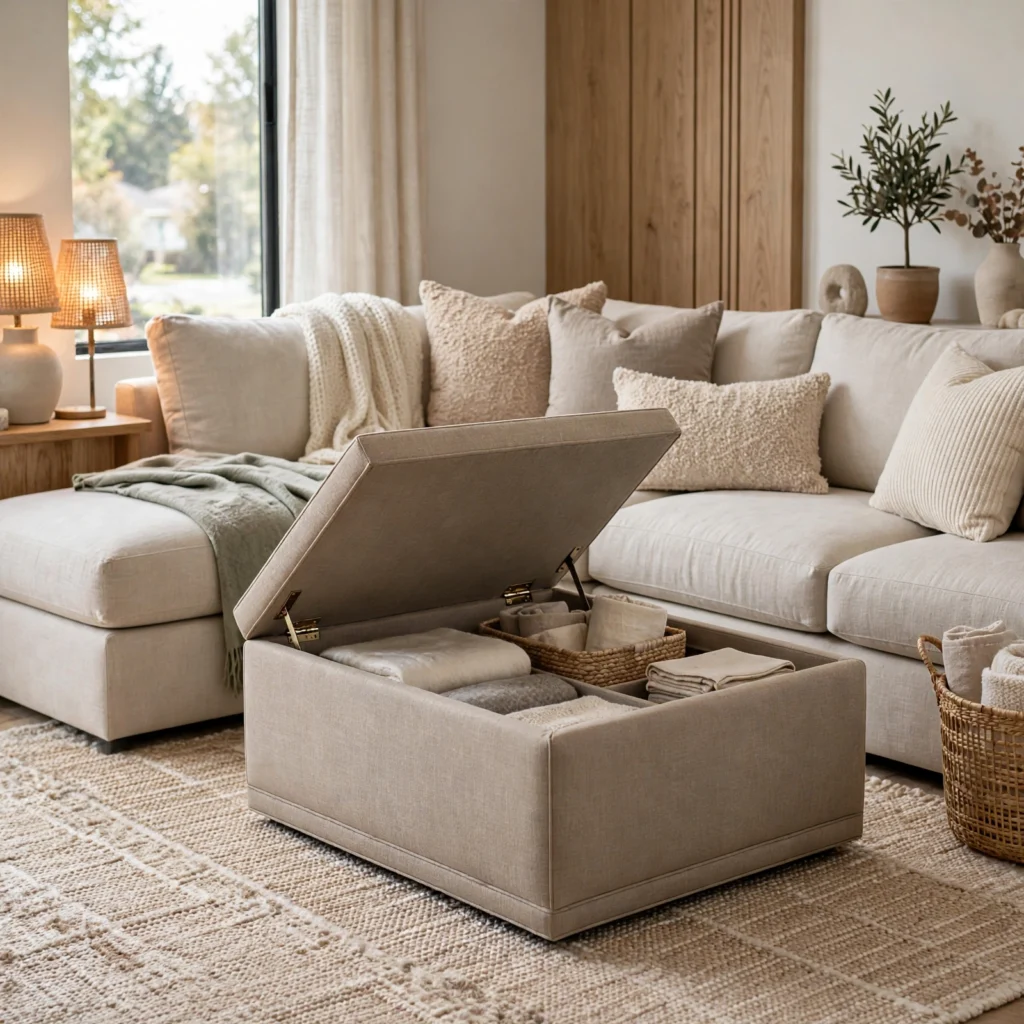
A concealed storage ottoman doubles as extra seating, a footrest, or a coffee table surface while hiding blankets, remotes, or other everyday items inside. This multi-purpose approach fits well into the modern living room emphasis on function alongside clean design. A leather or performance fabric cover in a neutral tone keeps the piece durable and visually consistent with the rest of the furniture.
| Ottoman Size | Best Use | Material |
| Small (18-24 in) | Extra seating, side table | Leather, velvet |
| Medium (30-36 in) | Footrest, tray surface | Performance fabric |
| Large (40+ in) | Coffee table replacement | Leather, boucle |
14. Modern Living Room Fireplace Wall
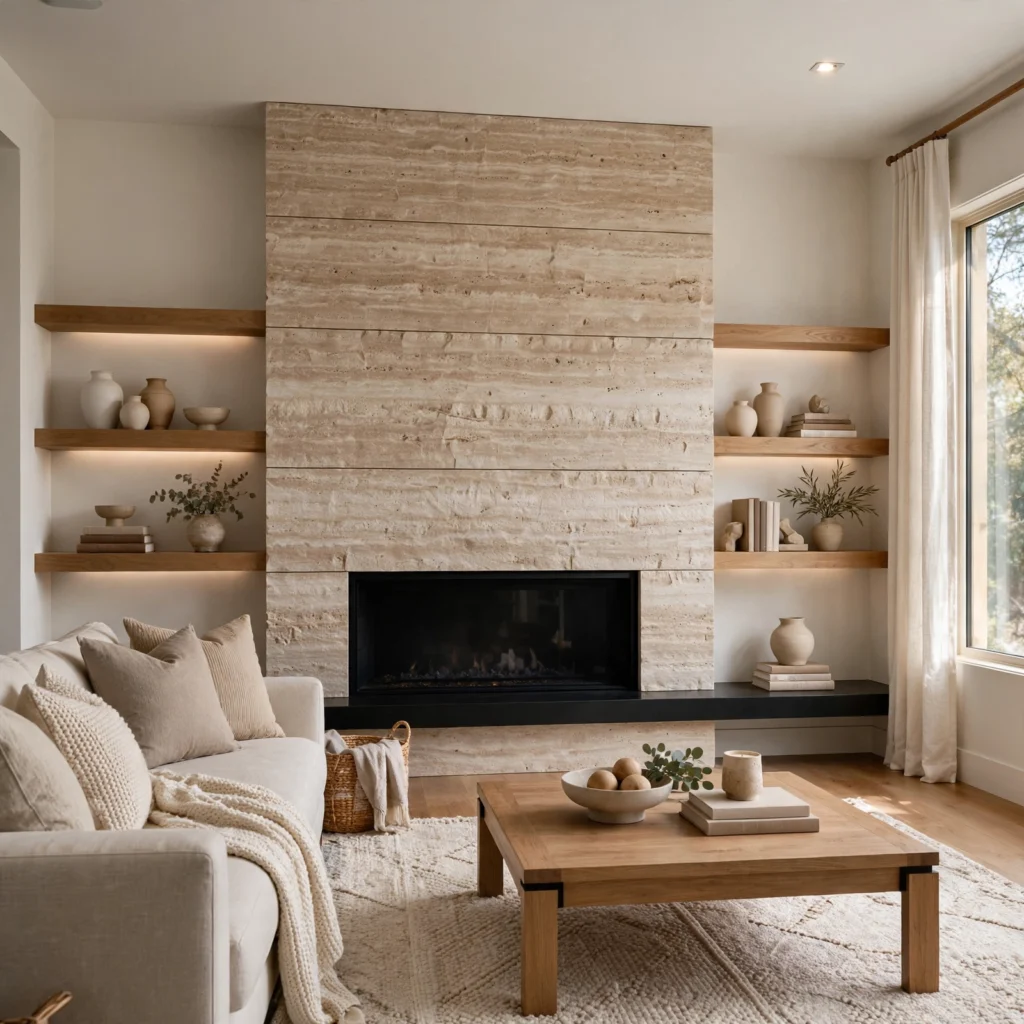
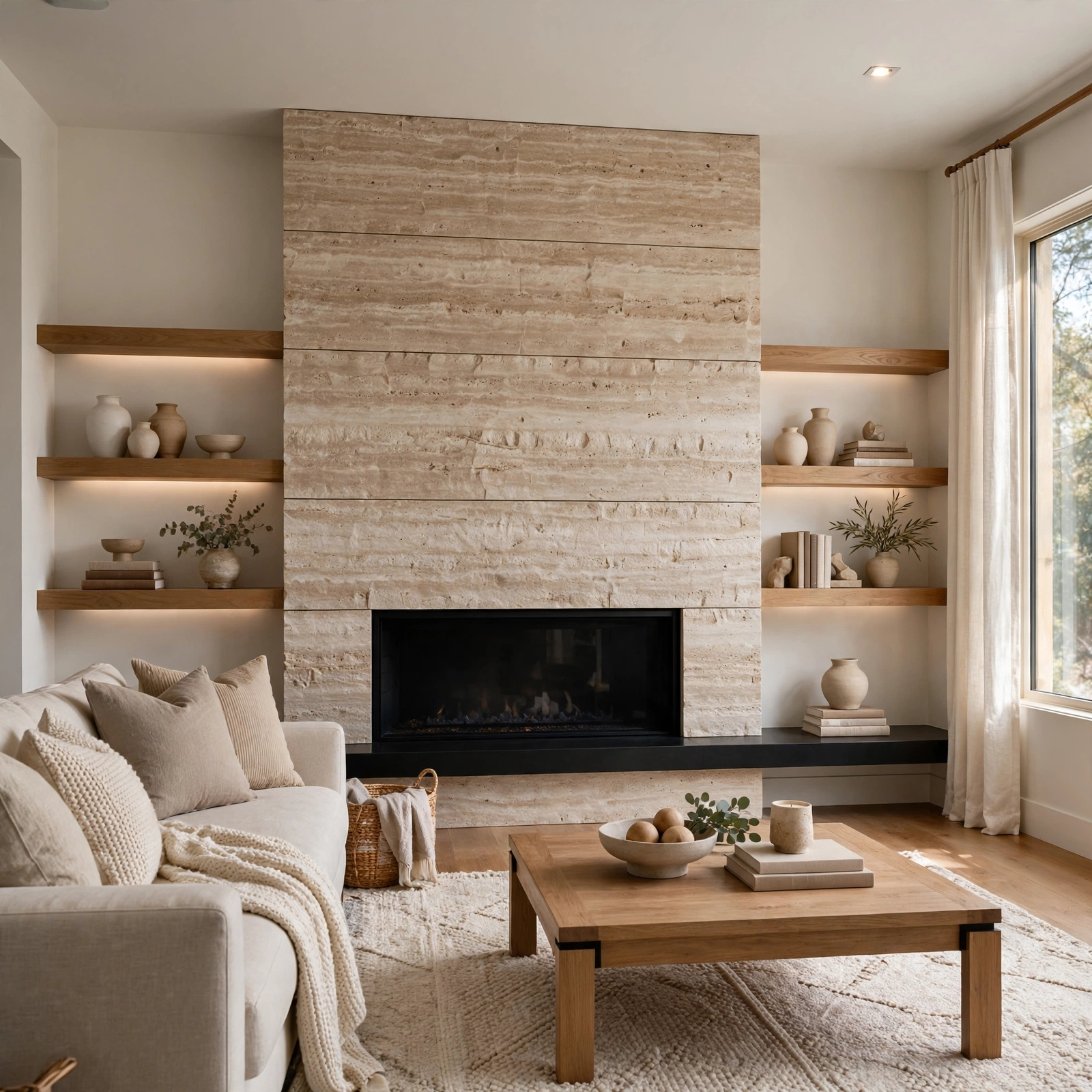
A modern living room fireplace wall typically pairs a linear or built-in fireplace with a floor-to-ceiling material like stone veneer, wood paneling, or plaster. This treatment turns the fireplace into a full architectural feature rather than a single boxed-in unit. Flanking the fireplace with matching built-in shelving on either side also adds storage while keeping the wall visually balanced.
15. Monochromatic Furniture Palette
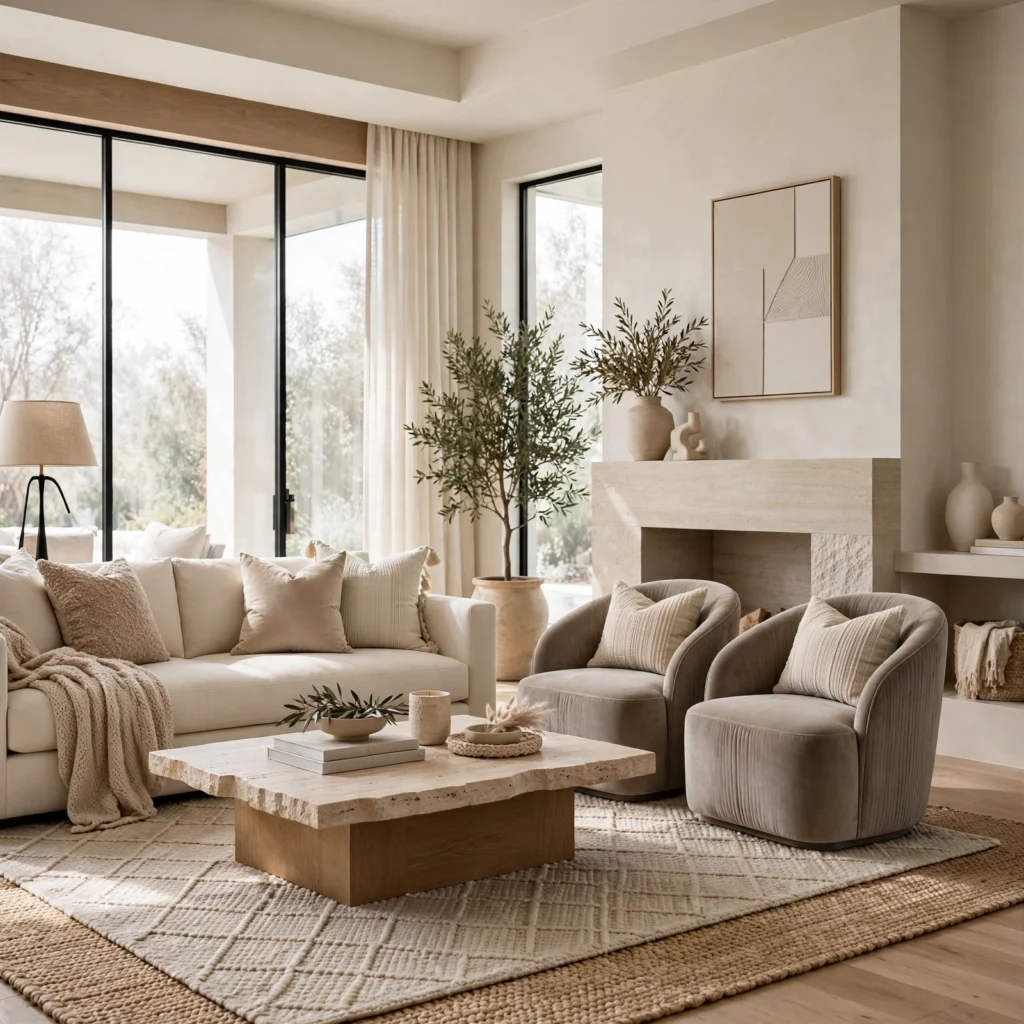
A monochromatic furniture palette, using varying shades and textures of a single color family like gray or greige, keeps a modern living room cohesive without feeling flat. This approach relies on differences in fabric texture, such as pairing a boucle chair with a leather sofa in a similar tone, to maintain visual interest. Adding one contrasting accent, like a black side table, keeps the room from feeling too uniform.
Shop the Look
A few pieces make it easy to bring these ideas together. Consider a low-profile modular sectional in charcoal boucle, a curved leather accent chair, a matte black sculptural floor lamp, a high-low textured wool rug, and a floating wood media console with closed cabinet storage.
Common Mistake to Avoid
A common mistake in modern living rooms is choosing furniture that’s too trend-driven, like an overly specific curved shape or bold color that dates quickly. Sticking to clean, classic modern silhouettes in neutral tones, then introducing trends through smaller, easily replaceable items like pillows or a single accent piece, keeps the room feeling current for longer without requiring a full furniture replacement every few years.
FAQs
What defines a modern living room style?
A modern living room is defined by clean lines, a restrained color palette, and furniture that prioritizes function alongside simple geometric form. Natural materials like wood, leather, and stone are common, paired with minimal ornamentation. Unlike contemporary style, which shifts with current trends, modern design generally references the clean-lined furniture movement from the mid-20th century onward.
What colors work best in a modern living room?
Neutral tones like warm white, greige, charcoal, and soft gray form the base of most modern living rooms. These colors are often paired with one or two deeper accent tones, such as black or a muted green, used sparingly through furniture or decor. Bright, saturated colors are less common in this style but can work as small accents.
How is modern different from contemporary living room design?
Modern design refers to a specific style rooted in clean lines and function, largely unchanged since its mid-20th-century origins. Contemporary design, by contrast, reflects whatever is currently trending and shifts over time. A modern living room today might look similar to one from several decades ago, while a contemporary room reflects present-day trends more directly.
Do modern living rooms need a lot of furniture?
No, modern living rooms typically use fewer, more purposeful furniture pieces rather than filling the room completely. Multi-functional furniture, like a storage ottoman or a modular sectional, allows the room to serve multiple purposes without extra pieces. This approach also keeps sightlines open, which is a key part of the modern aesthetic.
How do I keep a modern living room from feeling cold?
Incorporating natural materials like wood, leather, and wool, along with warm lighting and a few plants, keeps a modern living room from feeling sterile. Sticking entirely to cool tones like gray and white without any warm accents is what typically makes a modern room feel cold, so balancing the palette with at least one or two warm elements helps.
Conclusion
These 15 modern living room ideas show that clean design and warmth aren’t mutually exclusive they just require the right mix of materials, lighting, and furniture scale. Save this guide to Pinterest for later, or check out a related post on minimalist living room ideas for more clean-line inspiration.