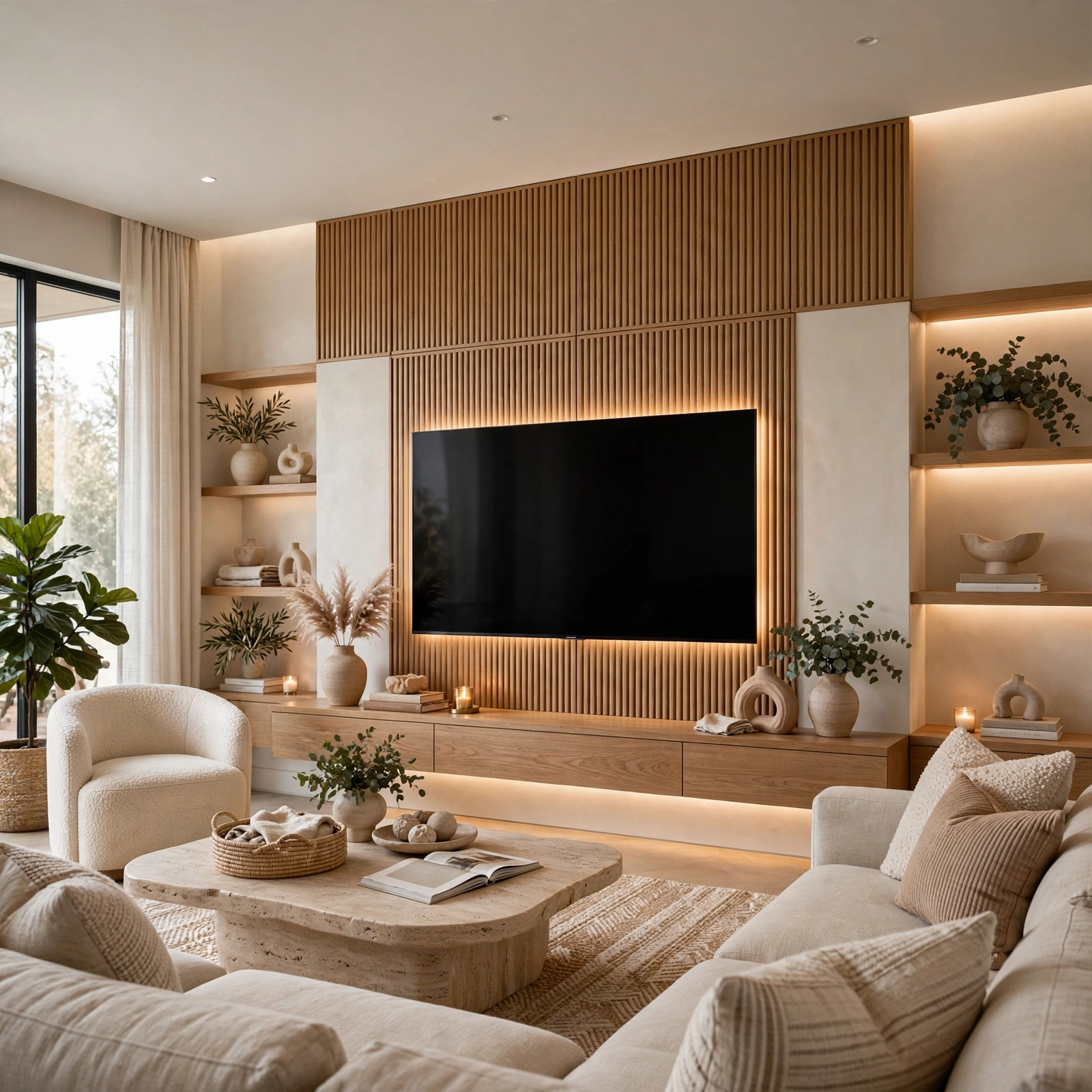
Stunning Living Room TV Wall 13 Ideas That Skip the Bare Screen Look
A living room TV wall is one of the most functional parts of a room, but it’s also one of the easiest to leave looking unfinished. This guide covers 13 living room TV wall ideas, from paneling and built-ins to lighting and layout tricks, that help the television blend into the room’s overall design instead of standing out as a plain black rectangle. Each idea works across different budgets and room sizes.
Trend & Background
Living room TV wall design has moved away from simply mounting a television on a bare wall, toward treating the entire wall as a design feature. Wood slat paneling and stone veneer have become especially popular, since both add texture that helps the screen visually recede when turned off. Built-in shelving and hidden cable management have also grown in demand as more homeowners prioritize a clean, cord-free look, particularly in open-concept living rooms where the TV wall is visible from multiple angles.
Key Takeaways
- A living room TV wall works best when the television is treated as part of the design, not just mounted on a bare wall.
- Wood paneling, stone veneer, and built-in shelving are the most common ways to frame a TV without looking like an afterthought.
- Cable management is one of the most overlooked details that makes or breaks a clean TV wall.
- Balancing the television visually with surrounding decor prevents it from becoming the only focal point in the room.
1. Fluted Wood Panel Wall
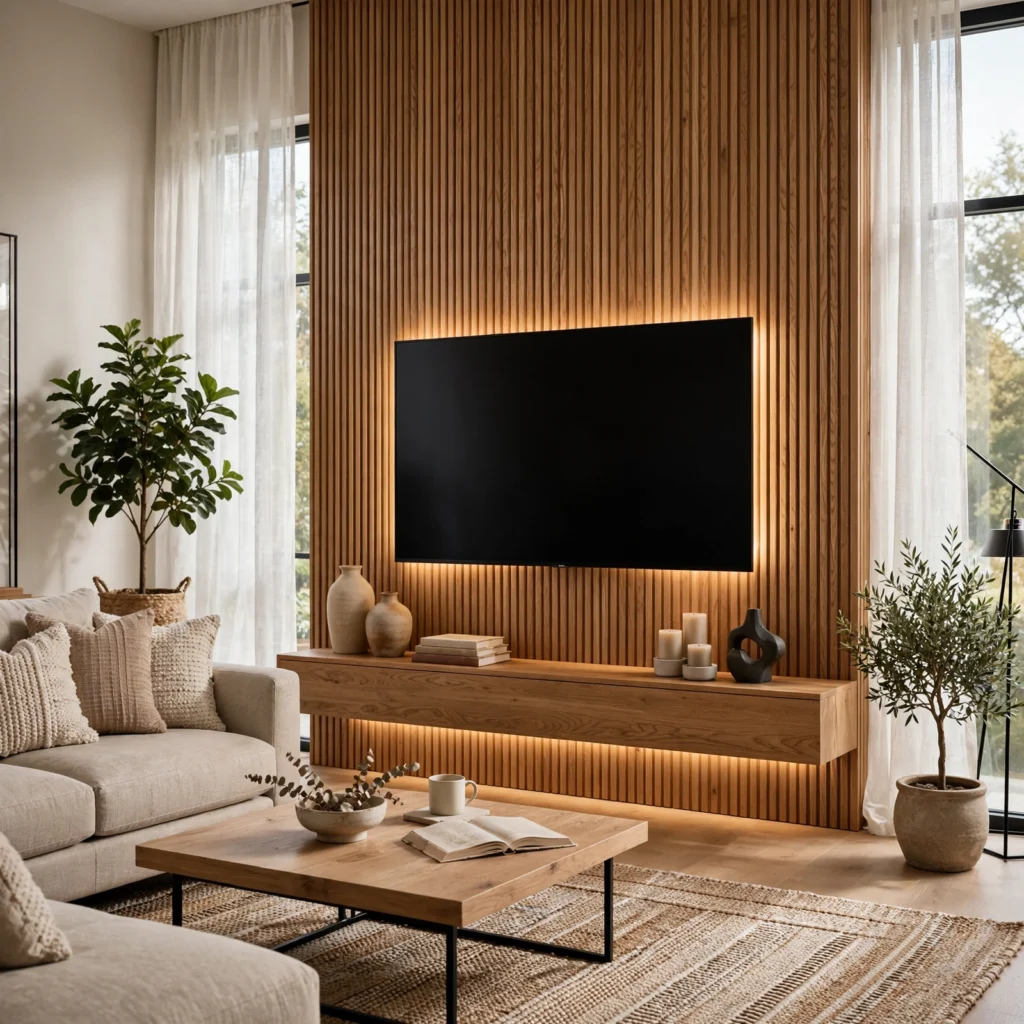
A fluted wood panel wall gives a living room TV wall texture and warmth, helping the screen blend into the wall rather than sitting starkly against flat paint. Oak or walnut slats, installed either as prefabricated panels or custom-milled boards, work well behind a mounted television since the ribbed texture draws attention without competing with the screen. This treatment also adds a sense of craftsmanship to the room at a moderate installation cost.
2. Built-In Media Cabinetry
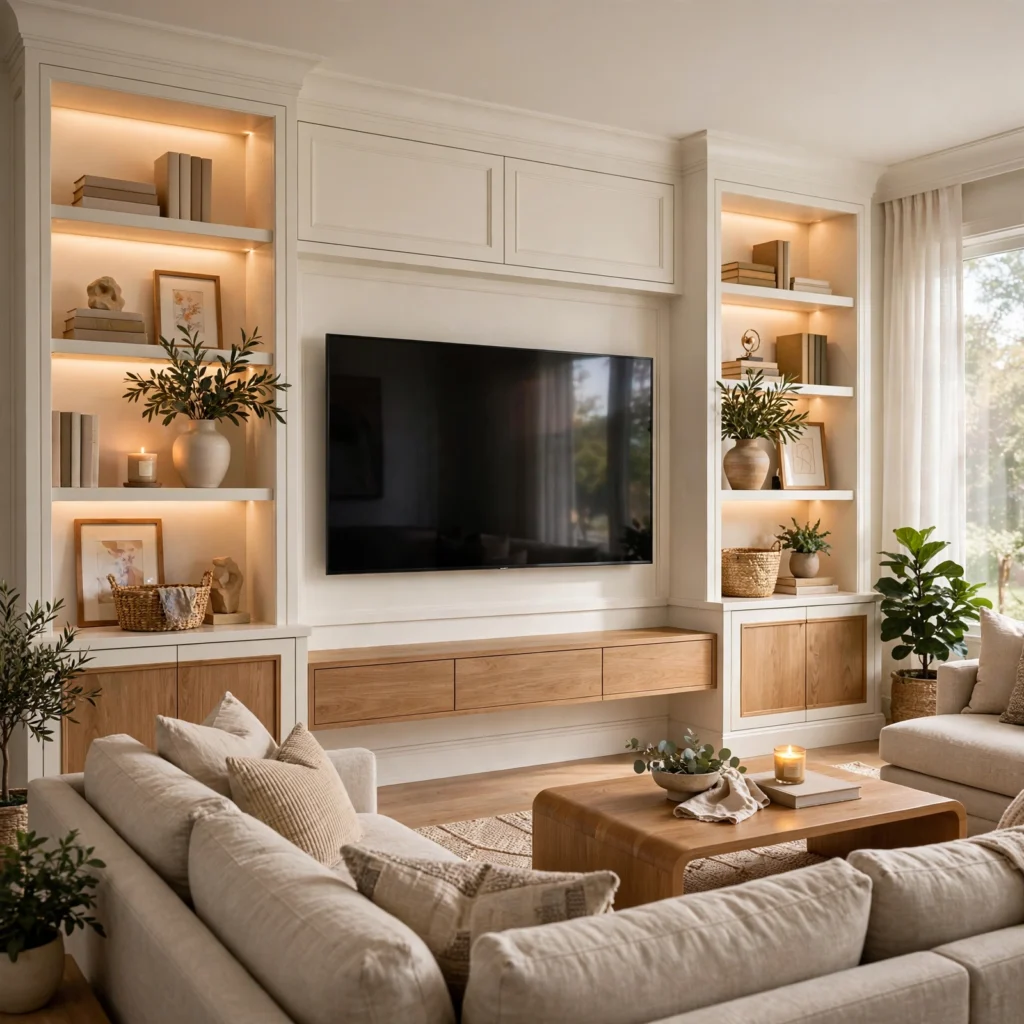
Built-in media cabinetry frames the television within custom shelving and closed storage, giving the whole wall a finished, architectural look. This living room TV wall idea works particularly well for hiding cable boxes, gaming consoles, and other electronics behind cabinet doors. Open shelving on either side of the television also provides display space for books or decor, balancing the screen visually.
| Cabinetry Type | Approx. Cost | Best For |
| Modular stock unit | $500-$1,500 | Budget-friendly, DIY install |
| Semi-custom built-in | $2,000-$5,000 | Standard rooms, some customization |
| Fully custom built-in | $5,000-$12,000+ | Exact fit, high-end finish |
3. Stone Veneer Accent Wall
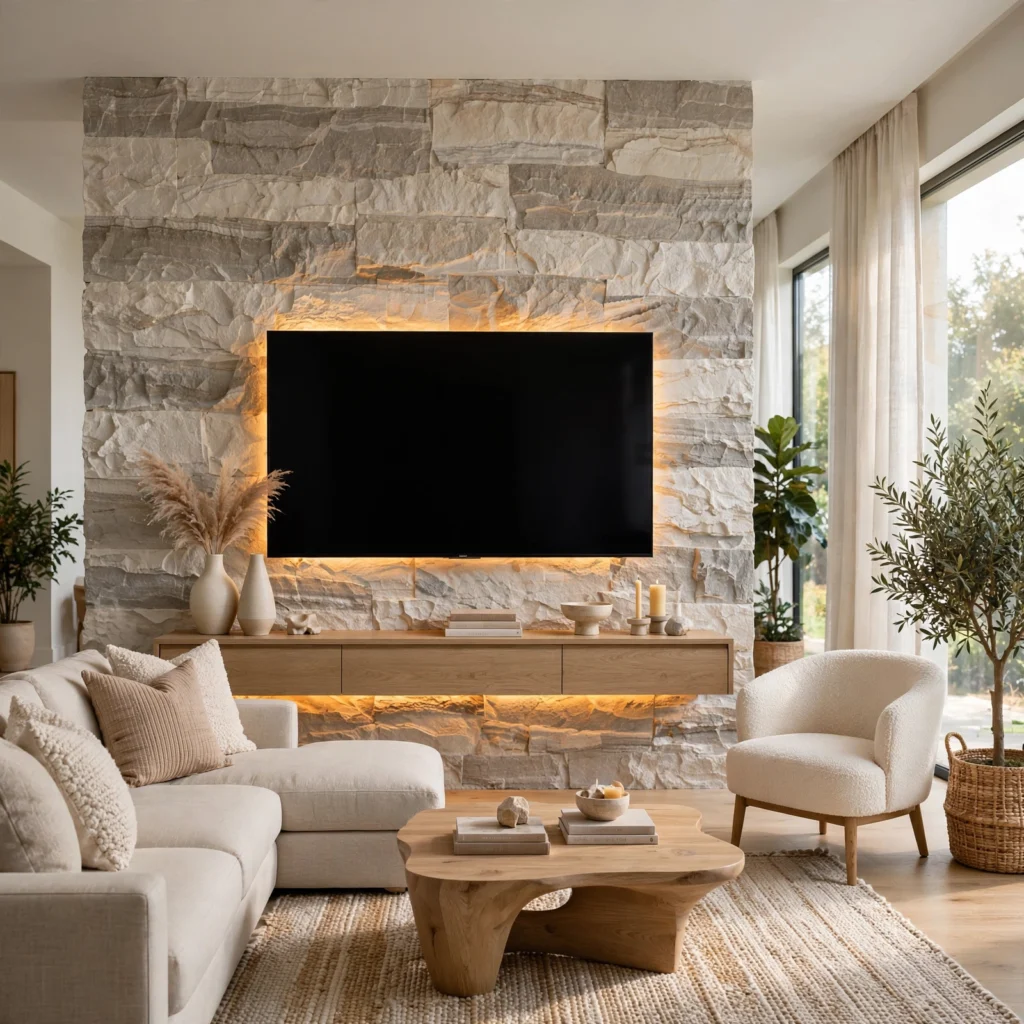
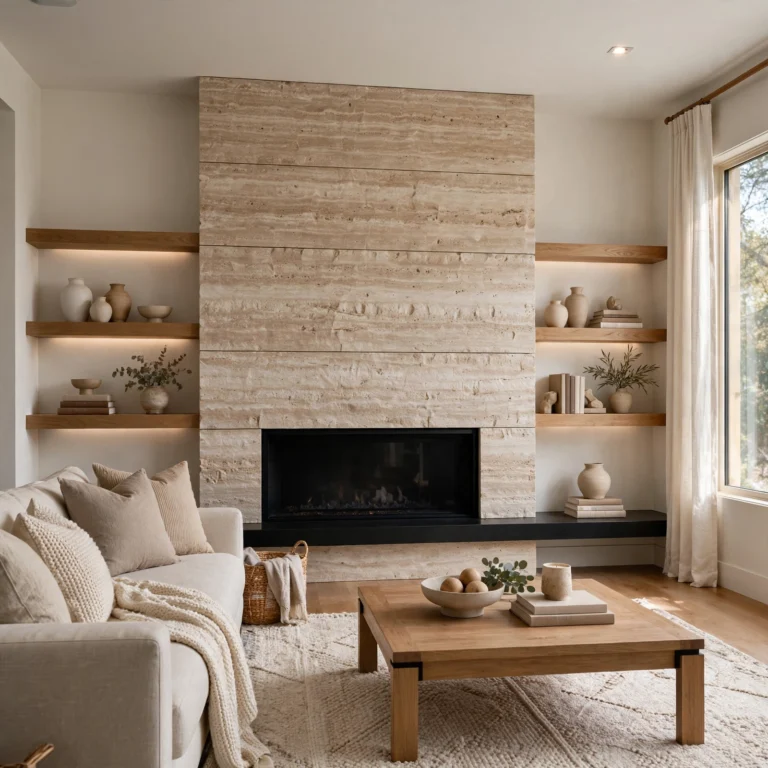
A stone veneer accent wall behind the television adds texture and a natural material element to a living room TV wall. Ledger stone or a smoother limestone-look veneer are both common choices, and the material can extend the full height of the wall or stop partway for a more subtle effect. This treatment pairs particularly well with a fireplace positioned below or beside the television.
4. Floating Wall-Mounted Console
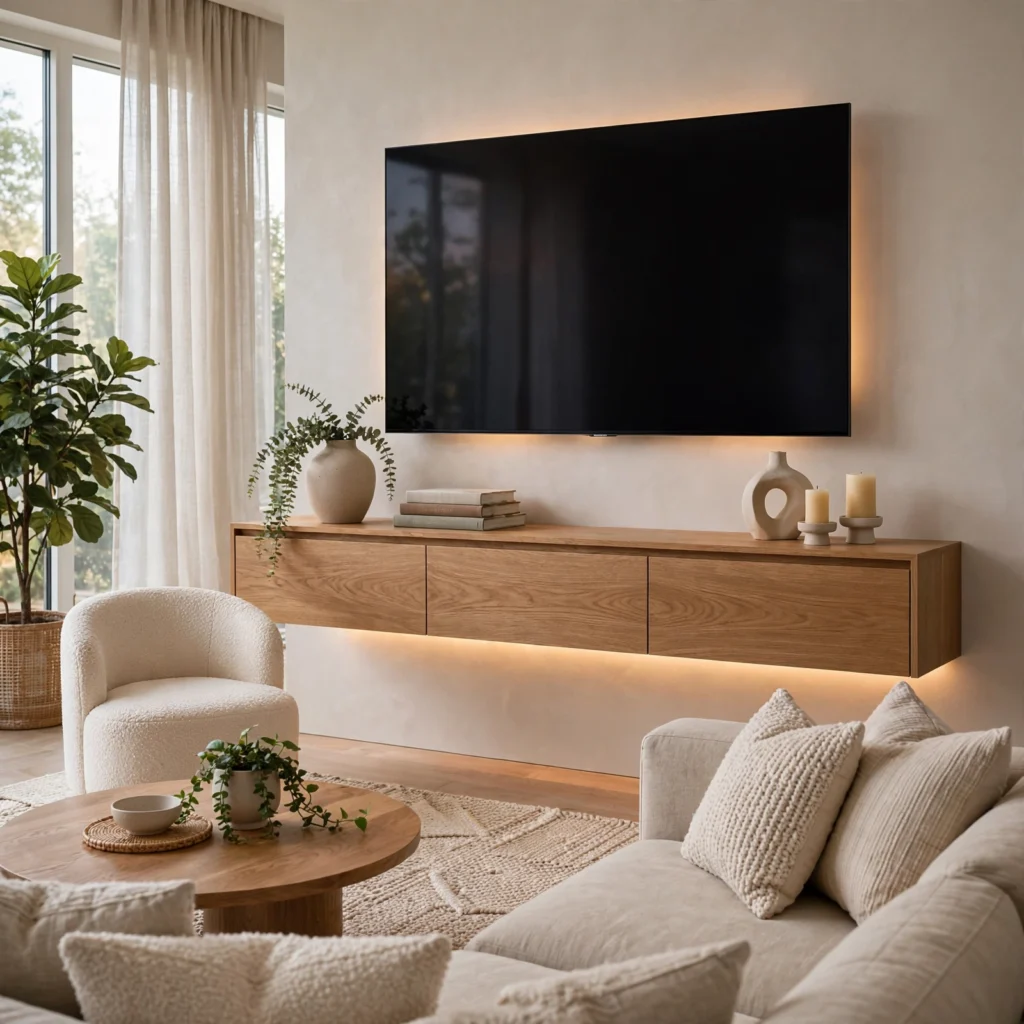
A floating wall-mounted console sits below the television without touching the floor, keeping the area beneath the TV visually open in a living room. This works especially well in smaller rooms, where floor space matters more, and it also makes cleaning underneath the console easier. Choosing a console with closed storage keeps remotes and electronics out of view while maintaining the floating look.
5. Hidden Cable Management
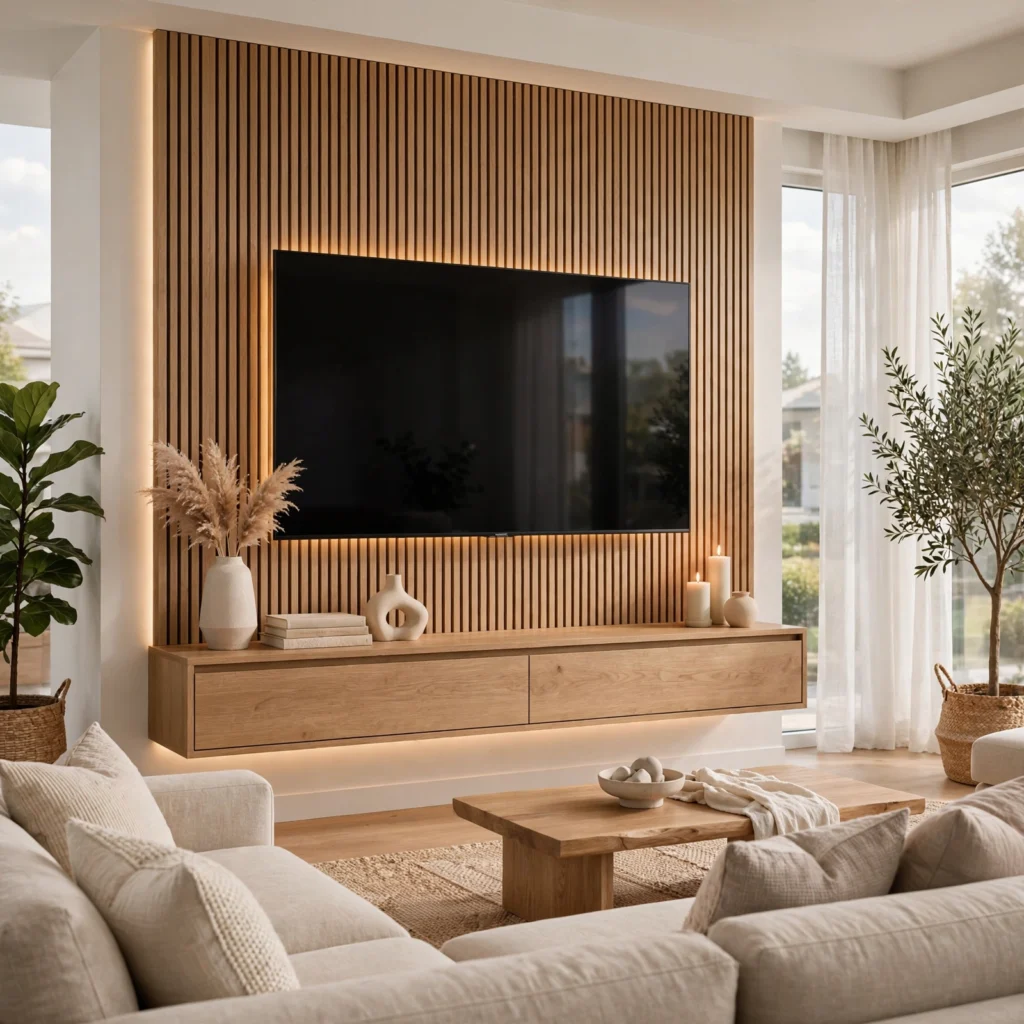
Hidden cable management routes all cords for the television and surrounding electronics through the wall or behind panels, so no wires are visible on a living room TV wall. This typically requires an in-wall cable kit or professional installation, especially when the television is mounted above a fireplace or on a wall without a nearby outlet. This single detail has one of the biggest impacts on how finished the wall appears.
Need inspiration for a compact space? Browse our modern living room to maximize style and comfort.
6. Gallery Wall Around the TV
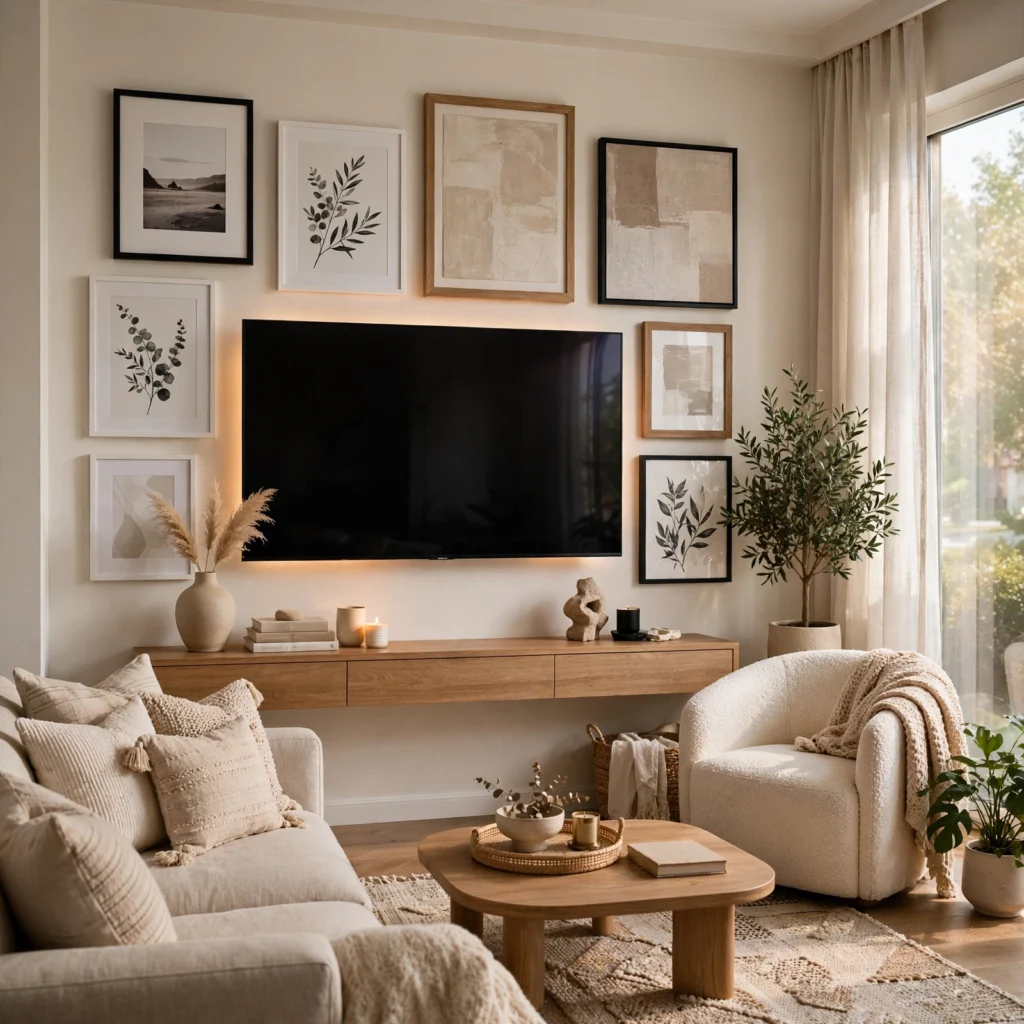
A gallery wall around the TV incorporates the television into a larger arrangement of framed art and photographs, rather than isolating it as the only object on the wall. Choosing frames in a consistent finish and leaving slightly more space immediately around the television than between the other frames helps the screen read as one element among several, not the sole focus.
7. Linear Fireplace Below TV
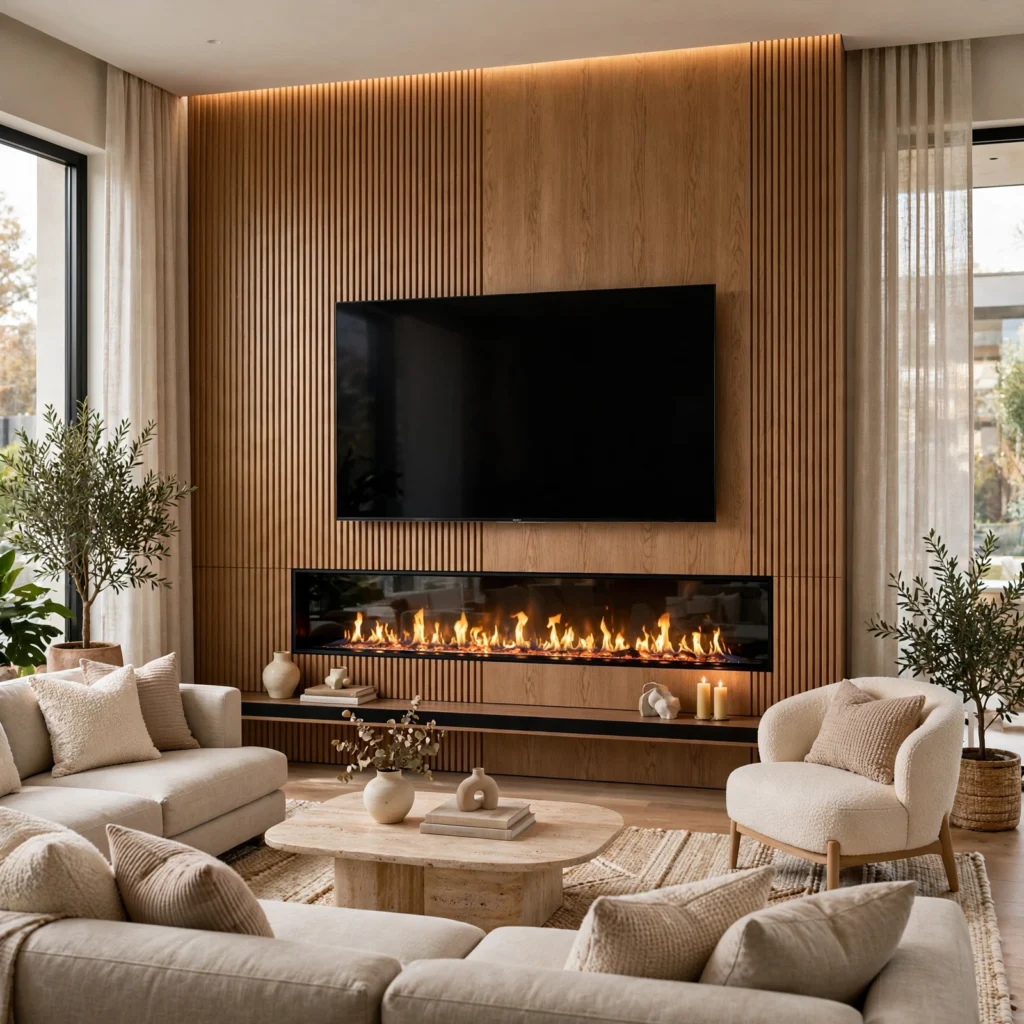
A linear fireplace positioned below the television creates a dual focal point on a living room TV wall, combining ambiance with function. This layout works well with a stone, tile, or plaster surround extending up and around both elements. Checking manufacturer clearance guidelines between the fireplace and television is necessary, since heat exposure can affect certain screen types over time.
8. Board and Batten TV Wall
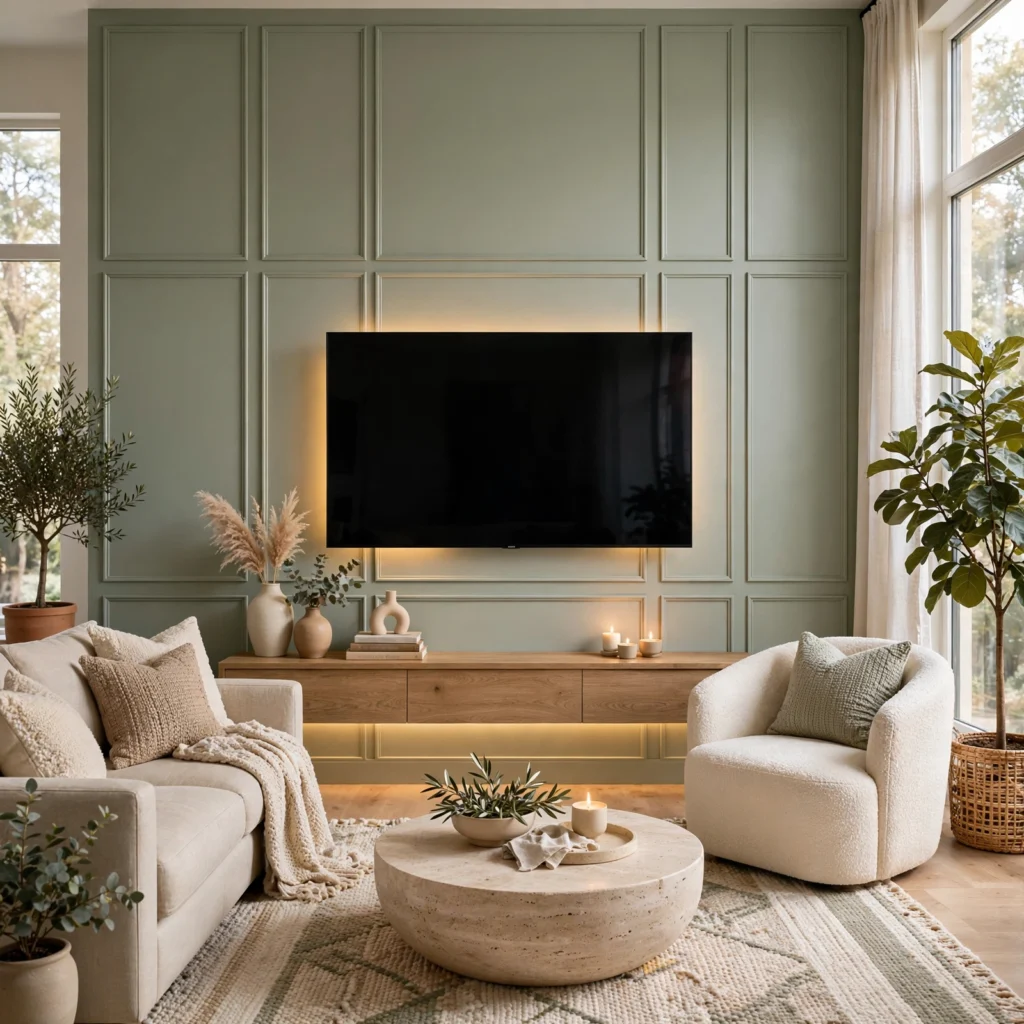
A board and batten TV wall uses vertical or horizontal trim strips applied directly to a flat wall, adding dimension at a lower cost than full paneling or stone veneer. Painting the battens the same color as the wall keeps the look subtle, while a contrasting paint color makes the texture more of a statement. This treatment works in both traditional and more modern living rooms.
9. TV Wall With Symmetrical Shelving
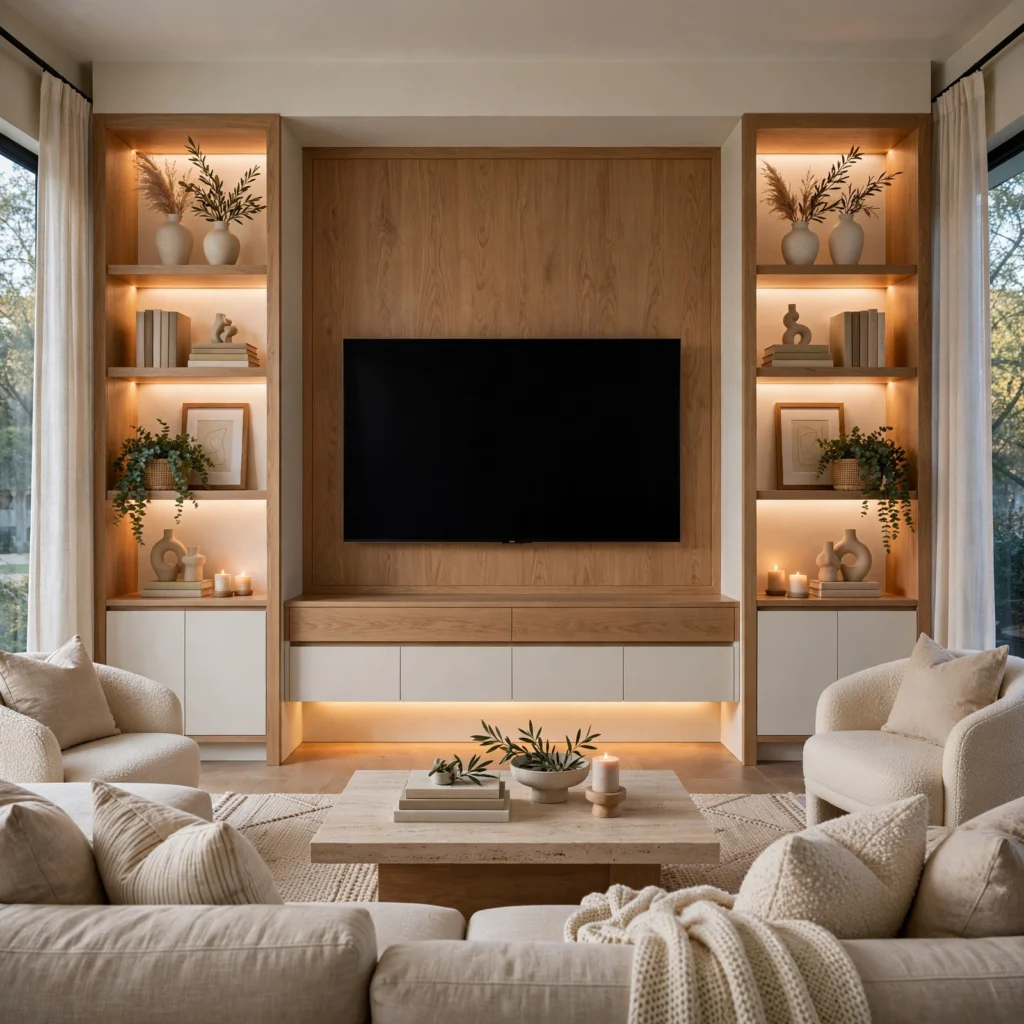
A TV wall with symmetrical shelving places matching shelf units or cabinetry on either side of the television, creating a balanced, intentional layout. This living room TV wall idea is especially useful in rooms with a wide, blank wall that would otherwise feel empty around a centered screen. Styling each side of shelving similarly, though not identically, keeps the symmetry from feeling too rigid.
| Wall Width | TV Size Recommendation | Shelving Width Each Side |
| 8-10 ft | 55-65 in | 18-24 in |
| 10-13 ft | 65-75 in | 24-36 in |
| 13+ ft | 75-85 in | 36-48 in |
10. Plaster Finish Accent Wall
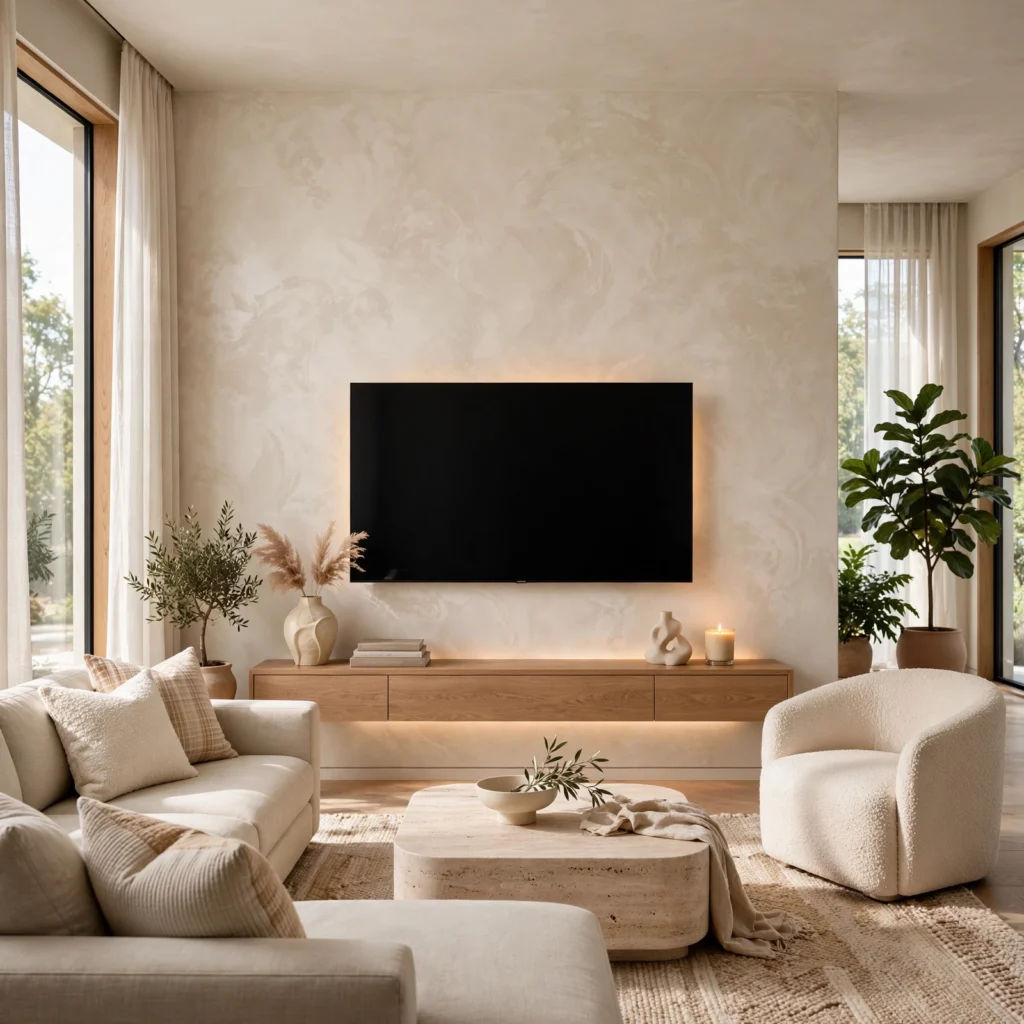
A plaster finish accent wall gives a living room TV wall a soft, textured backdrop using a hand-applied lime or clay plaster finish. This treatment works particularly well in a living room aiming for a more organic, warm modern look, and it pairs nicely with a floating console in natural wood. Plaster finishes typically require a skilled applicator for the smoothest, most even result.
11. Recessed TV Niche
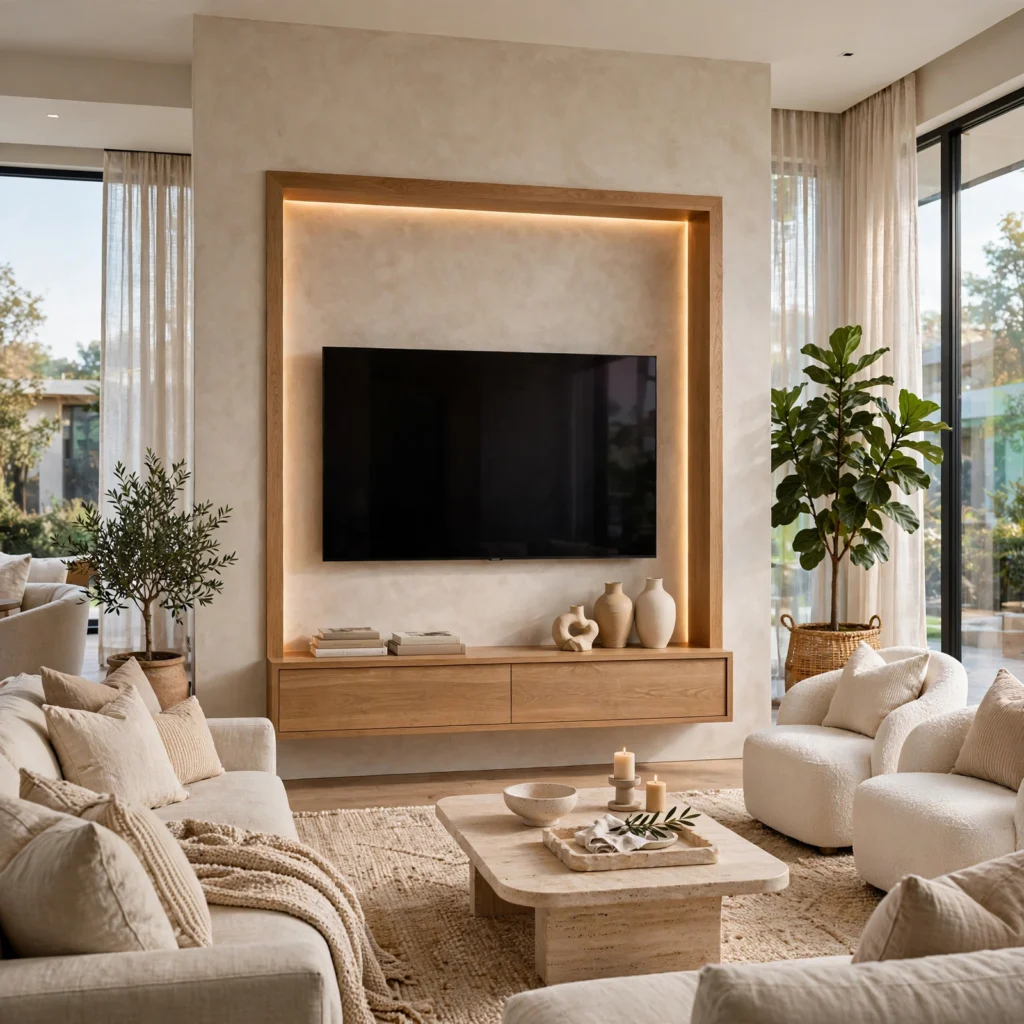
A recessed TV niche is built into the wall itself, allowing the television to sit flush rather than protruding from the surface. This living room TV wall idea requires construction work during a renovation or new build, since it involves altering the wall’s framing, but it results in an especially clean, integrated look. Adding interior lighting inside the niche can also highlight the television as a design feature even when it’s off.
12. Wallpaper Behind the TV
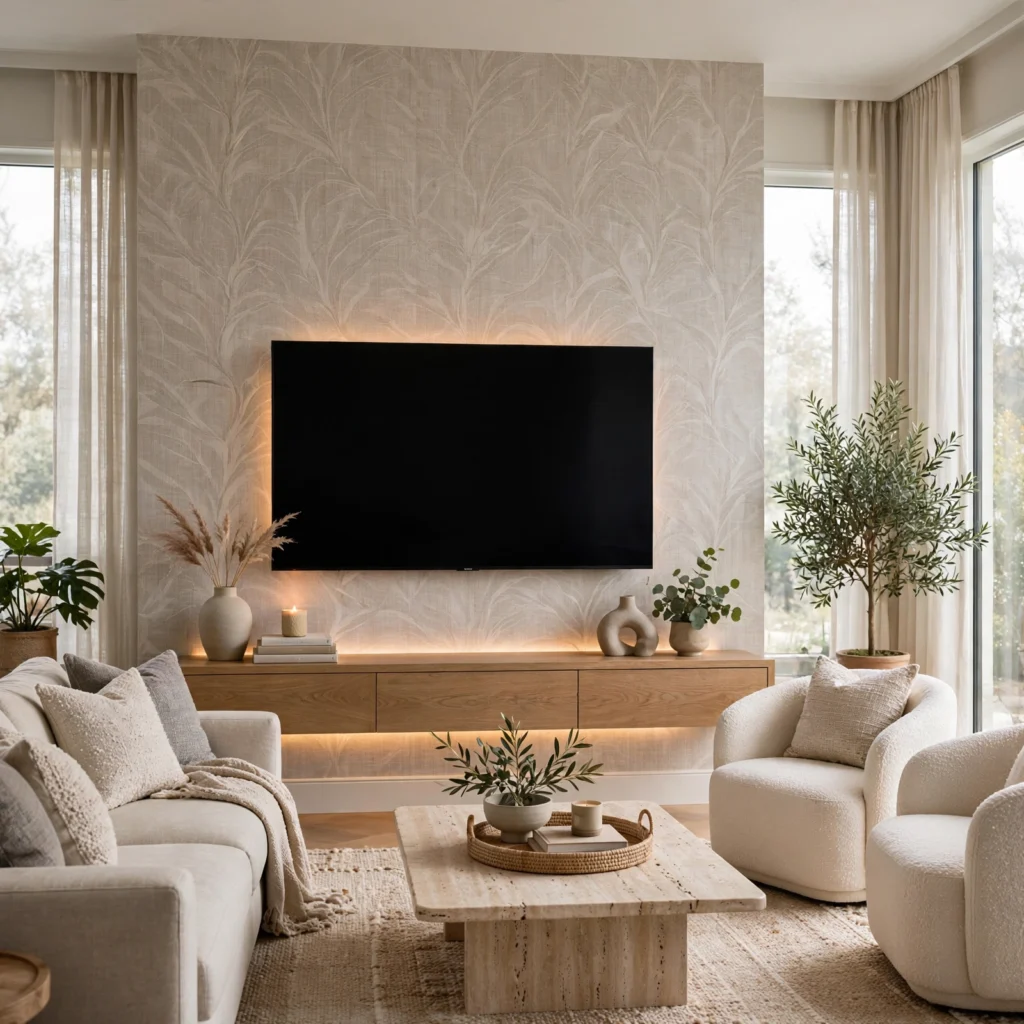
Wallpaper behind the TV introduces pattern or color to a living room TV wall without requiring structural changes. A large-scale mural or textured grasscloth wallpaper tends to work particularly well, since the television and cabinetry below help break up the pattern rather than letting it overwhelm the room. This is one of the more budget-friendly ways to add visual interest to an otherwise plain wall.
13. Living Room TV Wall With Ambient Lighting
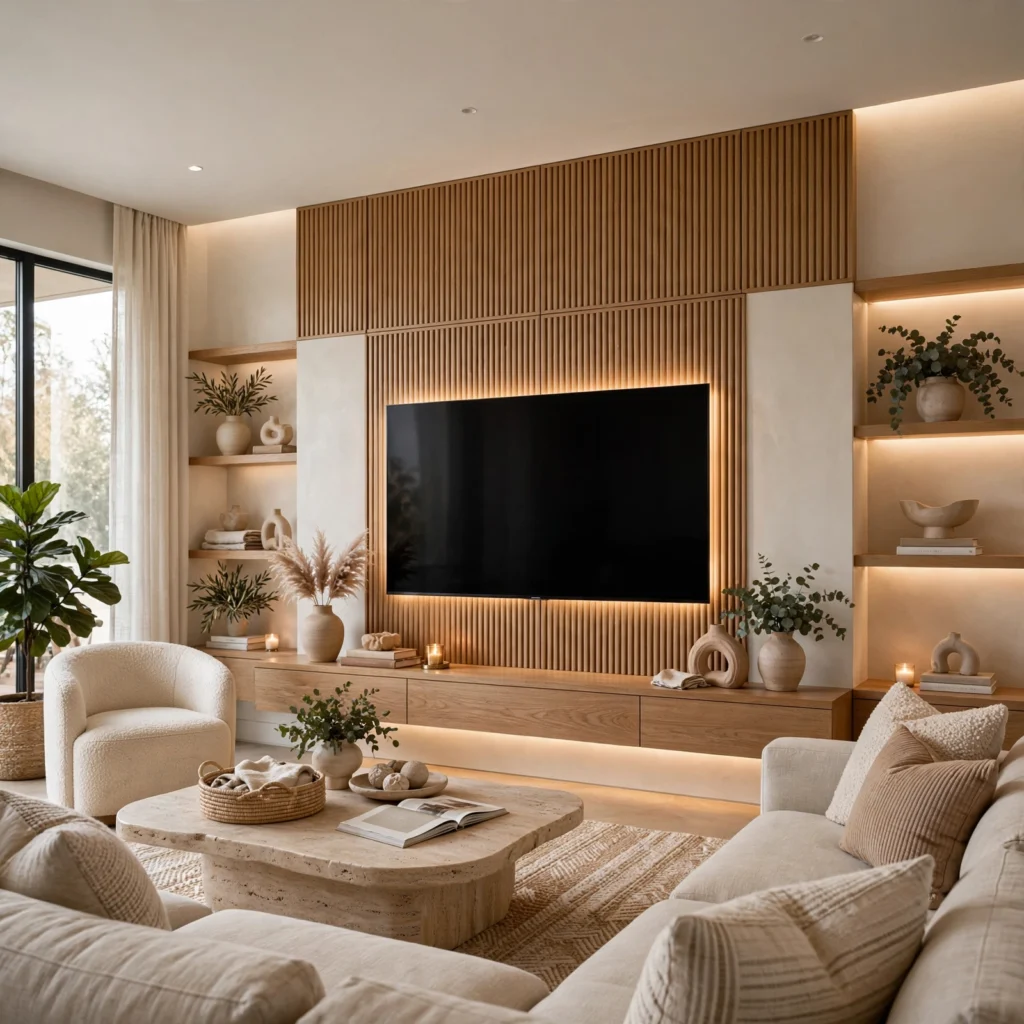
A living room TV wall with ambient lighting uses LED strips or small accent fixtures installed behind the television or along shelving to add a soft glow when the room’s main lights are dimmed. This lighting also reduces eye strain when watching TV in a dark room, since the contrast between a bright screen and a pitch-black wall is less comfortable over time. Warm-toned LEDs in the 2700K to 3000K range tend to look most natural in this application.
Shop the Look
A few pieces make it easier to bring these TV wall ideas together. Consider a semi-custom media cabinet with closed storage, an in-wall cable management kit, warm-toned LED backlighting strips, floating wood shelving for either side of the screen, and a stone veneer panel kit for a DIY accent wall.
Common Mistake to Avoid
A common mistake with a living room TV wall is mounting the television too high, often to accommodate a fireplace or console below it, which forces an uncomfortable viewing angle. The center of the screen should generally sit close to eye level when seated, roughly 42 to 48 inches from the floor for most living room seating heights, rather than being pushed up simply to clear other furniture.
FAQs
How high should a TV be mounted on a living room wall?
The center of the television should generally sit at eye level when seated, which typically falls between 42 and 48 inches from the floor depending on the height of the seating. Mounting a TV above a fireplace often exceeds this range, which is worth factoring in if comfortable viewing is a priority over the look of the layout.
What material is best for a TV accent wall?
Wood paneling, stone veneer, and plaster are among the most popular materials for a TV accent wall, each offering a different texture and price point. Wood paneling tends to be the most budget-friendly and DIY-accessible option, while stone veneer and plaster typically involve a higher cost and more specialized installation.
How do I hide TV wires on a living room wall?
An in-wall cable management kit is the most effective way to hide TV wires, routing cords through the wall cavity from the television down to a nearby outlet or media console. For renters or situations where cutting into the wall isn’t an option, a paintable cord cover channel is a simpler, non-permanent alternative.
Should a TV be the focal point of a living room?
The television doesn’t have to be the sole focal point, and many successful living room TV walls balance the screen with other design elements like a fireplace, built-in shelving, or artwork. Incorporating the TV into a larger wall design, rather than isolating it, tends to create a more cohesive and less screen-dominated room.
What size TV fits a living room wall?
TV size should generally correspond to the viewing distance and wall width, with an 8 to 10 foot wide wall typically suited to a television in the 55 to 65 inch range. A good general guideline is to measure the distance from the main seating area to the wall and divide by 1.5 to 2 for an appropriate screen size.
Conclusion
These 13 living room TV wall ideas show that a mounted television can be part of a considered design rather than a plain, isolated screen on a blank wall. Save this guide to Pinterest for later, or check out a related post on modern living room ideas for more layout inspiration.