15 Gorgeous Elegant Christmas Tree Decor Ideas That Will Transform Your Home for the Holidays
A great Christmas tree comes down to a handful of repeatable layers, lights, ribbon or garland, ornaments at varying scales, and a topper, applied in the right order rather than added all at once. Good christmas tree decor ideas start with a clear color and material direction before a single ornament goes on, since that decision shapes every layer that follows. This guide walks through fifteen distinct tree themes, from classic red and gold to more current neutral and jewel-toned looks, with real product names and layering order so you can build a tree that reads as intentional rather than randomly assembled.
Trend & Background
Christmas tree styling has moved away from the fully matched, single-retailer ornament sets that dominated for years, toward trees that mix vintage ornaments, ribbon, and a few statement pieces layered in with intention. Neutral and monochromatic trees in particular have grown in popularity as an alternative to traditional red and green, offering a look that fits more consistently with a home’s existing decor throughout the season. Ribbon has also replaced garland as the more common mid-layer material in many current trees, since it’s easier to shape into consistent loops and holds its position better than traditional beaded or tinsel garland.
Key Takeaways
- Fifteen tree themes ranging from budget ribbon-and-ornament swaps to bigger investments like flocked branches and designer toppers
- Storage and reuse notes are included wherever a theme relies on materials worth keeping for future years
- A reference table covers ornament count and ribbon length by tree size so you can shop before you decorate
- Five FAQs cover budget, layering order, and how to avoid a tree that looks cluttered
1. Christmas Tree Decor Ideas Classic Red and Gold
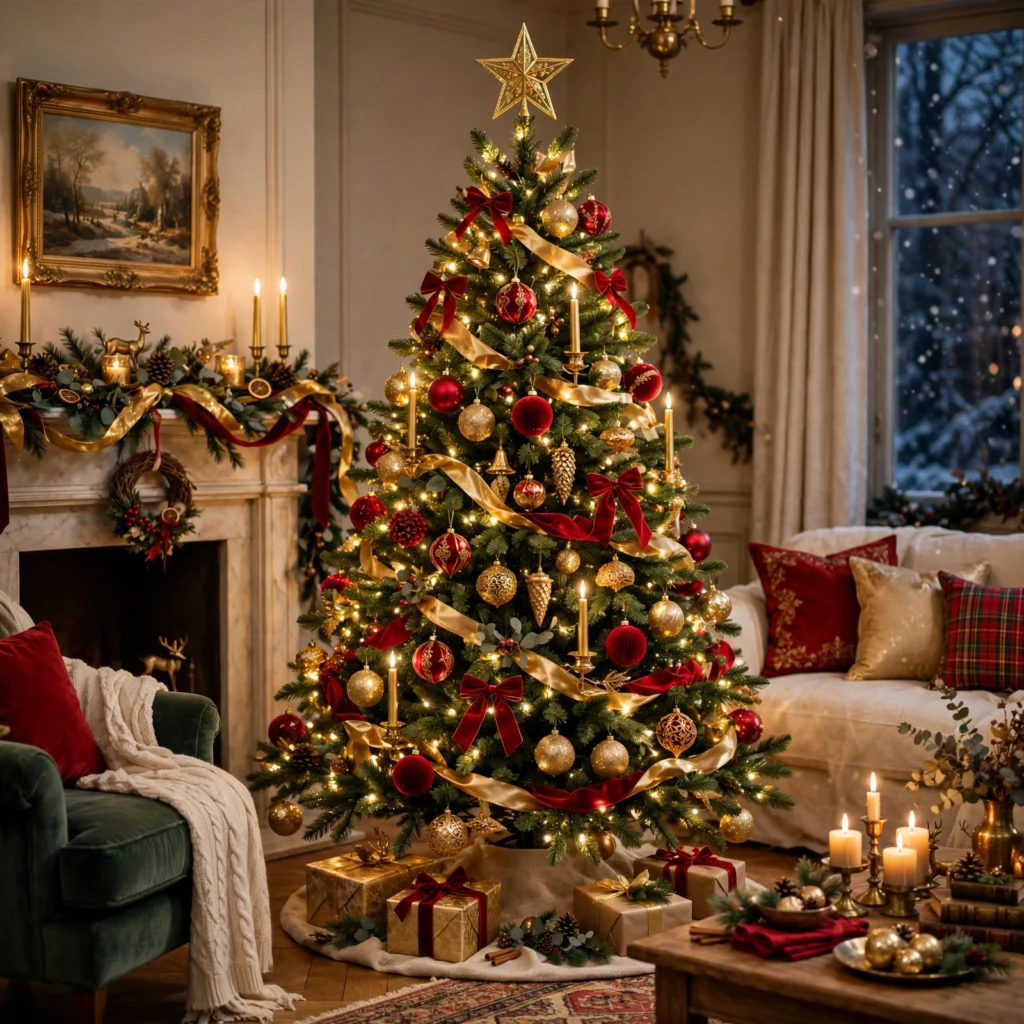
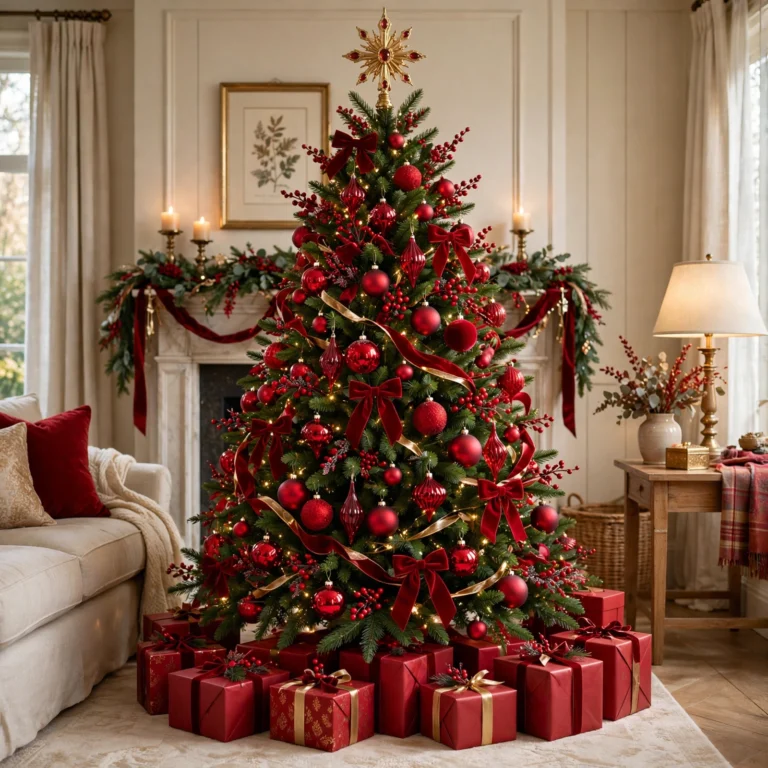
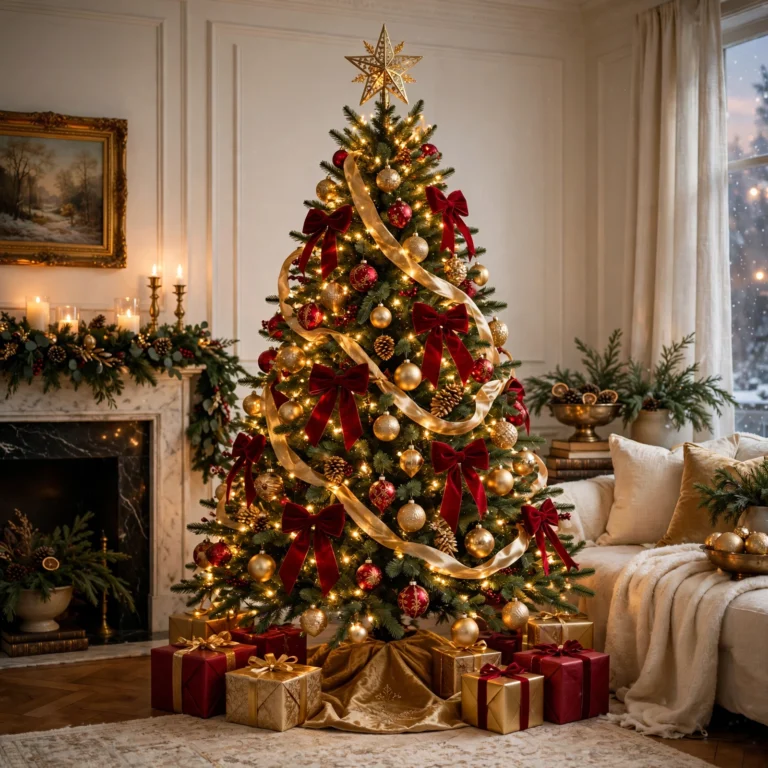
A classic red and gold tree layers warm white lights, gold mesh or wired ribbon, and a mix of red glass ball ornaments in varying sizes for a traditional, timeless look that rarely feels dated. Start with lights woven deep into the branches rather than just the tips, then add ribbon in loose loops before placing ornaments, working from larger balls deeper in the tree to smaller ones near the outer branches. A gold star or bow topper completes the traditional look without introducing a fourth material or color into the mix.
| Tree Height | Recommended Ornament Count | Ribbon Length |
| 6 ft | 100–150 ornaments | 30–40 ft |
| 7–7.5 ft | 150–200 ornaments | 40–50 ft |
| 8+ ft | 200–250 ornaments | 50–60 ft |
2. Neutral Woodland Tree
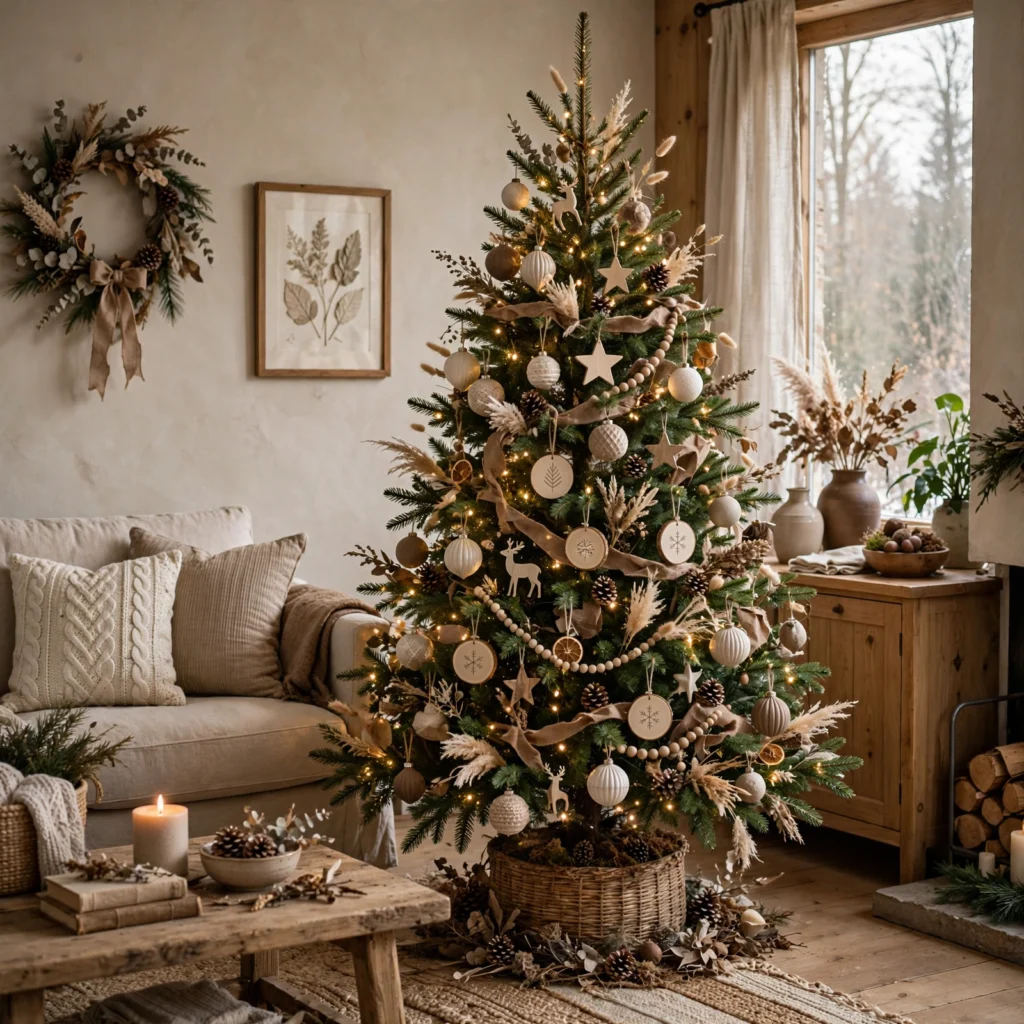
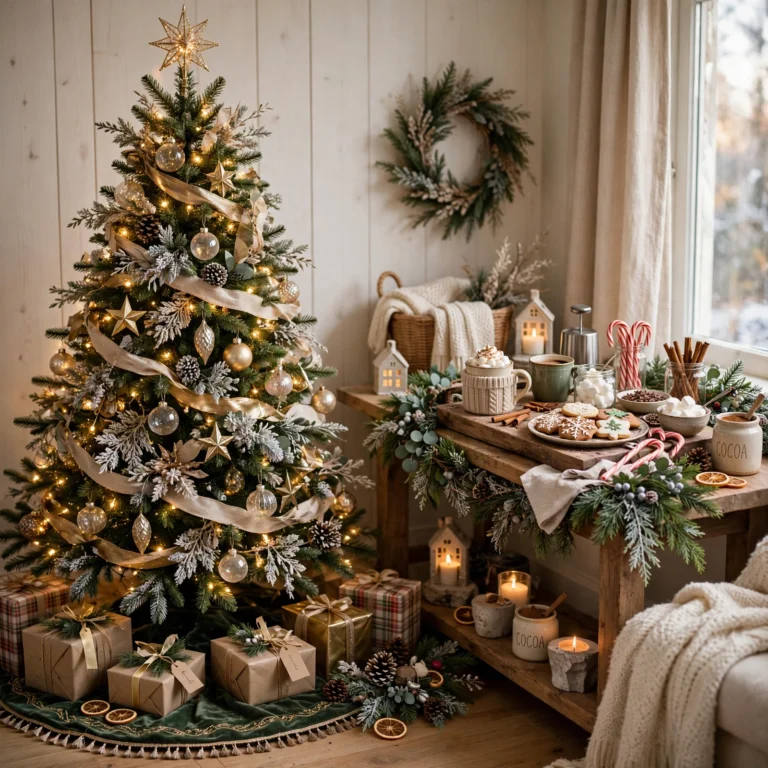
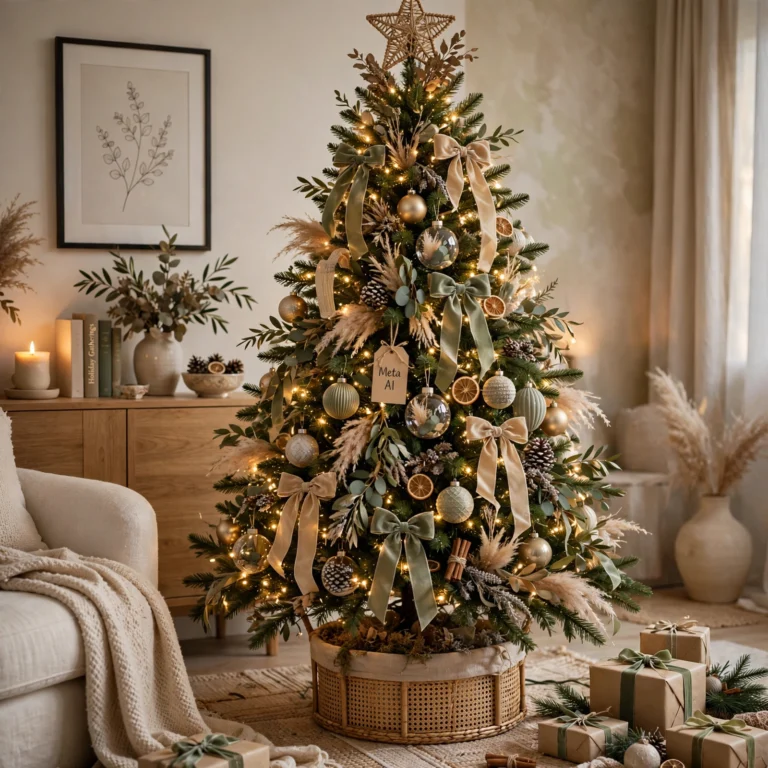
A neutral woodland tree combines cream and warm white ornaments with natural pinecones, wood bead garland, and a soft burlap or linen ribbon for a look that reads as sophisticated and blends easily with almost any room’s existing decor. Layer in a few small faux birds or a woodland animal ornament for texture, keeping the overall palette to cream, tan, and natural brown without introducing brighter colors. This theme tends to be one of the most reusable from year to year, since the neutral palette rarely feels dated the way brighter, trend-driven colors can.
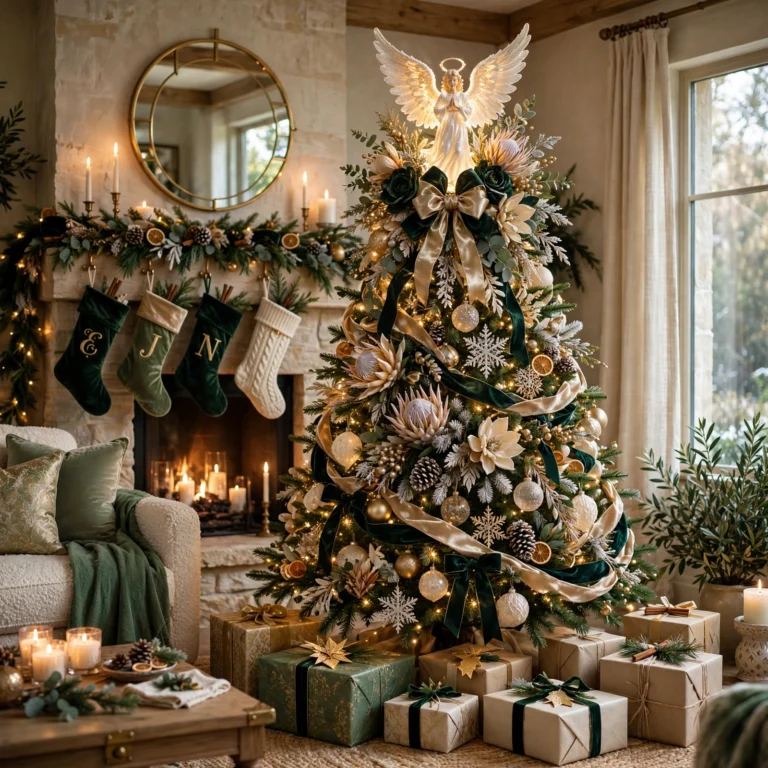
3. Jewel Tone Velvet Tree
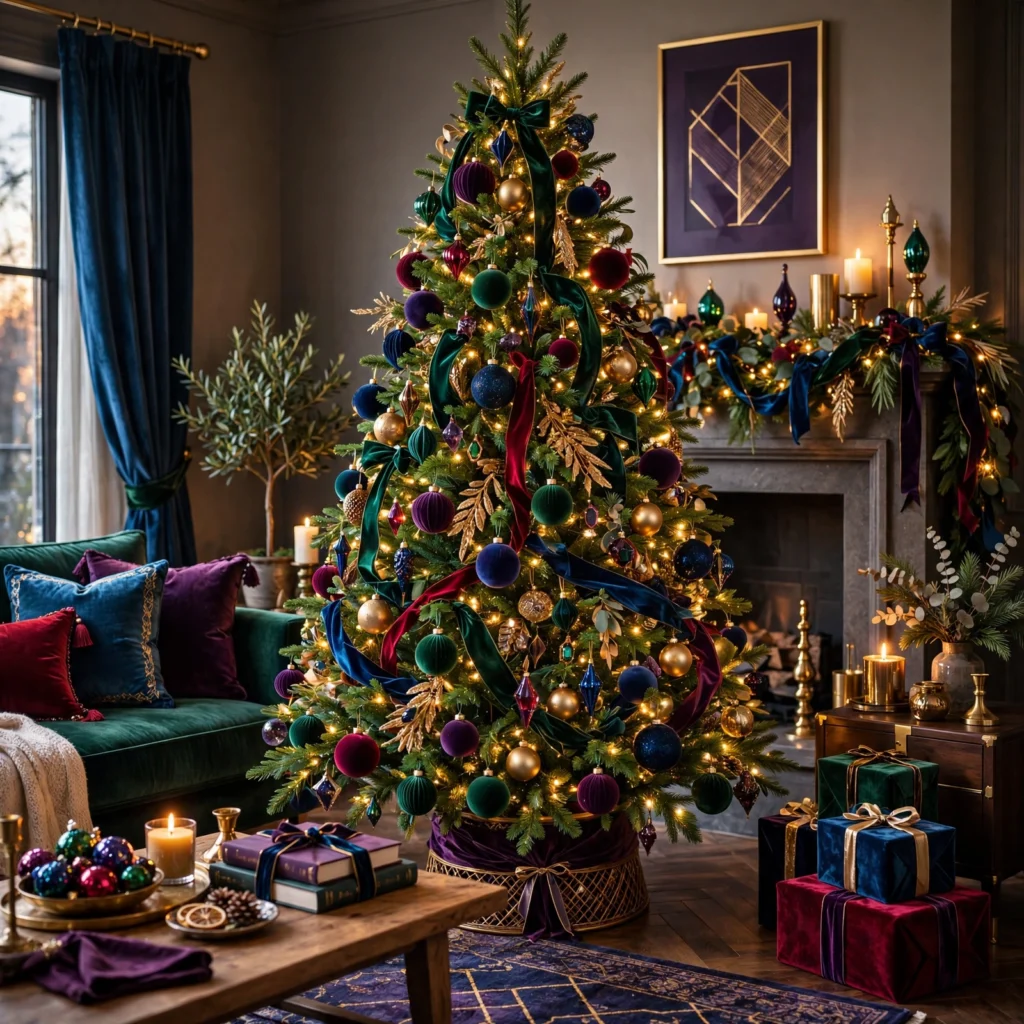
A jewel tone tree layers emerald, sapphire, and ruby velvet ribbon with matching glass and velvet-flocked ball ornaments for a rich, formal look suited to a more traditional living or dining room. Choose one jewel tone as the dominant color, using the other two in smaller proportion, since three fully saturated colors at equal weight can compete rather than complement each other on the tree. Warm white lights, rather than cooler white or multicolor strands, keep the jewel tones reading rich rather than cold.
In order to see more options for christmas tree ideas CLICK HERE
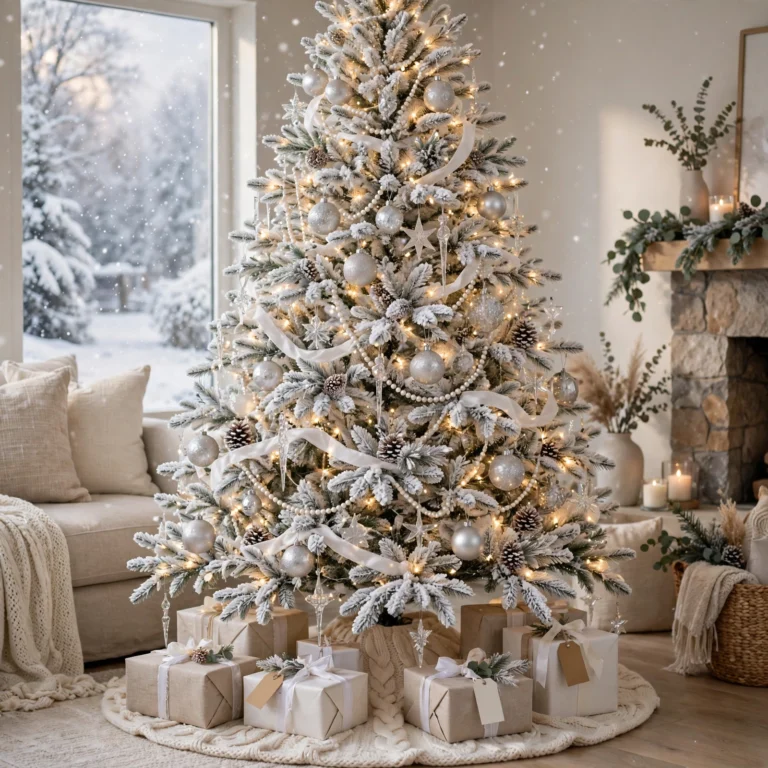
4. Flocked White Christmas Tree
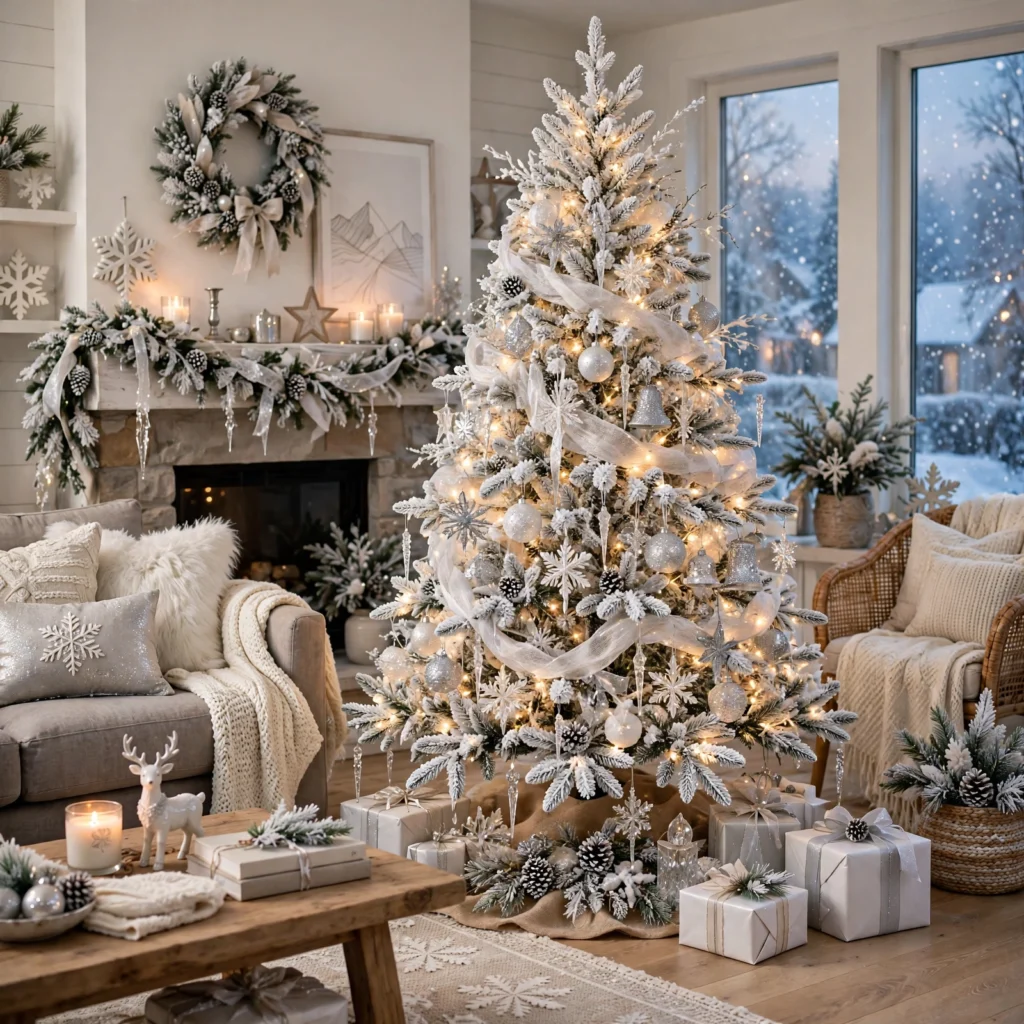
A flocked or snow-dusted artificial tree paired with silver, icy blue, and clear glass ornaments creates a winter wonderland look that reads as current and photographs particularly well. Choose a tree with realistic, textured flocking rather than a flat, painted-on white finish, since the texture is what sells the snow-covered effect from a distance. Warm white lights still work well against flocking, though cooler white lights lean further into the icy, wintry direction if that’s the specific look you’re after.
5. Vintage Ornament Tree
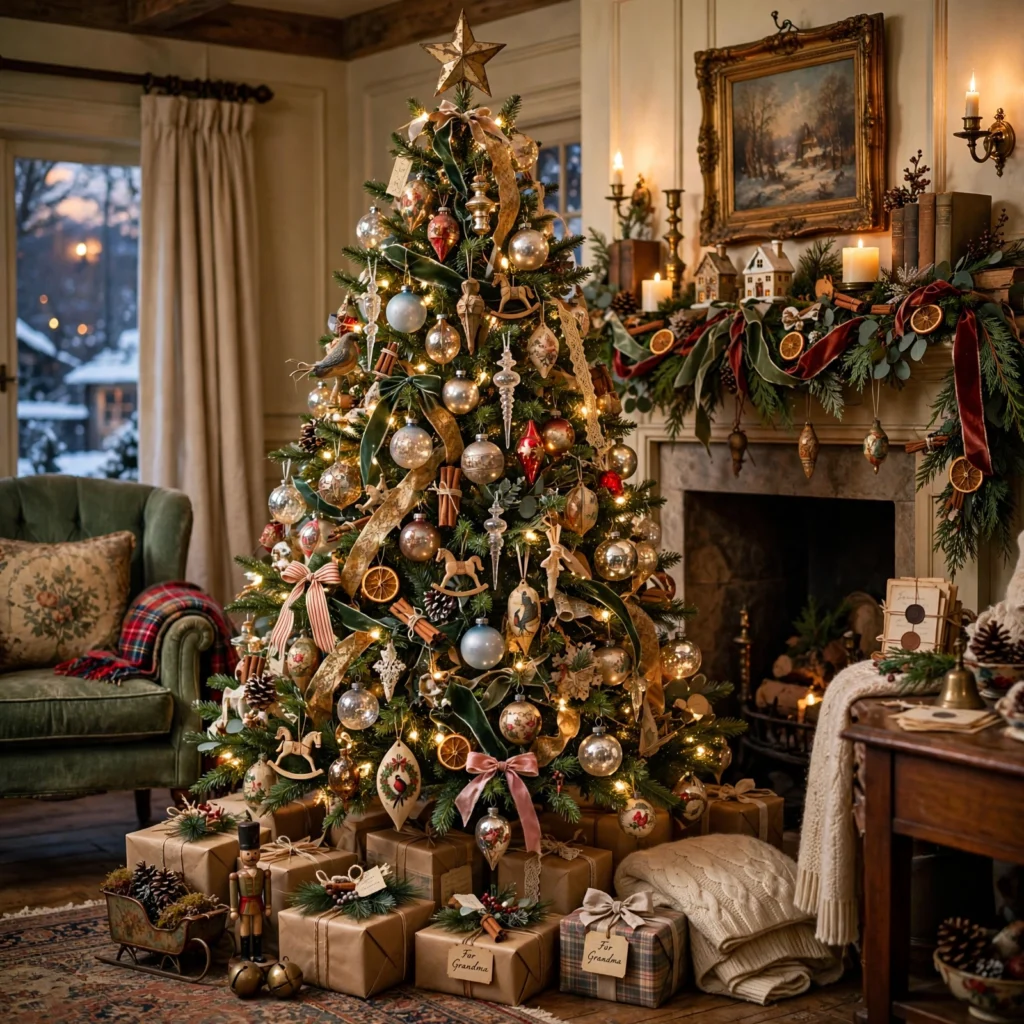
A tree built primarily from vintage or heirloom glass ornaments, collected over years or inherited from family, carries more personal history than any purchased theme could replicate. Mix in a simple garland, tinsel or a classic bead strand, that matches the era of the vintage ornaments rather than a modern ribbon that would clash with the older pieces. This tree typically costs little to nothing beyond what’s already stored in the attic, making it one of the most budget-friendly themes on this list despite reading as the most collected and considered.
6. Monochromatic Blush Tree
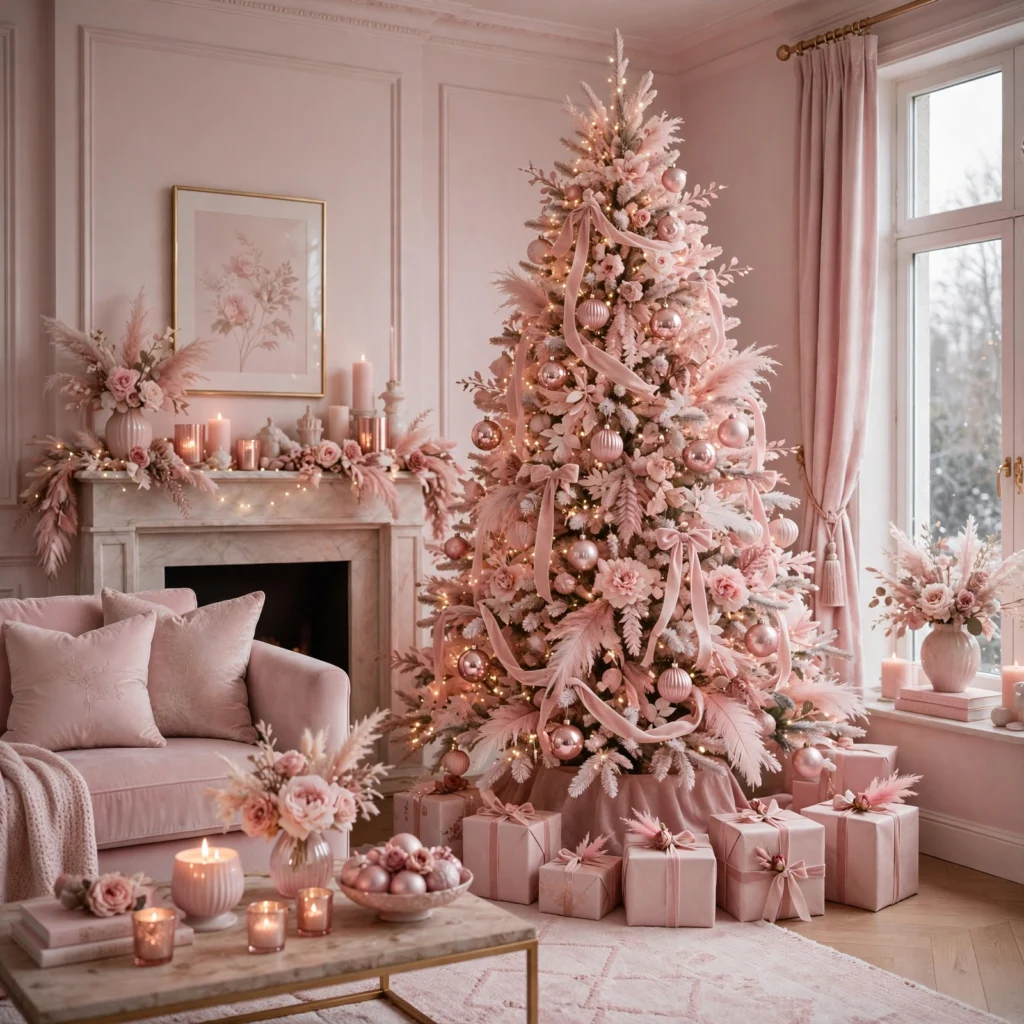
A monochromatic blush tree layers varying shades of pink, from pale blush to a deeper rose, in matte, glossy, and glitter finishes for texture within a single color family. This theme suits a bedroom, nursery, or a more feminine-leaning living room wanting something distinct from traditional red and green. Vary ornament finish and size more than color, since a truly monochromatic tree relies on texture variation, matte versus glossy versus glitter, to avoid looking flat despite using only one hue throughout.
7. Rustic Farmhouse Tree
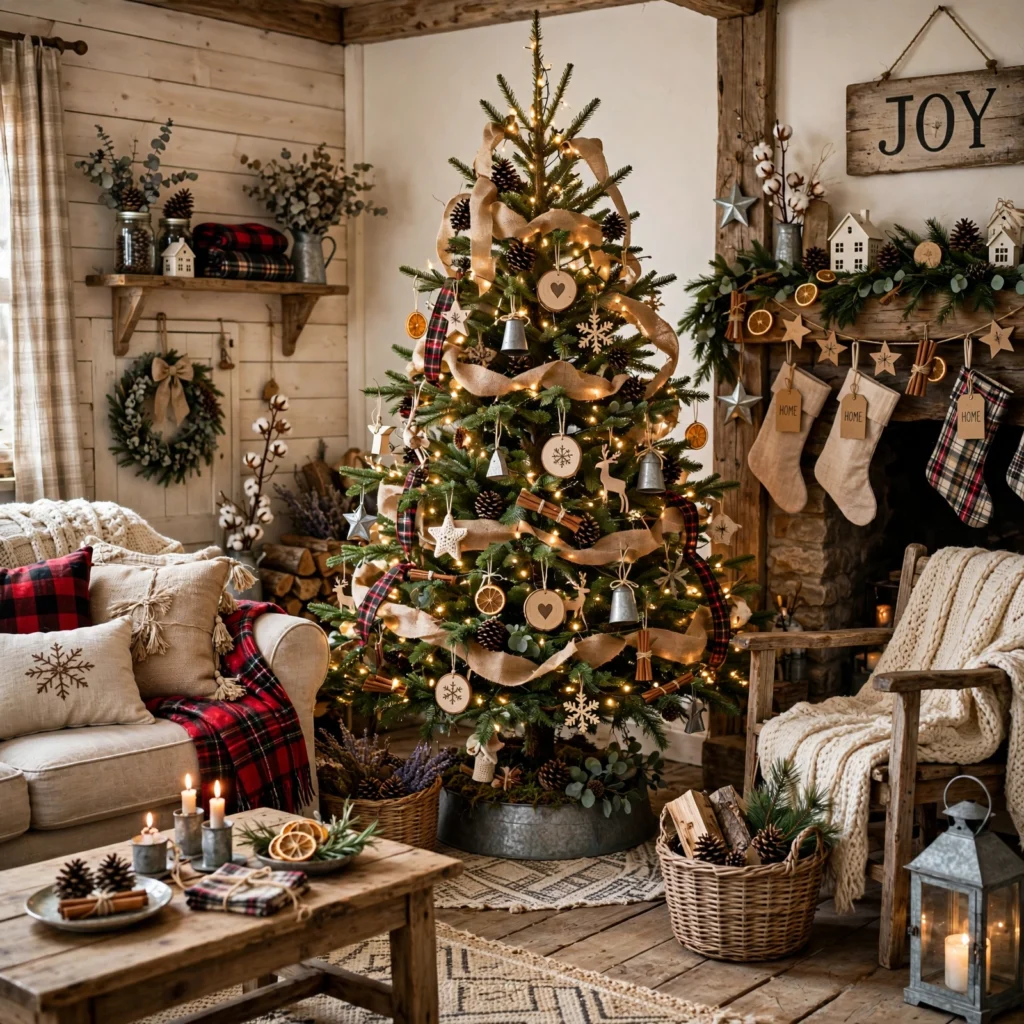
A rustic farmhouse tree combines burlap ribbon, wood slice ornaments, and a few galvanized metal accents for a warm, textural look suited to a home already leaning into natural materials elsewhere. Add a plaid ribbon in a muted red or green as a secondary layer alongside the burlap, since a single fabric type can otherwise feel one-note across an entire tree. A star topper made from wood or wrapped twine completes the look better than a glossy glass or glitter topper would in this particular theme.
8. Candy Cane and Peppermint Tree
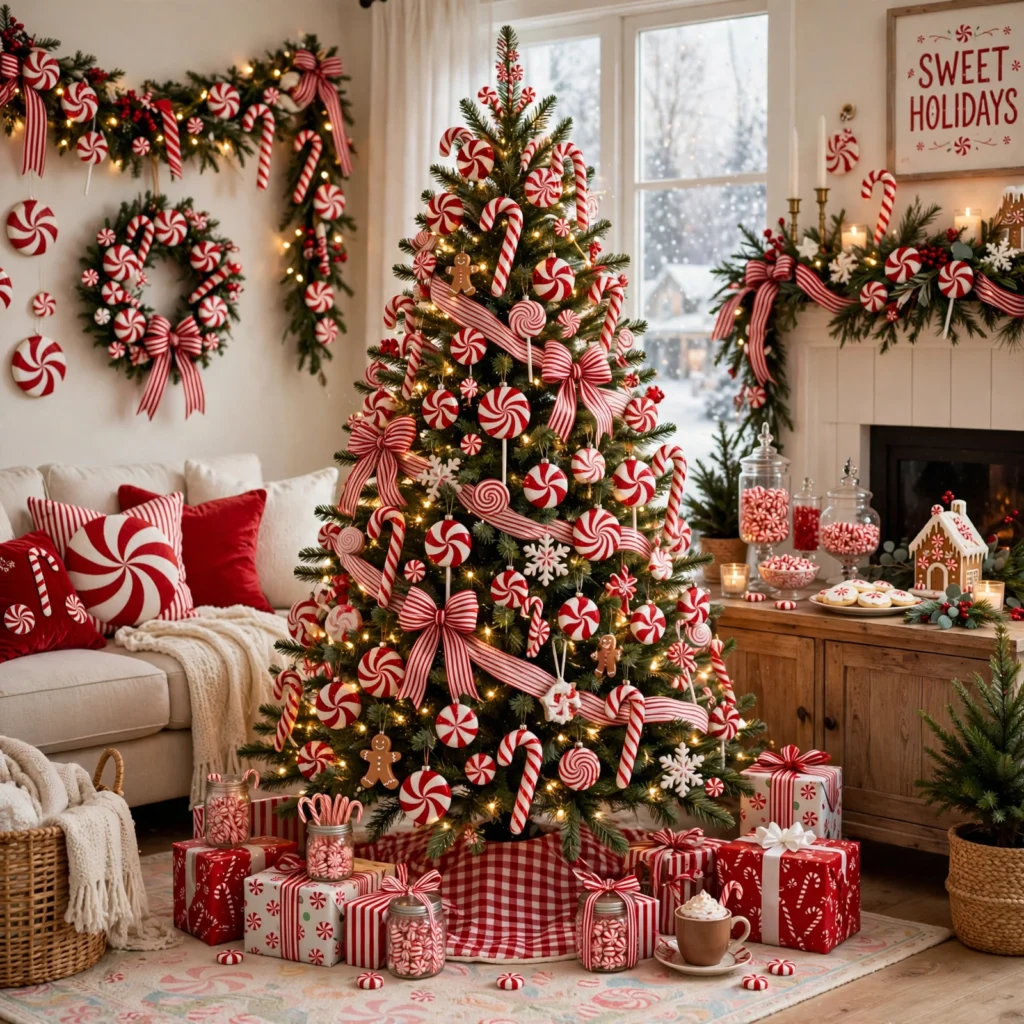
A candy cane tree uses red and white striped ribbon, peppermint-shaped ornaments, and a mix of glossy red and white glass balls for a playful, nostalgic look well suited to a family room or a home with young children. Keep the red-and-white ratio close to even throughout the tree, since leaning too heavily toward one color can make the peppermint theme read as simply a red tree with a few white accents rather than a fully realized candy cane look. Actual wrapped candy canes hung as temporary ornaments add a final playful touch, though they’re best added close to the holiday itself.
9. Coastal Blue and Silver Tree
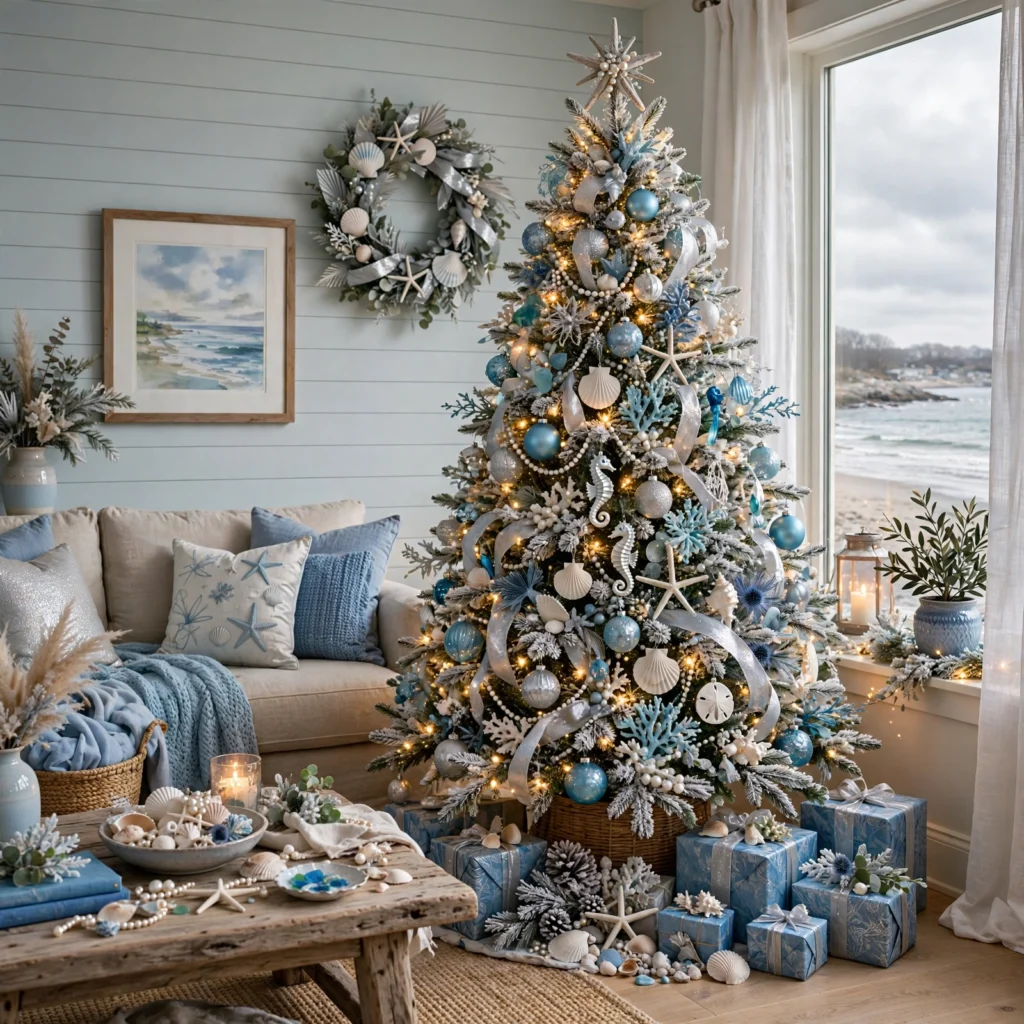
A coastal-themed tree pairs soft blue and silver ornaments with a few starfish or shell accents for a beach house or lake house that wants a Christmas tree consistent with its year-round palette. Keep the shell and starfish accents to a smaller proportion of the overall ornament count, since too many literal coastal elements can push the tree toward feeling like a themed display rather than a cohesive holiday tree. A driftwood or woven star topper ties the coastal materials together at the top of the tree.
10. Black and Gold Modern Tree
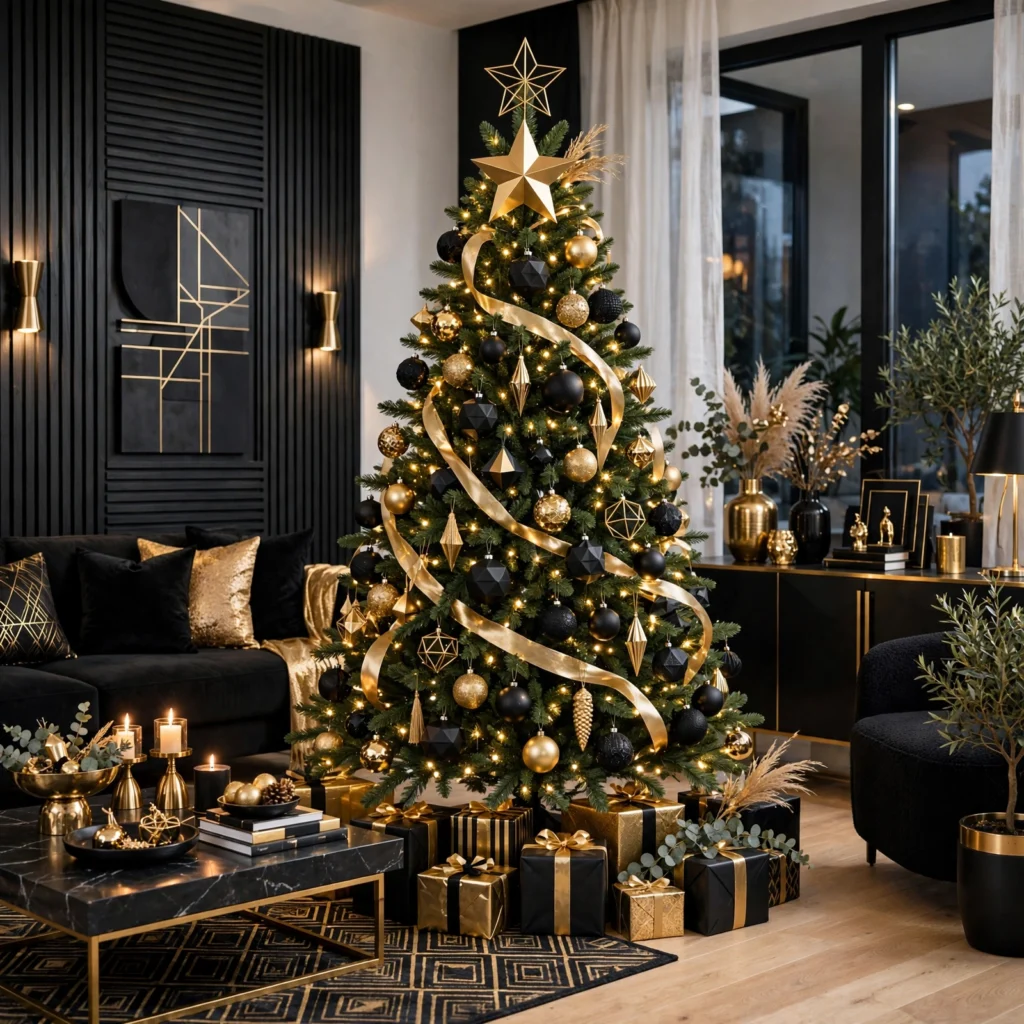
A black and gold tree layers matte black ornaments, gold mesh ribbon, and warm white lights for a modern, slightly glamorous look that stands apart from more traditional color combinations. Keep black to roughly a third of the ornament mix, using gold as the larger dominant tone, since a tree with too much black can read as somewhat somber rather than festive from across the room. This theme pairs particularly well with a home already leaning into a black and brass material palette in its everyday decor.
11. Woodland Berry and Greenery Tree
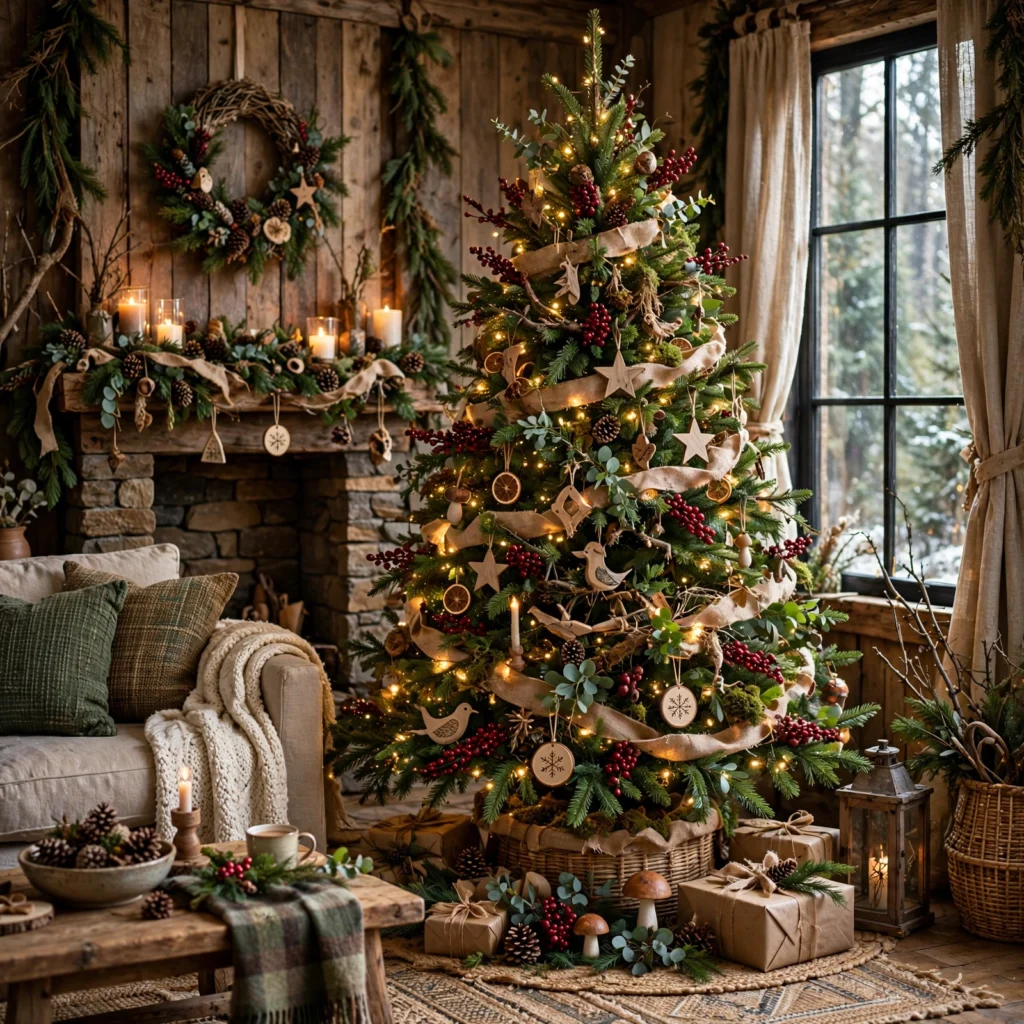
Adding faux berry sprigs, additional pine picks, and small pinecone clusters directly into a tree’s branches, alongside standard ornaments, gives the tree a fuller, more layered look without buying an entirely new, denser tree. Tuck berry and greenery picks deep into the branches near the trunk rather than only at the tips, since this depth is what makes a tree read as lush rather than sparse from a distance. This technique works especially well on a thinner or older artificial tree that needs extra volume.
12. Copper and Rust Autumn-to-Christmas Tree
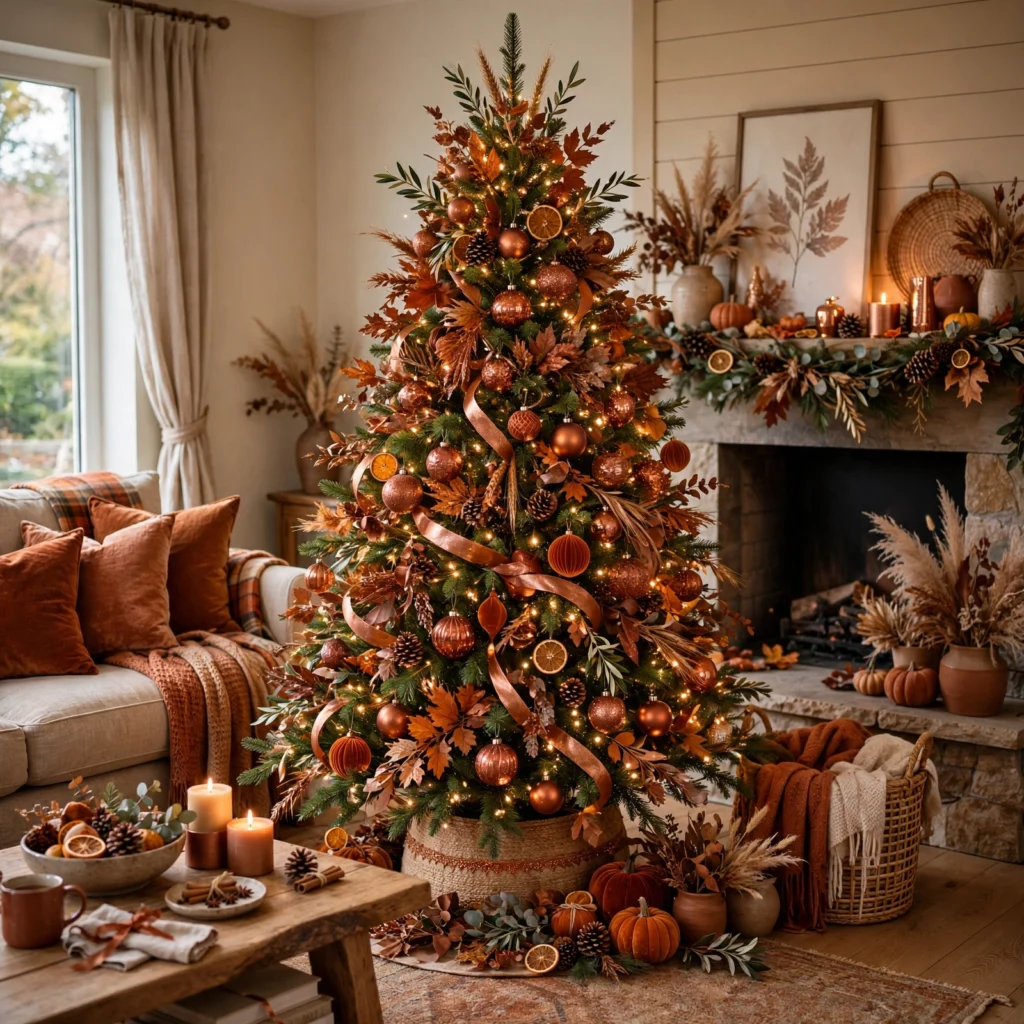
A copper and rust-toned tree extends a warm autumn palette into the Christmas season, using metallic copper ornaments, rust velvet ribbon, and warm amber lights rather than switching to a cooler traditional palette. This theme suits a home that decorates for fall through the holidays without a hard color reset in between, and it also tends to photograph particularly warm and rich under both daylight and evening lighting. Pair with a matching wreath and garland elsewhere in the house to keep the transition from fall into Christmas feeling cohesive.
13. Nutcracker and Toy Soldier Tree
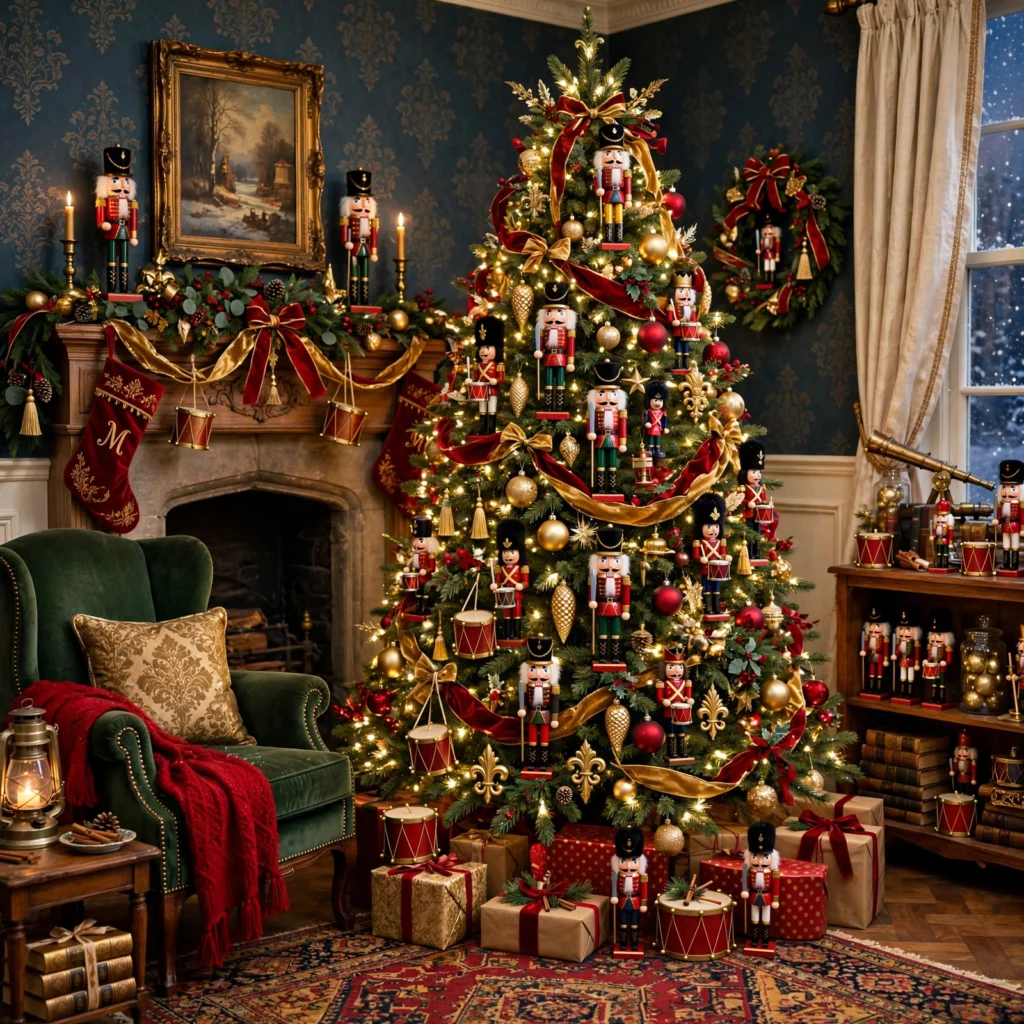
A nutcracker-themed tree combines classic red, gold, and white ornaments with a handful of nutcracker and toy soldier figures nestled into the branches for a playful, storybook look. Space the larger nutcracker figures evenly around the tree rather than clustering them in one section, since even distribution keeps the theme from reading as overcrowded in a single spot. This theme suits a family room or a home hosting young children, since the figural ornaments tend to hold more visual interest at a child’s eye level than plain glass balls alone.
14. All-White Minimalist Tree
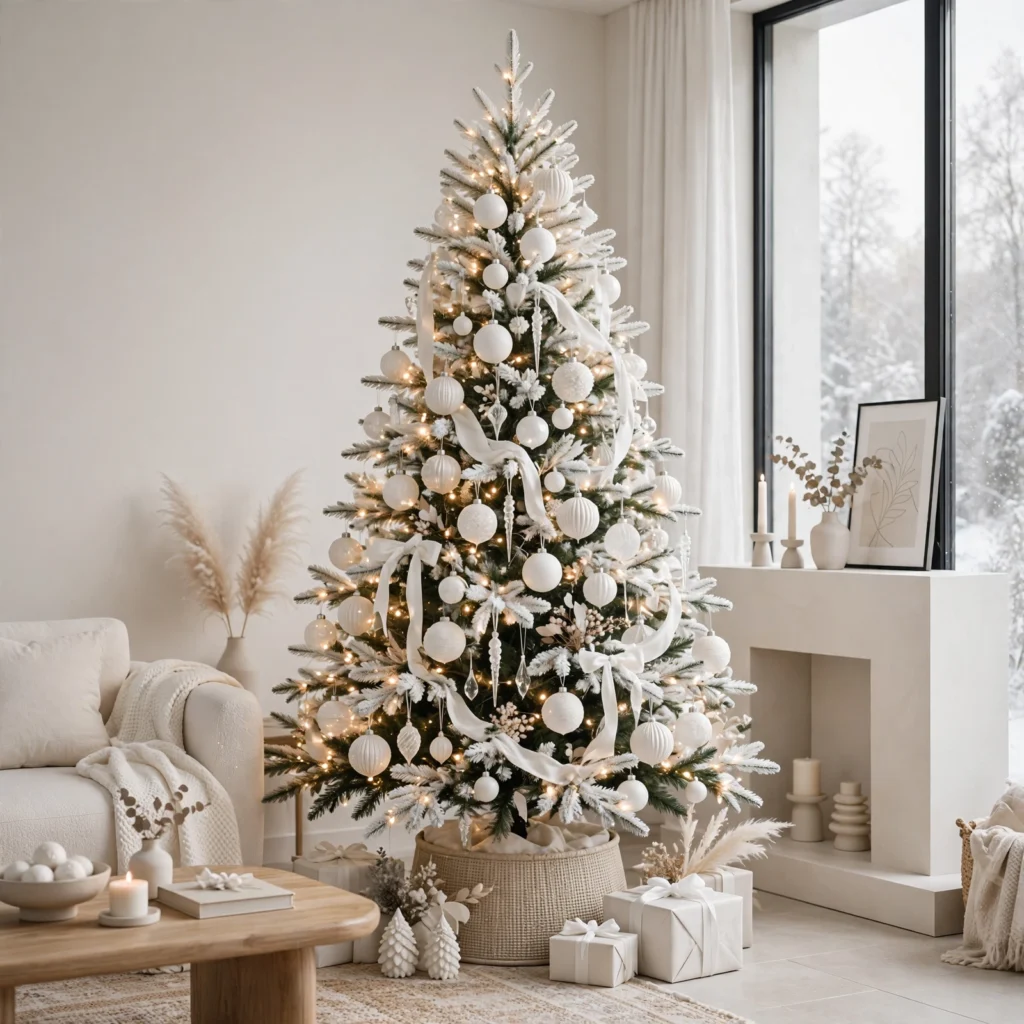
An all-white tree using white and cream ornaments, white ribbon, and warm white lights creates the most minimal, restrained look on this list, relying entirely on texture and shape variation to stay visually interesting. Mix matte, glossy, and textured white ornaments, a felt ball alongside a glass ball and a small ceramic star, rather than a single uniform finish, since an all-white tree without any texture variation can read as flat rather than intentional. This theme works particularly well in a modern or Scandinavian-influenced home.
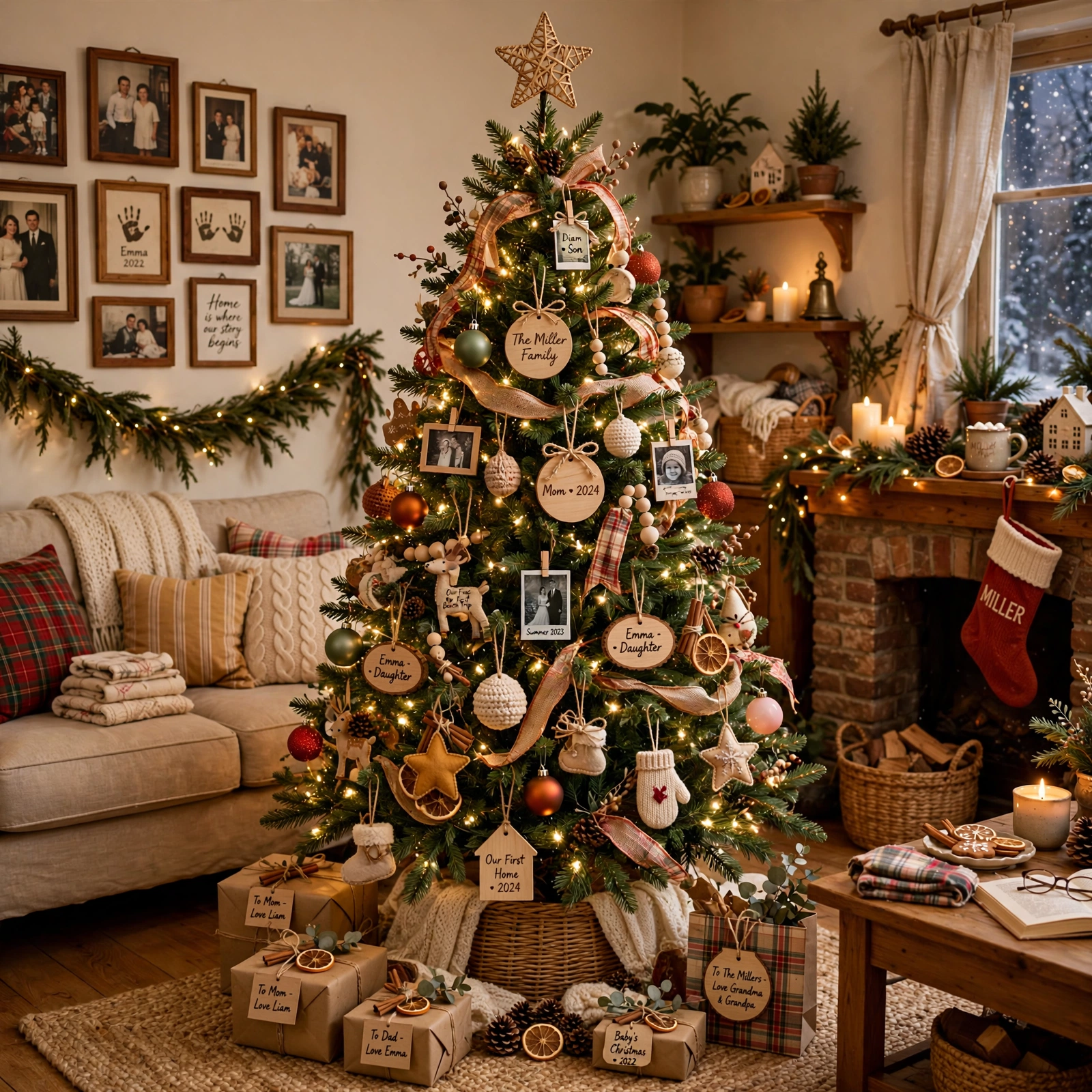
15. Personalized Family Ornament Tree
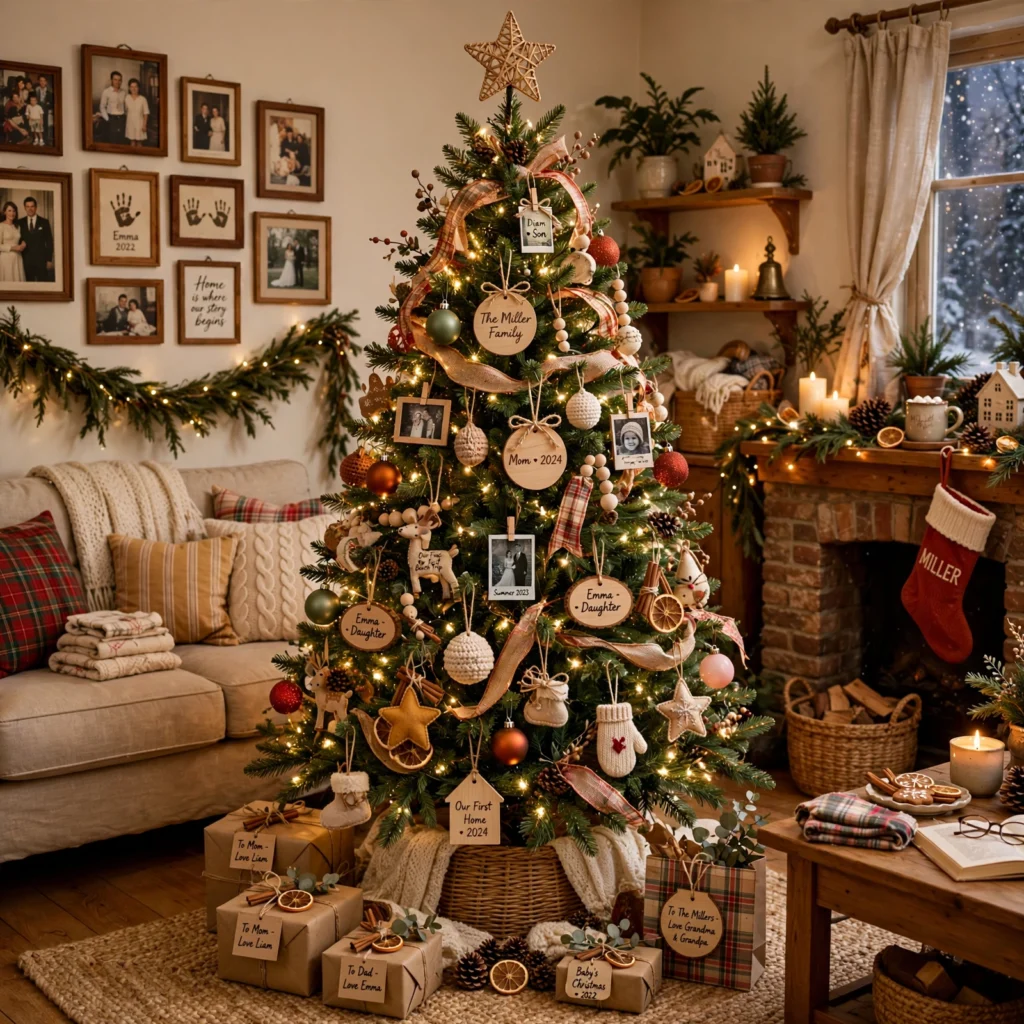
A tree built around personalized ornaments, family photos, handmade kids’ crafts, and yearly dated keepsakes, prioritizes sentimental value over a single cohesive color scheme or design theme. Fill in the gaps between personalized pieces with simple, solid-colored glass balls in one or two colors, since a neutral background lets the personalized ornaments stand out rather than getting visually lost in a busy, mismatched tree. This approach tends to be the least expensive to build over time, since it grows naturally with new ornaments added each year rather than requiring a full set purchased at once.
Shop the Look
For classic glass ball ornaments, look at sets from Balsam Hill or a local holiday shop for a range of finishes in one color family. Wired mesh and velvet ribbon from Michaels or a craft store covers most of the ribbon-based themes above. Wood slice and burlap accents for the rustic farmhouse tree are easiest to source through a local craft store or online marketplace like Etsy. Flocked artificial trees from Balsam Hill handle the winter wonderland look directly, and personalized ornaments from a site like Personalization Mall round out the sentimental family tree idea.
Common Mistake to Avoid
The most common mistake with any Christmas tree decor theme is adding ornaments before the lights and ribbon layers are fully finished, which usually results in a tree that looks uneven once the later layers are added around already-placed ornaments. Always finish lights first, working them deep into the branches rather than just the tips, then add ribbon or garland, and place ornaments last, working from larger pieces deeper in the tree outward to smaller ones near the tips. Skipping this order is the fastest way to end up with a tree that looks sparse in some sections and overcrowded in others.
How much should I budget for Christmas tree decor?
Budget depends heavily on which theme you choose and how much you’re starting from scratch versus building on ornaments already owned. A simpler theme like an all-white or monochromatic tree typically costs between one hundred fifty and four hundred dollars for ribbon, ornaments, and a topper if starting fresh. More elaborate themes involving specialty ornaments, flocked trees, or vintage collected pieces can run several hundred to over a thousand dollars, particularly if the artificial tree itself is also being replaced as part of the refresh.
In what order should I decorate a Christmas tree?
Lights go on first, worked deep into the branches near the trunk rather than only at the outer tips, since this creates a warm glow from within the tree rather than just around its surface. Ribbon or garland comes next, draped or looped in a consistent pattern from top to bottom. Ornaments go on last, starting with larger, heavier pieces placed deeper in the branches for support, then filling in with medium and small ornaments toward the outer tips. The topper goes on only after all other layers are complete.
How many ornaments does an average Christmas tree need?
A general rule is roughly one hundred to one hundred fifty ornaments for a standard six to seven foot tree, though this varies based on ornament size and how full you want the tree to look. Trees relying more heavily on ribbon and greenery texture, like a rustic or woodland theme, often need fewer individual ornaments than a tree built primarily around glass balls, since the ribbon and greenery fill visual gaps that would otherwise require additional ornaments to cover.
Can I mix multiple Christmas tree decor themes together?
Mixing themes works best when one theme functions as the clear dominant direction and a second is folded in as a smaller accent, rather than combining two fully realized themes at equal weight, which tends to read as visually confused rather than eclectic. A neutral woodland tree with a few vintage glass ornaments mixed in, for example, works well since the vintage pieces read as an accent within the larger neutral palette rather than competing with it directly for attention.
How do I store Christmas tree ornaments so they last for future years?
Individual ornament storage boxes with dividers protect glass and delicate ornaments far better than a single large bin where pieces can shift and break during storage or transport. Wrapping fragile ornaments in tissue paper before placing them in dividers adds another layer of protection, particularly for glass or hand-painted pieces. Storing ribbon on cardboard spools rather than loose in a bag also keeps it from creasing or tangling, making it much easier to reuse cleanly the following year.
Conclusion
The fifteen themes above cover classic, modern, rustic, and sentimental directions, giving you enough range to build a Christmas tree that fits your home rather than a generic default. Whether you start with a simple monochromatic palette or commit to a fully personalized family ornament tree, the goal of any christmas tree decor idea is a tree that feels intentional and layered rather than randomly assembled from whatever ornaments happened to be on sale. Save this list to Pinterest for your next holiday season, or check our related post on spring home decor ideas for seasonal inspiration once the tree comes down.