
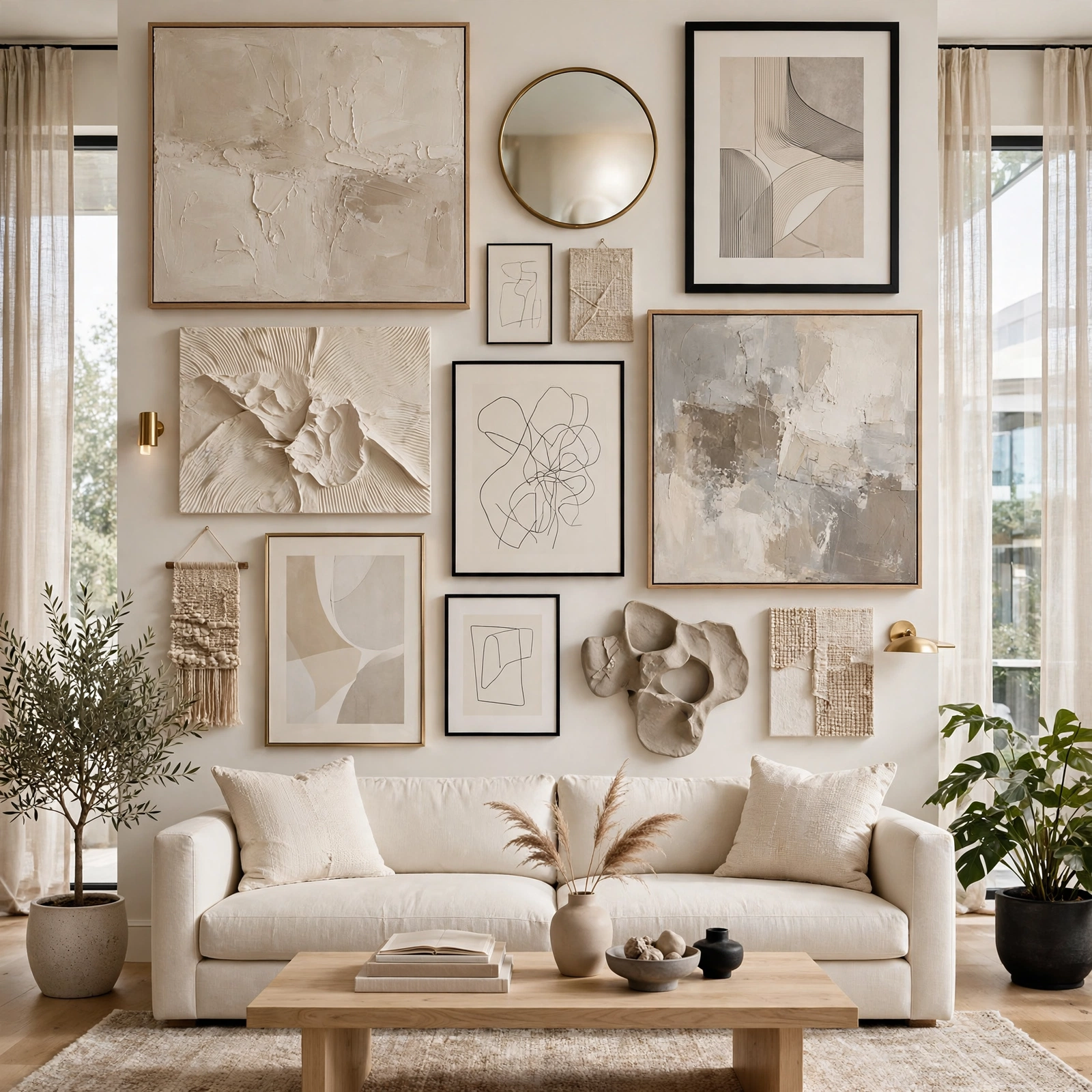
15 Art Wall Design Ideas That Turn Blank Space Into a Gallery
A blank wall is one of the easiest places in a home to feel unfinished, and an art wall is the fastest fix that still looks intentional. Whether you’re working with a narrow hallway, a living room focal point, or an awkward stairwell, the right combination of frames, prints, and objects can turn dead space into the most photographed corner of the house.
Trend & Background
Art walls have moved far beyond the traditional symmetrical grid of matching black frames. Homeowners are now mixing vintage finds, textile hangings, and unframed canvases to create walls that feel collected over time rather than purchased in a single trip. This shift toward eclectic, personality driven display has been driven largely by Pinterest and interior design accounts, where asymmetrical and maximalist walls consistently outperform uniform layouts. As more people prioritize character over matching sets, the art wall has become a low cost way to signal personal style without a full room renovation.
Key Takeaways
- An art wall combines varied frame sizes, textures, and mediums to create a curated gallery moment without professional design help
- Budget friendly options like gallery grids and printable art let you achieve a designer look for under $200
- Spacing, symmetry, and lighting matter as much as the art itself when building a wall that photographs well
- Mixing mediums prints, mirrors, textiles, and objects keeps an art wall from feeling flat or one note
Stunning Art Wall Ideas
This guide walks through fifteen distinct approaches, from classic gallery grids to sculptural plate walls, so you can pick the style that matches your space and budget.
1. Gallery Grid Wall Art Ideas
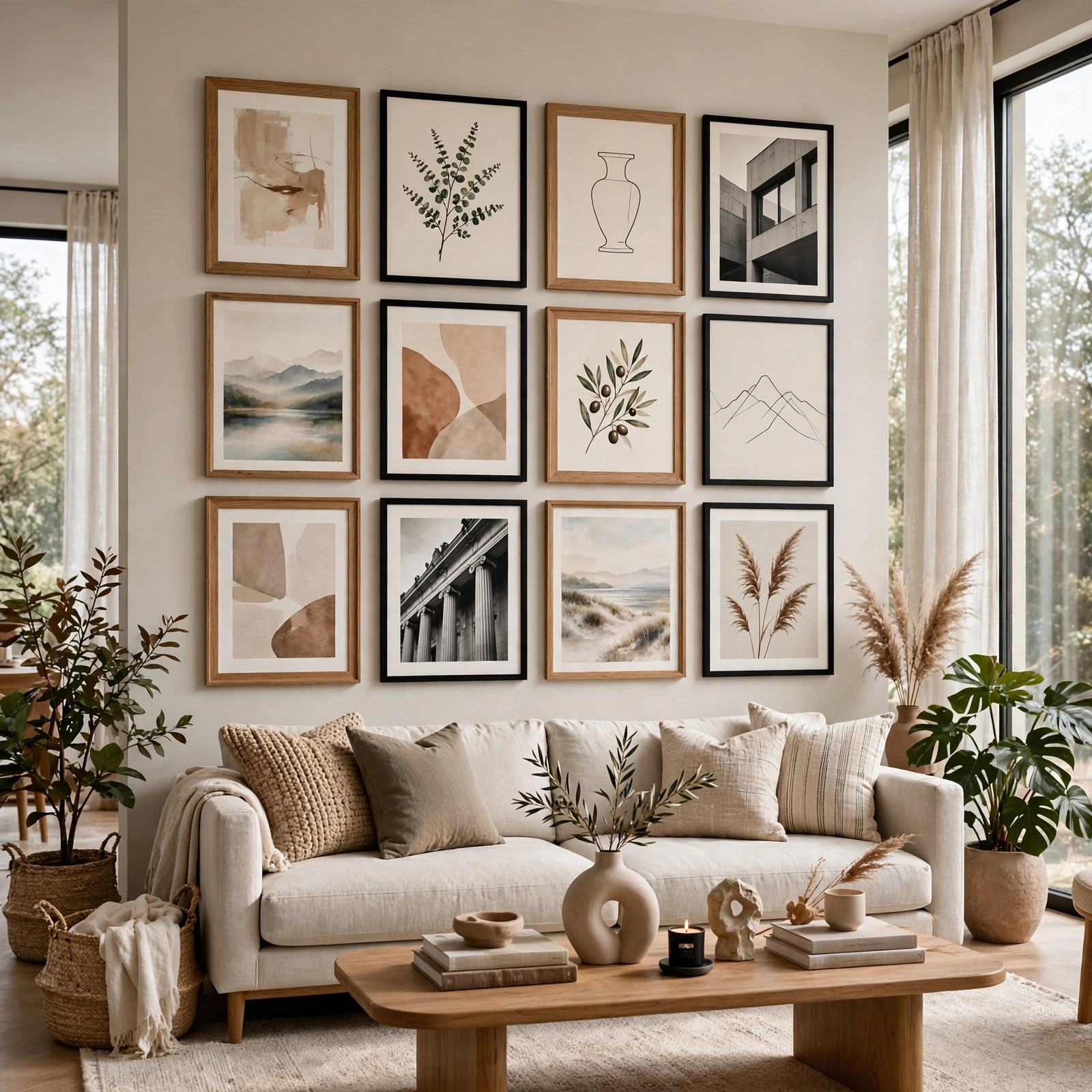
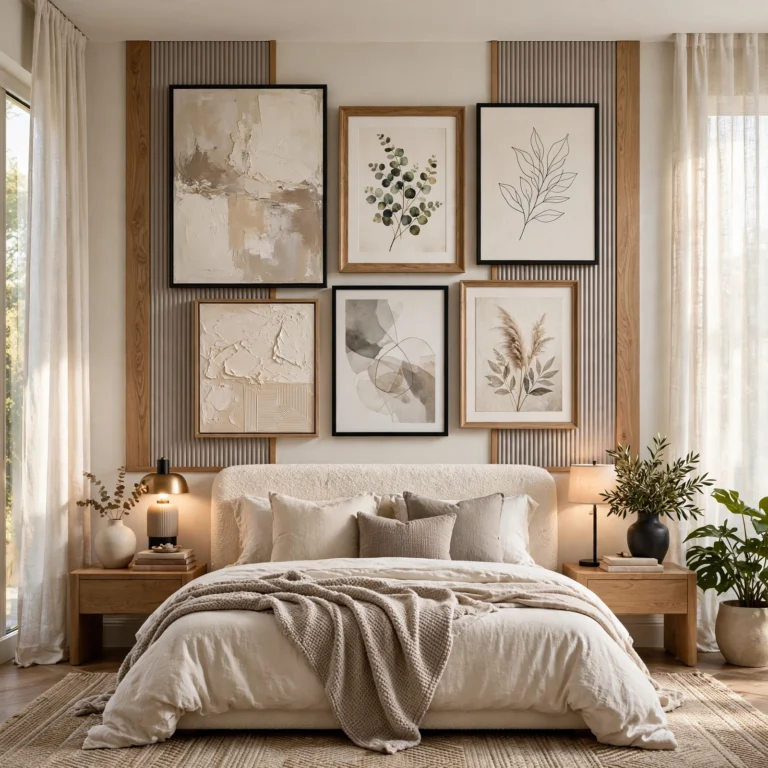
A gallery grid wall arranges multiple frames of the same size and finish into a tight, evenly spaced rectangle or square formation. This approach works especially well above a sofa, console table, or bed headboard because it reads as one cohesive art piece rather than several scattered frames. Keep spacing consistent at two to three inches between frames, and stick to a single frame color like matte black or natural oak to maintain the clean, structured look this style is known for.
2. Salon Style Asymmetrical Cluster Art Wall Ideas
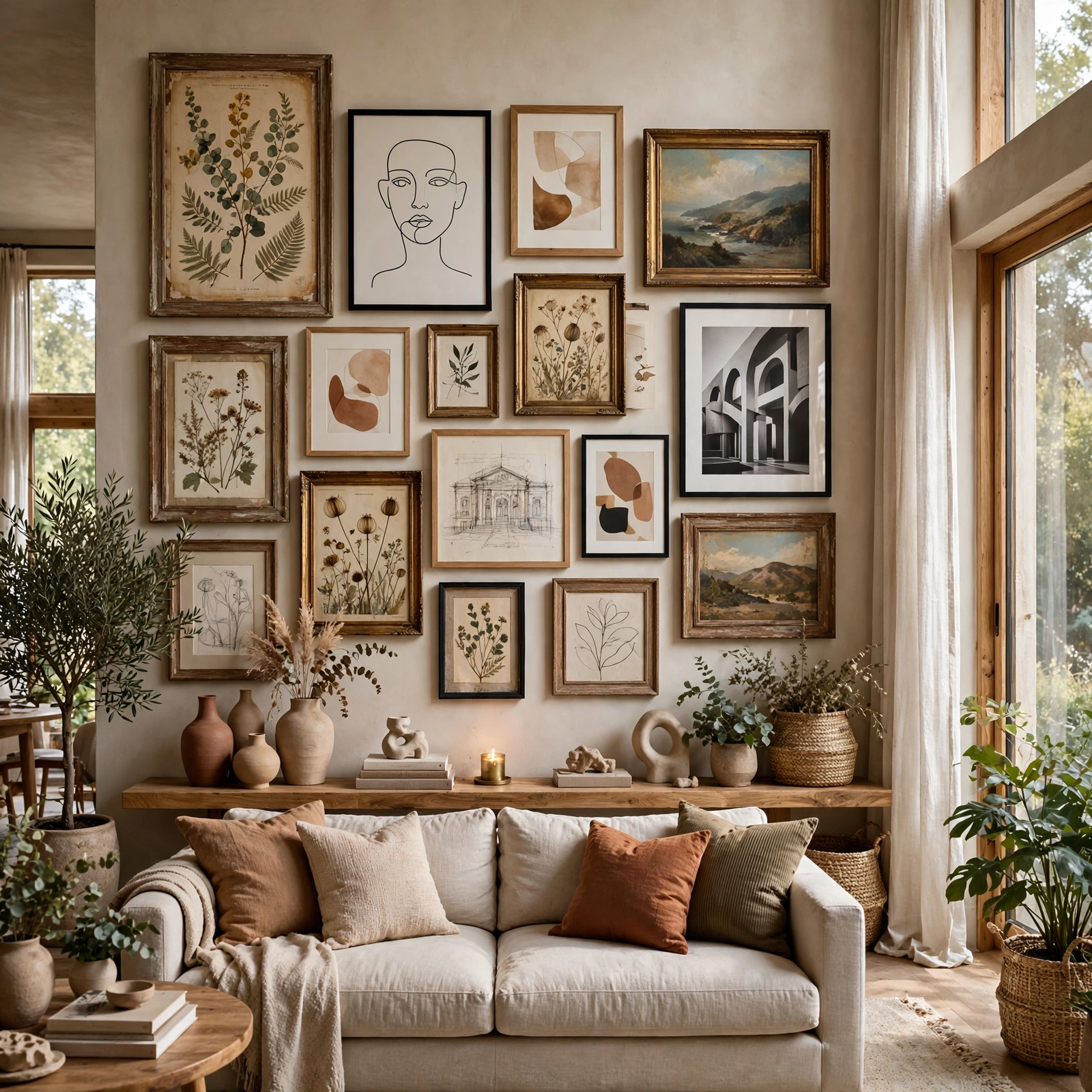
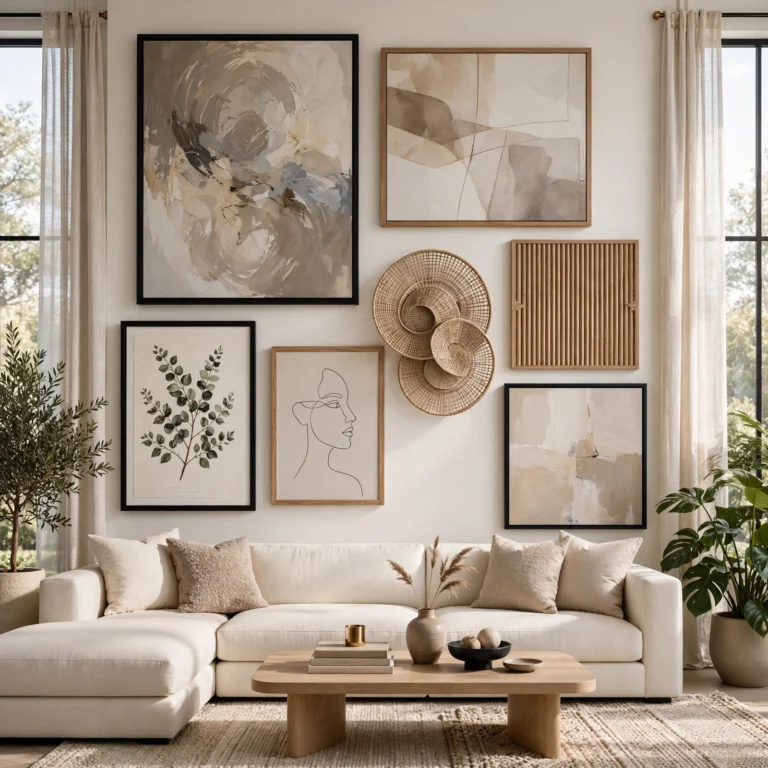
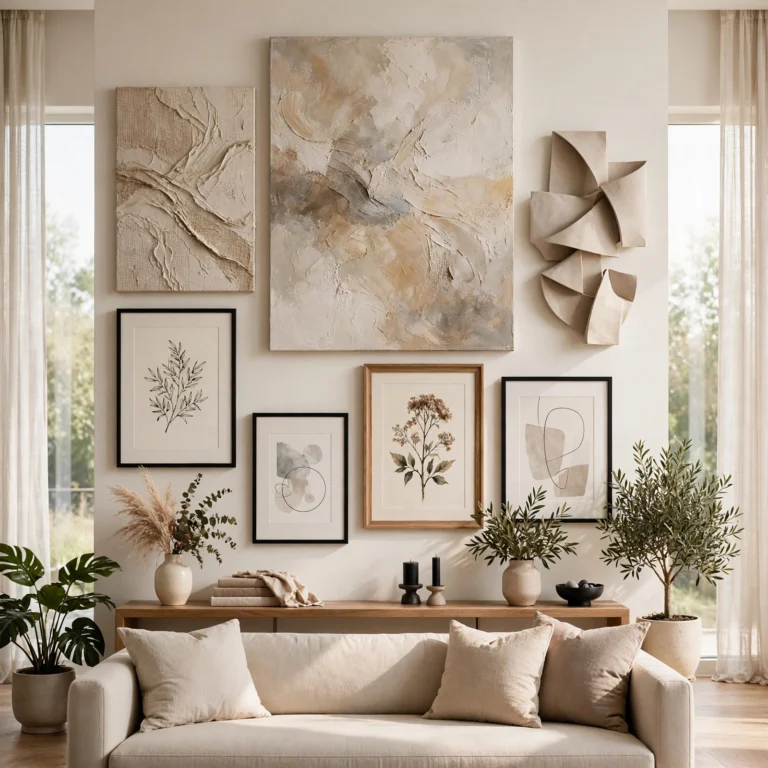
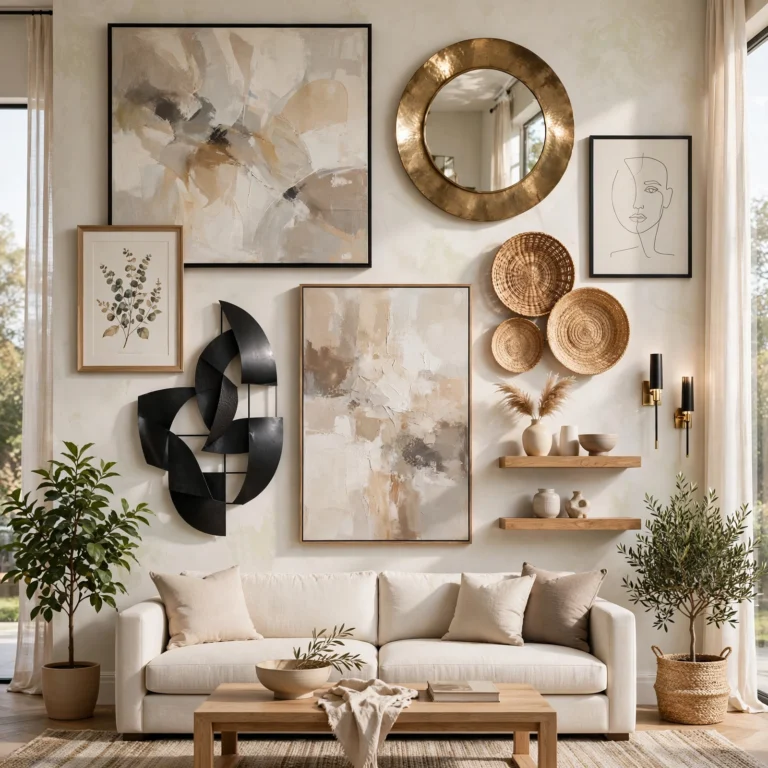
Salon style walls break from the grid entirely, layering frames of different sizes, shapes, and orientations across an irregular area. This style suits collectors who want to display pieces gathered over years, flea market finds, family photos, original artwork without forcing them into a matching set. Start with your largest piece as an anchor, then build outward in a loose triangle shape, filling gaps with smaller frames until the wall feels balanced but not overly planned.
3. Floating Wall Shelves Art Ideas
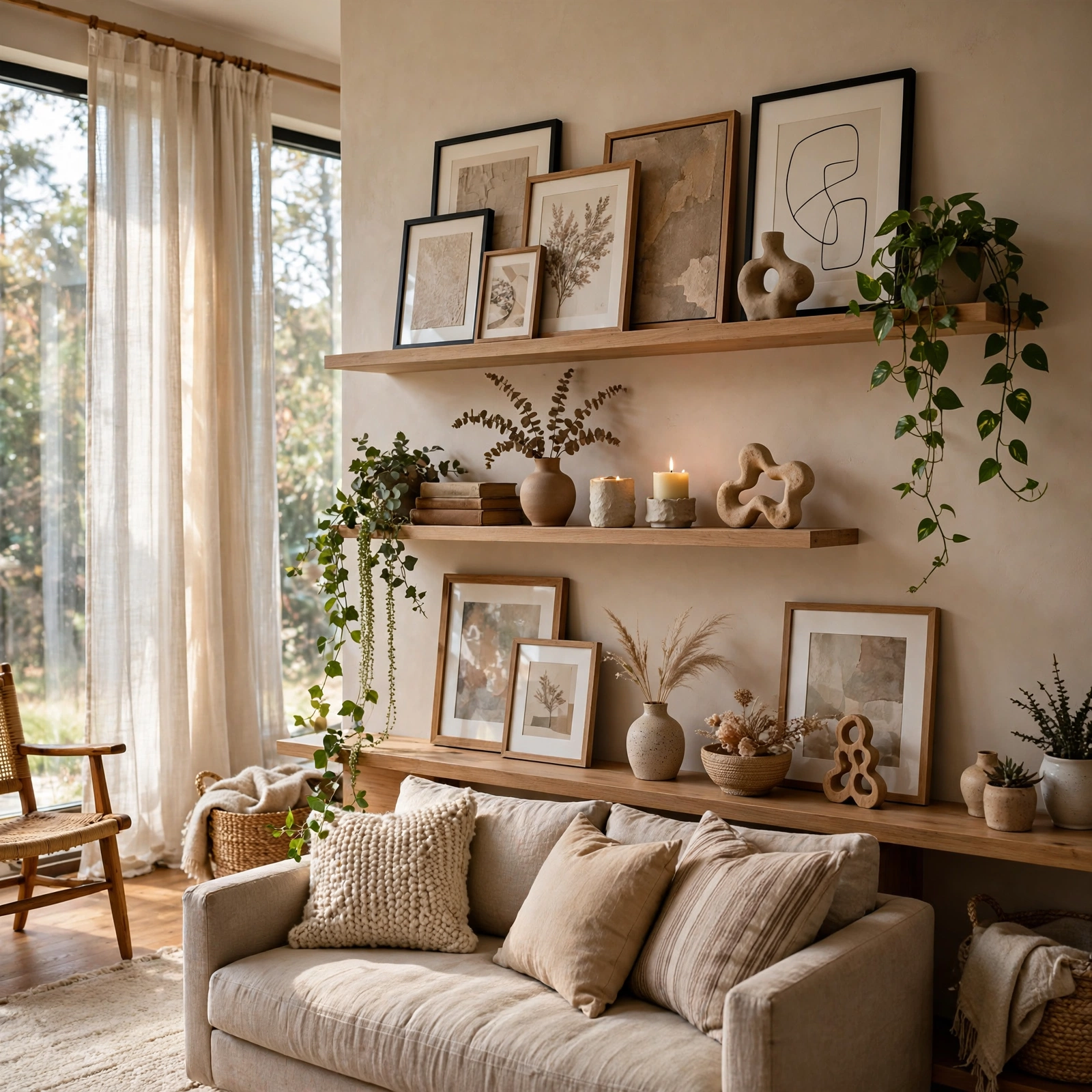
Floating shelves installed in a staggered or linear arrangement give you a display surface instead of just hanging space, so art can lean rather than mount permanently. This setup is ideal for renters or anyone who likes to rotate pieces seasonally, since nothing needs to be re nailed to change the look. Layer framed prints two or three deep, add a small plant or ceramic object in front, and vary shelf depths between six and ten inches for visual interest.
Learn More About 3D Wall Art.
4. Oversized Statement Print Art Wall Ideas
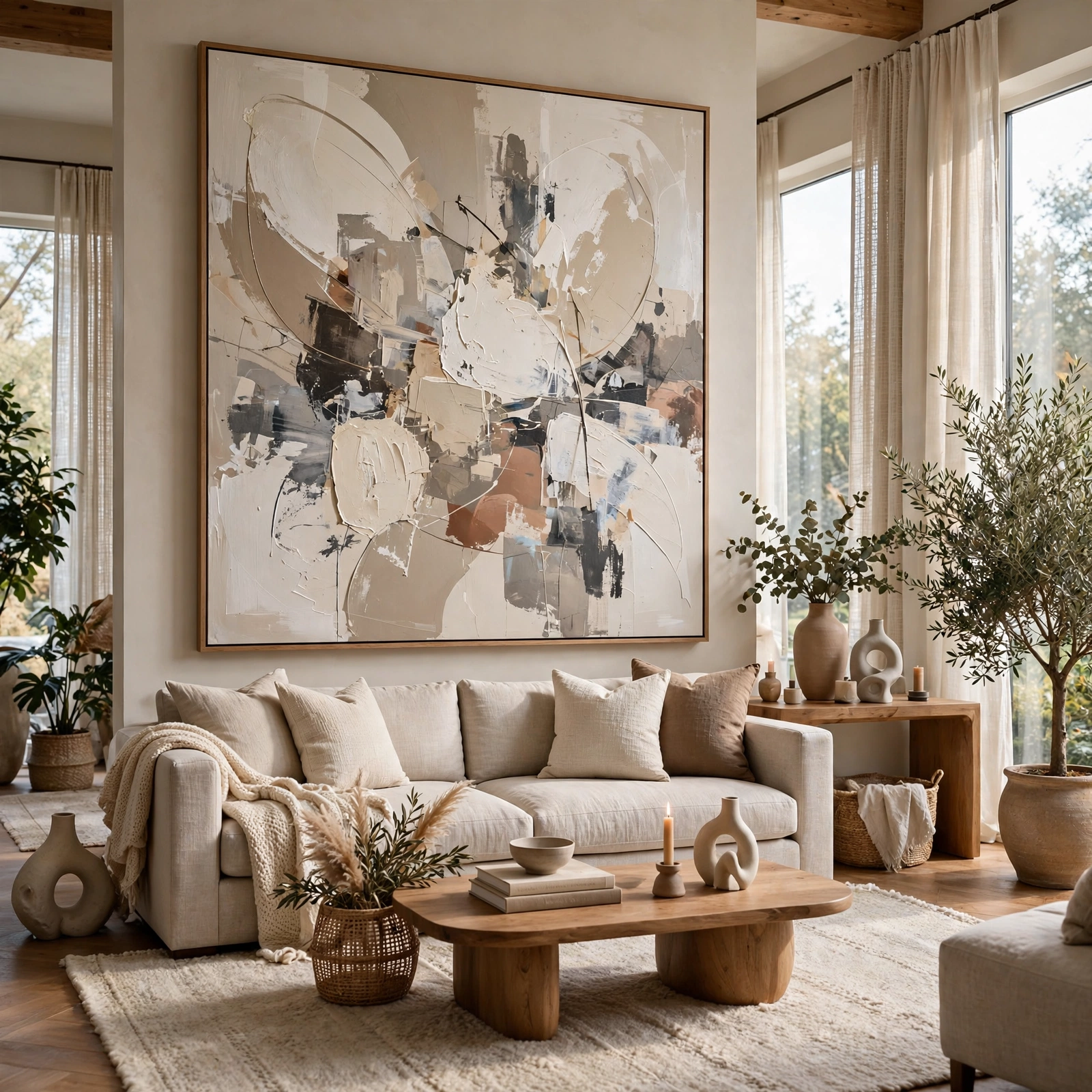
A single oversized print, at least 36 by 48 inches, can carry an entire wall on its own without any supporting pieces. This works particularly well in rooms with high ceilings or minimal furniture, where smaller groupings would get visually lost. Choose a print with bold color or graphic linework so it holds its own from across the room, and hang it so the center sits at standard eye level, roughly 57 to 60 inches from the floor.
5. Mirror and Art Combination Wall Ideas
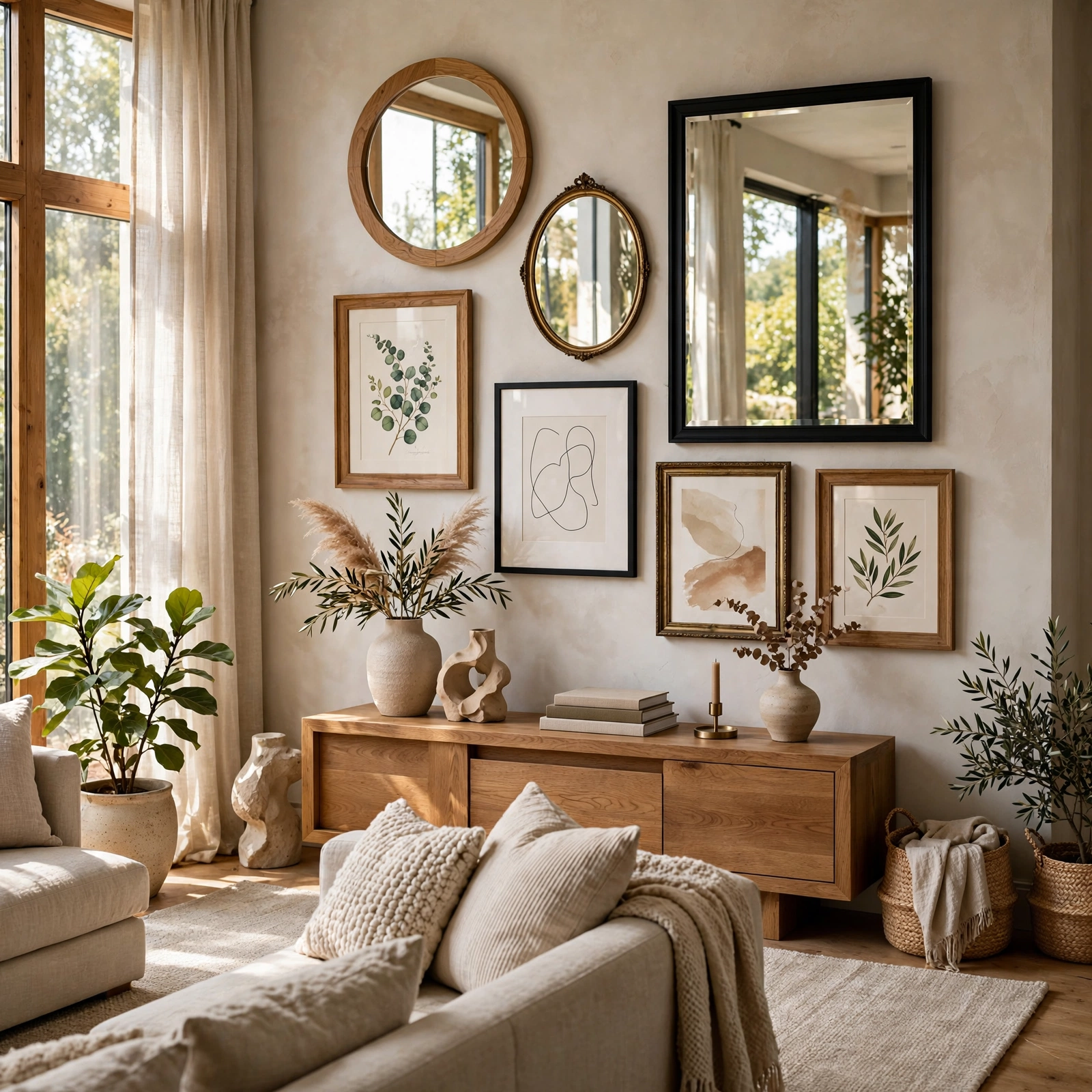
Mixing mirrors into an art wall adds reflective depth and makes a room feel larger, especially in smaller living rooms or entryways with limited natural light. Alternate rectangular or round mirrors between framed prints so the reflective surfaces break up the visual weight of solid frames. This combination also doubles as function, giving you a last look mirror near an entry while still delivering the layered, curated appearance of a full gallery wall.
6. Woven Textile Hangings Art Wall Ideas
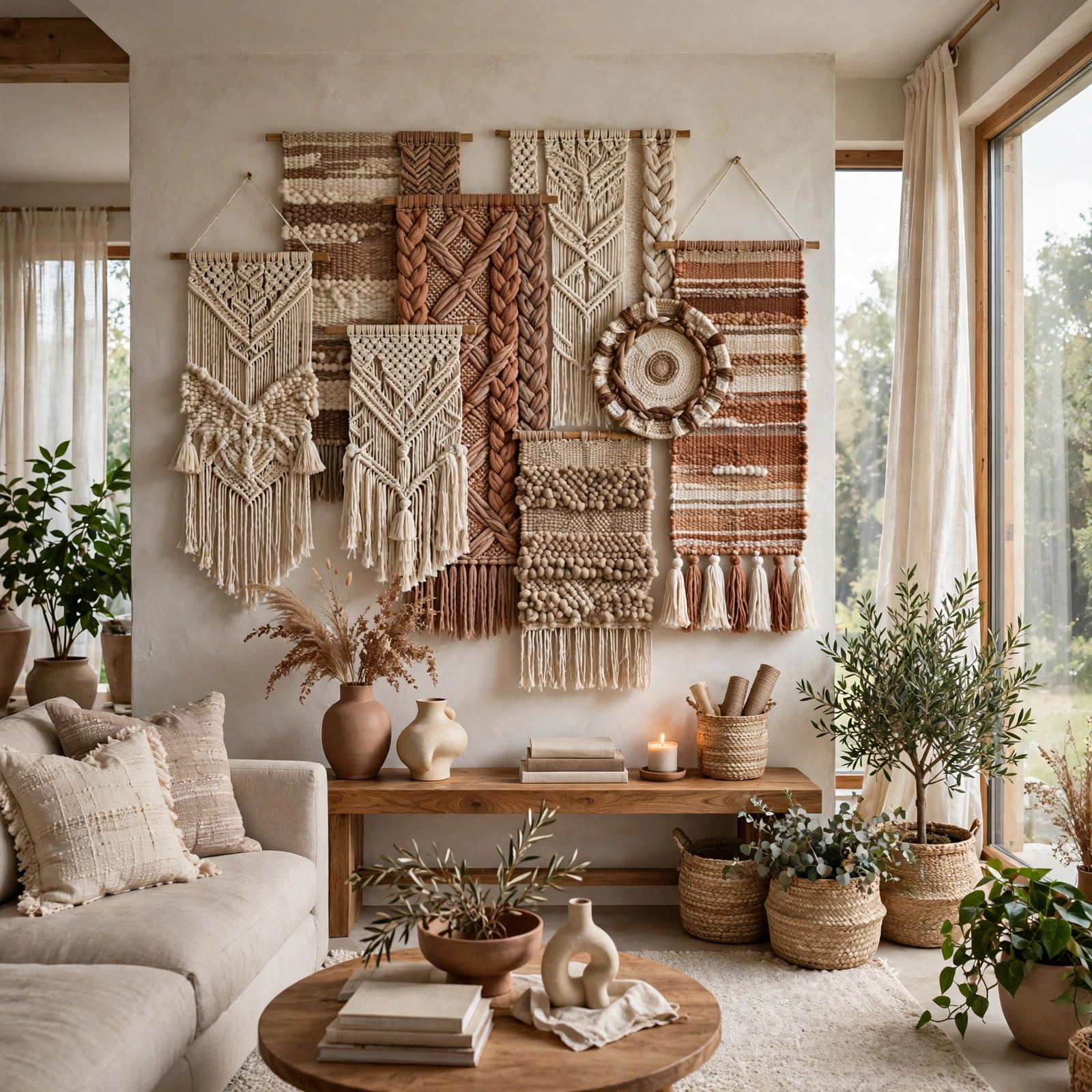
Woven wall hangings, macrame pieces, or textile tapestries introduce texture that flat prints and frames can’t provide on their own. These pieces work particularly well in bedrooms and reading nooks, where a softer, more tactile wall feels more inviting than sharp frame edges. Combine one large woven piece with two or three small framed prints on either side to keep the arrangement from feeling like a single dorm room tapestry.
7. Vintage Plate Wall Art Ideas
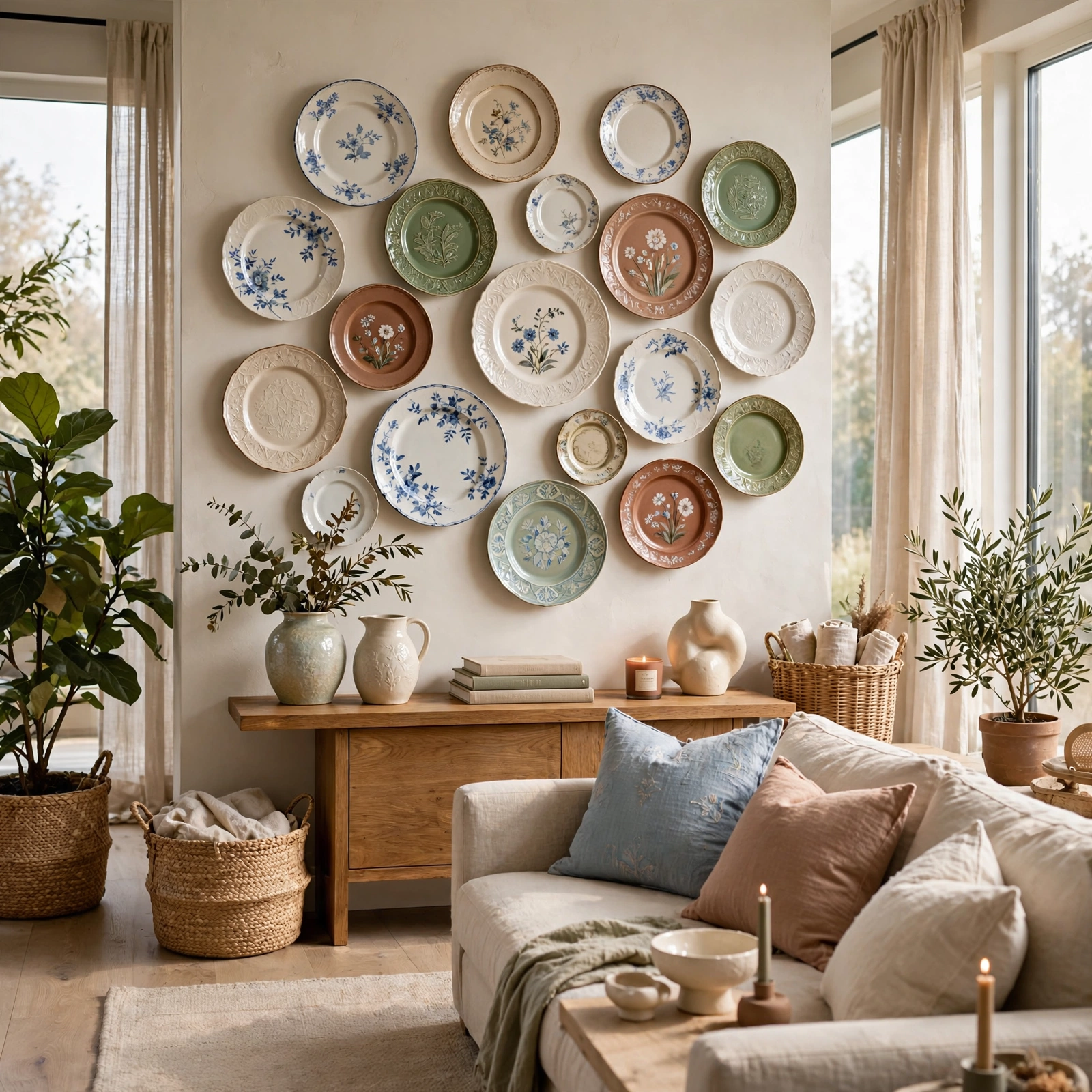
A vintage plate wall uses mismatched ceramic or ironstone plates hung in a loose cluster or grid to create dimensional, sculptural interest that flat art can’t match. This approach works especially well in dining rooms, kitchens, or cottage style spaces where a fully framed gallery might feel too formal. Source plates from thrift stores or estate sales for the most authentic mix, and use adhesive plate hangers rated for the plate’s weight to avoid damaging thinner vintage pieces.
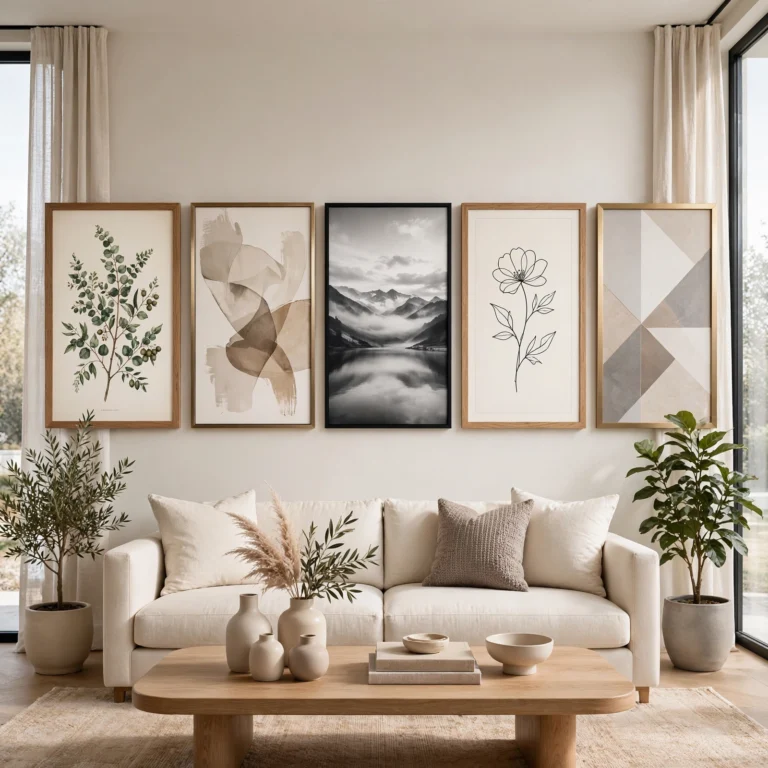
8. Botanical Print Series Art Wall Ideas
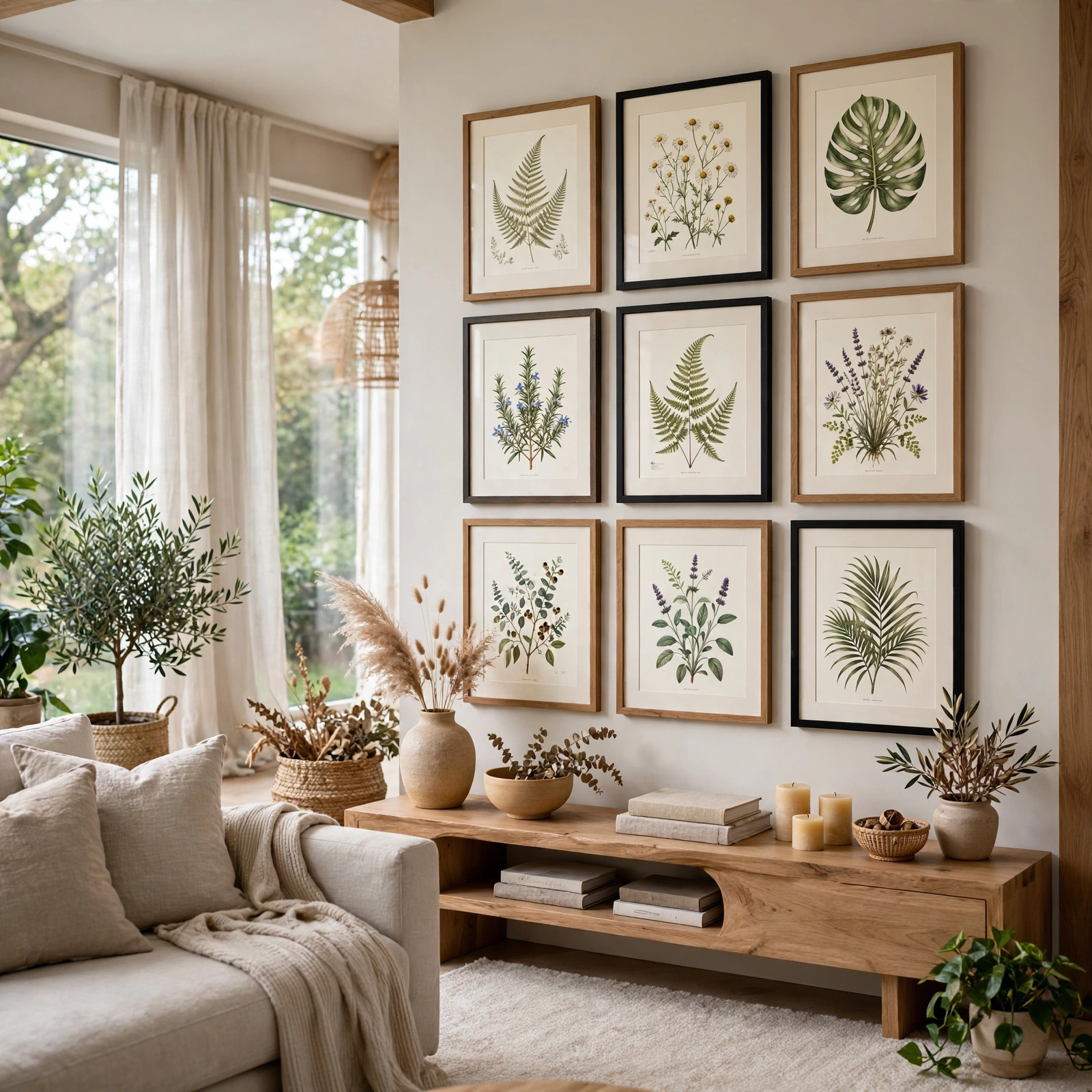
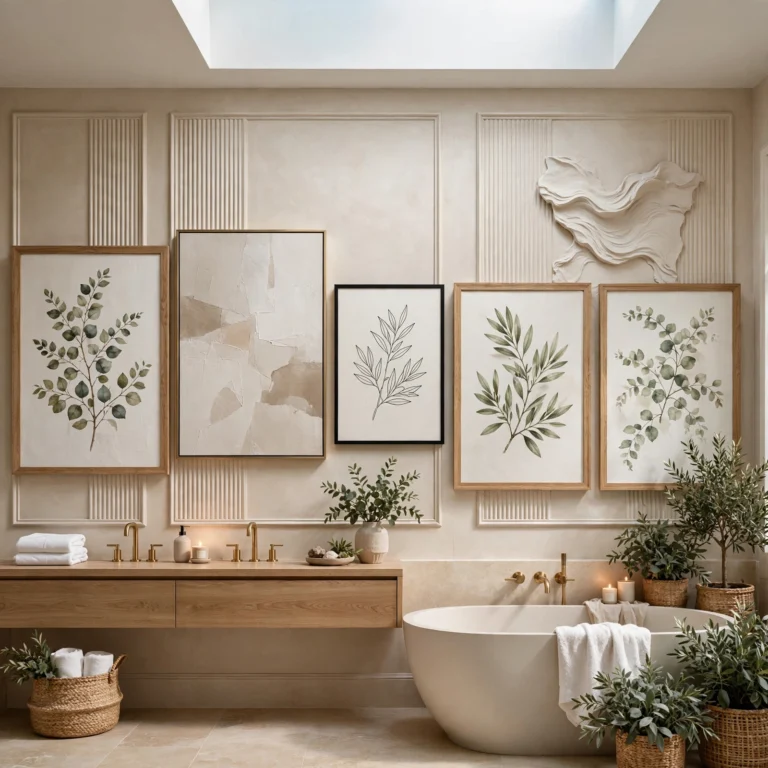
A botanical print series uses three to five coordinating nature illustrations, hung in a straight horizontal line, to bring an organic, garden inspired feel into any room. This series format works well above a dining table or sideboard, where a long horizontal run fits the furniture below it better than a clustered grid. Choose prints from the same artist or era for visual consistency, and frame them identically to reinforce the sense that they belong together as a set.
9. Black and White Photography Wall Art Ideas
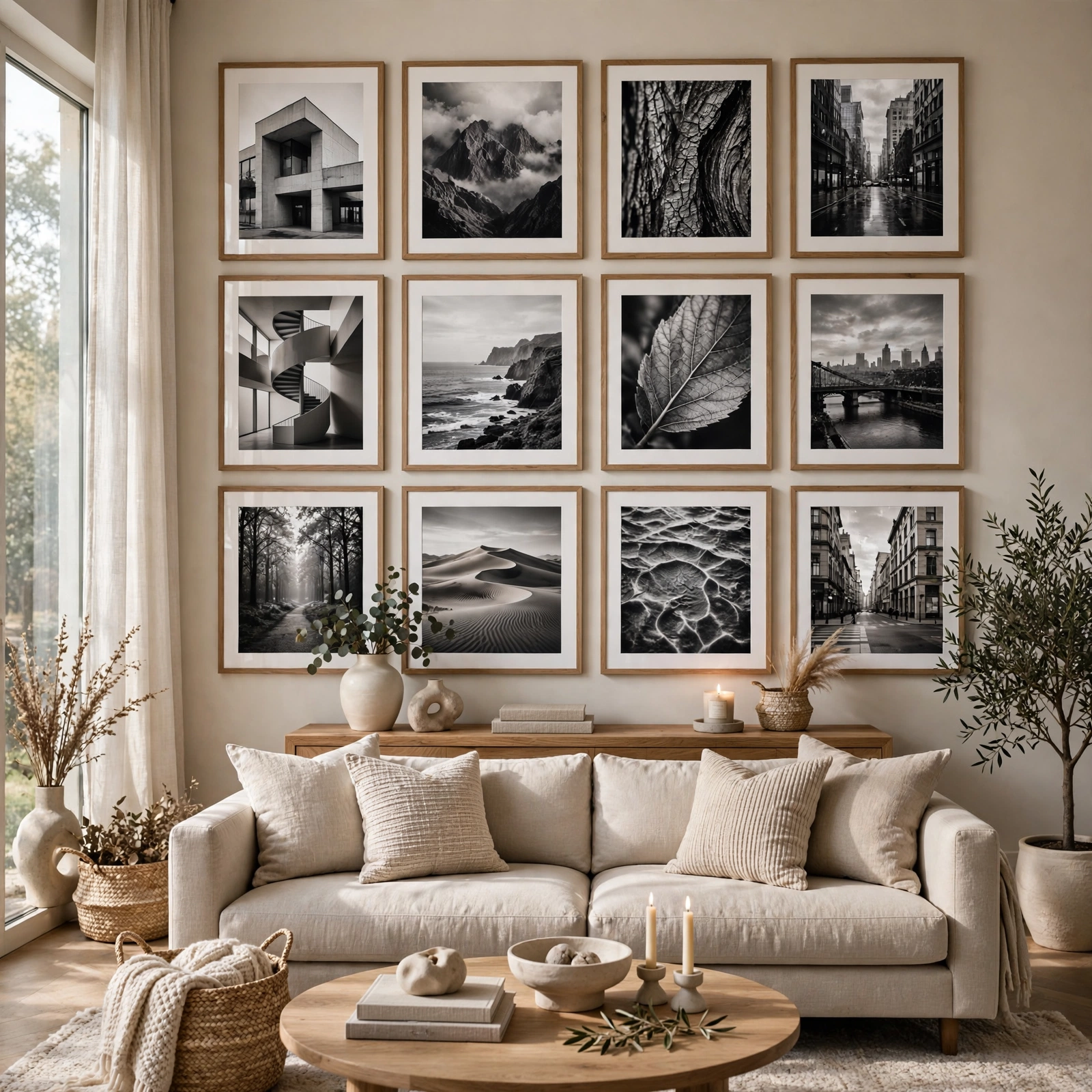
A black and white photography wall relies on tonal consistency rather than color to unify a mix of personal photos, architectural shots, or portraits. This monochrome approach is forgiving for mixed subject matter, since removing color lets composition and contrast do the visual work instead. Print photos in varied sizes, mat them generously in white, and use identical thin black frames throughout so the eye reads the collection as one continuous piece rather than a scattered photo dump.
10. Circular Frame Cluster Art Wall Ideas
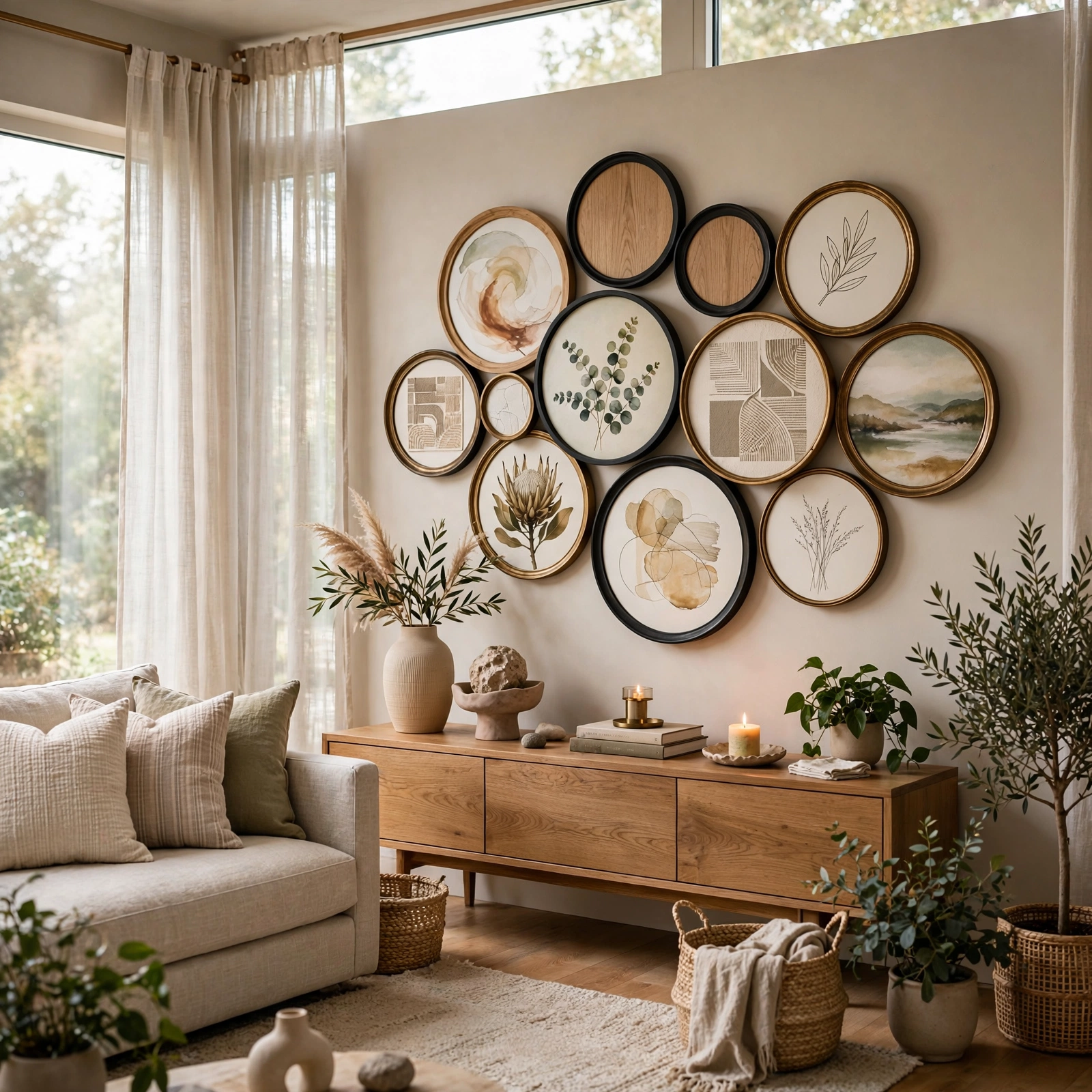
Circular frames, mixed in two or three diameters, create a softer geometric rhythm than the sharp corners of a standard grid wall. This style pairs particularly well with mid century or Scandinavian influenced rooms, where curved silhouettes already echo through the furniture. Arrange the circles in a loose diagonal line rather than a strict grid, since perfectly aligned circles can look more like a target than an art wall.
11. Leaning Ledge Display Art Wall Ideas
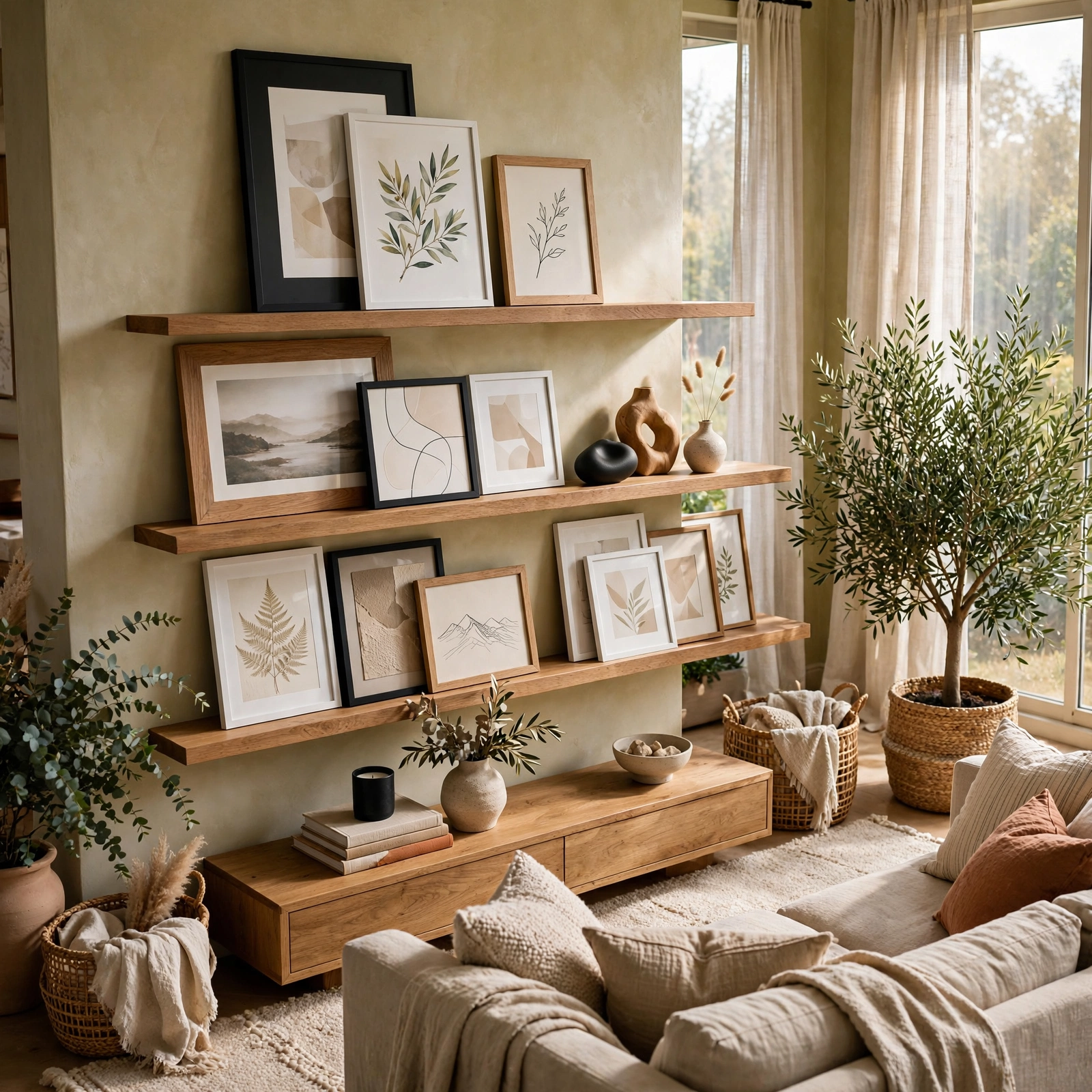
A leaning ledge display uses one long picture ledge, rather than individual hooks, to hold multiple frames propped against the wall at a slight angle. This setup makes rearranging effortless, since frames simply slide along the ledge instead of requiring new nail holes for every change. It works well in entryways and hallways where a low commitment, easily refreshed display matters more than a permanently fixed arrangement, and it accommodates frames from four inches up to two feet wide.
12. Neon or LED Sign Accent Art Wall Ideas
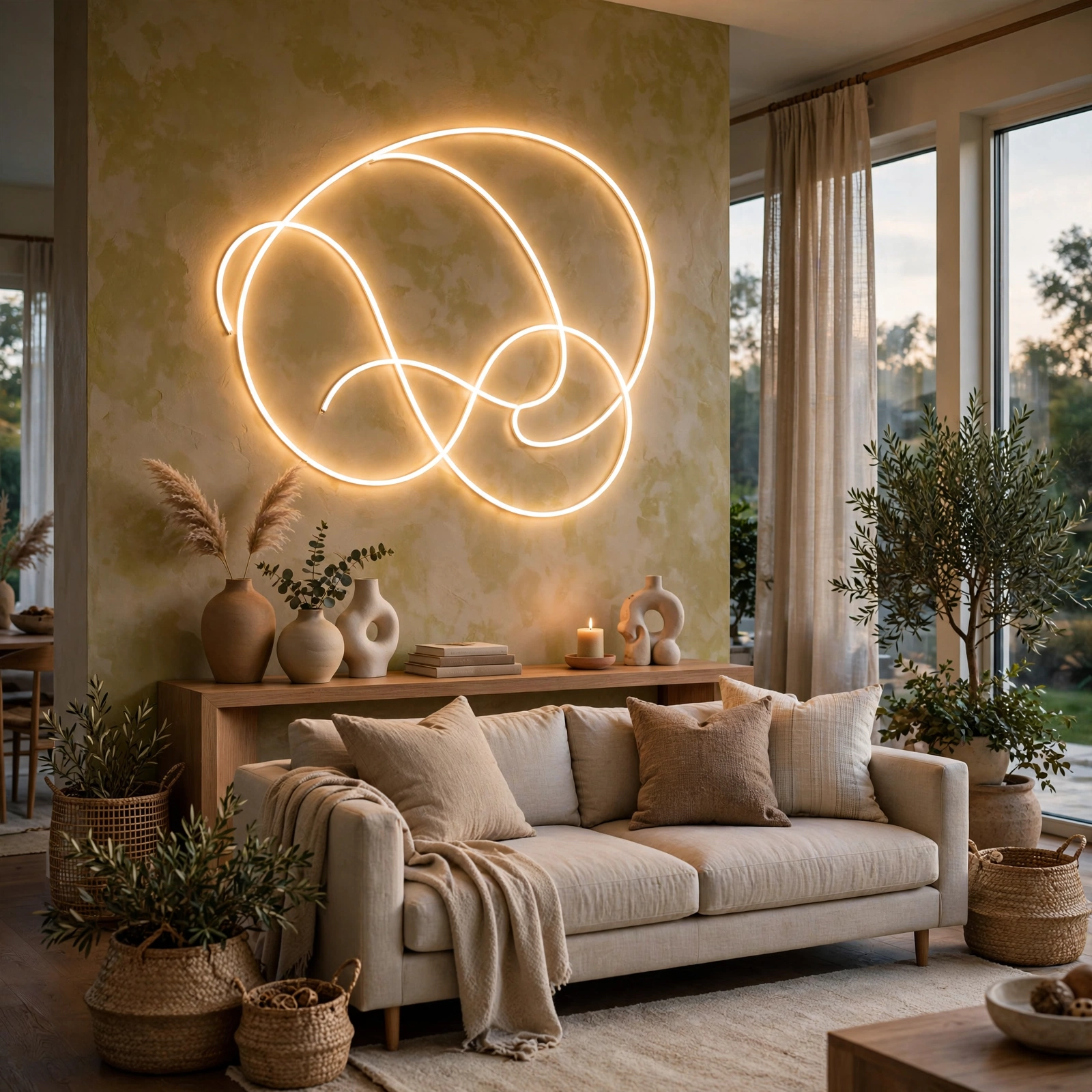
A neon or LED sign, whether a custom name script or a simple shape, adds a focal point that framed prints alone can’t replicate. This works especially well in a home office, bar area, or teen bedroom, where a playful light element suits the room’s more casual purpose. Pair the sign with two or three simple framed prints on either side so the light stays the visual anchor without cluttering the wall with competing bright elements.
13. Sculptural Wall Objects Art Ideas
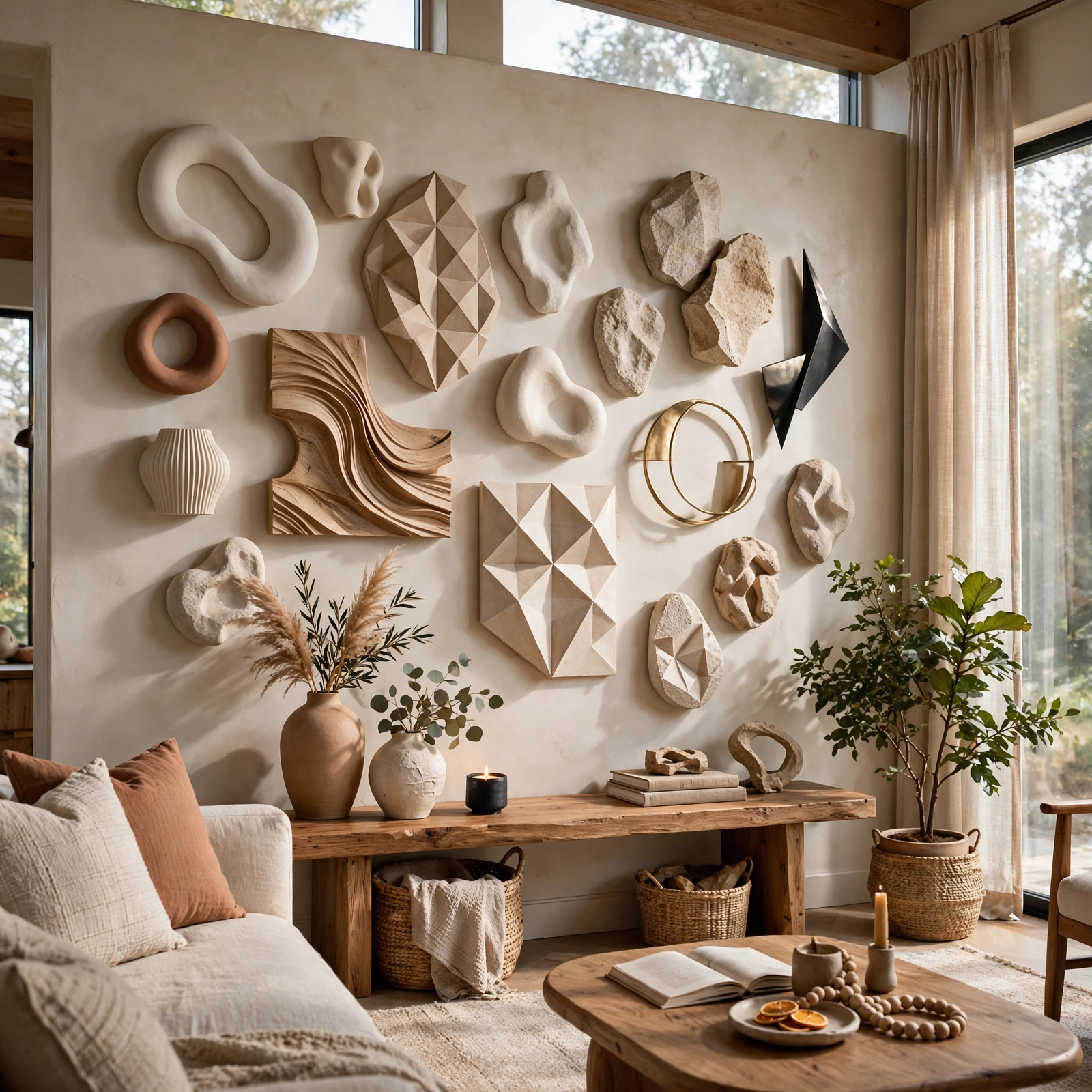
Sculptural elements like carved wood panels, metal wall art, or woven fiber sculptures add three dimensional shadow and depth that flat prints cannot achieve. This style suits living rooms and entryways where you want a wall to read as art even from a distance, before any framed detail is visible up close. Anchor one large sculptural piece as the focal point, then keep surrounding pieces minimal so the dimensional object remains the clear centerpiece of the wall.
14. Printable Digital Art Wall Ideas
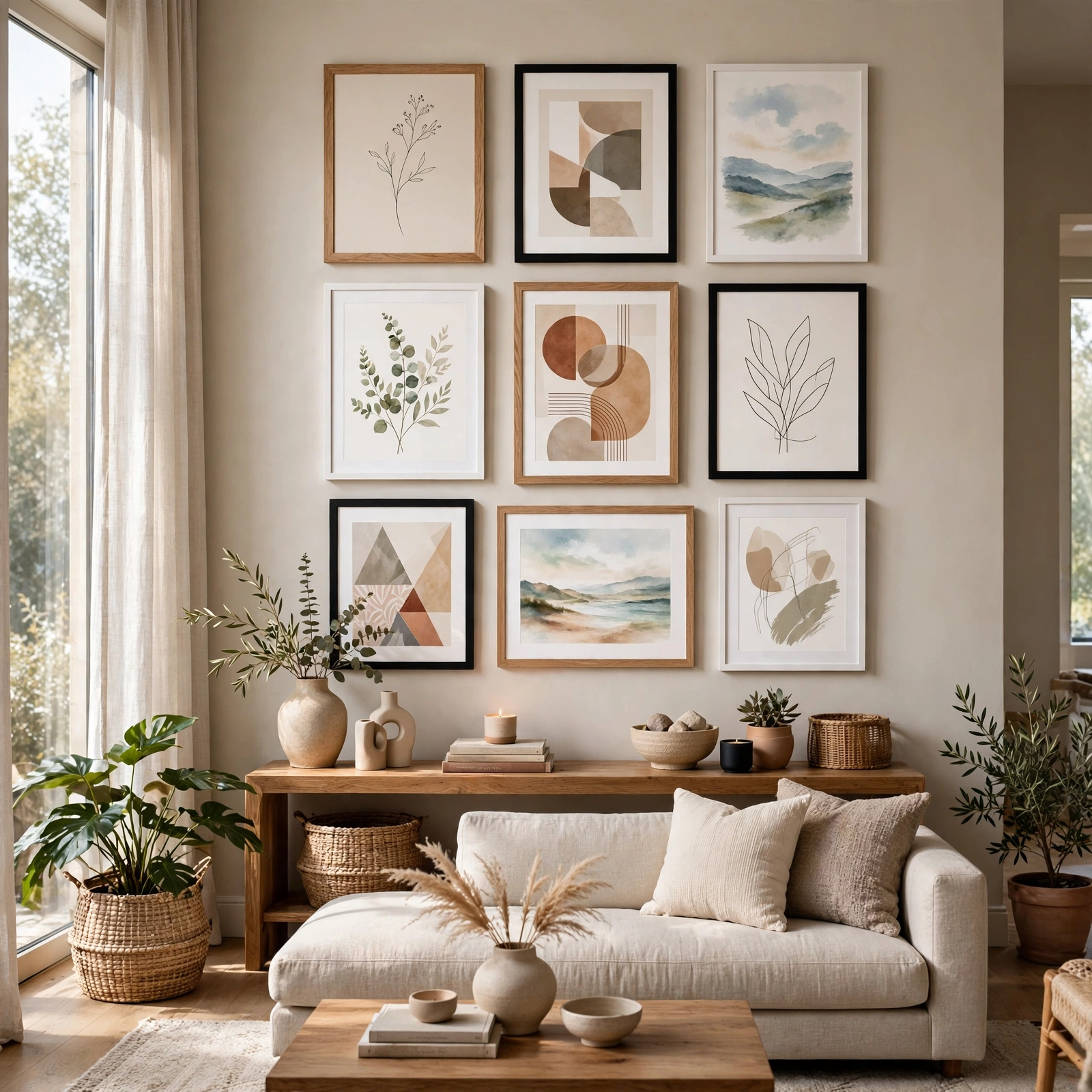
Printable digital art, downloaded and printed at home or through a local print shop, offers the lowest cost way to fill a full gallery wall without buying original pieces. This approach is popular for renters and first apartments, where budget matters more than investment grade art. Choose a cohesive color palette across all downloads before printing, and frame everything in matching budget frames from a big box retailer to disguise the mixed sourcing.
15. Kids’ Artwork Display Art Wall Ideas
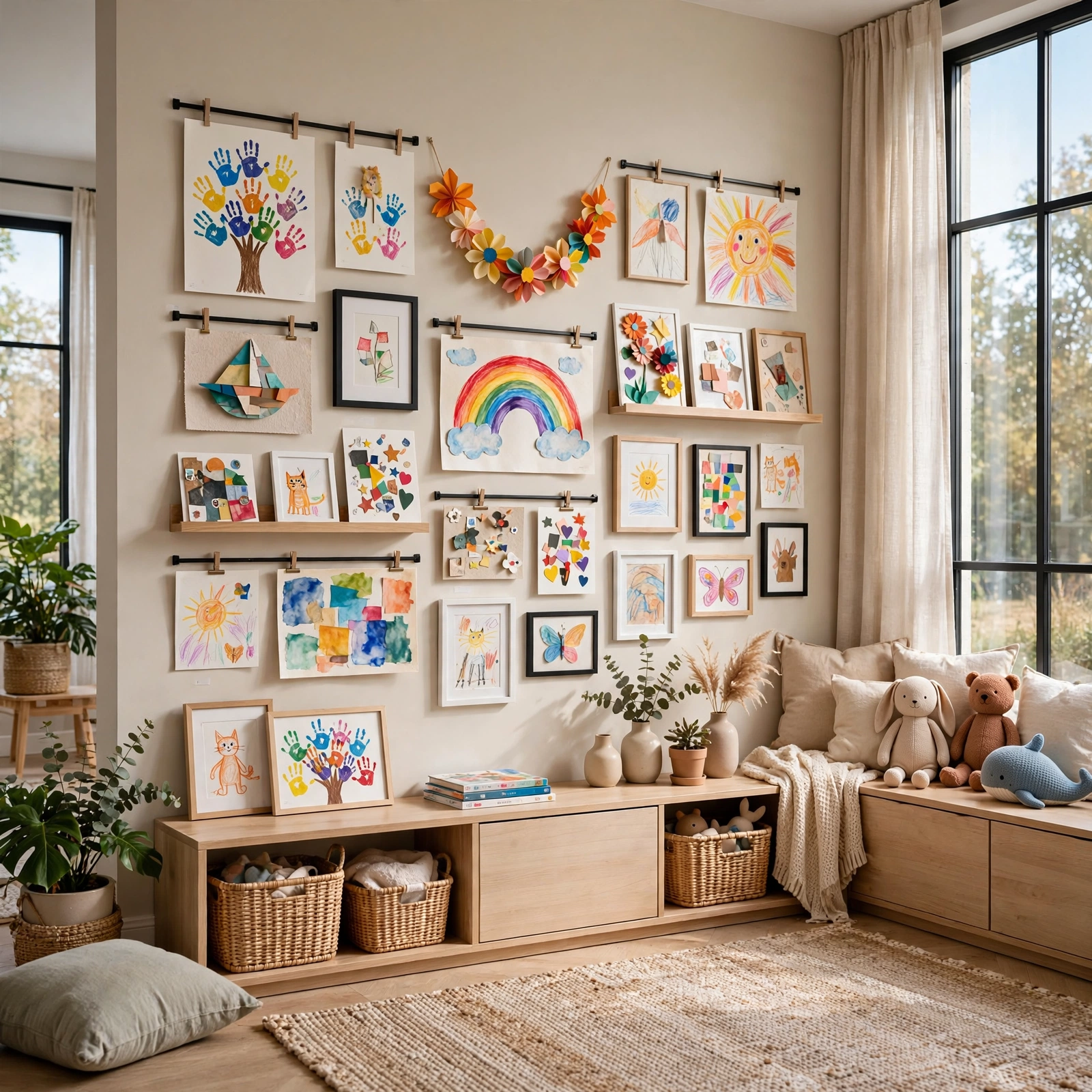
A kids’ artwork display uses a rotating system of clip frames, magnetic panels, or a simple wire and clothespin line to showcase children’s drawings without permanent framing. This setup works especially well in playrooms, hallways, or kitchen nooks, where new artwork arrives weekly and needs an easy swap out method. Keep the display area at a child’s eye level so they can help choose and hang new pieces themselves as the collection updates.
| Idea | Best Room | Typical Budget |
| Gallery Grid Wall | Living Room, Bedroom | $80–$200 |
| Salon Style Cluster | Living Room, Stairwell | $100–$300 |
| Floating Wall Shelves | Office, Bedroom | $50–$150 |
| Oversized Statement Print | Living Room, Entry | $100–$400 |
| Vintage Plate Wall | Dining Room, Kitchen | $40–$150 |
| Printable Digital Art | Apartment, Dorm | $20–$80 |
Shop the Look
A set of matte black gallery frames in mixed sizes covers the grid and salon style layouts with one purchase. Add a round convex mirror for the mirror and art combination, and a set of oak floating shelves with hidden brackets for the ledge and shelf ideas. For texture, a hand woven macrame hanging in a neutral cotton rope fills the textile category, and a set of ironstone scalloped plates works well for the vintage plate wall.
Common Mistake to Avoid
The most common mistake is hanging art too high, which leaves the wall feeling disconnected from the furniture below it. Center the main grouping around 57 to 60 inches from the floor to the middle of the arrangement, measuring from the top of a sofa or headboard rather than the ceiling. Another frequent error is spacing frames too far apart, which reads as scattered instead of curated keeping gaps between two and four inches for a grouped, gallery style effect.
Frequently Asked Questions
How do I plan an art wall layout before hanging anything?
Trace each frame onto kraft paper, cut out the shapes, and tape them directly to the wall to test spacing and arrangement before committing to any nail holes. This lets you shuffle sizes and positions freely, move the whole layout up or down, and photograph it to compare options. Once the paper mock up feels balanced, hang each frame by nailing directly through the corresponding paper template, then peel the paper away.
What size frames work best for a small art wall?
Smaller walls, under four feet wide, generally work best with frames between five by seven inches and eleven by fourteen inches, since oversized pieces can overwhelm limited space. A mix of two or three sizes within that range keeps the layout varied without crowding the wall. For narrow hallways specifically, a vertical run of matching five by seven frames tends to fit the elongated space better than wider horizontal pieces.
How much space should be between frames on an art wall?
Two to three inches of spacing between frames is the standard for a cohesive, gallery style look, whether you’re building a grid or a looser cluster. Anything under two inches starts to feel cramped and crowded, while gaps over four inches can make the grouping read as disconnected pieces rather than one unified wall. Consistent spacing matters more than the exact measurement, so pick one gap size and stick with it throughout.
Can I create an art wall without putting holes in the wall?
Yes, options like adhesive picture hanging strips, leaning ledges, and freestanding easels all allow a full art wall display without permanent damage. Command brand strips rated for frame weight work well for lightweight pieces up to about five pounds, while leaning ledges suit renters who want to swap art frequently. These methods are especially useful in apartments where lease terms restrict nail holes in walls.
What art wall style works best for a small budget?
Printable digital art paired with budget frames from a big box retailer delivers the most complete look for the lowest cost, often under $100 for a full grid. Thrifted frames with fresh mats, combined with one or two printed pieces, also stretch a small budget further while still achieving a curated appearance. Sticking to a single color palette across all pieces makes mismatched, budget sourced frames look intentional rather than thrown together.
Conclusion
An art wall doesn’t require a big budget or professional help, just a clear approach and a willingness to plan the layout before committing to nails. Whether you go with a structured gallery grid or a looser salon style cluster, the fifteen ideas here offer a starting point for nearly any room and budget. Save this post to Pinterest to reference while you shop, and check out our related bedroom decor guide for more wall inspiration.
One Comment
Comments are closed.