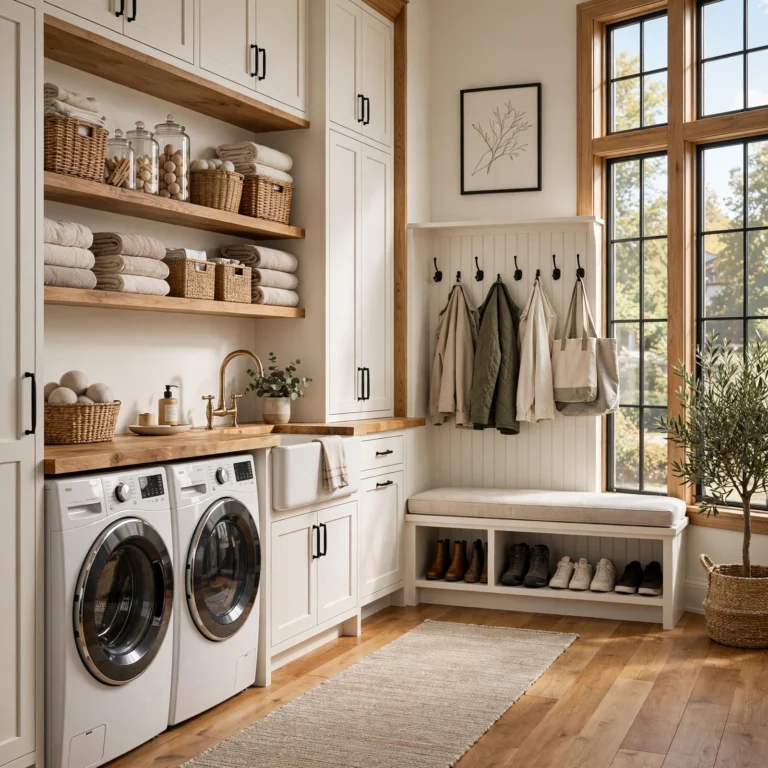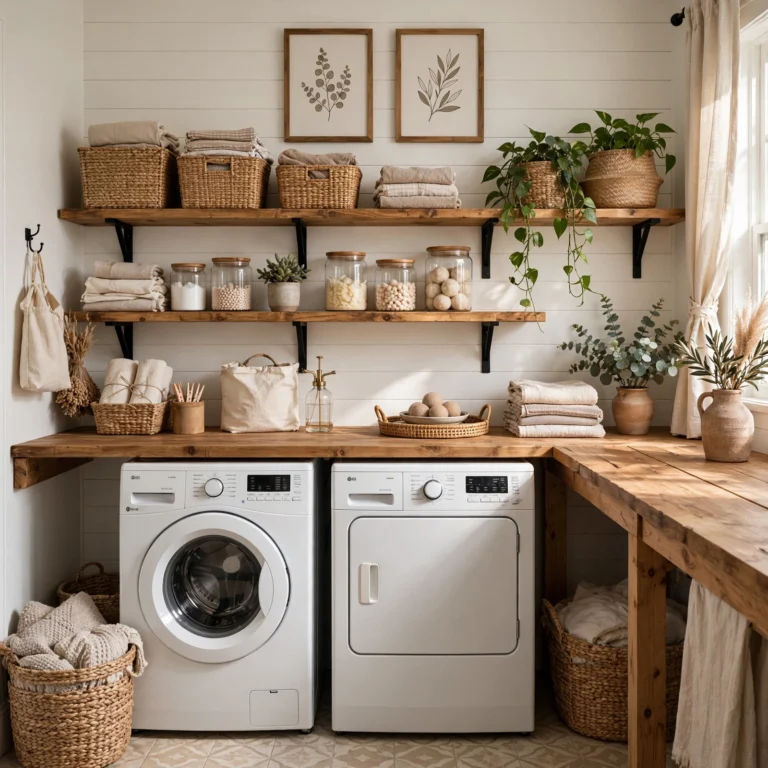
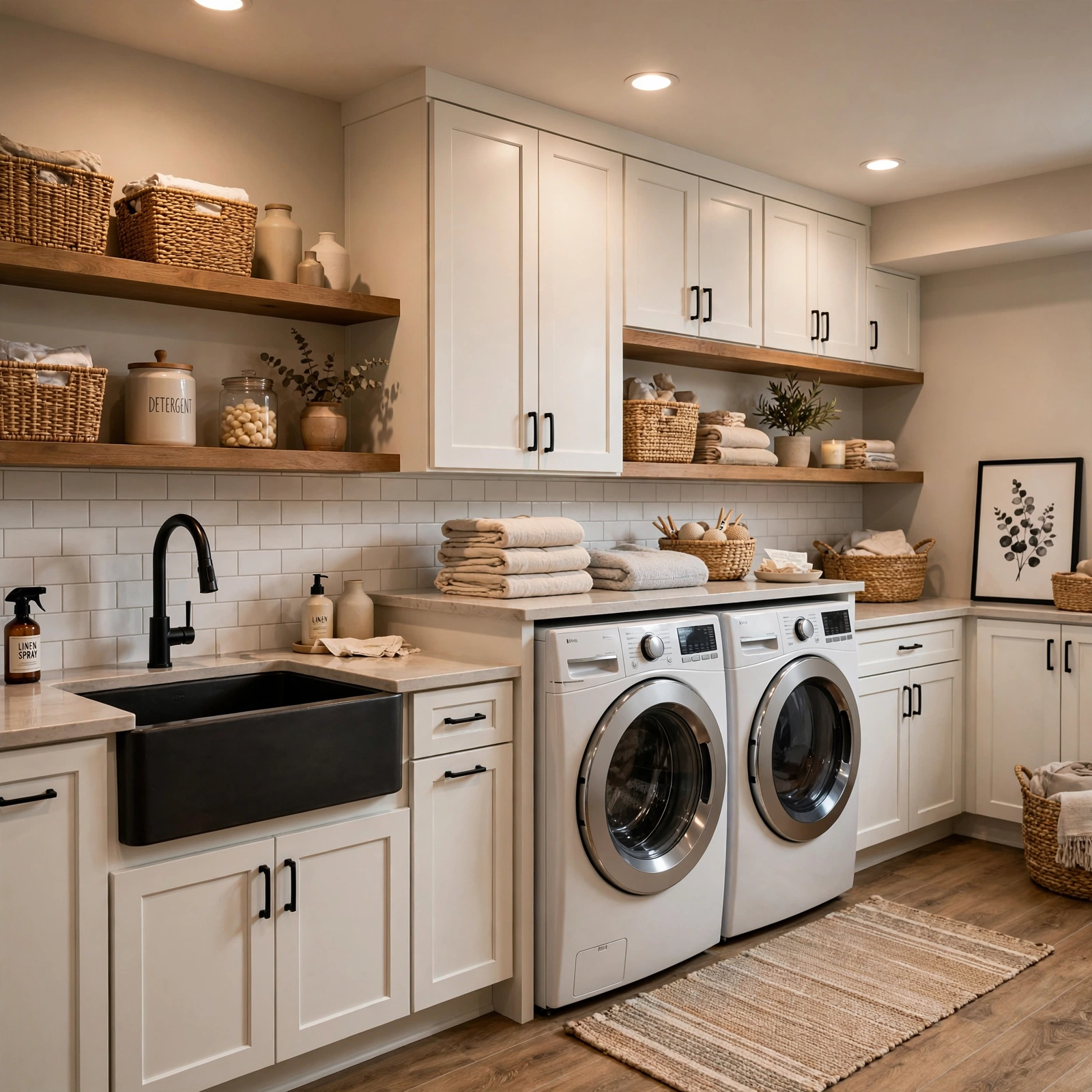
14 Trendy Basement Laundry Room Ideas for a Dry, Functional Space
Basement laundry room ideas need to account for a few challenges that don’t apply to a laundry space elsewhere in the house, particularly moisture control, adequate lighting, and the practical realities of a below grade concrete floor. This list covers both the functional infrastructure worth prioritizing and the decorative choices that still matter once those basics are addressed.
Trend & Background
Basement laundry rooms have received more design attention as finished basements have become a more common and valued part of home renovation projects generally, rather than treating the lower level purely as unfinished mechanical and storage space. This shift has pushed homeowners to apply the same material and lighting considerations to a basement laundry room that they would to any other part of the house, while still respecting the specific moisture and structural realities of a below grade space. Waterproofing and moisture management products in particular have improved considerably, making it more feasible to finish a basement laundry area with confidence that it will hold up over time.
Key Takeaways
- Basement laundry room ideas need to address moisture and humidity first, since a below grade space is naturally more prone to dampness than a laundry room elsewhere in the house.
- Flooring and wall materials matter more in a basement than in most other rooms, given the higher risk of water exposure from both appliance leaks and general below grade humidity.
- Adequate lighting is especially important in a basement laundry room, since these spaces typically lack the natural light a main floor laundry room might have.
- Addressing practical infrastructure, like a sump pump pairing or proper ventilation, prevents bigger problems down the line even if these details aren’t the most visually exciting part of the project.
Basement Laundry Room Ideas Worth Trying
Whether you’re finishing a basement laundry room from scratch or updating an existing unfinished space, these ideas should help you build something that’s genuinely dry, well lit, and pleasant to use rather than just functional out of necessity.
1. Moisture Resistant Flooring Basement Laundry Room Ideas
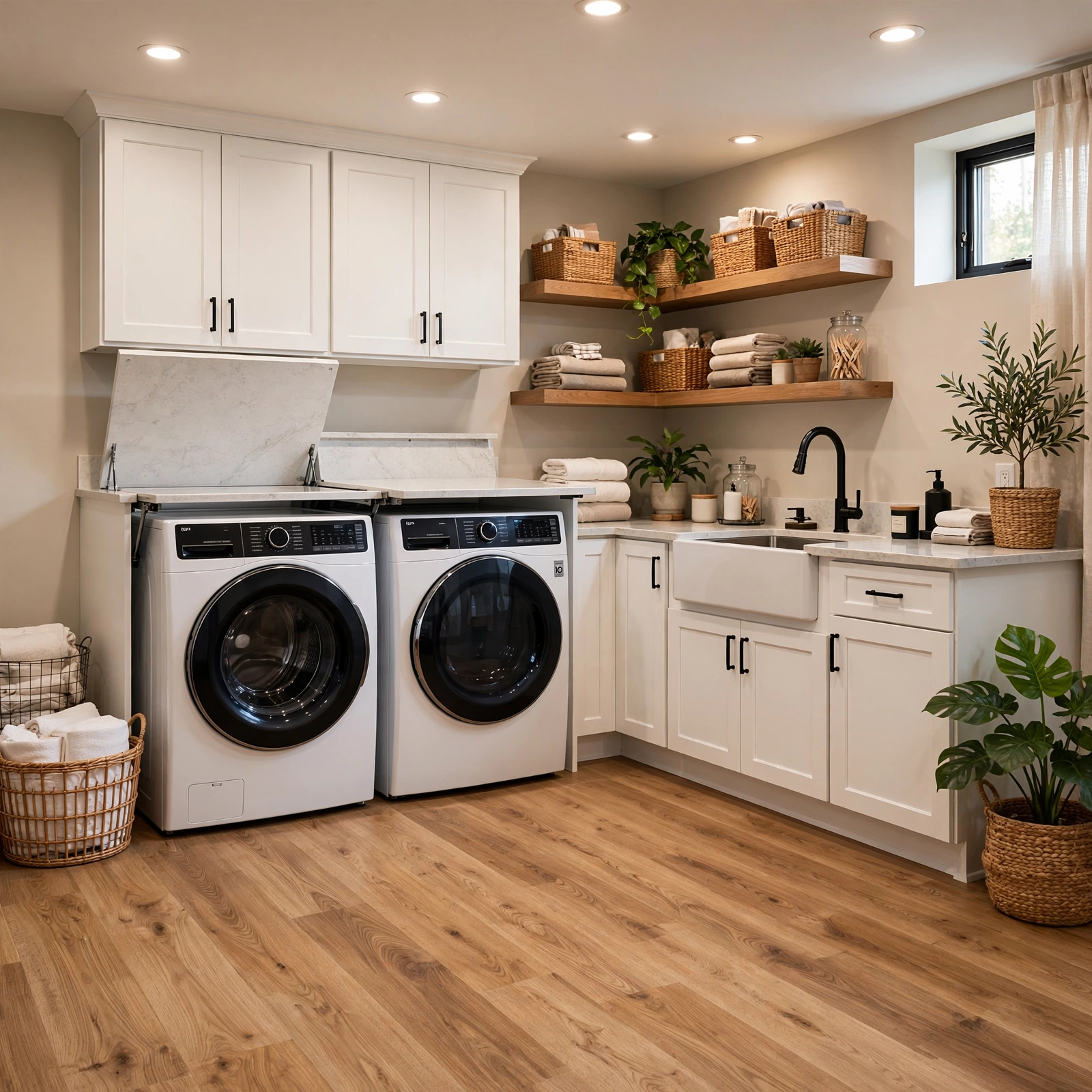
Moisture resistant flooring, such as luxury vinyl plank or porcelain tile, protects a basement laundry room’s floor from both general below grade humidity and the risk of an occasional appliance leak, which matters more here than in a laundry space located above ground level. Choosing a flooring product specifically rated for below grade or high moisture installation, rather than a standard interior option, provides better long term protection against warping or mold growth. Installing a moisture barrier beneath the flooring, directly against the concrete subfloor, adds an additional layer of protection regardless of which finished flooring material is chosen on top.
| Flooring Type | Moisture Resistance | Basement Suitability |
| Luxury Vinyl Plank | High | Excellent |
| Porcelain Tile | High | Excellent |
| Laminate | Low to moderate | Not recommended |
2. Dehumidifier Placement Basement Laundry Room Ideas
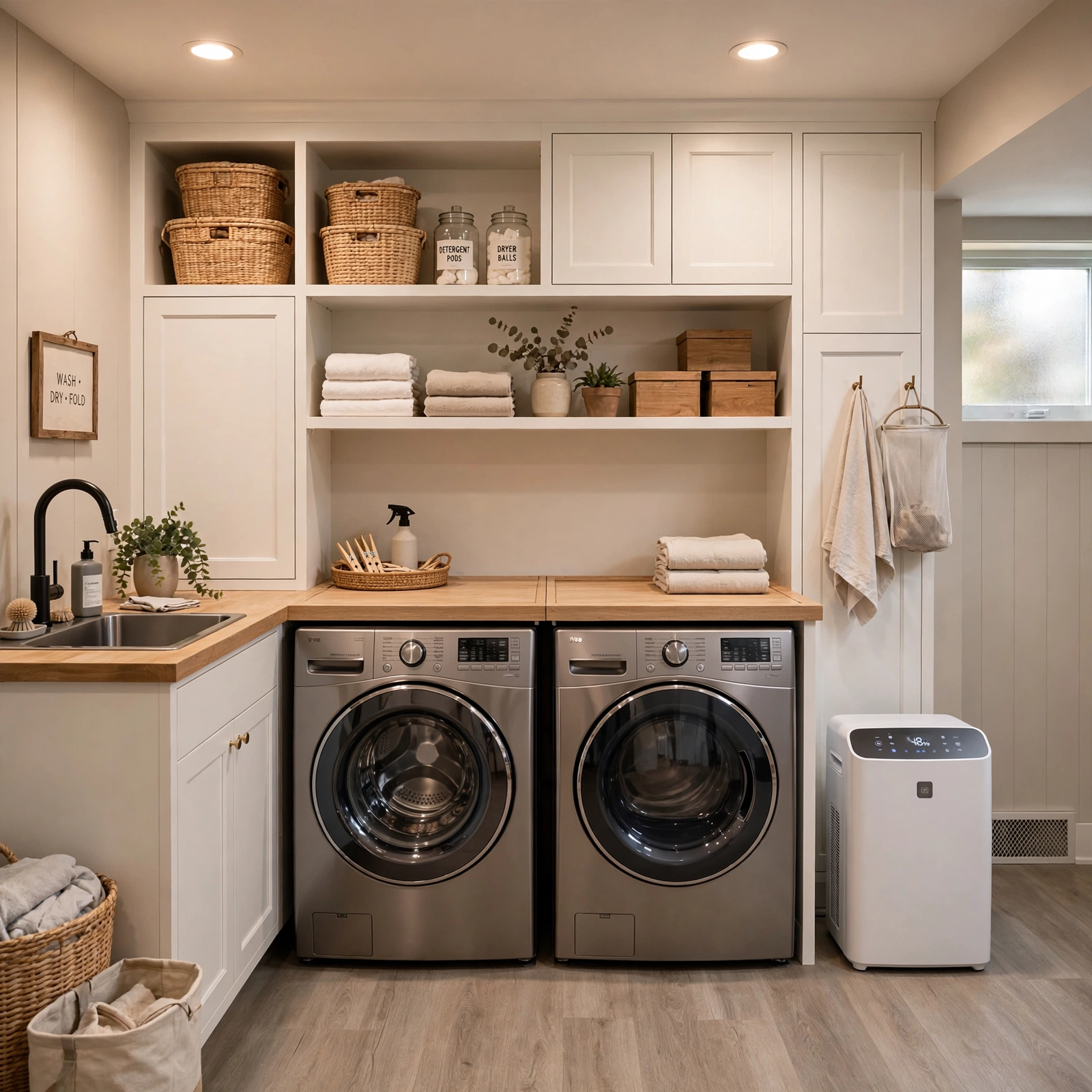
Dehumidifier placement positions a dedicated unit within or near the basement laundry room, actively managing the ambient humidity level that a below grade space naturally tends to accumulate, independent of whatever moisture the washer and dryer themselves might generate. A unit with a built in drain hose connection, running directly to a nearby floor drain or the laundry sink, eliminates the need to manually empty a water collection tank on a regular basis. Running the dehumidifier consistently, rather than only when moisture becomes visibly noticeable, helps prevent the kind of gradual mold or mildew buildup that’s harder to reverse once established.
3. Epoxy Coated Concrete Floor Basement Laundry Room Ideas
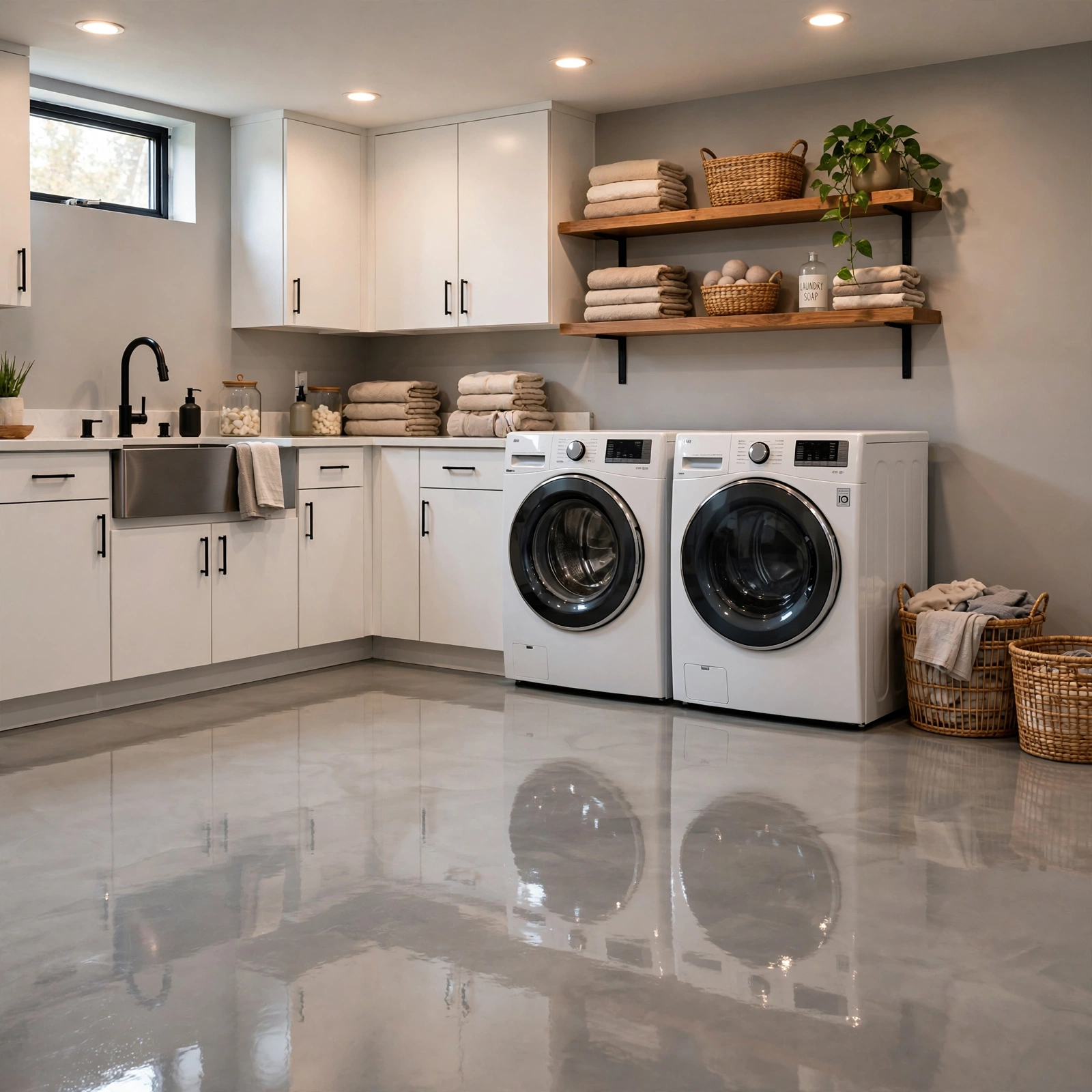
An epoxy coated concrete floor seals and finishes the basement’s existing concrete slab directly, providing a durable, water resistant surface without requiring a separate flooring material installed on top. This option works particularly well for a more utilitarian basement laundry space, where the industrial, polished concrete look fits the room’s practical function. Choosing an epoxy coating with a slip resistant additive mixed in improves safety on a floor that’s likely to get wet periodically from appliance use or general basement dampness.
See More About Tiny Laundry Room Ideas.
4. Drop Ceiling with Access Panels Basement Laundry Room Ideas
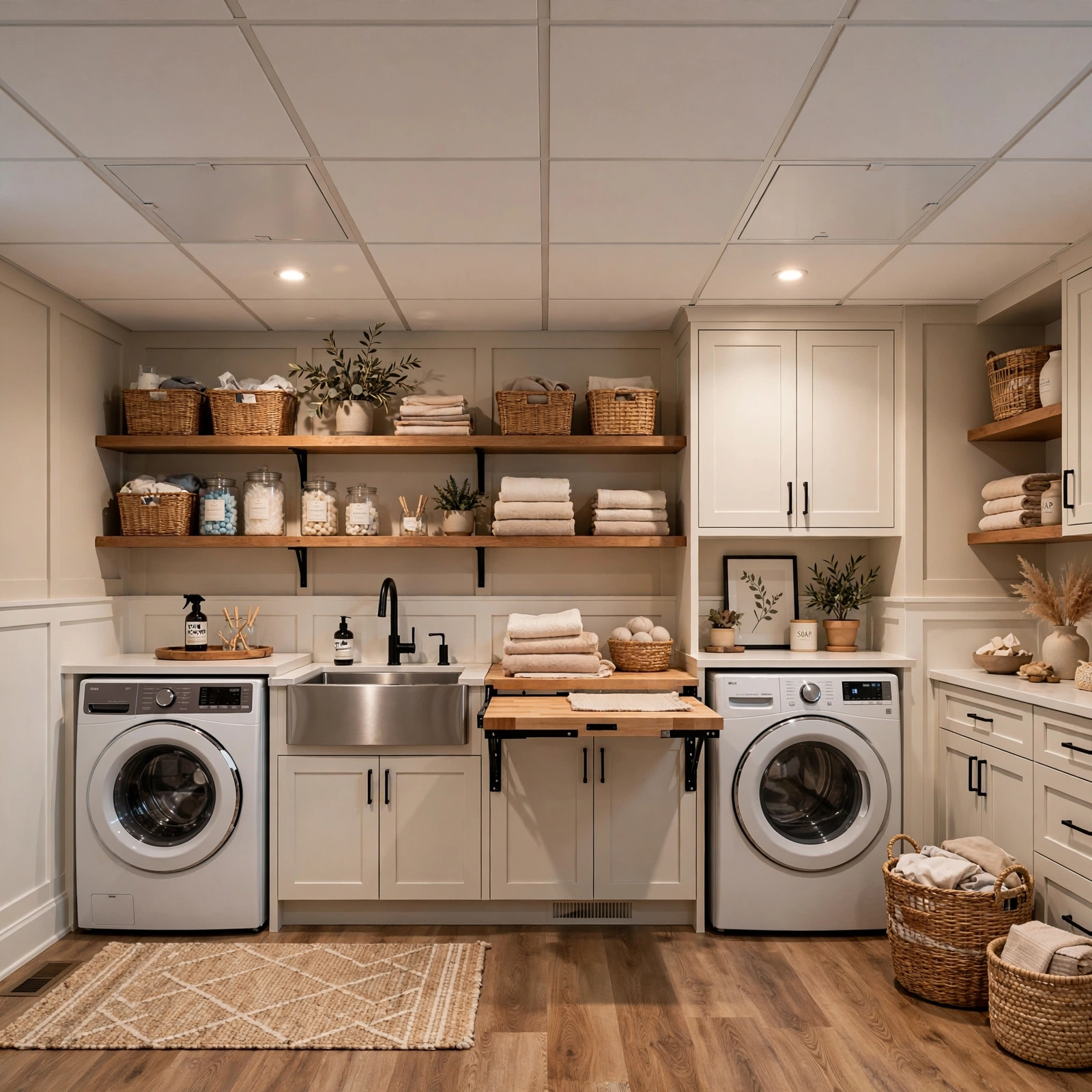
A drop ceiling with access panels conceals exposed pipes, ductwork, and wiring commonly found in an unfinished basement ceiling, while still allowing removable panels for maintenance access to whatever mechanical systems run through that space. This detail gives the basement laundry room a more finished appearance without requiring the more expensive and permanent step of fully enclosing the ceiling in drywall. Choosing a moisture resistant panel material, rather than a standard fiber tile, holds up better to the humidity common in a basement environment.
5. Sump Pump Pairing Basement Laundry Room Ideas
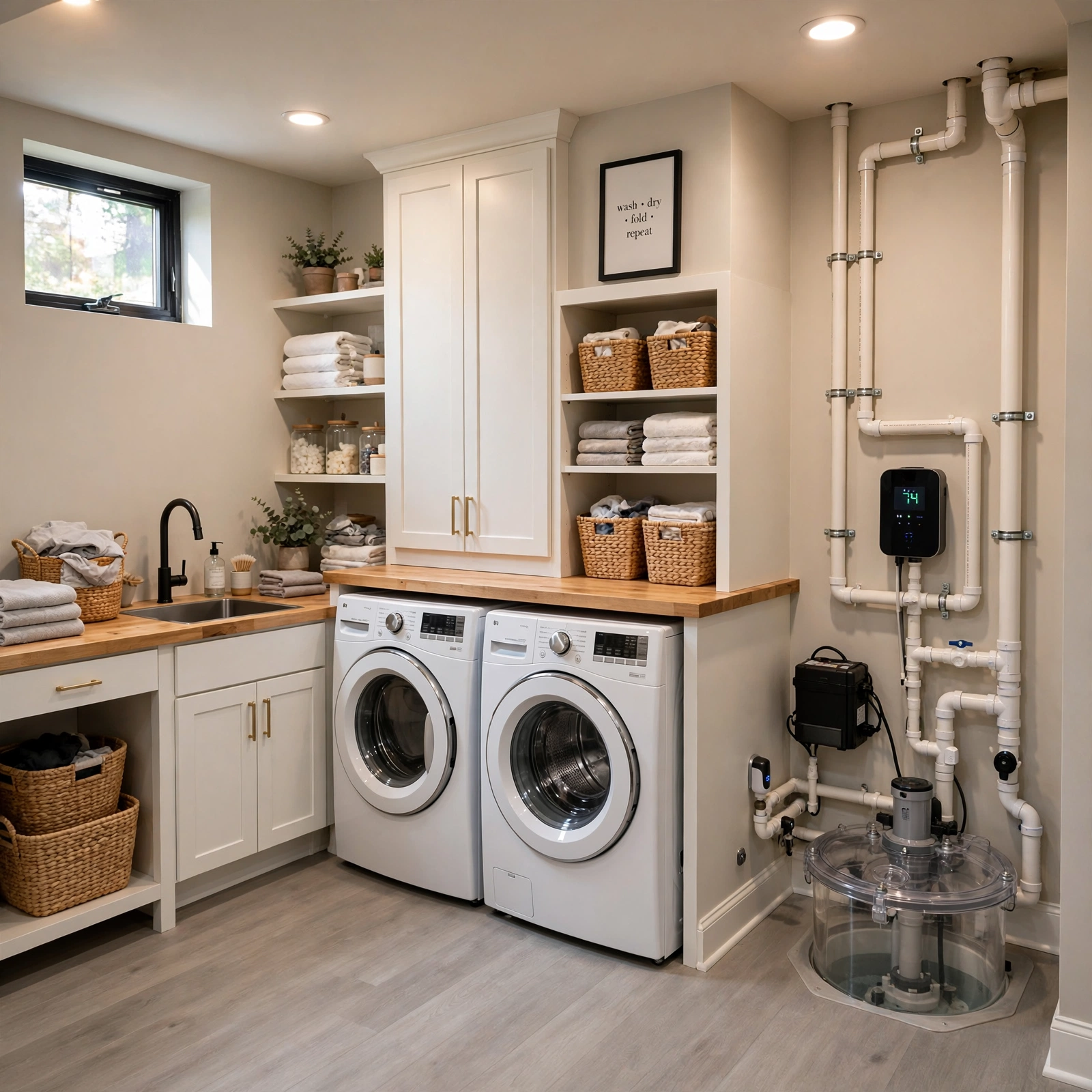
Sump pump pairing positions the laundry room near an existing or newly installed sump pump system, providing a practical safeguard against basement flooding that could otherwise damage appliances and finished flooring. This detail matters most in a region or specific property with a history of groundwater issues or basement flooding, where the sump pump serves as the primary defense against water intrusion. Testing the pump regularly and keeping it clear of any obstruction ensures it functions properly when actually needed during a heavy rain event.
6. Bright Overhead Lighting Layout Basement Laundry Room Ideas
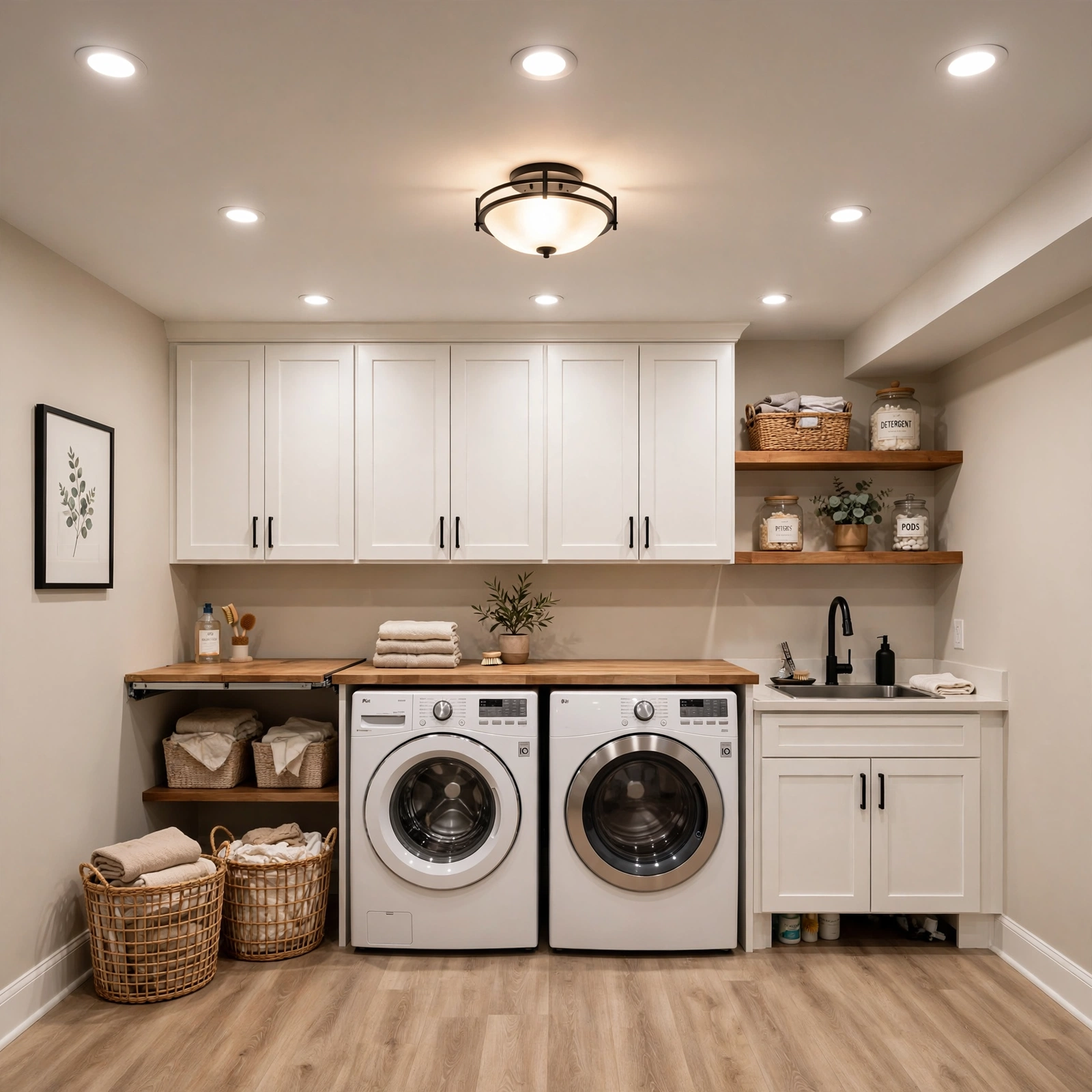
A bright overhead lighting layout compensates for a basement laundry room’s typical lack of natural light, using multiple recessed or flush mounted fixtures spaced evenly across the ceiling rather than relying on a single central light source. This detail is particularly important for tasks like stain treatment and sorting, where accurate color and detail visibility depends on adequate, well distributed light. Choosing a daylight balanced bulb temperature, rather than a warmer, dimmer option, better compensates for the complete absence of natural daylight in most basement spaces.
| Basement Lighting | Fixture Count | Best For |
| Single Overhead Fixture | 1 | Small closets only |
| Recessed Can Lights | 3 5 | Standard basement laundry room |
| Track or Linear Fixture | 2 3 | Longer, narrower layouts |
7. Insulated Wall Paneling Basement Laundry Room Ideas
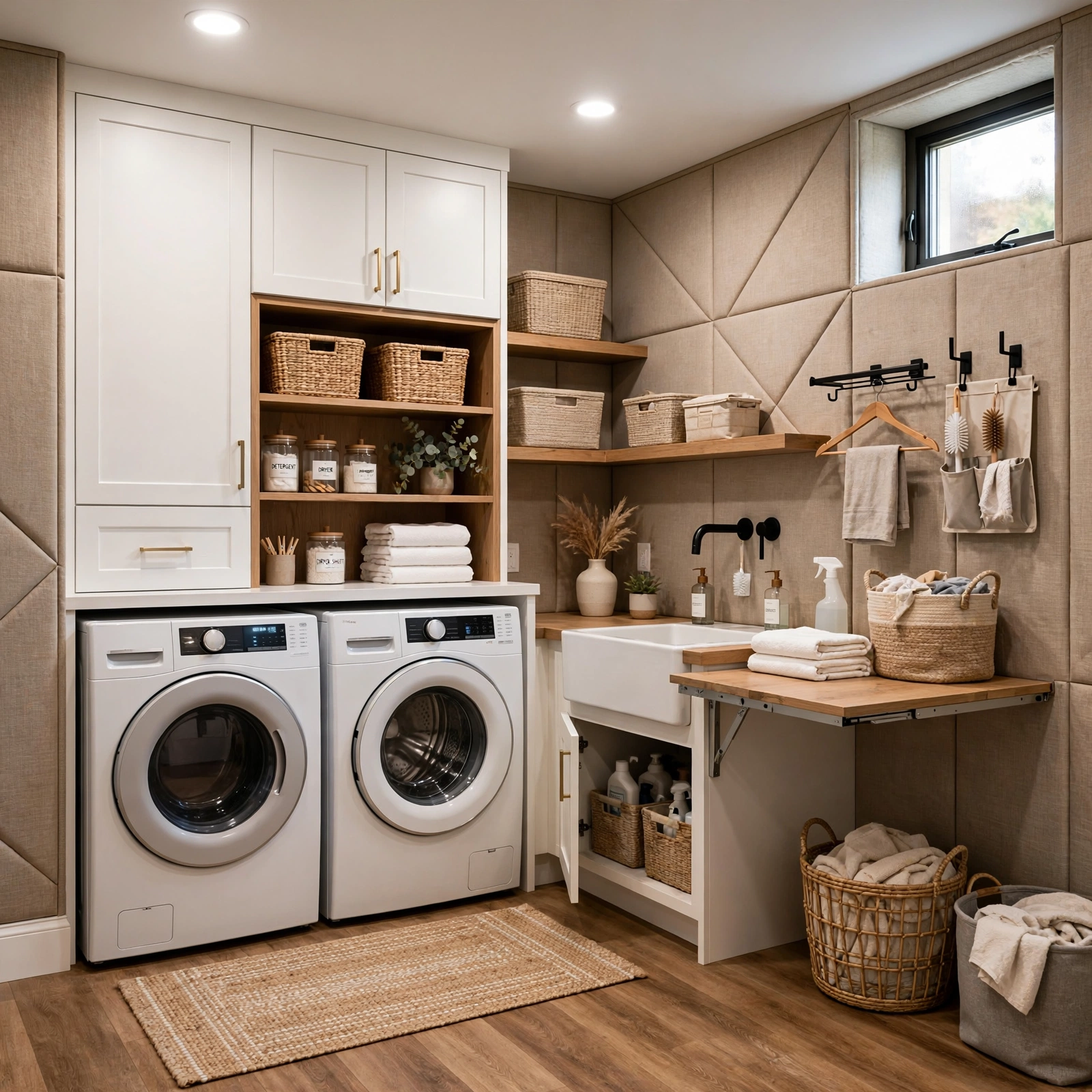
Insulated wall paneling finishes a basement laundry room’s walls while also improving temperature regulation and reducing the transfer of cold, damp air commonly associated with unfinished below grade concrete or block walls. This detail makes the space more comfortable to spend time in, particularly during colder months when an unfinished basement can feel noticeably chillier than the rest of the house. Choosing a paneling system with a built in vapor barrier helps prevent moisture from migrating through the wall assembly and causing problems behind the finished surface over time.
8. Utility Sink with Backflow Valve Basement Laundry Room Ideas
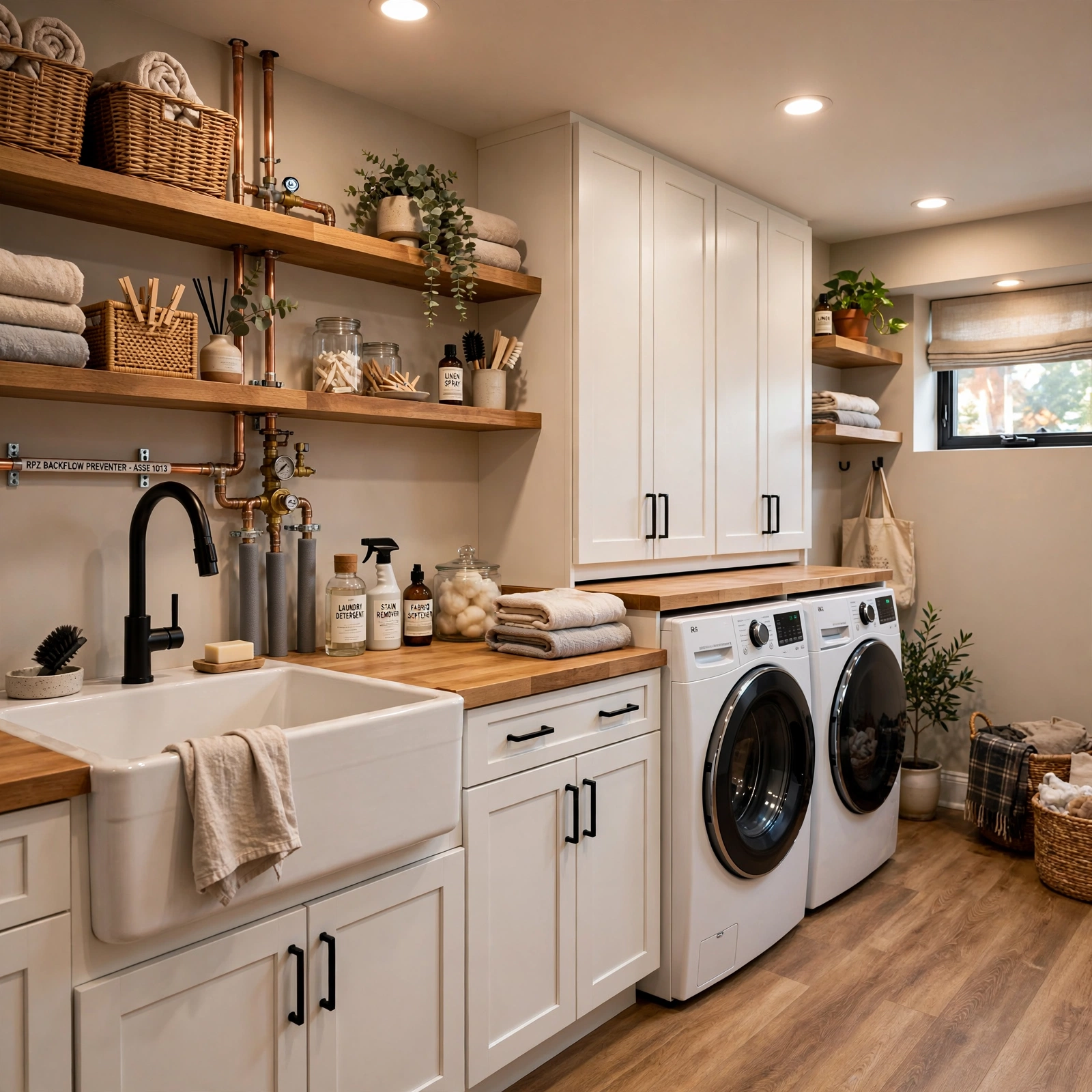
A utility sink with a backflow valve provides a dedicated spot for hand washing or rinsing in the basement laundry room, while the backflow valve specifically protects against sewage backup during a heavy rain event or municipal system issue, a risk more relevant to a below grade plumbing fixture than one located above ground. This detail is a practical safeguard worth discussing with a licensed plumber during installation, particularly in an area prone to combined sewer overflow issues during storms. A deep, utility style basin also holds up well to heavier basement specific tasks, like rinsing gardening tools or washing paint brushes.
9. Elevated Appliance Pedestals Basement Laundry Room Ideas
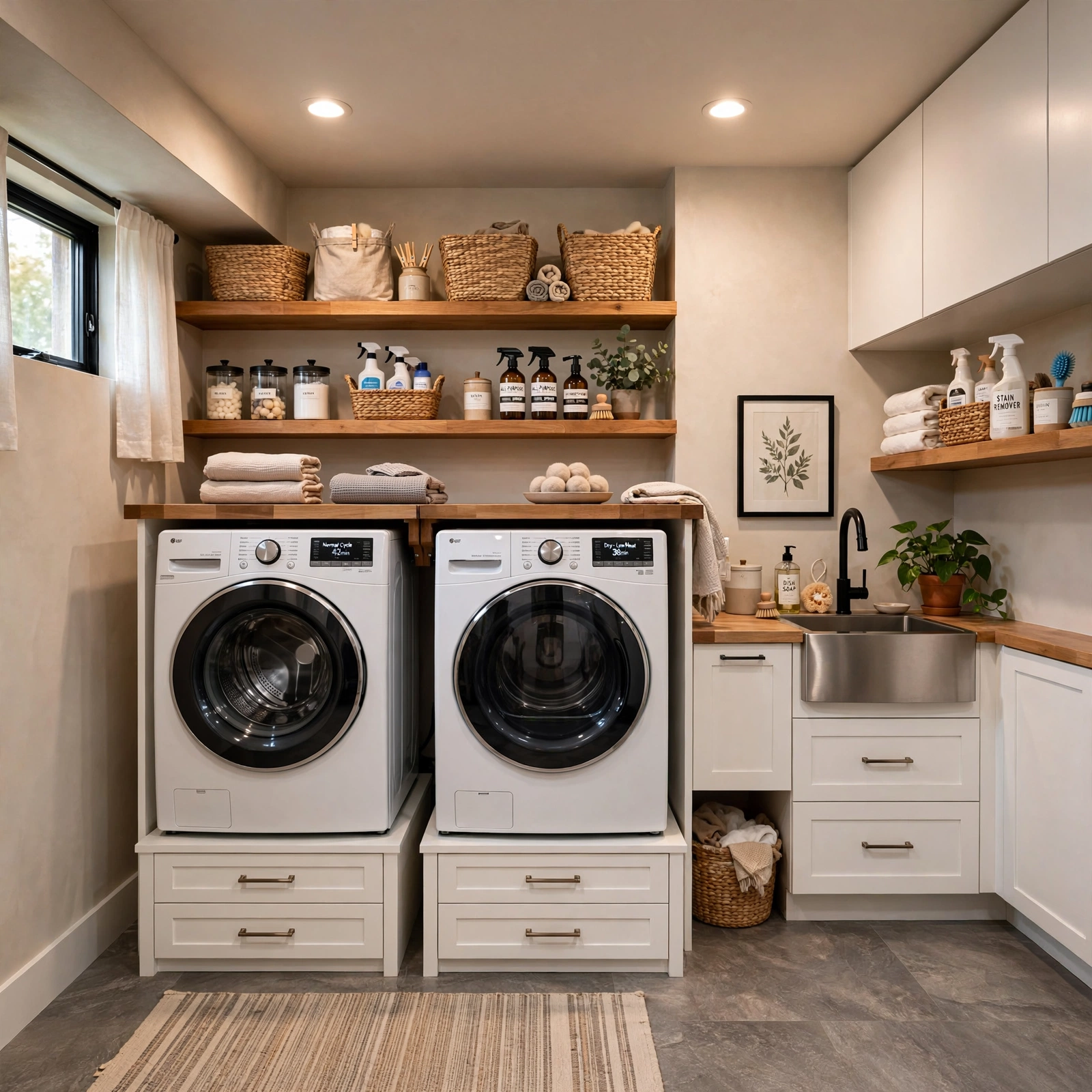
Elevated appliance pedestals raise the washer and dryer a few inches off the basement floor, both reducing the strain of bending down to load and unload the machines and providing a small amount of protection against minor flooding or water pooling on the floor itself. Many pedestal options also include a drawer underneath for additional storage, making practical use of the newly created gap beneath the raised appliances. Securing the pedestals properly to the appliances prevents any shifting or instability during the vibration that occurs while the machines are running.
10. Painted Concrete Wall Accent Basement Laundry Room Ideas
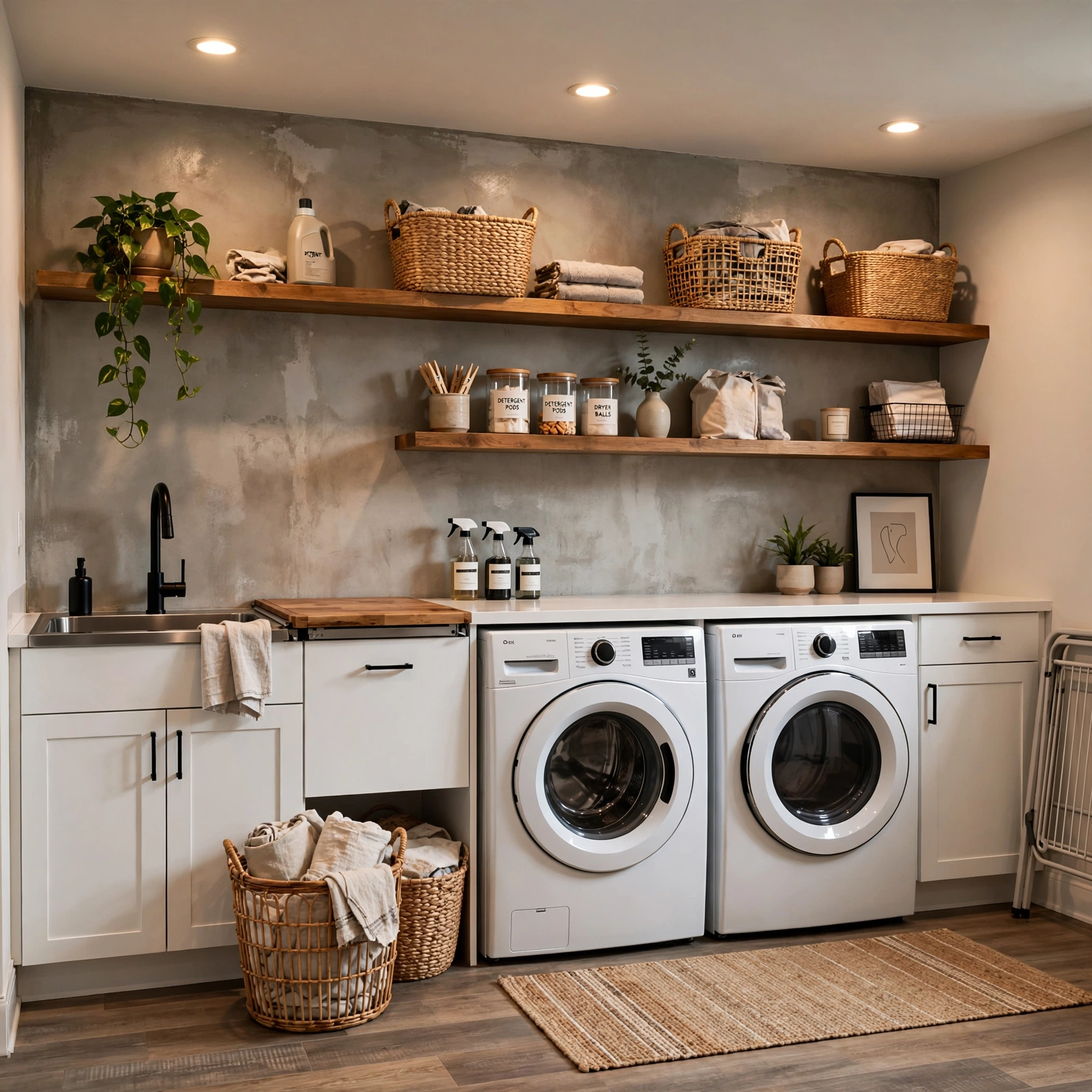
A painted concrete wall accent applies color directly to an exposed concrete or block wall section, adding personality to the basement laundry room without requiring a full finishing project to cover the wall in drywall or paneling. Using a masonry specific paint formulated to handle the porous, moisture prone nature of concrete produces better, longer lasting results than a standard interior wall paint. This option works especially well as a more budget friendly way to add color to a basement space before committing to a larger, more expensive finishing project.
11. Egress Window Light Well Basement Laundry Room Ideas
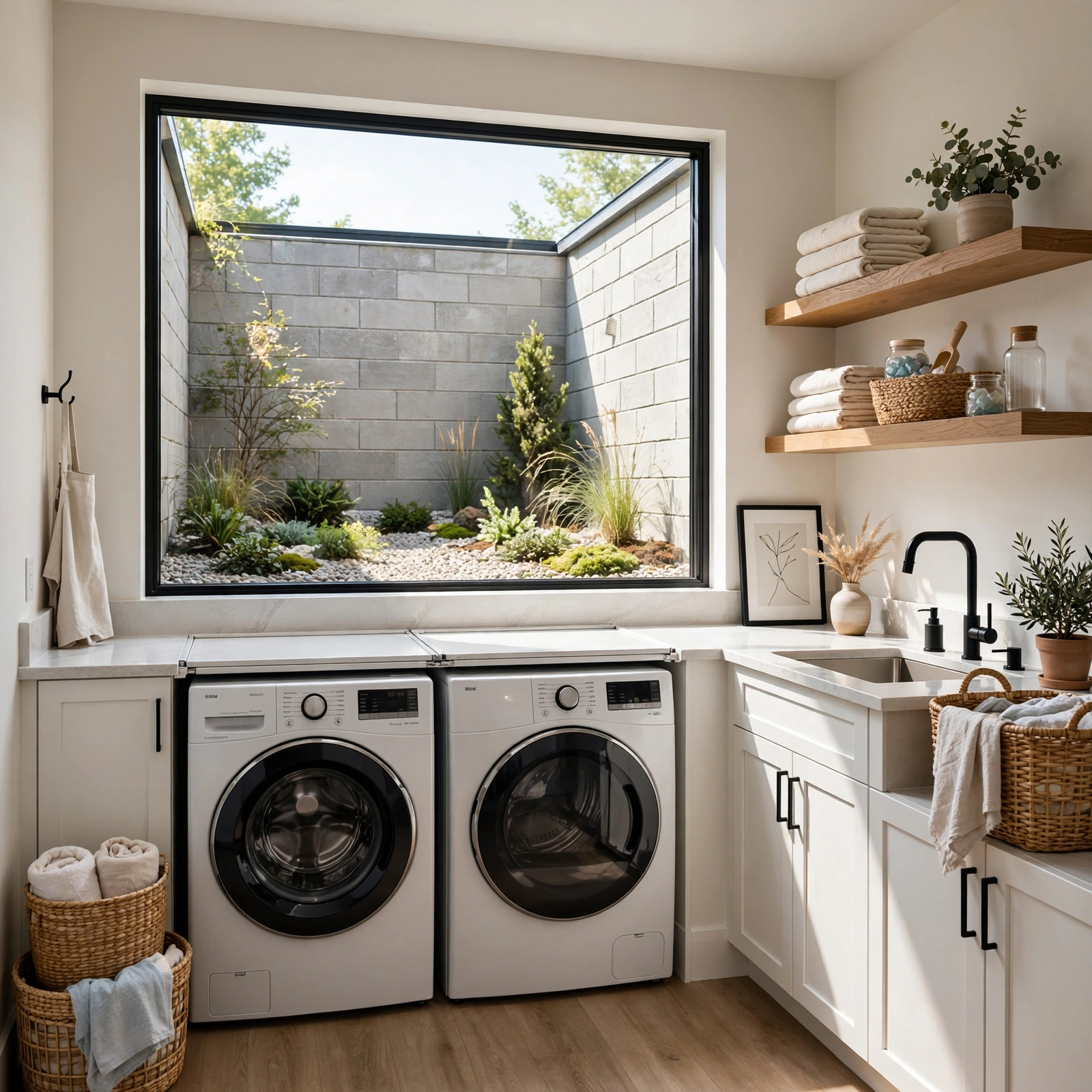
An egress window light well adds a below grade window opening, complete with a window well structure extending above the exterior ground level, bringing natural light and outdoor visibility into an otherwise fully enclosed basement laundry room. This detail requires significant excavation and structural work, making it a bigger investment than most other basement laundry room updates on this list. Beyond the natural light benefit, an egress window can also serve as an emergency exit point, which may be required by code depending on how the basement space is classified and used.
12. Radon Safe Ventilation System Basement Laundry Room Ideas
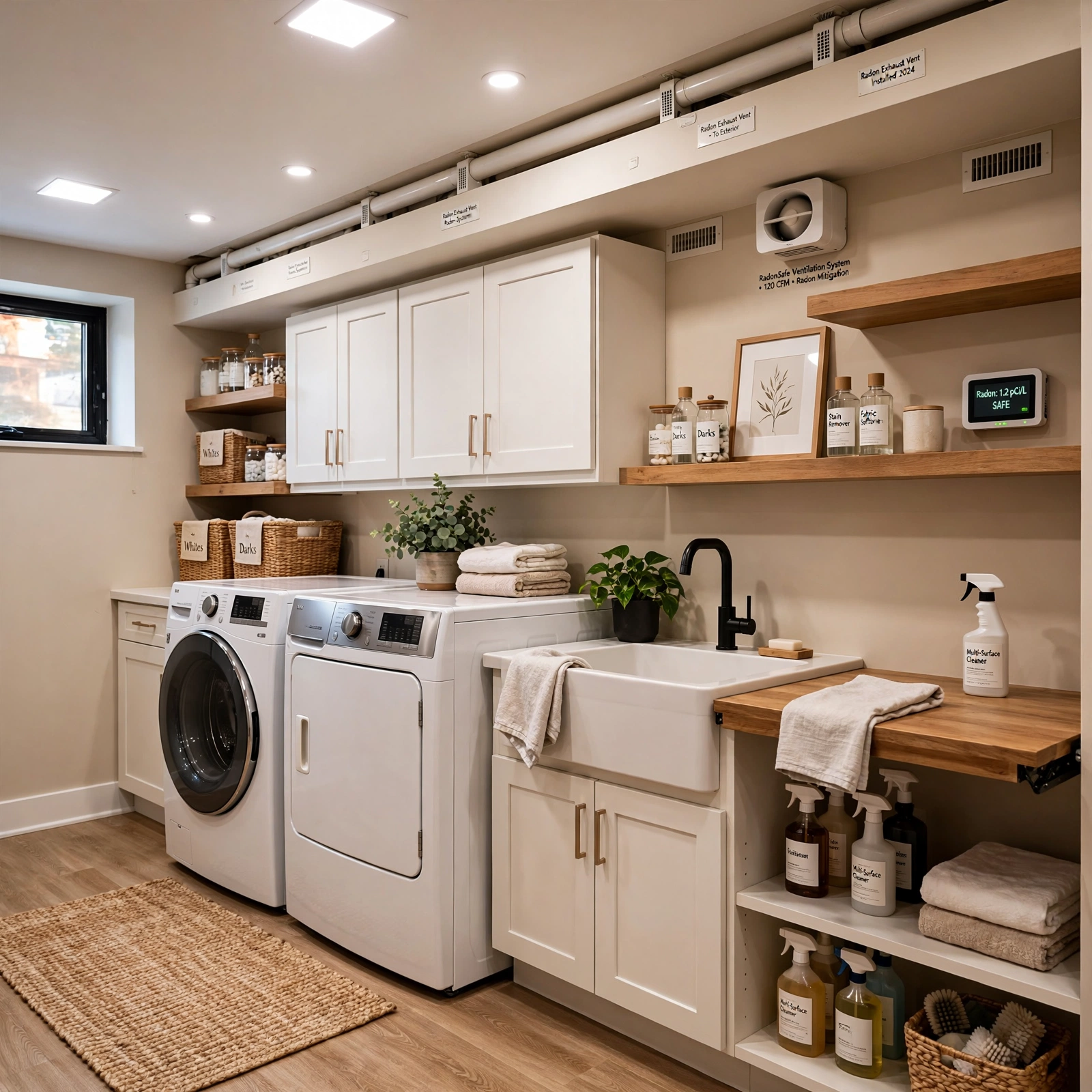
A radon safe ventilation system addresses indoor air quality concerns specific to below grade spaces, where radon gas naturally present in soil can accumulate more readily than in above ground rooms. Testing the basement for radon levels before finishing the laundry room helps determine whether a dedicated mitigation system is actually necessary for that specific property. This detail is easy to overlook in favor of more visually apparent updates, but it directly affects the long term health and safety of anyone spending regular time in the finished basement space.
13. Rubber Floor Mat Zone Basement Laundry Room Ideas
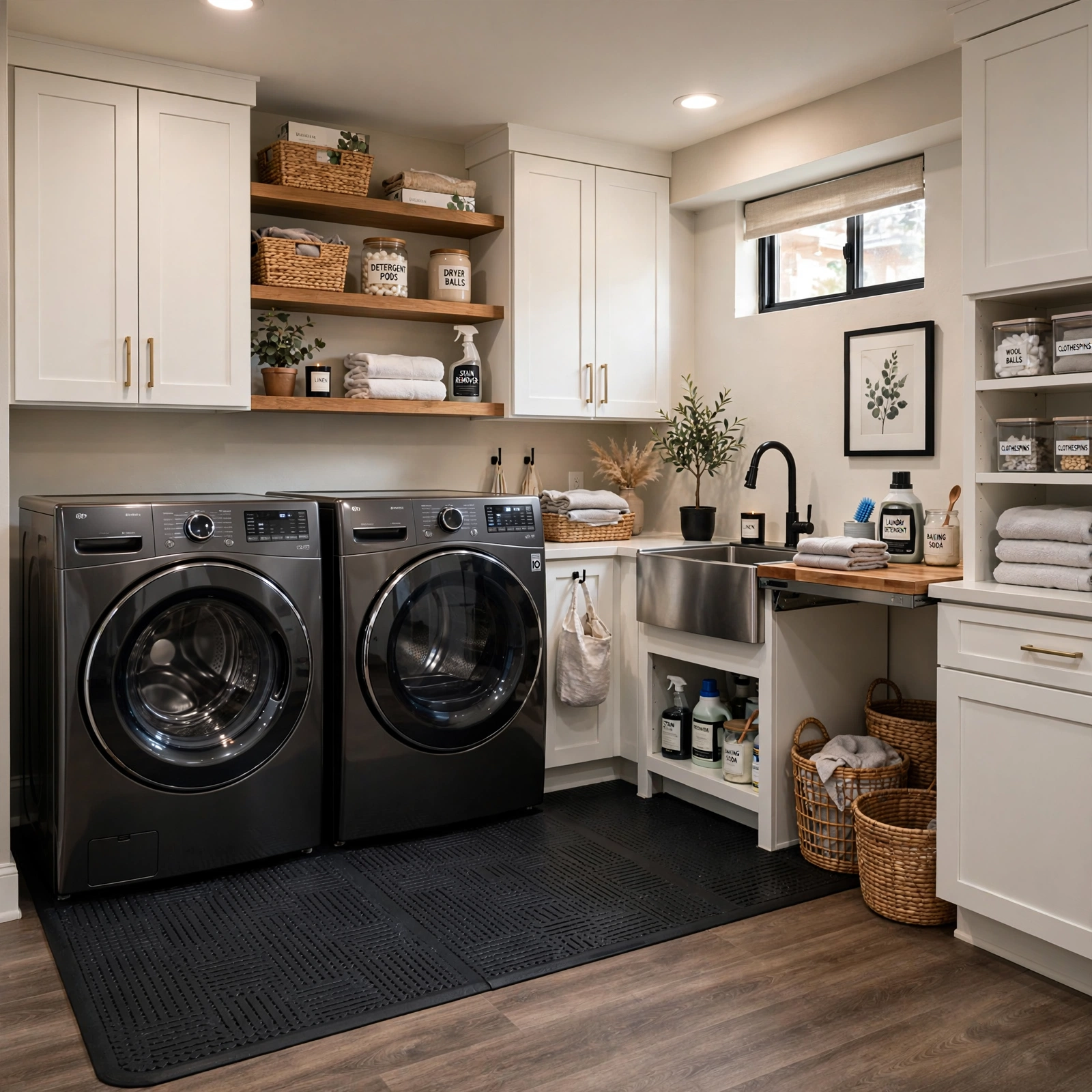
A rubber floor mat zone places a durable, water resistant mat directly in front of the washer and dryer, providing cushioning underfoot and an additional layer of protection against minor drips or splashes in the specific area that sees the most direct water exposure. This detail works well as a lower cost addition layered on top of whatever primary flooring material has already been installed throughout the room. Choosing a mat with a textured, slip resistant surface improves safety in a spot that’s more likely than most to occasionally have water on the floor.
14. Exposed Pipe Concealment Ceiling Basement Laundry Room Ideas
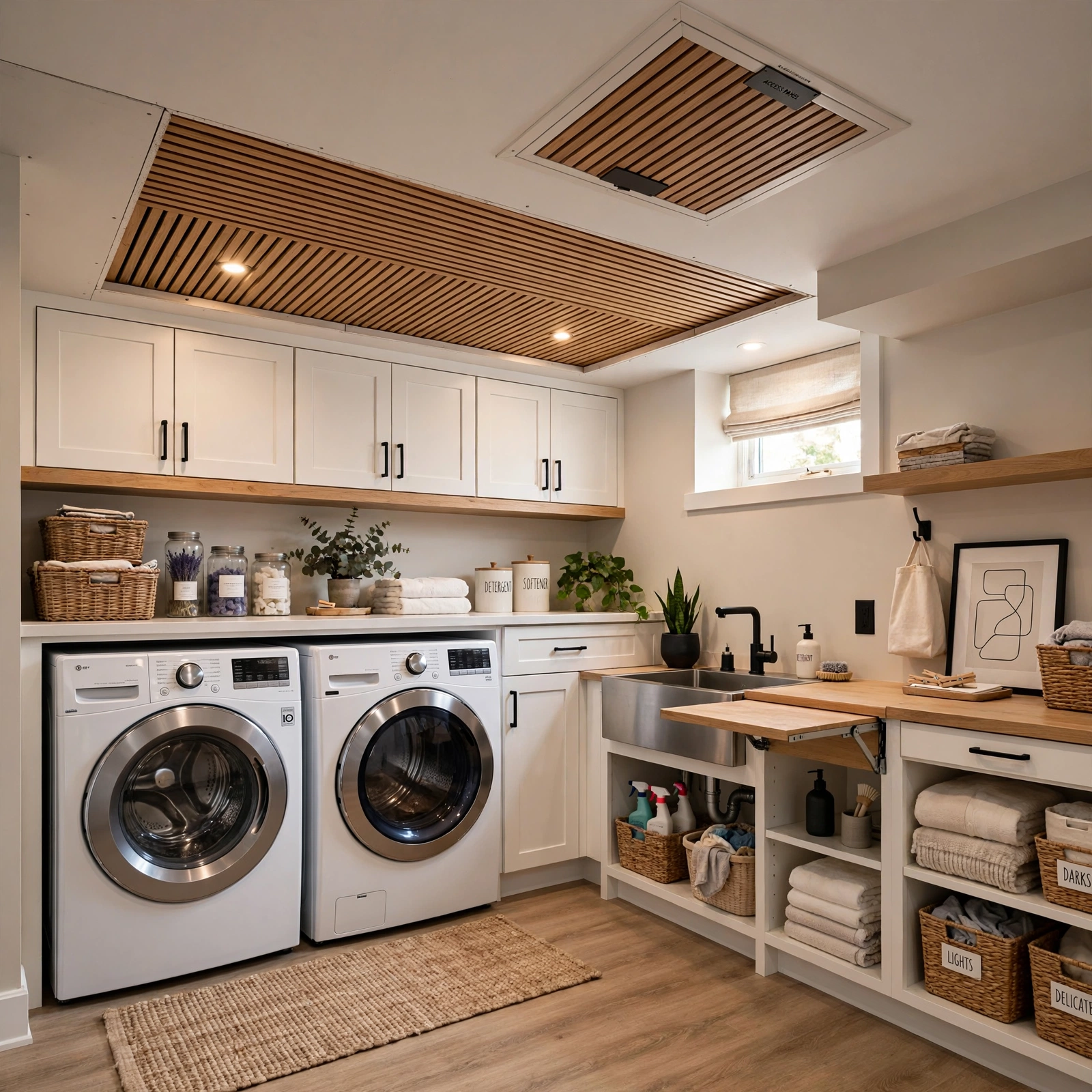
Exposed pipe concealment ceiling wraps a simple wood or drywall box around a specific run of visible pipes or ductwork, rather than committing to a full drop ceiling across the entire room, providing a more finished look in a targeted area without the cost of addressing the whole ceiling at once. This detail works particularly well when only one or two pipe runs are visually distracting, while the rest of the ceiling structure is either already finished or high enough to not require full concealment. Ensuring the box remains removable or includes an access point is worth planning for in case future plumbing maintenance becomes necessary.
Shop the Look
A well planned basement laundry room typically pairs moisture management infrastructure with a few finishing touches that make the space feel genuinely complete. Moisture resistant vinyl plank flooring paired with insulated wall paneling addresses both durability and comfort. A dedicated dehumidifier and bright overhead lighting handle the practical challenges specific to a below grade space. A painted concrete accent wall and a rubber floor mat in front of the appliances round out the room with a bit of color and everyday practicality.
Common Mistake to Avoid
The most common mistake is prioritizing decorative finishes, like flooring color or wall paint, before addressing the moisture and ventilation challenges specific to a below grade space, which can lead to mold, warping, or damaged finishes within just a year or two of an otherwise attractive renovation. Testing for existing moisture issues, confirming adequate drainage and sump pump function, and planning for proper ventilation before selecting final finish materials prevents this costly sequence of problems. A basement laundry room that addresses these functional basics first tends to hold up considerably better over time than one designed purely around appearance.
Frequently Asked Questions
Do I need a dehumidifier in a basement laundry room?
A dehumidifier is generally a worthwhile addition to a basement laundry room, since below grade spaces naturally accumulate more ambient humidity than rooms located above ground, independent of whatever moisture the washer and dryer themselves generate during use. Running the unit consistently, with a drain hose connected to a nearby floor drain, helps manage this ongoing humidity without requiring regular manual maintenance.
What flooring should I avoid in a basement laundry room?
Laminate flooring and any material with a fiberboard core should generally be avoided in a basement laundry room, since these materials are prone to swelling and warping when exposed to the higher ambient moisture levels common in below grade spaces. Luxury vinyl plank, porcelain tile, and sealed or epoxy coated concrete are all better suited to handling this specific moisture challenge.
How do I know if my basement needs a sump pump before finishing a laundry room?
Checking your basement’s history of flooding or water intrusion, along with consulting a local contractor familiar with the area’s groundwater conditions, is the best way to determine whether a sump pump is necessary before finishing a basement laundry room. Properties in regions with a high water table or a documented history of basement flooding generally benefit from this safeguard regardless of the specific laundry room plans.
Is radon testing necessary before finishing a basement laundry room?
Radon testing is a reasonable precaution before finishing any basement space, including a laundry room, since radon levels vary considerably even between neighboring properties depending on local soil and geological conditions. A simple, inexpensive test kit can determine whether elevated levels are present, informing whether a dedicated mitigation system is worth the additional investment for that specific home.
How can I make a basement laundry room feel less like an afterthought?
Applying the same lighting, color, and finish considerations used elsewhere in the house, rather than defaulting to bare concrete and a single utility light, is the most effective way to make a basement laundry room feel like an intentional part of the home rather than a purely functional afterthought. Addressing the space’s specific moisture and ventilation needs first ensures those more decorative choices actually hold up well over time.
Conclusion
These basement laundry room ideas balance the practical realities of a below grade space, like moisture control and adequate lighting, with the same finish and decor considerations that make any room feel complete. Address the functional infrastructure first, including flooring, ventilation, and drainage, before committing to decorative finishes that depend on a genuinely dry, well managed space to hold up over time. Save this post to Pinterest for your next basement project, and check out our related post on laundry room ideas for more general inspiration once the basement specific basics are covered.
Author Expertise Room
This list draws on years of helping homeowners finish challenging below grade spaces, with a focus on choices that hold up structurally as well as they look on the day the project wraps up.