17 Practical Craft Room Ideas for an Organized Creative Space
Craft room ideas go beyond simply finding a spare corner for supplies, since a well organized space actually makes the crafting process itself faster and less frustrating. This list covers storage solutions, work surfaces, and layout ideas for craft rooms of any size, from a small closet setup to a full dedicated room.
Trend & Background
Craft room design has grown more specialized as more people set up dedicated crafting spaces at home, moving beyond a single shared desk toward rooms built specifically around the storage and workflow needs of a particular hobby. Modular storage systems, like pegboards and stackable bins, have become popular precisely because they can be reconfigured as a person’s specific crafting interests shift over time. At the same time, standing height work surfaces and improved task lighting have gained attention as more crafters recognize how much ergonomics affects comfort during long project sessions, not just the visual organization of the space.
Key Takeaways
- Craft room ideas work best when storage is sorted by project type and frequency of use, rather than grouped only by supply category.
- Vertical storage solutions like pegboards and vertical paper slots make better use of a small craft room than floor standing furniture alone.
- A dedicated cutting or work surface at standing height reduces strain during long crafting sessions compared to working at a standard seated desk.
- Clear storage containers and labeled bins cut down on the time spent searching for a specific supply mid project.
Stunning Craft Room Ideas
Whether you’re working with fabric, paper, paint, or a mix of everything, these ideas focus on practical organization that keeps supplies visible and accessible rather than buried in unlabeled bins.
1. Pegboard Wall Organizer Craft Room Ideas
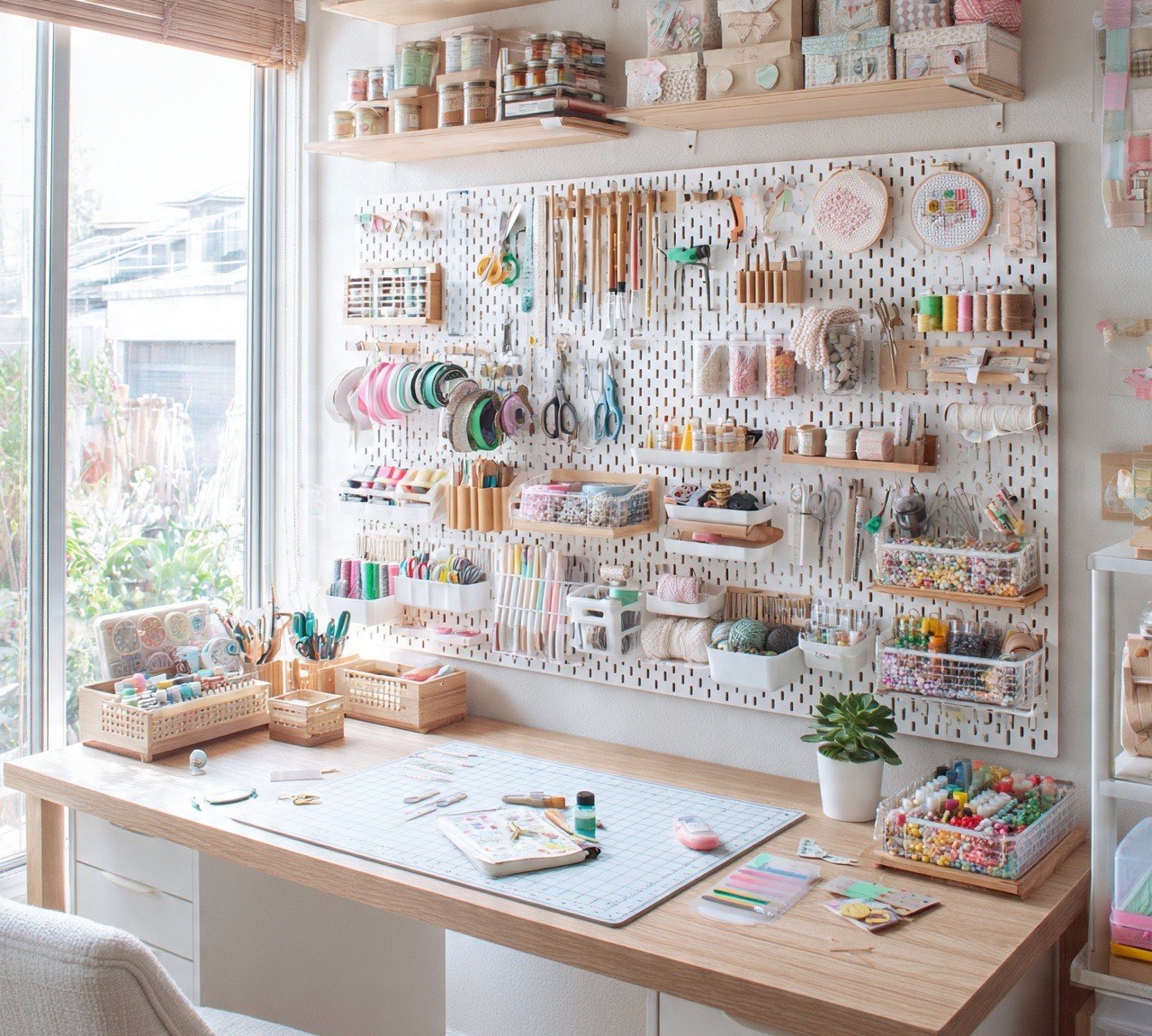
A pegboard wall organizer mounts a perforated board to the wall, allowing hooks, small shelves, and bins to be repositioned as needed to hold scissors, tape, and other frequently used tools within easy reach. This system works especially well for tools you want visible and grabbable without opening a drawer, since everything hangs in plain sight. Painting the pegboard a color that matches the rest of the room keeps this highly functional storage option from looking purely utilitarian.
| Storage Type | Flexibility | Best For |
| Pegboard | High | Tools, frequently used items |
| Fixed Shelving | Low | Bins, books, larger supplies |
| Rolling Cart | High | Supplies needed across multiple areas |
2. Rolling Cart Craft Room Ideas
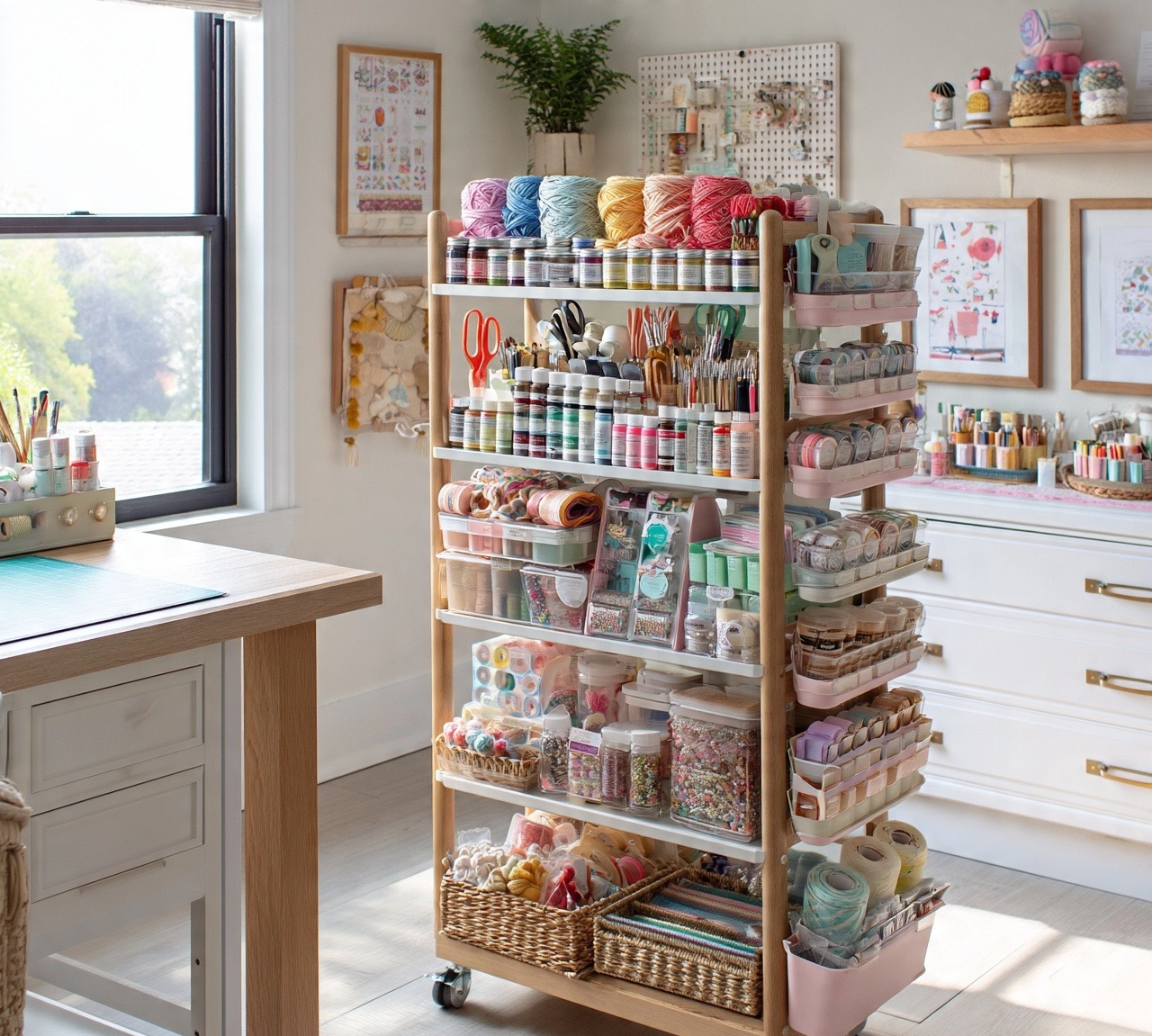
A rolling craft cart uses a multi tiered metal or wood frame on wheels to hold supplies that can move between a main crafting table and a secondary work area, useful in a smaller space where one dedicated room isn’t available. This works particularly well for someone who crafts in a shared space, like a living room or dining table, since the entire cart can be tucked away in a closet between sessions. Choosing a cart with drawers rather than open shelving keeps smaller supplies from sliding off during transport.
3. Built In Storage Cabinets Craft Room Ideas
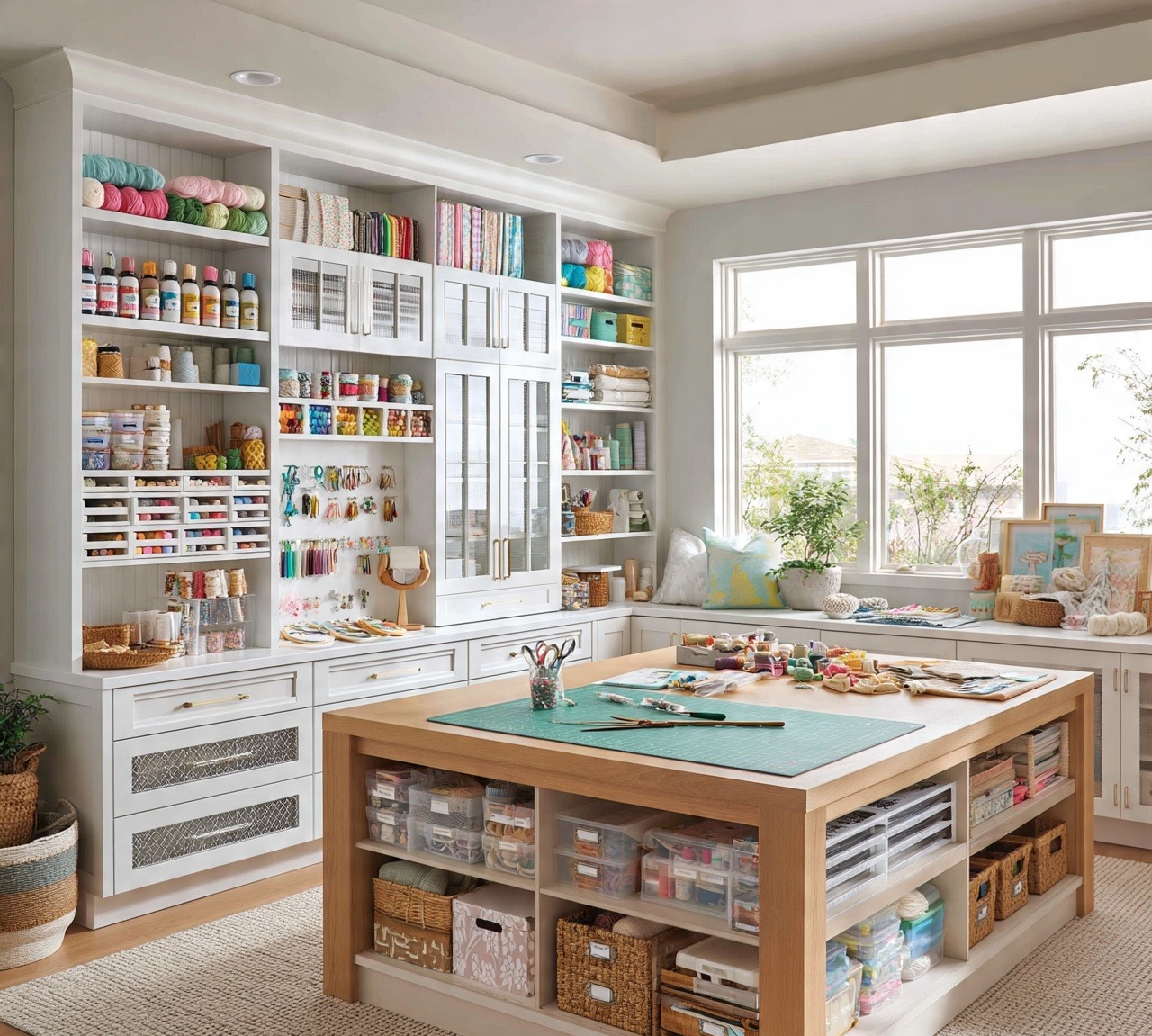
Built in storage cabinets line one or more walls of a dedicated craft room with floor to ceiling cabinetry, providing enclosed storage for larger supplies and bulkier equipment that don’t need to stay visible on open shelving. This option requires a bigger upfront investment than modular or freestanding storage, but makes efficient use of a room’s full height rather than leaving upper wall space empty. Including a mix of open and closed sections within the built in design balances easy access with a tidier overall appearance.
Learn More About Cute Craft Ideas.
4. Cutting Table Island Craft Room Ideas
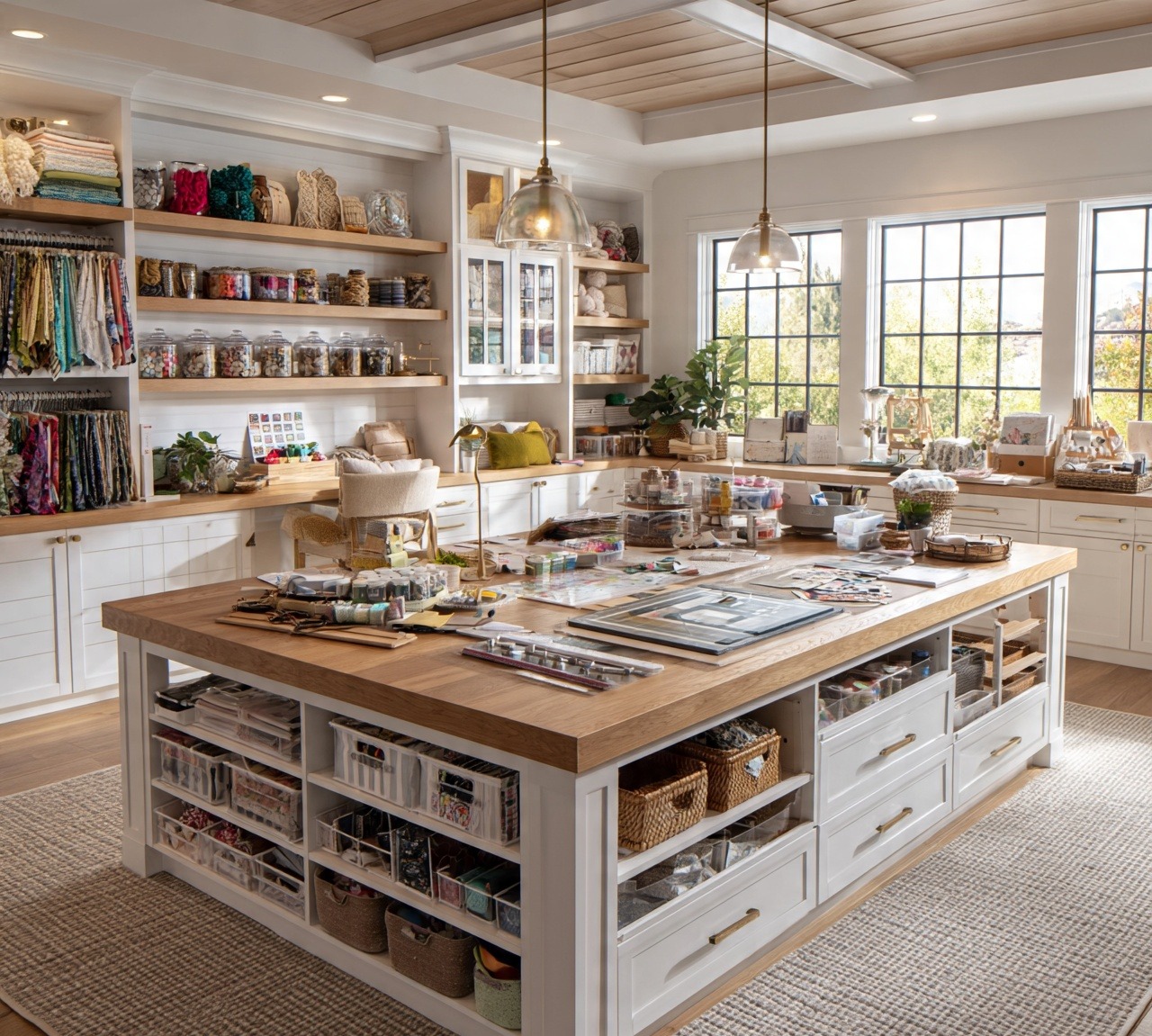
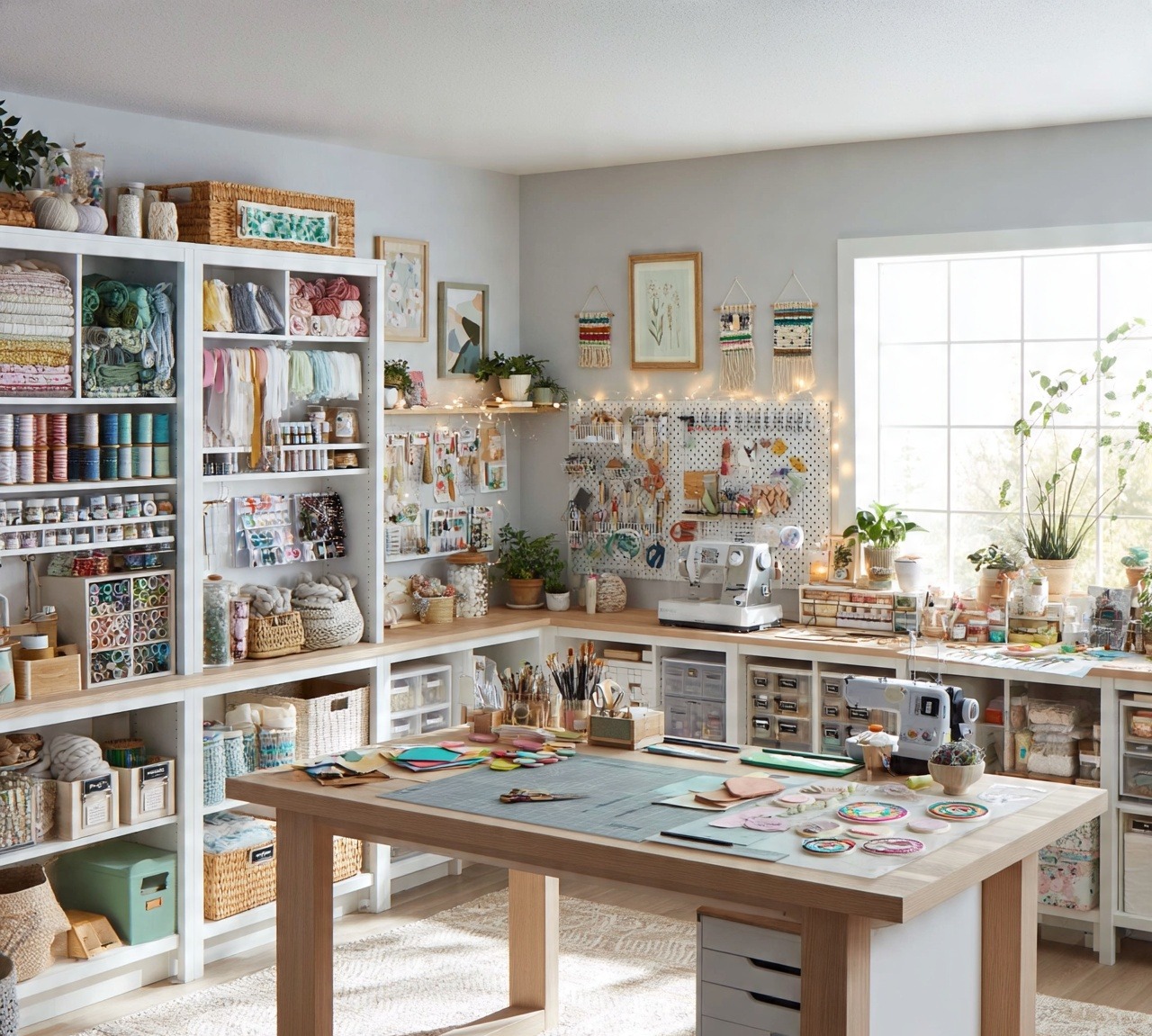
A cutting table island places a large, sturdy work surface at the center of the room, ideally at standing height, giving enough space to lay out fabric, paper, or larger projects without needing to work on the floor. Building the table with storage drawers or open shelving underneath makes efficient use of the space beneath the surface rather than leaving it empty. A self healing cutting mat placed on top protects the table surface from scoring or damage during repeated use with rotary cutters or craft knives.
5. Ribbon Dispenser Wall Craft Room Ideas
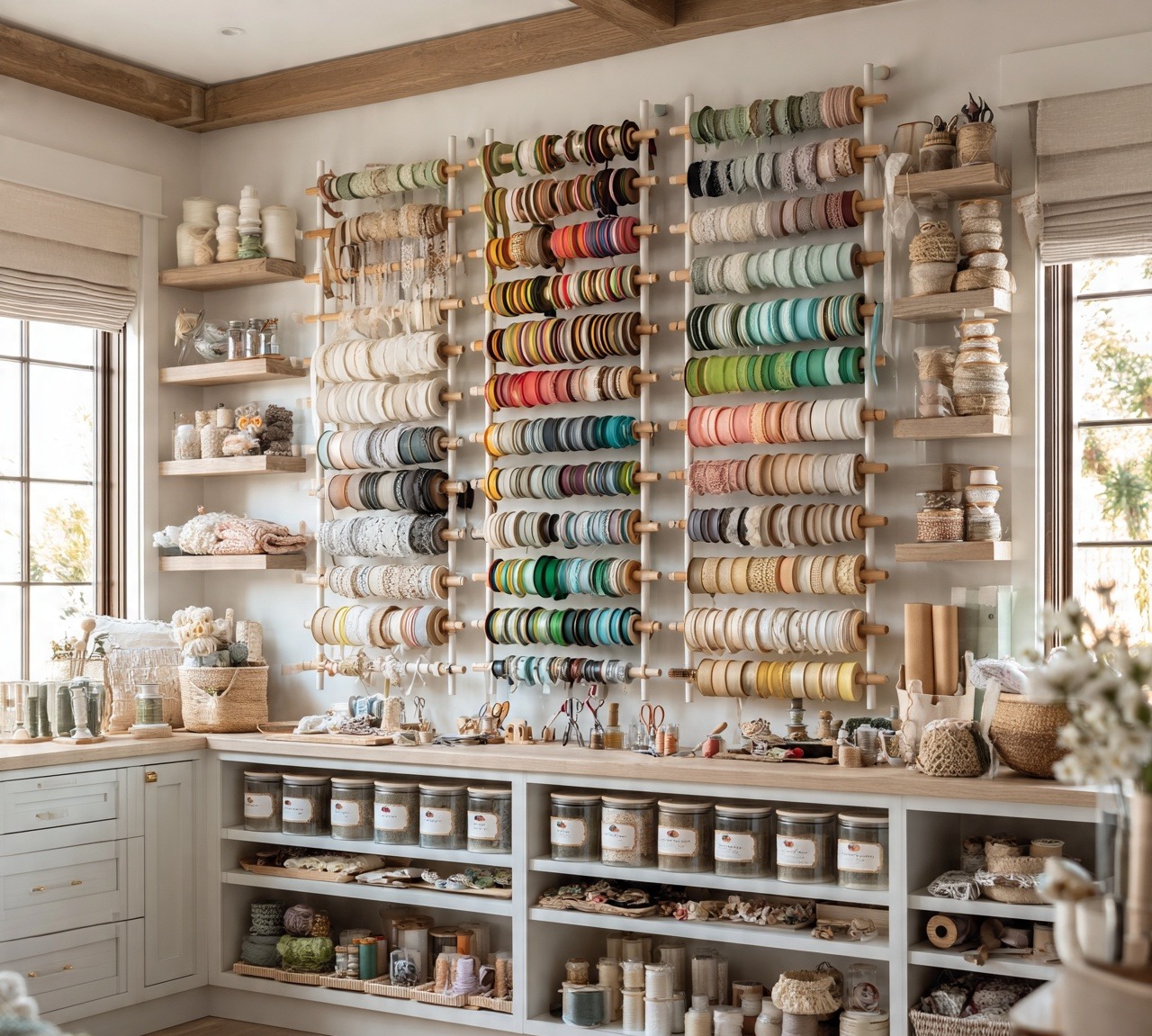
A ribbon dispenser wall mounts a dowel rod or a series of hooks along one section of wall, holding ribbon spools in a row so each color and width is visible and easy to pull from without unwinding an entire spool to find what you need. This setup works particularly well for anyone who works frequently with ribbon or trim, since a tangled drawer of loose ribbon is one of the more common organizational frustrations in a craft space. Arranging the spools by color creates a visually appealing display in addition to the practical organization.
6. Labeled Bin Storage Wall Craft Room Ideas
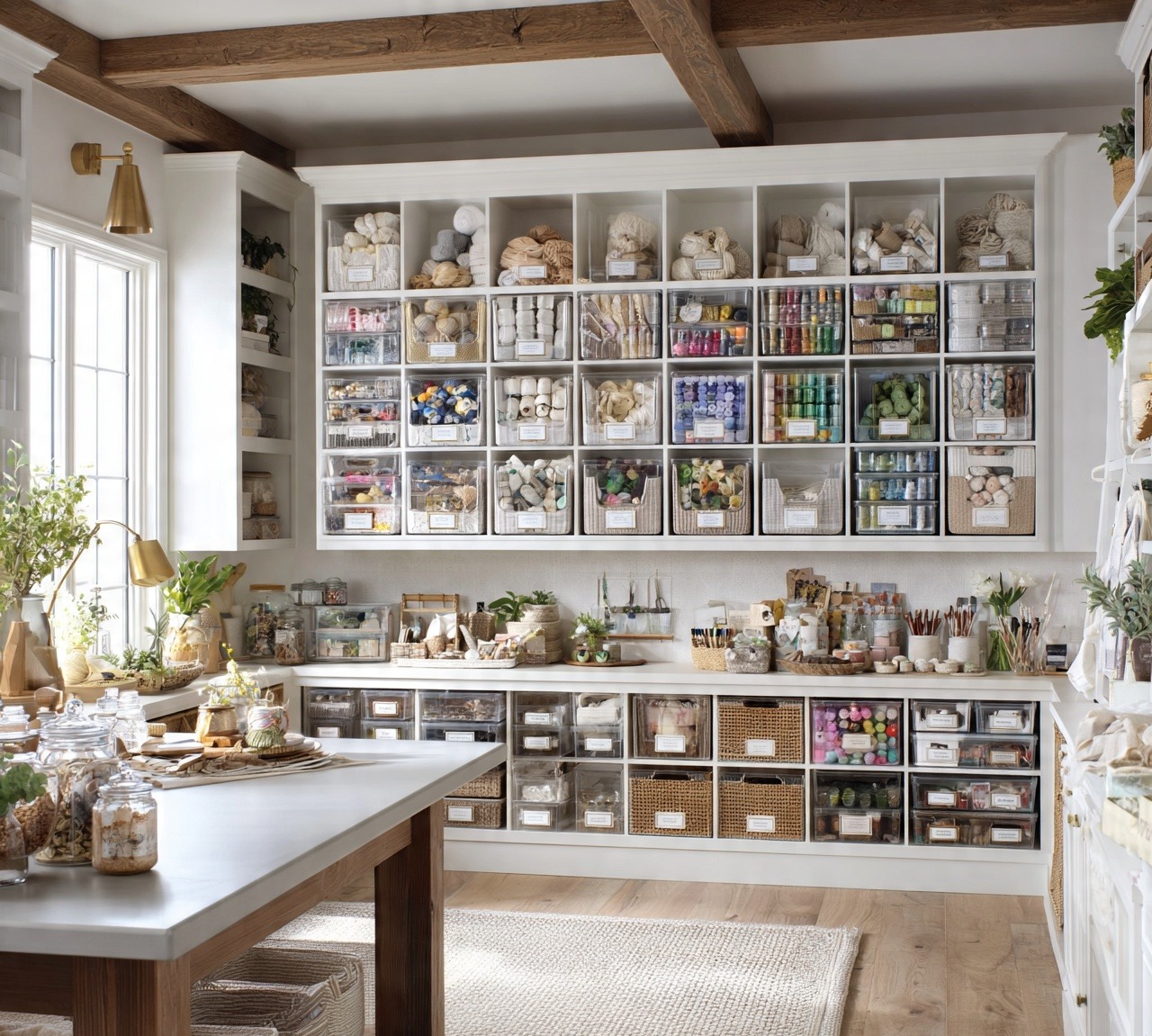
A labeled bin storage wall uses a shelving unit filled with uniform, clear or labeled bins, each holding a specific category of supply like buttons, beads, or fabric scraps, keeping everything sorted and easy to locate at a glance. Using bins of a consistent size across the entire wall creates a more visually organized look than mismatched containers of varying shapes. Labeling each bin clearly, whether with a printed label or handwritten tag, saves considerable time compared to opening several bins to find the right one.
7. Fold Down Wall Desk Craft Room Ideas
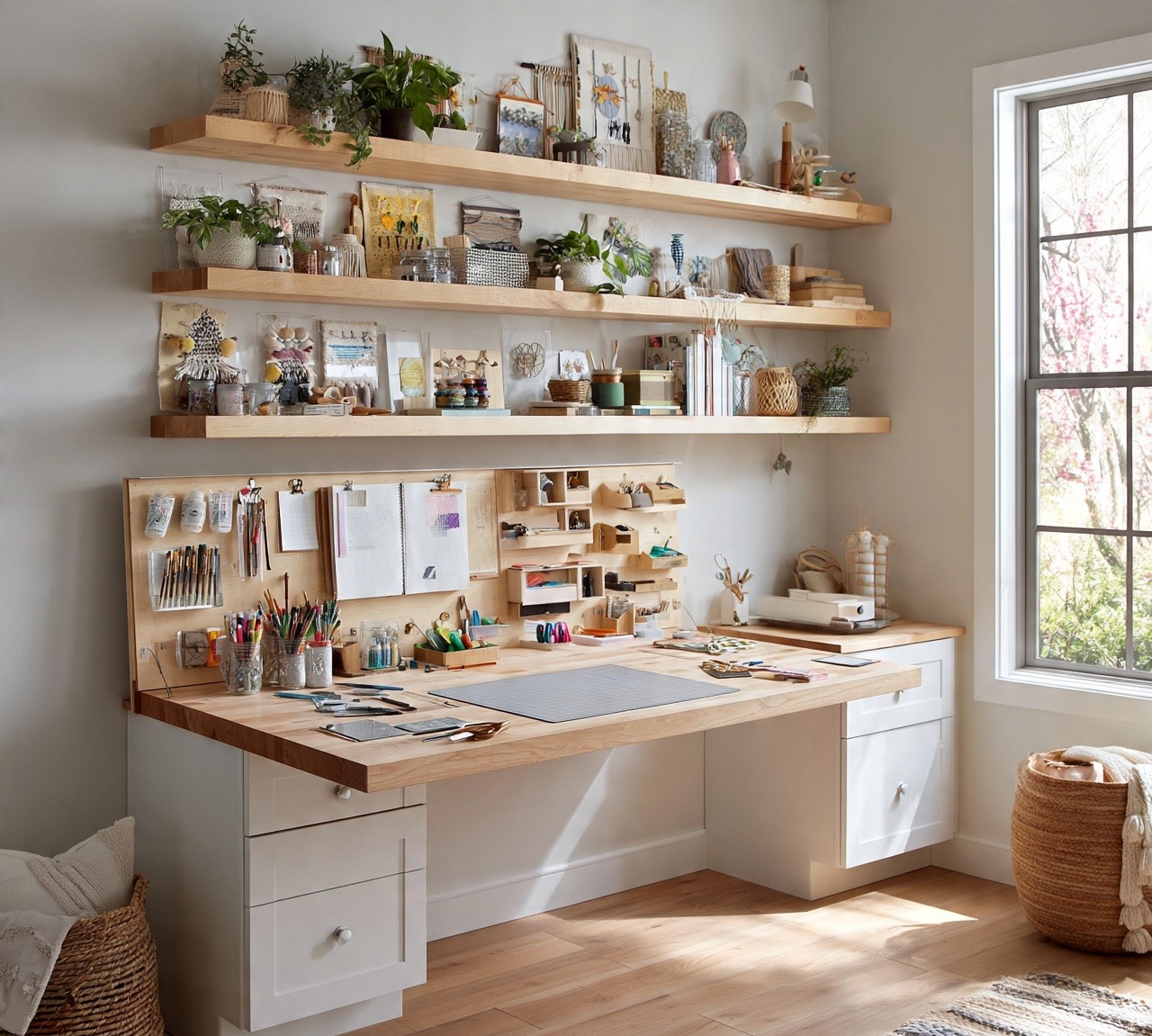
A fold down wall desk mounts a hinged tabletop directly to the wall, folding flat against the surface when not in use and unfolding into a full work surface when needed, which works especially well in a smaller room or a shared space where a permanent table would take up too much room. This setup requires securing the desk into wall studs to support the weight of a project in progress, along with any tools or supplies placed on top while working. Pairing this desk with wall mounted storage above it keeps supplies within reach even in a compact footprint.
| Desk Type | Space Required | Best For |
| Fold Down Wall Desk | Minimal | Small rooms, shared spaces |
| Fixed Table | Moderate to high | Dedicated craft rooms |
| Rolling Cart as Desk | Flexible | Multi purpose spaces |
8. Task Lighting Setup Craft Room Ideas
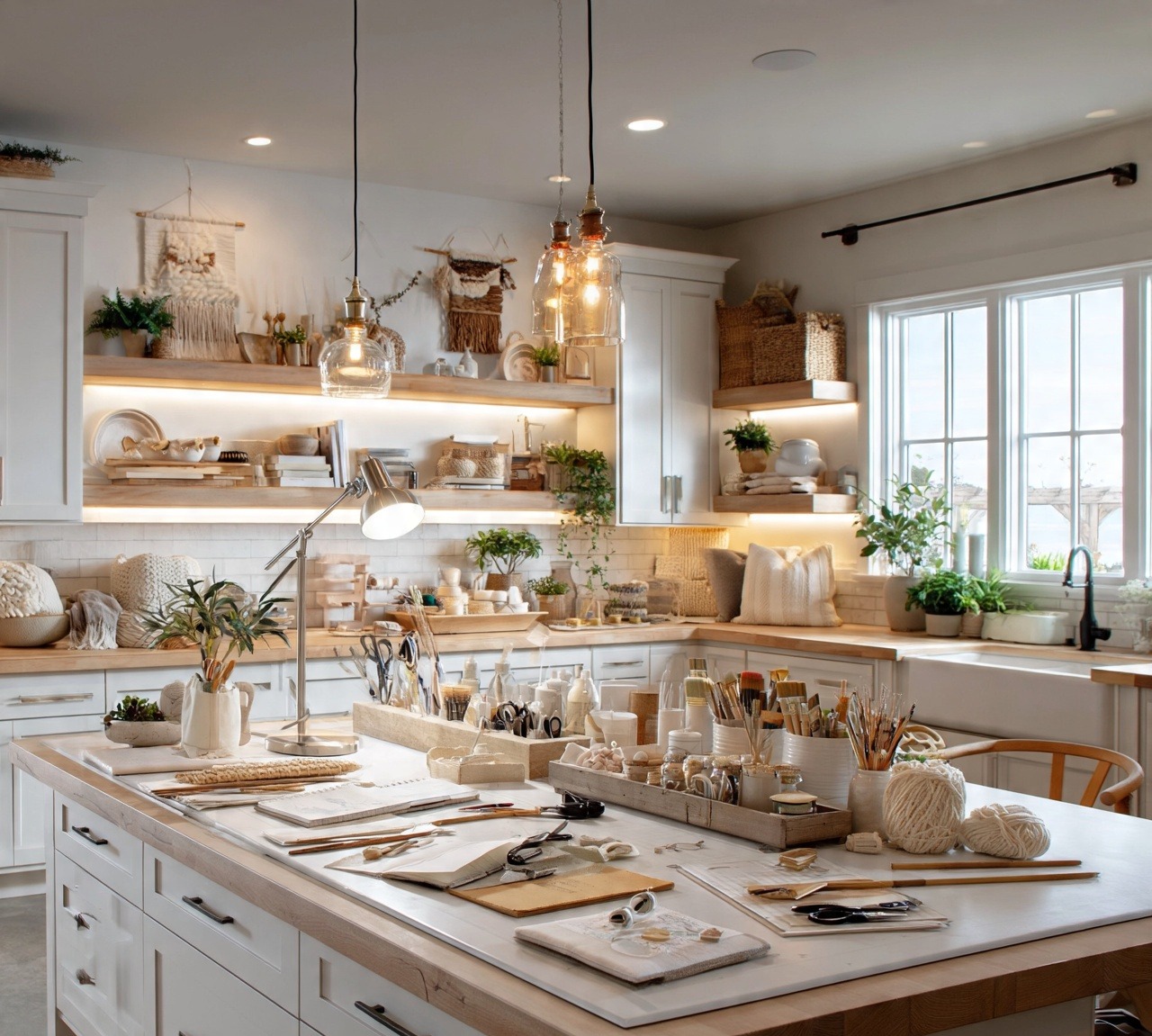
A task lighting setup adds focused, adjustable lighting directly above or beside the main work surface, supplementing the room’s overall ambient lighting with a brighter, more direct source for detail oriented work like sewing or painting. An adjustable arm lamp with a daylight balanced bulb reduces eye strain during long sessions better than a single overhead fixture alone. Placing a secondary lamp near a sewing machine or cutting station specifically addresses the shadows that can form from an overhead light source alone.
9. Fabric Storage Shelving Craft Room Ideas
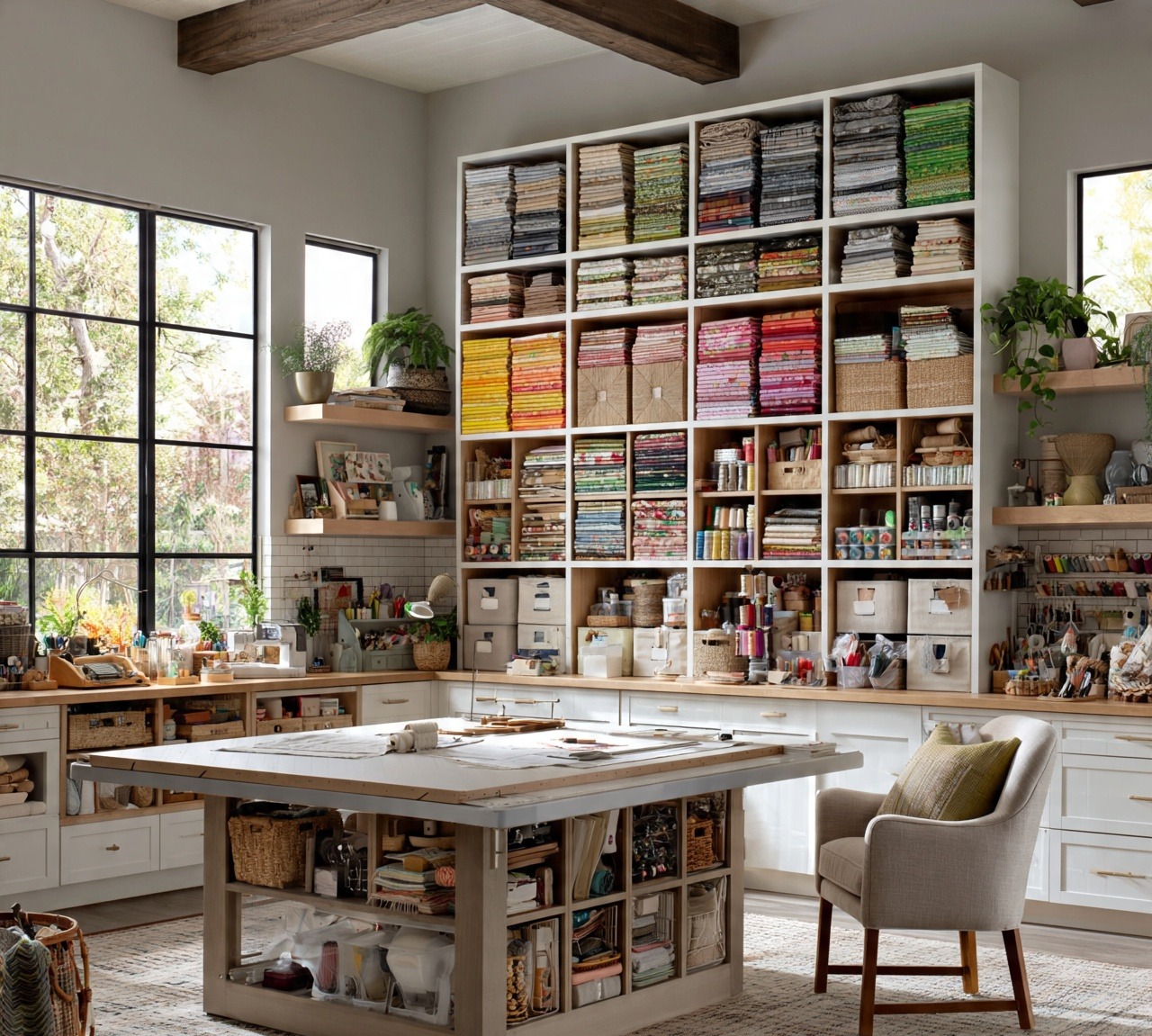
Fabric storage shelving organizes folded fabric by color or type on open shelves, using consistent folding techniques so each stack sits at roughly the same height and creates a visually tidy display rather than an uneven pile. Wrapping smaller fabric scraps around a piece of cardboard or a comic book board keeps them from unfolding and creates a more organized look on the shelf. This system works especially well for anyone with a growing fabric stash, since visible, well sorted fabric is easier to shop from than fabric stored in closed bins.
10. Washi Tape Organizer Rack Craft Room Ideas
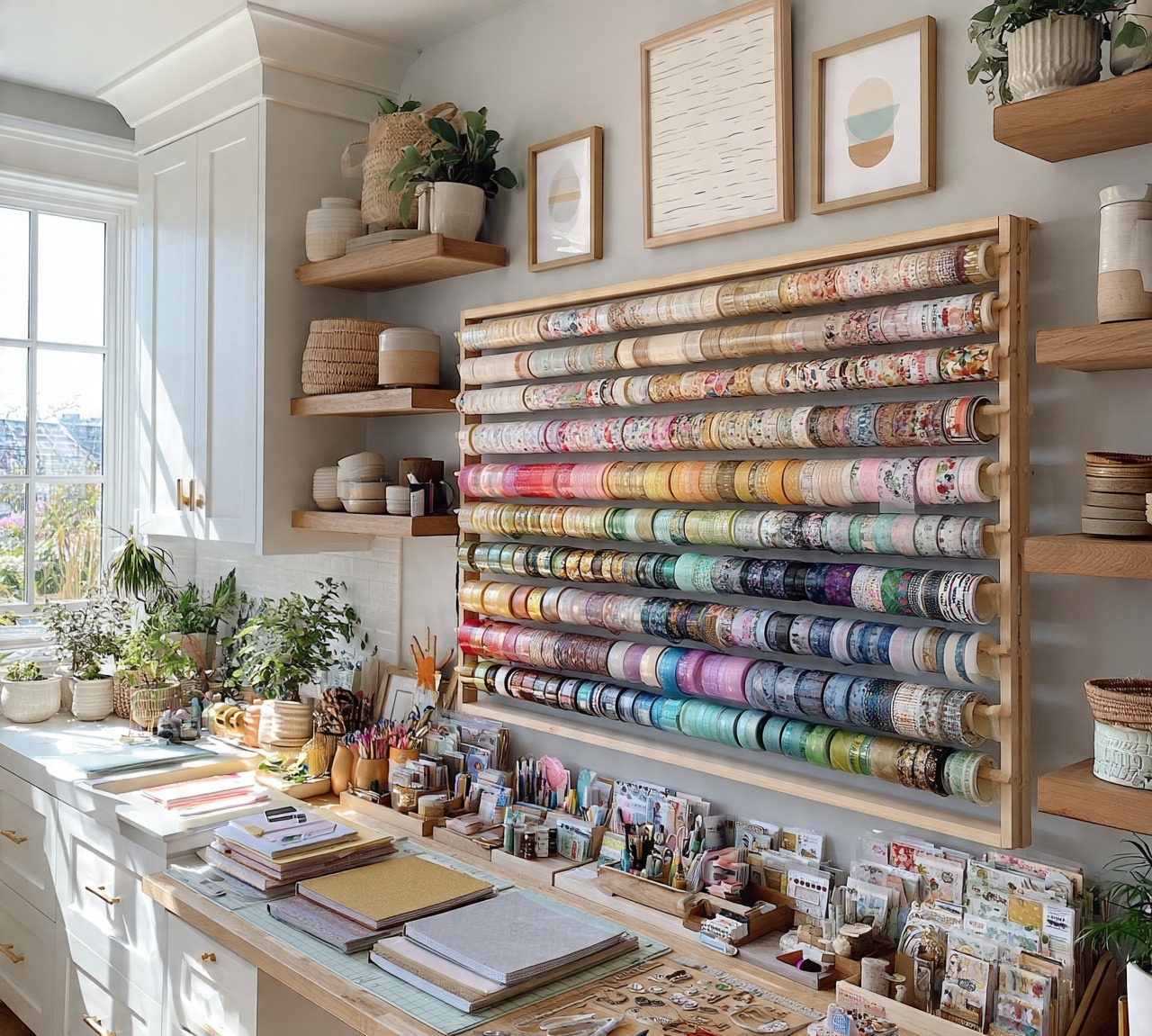
A washi tape organizer rack holds rolls of decorative tape upright on a dowel or a series of small pegs, keeping the full collection visible and easy to browse rather than stored loosely in a drawer where rolls can unravel or get lost. This setup works particularly well for anyone with a large tape collection, since the visual display also helps prevent buying duplicate colors or patterns already owned. A small rack mounted near the main desk keeps this frequently used supply within easy reach during a project.
11. Vertical Paper Storage Slots Craft Room Ideas
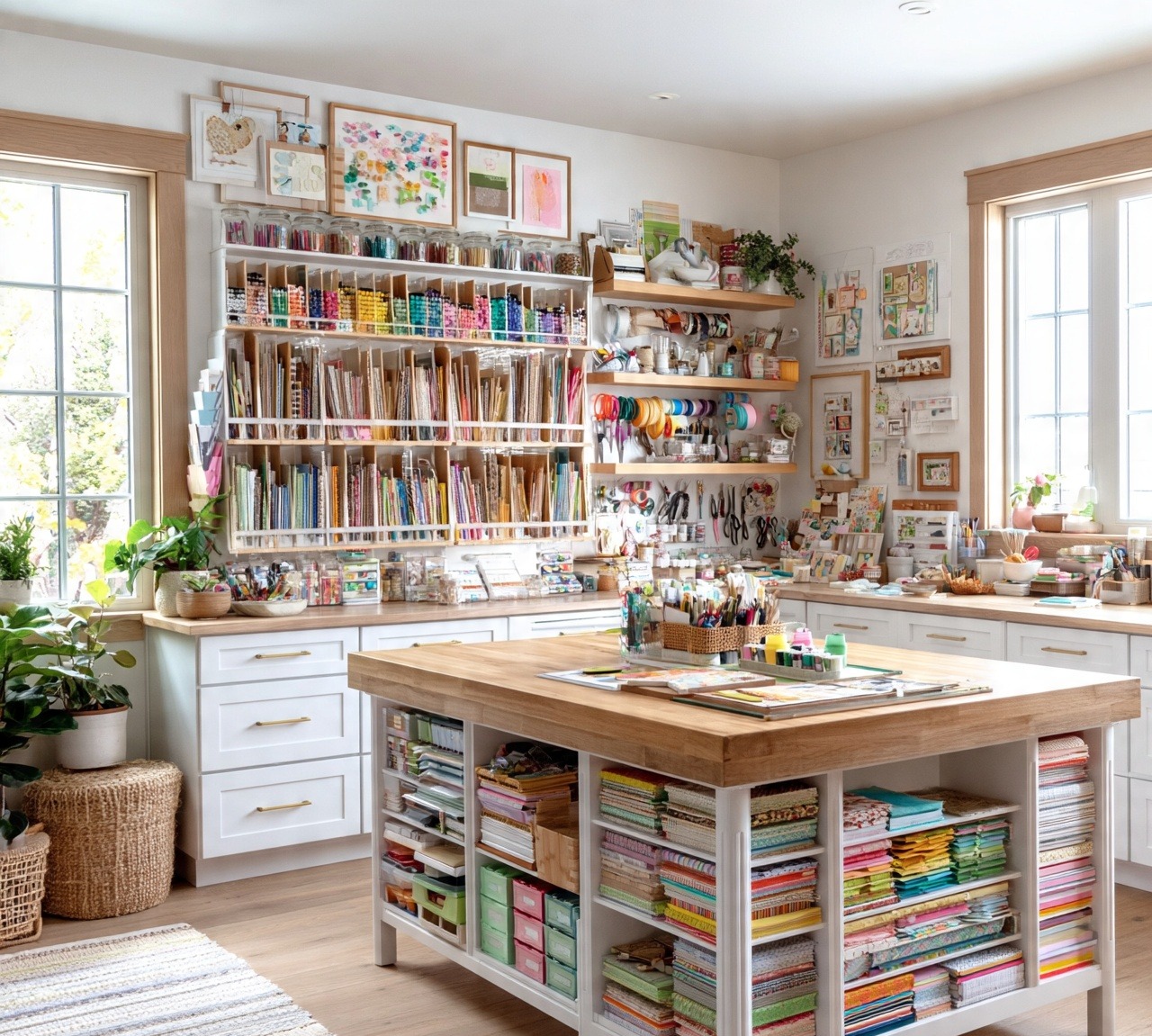
Vertical paper storage slots hold sheets of cardstock, scrapbook paper, or other flat materials upright in individual dividers, rather than stacking them flat where accessing a sheet from the middle of the stack requires moving everything on top of it. This system works well built into a cabinet or as a standalone unit, and sorting the slots by color or paper weight makes finding a specific sheet considerably faster. Because paper can warp if stored improperly, keeping the slots snug enough to hold sheets upright without bending is an important detail to get right.
12. Design Wall Craft Room Ideas
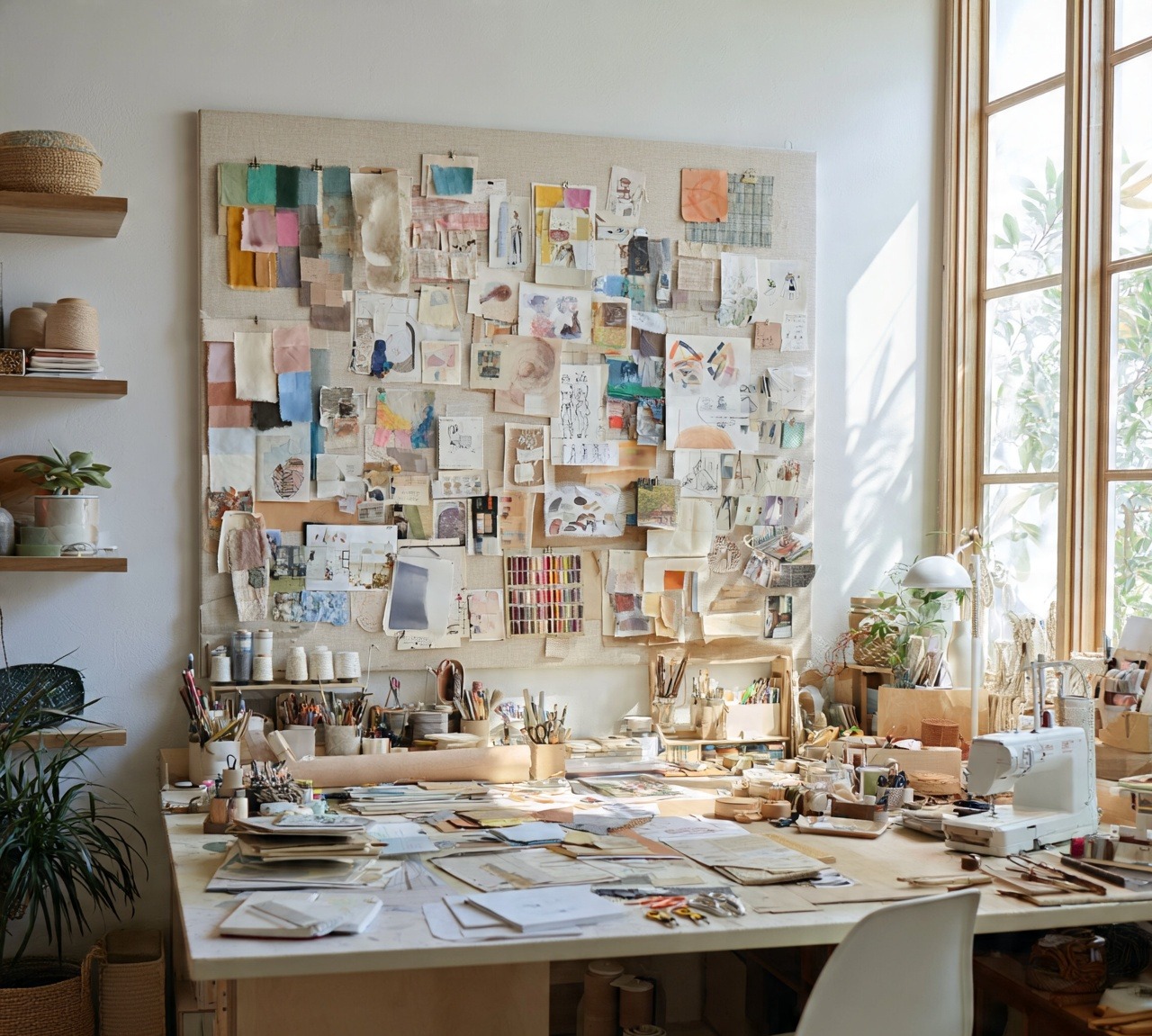
A design wall uses a large, flannel backed board mounted vertically, allowing fabric pieces or paper elements to stick to the surface without pins, which is especially useful for laying out a quilt pattern or a larger collage project before committing to gluing or sewing anything in place. This tool lets you step back and view a project from a distance, which is difficult to do with pieces laid flat on a table. A design wall can be built relatively inexpensively using foam insulation board covered in flannel fabric, rather than purchasing a premade version.
13. Thread and Floss Organizer Craft Room Ideas
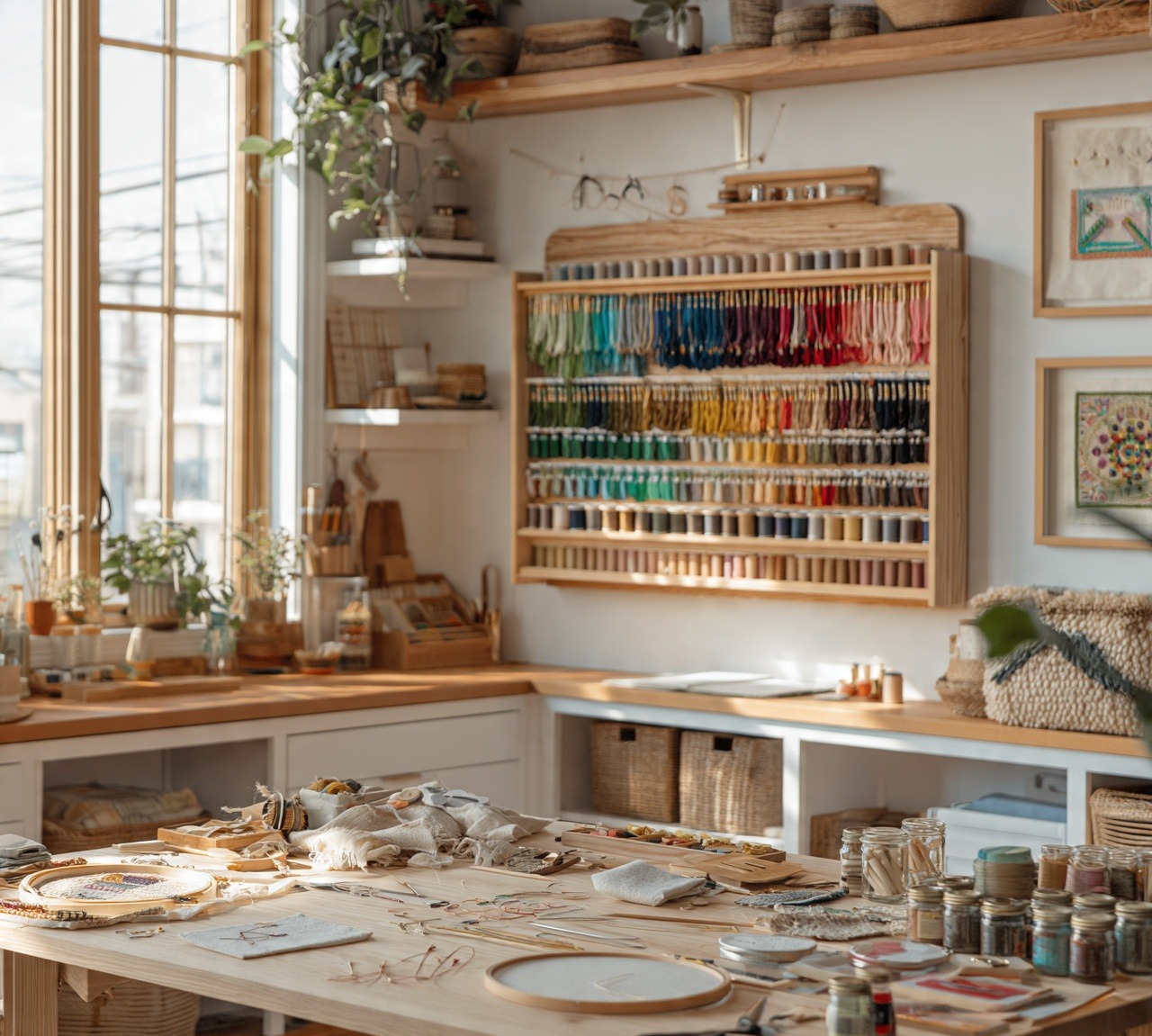
A thread and floss organizer sorts embroidery floss or sewing thread onto small cards or bobbins, stored upright in a labeled box or drawer system organized by color family. This prevents the tangled mess that loose floss skeins or thread spools can create when tossed together in a single container. Numbering or color coding each card according to a standard floss numbering system also makes it easier to restock a specific color once it runs low, since you can reference the exact shade needed.
14. Corkboard Inspiration Wall Craft Room Ideas
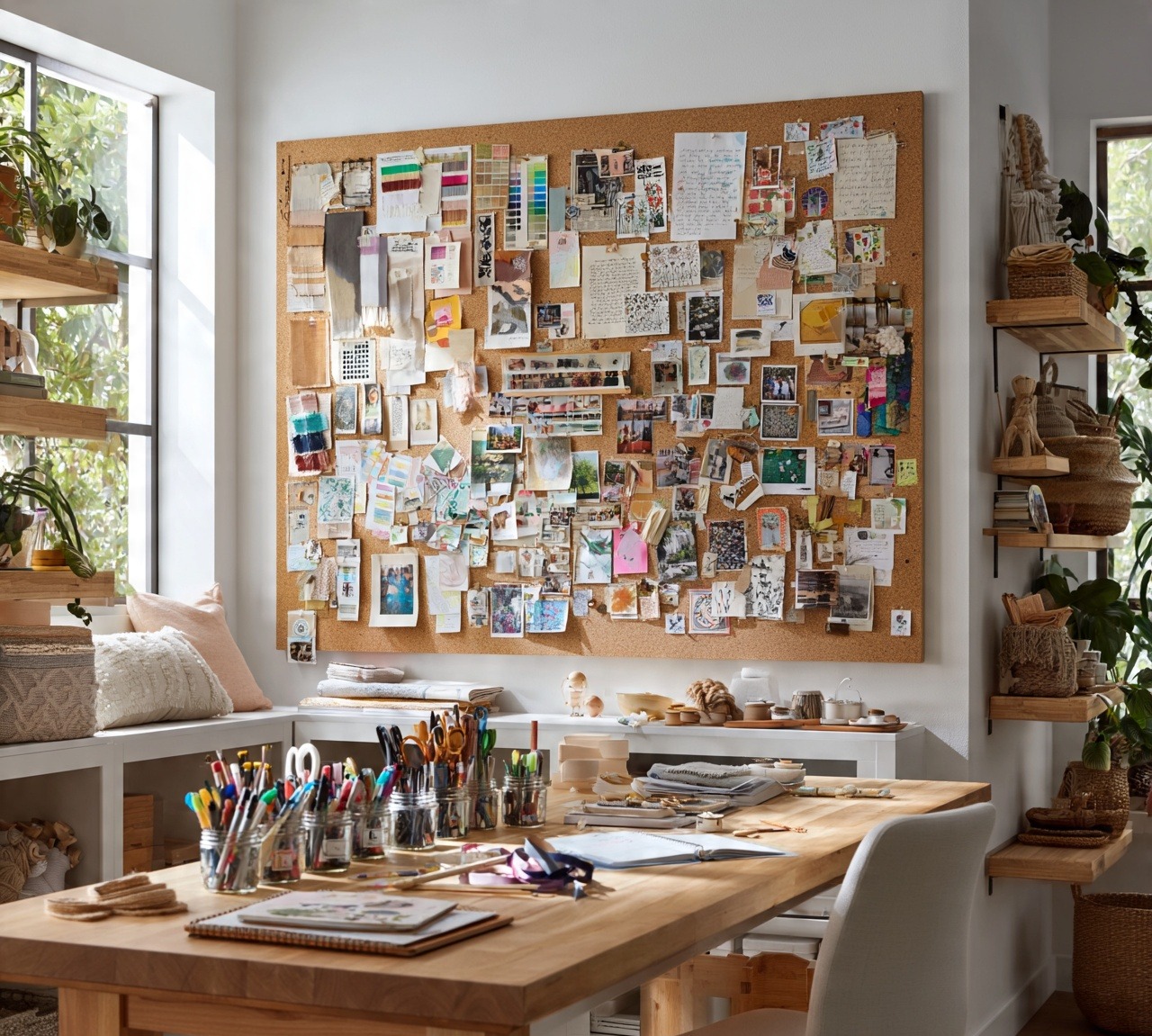
A corkboard inspiration wall pins up reference images, color palettes, fabric swatches, and works in progress, giving a visual, ever changing display of current project ideas and inspiration sources. This works well positioned near the main work surface, where it can be referenced frequently while working rather than tucked away in a less visible part of the room. Rotating older items off the board periodically keeps it feeling current and relevant rather than becoming a cluttered, permanent fixture.
15. Under Table Storage Bins Craft Room Ideas
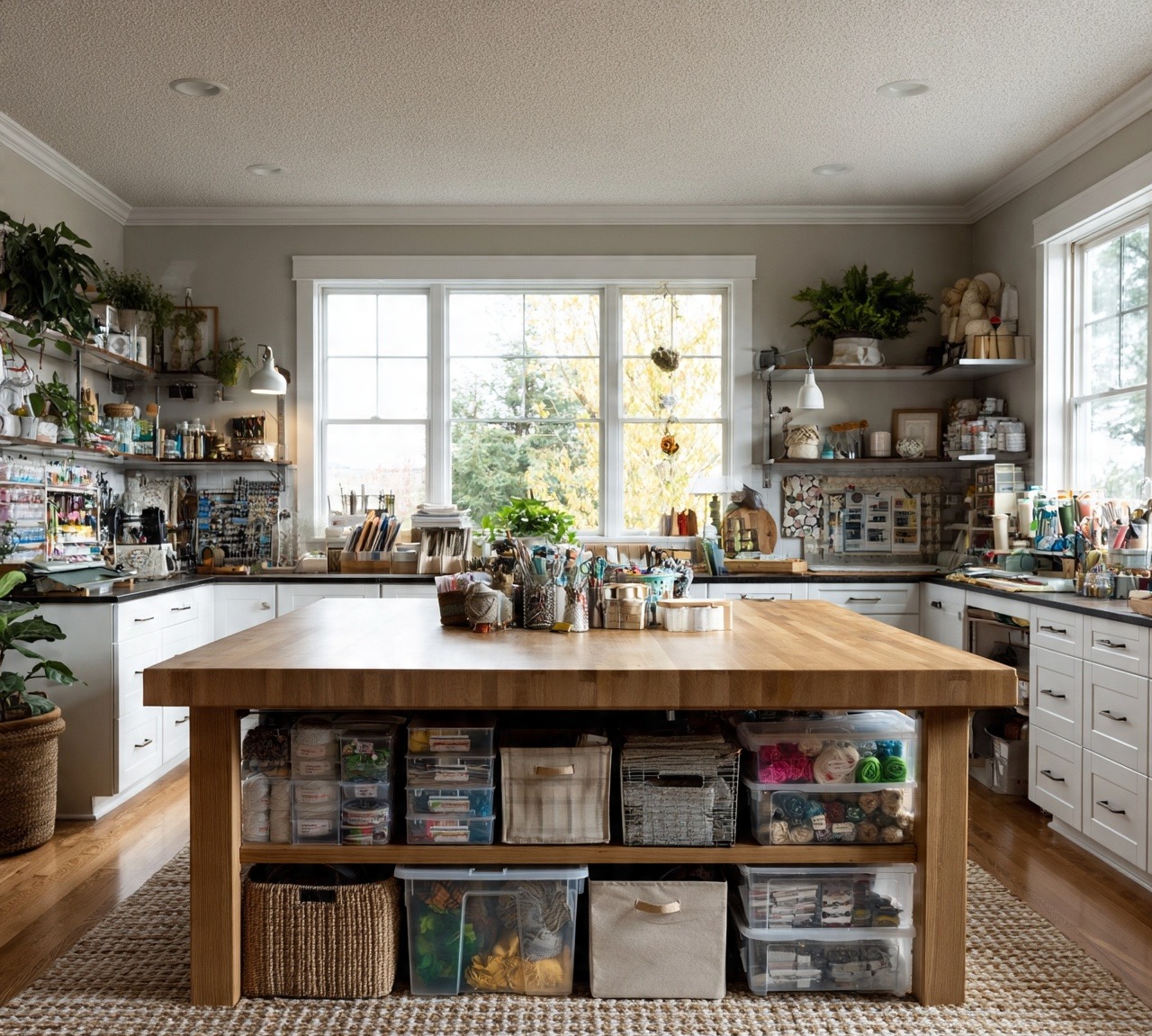
Under table storage bins slide into the open space beneath a craft table, making use of an area that would otherwise sit empty, especially useful for bulkier supplies like fabric bolts or larger paper pads that don’t fit well on standard shelving. Choosing bins on wheels or with a pull out handle makes accessing items stored toward the back of the space considerably easier than reaching in blindly. This storage option works particularly well in a smaller room where every available inch of space needs to serve a purpose.
16. Portable Project Caddy Craft Room Ideas
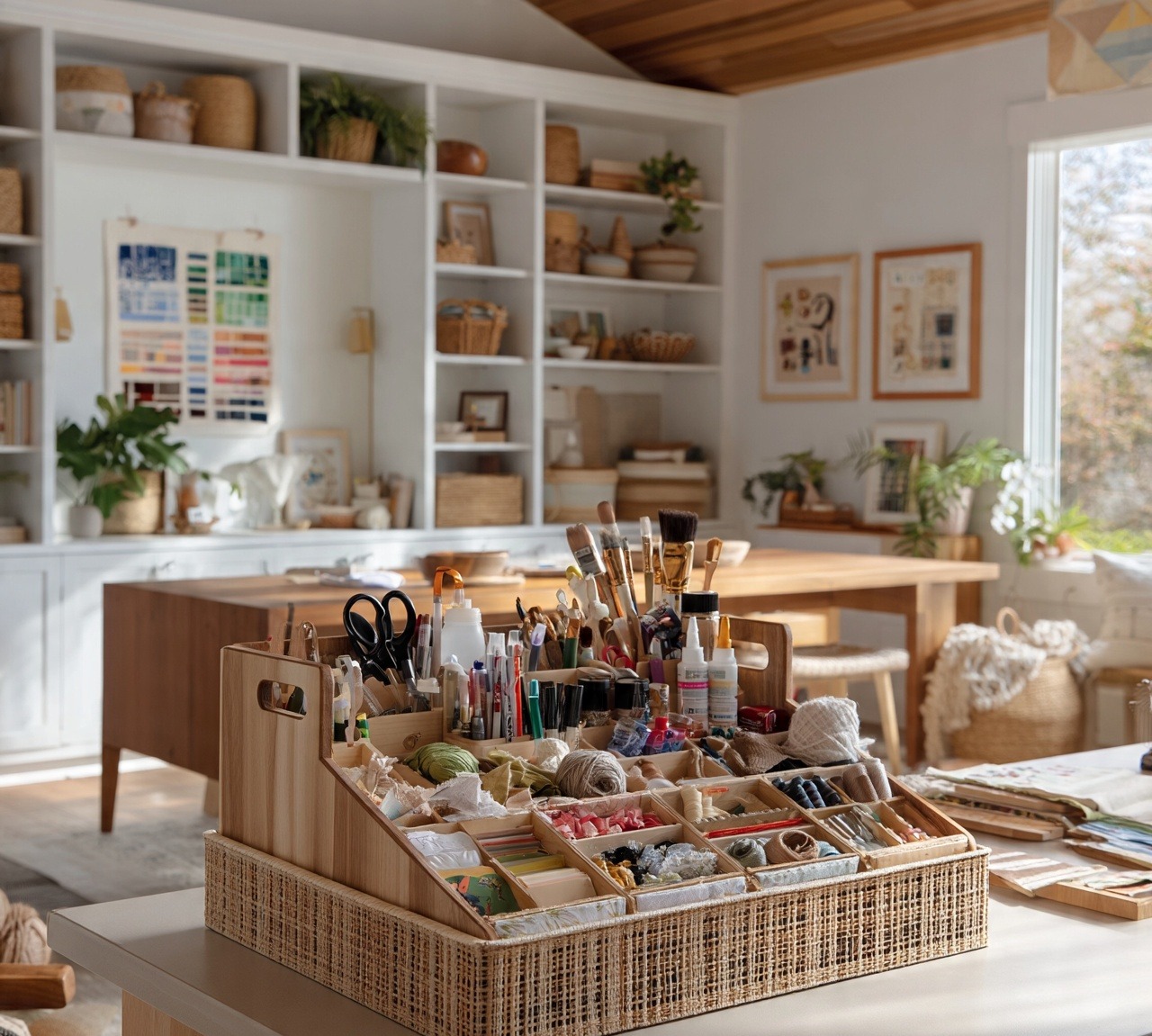
A portable project caddy holds the specific supplies needed for one active project, such as a current sewing project’s fabric, thread, and pattern, in a single carrying case or tote rather than pulling supplies from several different storage locations each time you sit down to work. This system works especially well for anyone juggling multiple projects at once, since each caddy keeps everything for a specific project contained and ready to pick up again without needing to re gather materials each session.
17. Clear Jar Supply Display Craft Room Ideas
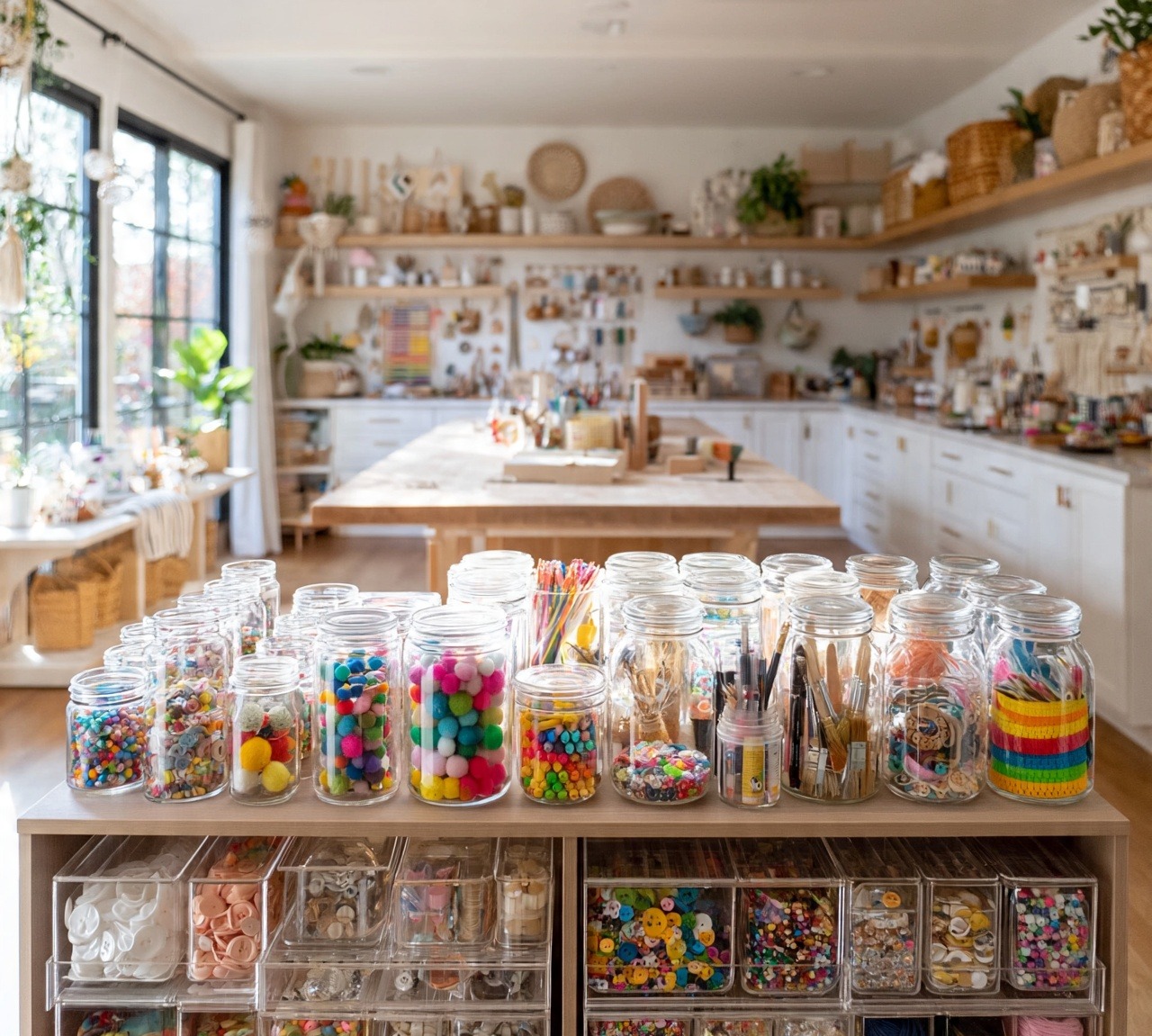
A clear jar supply display stores smaller items like buttons, beads, or embellishments in glass or clear plastic jars, arranged on open shelving where the contents remain visible without needing to open each container to check what’s inside. Grouping the jars by color, rather than by type, creates a visually appealing display that also happens to be functional, since sorting embellishments by color is often how many crafters approach a project anyway. Uniform jar sizes and shapes keep the display looking cohesive rather than mismatched.
Shop the Look
A functional craft room typically combines a mix of visible and hidden storage rather than relying on just one system. A pegboard above the main desk keeps frequently used tools within reach. A cutting table island with drawers underneath handles larger project layouts. Clear jars on open shelving display smaller embellishments by color, while labeled bins on a nearby shelving unit hold bulkier supplies out of sight. A design wall nearby rounds out the space for anyone working on quilting or larger paper based projects.
Common Mistake to Avoid
The most common mistake is organizing an entire craft room by supply category alone, without considering how frequently each item actually gets used during a typical project. This often results in commonly needed tools, like scissors or a cutting mat, being stored just as far away as rarely used specialty items, adding unnecessary steps to every single project. Placing the most frequently used supplies and tools within arm’s reach of the main work surface, and reserving farther storage for occasional use items, makes the entire room function more efficiently regardless of how it’s categorized.
Frequently Asked Questions
How do I set up a craft room in a small space?
Prioritizing vertical storage solutions like pegboards, wall mounted shelving, and a fold down desk makes the most of a small craft room, since these options add storage and work surface without requiring additional floor space. A rolling cart is also a practical choice in a small or shared space, since it can be tucked away when not in use rather than permanently occupying the room.
What’s the best work surface height for a craft table?
A standing height work surface, typically around thirty six inches, reduces strain during long cutting or layout sessions compared to a standard seated desk height around thirty inches, since it allows for a more natural posture while leaning over a larger project. That said, a seated height desk still works well for tasks like sewing or detailed handwork that don’t require leaning over a large surface for extended periods.
How should I organize fabric in a craft room?
Organizing fabric by color first, then by type or weight within each color group, tends to be the most practical system for most crafters, since color is often the first consideration when starting a new project. Folding fabric to a consistent size before shelving, or wrapping smaller pieces around a comic board, keeps the stacks tidy and makes it easier to see the full fabric stash at a glance rather than digging through an unsorted pile.
Is it worth building custom storage or buying premade organizational furniture?
Premade organizational furniture is generally more cost effective and quicker to set up for most craft rooms, though custom built in storage can make better use of an oddly shaped room or specific storage needs that standard furniture doesn’t accommodate well. Starting with modular, premade options and only investing in custom storage once you have a clear sense of your specific workflow and supply needs is usually the more practical approach.
How do I keep a craft room from becoming cluttered again after organizing it?
Building a regular habit of returning supplies to their designated spot at the end of each crafting session, rather than leaving cleanup for a larger reset later, is the most effective way to prevent a newly organized craft room from sliding back into clutter. Labeled bins and a clear system for where each category of supply belongs also make it easier to put things away quickly, since there’s no guesswork involved in finding the right spot.
Conclusion
These craft room ideas focus on practical organization that speeds up the actual crafting process, not just a room that looks tidy for a photo. Start by identifying which supplies you reach for most often, and build your storage layout around easy access to those items first. Save this post for your next organizing project, and check out our related post on art and craft ideas for inspiration on what to make once your space is set up.