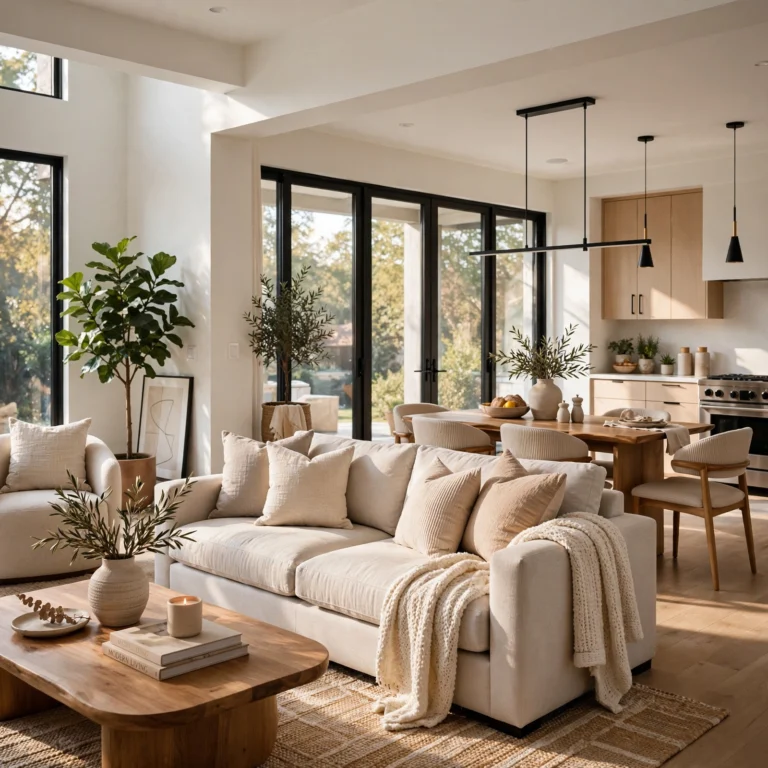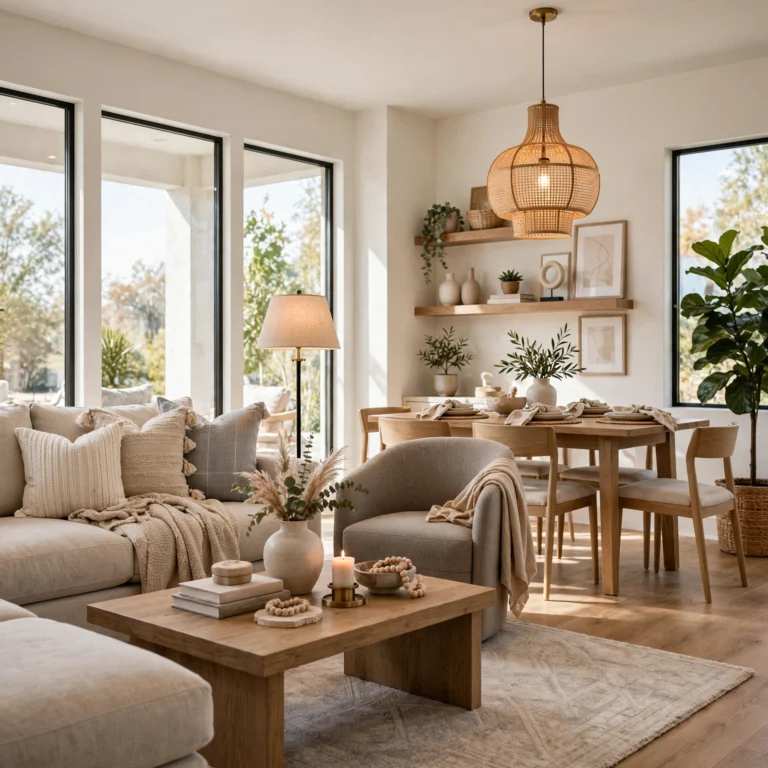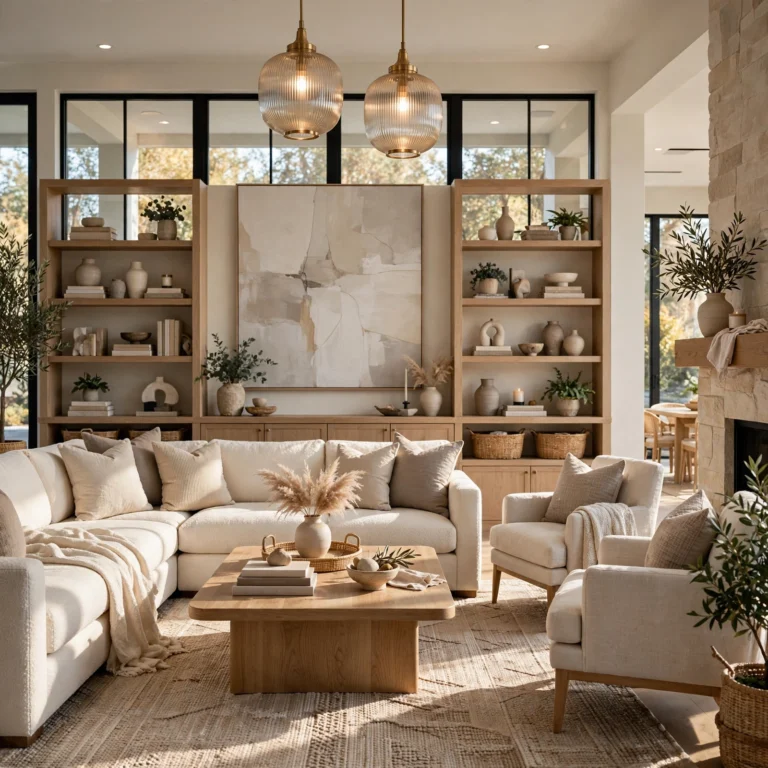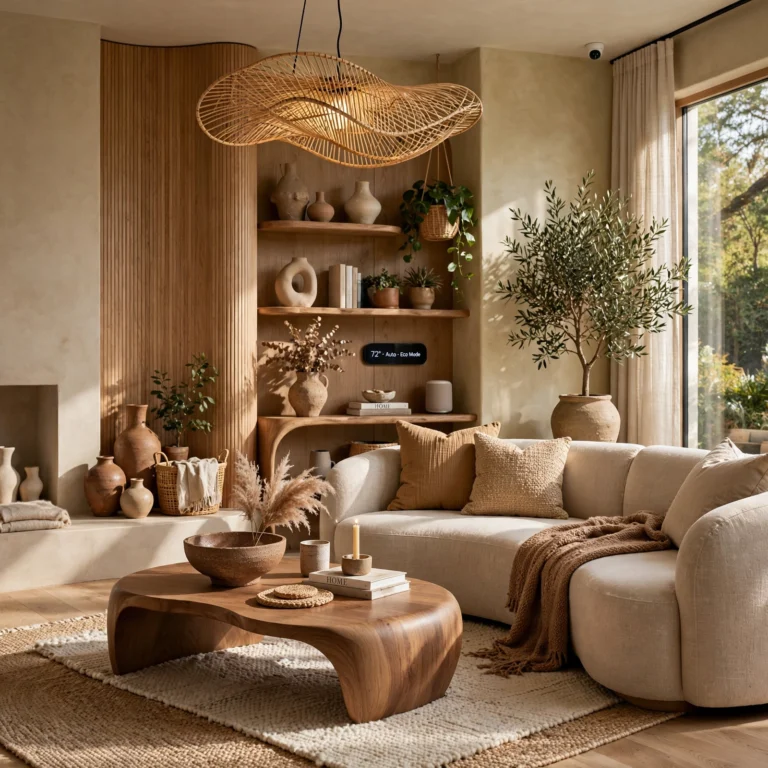
15 Trending Home Interior Design Indian Ideas for a Rich, Layered Look
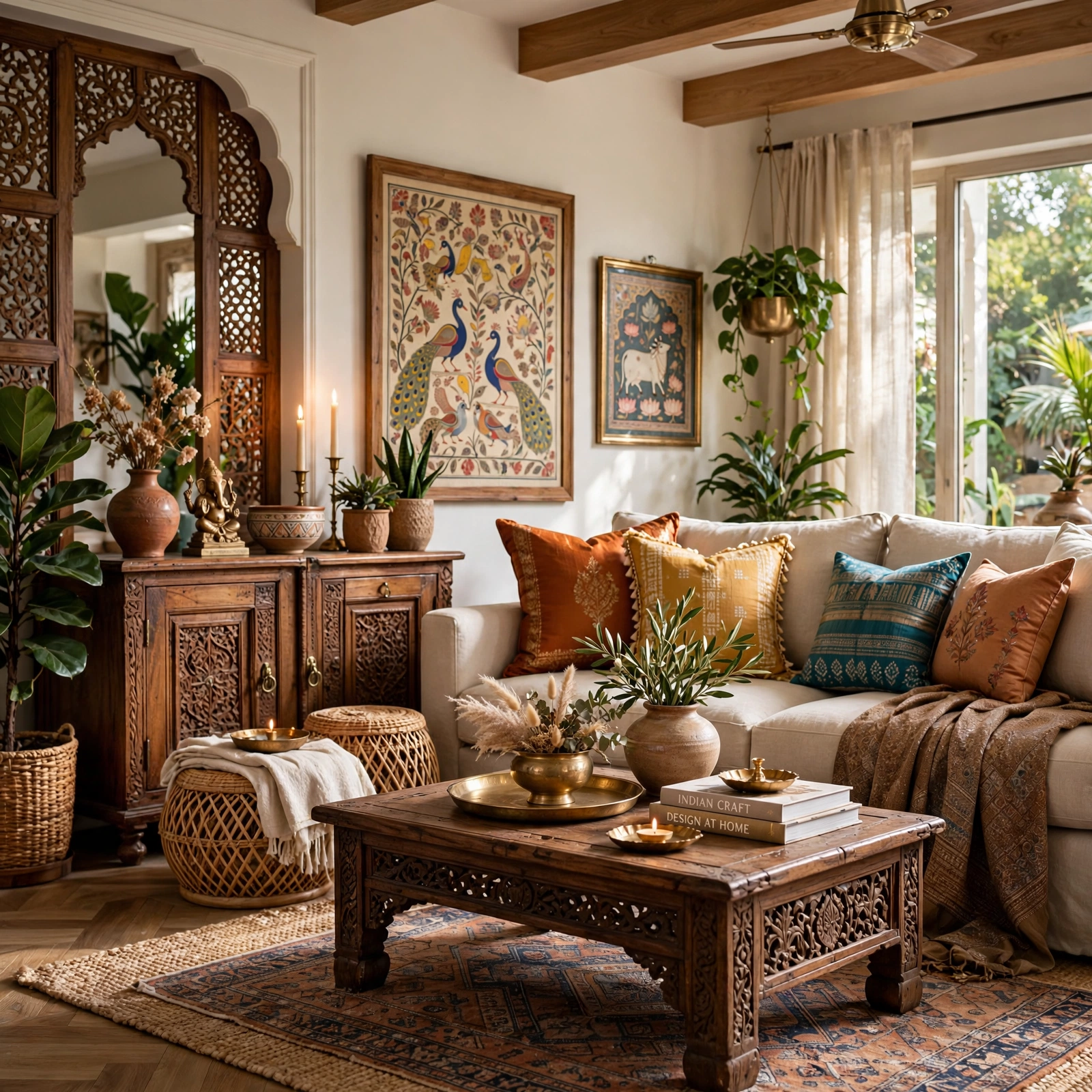
Home interior design Indian style draws on centuries of regional craft traditions, rich color palettes, and intricate detailing to create homes that feel warm, layered, and deeply personal rather than minimal or sparse. This list covers the specific materials, colors, and architectural details that define this style, from carved wood furniture to a dedicated mandir prayer corner, along with notes on how to incorporate these elements thoughtfully.
Trend & Background
Indian interior design draws on an extraordinarily long and regionally varied craft history, with distinct traditions in textiles, woodworking, metalwork, and architecture developing across different parts of the country over centuries. This has resulted in a style vocabulary considerably richer and more varied than a single unified aesthetic, encompassing everything from the intricate jaali latticework common in Rajasthani architecture to the vibrant block printed textiles associated with regions like Gujarat and Rajasthan. As global interest in maximalist, richly layered interiors has grown, many of these traditional Indian design elements have found renewed appreciation both within India and internationally, valued for their genuine craft history and the warmth they bring to a home.
Key Takeaways
- Home interior design Indian style draws on rich color, intricate pattern, and handcrafted materials, creating a warm, layered look distinct from more minimal Western design approaches.
- Traditional materials like brass, teak, and hand block printed textiles carry genuine craft history that a mass produced imitation can’t replicate.
- A dedicated prayer or mandir corner remains a meaningful architectural feature in many Indian homes, worth planning intentionally rather than treating as an afterthought.
- Balancing bold color and pattern with some quieter, neutral surfaces keeps this richly layered style from feeling overwhelming in a smaller space.
Home Interior Design Indian Ideas For You
Whether you’re furnishing a home with deep roots in Indian design tradition or drawing inspiration from this rich aesthetic for the first time, these ideas should help you build a space with genuine warmth and character.
1. Jaali Lattice Screen Partitions Interior Design Indian Ideas
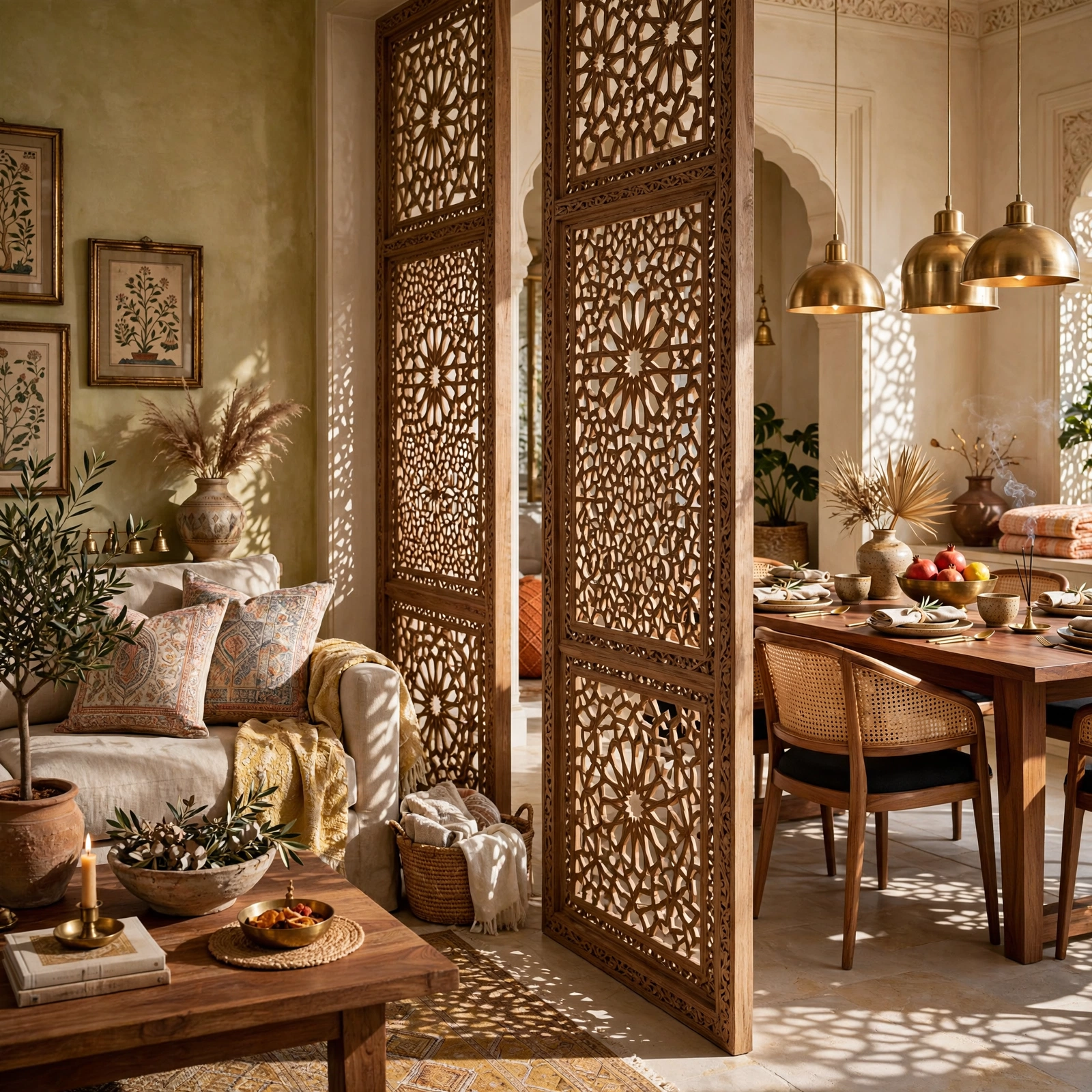
Jaali lattice screen partitions use intricately carved wood or stone screens, traditionally found in historic Indian architecture, as room dividers or decorative wall features, allowing light and air to pass through the perforated pattern while still providing visual separation. This detail works particularly well between a living area and a more private space, offering partial privacy without fully closing off the connection between rooms. Choosing a jaali pattern that complements the room’s overall geometric or floral motif elsewhere in the decor ties this architectural detail into the broader design scheme.
| Traditional Element | Material | Common Use |
| Jaali Screen | Carved wood or stone | Room dividers, windows |
| Dhurrie Rug | Handwoven cotton or wool | Flooring |
| Brass Accents | Cast or hammered brass | Decor, lighting, hardware |
2. Vibrant Jewel Toned Color Palette Interior Design Indian Ideas
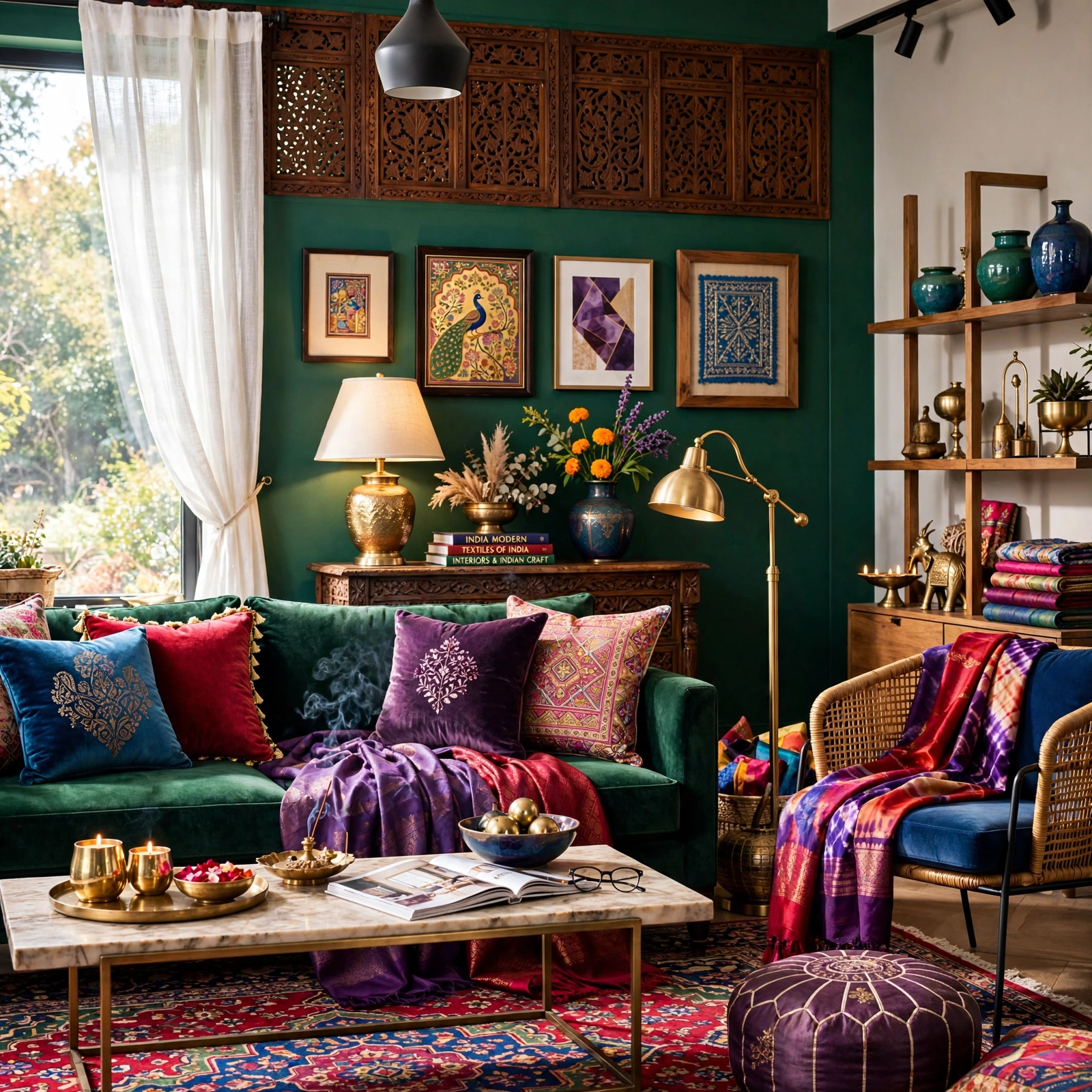
A vibrant jewel toned color palette builds a room’s foundation around deep, saturated colors like emerald green, sapphire blue, magenta, and marigold yellow, creating a warm, rich atmosphere distinct from a more muted or neutral approach. This palette draws directly from traditional Indian textiles and decorative arts, where bold color has long played a central role rather than being treated as an accent alone. Balancing these saturated colors against some quieter neutral surfaces, like a cream wall or natural wood furniture, keeps the overall room from feeling overwhelming despite its vibrant color choices.
3. Handwoven Dhurrie Rugs Interior Design Indian Ideas
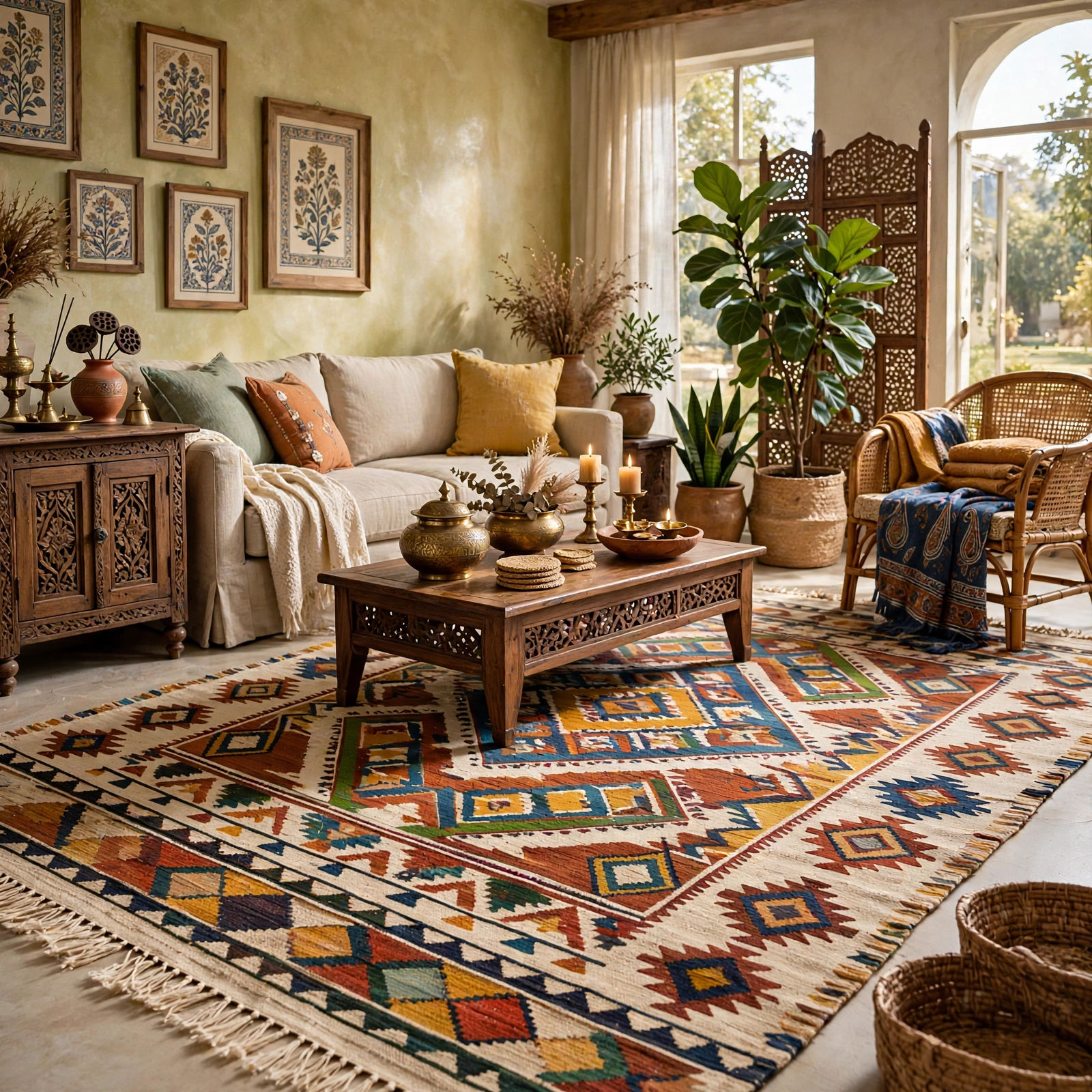
Handwoven dhurrie rugs use a flat weave technique traditional to India, creating a durable, reversible textile in bold geometric or striped patterns that work well on floors throughout the home. This material brings genuine craft history into the room, and the flat weave construction tends to hold up particularly well in warmer climates compared to a thicker, plusher rug. Choosing a dhurrie in colors that complement the room’s broader jewel toned palette ties this flooring choice into the overall design scheme.
4. Brass and Copper Accent Pieces Interior Design Indian Ideas
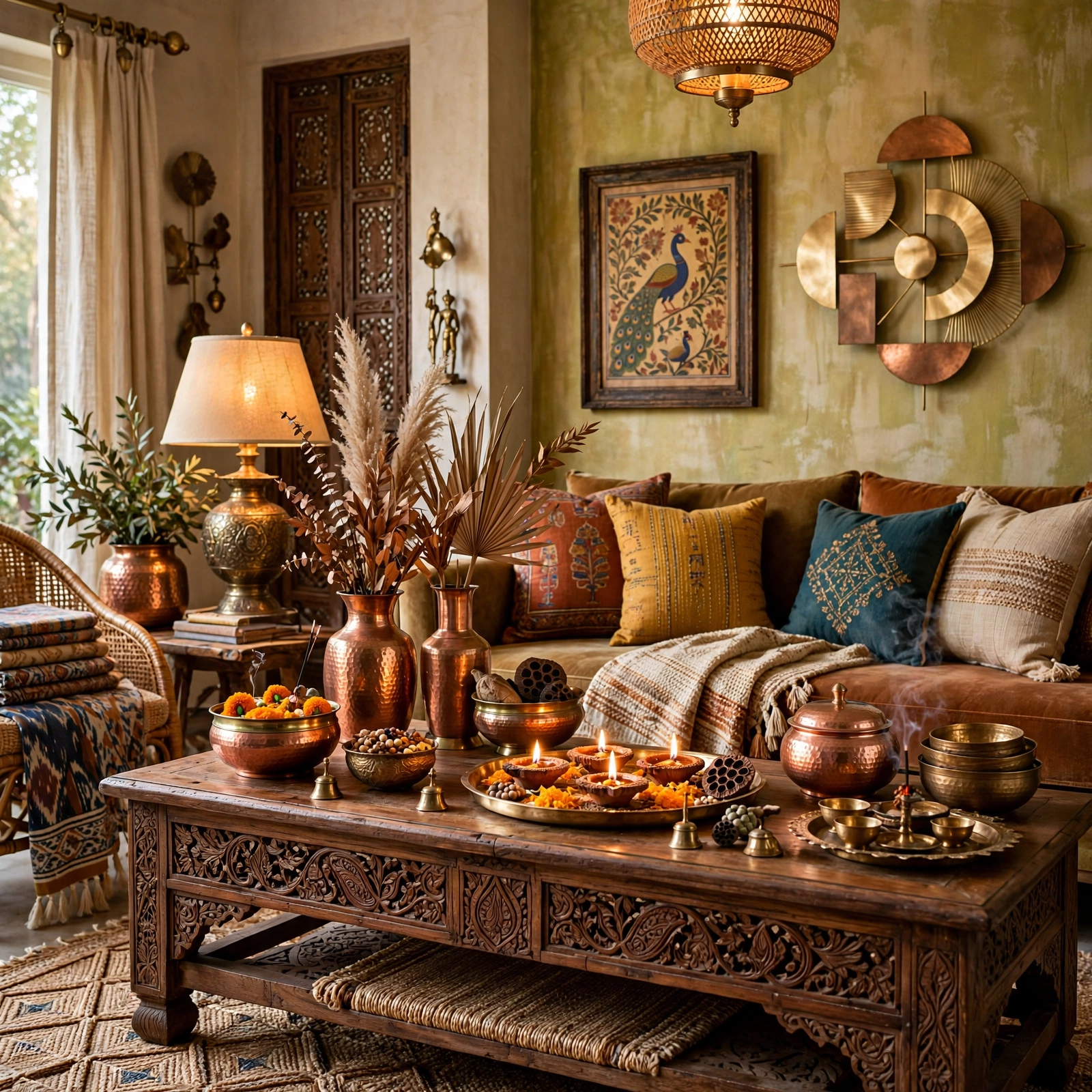
Brass and copper accent pieces bring warm metallic detail into the home through decorative bowls, lanterns, or small sculptural objects, referencing a long tradition of metalwork craft found throughout India. These materials develop a natural patina over time, adding character that a newer, more uniform finish lacks. Grouping a few brass or copper pieces together on a console table or shelf, rather than scattering them individually throughout the home, creates a more intentional, curated display.
Check Out More About Home Interior Design Ideas.
5. Carved Wood Furniture Detailing Interior Design Indian Ideas
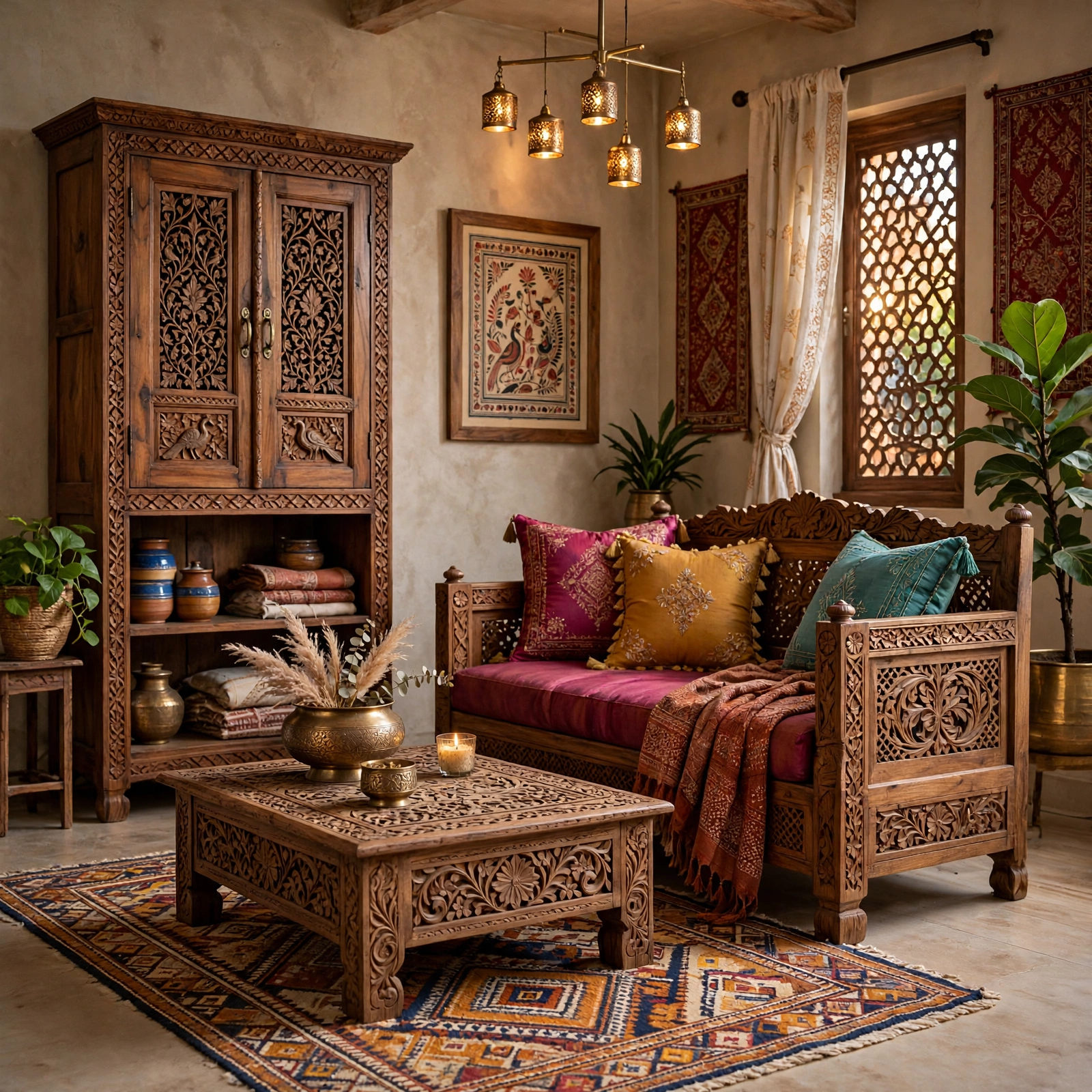
Carved wood furniture detailing incorporates intricate hand carved patterns into chairs, tables, or cabinet doors, often featuring floral, geometric, or figurative motifs traditional to specific regional craft styles. Teak and sheesham wood are both commonly used for this kind of detailed carving, given their durability and the way they take detailed carving work well. This furniture style works particularly well as a statement piece within a room, since the level of detail typically warrants being the focal point rather than one of several competing busy elements.
6. Block Printed Textile Cushions Interior Design Indian Ideas
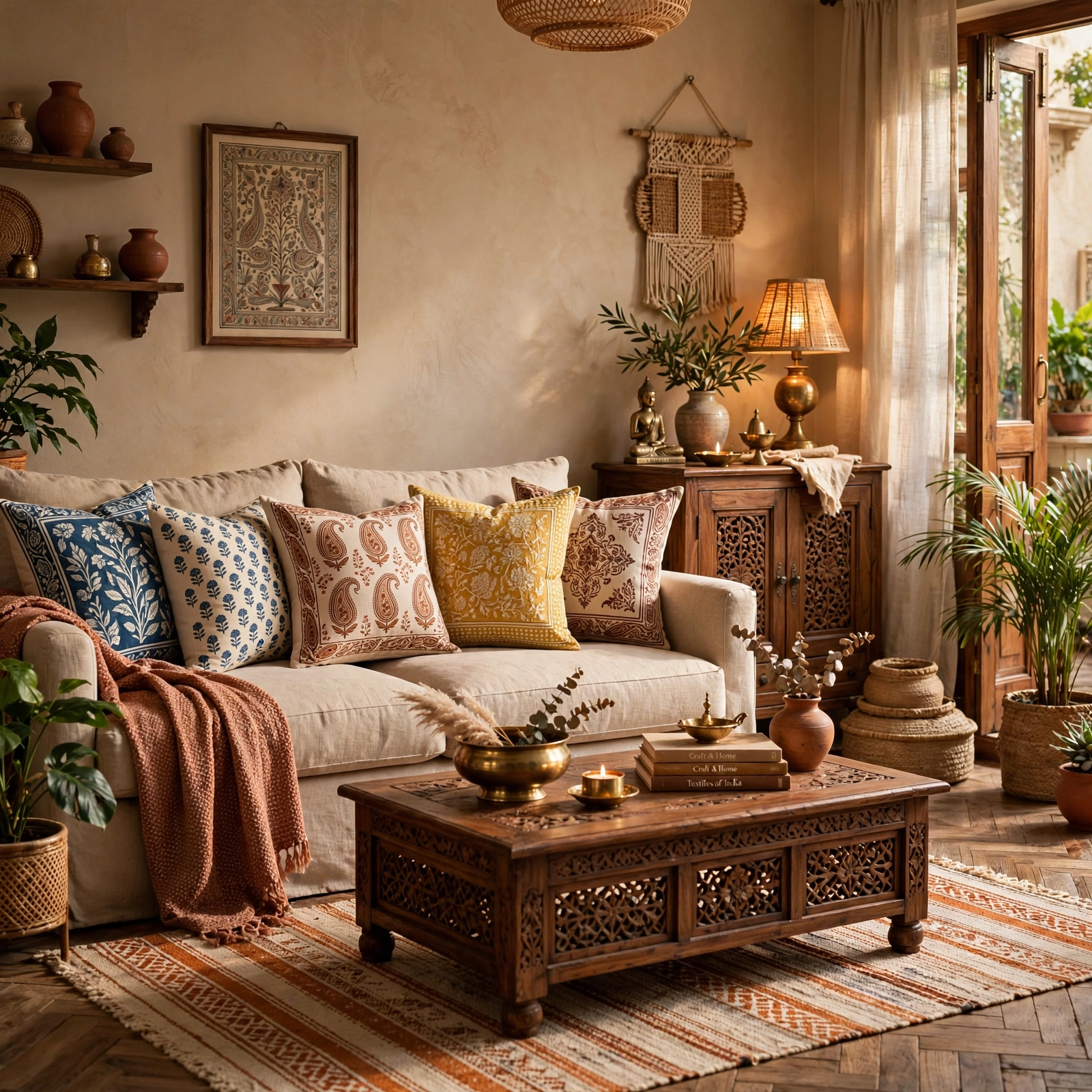
Block printed textile cushions use fabric hand stamped with wood blocks in traditional patterns, often featuring florals, paisleys, or geometric motifs in the region’s characteristic saturated color combinations. This technique produces a textile with slight, intentional variation between each printed repeat, distinguishing it from a machine printed imitation fabric. Mixing a few different block printed patterns together on a sofa or bed, provided they share a related color palette, creates a layered, collected look consistent with this design tradition’s overall approach to pattern.
7. Mandir Prayer Corner Nook Interior Design Indian Ideas
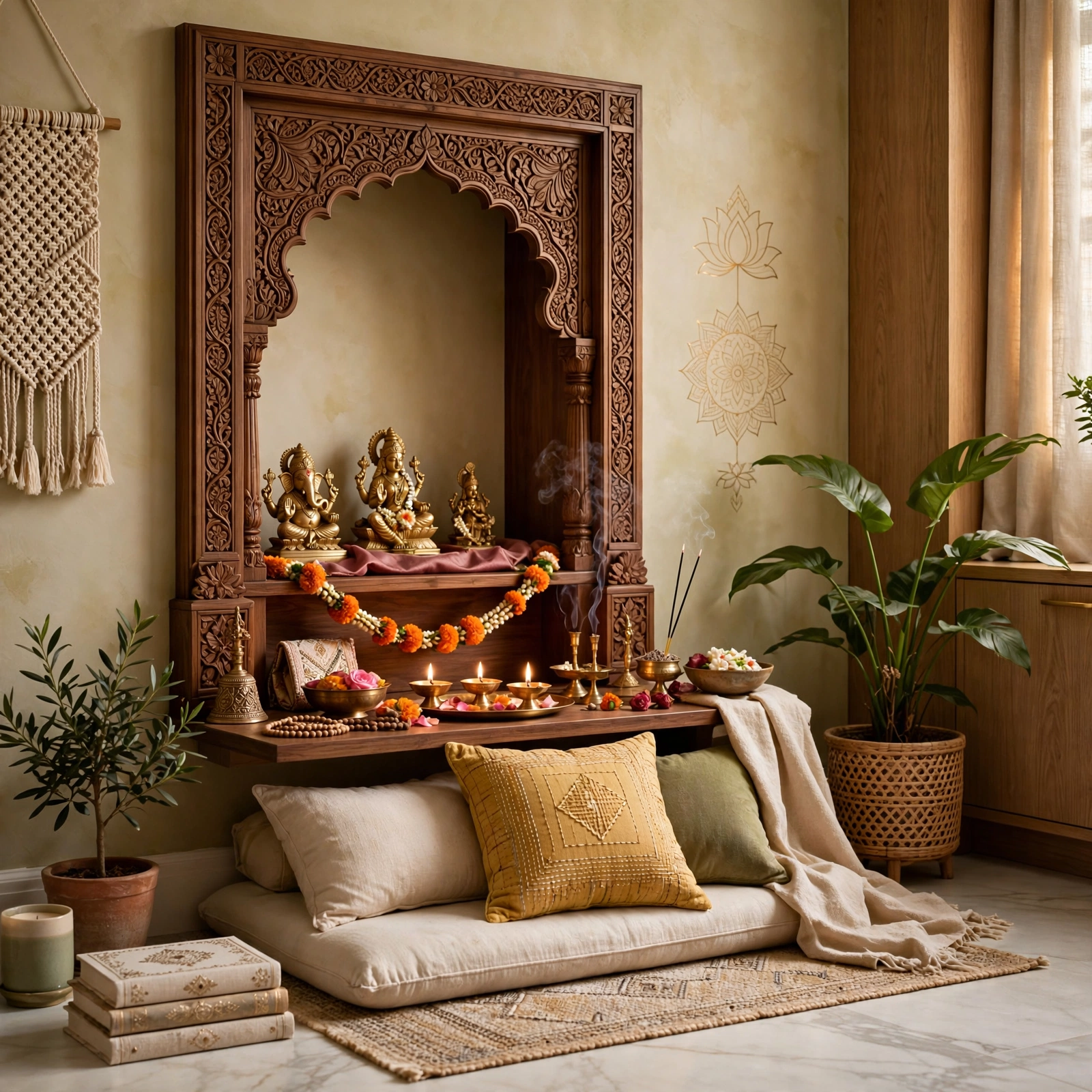
A mandir prayer corner nook dedicates a specific spot within the home, whether a small wall mounted shelf or a more elaborate dedicated cabinet, for prayer and religious practice, remaining an important architectural and functional feature in many Indian households. This detail benefits from thoughtful placement, typically in a clean, quiet area of the home away from high foot traffic. Choosing a mandir design and finish that complements the surrounding room’s overall material palette, whether carved wood or a more modern minimalist design, integrates this meaningful feature into the home’s broader aesthetic.
8. Ornate Mirror Work (Shisha) Accents Interior Design Indian Ideas
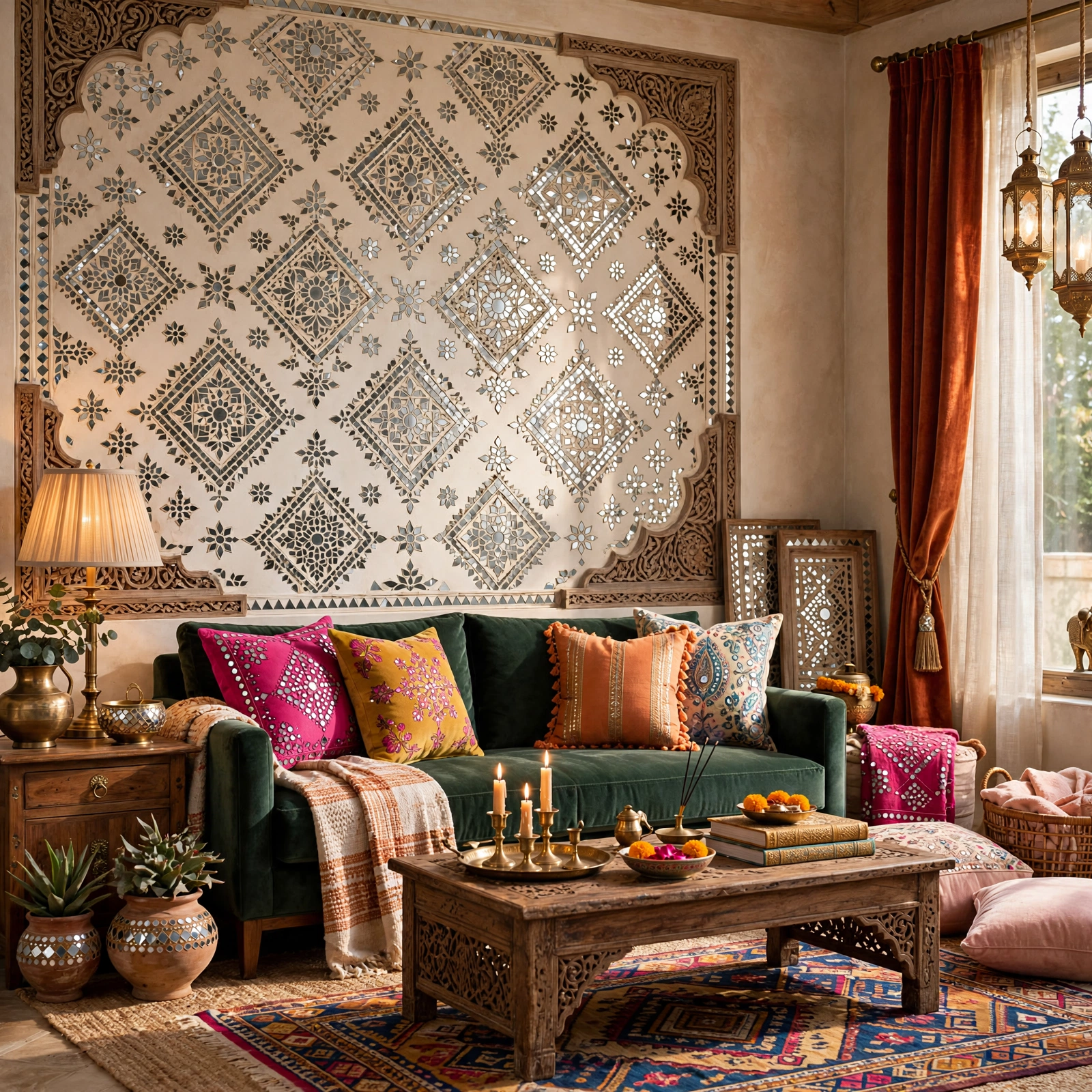
Ornate mirror work, known as shisha embroidery, embeds small round mirrors into fabric through decorative stitching, traditionally used on textiles like cushion covers, wall hangings, or curtain panels. This detail catches and reflects light in a distinctive, sparkling way that flat fabric alone can’t replicate. Using shisha embellished textiles as an accent rather than throughout an entire room’s fabric scheme keeps this detailed, labor intensive craft technique feeling special rather than overused.
| Textile Technique | Origin Region | Visual Effect |
| Block Printing | Rajasthan, Gujarat | Bold pattern, slight variation |
| Shisha Mirror Work | Rajasthan, Gujarat | Reflective, sparkling detail |
| Zari Embroidery | Multiple regions | Metallic thread shimmer |
9. Rattan and Cane Furniture Interior Design Indian Ideas
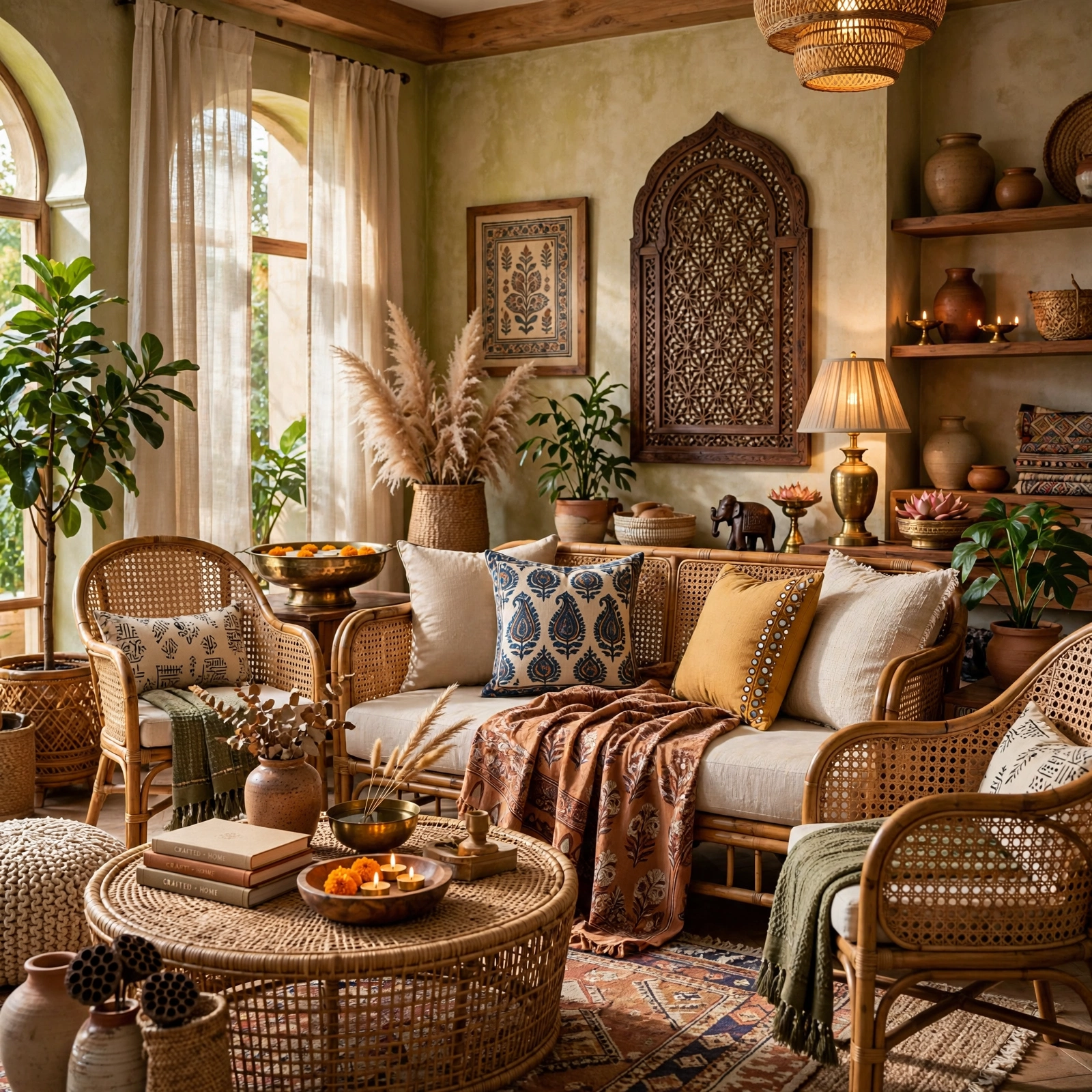
Rattan and cane furniture brings a lighter, more breathable natural material into the home, particularly well suited to warmer climates where this furniture style has long been popular throughout South Asia. Cane backed chairs and rattan storage baskets both work well within this broader design tradition, adding texture that balances out the more elaborately carved or richly upholstered pieces elsewhere in the room. This furniture style also tends to be more affordable than heavily carved wood alternatives, making it a practical way to incorporate the aesthetic across a larger furnishing project.
10. Marble Inlay Flooring Detail Interior Design Indian Ideas
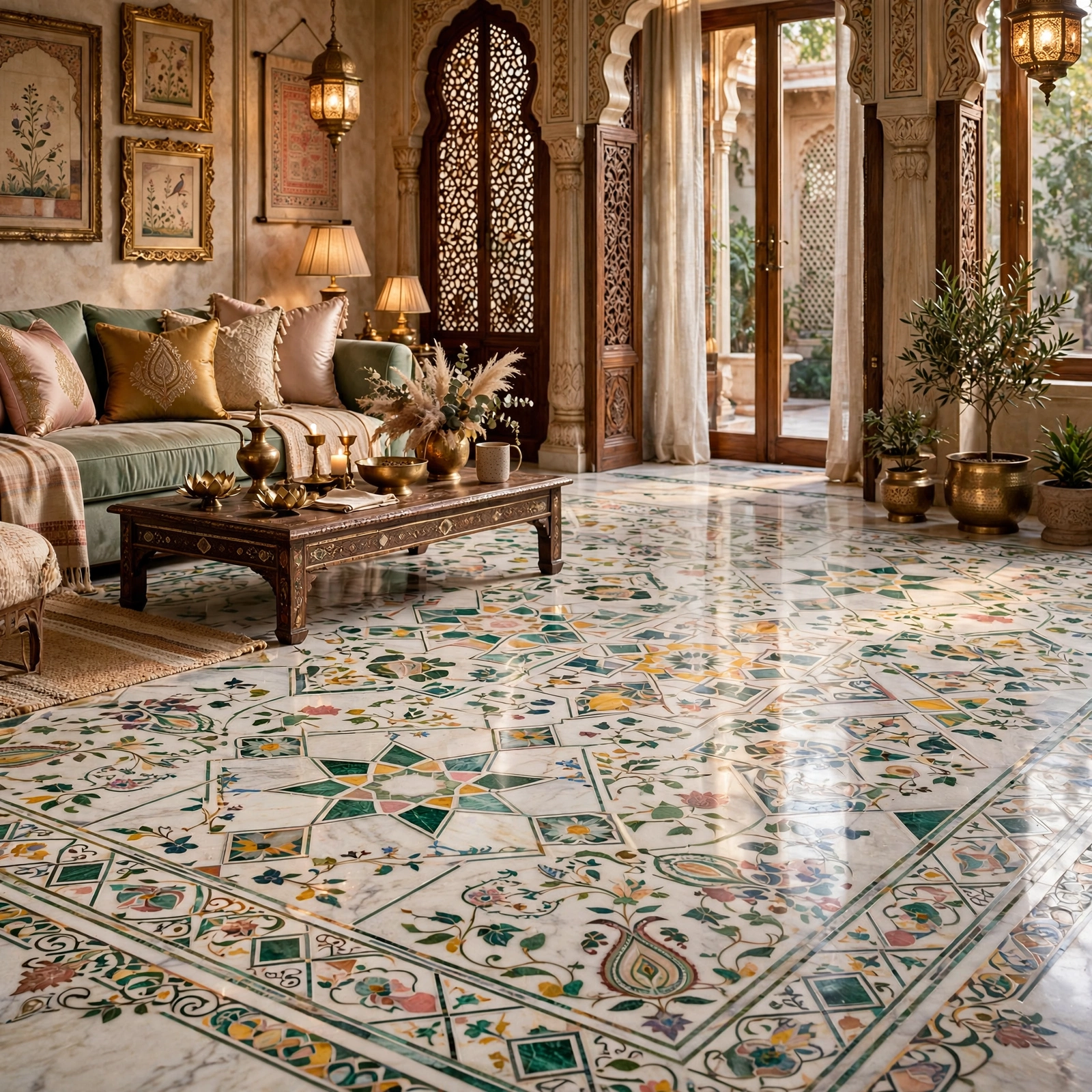
Marble inlay flooring detail incorporates a decorative pattern, whether a simple border or a more elaborate central medallion, into marble or stone flooring using contrasting colored stone pieces set into the main material. This technique references the elaborate inlay work found in historic Indian architecture, including some of the country’s most famous monuments. This detail works particularly well as a focal point within an entryway or a formal room, given the investment and specialized craftsmanship this kind of detailed stonework requires.
11. Hand Painted Madhubani Wall Art Interior Design Indian Ideas
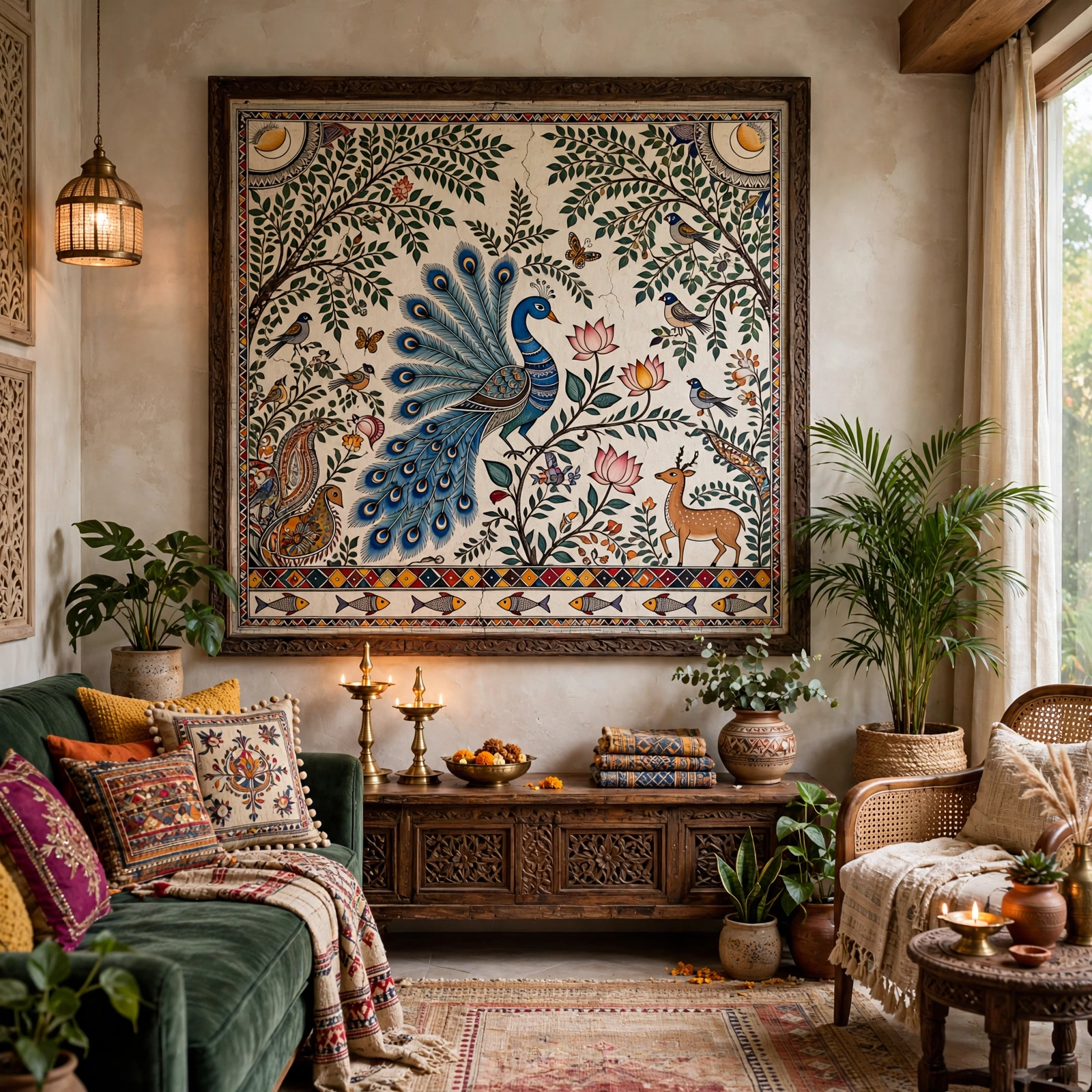
Hand painted Madhubani wall art displays or recreates this traditional folk painting style, originating from the Mithila region, characterized by intricate line work, natural dyes, and often depicting mythological or nature based subjects within a densely patterned composition. This art form brings genuine cultural and artistic history into the home as a decorative feature. Sourcing authentic Madhubani art from artists who practice this tradition, rather than a generic imitation print, supports the specific craft community this style originates from while adding more genuine character to the finished piece.
12. Silk and Zari Embroidered Drapery Interior Design Indian Ideas
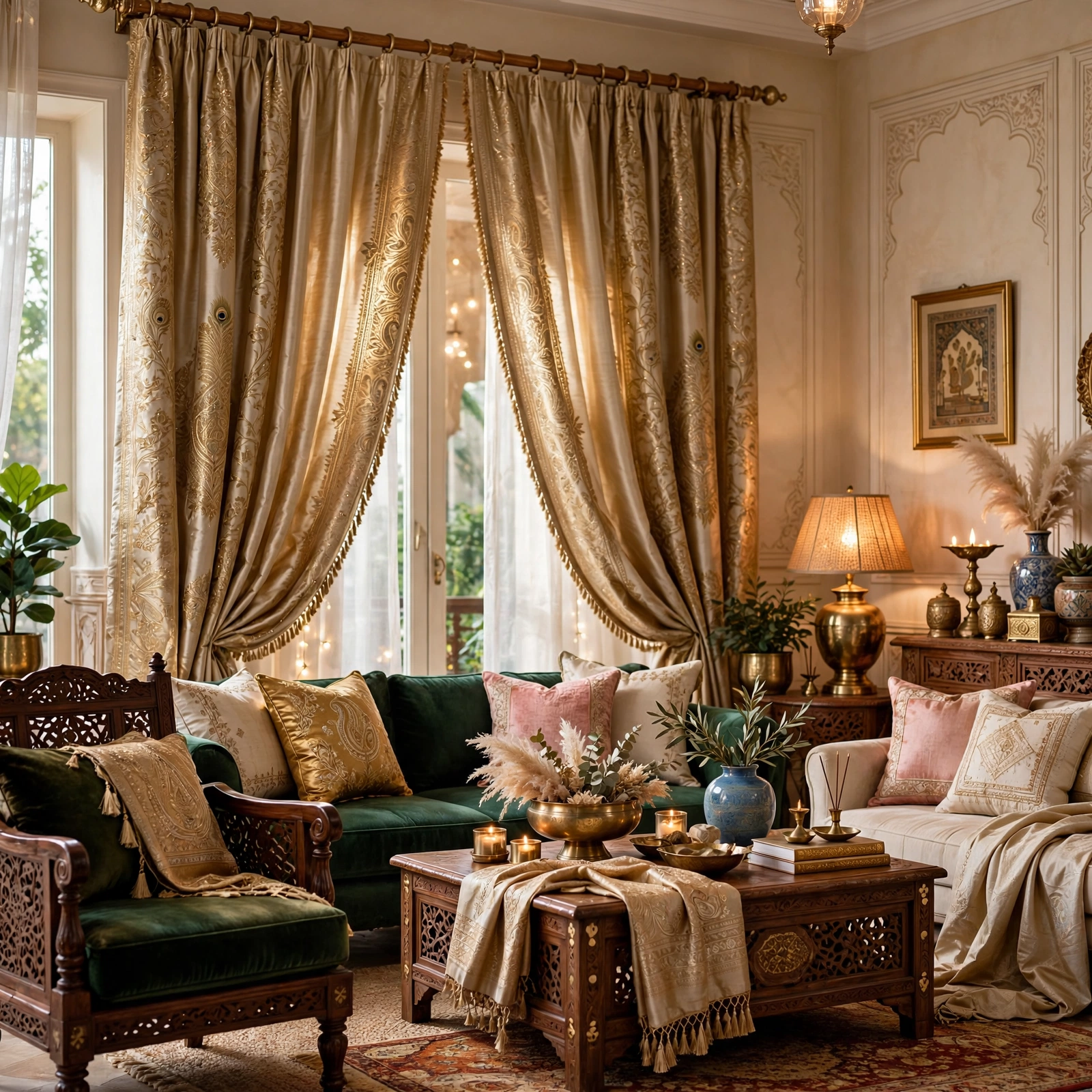
Silk and zari embroidered drapery uses rich silk fabric embellished with metallic zari thread embroidery, traditionally used for formal textiles and clothing, adapted here for curtain panels or a canopy detail within the home. This fabric catches light beautifully given the metallic thread work, adding a luxurious quality to whatever room it’s used in. Choosing a silk blend rather than pure silk for curtain applications, if budget or durability is a concern, provides a similar visual effect at a somewhat lower cost and with easier maintenance.
13. Terracotta and Clay Decor Pieces Interior Design Indian Ideas
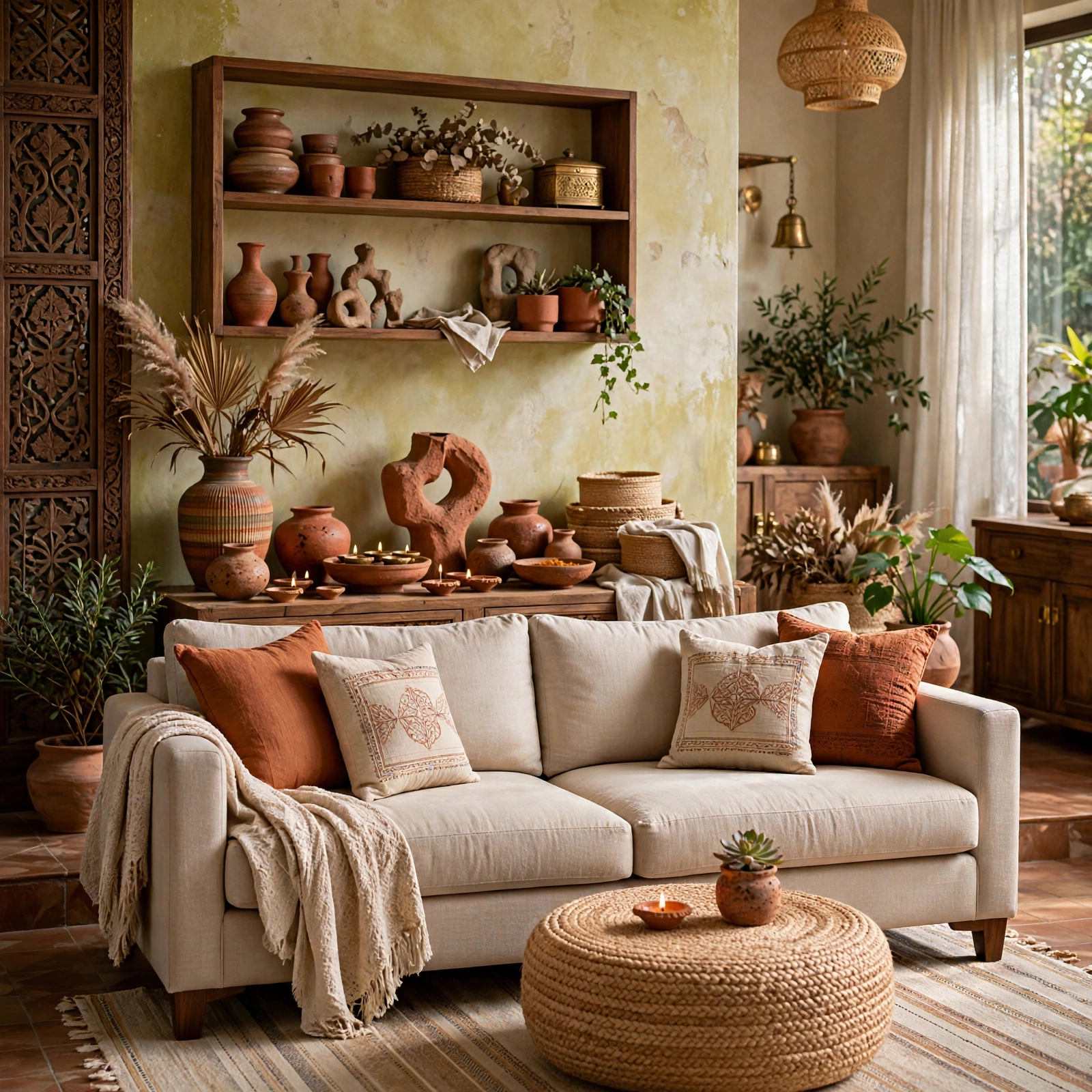
Terracotta and clay decor pieces bring an earthy, warm material into the home through decorative pots, small sculptural figures, or wall mounted tiles, referencing a long tradition of pottery and clay work found across various regions of India. This material provides a grounding, natural counterpoint to the richer jewel tones and metallic accents found elsewhere in this design style. Grouping several terracotta pieces together, similar to a curated vignette approach, gives this humble material more visual presence than a single isolated piece would achieve.
14. Traditional Diya and Lantern Lighting Interior Design Indian Ideas
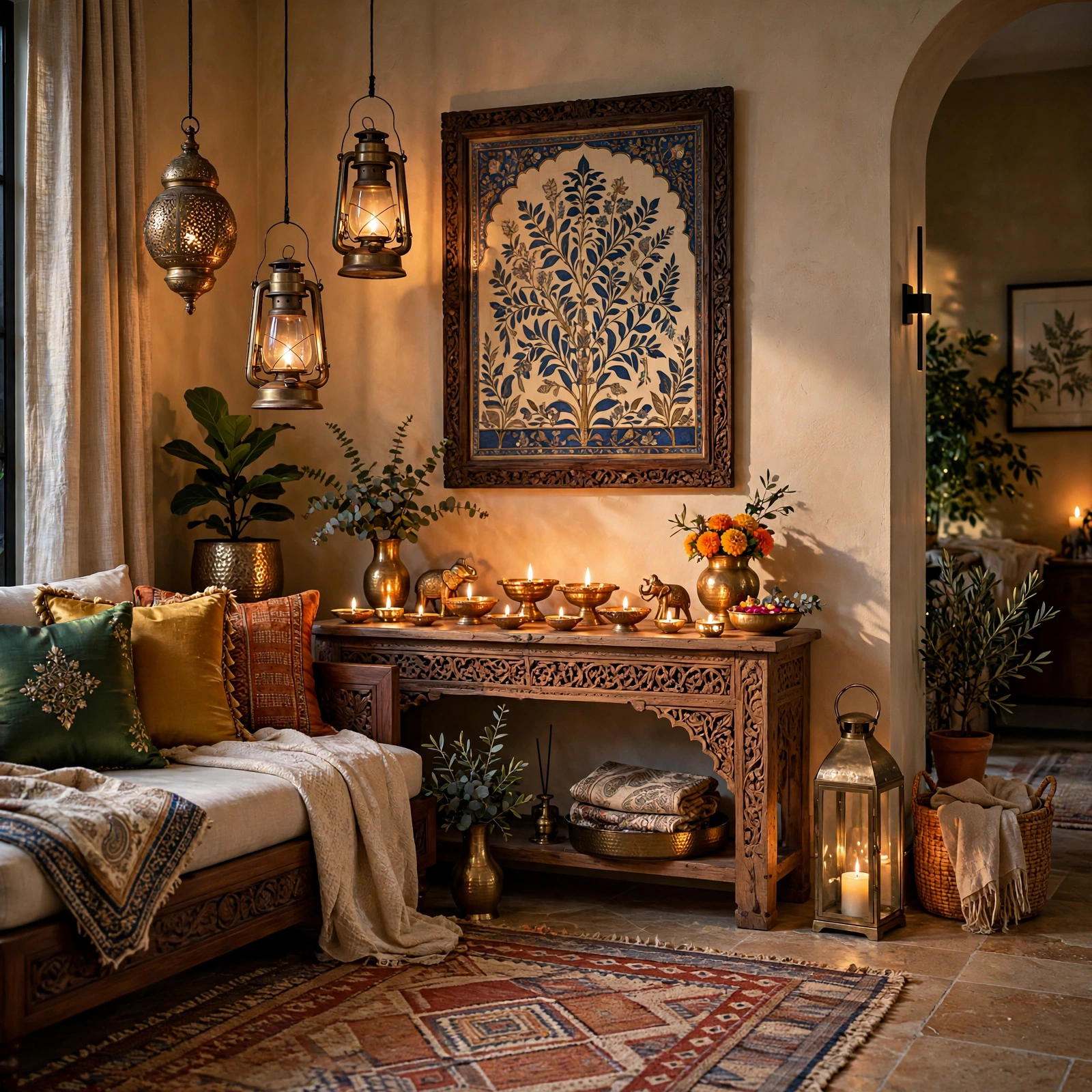
Traditional diya and lantern lighting incorporates small oil lamps or decorative lanterns, often in brass or clay, as both functional and symbolic lighting elements, particularly meaningful during festivals like Diwali but also usable as everyday decorative accents. This detail adds a warm, flickering quality to a room’s evening ambiance distinct from standard electric lighting alone. Displaying a collection of diyas along a window ledge or entryway provides both decorative value and genuine cultural significance within the home.
15. Courtyard Inspired Indoor Garden Nook Interior Design Indian Ideas
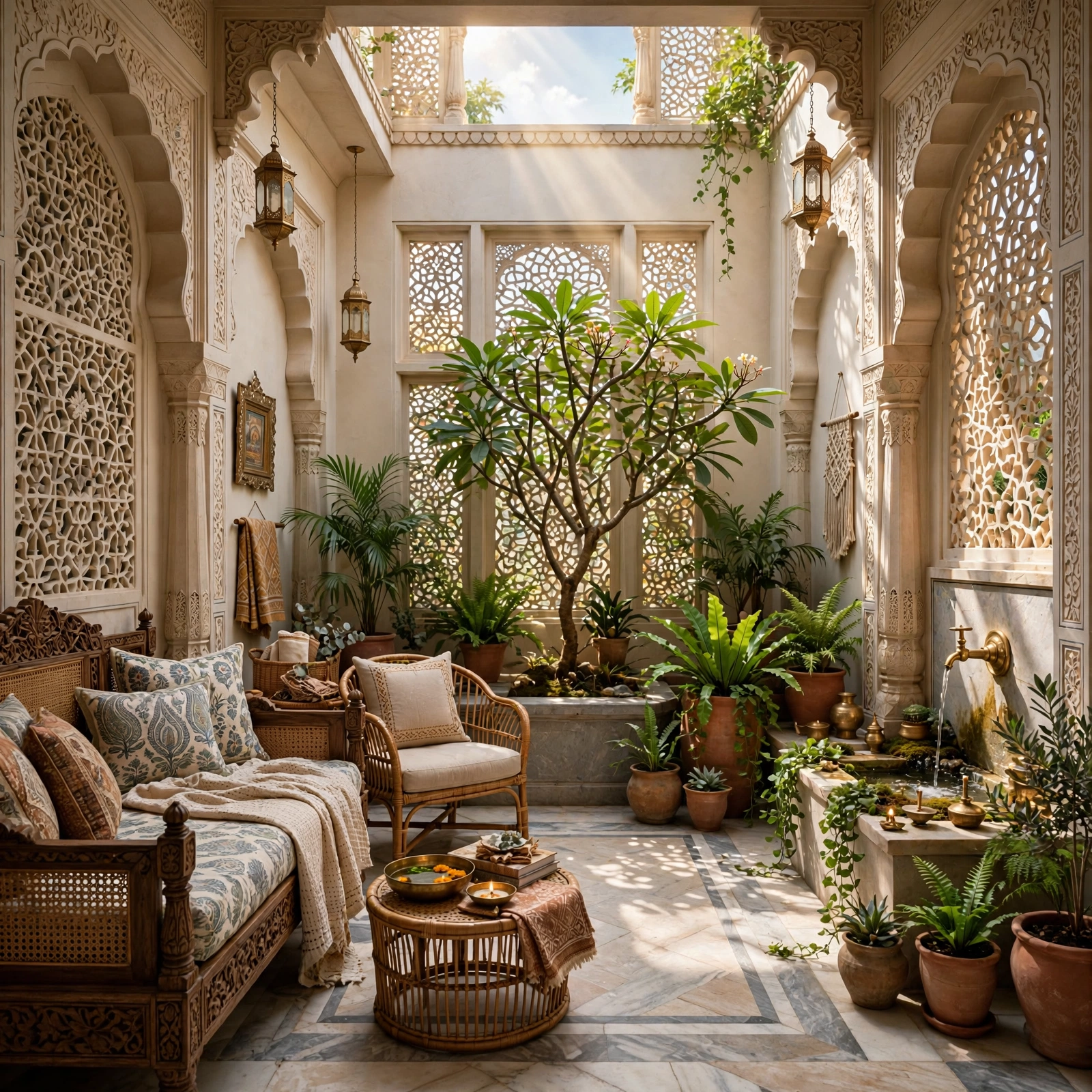
A courtyard inspired indoor garden nook references the traditional open air courtyard, or aangan, found in many historic Indian homes, adapted for a modern space through an indoor plant grouping, a small water feature, or simply a sunlit nook designed around greenery. This detail brings a connection to nature and a sense of calm central to this traditional architectural concept, even within a fully enclosed modern home. Positioning this nook near a genuine source of natural light, if the home’s layout allows, most closely recreates the airy, open quality the original courtyard concept depended on.
Shop the Look
A well balanced Indian inspired interior typically combines a few statement pieces with quieter, supporting elements rather than layering every tradition at once. Carved wood furniture paired with a handwoven dhurrie rug and block printed cushions establishes a rich, textural foundation in a main living space. Brass accents and traditional diya lighting add warmth throughout smaller surfaces. A dedicated mandir corner and a courtyard inspired plant nook round out the home with both meaningful function and a genuine connection to this design tradition’s architectural roots.
Common Mistake to Avoid
The most common mistake is combining too many different regional traditions and techniques without any connecting color or material thread, resulting in a room that feels like a scattered collection of unrelated decorative objects rather than a cohesive, intentional design. India’s design history is remarkably varied by region, and treating every tradition as interchangeable, without considering how specific colors, patterns, and materials actually relate to one another, can undermine the depth and authenticity this style depends on. Choosing a smaller number of genuinely well sourced pieces, and allowing a consistent color palette to tie them together, produces a considerably more successful and respectful result than an overloaded, indiscriminate mix.
Frequently Asked Questions
How do I source authentic Indian craft pieces rather than mass produced imitations?
Seeking out artisan cooperatives, fair trade retailers, or direct sourcing from craftspeople specializing in a specific technique, whether block printing, brass work, or Madhubani painting, generally provides more authentic pieces than a generic import retailer offering imitation versions of these traditional crafts. This approach also supports the specific craft communities these traditions originate from, adding genuine value beyond just the finished object.
Can this design style work in a smaller apartment?
Indian interior design elements can absolutely work in a smaller apartment, though selecting a few key statement pieces, like a carved wood console or a block printed textile, rather than attempting every element on this list at once, keeps the style from overwhelming a more limited space. Balancing bold color and pattern with some quieter neutral walls or furniture also helps this richly layered aesthetic feel appropriately scaled to a smaller footprint.
Is a mandir corner necessary for this design style, or is it optional?
A mandir prayer corner is a meaningful, functional feature specifically for households practicing regular prayer or religious observance, rather than a purely decorative design element required to achieve this aesthetic. Households without this specific religious practice can still draw on the broader color, material, and craft traditions of Indian interior design without necessarily including a dedicated prayer space.
How do I balance bold color without it feeling overwhelming?
Pairing saturated jewel tones with some quieter neutral surfaces, like a cream wall or natural wood flooring, and being intentional about where the boldest colors and patterns appear, such as one statement textile or wall rather than every surface at once, helps keep this richly colored style feeling balanced rather than overwhelming. Following a general color proportion guideline, with the majority of the room in more neutral tones and bold color used more selectively as an accent, also helps maintain this balance.
What furniture materials are most associated with this design tradition?
Teak and sheesham wood, often featuring detailed hand carving, along with rattan and cane for lighter furniture pieces, are among the materials most closely associated with traditional Indian furniture craft. Brass and copper also appear frequently as both furniture hardware and standalone decorative accents throughout homes drawing on this design tradition.
Conclusion
These home interior design Indian ideas draw on centuries of regional craft tradition, from carved wood furniture to block printed textiles, creating a rich, warm aesthetic built on genuine material history rather than surface level imitation. Choose a few well sourced statement pieces, balance bold color with quieter neutral surfaces, and consider whether a dedicated mandir corner fits your household’s actual practices. Save this post to Pinterest for your next home project, and check out our related post on home interior design for foundational design principles that apply alongside this specific cultural aesthetic.
Author Expertise Note
This list draws on years of exploring and respecting India’s remarkably varied regional design traditions, with a focus on choices that honor genuine craft history rather than reducing a rich aesthetic to a generic surface level style.