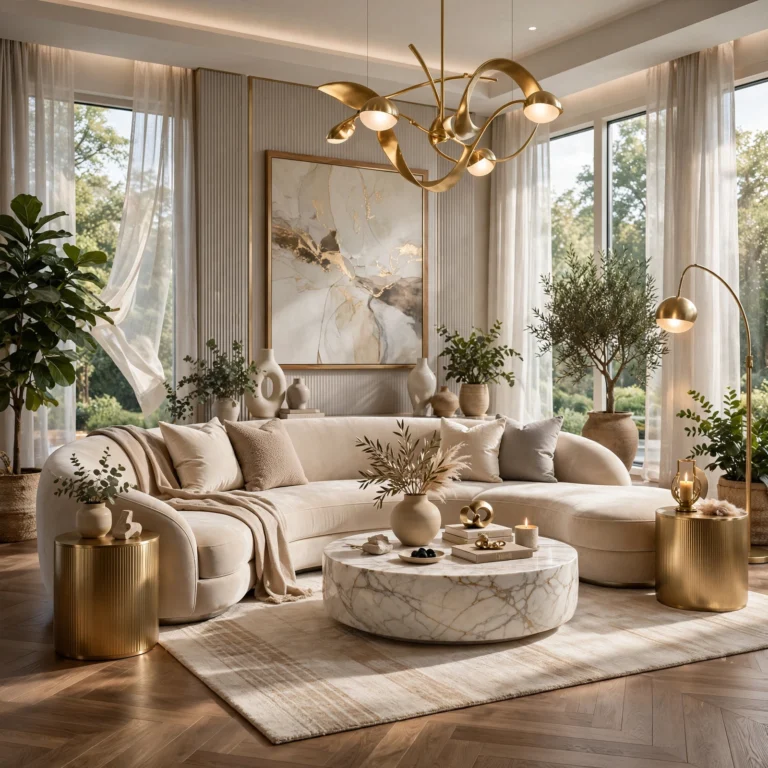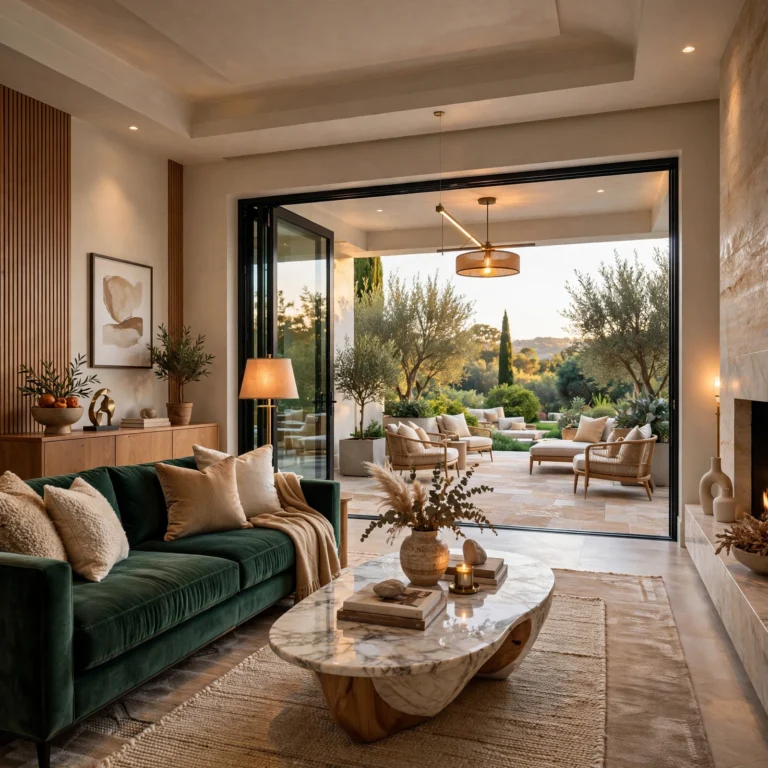
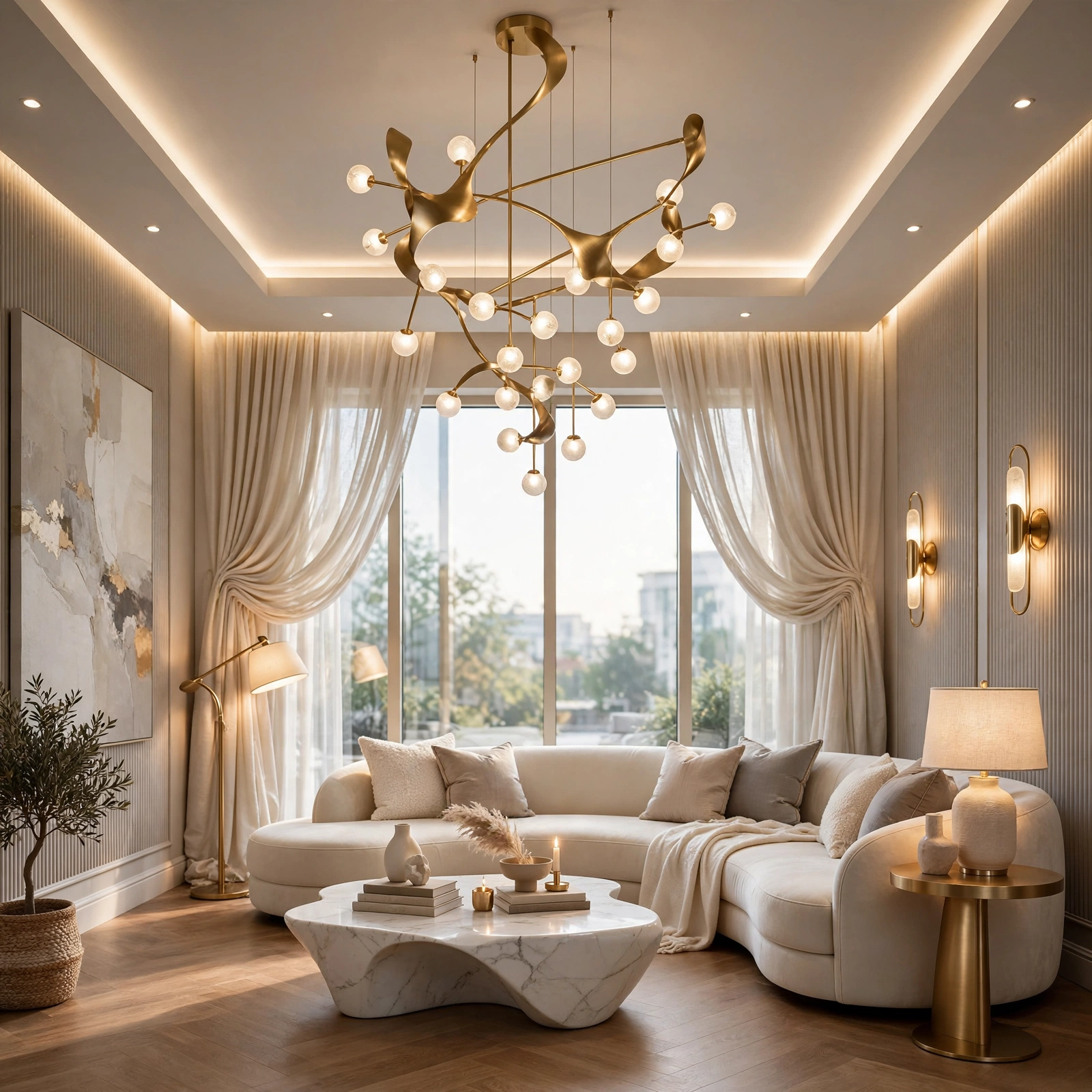
17 Cool Luxury Living Room Design Ideas Worth the Investment
Luxury living room design isn’t defined by price alone, it comes down to material quality, proportion, and restraint applied consistently rather than a room full of expensive pieces competing for attention. This guide walks through seventeen ideas covering furniture, materials, lighting, and architectural details, with real product names, material tiers, and rough costs so you can figure out which upgrades deliver the most visible impact for your specific budget. Whether you’re furnishing a new space or upgrading an existing living room piece by piece, there’s a clear next step here regardless of where you’re starting from.
Trend & Background
Luxury interiors have moved away from the ornate, heavily gilded look once associated with the word toward a quieter, more material-driven definition of luxury built around genuine craftsmanship, natural stone, hand-knotted rugs, solid wood joinery, rather than surface-level shine. This shift mirrors a broader move across high-end design toward pieces that reward closer inspection instead of simply looking expensive from across the room. Understanding which specific details signal genuine quality, book-matched veneer, hand-applied plaster, full-grain leather, matters more now than ever, since it lets you invest in the details that actually read as luxurious rather than spending broadly across an entire room without a clear hierarchy.
Key Takeaways
- Seventeen updates ranging from statement furniture pieces to architectural investments like coffered ceilings and stone walls
- Real material names and rough costs are included so you can prioritize which upgrades fit your actual budget first
- A reference table covers fabric and material tiers so you can scale each idea up or down in price
- Five FAQs cover budget, what separates luxury from merely expensive, and where to start on a full room
1. Luxury Living Room Design Statement Sofa
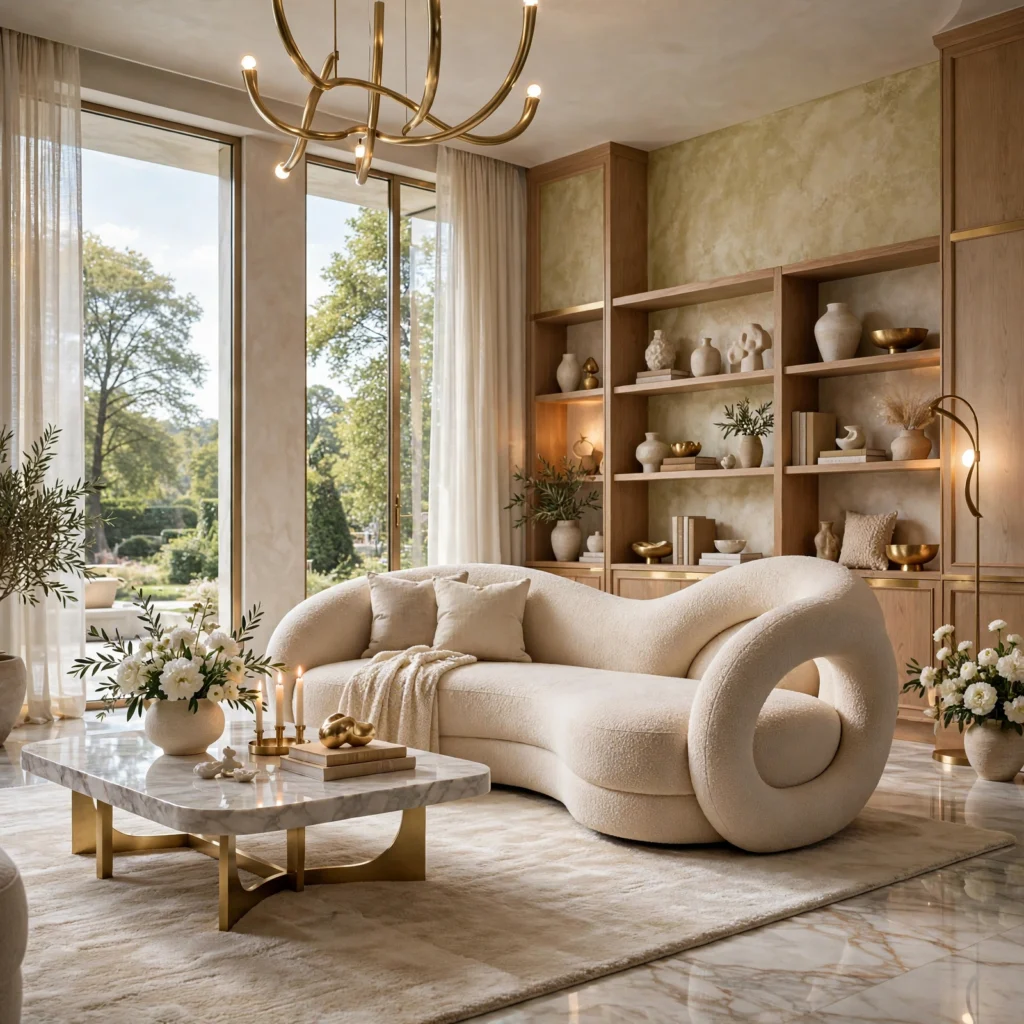
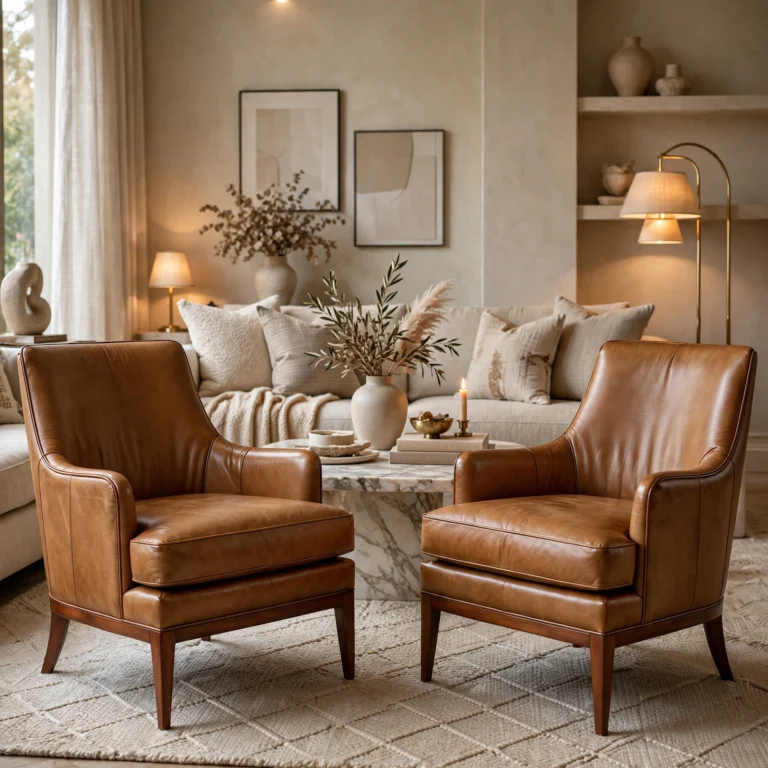
A well-proportioned sofa in full-grain leather or a heavyweight performance velvet, built on a solid hardwood frame with eight-way hand-tied springs, forms the foundation any luxury living room design depends on more than any other single piece. Choose a silhouette with clean, considered lines rather than an overly trend-driven shape, since a well-made sofa should remain the room’s anchor for well over a decade rather than needing replacement every few years. Spend the largest share of your furniture budget here first, since a mediocre sofa undermines even an otherwise well-appointed room.
| Material Tier | Approx. Cost | Typical Longevity |
| Entry luxury | $3,000–$6,000 | 8–12 years |
| Mid luxury | $6,000–$12,000 | 12–20 years |
| High luxury / custom | $12,000+ | 20+ years with reupholstery |
2. Hand-Knotted Area Rug
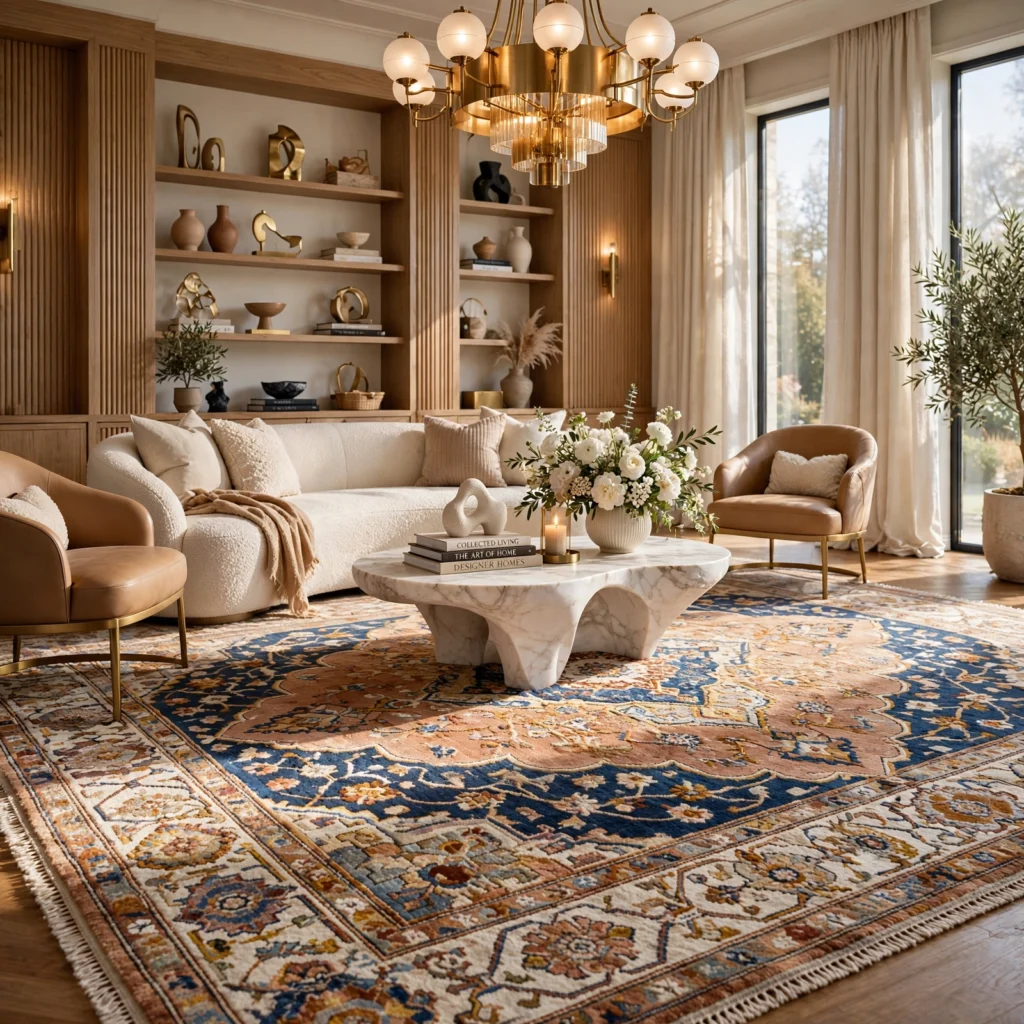
A genuine hand-knotted rug, wool, silk, or a wool-silk blend, anchors a luxury living room in a way a machine-made equivalent can’t replicate, since the slight irregularity in a hand-knotted piece is part of what signals authenticity. Size the rug so all seating furniture rests with at least its front legs on it, extending the rug generously beyond the seating area rather than sizing it too small for the room. A reputable rug dealer can typically show you the knot density and back of the rug, both of which help confirm genuine hand-knotting versus a machine-made imitation at a similar price point.
3. Custom Millwork and Built-Ins
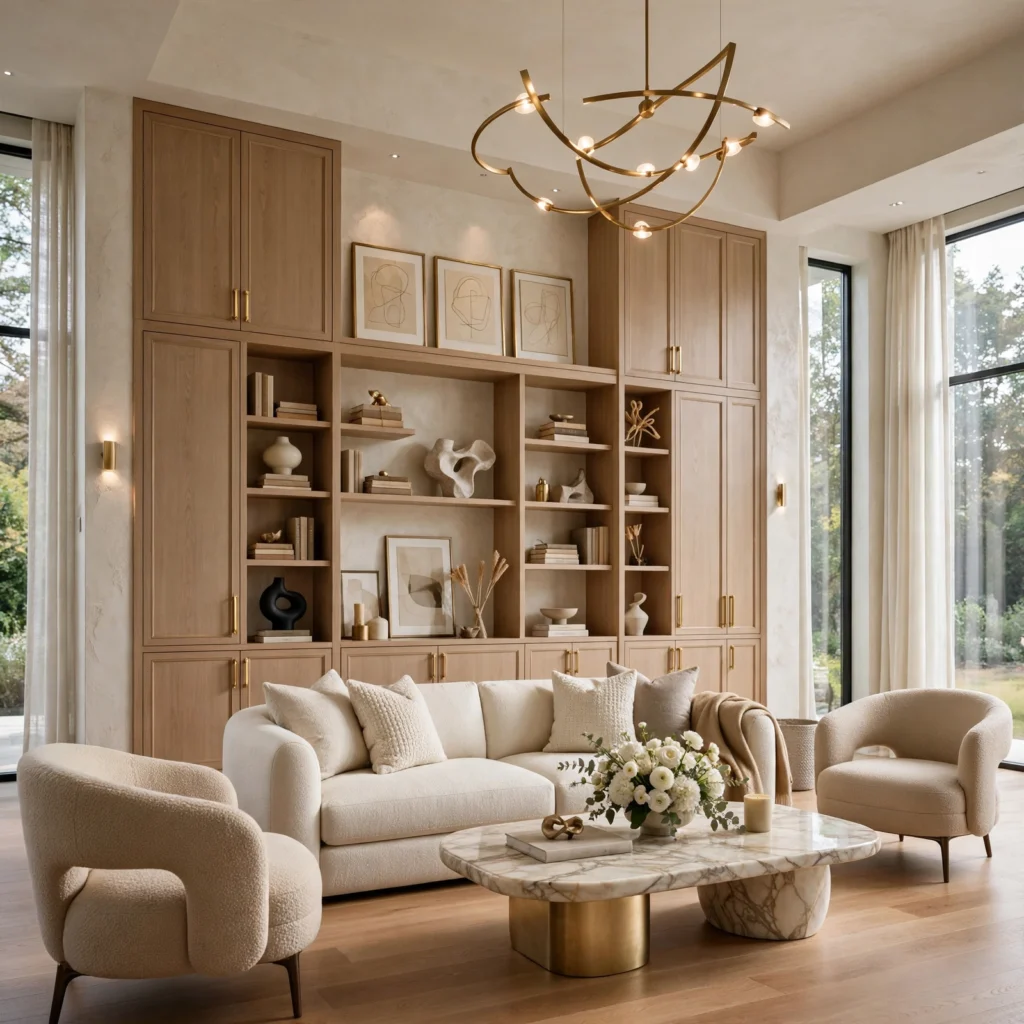
Custom-built millwork, bookshelves, a media wall, or window seating designed specifically for the room’s dimensions, reads as considerably more luxurious than furniture-store equivalents, since it fits the space exactly rather than approximating it. Solid wood construction with traditional joinery, rather than particleboard with a wood veneer, is what separates genuinely high-end millwork from a lower-cost imitation. This investment typically requires a design and build timeline of several months, making it one of the longer-lead-time ideas on this list.
4. Statement Chandelier or Pendant
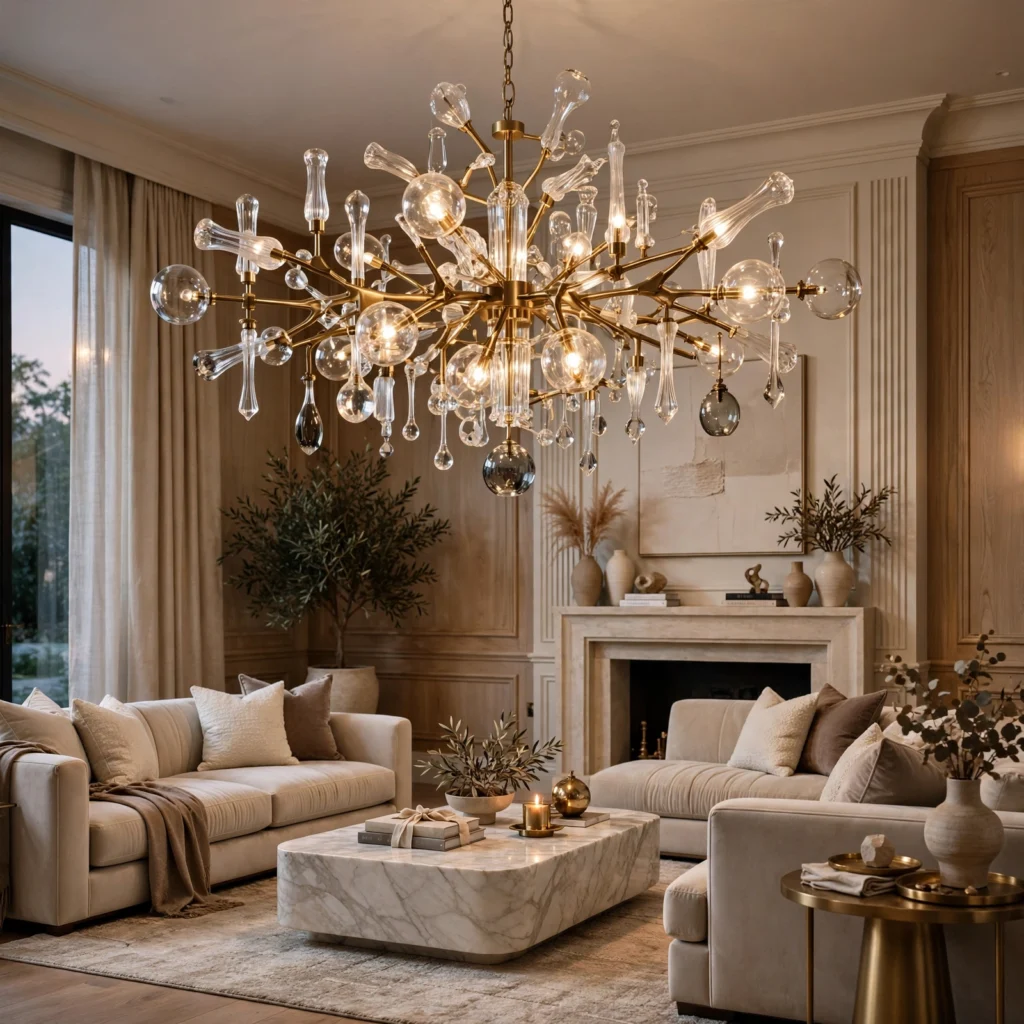
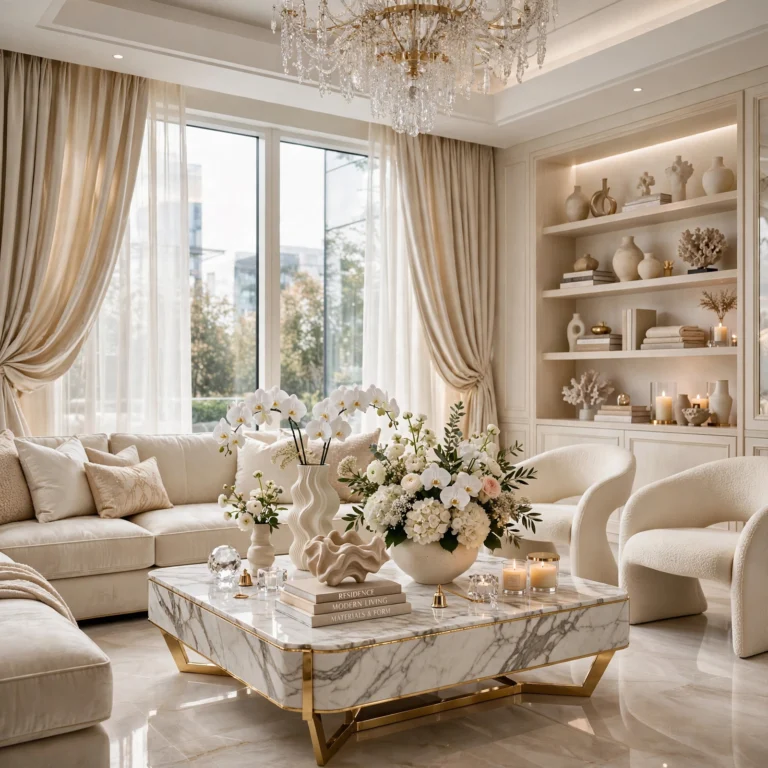
A sculptural chandelier or oversized pendant in hand-blown glass, cast brass, or genuine crystal gives a luxury living room a clear overhead focal point that a builder-grade flush mount simply can’t provide. Size the fixture generously relative to the room, since an undersized fixture is one of the fastest ways to undercut an otherwise well-appointed space. Dimmable, warm-temperature bulbs matter as much as the fixture itself, since even the most striking chandelier reads as harsh under the wrong light temperature.
5. Marble or Natural Stone Fireplace Surround
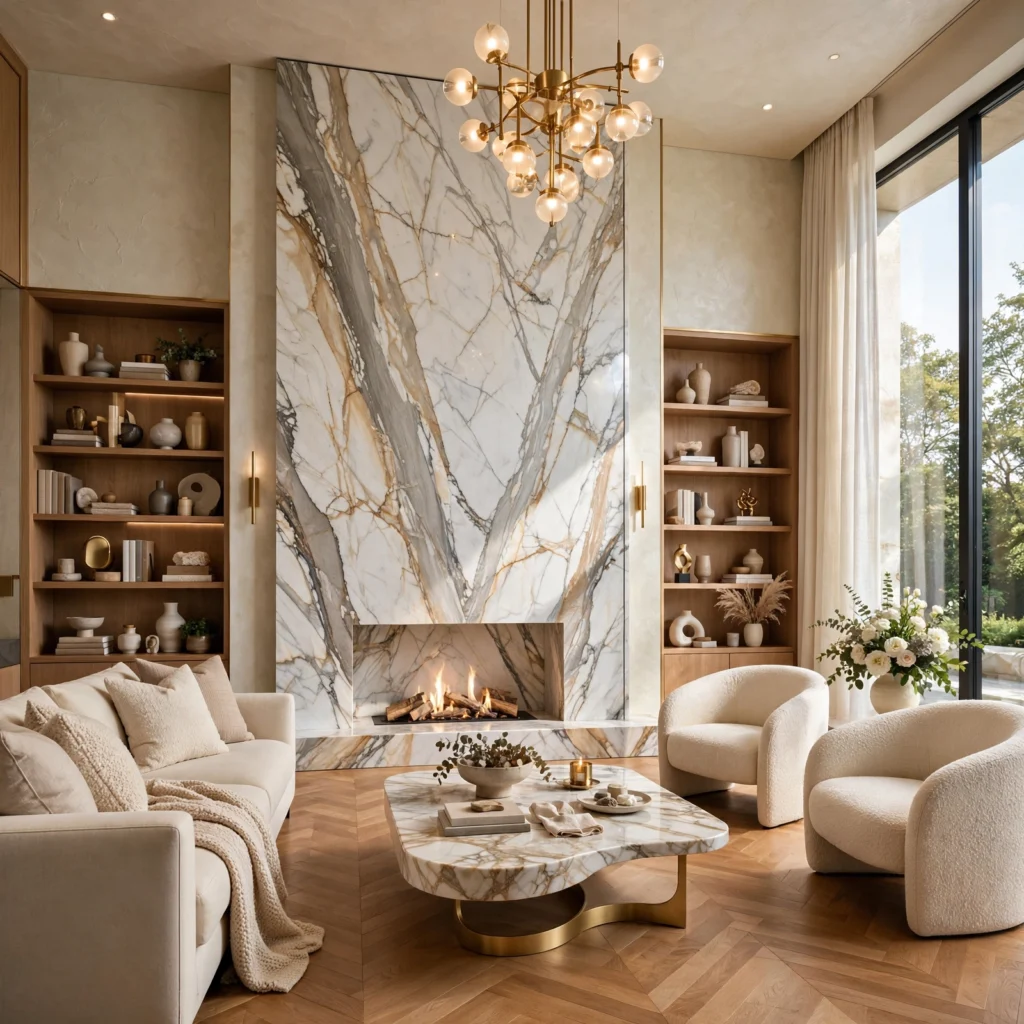
A book-matched marble or natural stone surround turns a fireplace into the room’s clear architectural centerpiece, with the veining pattern mirrored on either side of the mantel reading as a deliberate, high-end detail. Calacatta or Statuario marble remain the classic choices for this application, though a quartzite alternative offers similar veining with better stain resistance for a busier household. This update typically requires a stone fabricator and several weeks of lead time for slab selection, templating, and installation.
6. Silk or Heavyweight Velvet Drapery
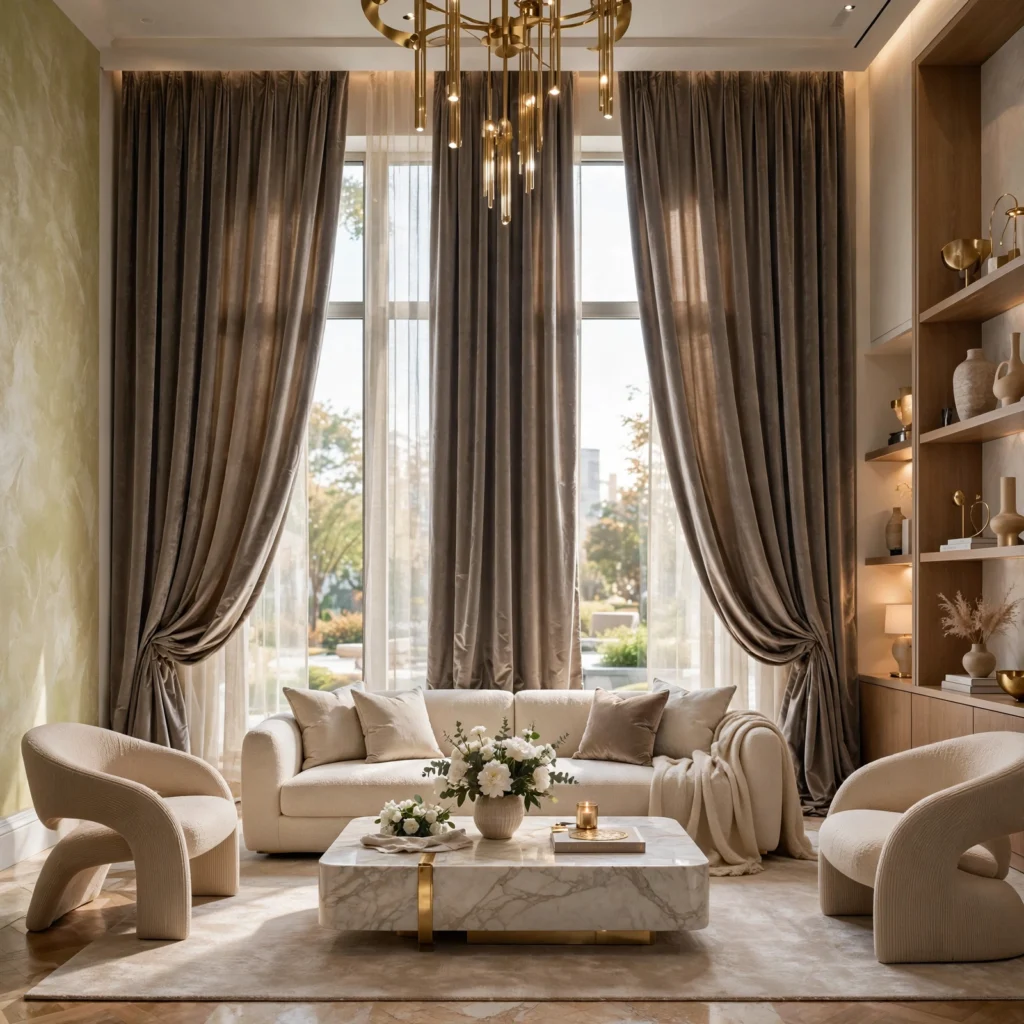
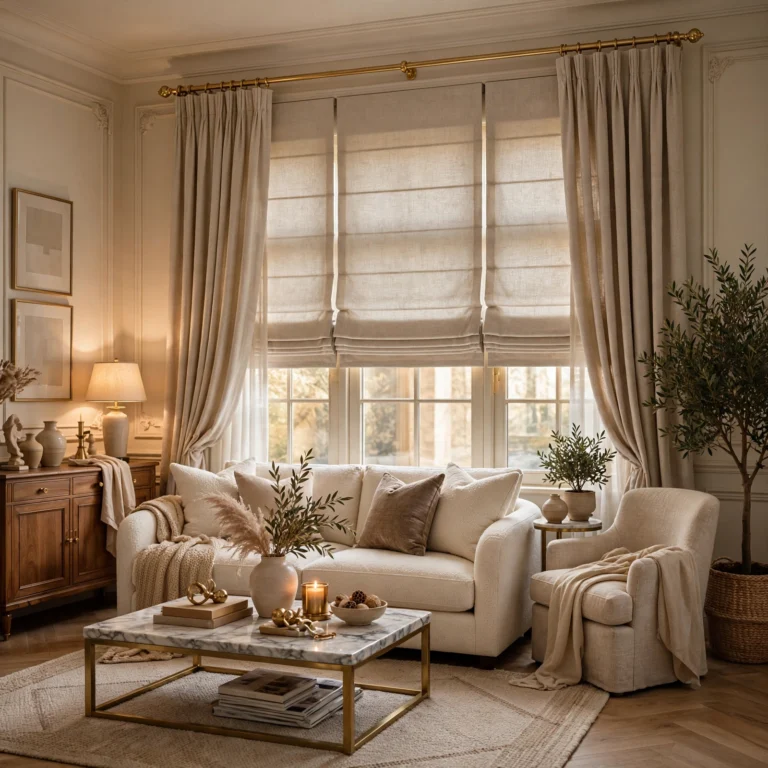
Floor-length drapery in silk, linen-silk blend, or a heavyweight velvet, hung on a substantial rod mounted close to the ceiling, adds both height and softness to a luxury living room in a way lightweight or short curtains can’t achieve. Proper drapery should pool slightly at the floor or break just at the floor line, both of which read as more considered than a curtain that stops noticeably short of the ground. Lined drapery also improves the room’s acoustics and light control, a functional benefit alongside the visual one.
7. Custom Upholstered Accent Chairs
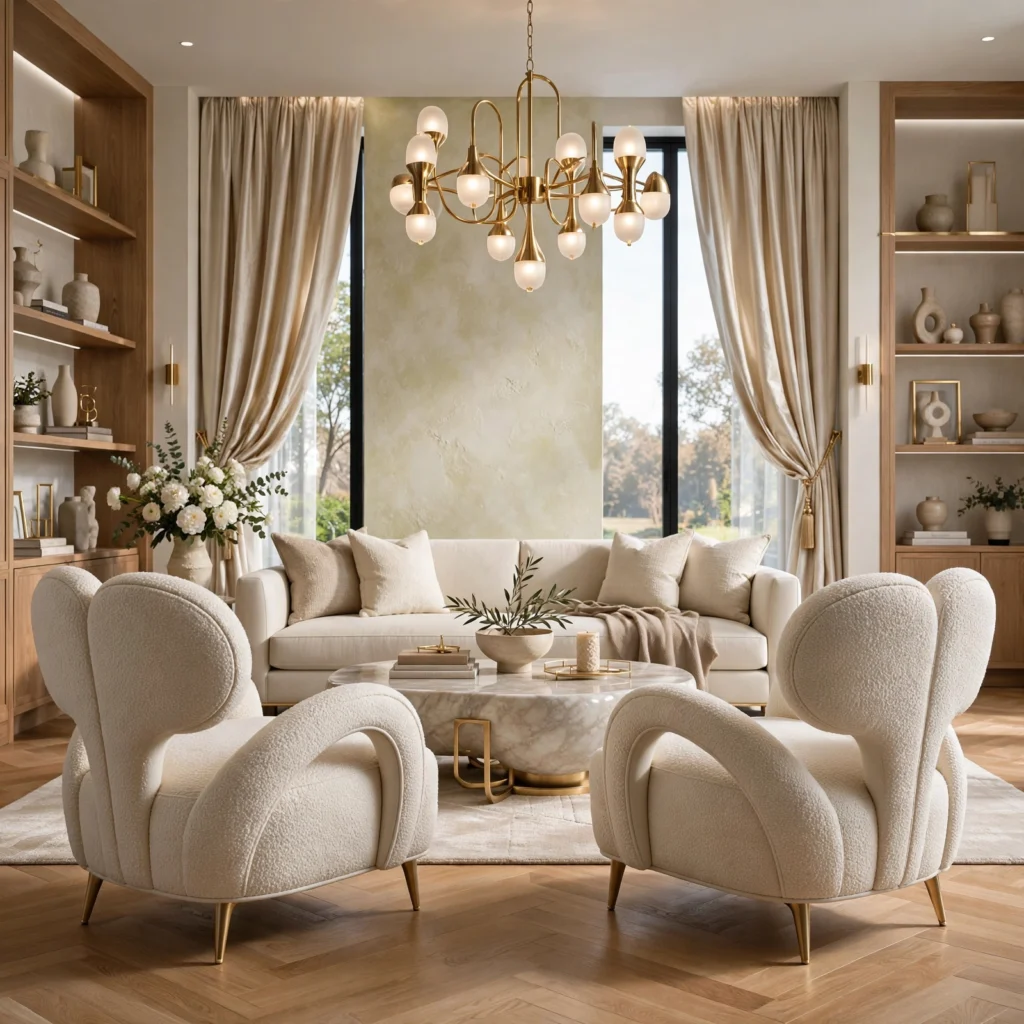
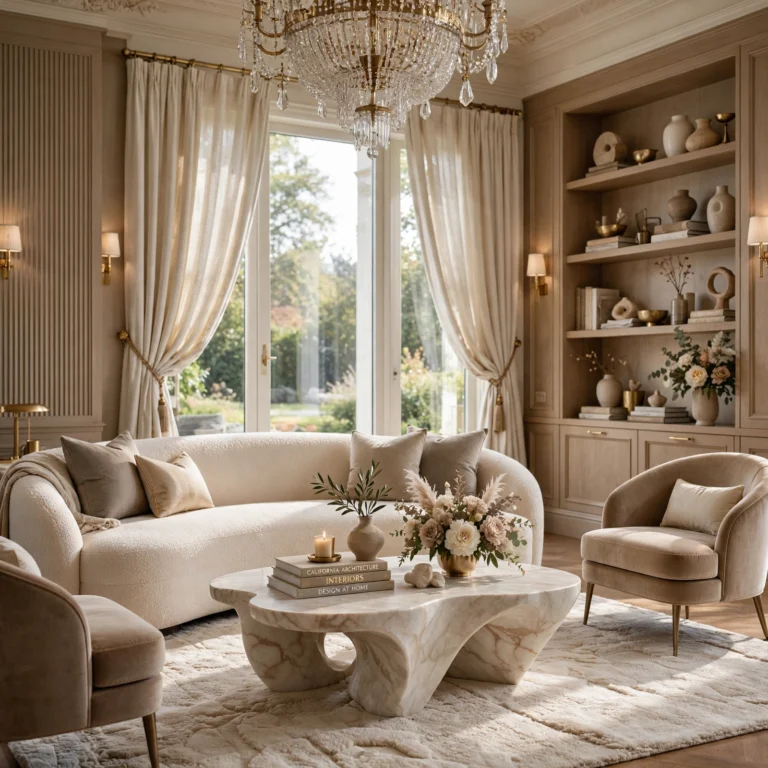
A pair of custom-upholstered accent chairs, chosen in a fabric that complements rather than matches the sofa exactly, adds depth to a seating arrangement without the flatness of an all-matching furniture set. Boucle, mohair, and a textured linen-blend all read as more luxurious than a flat, single-note upholstery fabric. Positioning the chairs at an angle facing the sofa, rather than in a straight line across from it, also creates a more inviting, conversation-oriented layout than a purely symmetrical arrangement.
Check out more for luxury living room CLICK HERE
8. Integrated Smart Lighting and Shades
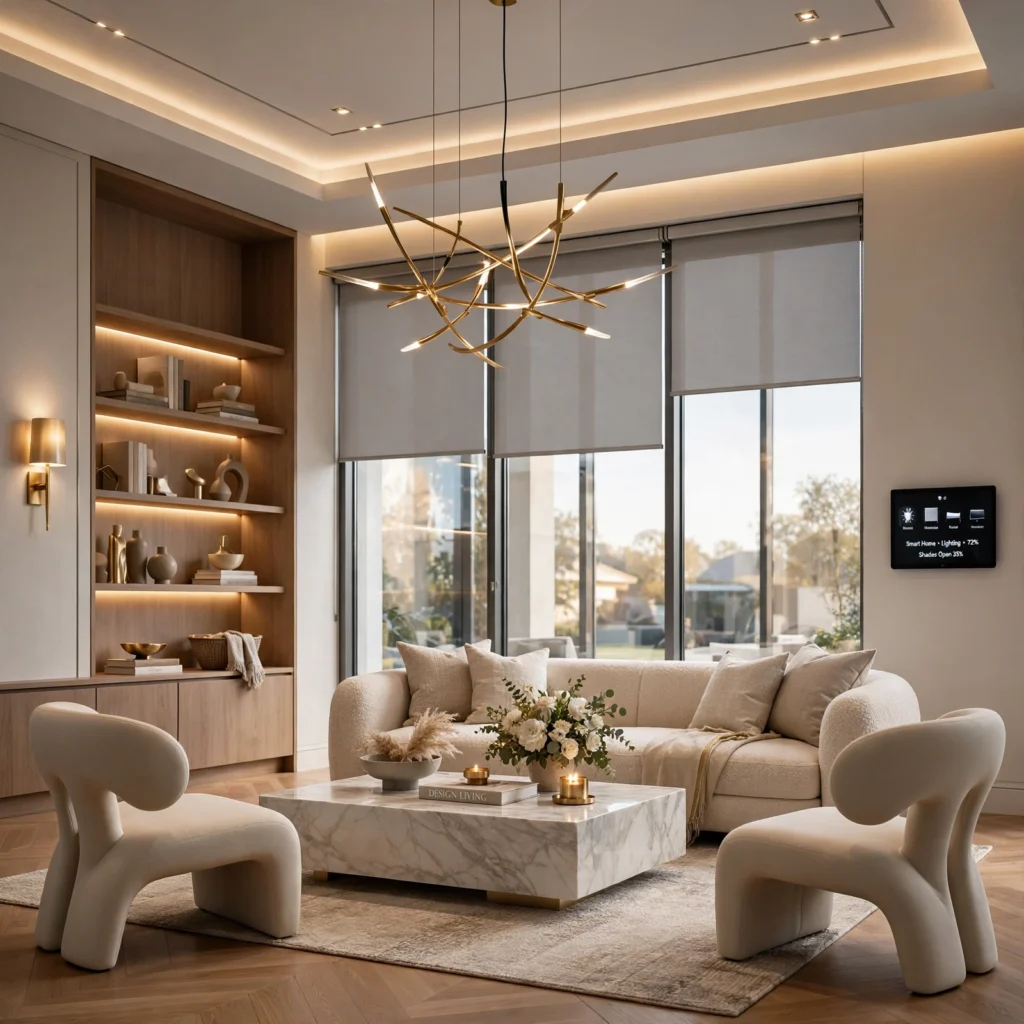
Motorized shades and a layered smart lighting system, controlled through a single wall panel or app rather than a collection of visible switches, keep a luxury living room’s surfaces visually quiet while adding genuine functional convenience. Recessed, trimless lighting fixtures paired with dimming controls allow the room to shift from bright and functional during the day to warm and layered in the evening without visible hardware interrupting clean ceiling lines. This system typically requires an electrician and low-voltage installer working together during a renovation or new build phase.
9. Book-Matched Wood Paneling
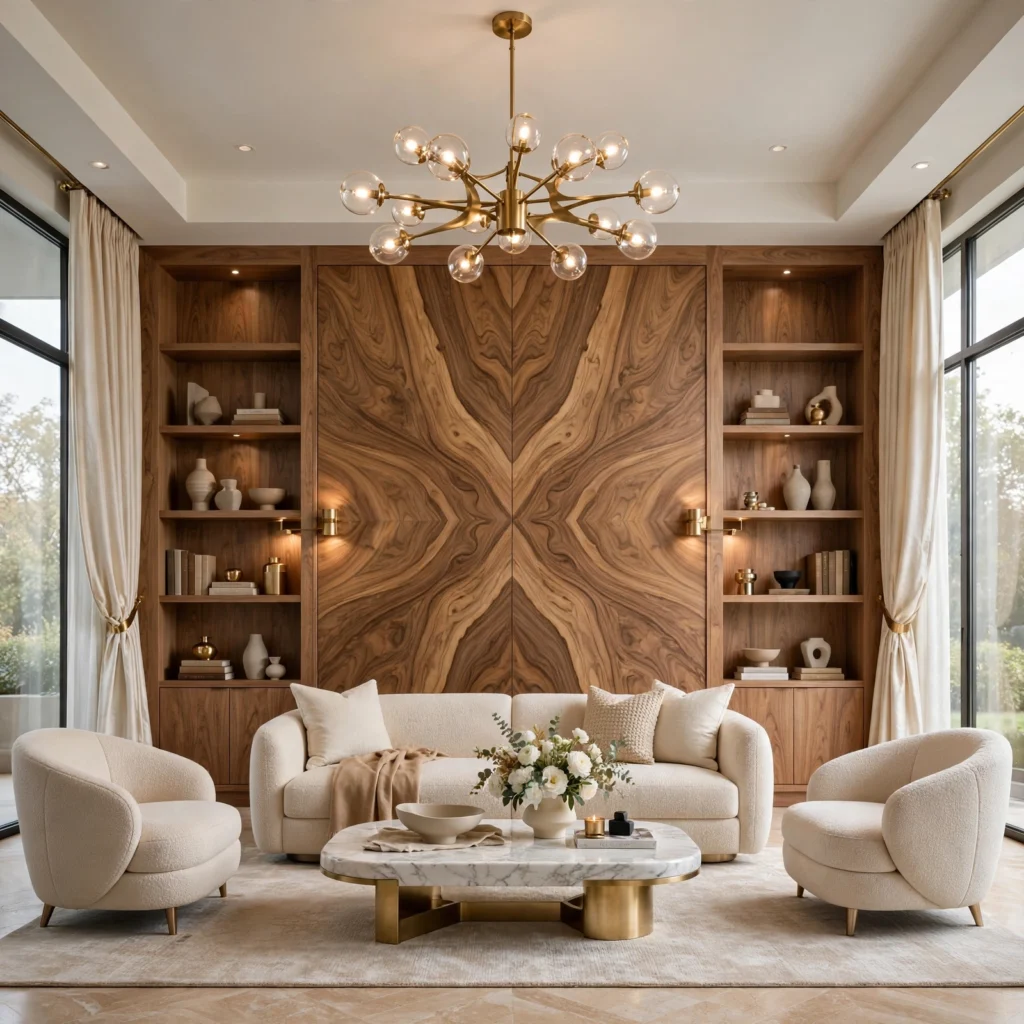
Book-matched wood paneling, walnut or a rich mahogany veneer applied so the grain pattern mirrors across adjacent panels, adds warmth and a genuine sense of craftsmanship to a feature wall. This technique requires more skilled millwork than standard paneling, since the veneer sheets must be cut and matched specifically to achieve the mirrored grain effect. Limiting book-matched paneling to a single accent wall, rather than the entire room, keeps the treatment feeling like a considered feature rather than an overwhelming, all-encompassing surface.
10. Antique or Vintage Statement Piece
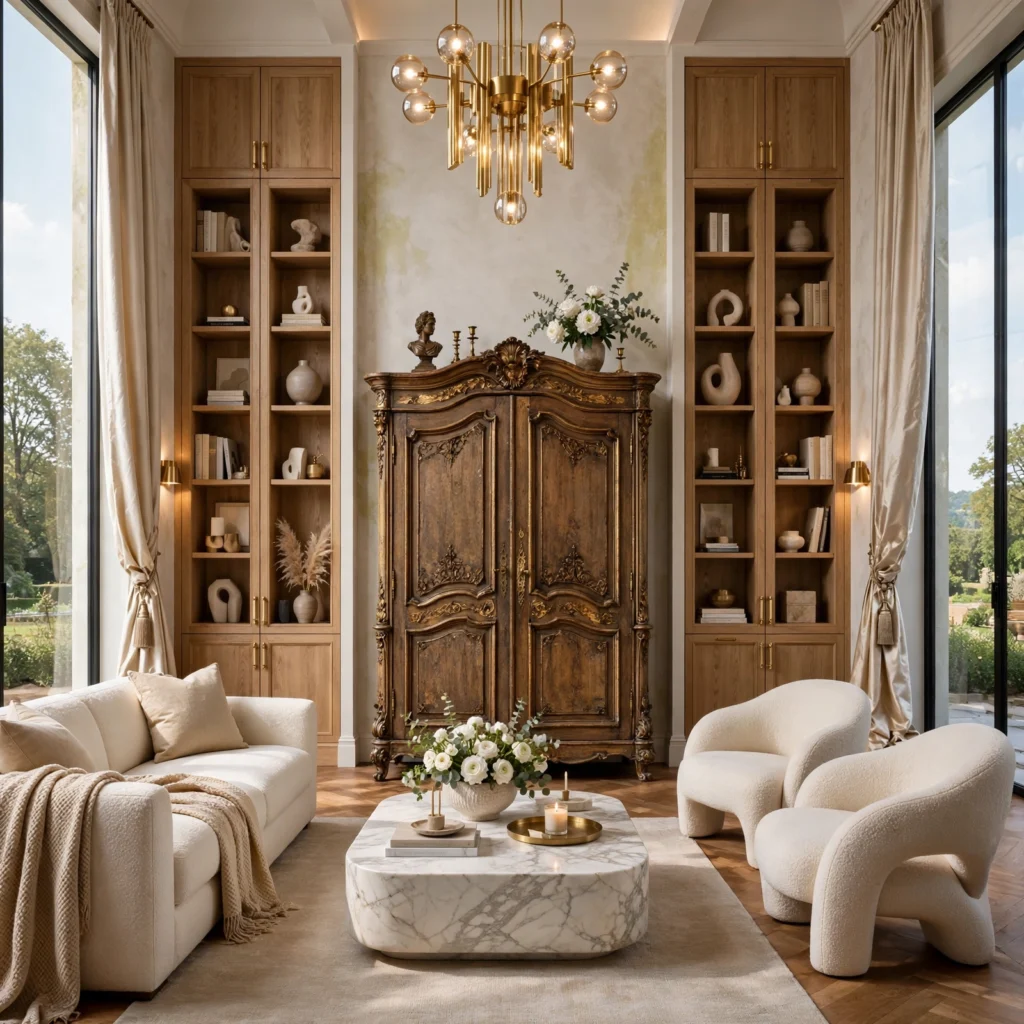
Incorporating one genuine antique or vintage piece, a mid-century credenza, a vintage brass floor lamp, or an antique side table, into an otherwise new room gives a luxury living room a sense of history and collected depth that an entirely new furniture set can’t replicate. Reputable dealers and auction houses like 1stDibs or Chairish typically provide provenance information, which matters both for authenticity and for the piece’s long-term value. One well-chosen vintage piece generally does more for a room’s overall sophistication than several lower-cost decorative accents combined.
11. Textured Plaster Walls
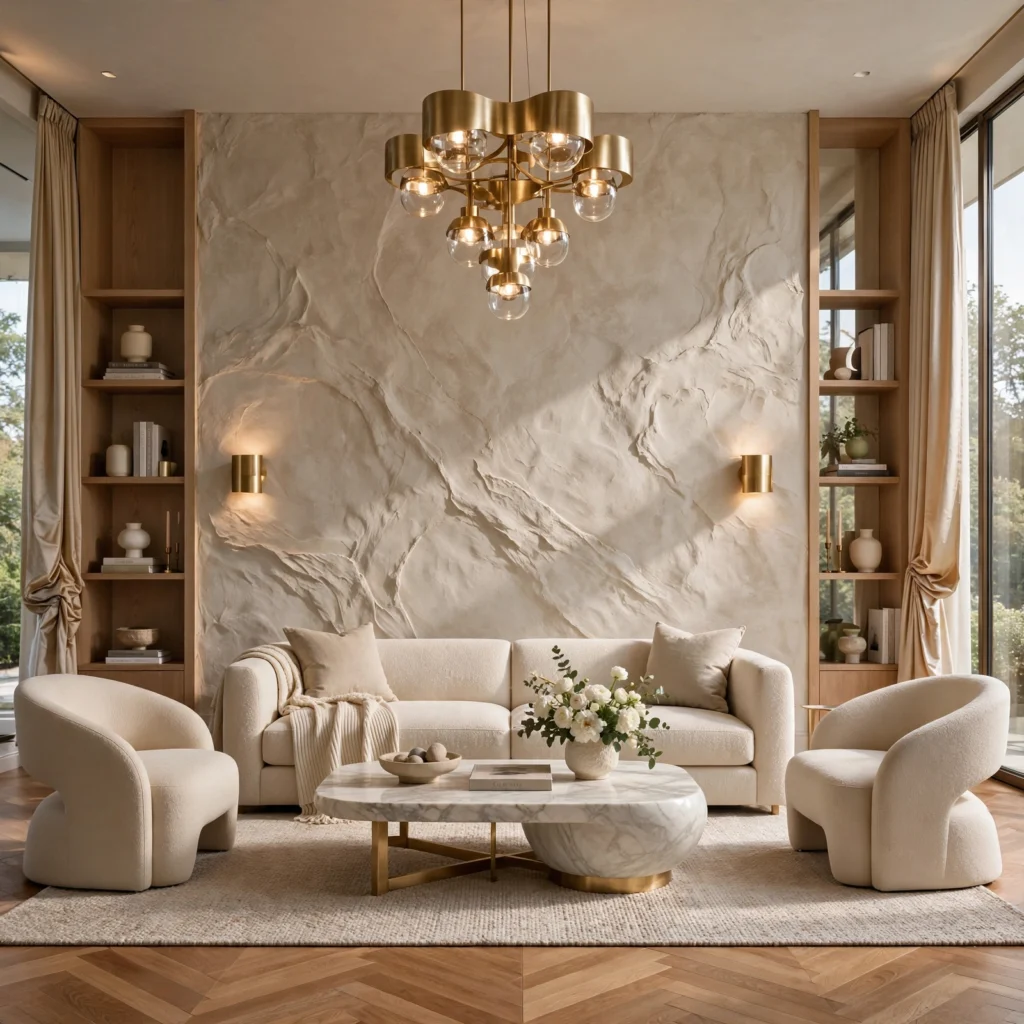
A true Venetian plaster finish, hand-troweled and burnished to a soft sheen, adds depth and movement that flat paint or even a lower-cost limewash can’t fully replicate, especially as natural light shifts across the wall throughout the day. This finish requires a skilled plasterer and typically costs meaningfully more per square foot than paint, reflecting both the material and the specialized labor involved. Keeping true Venetian plaster to a single accent wall, rather than the entire room, is both more cost-effective and generally the more considered design choice.
12. Curated Art Collection
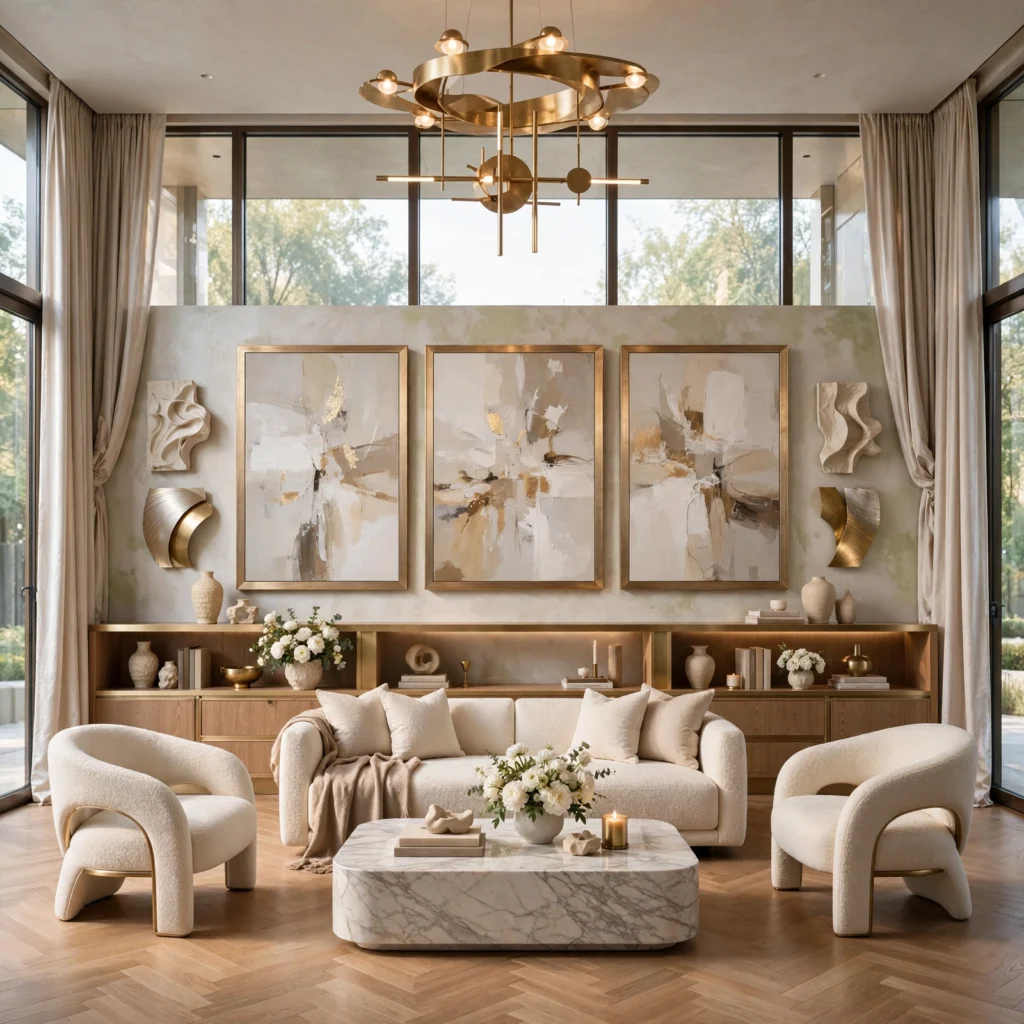
Building a small, curated collection of original art or limited-edition prints, rather than mass-produced decorative canvases, gives a luxury living room genuine visual and often financial value over time. Working with a local gallery or an art advisor, rather than purchasing decor sight-unseen online, helps ensure pieces are properly sized, framed, and lit for the specific wall they’ll occupy. Picture lighting installed specifically for each piece, rather than relying on ambient room light alone, is a small addition that meaningfully elevates how a genuine art collection reads within the room.
13. Cashmere and Silk Throw Textiles
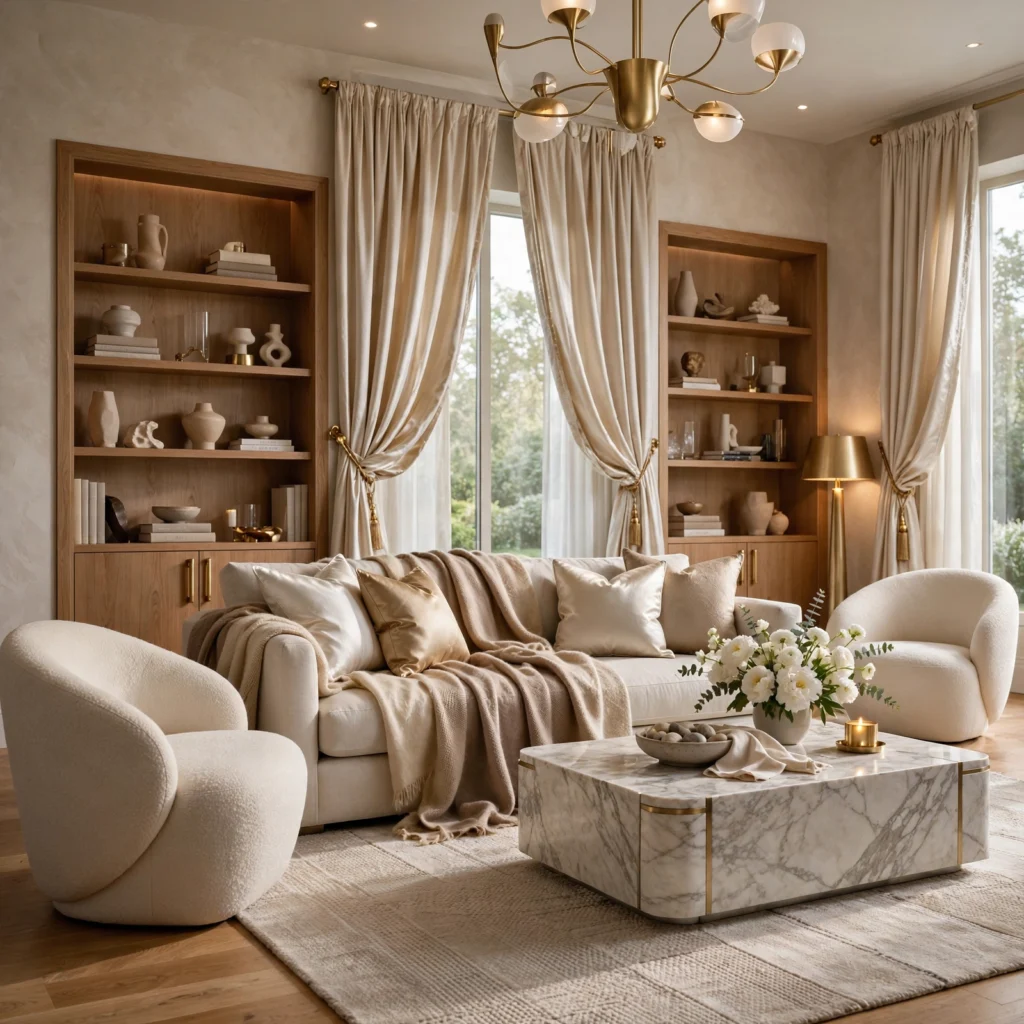
Layering a genuine cashmere throw blanket and a few silk or silk-blend pillow covers onto an otherwise finished sofa adds tactile luxury at a much lower cost than replacing the furniture itself. These textiles reward touch as much as sight, which is part of what separates a genuinely luxurious room from one that only looks expensive in photographs. Rotating throws and pillow covers seasonally also keeps a well-established room feeling current without requiring larger, more permanent changes to the space.
| Fabric Tier | Approx. Cost per Throw | Typical Material |
| Entry luxury | $150–$300 | Wool-cashmere blend |
| Mid luxury | $300–$600 | Pure cashmere |
| High luxury | $600+ | Cashmere-silk blend |
14. Coffered or Detailed Ceiling
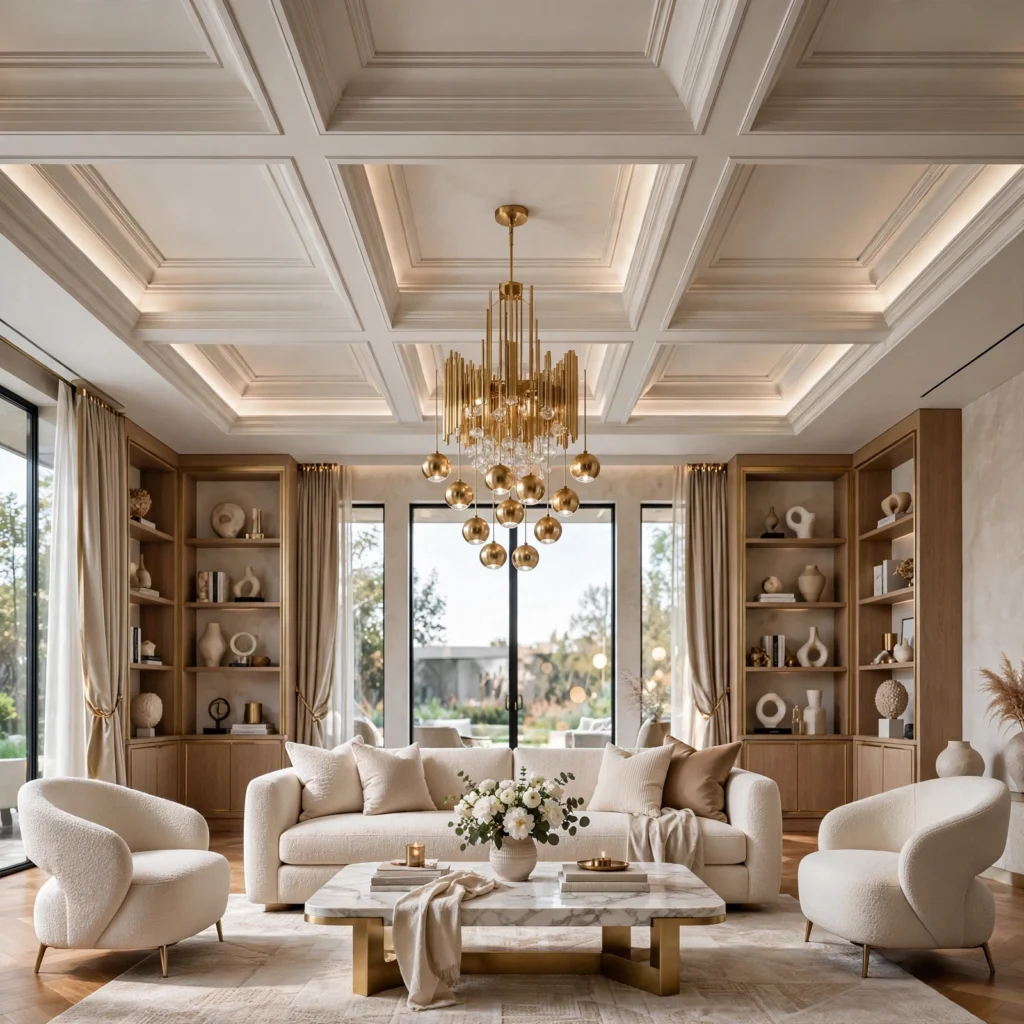
A coffered ceiling, using a grid of recessed wood beams and panels, adds architectural interest to a large living room’s fifth surface, which often gets overlooked entirely in favor of walls and floors. This treatment works particularly well in a room with ceilings at least nine feet tall, since a coffered grid can make a lower ceiling feel more compressed rather than more detailed. Paint the coffers a slightly darker tone than the surrounding trim to add subtle depth and shadow without requiring a bold contrast color.
15. Brass and Bronze Hardware Throughout
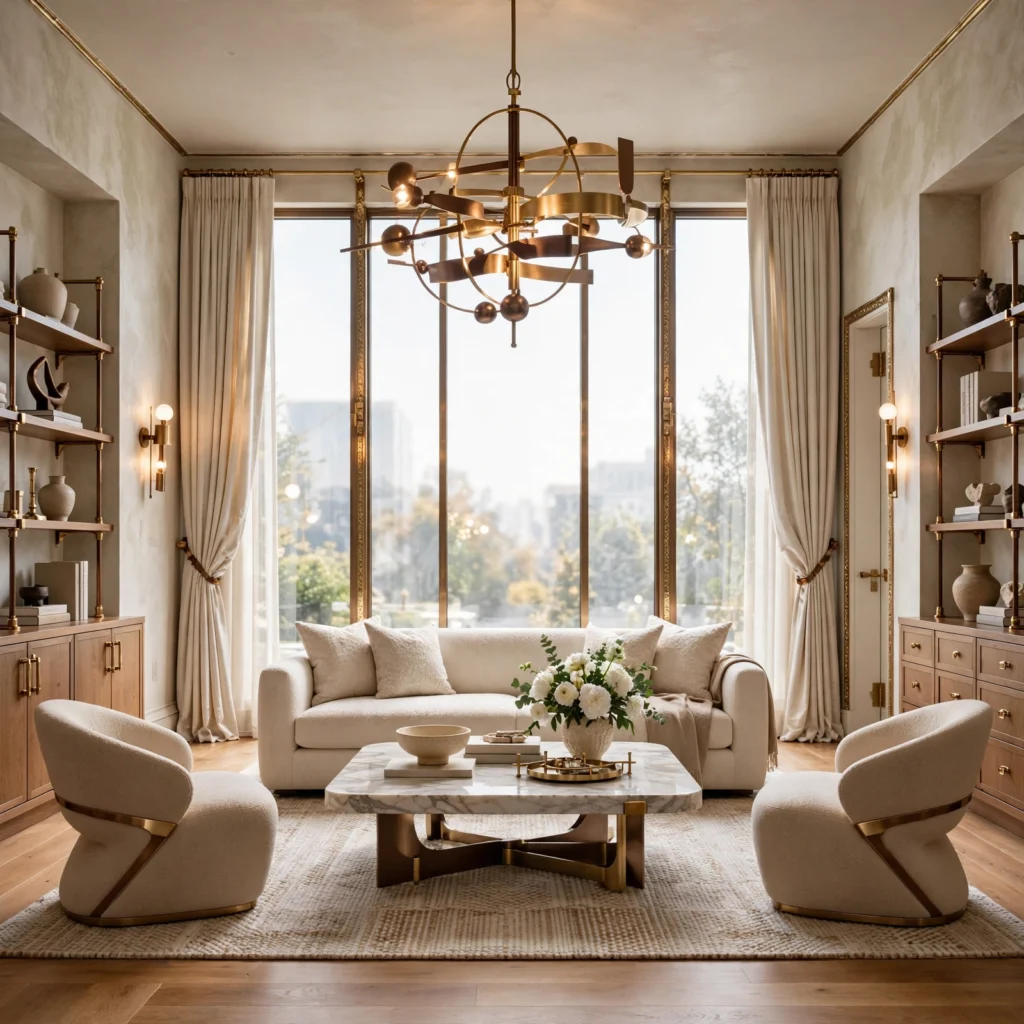
Coordinating every visible metal finish throughout the room, door hardware, light fixtures, drawer pulls on any built-in cabinetry, into a single warm metal like unlacquered brass or aged bronze ties together smaller details that often get overlooked during a larger renovation. Unlacquered brass in particular develops a natural patina over time, which many luxury design styles specifically favor over a uniformly shiny, lacquered finish. This consistency across a whole room does more to signal considered design than any single expensive piece placed in isolation.
16. Natural Stone or Marble Side Tables
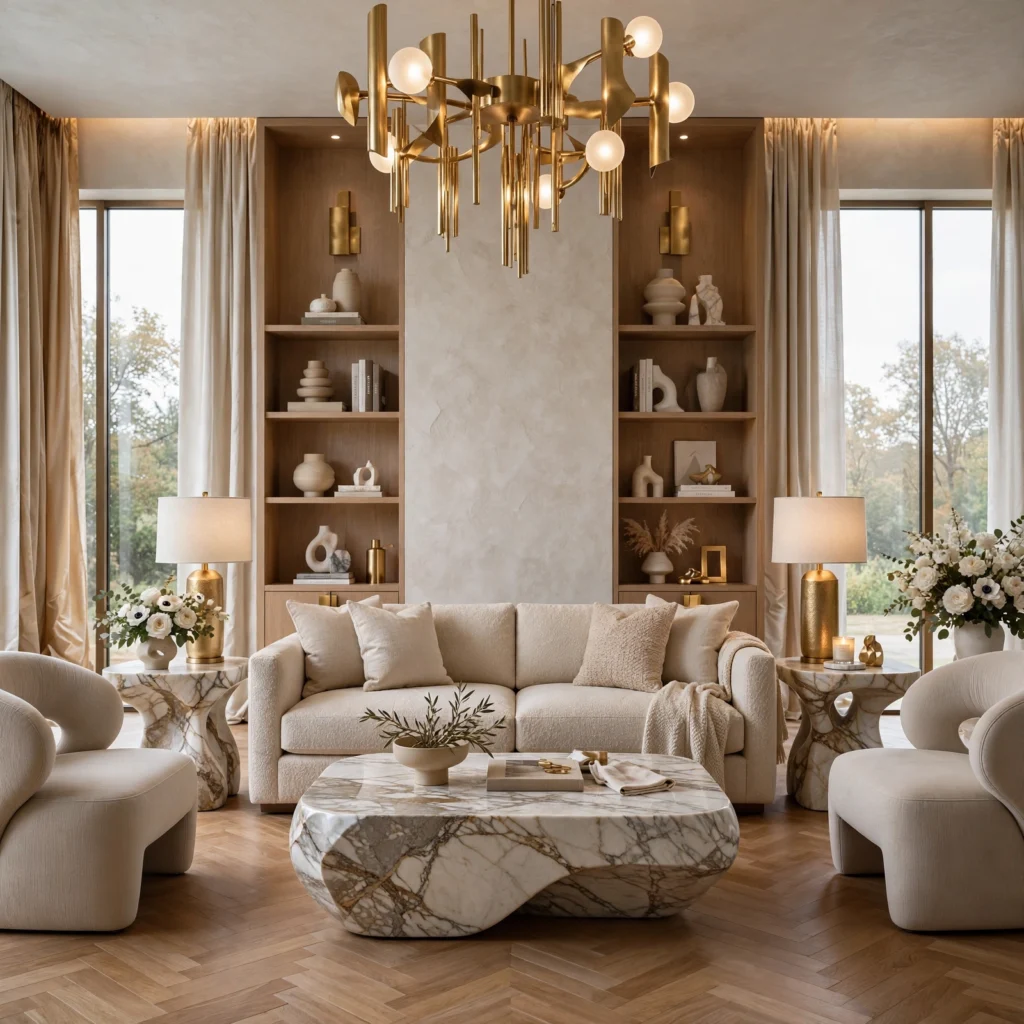
A solid marble or travertine side table, rather than a laminate or engineered stone equivalent, brings genuine material weight and coolness to a seating area in a way that’s immediately noticeable to the touch even before it registers visually. Pair with a brass or bronze base for warmth against the stone’s inherent coolness, since an all-stone table can read as slightly cold or clinical without a metal element to balance it. These pieces also tend to hold their value better than furniture in less durable materials, making them a reasonable long-term investment beyond their immediate visual impact.
17. Layered, Multi-Source Lighting Design
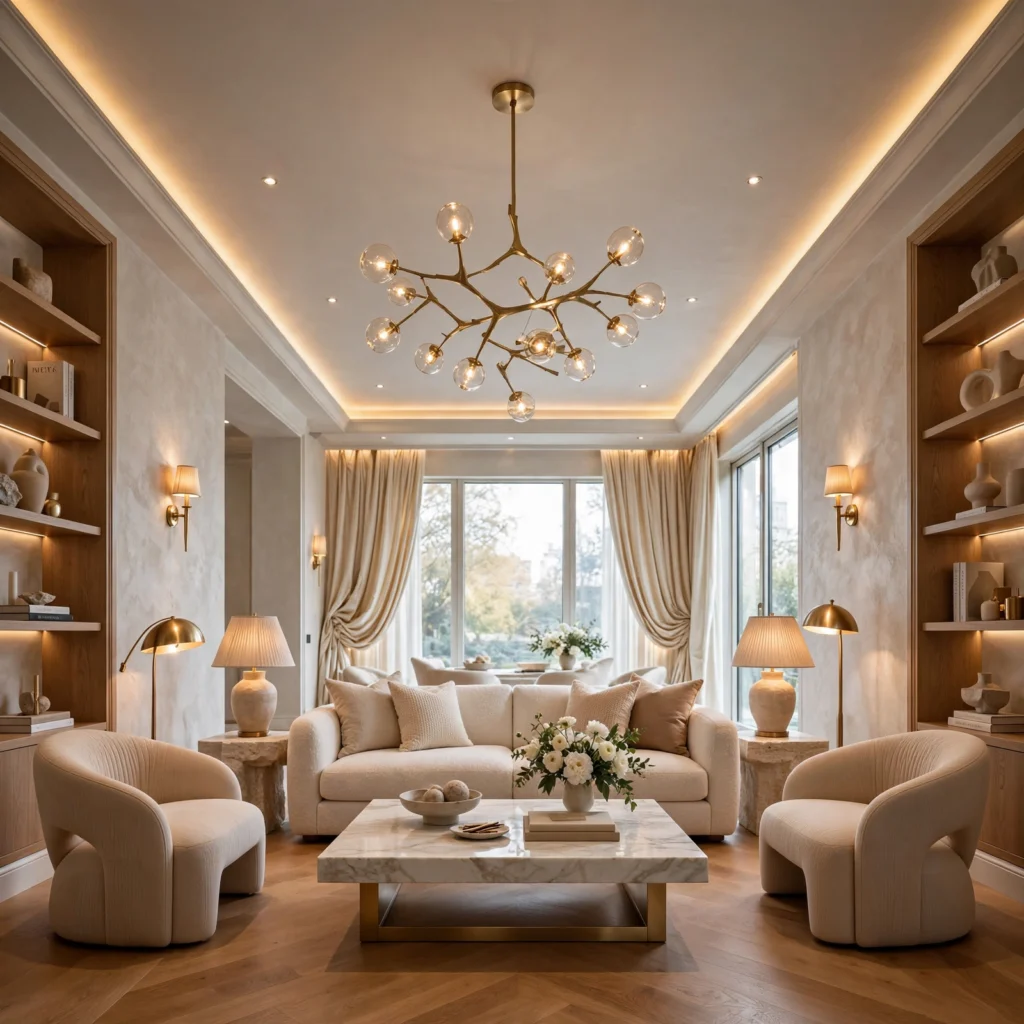
A genuinely layered lighting design, combining recessed ambient lighting, table and floor lamps for task lighting, picture lights for art, and dimmable accent lighting for architectural features, does more to elevate a luxury living room’s evening feel than almost any single furniture purchase. Working with a lighting designer during a renovation, rather than adding fixtures piecemeal afterward, typically produces a more cohesive result, since sightlines and dimming zones can be planned before walls and ceilings are finished. This investment pays off every single evening the room is used, unlike a decorative piece that’s primarily appreciated visually.
Shop the Look
For a statement sofa, look at options from Restoration Hardware or a custom builder like Lee Industries. Hand-knotted rugs are best sourced through a reputable dealer like ABC Carpet & Home or a specialized rug gallery rather than a general furniture retailer. Marble and natural stone fabrication for fireplace surrounds and side tables typically comes through a local stone yard or fabricator. Custom drapery and upholstery from a workroom like Calico Corners round out the textile ideas above, and unlacquered brass hardware from Sun Valley Bronze covers the whole-room hardware consistency idea.
Common Mistake to Avoid
The most common mistake in luxury living room design is spreading budget evenly across every element in the room rather than concentrating it on the pieces that get touched, sat on, and looked at most often, the sofa, the rug, and the lighting. A room with an expensive sofa next to a thin, machine-made rug and a single harsh overhead light reads as unbalanced rather than luxurious, even though the total spend might be substantial. Prioritizing quality in the pieces with the most daily contact and visual weight, then filling in smaller details more gradually, produces a more convincingly luxurious result than an evenly spread but shallow budget across everything at once.
What actually separates luxury design from just expensive furniture?
Genuine luxury design relies on material quality and craftsmanship that holds up to close inspection, hand-tied springs, full-grain leather, hand-knotted rugs, book-matched veneer, rather than surface-level shine or a recognizable brand name alone. A room can use relatively affordable individual pieces and still read as luxurious if the proportions, lighting, and material choices are considered and consistent throughout. Conversely, a room filled with expensive but mismatched or poorly proportioned pieces, with no clear lighting plan or material hierarchy, often fails to read as luxurious despite a high total cost.
How much should I budget for a luxury living room design?
Budget varies enormously depending on scope, but a meaningful luxury refresh focused on the highest-impact elements, a quality sofa, a hand-knotted rug, and a layered lighting plan, typically starts around fifteen to twenty-five thousand dollars for a mid-size room. A full luxury renovation including custom millwork, a marble fireplace surround, and coffered ceilings can run well into six figures depending on the room’s size and the specific materials chosen. Spreading the investment across the highest-impact pieces first, then adding architectural elements over time, keeps the project financially manageable without sacrificing the overall result.
Where should I start with a luxury living room design if I’m working with an existing room?
Start with the sofa and the rug, since both carry the most visual weight and the most daily physical contact of anything in the room, and a strong upgrade to either immediately elevates the space more than a smaller decorative purchase would. Lighting is the next priority, since even a well-furnished room reads as flat or harsh under poor lighting, while a well-lit room with slightly more modest furniture can still feel considered and warm. Architectural investments, millwork, plaster, coffered ceilings, are generally best reserved for a later phase once the room’s core furniture and lighting foundation is already in place.
Does luxury living room design have to mean a formal, untouchable room?
Not necessarily, though it depends on the specific material choices made throughout the space. Durable, family-friendly luxury materials, performance velvet instead of silk upholstery, a wool-blend rug with more stain resistance than pure silk, allow a genuinely high-end room to also function as an everyday living space rather than a rarely used formal room. Working with a designer or upholsterer familiar with performance fabrics can help identify which materials deliver a luxurious look and feel while still standing up to daily use, pets, and children if that’s a relevant consideration for your household.
How long does a full luxury living room design project typically take?
A furniture and textile-focused refresh, a new sofa, rug, and lighting, typically takes eight to sixteen weeks from order to installation, largely driven by custom upholstery and rug lead times. A project involving architectural elements, custom millwork, a marble fireplace surround, or coffered ceilings, generally takes several months to a year when accounting for design, fabrication, and installation phases, particularly if multiple trades need to coordinate their work in sequence. Starting with furniture and lighting while architectural elements are still in the design phase can help the room feel meaningfully improved well before the full project concludes.
Conclusion
The seventeen ideas above cover furniture, materials, lighting, and architectural details, giving you enough range to elevate a living room in stages or as part of a single larger renovation. Whether you start with a quality sofa and a hand-knotted rug or commit to a full custom millwork and marble fireplace project, the goal of any luxury living room design update is a room built around genuine material quality and considered proportion rather than surface-level expense. Save this list to Pinterest for your next project, or check our related post on home decor ideas living room for more accessible, budget-friendly living room updates.