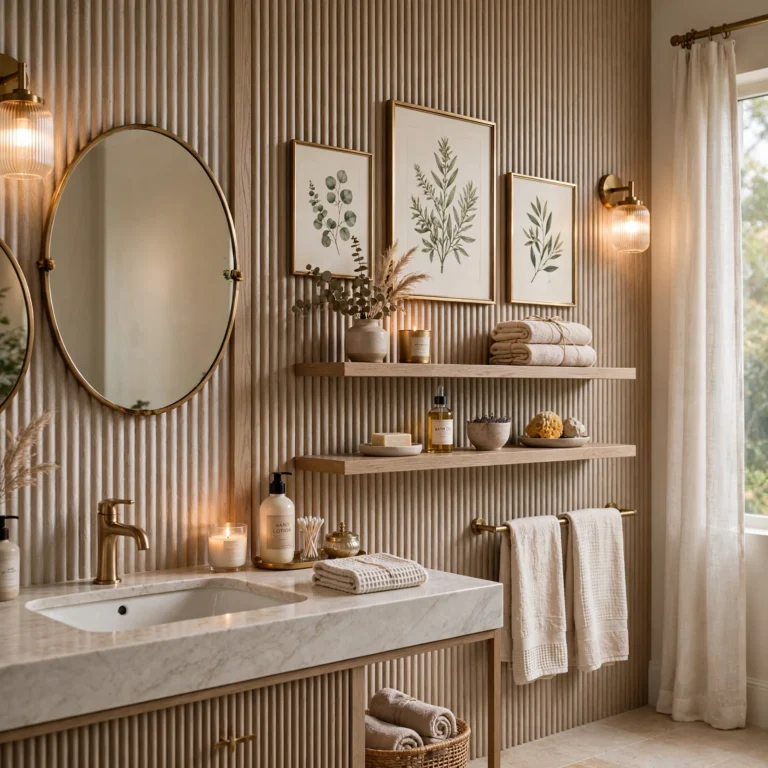
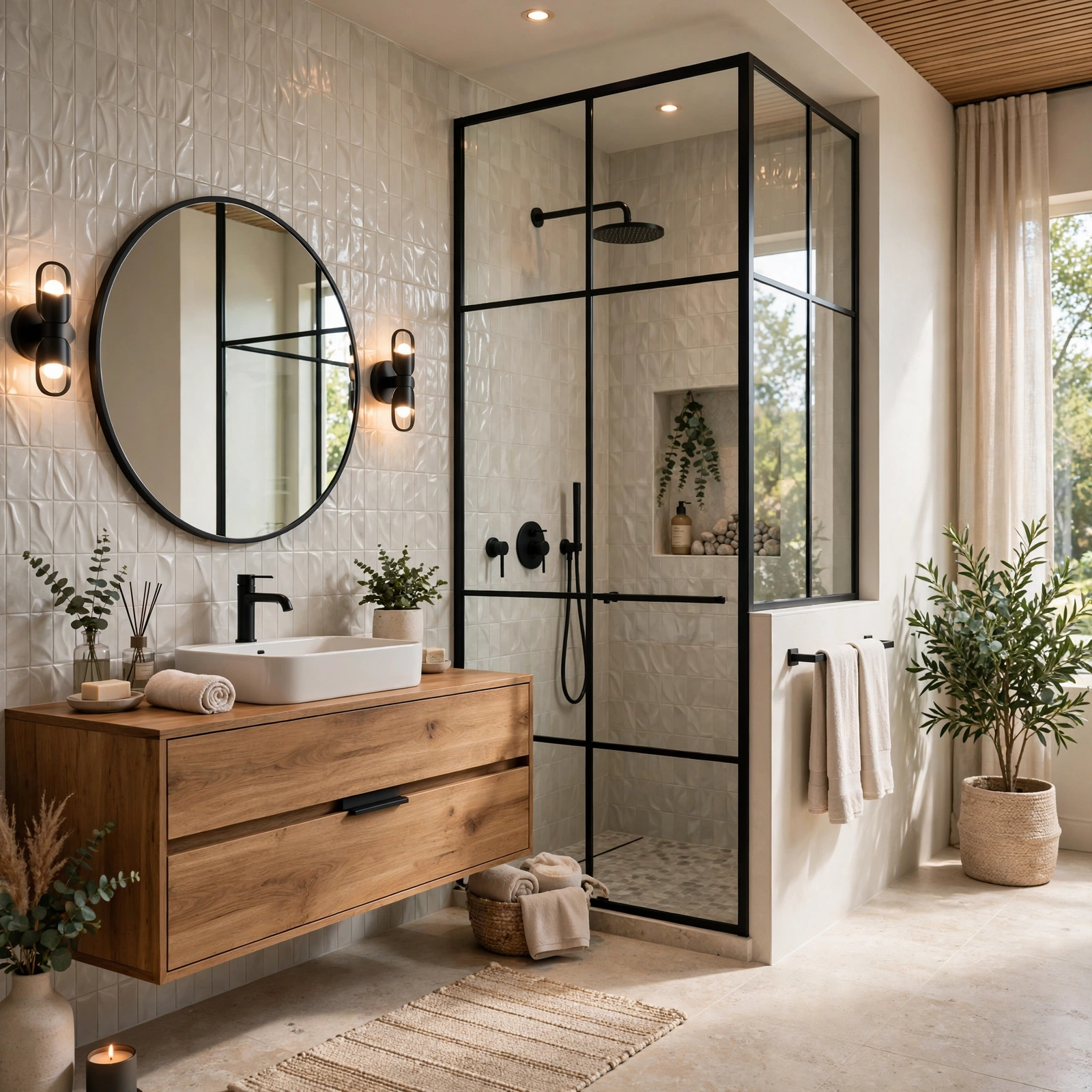
14 Modern Bathroom Decor Ideas That Transform Your Bathroom with Ease
Modern bathroom decor has settled into a recognizable set of choices: large-format tile, floating vanities, and hardware finishes that avoid anything overly polished or ornate. Homeowners are moving away from busy patterns and heavy trim in favor of simple geometry and a tighter material palette that feels calm rather than cluttered. This guide covers fourteen practical ways to bring a modern look into a bathroom, from full tile changes to smaller lighting and hardware swaps, so you can find an approach that fits your renovation budget and timeline.
Trend & Background
The shift toward modern bathroom design tracks a broader move in home renovation away from ornate, traditional detailing and toward simpler, more architectural spaces. Large-format porcelain tile became widely available and affordable over the past decade, which pushed busy mosaic work and heavily grouted surfaces out of favor in new builds. At the same time, matte black and brushed brass fixtures replaced polished chrome as the default finish in renovation photos, and floating vanities became standard in smaller bathrooms because they create the illusion of more floor space, which matters more than ever in urban housing stock.
Key Takeaways
- Modern bathroom decor relies on clean lines, matte finishes, and a restrained material palette rather than heavy ornamentation.
- Large-format tile, floating vanities, and integrated lighting are the fastest ways to make a bathroom read as current.
- Mixing warm materials like wood and stone with matte black or brushed metal keeps a modern space from feeling cold.
- Small updates lighting, hardware, or a single accent wall can modernize a bathroom without a full gut renovation.
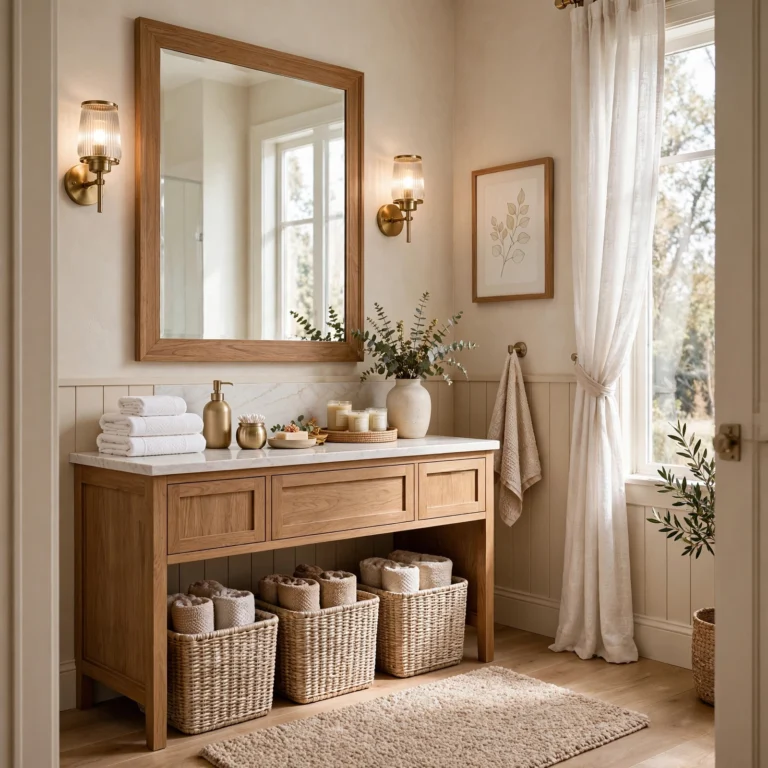
1. Floating Vanity
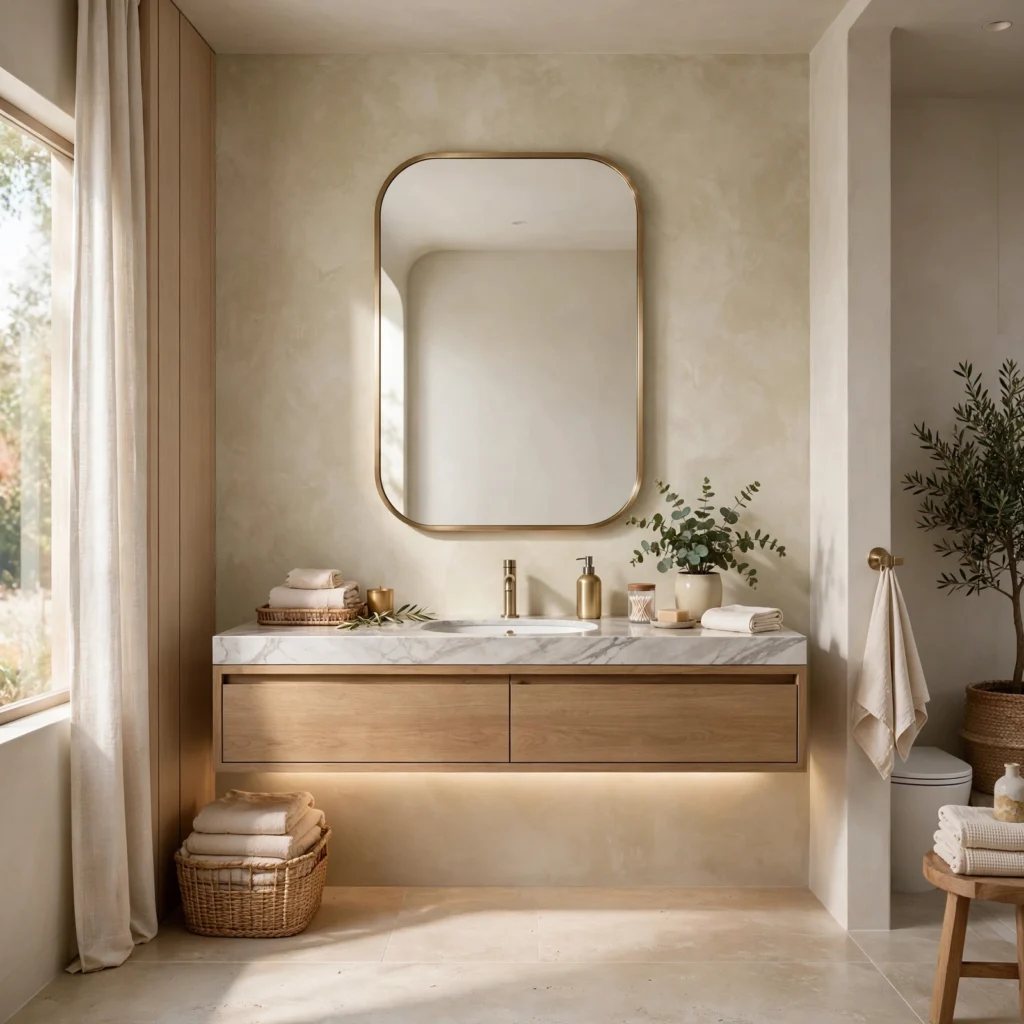
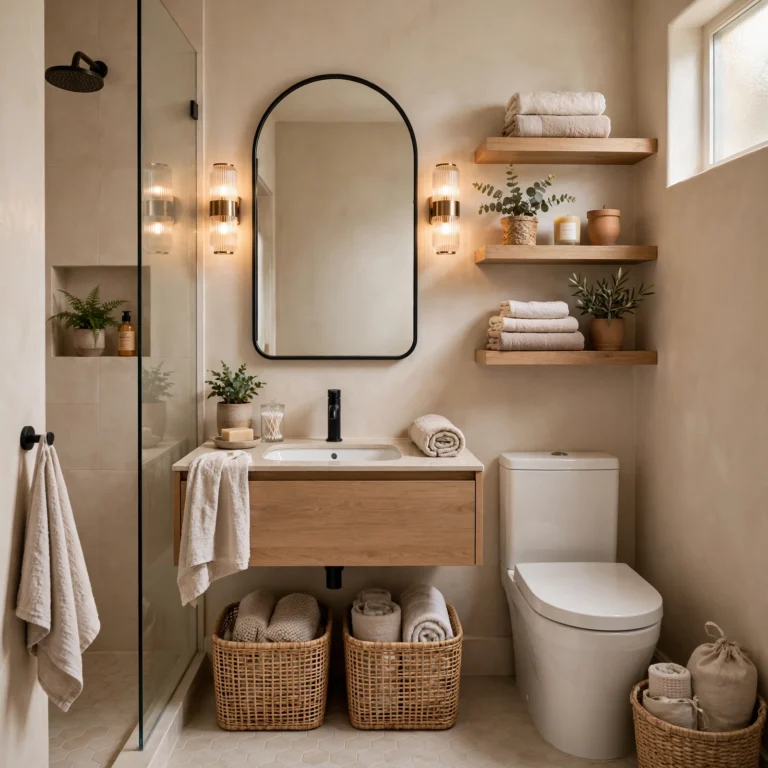
A wall-mounted floating vanity creates visible floor space beneath the cabinet, which makes even a small bathroom feel larger and easier to clean underneath. Choose a flat-front design in a matte finish, whether walnut veneer, white lacquer, or concrete-look laminate, and pair it with a wall-mounted or floor-mounted faucet to keep the plumbing hidden. This style works especially well with heated floors, since there’s no cabinet base blocking warmth from reaching the room.
2. Large-Format Porcelain Tile
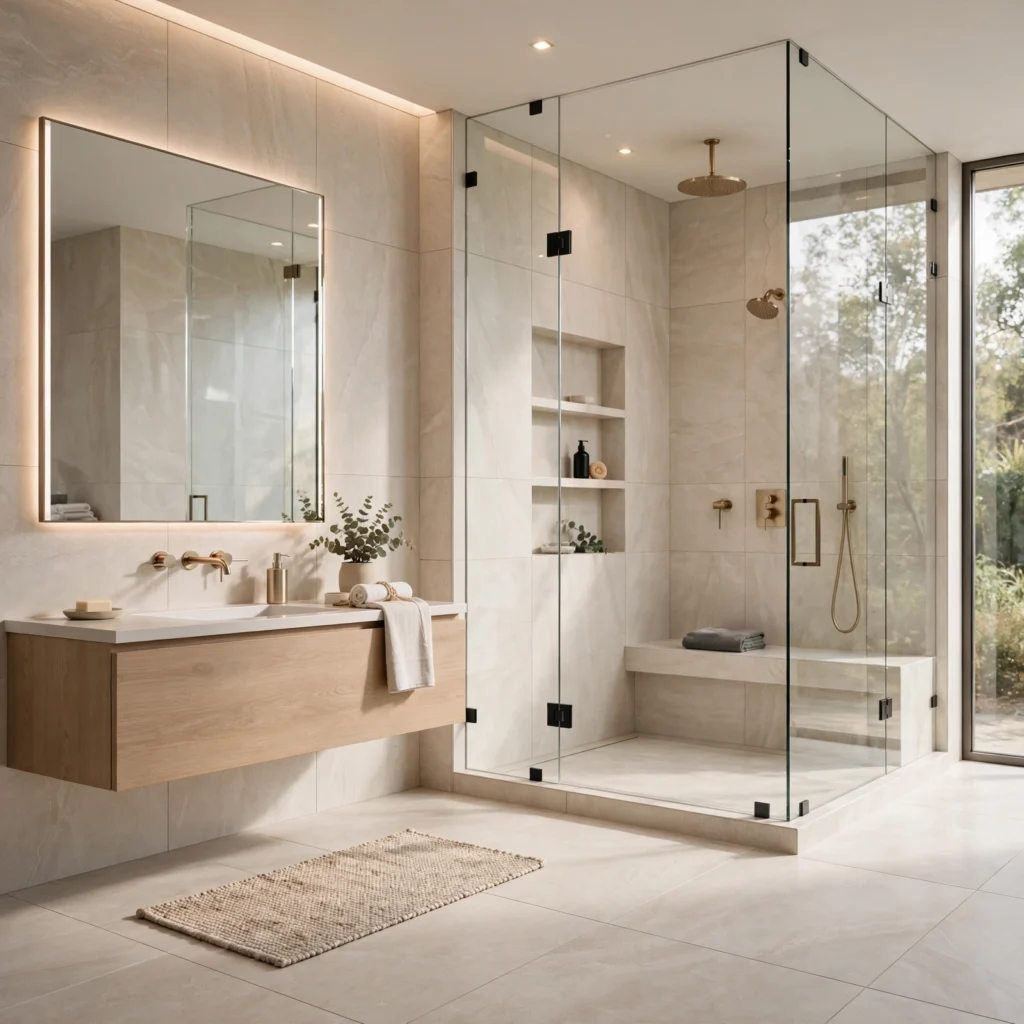
Large-format porcelain tile, typically 24×48 inches or bigger, minimizes grout lines and creates a cleaner, more continuous surface across walls and floors than smaller mosaic tile ever could. Choose a matte or honed finish in a stone-look pattern, such as concrete grey or Calacatta-inspired veining, to keep the surface feeling architectural rather than decorative. Because fewer grout lines mean less maintenance, this option also suits households that want a lower-upkeep bathroom.
| Tile Size | Grout Lines per Sq Ft | Best Application |
| 12×24 in | Moderate | Shower walls, floors |
| 24×48 in | Low | Feature walls, large floors |
| 32×32 in | Very low | Open-concept wet rooms |
3. Matte Black Fixtures
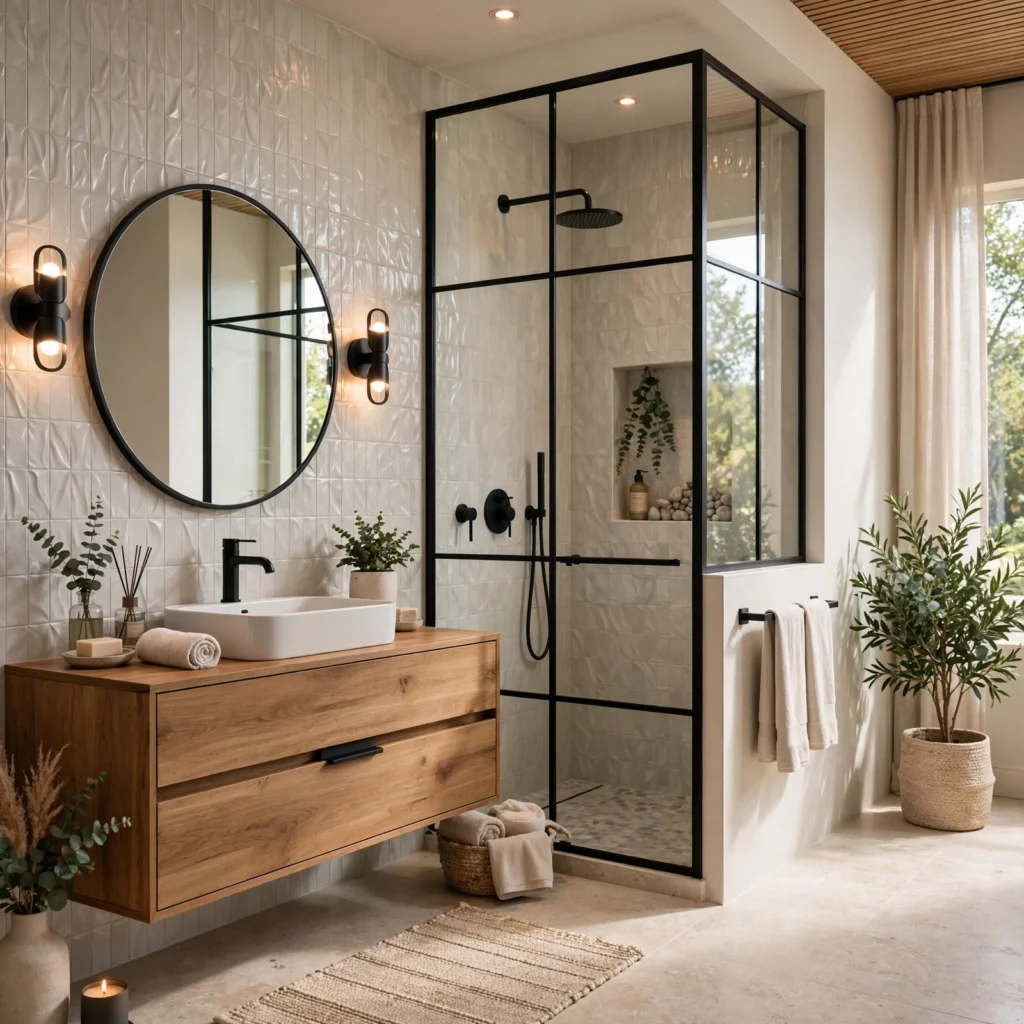
Matte black faucets, showerheads, and drain covers give a bathroom immediate contrast against white tile, light wood, or pale stone, and the finish hides water spots better than polished chrome. This hardware pairs naturally with floating vanities and large-format tile, and it reads as intentional rather than trendy when used consistently across every fixture in the room. Stick to one black finish tone throughout, since mixing warm and cool blacks can make the room feel unplanned.
In order to see more ideeas for bathroom decor apartment CLICK HERE
4. Walk-In Wet Room
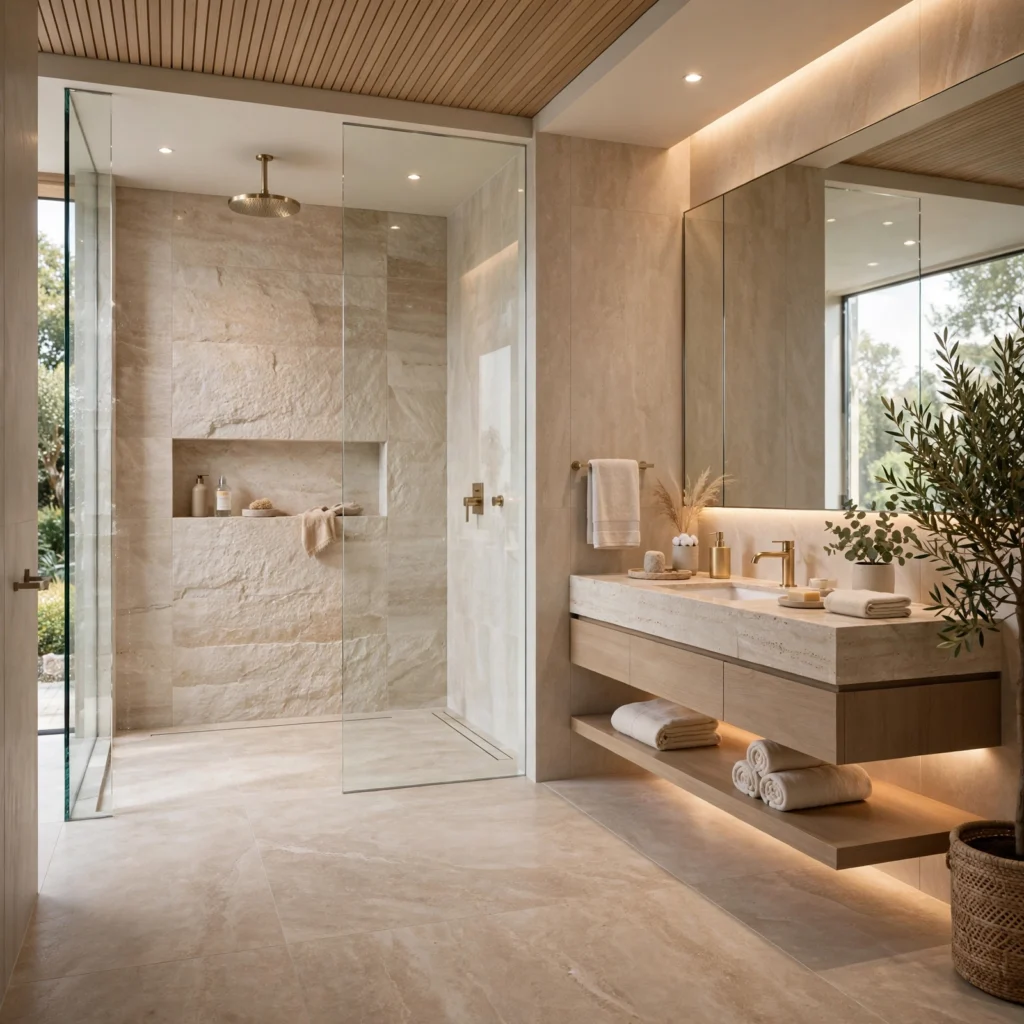
A curbless walk-in shower that opens directly into the rest of the bathroom, often called a wet room, removes visual barriers like glass frames and shower curbs that break up sightlines in a smaller space. A linear drain set flush with large-format tile keeps the floor looking continuous from the vanity through the shower area. This layout requires careful waterproofing and a sloped floor, so it’s best planned with a contractor experienced in wet room installations.
5. Integrated LED Mirror Lighting
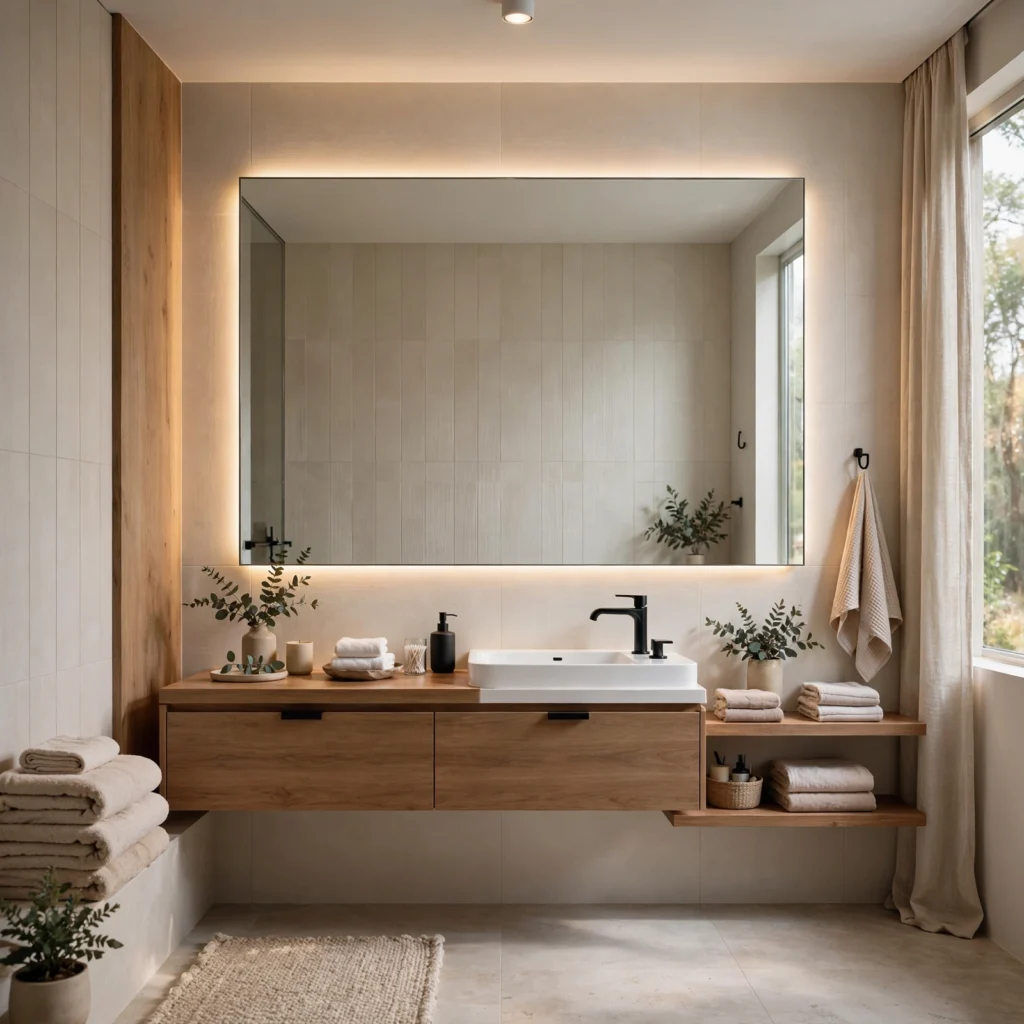
A mirror with integrated LED edge lighting replaces separate sconces or a vanity light bar, giving the room even, shadow-free illumination without adding visible fixtures to the wall. Look for a mirror with adjustable color temperature so you can shift between a warmer tone for evening routines and a cooler, daylight-balanced tone for applying makeup or shaving. This upgrade also simplifies the wall behind the vanity, since there’s no separate light fixture to plan around.
6. Concrete-Look Vanity Countertop
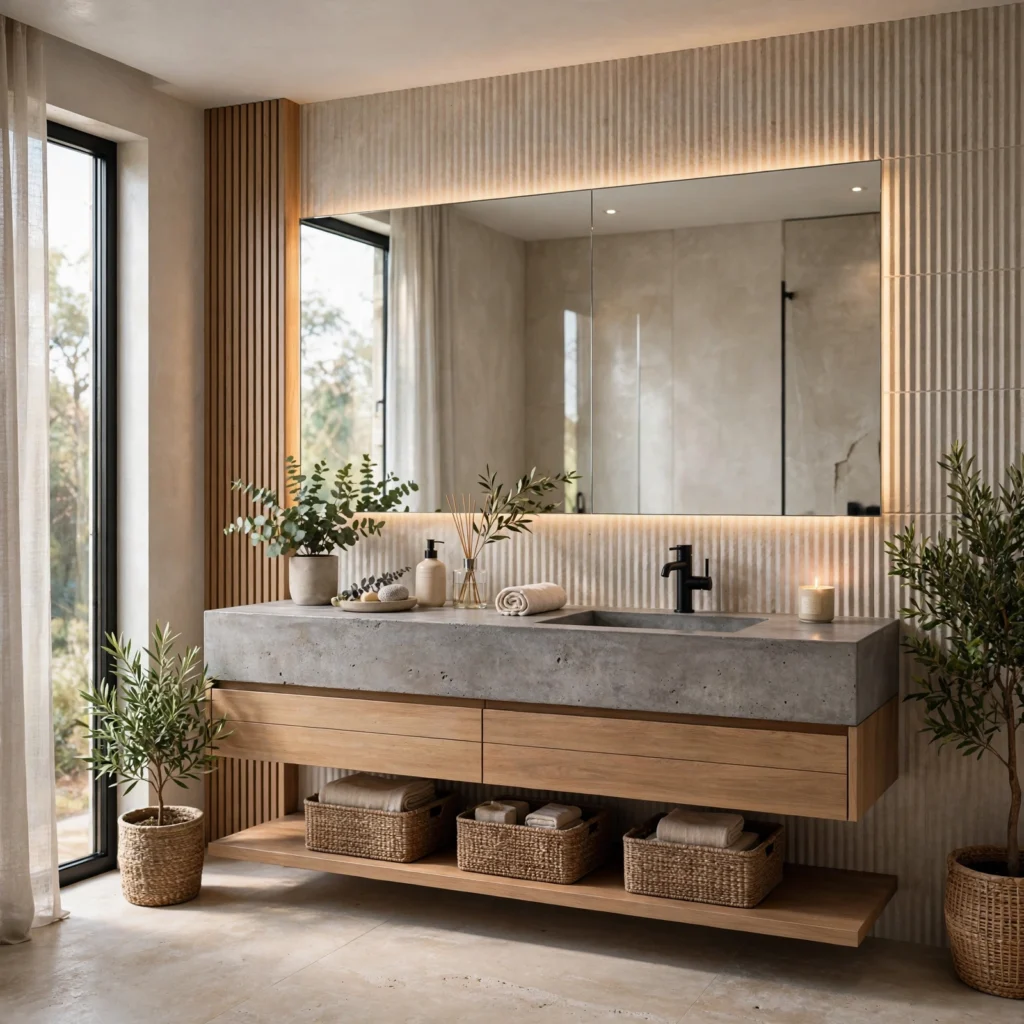
A concrete or microcement countertop gives a vanity a matte, slightly industrial surface that pairs well with matte black fixtures and floating cabinetry. Unlike poured concrete, microcement can be applied over an existing countertop, which lowers both material cost and installation time. Seal the surface every one to two years to maintain water resistance, since concrete-look finishes are more porous than engineered quartz.
7. Freestanding Soaking Tub
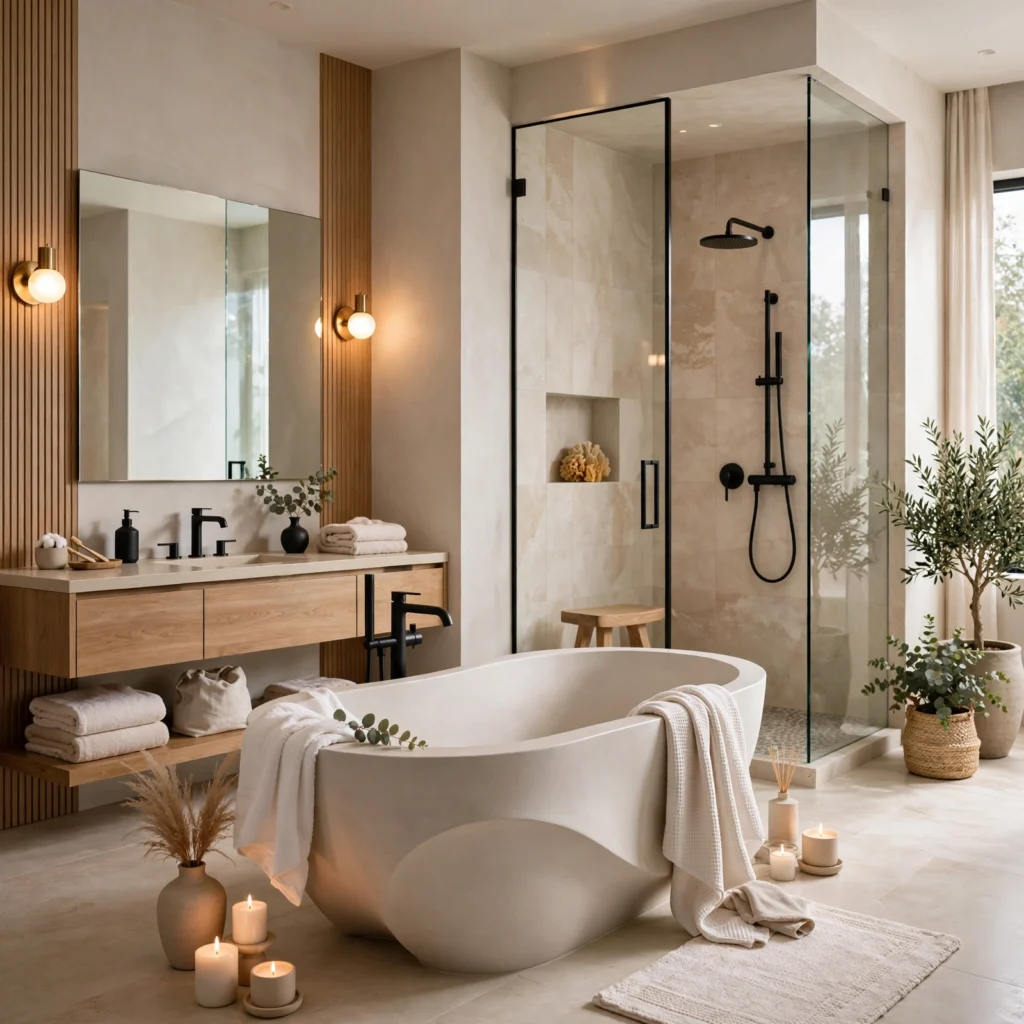
A simple, unornamented freestanding tub in matte white or a dark charcoal finish reads as modern when it avoids the claw-foot or heavily curved silhouettes associated with traditional bathrooms. Choose a rectangular or gently rounded oval shape and pair it with a floor-mounted matte black filler for a cleaner look than a wall-mounted spout. Position the tub away from the wall so it can be appreciated from multiple angles, ideally near a window if privacy allows.
8. Frameless Glass Shower Enclosure
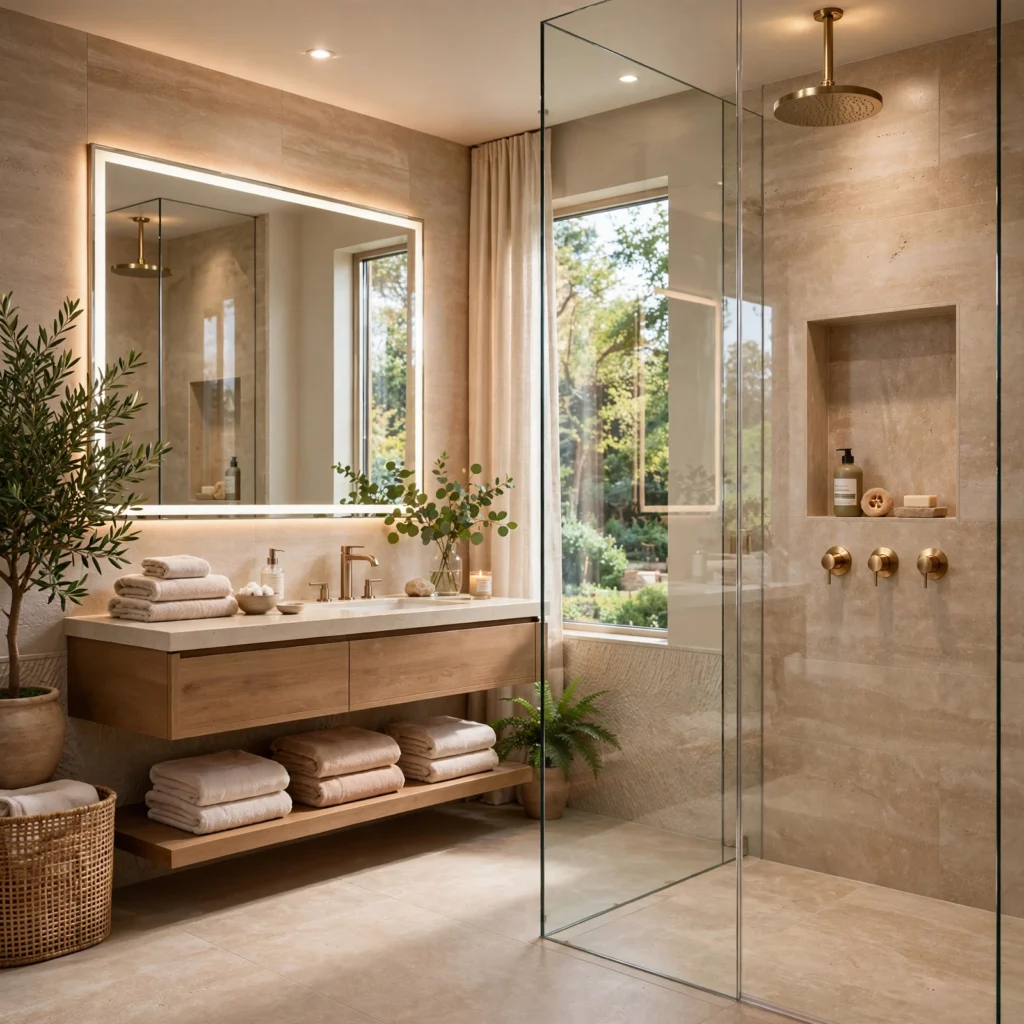
A frameless glass shower enclosure removes the metal framing that traditionally surrounds a shower door, letting tile and fixtures read as a continuous, uninterrupted surface. Use 3/8 or 1/2 inch tempered glass with minimal hardware, such as a single pivot hinge instead of a full frame, to keep the look as clean as possible. This option costs more than a framed enclosure but requires less long-term maintenance, since there’s no metal frame to collect mildew.
9. Warm Wood Vanity Accents
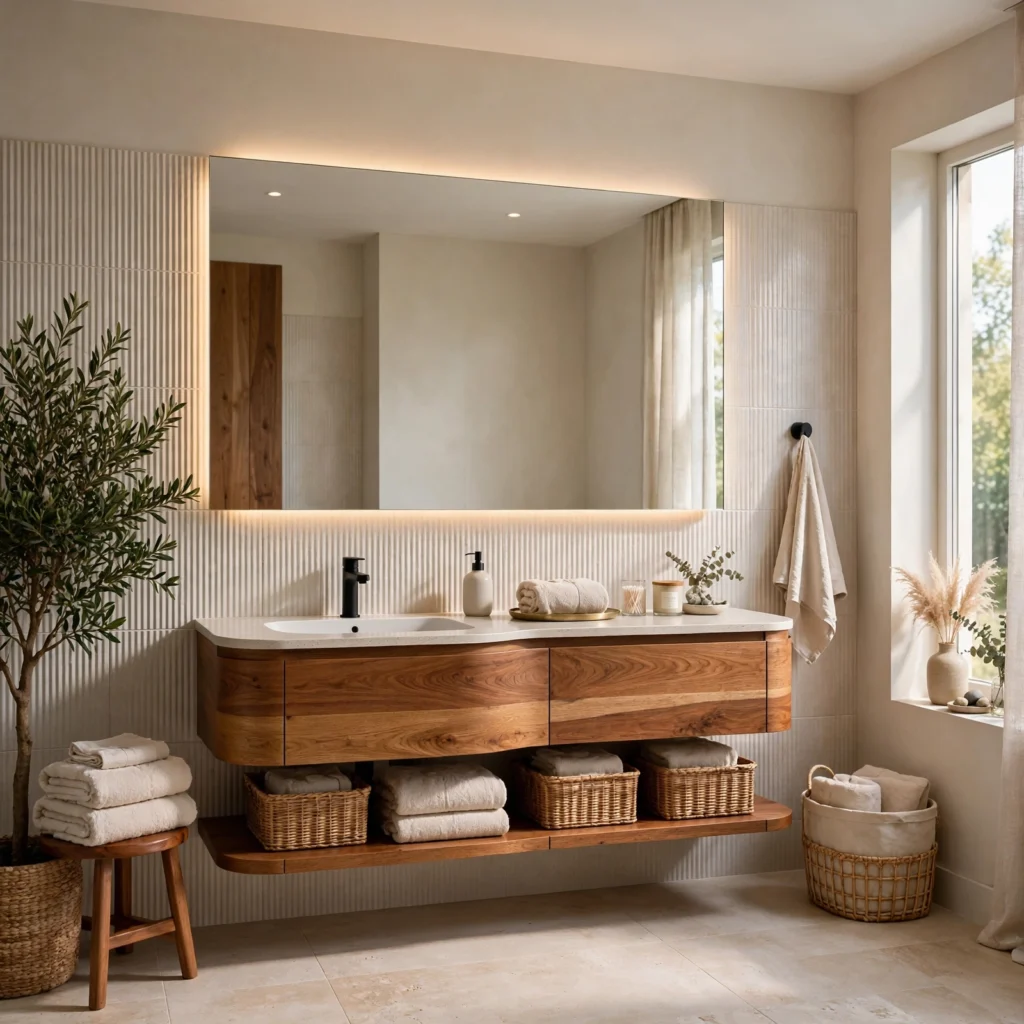
Warm wood elements, whether a walnut vanity front, a teak shower bench, or oak open shelving, keep a modern bathroom from feeling cold when paired with a lot of tile, stone, and matte black metal. Choose a water-resistant wood species and finish, such as teak or a properly sealed white oak, especially for any wood placed inside or near the shower. This warmth-to-hardware ratio is one of the easiest ways to keep a minimalist bathroom feeling livable rather than sterile.
10. Minimalist Open Shelving
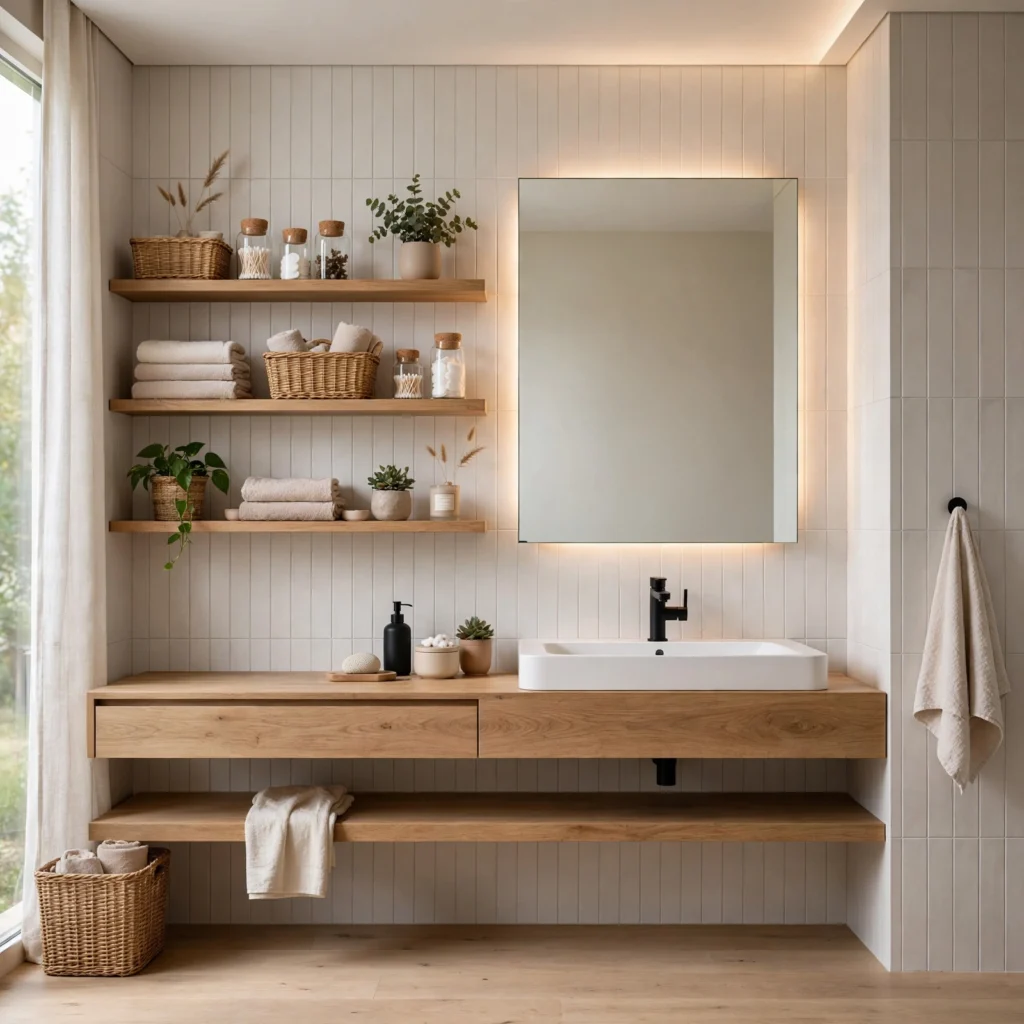
Open shelving in floating wood or matte black metal replaces upper cabinetry with a simpler storage solution that keeps sightlines open across the room. This approach works best when paired with intentional styling, such as rolled towels, a single plant, and matched ceramic containers, rather than a cluttered mix of products left in view. Limit shelving to one or two runs so the storage stays functional without competing with the room’s other finishes.
11. Terrazzo Flooring
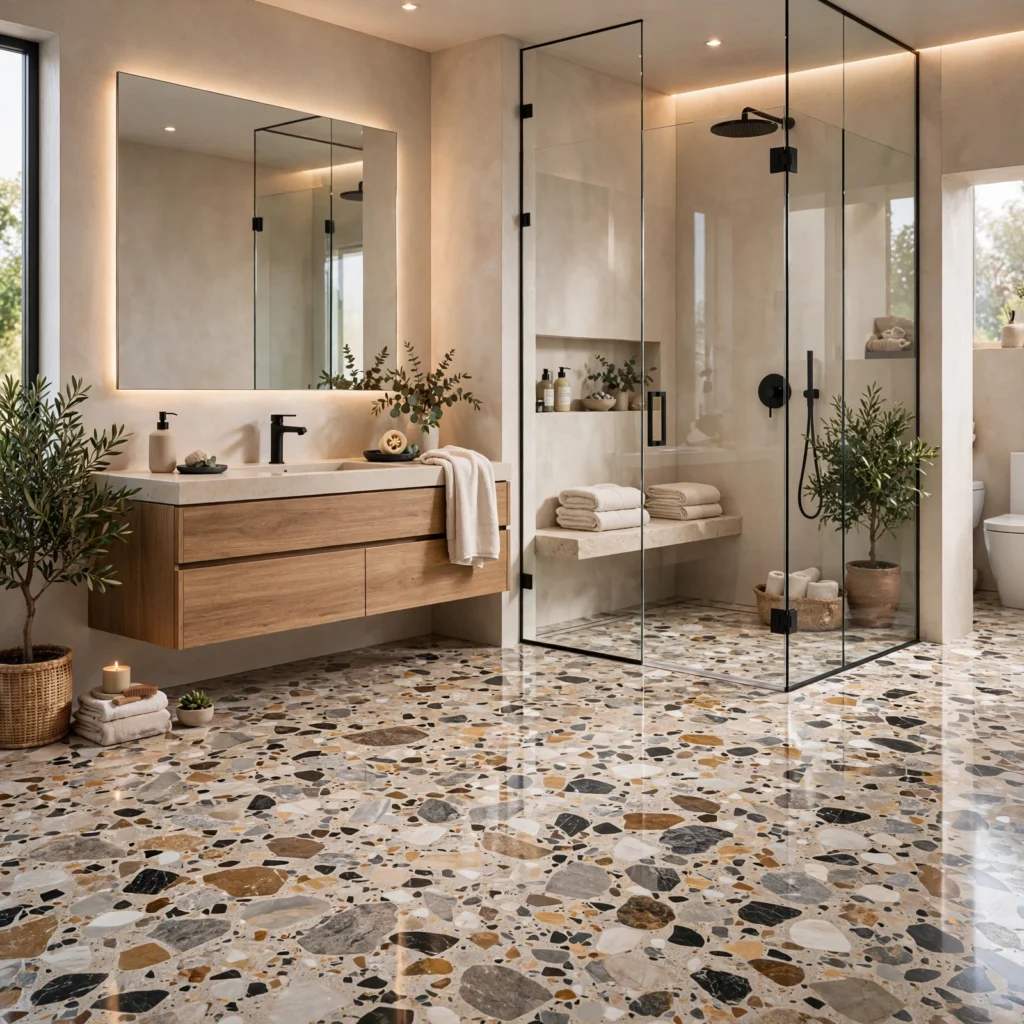
Terrazzo flooring in a grey, white, or black base with subtle stone chips gives a modern bathroom texture and pattern without relying on a busy tile design. Large-format terrazzo slabs or terrazzo-look porcelain tile both minimize grout lines while keeping the speckled, textured look that reads as more considered than plain concrete. This flooring pairs especially well with a white or wood vanity and matte black fixtures for contrast.
| Terrazzo Type | Cost per Sq Ft | Maintenance |
| Poured Terrazzo | $30–$60 | Periodic sealing |
| Terrazzo-Look Porcelain Tile | $8–$15 | Low, no sealing |
| Terrazzo Slab Countertop | $50–$100 | Periodic sealing |
12. Slim Profile Toilet
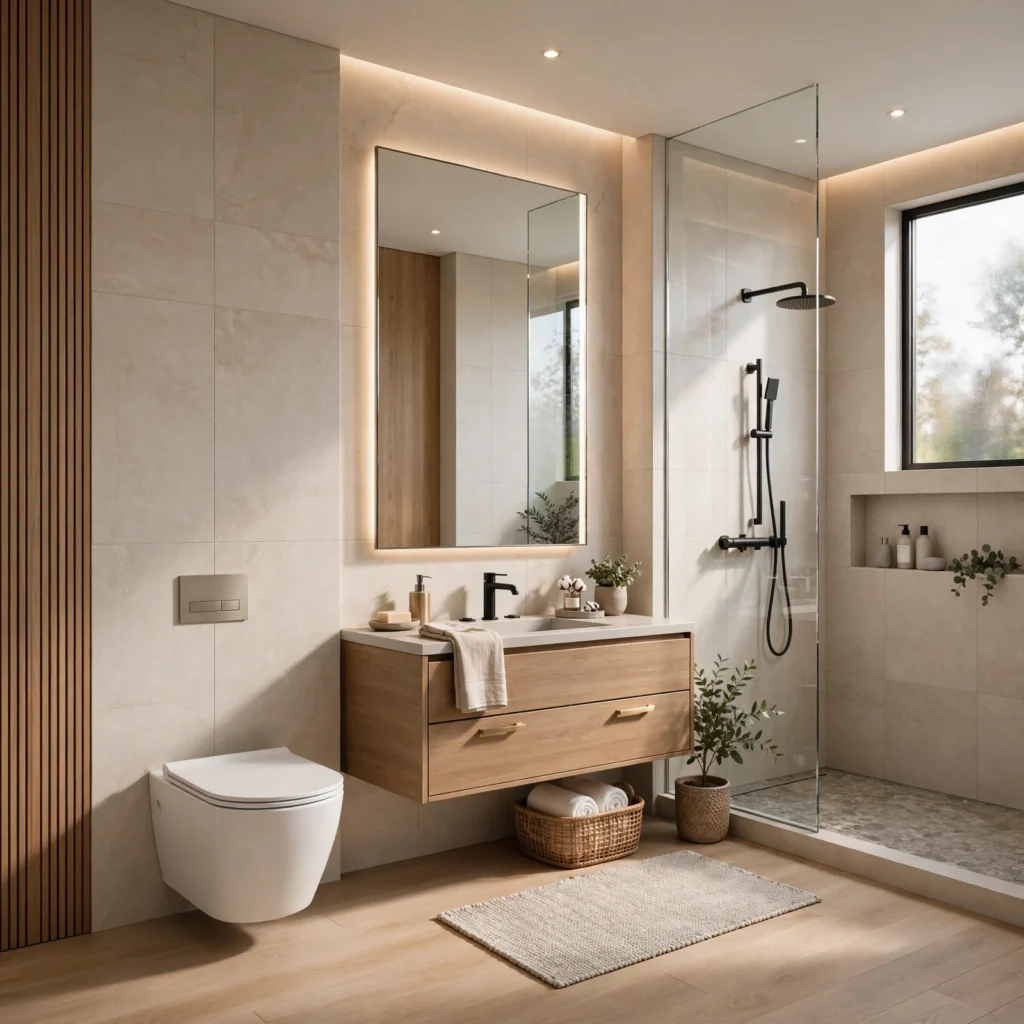
A slim-profile, wall-hung toilet with a concealed tank reduces the visual footprint of the fixture and keeps floor space open for cleaning, similar to the effect of a floating vanity. This style requires an in-wall carrier system installed during renovation, so it’s easiest to plan during a full remodel rather than a quick update. The resulting clean lines pair naturally with large-format tile and a minimal, uncluttered layout.
13. Monochrome Color Palette
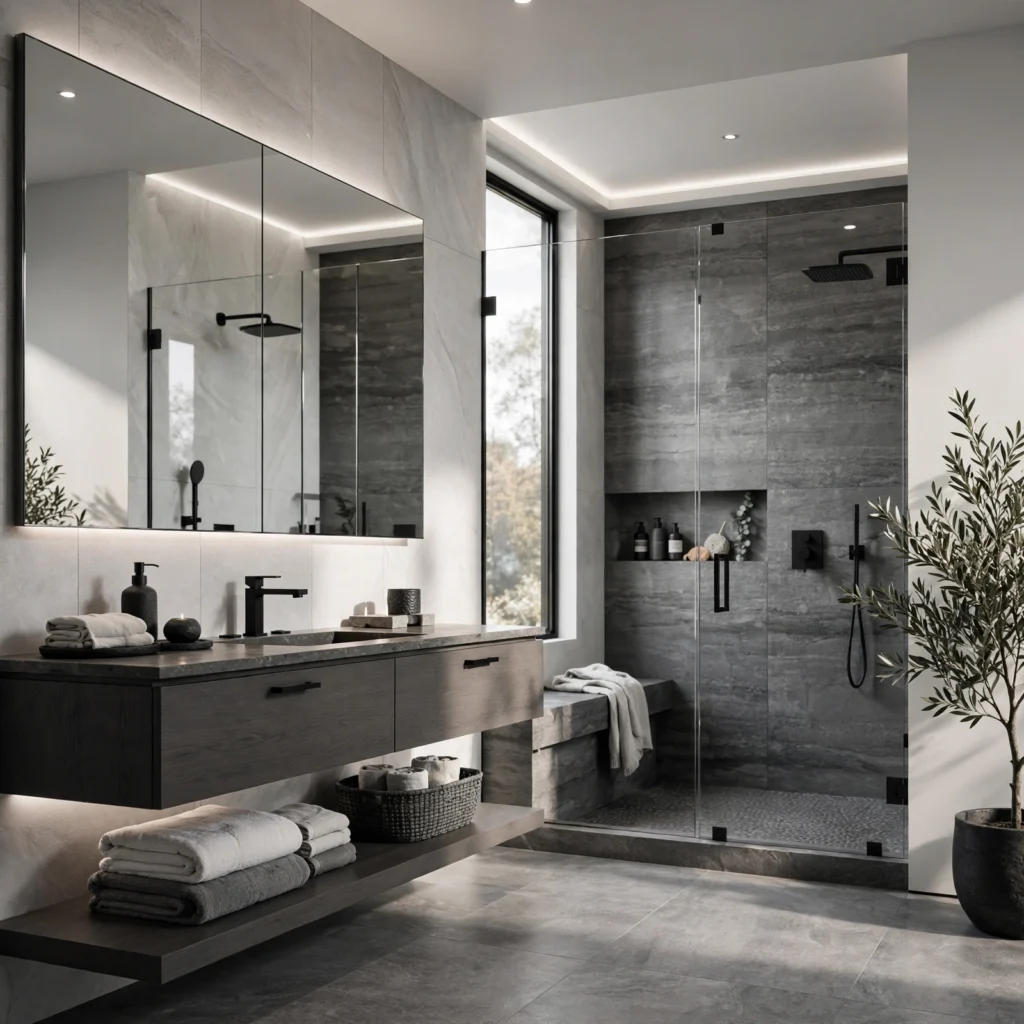
A monochrome palette built around one or two neutral tones, such as charcoal and white or warm grey and black, gives a bathroom a cohesive, architectural feel without relying on pattern or color to create interest. Layer in texture instead, through matte tile, brushed metal, and natural stone, so the room doesn’t read as flat despite the limited color range. This approach also makes it easier to update accessories later without clashing with permanent finishes.
14. Statement Pendant Lighting
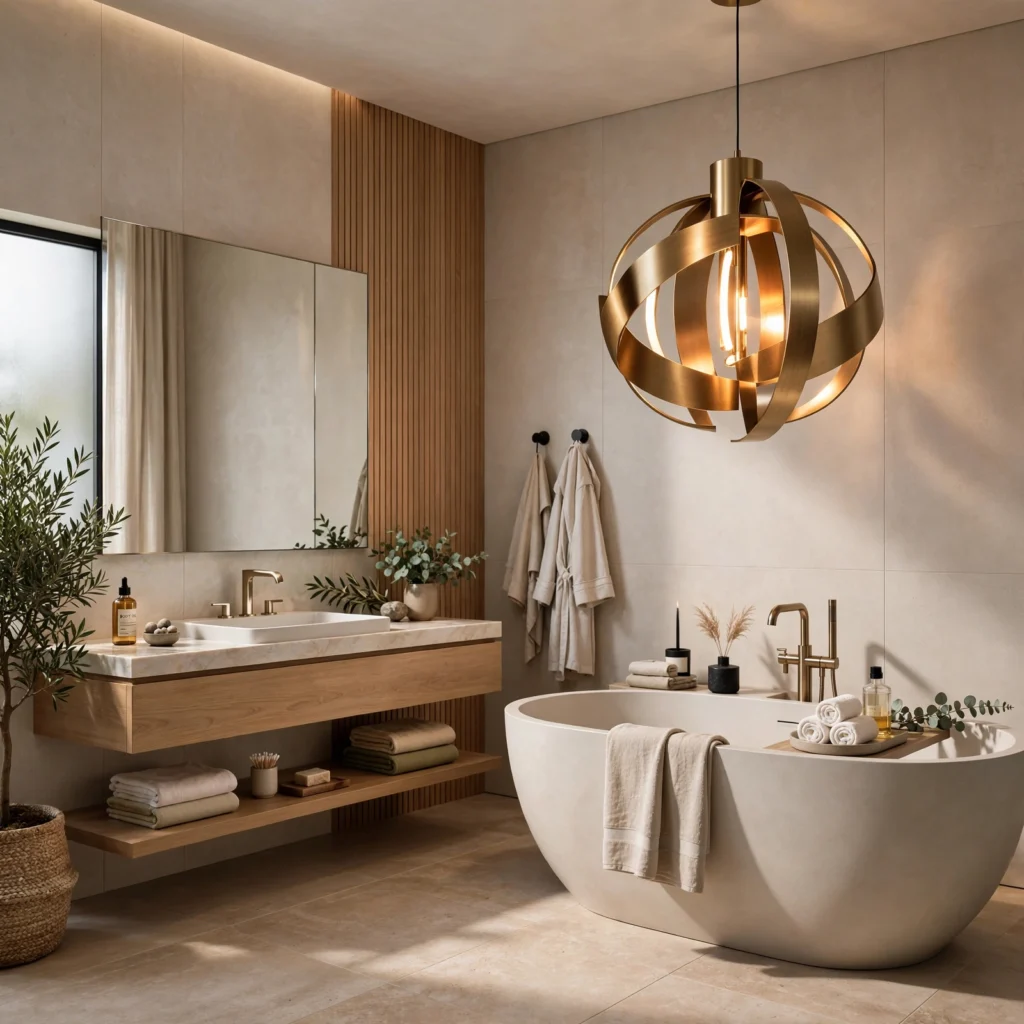
A single sculptural pendant light hung above the tub or between double vanities adds a focal point that doesn’t rely on color or pattern, which fits the restrained material palette common in modern bathrooms. Choose a fixture rated for damp locations if it hangs near the shower or tub, and keep the rest of the room’s lighting simple so the pendant remains the visual highlight. This is one of the lower-cost ways to modernize a bathroom that already has good tile and fixtures.
Shop the Look
Look for a matte black wall-mounted faucet to pair with a floating vanity, along with a frameless mirror featuring integrated LED lighting for even illumination at the sink. A microcement or concrete-look countertop keeps the vanity surface matte and textural, while a damp-rated sculptural pendant adds a focal point above the tub. Round out the space with rolled Turkish cotton towels in a single neutral tone to keep the overall palette cohesive.
Common Mistake to Avoid
The most common mistake in modern bathroom decor is mixing too many finishes at once matte black, brushed brass, and polished chrome all in the same room which reads as unplanned rather than intentional. Modern design relies on restraint, so committing to one primary metal finish and one secondary accent, if any, keeps the space cohesive. Overcrowding open shelving with visible products is a similar issue, since it undercuts the clean, uncluttered look the rest of the room is working toward.
FAQs
What makes a bathroom look modern versus traditional?
Modern bathrooms rely on large-format tile, matte finishes, floating or minimal-detail cabinetry, and a restrained color palette, while traditional bathrooms typically use more ornamentation, smaller tile patterns, and detailed millwork. Hardware finish also plays a role, since matte black and brushed brass read as more current than polished chrome or gold. The overall goal in a modern bathroom is visual calm, with fewer competing textures and patterns than a traditional space.
Is matte black hardware still considered modern?
Yes, matte black remains one of the most common finishes in current bathroom renovations, particularly when paired with large-format tile and floating vanities. It has stayed popular longer than many hardware trends because it works across a wide range of secondary finishes, from warm wood to cool stone. That said, brushed or unlacquered brass has grown in popularity as a warmer alternative for homeowners who want something slightly less stark than pure matte black.
Do modern bathrooms need to be all white or grey?
No, a modern bathroom can include warmer tones like walnut wood, terracotta tile, or sage green as long as the overall material palette stays limited and intentional. What defines the modern look is more about restraint and clean lines than a specific color, so a warm neutral palette can read just as modern as a cooler grey-and-white scheme. The key is avoiding busy patterns and too many competing colors in one space.
How much does it cost to modernize a bathroom without a full renovation?
Smaller updates like new lighting, hardware, and a coat of paint can modernize a bathroom for a few hundred to a couple thousand dollars, depending on fixture quality. Swapping a vanity or adding a large mirror with integrated lighting sits in the low-to-mid thousands, while retiling floors or walls pushes costs significantly higher due to labor. Prioritizing lighting and hardware first typically delivers the most visible change for the lowest cost.
What is a wet room and is it right for every bathroom?
A wet room is a curbless, fully waterproofed bathroom layout where the shower area has no glass enclosure or raised threshold separating it from the rest of the room. It works well in bathrooms with adequate square footage and proper floor slope toward a drain, but it isn’t ideal for very small bathrooms where water can splash onto the vanity or toilet area. A contractor can assess whether your existing layout and plumbing support a wet room conversion.
Conclusion
Modern bathroom decor comes down to restraint: fewer finishes, cleaner lines, and materials chosen for how they age rather than how they photograph on day one. Whether you start with a floating vanity and matte black fixtures or simply swap your lighting and hardware, small, consistent choices add up to a space that feels current for years rather than one season. Save this guide to Pinterest for later, and check out our related post on bathroom lighting ideas for more inspiration.