
16 Trending Rustic Home Decor Ideas for a Warm, Lived-In Look
Rustic decor done well relies on real, aged materials, reclaimed wood, natural stone, worn leather, rather than the mass-produced faux finishes that flooded the style a decade ago. Good rustic home decor ideas start with texture and material honesty, then layer in warmth through lighting and thoughtfully placed vintage pieces rather than a themed collection bought all at once. This guide walks through sixteen ideas covering furniture, materials, and lighting, with real product and material names so you can build a rustic room that feels collected over time rather than assembled from a single catalog.
Trend & Background
Rustic design has shifted away from the heavy, dark, matched wood sets and rooster-and-plaid motifs common a decade ago, toward a lighter, more refined take built around reclaimed wood, black steel, and natural stone paired with simpler, more modern furniture silhouettes. This blended approach, sometimes called modern rustic or organic modern, has become the dominant version of the style since it avoids reading as costume-like or overly themed. Reclaimed and salvaged materials have also become easier to source through specialty suppliers and marketplaces, which matters now since authentic aged wood and stone remain the foundation the whole style depends on.
Key Takeaways
- Sixteen updates ranging from budget textile swaps to bigger investments like reclaimed beams and a stone fireplace surround
- Renter-friendly alternatives are noted wherever an idea normally requires drilling, plaster, or permanent changes
- A reference table covers wood tone pairing so reclaimed and new pieces sit together without clashing
- Five FAQs cover budget, how to avoid looking like a theme restaurant, and mixing rustic with modern pieces
1. Rustic Home Decor Ideas Reclaimed Wood Beam
An exposed reclaimed wood ceiling beam, whether a full structural element or a lighter faux beam box mounted flush to an existing ceiling, adds scale and warmth to a room with higher ceilings. Salvaged barn beams keep their original saw marks and weathering intact, while cedar or pine faux beam boxes offer a lighter, more budget-friendly alternative that still reads as authentic from the floor. Stain the beam a shade darker than surrounding trim so it registers as a distinct architectural layer rather than blending into the ceiling.
2. Stone Fireplace Surround
A natural stone surround, fieldstone veneer or a rougher river rock finish, turns a fireplace into the room’s central rustic feature rather than a secondary element. Choose a stone with varied, multi-tone coloring for the most authentic rustic look, since overly uniform stone reads closer to a modern facade than a traditional hearth. A reclaimed wood mantel on top of the stone adds warmth and breaks up what would otherwise be an all-hard-surface focal point in the room.
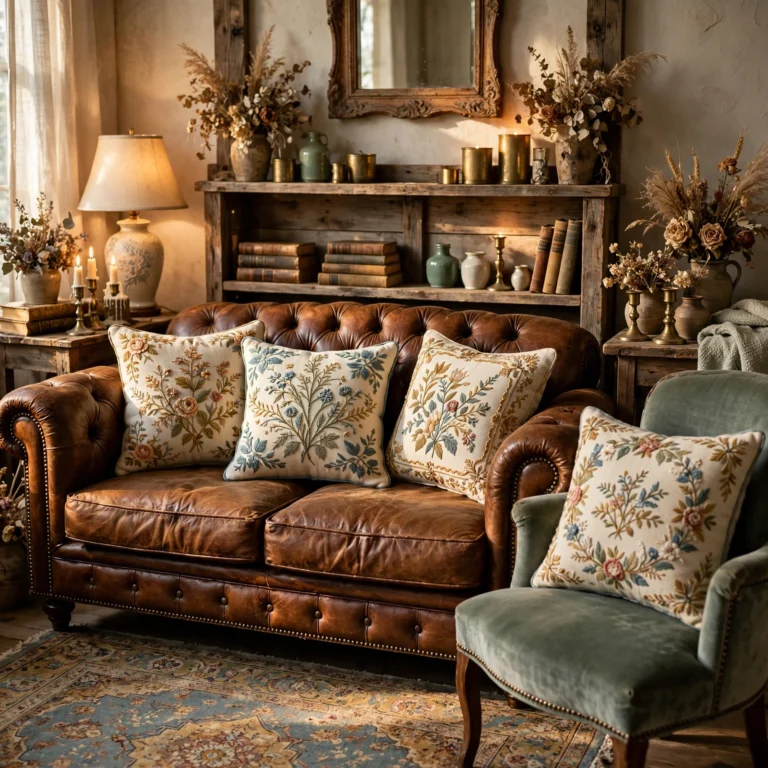
3. Leather Accent Chair
A single weathered or distressed leather accent chair, ideally with visible brass nailhead trim, brings rustic texture into a living room without requiring a full furniture overhaul. Genuine top-grain leather develops a richer patina over years of use, while a distressed leather-look vinyl offers a lower-cost alternative that still reads warm from a few feet away. Pair the chair with a wool or sherpa throw draped over one arm, since the mix of hard leather and soft wool is a defining rustic texture combination.
4. Woven Jute Rug
A chunky woven jute or sisal rug grounds a rustic room and adds warmth underfoot, especially over reclaimed hardwood or a stained concrete floor. Natural fiber rugs in oatmeal or wheat tones pair with almost any wood tone already in the room, while a jute rug with a subtle diamond weave adds texture without introducing a busy pattern. Size the rug so all seating furniture has at least its front legs resting on it, which keeps the layout feeling grounded rather than floating in the middle of a bare floor.
5. Wagon Wheel or Antler Chandelier
A wagon wheel or antler-style chandelier, updated with candle-style LED bulbs rather than bare exposed bulbs, gives a dining room or entry a genuine rustic focal point overhead. Choose a design in a weathered wood or aged bronze finish rather than a shiny, new-looking metal, since the finish does more to sell the style than the actual shape of the fixture. Hang the chandelier thirty to thirty-six inches above a dining table so it reads as proportional rather than either swallowed by the room or overwhelming the table below it.
Planning a complete home makeover? Check out our favorite Vintage Home Decor for even more inspiration.
6. Board and Batten Wall Treatment
Board and batten paneling, made from vertical wood strips applied over drywall, adds texture to a dining room or entry wall without a full renovation. Real wood board and batten holds up better over time and takes stain more convincingly than MDF, though painted MDF remains a lower-cost option for a whitewashed or painted rustic look. Limiting board and batten to a single accent wall keeps the treatment feeling like an intentional feature rather than the room’s default surface.
| Wood Tone in Room | Best Pairing for New Pieces | Finish Notes |
| Warm honey oak | Cognac leather, brass hardware | Avoid gray-washed woods nearby |
| Weathered gray barnwood | Black steel, whitewashed pine | Avoid warm cherry or mahogany |
| Deep walnut | Aged bronze, dark leather | Avoid pale ash or birch |
7. Galvanized Metal Accents
Galvanized metal accents, a pendant light shade, a small planter, or a set of decorative buckets, add an industrial-farmhouse edge to a rustic room without introducing a new color. The slightly rough, matte texture of galvanized metal pairs naturally with reclaimed wood and black steel, both common structural materials in rustic spaces. Use galvanized pieces sparingly, one or two per room, since too many can push a space toward feeling more like a hardware store display than a considered interior.
8. Vintage Ladder Display
A repurposed wood ladder, leaned against a wall and draped with a few folded blankets or towels, functions as both storage and decor in a living room, bedroom, or bathroom. Choose a ladder with visible wear, worn paint, weathered wood grain, rather than a brand-new one built to look aged, since genuine wear reads more convincingly than a manufactured distressed finish. This piece works especially well in a corner that would otherwise stay empty or collect clutter without a clear purpose.
9. Macrame or Woven Wall Hanging
A cotton macrame or woven wall hanging in cream or oatmeal tones adds texture above a headboard or console table without the commitment of paint or wallpaper. This softer, textile-based texture balances the harder wood and stone surfaces common elsewhere in a rustic room, keeping the overall space from feeling too heavy or masculine. Hang the piece slightly off-center above the furniture below it rather than perfectly centered, since a small asymmetry reads as more curated and collected over time.
10. Farmhouse Sink or Vessel Basin
An apron-front farmhouse sink, whether fireclay, cast iron, or copper, brings rustic character into a kitchen or bathroom through its shape and material rather than applied decor. Fireclay offers the most budget-friendly option among farmhouse sink materials, while a hammered copper basin adds warmth and a distinct patina that develops further with age and use. Pair with a bridge-style faucet in an aged bronze or matte black finish to complete the farmhouse silhouette around the sink itself.
11. Exposed Brick or Faux Brick Wall
An exposed brick wall, whether original to the house or added as a thin brick veneer over drywall, gives a rustic room texture and history that painted drywall alone can’t replicate. Leave the brick’s natural color and slight irregularity visible rather than painting over it, since the variation in tone is part of what reads as authentic. Pair an exposed brick wall with softer textiles nearby, a wool rug or linen curtains, so the hard surface doesn’t dominate the room without any counterbalancing warmth.
12. Cast Iron and Copper Cookware Display
Displaying well-seasoned cast iron skillets or a few copper pots on open shelving or a wall-mounted rack turns functional kitchen tools into rustic decor without buying anything purely decorative. Arrange pieces by size in a loose, slightly asymmetrical grouping rather than a perfectly even row, since a small amount of irregularity reads as more collected and lived-in. This works especially well in a kitchen already leaning into open shelving rather than fully enclosed upper cabinets.
13. Wood Slab Console or Coffee Table
A live-edge wood slab table, whether a coffee table or a console behind a sofa, keeps the tree’s natural, irregular edge visible rather than cutting it into a clean rectangle, which reads as one of the clearest signals of authentic rustic material. Black steel hairpin or trestle legs underneath the slab add contrast and a slightly more current silhouette than a fully wood base would. Choose a matte, low-sheen finish over a high-gloss lacquer, since a glossy surface tends to undercut the raw, natural quality the slab is meant to convey.
14. Wool and Sheepskin Throws
Draping a chunky wool throw or a genuine sheepskin over an accent chair or the arm of a sofa adds soft texture that balances the harder wood, stone, and metal surfaces common in rustic rooms. Choose a natural, undyed wool in cream or gray rather than a synthetic faux fur, since the real material’s texture and slight imperfection reads as more authentic to the style. Fold or drape the throw loosely rather than perfectly, since a little visible looseness looks more lived-in than a stiffly arranged textile.
15. Barn Door Room Divider
A sliding barn door, mounted on an exposed black steel track, functions as both a space-saving room divider and a genuine rustic architectural feature. Reclaimed wood planks with visible grain and nail holes make the most authentic version, though a stained new wood door with a distressed finish offers a lower-cost alternative. This works especially well over a closet, pantry, or laundry room opening where a swinging door would otherwise take up floor space in a tighter room.
16. Vintage Crate and Basket Storage
Repurposed wood crates and woven baskets, stacked on open shelving or tucked under a console table, provide storage that doubles as texture and decor rather than hiding everything behind closed cabinet doors. Choose crates with visible stamped lettering or weathered wood grain over new, unfinished ones, since the existing wear does more to sell the rustic look than a fresh coat of stain would. Mix two or three basket sizes rather than a uniform set, since slight variation in size and material reads as more collected over time.
Shop the Look
For reclaimed wood beams and barn doors, look at options from Antique Wood or a local architectural salvage yard. A weathered leather accent chair from Pottery Barn or a vintage marketplace like Chairish covers the seating idea directly. Galvanized metal accents and vintage crates are easiest to source through World Market or a local flea market. Wagon wheel and antler-style chandeliers from Kalalou round out the lighting idea, and a fireclay farmhouse sink from Signature Hardware handles the kitchen update.
Common Mistake to Avoid
The most common mistake with rustic home decor ideas is buying every piece new from the same retailer, which tends to produce a matched, theme-restaurant look rather than the collected-over-time feel authentic rustic design relies on. Mixing at least a few genuinely vintage or salvaged pieces in with new furniture, and varying wood tones and metal finishes slightly rather than matching everything exactly, both help avoid this trap. If every element in the room came from the same catalog page, the space usually reads as costume rather than lived-in, regardless of how well-chosen the individual pieces are.
How much should I budget for rustic home decor updates?
Budget varies widely depending on which ideas you choose, but smaller updates, a woven basket, a macrame hanging, or a wool throw, typically cost under a hundred dollars each. Furniture-focused ideas like a leather accent chair, a live-edge coffee table, or a wagon wheel chandelier usually run several hundred to a few thousand dollars depending on whether the piece is vintage, new, or custom-made. Larger structural updates like a stone fireplace surround, exposed beams, or a barn door installation typically cost several thousand dollars including materials and labor.
How do I mix rustic decor with more modern furniture?
Pairing rustic materials, reclaimed wood, stone, and black steel, with simpler, cleaner furniture silhouettes rather than heavily carved or ornate pieces is the most reliable way to blend the two styles without either one overwhelming the room. A live-edge wood slab table on simple black steel hairpin legs, for example, keeps one foot in rustic material and one in a more modern shape. Limiting the room to one or two clearly rustic statement pieces, a beam, a stone wall, or a barn door, rather than layering rustic details onto every surface also keeps the blend feeling intentional.
What colors work best with rustic home decor?
Warm neutrals, cream, warm white, and tan, form the most reliable base palette for rustic decor, since they let the natural materials, wood grain, stone variation, leather patina, do the visual work rather than competing with a bold wall color. Deep, muted accent colors like forest green, rust, or a warm navy work well in smaller doses through textiles or accent walls. Avoid cool grays and stark whites as a dominant palette, since they tend to fight against the warmth that reclaimed wood and stone naturally carry.
Can rustic decor work in a small apartment?
Rustic decor can work well in a smaller space by focusing on a few key textural elements, a woven rug, a leather chair, a wood slab side table, rather than large structural features like exposed beams or a stone fireplace wall that a renter typically can’t install anyway. Lighter reclaimed woods and a smaller-scale wagon wheel or candle-style chandelier keep the style from feeling heavy in a tighter room. Vintage crates and baskets also double as functional storage in a small apartment, solving a practical problem while still contributing to the rustic look.
Is rustic home decor still in style, or has it gone out of fashion?
The heavier, more literal version of rustic decor common a decade ago, dark wood, rooster and plaid motifs, has largely fallen out of favor, but a lighter, more refined take built around reclaimed wood, black steel, and natural stone paired with simpler furniture remains a consistently popular style, often labeled modern rustic or organic modern. This updated version has staying power specifically because it relies on authentic material and texture rather than a specific decorative motif that can feel dated once a particular trend cycle passes.
Conclusion
The sixteen ideas above cover materials, furniture, lighting, and textiles, giving you enough range to build a rustic room in stages rather than all at once. Whether you start with a simple wool throw or commit to a full stone fireplace surround, the goal of any rustic home decor update is a space that feels warm and collected over time rather than pulled from a single themed catalog. Save this list to Pinterest for your next project, or check our related post on house interior design ideas for more whole-house inspiration.
I’ve spent the last six years sourcing reclaimed materials and vintage furniture for residential clients, which means I’ve watched which rustic details actually hold up to daily use and which ones only look good in a single staged photo.