16 Beautiful Gorgeous Christmas Tree Ideas 2026 Trends to Transform Your Holiday Space
A Christmas tree has become one of the more visible design statements in a home, and the current design direction has moved noticeably toward restraint and texture over the maximalist, every-ornament-at-once approach popular in past seasons. This post covers sixteen Christmas tree ideas 2026 trends point toward, from color palette to ornament styling to lighting choices. You’ll get specific materials, ratios, and placement guidance so you can build a tree that reads as considered rather than simply full.
Trend & Background
Christmas tree styling has shifted over the past several seasons toward warmer, more restrained palettes and natural materials, moving away from the bright multicolor and heavily themed trees that dominated earlier in the decade toward trees built around two or three coordinated tones and genuine texture from ribbon, dried florals, and mixed ornament finishes. This mirrors the same broader design shift toward tonal depth and material honesty seen across home decor generally, applied specifically to holiday styling. This matters now because a well-planned tree, built with intentional color and texture choices, tends to photograph and read as more current than a tree simply loaded with every ornament available, regardless of how much time or money went into either approach.
Key Takeaways
- Christmas tree ideas 2026 trends favor natural materials, warm lighting, and a curated ornament palette over the maximalist, every-color approach common in past years.
- Texture, through ribbon, dried botanicals, and varied ornament finishes, has become as important as color in a current tree design.
- Several ideas here work as a full tree theme, while others apply as smaller layered details on top of an existing decorating approach.
- A size and spacing comparison table is included for the ornament and ribbon ideas so you can plan proportion against your actual tree height.
1. Ribbon Cascade Styling
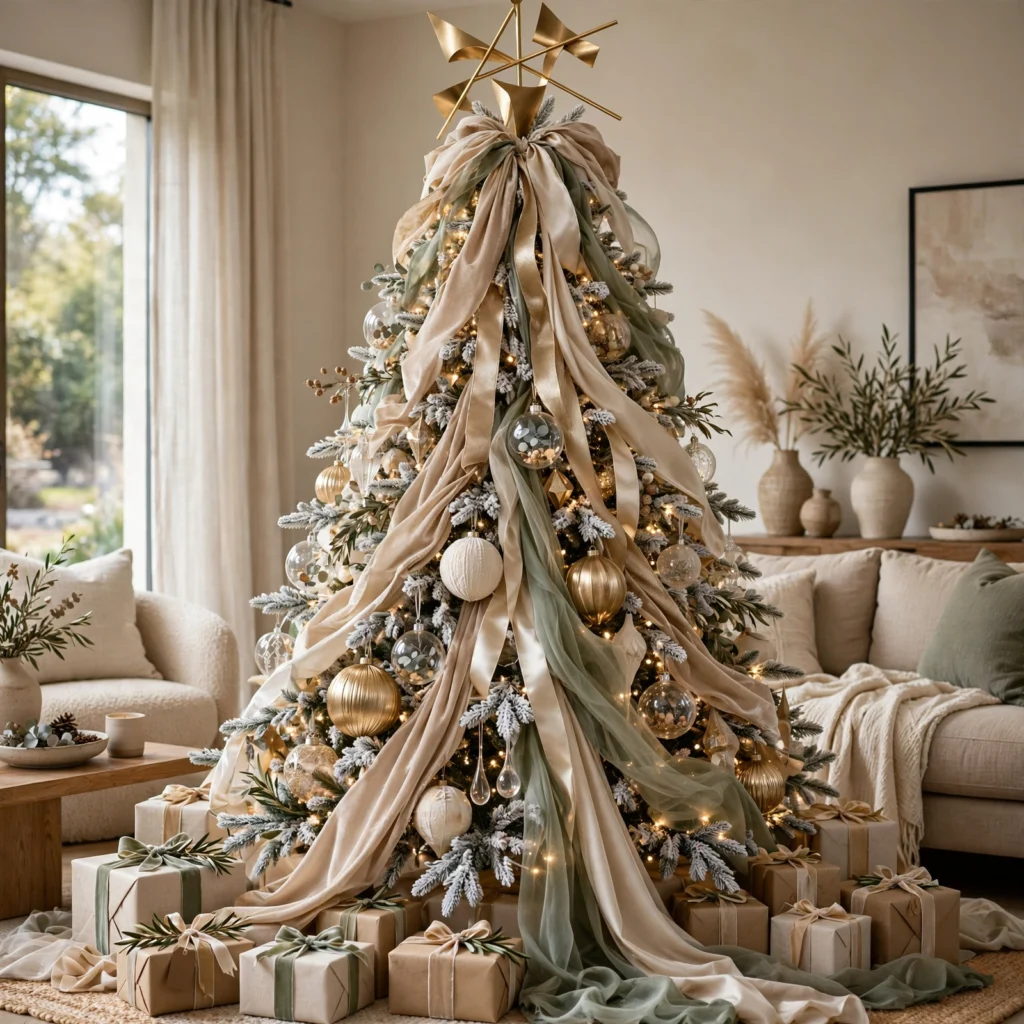
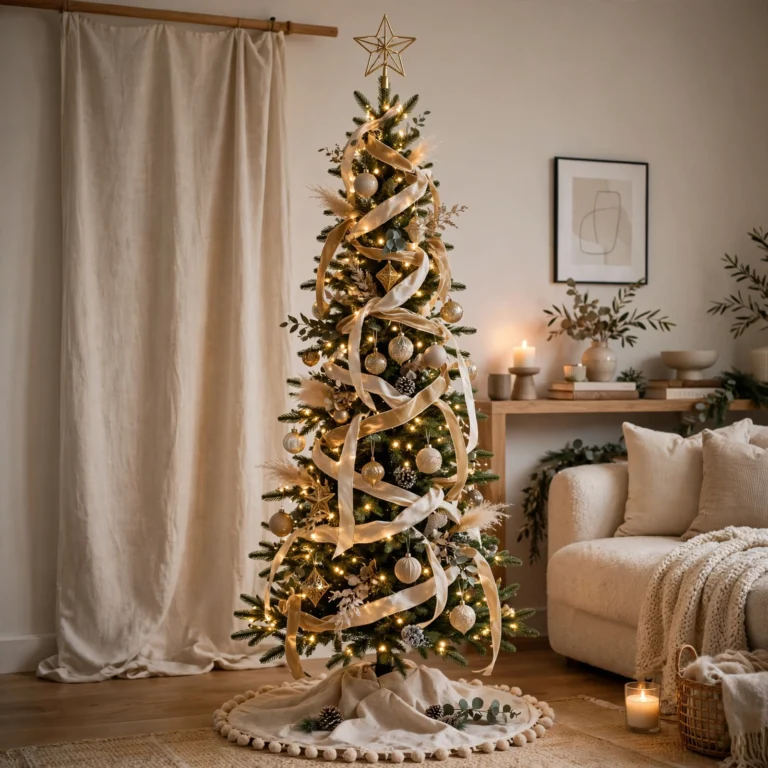
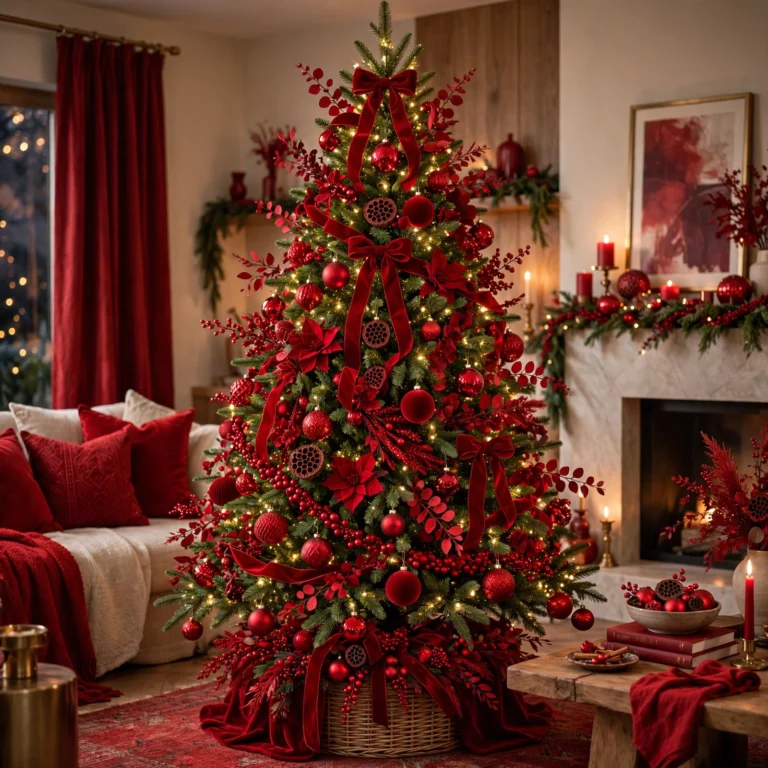
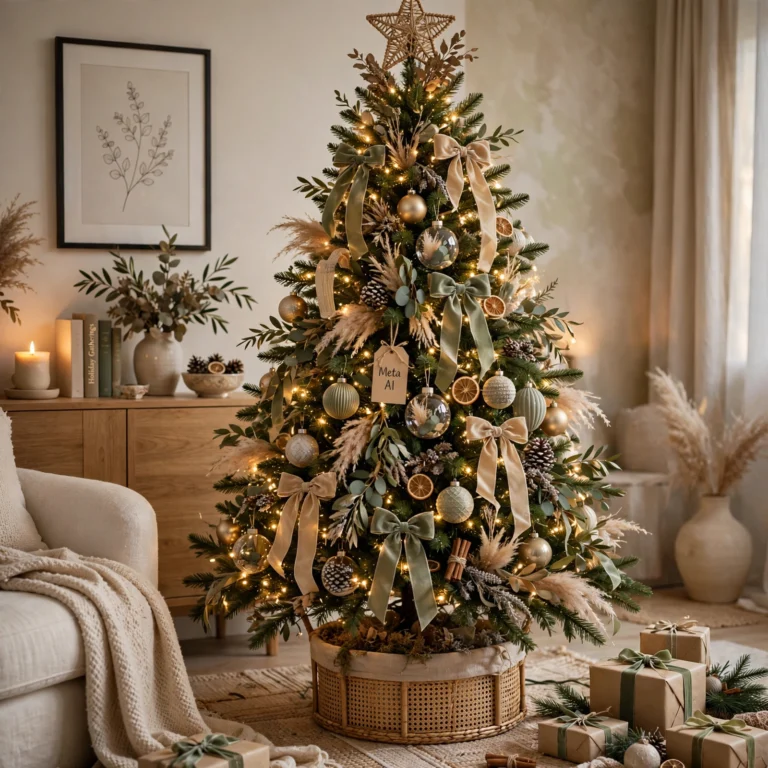
Ribbon cascade styling weaves wide velvet or wired ribbon vertically down the tree from top to bottom, rather than wrapping horizontally around the branches, creating a flowing, textural element that reads as more current than the traditional horizontal ribbon wrap. Use three to five ribbon cascades spaced evenly around the tree rather than covering every section, letting the greenery remain visible between each ribbon run. Deep jewel tones like burgundy or emerald velvet ribbon pair particularly well with warm-white lighting for this technique.
2. Warm-White LED Micro Lights
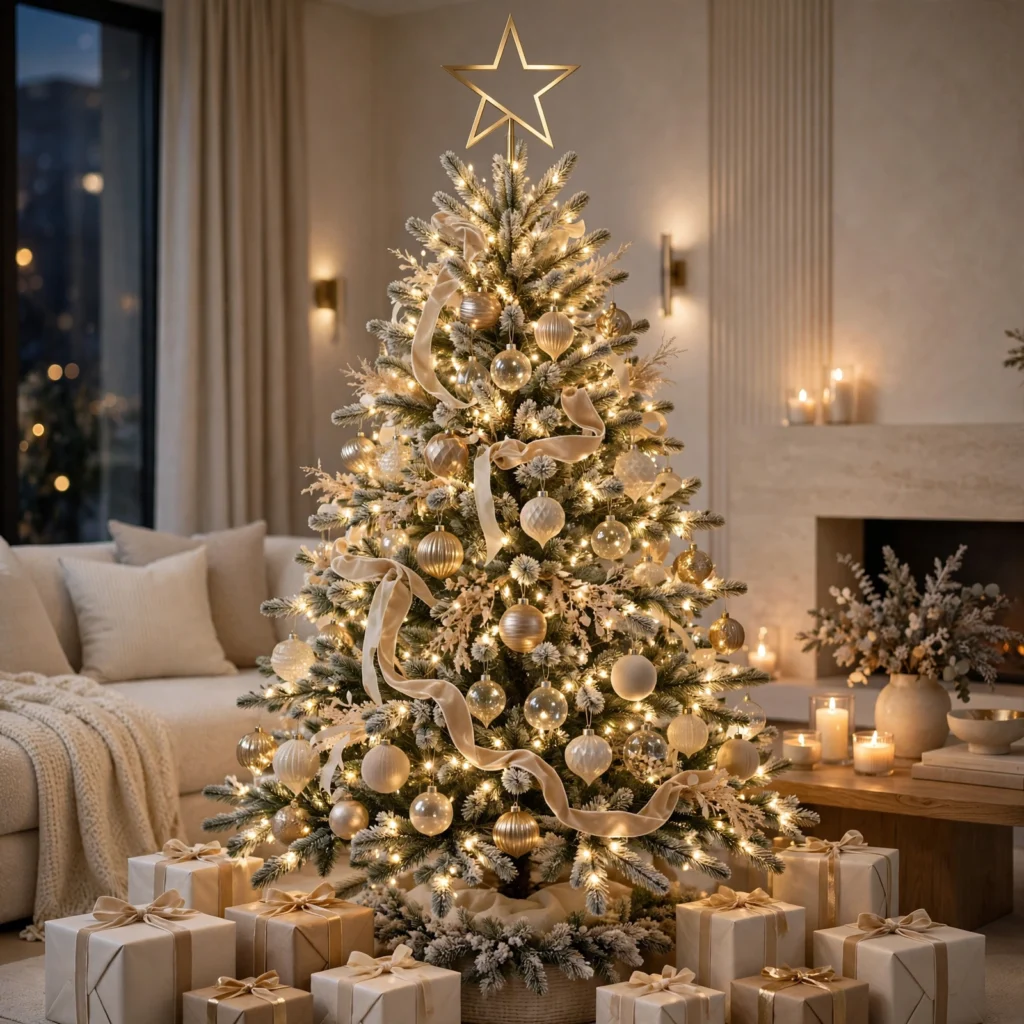
Warm-white LED micro lights, in the 2200K to 2700K range, have become the dominant lighting choice over cooler white or multicolor strings, since the warmer temperature reads as more current and photographs more naturally than cooler lighting options. Layer lights deeply into the tree’s interior branches, not just the outer tips, for a fuller glow that reads through the branches rather than sitting only on the surface. A general guideline is 100 lights per vertical foot of tree height for full, even coverage.
3. Christmas Tree Ideas 2026 Trends Color Palette
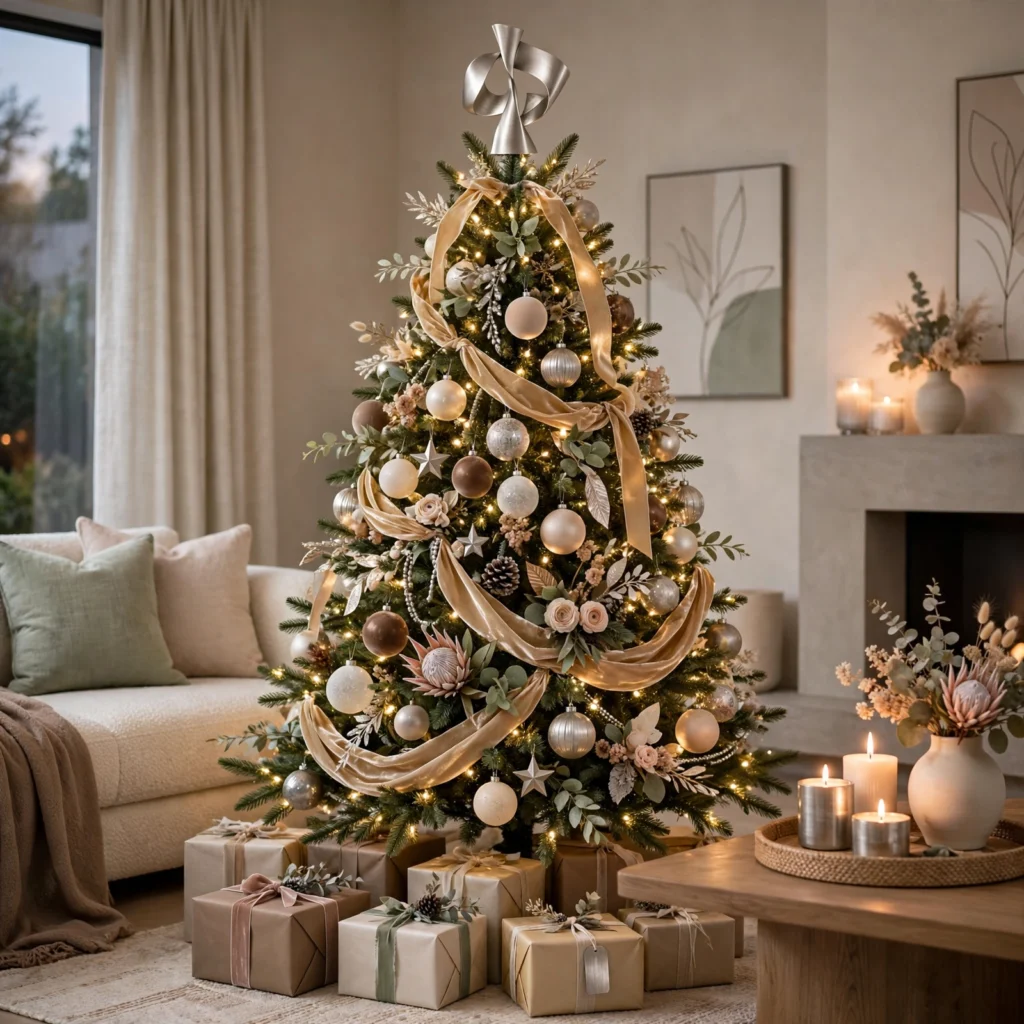
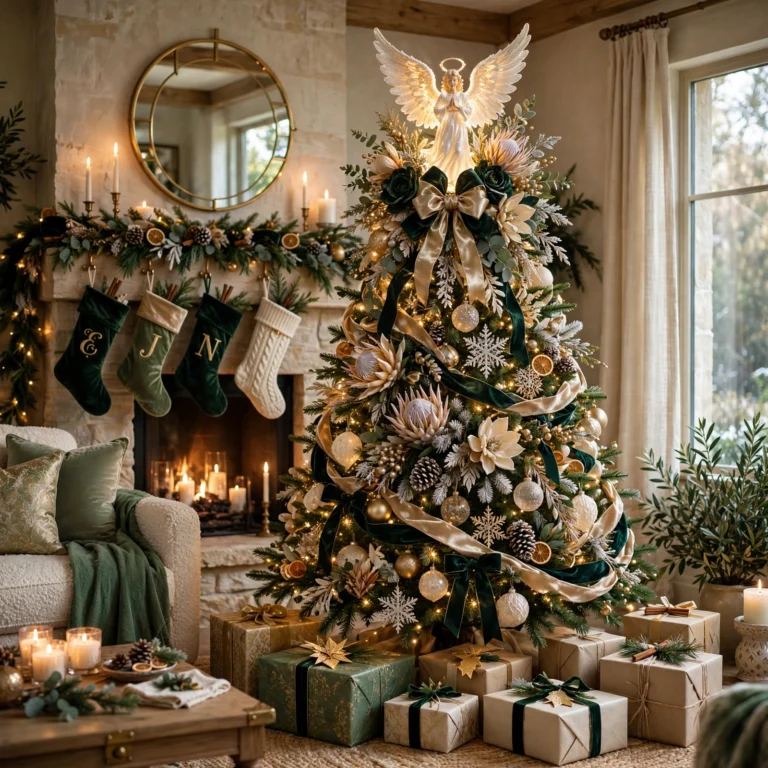
Christmas tree ideas 2026 trends point toward deep, muted color palettes like burgundy and gold, sage and cream, or a fully monochromatic white and silver scheme, replacing the brighter, more saturated multicolor trees common in past seasons. Choosing two or three core colors and repeating them consistently across ornaments, ribbon, and a tree topper produces a noticeably more cohesive result than an unplanned mix of whatever ornaments happen to be on hand. Test the palette against the room’s existing decor before committing, since a tree’s color scheme should generally complement rather than compete with the surrounding space.
| Palette Style | Core Colors | Best Room Setting |
| Burgundy and Gold | Deep red, warm gold | Traditional living room |
| Sage and Cream | Muted green, warm white | Neutral, modern living room |
| Monochromatic Silver | White, silver, ice blue | Formal dining room, entry |
4. Dried Orange and Cinnamon Garland
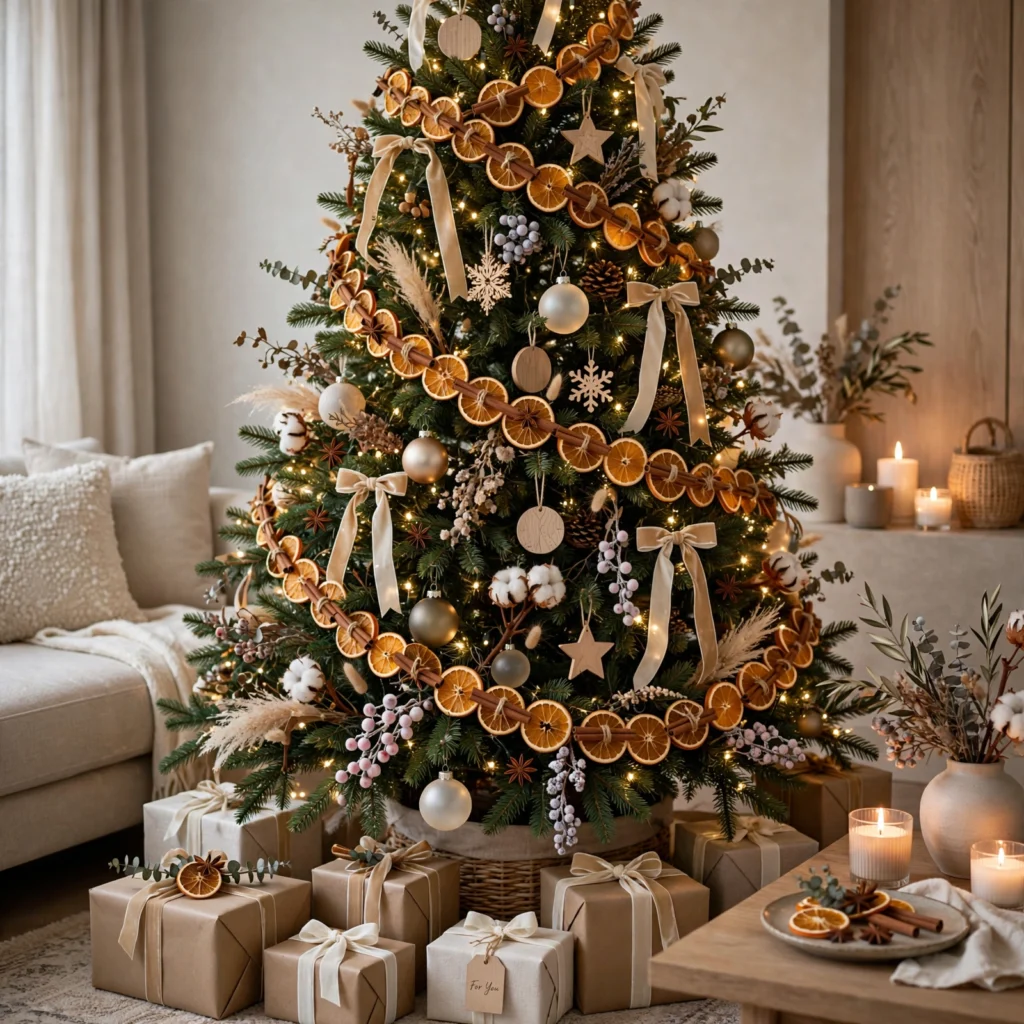
A dried orange and cinnamon garland, made from dehydrated orange slices and bundled cinnamon sticks strung on natural twine, brings genuine texture and scent to a tree without relying on plastic or synthetic ornaments. This natural material trend has carried over from broader holiday decorating into tree styling specifically, offering a more organic alternative to traditional glass or plastic garland. Wrap the garland loosely around the tree, allowing it to drape slightly between wraps rather than pulling it taut against the branches.
In order to see more options for christmas tree decor ideas CLICK HERE
5. Oversized Statement Ornaments
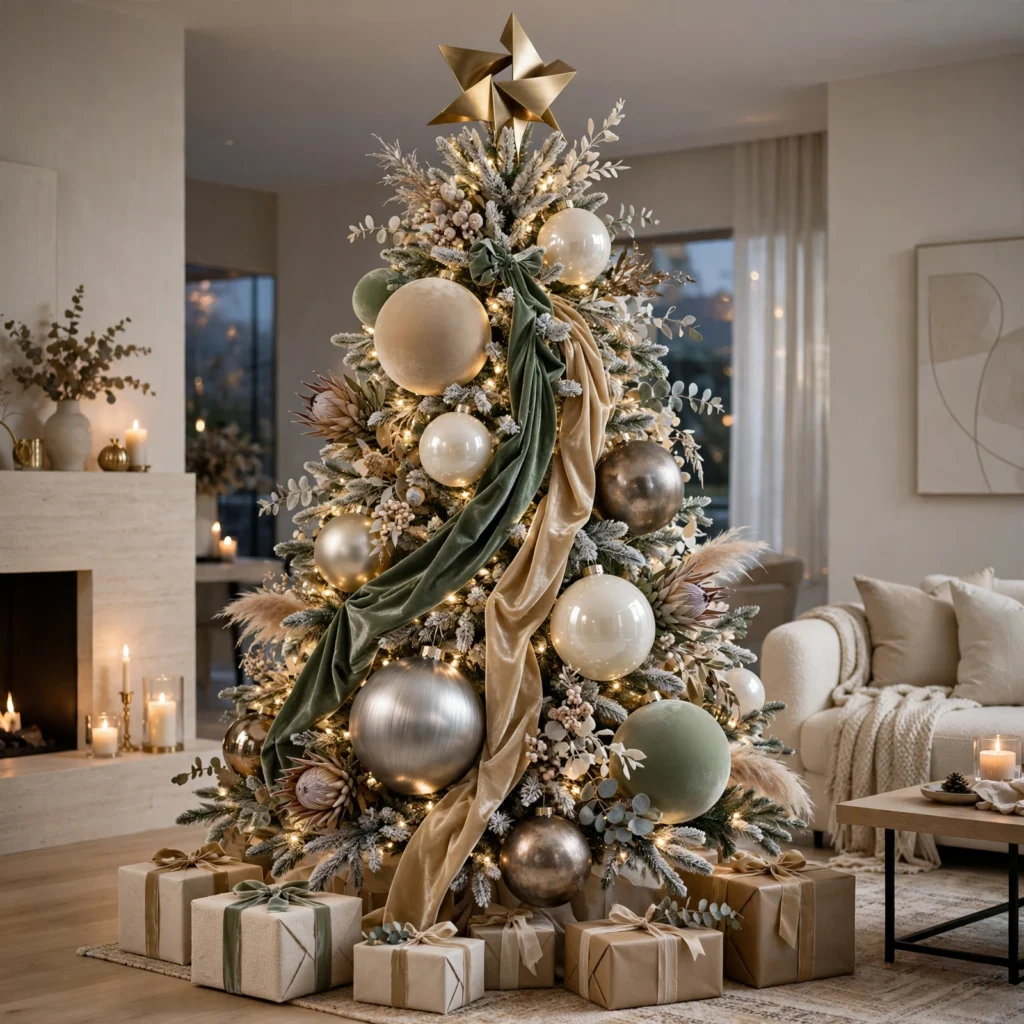
Oversized statement ornaments, sized considerably larger than a standard 3-inch ornament, add visual weight and a more current, gallery-like feel when used sparingly rather than in large quantities. Place three to five oversized ornaments strategically throughout the tree, spaced evenly rather than clustered together, letting them serve as focal points among smaller, more traditional-sized ornaments. This technique works particularly well combined with a limited color palette, since fewer, larger ornaments in a cohesive color reads as more intentional than many small ones scattered without a clear pattern.
6. Flocked Tree Base
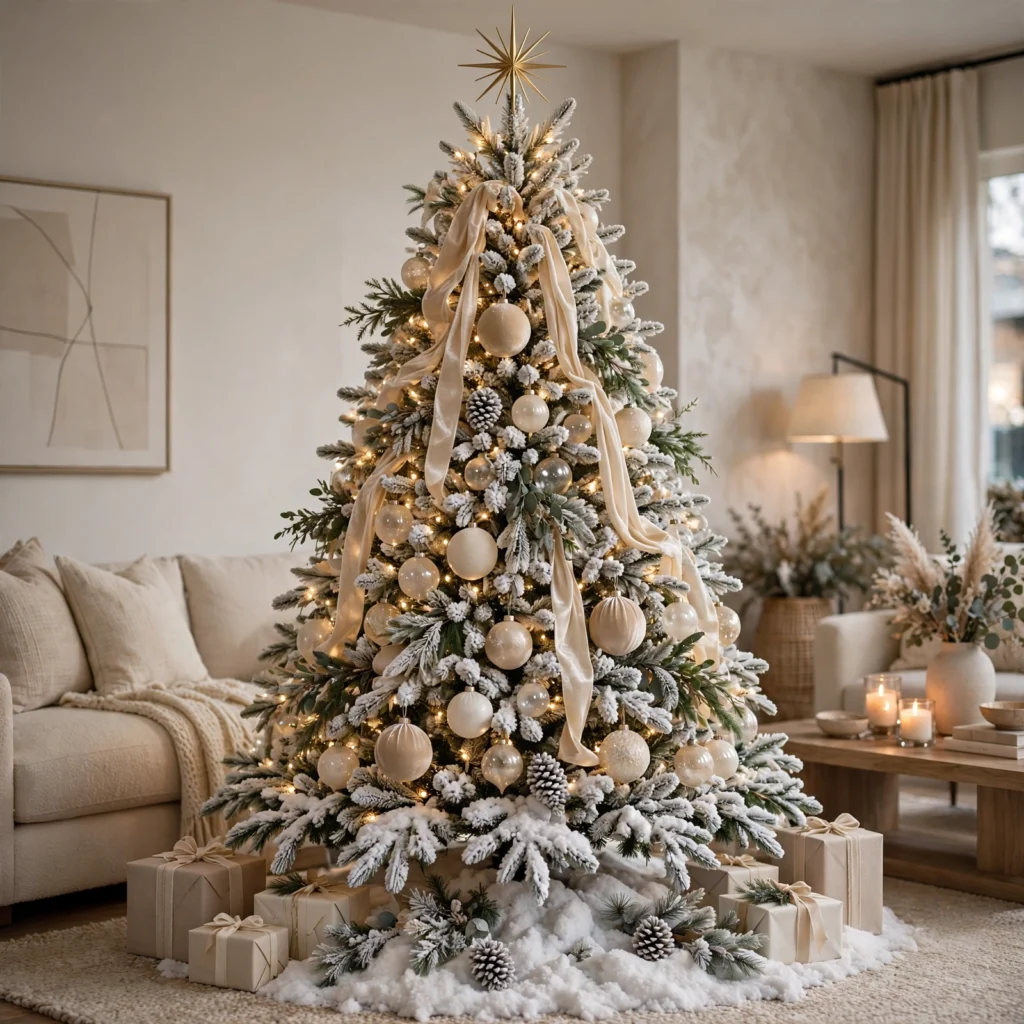
A flocked tree base, using a light dusting of artificial snow flocking concentrated at the branch tips rather than a fully whitened tree, adds a subtle winter texture without the heavier, all-over flocked look that was more common in past seasons. This lighter application lets the tree’s natural green still read as the dominant color while adding just enough textural interest to feel current. Flocking spray or powder is available at most craft and holiday retailers and can be applied directly to an existing artificial or live tree.
7. Nature-Inspired Ornament Mix
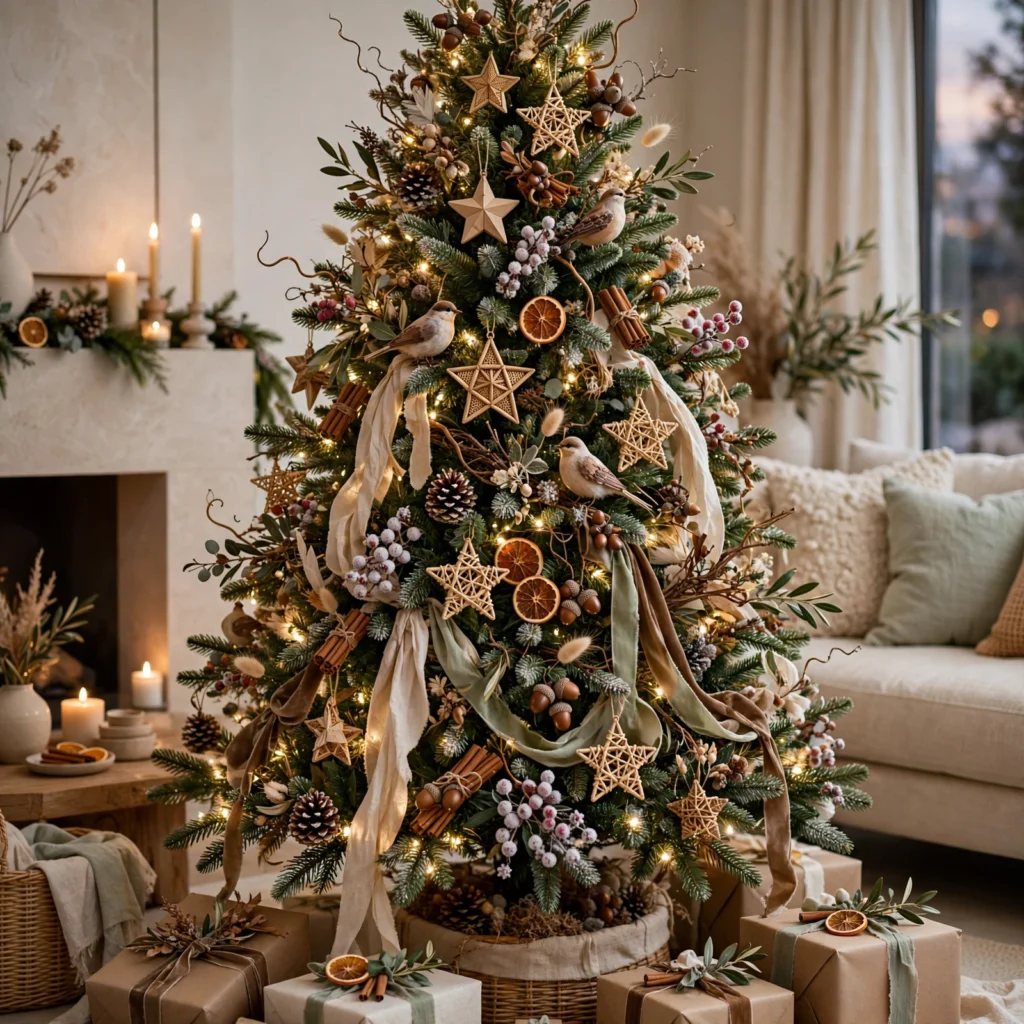
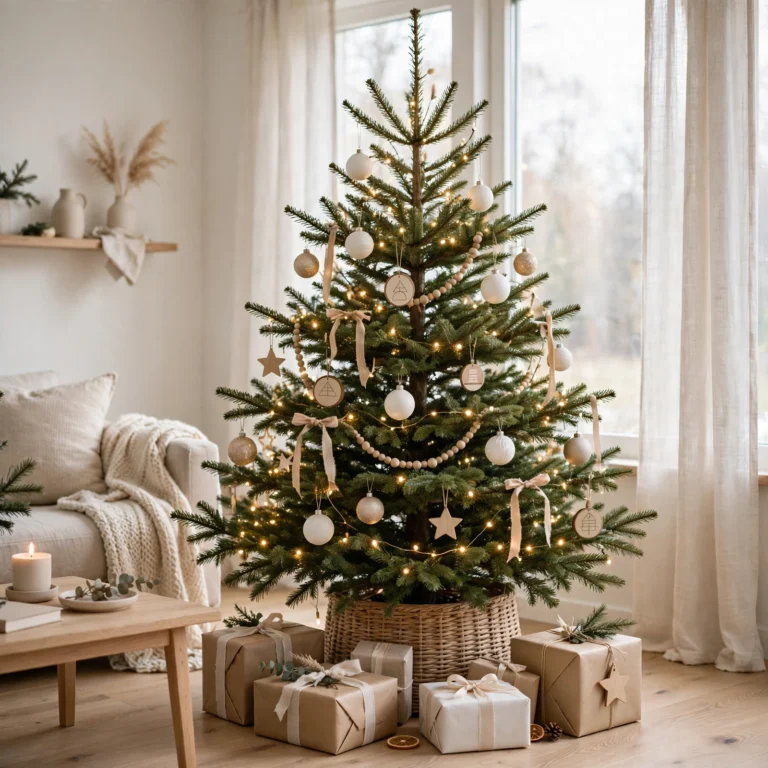
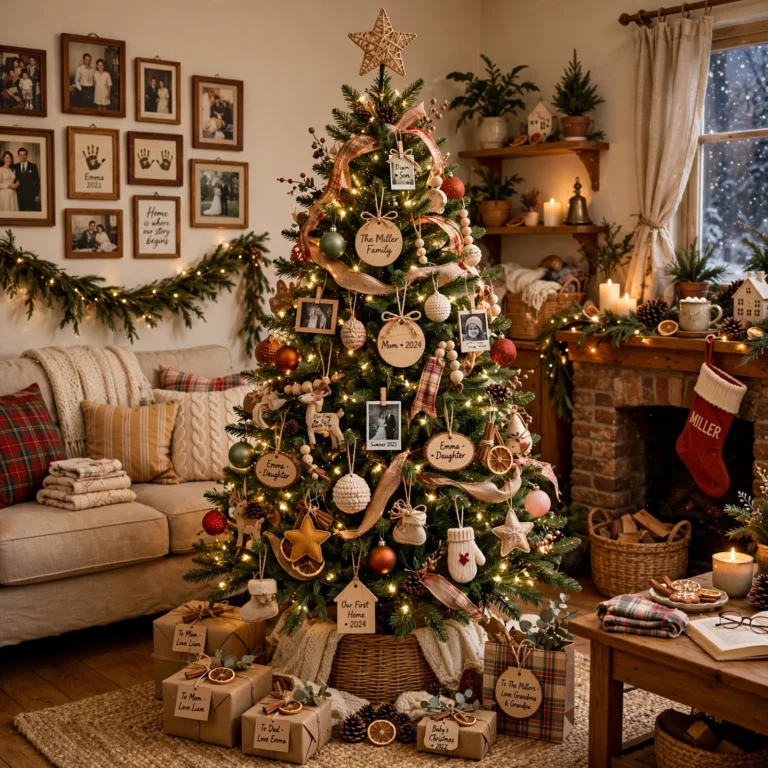
A nature-inspired ornament mix combines pinecones, dried botanicals, wood slice ornaments, and a limited number of glass pieces, rather than filling a tree entirely with traditional glass or plastic ornaments. This approach has grown alongside the broader shift toward natural materials across holiday decorating generally, offering a tree that feels more grounded and less uniformly shiny. Balance the mix so no single material type dominates more than half the tree, keeping a genuine variety of texture visible throughout.
8. Christmas Tree Ideas 2026 Trends Topper Style
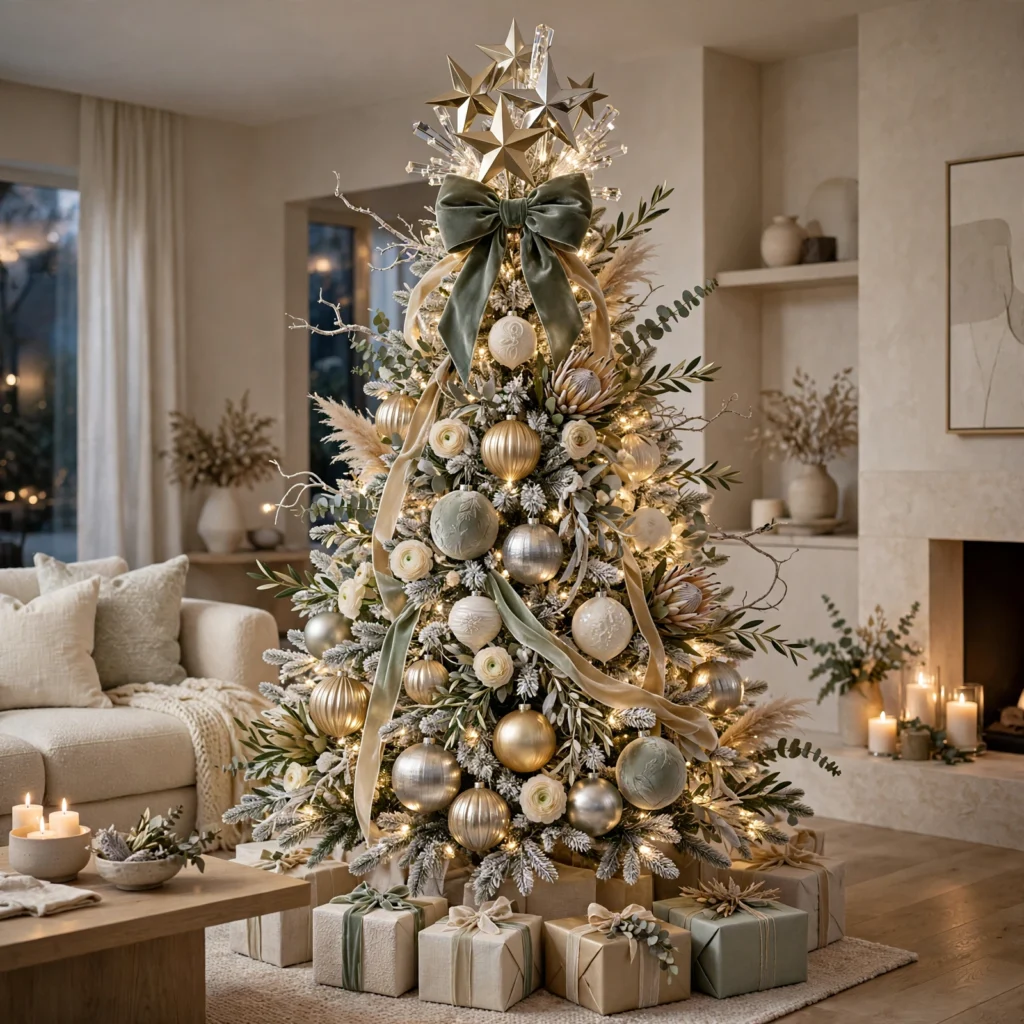
Christmas tree ideas 2026 trends favor an oversized bow, a cluster of dried florals, or a simple wood star topper over the traditional glittery star or angel that dominated tree toppers in past decades. This shift mirrors the broader move toward natural materials and restrained color across the rest of the tree. Size the topper proportionally to the tree’s overall height, generally 10 to 15 percent of the tree’s total height, so it reads as a clear focal point rather than getting lost against a full tree.
9. Layered Ribbon and Ornament Clusters
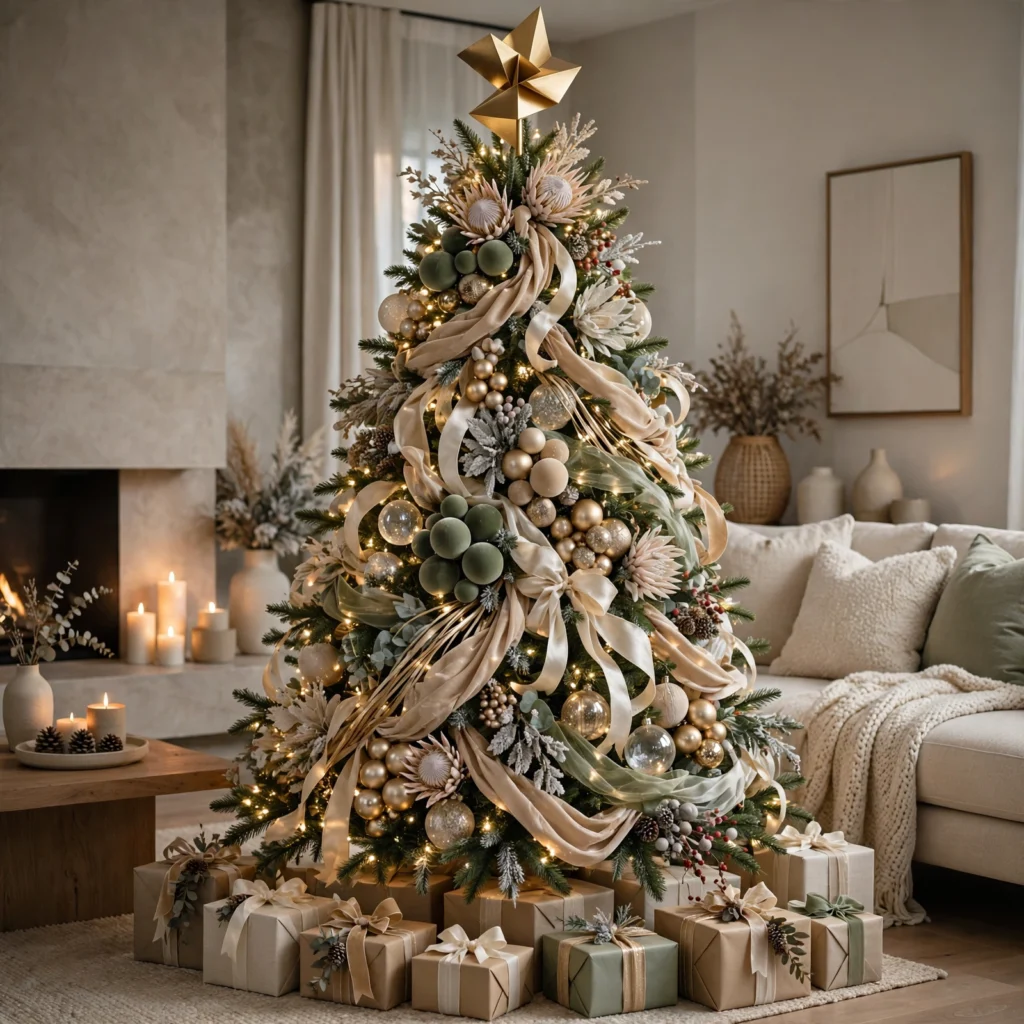
Layered ribbon and ornament clusters group three to five ornaments together with a small bow or ribbon accent at a single point on the tree, rather than spacing every ornament individually and evenly across the branches. This creates visual rhythm and intentional focal points throughout the tree instead of a uniformly scattered, evenly-spaced look. Repeat this clustering technique at four to six points around the tree for the strongest overall effect.
10. Velvet Bow Accents
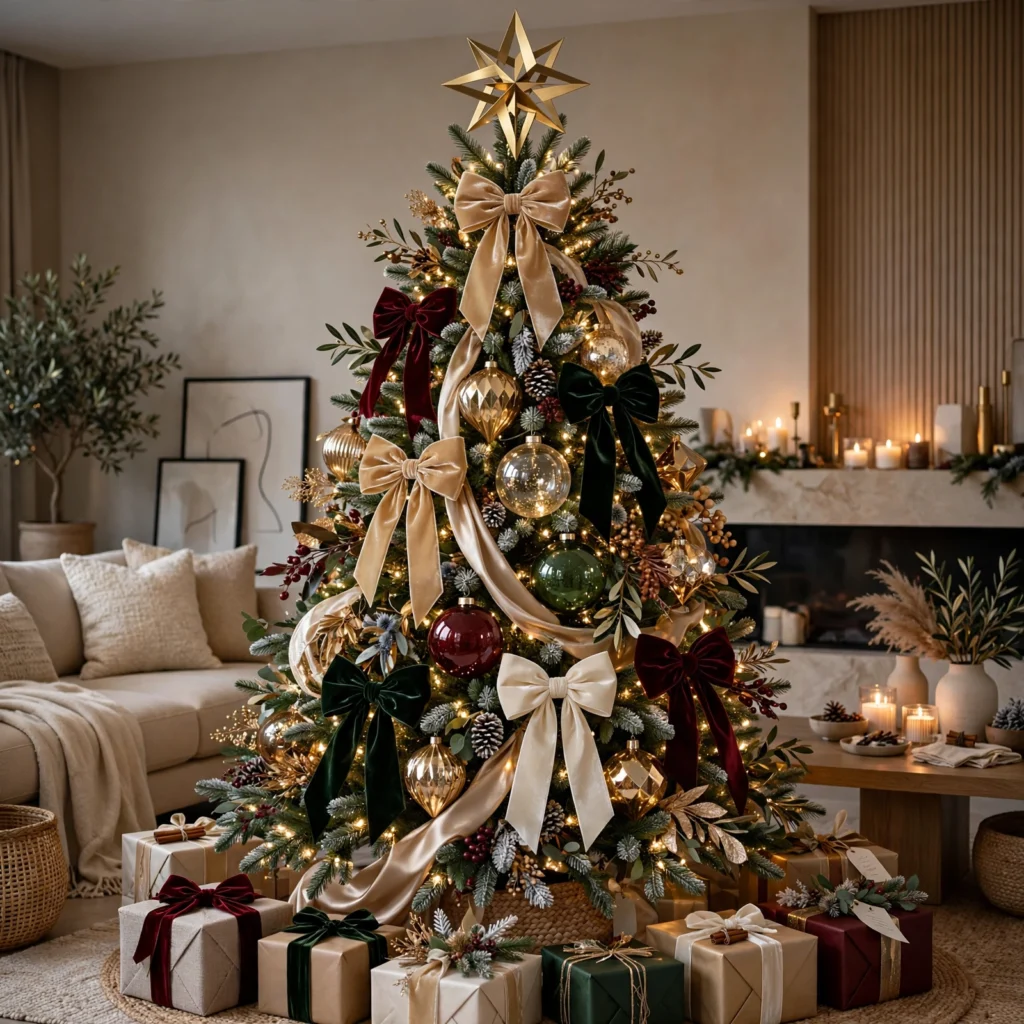
Velvet bow accents, tied at varying points throughout the tree rather than concentrated at the top or bottom, add a soft, textural focal point that photographs particularly well against warm-white lighting. This technique pairs directly with ribbon cascade styling but can also stand alone as a simpler addition to an already-decorated tree. Use bows in a single coordinating color rather than multiple competing shades for the most cohesive result.
11. Metallic Mixed Finish Ornaments
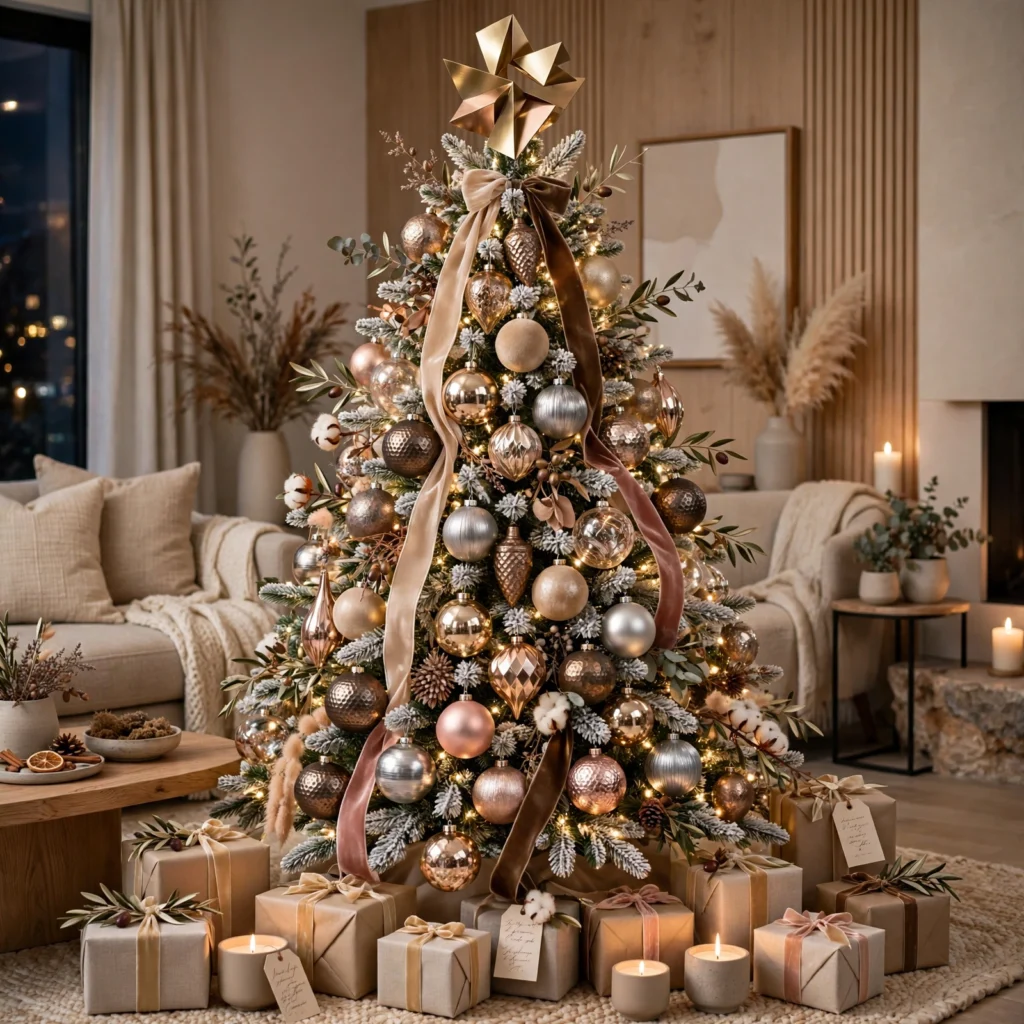
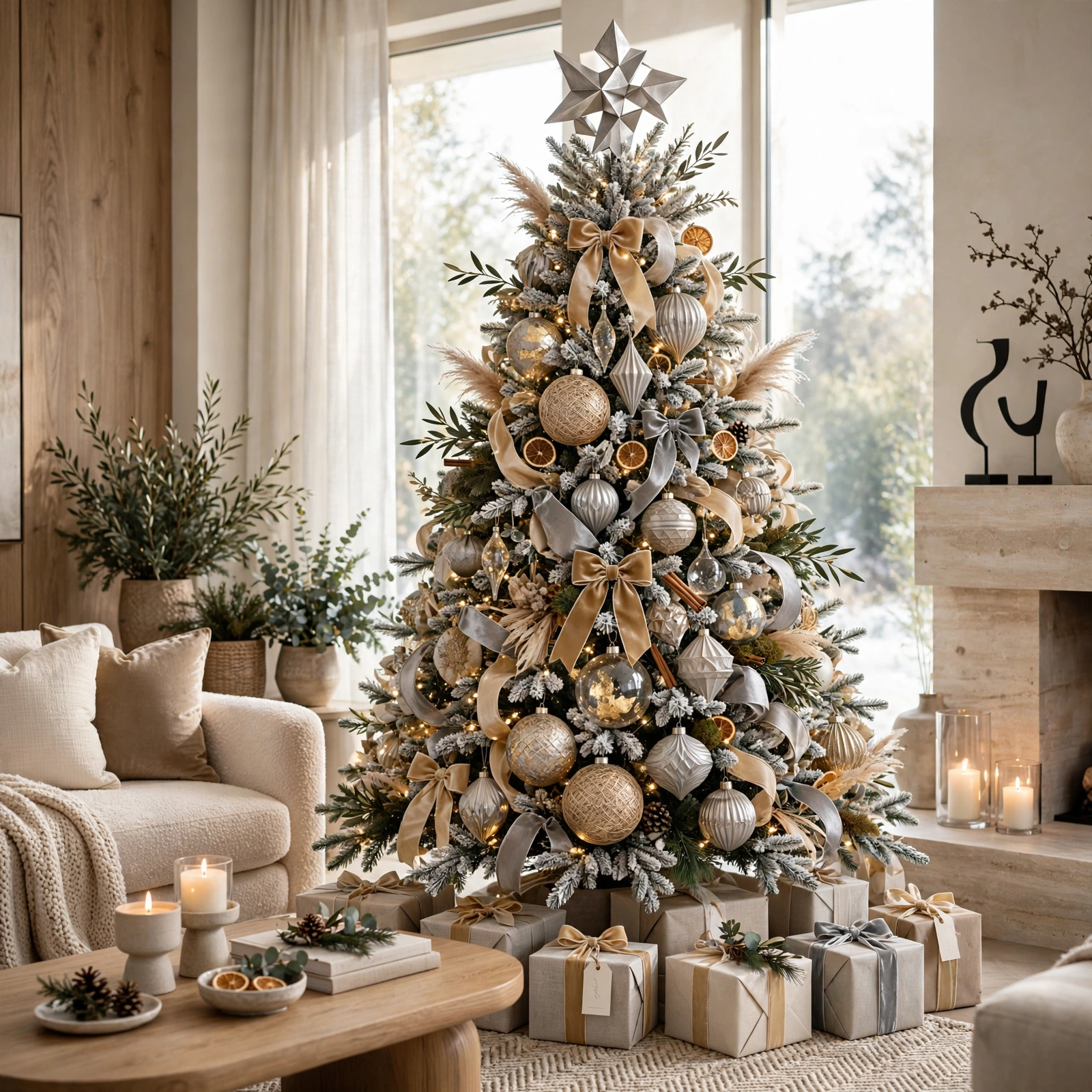
Metallic mixed finish ornaments combine matte, glossy, and textured metallic surfaces, like brushed gold, polished brass, and a matte champagne, within a single cohesive color family, adding depth without introducing additional hues into the tree’s overall palette. This technique relies on variation in finish and texture rather than variation in color to keep a tree from reading as visually flat. Mix finishes throughout the tree rather than grouping all of one finish together in a single section.
12. Woven Basket Tree Skirt Alternative
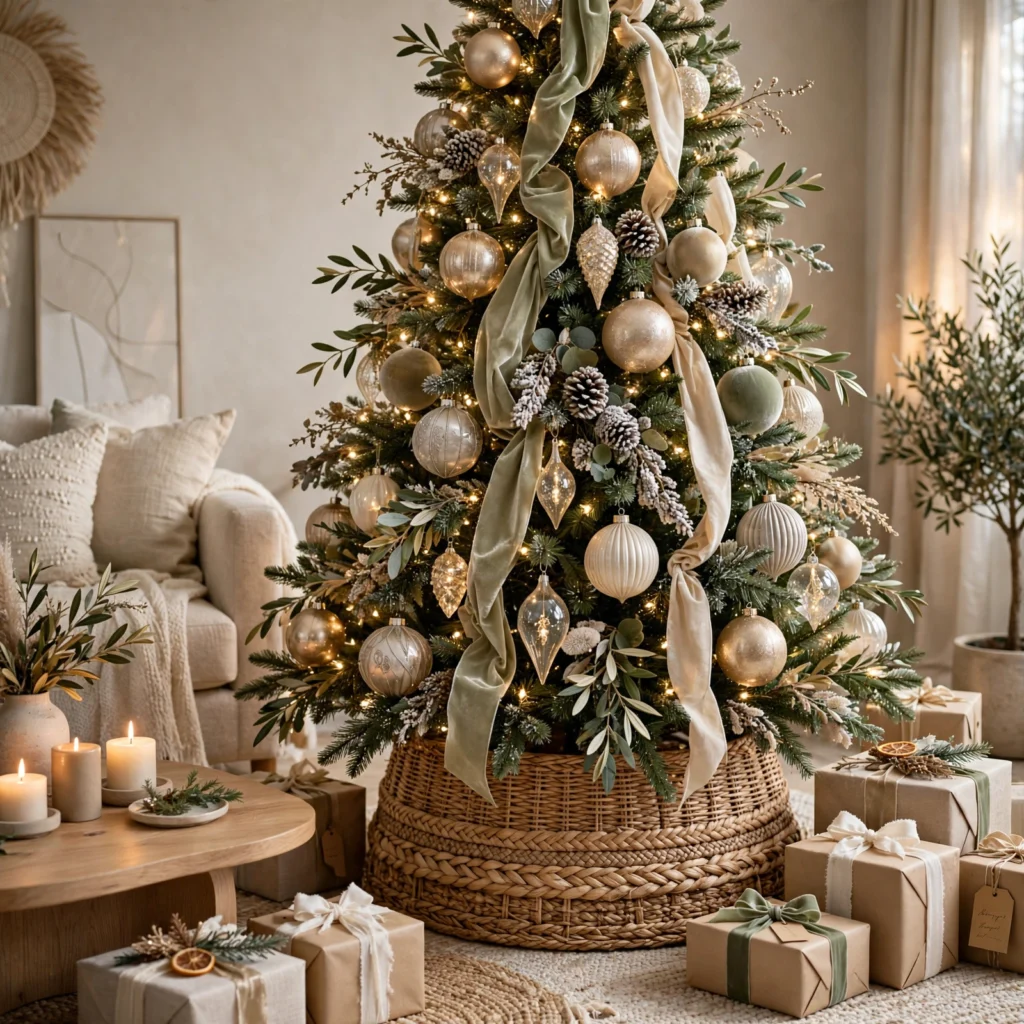
A woven basket tree skirt alternative replaces a traditional fabric tree skirt with a large woven basket or galvanized metal tub at the tree’s base, adding a natural material element to the bottom of the display where a fabric skirt would otherwise sit. This works particularly well paired with the nature-inspired ornament mix and dried garland ideas elsewhere on this list, extending the natural material theme from top to bottom. Choose a basket sized to fully conceal the tree stand while still allowing the trunk to sit centered within it.
13. Monochromatic White and Silver Tree
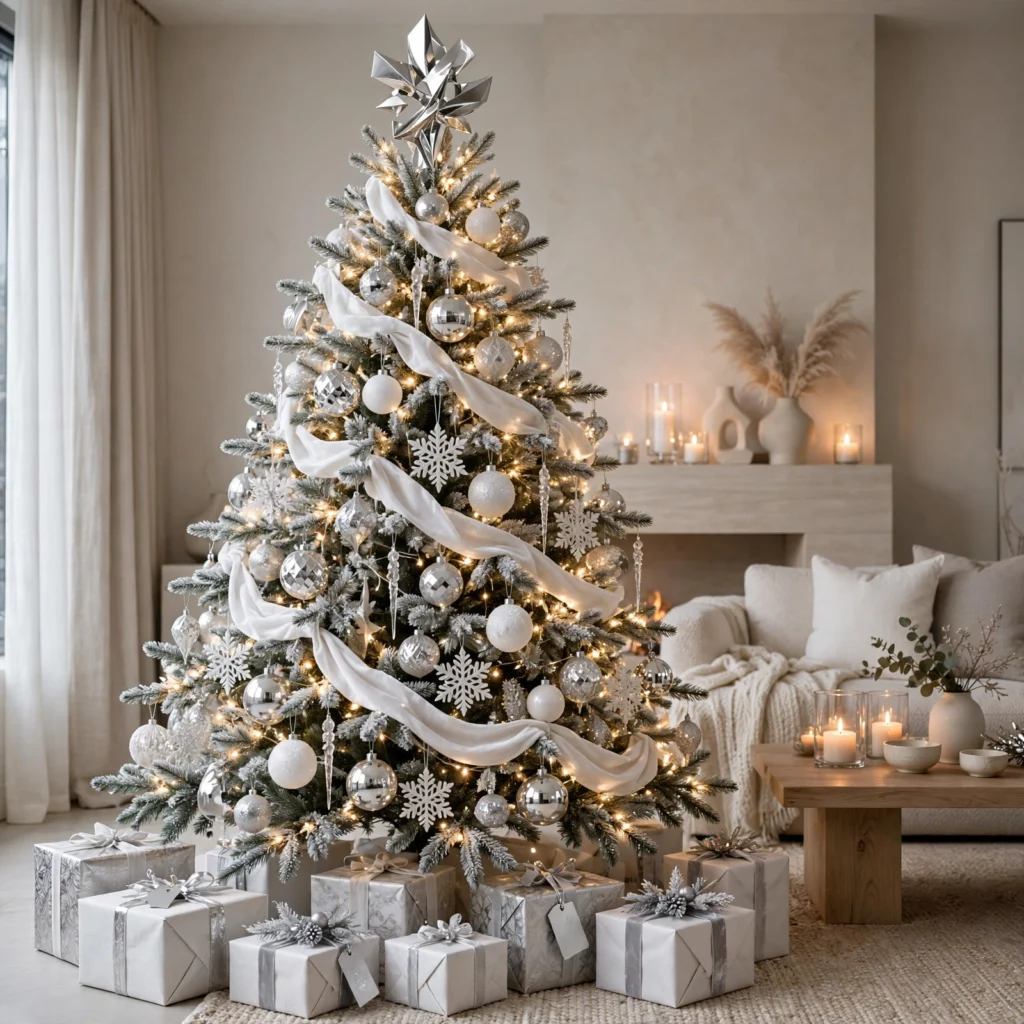
A monochromatic white and silver tree commits fully to a single cool-toned palette, using white, silver, and ice-blue ornaments exclusively rather than any warm accent colors, producing a formal, elegant result well suited to a dining room or entryway rather than a family living room. This is one of the more dramatic single-palette approaches on this list, and it photographs particularly well against dark walls or a neutral, uncluttered background. Balance the cool palette with warm-white rather than cool-white lighting to keep the tree from reading as sterile.
14. Christmas Tree Ideas 2026 Trends Ornament Spacing
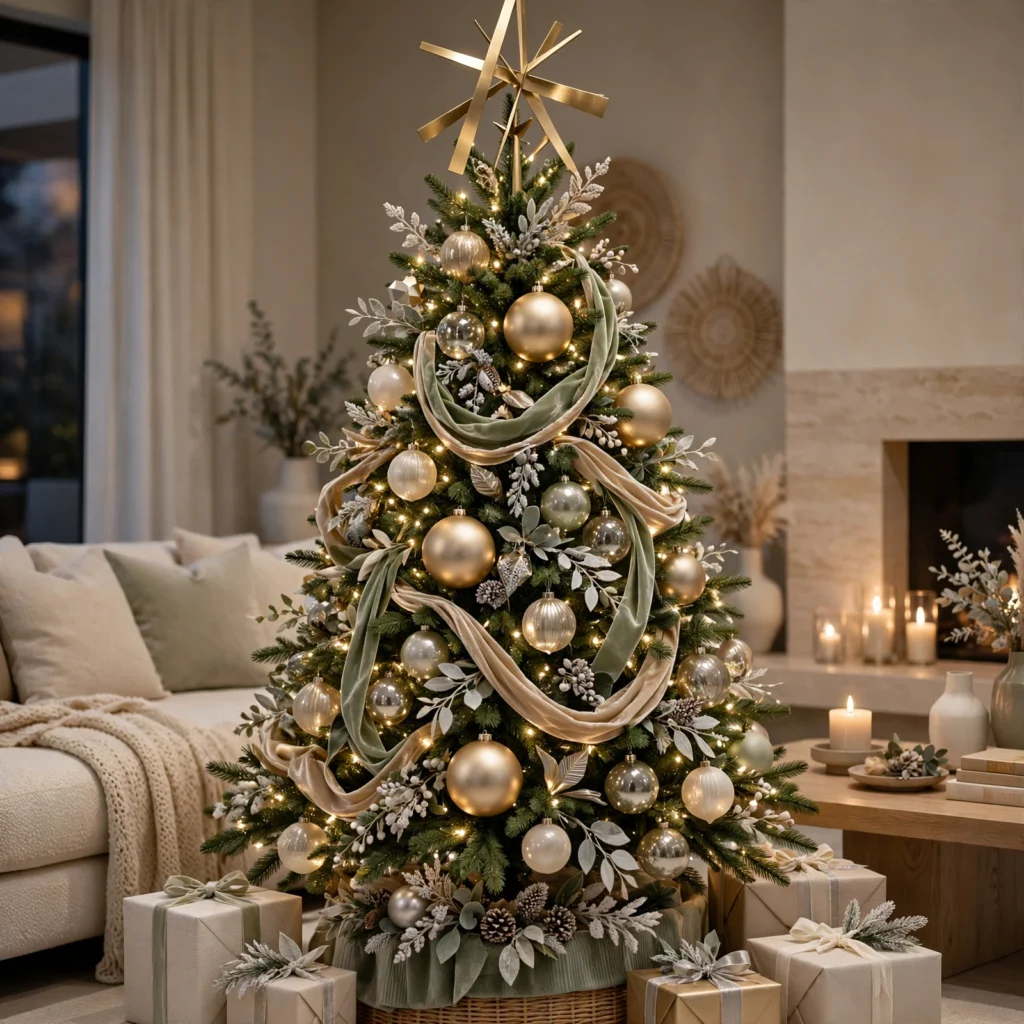
Christmas tree ideas 2026 trends generally favor more deliberate ornament spacing over a fully packed tree, with visible greenery between ornaments rather than every branch covered. This restraint allows both the lighting and the tree’s natural texture to remain visible, rather than being obscured entirely by ornament density. A general guideline is one ornament for every 6 to 8 inches of branch space, adjusted based on ornament size and the overall density preferred.
15. Botanical Wreath and Tree Coordination
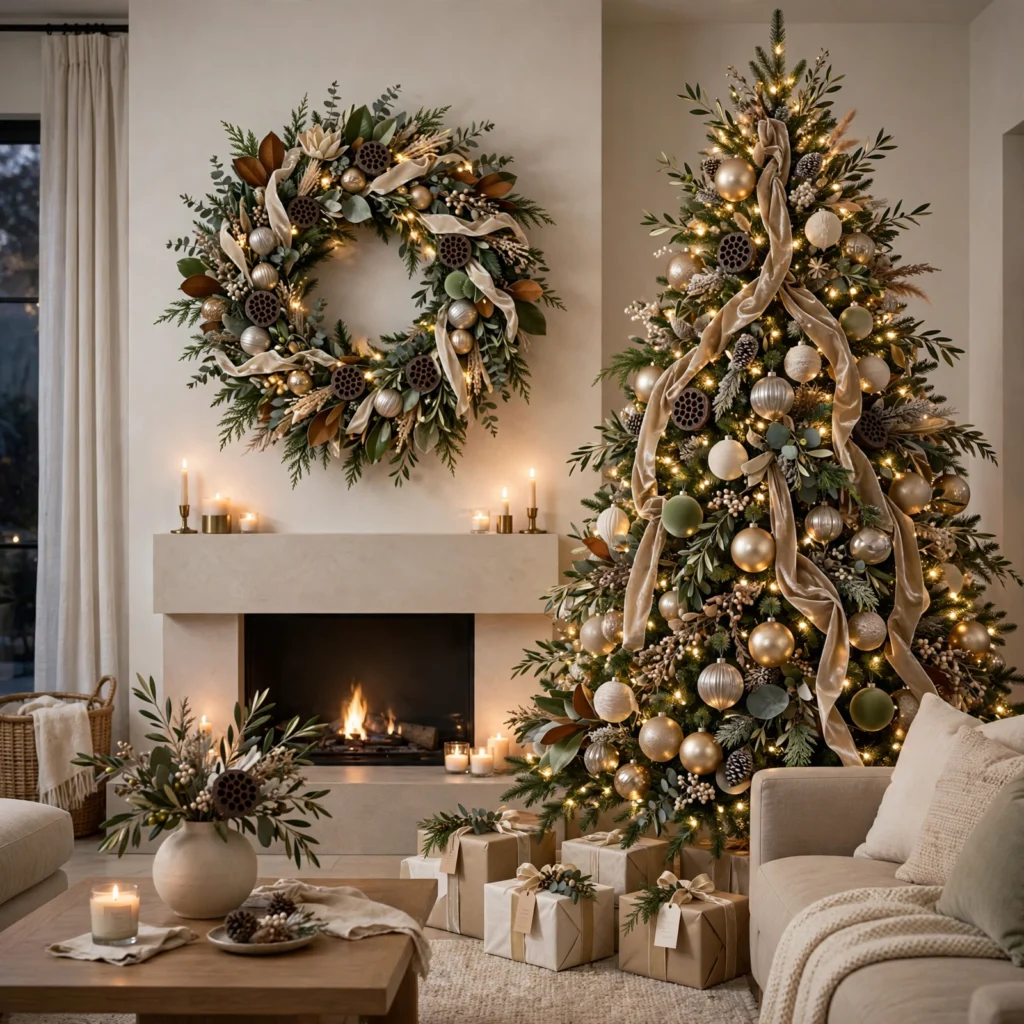
Botanical wreath and tree coordination extends the tree’s specific color palette and material choices, like dried orange slices or a particular ribbon color, into a matching front door or interior wreath, creating a cohesive holiday display across the full home rather than treating the tree as an isolated decorating project. This is a low-cost way to extend a single well-planned color and material scheme across multiple display points. Repeat at least one or two specific elements, like the same ribbon or a matching dried botanical, between the tree and any wreaths for the clearest visual connection.
16. Multi-Texture Garland Layering
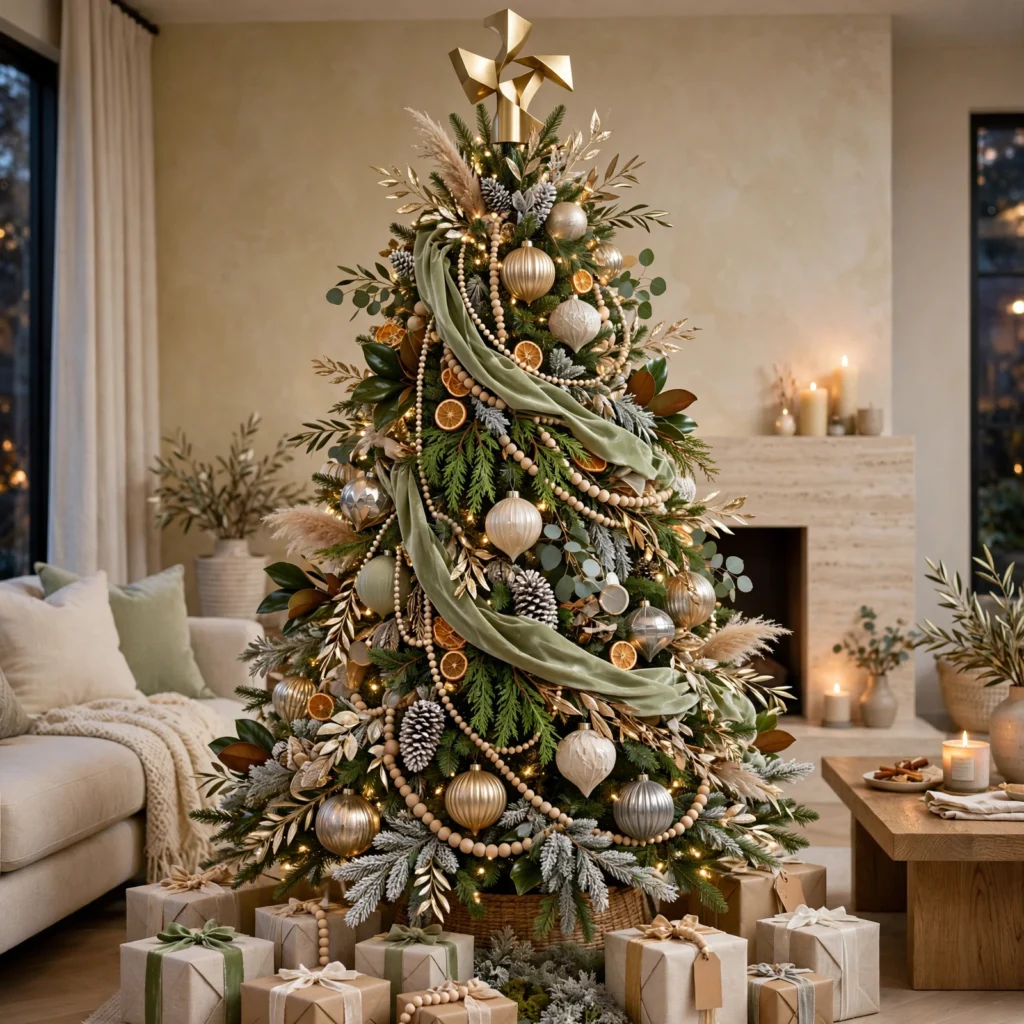
Multi-texture garland layering combines two or three different garland types, like a traditional beaded garland, a dried floral strand, and a mesh or burlap ribbon garland, wrapped together rather than using a single garland type alone. This adds noticeably more depth and visual interest than a single garland style wrapped around the tree in isolation. Wrap all garland types together in the same pass around the tree, rather than layering them separately, for the most cohesive, blended texture.
Shop the Look
A spool of burgundy velvet ribbon paired with warm-white LED micro lights covers the foundational lighting and texture layer for most of the palettes above. A set of oversized matte ornaments in a coordinating gold or sage tone works well as tree focal points. Round out the display with a dried orange and cinnamon garland and a woven basket tree skirt alternative for the base.
Common Mistake to Avoid
The most common mistake in current Christmas tree styling is mixing too many colors, ornament styles, and light temperatures at once, which produces a tree that feels visually busy rather than intentionally full. A tree combining warm and cool white lights, several unrelated ornament color families, and multiple competing garland styles tends to read as accumulated over many years without a plan rather than a considered current design. A better approach is committing to one coordinated color palette and one light temperature before adding any ornaments, then building the tree’s texture and detail within that established structure.
People Also Ask
What Christmas tree colors are trending for 2026?
Deep, muted palettes like burgundy and gold, sage and cream, and fully monochromatic white and silver schemes are among the more prominent current tree color trends, generally replacing the brighter, more saturated multicolor trees common in earlier seasons. Warm-white lighting remains the dominant choice across nearly all of these palettes, since it photographs more naturally and reads as more current than cooler white or multicolor lighting strings.
How many ornaments does a tree actually need?
A general guideline is one ornament for every 6 to 8 inches of branch space, which produces a tree with visible greenery between ornaments rather than one that reads as fully packed, a look that’s fallen out of favor relative to more restrained current styling. The exact number depends heavily on ornament size and the specific density preferred, but current trends generally favor slightly more spacing than trees styled in past decades.
What materials are trending for Christmas tree decor?
Natural materials like dried orange slices, pinecones, wood slice ornaments, and woven baskets have grown significantly in popularity, reflecting the same broader shift toward natural, less synthetic materials seen across holiday decorating generally. Velvet ribbon and mixed metallic ornament finishes have also become more common, adding texture and depth without necessarily introducing additional colors into an otherwise restrained palette.
Should I use warm or cool white Christmas lights?
Warm-white lighting, generally in the 2200K to 2700K range, has become the clear preference in current tree styling, since it reads as more inviting and photographs more naturally than cooler white lighting, which can appear slightly blue or clinical by comparison. Warm-white lighting also pairs more consistently across nearly every current color palette, from deep jewel tones to a monochromatic white and silver scheme.
How do I make my Christmas tree look more expensive?
Committing to a limited, coordinated color palette, mixing ornament textures and finishes rather than relying on color variety alone, and layering warm-white lighting deep into the tree’s interior branches are the changes that most consistently make a tree read as more elevated, regardless of the actual budget spent on ornaments. Oversized statement ornaments used sparingly, combined with deliberate rather than uniform spacing, also contribute significantly to a tree looking more considered and less accumulated.
Conclusion
Christmas tree ideas 2026 trends point toward center on restraint, natural materials, and a coordinated color palette carrying more visual weight than sheer ornament quantity. Save this list to Pinterest for your next holiday setup, and check out our related posts on christmas room decor and cute room decor for more seasonal styling ideas.