16 Creative Christmas Tree Ideas Red That Create a Warm, Elegant, and Festive Holiday Look
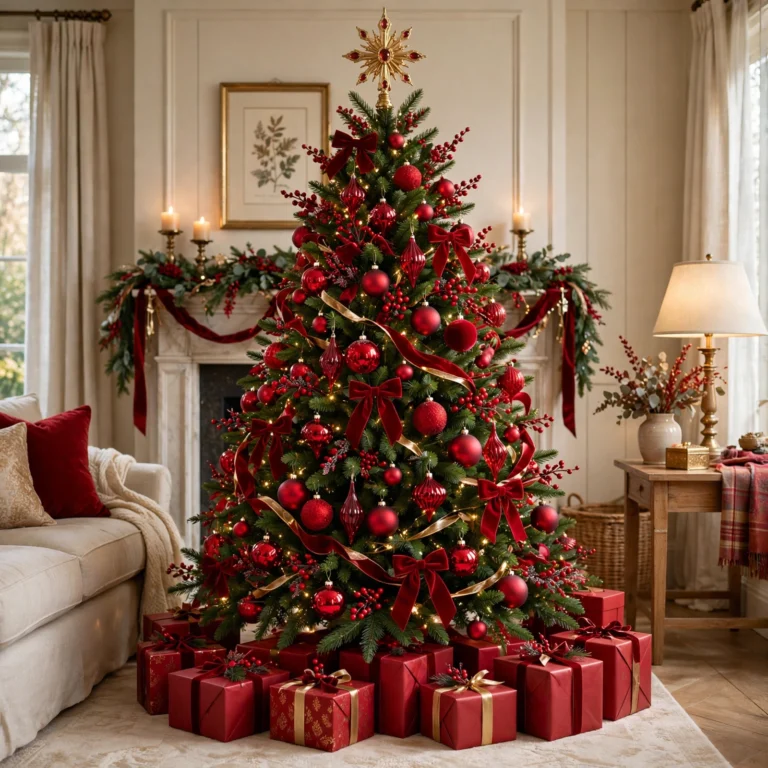
Red is the most traditional Christmas tree color, but a genuinely well-styled red tree takes more planning than simply buying every red ornament available. This post covers sixteen Christmas tree ideas red palettes can build from, spanning bright cherry, deep burgundy, and warm brick tones, each with specific pairing and styling guidance. You’ll get material choices, ratios, and placement guidance so your red tree reads as considered rather than simply matching in color alone.
Trend & Background
Red has remained a constant in Christmas tree styling, but the specific shades and pairings favored have shifted over recent seasons toward deeper, more muted reds like burgundy and brick paired with warm gold or cream, replacing the brighter, more saturated cherry red that dominated trees in past decades. This mirrors the same broader shift toward richer, more sophisticated jewel tones seen across holiday decorating generally. This matters now because a red tree built with the right shade, texture, and supporting color reads as considerably more current than a tree relying on bright red alone, without losing any of the color’s traditional, festive character.
Key Takeaways
- Christmas tree ideas red palettes work best when paired with one or two supporting tones, like gold or cream, rather than red used as the sole color throughout.
- Different shades of red, from bright cherry to deep burgundy, produce noticeably different results and suit different room styles.
- Texture, through ribbon, varied ornament finishes, and layered garland, keeps an all-red tree from reading as flat or one-dimensional.
- A shade and pairing comparison table is included so you can match a specific red tone to your room’s existing decor before buying ornaments.
1. Burgundy and Gold Foundation
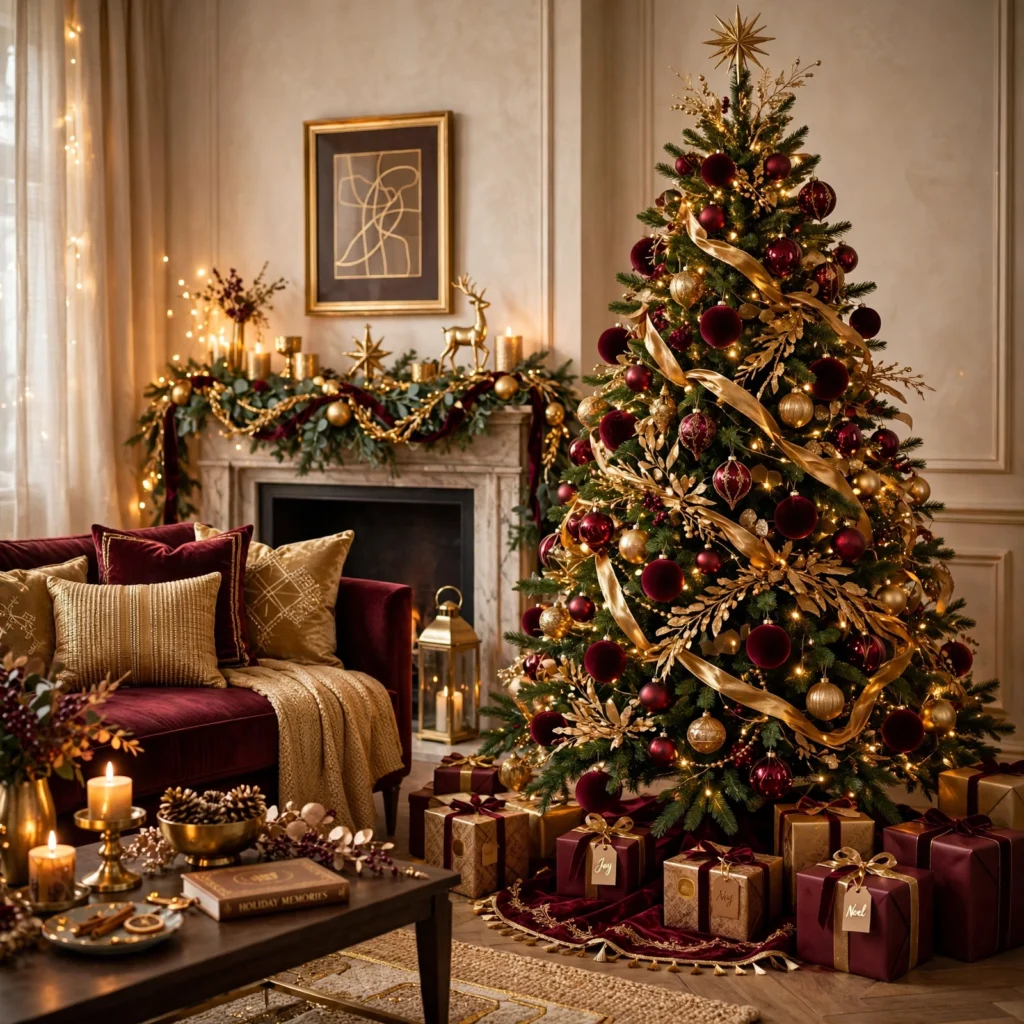
A burgundy and gold foundation pairs a deep, wine-toned red with warm metallic gold ornaments and ribbon, producing the most classic and broadly appealing version of a red Christmas tree. This combination reads as rich and formal without appearing dated, since burgundy carries considerably more depth than a brighter cherry red. Use gold in roughly a third of the tree’s total ornament count, letting burgundy remain the dominant color throughout the rest of the display.
2. Cherry Red and White Contrast
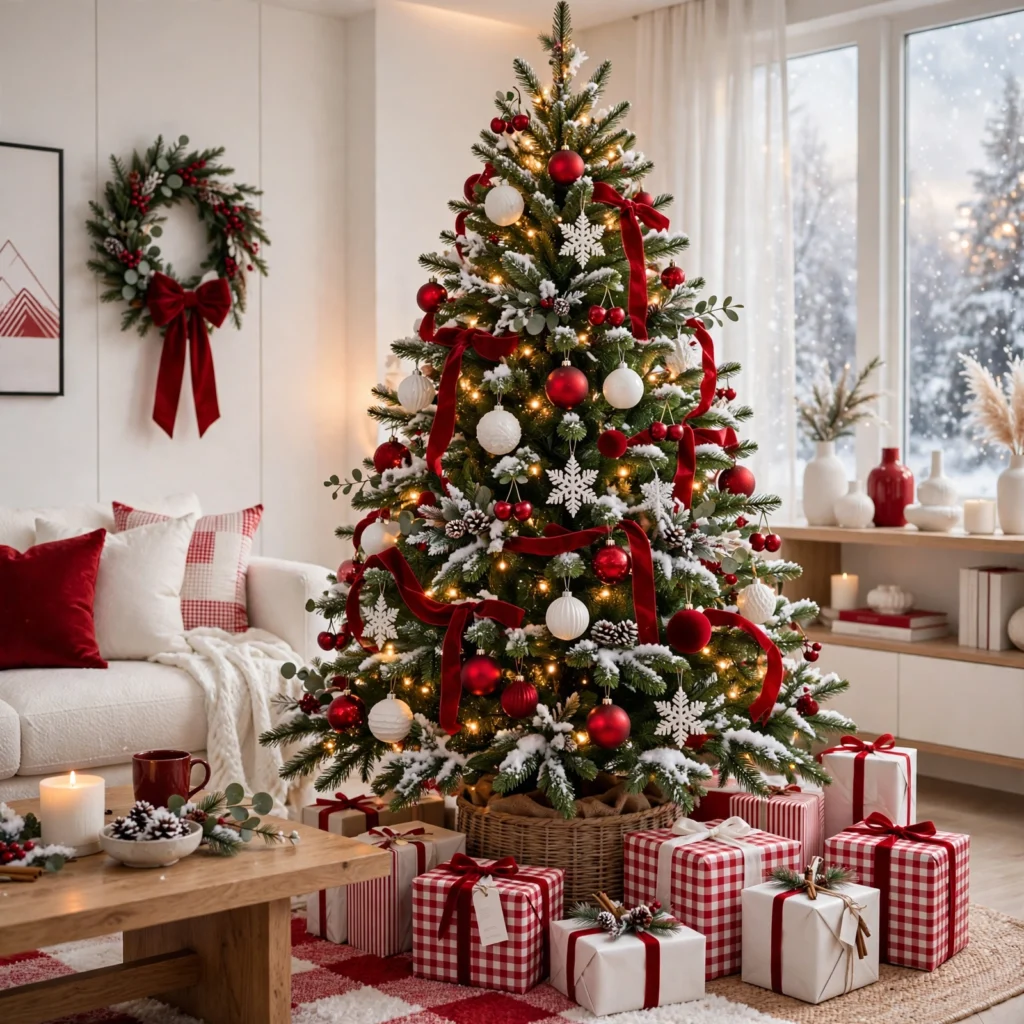
A cherry red and white contrast pairs a bright, saturated red with crisp white ornaments and lights, producing a cleaner, more traditional look than the deeper red pairings elsewhere on this list. This combination works particularly well in a home leaning into a classic, nostalgic holiday feel rather than a more muted, contemporary palette. Balance the ratio close to even between the two colors, since both are saturated enough that neither needs to dominate for the pairing to read clearly.
3. Brick Red and Sage Combination
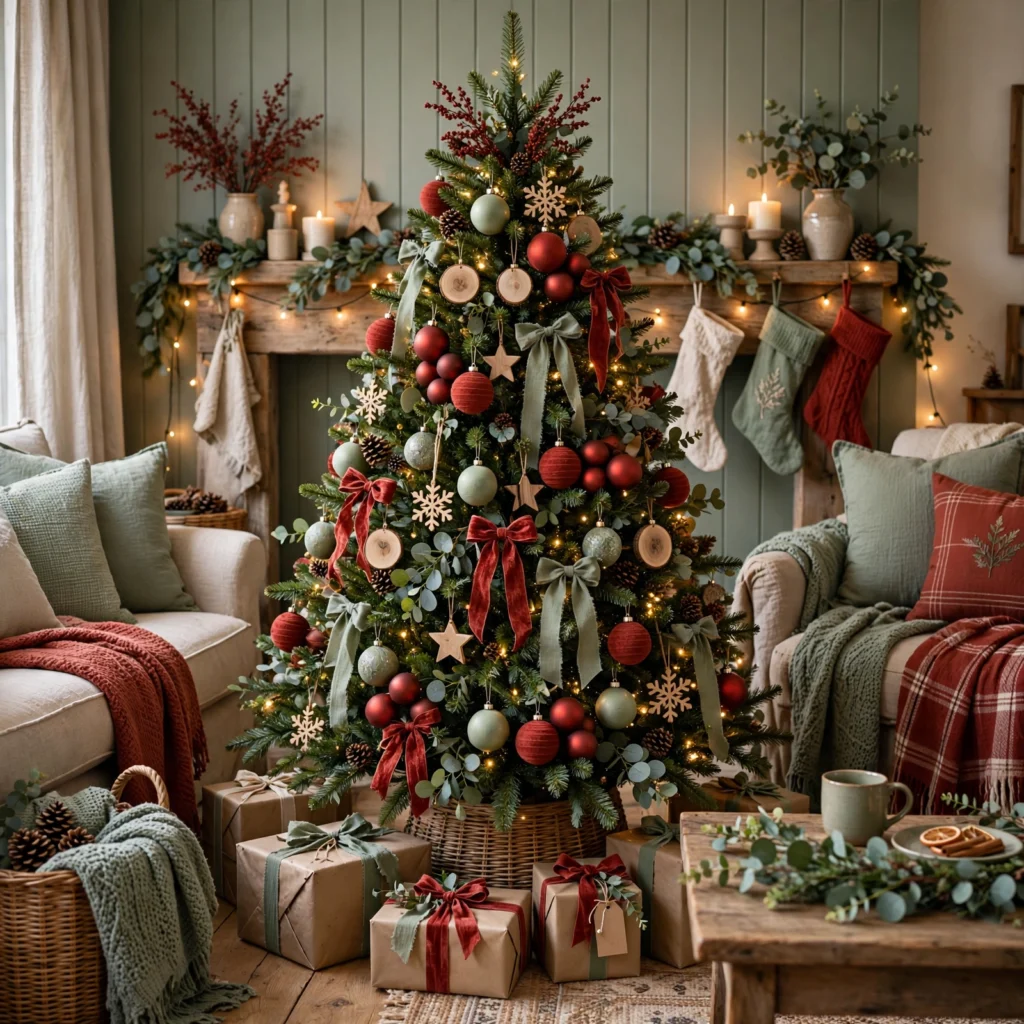
A brick red and sage combination pairs a warm, slightly orange-leaning red with a muted green, producing a more botanical, grounded take on the traditional red-and-green holiday palette. This combination reads as considerably more current than the brighter red-and-green pairing common in past decades, since both tones are muted rather than saturated. Balance the ratio so red remains the dominant color on the tree, with sage introduced through ribbon or a portion of the ornaments.
In order to see more options for slim christmas tree ideas decorating CLICK HERE
4. Christmas Tree Ideas Red Ornament Mix
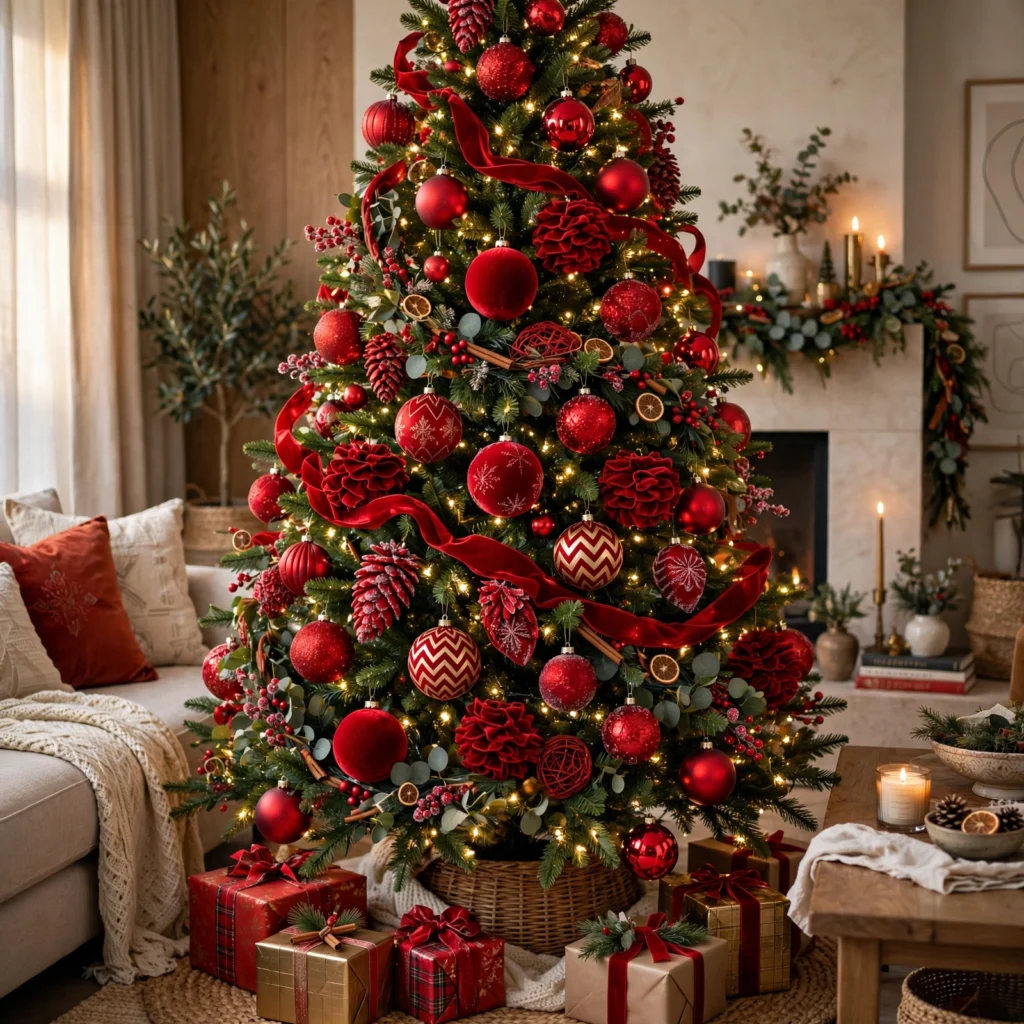
Christmas tree ideas red ornament mix approaches generally combine matte, glossy, and glitter-finished red ornaments in varying sizes, rather than a single uniform ornament style repeated throughout, adding depth and texture within a single color family. This technique relies on variation in finish and size rather than variation in color to keep an all-red tree from reading as flat. Mix finishes and sizes throughout the tree rather than grouping all of one type together in a single section.
| Red Shade | Approximate Hex Code | Best Pairing |
| Cherry Red | #D2042D | White, silver |
| Brick Red | #B22222 | Sage, cream |
| Burgundy | #800020 | Gold, brass |
5. Velvet Red Ribbon Cascade
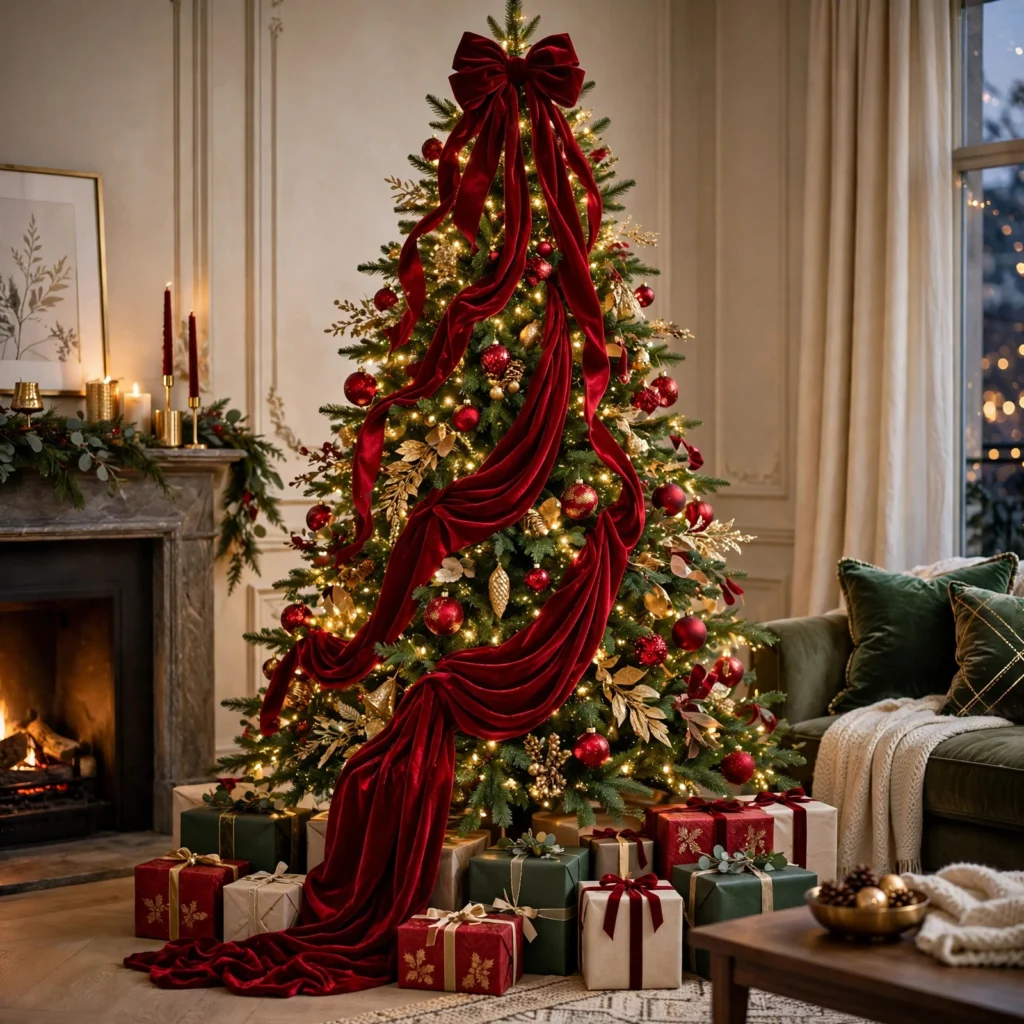
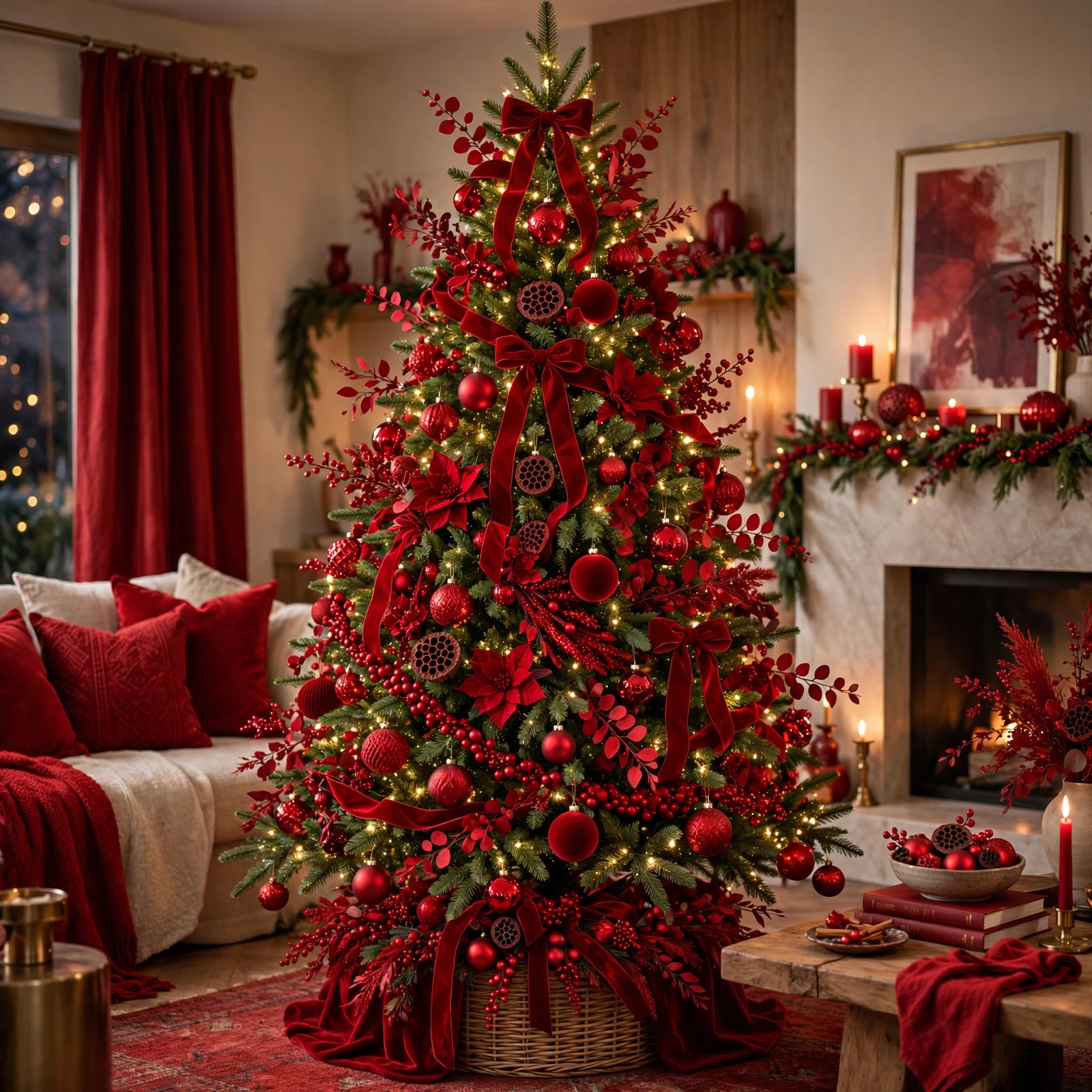
A velvet red ribbon cascade weaves wide velvet ribbon vertically down the tree from top to bottom, rather than wrapping horizontally, adding a rich, flowing texture that reinforces the tree’s red palette without requiring additional ornaments. Use three to five ribbon cascades spaced evenly around the tree, letting greenery remain visible between each run. A deep burgundy velvet in particular photographs well against warm-white lighting for this technique.
6. Red and Black Modern Pairing
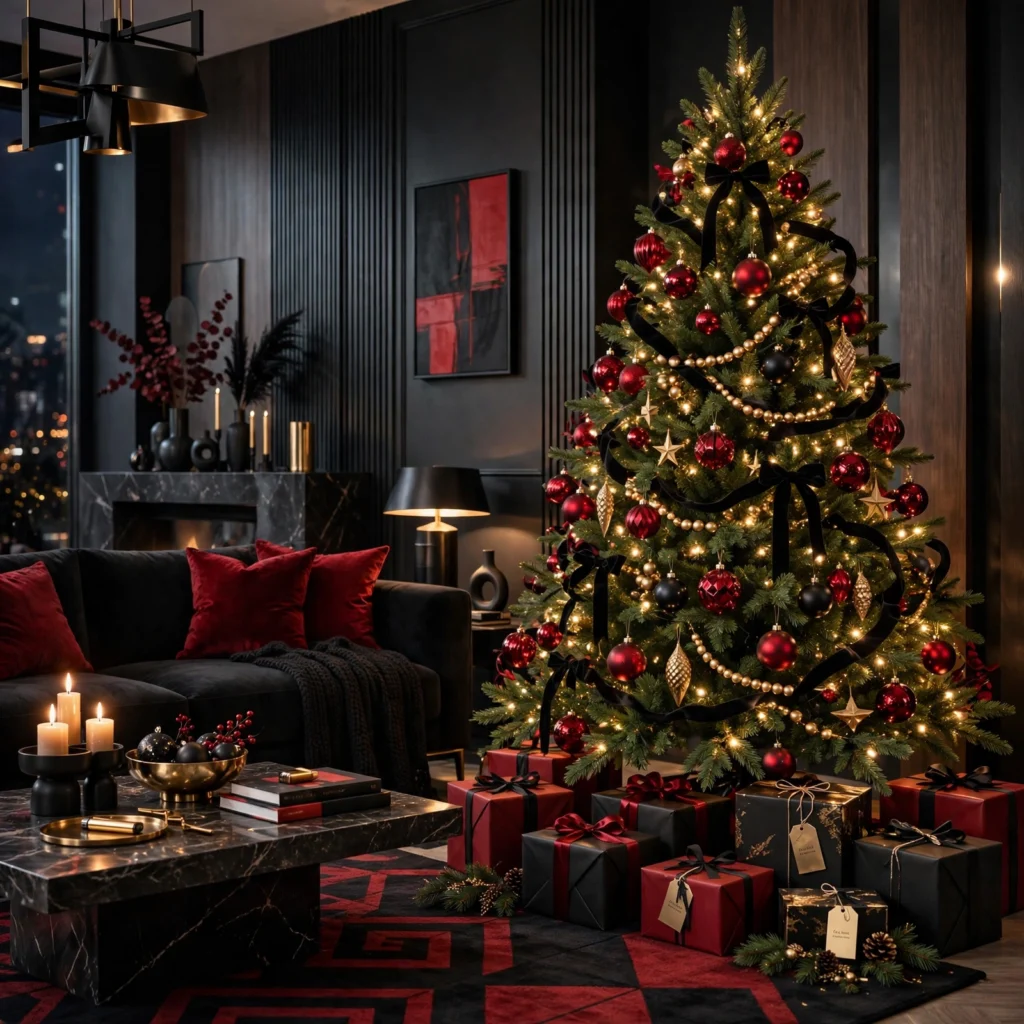
A red and black modern pairing combines a saturated red with matte black accents, producing a bolder, more contemporary version of a red tree than the softer gold or cream pairings elsewhere on this list. This combination works particularly well in a home with an already modern or minimal design direction, since black reads as more current than the traditional gold or white pairings red is more commonly styled with. Use black sparingly, in ribbon or a small portion of ornaments, so red remains the clearly dominant color.
7. Poinsettia-Inspired Tree Topper
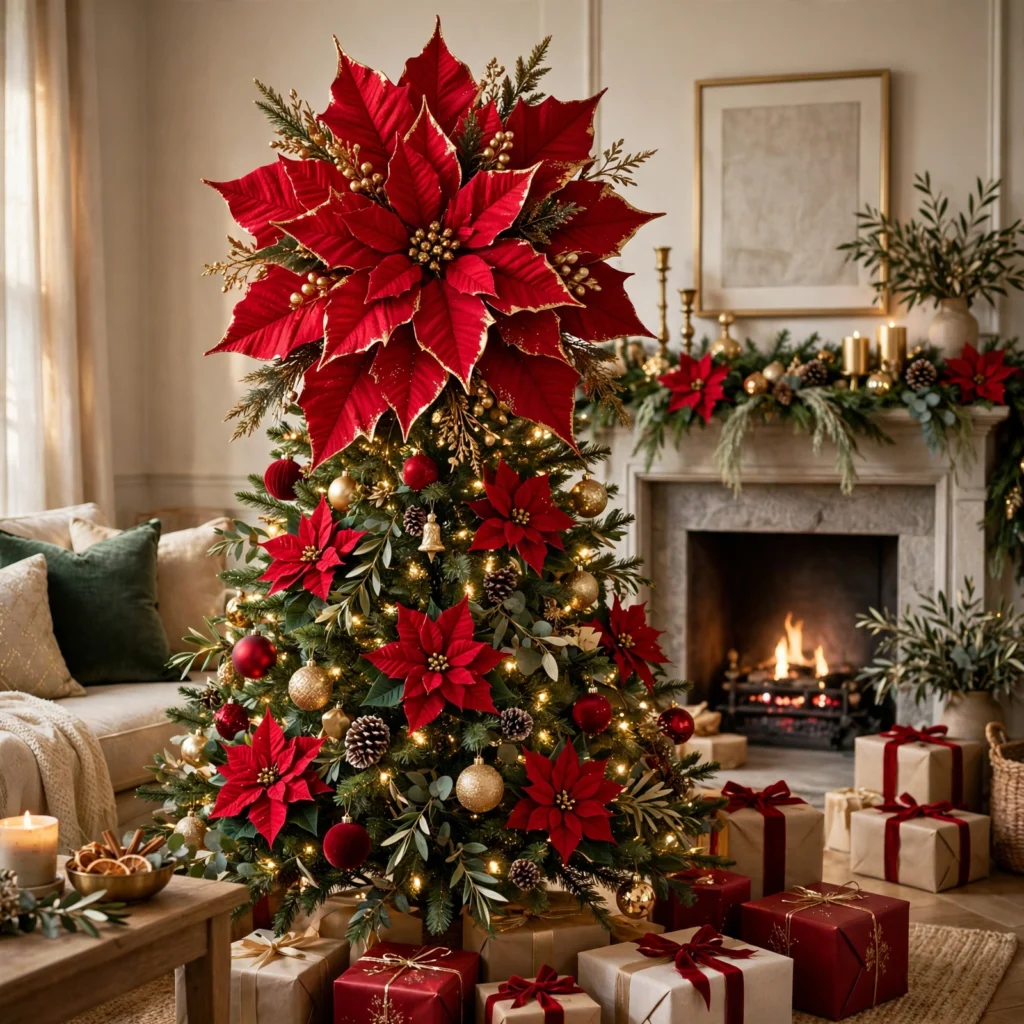
A poinsettia-inspired tree topper, using either fresh, faux, or a fabric poinsettia cluster rather than a traditional star or angel, reinforces a red palette from the very top of the tree with one of the season’s most recognizable red flowers. Size the topper proportionally to the tree’s overall height, generally 10 to 15 percent of the total height, so it reads as a clear focal point. Faux poinsettia versions have improved considerably in realism and offer a reusable option across multiple seasons.
8. Red and Cream Neutral Pairing
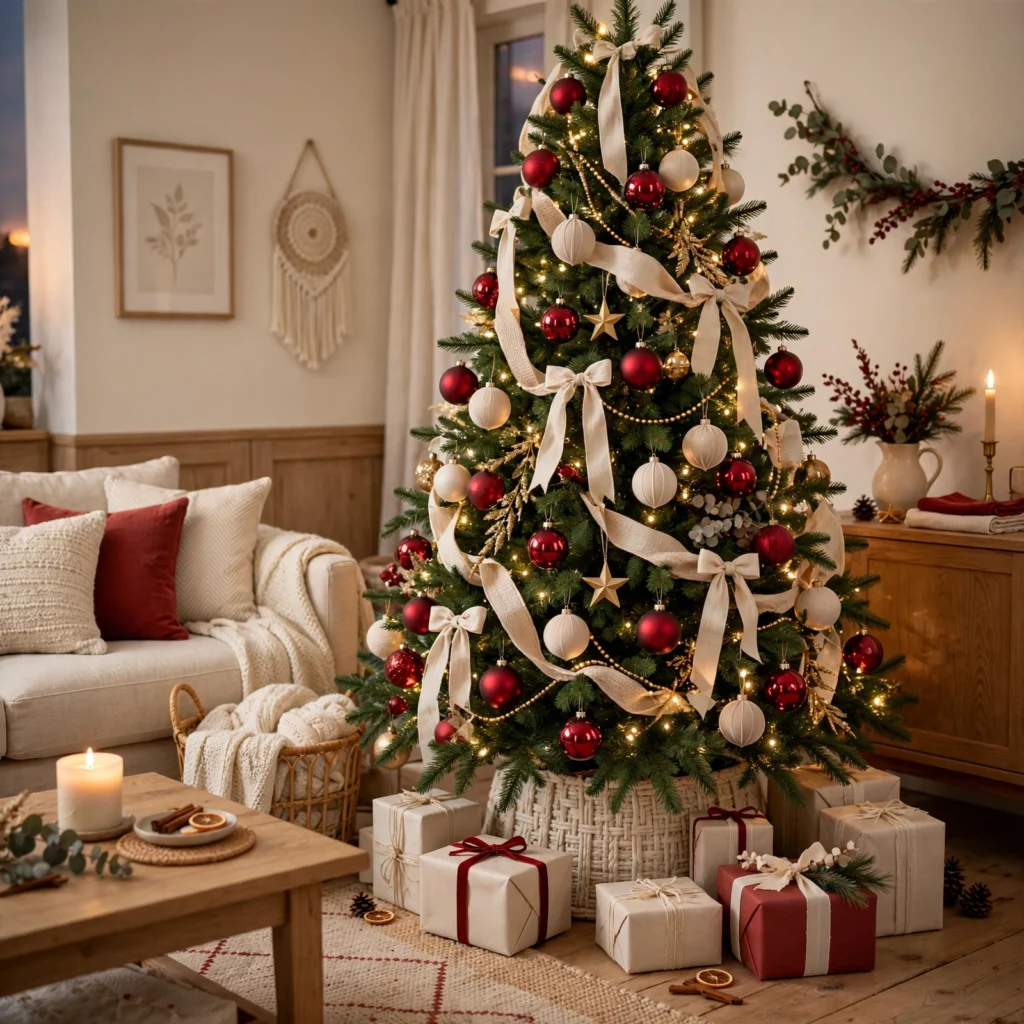
A red and cream neutral pairing combines a mid-tone red with a soft, warm cream rather than a stark white, producing a softer, more contemporary version of the traditional red-and-white holiday pairing. This combination reads as slightly warmer and more current than the brighter cherry-and-white contrast elsewhere on this list. Use cream as the supporting tone across roughly a third of the tree’s ornaments and ribbon, letting red remain the dominant color throughout.
9. Layered Red Garland Texture
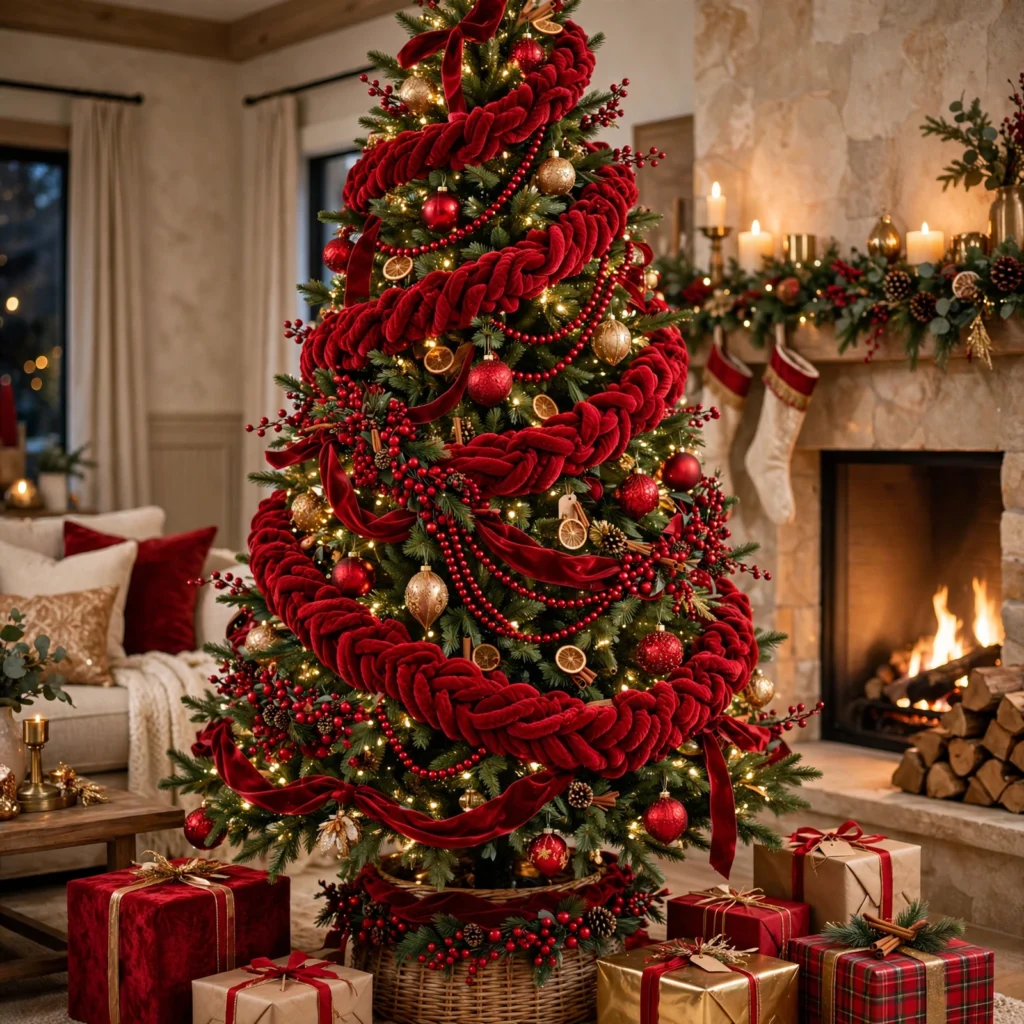
Layered red garland texture combines two or three garland types in coordinating red tones, like a beaded red garland, a red mesh ribbon, and a dried berry strand, wrapped together rather than using a single garland type alone. This adds noticeably more depth and visual interest than a single garland style wrapped around the tree in isolation. Wrap all garland types together in the same pass around the tree for the most cohesive, blended texture.
10. Christmas Tree Ideas Red Statement Ornaments
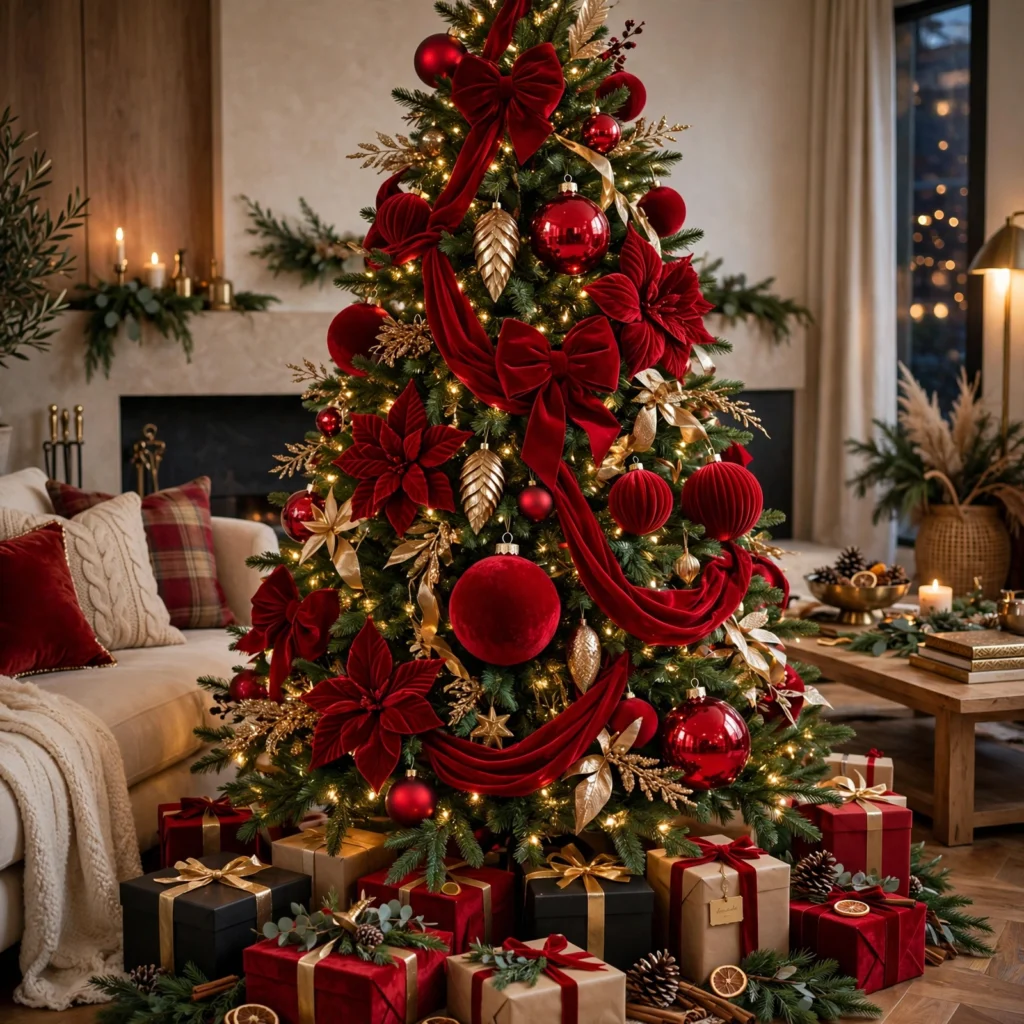
Christmas tree ideas red statement ornaments, sized considerably larger than a standard 3-inch ornament, add visual weight and a focal-point quality when used sparingly rather than in large quantities across the whole tree. Place three to five oversized red ornaments strategically throughout the tree, spaced evenly rather than clustered together, letting them serve as anchor points among smaller ornaments. This technique works particularly well combined with the ornament mix idea elsewhere on this list, since fewer larger pieces in a coordinated color read as more intentional.
11. Rustic Red Plaid Ribbon
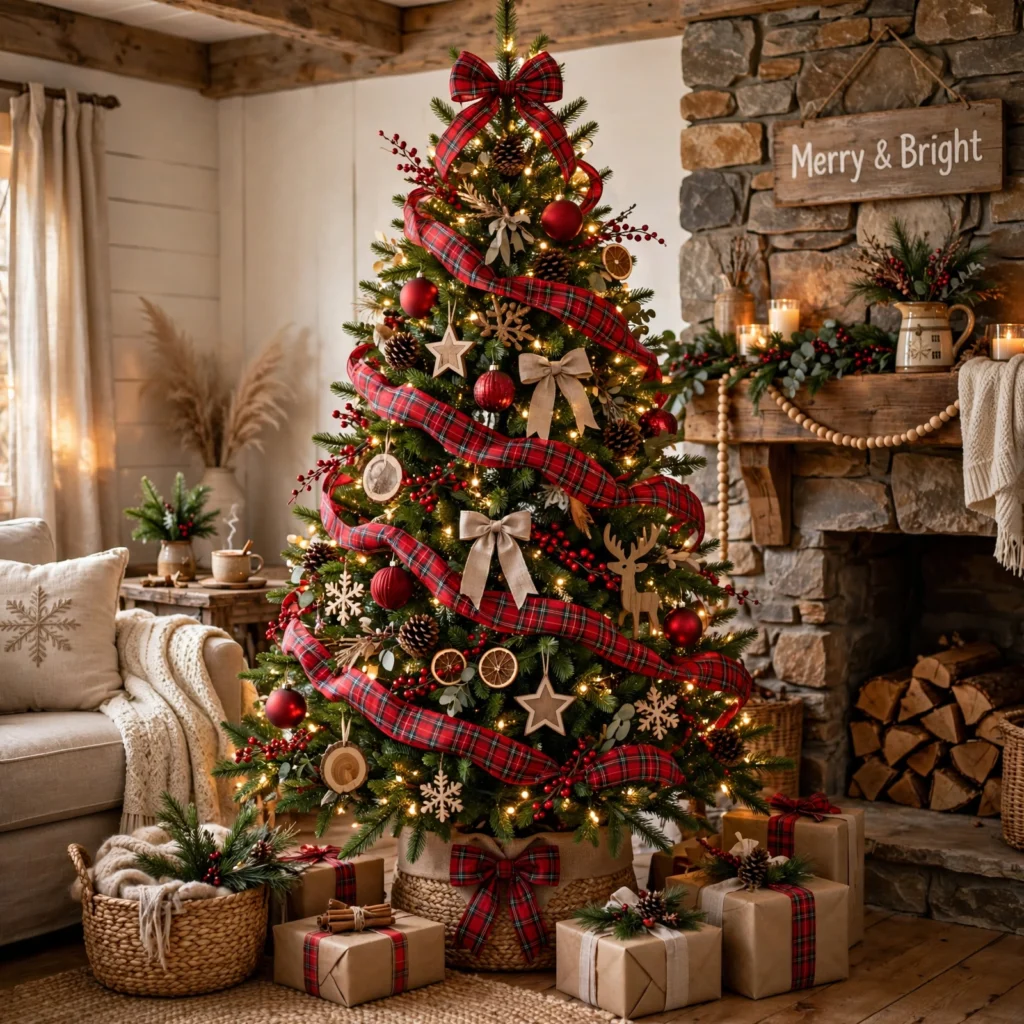
Rustic red plaid ribbon uses a classic buffalo or tartan plaid pattern in red and black or red and green, adding a slightly more casual, cabin-inspired texture to a red tree than the smoother velvet ribbon used in more formal pairings elsewhere on this list. This works particularly well in a home leaning into a rustic or farmhouse-adjacent holiday style. Use plaid ribbon in bows or shorter accent lengths throughout the tree rather than a single continuous cascade, since the pattern reads more clearly in smaller, repeated doses.
12. Red and Silver Formal Pairing
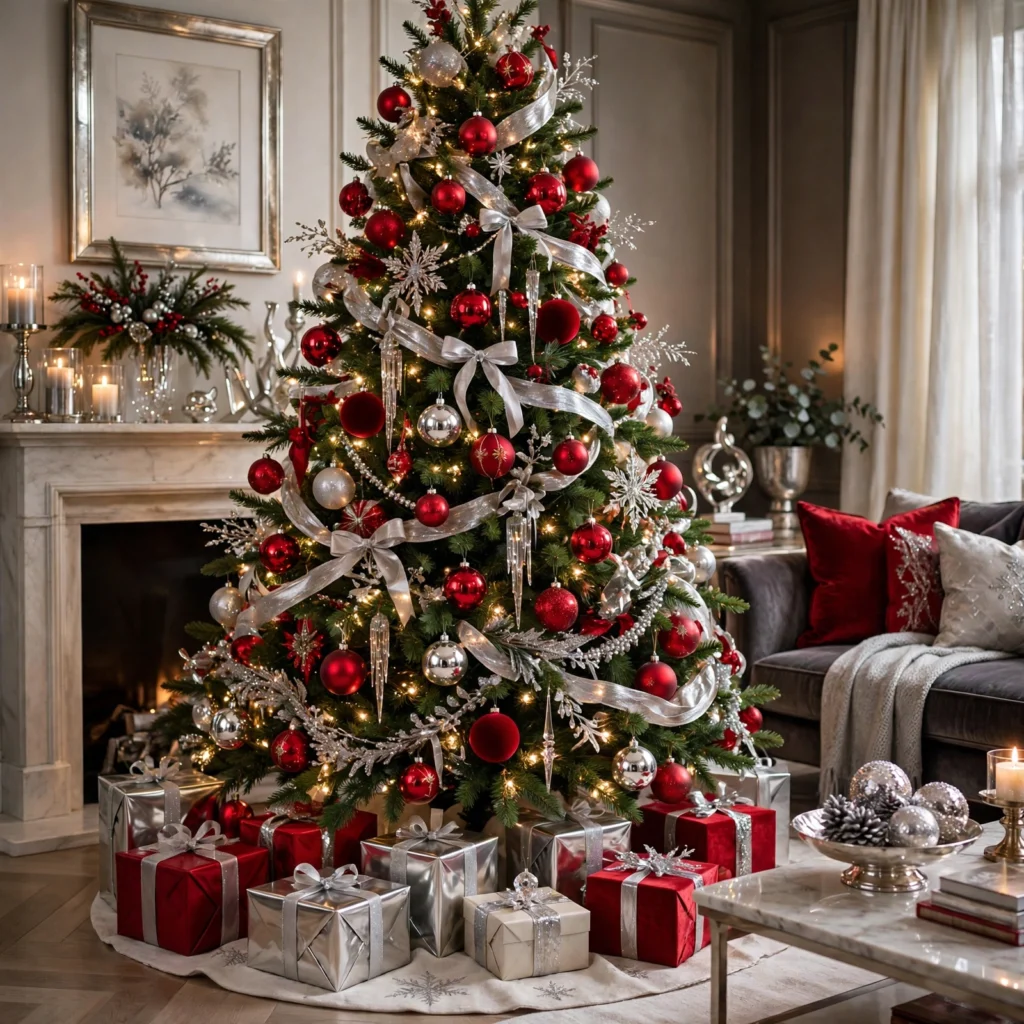
A red and silver formal pairing combines a saturated or deep red with cool metallic silver, producing a more glamorous, dressed-up version of a red tree than the warmer gold and brass pairings elsewhere on this list. This combination works well in a formal living room, dining room, or entryway aiming for a more polished, elegant feel. Because both red and silver read as fairly bold and reflective, balance the pairing with a matte or velvet texture somewhere in the display to add depth back into the room.
13. Berry and Pine Natural Accent
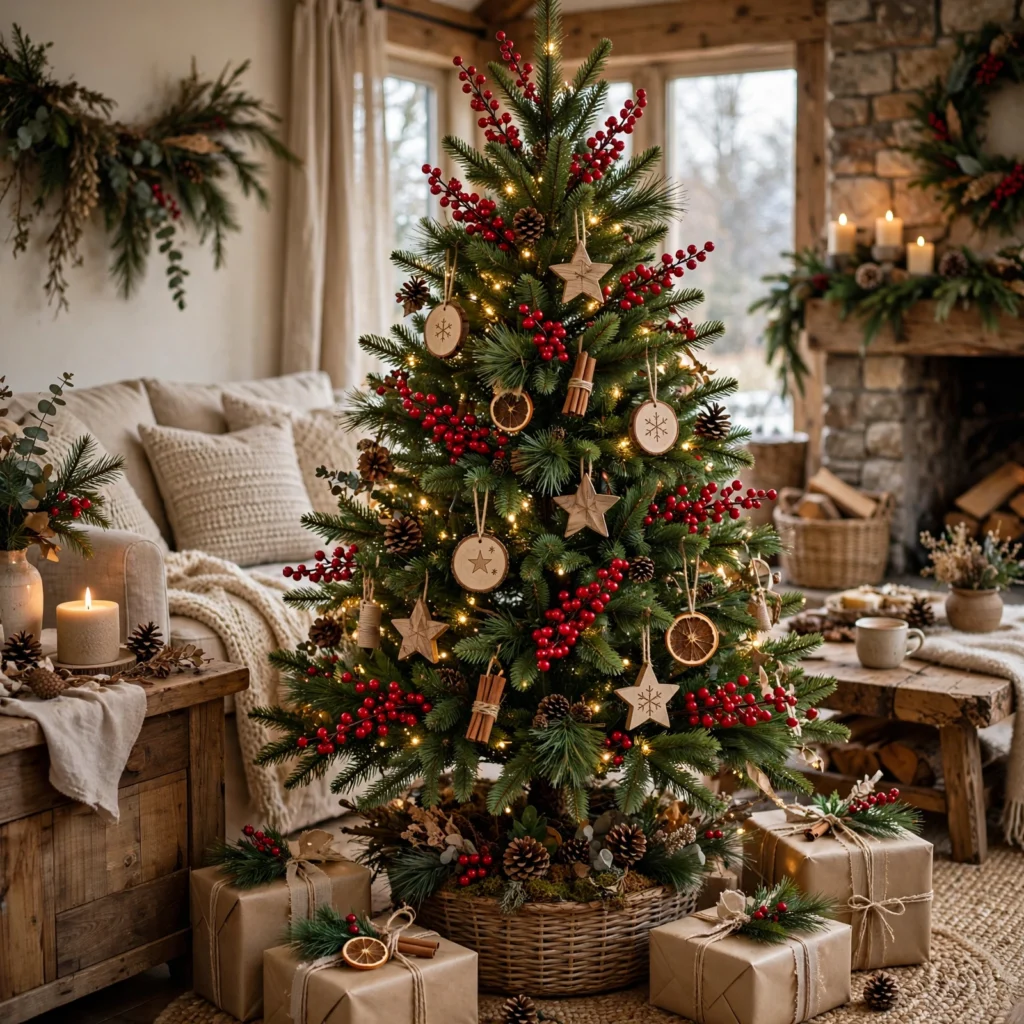
A berry and pine natural accent incorporates real or faux red berry stems alongside fresh or faux pine sprigs tucked directly into the tree’s branches, adding a natural, foraged texture to reinforce the red palette without relying on manufactured ornaments alone. This technique pairs particularly well with a nature-inspired overall holiday theme extending beyond the tree itself. Tuck berry stems at varying depths into the branches, rather than only at the surface, for the most natural, integrated look.
14. Christmas Tree Ideas Red Tree Skirt
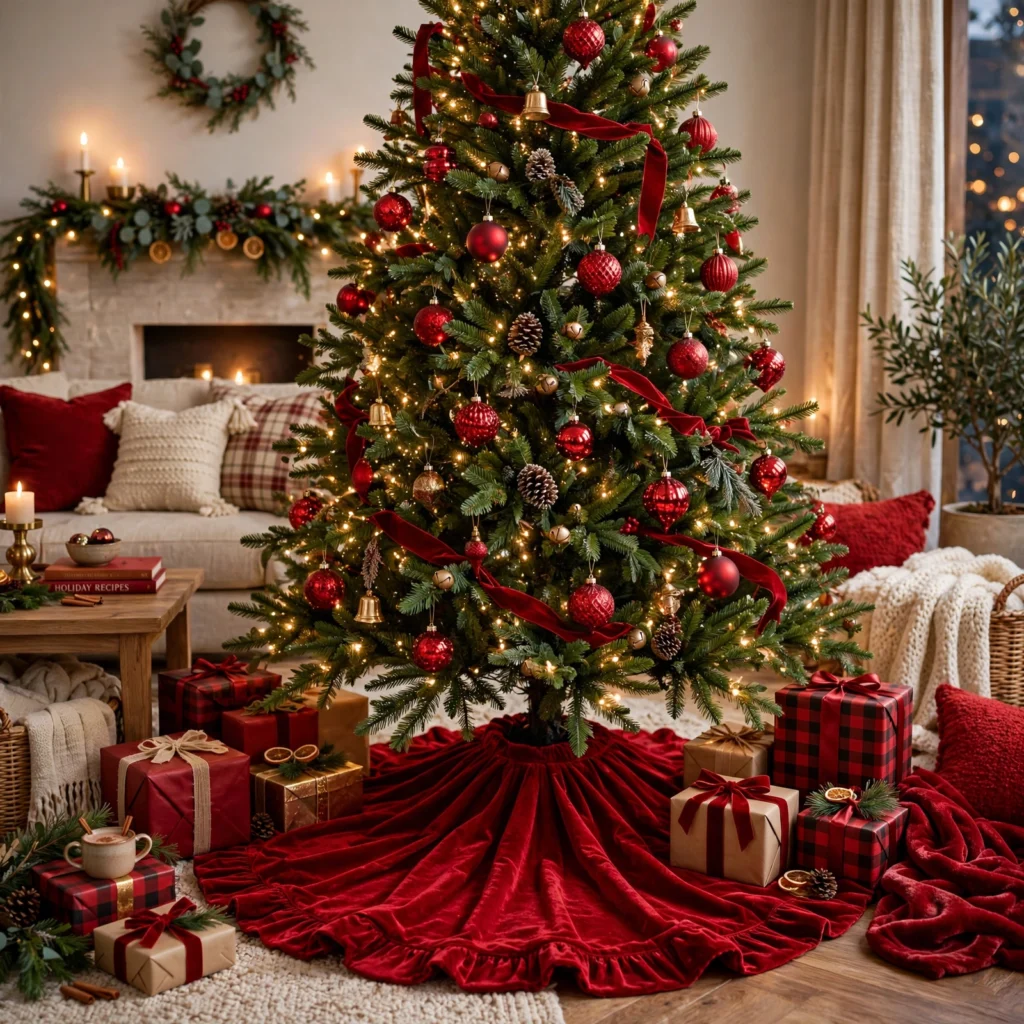
Christmas tree ideas red tree skirt choices generally favor a deep velvet or a red-and-cream plaid fabric over a bright, primary red skirt, since the deeper or patterned option reads as more considered and coordinates more easily with the rest of a styled red tree. Size the skirt generously enough to fully conceal the tree stand and base, typically 48 to 56 inches in diameter for a standard 6- to 7-foot tree. Choose a fabric that echoes one of the tree’s other textures, like velvet ribbon or plaid bows, for the most cohesive result.
15. Monochromatic Red Tree
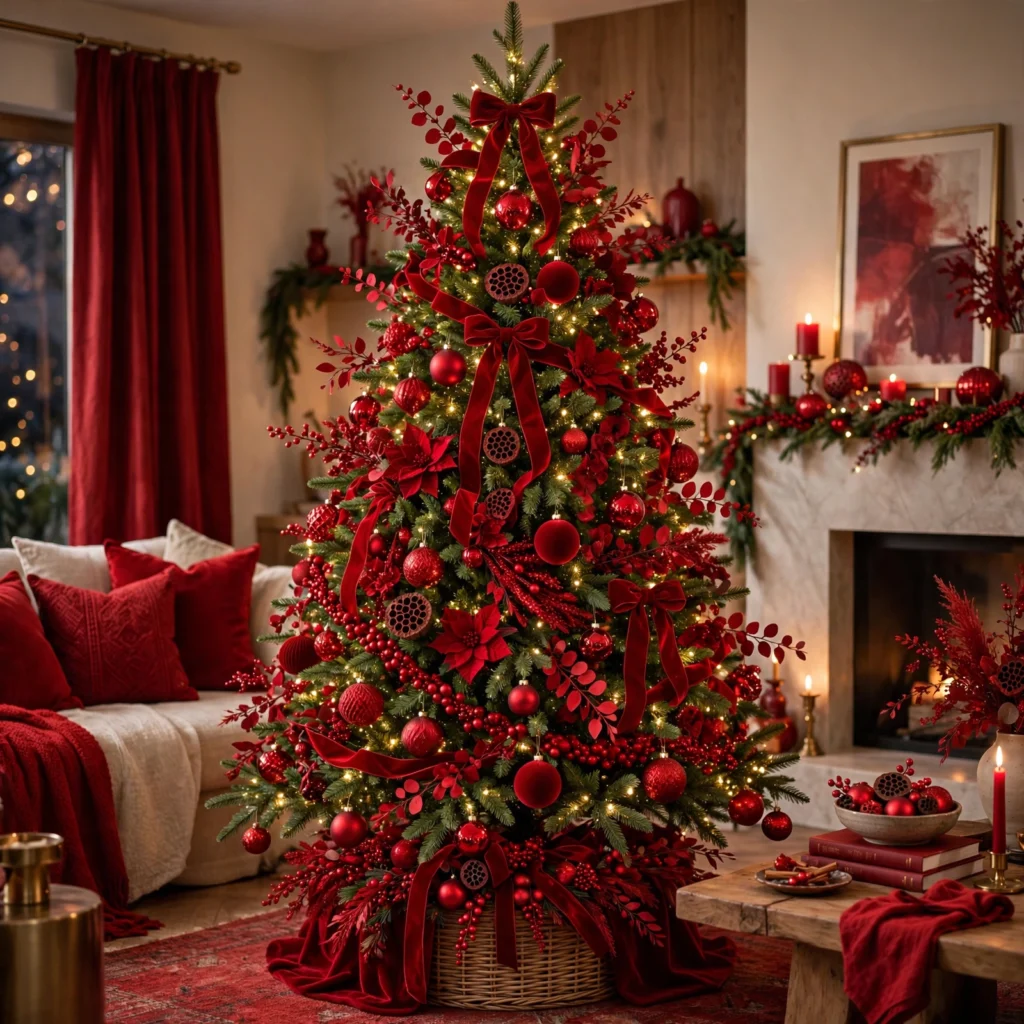
A monochromatic red tree commits fully to a single color family, using only varying shades and finishes of red throughout, without any supporting gold, white, or green accents, producing one of the boldest and most dramatic approaches on this list. This works particularly well as a statement tree in a secondary space, like a home office or a formal dining room, rather than the primary family living room tree. Rely heavily on varied ornament finish and size, since color alone won’t provide enough contrast to keep this approach from reading as flat.
16. Red and Copper Warm Pairing
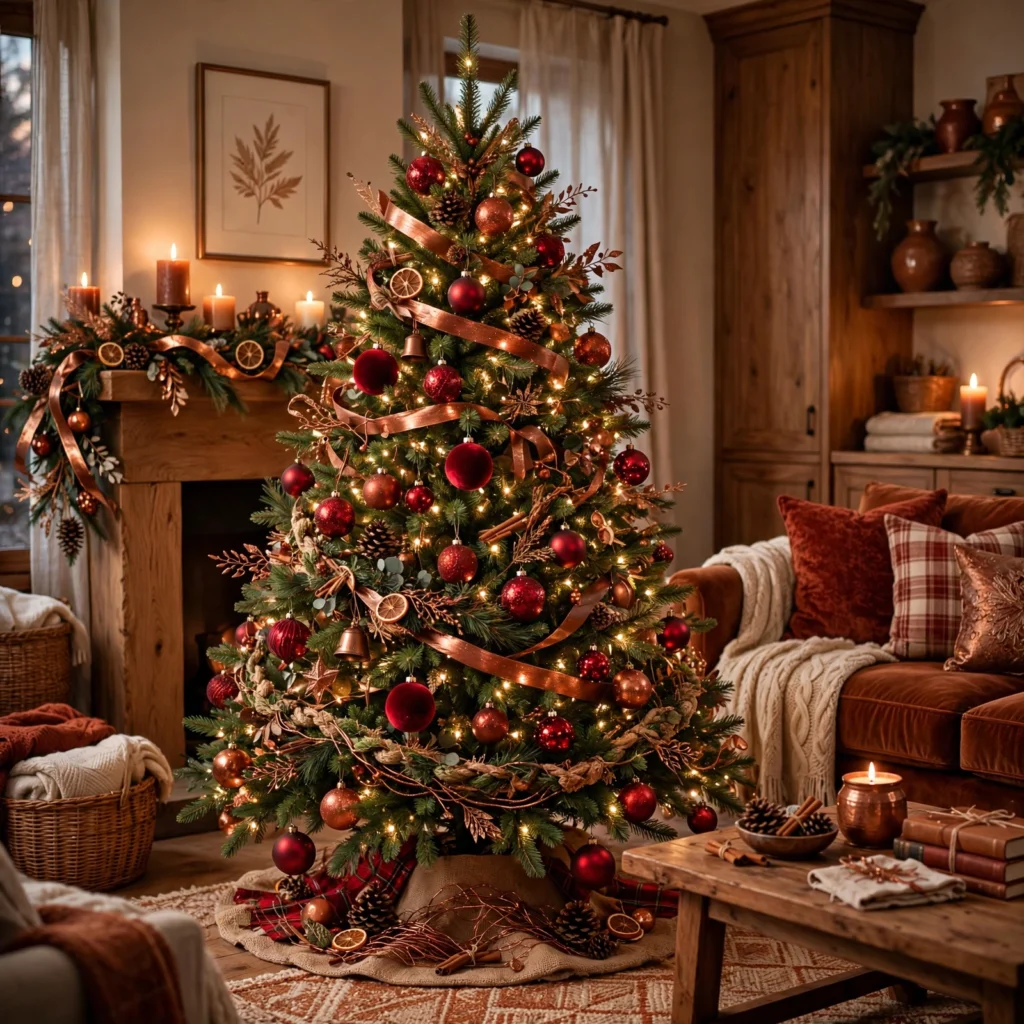
A red and copper warm pairing combines a mid-tone red with warm copper metallic ornaments and ribbon, producing a slightly different metallic pairing than the more common gold or brass combinations elsewhere on this list. Copper carries a warmer, slightly pinkish undertone that pairs particularly well with a brick or cherry red rather than a cooler-leaning burgundy. Use copper in roughly a third of the tree’s ornaments, letting red remain the clearly dominant tone.
Shop the Look
A spool of deep burgundy velvet ribbon paired with warm gold metallic ornaments covers the foundational layer for a classic red and gold tree. A set of matte and glossy red ornaments in varying sizes adds texture without introducing additional colors. Round out the display with a red velvet tree skirt and a faux poinsettia topper for a cohesive, fully styled red Christmas tree.
Common Mistake to Avoid
The most common mistake with Christmas tree ideas red palettes is using a single flat shade of red across every ornament without any variation in finish, size, or supporting color, which results in a tree that reads as visually flat despite the strong color commitment. A tree filled entirely with identical glossy red ornaments in the same size tends to look less intentional than one built with mixed finishes, varied sizes, and at least one supporting tone like gold or cream layered throughout. A better approach is treating red as a foundation to build texture and depth on top of, rather than the entire design in itself.
People Also Ask
What shade of red works best for a Christmas tree?
Burgundy and brick red have become more common choices in current tree styling than a brighter cherry red, since the deeper, more muted tones read as considerably more sophisticated and pair more easily with warm metallics like gold and copper. A brighter cherry red still works well for a more traditional, classic holiday look, particularly paired with white or silver rather than the warmer gold pairings that suit deeper reds better.
What colors pair best with a red Christmas tree?
Gold and cream are the most versatile and classic pairings for a red tree, working well with nearly any specific shade of red from bright cherry to deep burgundy. Sage green offers a more botanical, contemporary alternative to the traditional red-and-bright-green pairing, while black or silver provide bolder, more modern options for a red tree aiming for a less traditional look. The best pairing ultimately depends on the specific red shade and the overall style of the room the tree sits in.
How do I keep an all-red tree from looking too matchy?
Mixing ornament finishes, like matte, glossy, and glitter red pieces, along with varying ornament sizes throughout the tree, is the most effective way to keep a red palette from reading as flat or overly uniform. Adding at least one supporting neutral or metallic tone, like gold, cream, or copper, in a smaller proportion than the red also helps break up what would otherwise be an entirely single-color tree. Texture from ribbon, garland, and natural elements like berries or pine sprigs further supports this same goal.
Is red still a popular Christmas tree color?
Yes, red remains one of the most consistently popular Christmas tree colors, since it carries strong traditional and nostalgic associations with the holiday that few other colors match. The specific execution has evolved toward deeper, more muted shades and richer texture rather than the brighter, flatter red trees more common in past decades, but red itself has never fallen out of favor as a foundational holiday tree color.
How many red ornaments does a tree need?
A general guideline is one ornament for every 6 to 8 inches of branch space, which applies to a red tree the same as any other color palette, producing a display with visible greenery between ornaments rather than one that reads as overcrowded. Within that overall ornament count, allocating roughly two-thirds to red and one-third to a supporting color like gold or cream typically produces the most balanced, considered result.
Conclusion
Christmas tree ideas red palettes work best when a specific shade is chosen deliberately, paired with one supporting color, and built up with genuine texture rather than relying on red alone to carry the entire design. Save this list to Pinterest for your next holiday setup, and check out our related posts on christmas tree ideas 2026 trends and christmas room decor for more seasonal styling ideas.