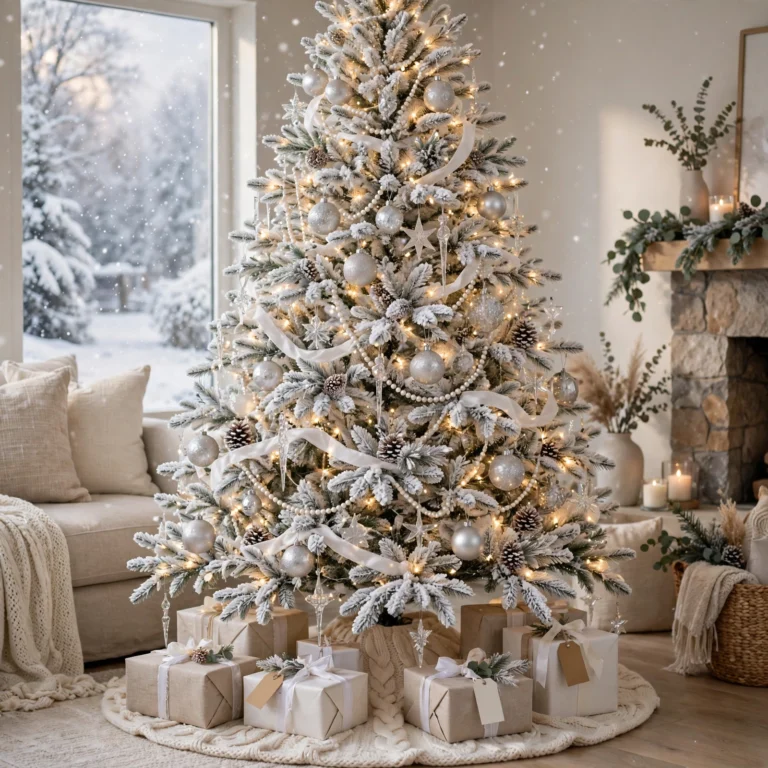
14 Slim Christmas Tree Ideas Decorating to Transform Tight Spaces into a Cozy Holiday Haven
Slim christmas tree ideas decorating solve a real problem for apartments, hallways, and corners where a traditional full tree simply won’t fit, yet a narrow tree can look sparse or awkwardly styled if decorated the same way as a wider one. This guide walks through fourteen distinct decorating directions, each tied to a specific ornament size, placement technique, or styling approach so you can picture the finished tree before starting. By the end, you’ll have a clear shortlist of ideas matched to your tree’s height and available space.
Trend & Background
Slim trees have grown in popularity as more people live in apartments, condos, or homes with limited floor space, pushing demand for decorating techniques suited specifically to a narrower branch structure. This matters now because standard decorating advice, built around trees with wide, full branches, often leaves a slim tree looking unevenly sparse when applied directly. Vertical styling techniques, such as ribbon spirals and single-column garland, along with smaller-scale ornaments, have become the leading approach for making a slim tree look intentional rather than simply undersized.
Key Takeaways
- Slim christmas tree ideas decorating focus on vertical styling and lightweight ornaments rather than the fuller techniques used on traditional trees.
- Ribbon spirals and vertical garland placement help fill a slim tree’s narrower branch structure without overcrowding it.
- Smaller ornament sizes, typically under three inches, prevent a slim tree from looking sparse or unbalanced.
- Corner and entryway placement remain the most common uses for slim trees, making front-facing decoration the priority.
1. Vertical Ribbon Spiral

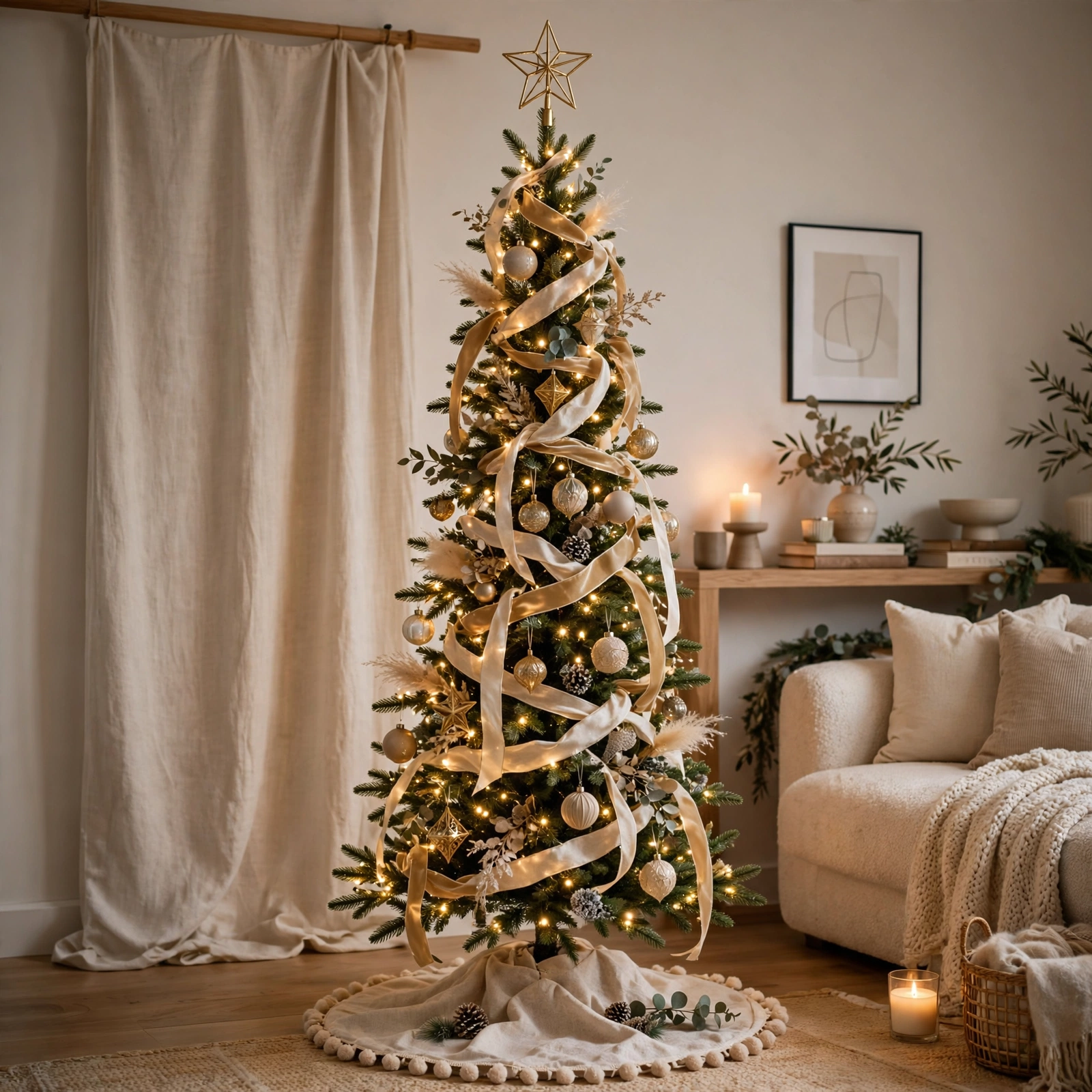
A ribbon spiral, wound in a single continuous line from the top of the tree to the base, creates a strong vertical line that complements a slim tree’s narrow silhouette rather than fighting against it. This technique suits trees with sparse branch structure, since the ribbon fills visual gaps without adding bulk. Use a thin wired ribbon in a single color, and wind it loosely enough to follow the tree’s natural taper rather than pulling it too tight against the branches.
2. Single-Column Garland Drape
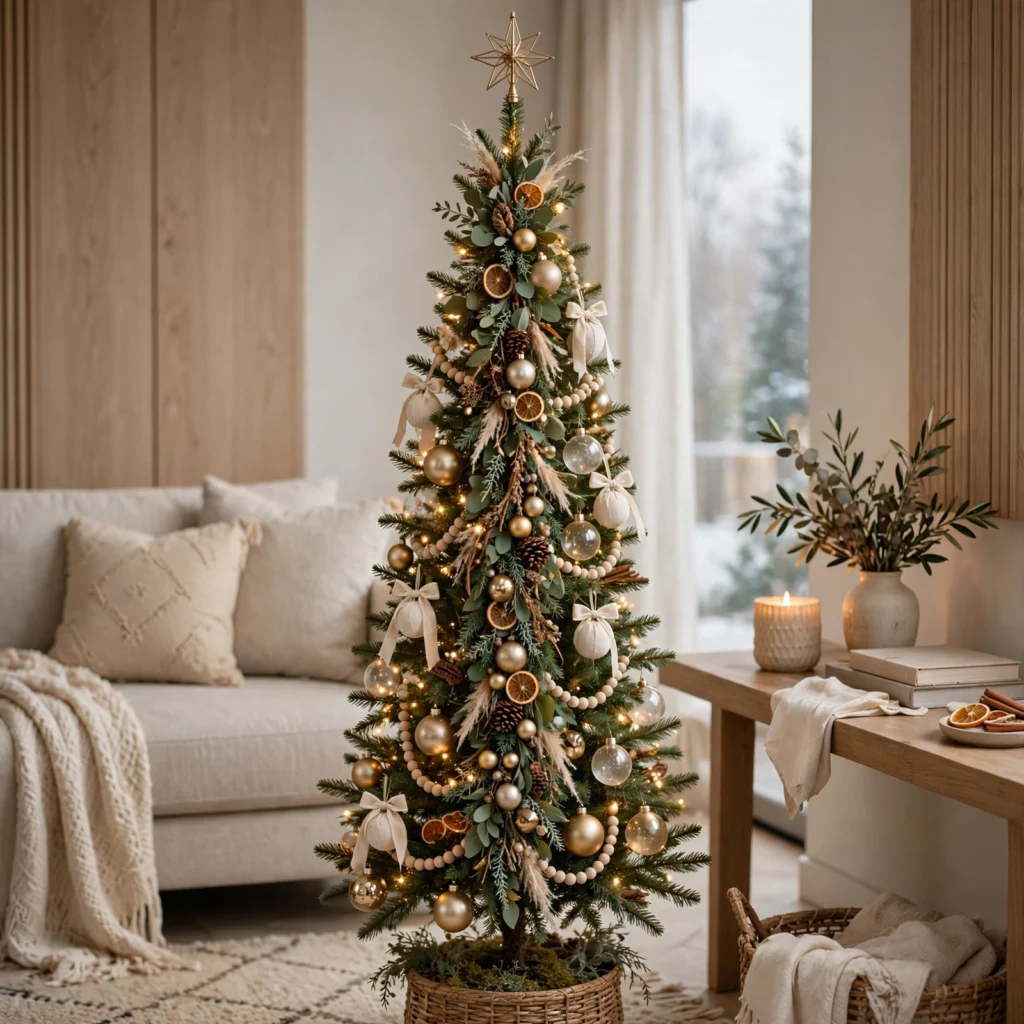
Draping a single garland strand vertically down the front of a slim tree, rather than wrapping horizontally around its full circumference, reinforces the tree’s height and avoids the bulk that horizontal wrapping tends to add. This approach suits trees placed against a wall or in a corner, where only the front-facing side will be visible. Choose a thin beaded or greenery garland, and let it fall in loose vertical waves rather than a tight, straight line for a more natural look.
3. Small-Scale Ornament Sizing

Choosing ornaments in the one to two-and-a-half inch range, rather than standard three to four-inch balls, keeps a slim tree’s proportions balanced and prevents individual ornaments from looking oversized against the narrower branches. This approach suits any slim tree regardless of color scheme or style. Distribute the smaller ornaments densely near the front-facing branches, and reduce the total ornament count compared to a full tree to avoid overcrowding the limited branch space.
In order to see more options for christmas tree decorations ideas CLICK HERE
4. Front-Facing Flat Back Styling

Since many slim trees are placed against a wall or in a corner, concentrating all ornaments, garland, and lights on the visible front half rather than distributing them evenly around the full tree makes the most efficient use of limited decorations. This approach suits corner placements or hallway trees where the back is never seen. Focus the densest concentration of ornaments at eye level and slightly above, tapering off toward the top and bottom for a natural, balanced appearance.
5. Monochromatic Color Scheme

A monochromatic color scheme, using ornaments in varying shades and finishes of a single color like gold or blue, creates a cohesive, uncluttered look that suits a slim tree’s narrower profile better than a busy multi-color palette. This approach suits smaller spaces where the tree serves as a focused accent rather than the room’s main decorative statement. Choose one dominant color with two or three finish variations, such as matte, glossy, and glittered, to add depth without visual clutter.
6. Thin Wire Star Topper

A thin wire star topper, rather than a bulky glass or fabric star, keeps the top of a slim tree proportional and prevents a heavier topper from bending or overwhelming the thinner top branch. This approach suits any slim tree style, since a lightweight topper works across both traditional and modern decorating schemes. Choose a topper under eight inches tall for trees under six feet, and secure it with a wire tie for extra stability given the thinner branch it rests on. The table below compares ornament sizing recommendations by tree height.
| Tree Height | Recommended Ornament Size | Approx. Ornament Count |
| 4-5 feet | 1-2 inches | 30-45 |
| 6 feet | 2-2.5 inches | 45-60 |
| 7 feet | 2.5-3 inches | 60-75 |
7. LED String Light Layering

Layering two thinner strands of warm white LED lights rather than one thicker strand allows for more even light distribution across a slim tree’s narrower branch spacing. This approach suits trees where gaps between branches are more visible due to the reduced width. Wrap each strand from the trunk outward to the tip of each branch rather than only around the exterior, ensuring light reaches the interior sections that a single wrap often misses.
8. Nested Ornament Clusters

Grouping ornaments into small nested clusters of two or three, rather than spacing them individually and evenly, creates a fuller visual effect on a slim tree without requiring a larger total ornament count. This approach suits trees with limited branch density, where individually spaced ornaments can look sparse. Nest a smaller ornament directly beside or slightly behind a larger one within each cluster, and repeat the pairing at varied heights throughout the tree’s front-facing branches.
9. Woven Ribbon Bow Accents

Small woven ribbon bows, tucked directly against the branch rather than dangling like a bow topper, add texture and color to a slim tree without consuming the limited depth of its shorter branches. This approach suits both traditional and farmhouse-style decorating schemes. Use a two to three-inch ribbon width for proportional scale, and space the bows every twelve to eighteen inches vertically along the tree’s front-facing side rather than clustering them in one section.
10. Pencil Tree Pop-of-Color Accent
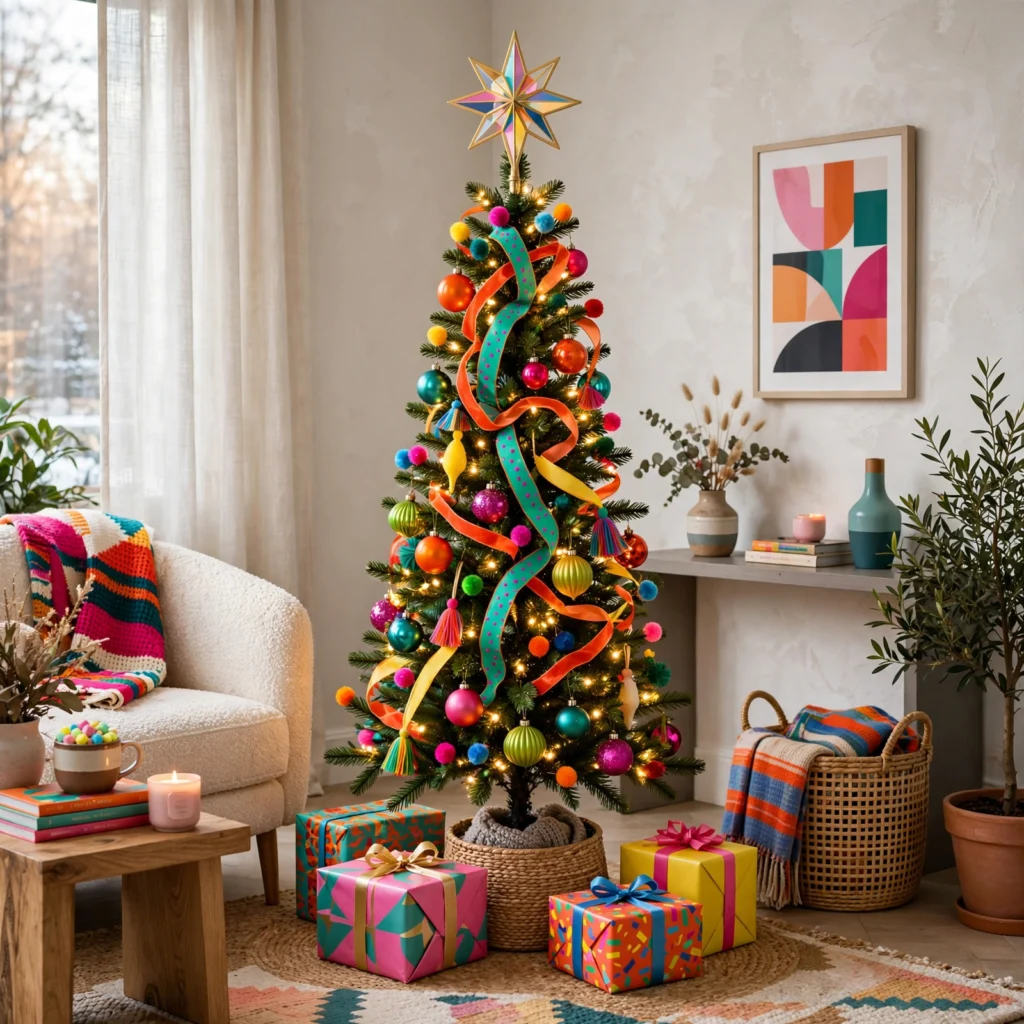
For a pencil-style slim tree, choosing a single bold accent color, such as red or emerald, against an otherwise neutral or white ornament base creates visual interest without overwhelming the tree’s narrow silhouette. This approach suits trees serving as a secondary decorative accent in a smaller room or hallway. Use the accent color in no more than twenty percent of the total ornaments, concentrating them toward the middle third of the tree where they’ll draw the most attention.
11. Faux Greenery Pick Fillers
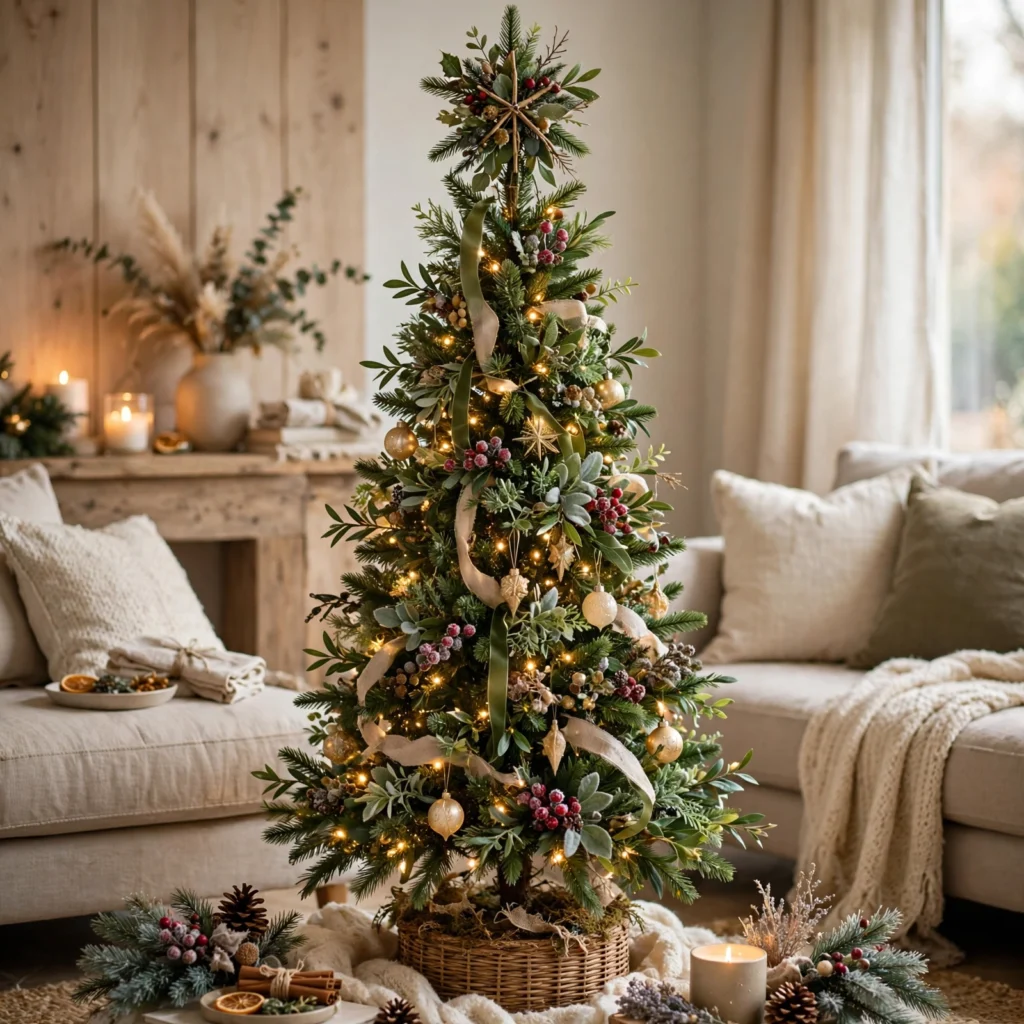
Inserting small faux greenery picks, such as pine or eucalyptus sprigs, into visible gaps between a slim tree’s branches adds fullness without requiring additional ornaments or garland. This approach suits artificial slim trees with noticeably sparse branch structure compared to their full-tree counterparts. Insert the picks at an angle rather than straight in, matching the direction of the tree’s existing branches so the added greenery blends naturally rather than sticking out awkwardly.
12. Corner Placement Styling

Since slim trees are frequently placed in corners due to their space-saving shape, angling the entire ornament and garland arrangement toward the room’s open sightline, rather than centering it on the tree itself, ensures the most visible portion receives the fullest styling treatment. This approach suits any slim tree positioned against two walls rather than freestanding. Identify the primary viewing angle from the room’s main seating area first, then concentrate the densest decoration within that specific sightline.
13. Uniform Ball Ornament Grid

Arranging same-sized ball ornaments in a loose, uniform grid pattern down the front of a slim tree creates a clean, modern look that suits minimalist holiday decor better than a more randomly clustered arrangement. This approach suits slim trees in modern or Scandinavian-styled homes. Choose ornaments in a single size and finish, and space them at consistent vertical and horizontal intervals, using a simple string or ribbon guide temporarily to help maintain even spacing while hanging.
14. Illuminated Topper Focal Point

Using an illuminated star or geometric topper as the tree’s primary focal point, rather than relying on a fuller ornament arrangement throughout, allows a slim tree to feel complete even with a lighter overall ornament load. This approach suits trees in low-light hallway or entryway placements where the topper’s glow draws the eye upward. Choose a battery-operated topper for cord-free placement, and keep the ornaments below simple and sparse so the illuminated topper remains the clear visual anchor.
Shop the Look
For a monochromatic gold slim tree, look for a mix of matte and glossy gold ball ornaments in the two-inch range, a thin gold beaded garland, and a wire star topper. For a corner-placed pencil tree, red velvet ribbon bows, small red and white ball ornaments, and warm white LED string lights complete the look. Those styling a modern minimalist slim tree can start with uniform white ball ornaments, a matte black topper, and simple silver ribbon for accent.
Common Mistake to Avoid
The most common mistake with slim christmas tree ideas decorating is using standard full-size ornaments and garland meant for wider trees, which quickly overwhelms a slim tree’s narrower branch structure and makes it look overloaded rather than festive. Scaling down ornament size, reducing the total garland thickness, and concentrating decoration on the tree’s visible front side produces a far more balanced and proportional result than applying full-tree techniques directly.
People Also Ask
How do you decorate a slim Christmas tree so it doesn’t look sparse?
Using smaller-scale ornaments, nesting them in clusters rather than spacing them individually, and adding faux greenery picks to fill visible gaps are the most effective ways to prevent a slim Christmas tree from looking sparse. Concentrating decoration on the tree’s front-facing side, especially for corner placements, also maximizes the visual impact of a limited ornament count.
What size ornaments work best on a slim Christmas tree?
Ornaments in the one to two-and-a-half inch range typically work best on a slim Christmas tree, since larger three to four-inch ornaments can look oversized against the tree’s narrower branch structure. Reducing ornament size proportionally to the tree’s reduced width helps maintain balanced, natural-looking proportions from top to bottom.
How many ornaments do I need for a slim Christmas tree?
A six-foot slim tree typically needs between forty-five and sixty smaller ornaments, roughly half to two-thirds the count used on a full tree of the same height, due to the reduced branch surface area. Adjusting this count based on how densely the branches are spaced on your specific slim tree model further refines the total needed.
Should a slim Christmas tree be decorated differently than a full tree?
Yes, slim trees benefit from vertical styling techniques like ribbon spirals and single-column garland, smaller ornament sizing, and front-facing concentration of decorations, all of which differ from the more evenly distributed, horizontal techniques typically used on fuller trees. Applying standard full-tree decorating methods directly to a slim tree often results in an overloaded or unevenly weighted appearance.
Where should a slim Christmas tree be placed for the best look?
Corners, hallways, and entryways are the most common and effective placements for a slim Christmas tree, since its narrow profile fits these spaces without blocking pathways. Positioning the tree so its most densely decorated front side faces the room’s main sightline, such as a seating area or entry door, ensures the styling is seen to its fullest effect.
Conclusion
Slim christmas tree ideas decorating make it possible to bring full holiday character into a narrow or tight space, and any of these fourteen directions provides a solid starting point depending on your tree’s height, placement, and existing ornament collection. Save this guide to Pinterest for reference while shopping ornaments, and check out our related post on choosing the right paint sheen for high-traffic rooms.