16 Inspiring Christmas Tree Decorations Ideas Featuring Beautiful Ornament Styles for Every Home
The ornaments and small decorations that go on a Christmas tree do as much to define its overall character as the tree itself. This guide walks through sixteen Christmas tree decorations ideas covering ornament materials, DIY options, and filler details that bring a tree together into a cohesive, personal display. By the end, you’ll have specific materials, techniques, and collection-building suggestions to decorate a tree that feels intentional rather than assembled from whatever ornaments happened to be on sale.
Trend & Background
Christmas tree decorations have moved toward more varied material mixes, with wood, fabric, and dried botanicals now appearing alongside traditional glass ornaments rather than a single uniform ornament type covering the whole tree. Handmade and DIY decorations have also grown in popularity as more people want their tree’s decorations to reflect personal effort and history rather than an entirely store-bought collection. This matters now because the tree typically stays as a home’s central focal point for several weeks, making the specific decorations chosen worth as much thought as the tree’s shape or color.
Key Takeaways
- Mixing ornament materials, like glass, wood, and fabric, adds more visual depth than a single uniform finish throughout the tree.
- Handmade and DIY ornaments give a tree personal character that a fully store-bought collection often lacks.
- Ribbon, garland, and floral picks fill visual gaps between ornaments more effectively than adding more individual pieces.
- Building an ornament collection gradually over several seasons produces a more considered result than one large single purchase.
1. Mercury Glass Ornament Set
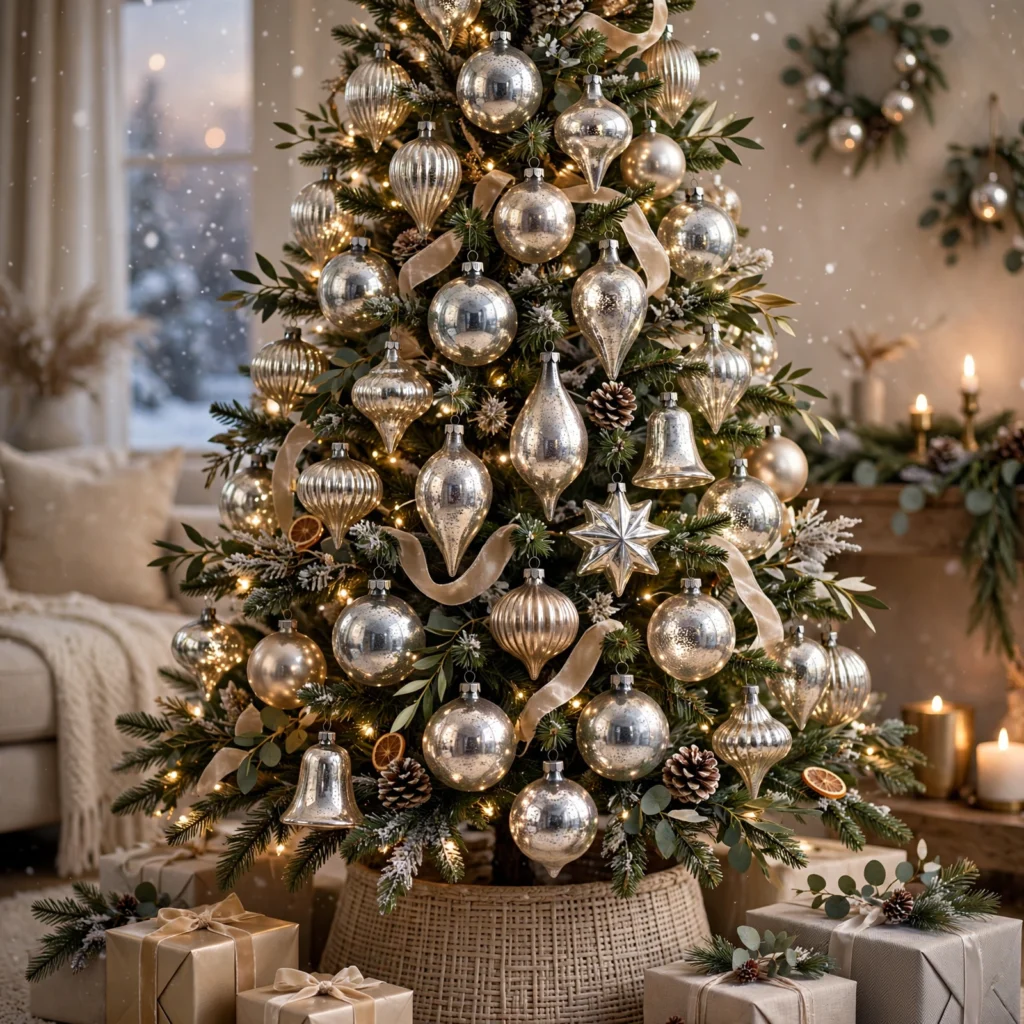
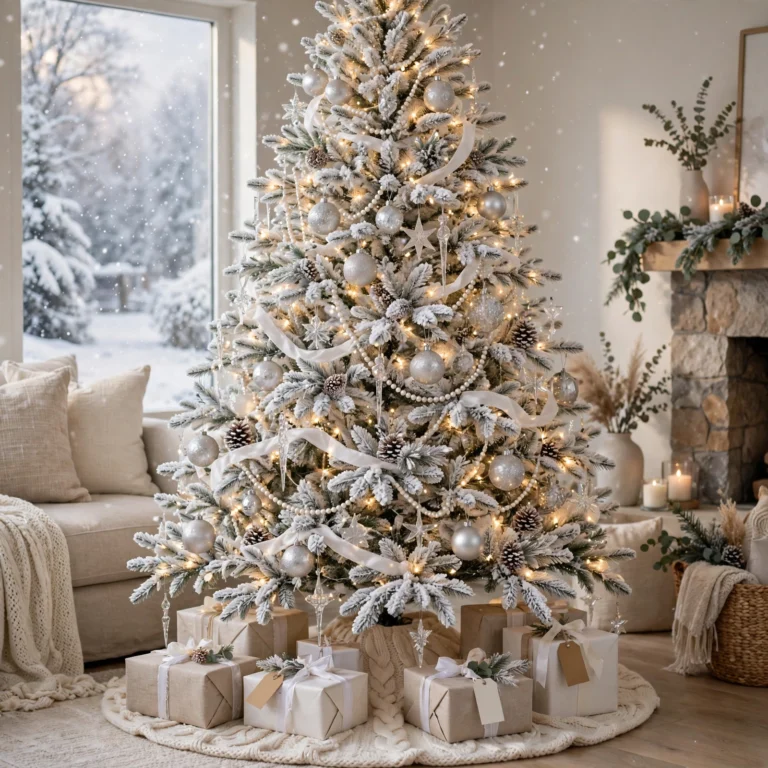
A mercury glass ornament set uses a silvered glass finish with an antiqued, slightly imperfect surface, giving these ornaments a vintage character that standard glossy glass ornaments don’t replicate. These pieces catch and reflect ambient tree lighting distinctively, adding sparkle without requiring a fully metallic finish. Mixing mercury glass ornaments in varying shapes, like rounds, teardrops, and finials, adds more visual interest than relying on a single uniform shape throughout the tree.
2. Wood Slice Ornaments
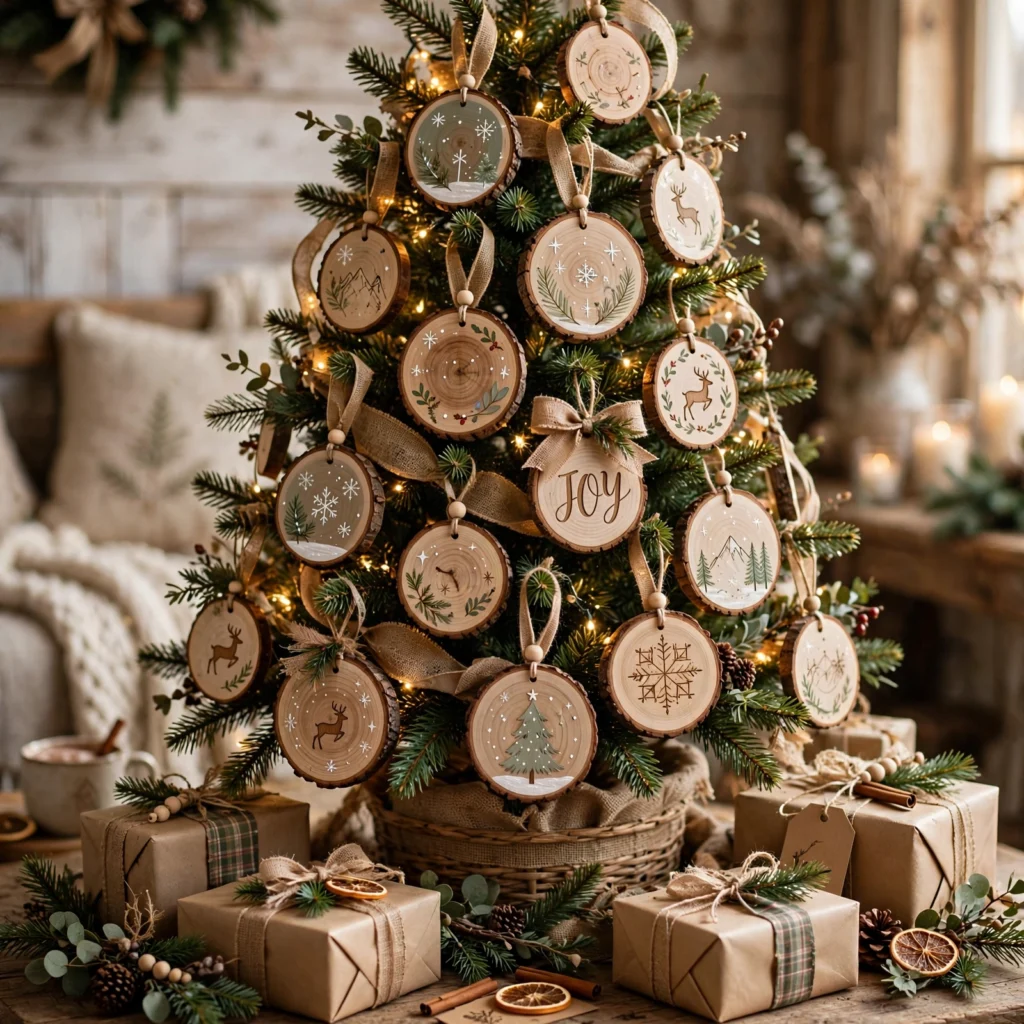
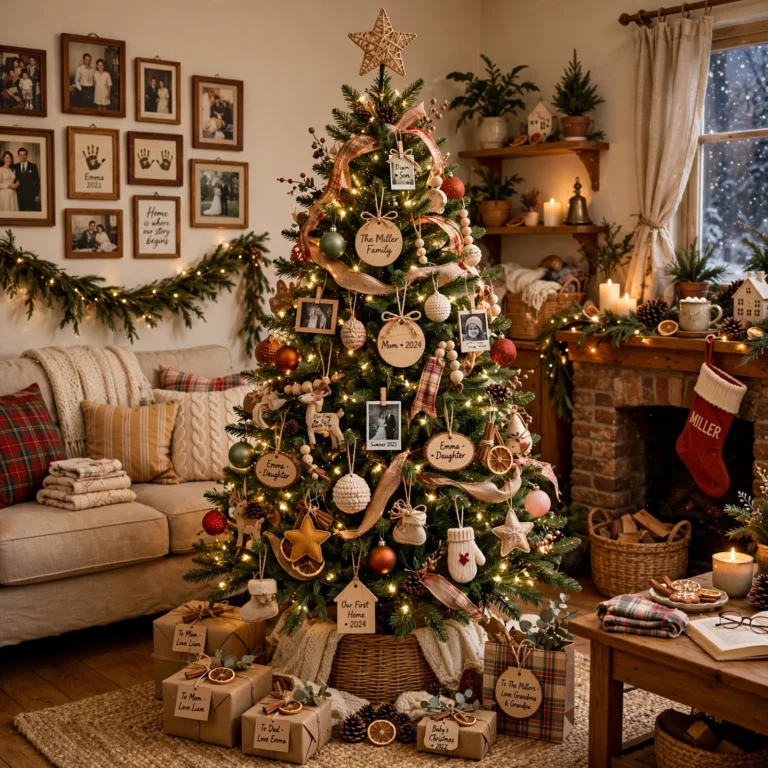
Wood slice ornaments use thin, cut cross-sections of birch or another light wood, sometimes with a simple burned or painted design, adding natural texture that glass and plastic ornaments can’t achieve on their own. These pieces suit a rustic or natural-themed tree particularly well, and their lightweight material means they won’t weigh down thinner branch tips the way heavier glass ornaments might. Choosing wood slices in a range of sizes, from 1 to 3 inches in diameter, provides variety without requiring a large specialty purchase.
| Ornament Material | Weight | Best Branch Placement |
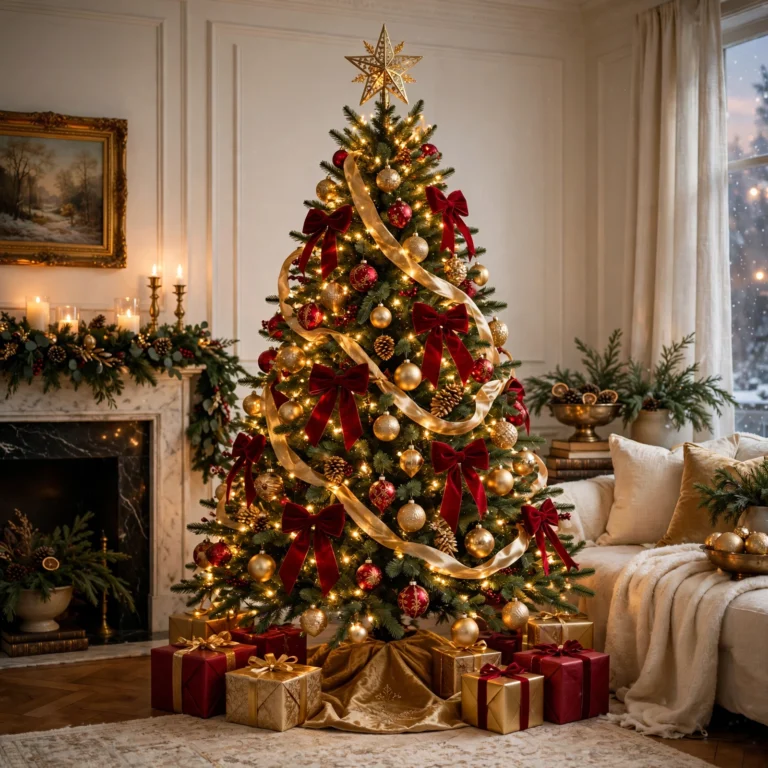
| Mercury glass | Light to medium | Middle to outer branches |
| Wood slice | Very light | Any branch, including thin tips |
| Ceramic | Medium to heavy | Sturdier interior branches |
3. Felt Ball Garland
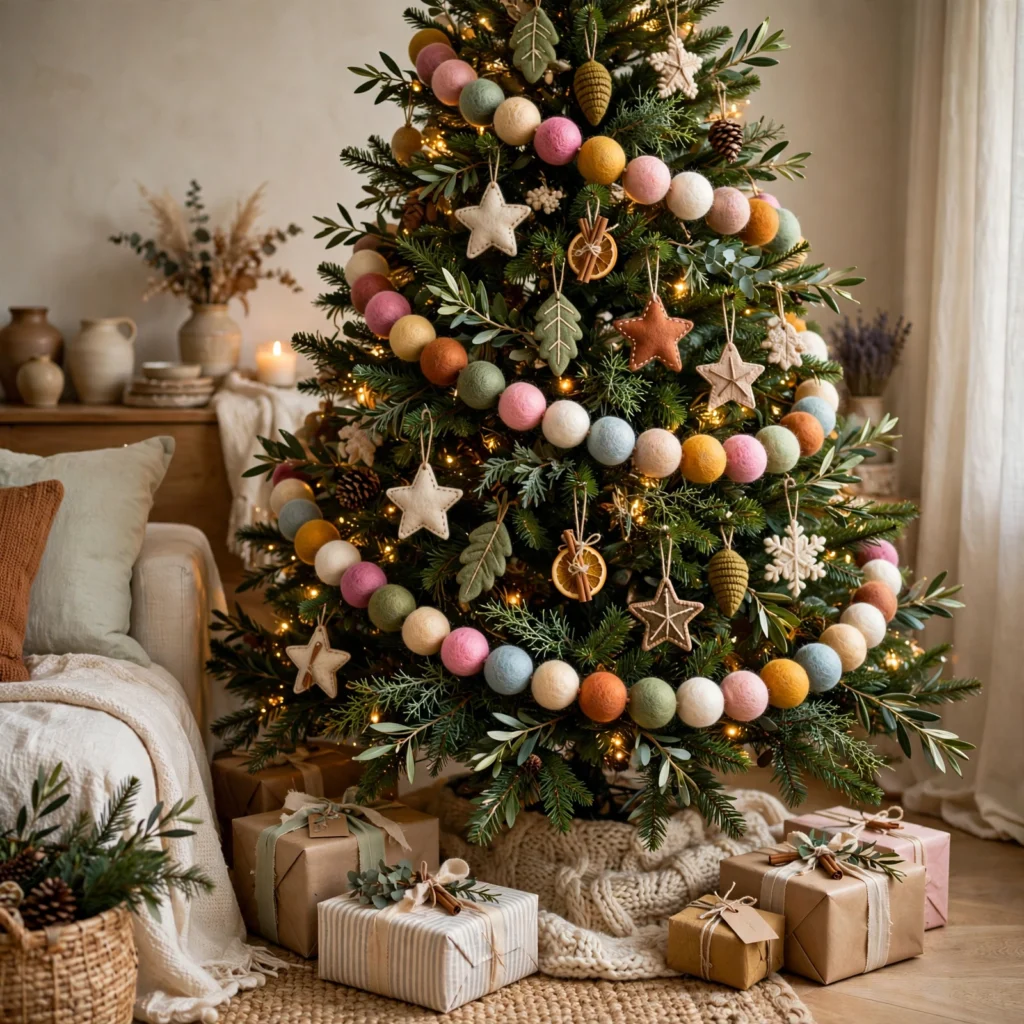
Felt ball garland strings small, rounded felt balls onto twine or cord, creating a soft, textural alternative to traditional glass bead or tinsel garland. This garland style works particularly well woven through the branches alongside string lights, adding color and texture without the reflective quality glass garland typically provides. Choosing felt balls in a coordinated but not identical color range keeps this garland feeling intentional rather than randomly assorted.
In order to see more options for christmas tree topper ideas CLICK HERE
4. Vintage Family Photo Ornaments
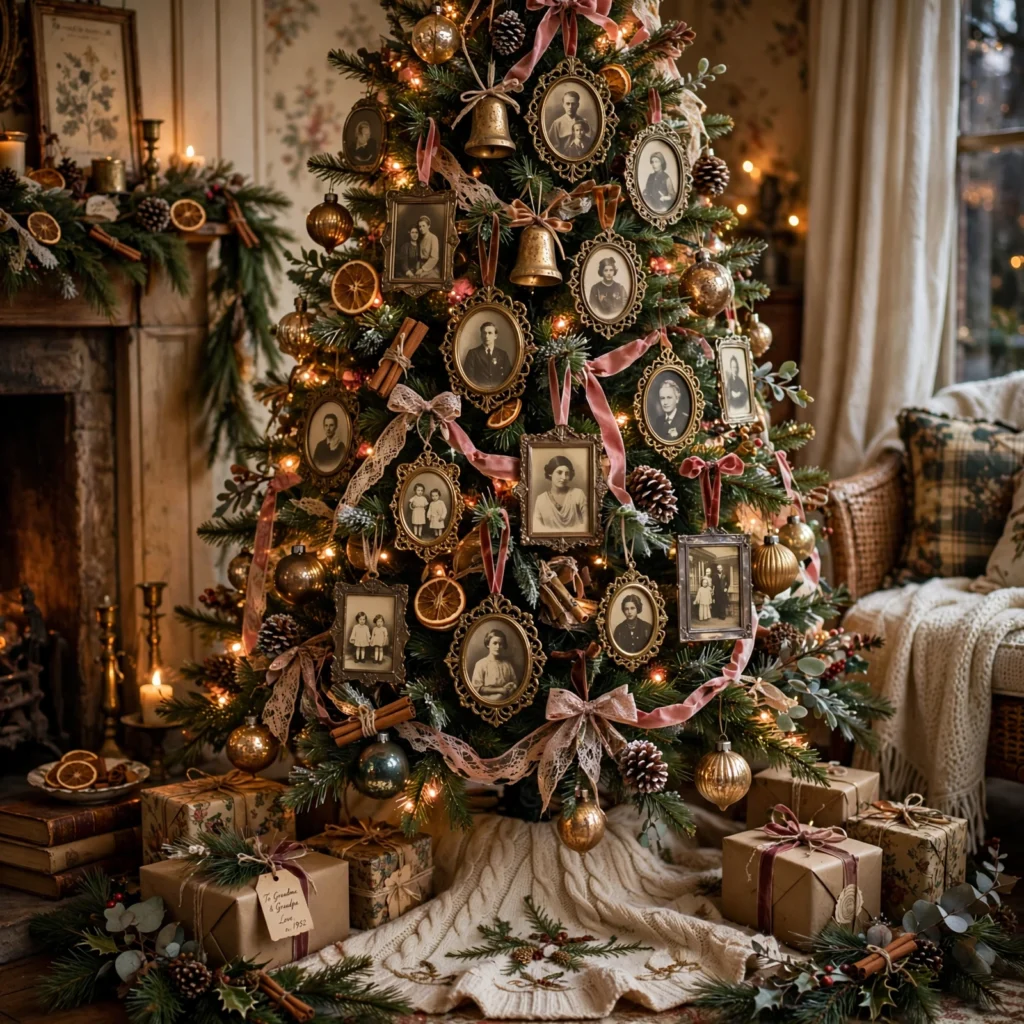
Vintage family photo ornaments insert small printed photos into simple clear glass or acrylic ornament frames, turning cherished memories into a personal, rotating part of the tree’s decoration each year. Choosing a mix of old and recent photos adds a sense of family history spanning multiple generations within the same display. This idea works particularly well combined with a more neutral or simple ornament palette elsewhere on the tree, letting the photos themselves stand out as the more personal focal points.
5. Dried Orange Slice Ornaments
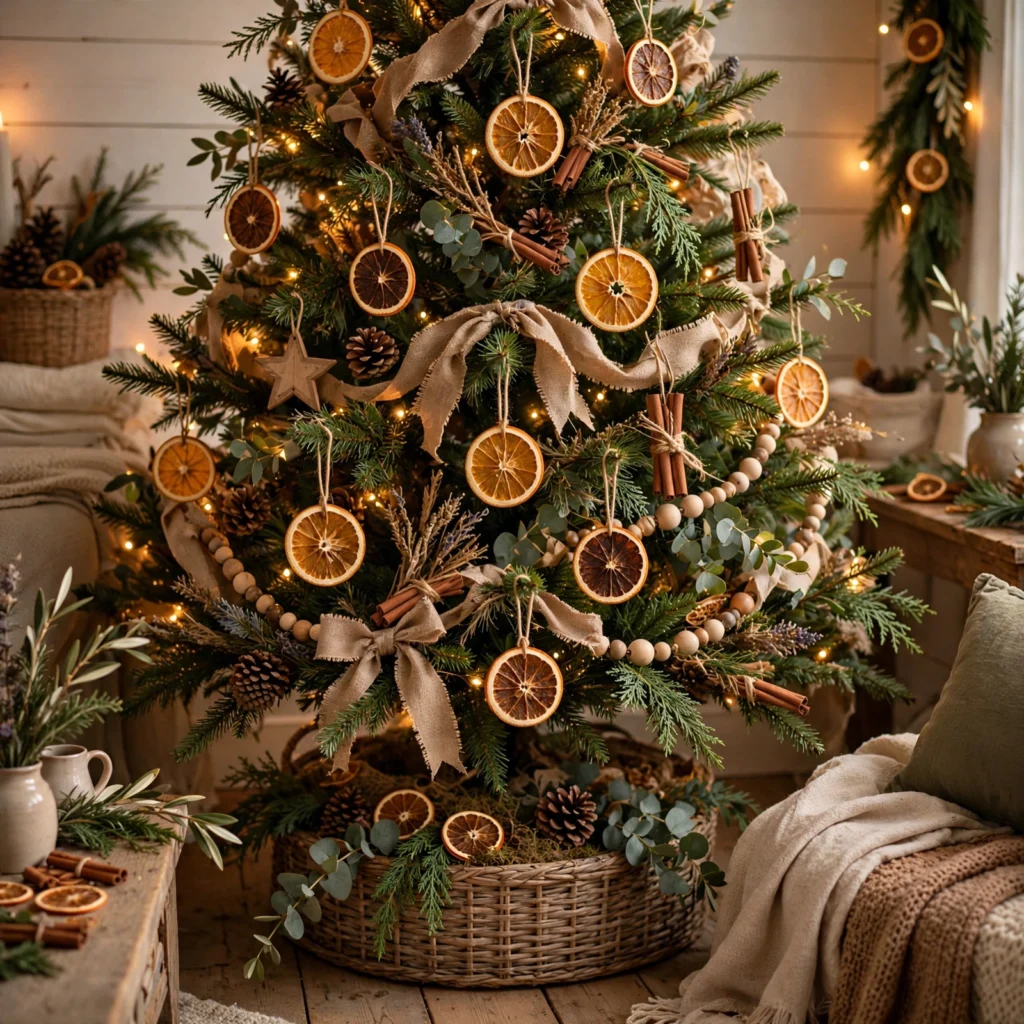
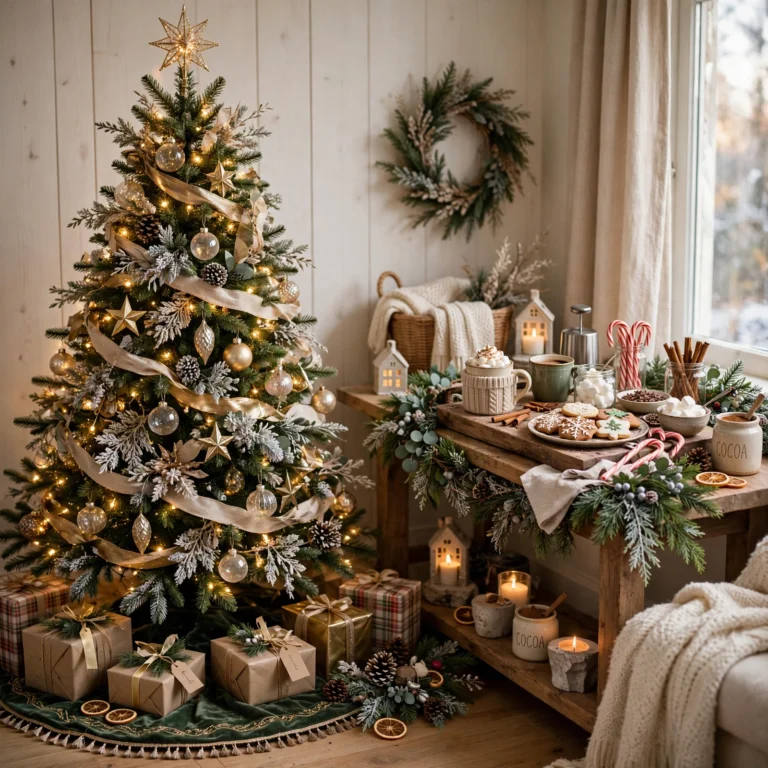
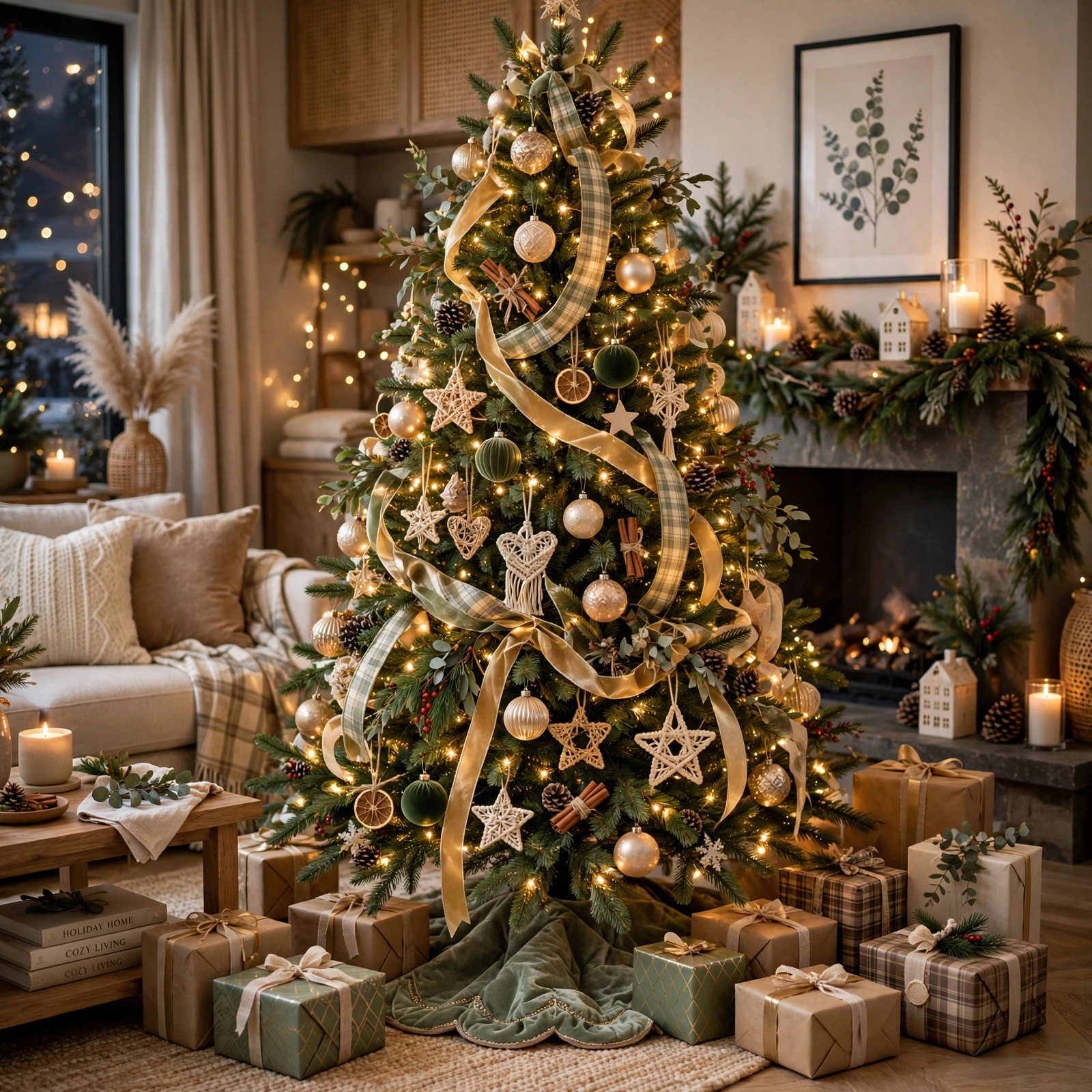
Dried orange slice ornaments, made by thinly slicing oranges and drying them in a low oven until slightly curled and matte, add natural texture and a subtle citrus scent to the tree. These ornaments pair particularly well with cinnamon stick bundles and dried greenery for a cohesive, rustic decoration theme. Because dried orange slices do fade in color over several weeks, refreshing a few pieces partway through December keeps this natural decoration looking its best throughout the full display period.
6. Beaded Wire Ornaments
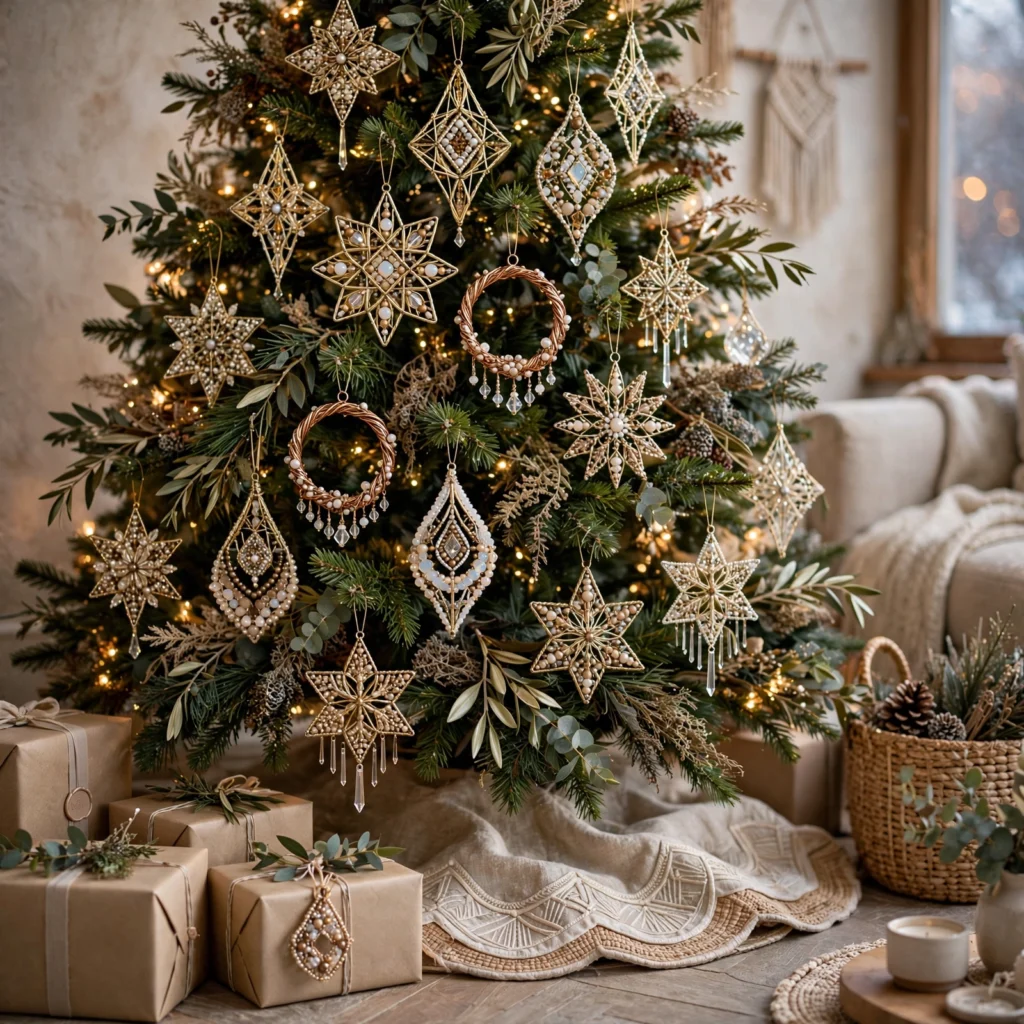
Beaded wire ornaments shape thin, flexible wire strung with small glass or acrylic beads into simple forms like stars, snowflakes, or spirals, creating a delicate, sparkling decoration distinct from solid glass or ceramic pieces. These ornaments catch light differently than a solid surface would, adding a more delicate sparkle throughout the tree. Choosing beaded ornaments in a consistent metallic tone, like all gold or all silver beading, keeps this decoration type cohesive even when mixed with other ornament materials.
7. Fabric Scrap Bow Accents
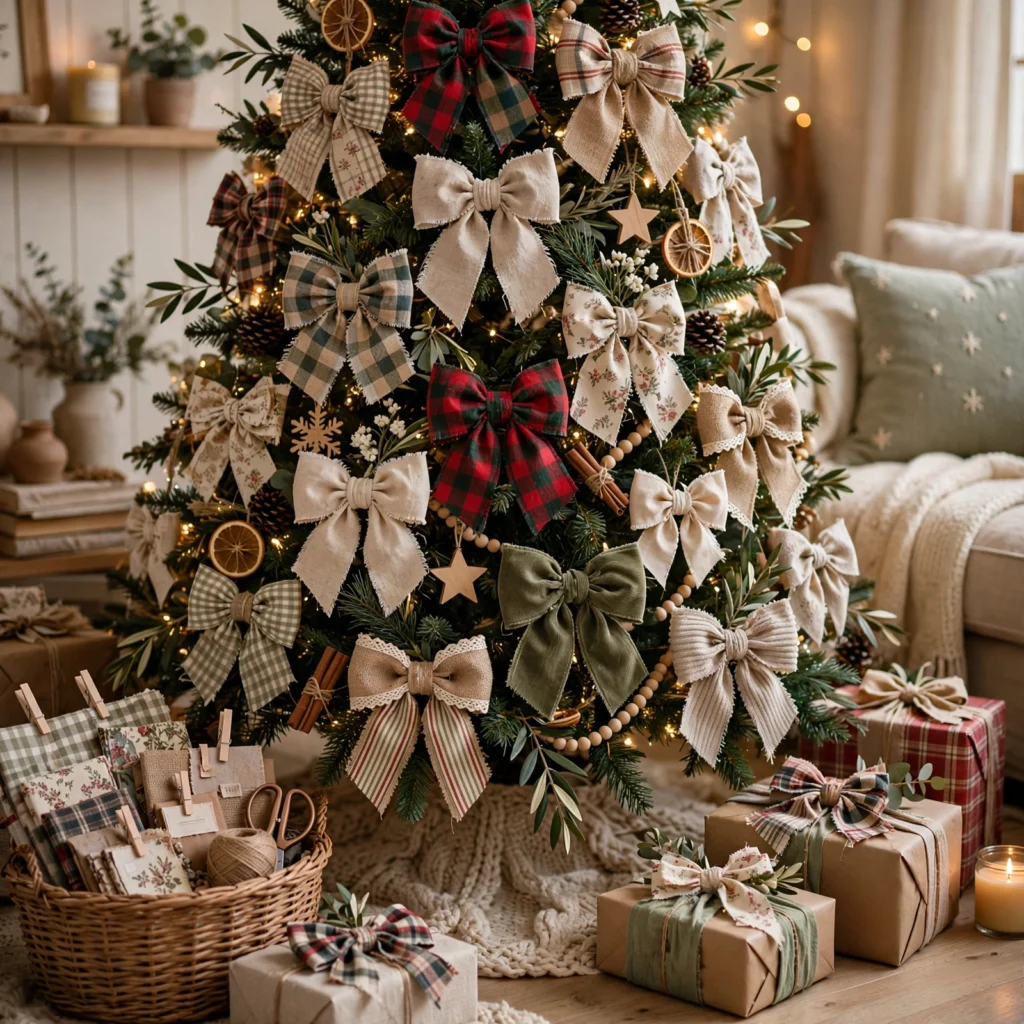
Fabric scrap bow accents tie small bows from leftover fabric, ribbon remnants, or even repurposed clothing scraps directly onto branch tips throughout the tree, adding a textile element distinct from typical ribbon garland. This approach works particularly well for households wanting to reduce waste by repurposing existing fabric rather than purchasing new ribbon specifically for the tree. Choosing fabric in a coordinated color palette, even with varied patterns, keeps this decoration feeling intentional rather than randomly scattered.
8. Ceramic Figural Ornaments
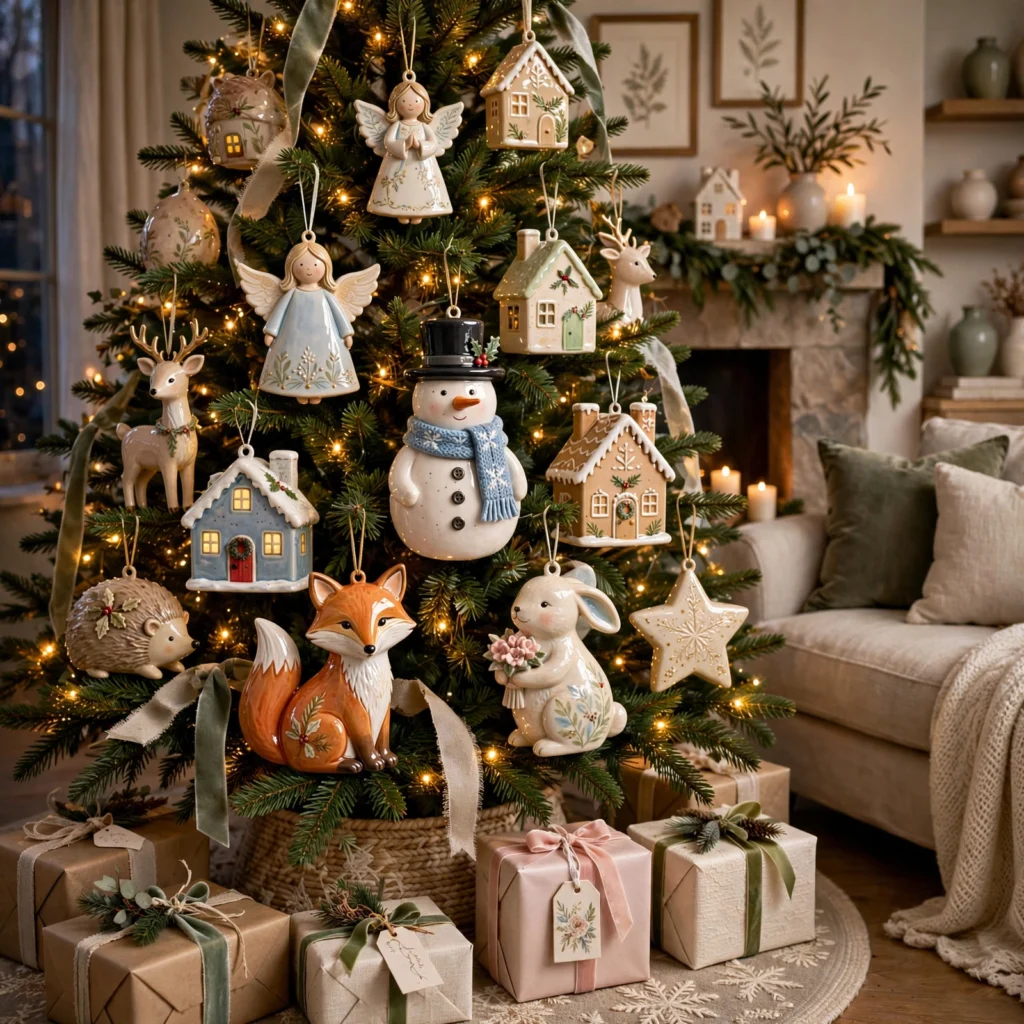
Ceramic figural ornaments, shaped like small animals, houses, or seasonal figures, add dimensional interest and a slightly heavier, more substantial presence than flatter glass or wood ornaments. These pieces work well as focal points placed at eye level throughout the tree, rather than scattered evenly with lighter ornaments. Choosing a cohesive theme, like woodland animals or small houses, for this figural collection specifically keeps the group feeling curated rather than randomly assembled.
9. Metallic Pinecone Accents
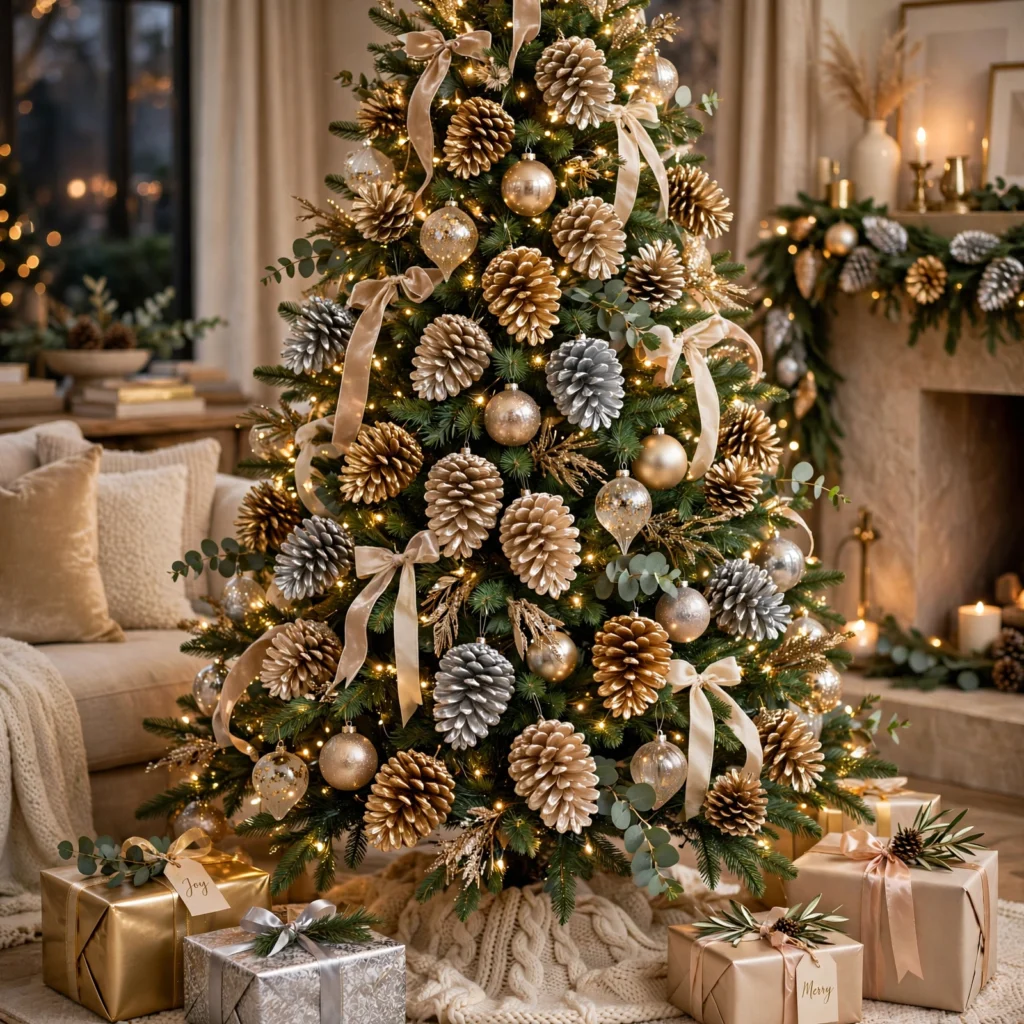
Metallic pinecone accents, using real pinecones dipped or sprayed in gold, silver, or copper paint, bring natural texture into the tree while adding a reflective, elevated finish that plain brown pinecones don’t provide. These pieces work particularly well tucked into gaps between larger ornaments, filling visual space without requiring additional round or spherical shapes. Choosing pinecones in a range of sizes adds more natural variation than uniformly sized pieces throughout the tree.
10. Knit or Crochet Ornament Covers
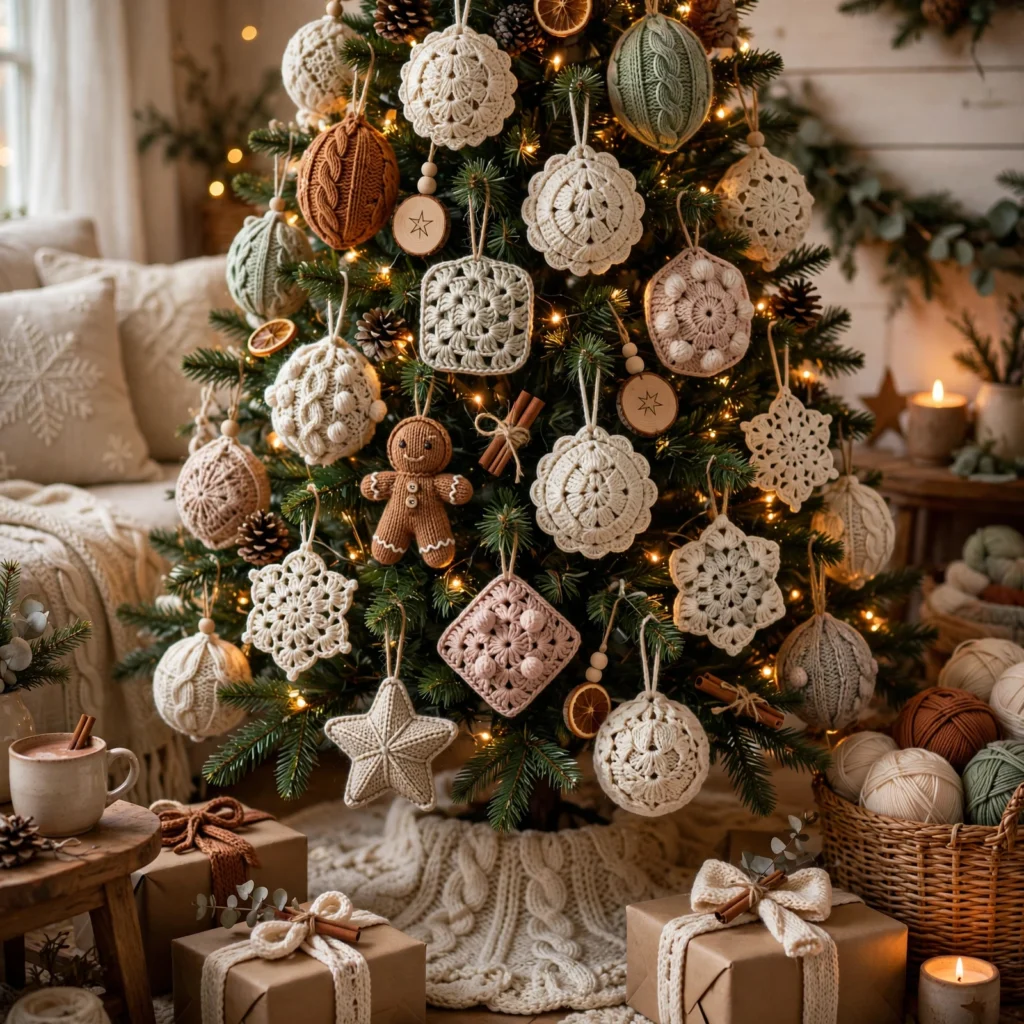
Knit or crochet ornament covers slip over plain glass or plastic ball ornaments, adding a soft, textured, sweater-like finish that a smooth glass surface alone doesn’t provide. This approach works particularly well for updating an existing, more basic ornament collection without needing to purchase entirely new pieces. Choosing covers in a range of knit patterns, like cables and ribbing, adds textural variety even within a single-color scheme.
| Cover Style | Best Base Ornament | Texture Level |
| Cable knit | Round glass ball | High |
| Simple ribbed | Round glass ball | Medium |
| Lace crochet | Round or teardrop shape | High, delicate |
11. Personalized Name or Year Ornaments
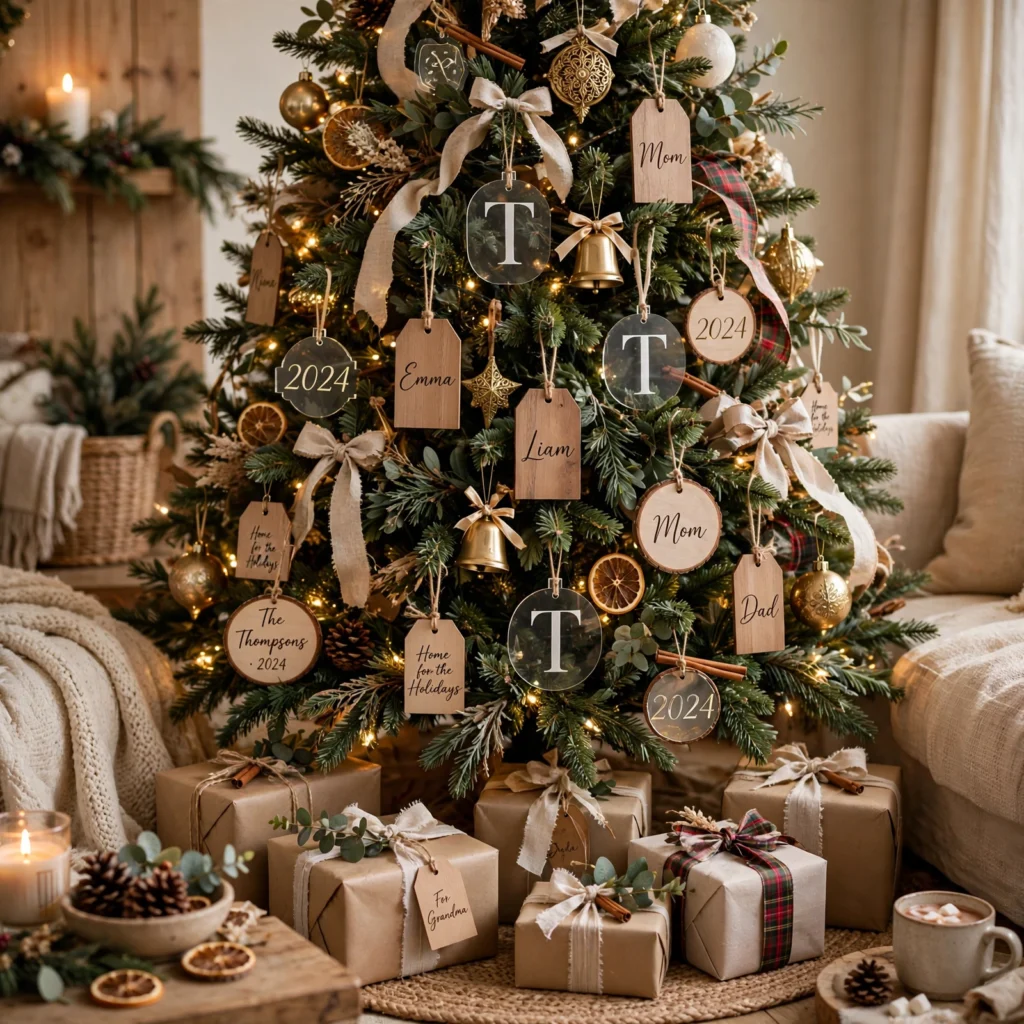
Personalized name or year ornaments mark specific milestones, like a new baby, a wedding, or simply the current year, with a small engraved or painted ornament added to the collection annually. This tradition builds a genuinely personal timeline within the tree’s decoration over time, distinct from purely decorative, non-specific ornaments. Storing these personalized pieces carefully and displaying them prominently each year keeps this sentimental collection from getting lost among more generic decorations.
12. Dried Botanical Floral Picks
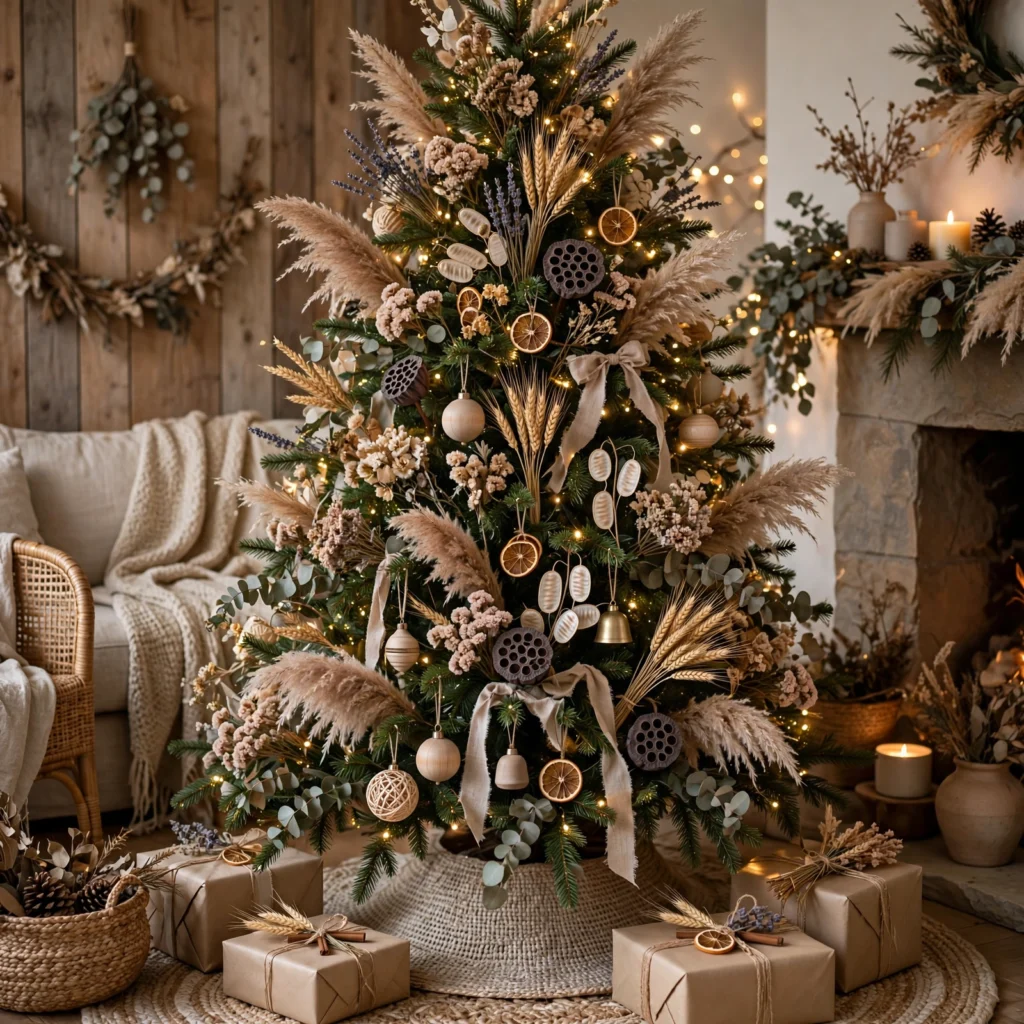
Dried botanical floral picks, including small stems of dried baby’s breath, lavender, or eucalyptus, tuck into gaps between ornaments using thin wire stems that push directly into the branch structure. This filler technique adds natural texture and fills visual holes left after ornaments and lights are placed, without needing to purchase additional round ornaments to cover the same space. Grouping three to five picks in a small cluster, rather than spacing single stems evenly throughout, creates a more natural, garden-inspired look.
13. Vintage Tin or Metal Ornaments
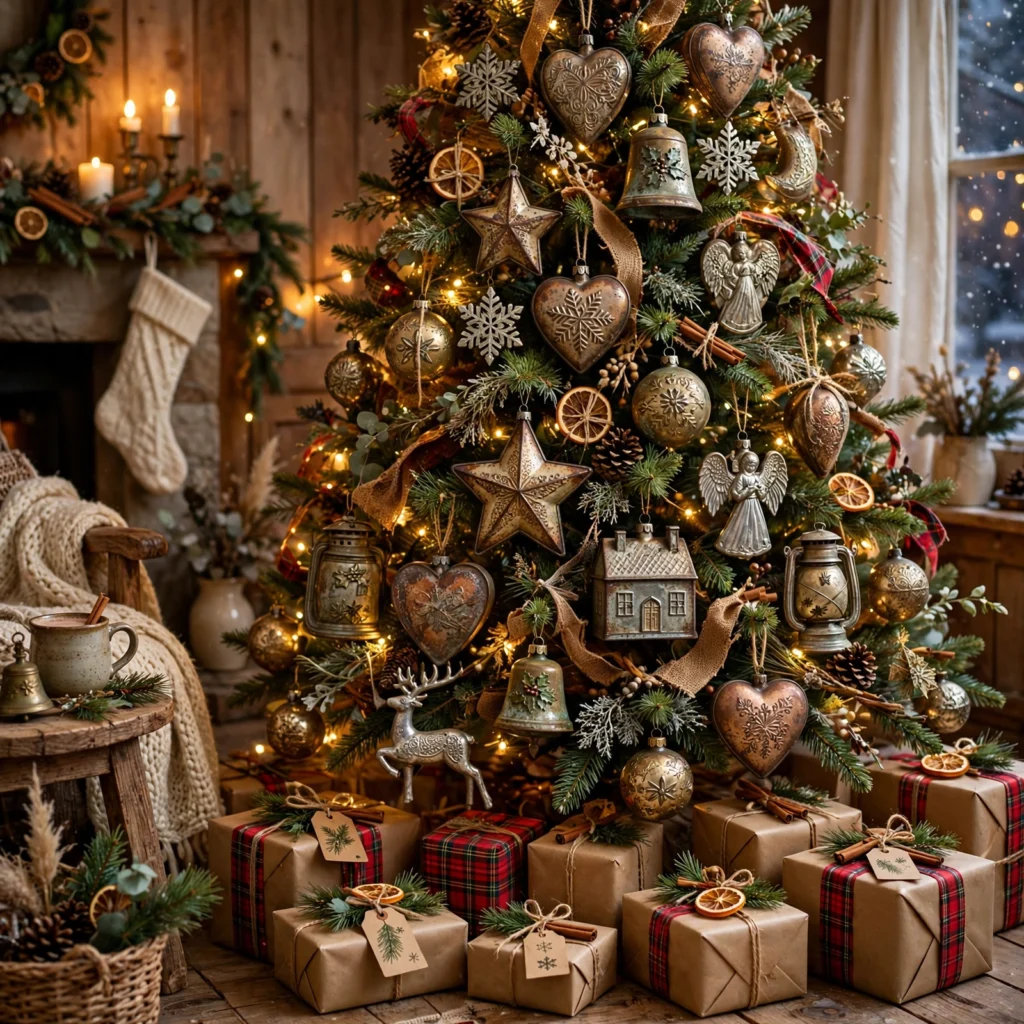
Vintage tin or metal ornaments, whether genuinely old pieces sourced from antique shops or new ornaments designed with a distressed, aged finish, bring a different reflective quality and texture than glass or ceramic alternatives. These pieces tend to be more durable than glass, making them a practical choice for lower branches within reach of pets or young children. Choosing tin ornaments in simple, classic shapes like stars or bells keeps this material feeling timeless rather than tied to a single passing trend.
14. Layered Ribbon Loops
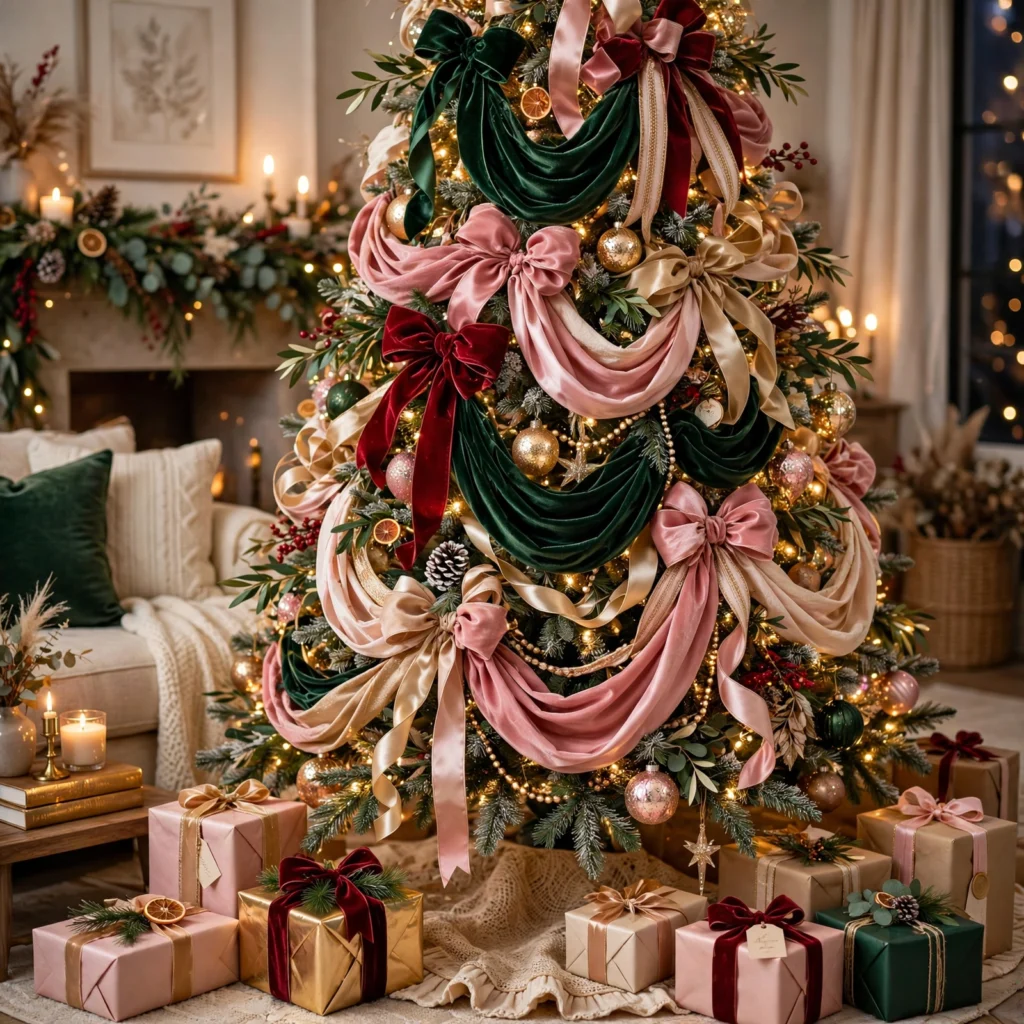
Layered ribbon loops tie multiple small ribbon loops directly onto branch tips throughout the tree, rather than using a single continuous ribbon spiral, creating a different textural effect distributed more evenly across the tree’s surface. This technique works particularly well combined with a monochromatic ornament palette, since the ribbon loops add color and movement without introducing an entirely new decorative shape. Choosing a wired ribbon for these loops helps them hold their shape better than an unwired version over the full display period.
Shop the Look
For this palette, look for a mercury glass ornament set in mixed shapes, a bundle of wood slice ornaments in varying sizes, felt ball garland in a coordinated color range, dried orange slices with cinnamon stick bundles, and a set of metallic gold pinecone accents. These pieces work together across several of the ideas above without requiring a full ornament collection replacement in a single season.
Common Mistake to Avoid
The most common mistake with Christmas tree decorations is purchasing an entirely new, uniform ornament set every year rather than building a mixed, personal collection gradually over time, resulting in a tree that looks matched but lacks the visual depth and personal history a varied collection develops. A tree covered entirely in identical, same-finish ornaments often reads as flatter and less interesting than one built from several different materials and a few sentimental or handmade pieces added over the years. Mixing new purchases with a few personal or DIY additions each season produces a tree with more lasting character.
People Also Ask
What Christmas tree decorations ideas work best for a tree with young children or pets nearby?
Wood slice ornaments, tin or metal ornaments, and knit ornament covers over sturdier bases all work well for a tree accessible to young children or pets, since these materials resist breaking more effectively than delicate glass. Placing any more fragile glass or ceramic ornaments higher up on the tree, out of easy reach, while reserving lower branches for these more durable options, reduces the risk of breakage throughout the season. Choosing lightweight, unbreakable materials for the most accessible branch tips matters more in households with active young kids or pets than tree style or color choice.
How much does it cost to build a full ornament collection?
A budget collection using DIY salt dough ornaments, dried orange slices, and a small set of wood slice ornaments can cost under $30 total, since most materials come from the kitchen or a craft store. A more curated collection incorporating mercury glass ornaments, ceramic figural pieces, and personalized ornaments typically costs $75 to $200 depending on quantity and material quality. Building a full tree’s worth of ornaments gradually over several seasons, rather than purchasing everything at once, spreads this cost more manageably across multiple years.
How many ornaments does a tree need to look full?
Most stylists suggest roughly 12 to 15 ornaments per vertical foot of tree height as a general starting guideline, though the specific ornament sizes and additional filler elements like ribbon or floral picks affect how many are actually needed to achieve a full look. A tree relying more heavily on garland, ribbon, and dried botanical picks can use fewer traditional round ornaments while still appearing complete. Starting with fewer ornaments and adding gradually, rather than hanging an entire collection at once, makes it easier to judge when the tree genuinely looks finished.
Can I mix different ornament materials on the same tree?
Mixing different ornament materials, like glass, wood, ceramic, and fabric, on the same tree generally produces a more visually interesting and dimensional result than committing to a single uniform material throughout. Keeping some consistency in color palette across the different materials helps the mixed collection still read as cohesive rather than randomly assembled. This mixed-material approach has become increasingly common in current tree decorating trends, replacing the more uniform, single-material collections popular in past decades.
What’s the best way to store Christmas tree decorations between seasons?
Storing tree decorations generally works best using a dedicated ornament storage box with individual compartments for glass and other fragile pieces, keeping them separated and cushioned to prevent breakage during the off-season. Wrapping delicate items like mercury glass or vintage pieces individually in tissue paper adds extra protection within these compartments. Storing garland, ribbon, and floral picks separately in flatter containers, rather than compressed together with the ornaments, helps these items maintain their shape for reuse the following year.
Conclusion
These Christmas tree decorations ideas cover everything from a simple DIY project to a more curated mixed-material collection built gradually over several seasons, giving you options regardless of your tree’s style or your household’s decorating budget. Start with a few key material types, like glass and wood, then add personal or handmade pieces gradually as your collection grows year after year. Save this guide to Pinterest for later, and check out our related post on christmas tree ideas for guidance on choosing your tree’s overall style and color direction.