18 Green Living Room Ideas for a Fresh, Stylish, Cozy, and Timeless Home Aesthetic
Choosing green for a living room used to feel like a risky, forest-cabin move, but the color has settled into one of the most versatile options for a main living space. A green living room can lean moody and jewel-toned or airy and botanical, depending on the shade and the materials paired with it. This guide covers eighteen distinct ways to bring green into a living room, from paint and upholstery to lighting and accessories, so you can find an approach that matches your existing furniture and the amount of natural light your room actually gets.
Trend & Background
Green has moved from an occasional accent color to a dominant choice in living room design over the past several years, driven partly by a broader shift toward biophilic design and partly by paint brands pushing deep, saturated hues like hunter green and forest green into their annual color-of-the-year picks. Sherwin-Williams, Benjamin Moore, and Farrow & Ball have all featured green shades prominently in recent collections, which has trickled down into furniture and textile lines as well. This matters now because green pairs unusually well with both warm and cool undertones, making it one of the few colors that works across a wide range of existing decor without a full room overhaul.
Key Takeaways
- Green works as both a wall color and an accent tone, so a green living room can range from a bold jewel-toned statement wall to subtle sage textiles.
- Pairing green with the right neutrals, such as warm white, black, or terracotta, keeps the palette from reading as one-note or overly matchy.
- Natural materials like rattan, linen, and live plants reinforce the color’s organic association rather than fighting against it.
- Lighting temperature matters more in a green living room than most other palettes, since cool bulbs can push certain greens toward a muddy or clinical tone.
1. Hunter Green Accent Wall
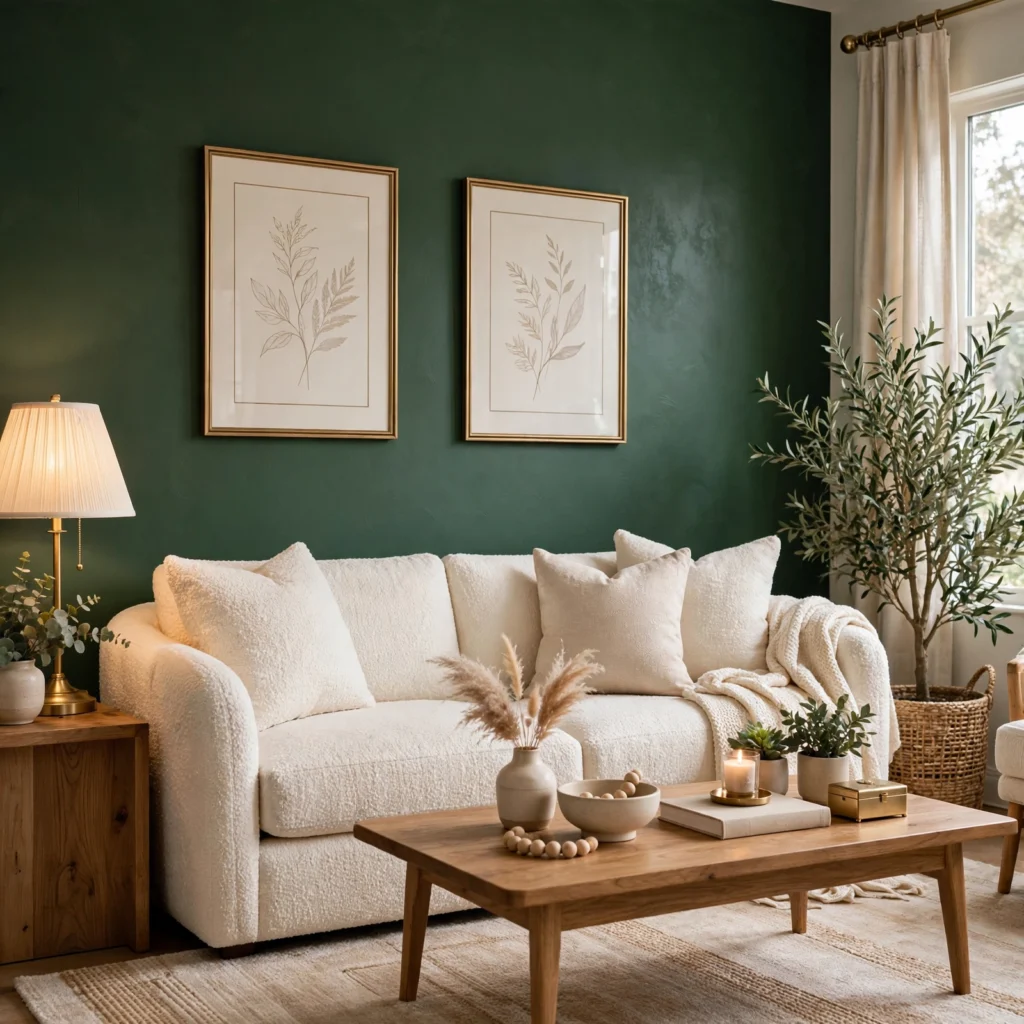
A hunter green accent wall behind the sofa or fireplace gives a living room an immediate sense of depth without committing to a full-room paint job. This deep, slightly blue-leaning green photographs well in both daylight and lamp light, which makes it more forgiving than brighter greens in rooms with inconsistent natural light. Pair the wall with brass or matte black hardware and lighter furniture, such as a cream boucle sofa, so the dark backdrop doesn’t make the room feel smaller than it is.
2. Sage Green Sofa
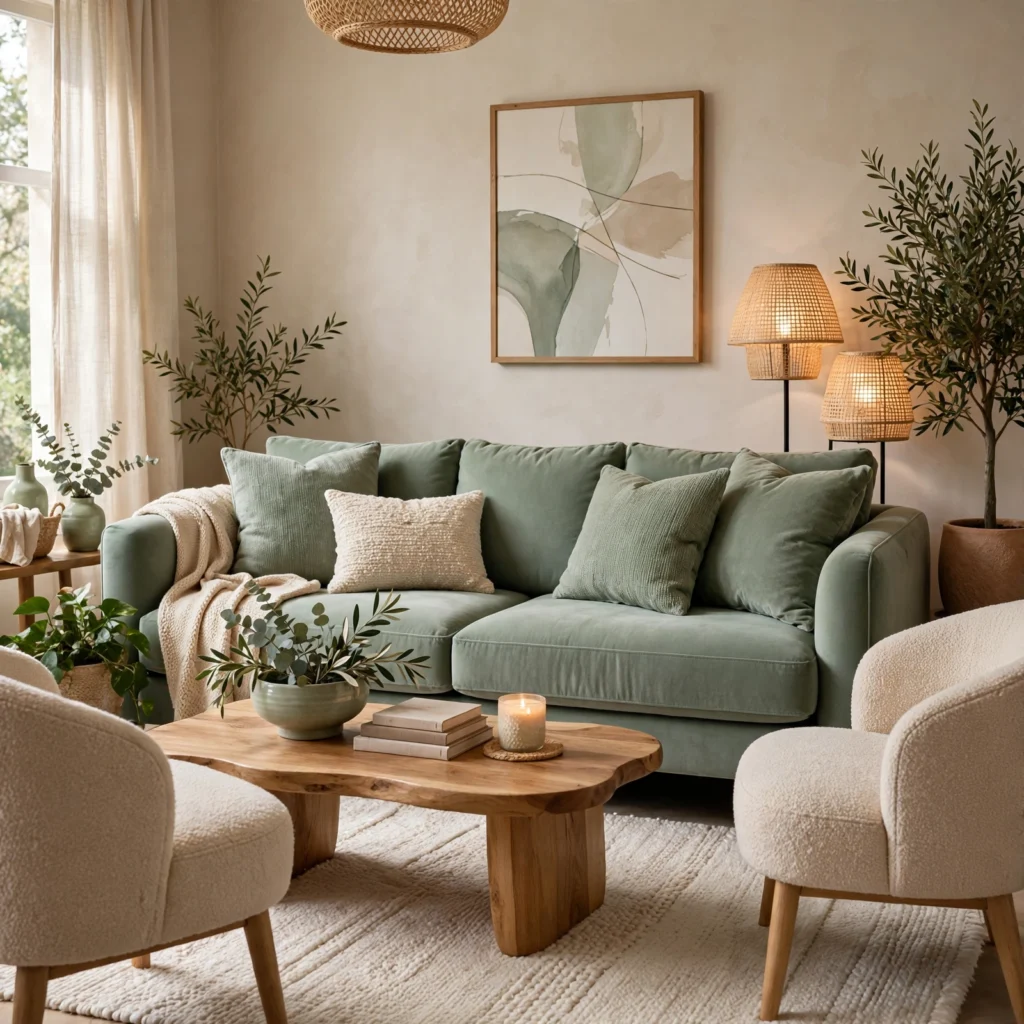
A sage green sofa acts as a large-format neutral rather than a bold statement, since the muted, grayed-down tone pairs easily with wood furniture, black accents, and most existing rugs. This makes it a lower-risk entry point into a green living room for anyone hesitant to paint an entire wall. Velvet or boucle upholstery in sage tends to read warmer than a flat cotton weave, so consider the fabric texture alongside the shade itself when shopping, especially if the room leans cooler in natural light.
To see more scandinavian living room
3. Botanical Print Wallpaper
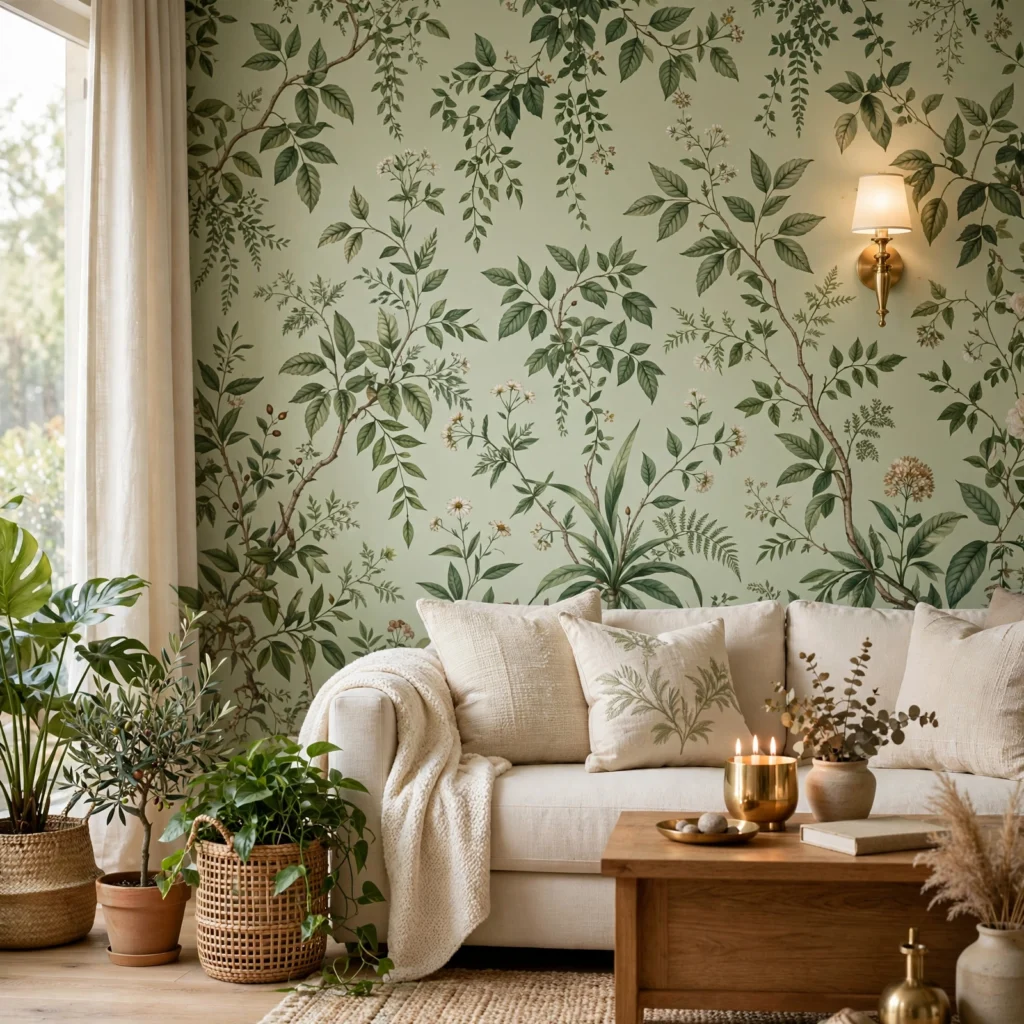
Botanical print wallpaper introduces green through pattern rather than a flat wall color, layering leafy or floral motifs across a living room wall for a more textured, maximalist look. This approach works especially well in a room with simpler, solid-colored furniture, since the wallpaper becomes the primary visual interest and everything else can stay quiet. Choose a paper with a cream or off-white background rather than stark white, which keeps the green tones from feeling too graphic against the print.
4. Olive Green Curtains
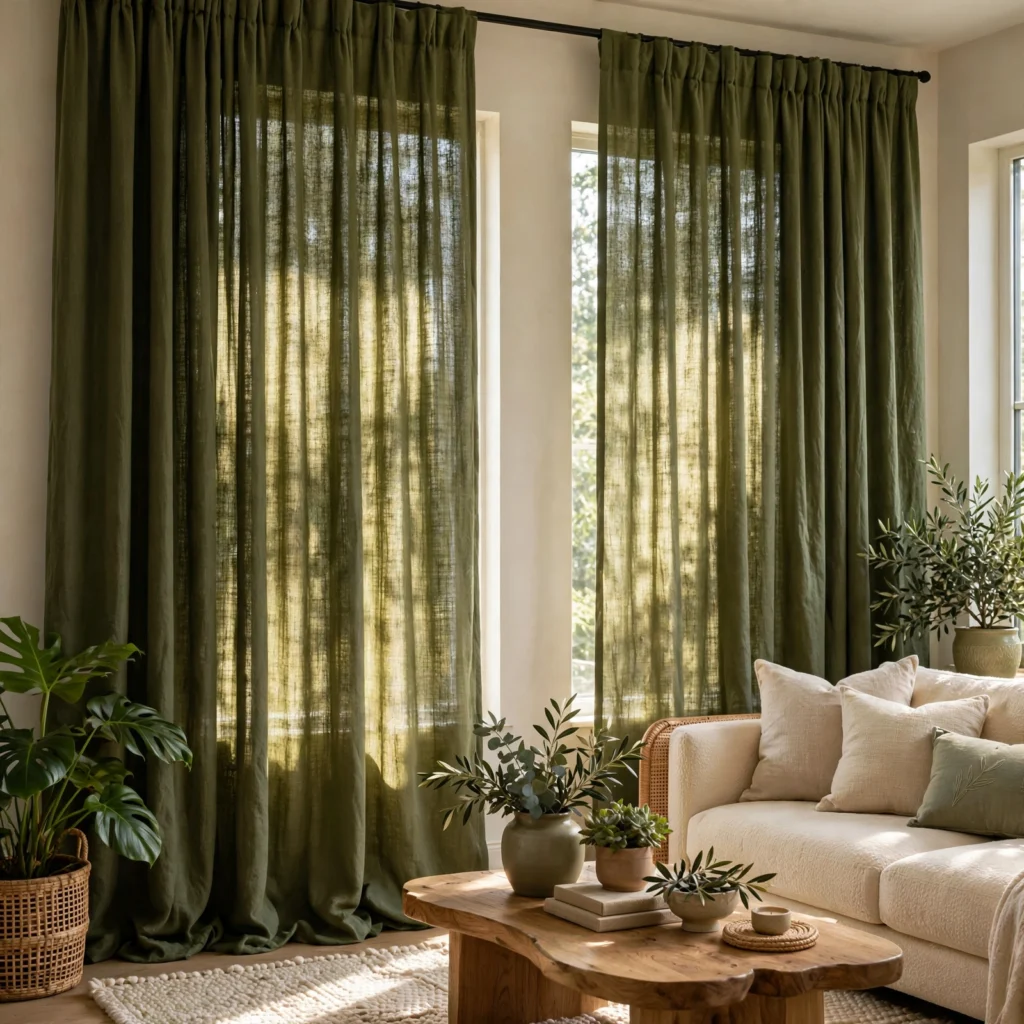
Olive green curtains add a softer, earthier take on the color compared to brighter or more saturated greens, and they tend to suit rooms with warm wood tones and terracotta accents. Floor-to-ceiling linen panels in olive filter daylight with a warm cast rather than blocking it entirely, which keeps the room from feeling dim during the day. Hang the rod a few inches above the window frame and let the panels puddle slightly at the floor for a more relaxed, lived-in look.
5. Emerald Velvet Armchair
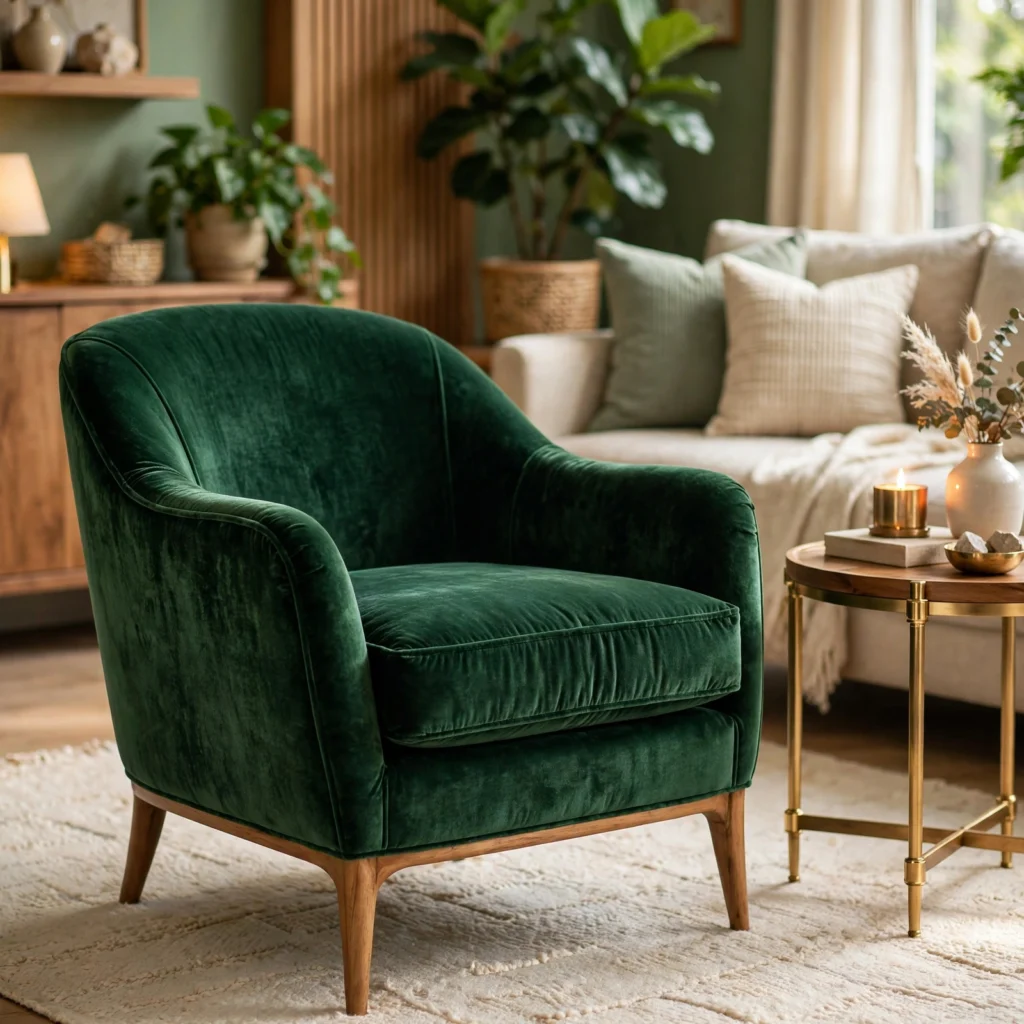
An emerald velvet armchair works as a single statement piece in an otherwise neutral living room, giving you the impact of a bold green without a permanent commitment like paint or wallpaper. The velvet’s sheen catches light differently depending on the angle, which adds richness that a matte fabric in the same shade wouldn’t achieve. Position the chair near a window or reading lamp so the fabric’s texture is visible, and pair it with brass legs or a brass side table to keep the look from feeling too heavy.
6. Terrazzo Coffee Table with Green Flecks
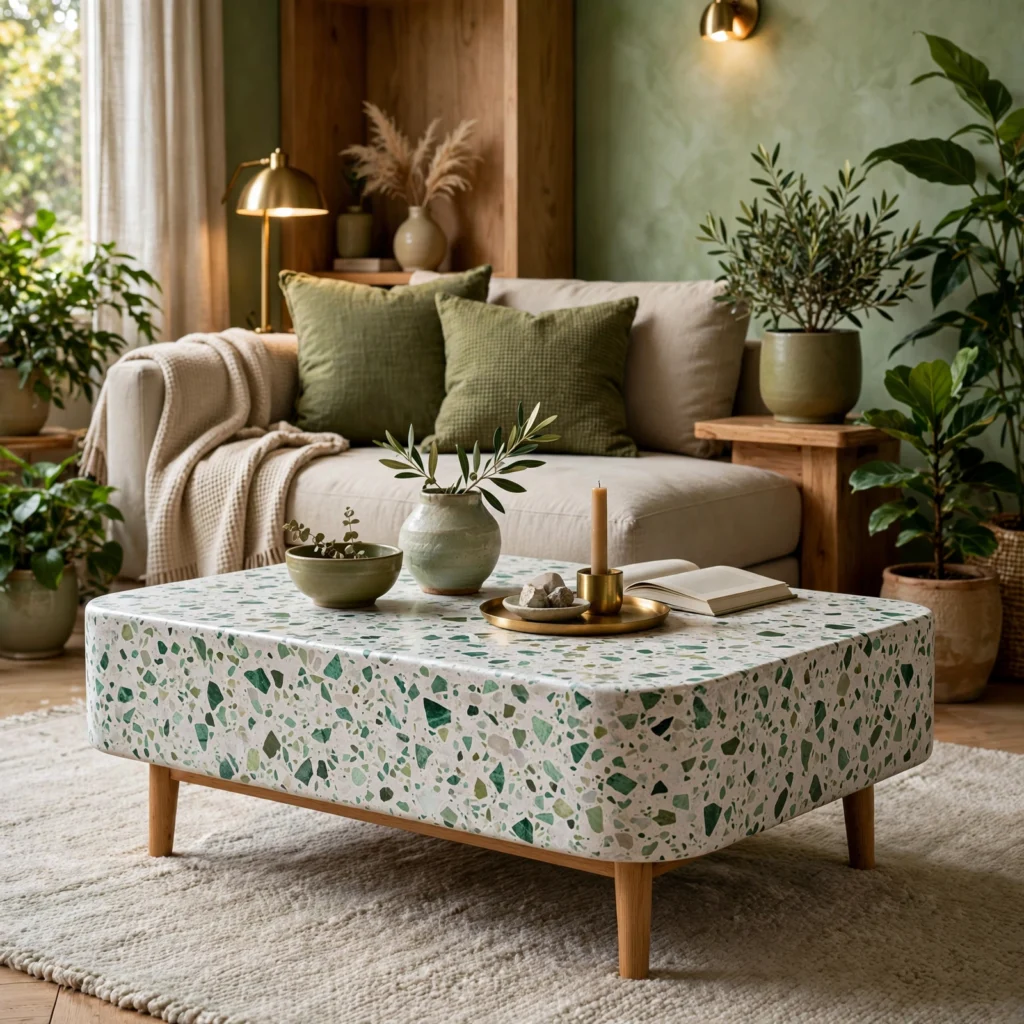
A terrazzo coffee table with green-flecked stone chips introduces the color in a hard, sculptural material rather than through soft furnishings, which balances a room that already has a lot of upholstery. This works particularly well as a middle-ground option for anyone who wants green represented without adding another large fabric surface to the room. Look for a terrazzo top paired with a black or brass base, since the contrast keeps the piece from blending too much into a similarly colored rug.
7. Live Plant Wall
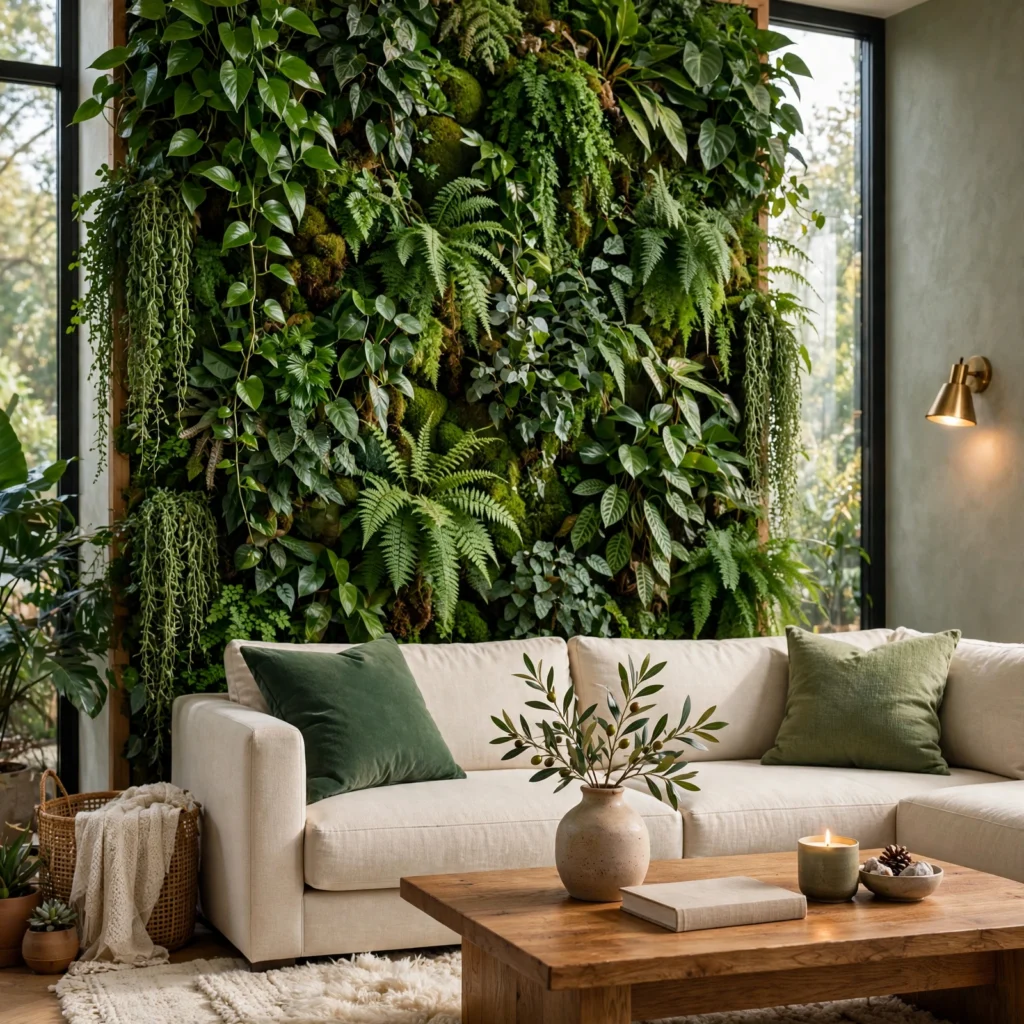
A live plant wall using a mix of pothos, ferns, and philodendron brings actual green into the room rather than a painted or printed approximation, and it doubles as an air-purifying feature. Mount a modular wall-planter system or a simple grid of wall-hung planters, staggering plant sizes so the arrangement doesn’t read as too uniform. This idea works best in a living room with a nearby window offering indirect light, since most trailing houseplants suited to this look need consistent, filtered sunlight to thrive.
| Plant | Light Needs | Maintenance |
| Pothos | Low to medium | Low |
| Boston fern | Medium, indirect | Medium |
| Philodendron | Medium, indirect | Low |
8. Green and Black Color Blocking
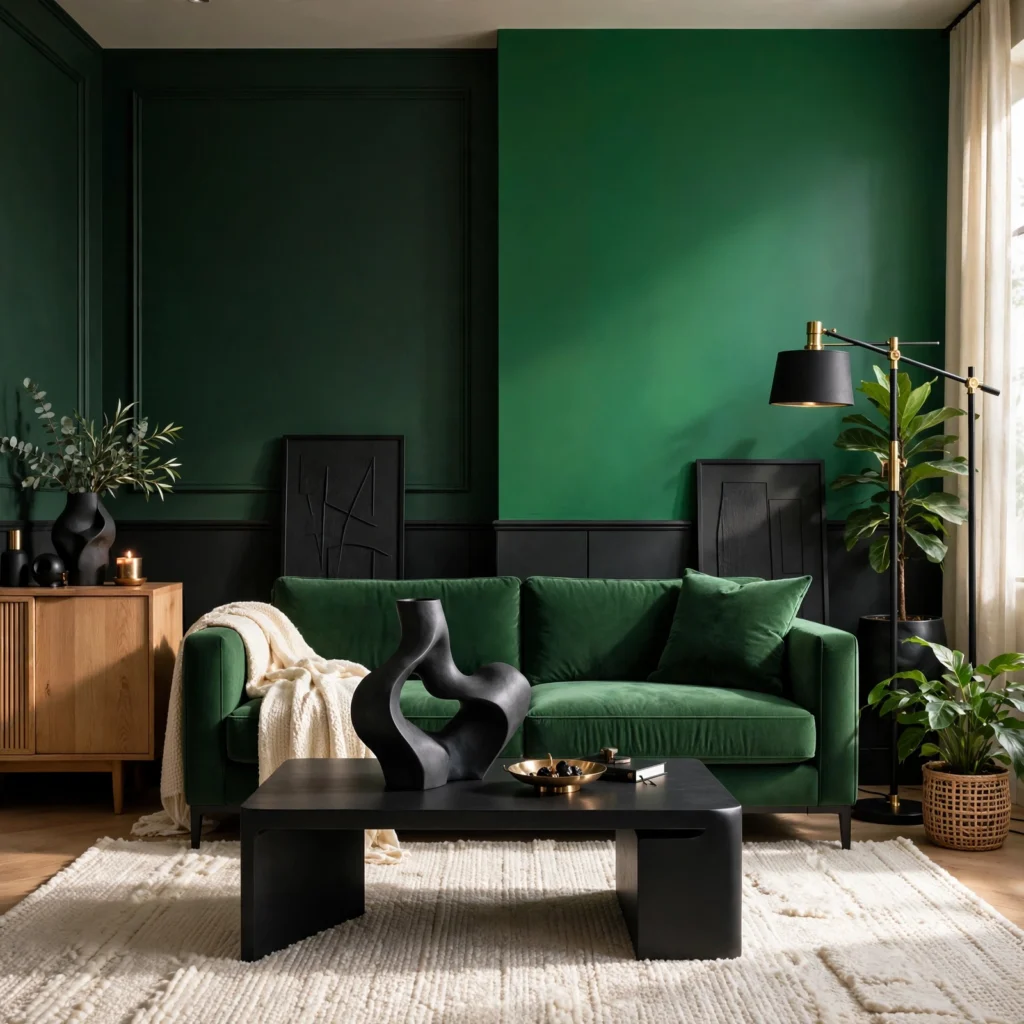
Pairing deep green with black in a color-blocked arrangement, such as a green sofa against a black accent wall or black window trim, creates a sharp, modern contrast that avoids the softness green sometimes carries on its own. This combination works well in living rooms with strong architectural lines, since the color blocking echoes clean geometry rather than competing with it. Keep the ratio roughly seventy percent green to thirty percent black across the room so the space doesn’t tip into feeling like a single dark block.
9. Rattan and Green Textile Pairing
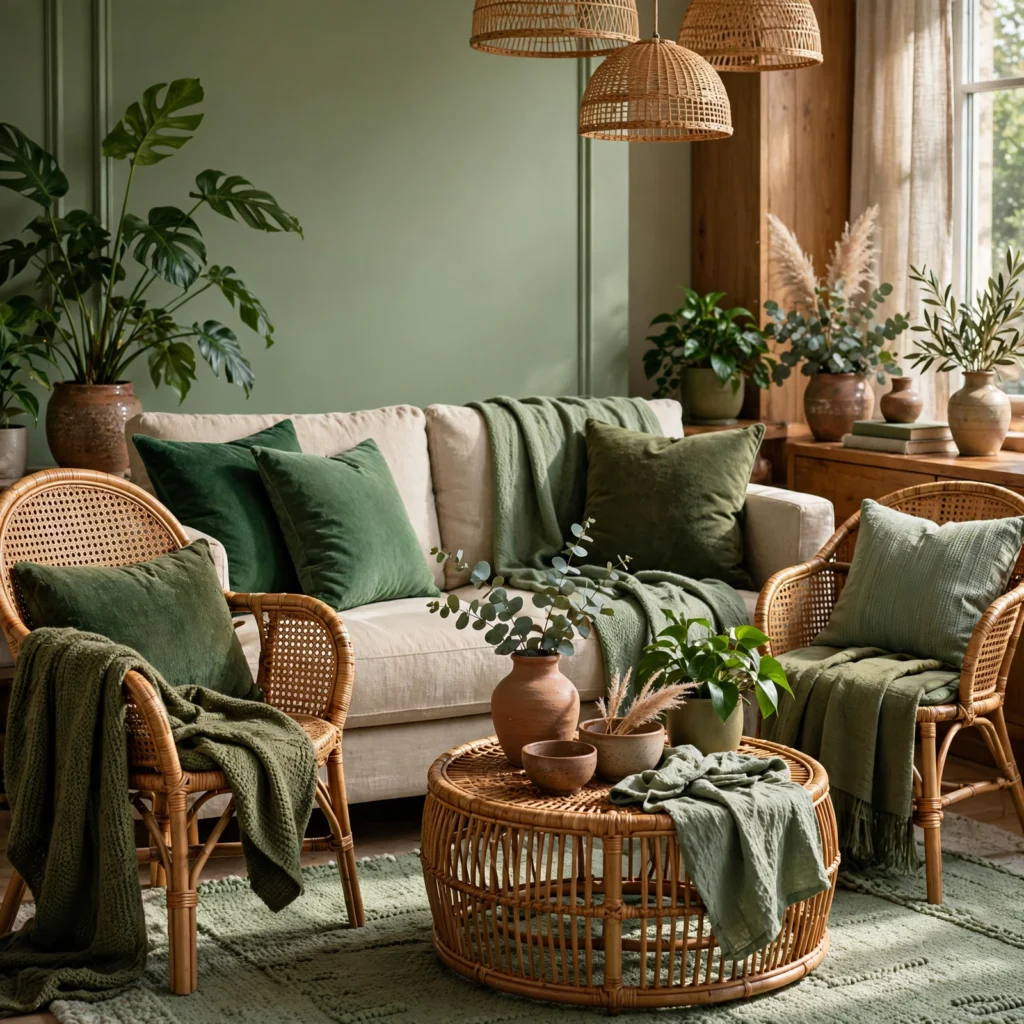
Rattan furniture, whether a chair, a media console, or a set of pendant lights, pairs naturally with green textiles because both materials share an organic, earthy origin point. A rattan armchair upholstered in a small-scale green print, or simply placed beside a green throw pillow arrangement, reinforces the botanical feel without leaning too literally into a jungle theme. This combination also works well in rented apartments, since rattan pieces are typically lightweight and easy to move without any wall damage.
10. Green Marble Fireplace Surround
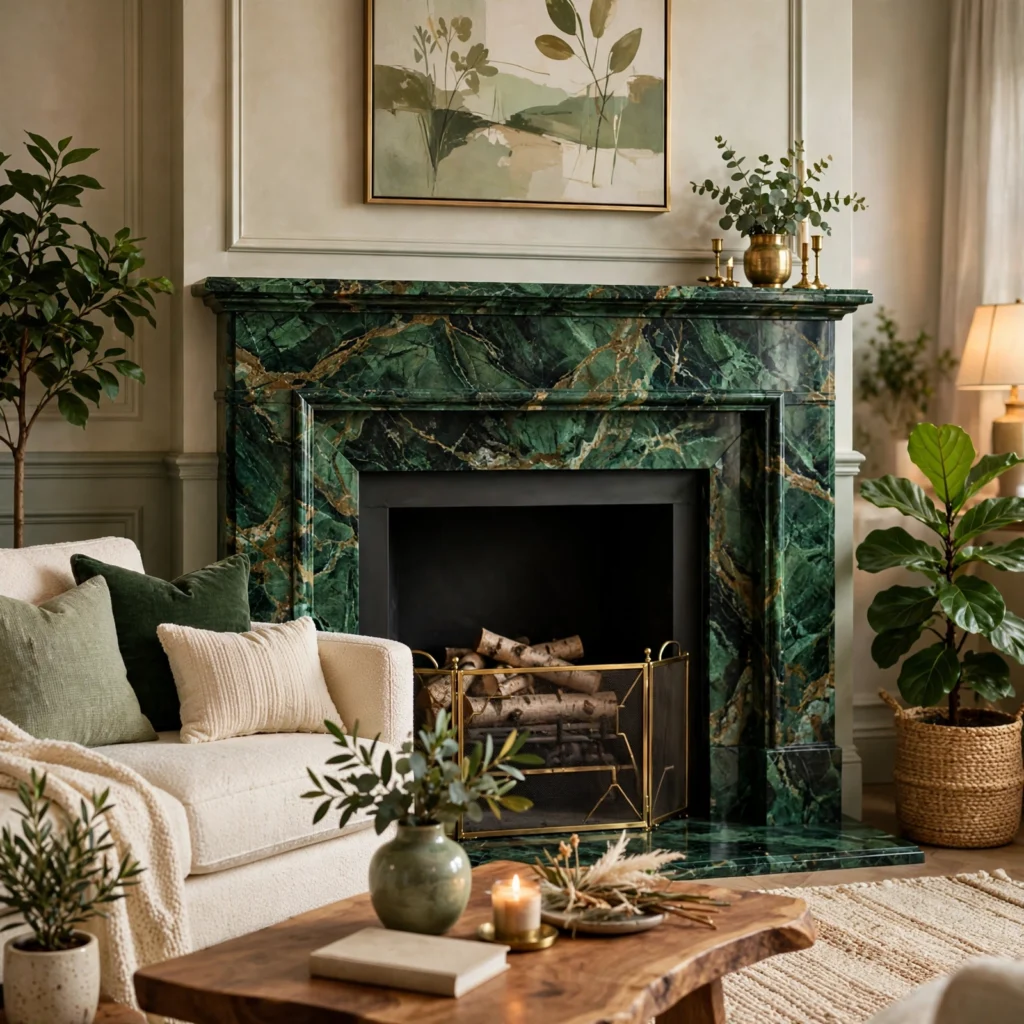
A green marble surround, such as verde antique or Guatemala green marble, turns a fireplace into a genuine focal point rather than a functional afterthought, with natural veining that adds movement no paint color can replicate. This is a higher-investment idea best suited to a full renovation or new build rather than a rental update, but it delivers a permanent, high-end look that ages well compared to trend-driven paint colors. Pair the surround with a simple black or brass mantel to avoid overcrowding the natural stone’s pattern.
11. Two-Tone Green and White Walls
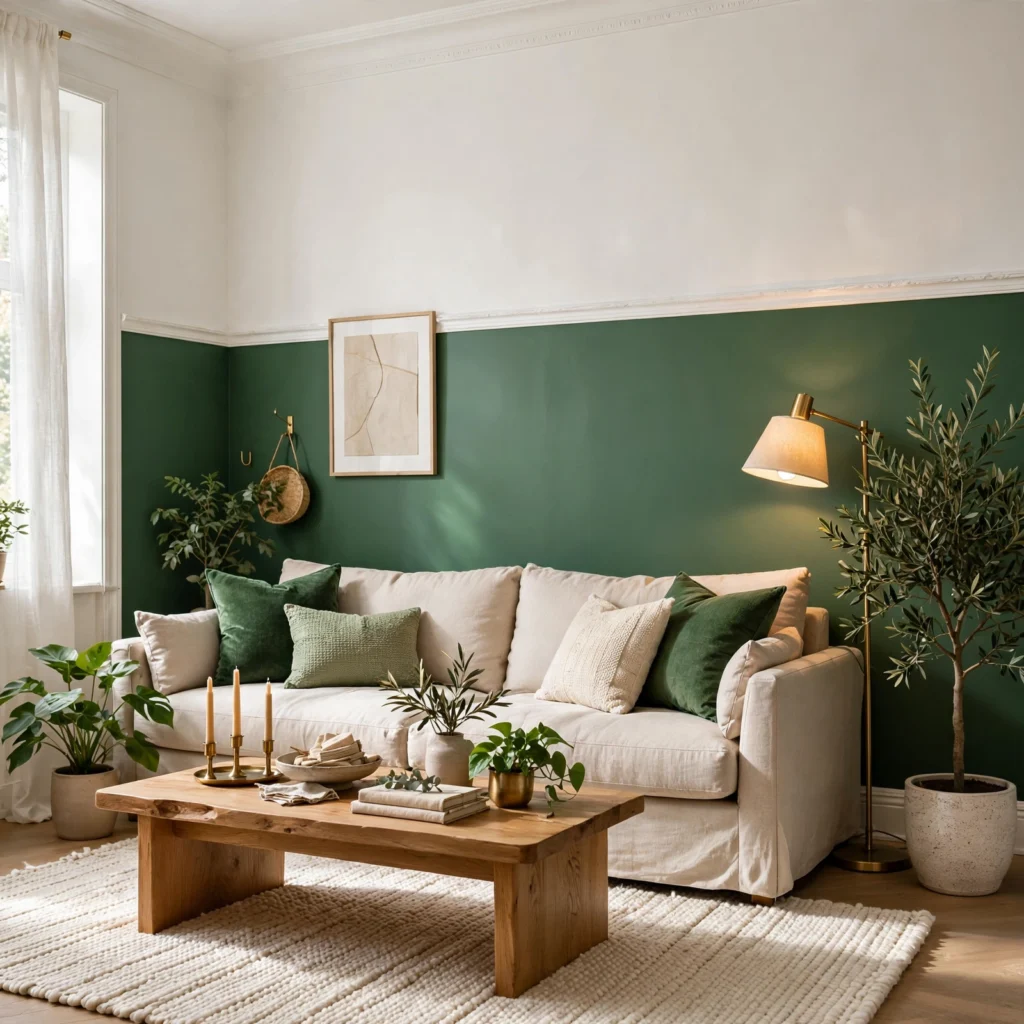
Painting the lower two-thirds of a living room wall in a mid-tone green and leaving the upper portion white, divided by a picture rail, adds architectural interest without darkening the entire room the way a full green wall would. This approach suits living rooms with lower ceilings, since the white upper section keeps the eye moving upward rather than making the room feel boxed in. A simple wood picture rail painted white or left as natural oak marks the transition line cleanly.
| Wall Treatment | Ceiling Height Suited To | Visual Effect |
| Full green wall | 9 ft+ | Bold, cocooning |
| Two-tone green/white | Under 9 ft | Taller, lighter |
| Green wainscoting | Any | Traditional, defined |
12. Forest Green Built-In Shelving
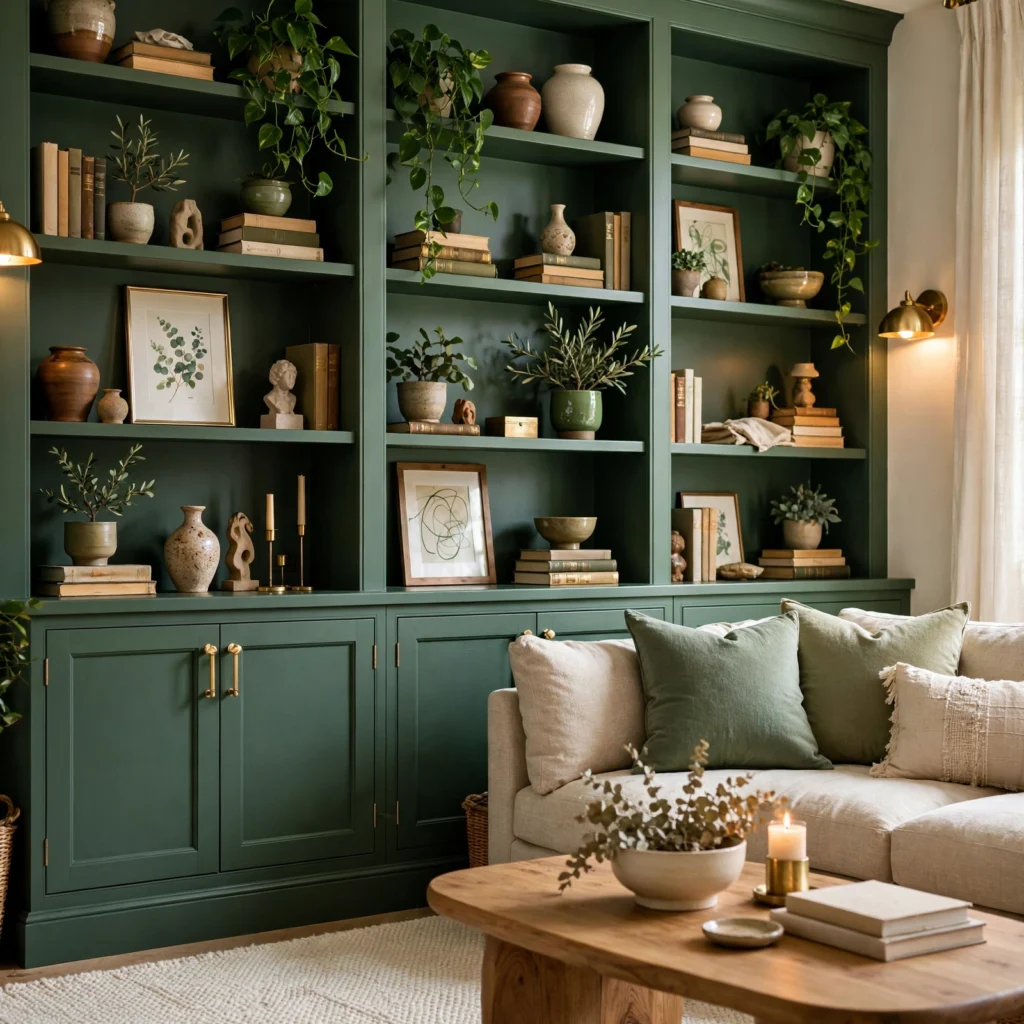
Forest green built-in shelving, painted rather than left as natural wood, turns a functional storage wall into a designed feature, especially when the interior of the shelving is painted a shade or two darker than the surrounding trim. This works well flanking a fireplace or television, where the built-ins can visually anchor the room’s layout. Style the shelves with a mix of books, ceramics, and one or two trailing plants, leaving roughly a third of the shelf space empty so the arrangement doesn’t feel overstuffed.
13. Green Boucle Ottoman
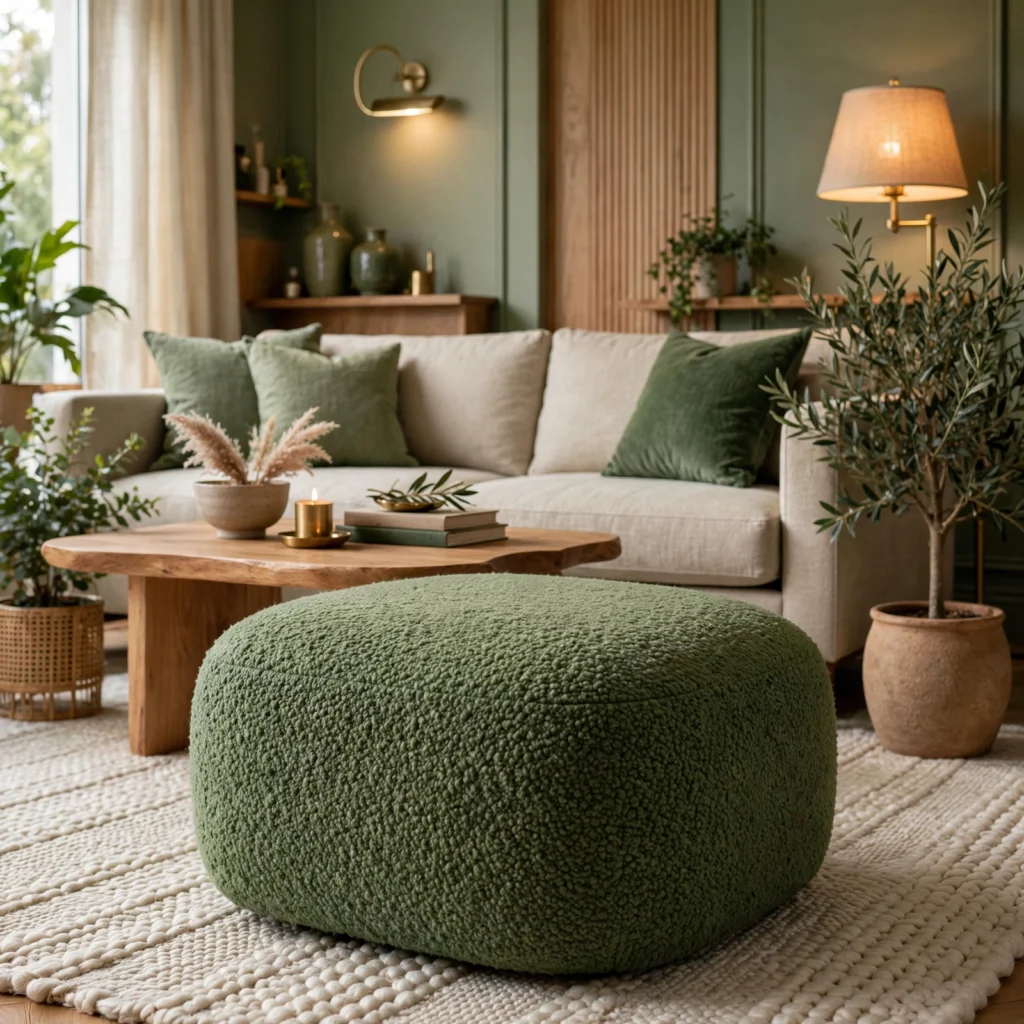
A green boucle ottoman offers a smaller, lower-commitment way to bring texture and color into a living room’s central seating area, functioning as a footrest, extra seat, or small table with a tray on top. The nubby boucle texture reads as soft and casual, which balances out a room with sharper-edged furniture like glass or metal side tables. Choose a rounded ottoman shape if the room already has several rectangular pieces, since the curve breaks up an otherwise boxy furniture arrangement.
14. Green Grasscloth Wallpaper
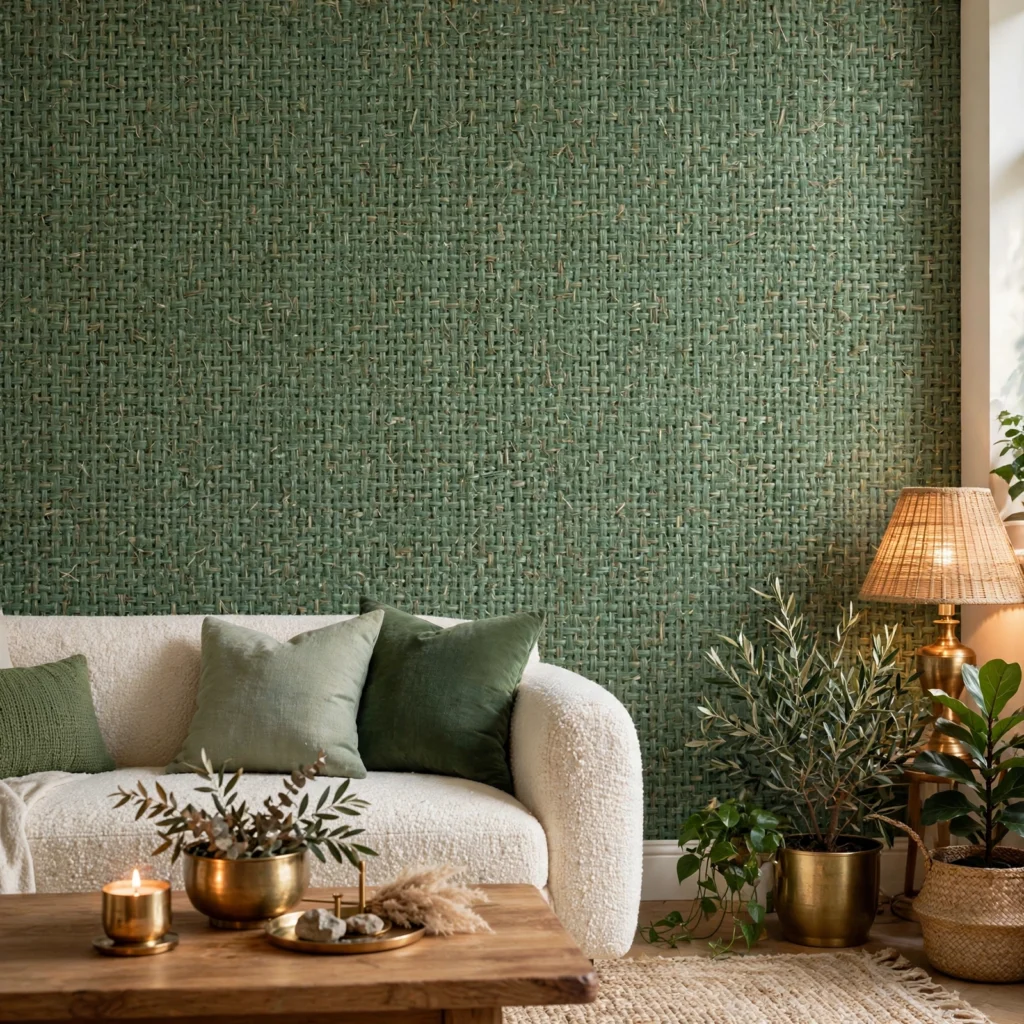
Green grasscloth wallpaper uses a woven natural-fiber texture rather than a flat printed surface, which gives the wall subtle dimension and a slightly irregular, handmade quality that flat paint can’t replicate. This treatment tends to suit more traditional or transitional living rooms, pairing well with wood furniture, brass fixtures, and patterned rugs. Grasscloth is more delicate than standard wallpaper, so it’s worth budgeting for professional installation, particularly around outlets and corners where the material can fray if handled roughly.
15. Green Glass Pendant Lighting
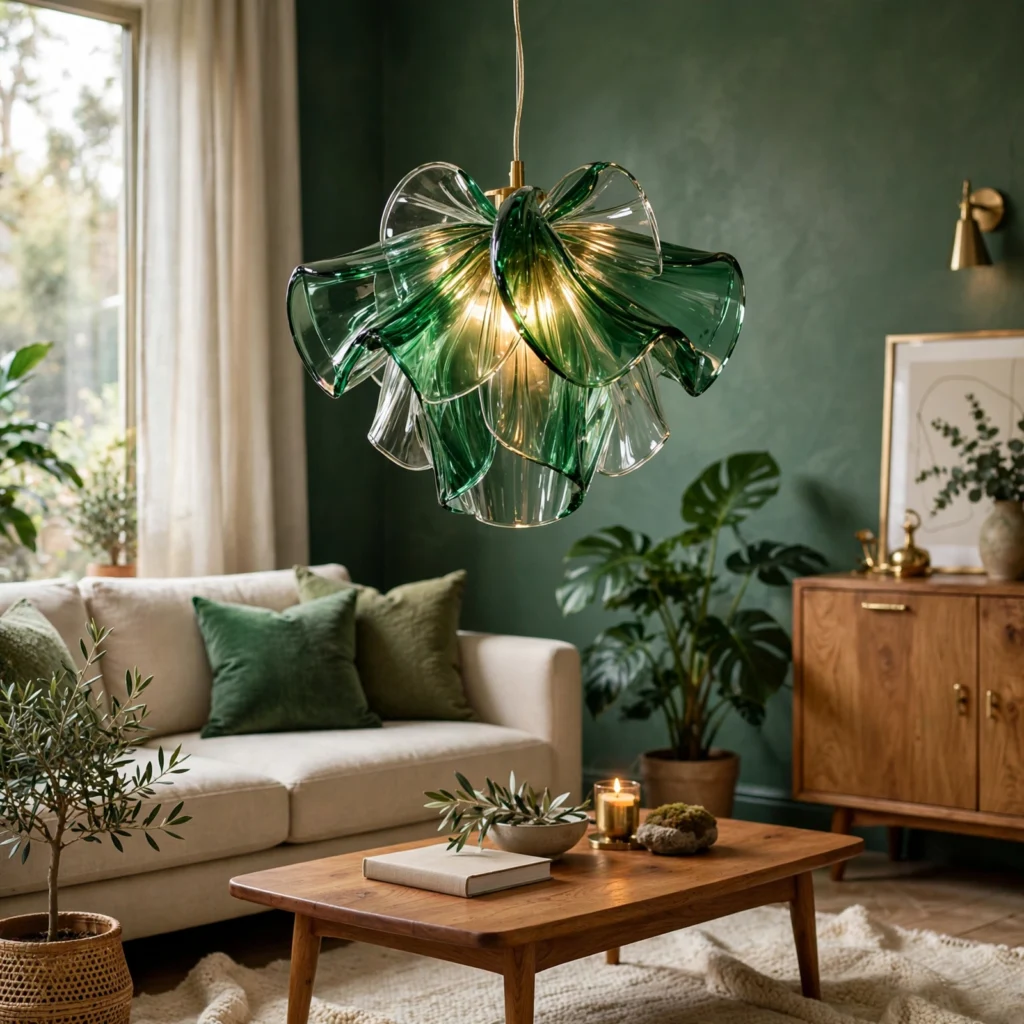
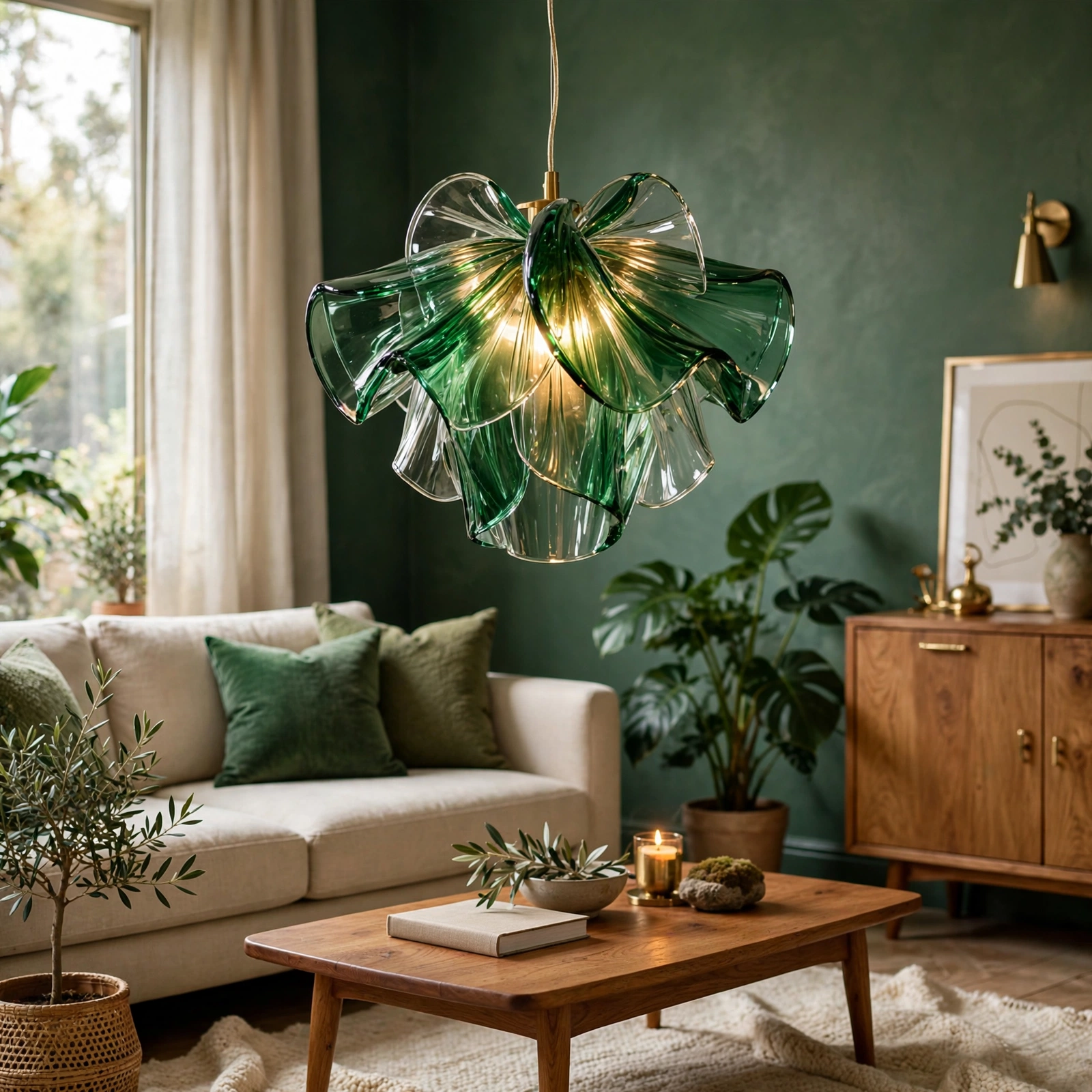
A green glass pendant light, whether a single statement fixture over a seating area or a cluster of smaller globes, introduces color at eye level and above, which draws attention upward in a way floor-level decor doesn’t. Amber-green or sea-glass-toned shades cast a warm, slightly tinted light in the evening that flatters skin tones better than a stark white fixture. Position the pendant so it hangs low enough to feel intentional, generally 30 to 36 inches above a seating surface, rather than flush against the ceiling.
16. Checkerboard Green and Cream Rug
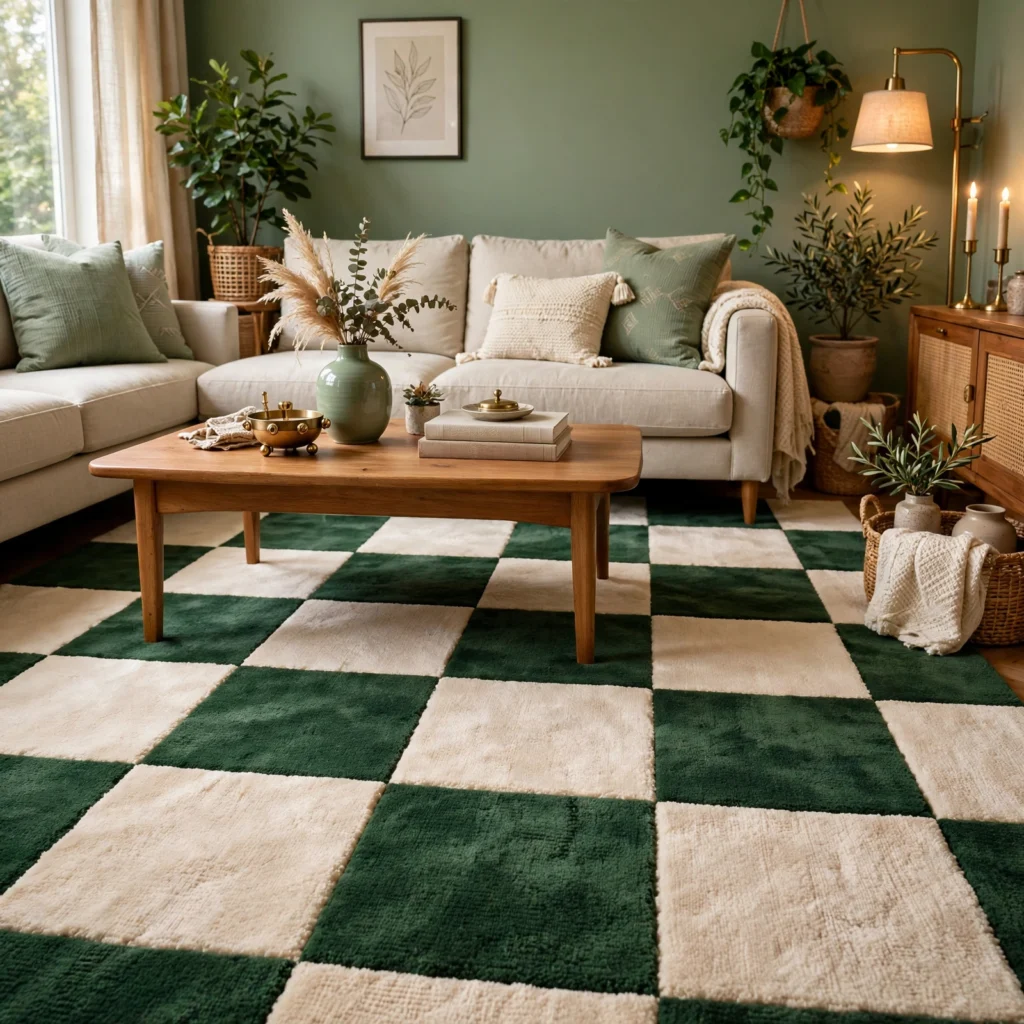
A checkerboard rug in green and cream adds graphic pattern underfoot, giving the room a playful, slightly retro edge that works well in a living room where the walls and furniture are otherwise solid and muted. This pattern also helps visually define a seating area within an open-plan space, since the bold print naturally draws the eye and marks a boundary. Choose a wool or wool-blend rug for a checkerboard pattern, since the fiber holds the crisp edge of each square better than a flatter synthetic weave.
17. Green Lacquered Console Table
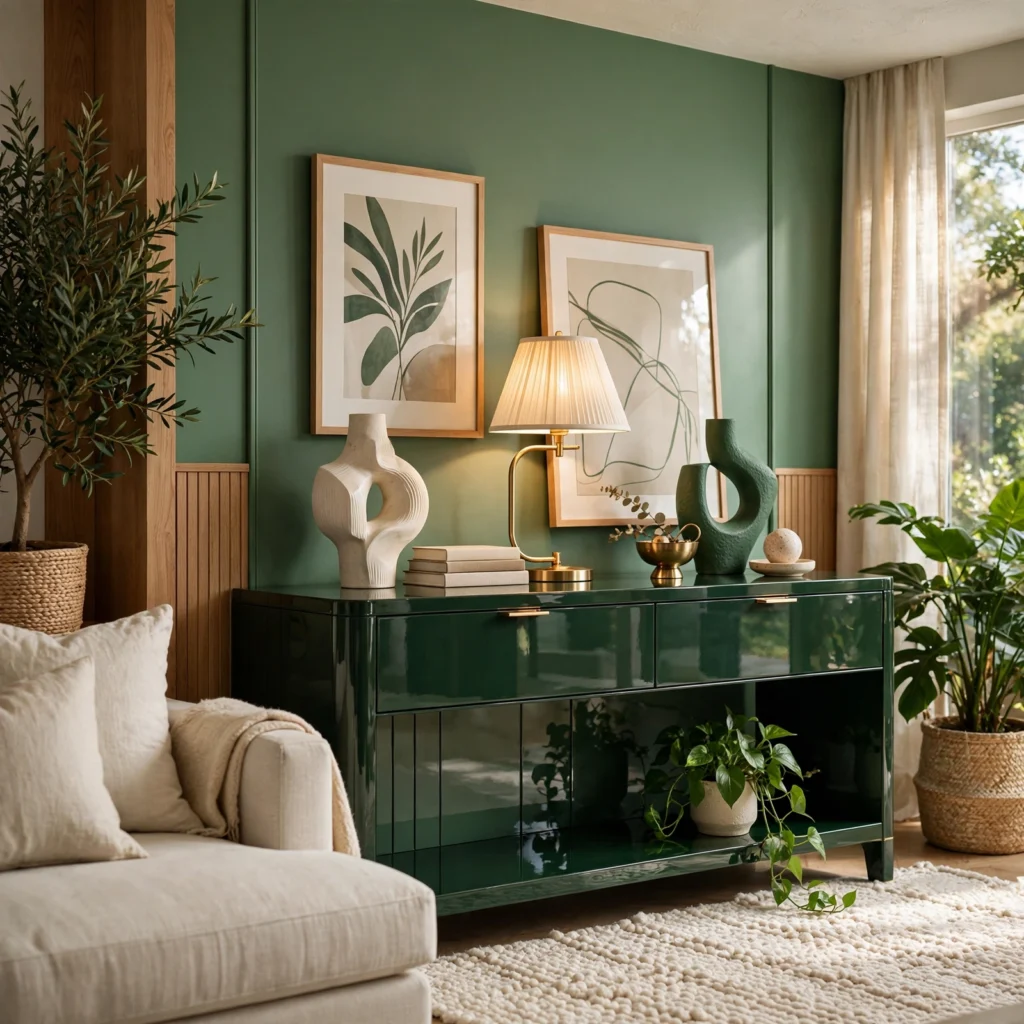
A green lacquered console table, placed behind a sofa or along an entry wall, brings a glossy, high-shine finish that contrasts nicely against the matte textures common in most living rooms, like linen sofas or wool rugs. The reflective lacquer finish also bounces light around the room, which helps a deep green piece avoid feeling heavy or overly dark. Style the top simply, with a table lamp and one or two objects, so the console’s color and finish stay the visual focus rather than competing with clutter.
18. Moss and Wood Accent Styling
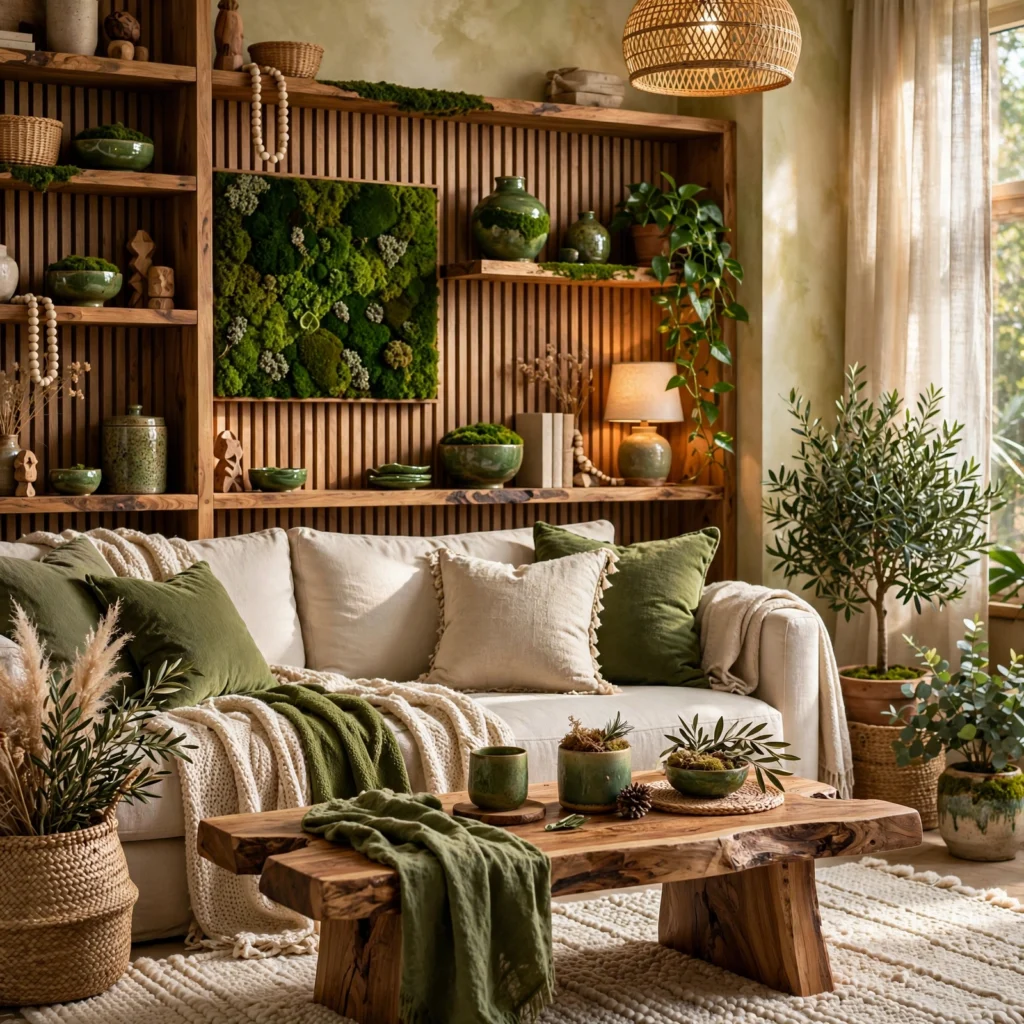
Combining preserved moss art or moss wall panels with unfinished or lightly stained wood furniture creates a grounded, cabin-adjacent look that leans into green’s most natural association without requiring any live plant maintenance. This pairing works particularly well in a living room with a stone fireplace or exposed beams, since the materials already share a rustic vocabulary. Frame preserved moss in a simple black or wood box frame and hang it at eye level near the seating area for the most impact.
Shop the Look
A sage boucle sofa from Article sets a warm, neutral-leaning green base, while an emerald velvet accent chair from Anthropologie adds a richer contrast point nearby. For lighting, a sea-glass pendant from Schoolhouse Electric introduces color overhead without repeating the same shade as the furniture. Round out the room with a green terrazzo coffee table from CB2 and a checkerboard wool rug from Ruggable for pattern underfoot.
Common Mistake to Avoid
The most common mistake with a green living room is choosing a paint swatch under store lighting and skipping a real test on the actual wall, since green shifts more dramatically under different light temperatures than most colors. A green that looks fresh and botanical in a paint store can read muddy or olive-drab under warm incandescent bulbs at home, or overly cool and clinical under daylight LEDs. Always paint a large sample patch and view it at different times of day before committing to a full wall or room.
FAQs
What colors go with green in a living room?
Warm white, black, terracotta, and brass all pair well with green, since each either softens the color’s intensity or adds contrast without competing with it. Warm white keeps a green wall or sofa from feeling too heavy, while black accents like window trim or lamp bases sharpen the look with contrast. Terracotta and rust tones bring out green’s warmer undertones, particularly with olive or sage shades, making the combination feel more earthy than jewel-toned.
Is a green living room too trendy?
Green has been a consistent presence in interior design for decades rather than a fleeting trend, though specific shades like emerald or hunter green have seen recent surges in popularity through paint-of-the-year picks. Choosing a more muted, timeless shade like sage or olive, rather than a highly saturated trend color, helps the room age better over the next decade. Pairing green with classic materials like wood, brass, and linen also keeps the overall look from feeling tied to one specific era.
What shade of green is best for a small living room?
Lighter, more muted shades like sage or a pale eucalyptus green tend to suit small living rooms better than deep, saturated tones like hunter or forest green, since darker colors can make a compact room feel more enclosed. That said, a small room with good natural light can sometimes handle a deeper green on a single accent wall without feeling cramped. Testing a large paint sample in the room at different times of day is the most reliable way to judge the effect before committing.
Does green work with natural wood furniture?
Green and natural wood pair well together because both share warm, organic undertones, particularly when the wood has a honey or walnut finish rather than a stark, cool-toned gray wash. Olive, sage, and forest green all complement wood tones without clashing, since neither color competes for attention the way two bold, saturated hues might. This pairing is part of why green has become such a popular choice in living rooms that already lean toward a natural, materials-driven design style.
How much green is too much in a living room?
There’s no fixed rule, but a helpful guideline is to treat green as roughly sixty percent of the room’s color story at most, balancing it with neutrals like white, black, or wood tones so the space doesn’t feel monochromatic. A room with green walls, a green sofa, and green textiles all in the same saturation can start to feel flat rather than intentional. Varying the shade slightly between elements, such as a sage sofa against a deeper forest green wall, adds depth instead of repetition.
Conclusion
A green living room offers more range than most people expect, from a bold hunter green accent wall to a single sage boucle ottoman, and the right approach depends entirely on how much commitment and contrast you’re after. These eighteen ideas give you a starting point to mix and match based on your existing furniture, lighting, and room size. Save this post to Pinterest for later, and check out our related guide on apartment living room ideas for more small-space layout inspiration.
Author Expertise Note
This guide comes from personal experience testing four different green paint samples on the same living room wall over the course of a single week, watching how dramatically each one shifted between morning and evening light.