15 Cozy Modern Farmhouse Living Room Ideas for a Warm, Welcoming Home
Walking into a room that feels both rustic and current isn’t an accident it’s the result of specific, repeatable design choices. A modern farmhouse living room takes the warmth of old barns and country kitchens and pairs it with clean lines and a restrained color palette. In this guide, you’ll find fifteen practical ideas covering walls, furniture, lighting, and textiles, each explained with enough detail to plan your own version, whether you’re renovating a fixer-upper or updating a single room.
Trend & Background
The modern farmhouse aesthetic surged in popularity over the last decade, largely credited to renovation shows that popularized shiplap, apron-front sinks, and neutral linen upholstery in mainstream homes. What began as a niche revival of rural architecture has settled into a lasting design category because it solves a real problem: it makes new construction and older homes alike feel warm rather than cold or overly polished. Homeowners now gravitate toward it for its flexibility it pairs easily with minimalist, industrial, or cottage influences, making it one of the more adaptable styles for real, lived-in family rooms.
Key Takeaways
- A modern farmhouse living room blends raw materials like reclaimed wood and iron with soft, neutral textiles for a balanced, welcoming space.
- Small architectural details shiplap, exposed beams, black window frames carry more visual weight than expensive furniture.
- Layering textures (jute, linen, leather, wool) prevents the neutral palette from feeling flat or sterile.
- Budget-friendly swaps exist for nearly every high-end farmhouse feature, from board-and-batten paneling to faux wood beams.
1. Shiplap Accent Wall
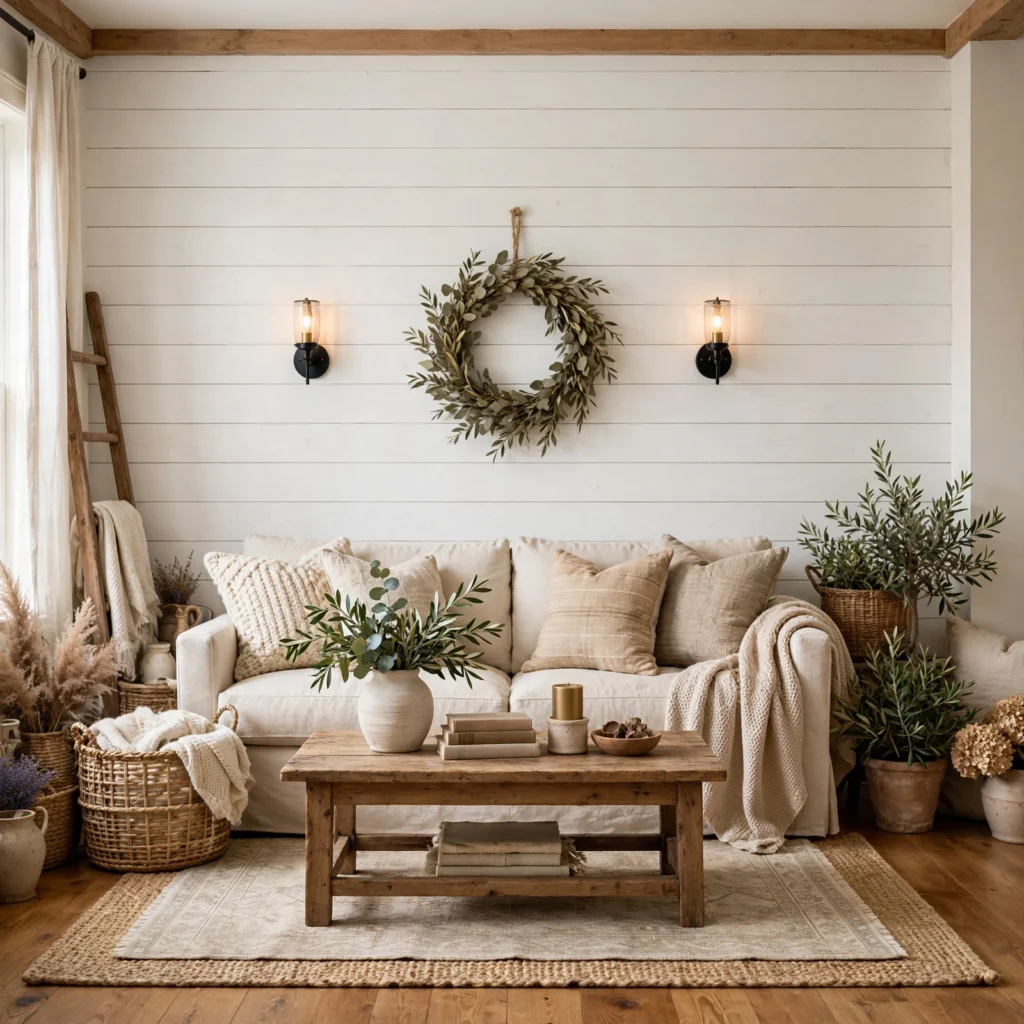
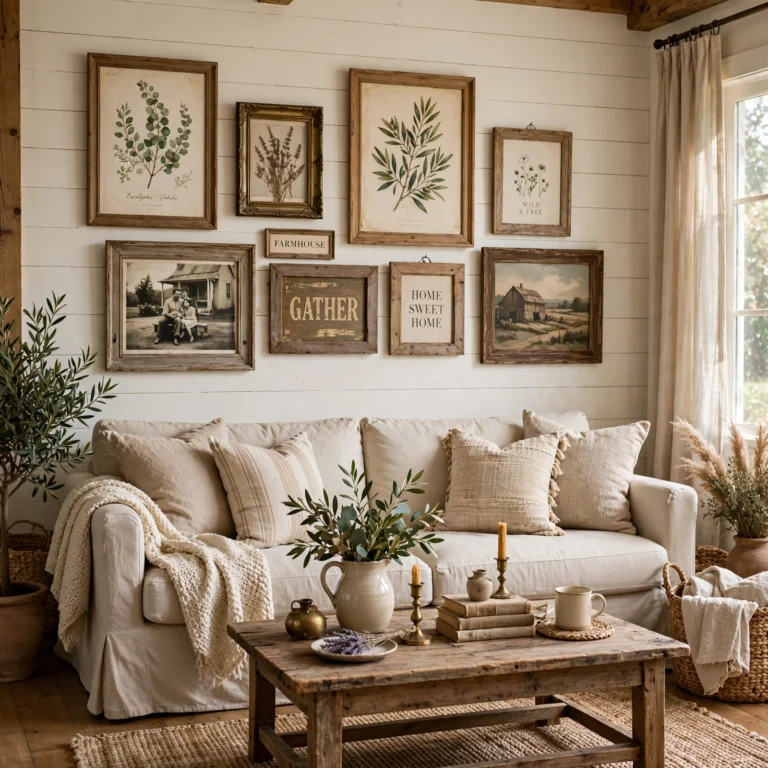
Shiplap remains one of the fastest ways to signal farmhouse style without a full renovation. Installed horizontally on a single wall typically behind the sofa or surrounding a fireplace it introduces texture and shadow lines that flat drywall can’t replicate. Choose primed MDF planks for an affordable, paintable option, or reclaimed pine boards if you want visible grain and imperfections. Keep the rest of the walls plain so the shiplap reads as a focal point rather than competing with other patterned surfaces in the room.
| Material | Approx. Cost per Sq Ft | Installation Difficulty |
| Primed MDF Shiplap | $2–$4 | Easy |
| Solid Pine Shiplap | $4–$7 | Moderate |
| Reclaimed Barn Wood | $8–$15 | Advanced |
| Peel-and-Stick Shiplap Panels | $3–$6 | Very Easy |
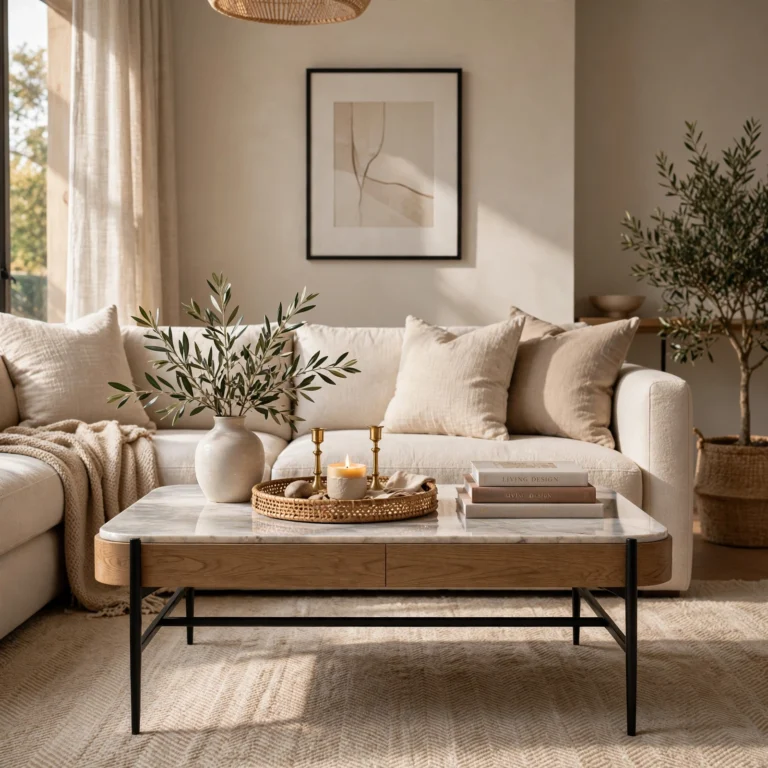
2. Reclaimed Wood Coffee Table
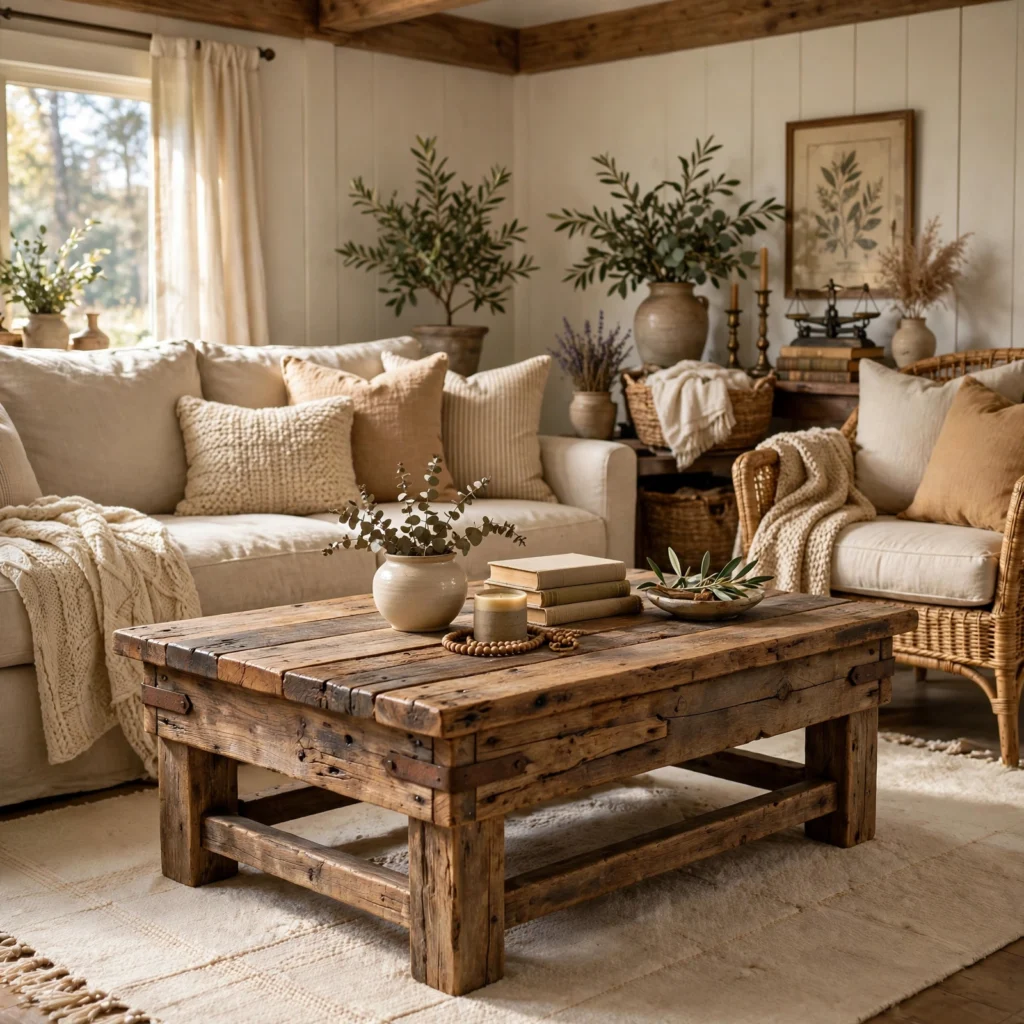
A coffee table built from salvaged barn wood or aged oak anchors the seating area with visible history knots, nail holes, and uneven grain that mass-produced furniture can’t fake. Pair it with black iron hairpin legs or a chunky trestle base for contrast between rustic top and industrial support. Because reclaimed wood varies piece to piece, no two tables look identical, which suits a farmhouse room where perfect symmetry isn’t the goal. Look for pieces treated with a matte or wax finish rather than high-gloss lacquer to preserve the raw, weathered character.
3. Black Metal Window Frames
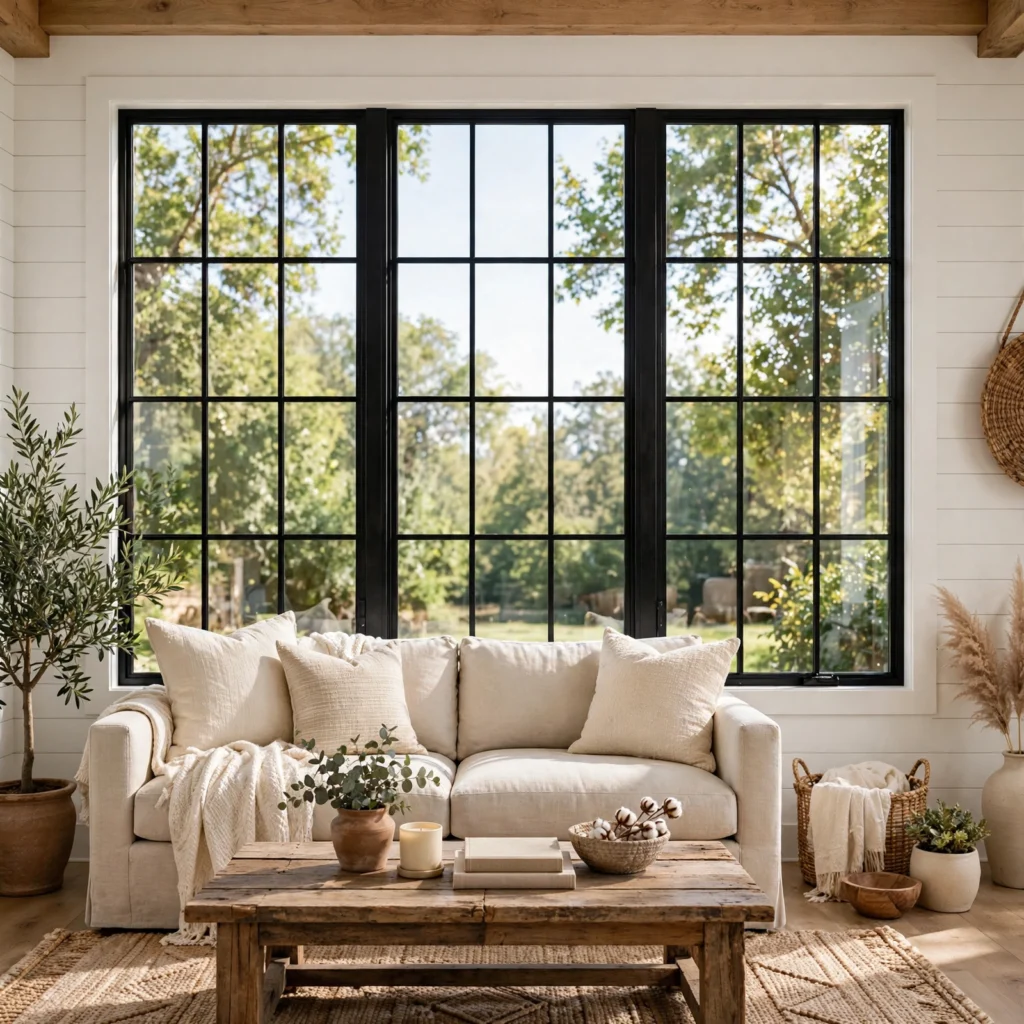
Even if you’re not replacing actual windows, black-framed interior details mirrors, room dividers, or glass cabinet doors borrow the look of factory-style steel windows that define the modern side of modern farmhouse. The thin black lines break up an all-white or all-neutral room without introducing another color, and they read as architectural rather than decorative. If a full window replacement isn’t in the budget, black-framed french doors or a single statement mirror near the seating area can deliver the same visual effect at a fraction of the cost.
In order to see more options for center table living room CLICK HERE
4. Neutral Linen Sofa
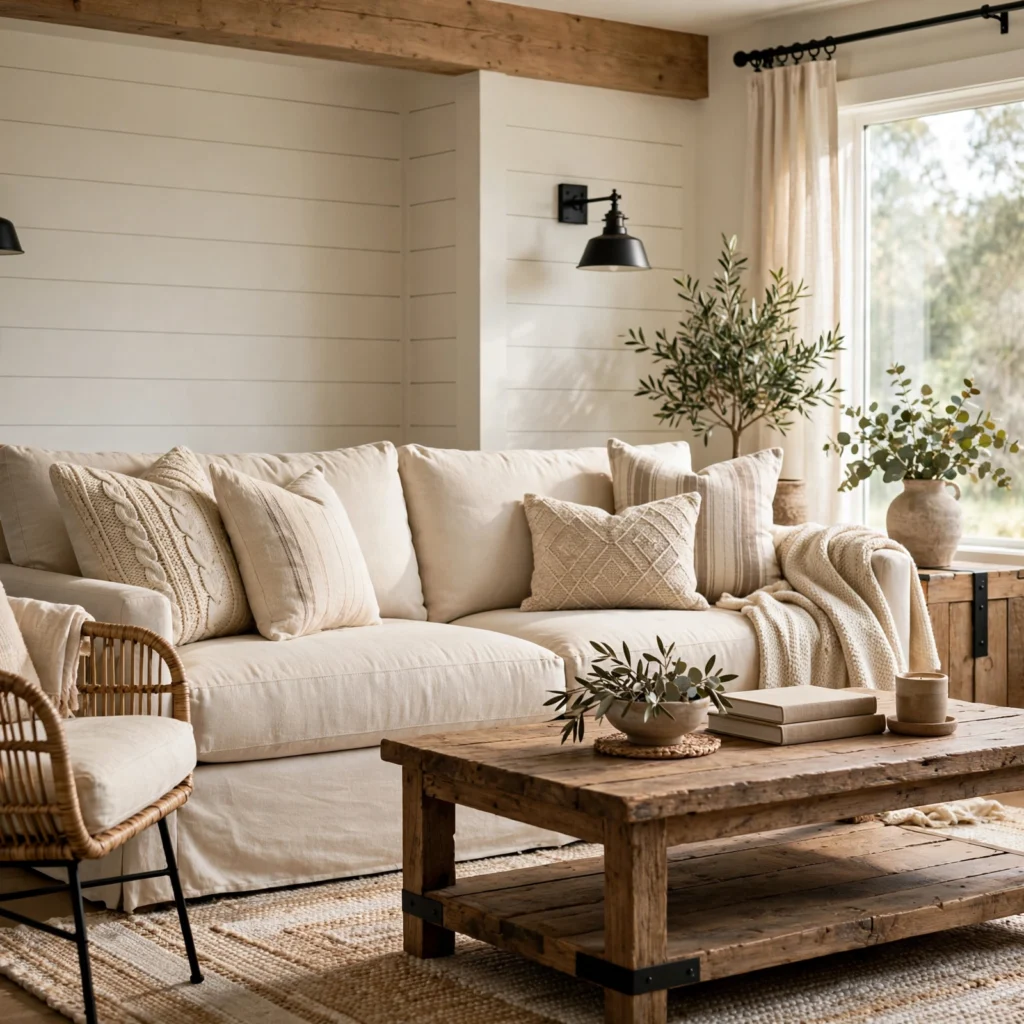
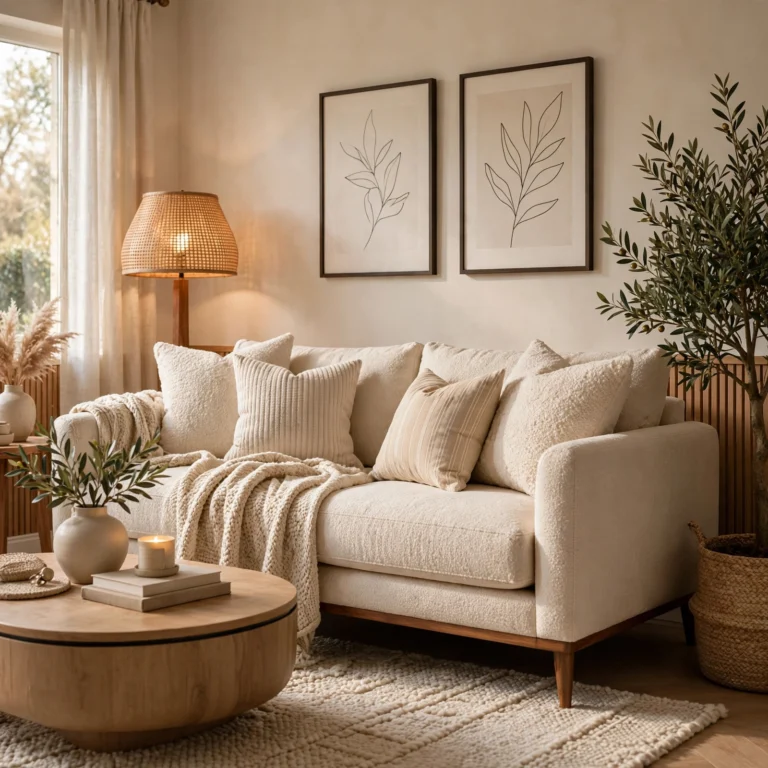
A slipcovered or upholstered sofa in oatmeal, greige, or bone-colored linen forms the soft counterweight to all the wood and metal in the room. Linen wrinkles naturally and softens over time, which fits the relaxed, worn-in quality farmhouse interiors aim for unlike a tightly upholstered velvet piece that can feel too formal. Choose a sofa with simple rolled or track arms and turned or tapered wood legs so it doesn’t fight with other rustic elements. Washable slipcover options are worth considering in households with kids or pets.
5. Exposed Wood Beams
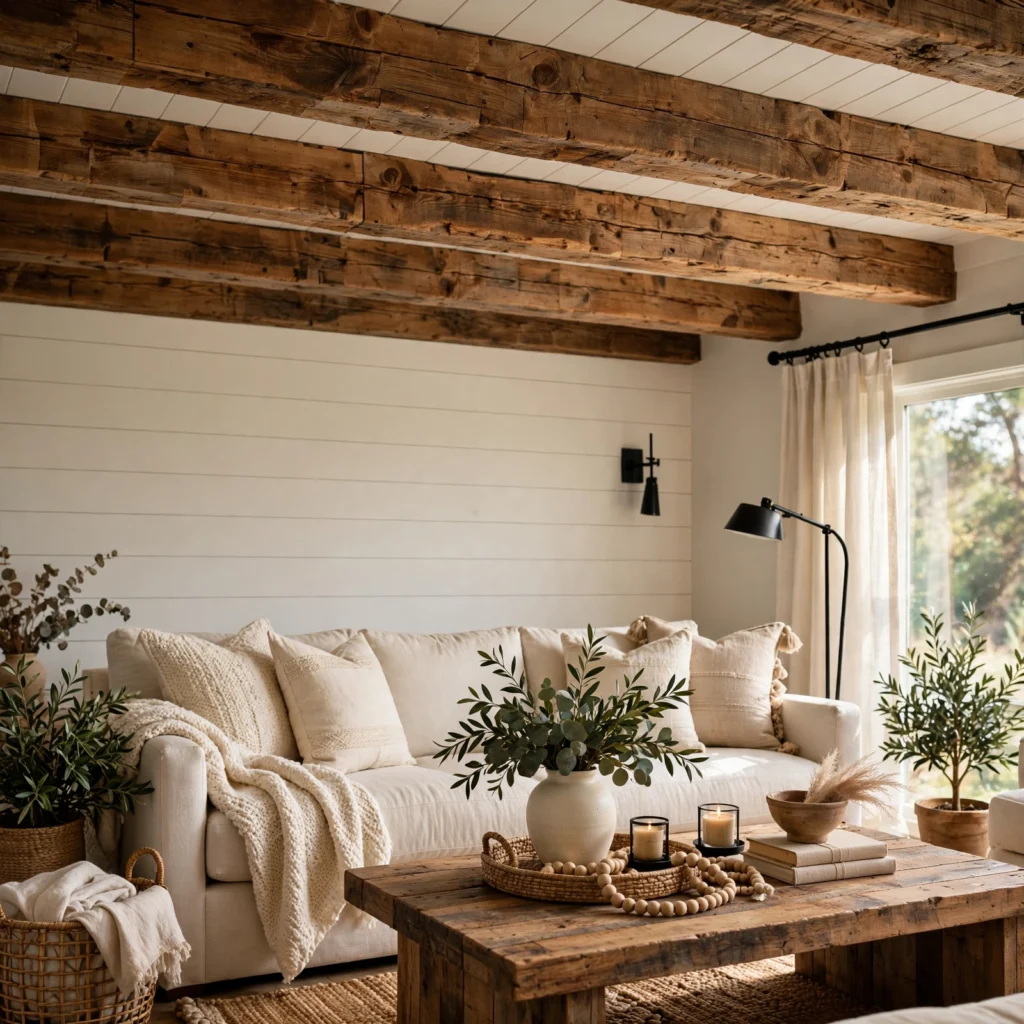
Ceiling beams, whether structural or decorative, add height and texture to a room that might otherwise feel boxy. Real reclaimed beams are heavy and often require professional installation, but lightweight faux beams made from polyurethane or hollow wood boxes achieve nearly the same look for far less effort and cost. Stain them a deep walnut or leave them raw and weathered depending on the rest of your palette. Beams work especially well in rooms with vaulted or higher-than-standard ceilings, where they help ground the space visually.
6. Vintage Leather Armchair
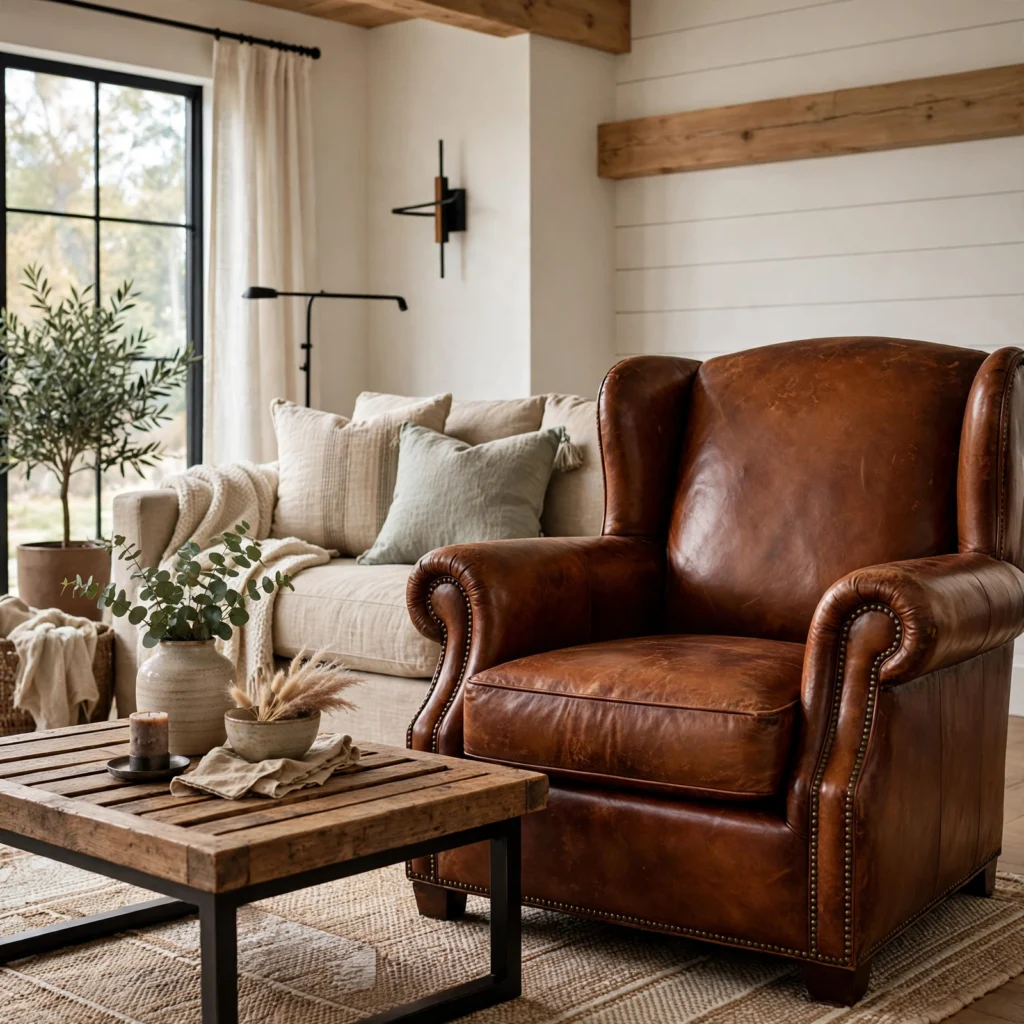
A worn leather armchair in cognac, saddle brown, or chocolate introduces patina and a masculine edge that balances the softer linen and cotton pieces elsewhere in the room. Look for chesterfield-style tufting or a simple wingback silhouette both read as heirloom pieces rather than trend furniture. Genuine full-grain leather develops more character with age, so don’t worry about scuffs or fading; they add to the story. Position it at an angle near the fireplace or a reading lamp to create a secondary seating moment beyond the main sofa arrangement.
7. Woven Jute Rug
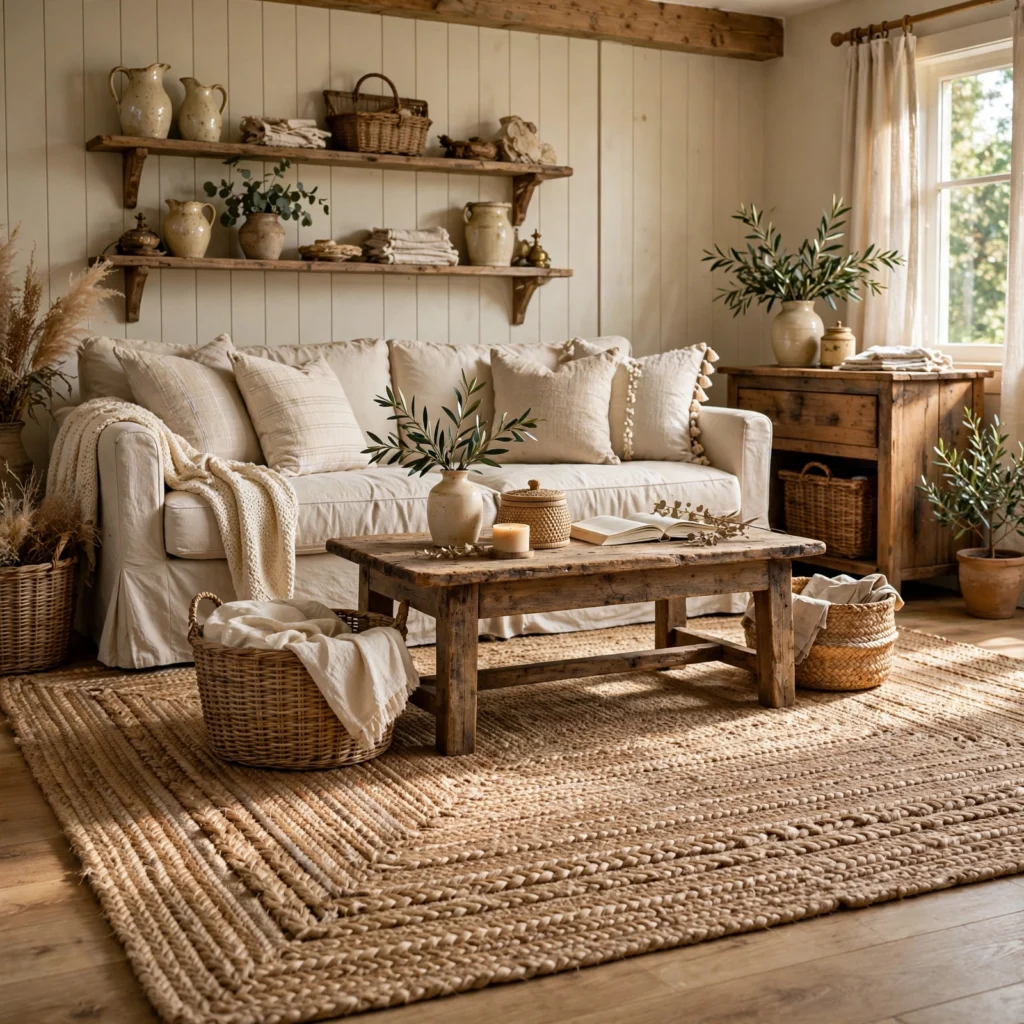
A natural jute or sisal rug grounds the seating area with texture underfoot while keeping the palette neutral. Unlike wool or synthetic rugs, jute has a slightly rough, organic weave that echoes the raw wood and linen already in the room. Layer a smaller vintage or Persian-style rug on top in a muted rust, indigo, or faded red for a pop of pattern without overwhelming the space. Sizing matters here more than in most rooms, since an undersized rug is one of the most common styling mistakes in farmhouse living rooms.
| Room Size | Recommended Rug Size | Placement Rule |
| Small (10×10 ft) | 5×8 ft | Front legs of furniture on rug |
| Medium (12×15 ft) | 8×10 ft | All furniture legs on rug |
| Large (15×18 ft) | 9×12 ft | All furniture legs on rug |
| Open-concept | 10×14 ft or larger | Rug defines seating zone |
8. Sliding Barn Door
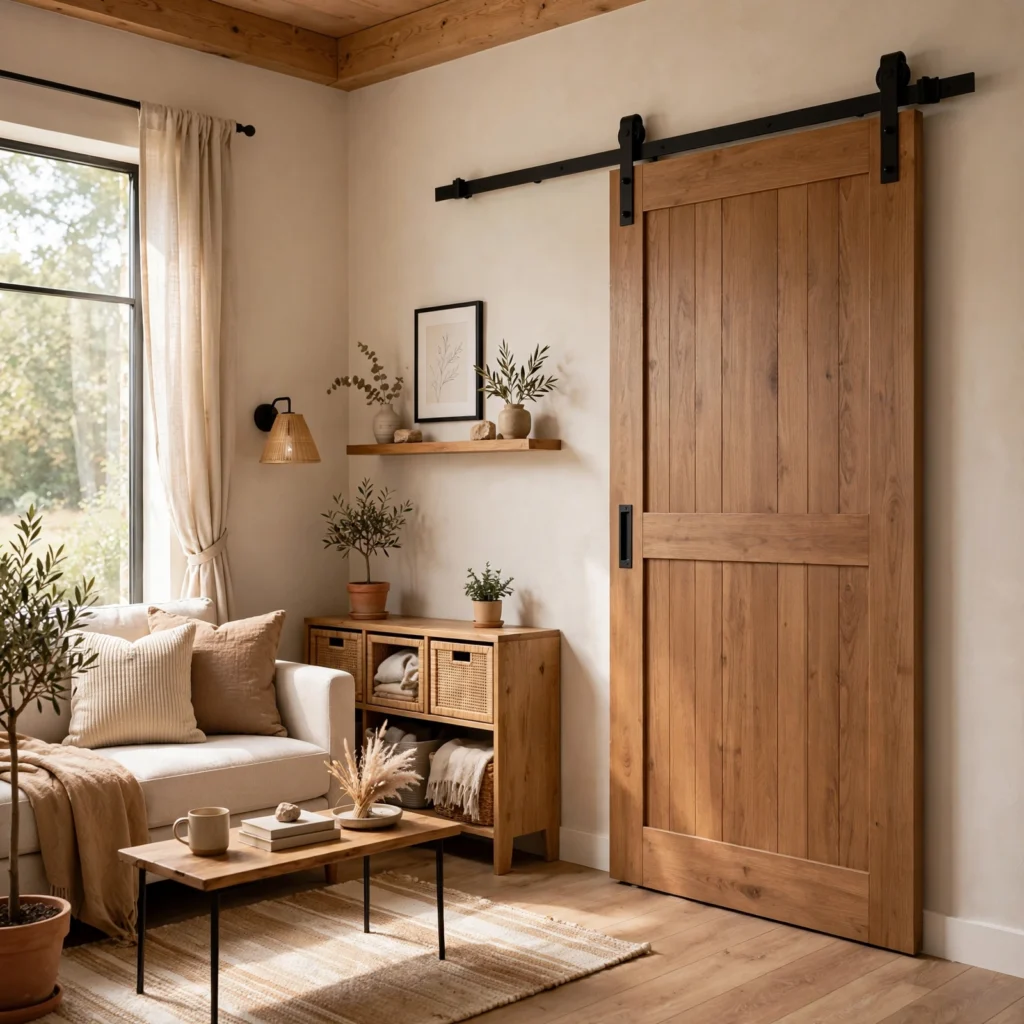
A sliding barn door, whether separating the living room from a hallway or concealing a media cabinet, is one of the most recognizable farmhouse signatures. Choose a door built from reclaimed or distressed wood with black iron hardware and a visible track mounted above the opening. Beyond the aesthetic, it solves a practical problem in tighter floor plans by eliminating the swing radius a traditional hinged door requires. For a subtler take, a smaller barn-style door on a built-in cabinet or pantry nook delivers the same character on a much smaller scale.
9. Wrought Iron Chandelier
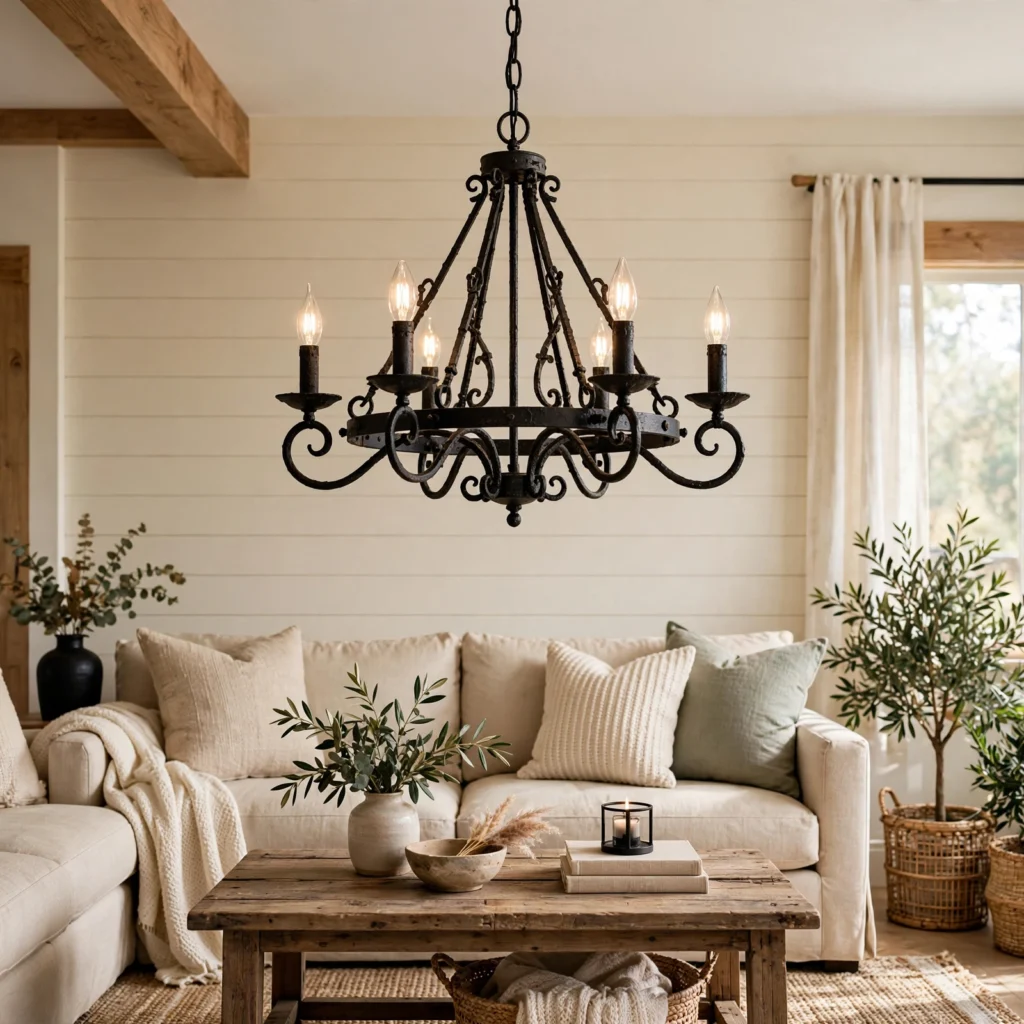
Overhead lighting sets the tone for the whole room, and a wrought iron chandelier with candle-style bulbs or a simple ring silhouette reads as instantly farmhouse without looking dated. Look for aged bronze, matte black, or rust finishes rather than polished chrome or brass, which lean more traditional or glam. Scale matters: a fixture that’s too small will disappear in a room with high ceilings or a large sectional. As a rough guide, add the room’s length and width in feet, and that number in inches becomes a reasonable chandelier diameter.
10. Stone Fireplace Surround
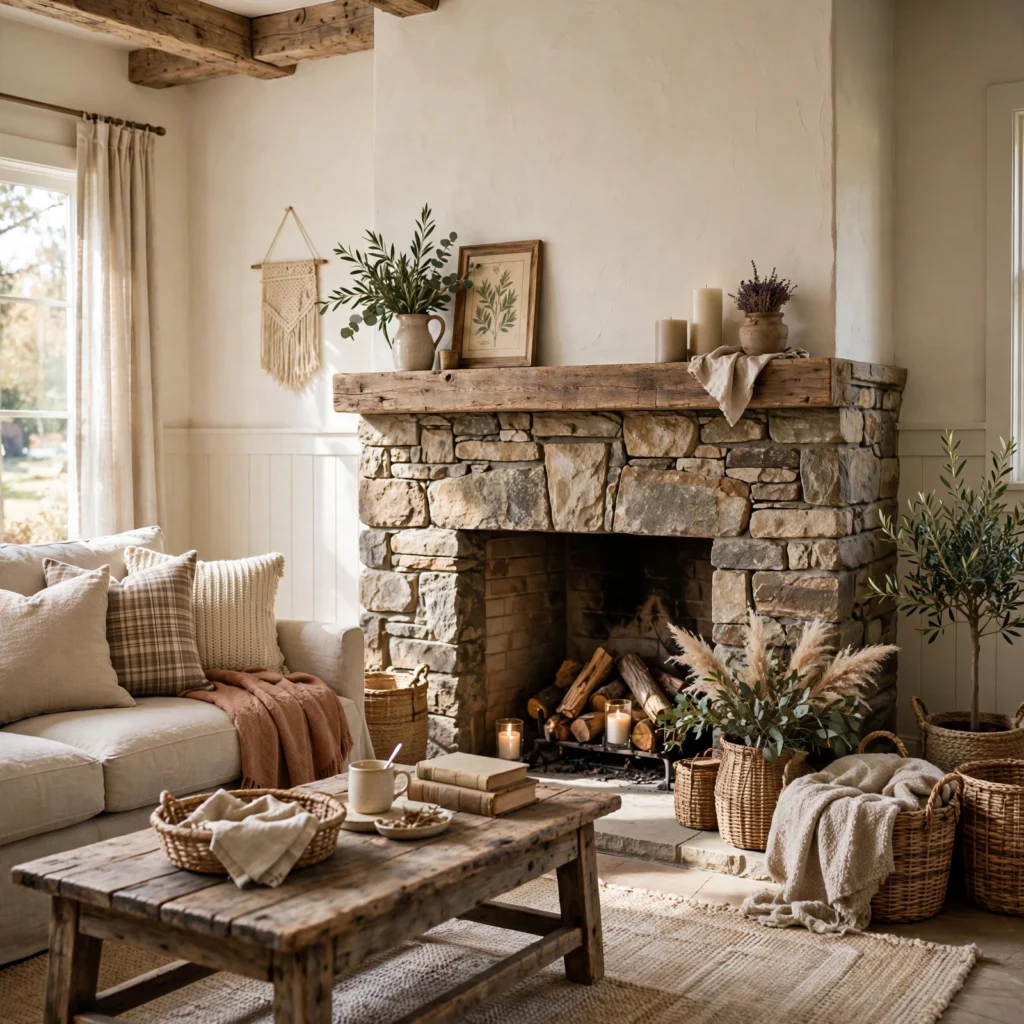
If your living room has a fireplace, resurfacing it in rough-cut stone, whitewashed brick, or limestone veneer instantly becomes the room’s anchor point. Extend the stone from floor to mantel, or even floor to ceiling, rather than framing a small firebox with a thin trim, which tends to look outdated. A reclaimed wood mantel shelf on top softens the stone’s texture and gives you a place to style seasonal decor. This upgrade is more involved than most on this list, but it consistently delivers the highest visual return of any single change.
11. Open Wood Shelving
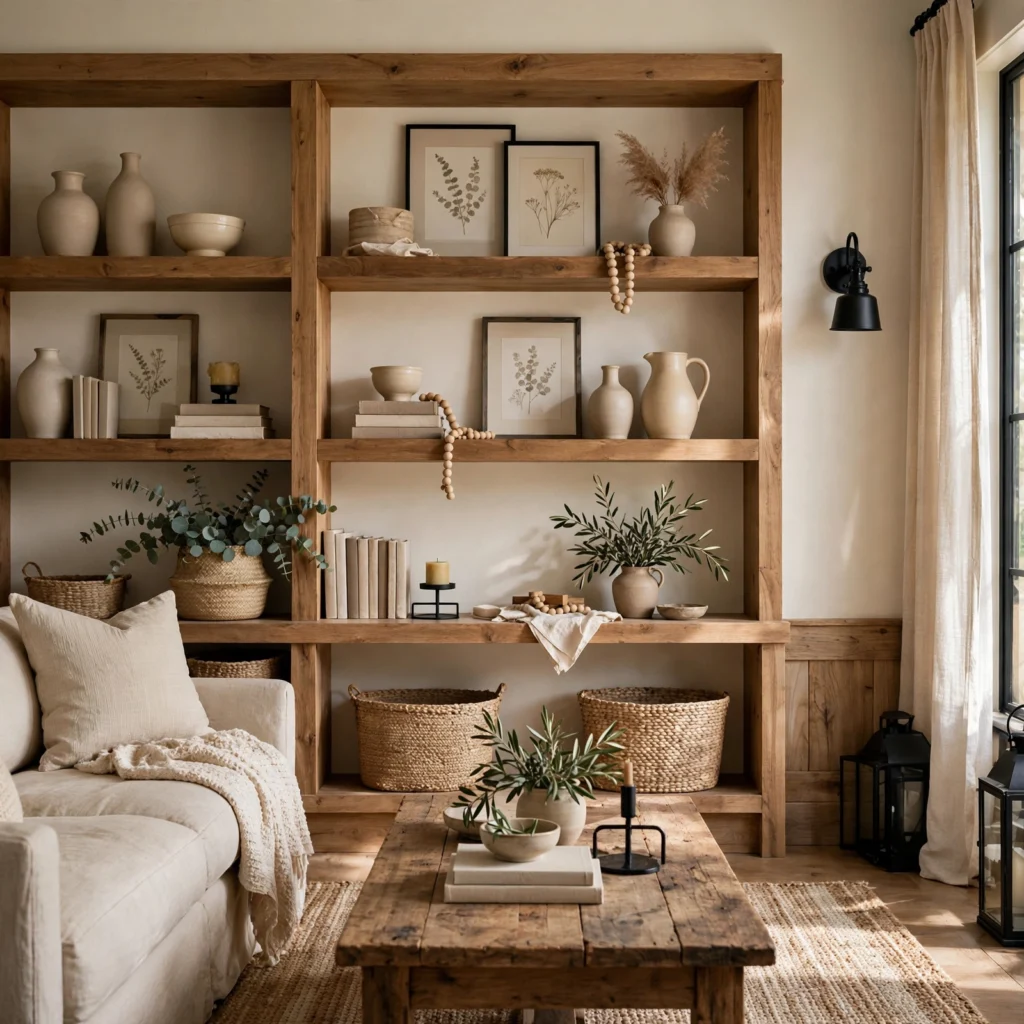
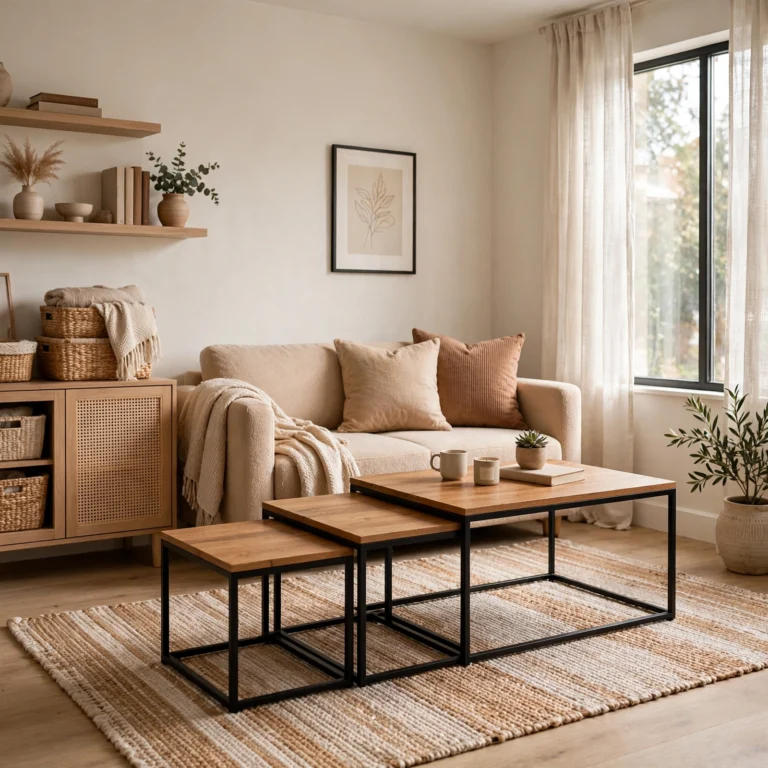
Floating shelves built from thick, rough-sawn wood slabs work well flanking a fireplace or filling an awkward corner where built-in cabinetry isn’t practical. Unlike closed cabinets, open shelving invites you to style books, ceramic vases, and woven baskets in a way that feels curated rather than cluttered, as long as you leave visible negative space between objects. Mount brackets in matte black iron to tie back to other metal accents in the room. Keep the shelf depth around 10 to 12 inches so it holds real decor without looking bulky against the wall.
12. Slipcovered Sectional
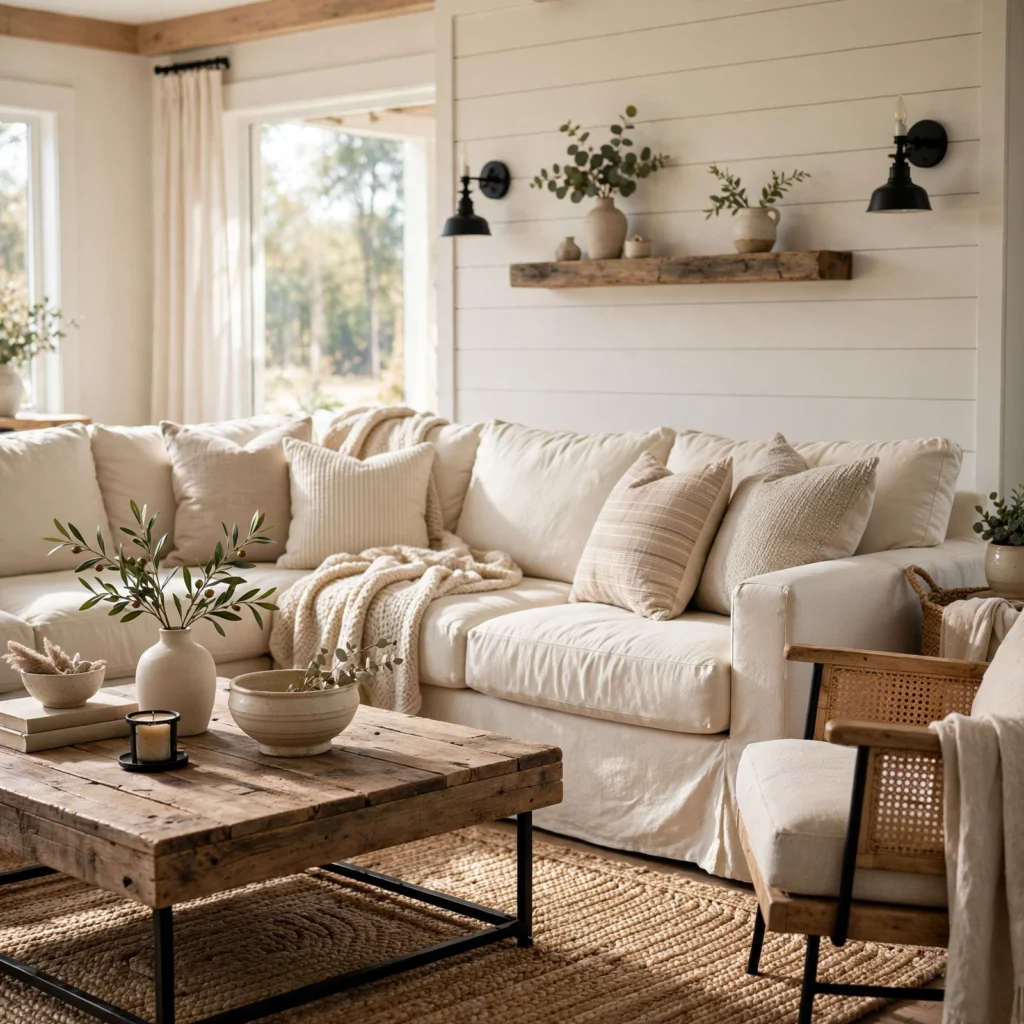
For larger living rooms or families who need more seating, a slipcovered sectional in a durable cotton-linen blend offers the relaxed farmhouse look at a scale a single sofa can’t match. The removable, washable cover is a practical advantage over fixed upholstery, especially in homes with young kids. Choose a low-profile silhouette with simple block or turned legs rather than a sectional with high, tight backs, which can feel more contemporary than farmhouse. An L-shape or U-shape configuration also helps define an open-concept living area without adding walls.
13. Galvanized Metal Accents
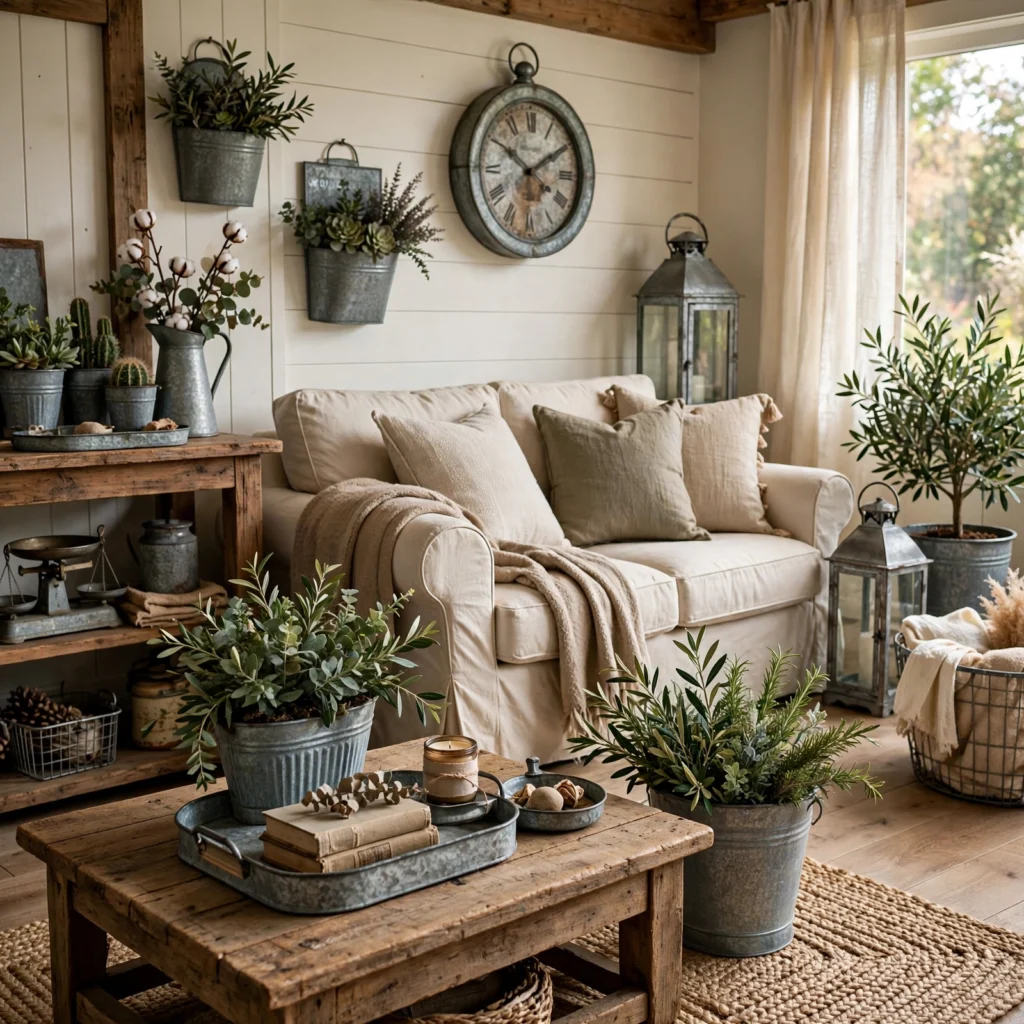
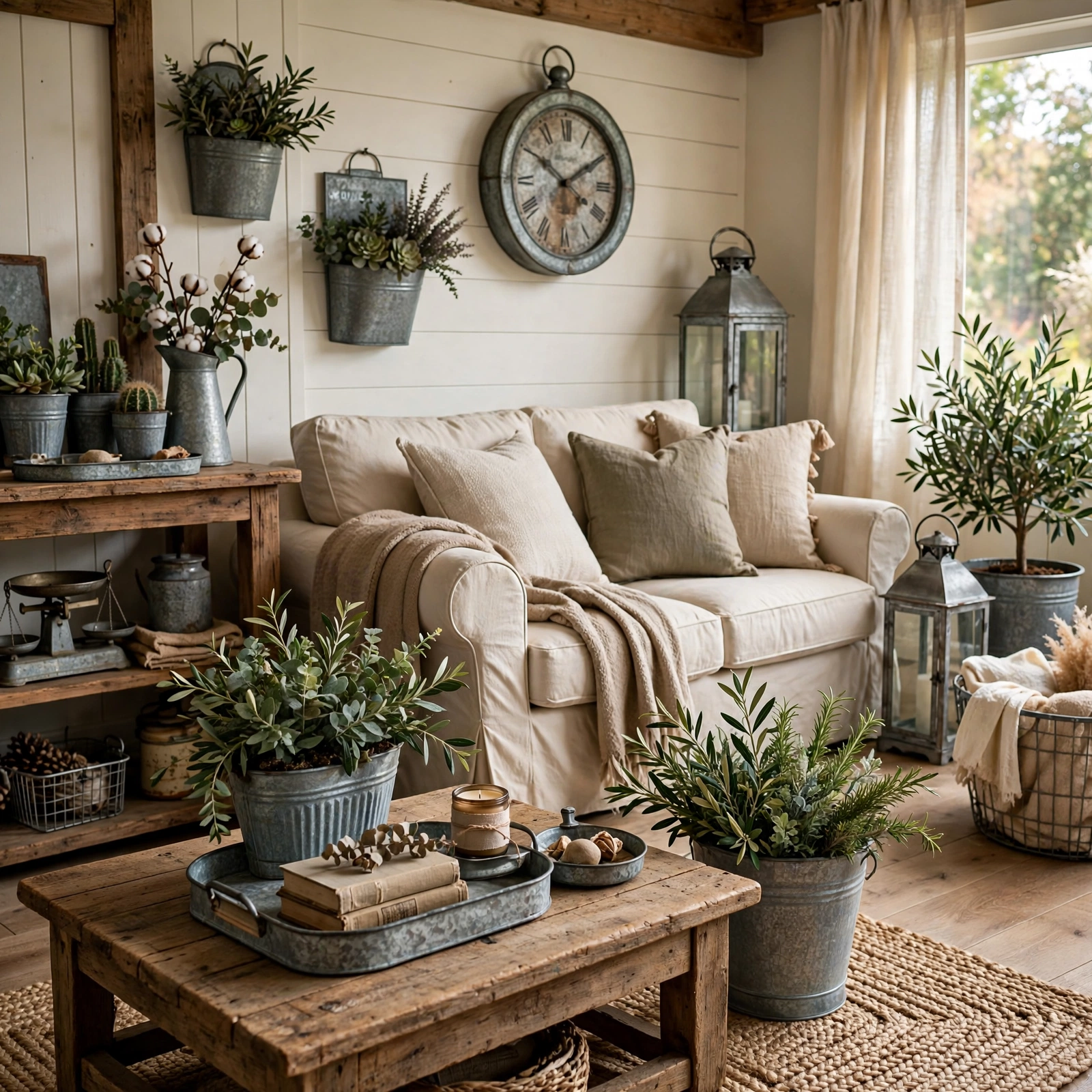
Small galvanized metal pieces a drink bucket used as a planter, a tray on the coffee table, or a pendant light shade add an industrial, slightly weathered texture that contrasts nicely against soft textiles. These pieces are inexpensive and widely available, making them one of the easiest ways to test the farmhouse look before committing to larger purchases like furniture or wall treatments. Because galvanized metal has a cool, silvery tone, balance it with warm wood nearby so the room doesn’t skew too industrial or cold overall.
14. Ladder-Back Accent Chair
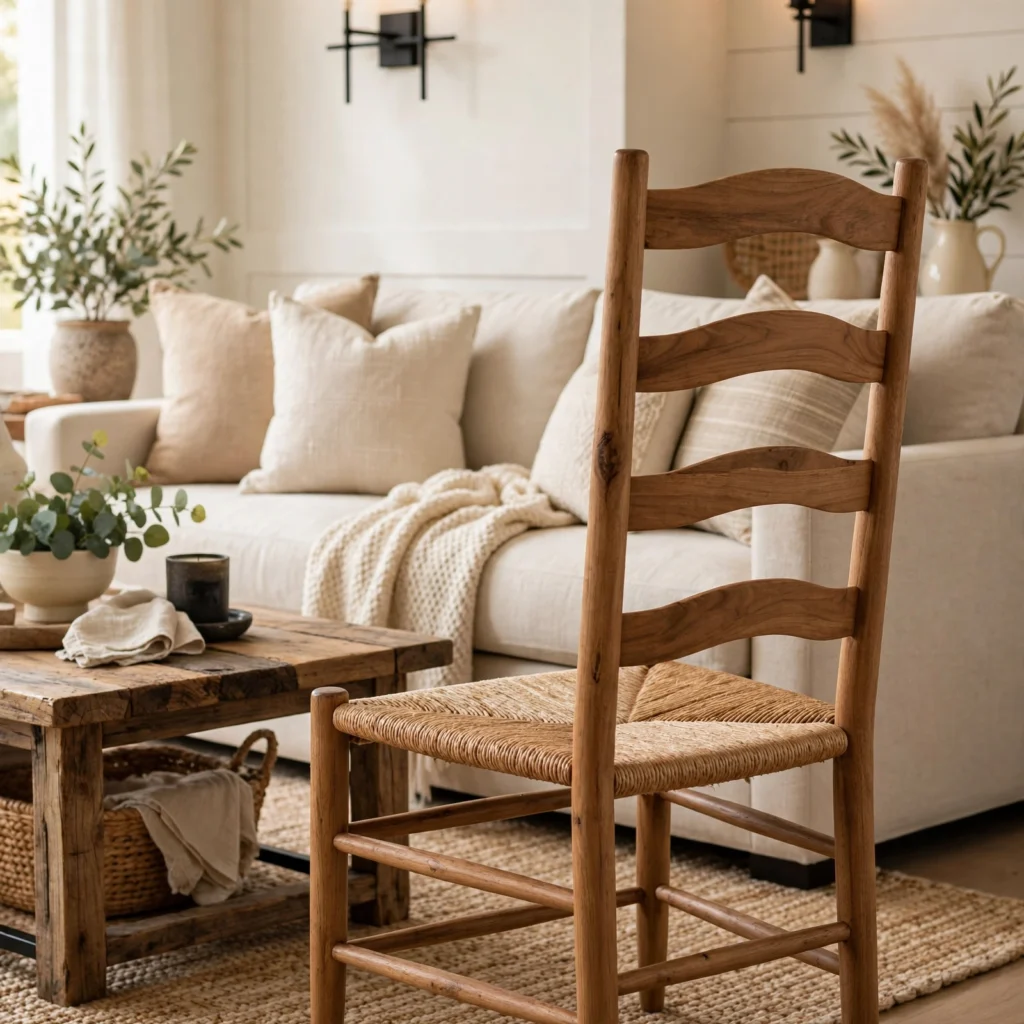
A ladder-back chair with a woven rush or cane seat brings a lighter, more traditional silhouette into a room that might otherwise be dominated by heavy upholstered furniture. Place it near a window or beside a small side table to create a reading nook that doesn’t require a full second seating arrangement. Choose a natural or lightly whitewashed wood finish to keep it from feeling too dark or formal next to linen and jute. This piece works especially well in smaller living rooms where a second full armchair wouldn’t fit comfortably.
15. Layered Neutral Textiles
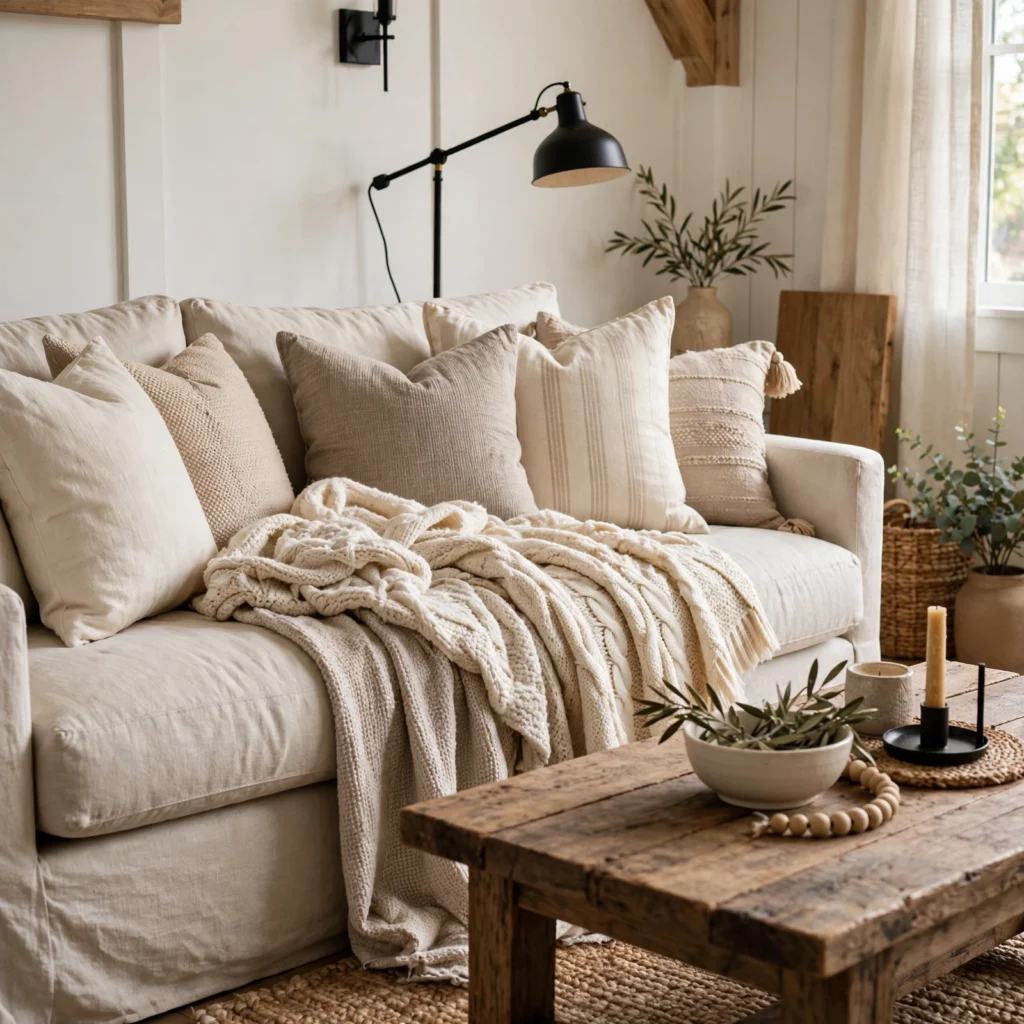
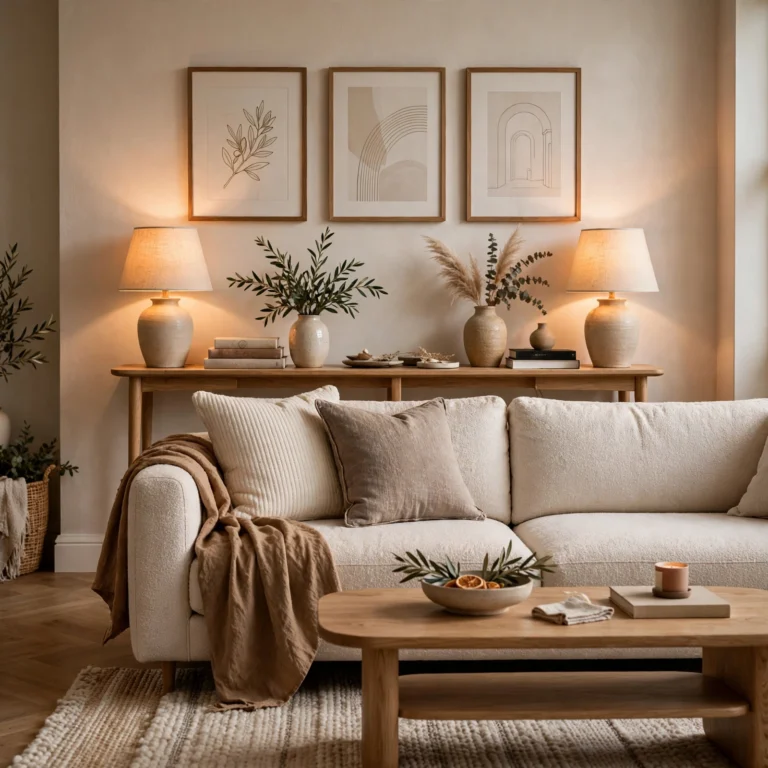
Throw pillows, blankets, and window treatments in varying weaves waffle knit, chunky wool, washed linen keep an all-neutral room from reading as flat or unfinished. Stick to a tight palette of cream, oatmeal, and soft gray, and let the variation come from texture rather than pattern or color. A chunky knit throw draped over the arm of the sofa or armchair adds an immediate sense of comfort and use, signaling that the room is meant to be lived in rather than simply photographed. This is the modern farmhouse living room detail that ties every other element together.
Shop the Look
Look for a reclaimed-style coffee table with hairpin or trestle legs from brands specializing in rustic furniture lines, a slipcovered linen sofa in a washable cotton-blend fabric, a wrought iron ring chandelier with Edison-style bulbs, a hand-woven jute area rug in a natural fiber weave, and a set of galvanized metal trays or planters for the mantel and coffee table styling. Most of these categories are widely available across mid-range home furnishing retailers, making it possible to build the full look without sourcing everything from specialty or antique shops.
Common Mistake to Avoid
The most common mistake is treating “farmhouse” as an excuse to add every rustic element at once shiplap, barn doors, exposed beams, and distressed furniture all in a single small room. The result feels like a theme rather than a home. A stronger approach picks two or three architectural features (a wall treatment, a lighting style, one furniture material) and lets everything else stay simple, so the raw textures you do include actually stand out instead of competing with each other for attention.
FAQs
What colors work best in a modern farmhouse living room?
Soft, warm neutrals work best, including white, oatmeal, greige, and soft gray, often paired with black or dark bronze accents for contrast. These tones keep the room feeling calm and let textures like wood grain, linen weave, and iron finishes carry the visual interest instead of bold color. A muted secondary color, such as sage green or faded navy, can appear in a single accent piece like a throw pillow or vase without disrupting the overall neutral base the style depends on.
Is shiplap still in style for 2026?
Shiplap remains a relevant choice when used selectively, such as on a single accent wall or fireplace surround, rather than covering every wall in the house. Design trends have shifted toward more restrained use of the material, often mixed with plaster-look paint or board-and-batten paneling on adjacent walls for variety. Used as one texture among several rather than the dominant feature, shiplap continues to read as timeless rather than dated, which is why it remains a common request in renovation projects.
How do I make a small living room feel modern farmhouse without it feeling cluttered?
Focus on a few impactful choices rather than filling every surface: a single accent wall, one statement light fixture, and a neutral sectional or sofa with simple lines. Keep open shelving sparse, use a rug sized correctly for the room, and avoid stacking multiple patterns or heavily distressed pieces in a tight space. Lighter wood tones and a mostly white or cream palette also help a small room feel open rather than closed in by heavy rustic materials.
What’s the difference between modern farmhouse and traditional farmhouse style?
Traditional farmhouse leans into ornate, country-style details like floral fabrics, ornate trim, and antique furniture with visible ornamentation. Modern farmhouse strips that back to cleaner lines, a more monochrome palette, and industrial materials like black iron and steel mixed with reclaimed wood. Essentially, modern farmhouse borrows the warmth and material honesty of the traditional style but filters it through a more minimal, current furniture silhouette and a tighter, more restrained color scheme throughout the room.
Do I need a fireplace for a modern farmhouse living room to work?
A fireplace is not required; it simply gives you one additional focal point to treat with stone or reclaimed wood. Without one, the same effect can come from a gallery of black-framed art, a large wood-framed mirror, or a media console styled with the same materials reclaimed wood, iron hardware, woven baskets. The core elements of the style (texture, neutral palette, mixed materials) translate to any room layout, fireplace or not, as long as those materials are present somewhere in the space.
Conclusion
Building a modern farmhouse living room comes down to a handful of repeatable choices raw wood, black iron, woven textiles, and a tightly edited neutral palette layered with restraint rather than excess. Start with one or two ideas from this list, like a reclaimed coffee table or a shiplap accent wall, and build outward from there. Save this guide to Pinterest for your next renovation phase, or check out our related post on farmhouse kitchen updates for more room-by-room inspiration.
Author Expertise Note
I’ve spent the past several years sourcing reclaimed materials and styling rooms for clients transitioning older homes into livable, modern farmhouse spaces, and these fifteen ideas reflect what has actually held up in real, daily-use living rooms rather than just photo shoots.