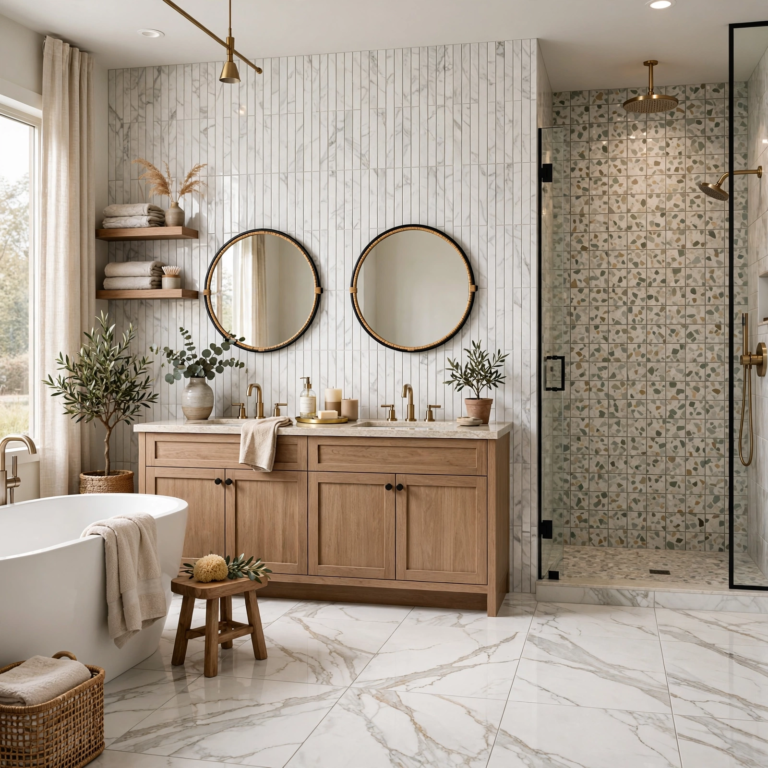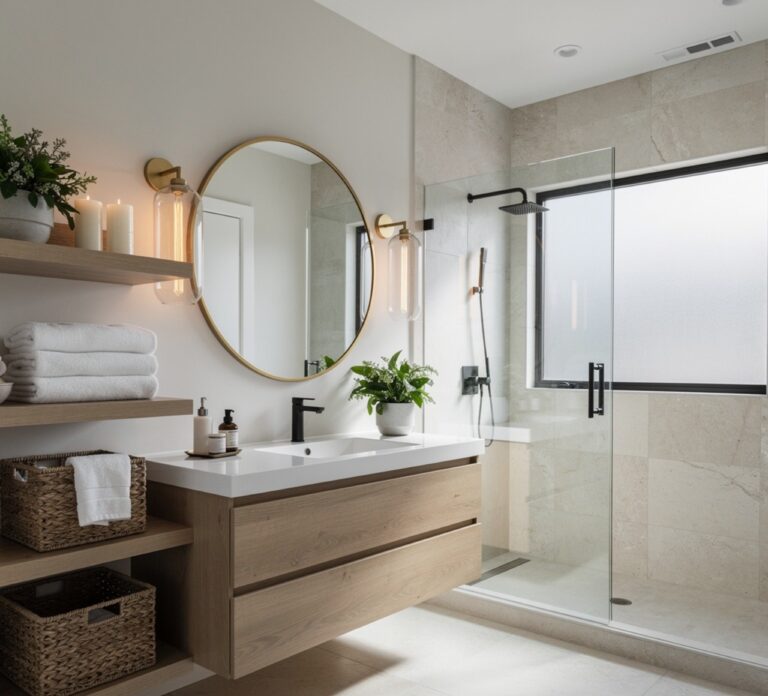
15 Trending Bathroom Flooring Ideas to Transform Your Bathroom with Confidence
The floor is one of the largest surfaces in any bathroom, yet it’s often the last decision made in a remodel, chosen quickly after tile, paint, and fixtures are already settled. This post walks through fifteen specific bathroom flooring ideas, covering material, pattern, and layout choices that hold up in a wet environment while still looking intentional. Whether you’re planning a full renovation or just replacing worn flooring, you’ll come away with concrete direction instead of a vague list of tile types.
Trend & Background
Bathroom flooring has moved beyond the standard white subway tile and beige ceramic that dominated builder-grade homes for years, with homeowners now favoring natural stone, patterned tile, and wood-look porcelain that better matches the rest of the home’s flooring. This shift matters now because open-concept layouts and primary suites connected to bedrooms mean bathroom flooring is more visible from adjoining rooms than it used to be, making a mismatched or dated floor more noticeable. Manufacturers have also improved slip resistance and water performance in materials that once felt off-limits for bathrooms, widening the realistic options available.
Key Takeaways
- Bathroom flooring ideas need to balance water resistance with style, since not every material that looks good in a photo actually performs well in a wet room.
- Pattern and tile shape, such as herringbone or hexagon, can make a small bathroom floor feel larger without changing the room’s actual footprint.
- Natural materials like stone and wood-look porcelain currently outperform purely synthetic finishes for a bathroom that feels considered rather than builder-grade.
- Grout color and heated flooring are two of the most overlooked details that meaningfully change how a finished bathroom floor looks and feels day to day.
1. Marble Hexagon Tile
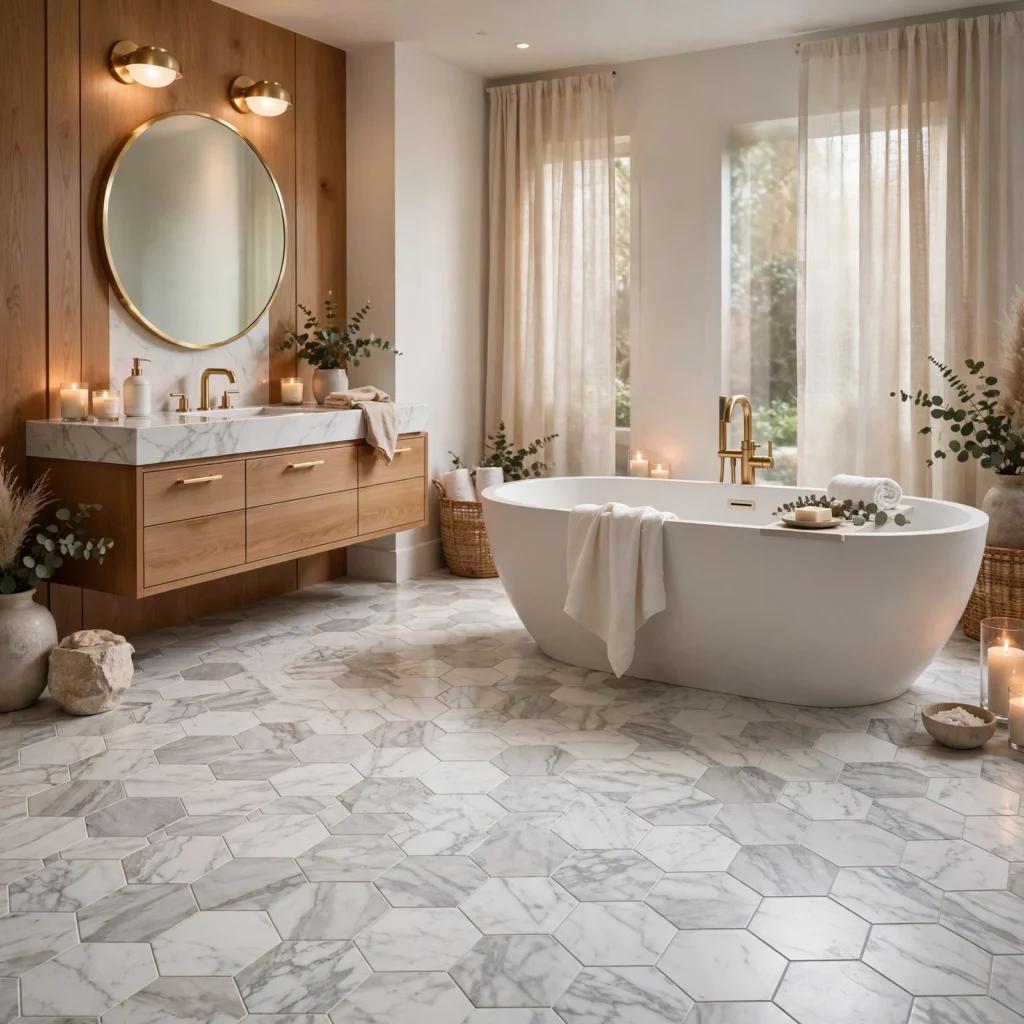
Marble hexagon tile brings natural stone veining into a classic geometric shape that reads as timeless rather than trend-specific, making it one of the most requested bathroom flooring choices for primary bathrooms and powder rooms alike. A honed rather than polished finish improves slip resistance in a wet room while still showing off the stone’s natural movement. Smaller hexagon formats, typically one to two inches across, also handle the slope needed for shower floor drainage better than larger tile pieces.
2. Herringbone Wood-Look Porcelain
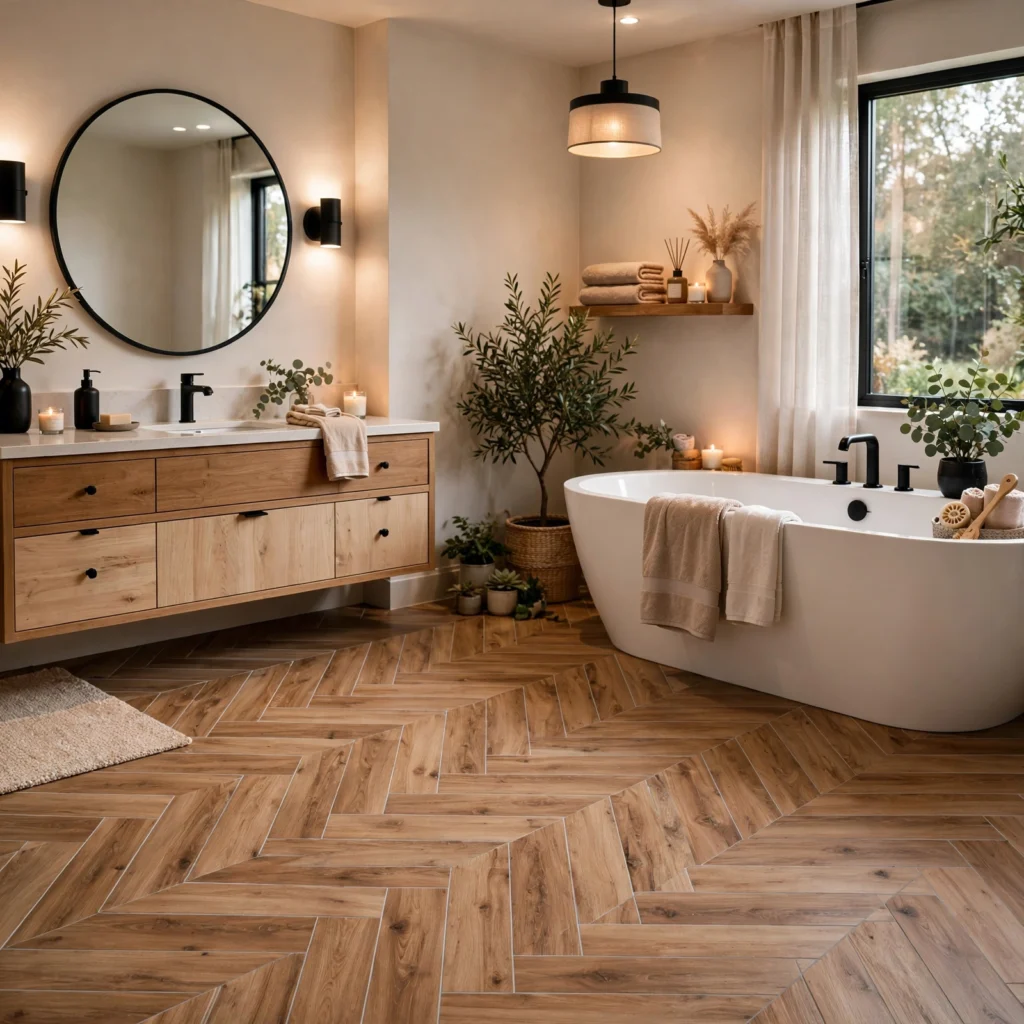
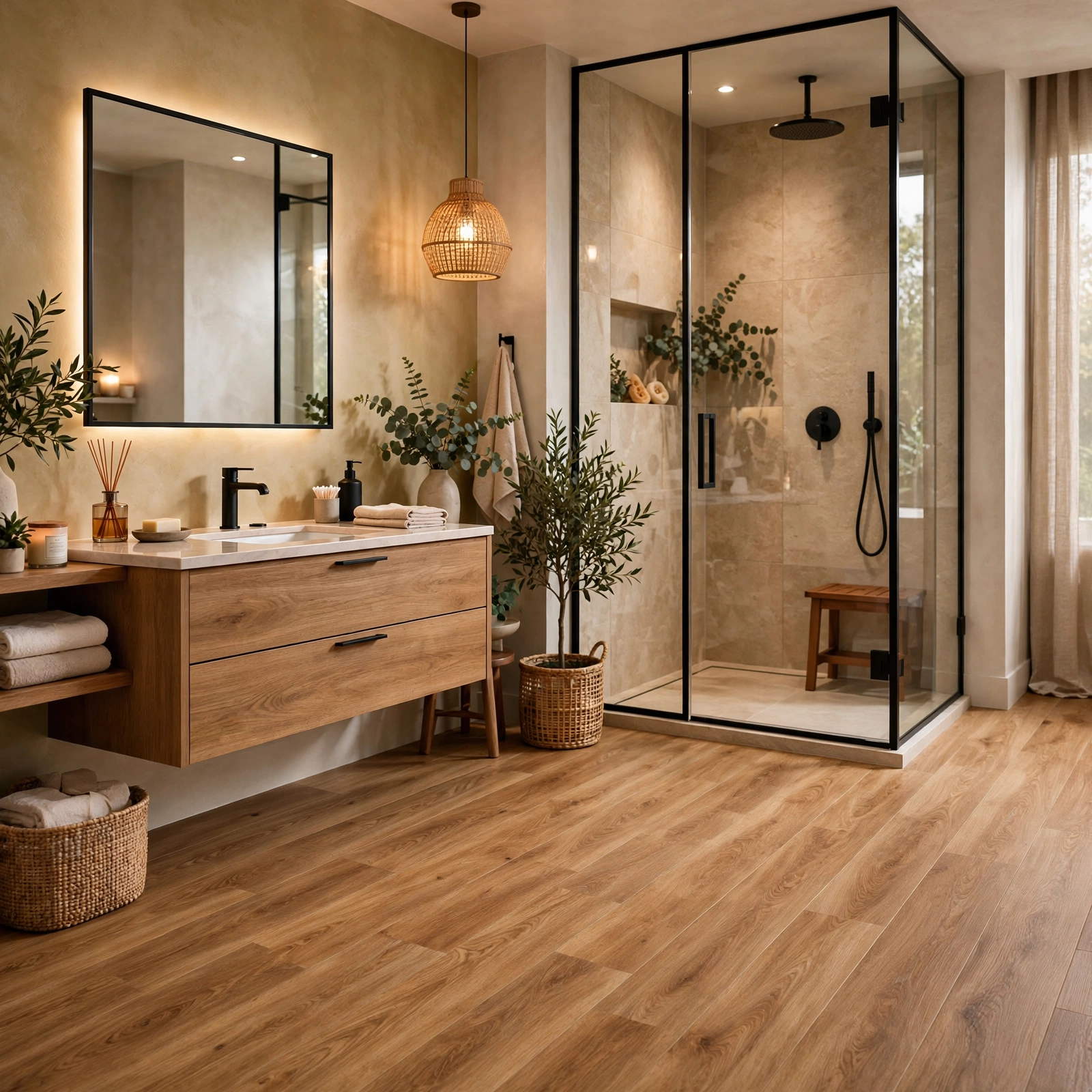
Herringbone wood-look porcelain combines the visual warmth of hardwood flooring with the water resistance bathrooms actually require, using a classic zigzag layout that adds movement to the floor without an additional pattern or color. This flooring option has become increasingly popular in primary bathrooms that connect directly to a bedroom, since it visually continues the wood flooring from the adjoining room without the water risk of installing real hardwood in a wet space.
| Material | Water Resistance | Approx. Cost per Sq Ft |
| Real hardwood | Low | $6–$12 |
| Wood-look porcelain | High | $4–$9 |
| Luxury vinyl plank | High | $2–$6 |
3. Zellige Tile Flooring
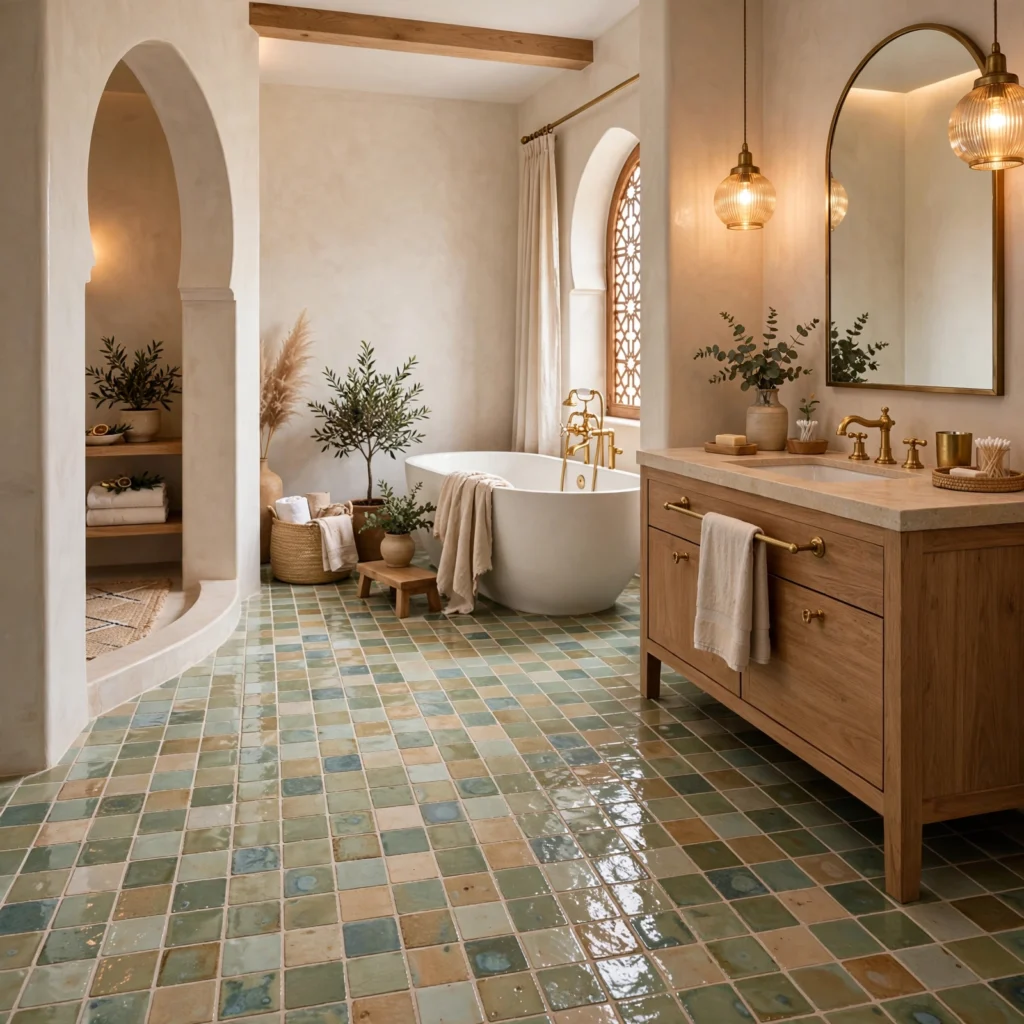
Zellige tile, a handmade Moroccan ceramic with slight variation in each individual piece, brings texture and light-catching movement to a bathroom floor that uniform, machine-made tile can’t replicate. Because the tile’s slightly uneven surface can feel different underfoot than a perfectly flat tile, it’s more commonly used on bathroom walls or shower floors than on a large, open bathroom floor, where consistency matters more for comfort.
To see more bathroom ideas decor CLICK HERE
4. Large-Format Porcelain Slabs
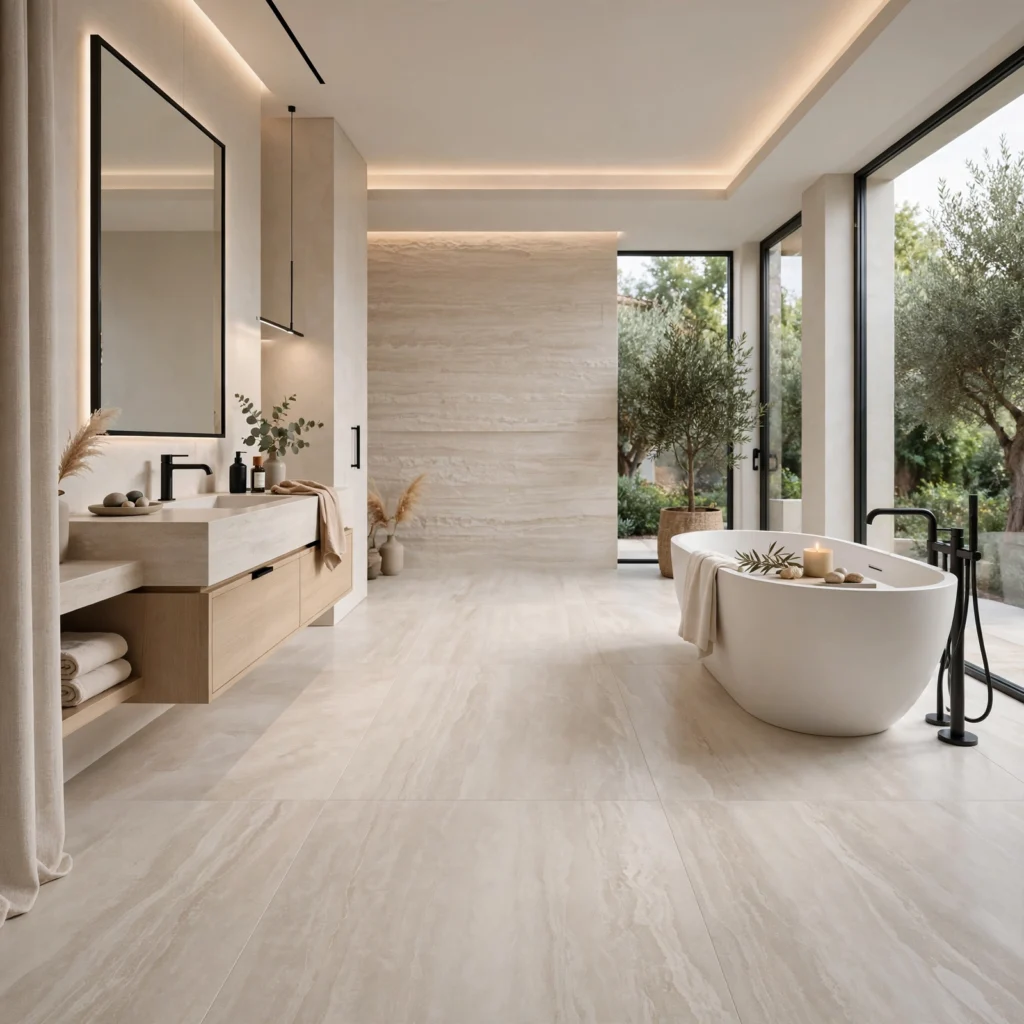
Large-format porcelain slabs, often 24 by 48 inches or larger, minimize the number of visible grout lines on a bathroom floor, which both simplifies cleaning and gives the room a more seamless, expansive look. This format works particularly well in larger primary bathrooms, where fewer seams read as more custom and high-end. Professional installation is especially important with large-format tile, since the slabs are heavier and more prone to cracking if the subfloor isn’t properly leveled first.
5. Patterned Cement Tile
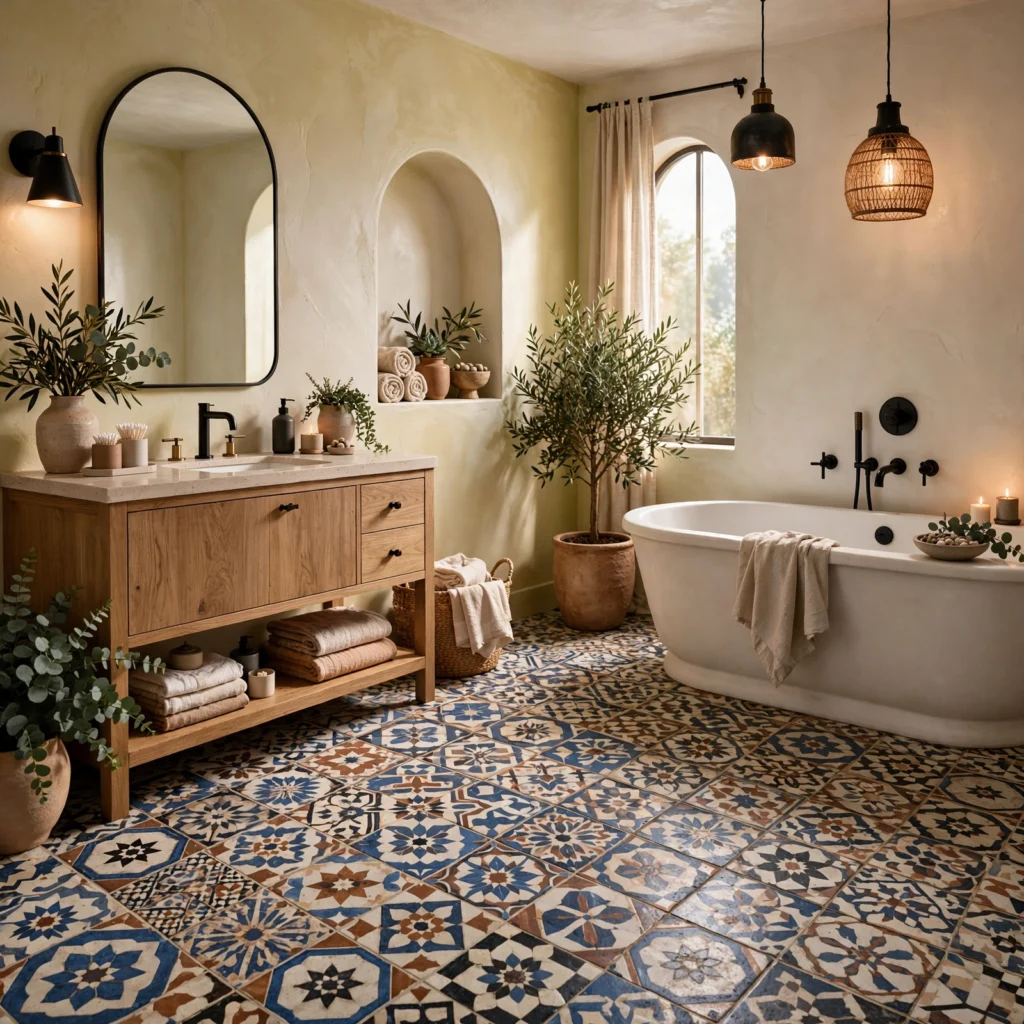
Patterned cement tile, with bold geometric or floral designs baked into the material rather than printed on the surface, is one of the most effective ways to introduce personality into a bathroom floor without extending the pattern to walls or fixtures. This flooring choice works especially well in a powder room, where the smaller footprint means the pattern reads as a clear design statement rather than becoming visually overwhelming across a larger area.
6. Basketweave Marble Mosaic
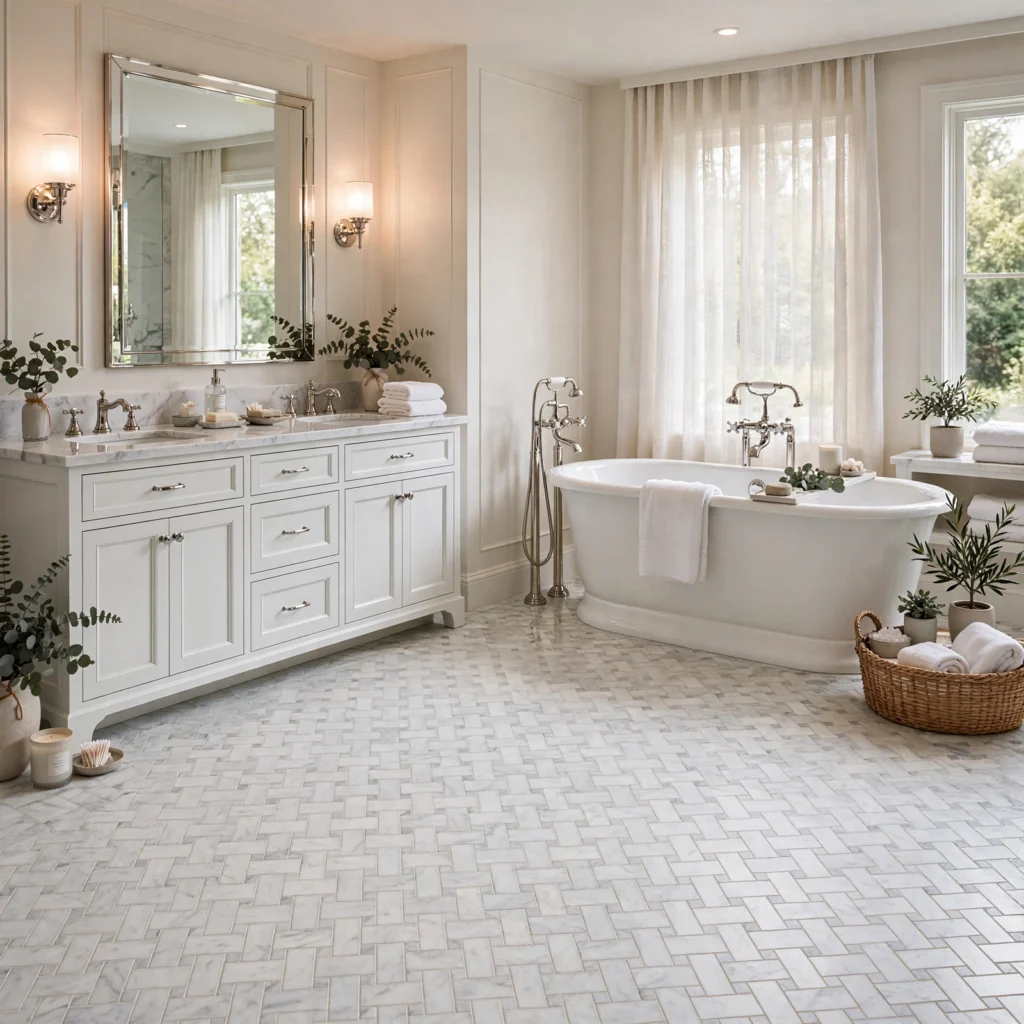
Basketweave marble mosaic uses small, interlocking rectangular tiles arranged in a woven pattern, giving a bathroom floor a classic, slightly formal texture that suits traditional and transitional bathrooms particularly well. This mosaic format is commonly paired with a contrasting dot of black or grey marble at each intersection, adding a subtle graphic detail without requiring a bold color choice elsewhere in the room.
7. Heated Radiant Floors
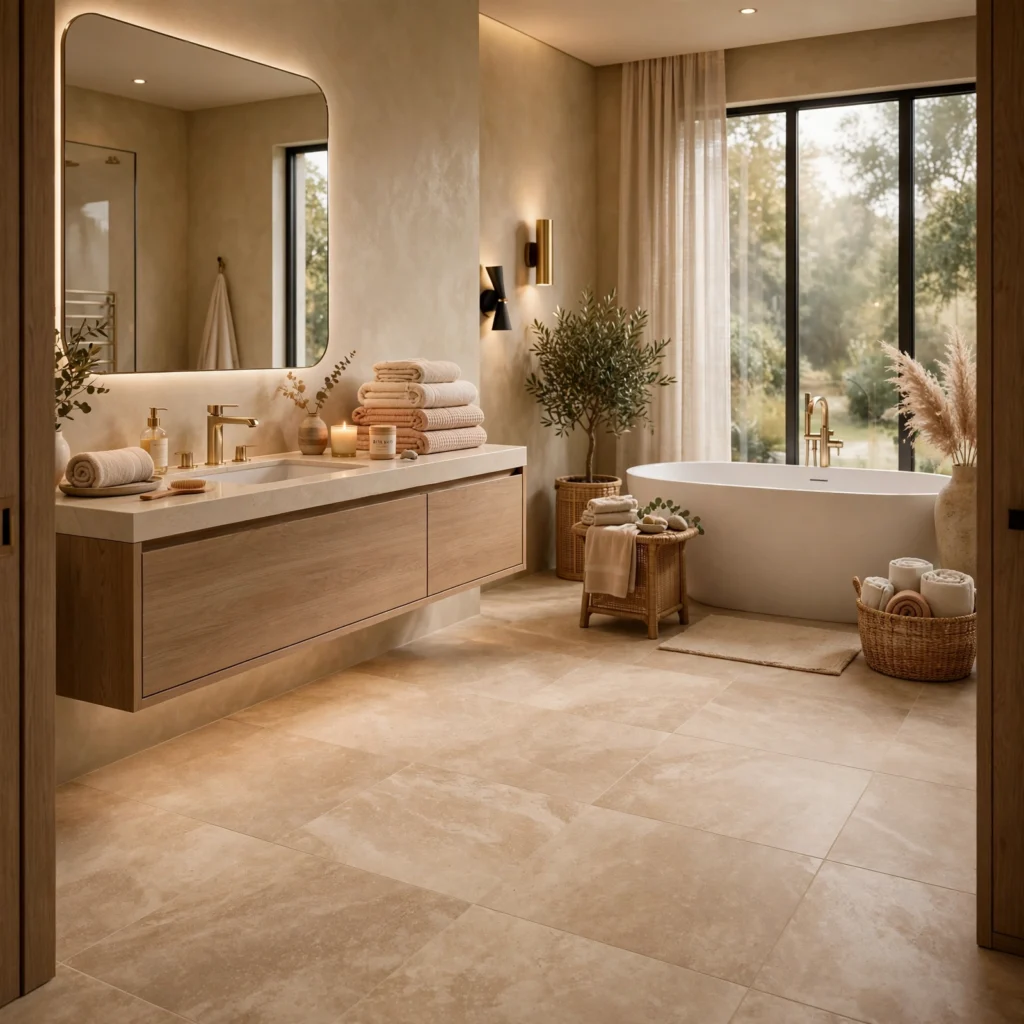
Heated radiant floors, installed beneath tile using an electric mat system, add a level of everyday comfort that’s difficult to notice in a showroom but becomes one of the most appreciated features of a finished bathroom. Because the system is installed during a remodel rather than after, this is one of the few flooring upgrades that’s significantly cheaper to add now than to retrofit later. A programmable thermostat lets the system run only during the hours it’s actually needed.
| Bathroom Size | Approx. Heating Cost | Install Timing |
| Under 50 sq ft | $300–$600 | During tile install |
| 50–80 sq ft | $600–$1,000 | During tile install |
| 80+ sq ft | $1,000–$1,800 | During tile install |
8. Terrazzo Flooring
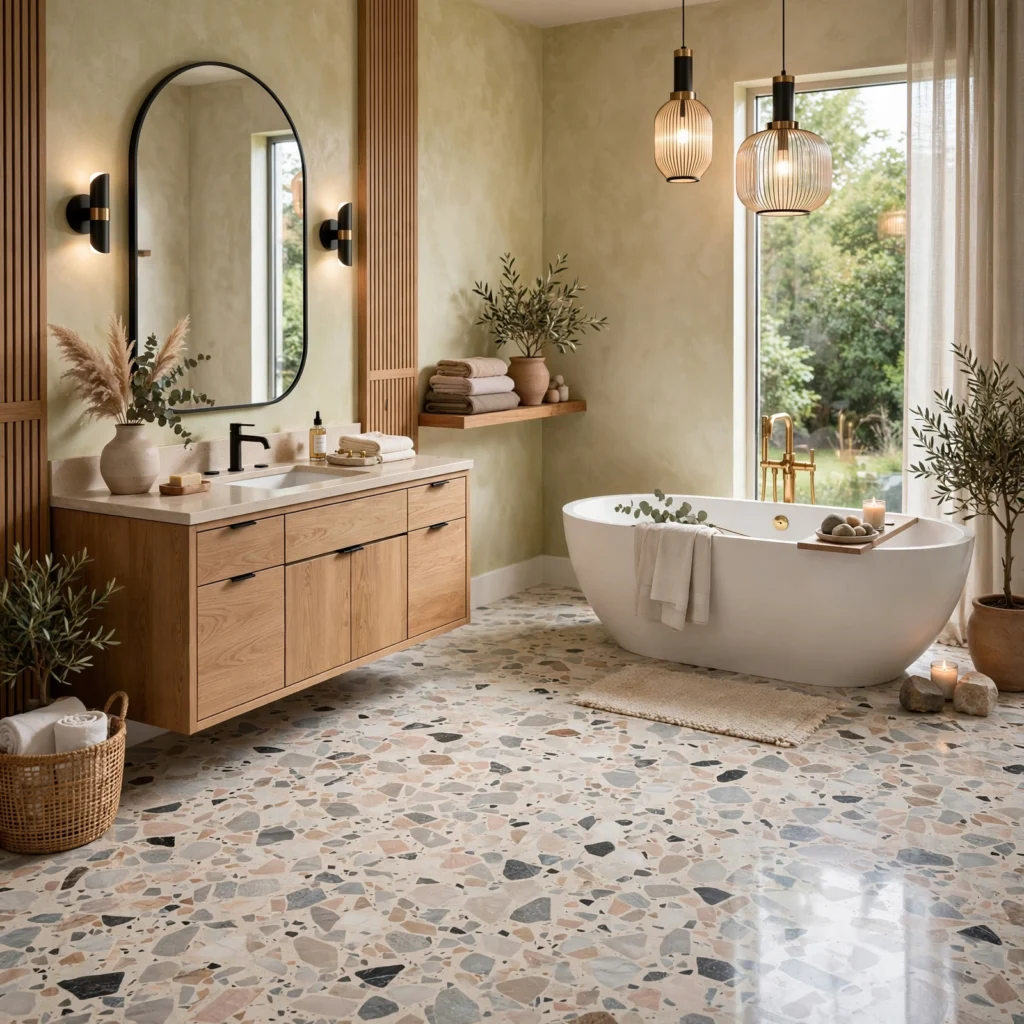
Terrazzo flooring, made from chips of marble, quartz, or glass set into a cement or resin base, brings a speckled, textured look that hides minor scuffs and water spots better than a solid-color tile. This flooring style has resurged in popularity partly because it can be custom-mixed with specific chip colors, letting homeowners tie the floor’s palette to countertops, cabinetry, or accent colors used elsewhere in the bathroom.
9. Penny Round Tile
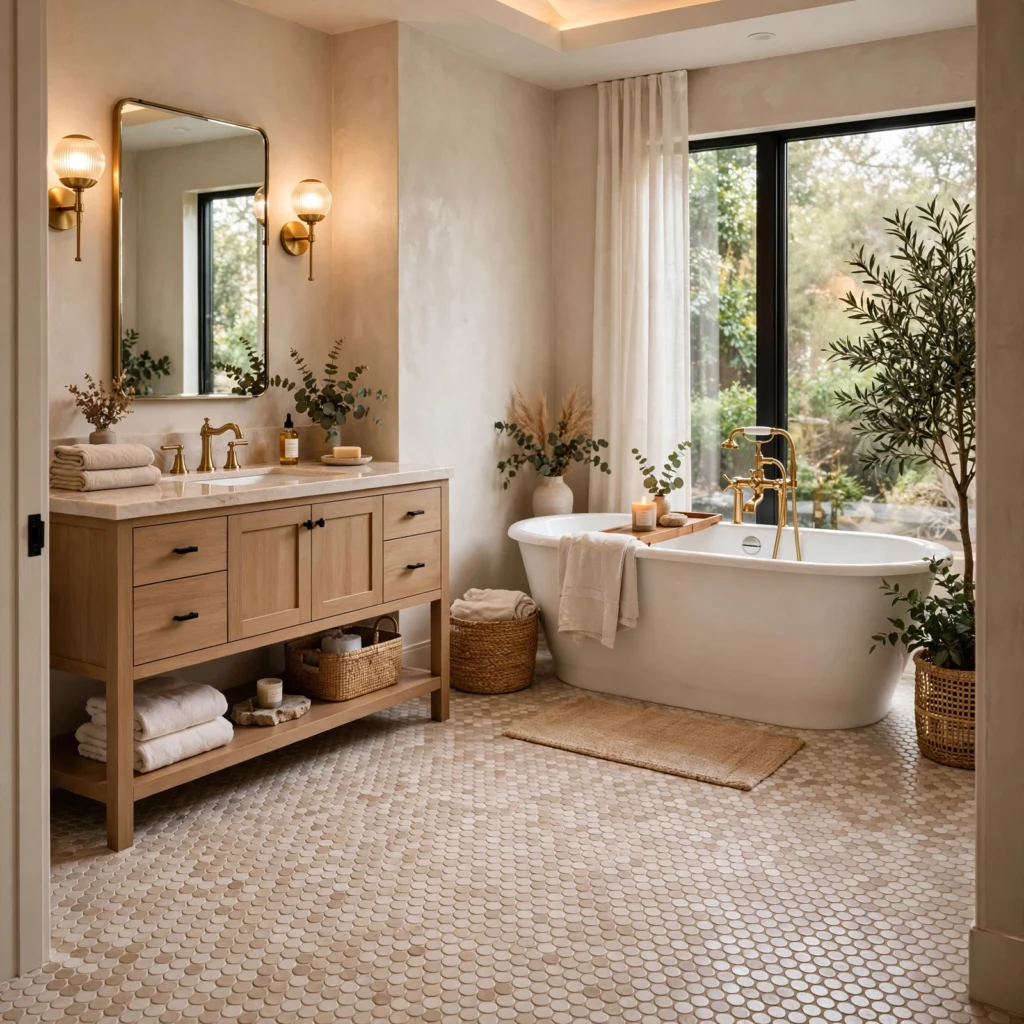
Penny round tile, made up of small circular tiles arranged in a grid, brings a slightly retro, textured look that suits both vintage-inspired and modern bathrooms depending on the color chosen. Because the tile’s numerous grout lines create more traction than a flat, large-format tile, this flooring option works particularly well on a shower floor, where slip resistance matters most.
10. Concrete Micro-Topping Floor
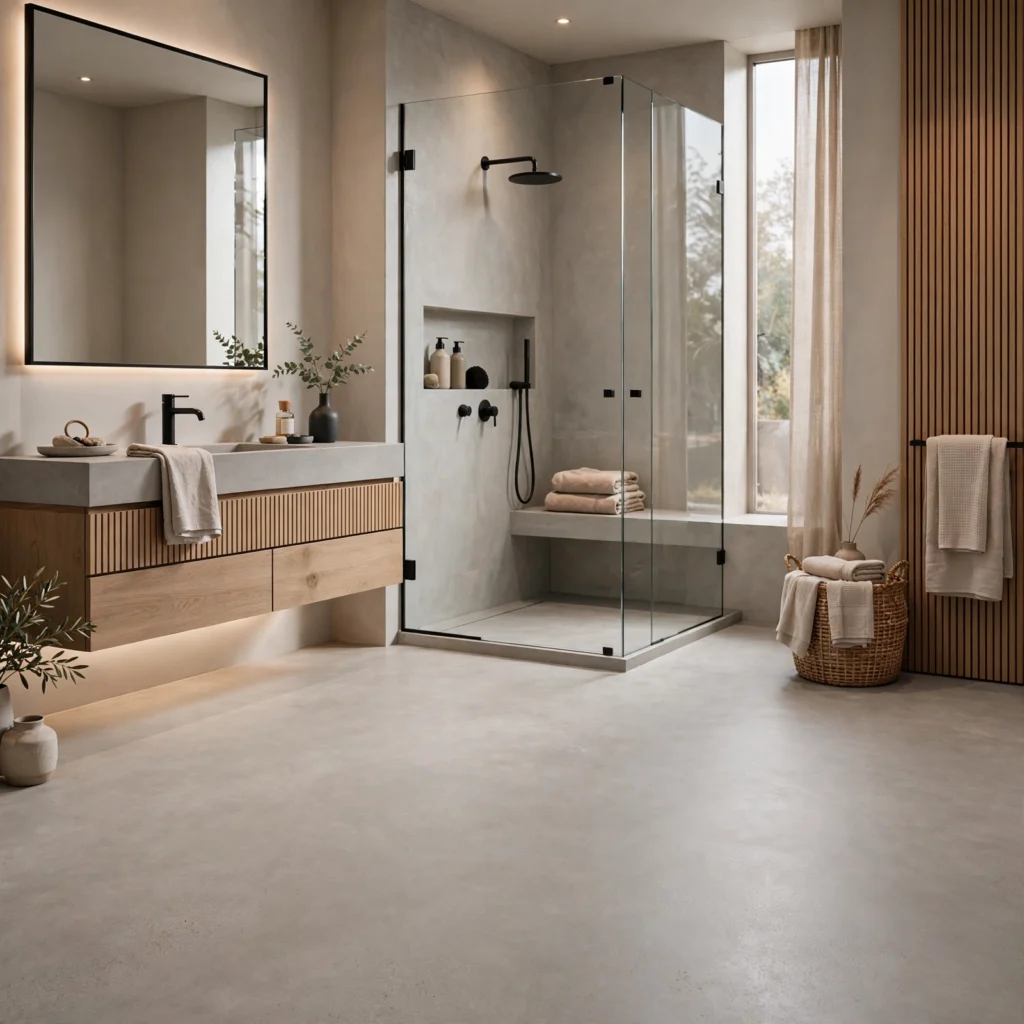
A concrete micro-topping floor, applied as a thin, seamless overlay rather than poured as a full slab, gives a bathroom an industrial, monolithic look with no visible grout lines or seams at all. This flooring option suits modern, minimalist bathrooms particularly well, and it can be tinted to a range of neutral tones to match the rest of the room’s palette. Proper sealing is essential, since the material is more porous than tile if left untreated.
11. Grey Wood-Look Tile
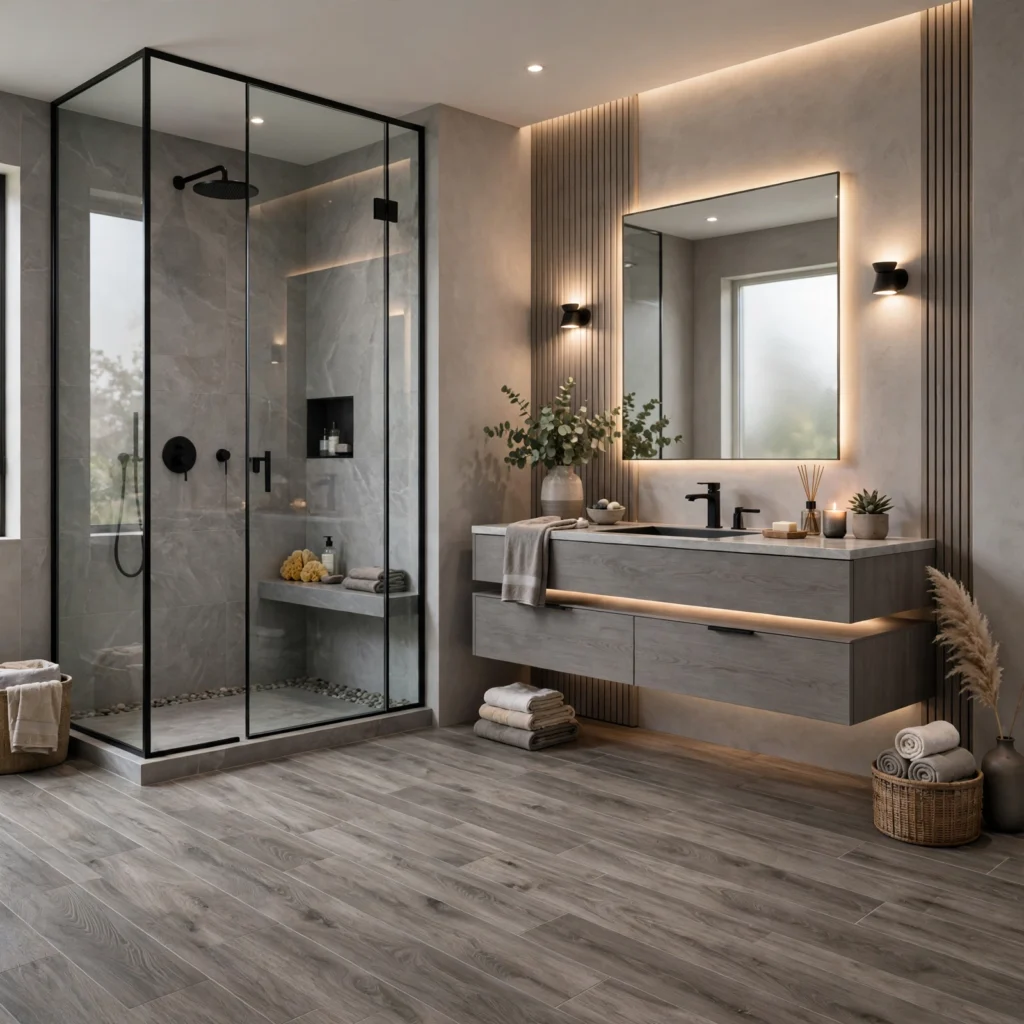
Grey wood-look tile offers the visual texture of hardwood in a cooler, more neutral tone than the typical warm brown often associated with wood-look flooring, making it a versatile choice for both modern and transitional bathrooms. This flooring option pairs particularly well with white or grey vanity cabinetry, since the cooler undertone doesn’t compete with either warm or cool wall colors the way a warmer wood-look tile sometimes can.
12. Pebble Stone Shower Floor
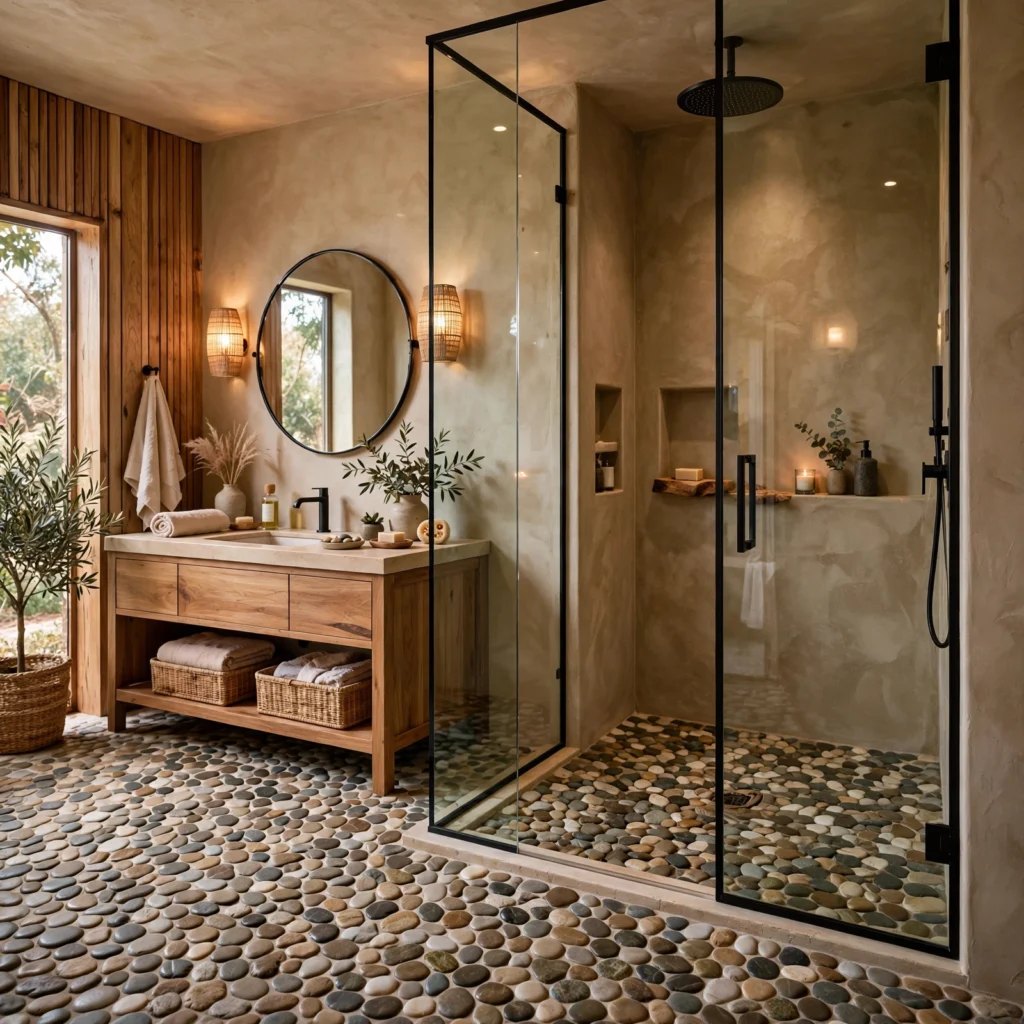
A pebble stone shower floor, made from small, rounded natural stones set into the tile bed, adds texture underfoot and a spa-like, organic feel that flat tile doesn’t offer. Because the uneven surface naturally increases traction, this flooring option is specifically well-suited to a shower floor rather than the rest of the bathroom, where a flatter, more even surface is generally more comfortable to stand on for longer periods.
13. Checkerboard Marble Floor
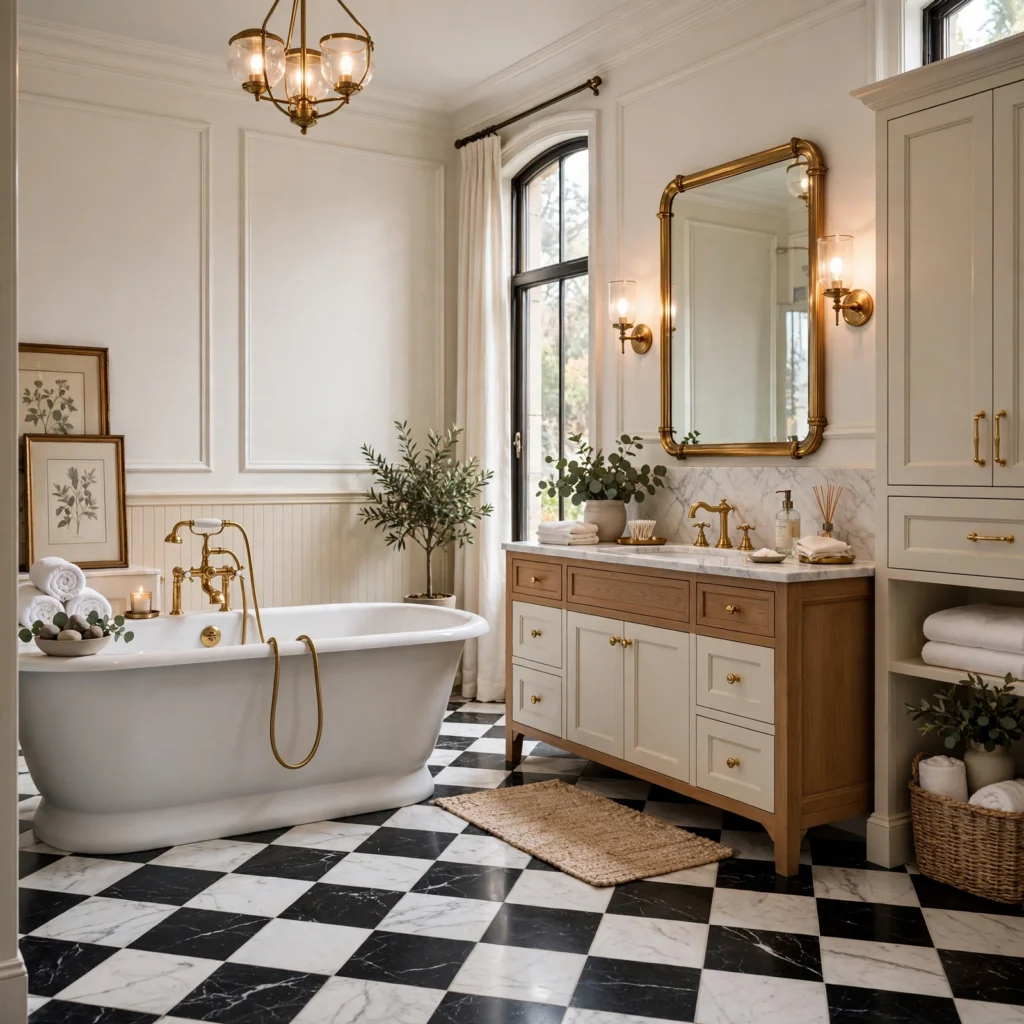
A checkerboard marble floor, alternating black and white or two contrasting stone tones in a classic grid pattern, brings a graphic, timeless look that suits both vintage-inspired and modern bathrooms depending on the surrounding fixtures and finishes. Scaling the checkerboard squares larger, typically 12 inches or more, gives the pattern a more contemporary feel, while smaller squares read as more traditional or period-appropriate.
14. Luxury Vinyl Plank Flooring
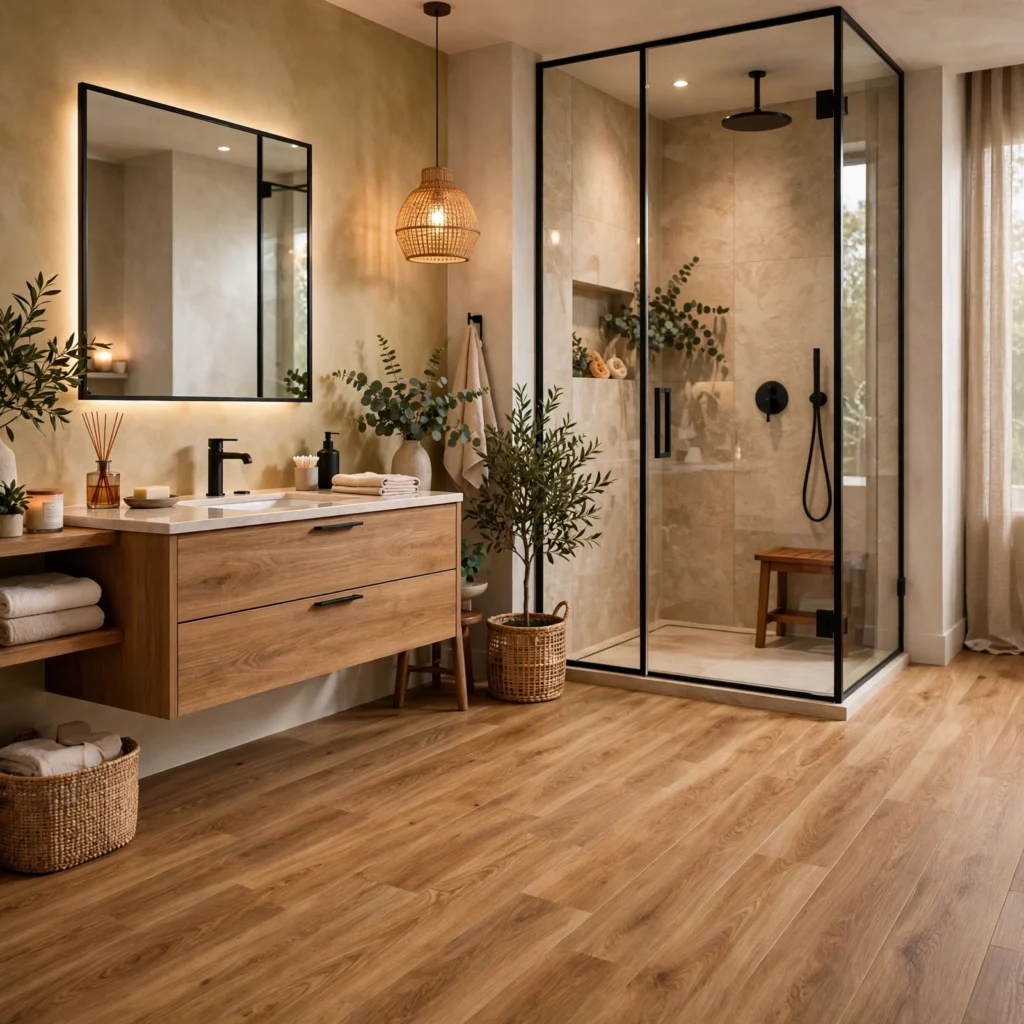
Luxury vinyl plank flooring offers a budget-friendly, fully waterproof alternative to wood-look porcelain, making it a practical choice for a lower-cost bathroom refresh or a rental property update. While it doesn’t offer quite the same premium look or resale value as natural stone or porcelain tile, higher-end vinyl plank options have improved significantly in texture and finish, narrowing the visual gap for homeowners prioritizing budget and water resistance over long-term investment value.
15. Contrasting Grout Color
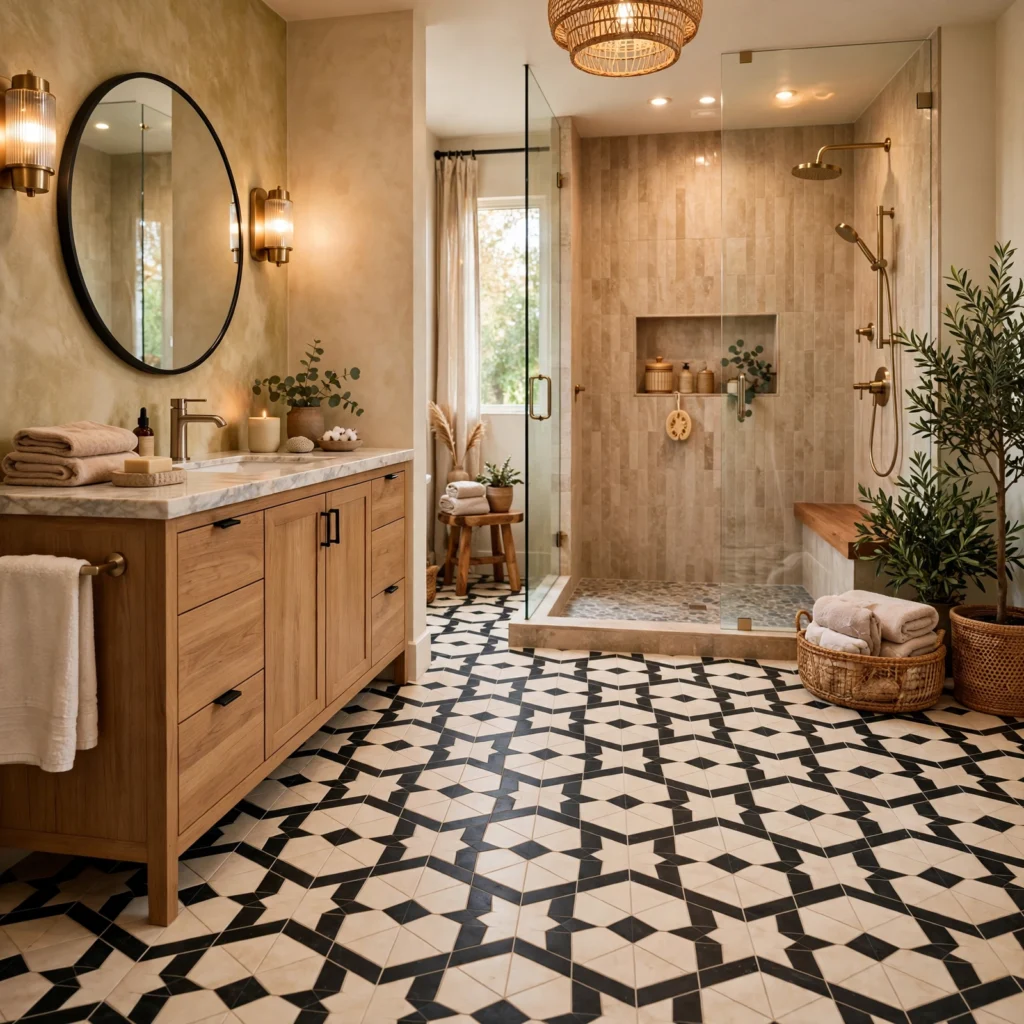
Choosing a grout color that contrasts with the tile itself, such as dark charcoal grout against white hexagon tile, adds definition and pattern to a bathroom floor without changing the tile choice at all. This is one of the lowest-cost ways to update the look of an existing tile floor, since regrouting is significantly less expensive and disruptive than replacing the tile entirely. Matching grout, by contrast, keeps the floor looking more seamless and monolithic.
Shop the Look
Start with a honed marble hexagon or wood-look porcelain tile for the main floor, a zellige or pebble stone tile for the shower floor, a contrasting charcoal grout, an electric radiant heating mat for underfoot comfort, and a matte black or brass floor drain cover to tie the fixtures together. These five elements cover the main flooring, shower floor, comfort, and finishing details without requiring every idea on this list.
Common Mistake to Avoid
The most common mistake is choosing a bathroom floor tile based on how it looks in a showroom sample without checking its slip rating, particularly for shower floors and areas immediately outside the tub where water pools most often. A textured or smaller-format tile is almost always the safer choice for wet areas, even if a larger, smoother tile looks more seamless in photos. Another frequent error is skipping a proper slope toward the drain during installation, which leaves standing water on the floor regardless of how well-chosen the tile itself is.
People Also Ask
What is the most durable flooring for a bathroom?
Porcelain tile is generally considered the most durable and water-resistant option for a bathroom floor, standing up well to daily moisture, cleaning products, and foot traffic over many years with minimal maintenance. Natural stone, while beautiful, requires periodic sealing to maintain its water resistance and can be more prone to staining if not properly cared for. Luxury vinyl plank is also highly durable and fully waterproof, making it a strong practical option as well.
What bathroom flooring is best for a shower floor specifically?
Smaller-format tile, such as penny rounds, small hexagons, or pebble stone, works best for shower floors because the increased number of grout lines and textured surfaces provide better traction than a large, flat tile. Smaller tile also handles the slight slope needed for proper drainage more easily than larger tile pieces, which can crack or sit awkwardly on an angled surface.
Is wood flooring ever a good choice for a bathroom?
Real hardwood is generally not recommended for a bathroom due to its vulnerability to moisture damage, warping, and staining over time, even with sealant applied. Wood-look porcelain tile or luxury vinyl plank flooring both replicate the appearance of hardwood while offering genuine water resistance, making them a far more practical choice for achieving a wood-look bathroom floor without the maintenance risk of the real material.
How much does new bathroom flooring typically cost?
Costs vary significantly based on material choice, with luxury vinyl plank generally the most budget-friendly option and natural stone or large-format porcelain slabs on the higher end, though exact pricing depends heavily on the specific product and local labor rates. A local flooring contractor can provide a more precise quote based on the bathroom’s square footage and the specific material selected.
Should bathroom floor tile match the shower tile?
Matching or closely coordinating the floor and shower tile creates a more cohesive, seamless look, particularly in bathrooms without a fully enclosed shower door separating the two areas visually. That said, many bathrooms intentionally use a different tile in the shower, such as a textured or patterned tile, while keeping the main floor simpler, which can add visual interest without making the room feel busy or mismatched.
Conclusion
These fifteen bathroom flooring ideas show how much range the category offers, from a budget-friendly vinyl plank refresh to a full marble hexagon and heated-floor renovation. Start by prioritizing water resistance and slip safety first, then layer in pattern, material, and grout choices from there to get a floor that looks as good as it performs. Save this guide to Pinterest for your next renovation, and check out our related post on bathroom remodel ideas worth the investment.
Author Expertise Note
Written by a design writer who has covered residential renovation and flooring trends for home publications for several years, working closely with contractors and tile installers to track which materials actually hold up in wet, high-traffic rooms.