16 Trending Bathroom Organization Ideas to Keep Your Space Neat and Clutter-Free
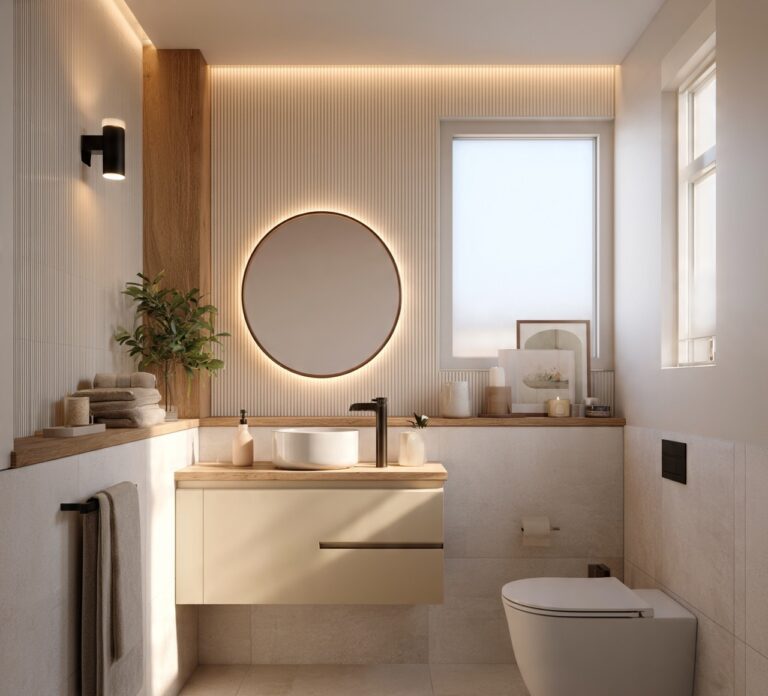
A bathroom can have plenty of storage and still feel disorganized if what’s inside every drawer and cabinet is jumbled together without a system. This post covers sixteen practical bathroom organization ideas, from drawer dividers to labeled bins, along with the specific containers, groupings, and small habits that keep a bathroom functional day to day instead of tidy for one afternoon and cluttered again by the following week.
Trend & Background
As bathroom counters have gotten busier with skincare routines, multiple family members’ products, and an ever-growing list of personal care items, organization has become as important a topic as storage capacity itself. Content creators and professional organizers have popularized the idea of “categorizing before containing,” meaning sorting items by type and use before buying any bins or dividers, which has shifted how people approach small bathrooms specifically. This trend reflects a broader move toward systems-based organizing rather than simply purchasing more storage furniture to hide clutter.
Key Takeaways
- Bathroom organization ideas focus on sorting, containing, and labeling what’s already in the room, rather than adding new furniture or storage space.
- Grouping items by category and frequency of use makes daily routines faster and keeps clutter from creeping back.
- Clear or labeled containers make it easier to see what’s running low and maintain a system over time.
- Small daily habits, like a nightly reset routine, matter as much as the physical organizing products themselves.
1. Clear Acrylic Drawer Dividers
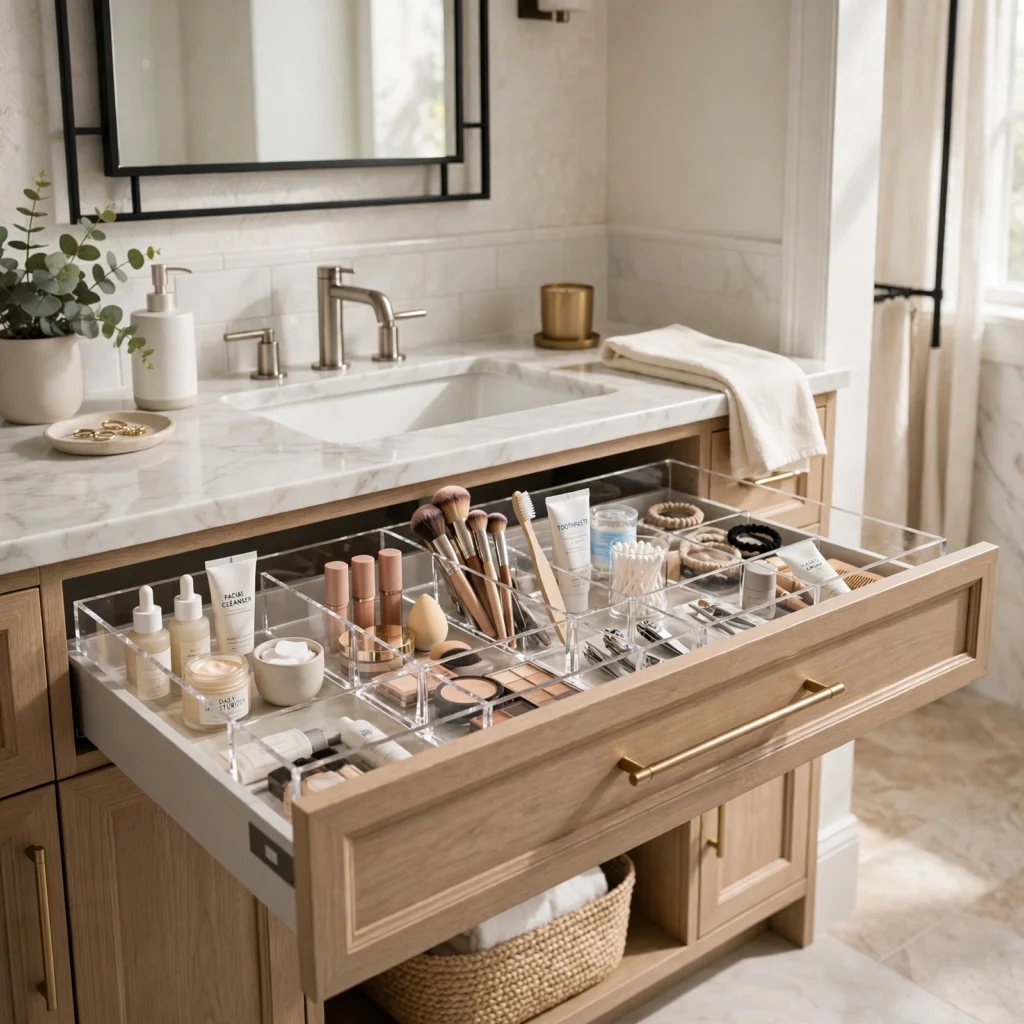
Clear acrylic drawer dividers separate a single vanity drawer into smaller sections, keeping items like makeup brushes, hair ties, and skincare tubes from sliding into one disorganized pile. Because the dividers are clear, everything inside stays visible at a glance, which makes it easier to notice when a product is running low. This idea works in nearly any drawer size and is one of the lowest-cost, lowest-effort bathroom organization ideas to implement in a single afternoon.
2. Labeled Under-Sink Bins
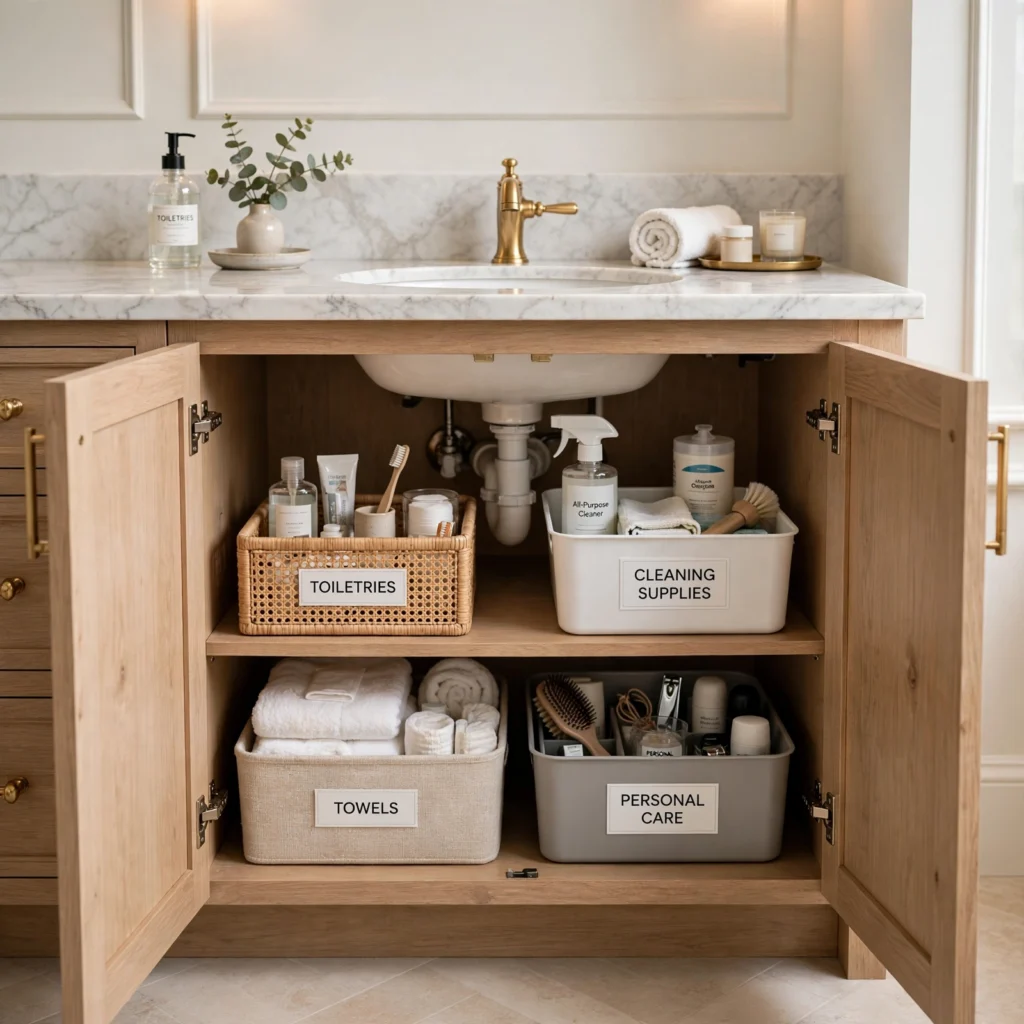
Labeled under-sink bins sort cleaning supplies, extra toiletries, and backstock items into distinct containers rather than leaving them loose around plumbing pipes. This idea solves the common problem of under-sink cabinets becoming a catch-all space where nothing can be found without digging. Clear labels, whether printed or handwritten, help every household member return items to the correct bin instead of setting them down wherever there’s room.
| Bin Category | Typical Contents | Placement |
| Cleaning Supplies | Sprays, wipes, gloves | Back of cabinet |
| Backstock Toiletries | Extra shampoo, soap, floss | Side of cabinet |
| First Aid | Bandages, ointment, thermometer | Front, easy access |
3. Categorized Medicine Cabinet Shelves
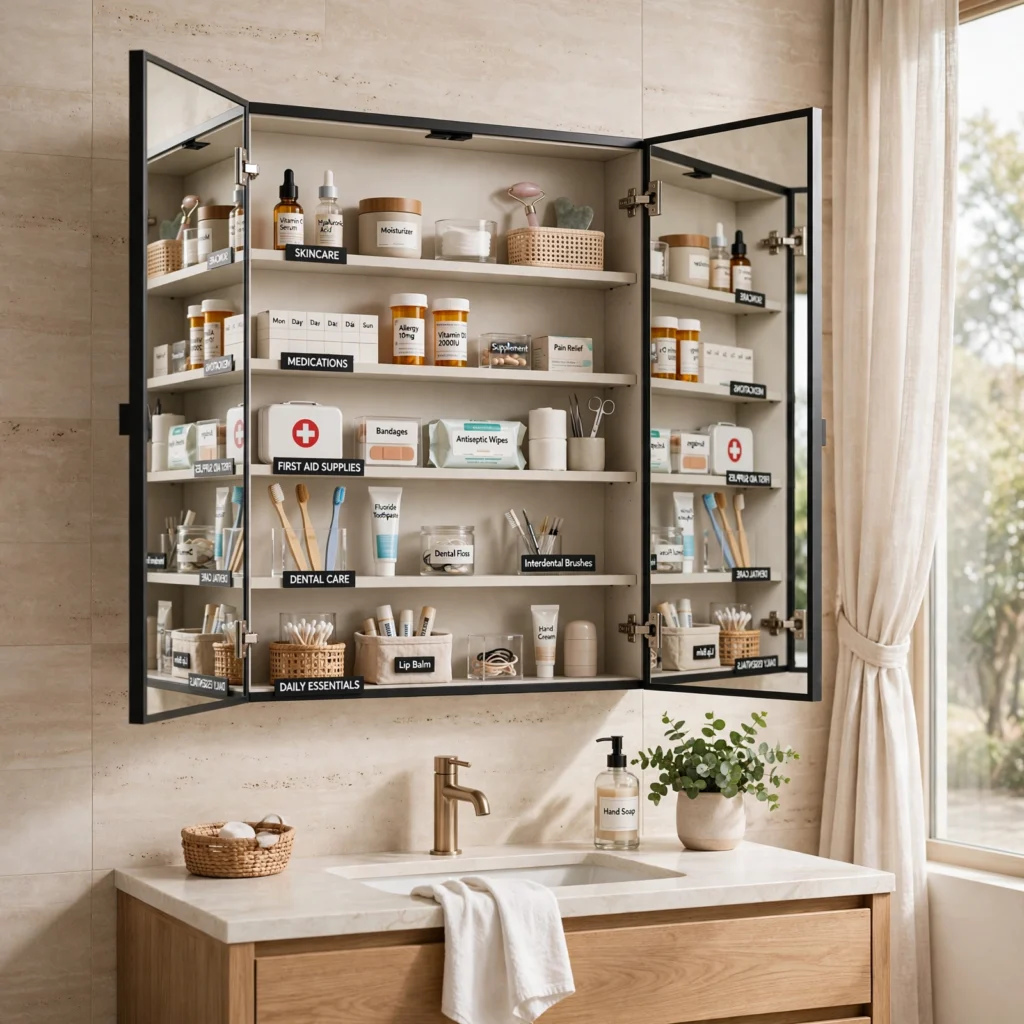
Categorized medicine cabinet shelves assign each shelf to a specific category, such as daily medications, first aid supplies, or grooming tools, rather than mixing everything together based on whatever fits. This idea makes it faster to find what’s needed in a hurry, particularly for items like medications or first aid supplies that come up unexpectedly. Keeping the most frequently used category at eye level and less-used items on lower or higher shelves also improves daily efficiency.
To see more bathroom flooring ideas
4. Turntable Organizer for Products
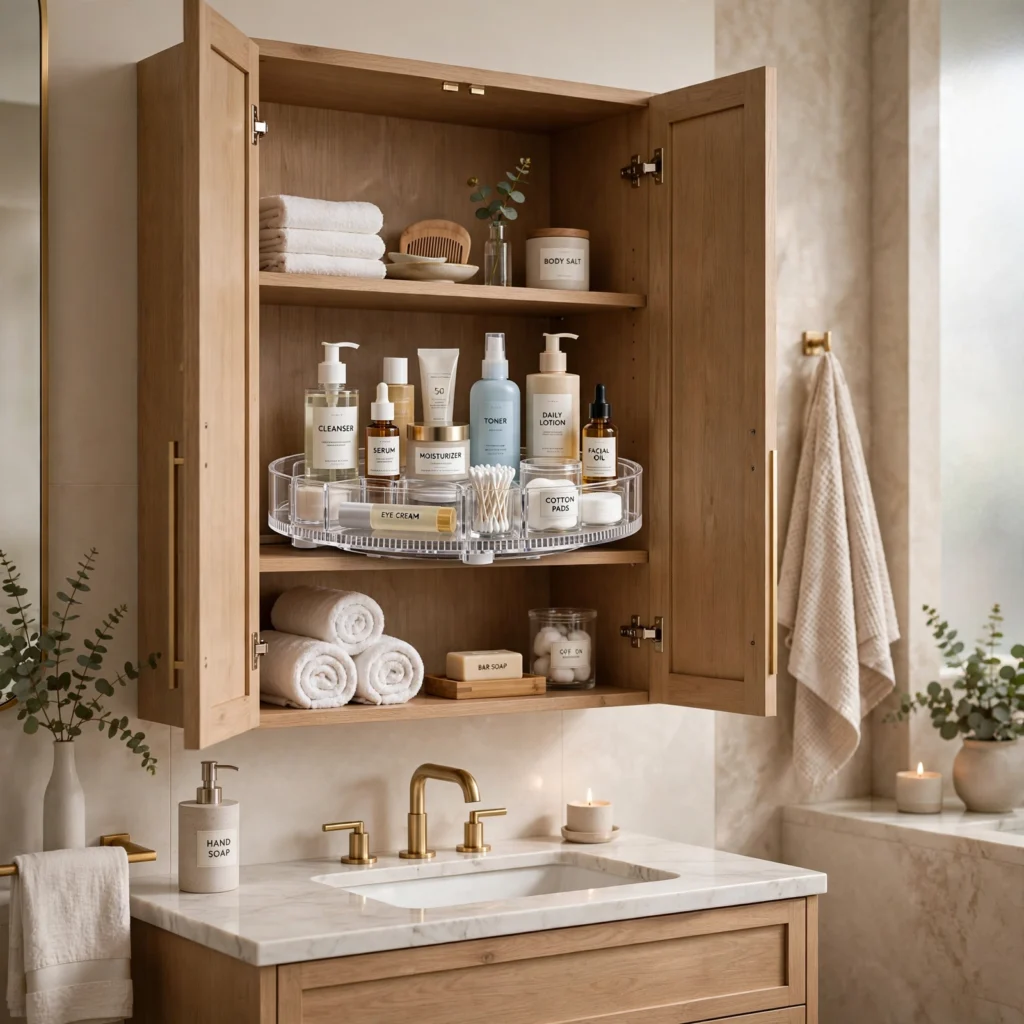
A turntable organizer for products uses a rotating tray, often called a lazy Susan, to hold bottles and jars in a single spot while still allowing easy access to items in the back without removing everything in front. This idea works particularly well inside a vanity cabinet or on a countertop where several similar-shaped bottles, like lotions or skincare products, tend to accumulate. Rotating the tray instead of reaching around bottles also reduces the chance of knocking items over.
5. Toothbrush and Toiletry Caddy
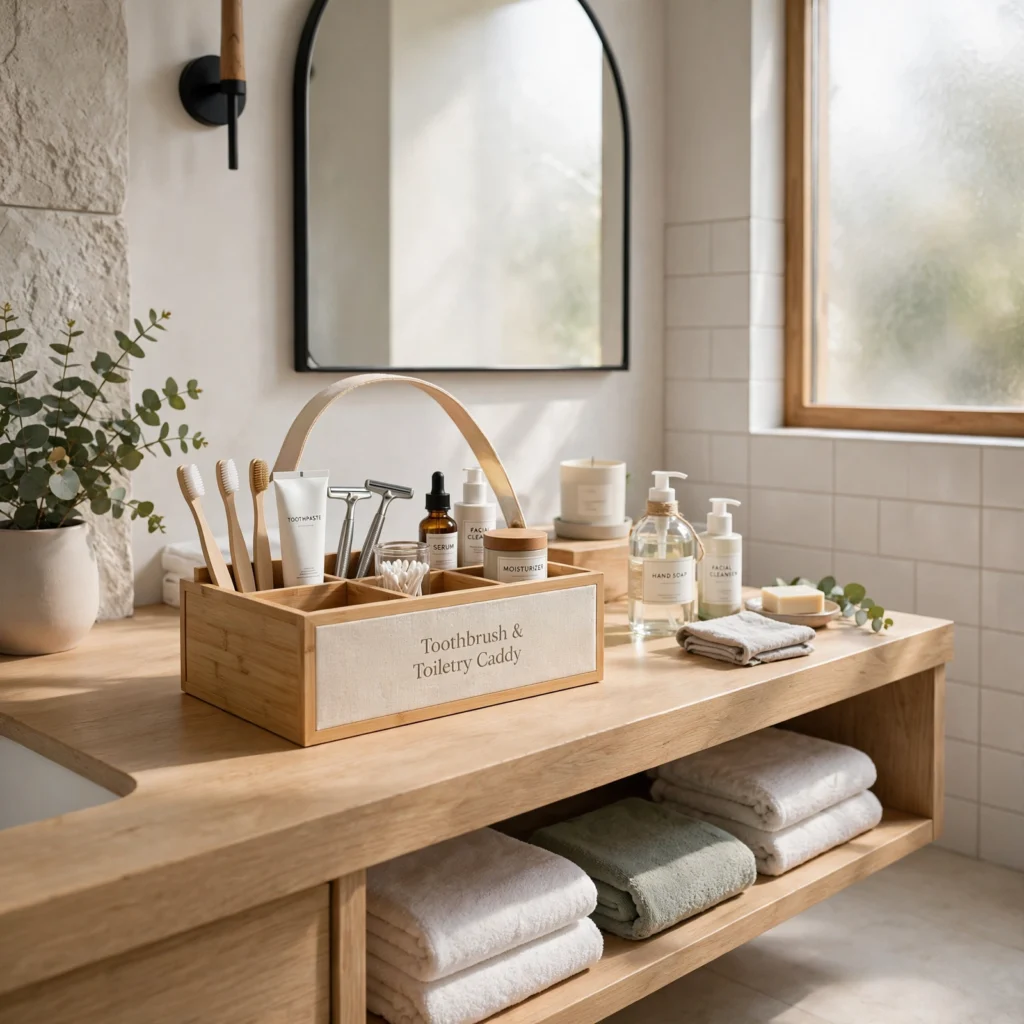
A toothbrush and toiletry caddy groups daily-use items like toothbrushes, toothpaste, and hand soap into one small, contained tray on the counter, keeping them from spreading across the entire counter surface individually. This idea works well for shared bathrooms, since a designated caddy per person or per category prevents overlapping items and makes cleaning the counter faster. Choosing a caddy with a solid base also protects the counter from water rings left by damp toothbrush heads.
6. Color-Coded Towel System
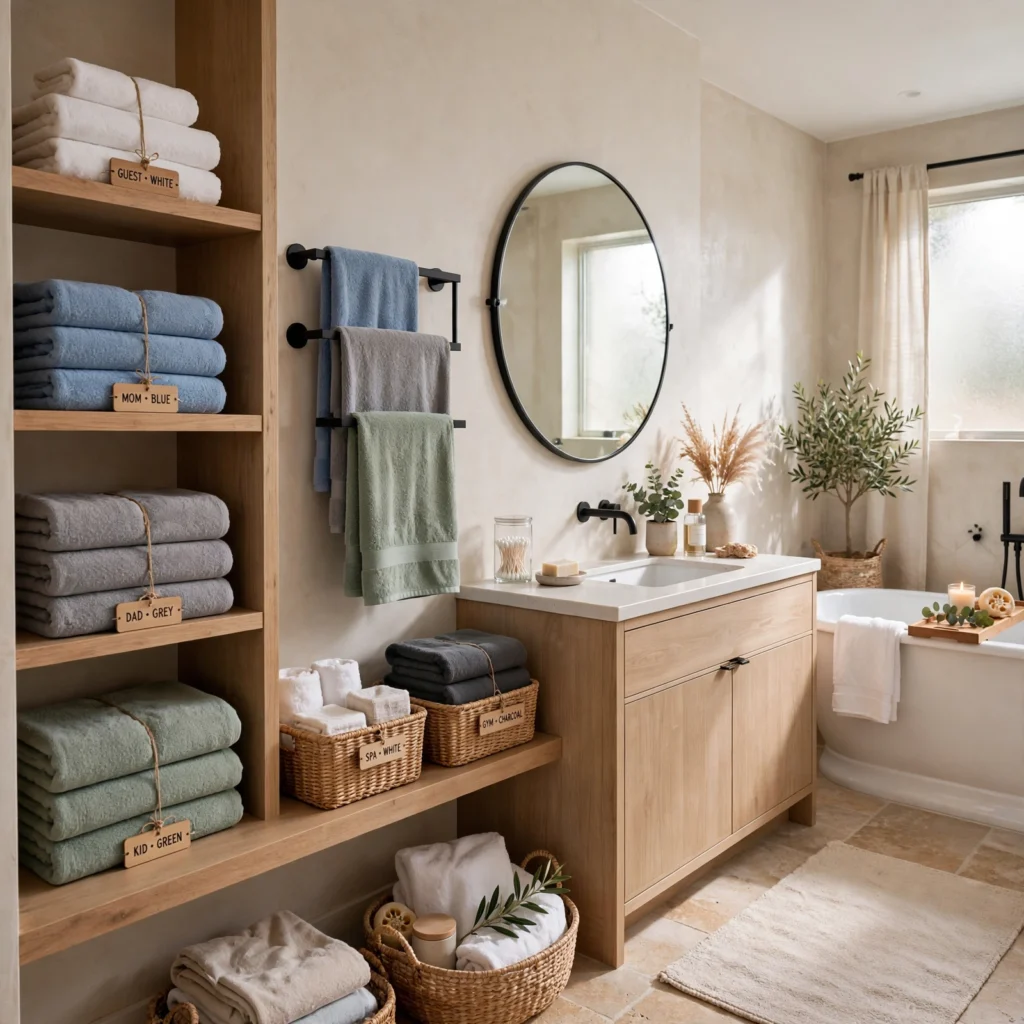
A color-coded towel system assigns each household member or each towel type, such as hand towels versus bath towels, a specific color, making it easy to identify whose towel is whose without labels or tags. This idea works particularly well in shared family bathrooms where mixing up towels is a common source of minor daily friction. It also simplifies laundry sorting, since towels can be grouped by color rather than guessed at based on which family member last used them.
7. Stackable Bin System for Linens
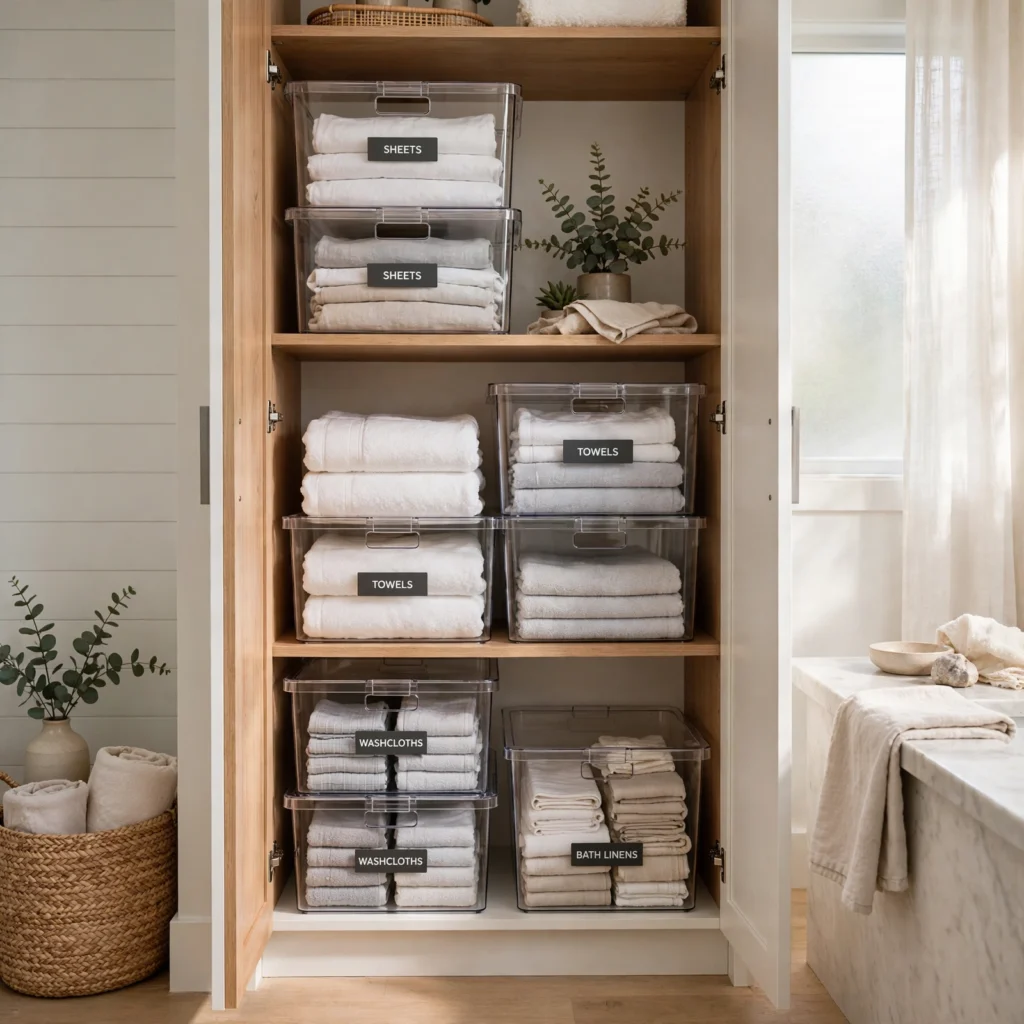
A stackable bin system for linens organizes towels, washcloths, and bath mats into uniform bins that stack neatly inside a linen closet or cabinet, rather than being stacked loose where they can topple or wrinkle. This idea maximizes vertical space inside a linen closet while keeping each category of item separated and easy to pull without disturbing the rest of the stack. Clear or labeled bins make it simple to see what’s inside without opening every container.
8. Daily Use Zone by the Sink
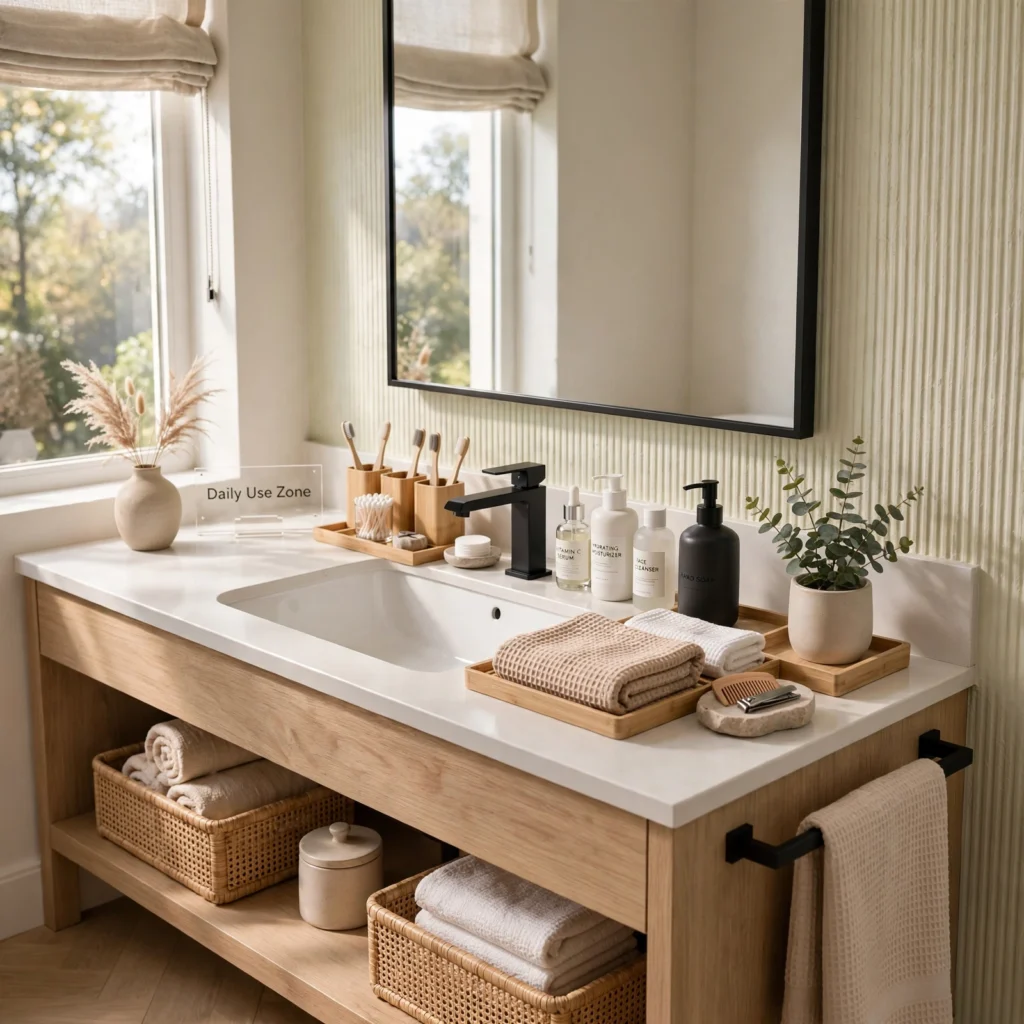
A daily use zone by the sink designates a specific, contained area of the counter for items used every single day, like toothpaste, moisturizer, and a hairbrush, keeping them separate from items used only occasionally. This idea reduces counter clutter by drawing a clear boundary between what needs to stay accessible and what can be stored away in a drawer or cabinet instead. A small tray or dish is often enough to define this zone without requiring any additional storage furniture.
9. Labeled Spice-Jar Style Containers
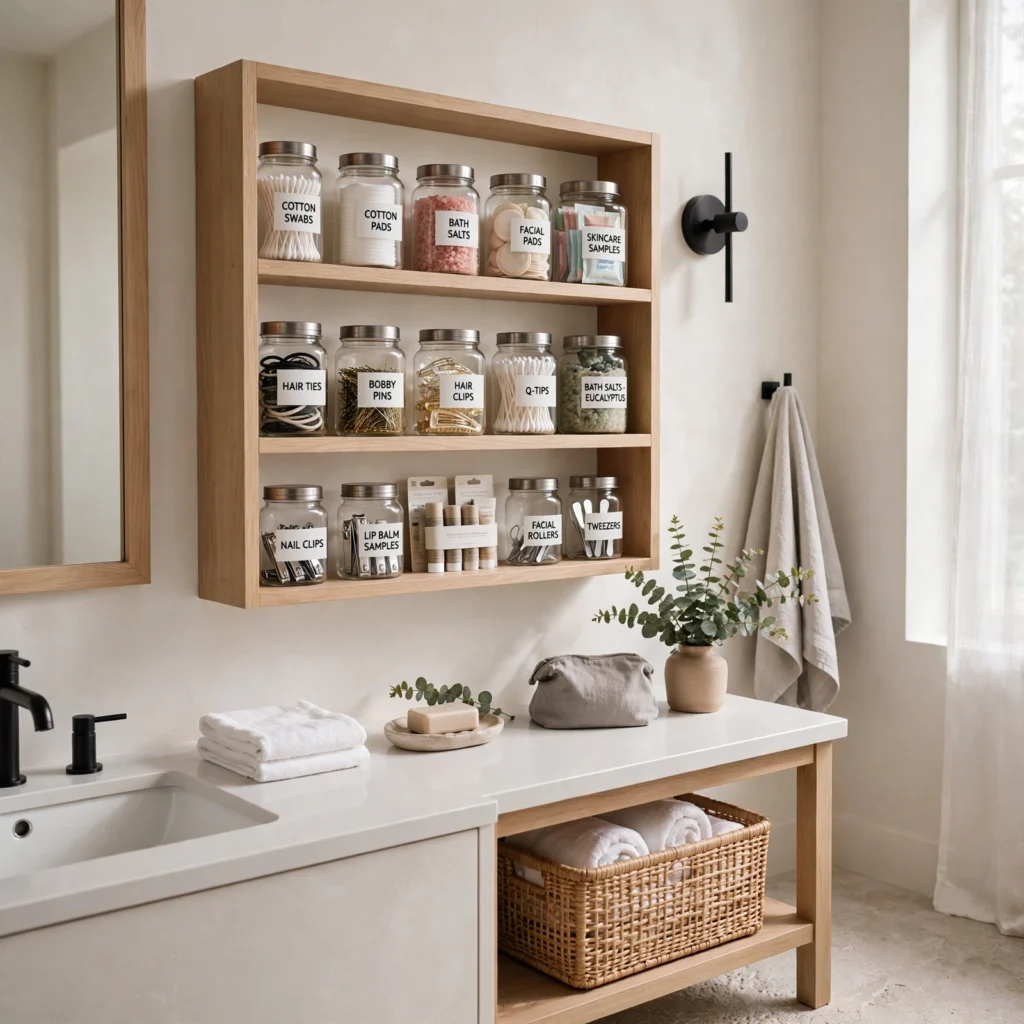
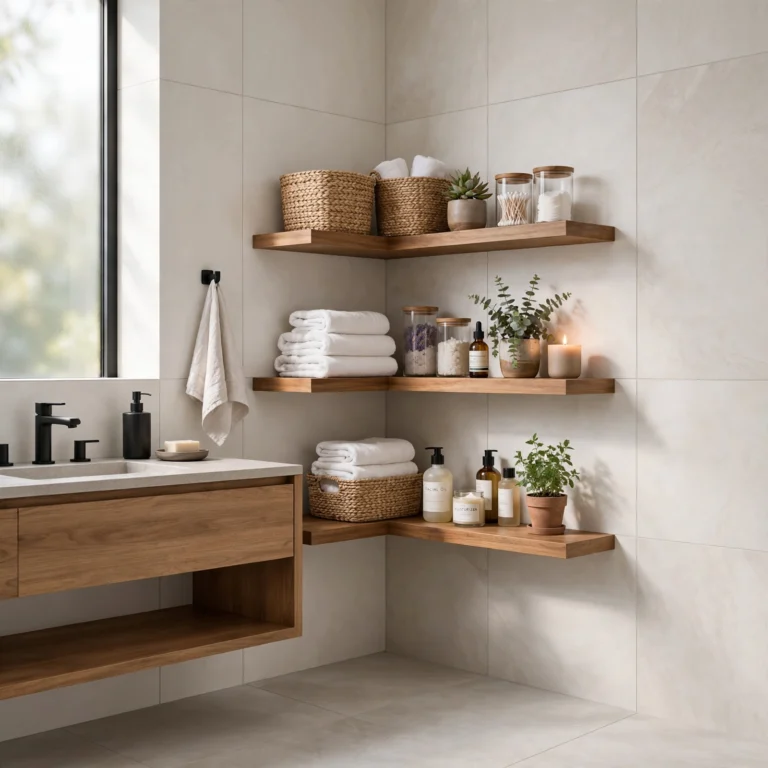
Labeled spice-jar style containers repurpose small, uniform glass or plastic jars, typically used for spices, to hold cotton balls, cotton swabs, bath salts, or hair accessories in a way that looks intentional rather than like leftover packaging. This idea works particularly well on open shelving or a bathroom counter, where the uniform containers create a cohesive, put-together look. Refilling from bulk packaging into these jars periodically also reduces visual clutter from mismatched product bottles.
| Container Size | Best Contents | Refill Frequency |
| Small (2-4 oz) | Cotton swabs, hair ties | Monthly |
| Medium (8-12 oz) | Cotton balls, bath salts | Every few weeks |
| Large (16+ oz) | Bulk soap, bath bombs | Occasional |
10. Vertical File-Style Product Sorter
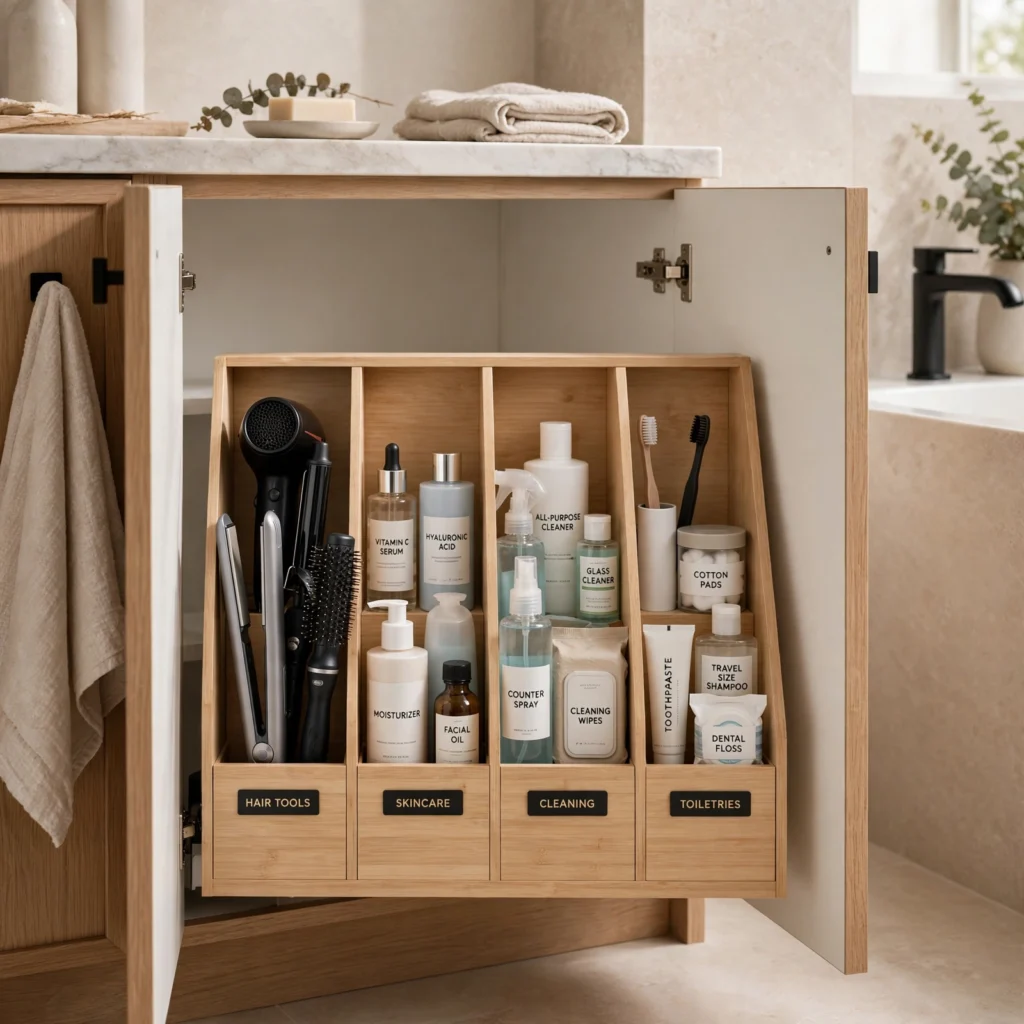
A vertical file-style product sorter stands hair tools like flat irons and curling irons upright in individual slots, similar to a file organizer, rather than letting cords tangle together in a drawer. This idea prevents the common problem of hot tools scratching each other or tangling cords into a knot every time one is removed. It’s typically placed inside a cabinet or on a counter near an outlet, since hot tools need to be stored close to where they’re used.
11. Skincare Fridge or Cold Storage Bin
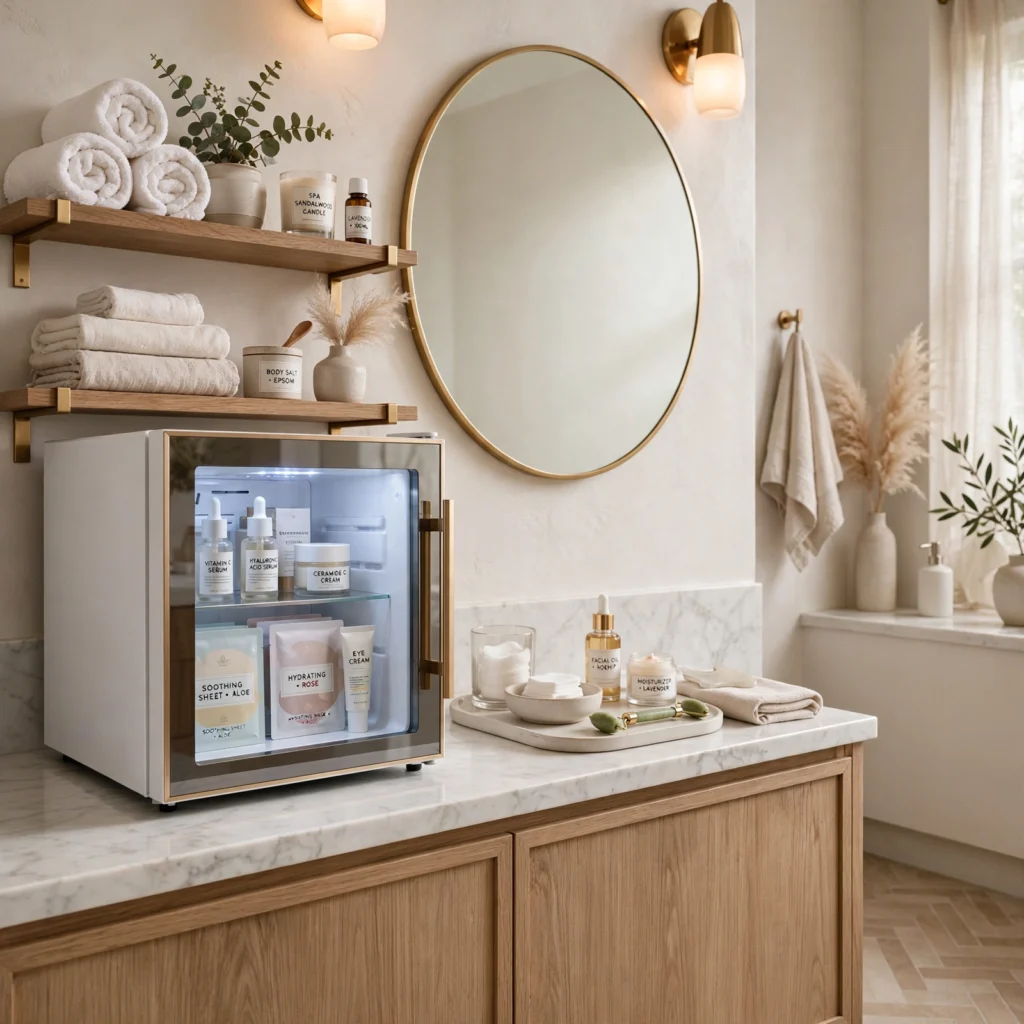
A skincare fridge or cold storage bin keeps temperature-sensitive products, like certain serums or eye creams, separate from the general bathroom storage while also extending the shelf life of those specific items. This idea has grown in popularity alongside more elaborate skincare routines, giving those products a dedicated, organized spot rather than mixing them in with everyday toiletries. It works best for households with a larger skincare collection rather than a bathroom with only a few basic products.
12. Behind-the-Door Organizer
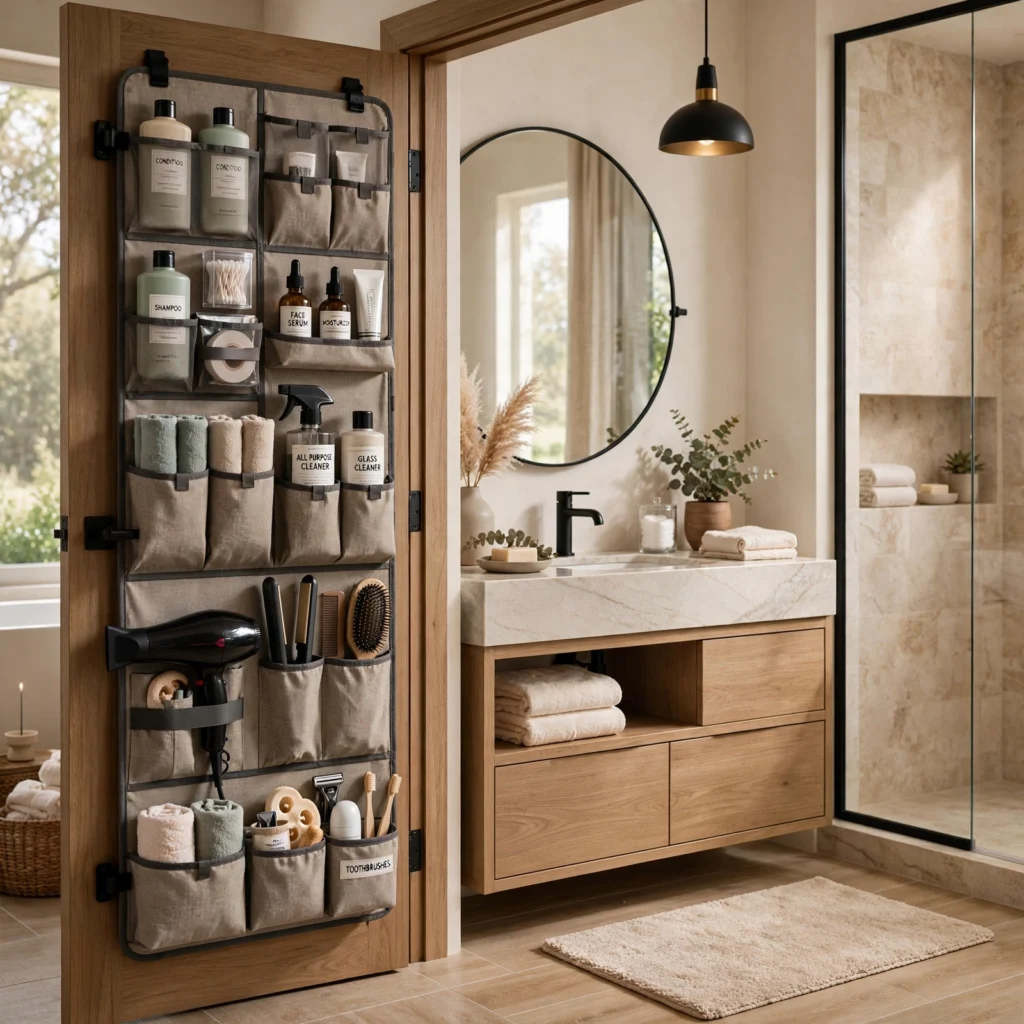
A behind-the-door organizer uses the flat, otherwise unused surface on the inside of a bathroom or cabinet door to hold hanging pockets or hooks for smaller items like hair tools, cleaning supplies, or extra toiletries. This idea adds functional storage without taking up any additional floor, counter, or shelf space in the room. It works especially well in small bathrooms where every existing surface needs to serve a purpose.
13. Labeled Family Member Baskets
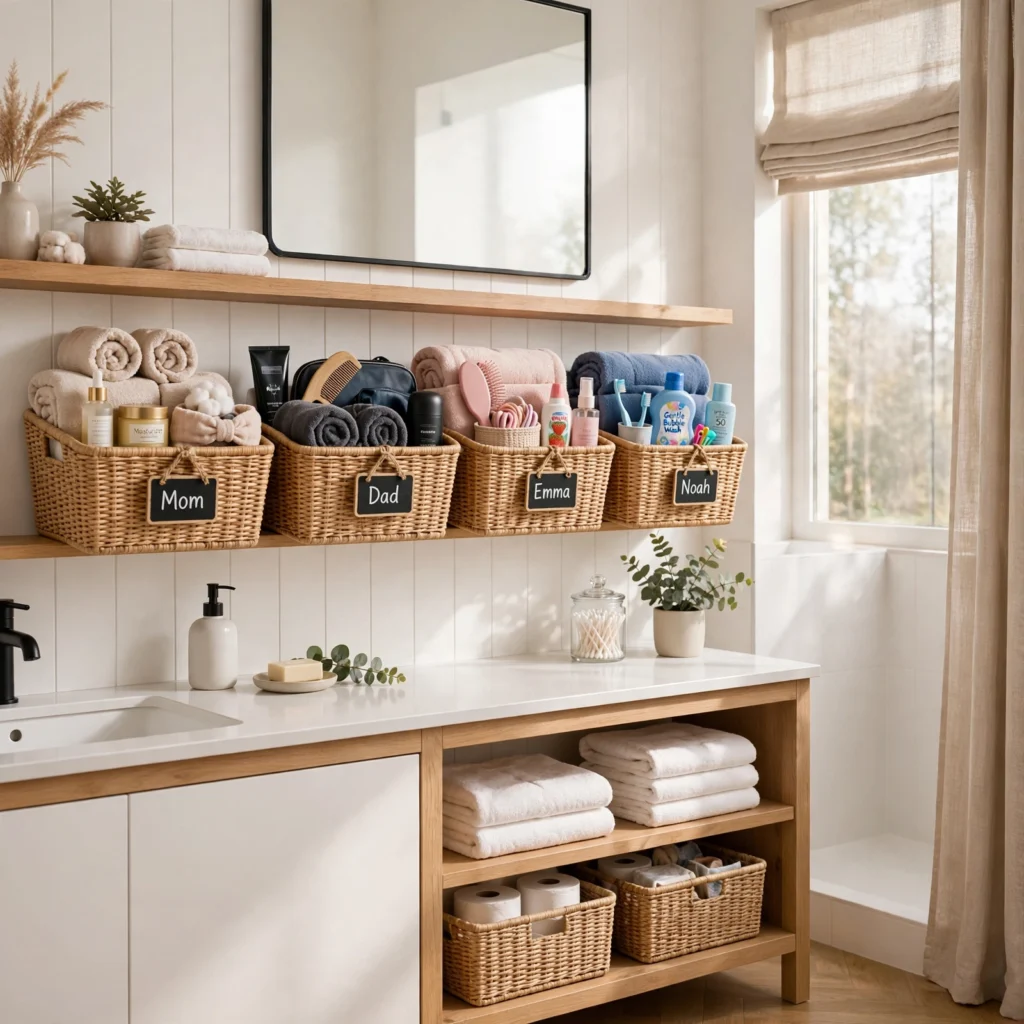
Labeled family member baskets assign each person in the household their own basket or bin for personal items like skincare, hair products, or medications, keeping shared bathroom storage from becoming a mixed pile of everyone’s belongings. This idea works particularly well in bathrooms shared by multiple people, since it eliminates the daily confusion of figuring out which product belongs to whom. Baskets can be stored in a shared cabinet or on open shelving, depending on the bathroom’s layout.
14. Expiration Date Check System
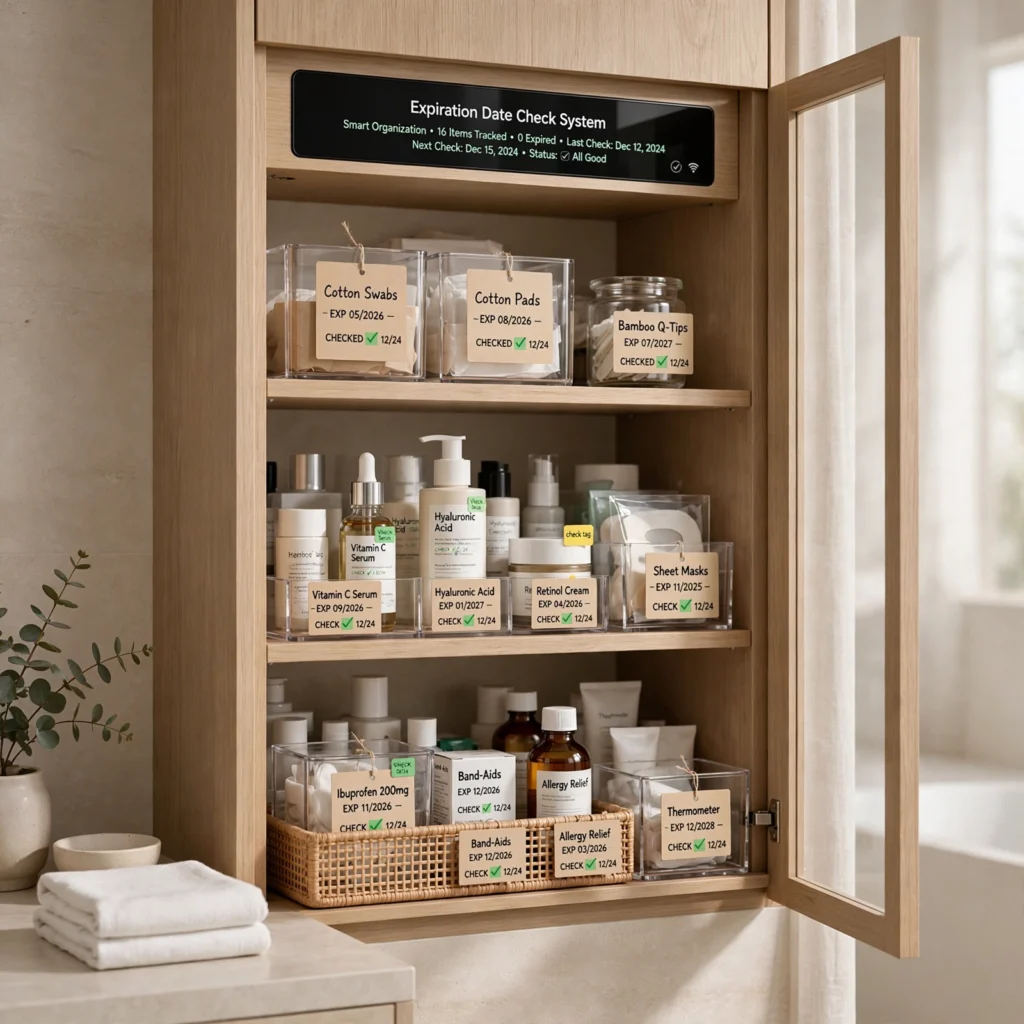
An expiration date check system involves periodically reviewing stored products, like sunscreen, medications, and certain skincare items, and removing anything expired before it takes up organized storage space unnecessarily. This idea isn’t a physical product but a habit, typically done every few months, that keeps a bathroom’s organization from slowly filling back up with items that are no longer usable. Writing the purchase date on a product with a marker at the time of buying makes this check faster to perform later.
15. Nightly Reset Routine
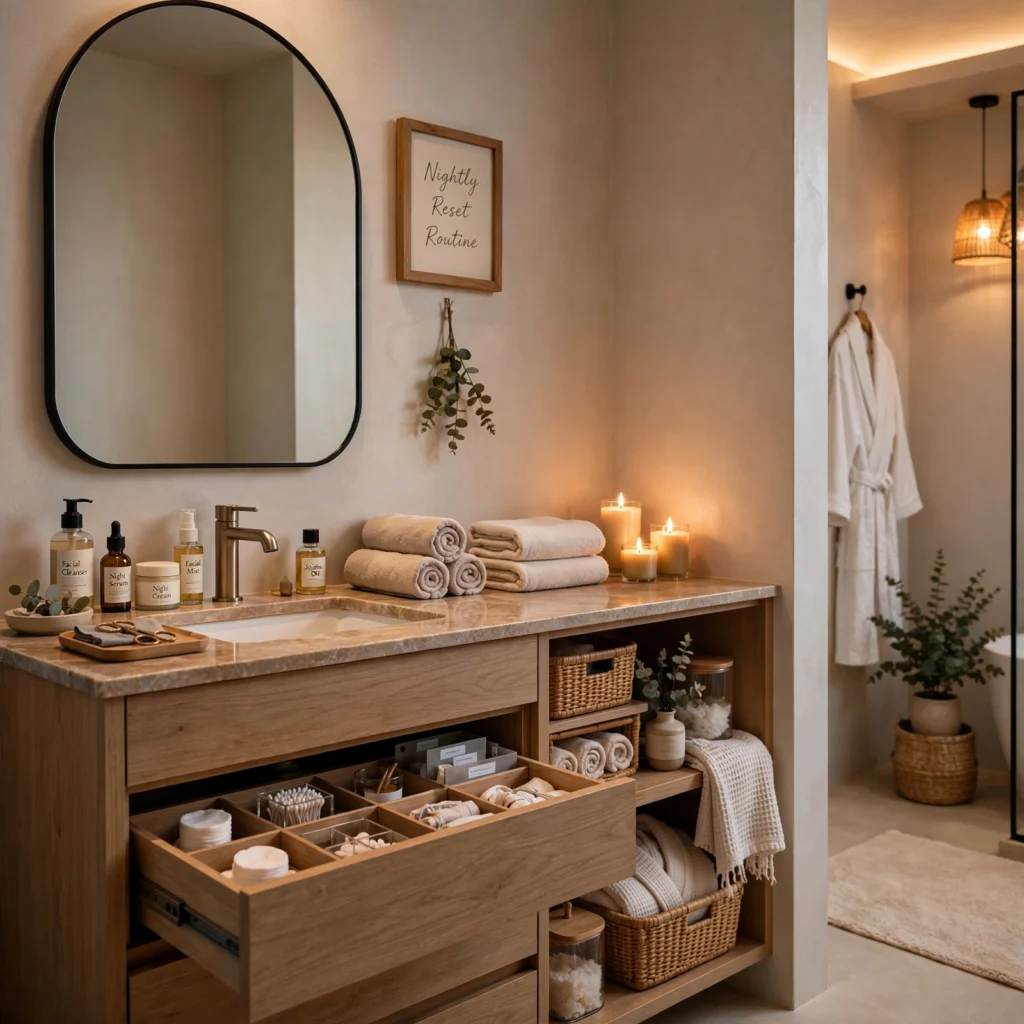
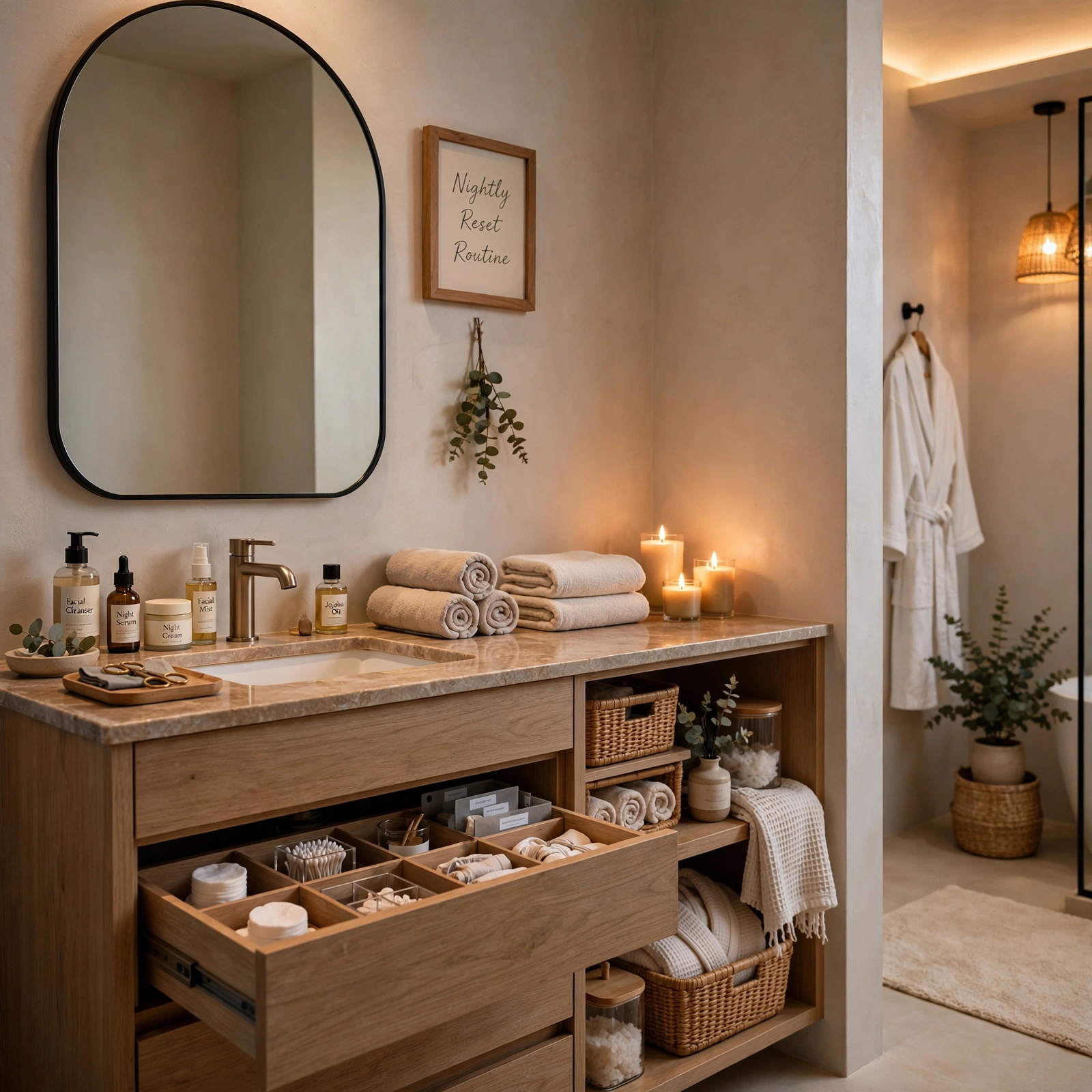
A nightly reset routine involves a quick, five-minute habit of wiping down the counter and returning every item to its designated spot before bed, rather than letting used products and dishes accumulate throughout the week. This idea works alongside physical organization systems rather than replacing them, since even the best containers and labels only stay effective if items are consistently returned to them. Many people find this habit easier to maintain when it’s paired with an existing routine, like brushing teeth before bed.
16. Over-Cabinet Door Hook Storage
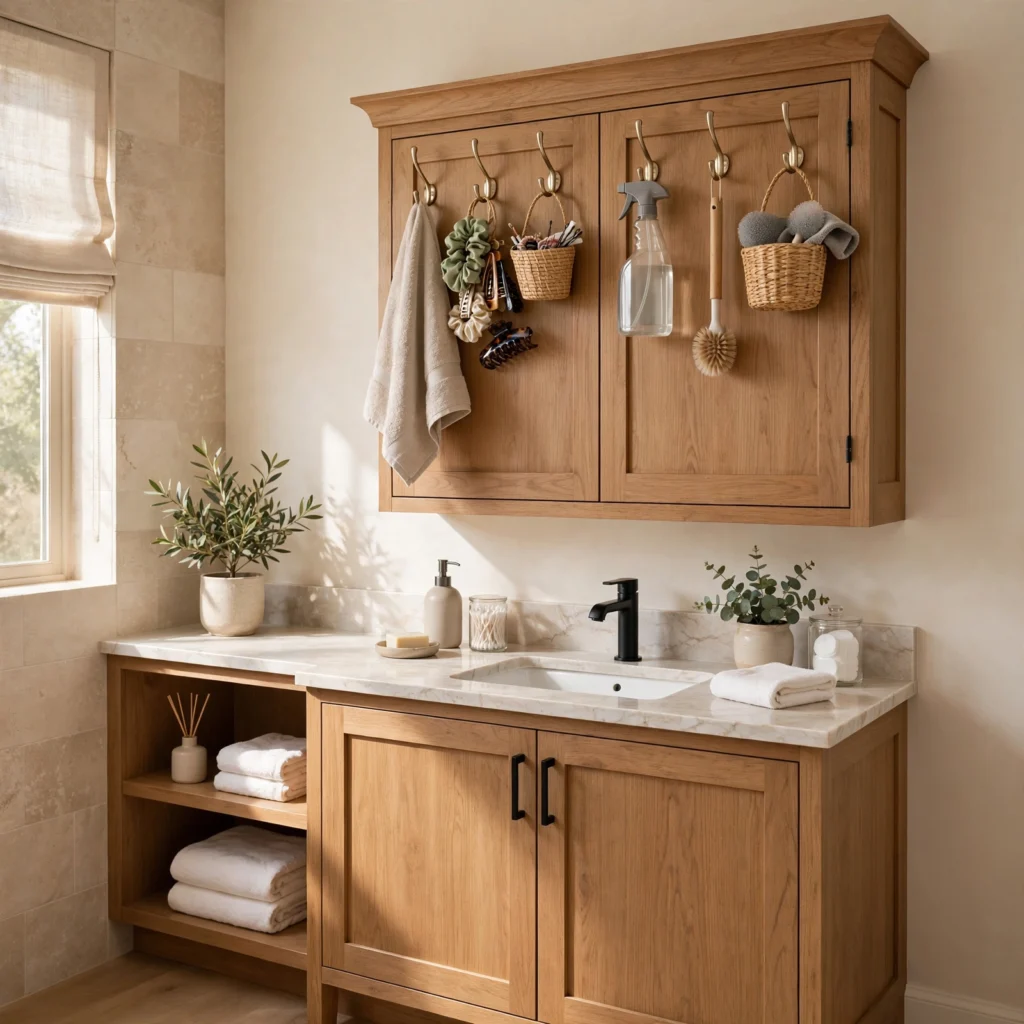
Over-cabinet door hook storage uses hooks that hang over the top of a cabinet door, requiring no drilling or mounting hardware, to hold items like a hair dryer, cleaning gloves, or a small caddy of bath products. This idea is one of the easiest bathroom organization solutions to implement in a rental or temporary living situation, since it can be removed without leaving any marks. It works especially well for bulky items, like a hair dryer, that don’t fit neatly into a drawer.
Shop the Look
For a bathroom focused on organization, clear acrylic drawer dividers are one of the fastest ways to bring order to a cluttered vanity drawer. Uniform labeled glass jars turn everyday items like cotton balls and bath salts into a cohesive display. A rotating turntable tray makes cabinet storage more accessible without requiring any permanent installation. Stackable labeled linen bins keep towels organized and easy to access inside a closet or cabinet. A hanging over-door organizer adds functional storage to any bathroom without tools or wall damage.
Common Mistake to Avoid
The most common mistake people make with bathroom organization ideas is buying containers and bins before sorting through what actually needs to be stored, which often results in mismatched sizes and wasted space once everything is put away. Organizing works best when items are grouped by category and frequency of use first, and containers are chosen afterward to fit those specific groupings. Skipping this step, and organizing around the containers instead of the items, is a common reason organization projects fall apart within a few weeks.
People Also Ask
How do I organize a small bathroom with limited space?
Start by sorting every item into categories, like daily-use products, backstock, and cleaning supplies, before purchasing any organizing containers, since this prevents buying bins that don’t actually fit what needs to be stored. Vertical solutions, like drawer dividers and stackable bins, tend to work best in small bathrooms because they make use of existing space more efficiently rather than requiring new furniture. Reviewing and removing expired or unused products periodically also keeps a small bathroom from feeling cluttered again within a few weeks.
What is the best way to organize bathroom drawers?
Clear acrylic or adjustable plastic drawer dividers are the most effective way to organize bathroom drawers, since they let you separate items by category, like skincare, hair accessories, and grooming tools, within the same drawer. Assigning a specific section to each category, rather than letting items shift freely, keeps the drawer functional over time instead of reverting to a jumbled pile. Reviewing drawer contents every few months to remove empty or expired products also helps maintain the system.
How do you organize a shared family bathroom?
Assigning each family member a designated basket, shelf, or drawer for their personal items is one of the most effective ways to organize a shared bathroom, since it prevents products from becoming mixed together in one communal space. A color-coded towel system also reduces daily confusion over whose towel is whose. Clear labeling throughout the bathroom, from bins to shelves, makes it easier for every household member to maintain the system rather than relying on one person to keep it organized.
How often should bathroom products be organized or reviewed?
Reviewing bathroom products for expiration dates and general clutter every three to four months tends to keep a bathroom’s organization system functional without becoming an overwhelming task. Daily habits, like a quick nightly reset of the counter, help maintain the system in between these larger reviews. Waiting too long between reviews, such as only once a year, often results in a much larger and more time-consuming reorganization project.
What containers work best for bathroom organization?
Clear containers, whether acrylic drawer dividers, glass jars, or labeled plastic bins, tend to work best for bathroom organization because they let you see contents at a glance without opening every container to check. Uniform container sizes within the same drawer or shelf also make the space look more cohesive and easier to maintain than a mix of mismatched packaging. The right container ultimately depends on the specific items being stored, since bulkier items like hair tools need different containers than small items like cotton swabs.
Conclusion
Bathroom organization ideas are less about adding new storage and more about creating a system for what’s already there, and the sixteen ideas above show how small changes, like labeled bins and daily reset habits, can keep a bathroom functional well beyond the first week. Save this post to Pinterest while you’re planning your next organizing session, and check out our related guide on bathroom storage ideas for additional ways to expand your space.
Author Expertise Note
This guide was compiled from firsthand organizing consultations and product research with professional home organizers specializing in small space systems. Product and container recommendations reflect current availability as of this writing, though specific brands and sizes may vary by retailer.