
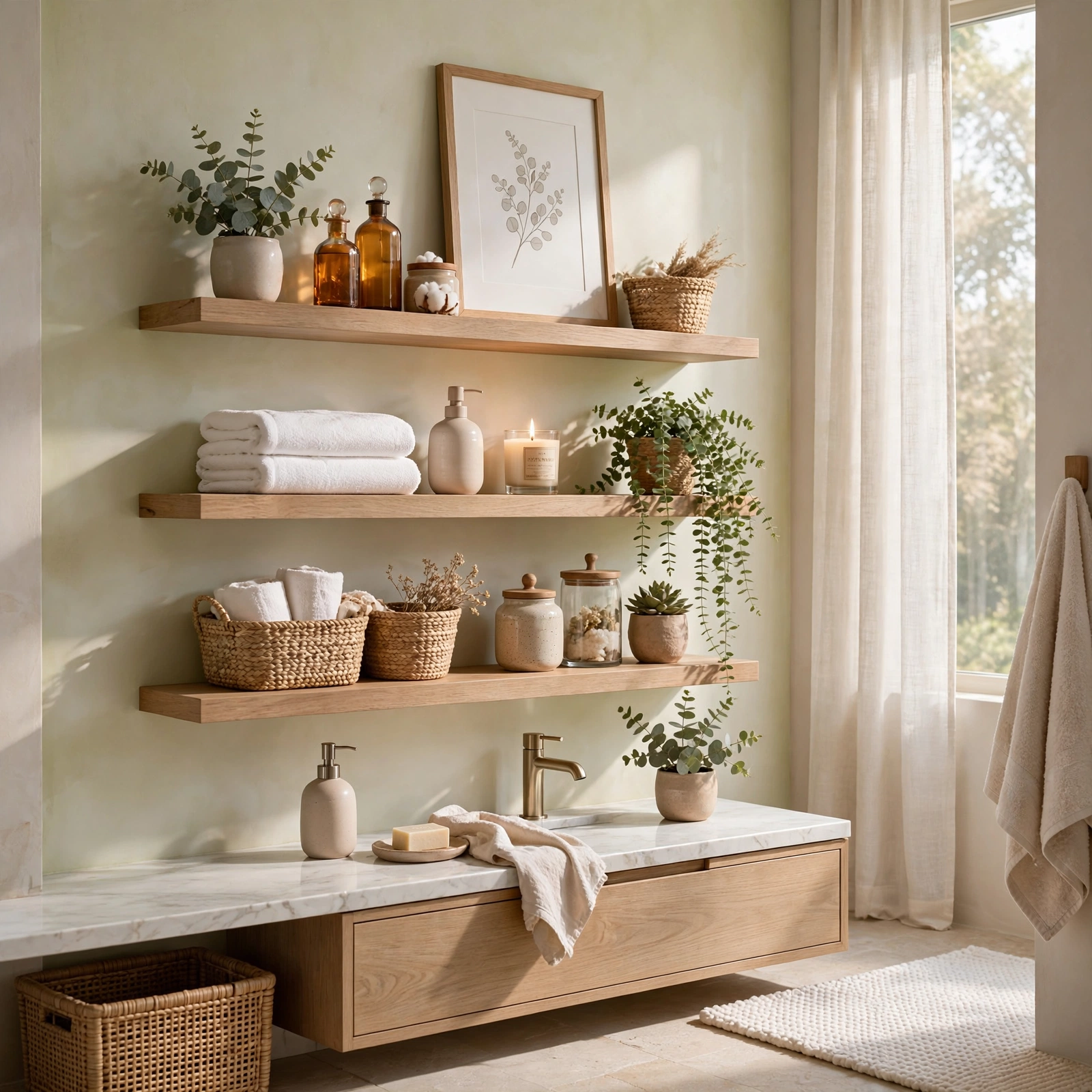
14 Trending Bathroom Shelf Decor Ideas for Stylish and Organized Open Storage
Open shelving in a bathroom can either look like a boutique hotel display or a pile of half-used products, and the difference usually comes down to a handful of styling decisions rather than the shelf itself. This guide covers fourteen bathroom shelf decor ideas for arranging towels, storage baskets, plants, and display objects in a way that stays functional day to day while still looking intentional. It also breaks down the most common mistake people make when styling open shelves and answers the questions people search most before rearranging their own bathroom.
Trend & Background
Open shelving has become a defining feature of current bathroom design as more homes move away from fully enclosed cabinetry toward a mix of closed and open storage. This shift reflects a broader preference for bathrooms that feel personal and layered rather than clinical, with shelves doubling as both storage and display space. Bathroom shelf decor matters more now because moisture-resistant materials like teak, powder-coated metal, and treated rattan have become widely available, making open storage a practical option in humid bathrooms rather than a purely aesthetic risk.
Key Takeaways
- Bathroom shelf decor works best when items are grouped by height and texture rather than lined up by size alone.
- Mixing functional items like towels with a few styled objects keeps open shelving from looking either bare or cluttered.
- Material choice matters in a bathroom, since humidity affects wood, metal, and woven finishes differently over time.
- Spacing and shelf depth have a bigger visual impact than the number of items placed on each level.
1. Rolled Towel Display
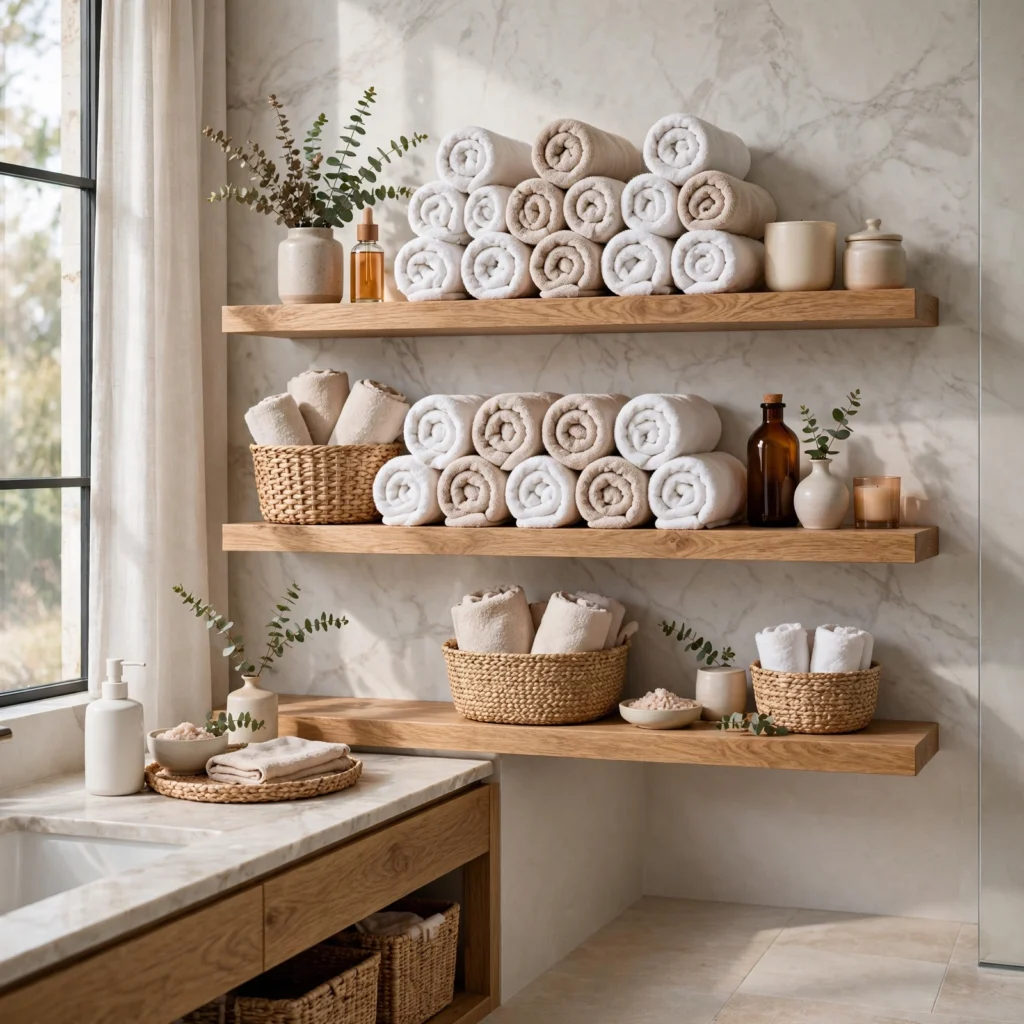
Rolling bath towels instead of folding them and stacking them horizontally on a shelf adds a soft, rounded texture that breaks up the straight lines most bathrooms are otherwise full of. Grouping towels by height, with larger bath towels on the bottom shelf and smaller hand towels above, keeps the arrangement visually balanced. Limiting the color palette to one or two tones, like white and oatmeal, prevents the display from competing with other items on the same shelf.
2. Woven Basket Grouping
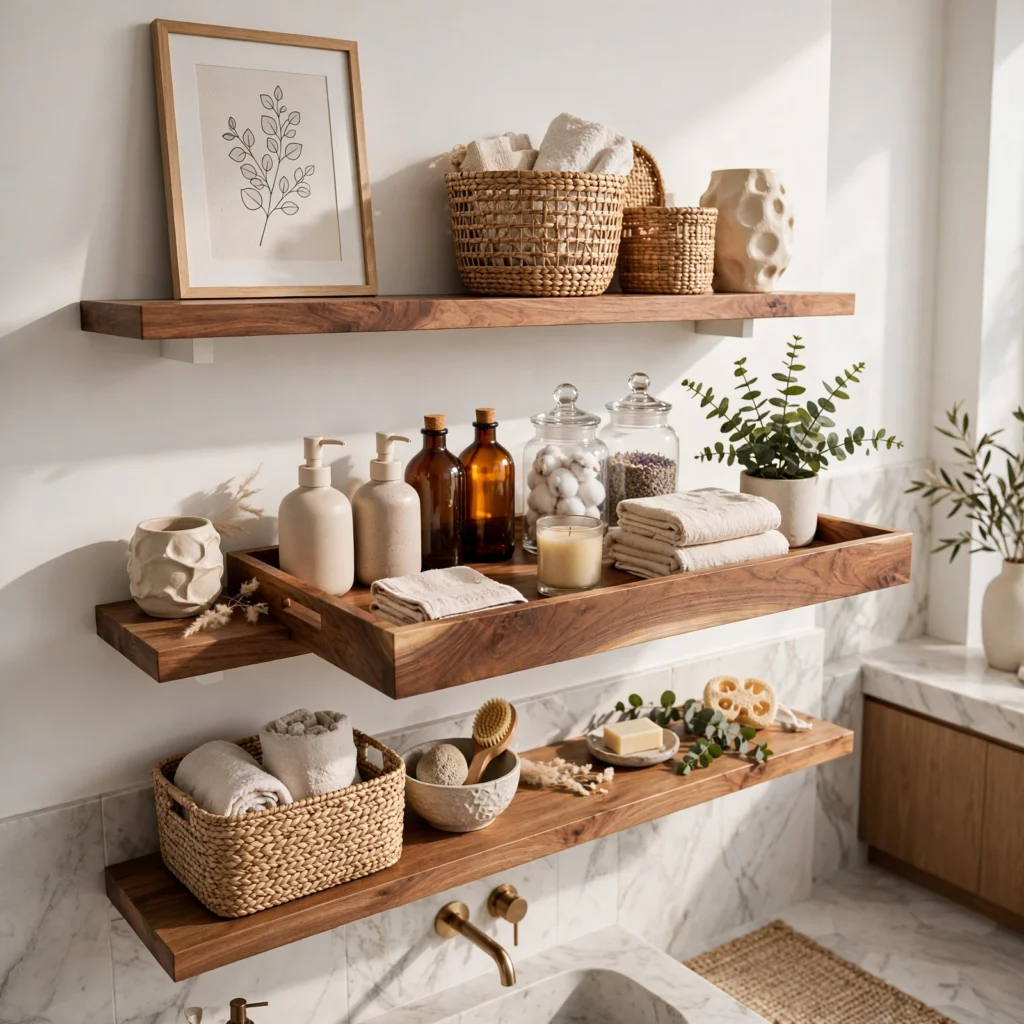
Seagrass or rattan baskets in two or three graduated sizes create a layered look when placed together on a single shelf, with the largest basket anchoring one side and smaller ones stepping down beside it. These baskets work well for concealing loose items like extra toiletries or cleaning supplies that don’t need to be on display. Choosing baskets in a consistent weave and tone, rather than mismatched styles, keeps the grouping from looking accidental.
3. Ceramic Vessel Trio
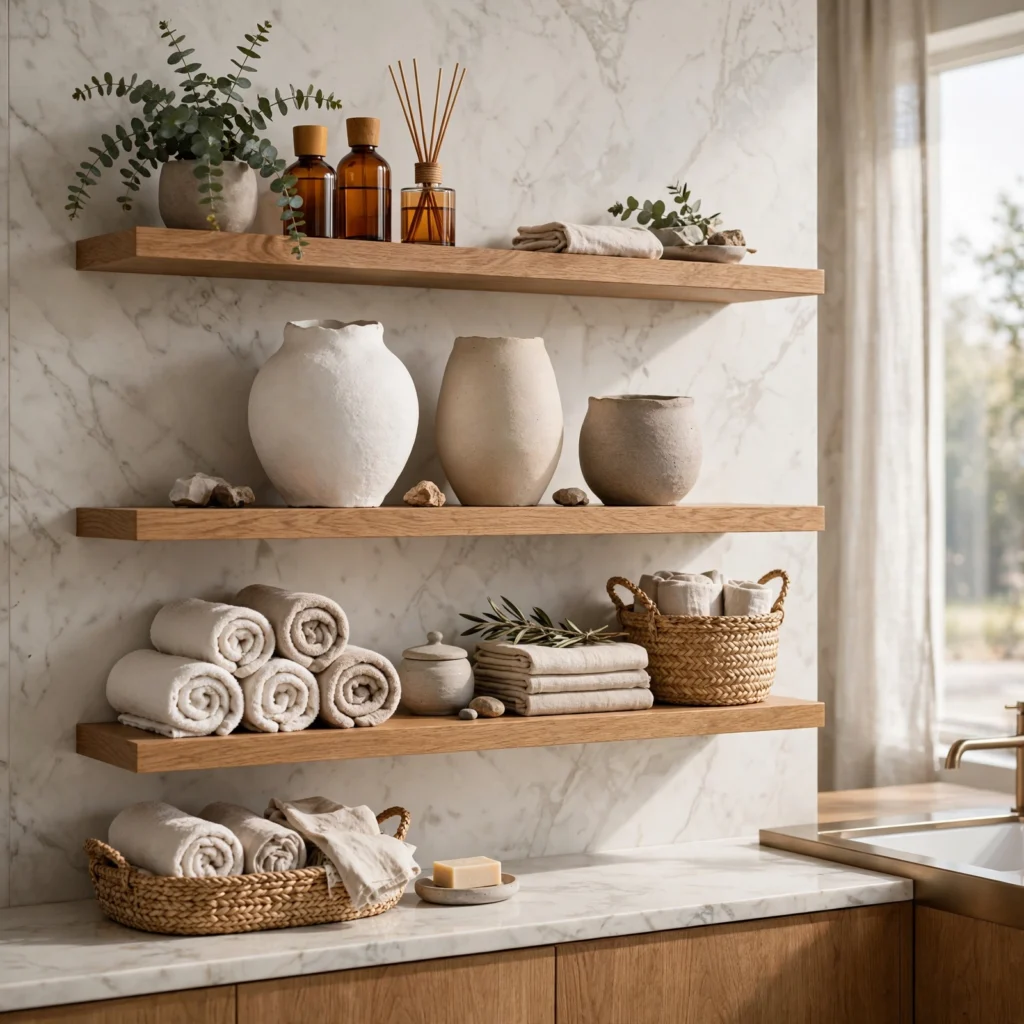
A small collection of ceramic vessels in varying heights, such as a bud vase, a small bowl, and a taller cylindrical piece, adds a sculptural element to an otherwise practical shelf. Grouping them in odd numbers, typically three, reads as more intentional than pairs or larger even-numbered sets. Choosing a matte glaze in a neutral or earthy tone keeps the vessels from clashing with the surrounding towels or tile.
4. Trailing Plant Accent
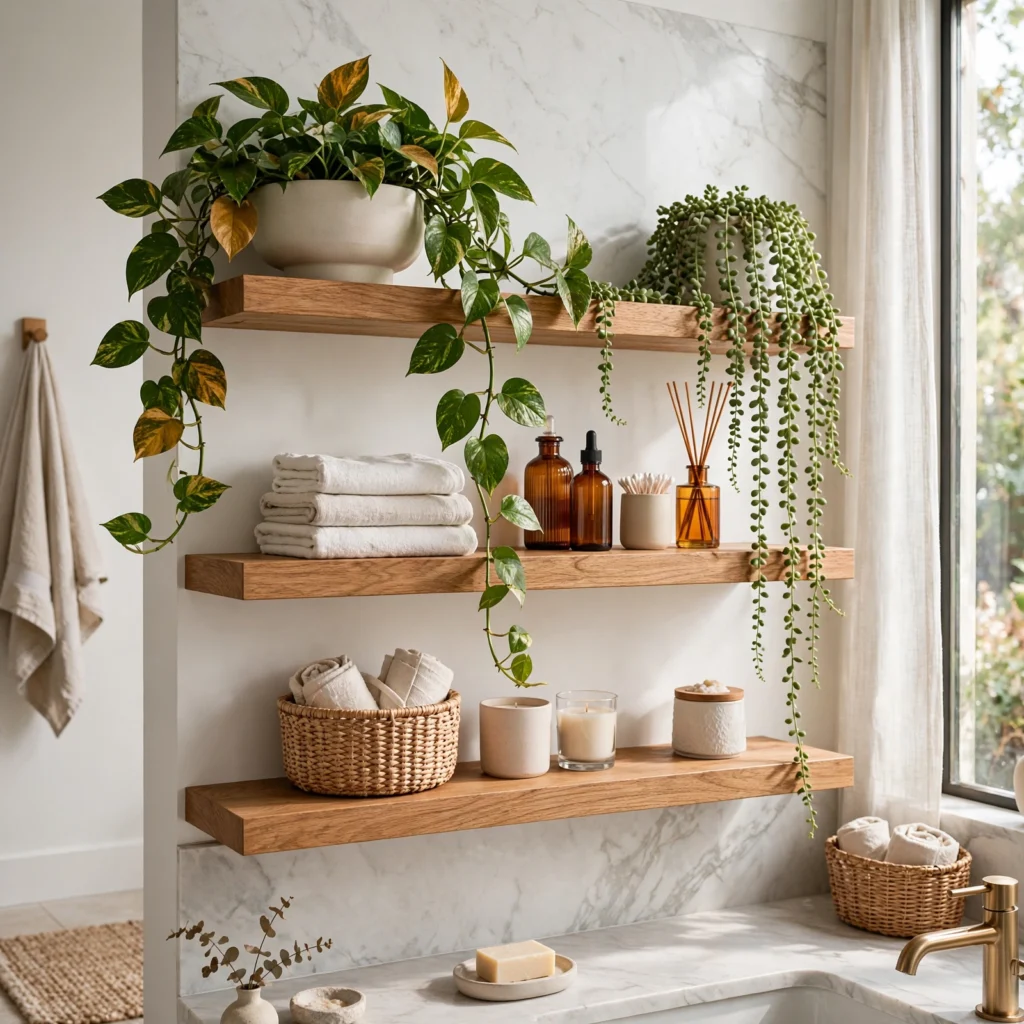
A small pothos or philodendron cutting placed in a narrow vase or ceramic pot on the top shelf adds a living element that softens a shelf dominated by hard materials like ceramic and folded cotton. Letting the vine trail slightly over the shelf edge, rather than keeping it fully contained, adds movement to an otherwise static display. Bathroom humidity generally supports these plant varieties well, provided the shelf gets at least some indirect natural light.
5. Glass Apothecary Jars
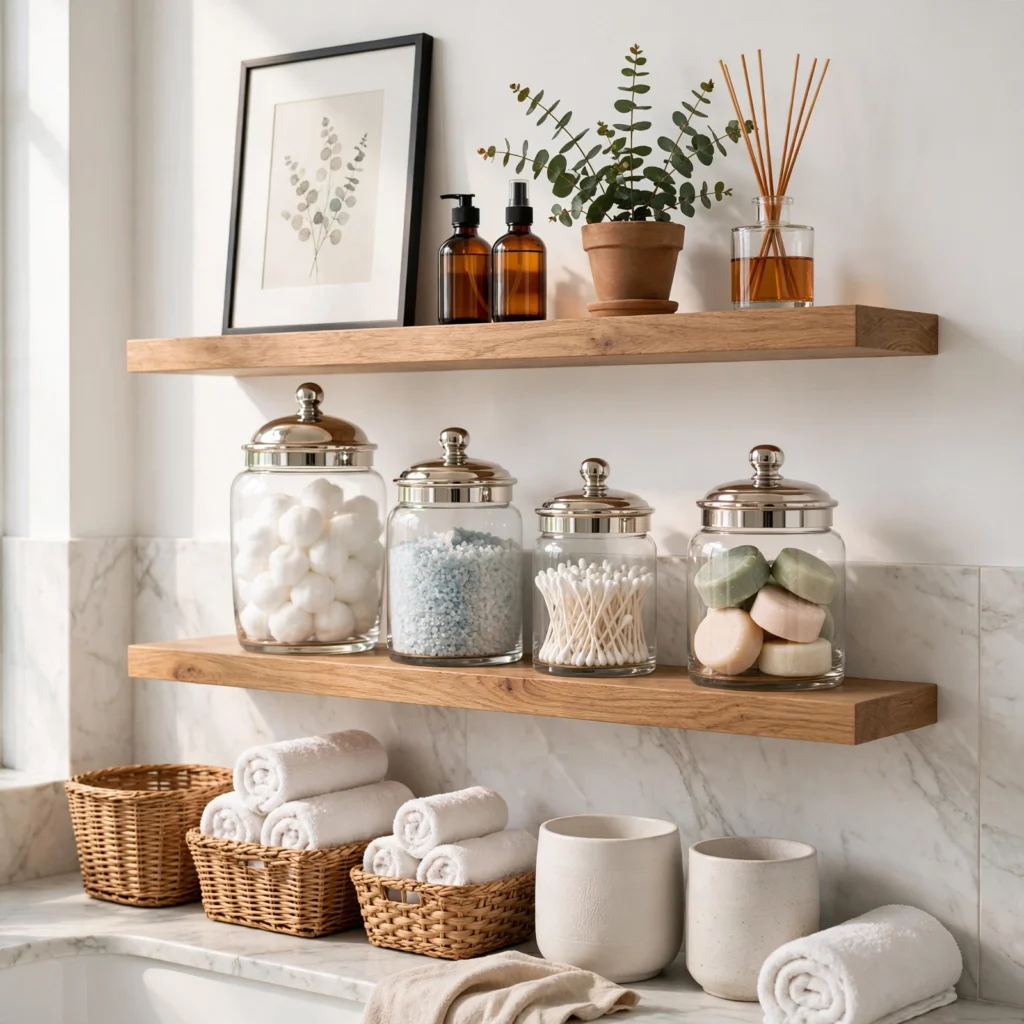
Clear glass jars filled with cotton balls, bath salts, or rolled washcloths turn everyday items into part of the shelf’s visual composition instead of hiding them behind a cabinet door. Choosing jars with a simple, uncolored glass and a wood or cork lid keeps the look cohesive with natural-material shelving. This idea works particularly well on a shelf near the sink, where these items are used daily and benefit from being within easy reach.
To see more options for decor for bathroom counter CLICK HERE
6. Open Shelf Spacing Guide
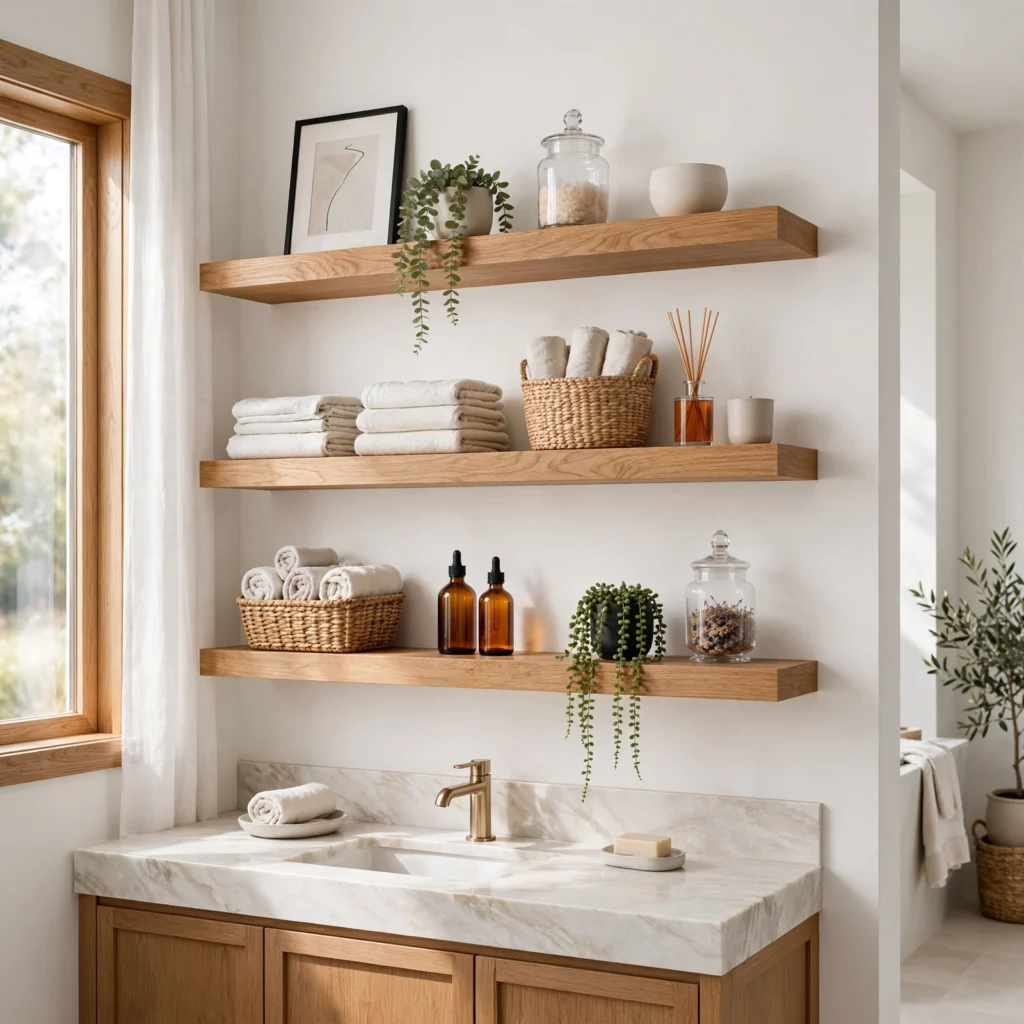
Getting the vertical spacing right between shelves determines whether taller items like vases or stacked towels fit comfortably or feel cramped against the shelf above. Leaving extra clearance on at least one shelf allows for taller seasonal or decorative pieces without requiring the whole unit to be reconfigured. Uneven spacing across the unit, rather than perfectly equal gaps, also tends to photograph better and feels less rigid than a strictly uniform grid.
| Shelf Position | Recommended Clearance | Typical Use |
| Bottom shelf | 12–14 inches | Bath towels, larger baskets |
| Middle shelf | 9–10 inches | Folded hand towels, jars |
| Top shelf | 7–8 inches | Small decor, trailing plant |
7. Matching Frame Art
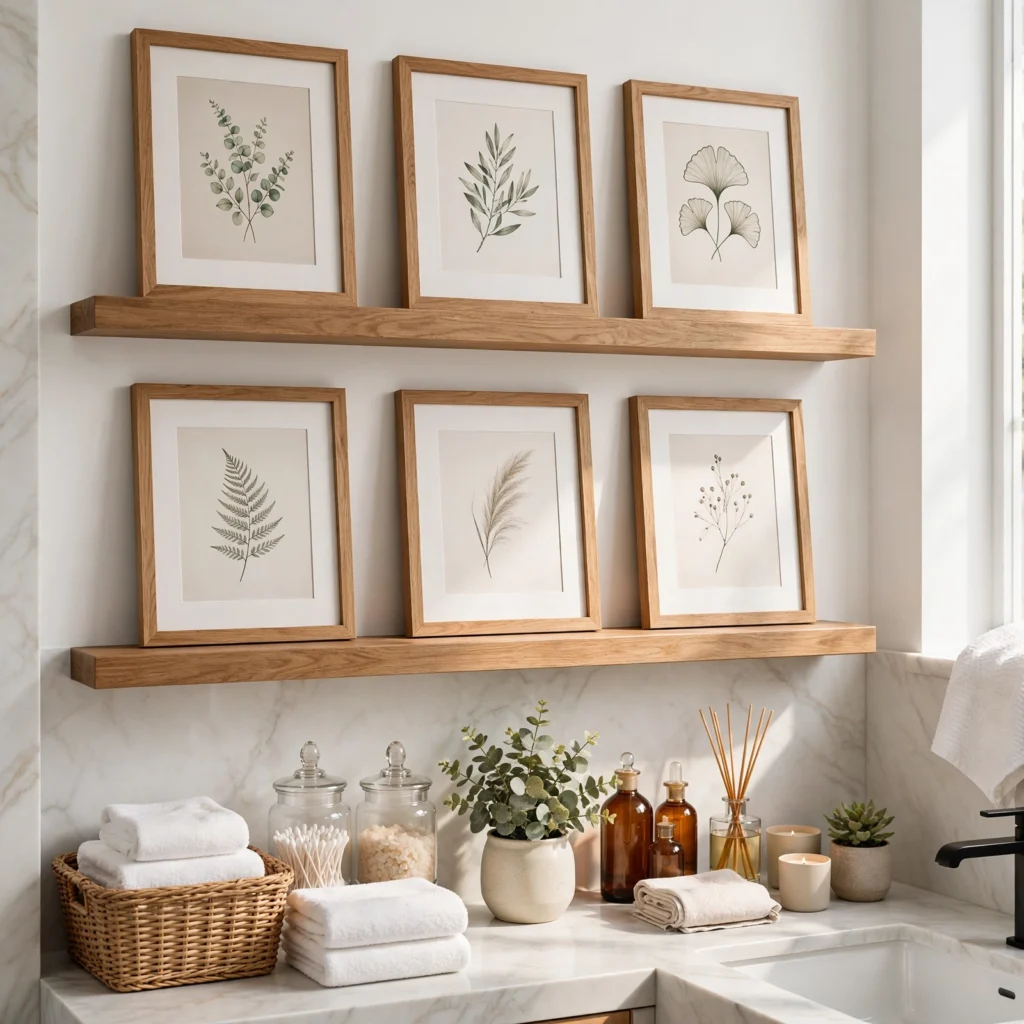
A single small framed print or piece of line art propped against the wall on a shelf, rather than hung above it, adds a personal touch without requiring additional wall mounting. Choosing a frame finish that matches existing hardware, such as matte black or natural wood, keeps the piece feeling connected to the rest of the room. Leaning the frame at a slight angle instead of standing it perfectly upright also gives the shelf a more relaxed, collected feel.
8. Wood Tray Base
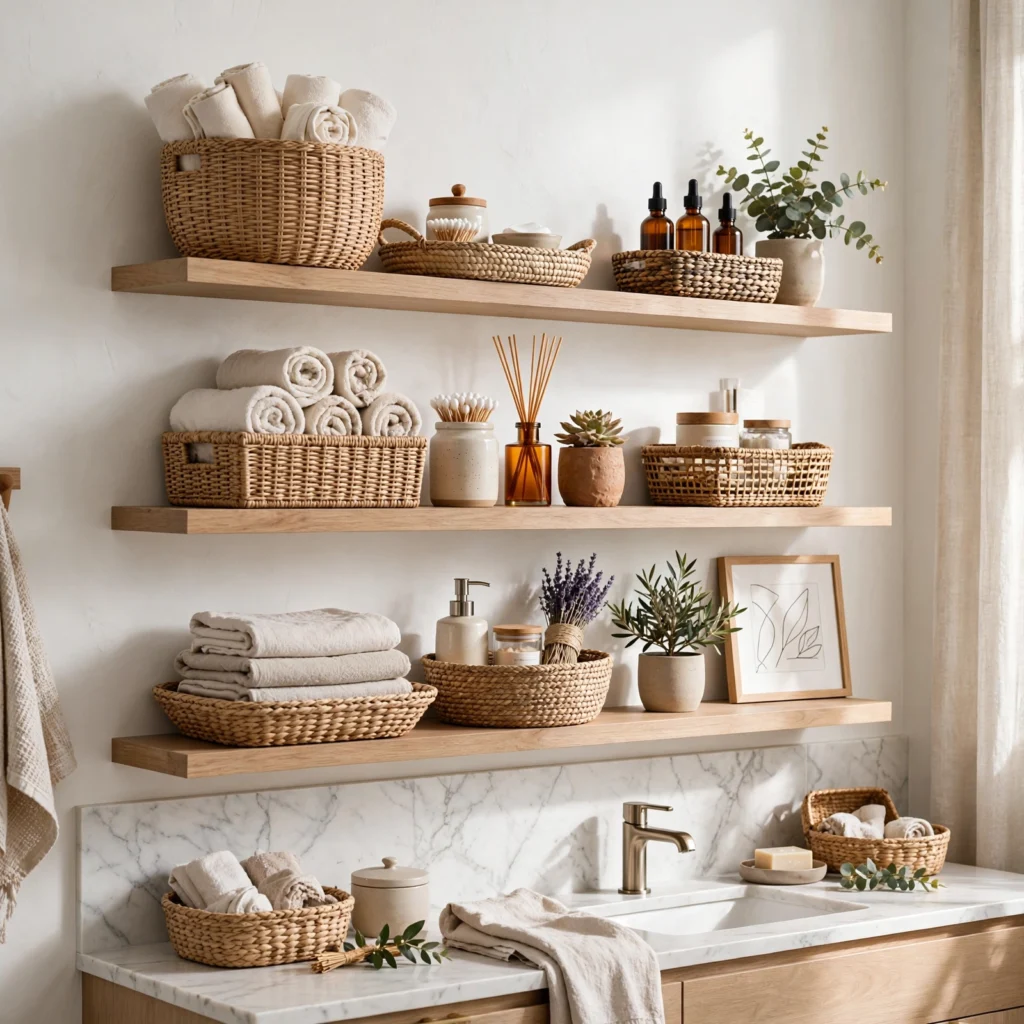
Placing a low wood tray on a shelf and grouping smaller items on top of it, such as a candle, a small dish, and a rolled washcloth, creates a defined zone that keeps the arrangement from spreading loosely across the shelf surface. This technique is especially useful on deeper shelves where items can otherwise look scattered. Choosing a tray in the same wood tone as a vanity or other shelving nearby reinforces the material consistency running through the room.
9. Layered Bath Linens
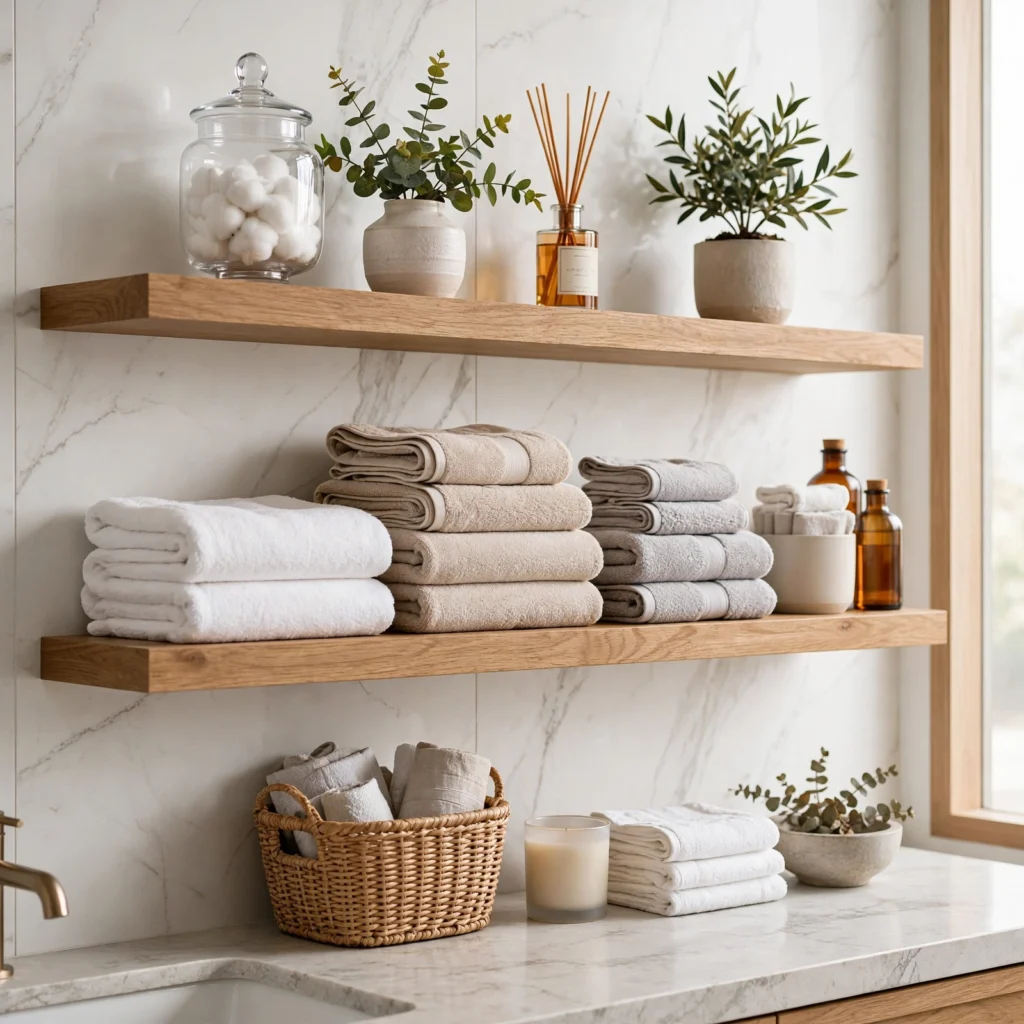
Alternating a folded bath mat, a stack of washcloths, and a rolled hand towel across a single shelf creates visual rhythm through varied shapes rather than a single repeated fold style. This layering technique works especially well when the linens share a common color palette but differ slightly in weave, such as pairing waffle-textured washcloths with smooth cotton towels. It also keeps frequently used items easy to grab without disturbing the rest of the display.
10. Candle and Match Styling
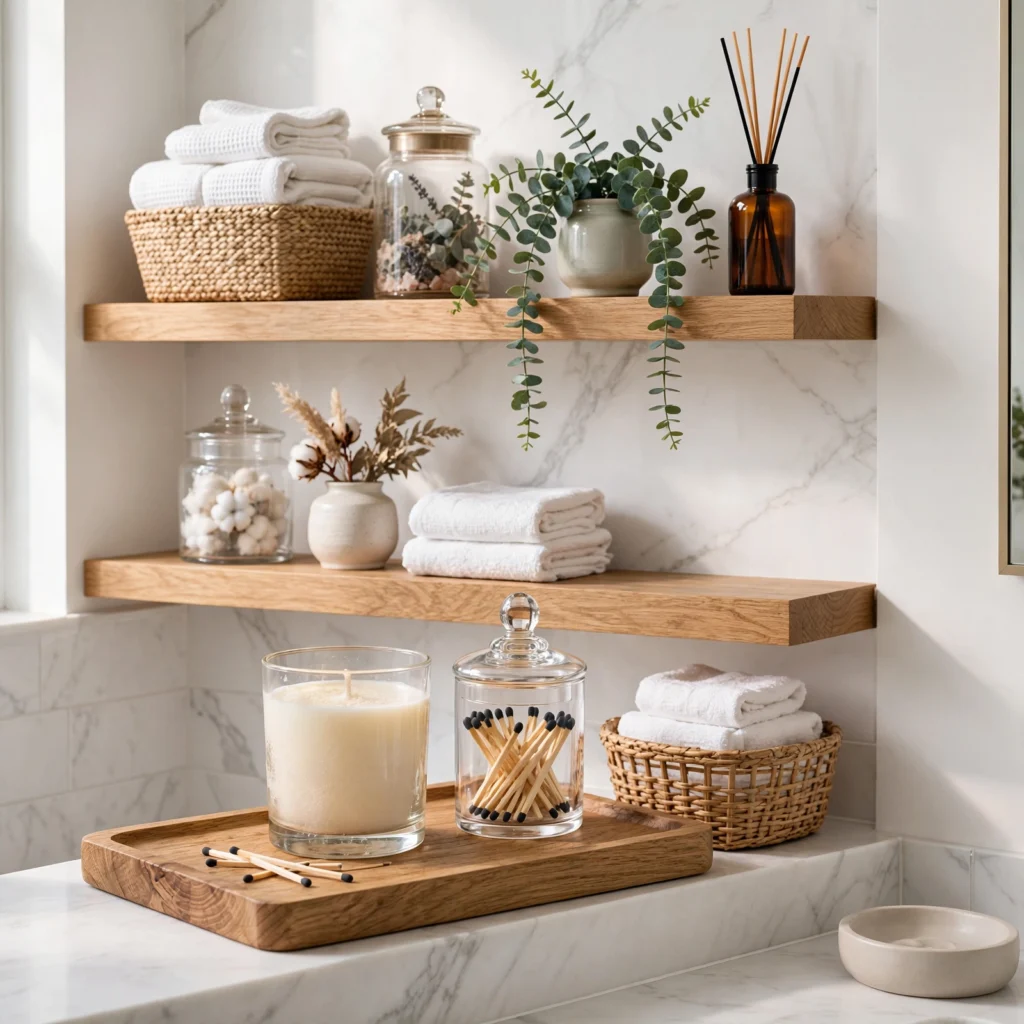
A single pillar or jar candle paired with a small dish of wooden matches adds warmth and scent to a bathroom shelf, particularly effective on a shelf near the tub. Choosing an unscented or lightly scented candle avoids overwhelming a small, enclosed bathroom space. Placing the candle slightly off-center, rather than dead in the middle of the shelf, leaves room for a second smaller object like a vessel or plant without the grouping feeling crowded.
11. Floating Shelf Bracket Style
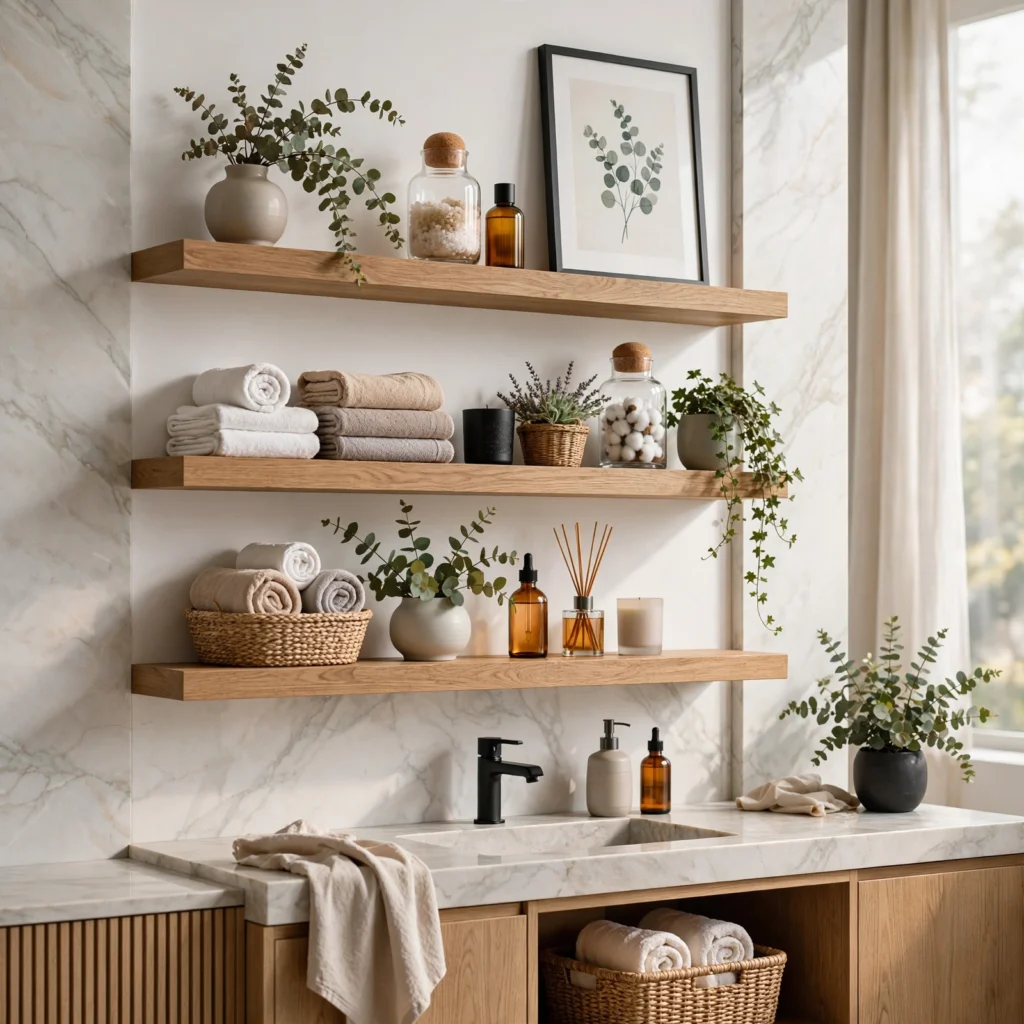
The visible hardware holding a shelf to the wall plays a bigger role in the overall look than most people account for when styling the items on top of it. Matte black L-brackets read as more industrial, while hidden floating brackets create a cleaner, more minimal line that lets the displayed items stand out on their own. Matching bracket finish to existing faucet or towel bar hardware ties the shelf into the room’s broader hardware palette rather than treating it as a separate element.
12. Stone Coaster Base
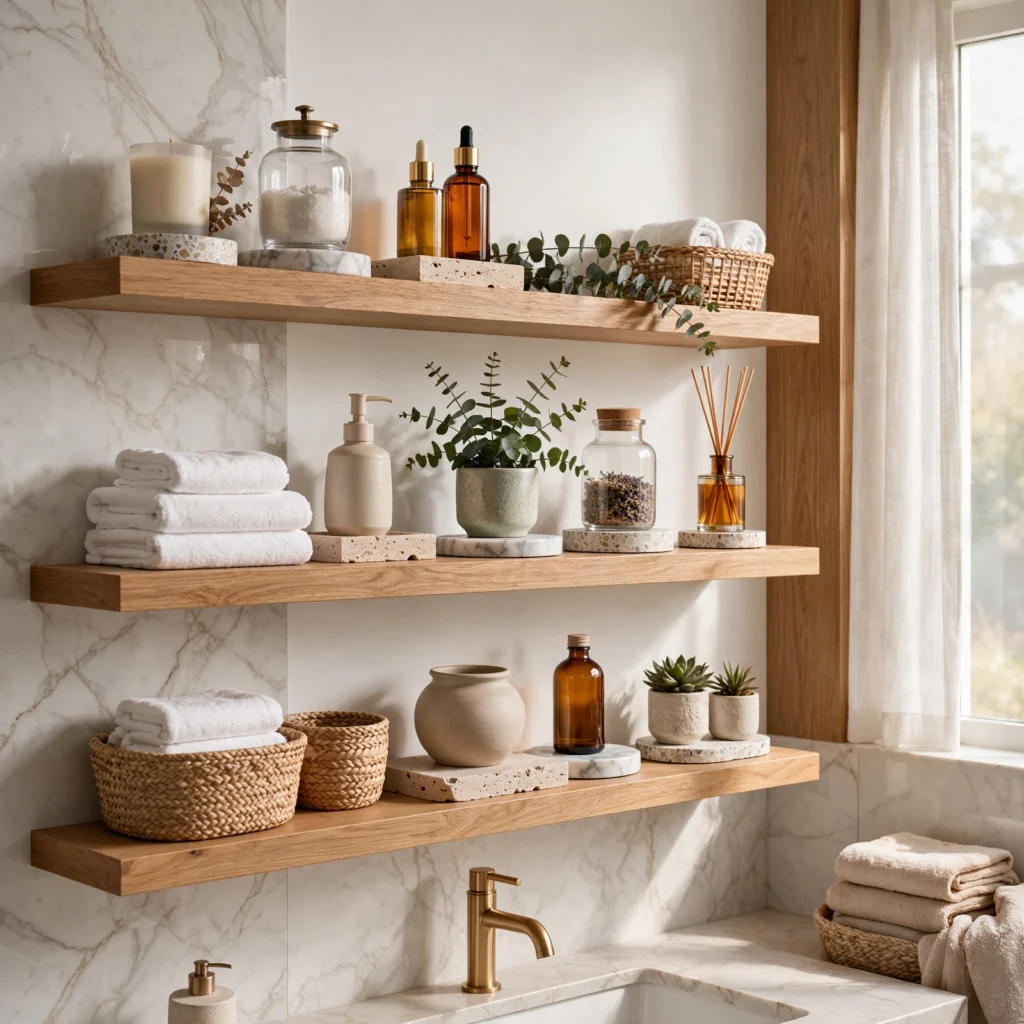
Small stone coasters or trivets placed beneath candles, soap dishes, or vessels protect the wood or painted shelf surface from water rings while adding a subtle textural layer beneath the displayed object. Honed marble or raw slate both work well for this, since their natural variation adds interest without introducing a new color. This is a small detail, but it’s one of the details that separates a shelf styled with intention from one where items were simply set down.
13. Seasonal Rotation Zone
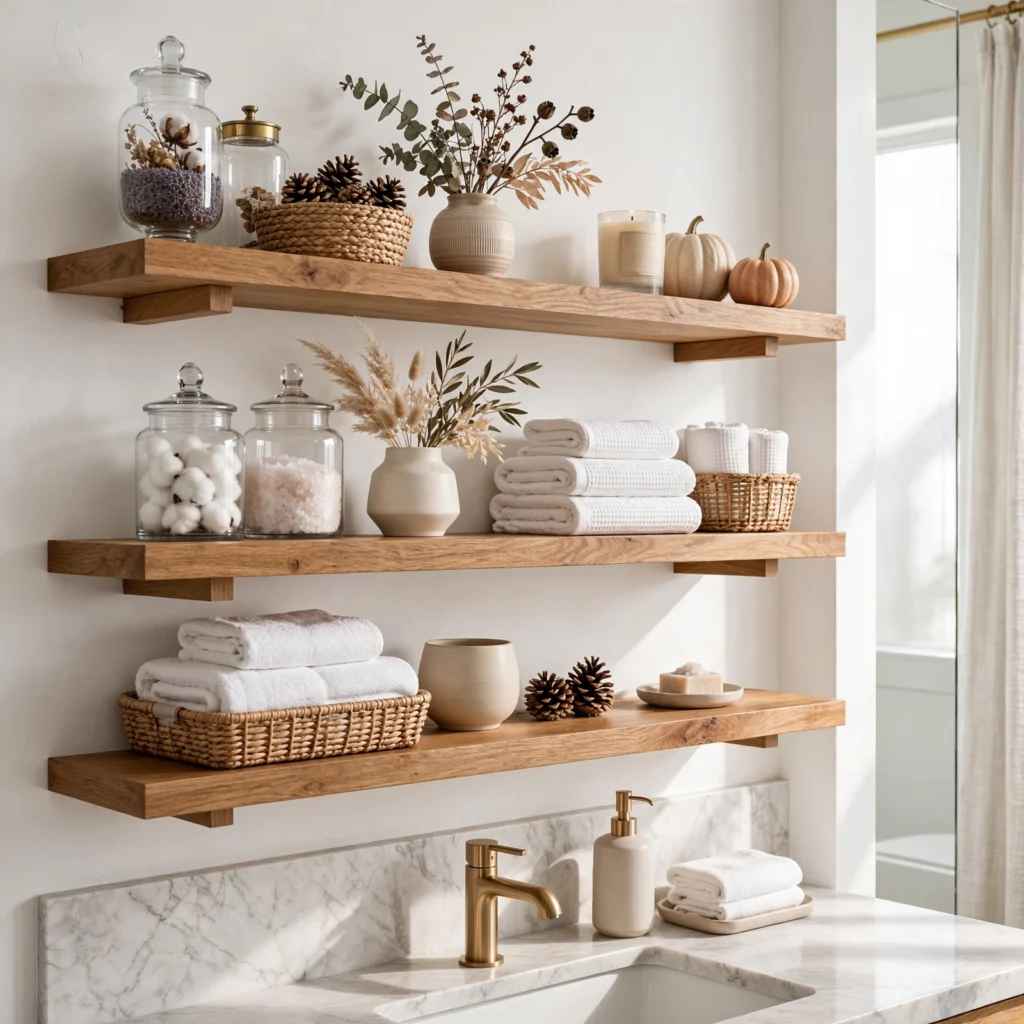
Reserving one small section of a shelf, rather than the entire unit, for rotating seasonal items like a small pumpkin in autumn or a sprig of eucalyptus in winter keeps the bathroom feeling current without requiring a full restyle each season. Keeping this zone to a single object at a time prevents the seasonal item from overwhelming the more permanent arrangement of towels and vessels around it. This idea also makes ongoing upkeep easier, since only one small area needs attention rather than the whole shelf.
14. Bathroom Shelf Decor Color Palette
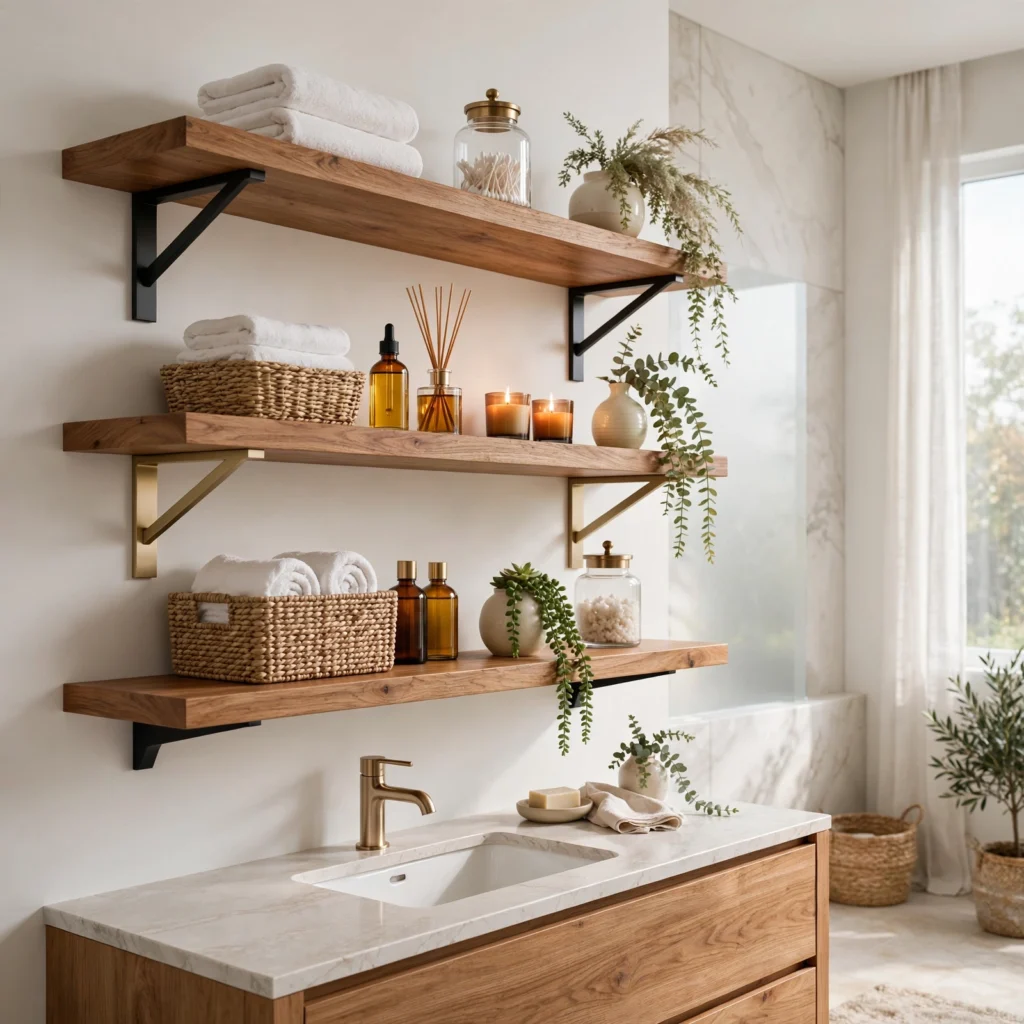
Sticking to a palette of one neutral base tone, one natural material like wood or stone, and a single accent color used in just one or two objects keeps a bathroom shelf from feeling visually busy despite holding several different items. A common approach pairs white or oatmeal linens with a wood tray and a single deep-toned vessel or candle as the accent. This same restrained approach ties together most of the bathroom shelf decor ideas above, since a shelf with too many competing colors reads as cluttered even when the individual items are well chosen.
Shop the Look
For this look, search for a set of graduated seagrass storage baskets, waffle-weave cotton towels in oatmeal or sage, a small matte ceramic vessel set, a low unfinished wood tray, and a pair of matte black floating shelf brackets. Most of these are available through home goods retailers, bath accessory shops, and independent ceramic or woodworking studios.
Common Mistake to Avoid
The most common mistake in bathroom shelf decor is treating the shelf purely as storage and stacking every available item onto it without any grouping or spacing. A shelf packed edge to edge with mismatched bottles, folded towels, and loose objects reads as cluttered no matter how nice the individual pieces are. Leaving visible empty space on each shelf, and grouping items in odd numbers with consistent spacing between groups, gives the eye somewhere to rest and makes the whole display feel considered rather than accidental.
FAQs
How do you style a bathroom shelf?
Styling a bathroom shelf works best by grouping items in odd numbers, varying their heights, and limiting the color palette to two or three tones total. Mixing functional items like rolled towels with one or two purely decorative objects, such as a small vessel or plant, keeps the shelf from looking either too sparse or too busy. Leaving visible negative space between groupings also matters, since a shelf filled edge to edge tends to look cluttered regardless of how nice each item is.
What should I put on open bathroom shelves?
A mix of frequently used items and a few styled objects works best on open bathroom shelves, such as rolled towels, a woven basket for loose toiletries, a small plant, and one or two ceramic vessels or a candle. Keeping the total number of distinct items to around five or six per shelf prevents the display from feeling overcrowded. Items that are used daily should stay within easy reach on lower or middle shelves, while purely decorative pieces can sit higher up.
What materials hold up best on bathroom shelves?
Sealed or treated wood, powder-coated metal, and moisture-resistant woven materials like treated rattan generally hold up best in bathroom humidity over time. Untreated wood and natural fiber baskets can be used but may need more frequent replacement or maintenance in bathrooms with poor ventilation. Ceramic, glass, and stone items are essentially unaffected by humidity, which is part of why they’re commonly used for the decorative objects placed among the more functional textiles.
How many shelves should a bathroom have?
The right number of shelves depends on the room’s storage needs and wall space, but most small to mid-sized bathrooms function well with a three-tier unit that separates bulkier items like bath towels on the bottom from smaller display objects on top. Adding a single narrow shelf near the sink for daily-use items is also common in addition to a larger unit elsewhere in the room. More shelves than storage needs actually require can end up encouraging clutter rather than solving it.
Should bathroom shelves be open or closed storage?
A mix of both tends to work best, with open shelving used for items that look good on display, like folded towels and a few decorative objects, and closed storage reserved for items that are better kept out of sight, like cleaning supplies or extra toiletry stock. Bathrooms with good ventilation and consistent tidiness generally suit open shelving well, while bathrooms with heavy daily use or limited upkeep time may benefit from leaning more toward closed storage.
Conclusion
Bathroom shelf decor comes down to grouping, spacing, and restraint — a few well-chosen items arranged with intention will always read better than a shelf packed with everything at once. Save this guide to Pinterest for reference while you restyle your own shelves, and check out our related post on small bathroom decor for more space-specific ideas.
Author Expertise Note
Written by a home design writer who has spent the last six years covering interior trends and styling open shelving in real rental apartments before recommending what actually holds up.