15 Easy Bathroom Ideas Decor Lovers Use to Upgrade Any Size Space
Redecorating a bathroom often gets pushed to the bottom of the list, but a handful of the right bathroom ideas decor choices can turn a purely functional room into one of the most-used spaces in the house. This guide covers fifteen ideas spanning fixtures, finishes, and smaller styling details, from a freestanding soaking tub to a scented candle vignette on the vanity. There’s also a common mistake to avoid and answers to the questions homeowners ask most often when planning a bathroom refresh.
Trend & Background
Warm materials like brass, natural stone, and wood have taken over from the cool, all-white bathrooms that were standard for years, giving the room more in common with the rest of the house instead of feeling clinical. Freestanding tubs, double vanities, and statement wallpaper are also showing up more often as bathrooms get treated less like purely functional spaces and more like rooms worth designing intentionally. This matters now because renovation costs have pushed more homeowners toward smaller cosmetic updates instead of full remodels, which makes finishes, fixtures, and styling details more important than ever for getting a finished look.
Key Takeaways
- Bathroom ideas decor lovers return to most often combine a strong fixture choice, like a tub or vanity, with smaller finishing details like hardware and textiles.
- Warm metal finishes, natural stone, and layered textiles have replaced the all-white, all-chrome bathrooms that dominated the last decade.
- Small vignettes, like a styled tray or a potted plant corner, add personality without requiring any plumbing or construction work.
- Matching finishes across hardware, fixtures, and lighting matters more for a polished look than any single statement piece.
1. Freestanding Soaking Tub
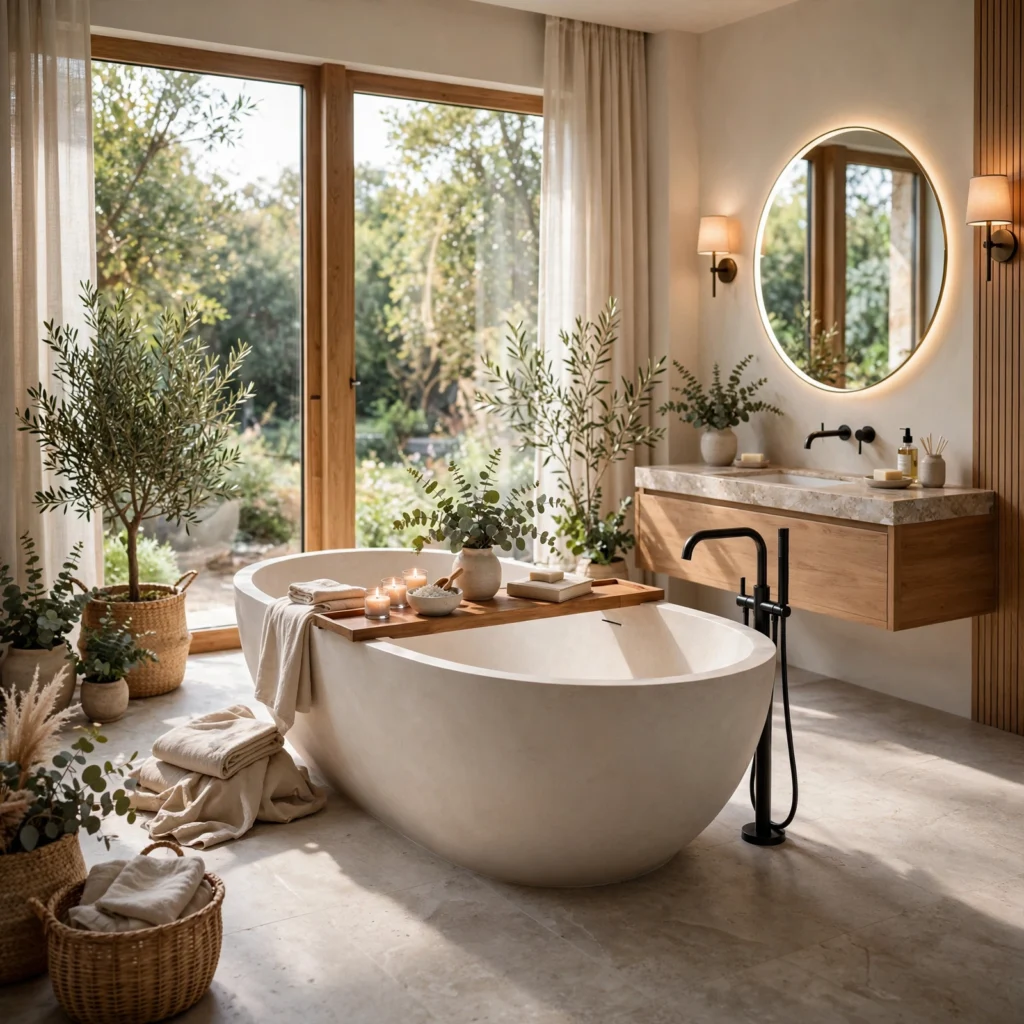
A freestanding soaking tub, set away from the wall rather than built into an alcove, becomes the visual centerpiece of the bathroom and signals a spa-like, intentional design choice. It works because the tub’s shape and material, whether cast iron, acrylic, or stone resin, becomes part of the room’s overall styling rather than just a fixture tucked into a corner. Execute it by positioning the tub where it has clearance on at least three sides, and pairing it with a floor-mounted faucet for a cleaner, less cluttered look around the tub itself.
2. Double Vanity Setup
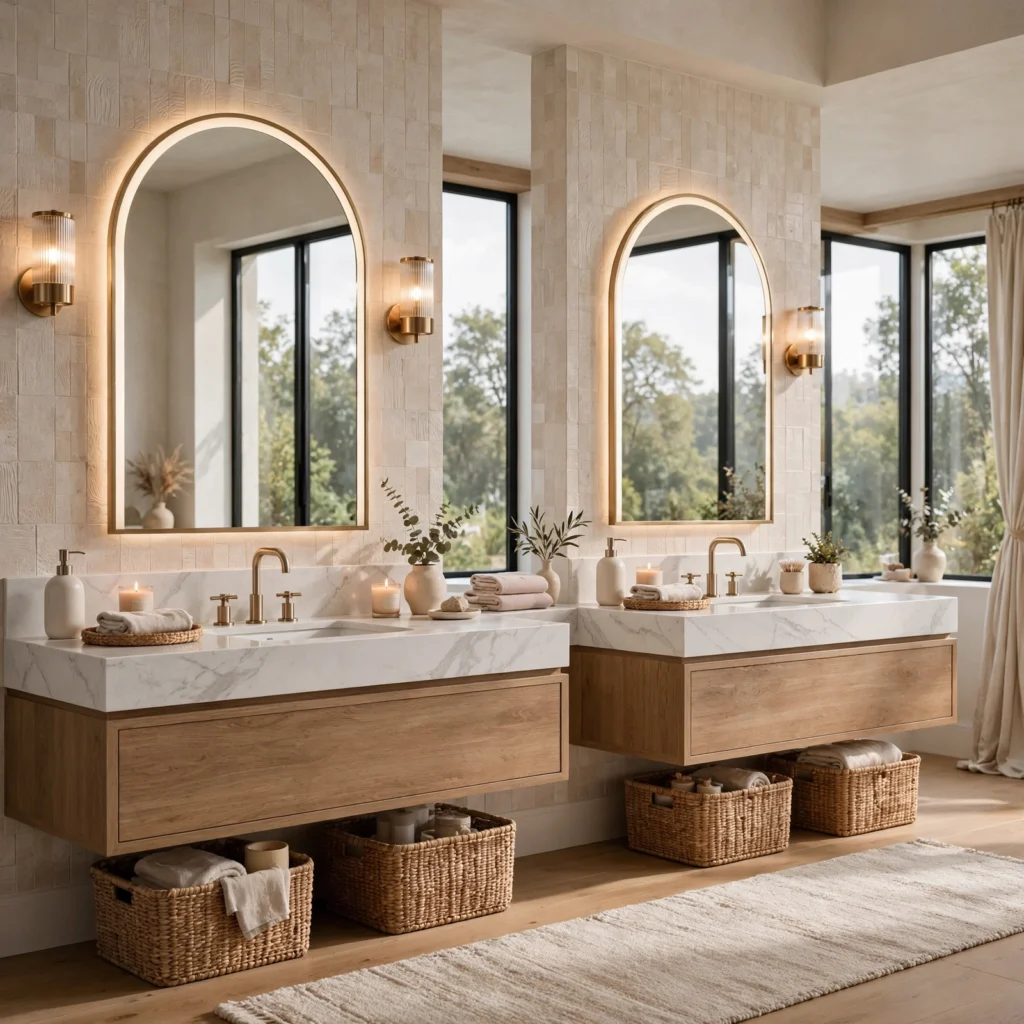
Two separate sink basins set into one long vanity counter give a shared bathroom more usable space during busy mornings while also filling a longer wall with a substantial piece of furniture. It works because it solves a real functional problem for households sharing one bathroom, and the extra counter length gives more room for styling with trays, plants, or candles. Execute it by spacing the sink centers at least 30 to 36 inches apart, and choosing one mirror per sink or a single wide mirror spanning both.
| Vanity Length | Sink Spacing | Recommended Mirror Setup |
| 60 inches | 30 inches apart | Two 24-inch mirrors |
| 72 inches | 34 inches apart | Two 28-inch mirrors |
| 84+ inches | 36 inches apart | One wide mirror or two 30-inch mirrors |
3. Statement Wallpaper
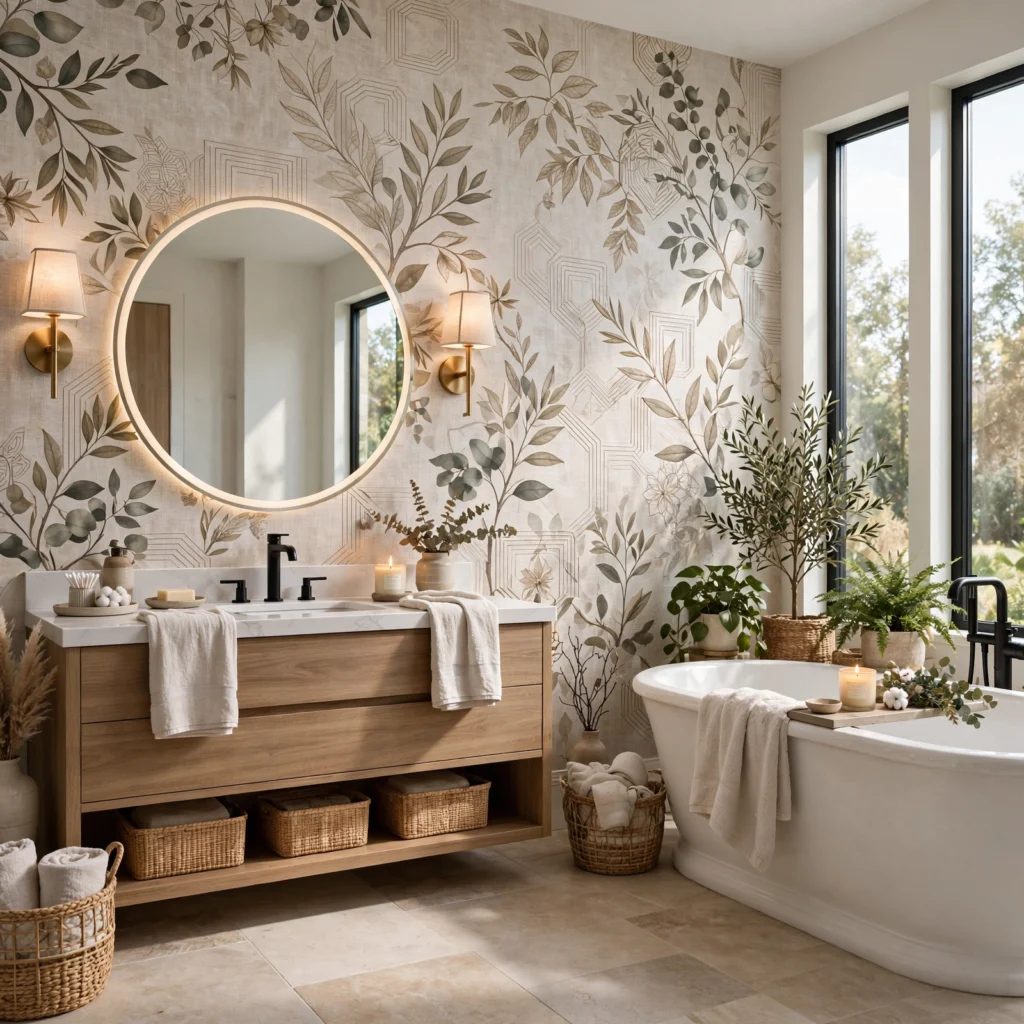
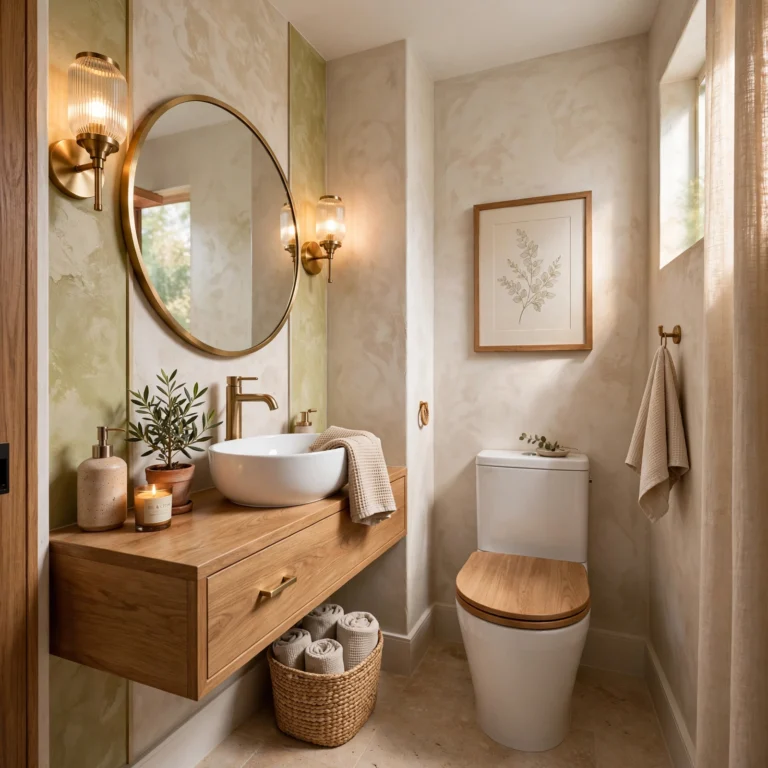
Bold or large-scale wallpaper works especially well in a bathroom, since the room is used in shorter bursts than a bedroom or living room, which makes a dramatic pattern feel special rather than overwhelming. It works because a powder room or guest bathroom is often the one space in a house where a homeowner is willing to take a bigger design risk. Execute it on all four walls in a smaller powder room for a fully enveloping effect, or on just the vanity wall in a larger bathroom to keep the pattern from competing with tile and fixtures.
To see more options for bathroom shelf decor ideas CLICK HERE
4. Brass Fixture Finishes
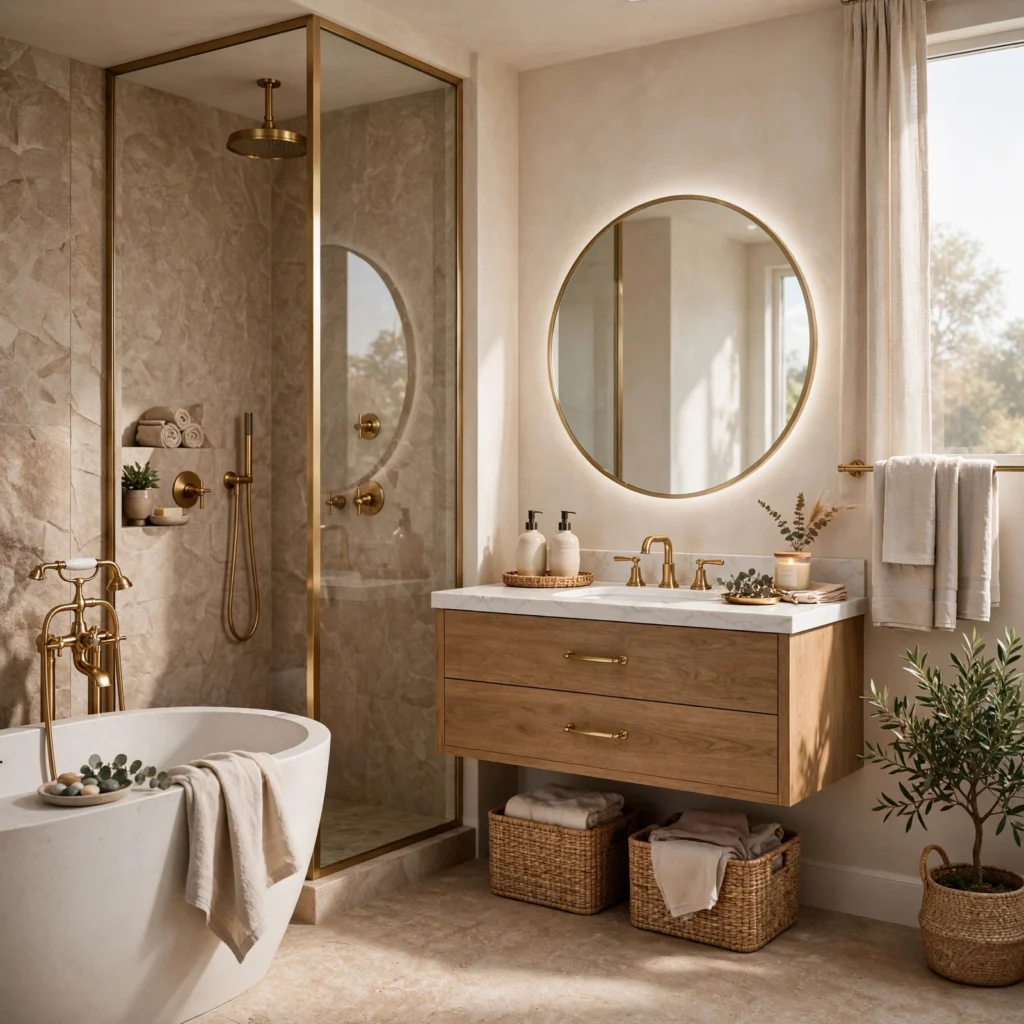
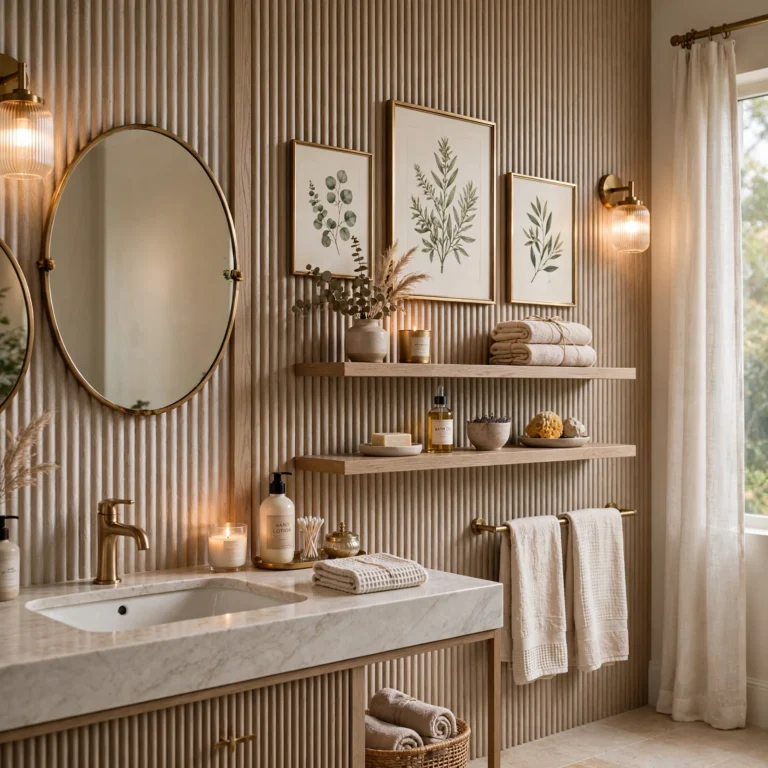
Unlacquered or brushed brass faucets, cabinet hardware, and light fixtures add warmth to a bathroom that’s otherwise dominated by cool materials like tile, glass, and porcelain. They work because brass develops a soft patina over time, giving the room a collected, slightly lived-in look that chrome or stainless steel doesn’t replicate. Execute it by choosing brass for the faucet and hardware first, then repeating the finish in smaller doses, like a mirror frame or light fixture, so it reads as a consistent choice rather than a random accent.
5. Heated Towel Rack
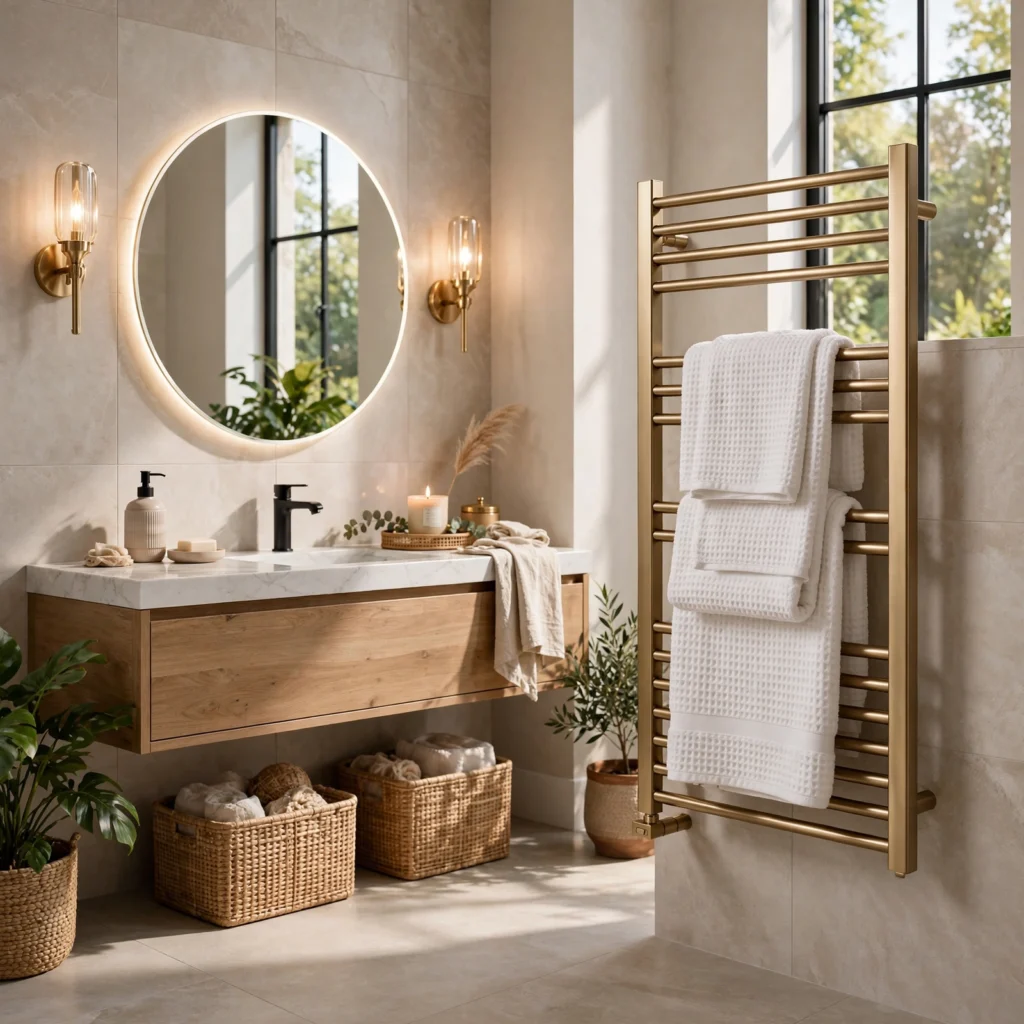
A wall-mounted heated towel rack, either hardwired or plug-in, keeps towels warm and dry between uses while also functioning as a sculptural, ladder-style storage piece on the wall. It works because it solves the practical problem of damp towels in a humid bathroom, and the rack itself often looks more finished than a standard towel bar. Execute it by mounting it within reach of the shower or tub, and choosing a finish that matches the room’s other hardware, whether that’s matte black, brass, or brushed nickel.
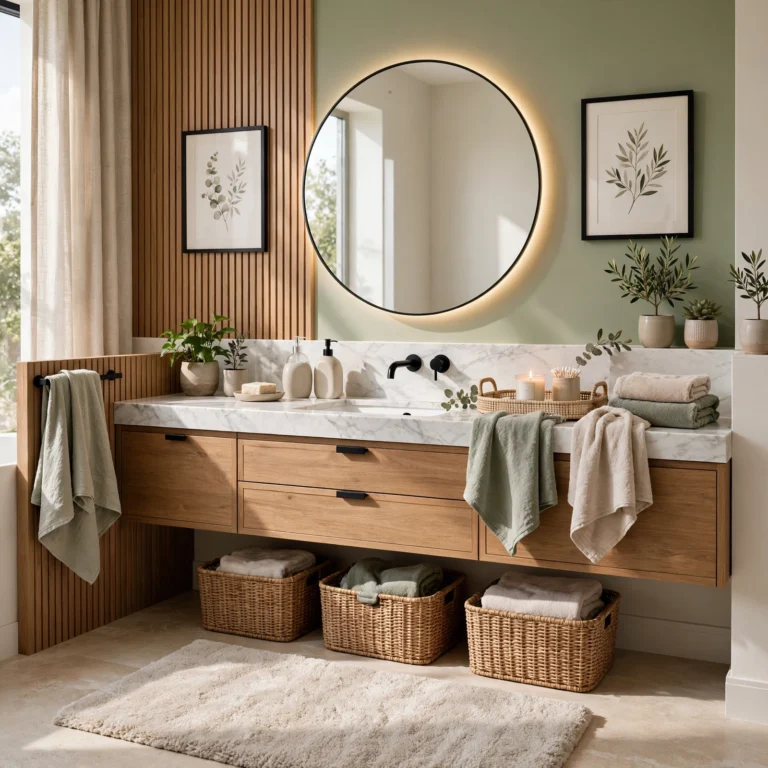
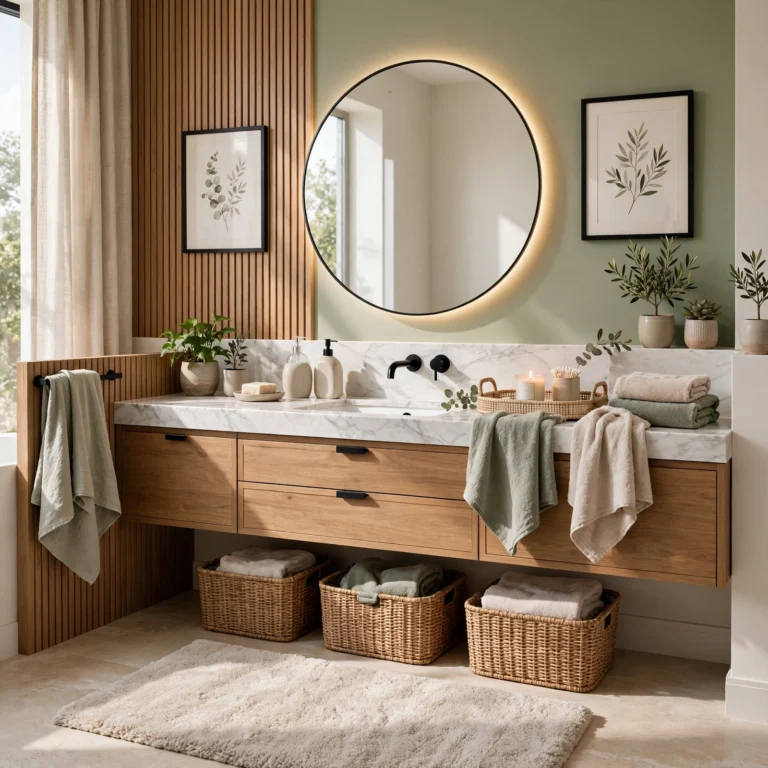
6. Natural Stone Countertop
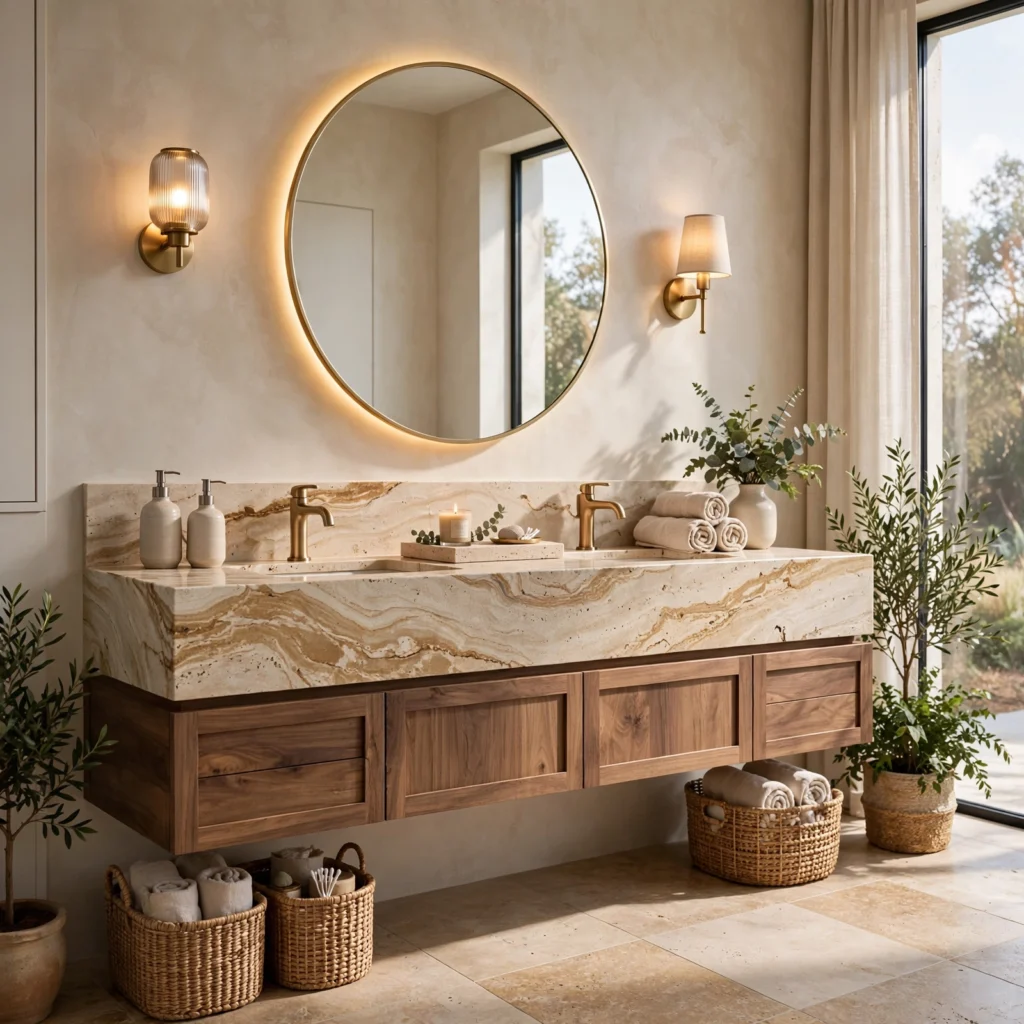
A honed or polished natural stone countertop, like marble, quartzite, or soapstone, adds veining and texture to the vanity that manufactured surfaces can’t fully replicate. It works because the natural variation in the stone makes each countertop unique, and the material pairs well with almost any cabinet color or hardware finish. Execute it by choosing a honed finish rather than high-gloss polished stone if the bathroom sees heavy daily use, since honed surfaces show water spots and etching less noticeably than polished ones.
7. Layered Bath Mat
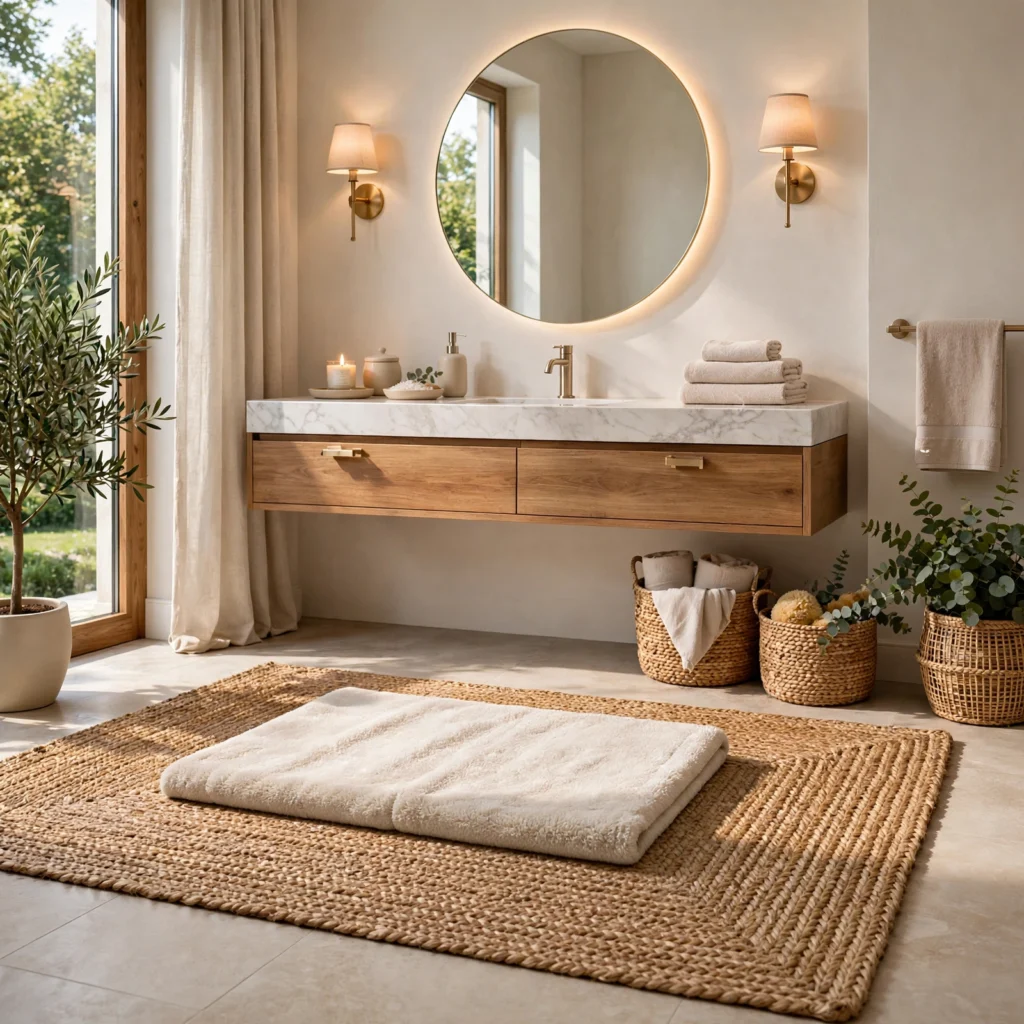
Layering a smaller textured or patterned bath mat over a larger plush or woven base mat adds visual interest underfoot in the same way layered rugs work in a living room or bedroom. It works because it gives the floor styling detail without needing to change the tile, and the mats can be swapped seasonally for an easy refresh. Execute it by choosing a low-pile, quick-drying base mat sized to the space in front of the tub or shower, and layering a smaller accent mat on top near the point of entry.
8. Potted Plant Corner
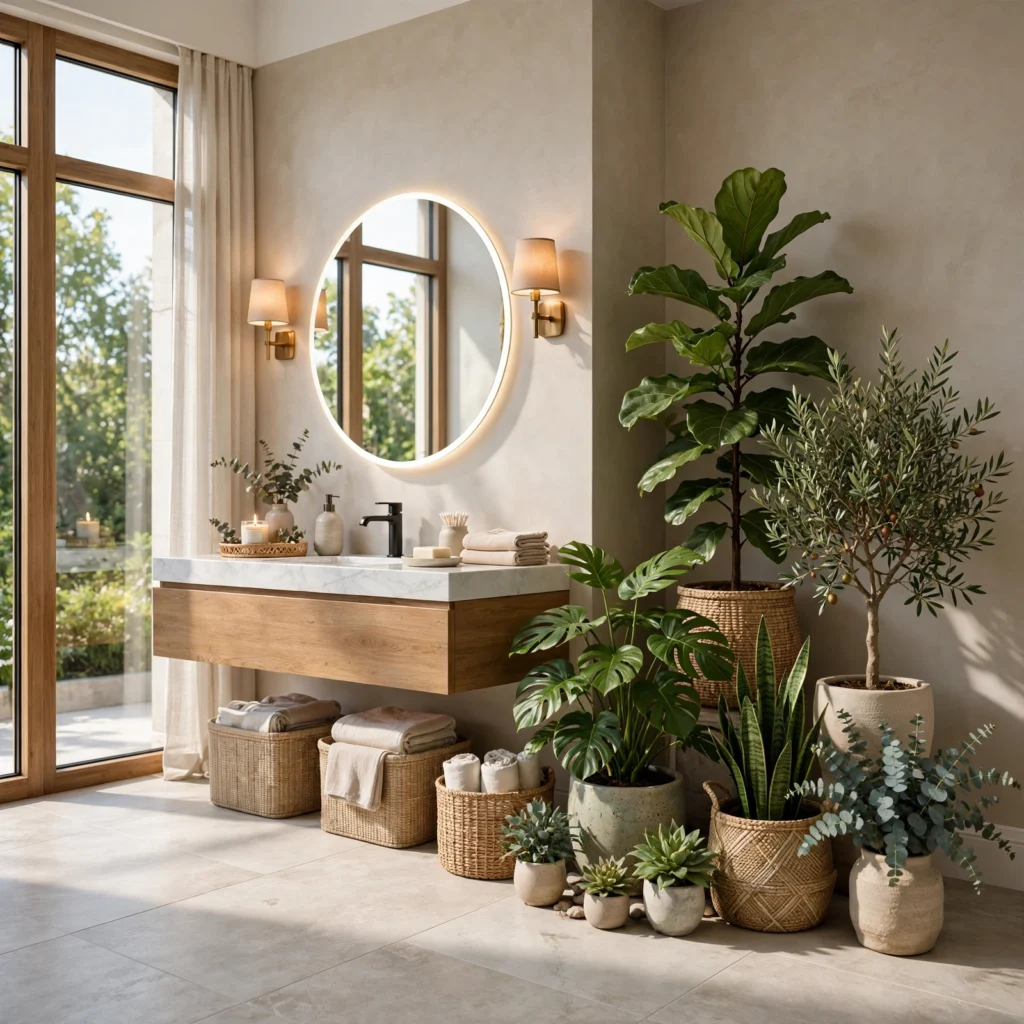
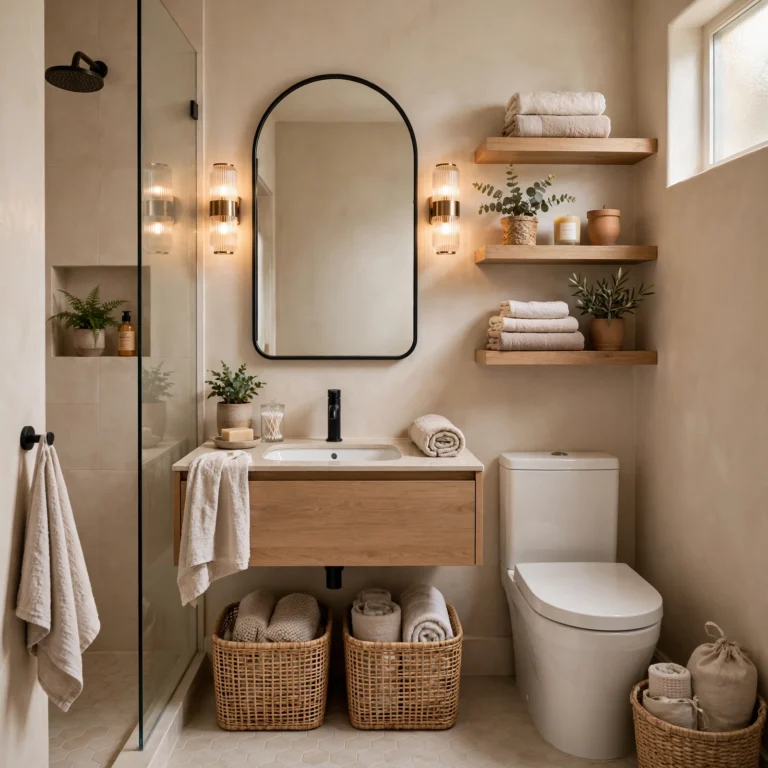
A cluster of humidity-tolerant plants, like pothos, ferns, or snake plants, grouped in a corner or on a windowsill brings a natural, organic element into a room otherwise dominated by hard surfaces like tile and glass. It works because plants soften the room’s overall look and take advantage of the natural humidity a bathroom already provides, which many houseplants thrive in. Execute it by grouping plants in varying heights and pot styles, and placing them where they’ll get indirect natural light rather than direct sun through a small bathroom window.
9. Marble Tray Vignette
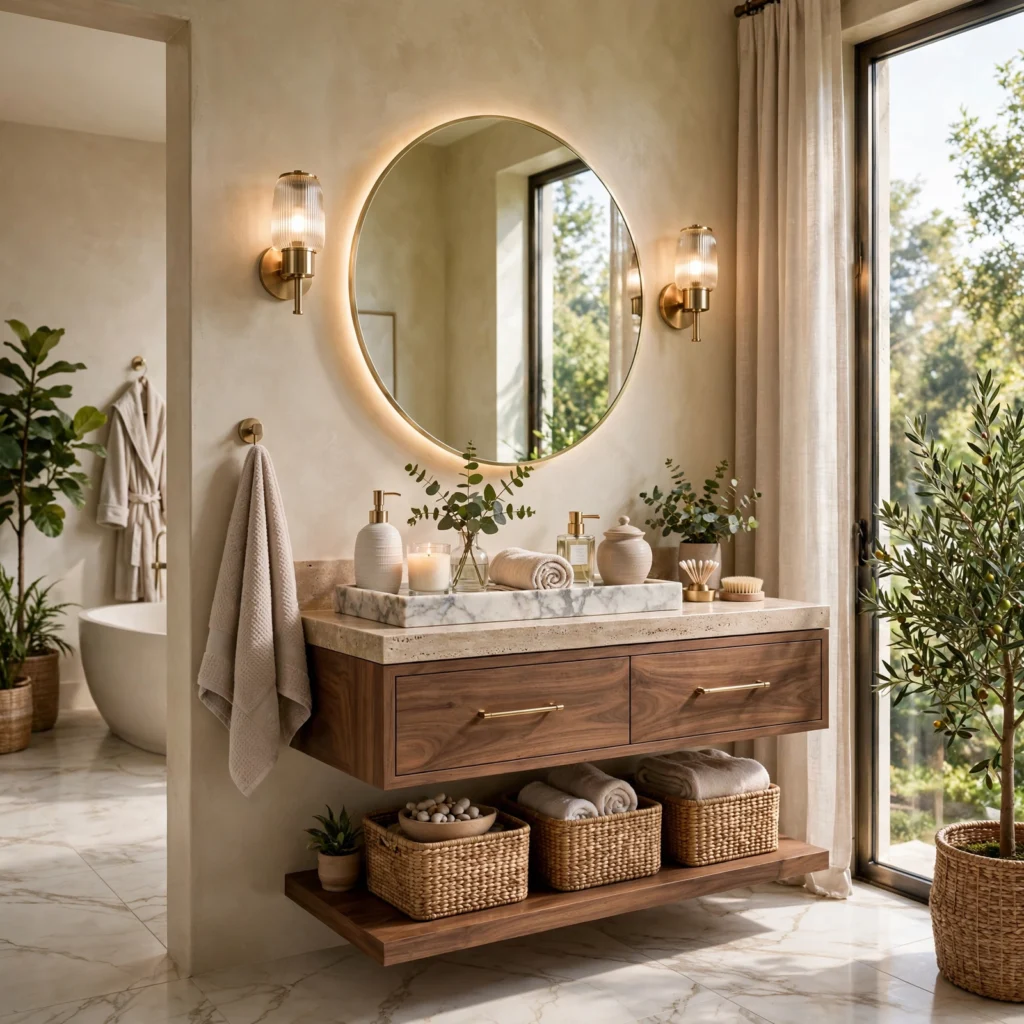
A small marble or stone tray on the vanity counter, styled with a hand soap, a candle, and one or two small objects, turns a functional counter into a styled vignette similar to what’s common in a kitchen or entryway. It works because it corrals everyday items into one visually organized spot instead of leaving them scattered across the counter. Execute it by choosing a tray sized to hold three to four items without crowding, and keeping the styled objects within a consistent color palette so the vignette reads as intentional.
10. Matte Black Hardware
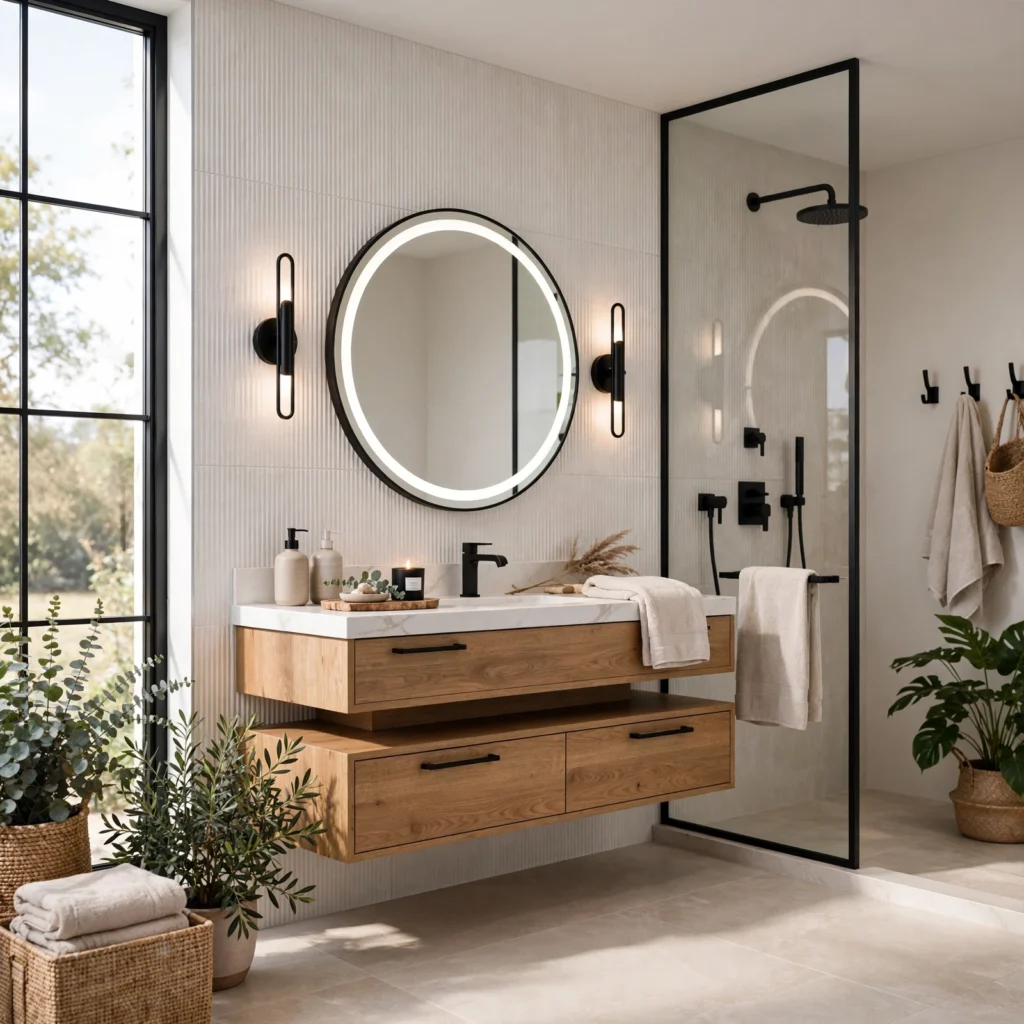
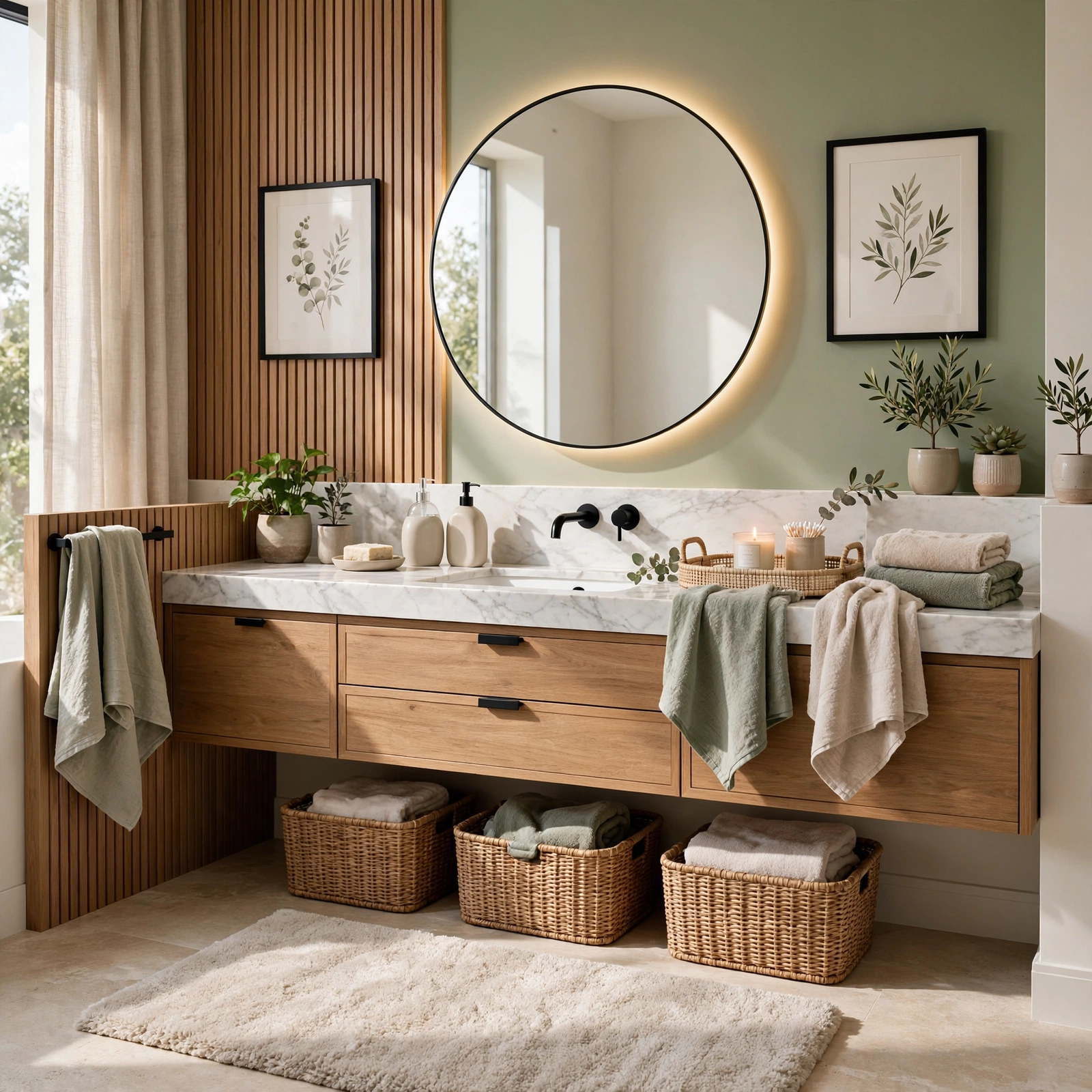
Matte black faucets, drawer pulls, and light fixtures add contrast to a bathroom with light-colored tile, walls, or cabinetry, giving the room a more graphic, modern edge. They work because the dark finish reads clearly against white or cream surfaces, unlike chrome or nickel, which can blend into the background of a light-colored room. Execute it by choosing matte rather than glossy black finishes for a more current look, and keeping the black hardware consistent across the faucet, cabinet pulls, and any exposed plumbing.
11. Textured Accent Tile
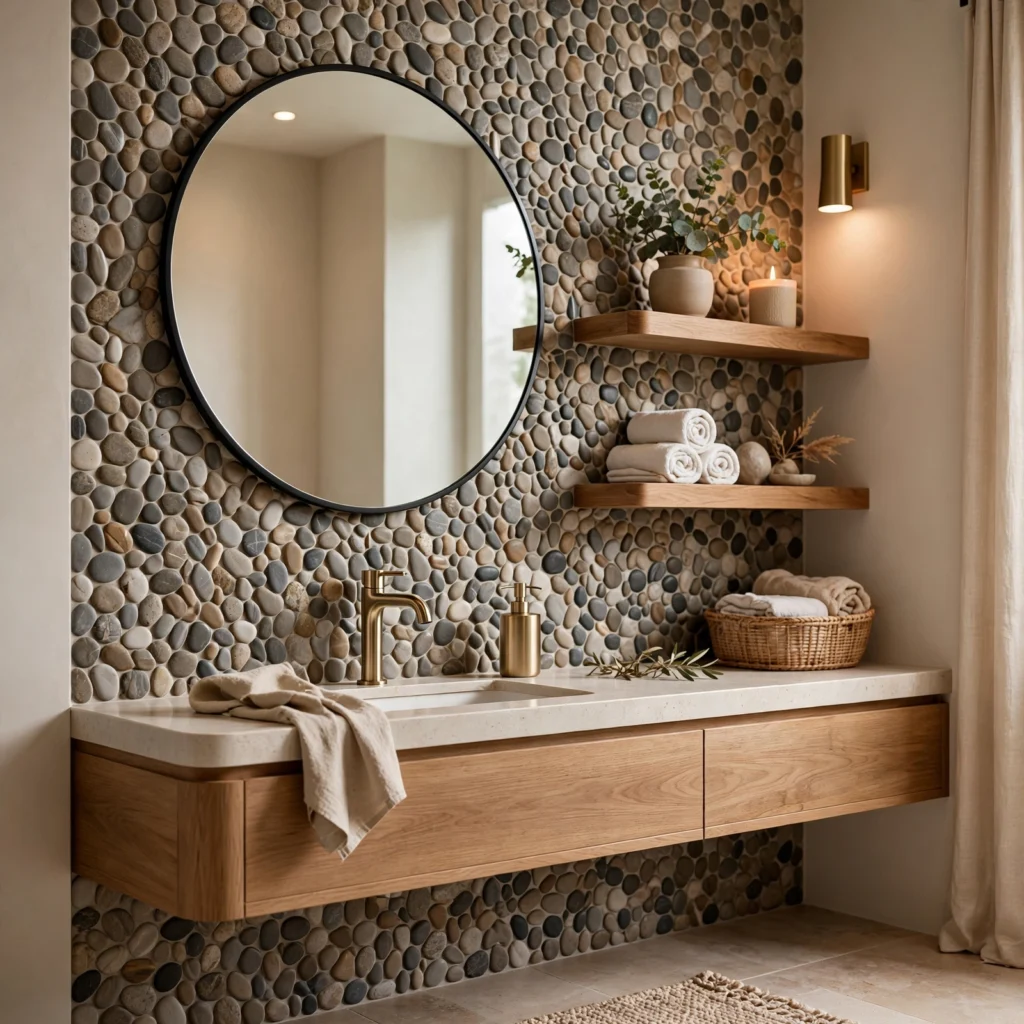
A band of textured, three-dimensional tile, whether fluted, scalloped, or hexagonal, installed as a shower accent or backsplash adds dimension that flat subway tile doesn’t provide. It works because the texture catches light differently depending on the angle, giving the tile a more dynamic look than a flat, glossy surface. Execute it as a shower niche surround, a half-wall accent behind the vanity, or a full shower wall if the budget allows, and pair it with a simple grout color close to the tile itself so the texture stays the focus.
| Application Area | Recommended Coverage | Typical Tile Size |
| Shower niche surround | 1 wall or recessed niche | 2–4 inch mosaic |
| Vanity backsplash | 4–6 inches up the wall | 3–4 inch tile |
| Full accent wall | Floor to ceiling, 1 wall | 4–8 inch tile |
12. Linen Storage Ottoman
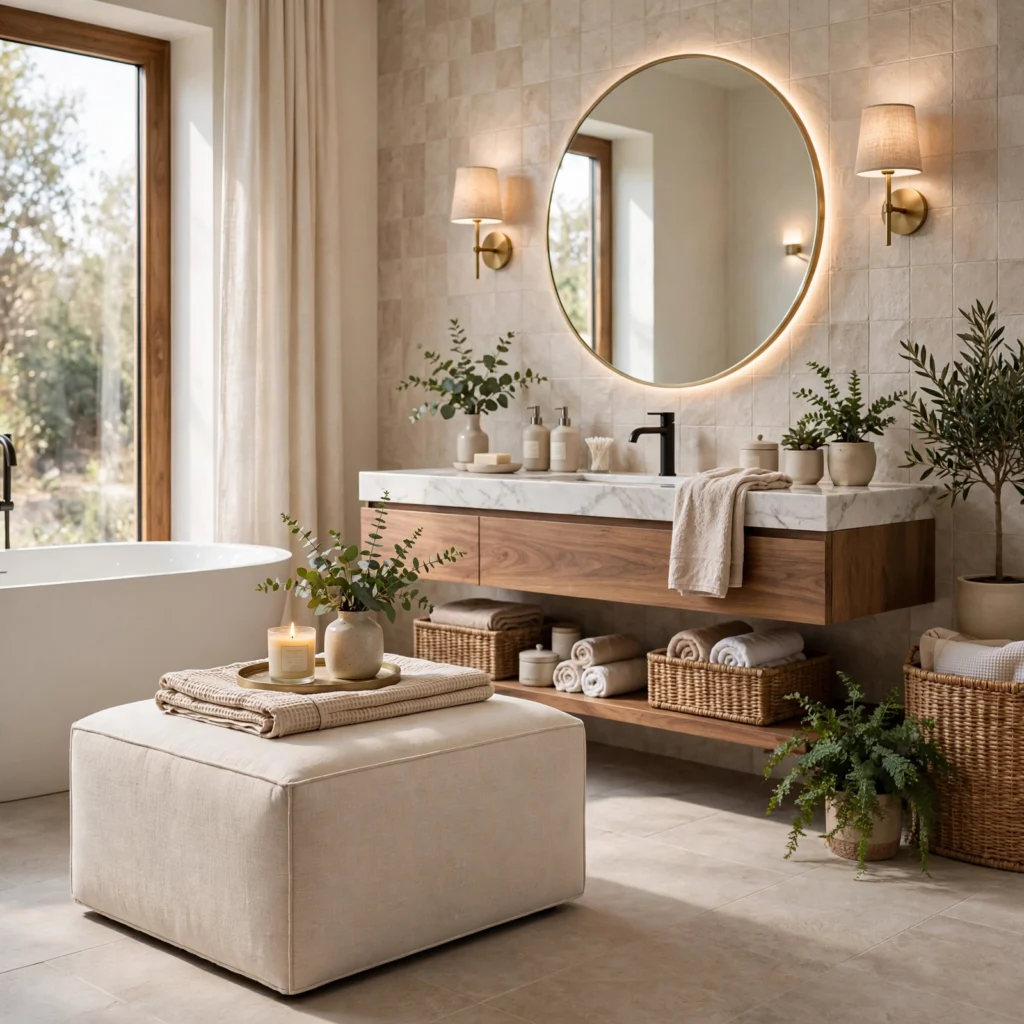
A small upholstered ottoman with a lift-top lid, placed near the tub or in an open corner, provides seating and hidden storage for extra towels or linens in one piece of furniture. It works because it adds a softer, more furniture-like element to a room usually filled with hard surfaces, while still solving a real storage need. Execute it by choosing a performance fabric that tolerates humidity and occasional splashes, and sizing the ottoman so it doesn’t block the door swing or shower entry.
13. Art Deco Mirror
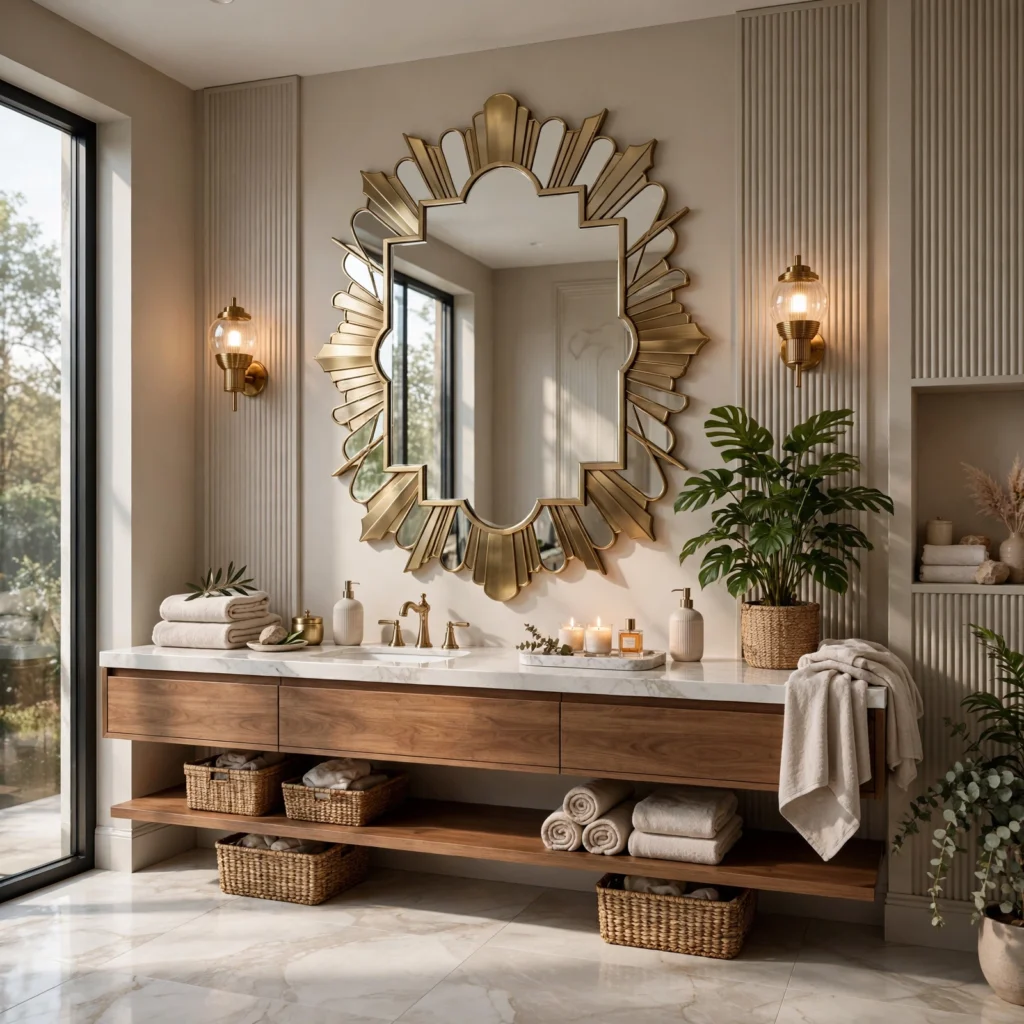
A mirror with a scalloped, sunburst, or geometric brass frame brings a bit of Art Deco styling into the bathroom, standing in for artwork in a room where hanging framed pieces isn’t always practical near water sources. It works because the mirror serves a dual purpose, both functional and decorative, and the shaped frame adds visual interest that a plain rectangular mirror doesn’t. Execute it by sizing the mirror close to the vanity’s width, and choosing a frame finish that repeats elsewhere in the room, like the faucet or cabinet hardware.
14. Scented Candle Vignette
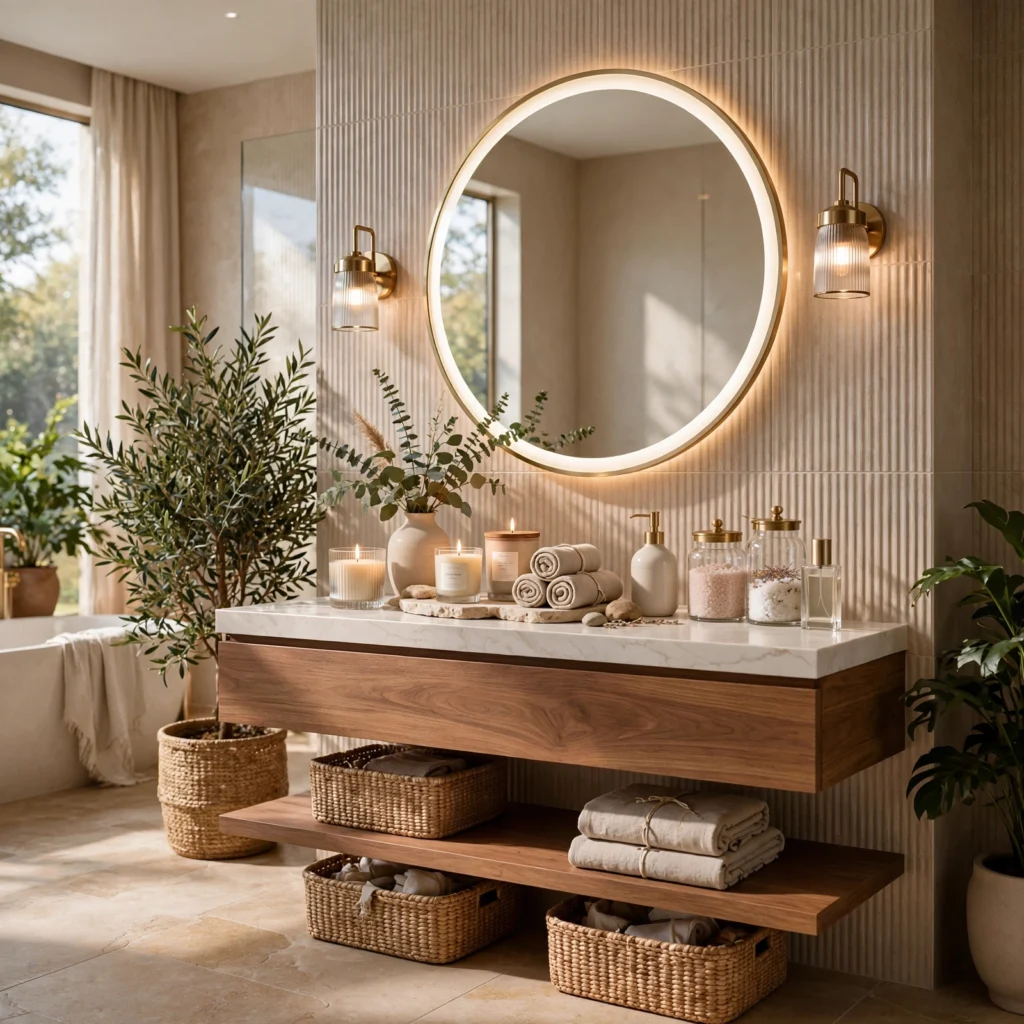
A cluster of two or three candles in varying heights, placed on the vanity counter, tub ledge, or a small shelf, adds ambient lighting and scent that overhead bathroom lighting can’t provide. It works because a bathroom is one of the few rooms where candlelight is used regularly during an actual routine, like a bath, rather than just for occasional ambiance. Execute it by choosing scents suited to a humid environment, like eucalyptus, citrus, or mineral-based fragrances, and grouping the candles on a small tray to contain any wax drips.
15. Curved Shower Curtain Rod
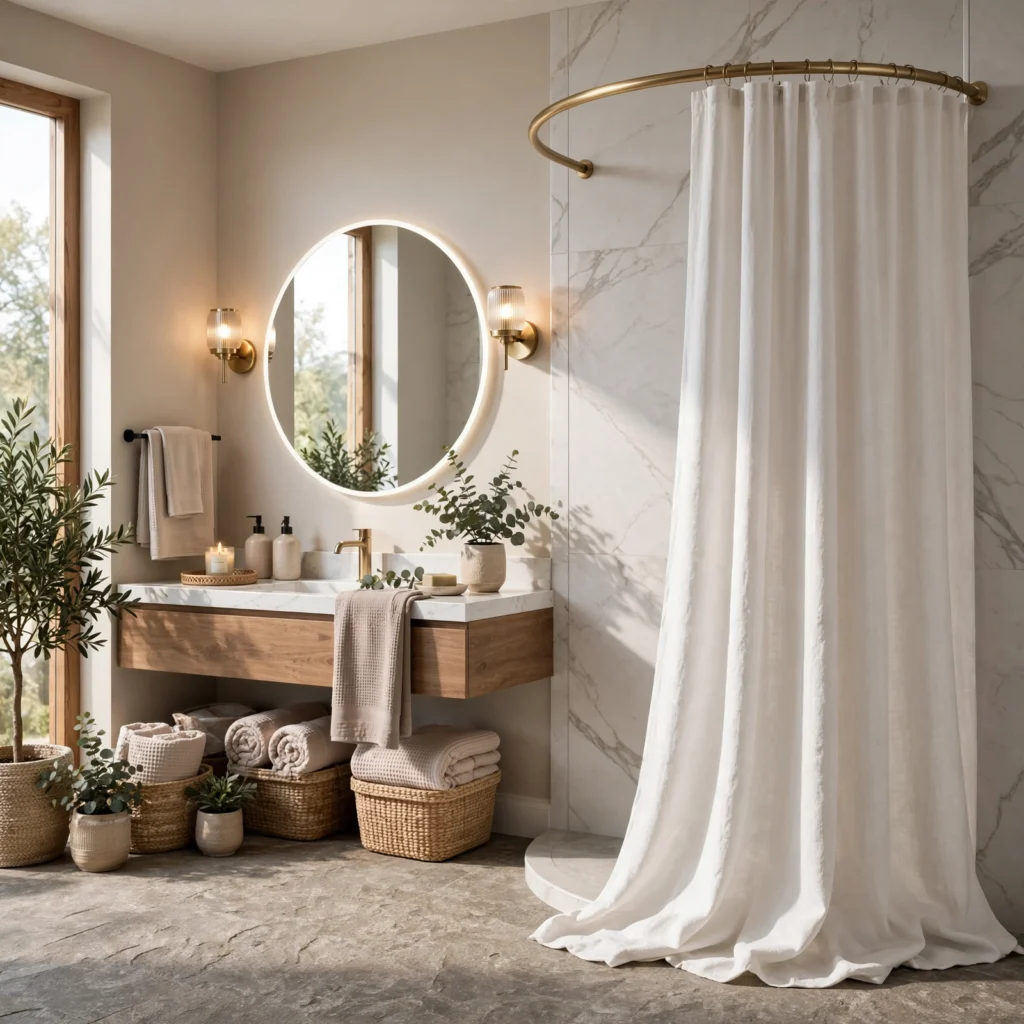
Swapping a straight shower curtain rod for a curved one adds several inches of extra elbow room inside the shower or tub, while also making the curtain hang in a way that reads as more spacious from outside the shower. It works because the curved shape pulls the curtain away from the body during use, and it’s one of the few upgrades on this list that improves both function and appearance for well under a hundred dollars. Execute it by choosing a rod rated for the tub or shower’s width, and mounting it with the curve facing outward, away from the water.
Shop the Look
For a bathroom built around these ideas, start with a brass or matte black faucet, a natural stone or stone-look vanity countertop, and a marble tray for the counter vignette. Add a heated towel rack in a matching finish, a layered set of bath mats in neutral tones, and two or three scented candles for the tub ledge. A curved shower rod and a small cluster of humidity-tolerant plants round out the room without requiring any major construction.
Common Mistake to Avoid
The most common mistake in bathroom ideas decor is mixing too many metal finishes without a clear plan, ending up with chrome faucets, brass hardware, and a nickel light fixture all in the same small room. Unlike a kitchen or living room, a bathroom’s finishes are usually all visible at once from a single vantage point, which makes inconsistent metals stand out more than they would in a larger, more varied space. Picking one primary metal finish and repeating it across the faucet, hardware, and lighting keeps the room looking cohesive rather than accidentally mismatched.
People Also Ask
How do I make my bathroom look more expensive?
Consistent metal finishes across the faucet, hardware, and lighting, along with a natural stone countertop or accent tile, are some of the fastest ways to make a bathroom read as higher-end without a full renovation. Small styling details, like a marble tray vignette or a scented candle grouping, also add a finished, intentional look that’s easy to overlook but noticeable when it’s missing. Swapping a builder-grade mirror for a shaped or framed one is another relatively low-cost change with a big visual impact.
What’s the best way to add color to a bathroom without tile?
Wallpaper, paint, and textiles like bath mats and towels are the easiest ways to add color without touching the tile, especially in a powder room or guest bathroom where a bold wallpaper choice feels appropriate. Swapping out accessories seasonally, like candles, soap dispensers, or a small plant, also lets color rotate through the room without any permanent commitment. Saving tile changes for a full renovation and using softer, swappable elements for color in the meantime keeps the budget and effort manageable.
Should bathroom hardware match throughout the house?
Bathroom hardware doesn’t need to match other rooms in the house exactly, though many homeowners choose to keep one consistent finish, like brass or matte black, across all the bathrooms for a cohesive feel when moving between rooms. What matters most is that the hardware within a single bathroom stays consistent, since inconsistent finishes are more noticeable in a smaller, fully visible room than they would be spread across a larger house. A slightly different finish in a powder room versus a primary bathroom is a common and acceptable variation.
What plants survive well in a bathroom?
Pothos, snake plants, ZZ plants, and various types of ferns tend to do well in bathrooms because they tolerate the higher humidity and lower light levels common in rooms with smaller windows. Orchids also thrive in bathroom humidity and add a more decorative bloom compared to purely foliage-based plants. Choosing plants based on the specific bathroom’s light levels, rather than assuming all bathroom plants need low light, helps avoid a plant that struggles despite the favorable humidity.
How often should bathroom decor be updated?
Textiles like towels, bath mats, and shower curtains are typically the easiest and least expensive elements to update every one to two years as they show wear or the homeowner wants a color refresh. Larger fixtures like vanities, tubs, and tile are generally expected to last a decade or more, so those choices benefit from leaning toward timeless materials and finishes rather than trends that may feel dated within a few years. Smaller styling details, like candles, trays, and plants, can be rotated seasonally without much cost or effort.
Conclusion
Bathroom ideas decor comes together most successfully when a strong fixture choice, like a soaking tub or double vanity, is paired with consistent finishes and a few smaller styling details that add personality without requiring construction. Whether the plan is a full renovation with a natural stone countertop or just a new candle vignette and a curved shower rod, these fifteen ideas offer a flexible starting point for any bathroom. Save this guide to Pinterest for later, and check out our related posts on small bathroom decor ideas and choosing bathroom tile finishes for more room-specific guidance.