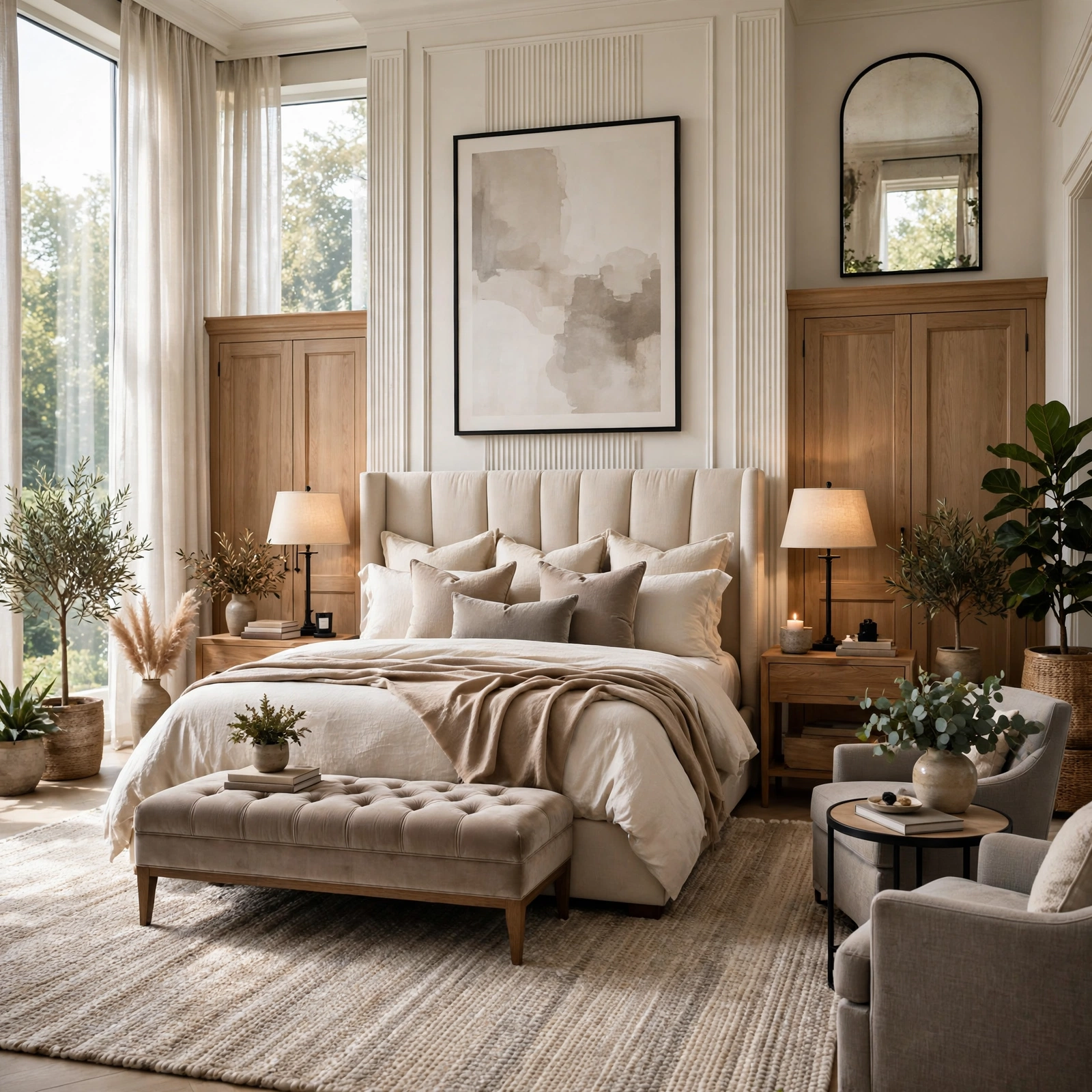
16 Trending Bedroom Inspirations Master for a Calming, Elevated Retreat
Redecorating a Bedroom Inspirations Master can feel overwhelming when every design account online shows a different aesthetic. This roundup of master bedroom inspirations narrows things down to sixteen approaches that actually hold up in real homes, not just styled photo shoots. You’ll find ideas for built in storage, bed frame styles, lighting layers, and material pairings, along with sizing and budget guidance so you can plan with confidence.
Trend & Background
Primary bedrooms have shifted away from purely decorative styling toward spaces designed around sleep quality and daily function. Homeowners are prioritizing blackout layering, quieter color palettes, and furniture that reduces visual clutter rather than adding more of it. This shift tracks with broader interest in slower mornings and screen free wind down routines, which has pushed designers toward warm wood tones, tactile bedding, and lighting that can be dimmed rather than switched harshly on and off. Understanding this context matters because it explains why so many current bedroom looks favor restraint over the maximalist styling that dominated a few years ago.
Key Takeaways
- Master bedroom inspirations range from built in millwork to soft textile layering, each suited to different room sizes and budgets.
- Comparison tables throughout help match furniture dimensions, spacing, and material choices to your actual floor plan.
- Layered lighting, natural materials, and intentional color palettes do more for a restful master suite than any single statement piece.
- Most ideas here work in bedrooms from 120 to 400+ square feet, with notes on scaling up or down.
Bedroom Inspirations Master That Are Worth Trying
Whether you’re working with a compact 12×14 room or a sprawling suite with a sitting area, there’s a direction here that fits your space and your routine.
1. Platform Bed Frame Bedroom Inspirations Master
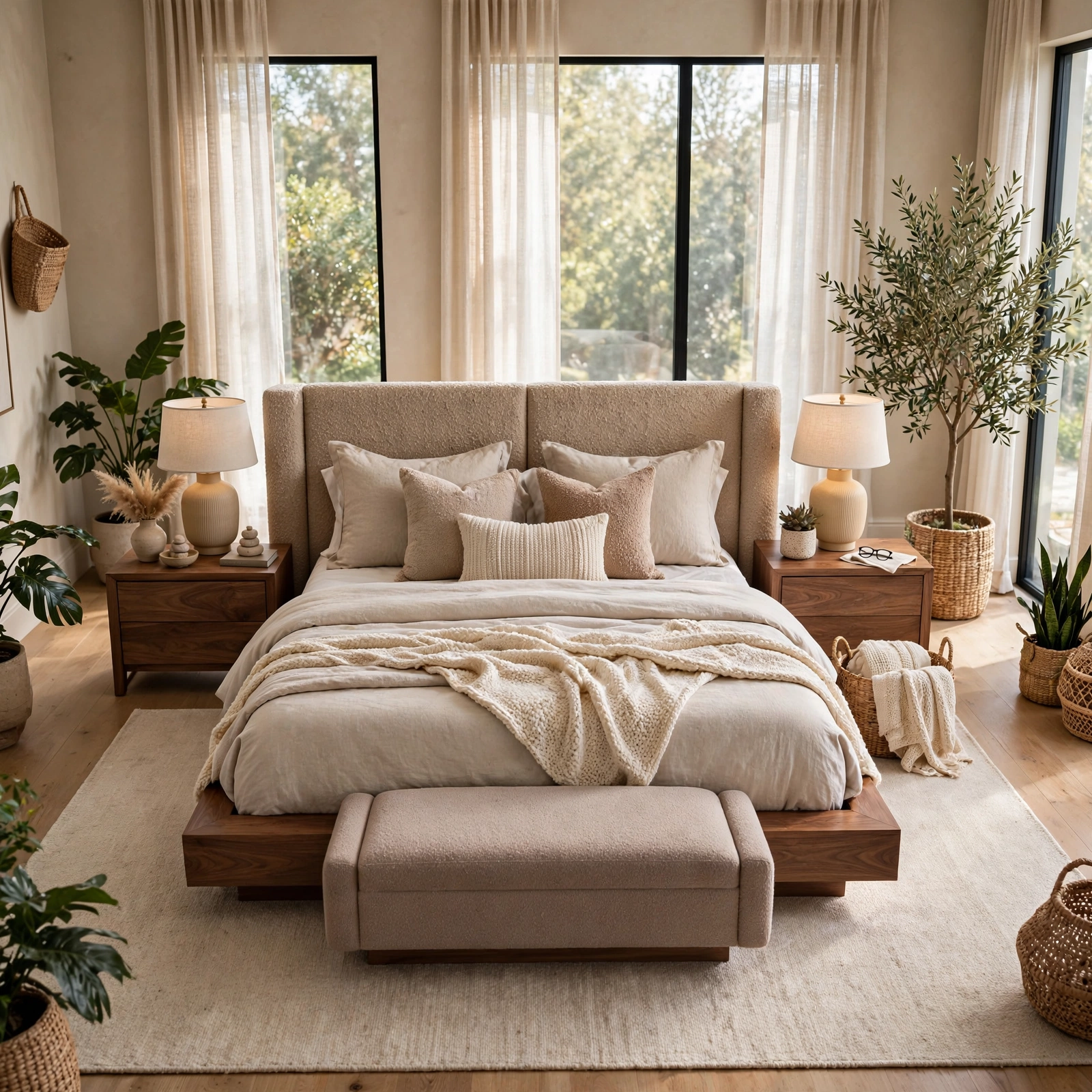
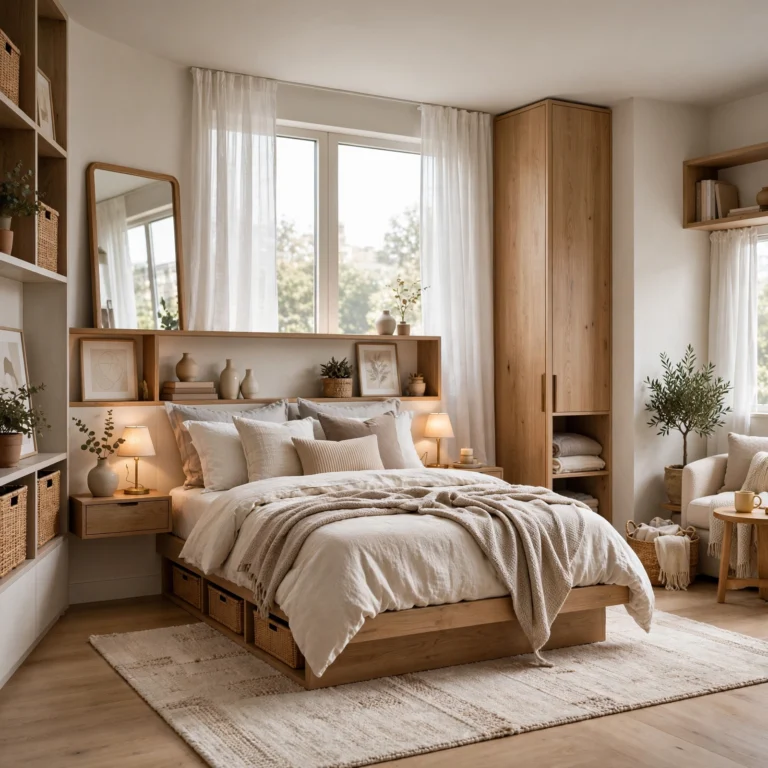
A platform bed frame sits low to the ground and typically skips the box spring, which immediately makes a room feel more open and modern. Solid oak or walnut platform frames pair well with linen or performance weave bedding, and the low profile works especially well in bedrooms with lower ceilings where a tall upholstered frame would feel cramped. Many platform frames also include hidden drawer storage underneath, which is worth considering if your closet space is limited and you need somewhere for out of season bedding.
2. Built In Nightstands Bedroom Inspirations Master
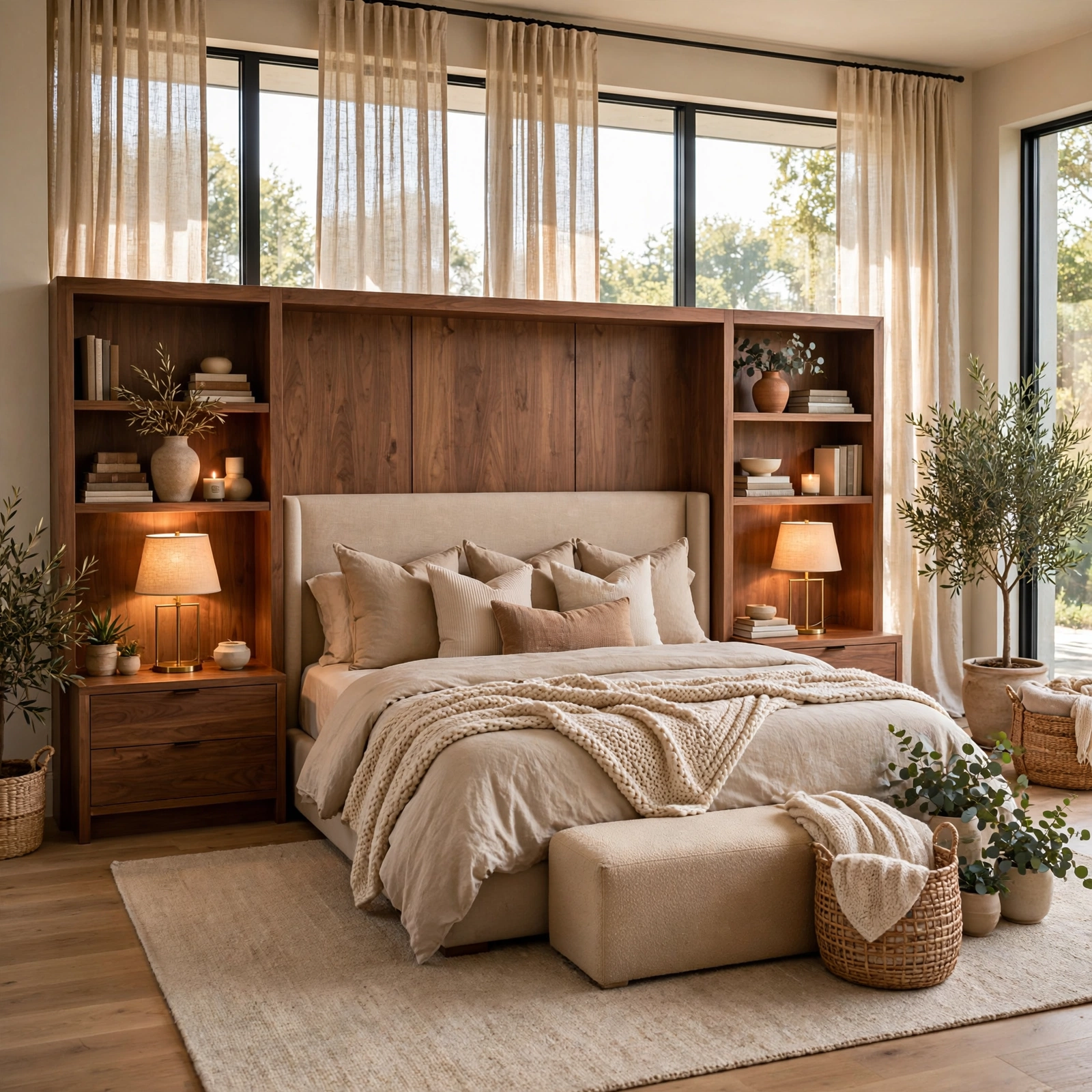
Built in nightstands are constructed directly into the wall or headboard unit, usually with floating shelves or integrated drawers on either side of the bed. This approach works particularly well in narrower primary bedrooms where standalone nightstands would eat into walking space. Because the units are custom fit, you can size the shelf depth and drawer count to match exactly what you store chargers, reading glasses, a stack of books without the bulk of freestanding furniture pieces competing for floor area.
3. Canopy Bed Frame Bedroom Inspirations Master
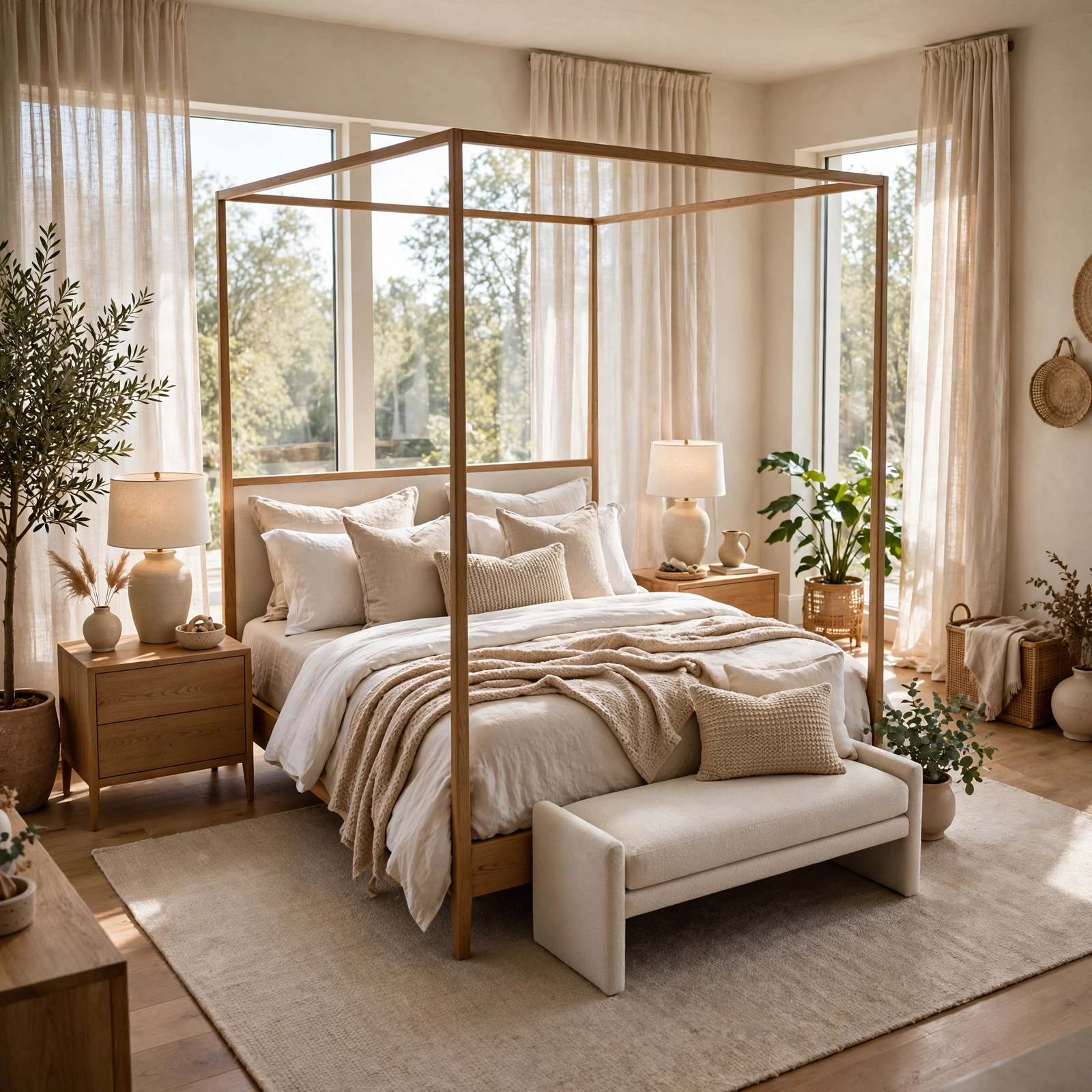
A canopy bed frame introduces architectural height to a primary bedroom, using four vertical posts that can either stay bare for a minimalist look or hold a lightweight linen drape for softness. Metal framed canopy beds in matte black or brass read more contemporary, while turned wood posts lean traditional. This works best in rooms with ceilings above 9 feet, since anything lower can make the frame feel oversized. Draping is optional and easy to swap seasonally for a refreshed look.
4. Statement Headboard Wall Bedroom Inspirations Master
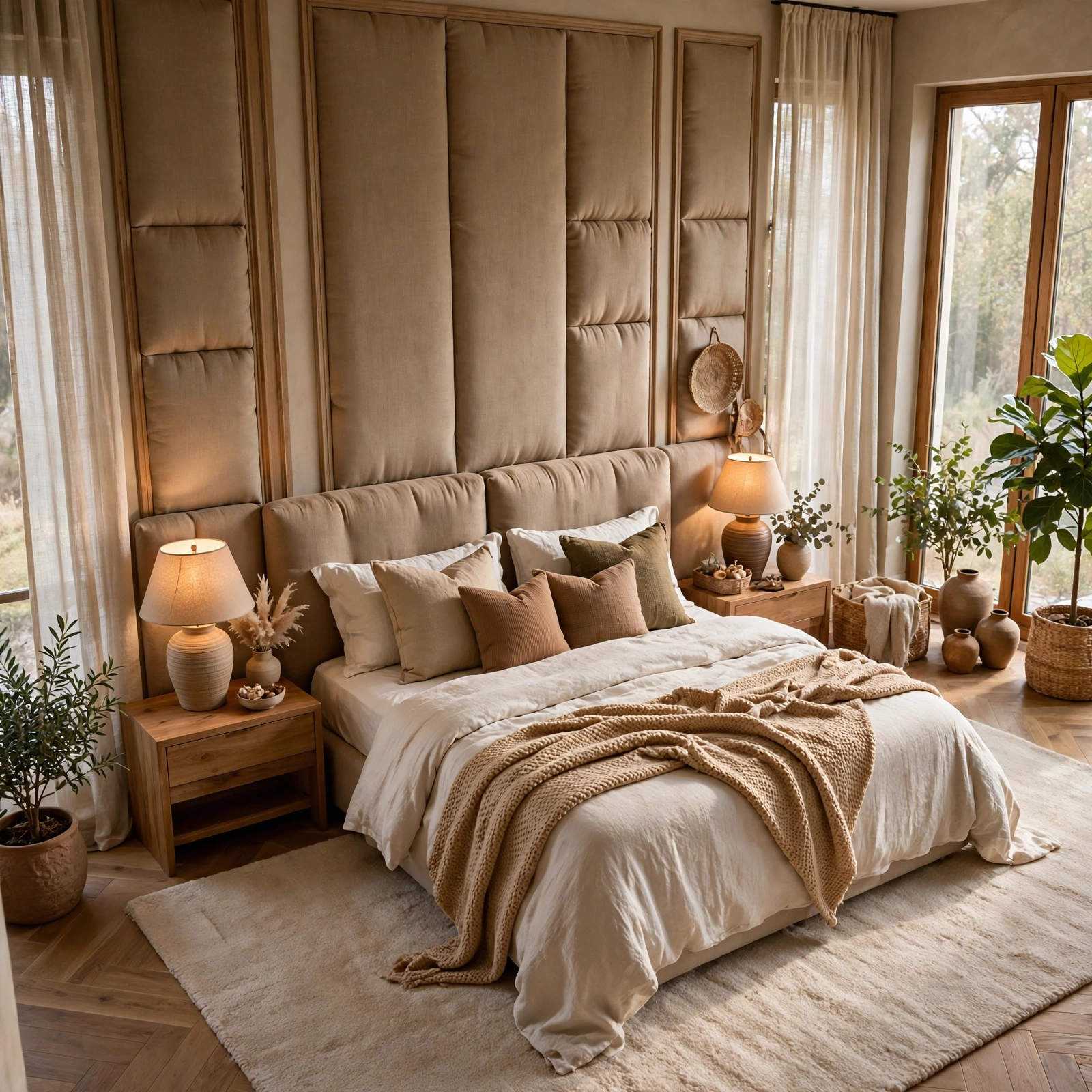
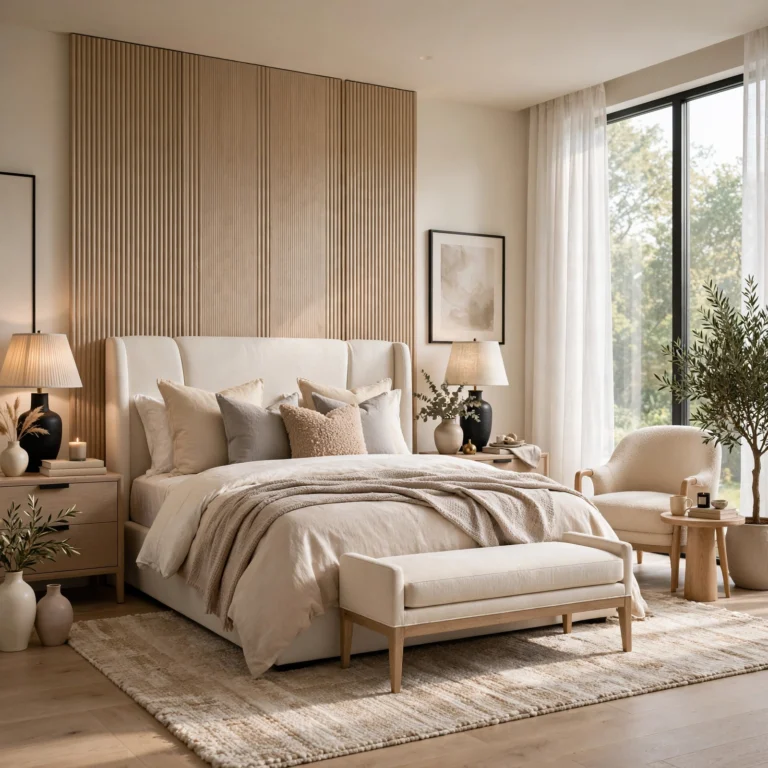
A statement headboard wall uses an oversized upholstered panel, reeded wood millwork, or a bold paint color applied directly behind the bed to anchor the whole room. Channel tufted velvet panels add texture and sound dampening, while vertical wood slats bring warmth without overwhelming a smaller footprint. This idea is especially effective when the rest of the room stays neutral, letting the headboard wall function as the single focal point rather than competing with multiple accent features.
Check Out More About Bedroom Inspirations For Small Rooms.
5. Layered Area Rug Bedroom Inspirations Master
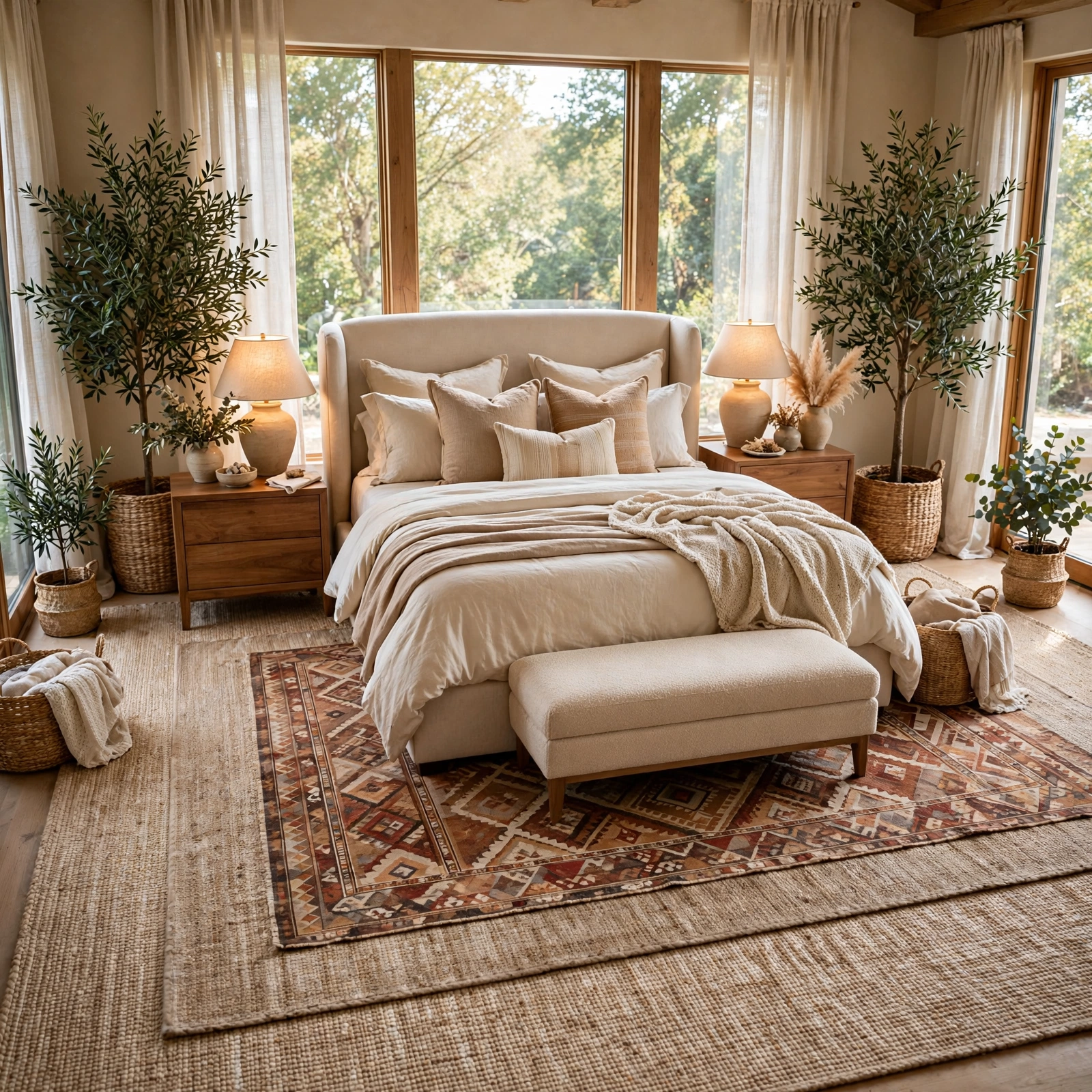
Layering a smaller patterned or textured rug over a larger neutral jute or wool base rug adds depth underfoot and helps define the sleeping zone within an open plan primary suite. The base rug should extend at least 18 inches beyond the sides of the bed frame, while the top layer can be sized to sit just under the nightstands. This combination also softens footsteps on hardwood or tile flooring, which matters most in bedrooms located above or near living spaces.
| Rug Size | Best For |
| 5×8 ft | Twin or full bed, small room |
| 8×10 ft | Queen bed, standard master |
| 9×12 ft | King bed, larger suite |
| 10×14 ft | King bed plus seating area |
6. Reading Nook Corner Bedroom Inspirations Master
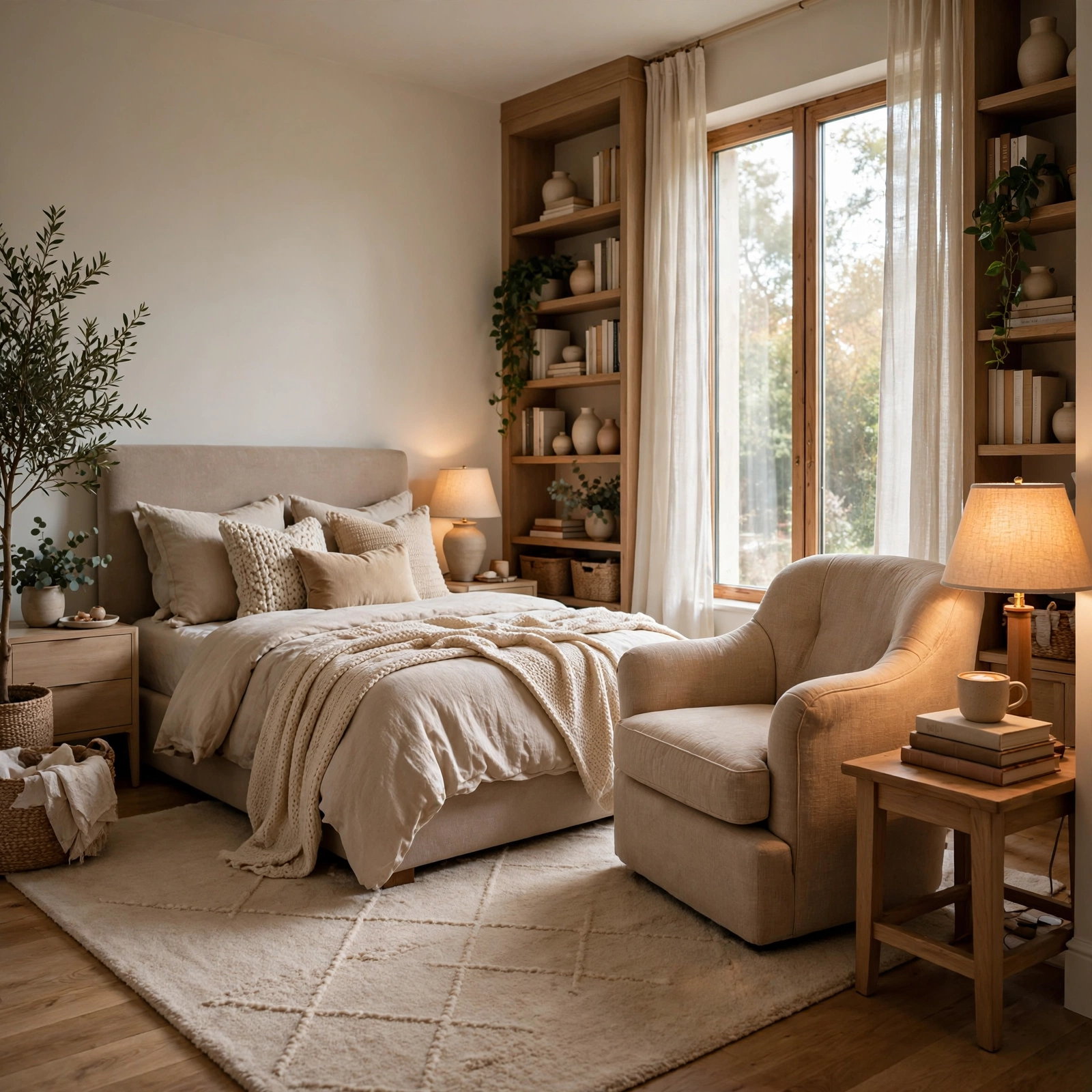
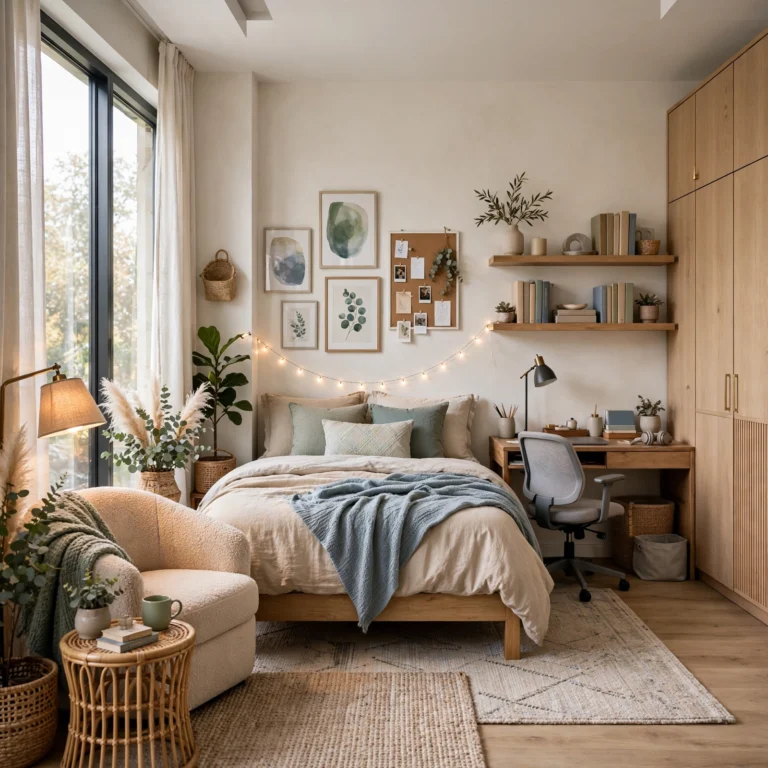
Carving out a reading nook corner turns an underused angle of the room into a dedicated wind down space, typically with a slipper chair, a small side table, and a floor lamp positioned for even light without glare. This works best tucked near a window if natural light is available, though a warm toned reading lamp handles evening use just as well. Keeping the nook visually separate from the bed area even with just a rug boundary helps the space feel like an intentional retreat rather than an afterthought.
7. Wood Slat Accent Wall Bedroom Inspirations Master
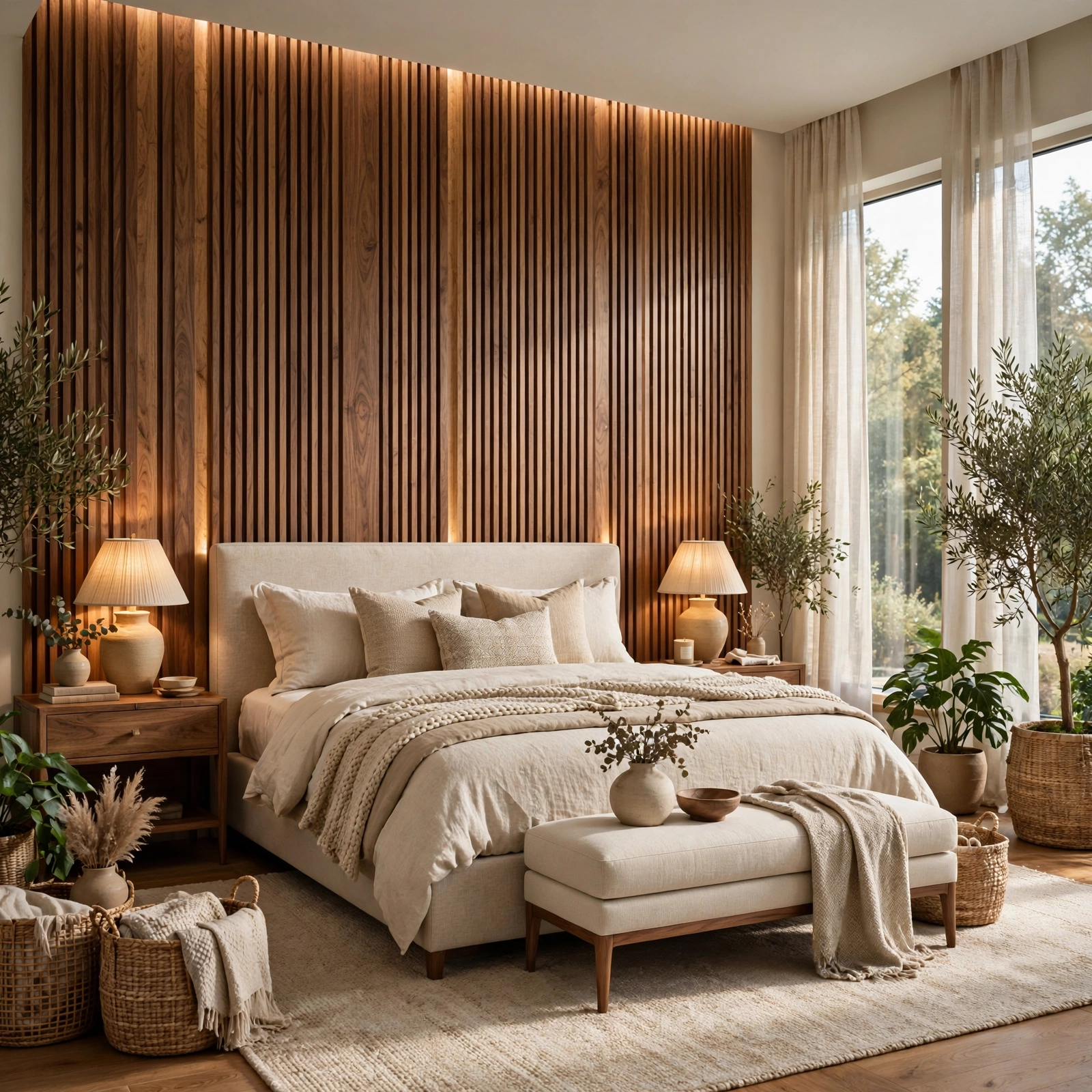
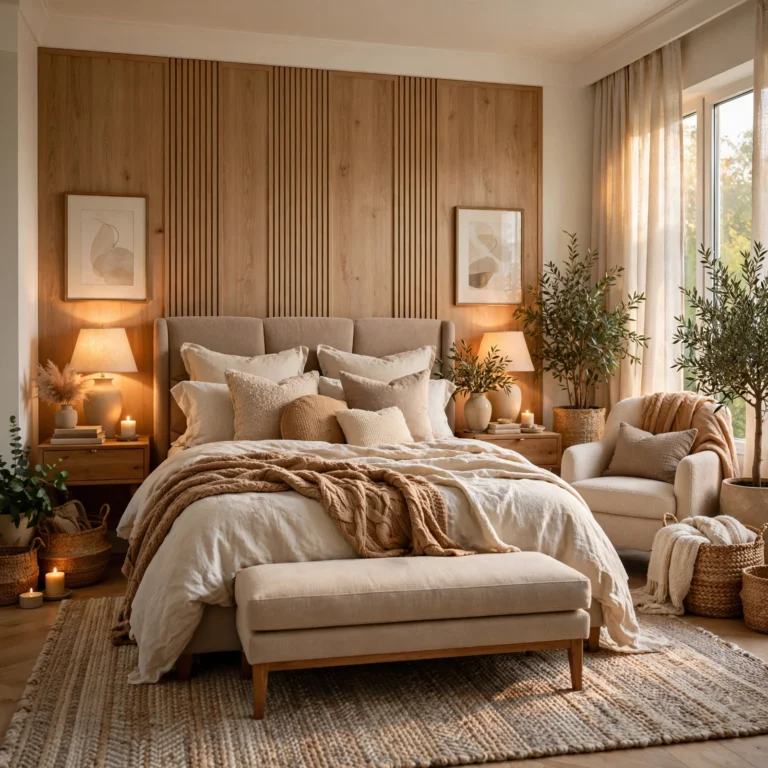
A wood slat accent wall uses vertical or horizontal wood battens, often in oak, walnut, or a stained pine, installed across one wall to add texture without heavy pattern. This treatment pairs naturally with platform beds and works in bedrooms of nearly any size since the slats can be scaled thinner for smaller rooms or wider for larger walls. Many homeowners install slats only behind the headboard, which keeps cost down while still delivering a noticeably custom, high end look.
8. Blackout Drapery Layering Bedroom Inspirations Master
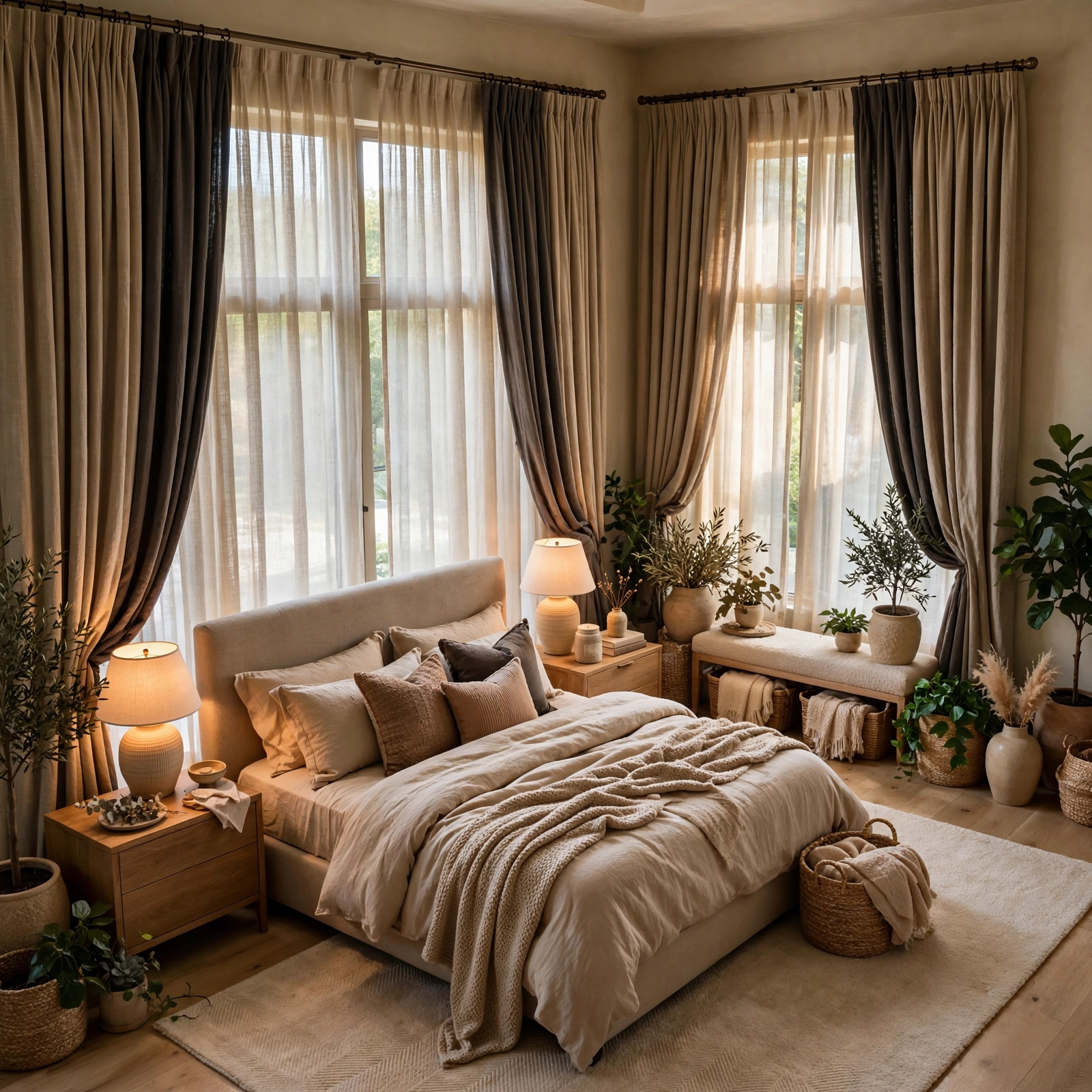
Blackout drapery layering combines a sheer inner panel with a heavier blackout curtain on the same rod, giving you control over both light and privacy throughout the day. Linen blend sheers filter daylight softly, while the blackout layer can be drawn fully at night for uninterrupted sleep. Mounting the rod 4-6 inches above the window frame and extending it several inches wider than the window opening makes the drapery feel more substantial and helps the room read taller overall.
9. Ceiling Mounted Reading Sconces Bedroom Inspirations Master
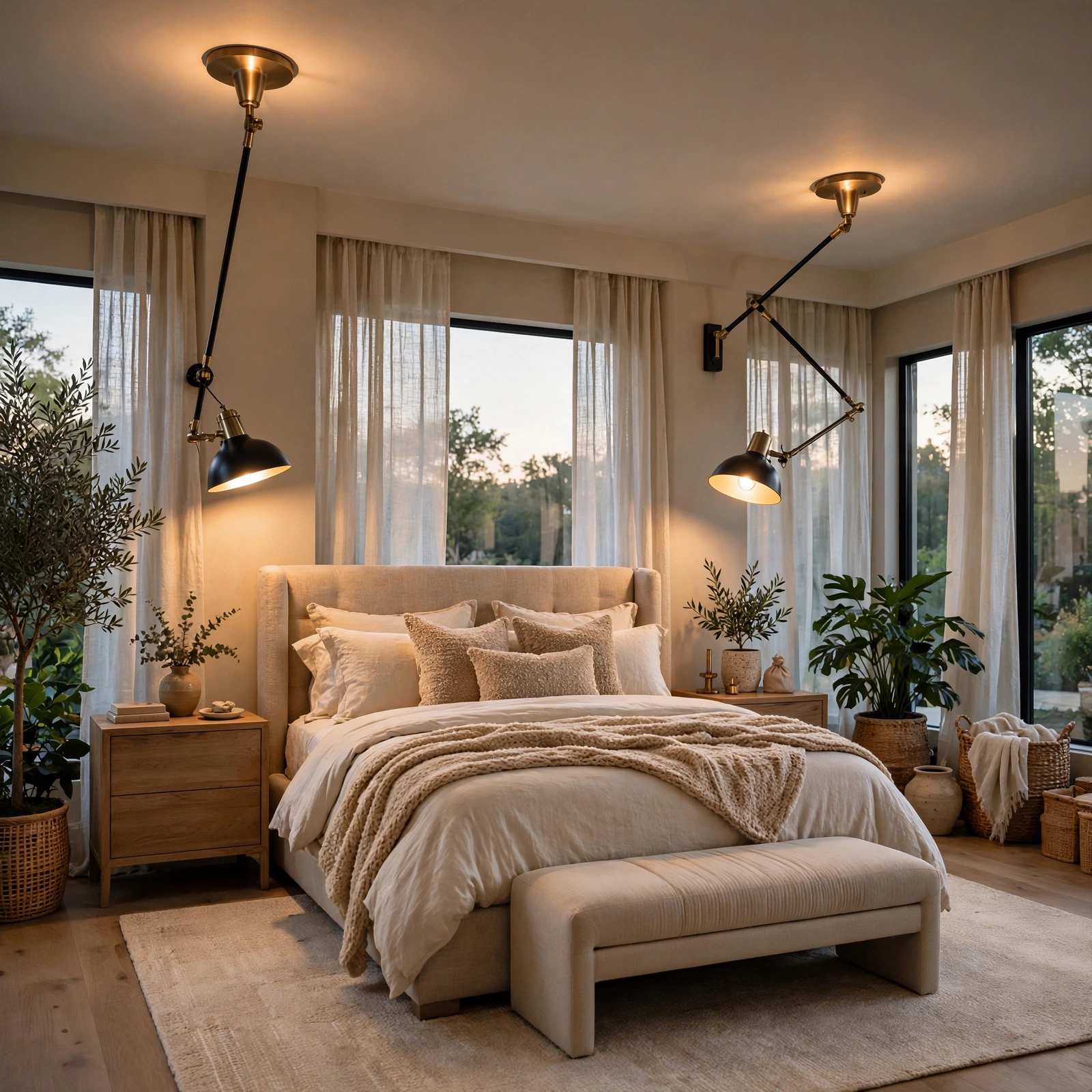
Ceiling mounted reading sconces, sometimes called swing arm or gooseneck fixtures, attach above each side of the bed rather than sitting on nightstand surfaces, which frees up tabletop space and eliminates cord clutter. These fixtures work particularly well when nightstand surfaces are already busy with books, water glasses, or built in charging stations. Choosing a fixture with an adjustable arm lets each side of the bed customize the light angle independently, which matters when partners have different reading habits or sleep schedules.
10. Neutral Color Palette Bedroom Inspirations Master
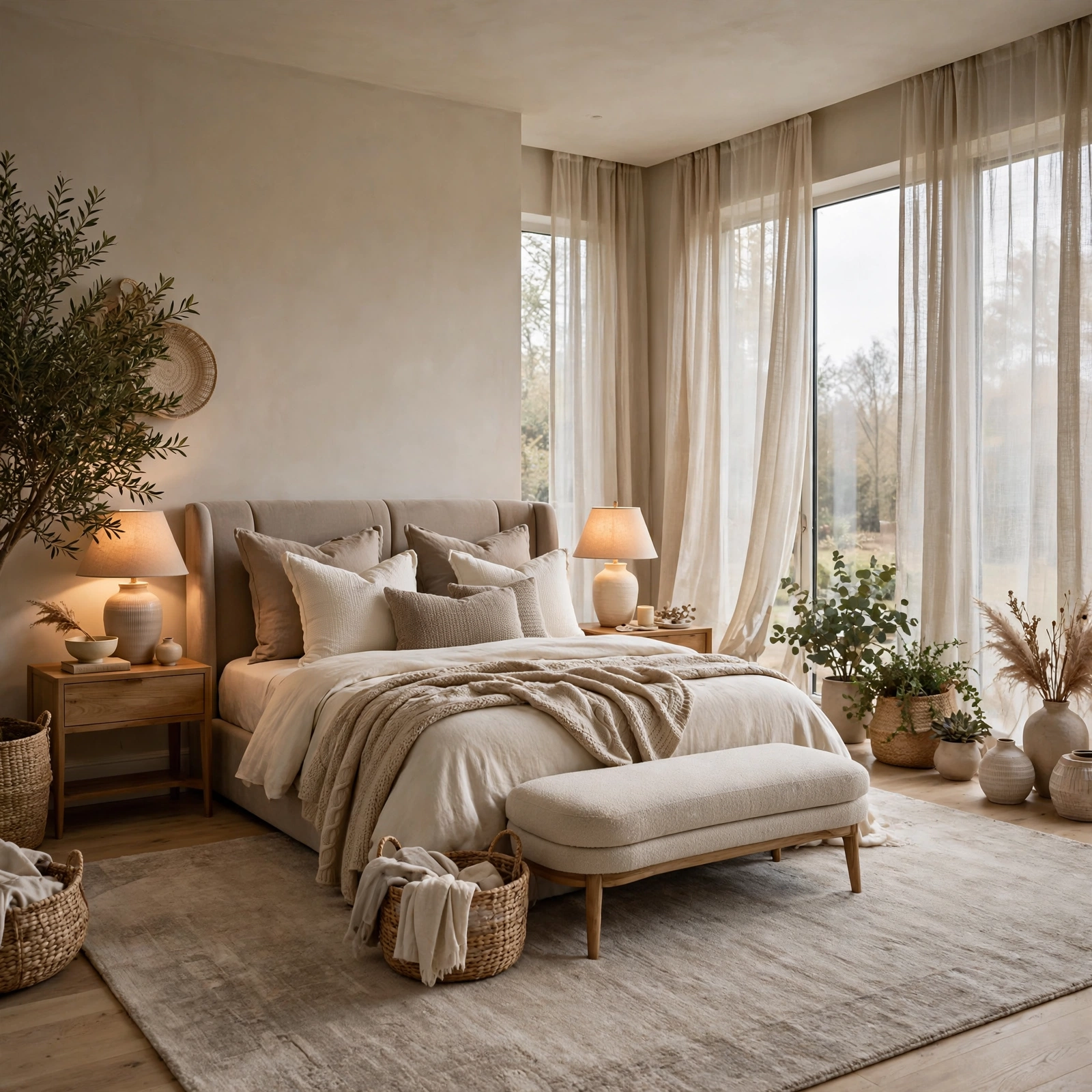
A neutral color palette built around warm whites, soft greige, and muted taupe creates a calming backdrop that photographs well and rarely feels dated. Rather than relying on a single flat wall color, layering two or three closely related neutral tones across walls, bedding, and drapery adds depth without introducing visual noise. This approach also makes it easier to update the room seasonally, since a single accent pillow or throw can shift the whole mood without a full repaint.
11. Upholstered Bench at Bed Foot Bedroom Inspirations Master
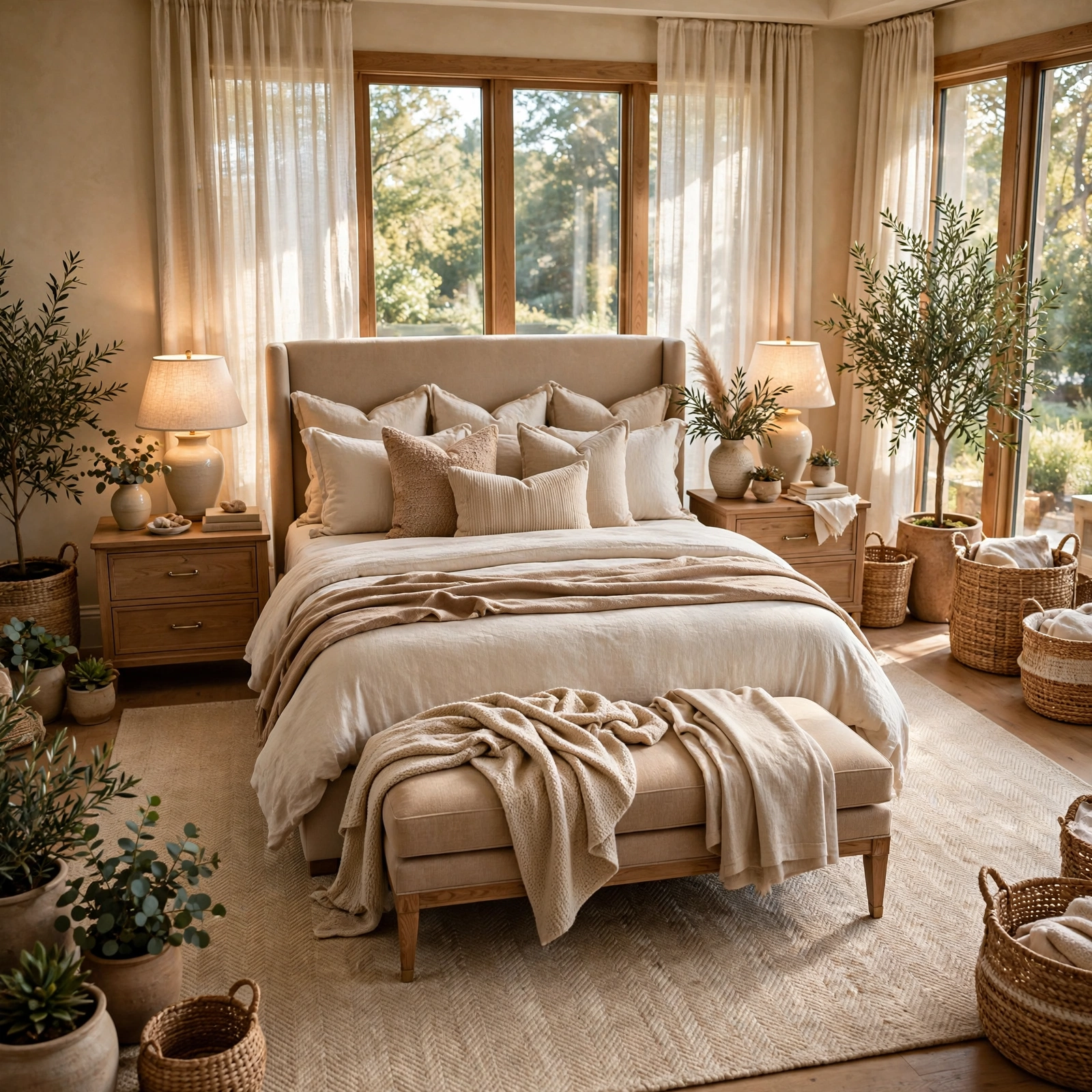
An upholstered bench placed at the foot of the bed adds a practical landing spot for folded throws, laid out outfits, or shoes without cluttering other surfaces. Boucle, velvet, and performance linen are common upholstery choices, and the bench should generally run two thirds the width of the bed frame for proportion. In smaller primary bedrooms, a narrower bench or ottoman can serve the same function while leaving more clearance for walking around the bed.
12. Woven Wall Art Bedroom Inspirations Master
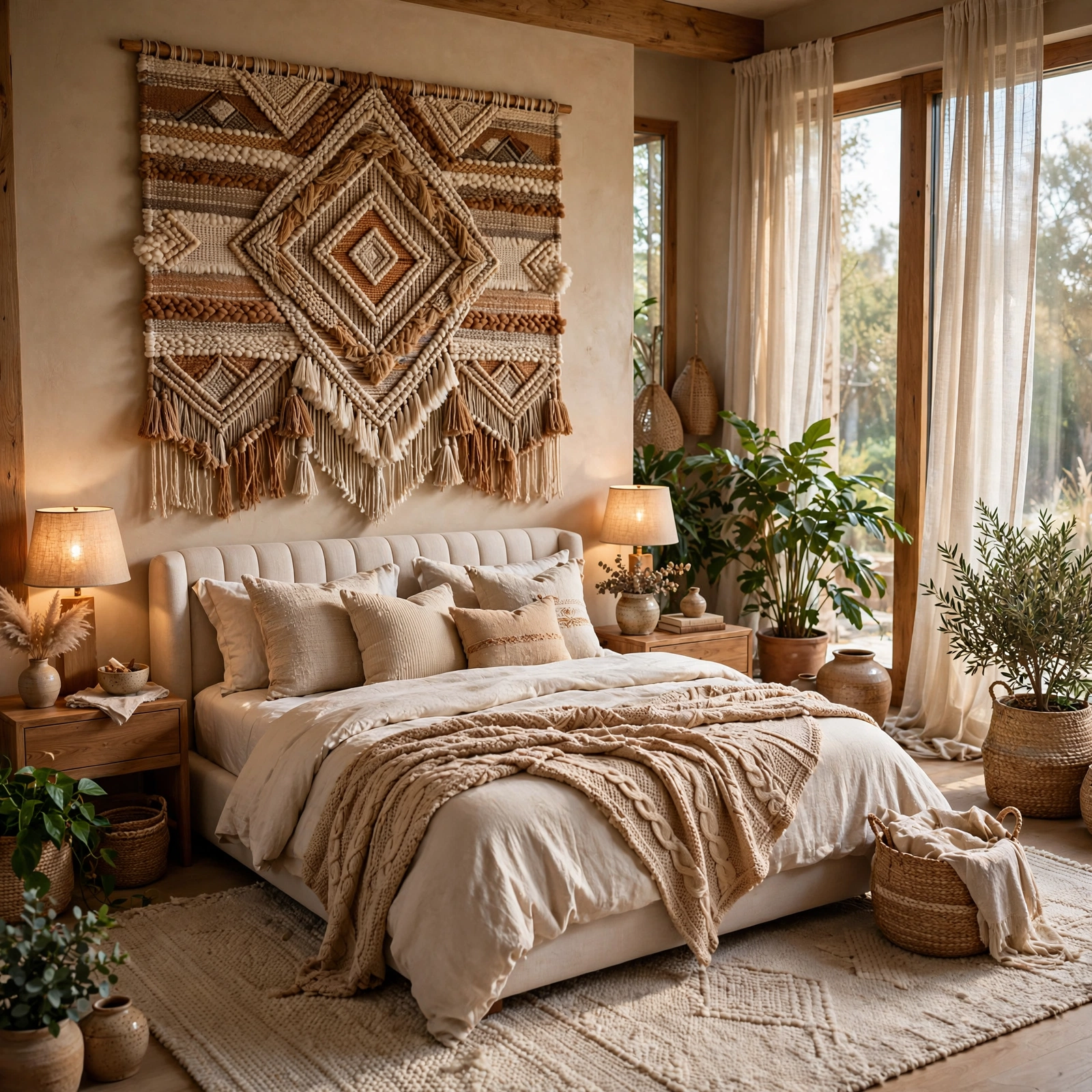
Woven wall art, including macrame hangings, jute panels, or textile wall sculptures, introduces organic texture above a dresser or on an otherwise blank wall without requiring a large budget. These pieces work especially well in primary bedrooms leaning into a natural materials palette, pairing with rattan, wood, and linen elements already in the room. Sizing the piece to roughly two thirds the width of the furniture beneath it keeps the proportions balanced rather than lost on the wall.
13. Dedicated Vanity Corner Bedroom Inspirations Master
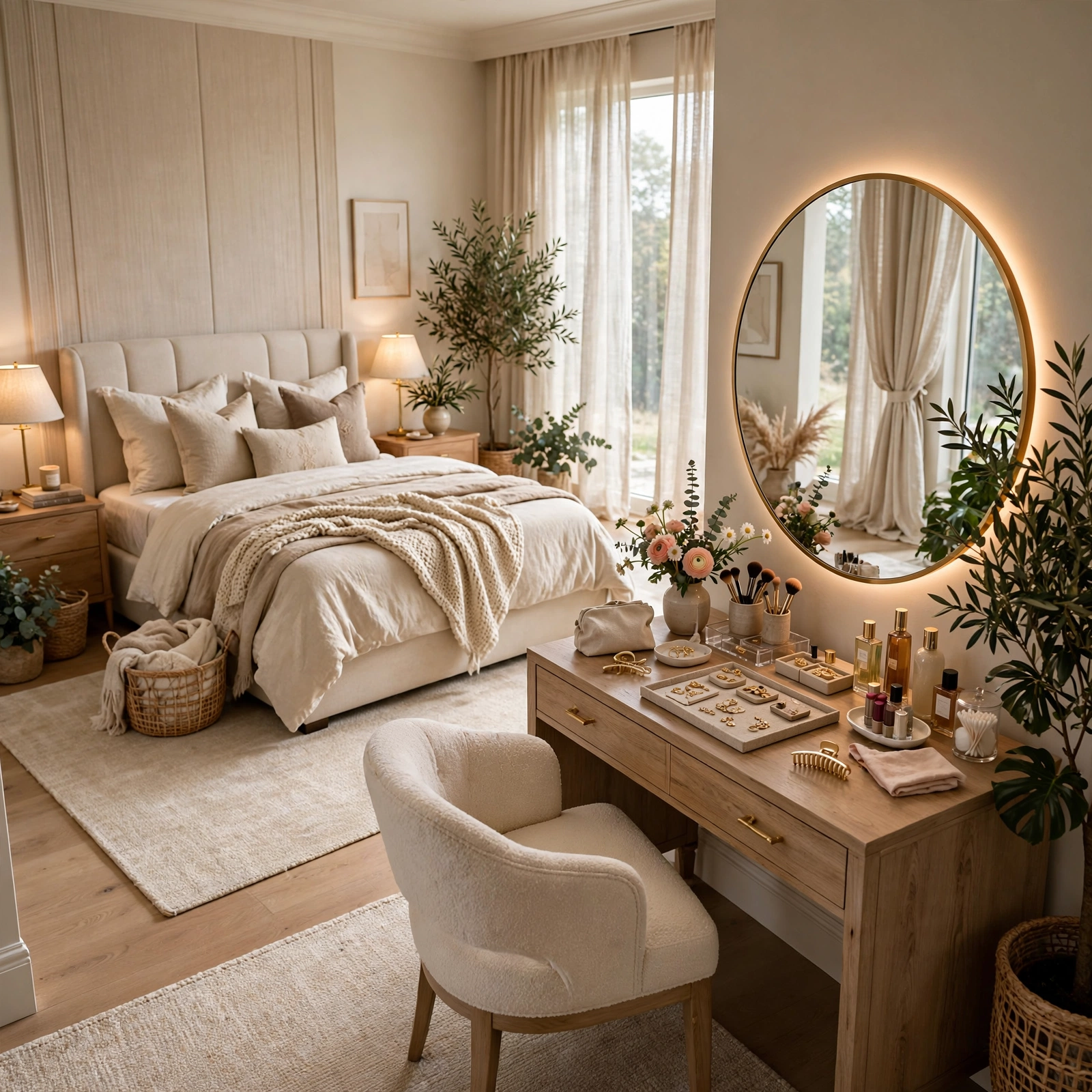
A dedicated vanity corner with a slim desk, round mirror, and a comfortable stool gives the primary bedroom a functional getting ready zone separate from the bathroom. This works well positioned near a window for natural light during makeup or grooming routines, with a small table lamp added for evening use. Keeping the vanity surface clear of everyday clutter with drawer storage instead of open trays helps the corner stay visually calm alongside the rest of the room.
14. Mixed Metal Hardware Bedroom Inspirations Master
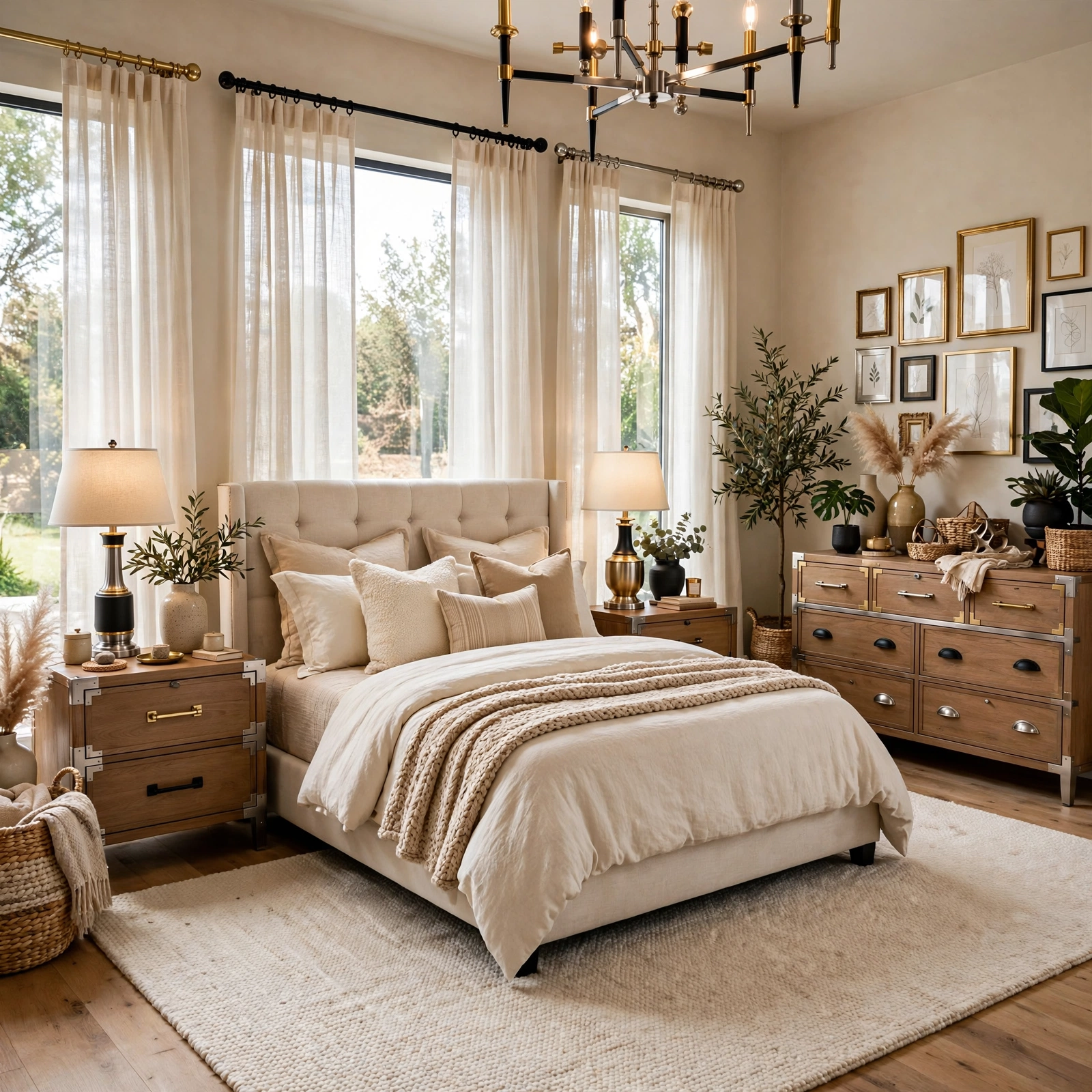
Mixed metal hardware pairs two finishes, such as brushed brass drawer pulls with matte black lighting fixtures, to add subtle contrast across the room’s furniture and fixtures. The key to making this work is choosing one dominant metal and one accent metal rather than scattering three or more finishes throughout the space. This idea costs relatively little to implement since it’s often just a matter of swapping cabinet hardware and light fixtures rather than replacing full furniture pieces.
| Budget Level | Typical Update |
| Under $150 | Swap cabinet and drawer pulls only |
| $150 $400 | Add one new light fixture plus hardware |
| $400 $800 | Replace two fixtures and all visible hardware |
15. Sitting Area with Loveseat Bedroom Inspirations Master
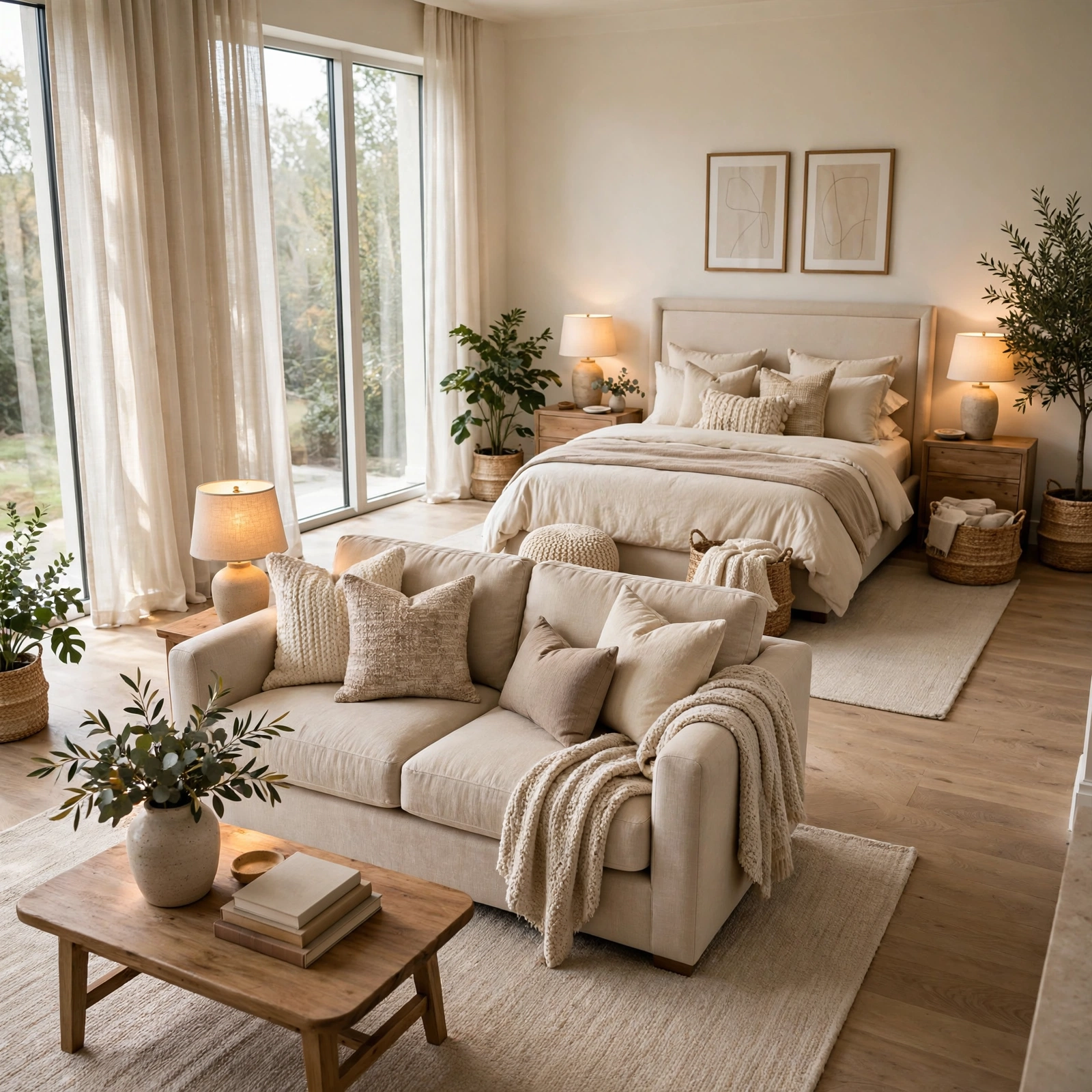
For primary suites with extra square footage, a sitting area with a loveseat creates a secondary gathering spot within the bedroom itself, ideal for morning coffee or evening conversation away from shared living spaces. A slipcovered or performance fabric loveseat holds up better to daily use than delicate upholstery, and positioning it to face a window or fireplace gives the area its own clear purpose. This layout generally needs at least 150 square feet of total room space to avoid feeling cramped.
16. Warm Wood Ceiling Beams Bedroom Inspirations Master
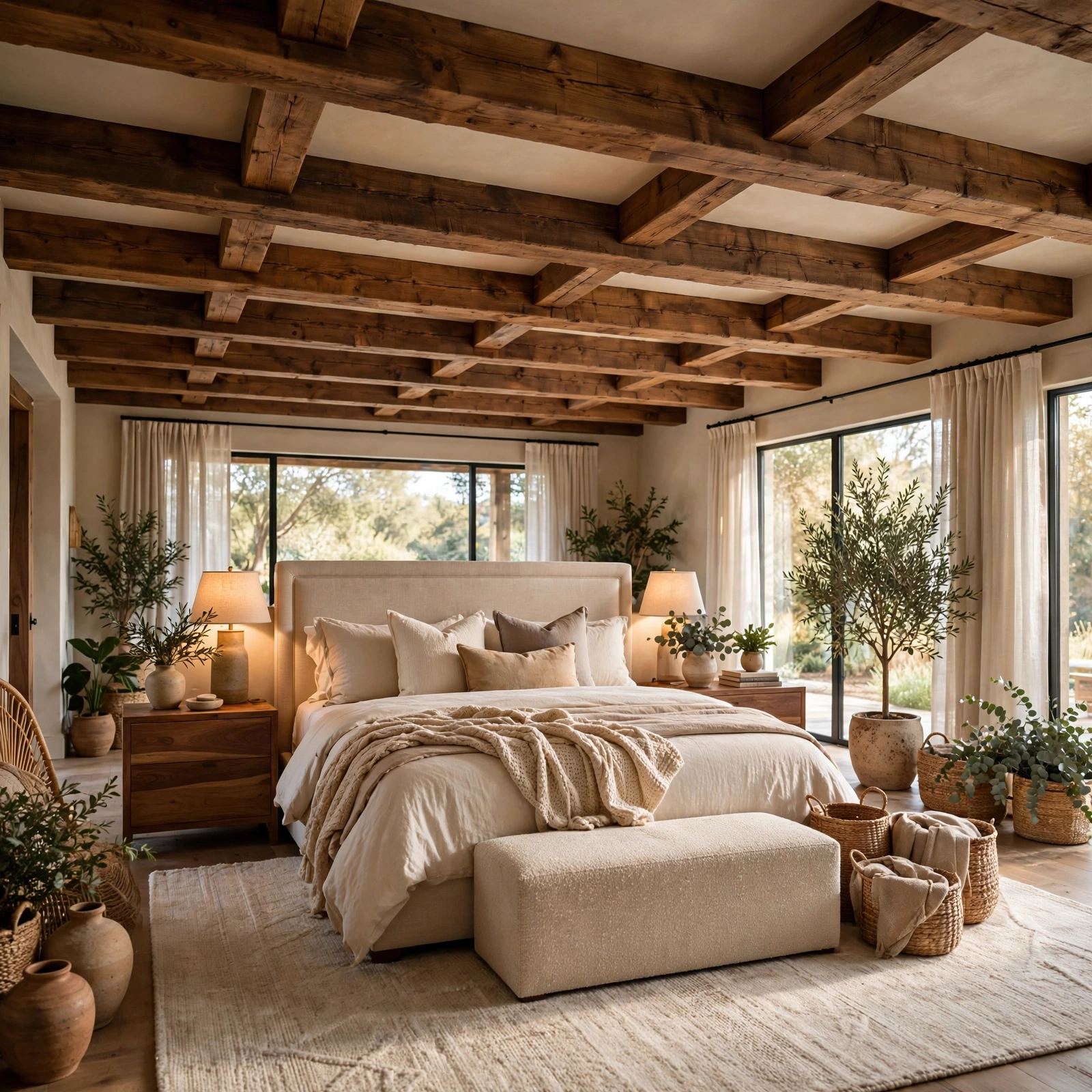
Warm wood ceiling beams, whether structural or decorative, add architectural interest to a primary bedroom by drawing the eye upward and breaking up an otherwise flat ceiling plane. Stained cedar or reclaimed oak beams read more traditional, while whitewashed or raw wood finishes lean toward a more relaxed, coastal feel. This treatment works especially well in rooms with vaulted or higher ceilings, where the beams have enough visual room to read as intentional rather than crowding the space.
Shop the Look
A linen duvet cover in a warm oat tone pairs naturally with most of the palettes above, along with a set of fluted glass table lamps for the nightstands. A jute area rug in an 8×10 size works as the base layer for bedrooms following the layered rug approach, while a set of brass or matte black wall sconces covers the reading light idea without added nightstand clutter. A boucle bench at the foot of the bed rounds out the collection for anyone starting from scratch.
Common Mistake to Avoid
The most common mistake in primary bedroom design is oversizing the bed frame for the room, leaving less than 24 inches of walking space on either side. This makes even a well decorated room feel cramped and can create real problems moving furniture in or out later. Before buying a new frame, measure the full room dimensions and mark out the frame’s footprint with painter’s tape on the floor, including nightstand space, so you can confirm comfortable clearance before committing to a purchase.
Frequently Asked Questions
What size rug works best under a king bed?
A 9×12 or 10×14 rug generally works best under a king bed, since it needs to extend at least 18-24 inches beyond each side and the foot of the frame. Anything smaller tends to look disconnected from the furniture rather than grounding it. If floor space is tight, a runner style layout on just the two sides of the bed can work as a budget friendly alternative to a single large rug.
How do I make a small master bedroom feel bigger?
Choosing a platform bed frame, keeping the color palette light and consistent across walls and bedding, and mounting curtains higher than the window frame all help a small primary bedroom read larger. Built in or floating nightstands also free up floor space compared to bulky standalone furniture. Mirrors placed opposite a window can reflect additional light back into the room, which adds to the sense of openness without any structural changes.
What colors are trending for primary bedrooms right now?
Warm neutrals including greige, soft taupe, and warm white are currently the most requested primary bedroom colors, often paired with a single deeper accent like clay or forest green on one wall. These tones photograph well and tend to age better than trend driven bright colors. Muted, earthy palettes also pair easily with natural materials like wood, linen, and rattan, which are showing up frequently in current bedroom styling.
Do I need a headboard if I have an accent wall?
A headboard isn’t strictly necessary if you already have a strong accent wall, such as a wood slat treatment or bold paint color, since the wall itself becomes the visual anchor behind the bed. Some homeowners skip the headboard entirely in this case to keep the look cleaner. That said, a low upholstered headboard can still add comfort for sitting up in bed, even when the wall behind it is already doing visual work.
How many light sources should a primary bedroom have?
Most primary bedrooms benefit from at least three light sources: an overhead fixture or flush mount for general illumination, task lighting at each nightstand for reading, and one ambient source like a floor lamp or plug in sconce for softer evening light. Relying on a single overhead fixture tends to leave the room feeling flat and clinical. Adding a dimmer to the overhead fixture also makes it easier to shift the room’s mood from daytime to nighttime use.
Conclusion
These master bedroom inspirations cover everything from structural updates like wood slat walls to smaller swaps like mixed metal hardware, so there’s a starting point regardless of your budget or room size. Save this post to Pinterest to reference while you plan your next update, and check out our related guide on small bedroom layout ideas for more space specific tips.