14 Must-Try Christmas Table Decor Ideas for an Elegant Holiday Table
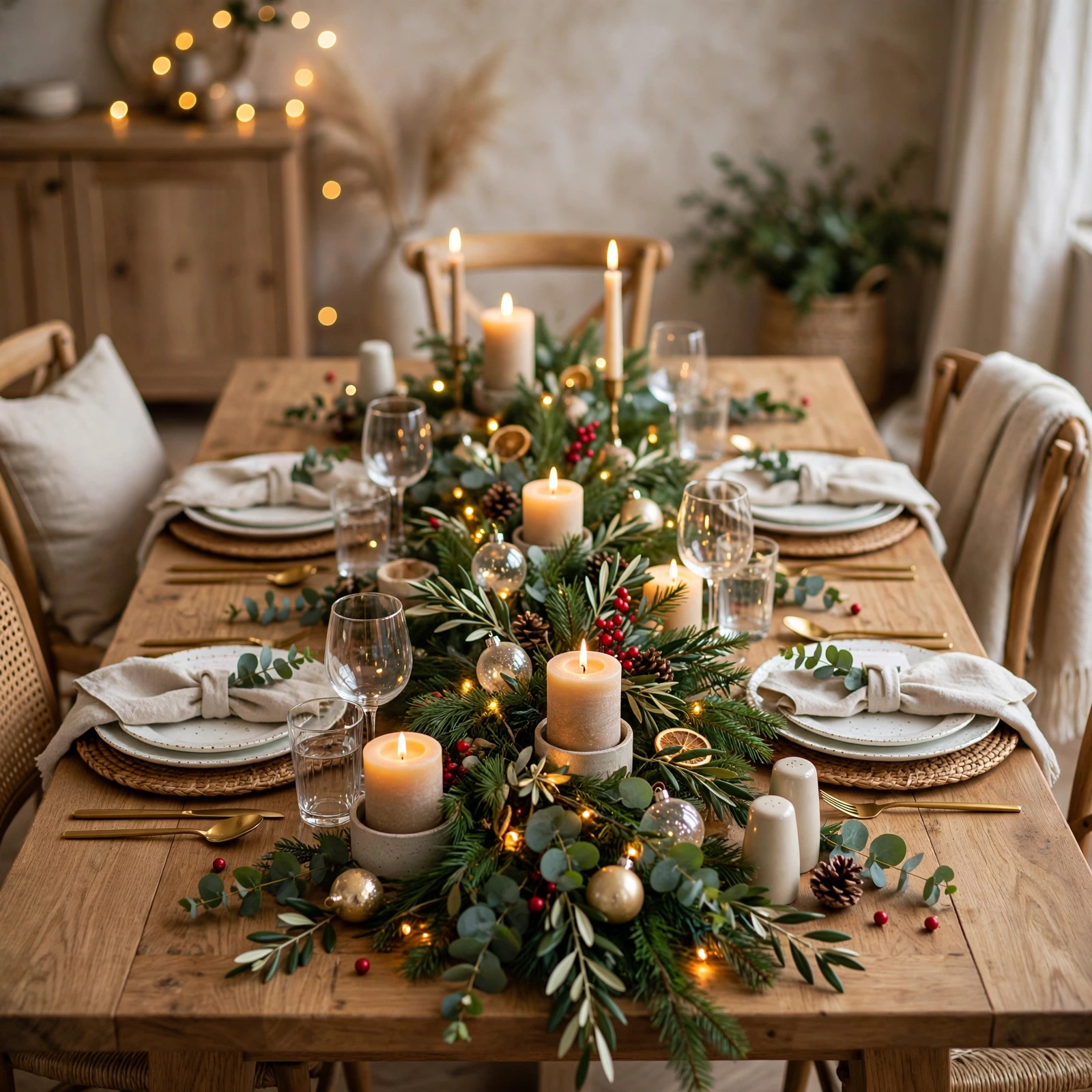
Setting a table that actually looks pulled together for the holidays takes more than pulling out the good china, which is why so many hosts search for christmas table decor ideas every December. This guide covers seventeen ideas for building a table from the base layer up, including runners, centerpieces, place settings, and small finishing touches that work for both casual family dinners and larger holiday gatherings. There’s also a common mistake to avoid and answers to the questions hosts ask most when planning their table.
Trend & Background
Tables have moved away from matched, single-theme place settings toward a layered, collected look that mixes metallics, natural greenery, and mismatched textures on purpose. Warm brass and gold accents are showing up alongside deep green and cranberry tones more often than the traditional red-and-green combination, giving hosts more flexibility with existing dinnerware. This matters now because more holiday gatherings are happening at home rather than at restaurants, and a well-set table has become one of the easiest ways to make a regular dinner feel like an occasion without a full room renovation.
Key Takeaways
- Christmas table decor ideas work best when built in layer runner, centerpiece, place settings, and small accent rather than one big centerpiece alone.
- Natural materials like greenery, dried citrus, and pinecones pair easily with metallics like gold, brass, and glass for a table that feels festive but not cluttered.
- Small per-guest details, like place card holders or napkin rings, make the table feel intentional without much extra cost.
- Getting proportions right, especially with runners and centerpiece garlands, keeps the table from looking sparse or overcrowded once plates and glasses are added.
1. Layered Table Runner
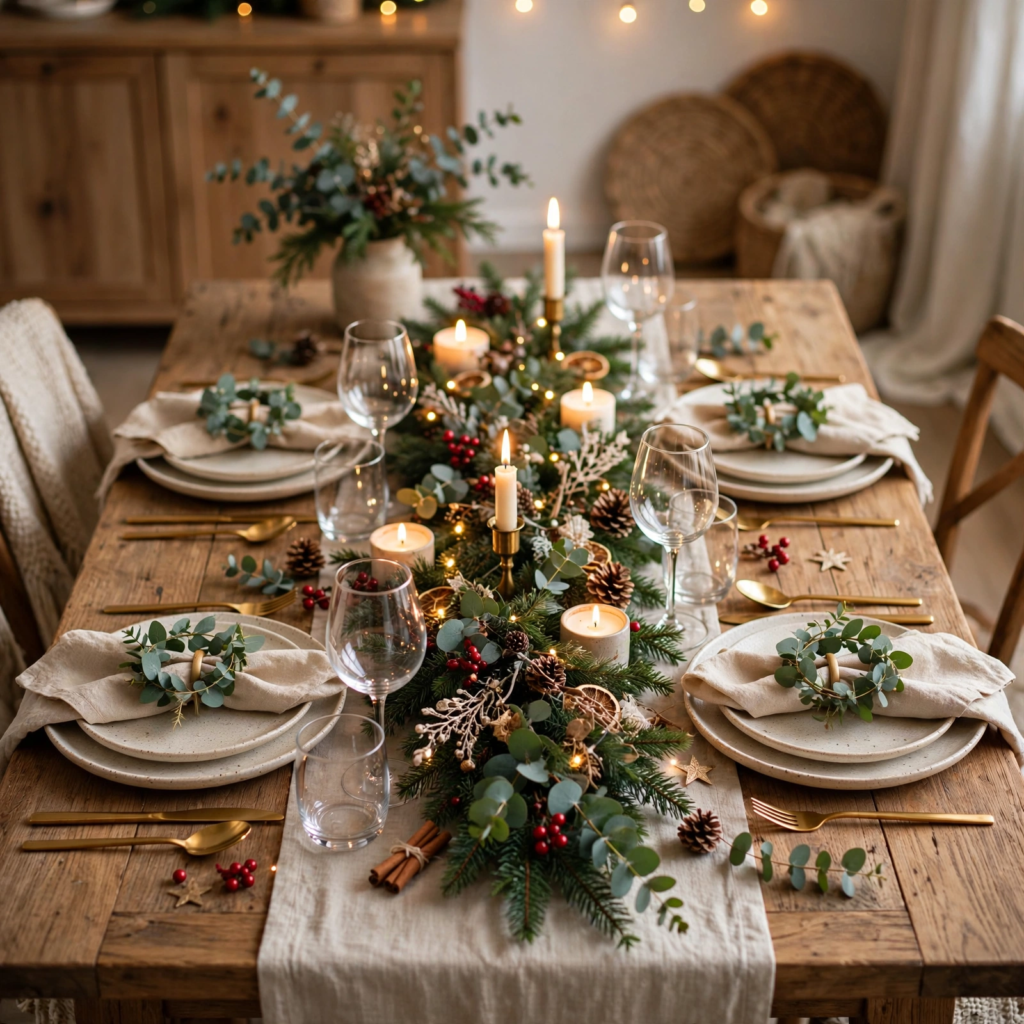
Two runners layered on top of each other, like a solid linen base with a shorter plaid or velvet runner on top, add depth to the table without needing a full tablecloth. It works because the layered look reads as more intentional than a single flat runner, and it gives hosts an easy way to mix textures they already own. Execute it by centering the shorter top runner over the longer base layer, leaving three to four inches of the base visible on each end.
| Table Length | Base Runner Length | Top Runner Length |
| 60-inch table | 84 inches | 48–54 inches |
| 72-inch table | 96 inches | 54–60 inches |
| 84+ inch table | 108+ inches | 60–72 inches |
2. Pinecone Place Cards
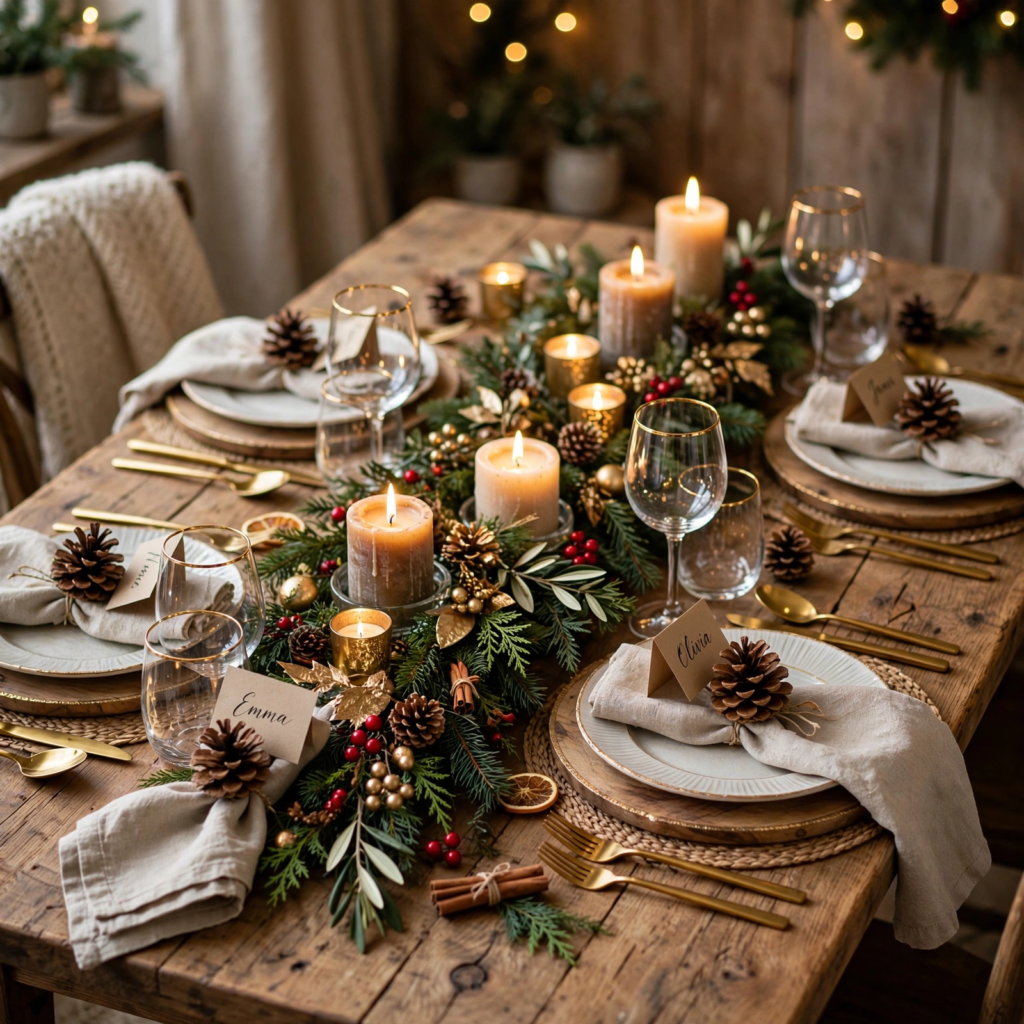
Small pinecones with a name card tucked into the scales or attached with a bit of wire give each seat a personal marker that also doubles as a natural table accent. They work because they solve the practical problem of seating at a larger gathering while still looking like part of the decor rather than an afterthought. Execute it by choosing pinecones roughly two to three inches long, writing names on small kraft paper tags, and tucking the tag corner into the pinecone’s lower scales so it stays upright.
3. Taper Candle Cluster
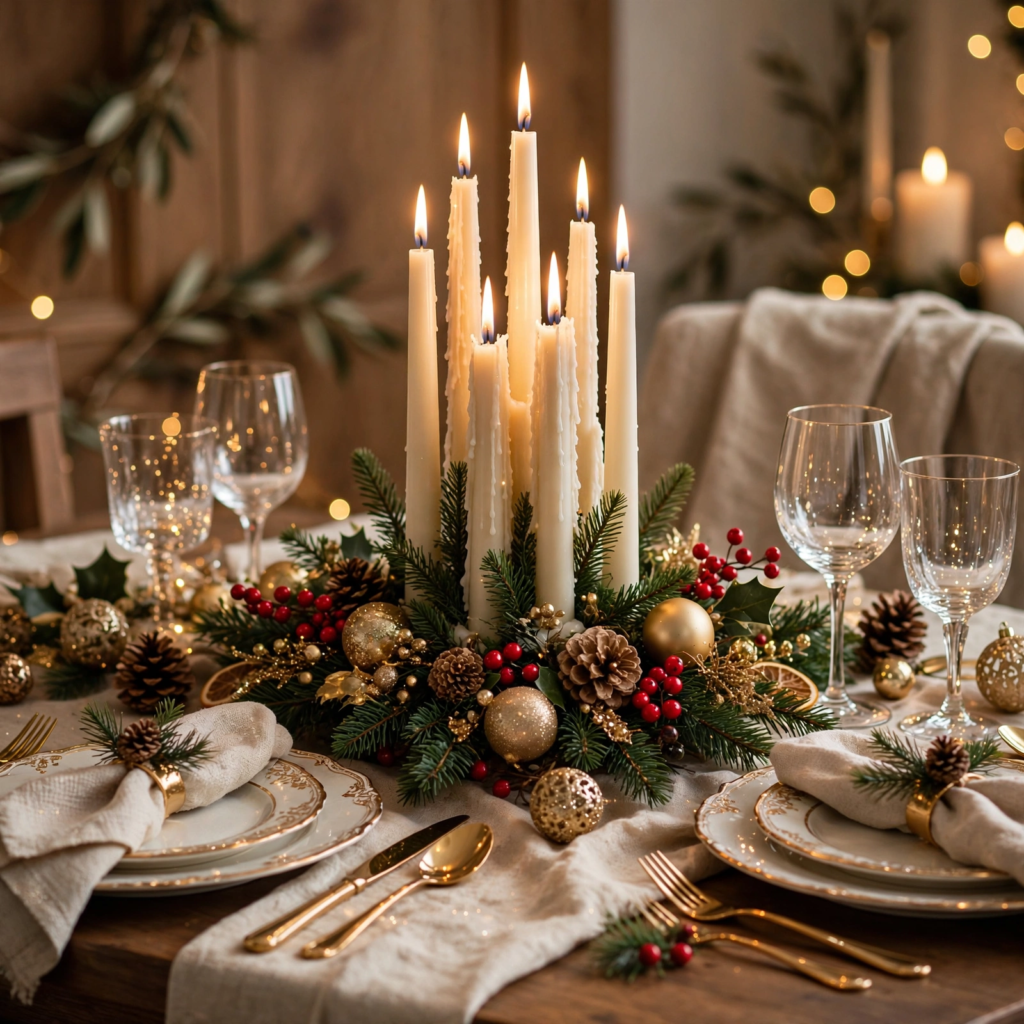
A cluster of taper candles in varying heights, set in simple brass or glass holders down the center of the table, adds warm, flickering light that overhead fixtures can’t replicate at dinner. It works because candlelight is one of the fastest ways to make a table feel festive, and varying the candle heights keeps the cluster visually interesting rather than flat. Execute it by grouping candles in odd numbers, spacing holders four to six inches apart, and keeping the tallest candles toward the center of the table.
To see more options for christmas decor ideas for bedroom CLICK HERE
4. Gold Charger Plates
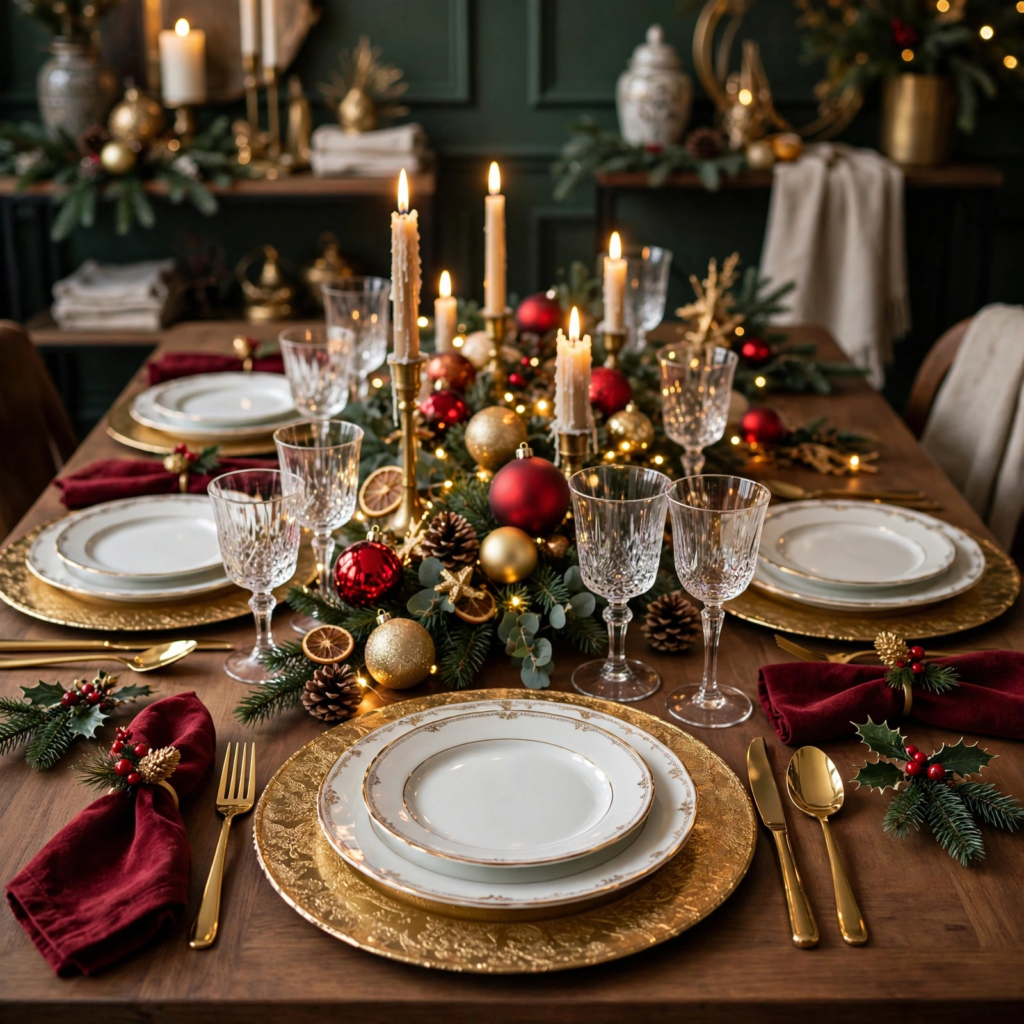
Placing a gold or brass charger plate beneath each dinner plate instantly upgrades a table setting, even when the dinnerware itself is simple white or cream. They work because the metallic ring around each place setting ties the whole table together, especially when other gold or brass accents, like candlesticks or flatware, are used elsewhere on the table. Execute it by choosing a charger diameter about two inches larger than the dinner plate, so a visible metallic border shows around the plate’s edge.
5. Cranberry Votive Bowls
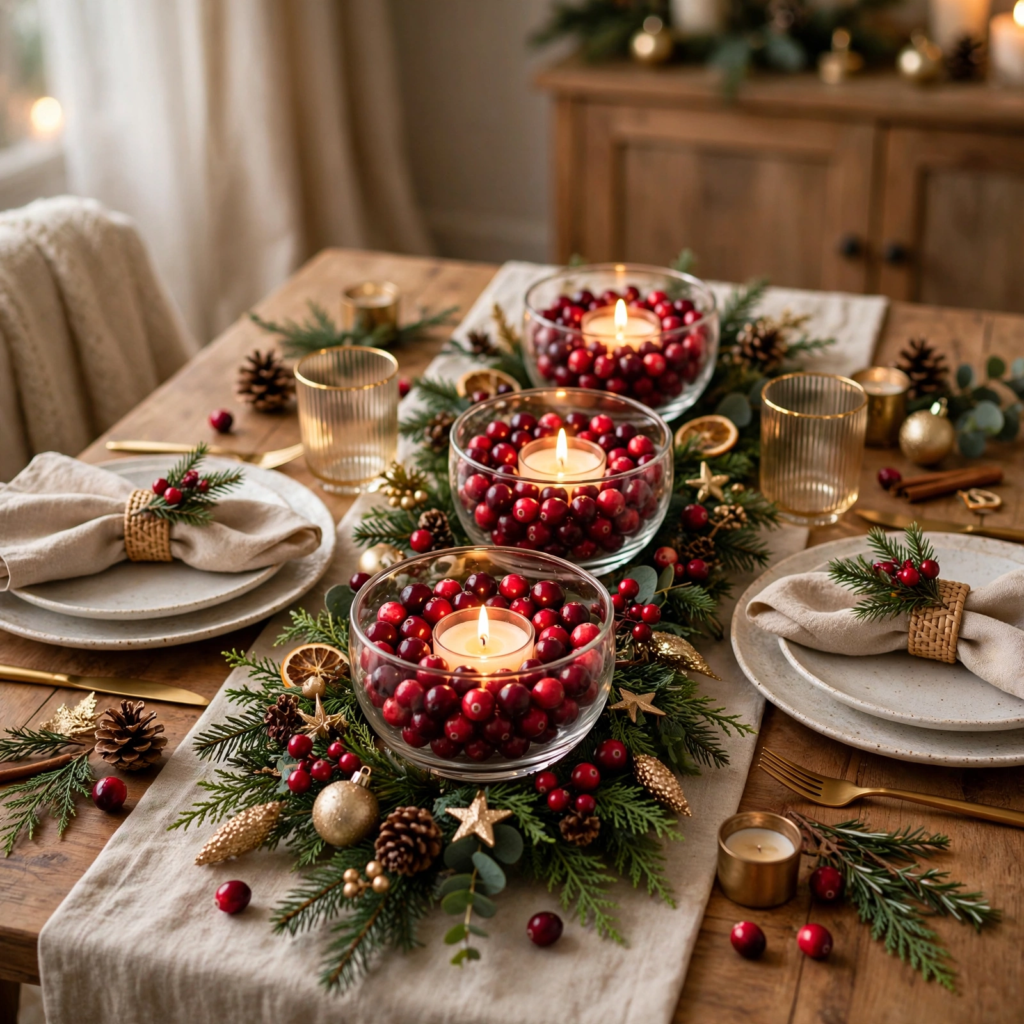
Small glass votive holders, each filled with a layer of fresh or dried cranberries around the candle, add a pop of red color and a natural texture to the table at a low height. They work because they’re small enough to place between other centerpiece elements without blocking sightlines across the table during conversation. Execute it by filling each votive about a third full with cranberries before placing the candle inside, and grouping three to five votives at varying points along the centerpiece garland.
6. Plaid Cloth Napkins
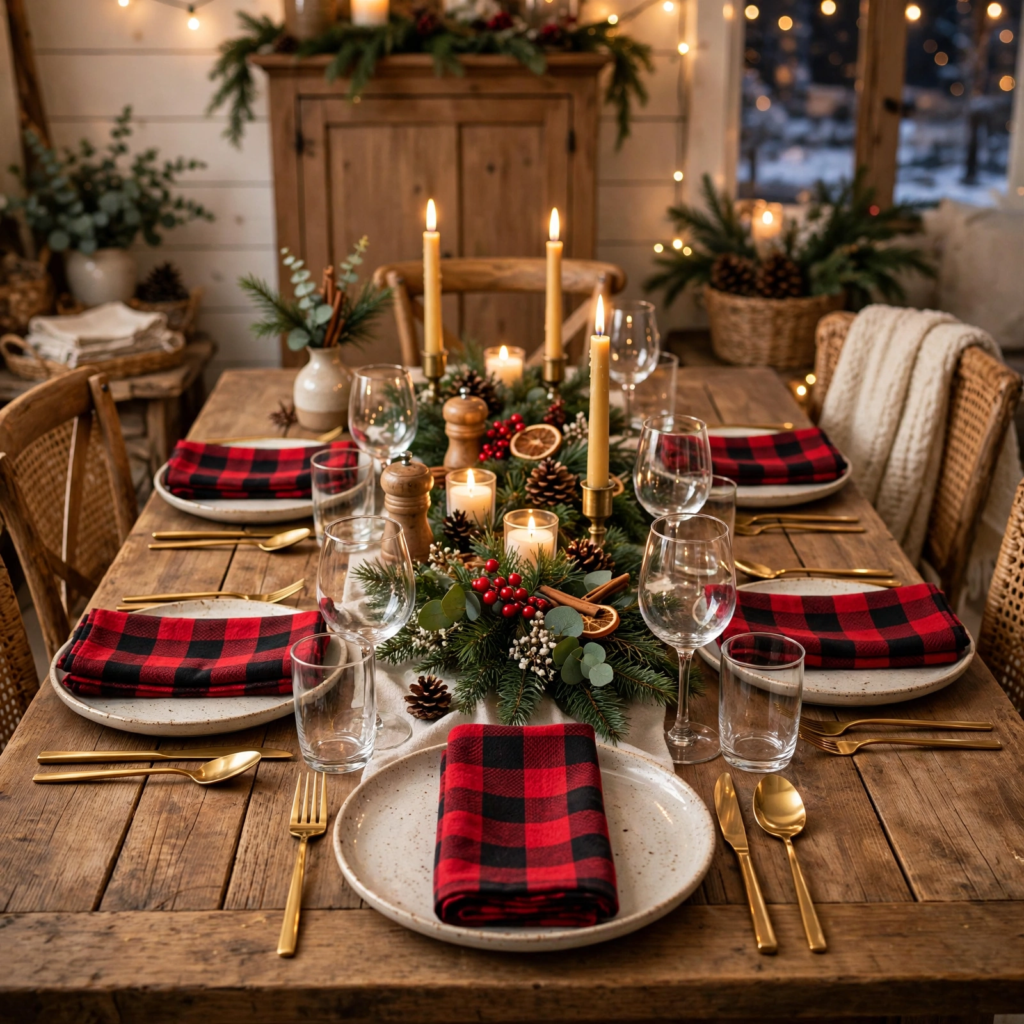
Swapping paper napkins for cloth ones in a plaid or tartan pattern adds texture and color at each place setting without requiring any changes to the dinnerware or centerpiece. It works because the pattern reads as classic and seasonal without being overly literal, like a printed holiday scene might be, and cloth napkins photograph better for a table meant to be remembered. Execute it by folding napkins into a simple rectangle or fan shape, and tucking a sprig of greenery or a place card into the fold.
7. Mini Wreath Place Settings
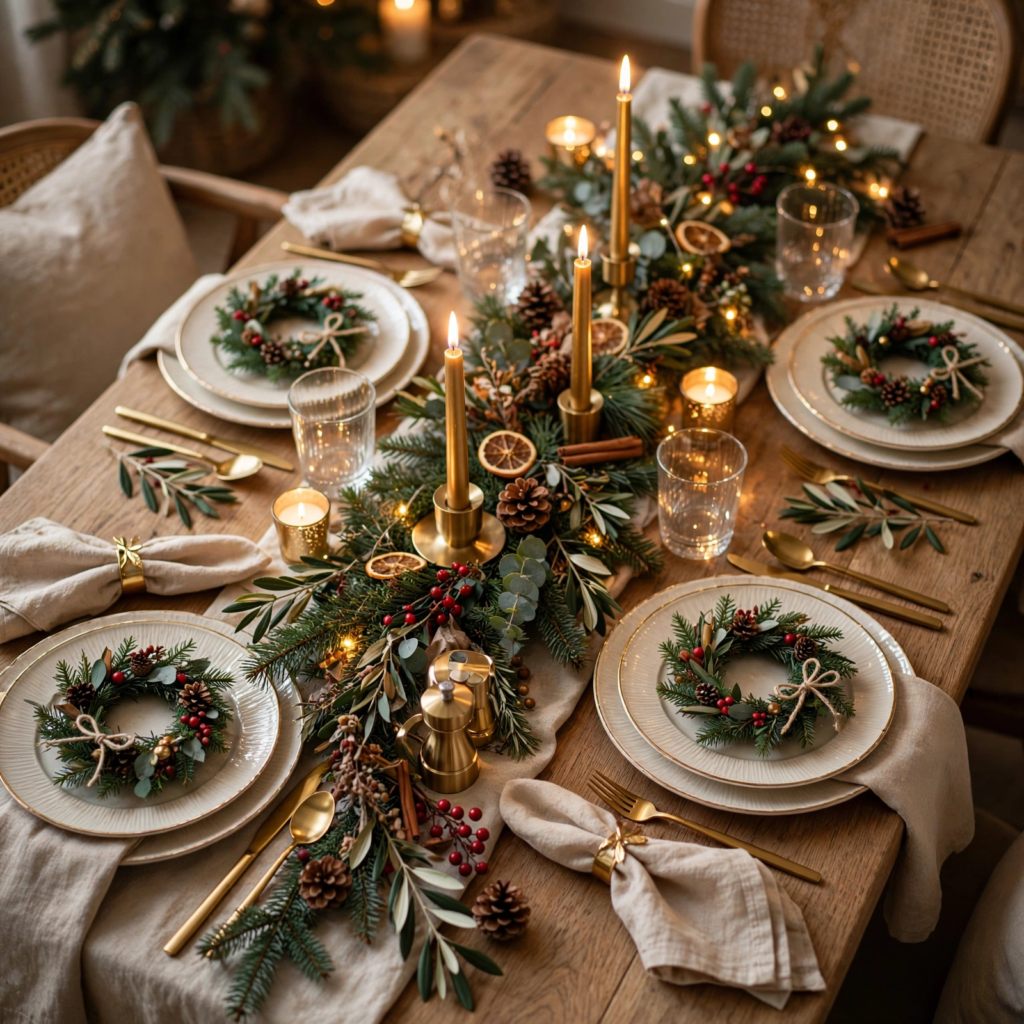
A small wreath, four to six inches wide, placed flat on each dinner plate before serving adds a festive detail that guests remove once the meal begins. It works because it turns each individual place setting into part of the overall table decor, rather than treating decor as something that only happens in the centerpiece. Execute it by choosing wreaths made from faux boxwood or eucalyptus so they hold their shape through the meal, and tie a small ribbon bow at the base of each one for a finished look.
8. Wood Slice Coasters
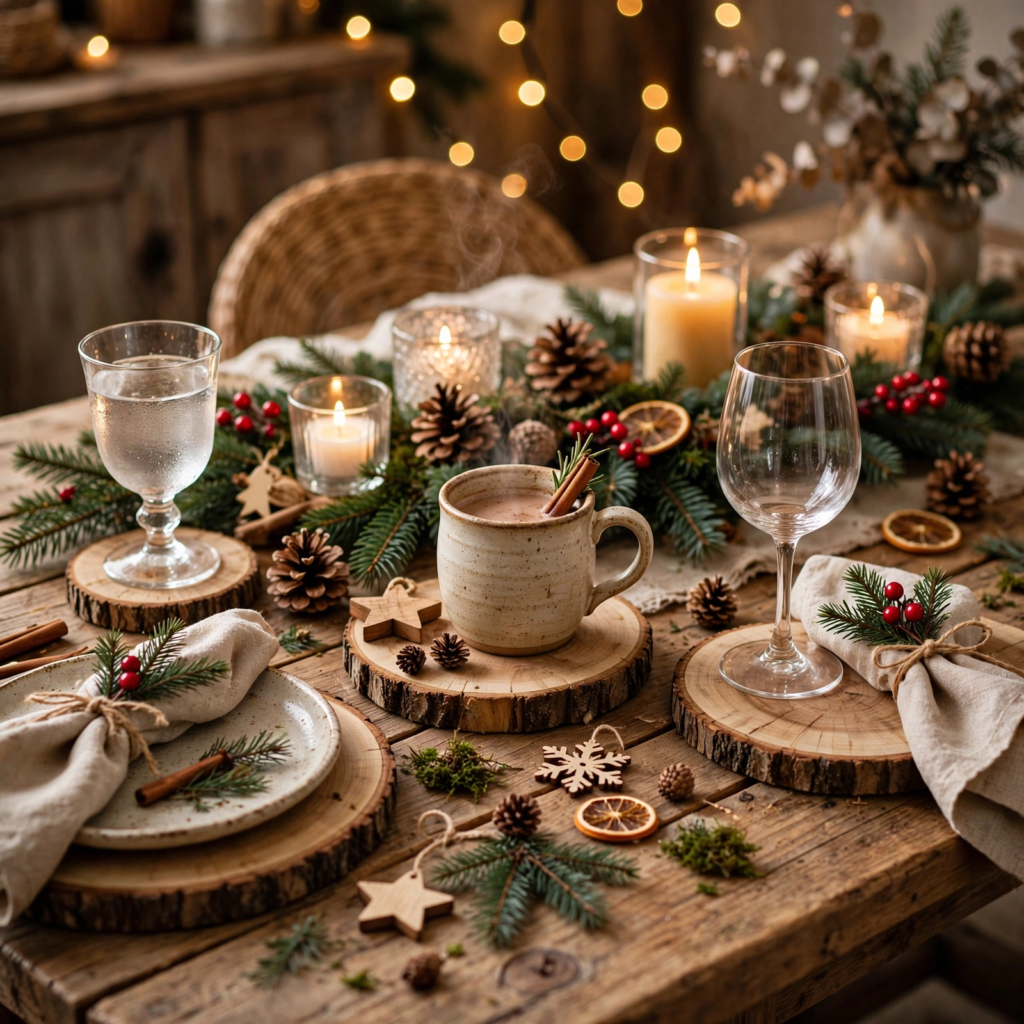
Thin wood slice coasters, left with natural bark edges, give glasses and mugs a rustic base that also protects the table without needing formal coasters. They work because the raw wood texture pairs well with greenery-based centerpieces and warms up a table that might otherwise feel too polished or formal. Execute it by choosing slices about four inches in diameter, finishing them with a light coat of food-safe sealant, and placing one at each setting above the plate where a water glass will sit.
9. Dried Citrus Garnish
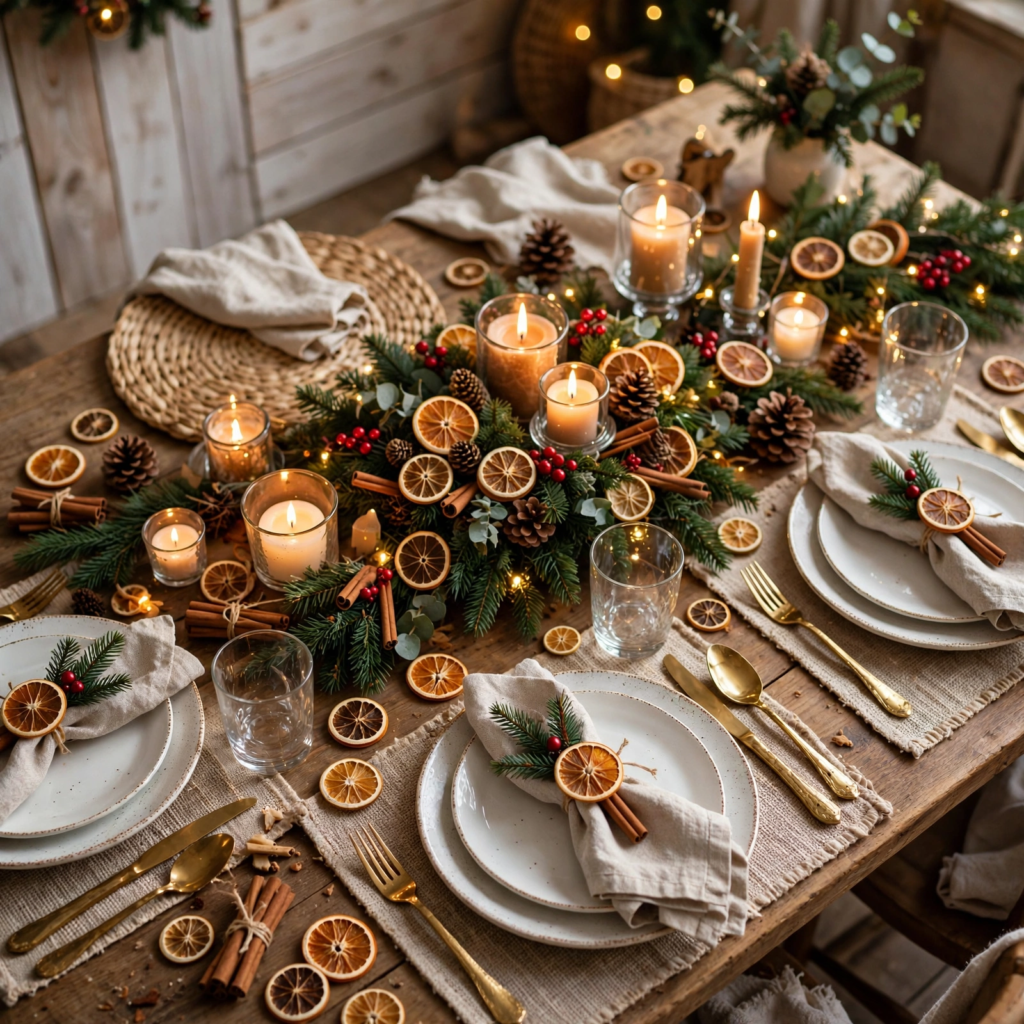
Thin dried orange or lemon slices scattered along the centerpiece garland or tucked into napkin folds add a warm color and subtle citrus scent to the table. They work because they bridge the gap between edible garnish and decor, giving the table a fresh, gathered look even though the slices are fully dried and shelf-stable. Execute it by baking slices at a low oven temperature until fully dried, then tucking three or four slices per foot of garland so the color reads without overwhelming the greenery.
10. Brass Candlestick Trio
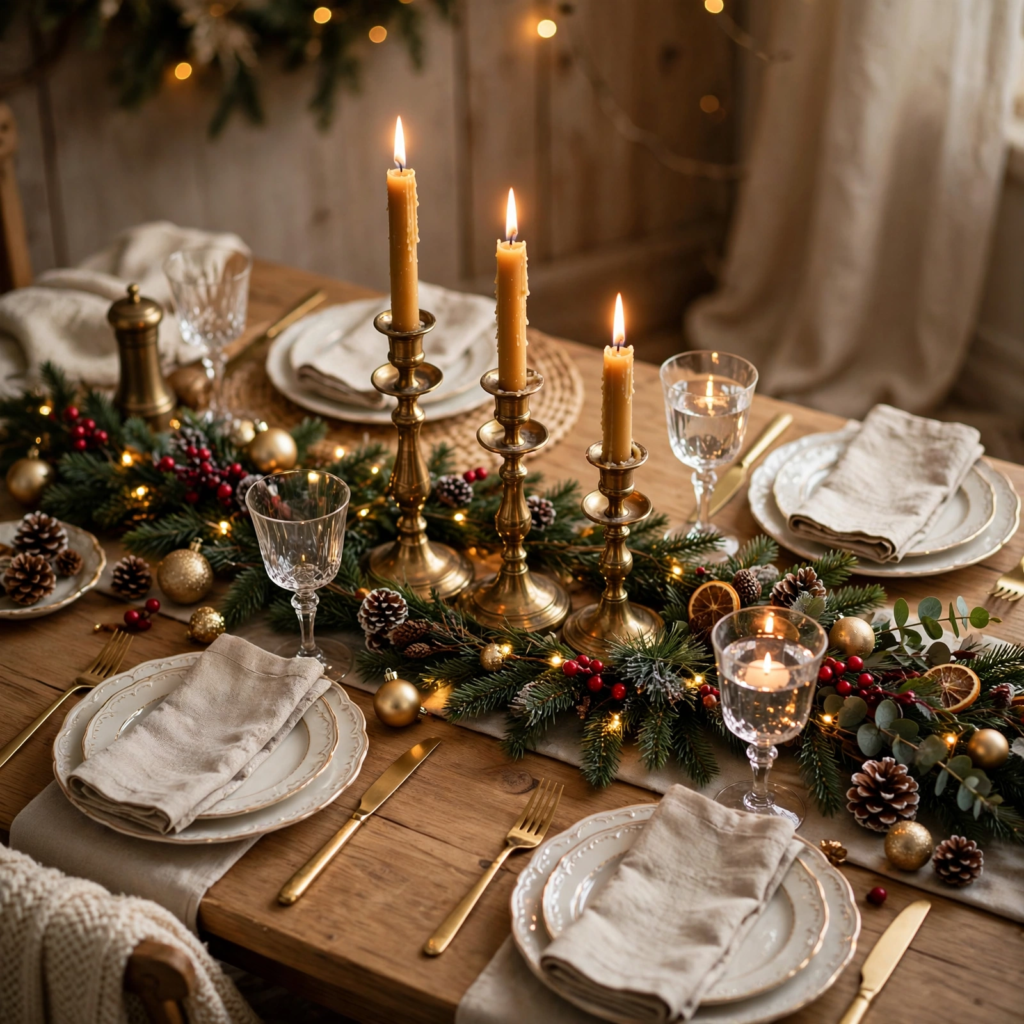
Three brass candlesticks in slightly varying heights, grouped together rather than spaced evenly down the table, create a focal point that draws the eye without needing a large floral arrangement. They work because the varied heights add visual interest, and brass finishes tone especially well with both deep green and cranberry color schemes. Execute it by grouping the trio at the table’s center or at one end for a smaller gathering, keeping the tallest candlestick in the middle of the cluster.
11. Velvet Table Bows
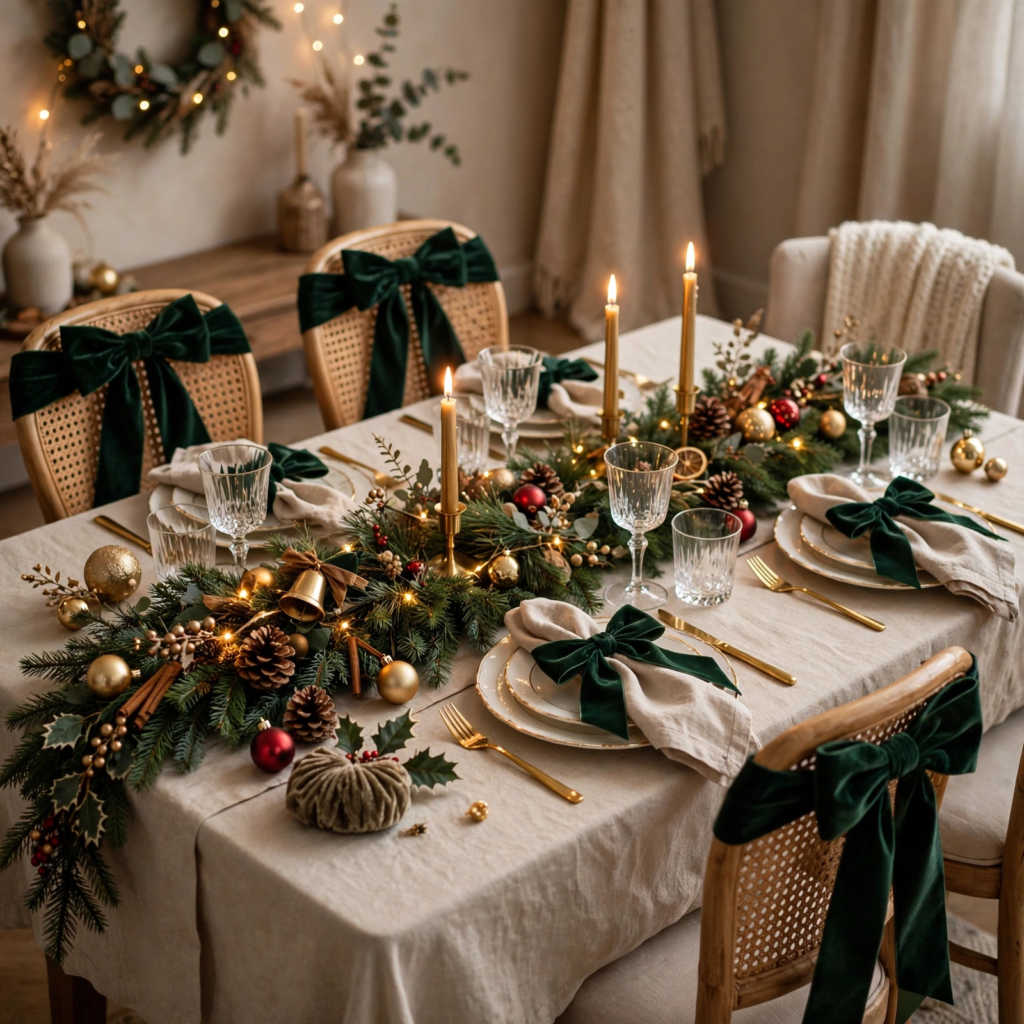
Oversized velvet bows, tied around napkins, chair backs, or the base of a centerpiece vase, add a soft, slightly formal texture that contrasts nicely with rustic elements like wood or greenery. They work because velvet catches candlelight in a way flatter fabrics don’t, adding a subtle shine to the table without full metallic accents. Execute it by using ribbon at least two to three inches wide for a fuller-looking bow, and keeping the bow color to one or two tones used elsewhere on the table.
12. Nutcracker Figurine Row
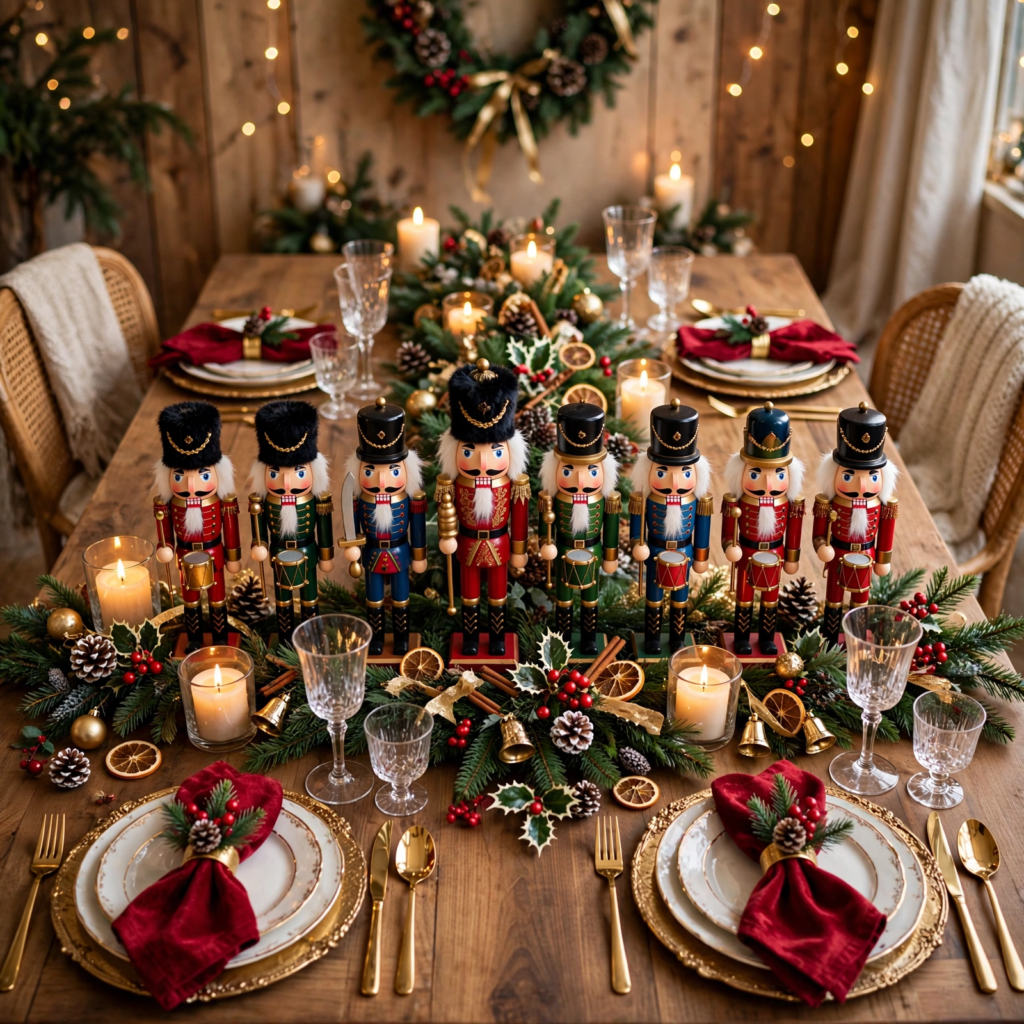
A row of small nutcracker figurines, spaced evenly along one end of the table or the sideboard nearby, adds a classic, recognizable holiday touch without taking up centerpiece space needed for candles and greenery. They work because they’re an easy way to bring in traditional Christmas imagery for hosts who want at least one obviously festive element on the table. Execute it by choosing figurines in a consistent color palette or size, and keeping them off to one side so they don’t block sightlines across the table.
13. Glass Ornament Bowl
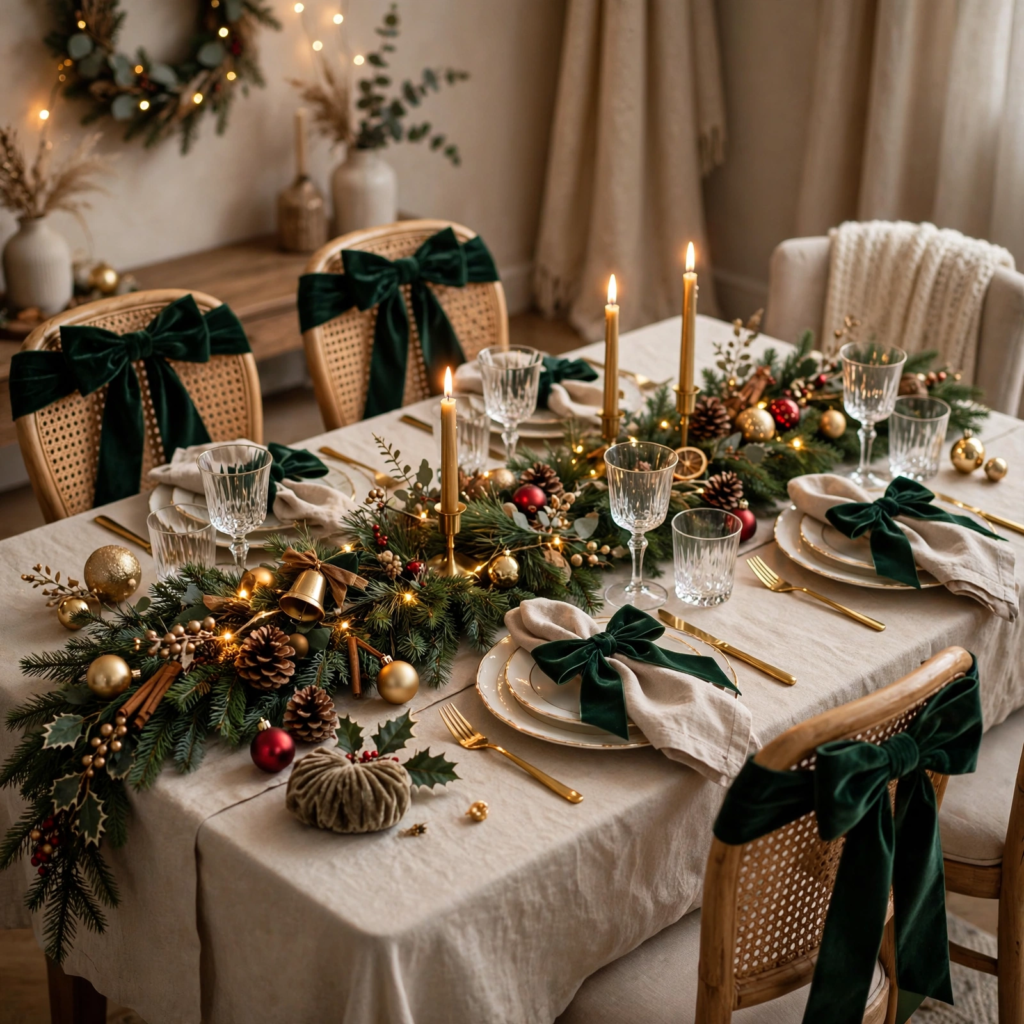
A clear glass bowl filled with mercury glass or matte ornaments in varying sizes makes a simple, low-cost centerpiece for smaller tables or as a secondary accent alongside a greenery garland. It works because it reuses ornaments already on hand, and the reflective glass surfaces catch candlelight in a way that adds sparkle without needing additional lighting. Execute it by mixing ornament sizes and finishes within one or two color families, and choosing a bowl wide enough that ornaments sit in a single loose layer rather than stacked too high.
14. Berry Sprig Bundles
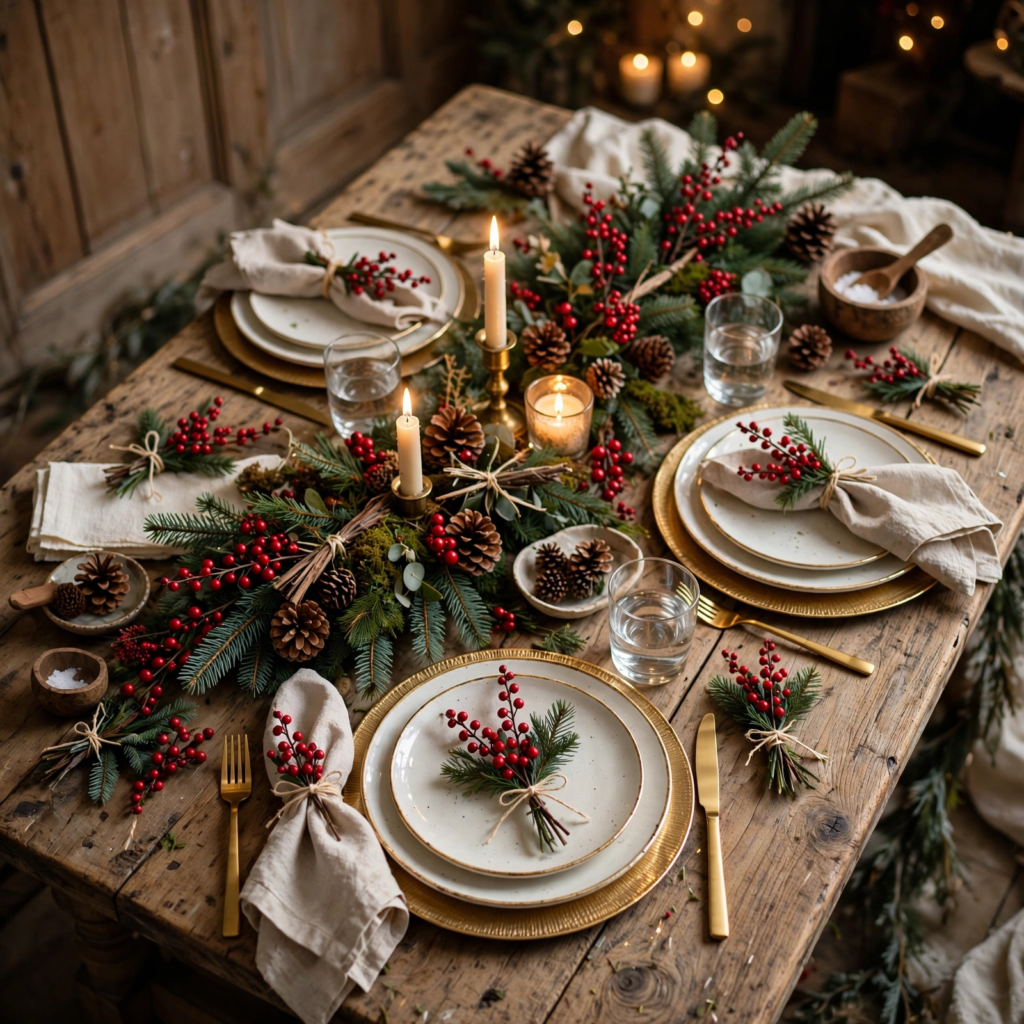
Small bundles of faux or dried berry sprigs, tied together with twine and tucked between other centerpiece elements, add a pop of red or white color at a low height along the table. They work because they fill small gaps in a greenery garland without requiring a full floral arrangement, and they’re reusable year after year if made with faux berries. Execute it by bundling three to five sprigs per cluster, and tucking clusters every twelve to eighteen inches along the length of the centerpiece garland.
Shop the Look
For a table built around these ideas, start with a linen base runner layered under a shorter plaid or velvet runner, a set of gold charger plates, and brass candlesticks in three varying heights. Add faux eucalyptus for napkin rings, a bundle of dried orange slices, and a bag of mixed mercury glass ornaments for a glass bowl centerpiece. Plaid cloth napkins and a length of wide velvet ribbon for table bows finish the setting without requiring any new dinnerware.
Common Mistake to Avoid
The most common mistake in christmas table decor ideas is building a centerpiece so tall or wide that guests can’t see or talk to the people across the table from them. Candlesticks, greenery, and ornament bowls should generally stay under 14 inches tall in the direct sightline between seats, with taller elements reserved for the very ends of the table where no one is seated across from them. Testing the sightline by sitting down at the table before guests arrive catches this problem before it becomes a distraction during the meal.
People Also Ask
What is the best centerpiece for a Christmas table?
A low greenery garland running down the center of the table, layered with candles, dried citrus, and small ornament clusters, tends to work better than one large floral arrangement, mainly because it keeps sightlines open between guests. This approach is also more budget-friendly, since greenery and candles cost less than a full floral centerpiece and can be reused or restyled for other holiday gatherings. Grouping a few taller elements at the ends of the table, rather than the middle, adds height without blocking conversation.
How do I set a formal Christmas table?
A formal Christmas table typically includes a charger plate at each setting, cloth napkins folded neatly or secured with a napkin ring, and a coordinated color palette carried through the runner, candles, and centerpiece. Flatware should be placed in the order it will be used, from the outside in, and glassware arranged above the knife on the right side of the plate. Keeping the centerpiece low and adding place cards for assigned seating are both details that push a table from casual toward formal.
What colors go well together for Christmas table decor?
Deep green paired with warm gold or brass tends to read as more elevated than the traditional bright red-and-green combination, while cranberry red paired with cream and natural wood tones leans slightly more rustic. Mixing just two or three colors, rather than four or five, generally keeps the table looking cohesive instead of busy. Metallic accents in gold, brass, or copper work as a neutral that ties almost any color combination together across the runner, candles, and dinnerware.
How far in advance can I set up a Christmas table centerpiece?
A centerpiece built with faux greenery, dried citrus, pinecones, and ornaments can be assembled several days to a week in advance, since none of the materials will wilt or spoil. If using fresh greenery or fresh cranberries, it’s better to assemble the centerpiece one to two days before the event and mist the greenery lightly to keep it looking fresh. Candles, charger plates, and napkins can be set out ahead of time regardless, with only the food-related items added the day of the gathering.
How do I keep a Christmas table centerpiece from blocking conversation?
Keeping any centerpiece element under about 14 inches tall in the middle sections of the table, where guests are seated directly across from one another, is the simplest way to avoid blocking sightlines. Taller pieces, like a cluster of candlesticks or a nutcracker figurine row, work better positioned at the ends of the table or off to one side rather than dead center. Testing the setup by actually sitting down at a few different seats before guests arrive helps catch any blind spots early.
Conclusion
Christmas table decor ideas come together best when the table is built in layers, starting with a runner and greenery base, then adding candles, place settings, and small accents on top, all while keeping sightlines open between guests. Whether the plan is a fully layered formal setting or just a few new candlesticks and a runner, these seventeen ideas offer a flexible starting point for any size gathering. Save this guide to Pinterest for later, and check out our related posts on holiday centerpiece ideas and setting a formal dinner table for more inspiration.