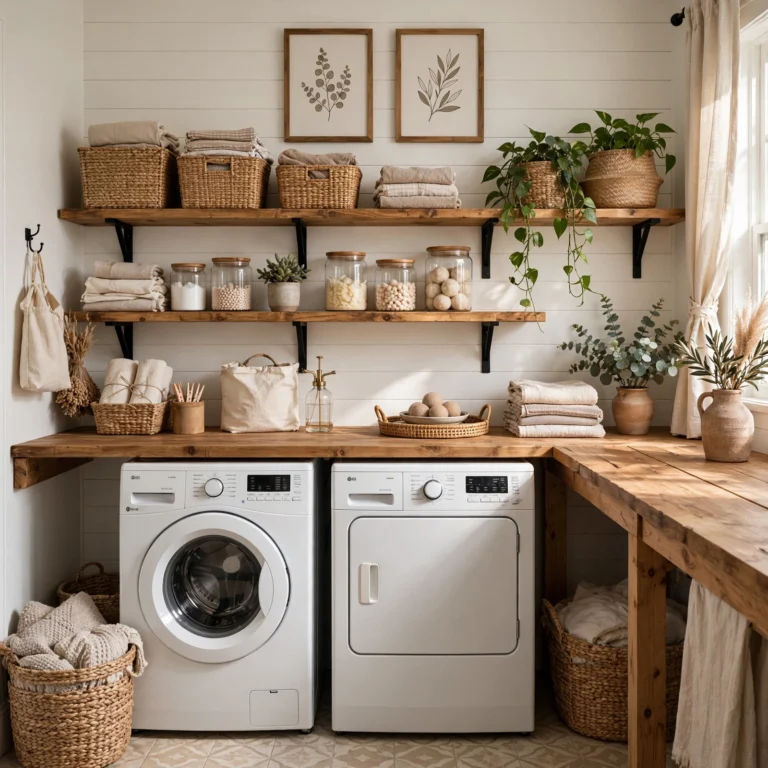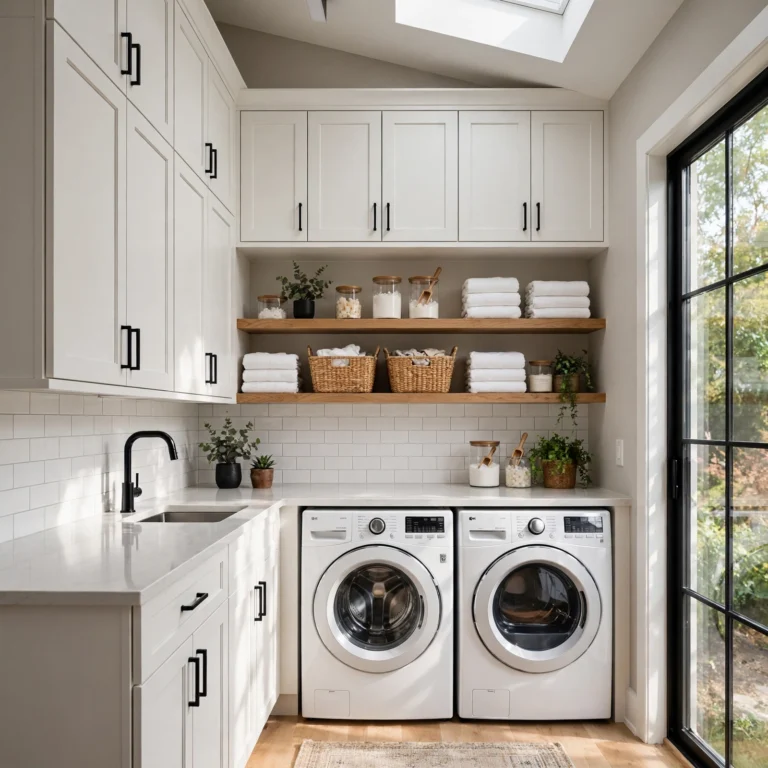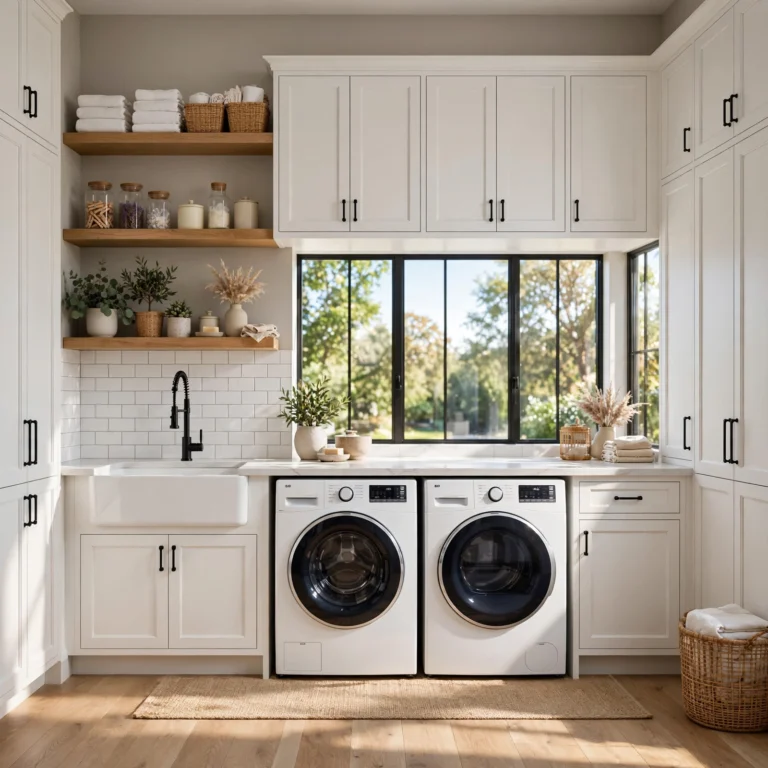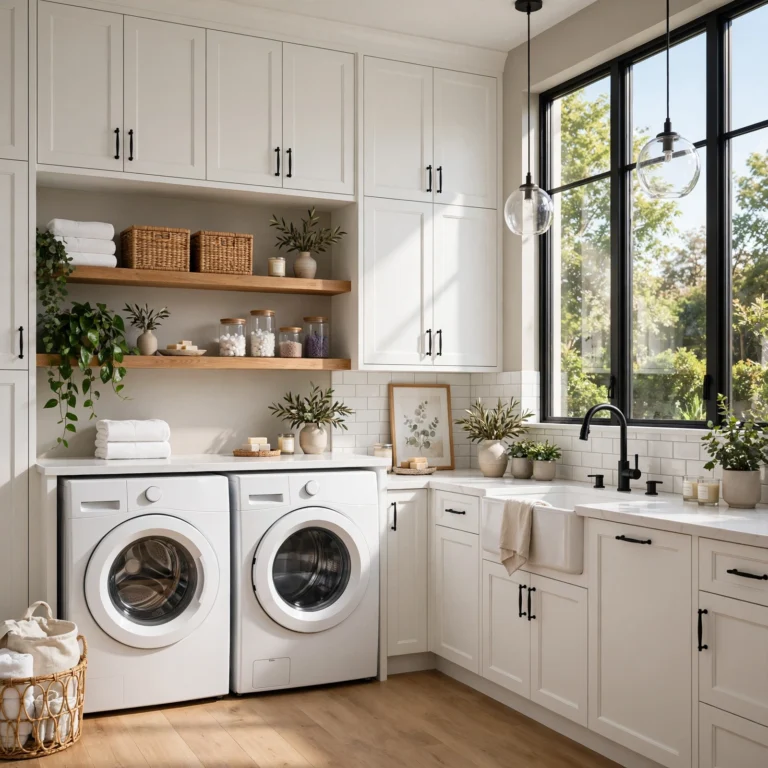
17 Trendy Laundry Room Ideas Organization Systems That Actually Work
Laundry room ideas organization goes beyond just adding bins and shelves, since even the best storage furniture eventually falls apart without a consistent system or routine behind it. This list focuses specifically on the processes, workflows, and small habits that keep a laundry room functioning smoothly day to day, rather than furniture or cabinetry alone.
Trend & Background
Laundry room organization has increasingly shifted focus from pure storage furniture toward the systems and routines that determine whether that storage actually gets used consistently. This reflects a broader recognition in home organization generally that a beautifully organized space tends to fall apart within weeks if it isn’t paired with a workable, repeatable process suited to the household’s actual habits. Tools like color coded sorting, digital labeling, and shared chore assignment systems have grown in popularity as part of this shift, treating organization as an ongoing practice rather than a one time furniture purchase.
Key Takeaways
- Laundry room ideas organization works best as a combination of routines and systems, not just bins and shelves, since even great storage furniture fails without a consistent process behind it.
- Sorting and workflow systems, like color coding or zone based layouts, reduce the daily decision making that often causes laundry to pile up in the first place.
- Small routines, like a lost sock station or an end of day reset, address the specific friction points that derail an otherwise well organized laundry process.
- Involving the whole household through tools like a chore board or labeled bins makes an organization system more sustainable than one person managing everything alone.
Laundry Room Ideas Organization Worth Trying
Whether you’re trying to solve a recurring mismatched sock problem or just want a clearer household routine around this weekly task, these ideas should help you build a system that actually sticks.
1. Color Coded Sorting System Laundry Room Ideas Organization
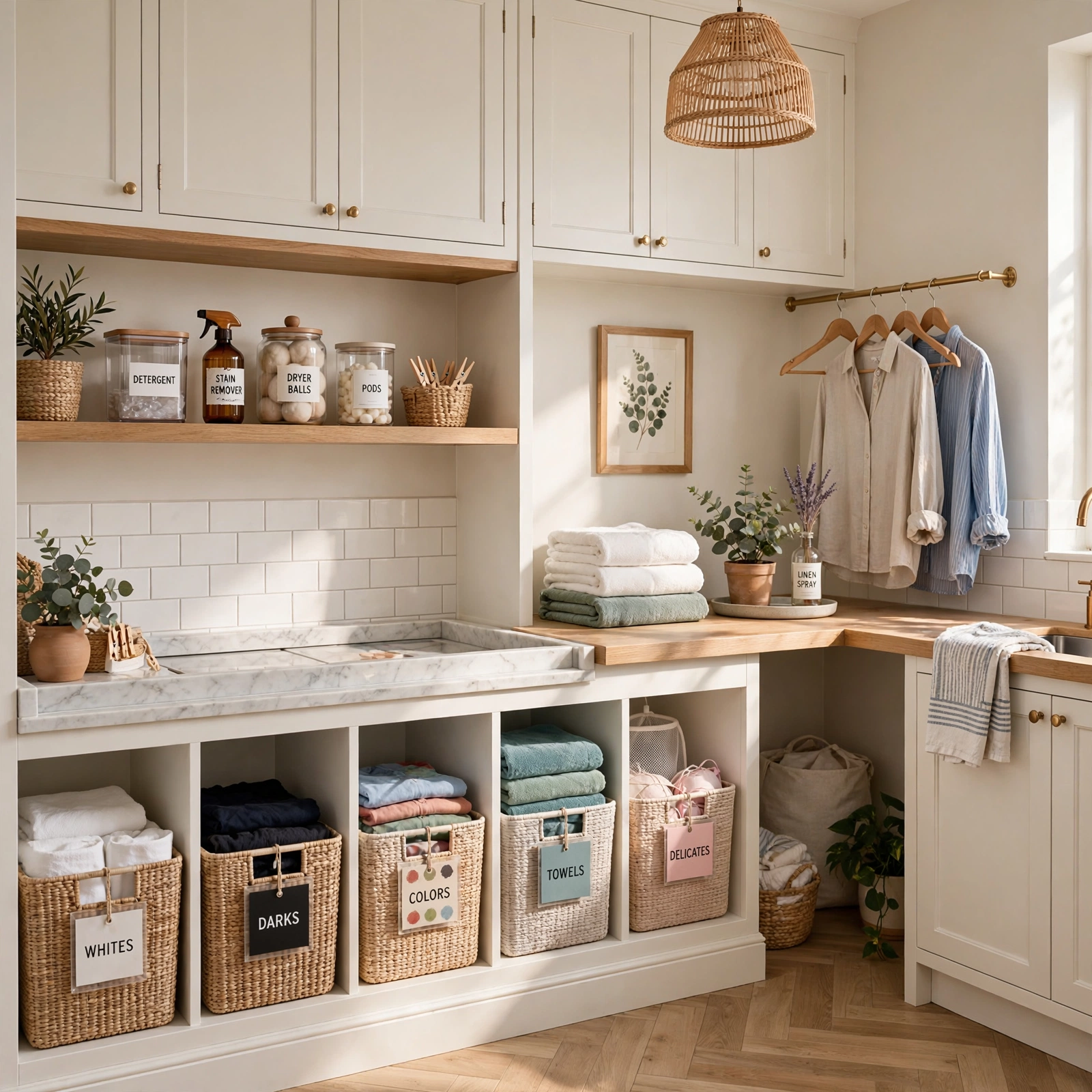
A color coded sorting system assigns a specific color to each laundry category, such as blue for darks, yellow for lights, and green for delicates, using matching bins, bags, or labels throughout the household so every family member can sort consistently without needing to remember written instructions. This system works especially well for younger children who aren’t yet reading fluently, since the color association is easier to learn than a text based label. Keeping the same color scheme consistent from the bedroom hamper all the way to the laundry room itself reinforces the system at every step of the process.
| Sorting Category | Suggested Color | Bin Location |
| Darks | Navy or black | Bedroom hamper, laundry bin |
| Lights | Yellow or cream | Bedroom hamper, laundry bin |
| Delicates | Green or pink | Laundry room only |
2. Weekly Laundry Schedule Chart Ideas Organization
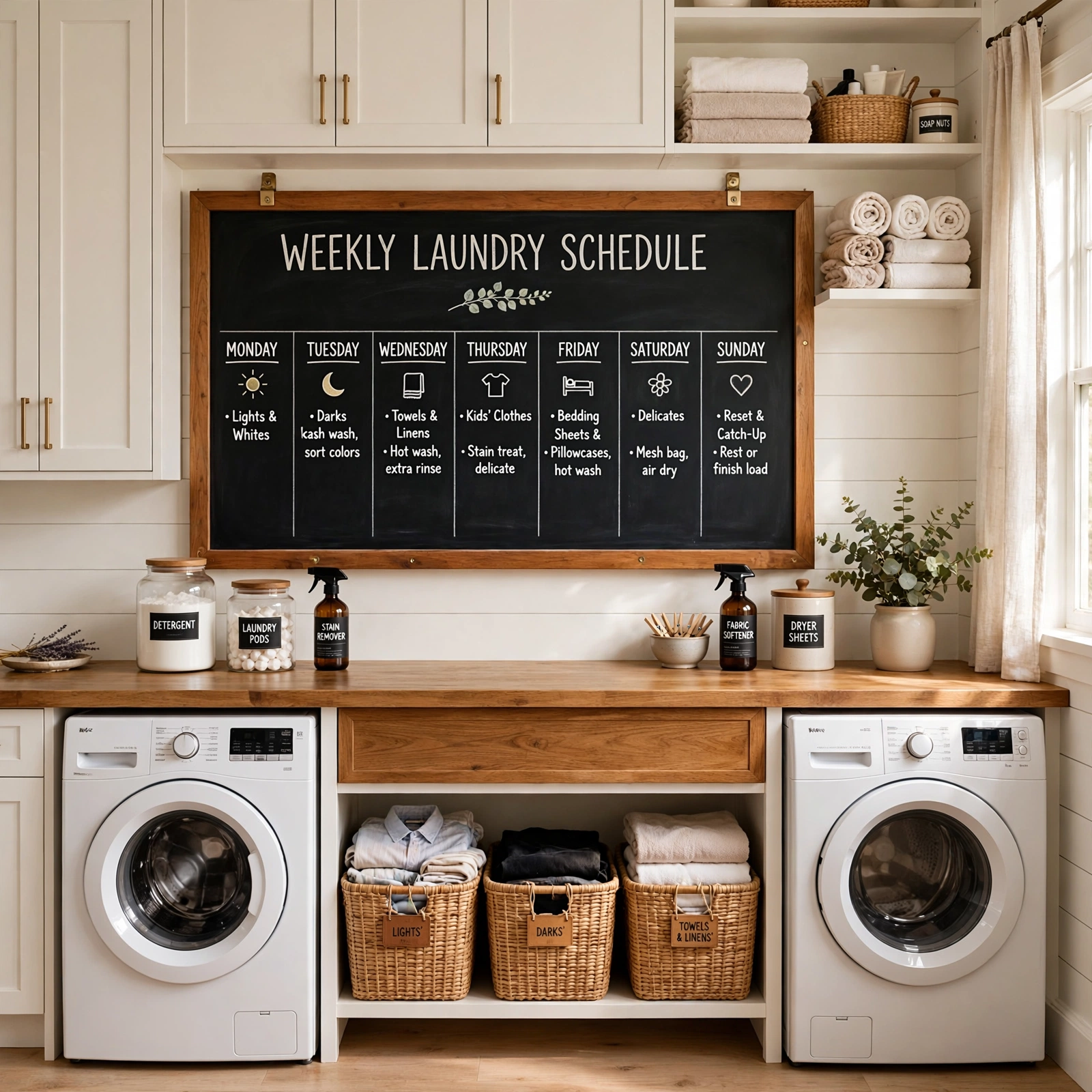
A weekly laundry schedule chart assigns specific laundry categories or family members to specific days, such as towels on Monday and kids’ clothes on Wednesday, rather than tackling an undifferentiated pile whenever it becomes unavoidable. This system spreads the task out across the week in smaller, more manageable batches instead of one overwhelming laundry day. Posting the chart directly in the laundry room, where it’s visible during the actual task, keeps the schedule top of mind rather than existing only as an abstract plan.
3. Zone Based Workflow Layout Laundry Room Ideas Organization
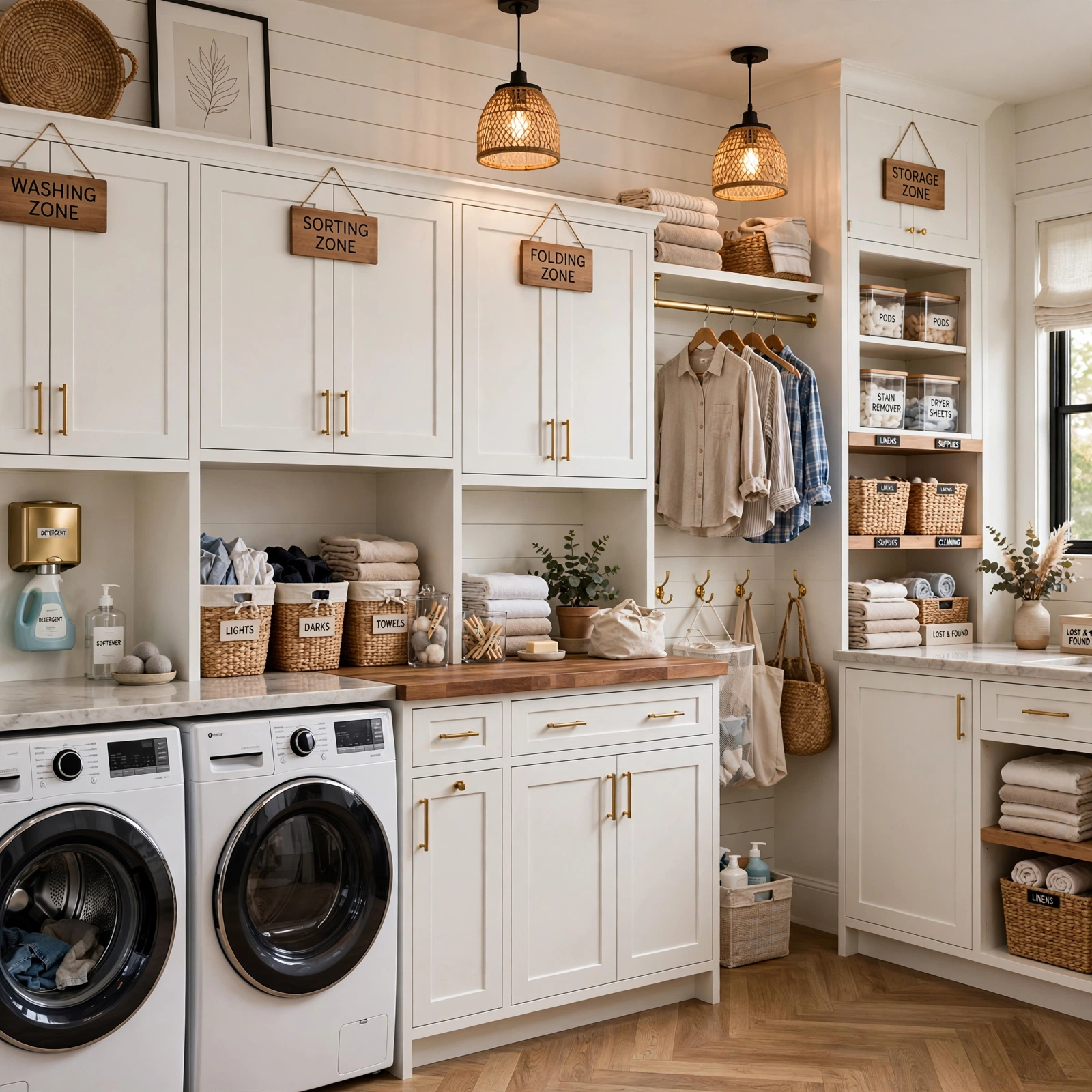
A zone based workflow layout organizes the physical laundry room space to match the natural sequence of the task itself, moving from a sorting zone near the entry, to the washing and drying zone, to a folding zone, and finally to a zone for items ready to be returned elsewhere in the house. This detail reduces backtracking and wasted motion during the process, since each step’s supplies and equipment are positioned exactly where that stage of the task actually happens. Mapping out this flow before arranging furniture, rather than after, produces a more genuinely efficient layout.
Learn More About DIY Laundry Room Ideas.
4. Lost Sock Basket Station Laundry Room Ideas Organization
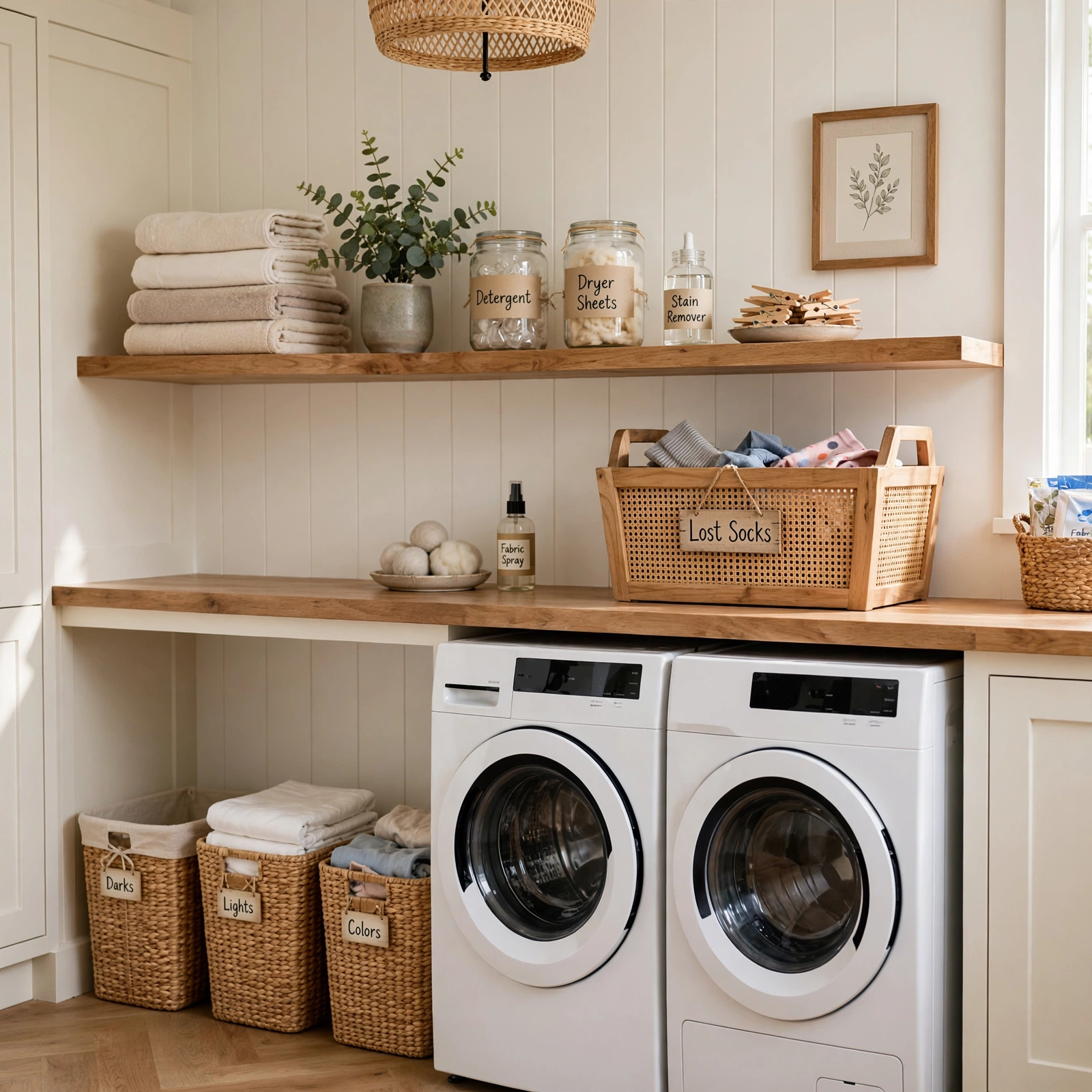
A lost sock basket station designates one small, clearly labeled container specifically for unmatched socks, collecting them in one consistent spot rather than letting them accumulate loosely across various surfaces throughout the laundry process. Checking this basket periodically, such as once a month, to attempt fresh matches or discard truly orphaned socks keeps the collection from growing indefinitely. This small system addresses one of the most universally recognized laundry frustrations with a genuinely simple, low effort solution.
5. Pre Treatment Station Setup Laundry Room Ideas Organization
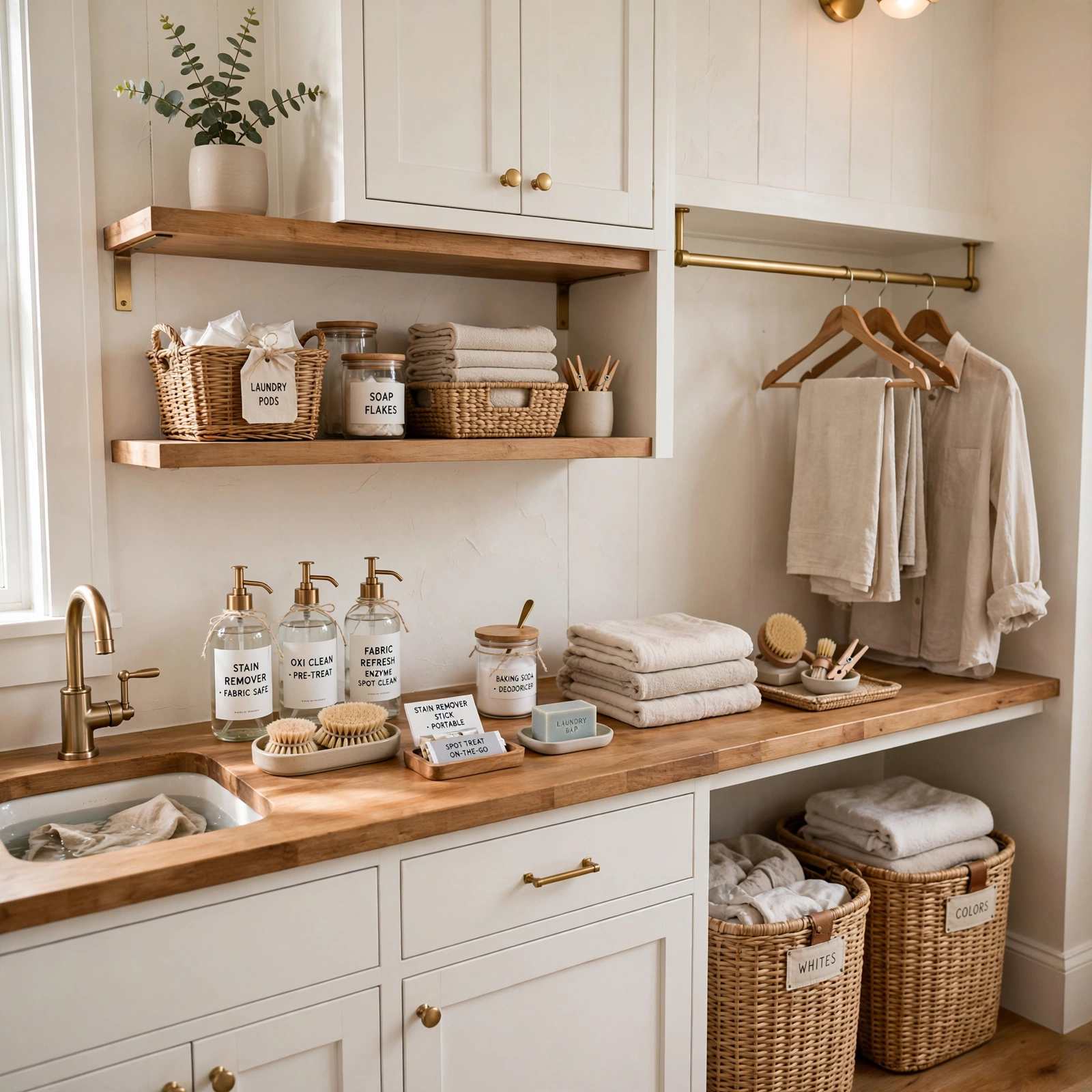
A pre treatment station setup groups stain removers, a soft brush, and a small basin or sink access into one dedicated spot, allowing stained items to be addressed immediately upon entering the laundry room rather than getting washed with the stain still set in. Positioning this station near the sorting zone, before items reach the washer, ensures stains get treated at the optimal point in the process rather than being discovered too late. Keeping a laminated quick reference guide for treating common stain types nearby speeds up decision making during this step.
6. Family Chore Assignment Board Laundry Room Ideas Organization
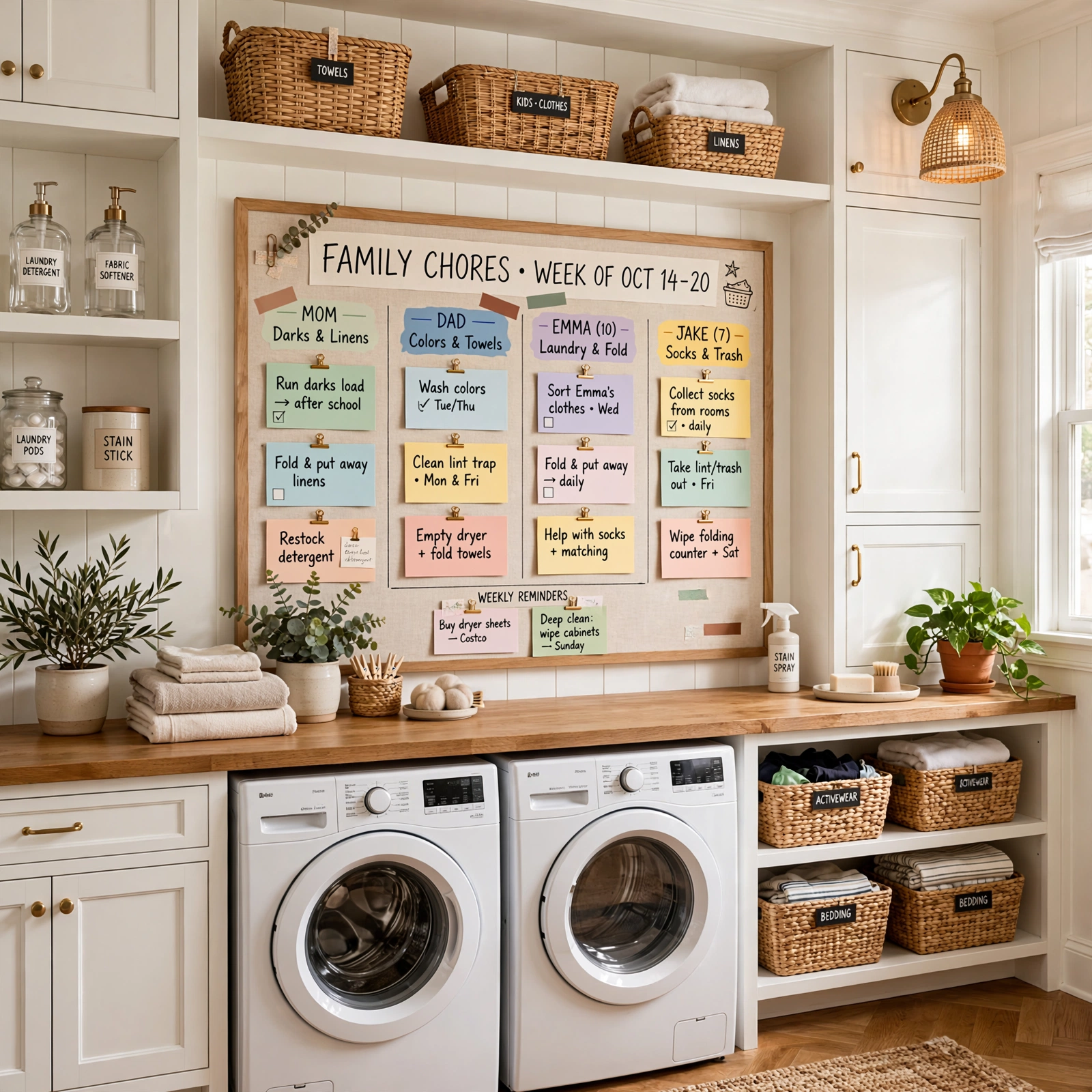
A family chore assignment board tracks which household member is responsible for which part of the laundry process on a given day or week, whether that’s starting a load, transferring it to the dryer, or folding a finished batch. This system distributes the task’s actual workload across the household rather than leaving one person responsible for the entire process from start to finish. Rotating assignments periodically keeps the system feeling fair and prevents any one task, like folding, from consistently falling to the same person indefinitely.
| Task | Typical Assignee | Frequency |
| Starting a Load | Whoever fills a hamper | As needed |
| Transferring to Dryer | Assigned family member | Daily rotation |
| Folding and Putting Away | Assigned family member | Daily rotation |
7. Seasonal Rotation Storage System Laundry Room Ideas Organization
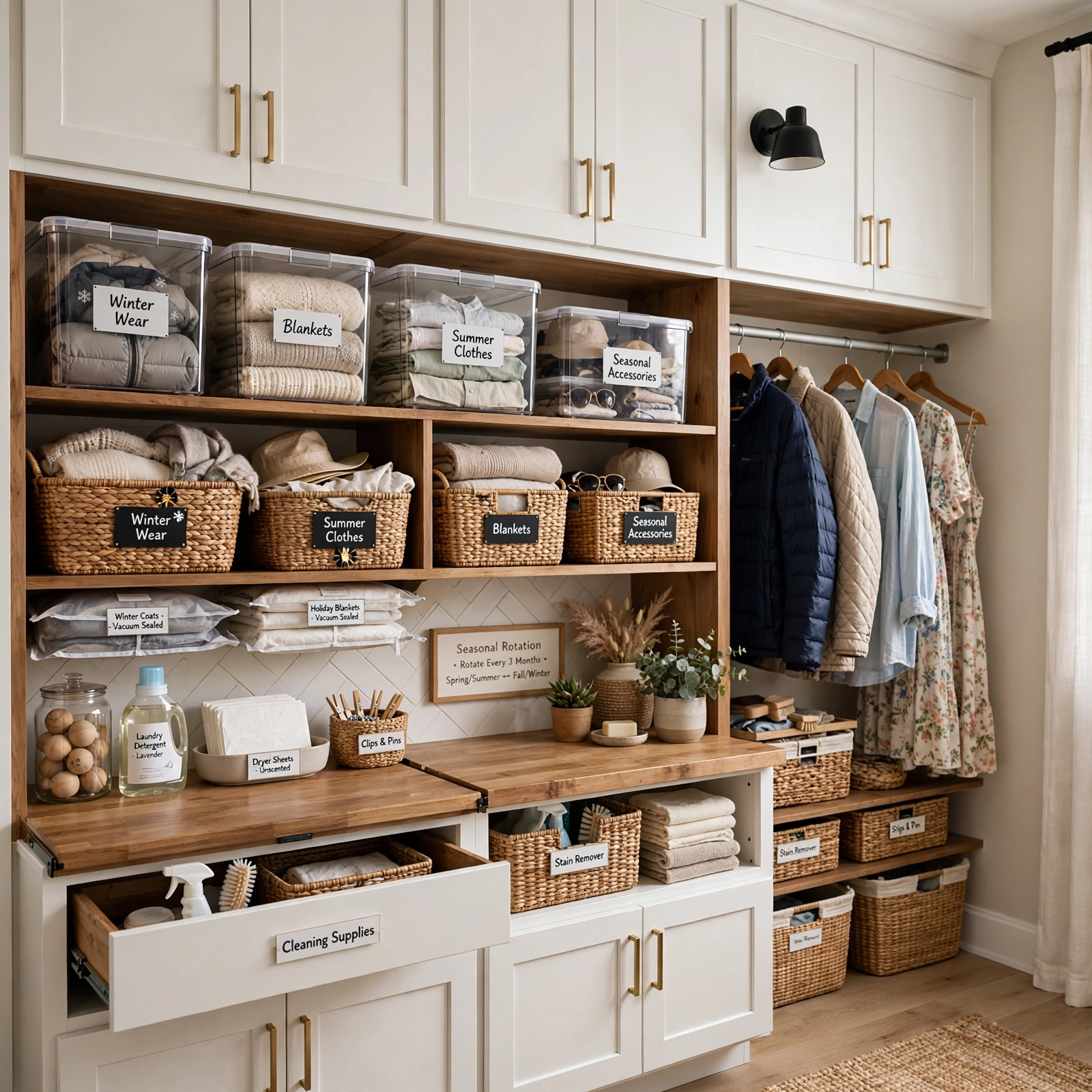
A seasonal rotation storage system designates specific bins or shelf sections for off season clothing and linens, swapping their contents twice a year as the seasons change, rather than keeping every item accessible year round in an already limited space. This detail keeps the laundry room’s active storage focused on what’s currently in use, reducing clutter from bulky winter coats or extra summer linens sitting out during the wrong season. Labeling each bin clearly with its contents and the season it corresponds to speeds up the twice yearly swap considerably.
8. Inventory Checklist for Supplies Laundry Room Ideas Organization
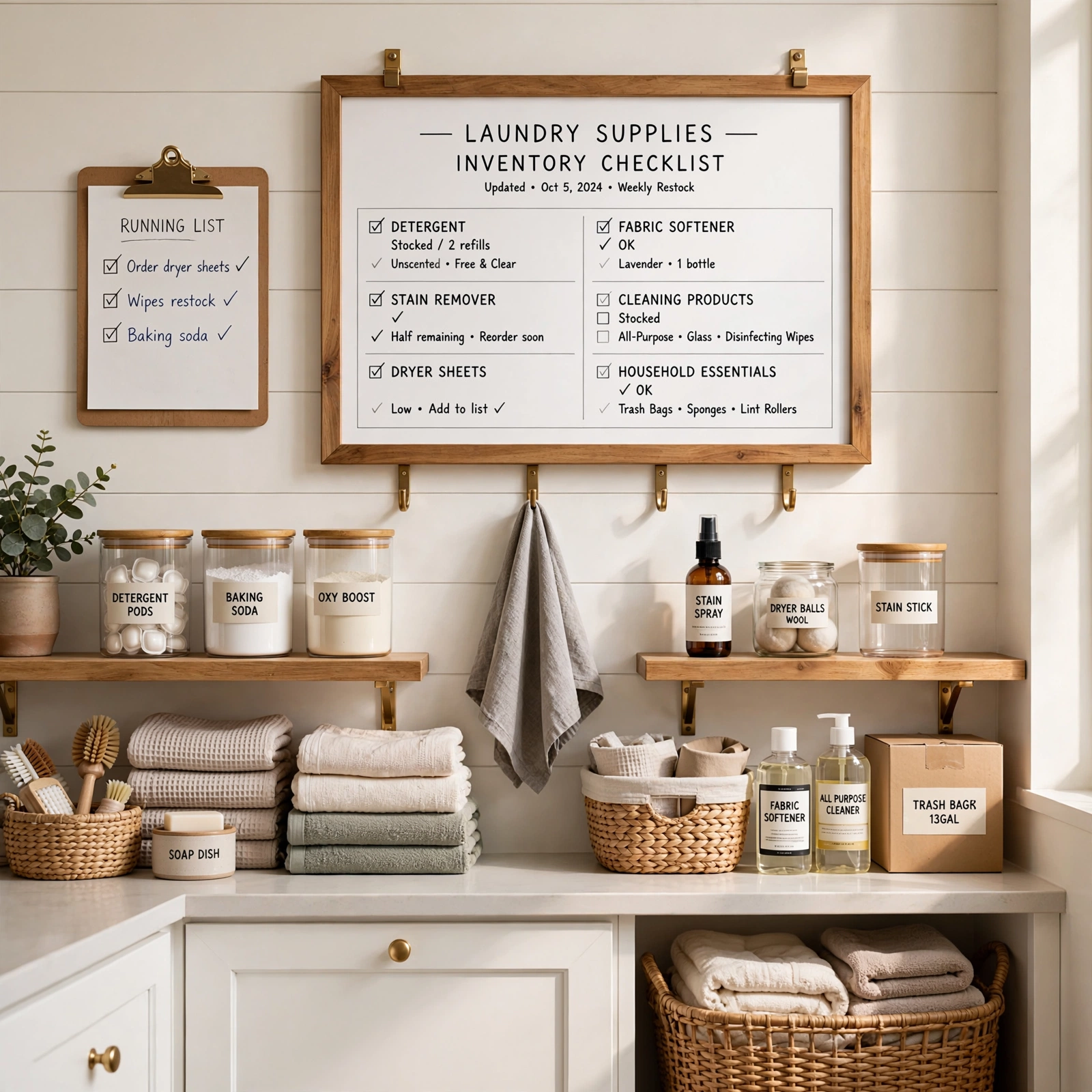
An inventory checklist for supplies tracks detergent, dryer sheets, and other consumable products, noting when each one is running low so replacements can be added to a regular shopping list before the household actually runs out. Posting this checklist somewhere visible in the laundry room, with a simple system for marking an item as low, keeps the tracking current without requiring a separate, easily forgotten inventory app or spreadsheet. This detail prevents the common frustration of starting a load only to discover there’s no detergent left.
9. Matching Sock Pairing Station Laundry Room Ideas Organization
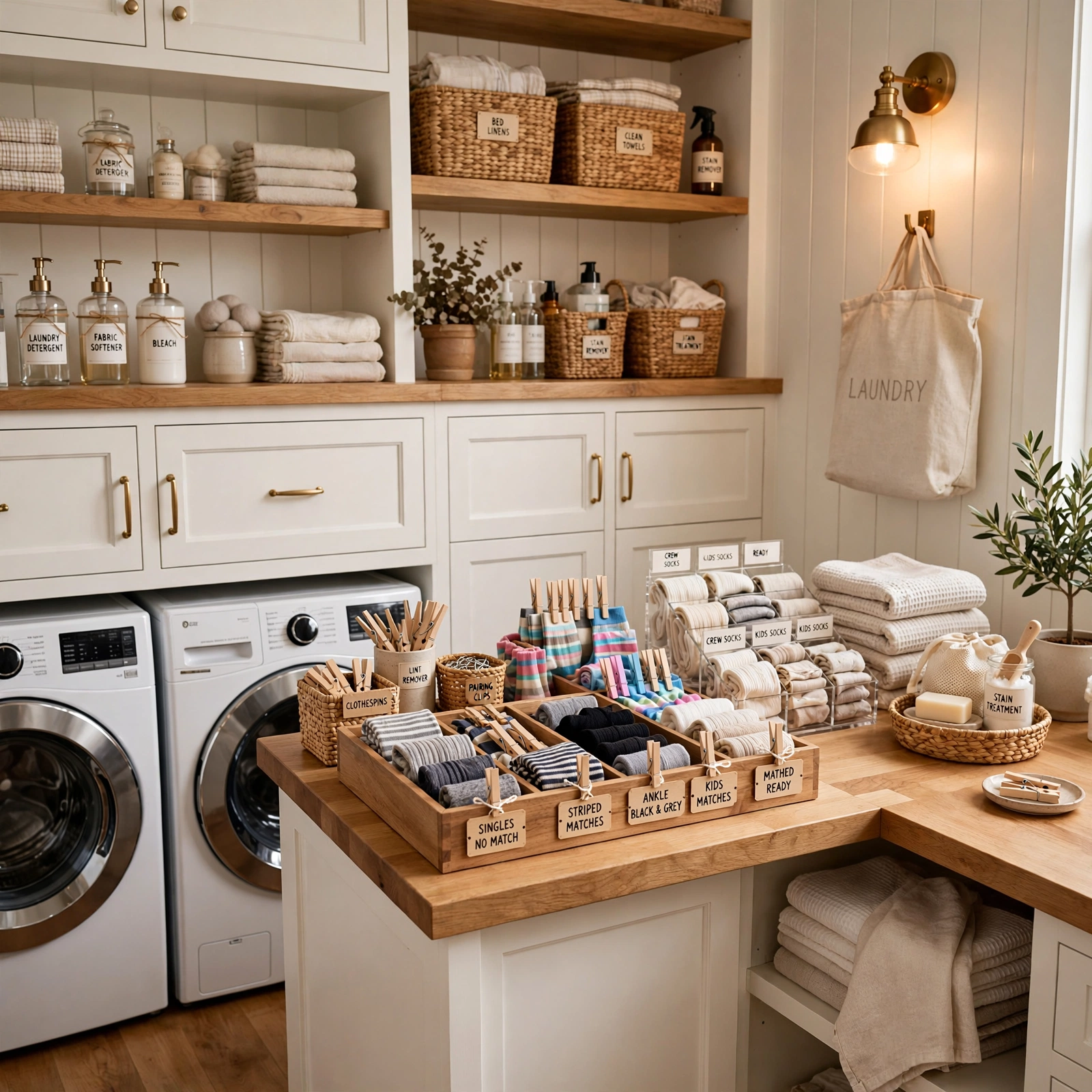
A matching sock pairing station sets aside a specific step in the folding process dedicated entirely to sorting and pairing socks before moving on to other clothing categories, rather than treating sock matching as an afterthought handled inconsistently. Using small mesh laundry bags for each household member’s socks, washed and dried together as a contained unit, can also reduce the sock matching burden considerably by keeping pairs together throughout the entire wash cycle. This system directly targets one of the most time consuming, tedious parts of a typical folding session.
10. Category Based Shelf Grouping Laundry Room Ideas Organization
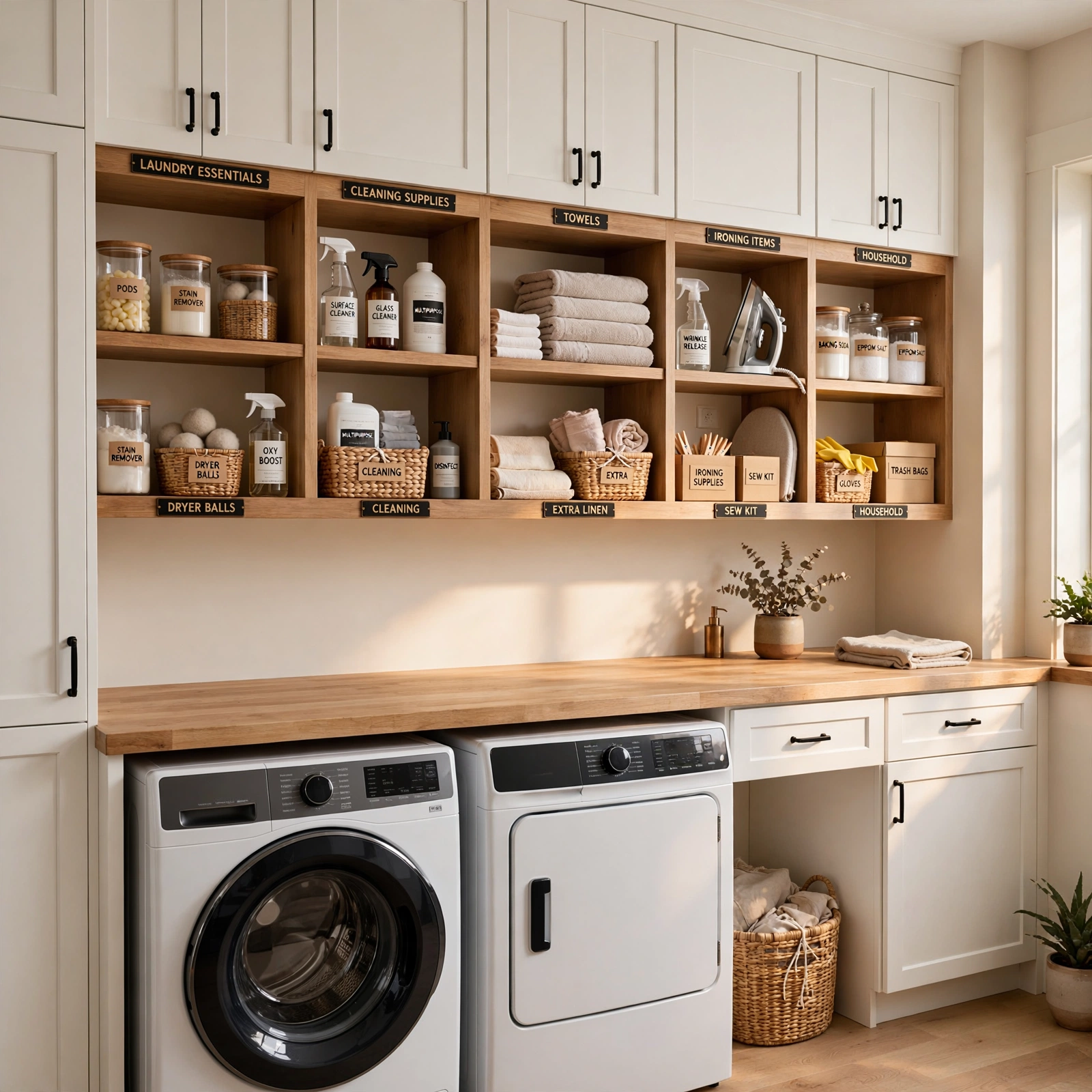
Category based shelf grouping organizes laundry room shelving by function rather than by product type alone, such as grouping everything needed for the washing stage together, separate from everything needed for stain treatment or ironing. This approach differs from simply organizing by product category, since it considers how items are actually used together during a specific part of the process. Rearranging existing shelving to reflect this functional grouping, rather than purchasing new storage furniture, is often a free or very low cost way to improve organization.
11. Quick Grab Emergency Kit Laundry Room Ideas Organization
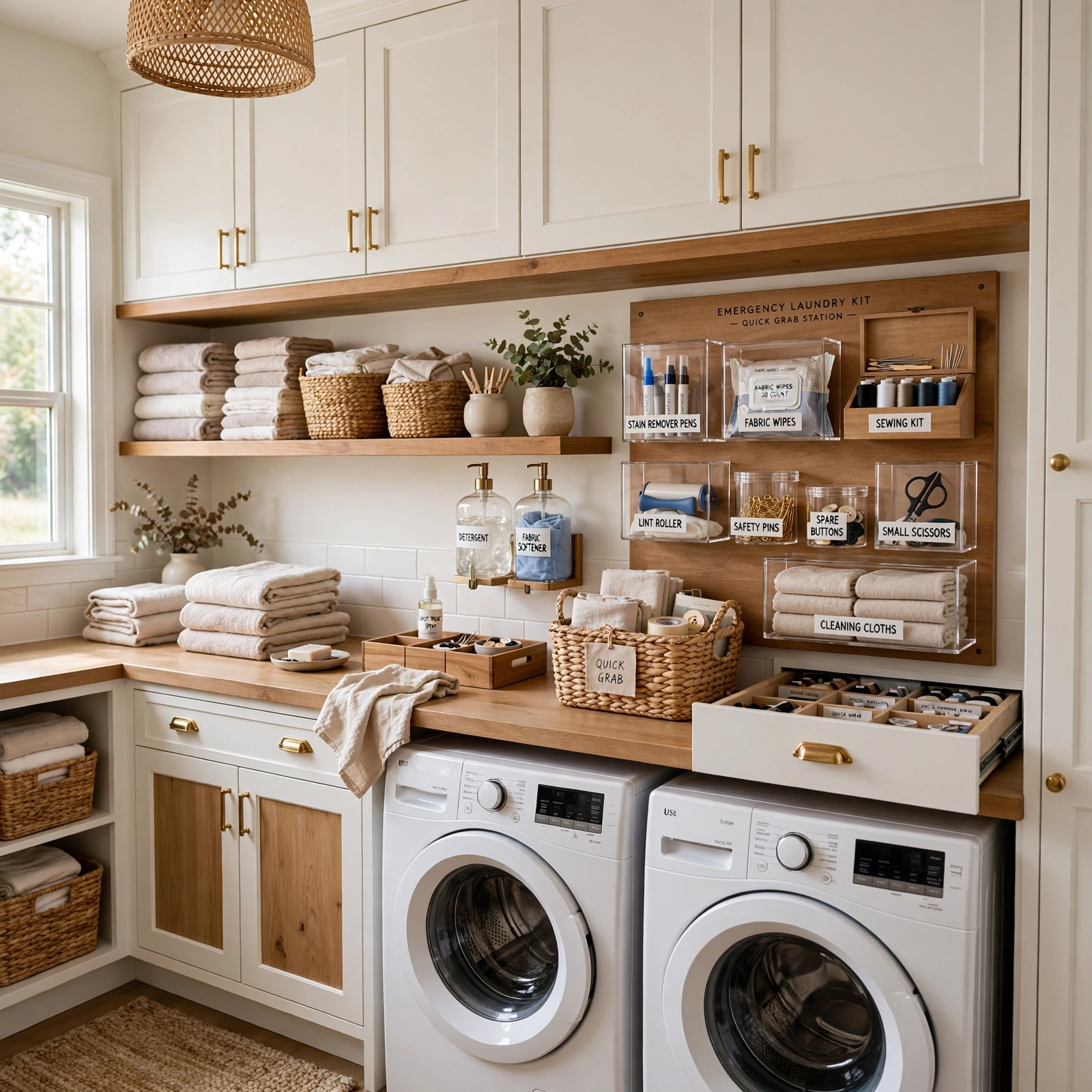
A quick grab emergency kit assembles a small, portable bag or box containing a stain pen, a sewing kit, and a small bottle of spot cleaner, kept near the door for grabbing on the way out when a last minute stain or clothing malfunction happens right before leaving the house. This detail addresses a specific, time sensitive laundry adjacent need that a standard, fixed pre treatment station doesn’t cover as conveniently. Restocking the kit immediately after each use ensures it stays ready for the next unexpected need.
12. Digital Label Maker System Laundry Room Ideas Organization
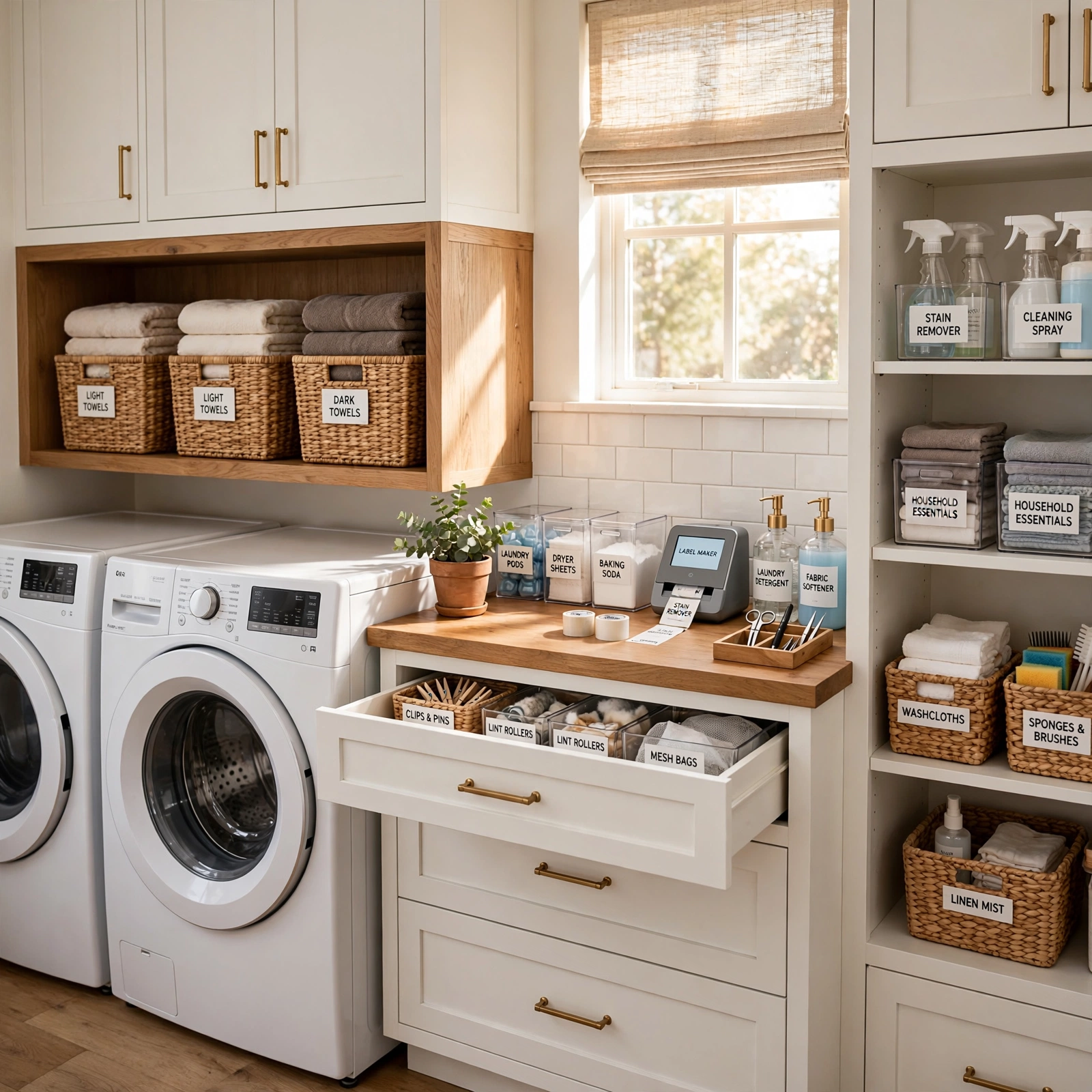
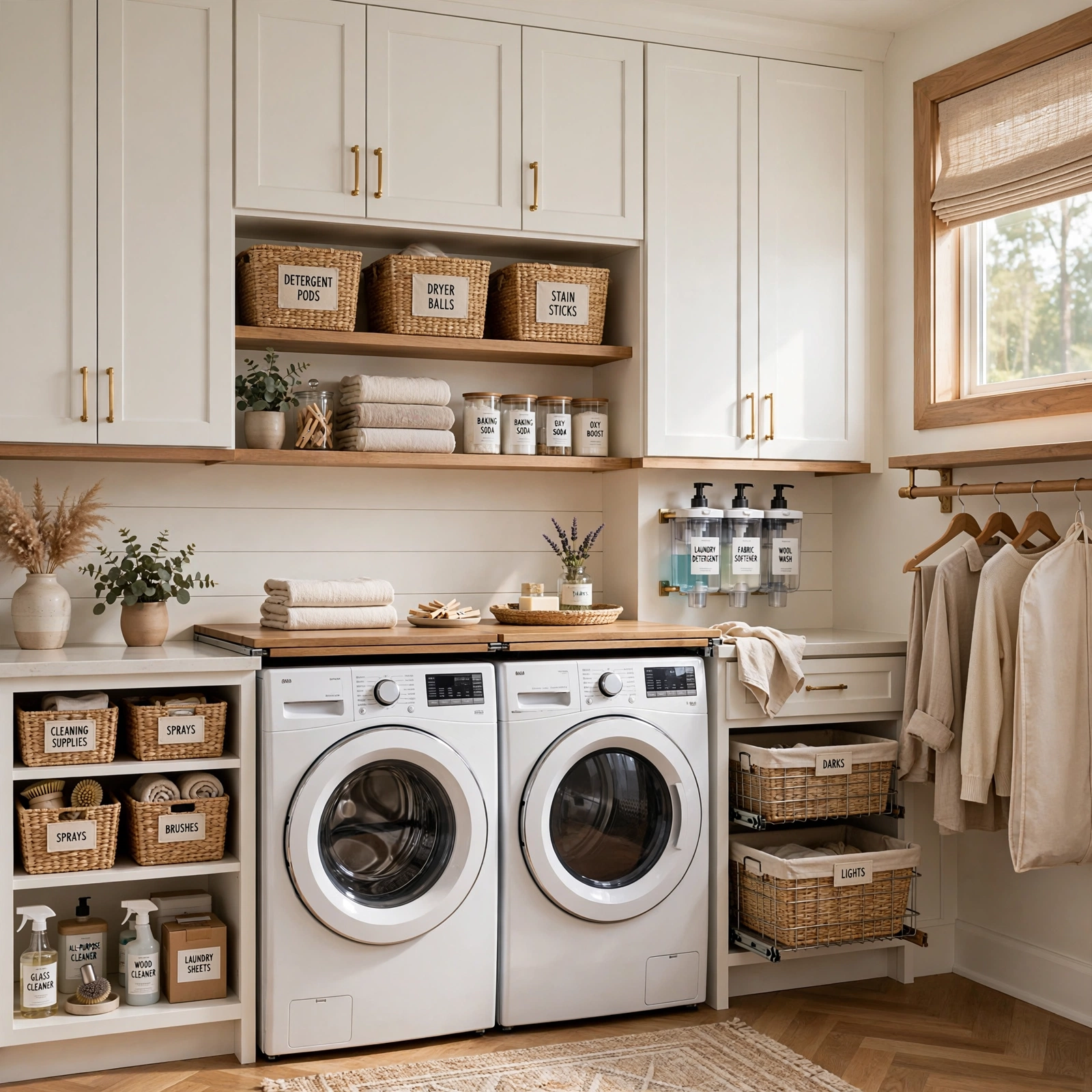
A digital label maker system creates crisp, printed labels for bins, shelves, and containers throughout the laundry room, offering a more durable and legible alternative to handwritten labels that can fade or become illegible over time. This detail works particularly well for a more detailed organizational system with many small categories, since a label maker produces consistent, easy to read text across the entire room. Choosing a label maker with a laminated tape option improves durability against the room’s regular exposure to moisture.
13. First In First Out Product Rotation Laundry Room Ideas Organization
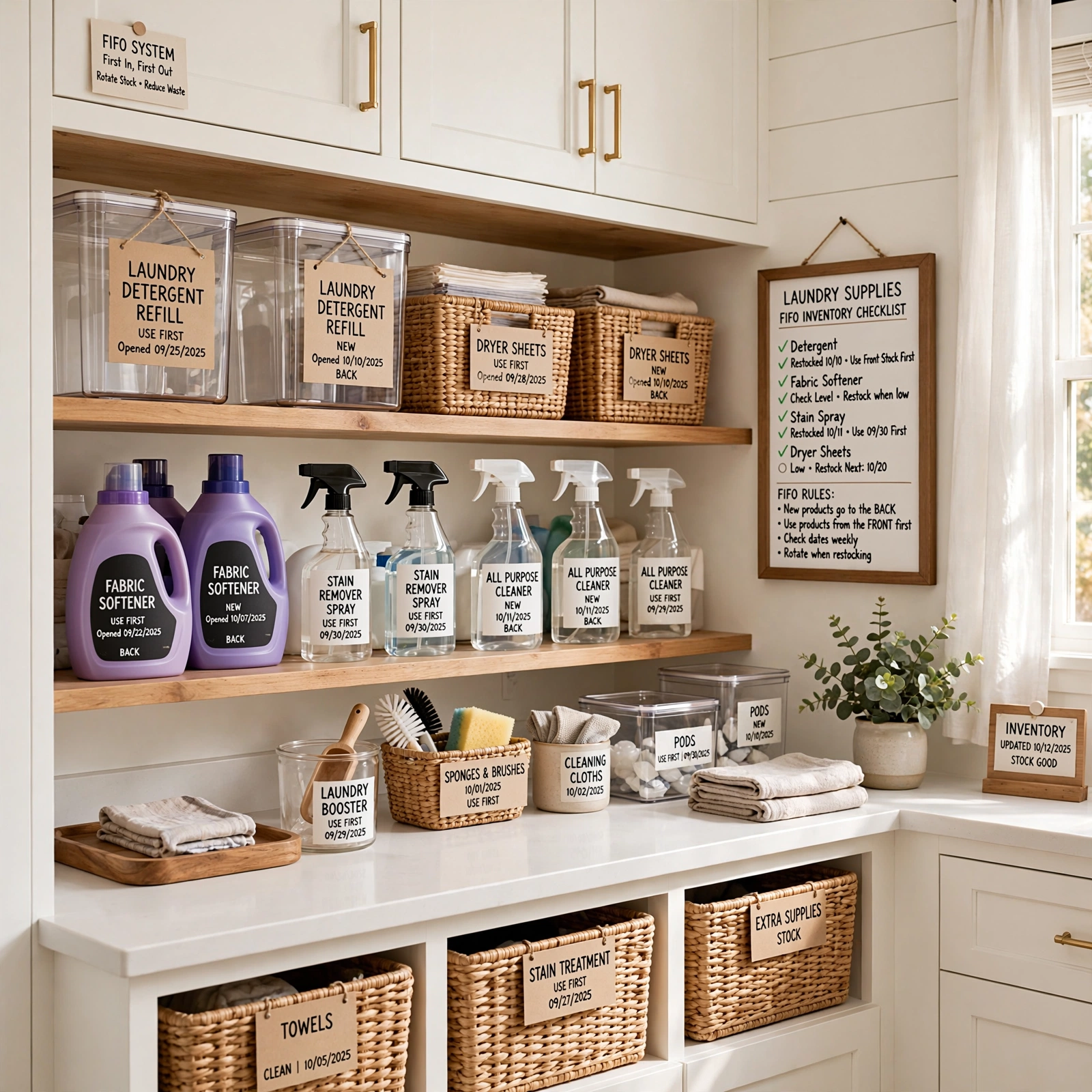
A first in first out product rotation system arranges detergent, fabric softener, and other consumable supplies so older stock sits at the front of a shelf and gets used before newly purchased items placed behind it, preventing product from expiring or degrading in quality while sitting unused at the back of a cabinet. This detail matters more for bulk purchased items with a longer shelf life expectation, where it’s easy to lose track of purchase dates without a deliberate rotation habit. Checking expiration dates during each restock reinforces this system consistently over time.
14. Donation Box for Outgrown Clothes Laundry Room Ideas Organization
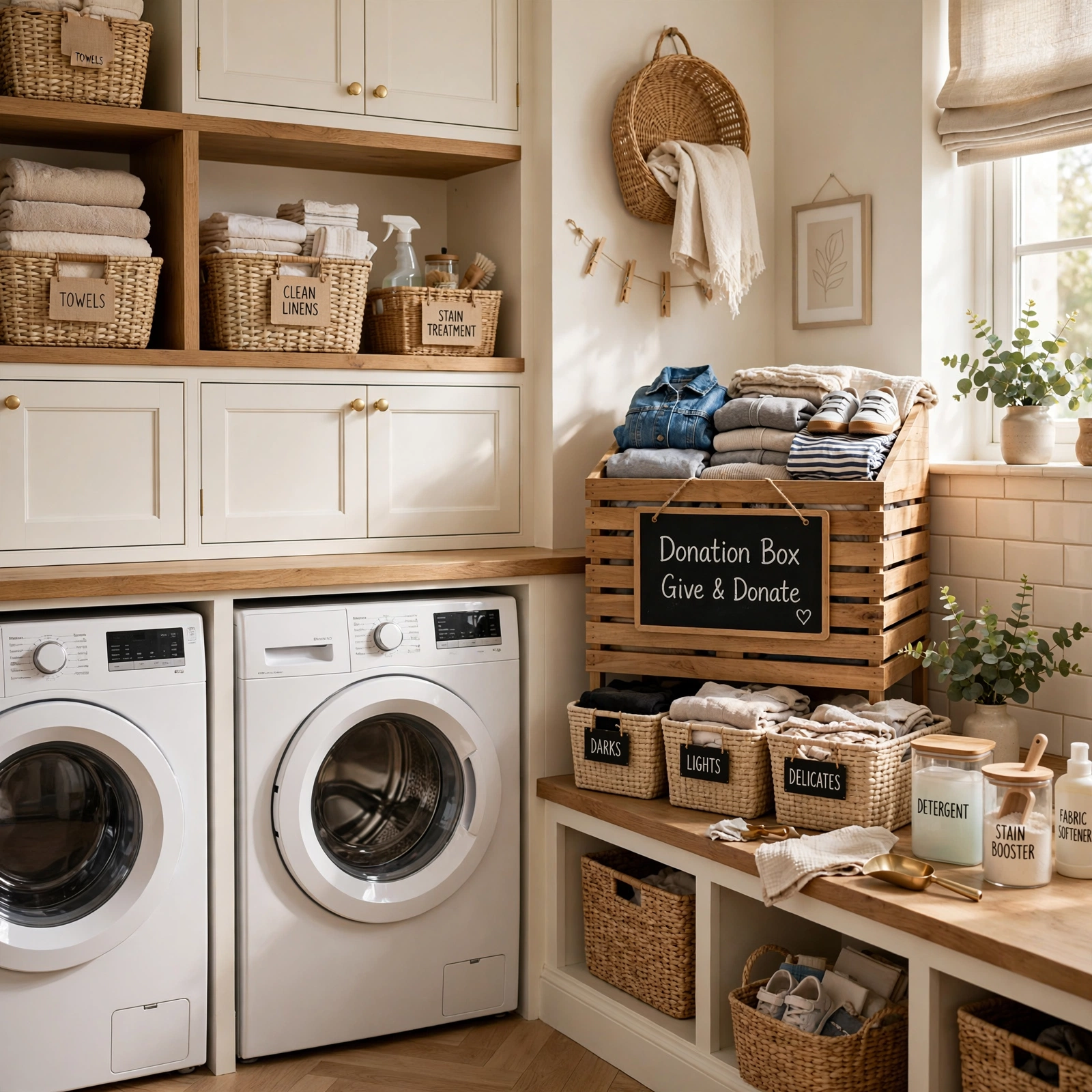
A donation box for outgrown clothes keeps a designated bin in or near the laundry room specifically for items identified as no longer needed during the folding process, such as a child’s clothing that’s been outgrown or an item that’s seen its last wear. This detail captures decluttering opportunities at the exact moment they’re most obvious, right as an item comes out of the wash and gets evaluated during folding, rather than requiring a separate closet cleaning session later. Setting a reminder to drop off the box’s contents once it fills up keeps the system from becoming its own storage problem.
15. Dedicated Delicate Wash Bag Station Laundry Room Ideas Organization
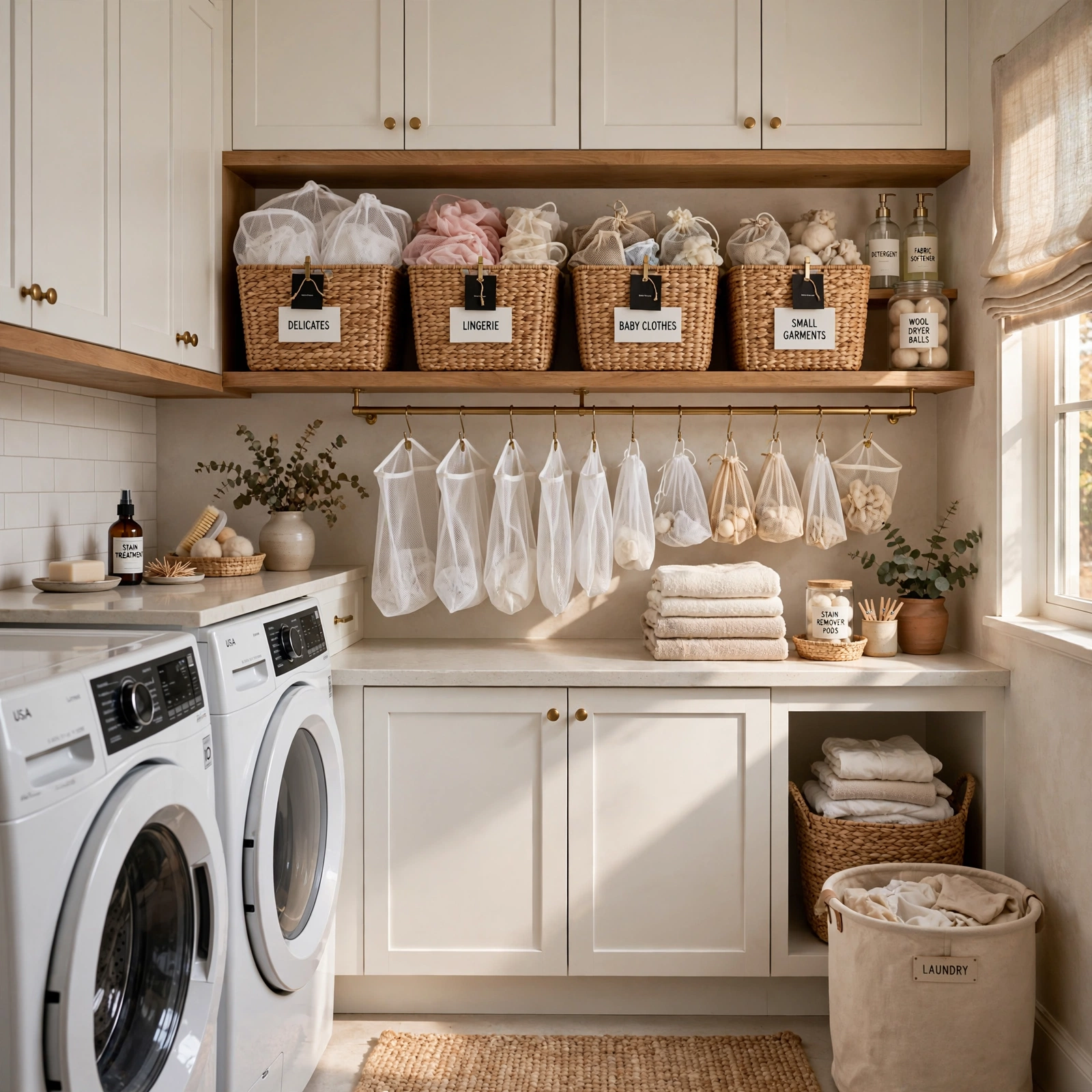
A dedicated delicate wash bag station keeps a small supply of mesh laundry bags easily accessible near the sorting area, encouraging consistent use for bras, tights, and other delicate items that benefit from the extra protection during a wash cycle. This detail prevents the common problem of delicate items being tossed in with a regular load out of simple convenience when a bag isn’t readily at hand. Storing the bags in a small, clearly labeled container right where sorting happens removes any friction from using them consistently.
16. Ironing Priority Basket Laundry Room Ideas Organization
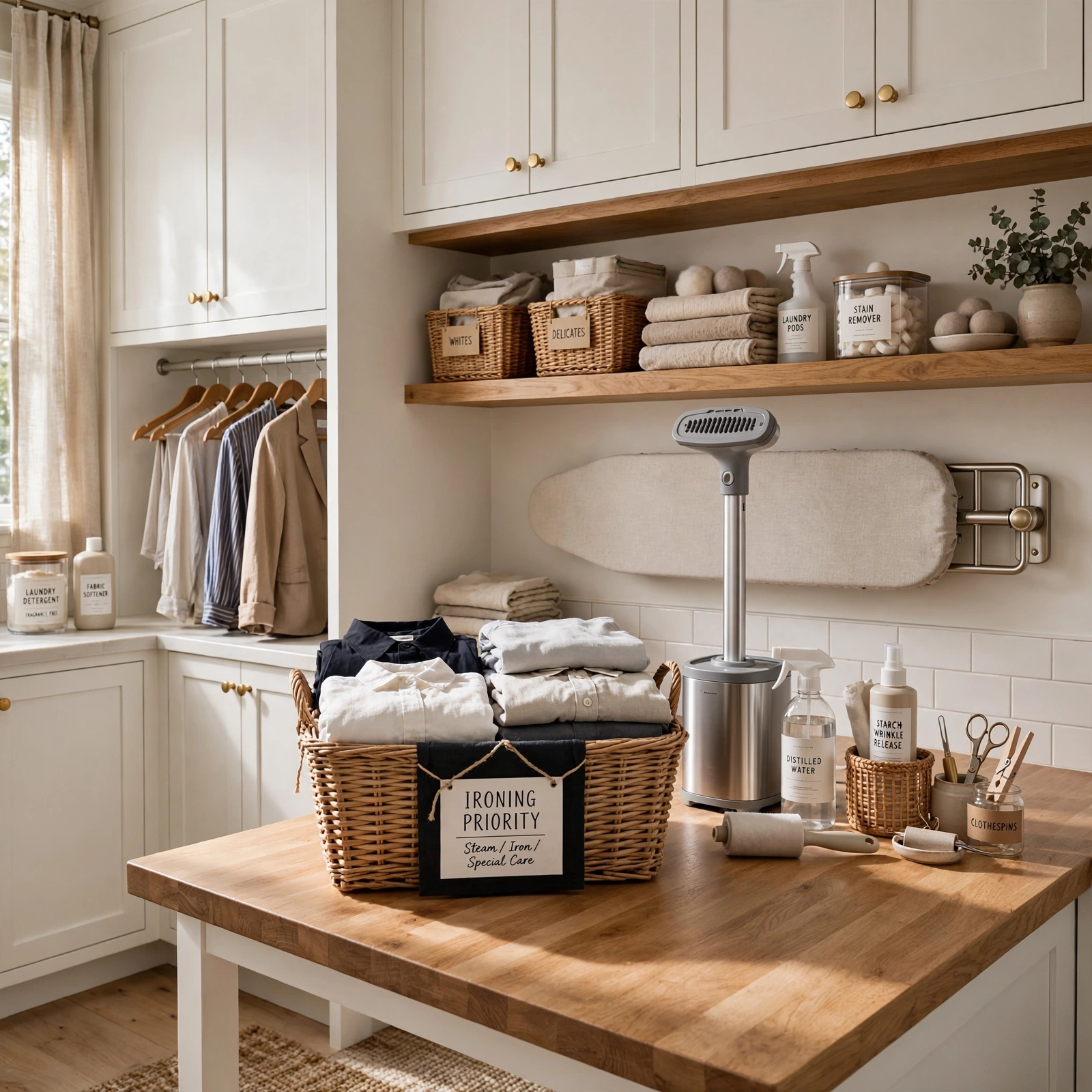
An ironing priority basket separates items that specifically need pressing from the general folded laundry pile, preventing wrinkle prone clothing from getting buried in a larger stack and then discovered wrinkled right before it’s needed. This detail works especially well paired with a designated ironing day or session, giving that task a clear, contained starting point rather than requiring a search through multiple baskets or drawers. Emptying this basket promptly once ironing is complete keeps it from becoming a permanent overflow pile instead of a genuinely temporary holding spot.
17. End of Day Reset Routine Laundry Room Ideas Organization
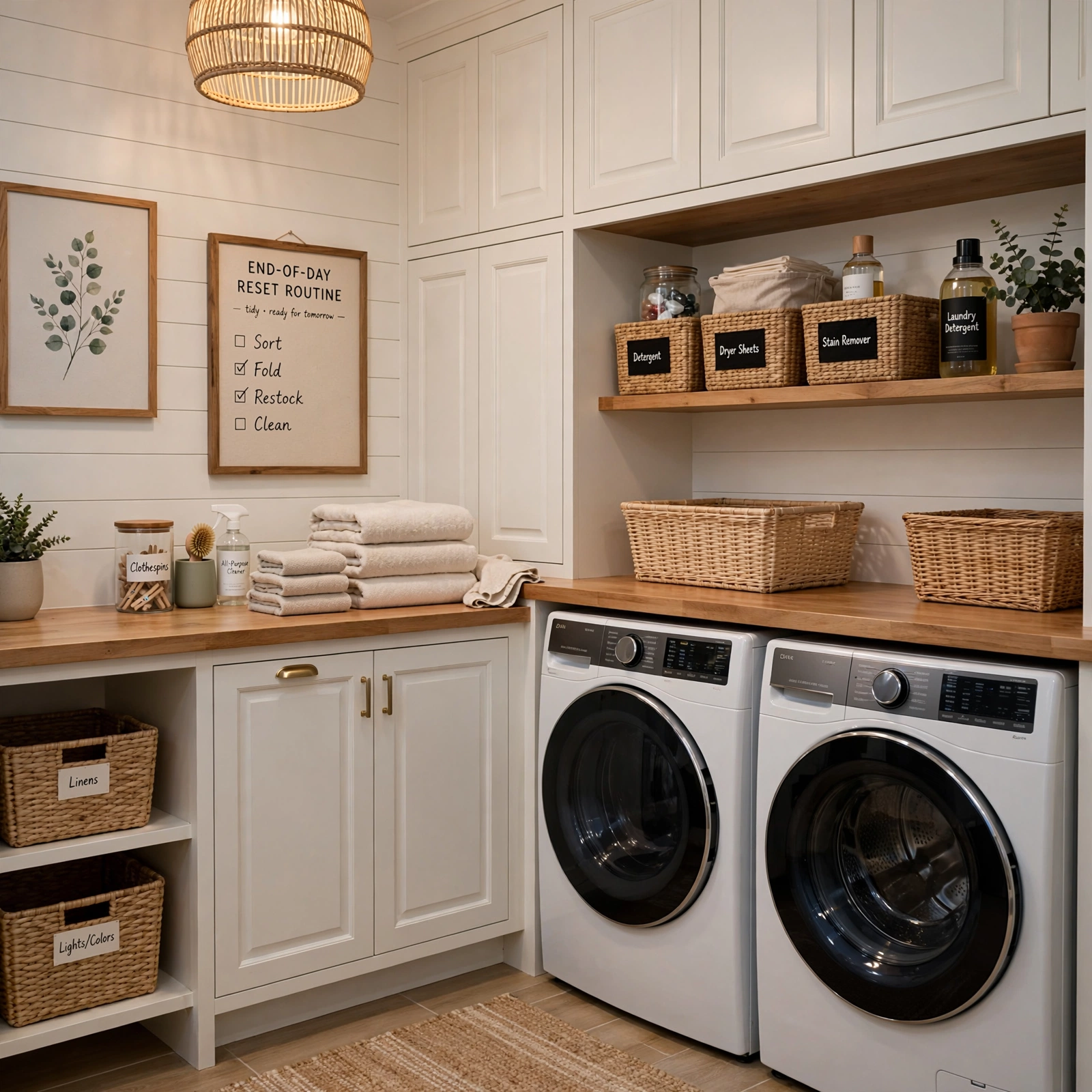
An end of day reset routine sets aside just a few minutes each evening to fold any remaining laundry, empty the lint trap, and return the room to a baseline tidy state, preventing small daily tasks from accumulating into an overwhelming weekend project. This routine works especially well when paired with an existing habit, like starting a load right before dinner and folding it during a favorite evening show, tying the laundry task to something already part of the daily schedule. Consistency matters more than duration here, since even five minutes daily prevents the kind of buildup that leads to an entire day lost to laundry each week.
Shop the Look
A well organized laundry room typically pairs a few key systems rather than relying on furniture alone. A color coded sorting system paired with a zone based workflow layout addresses the room’s overall process from entry to finished, put away laundry. A lost sock basket and a dedicated delicate wash bag station solve two of the most common recurring frustrations. A family chore assignment board and a weekly schedule chart round out the household wide coordination that keeps the whole system functioning without falling on just one person.
Common Laundry Room Ideas Organization Mistake to Avoid
The most common mistake is investing heavily in storage furniture and bins without establishing any actual routine or system to keep them consistently used, resulting in an initially organized room that gradually reverts to clutter within a few weeks. Beautiful storage alone doesn’t create organization if there’s no habit or process directing what goes where and when. Pairing any new storage purchase with a specific, written down routine, even something as simple as a weekly schedule chart or a designated sorting system, gives the physical furniture a much better chance of staying functional over the long term.
Frequently Asked Questions
How do I get my whole family to actually follow a laundry organization system?
Involving family members in creating the system, rather than imposing a fully finished plan without any input, tends to produce better long term buy in, since people are generally more likely to follow a routine they helped shape. Visual tools like a color coded system or a posted chore board also make the process easier to follow independently, reducing the need for constant verbal reminders from one person managing the entire household’s compliance.
What’s the best way to deal with the mismatched sock problem?
A dedicated lost sock basket, combined with washing each person’s socks in a separate mesh bag to keep pairs together throughout the entire cycle, addresses the mismatched sock problem more effectively than most other approaches. Setting a regular time to sort through the lost sock basket, rather than letting it grow indefinitely, prevents the collection from becoming its own separate clutter problem.
How often should I reassess my laundry room organization system?
Reassessing the system every few months, or whenever a specific recurring frustration keeps coming up despite the existing setup, helps keep a laundry room organization system relevant to the household’s actual, current needs. A system that worked well for a smaller household or younger children may need adjustment as circumstances change, such as kids growing older and taking on more laundry responsibility themselves.
Is a written schedule necessary, or can organization work informally?
A written or posted schedule generally produces more consistent results than a purely informal, memory based approach, particularly in a household with multiple people sharing laundry responsibilities, since a visible reference removes ambiguity about whose turn it is or what day a specific task is due. Smaller households or individuals living alone may find an informal routine sufficient, though even a simple mental checklist benefits from being written down at least once to clarify the actual plan.
What should I do if my organization system isn’t working?
Identifying the specific point where the system breaks down, whether that’s sorting, folding, or actually putting items away once clean, helps pinpoint what needs adjustment rather than abandoning the entire system and starting over from scratch. Often a system fails at just one particular step, and addressing that specific friction point, rather than overhauling everything, is enough to get the whole process functioning smoothly again.
Conclusion
These laundry room ideas organization strategies focus on the systems and routines that keep a well stocked laundry room actually functional over time, not just the storage furniture itself. Start with one or two process changes, like a sorting system or a weekly schedule, before adding more elaborate routines, and involve the whole household in building habits that will actually stick. Save this post to Pinterest for your next organizing project, and check out our related post on laundry room storage ideas for the furniture and container side of this same overall system.
Author Expertise Note
This list draws on years of helping households build laundry routines that hold up over time, with a focus on the process and habits that make organized storage actually work as intended.