13 Trending Living Room Inspiration Ideas That Feel Curated
Staring at a living room inspiration that feels flat or mismatched is a familiar frustration, especially when Pinterest boards make other homes look effortless. This roundup of living room inspiration pulls together thirteen distinct approaches from furniture arrangement to lighting layers to material choices that homeowners and renters can adapt regardless of square footage or budget.
Trend & Background
Living room design has shifted away from matchy matchy furniture sets toward layered, collected over time looks that mix vintage finds with new pieces. Warm minimalism, curved furniture silhouettes, and tactile materials like boucle, rattan, and linen have replaced the stark gray and white palettes that dominated the last decade. Smaller households and multi purpose rooms have also pushed demand for flexible layouts that handle work from home needs, entertaining, and everyday lounging without feeling cluttered or overly formal.
Key Takeaways
- 13 living room inspiration ideas covering furniture layout, color palettes, textures, and lighting choices for every home style
- Comparison tables included for sofa sizing, rug dimensions, and color palette pairing to simplify decision making
- Common mistake breakdown so budget and effort go toward changes that actually improve the room
- FAQs answer sizing, layout, and styling questions homeowners search most often
Living Room Inspiration For You
Each idea includes practical execution details, not just a mood description, so the concept translates into an actual shopping list and floor plan rather than staying stuck in the “someday” folder.
1. Curved Sectional Sofa Living Room Inspiration
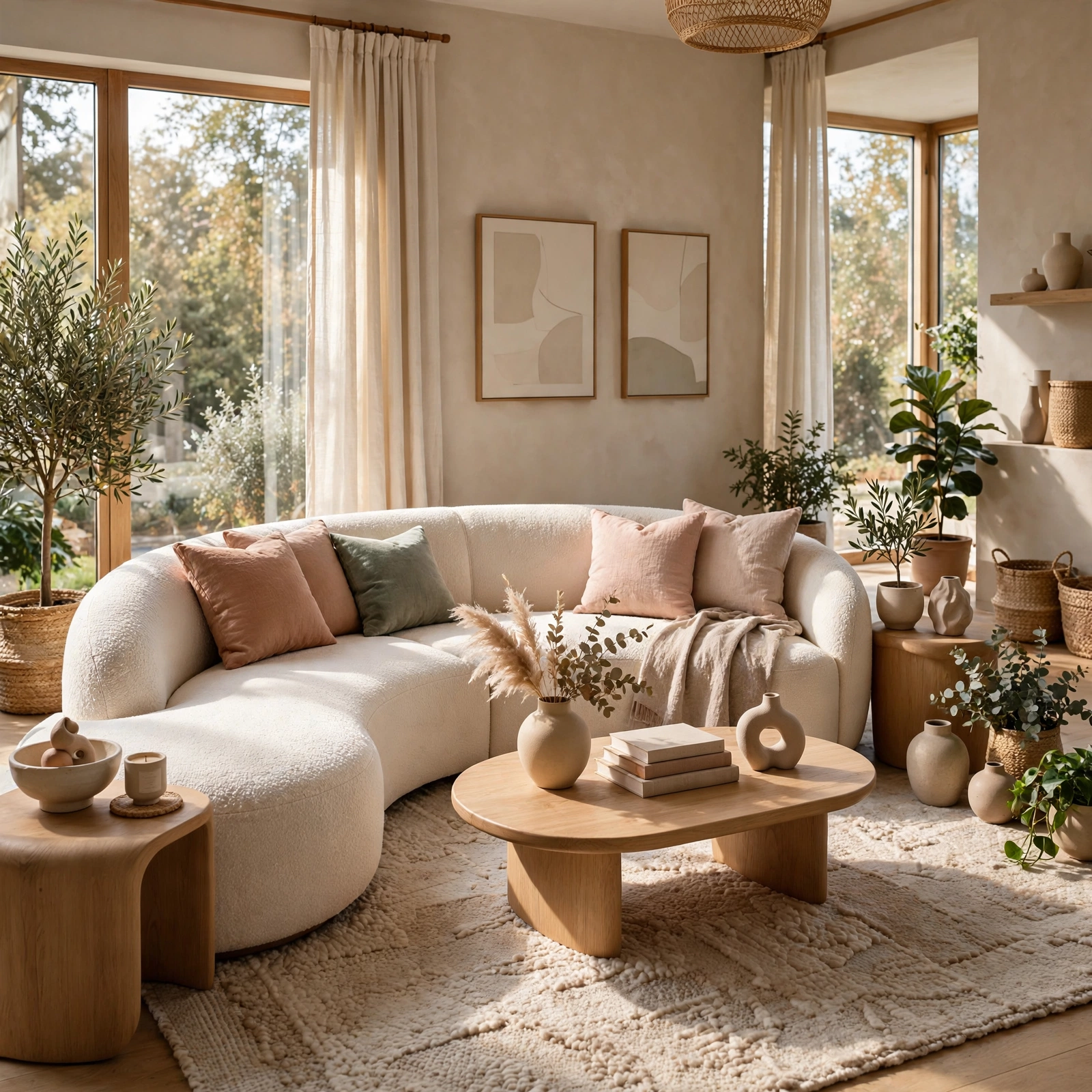
A curved sectional softens a room’s sightlines and works especially well in open concept spaces where sharp angles compete with kitchen islands or dining tables. The gentle silhouette encourages conversation by naturally angling seats toward a central point, which makes it a strong choice for households that entertain often. Pair it with a round coffee table to continue the curve throughout the seating area, and choose a bouclé or performance weave upholstery for durability against daily use.
2. Gallery Wall Above the Sofa Living Room Inspiration
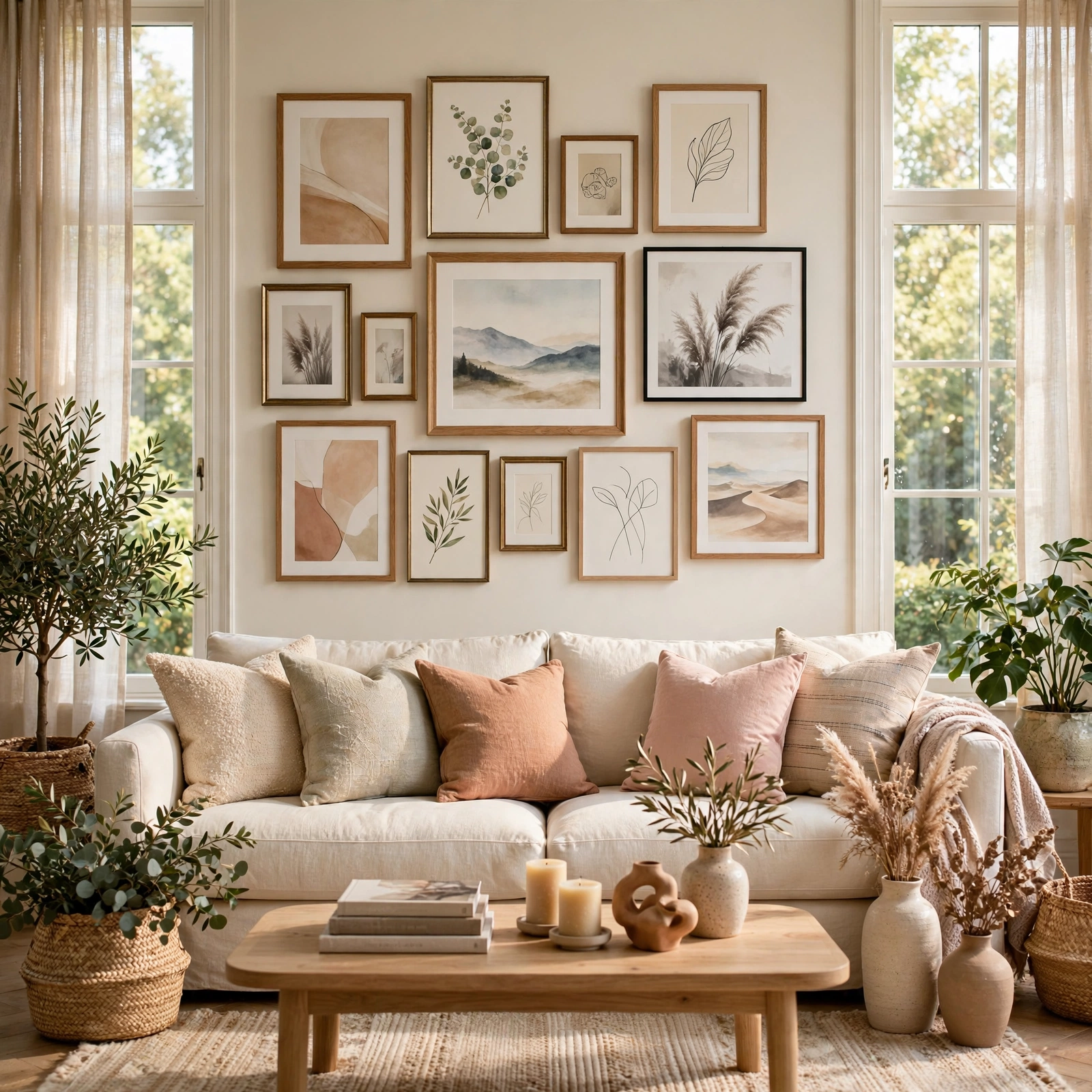
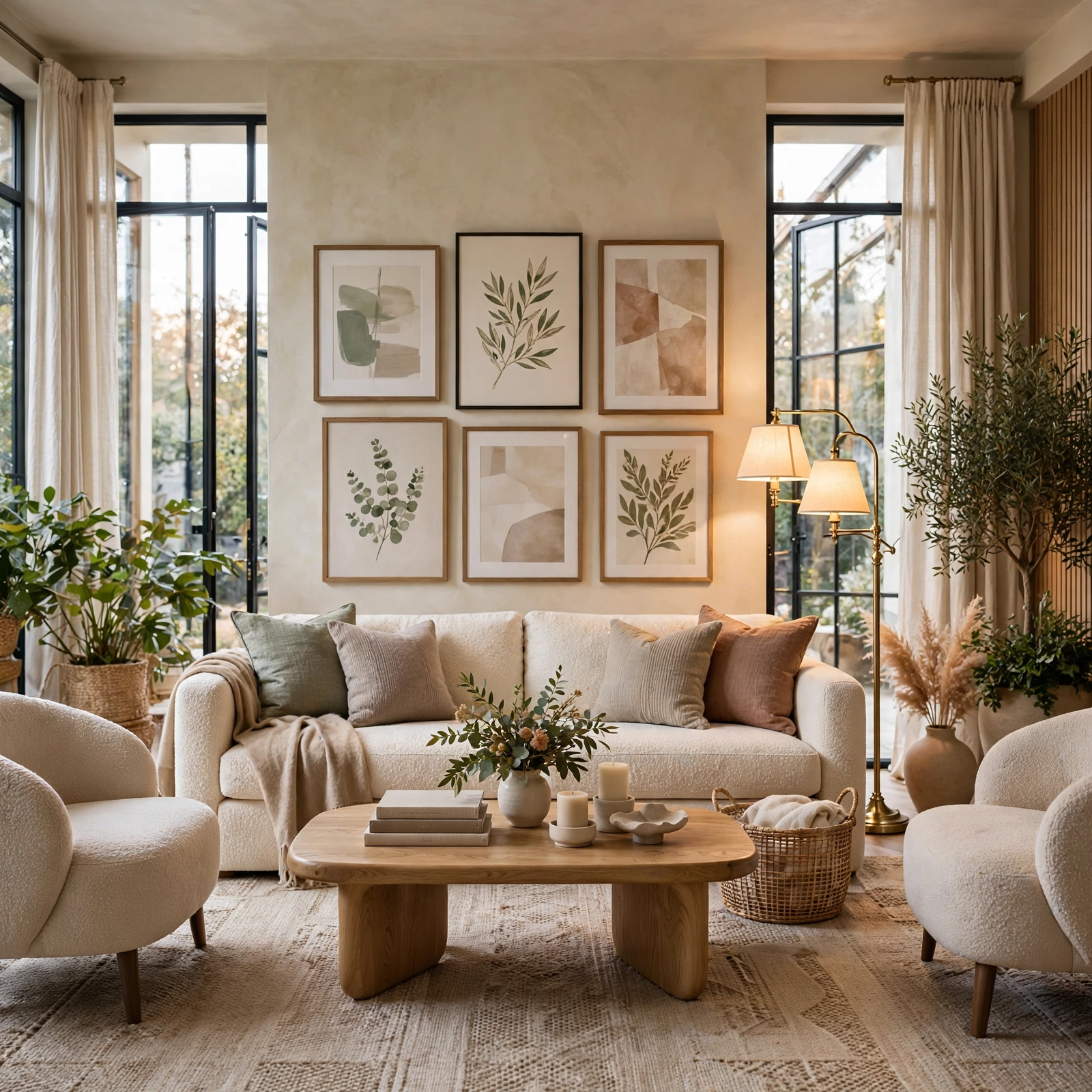
Arranging a mix of framed prints, mirrors, and small shelves above the sofa gives an otherwise plain wall a collected, personal feel. Start with a large anchor piece and build outward with smaller frames in varying sizes, keeping two to three inches of spacing between each. Mixing frame finishes matte black, brass, and natural wood adds visual interest without looking chaotic, and the layout can expand as new art or photos are added over time.
3. Layered Area Rugs Living Room Inspiration
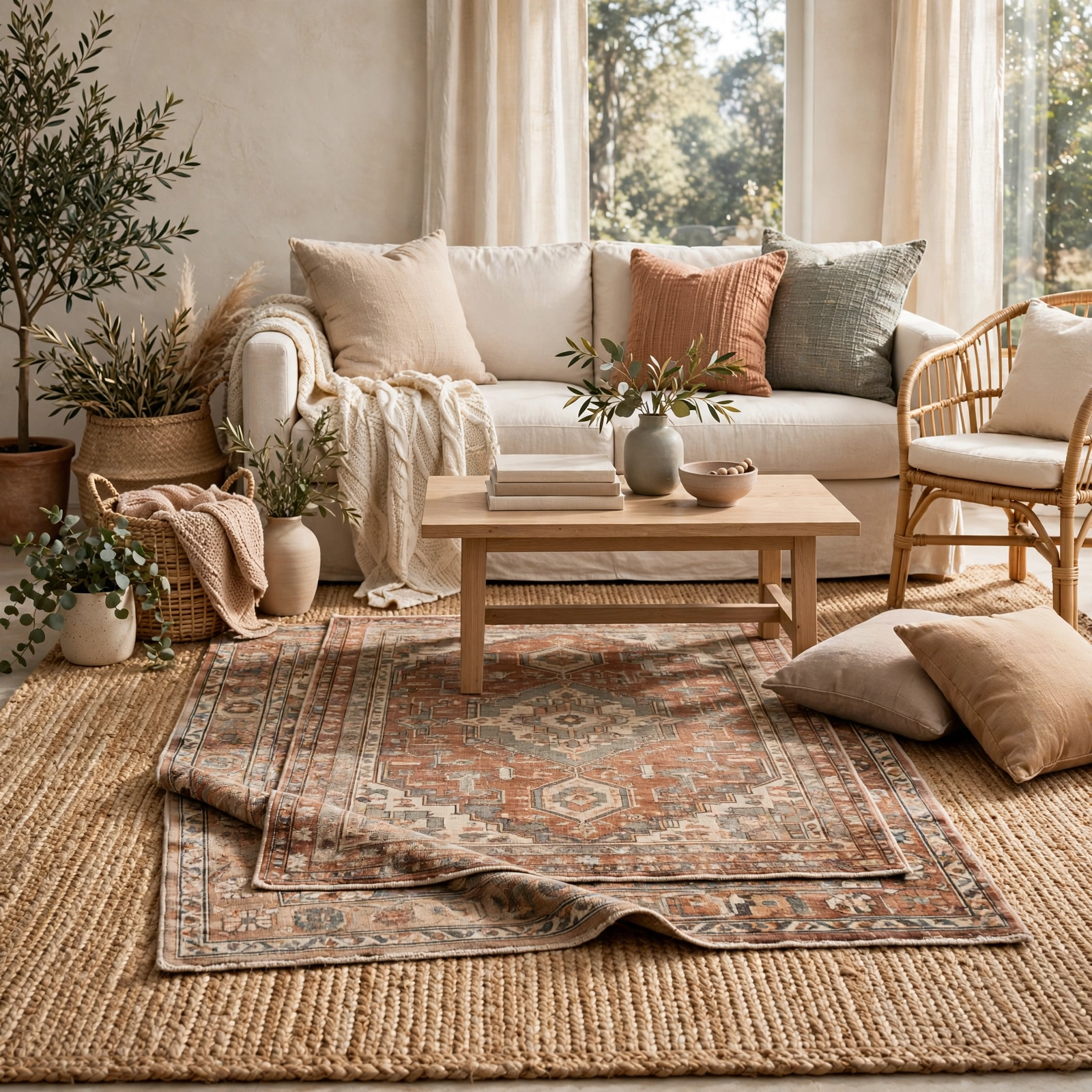
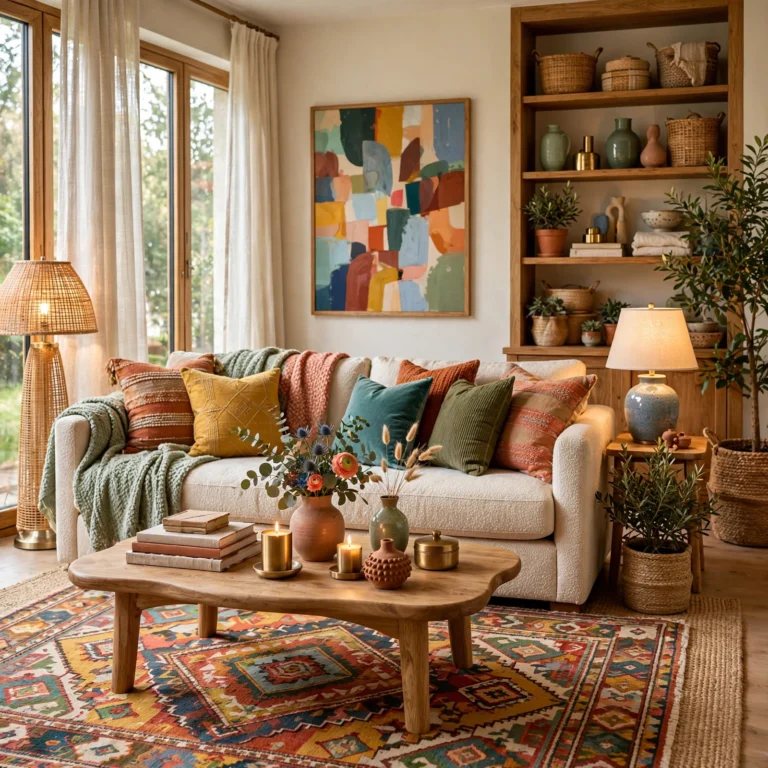
Placing a smaller patterned rug on top of a larger neutral one adds texture and defines the seating zone without committing to a single bold print across the whole floor. This layered rug approach also softens hard flooring in older homes where a single rug wouldn’t cover the full conversation area. Jute or sisal works well as the base layer, with a vintage style or Moroccan print rug layered on top for contrast.
| Room Size | Base Rug Size | Top Layer Rug Size |
| Small (10×10 ft) | 6×9 ft | 4×6 ft |
| Medium (12×14 ft) | 8×10 ft | 5×7 ft |
| Large (16×18 ft) | 9×12 ft | 6×9 ft |
4. Built In Bookshelves Living Room Inspiration
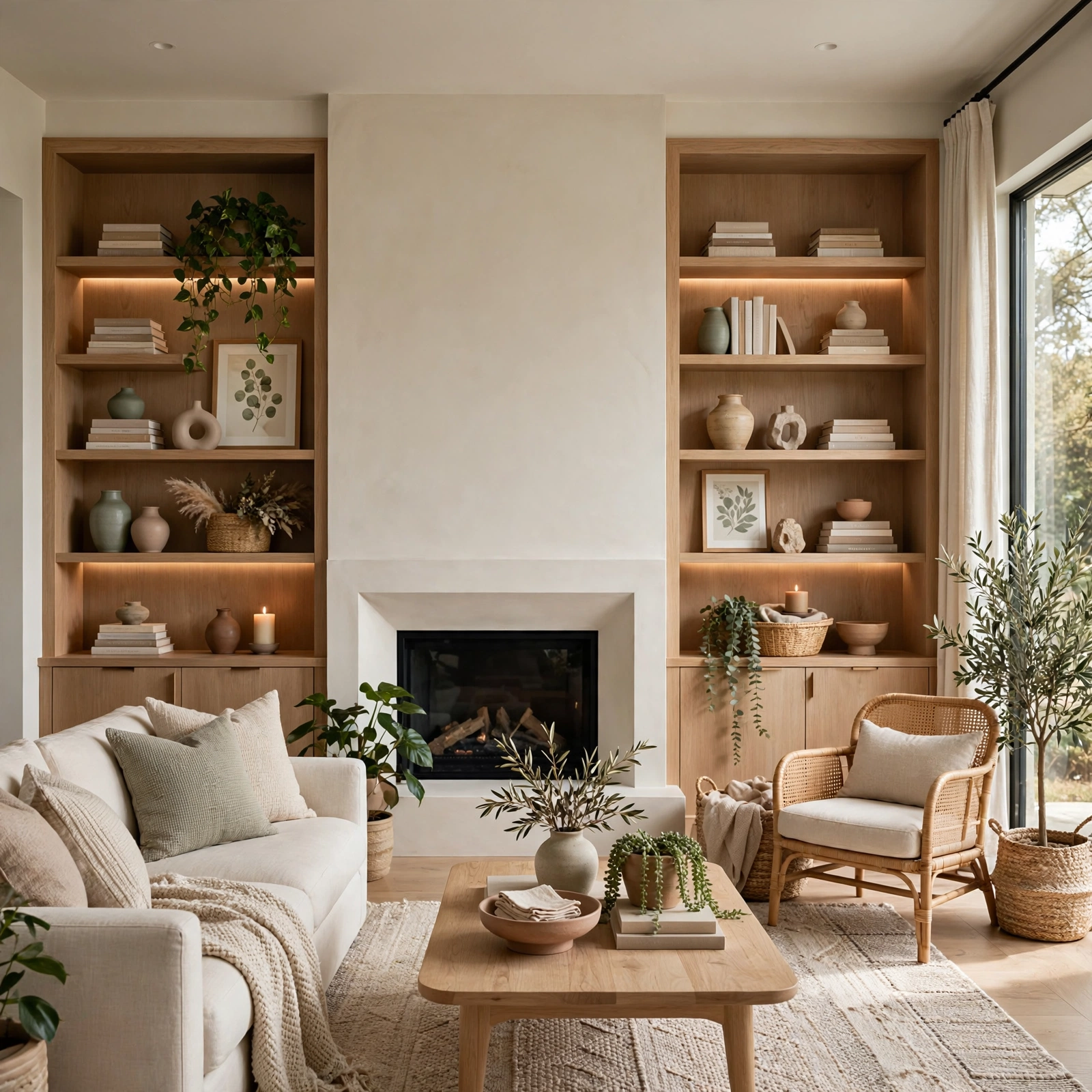
Custom or semi custom bookshelves flanking a fireplace or media wall turn unused corners into functional, styled storage. Mixing books spine out and spine in with small sculptural objects, plants, and framed photos keeps the shelves from looking like a library display. Painting the shelf interior a contrasting color deep green or navy against white trim adds depth and makes the built ins read as an intentional design feature rather than an afterthought.
See More About DIY Room Decor.
5. Statement Lighting Fixture Living Room Inspiration
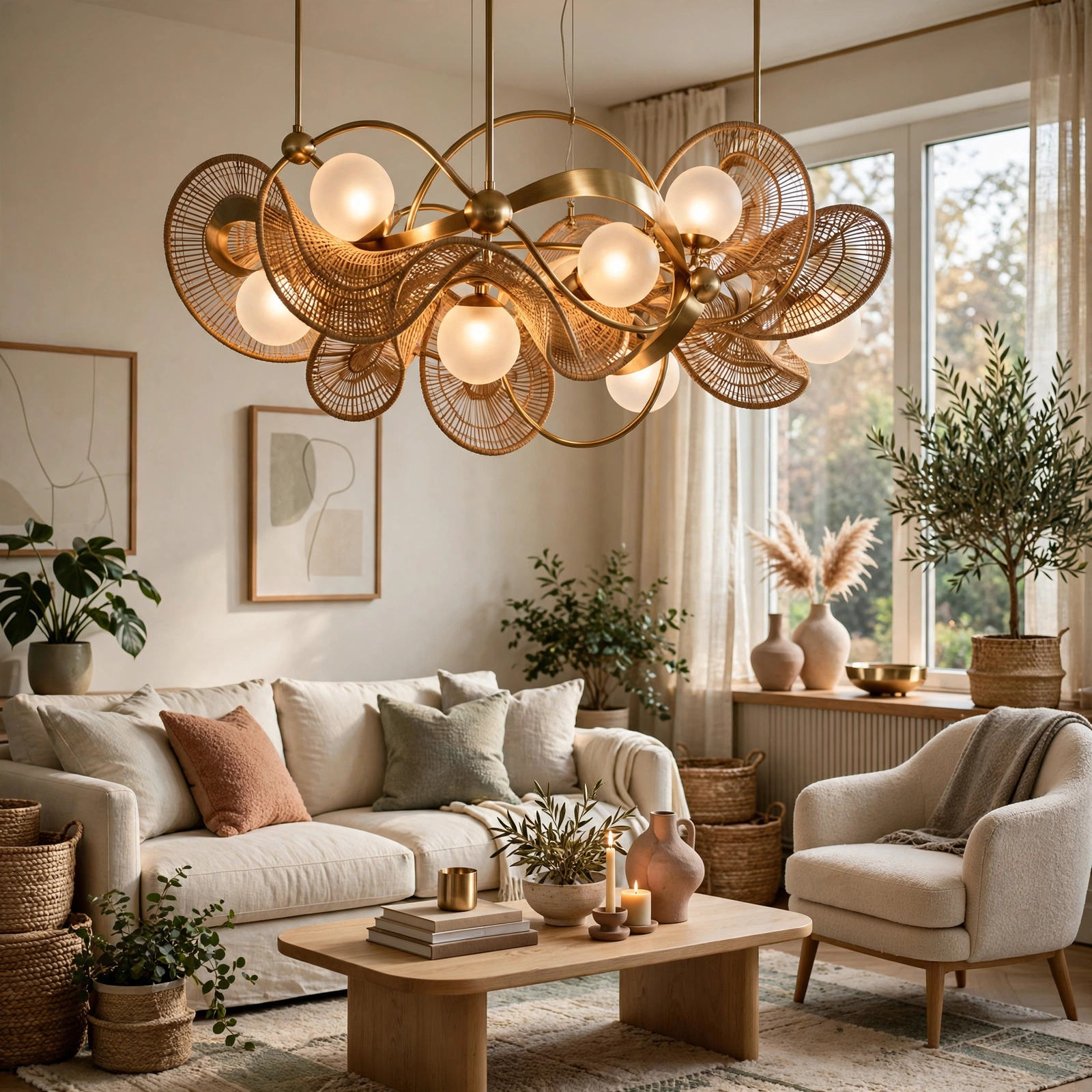
Swapping a builder grade flush mount for a sculptural pendant or an oversized floor lamp instantly changes how a room feels after sundown. A fixture with woven rattan, fluted glass, or an unlacquered brass finish adds warmth without requiring any structural changes. Layering this statement piece with table lamps and wall sconces creates depth, since relying on a single overhead light source tends to flatten a room’s proportions and shadows.
6. Boucle Accent Chairs Living Room Inspiration
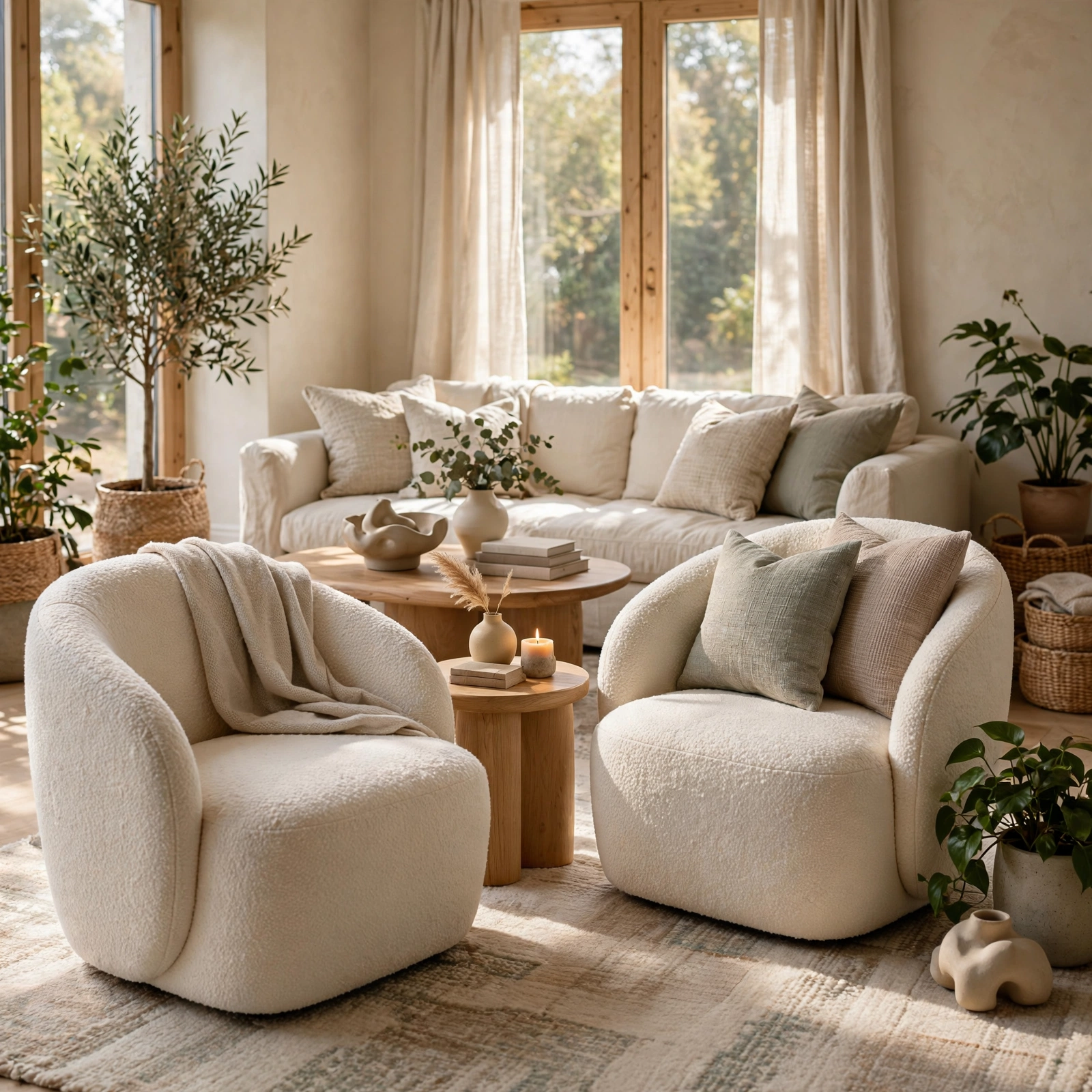
A pair of bouclé swivel chairs adds textural contrast against leather or linen sofas while giving the room flexible extra seating. The nubby texture reads as cozy without looking dated, and swivel bases make the chairs practical for angling toward a TV, fireplace, or conversation group as needed. Cream, oatmeal, or sage green tend to pair well with most existing palettes, keeping the chairs from clashing with an already established color scheme.
7. Reclaimed Wood Coffee Table Living Room Inspiration
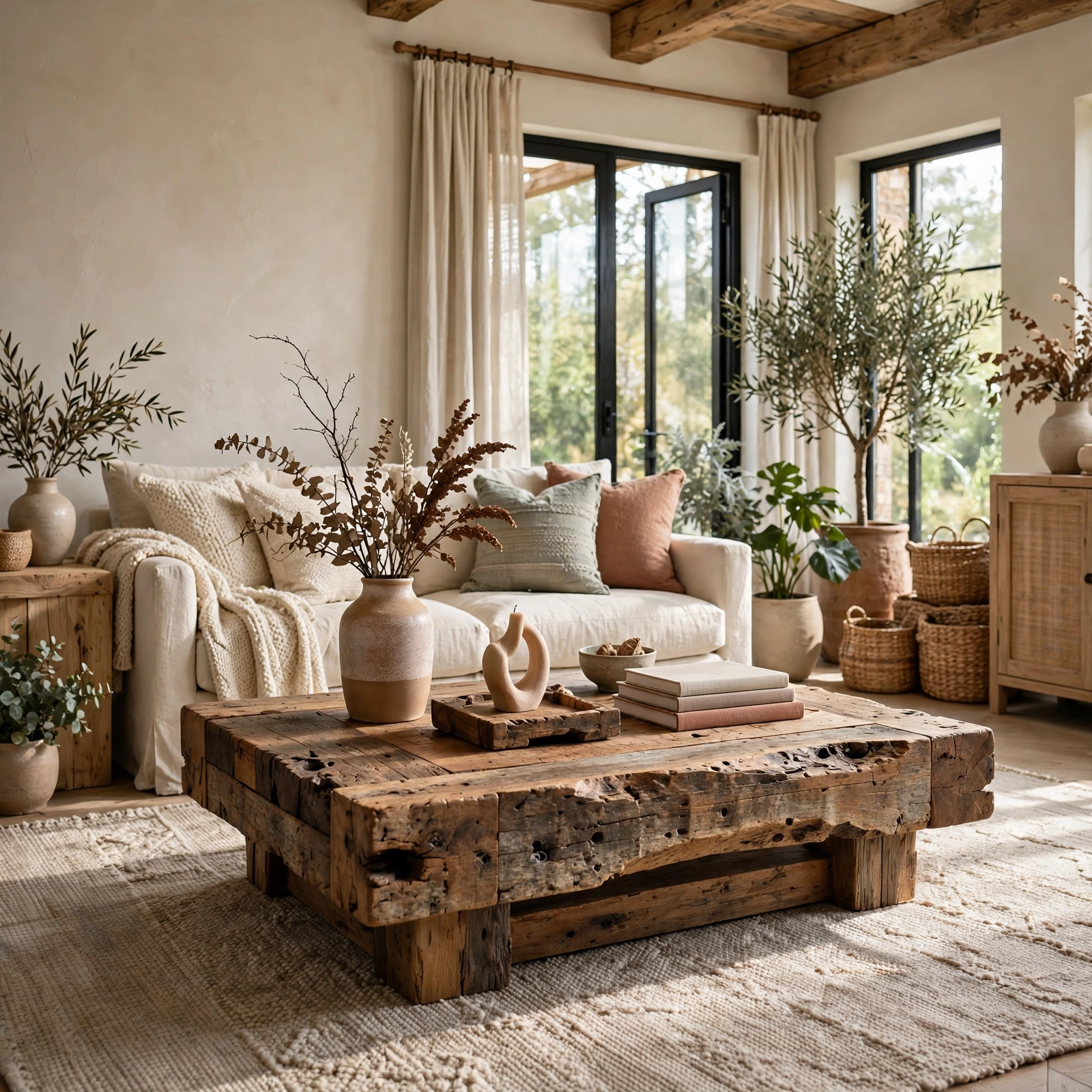
A coffee table built from reclaimed or live edge wood introduces organic texture into rooms that lean heavily on upholstered furniture and painted walls. The visible grain and occasional knots give each piece a one of a kind character that mass produced tables can’t replicate. Pairing it with metal hairpin legs or a black iron base balances the rustic top with a more current, streamlined look.
8. Neutral Color Palette With Warm Accents Living Room Inspiration
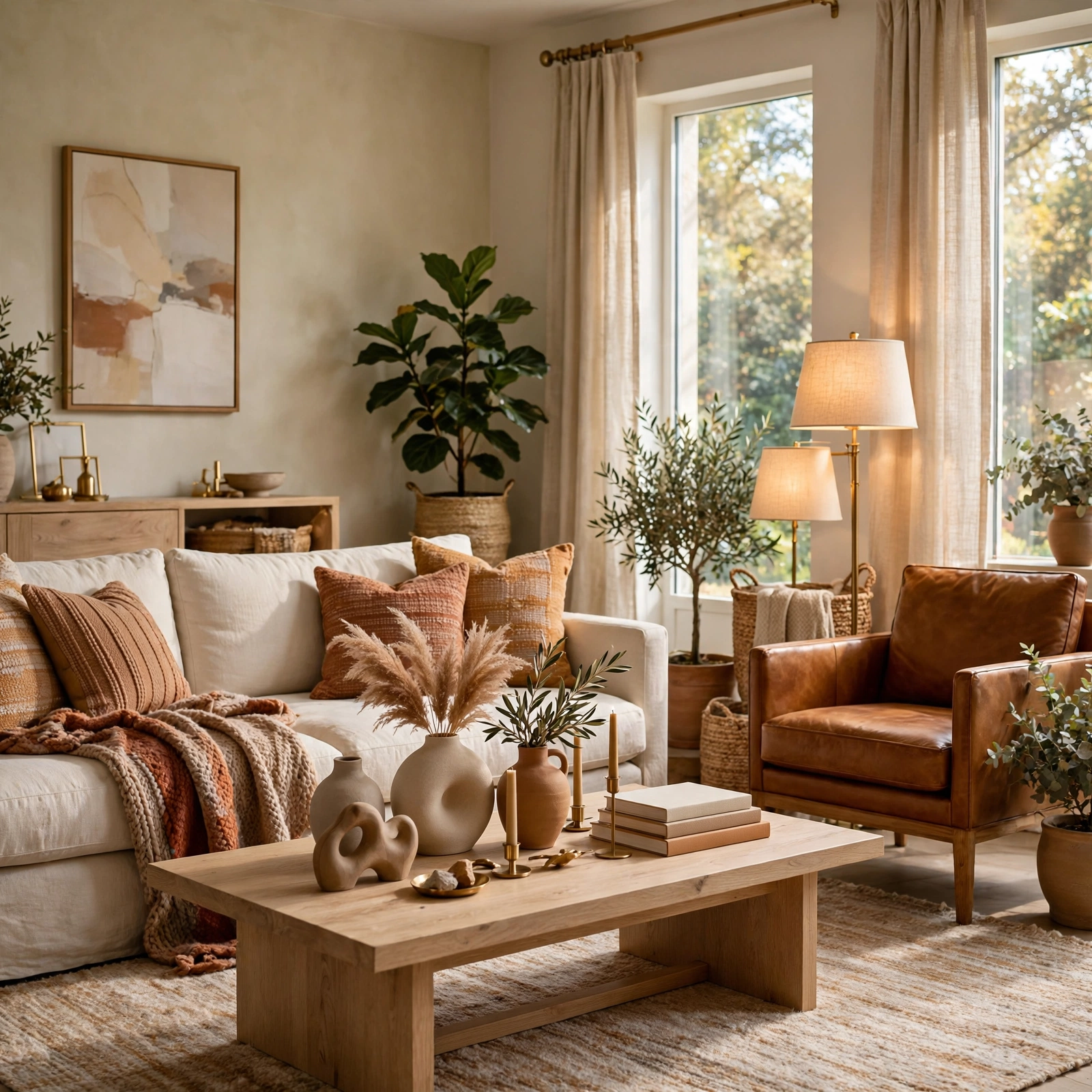
Building a room around greige, oatmeal, or warm white walls creates a flexible backdrop that doesn’t compete with furniture or art. Warm accent colors terracotta, rust, or olive layered in through pillows, throws, and small decor pieces keep the palette from feeling sterile or cold. This approach also makes seasonal refreshes easier, since only a few accessories need to change rather than repainting or reupholstering.
| Wall Color | Complementary Accent Colors |
| Warm White | Terracotta, Rust, Camel |
| Greige | Olive, Burnt Orange, Chocolate |
| Soft Sage | Mustard, Clay, Cream |
9. Woven Window Treatments Living Room Inspiration
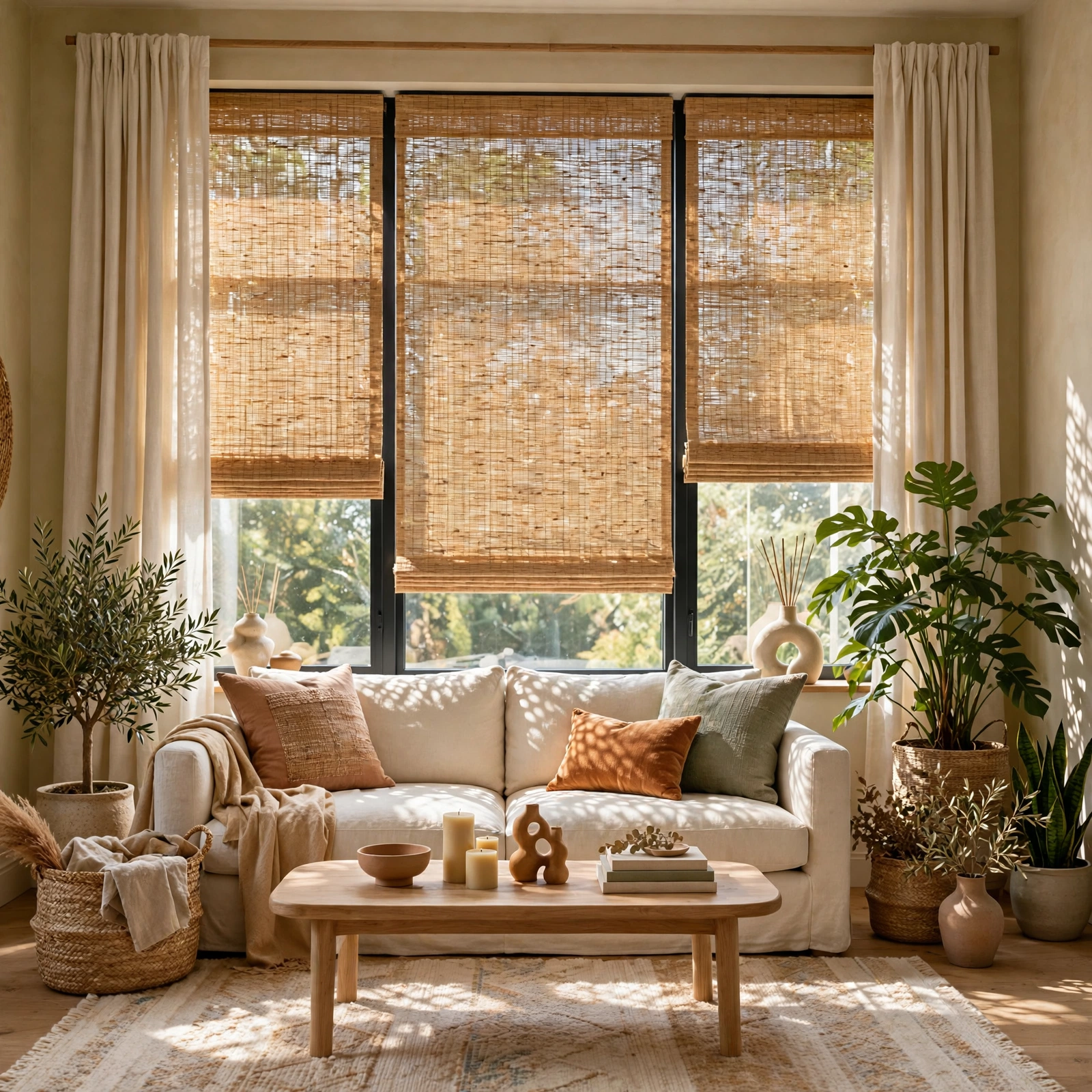
Bamboo or woven wood shades add texture to the windows without the bulk of heavy drapery, which works well in rooms with lower ceilings or smaller windows. The natural fiber weave complements rattan and reclaimed wood furniture already common in warm minimalist living rooms. For rooms that need more light control, pairing the woven shades with simple linen curtain panels on either side keeps the look layered rather than sparse.
10. Vintage Console Behind the Sofa Living Room Inspiration
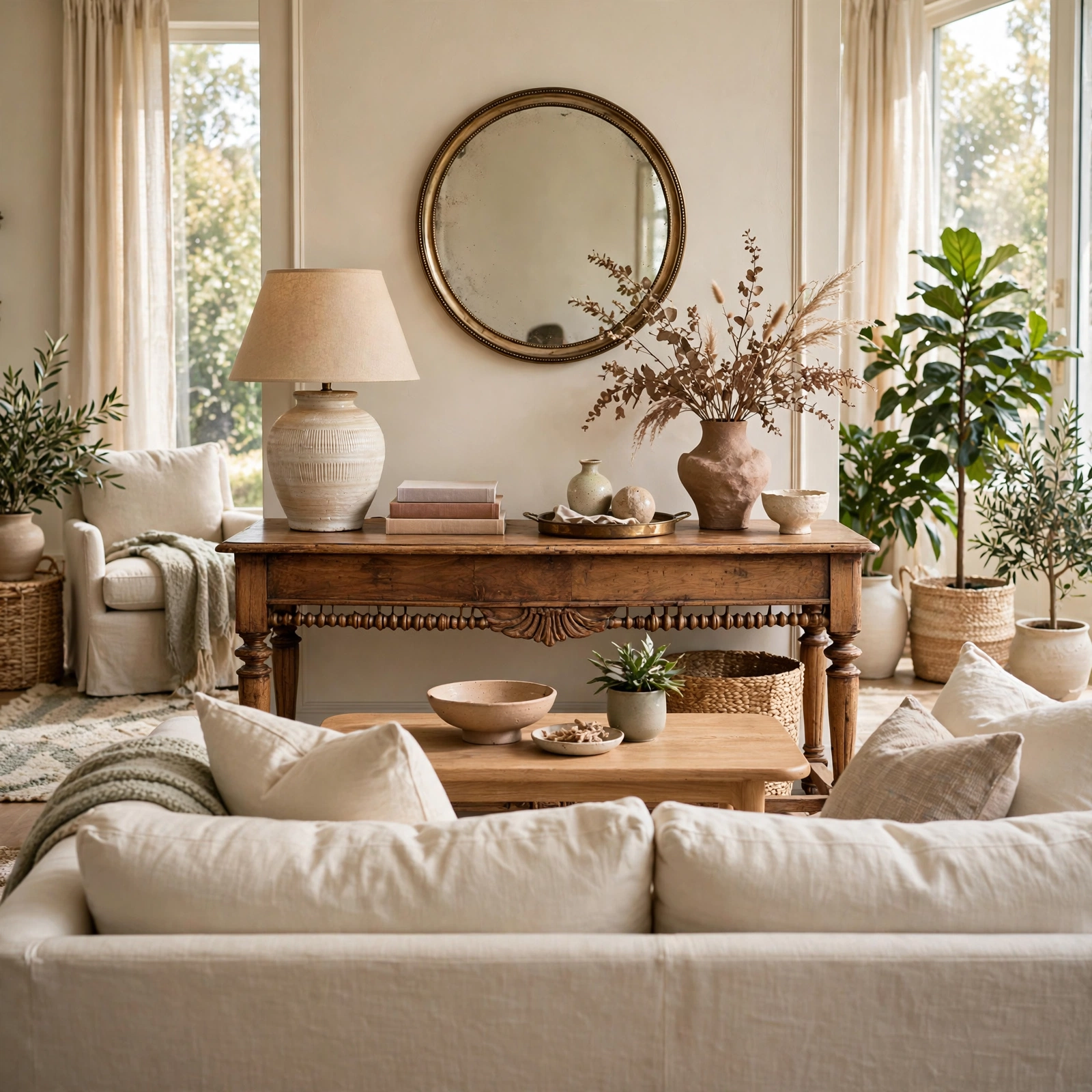
Placing a vintage or antique console table behind a sofa that floats in the middle of the room adds storage and a display surface without blocking walkways. Thrifted campaign dressers, mid century credenzas, or repurposed sideboards all work well in this role, especially when paired with a table lamp and a small stack of books or a bowl for keys and mail. This placement also helps anchor furniture arrangements in open floor plans that lack a defined back wall.
11. Textured Throw Pillows and Blankets Living Room Inspiration
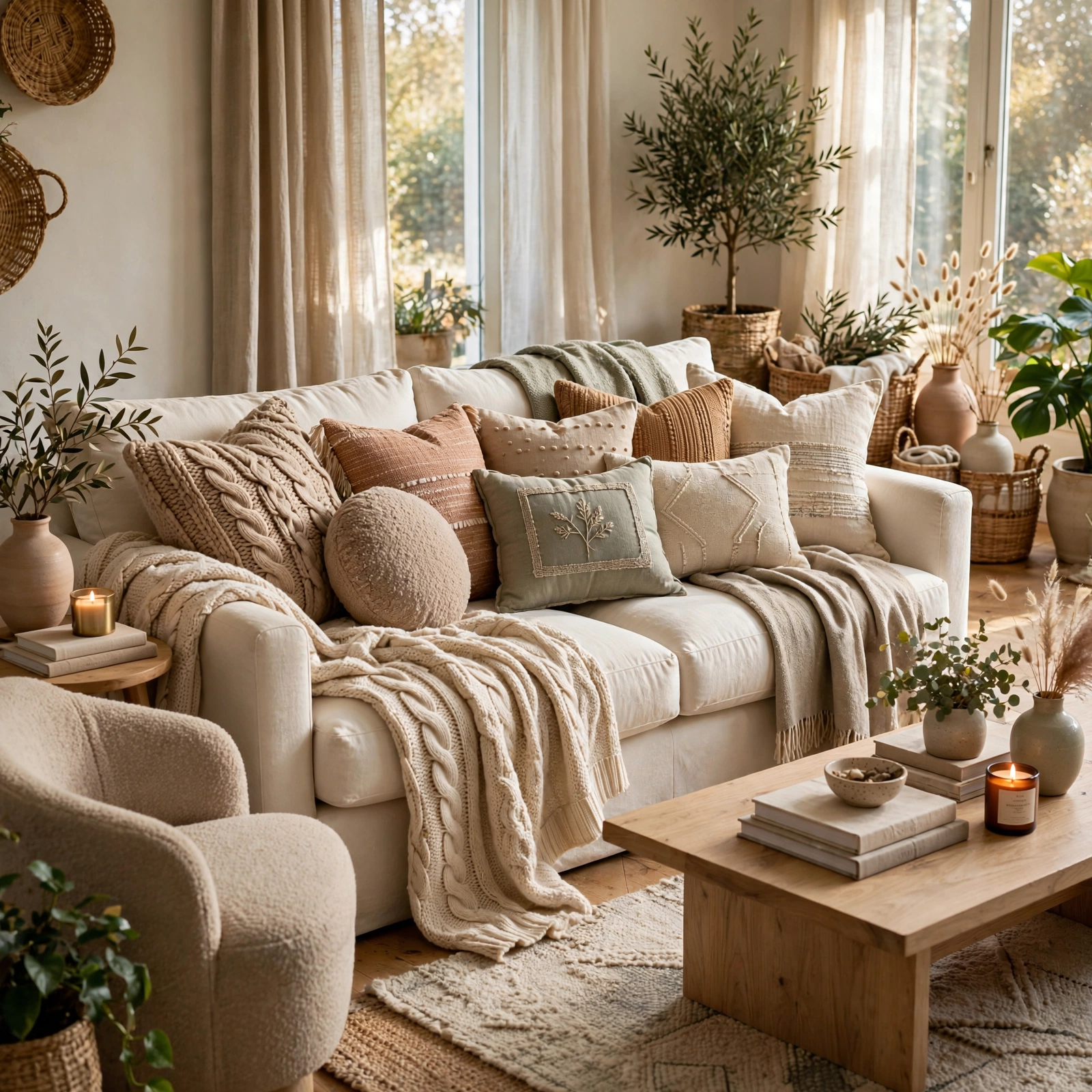
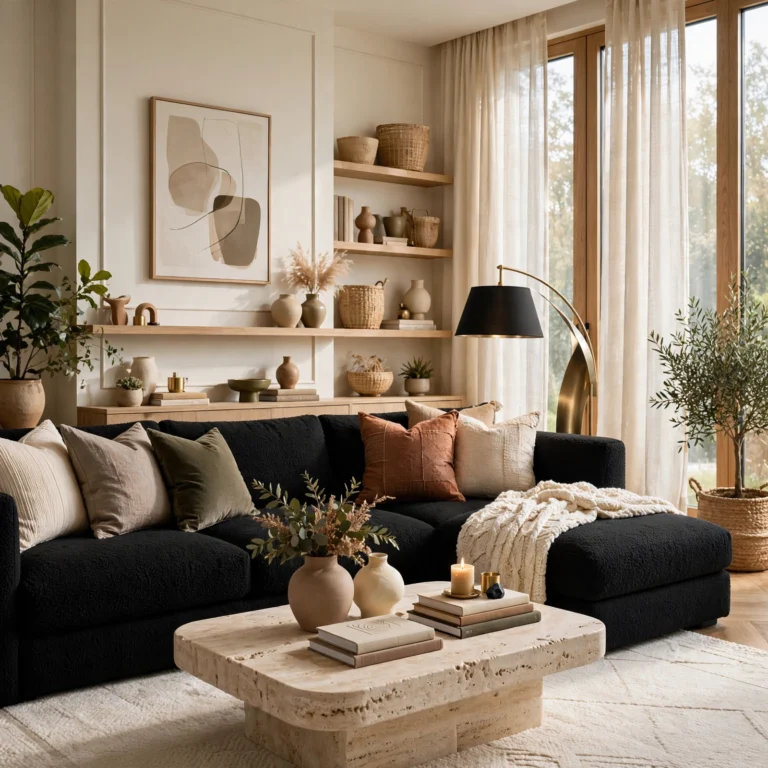
Mixing pillow textures linen, velvet, chunky knit, and leather across a sofa or sectional adds depth that a single fabric type can’t achieve on its own. Sticking to two or three coordinating colors keeps the mix from looking random, even when the textures vary widely. A chunky knit throw draped over the arm of a chair or the back of a sofa finishes the layered look and adds practical warmth during cooler months.
12. Fireplace as a Focal Point Living Room Inspiration
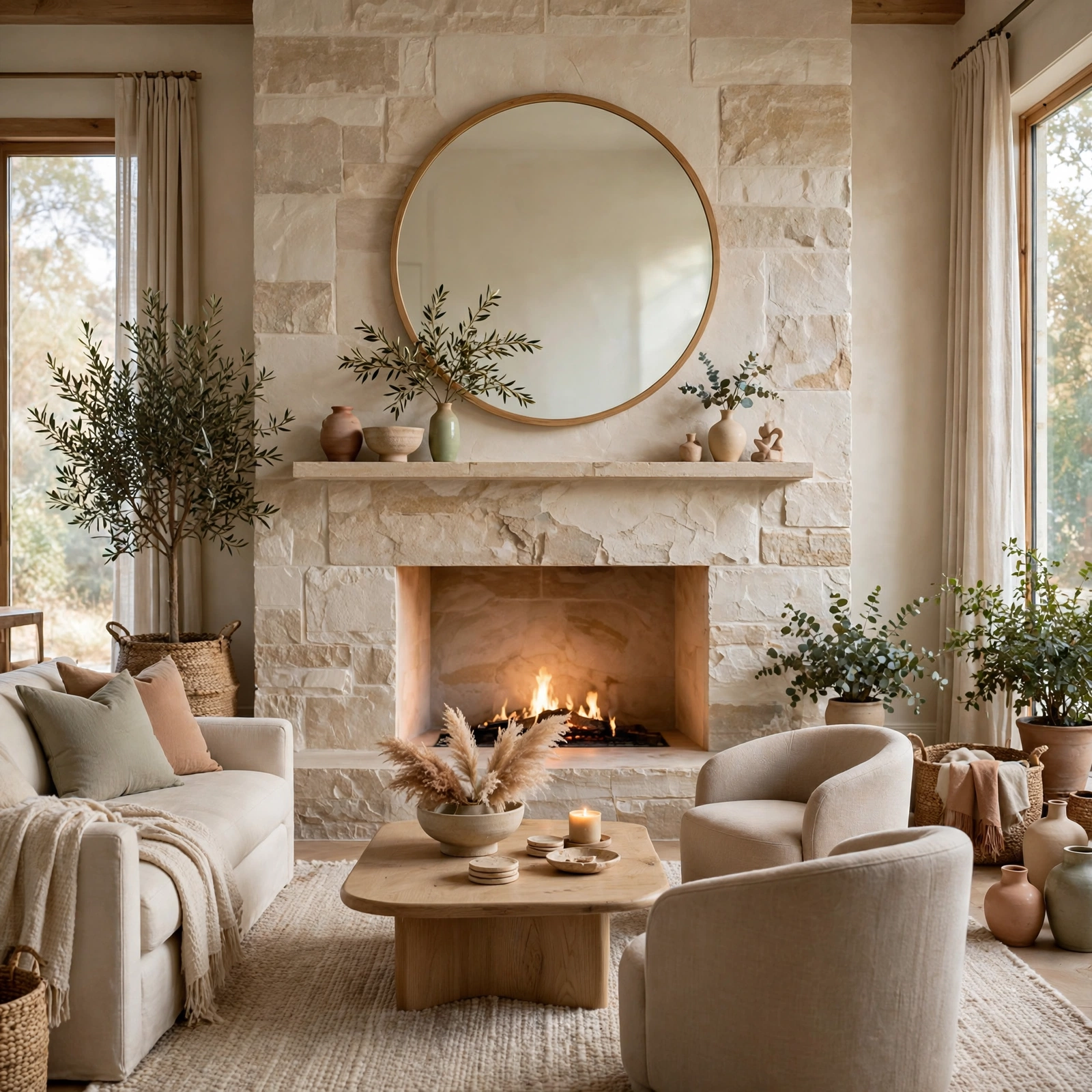
Reworking a dated fireplace surround with limewash paint, handmade tile, or a new wood mantel gives the room a natural anchor point for furniture arrangement. Limewash in particular creates a soft, cloud like texture on brick or stone that reads as intentional rather than outdated. Styling the mantel with a mix of art, a mirror, and a few candlesticks keeps the space from feeling bare while still drawing the eye when guests enter the room.
13. Living Room Inspiration With Multi Purpose Furniture
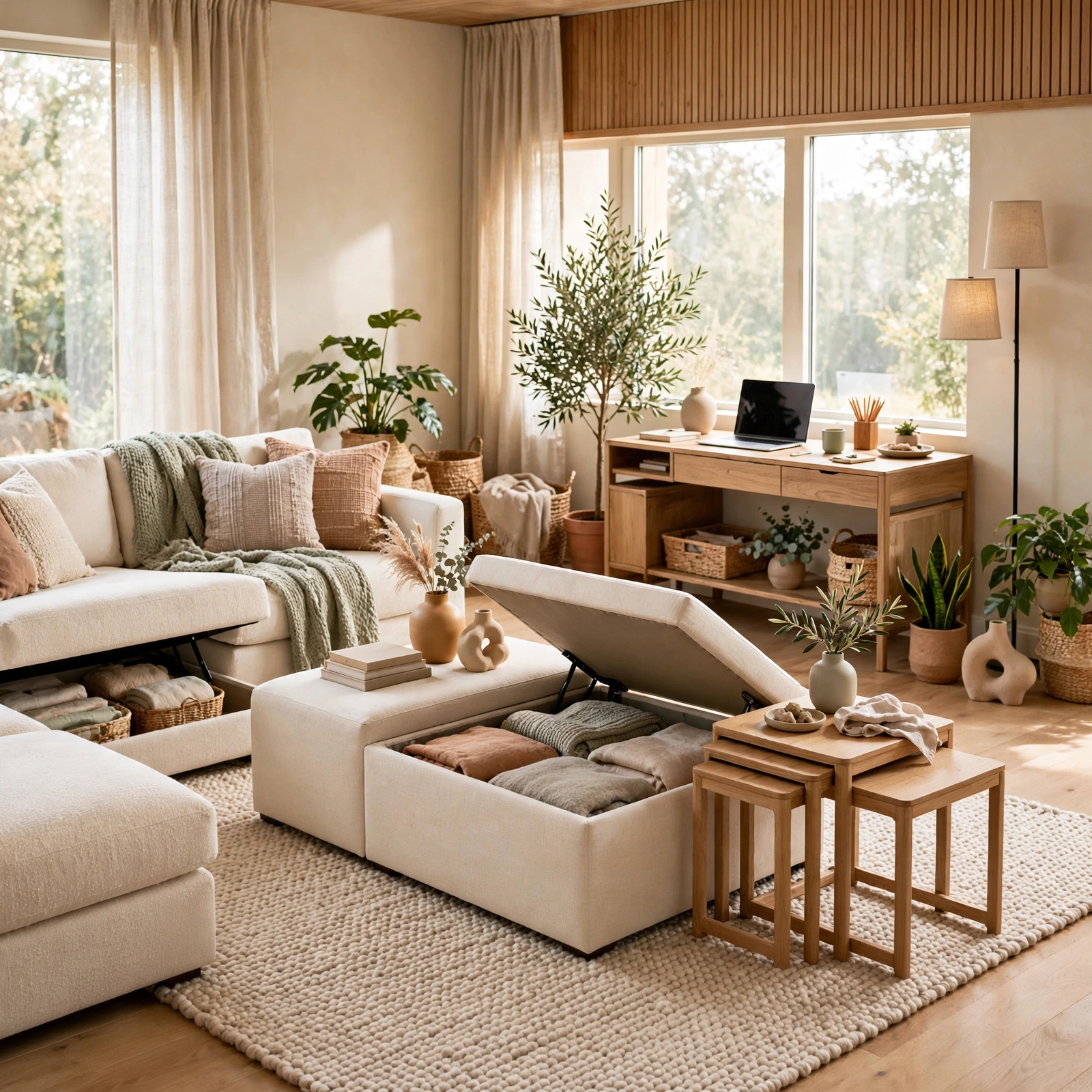
Choosing furniture that serves more than one function: a storage ottoman, a console with a fold out desk, or a daybed that doubles as extra seating helps small or multi use living rooms stay organized without feeling cramped. This approach works particularly well in apartments or open concept homes where the living room also functions as a home office or guest space. Prioritizing pieces with hidden storage keeps everyday clutter like remotes, chargers, and blankets out of sight during the day.
Shop the Look
A curved bouclé sectional in oatmeal or cream sets the foundation for a warm minimalist room, paired with a reclaimed wood coffee table and a jute base rug layered under a vintage Moroccan style runner. Add a rattan pendant light or an unlacquered brass floor lamp for warmth after dark, along with a vintage wood console styled with a ceramic lamp and a small stack of hardcover books. Round out the space with two or three chunky knit and linen throw pillows in terracotta or olive tones.
Common Mistake to Avoid
Pushing every piece of furniture flush against the walls is one of the most common living room mistakes, since it often leaves an awkward, empty void in the center of the room and forces conversation across too much distance. Floating the sofa a few feet from the wall, even in smaller rooms, creates better flow and a more intentional layout. Leaving at least 30 to 36 inches of walking space between furniture pieces also keeps the room functional rather than just visually arranged.
Frequently Asked Questions
What size rug should I use in my living room?
A rug should be large enough that at least the front legs of every seating piece rest on it, which typically means an 8×10 rug for a standard living room and a 9×12 or larger for bigger spaces. Rugs that are too small make the furniture look disconnected from the rest of the room. Measuring the seating area first, then sizing the rug to extend a few inches beyond it on each side, gives the most balanced result.
How do I make a small living room feel bigger?
Floating furniture away from walls, choosing pieces with visible legs instead of skirted bases, and sticking to a lighter, warm neutral palette all help a small living room feel more open. Mirrors placed opposite windows bounce natural light around the room, and multi purpose furniture like storage ottomans reduces the need for extra bulky pieces. Vertical elements, like tall bookshelves or floor length curtains, also draw the eye upward and make ceilings feel higher.
What colors are trending for living rooms right now?
Warm neutrals like greige, oatmeal, and warm white are currently favored as base colors, paired with deeper accent tones like olive, rust, and chocolate brown. These palettes replace the cooler gray dominant schemes that were popular in prior years, leaning instead toward colors that read as cozy and collected. Terracotta and burnt orange accents in particular have become common in pillows, art, and small decor pieces.
How do I arrange furniture in an open concept living room?
Using a rug to define the boundaries of the living area helps separate it visually from adjoining kitchen or dining spaces without adding walls. A console table or bookshelf placed perpendicular to the main walkway can also act as a soft divider between zones. Floating the sofa away from the wall and angling chairs toward a central point, like a coffee table or fireplace, keeps the seating area feeling contained within the larger open floor plan.
Is it okay to mix wood tones in a living room?
Mixing wood tones is not only acceptable but common in current design, as long as there’s some consistency in undertone warm woods paired with other warm woods, for example. A reclaimed wood coffee table can sit comfortably alongside a lighter oak floor or a darker walnut console as long as at least one connecting element, like matching metal hardware, ties the pieces together. Avoiding an exact match actually reads as more collected and less like a matched furniture set.
Conclusion
These thirteen living room inspiration ideas cover everything from furniture arrangement to lighting and color palette choices, giving homeowners a practical starting point rather than just a mood board. Save this post to Pinterest for reference while planning a refresh, and check out the related bedroom inspiration guide for ideas that carry the same warm, collected style throughout the rest of the home.