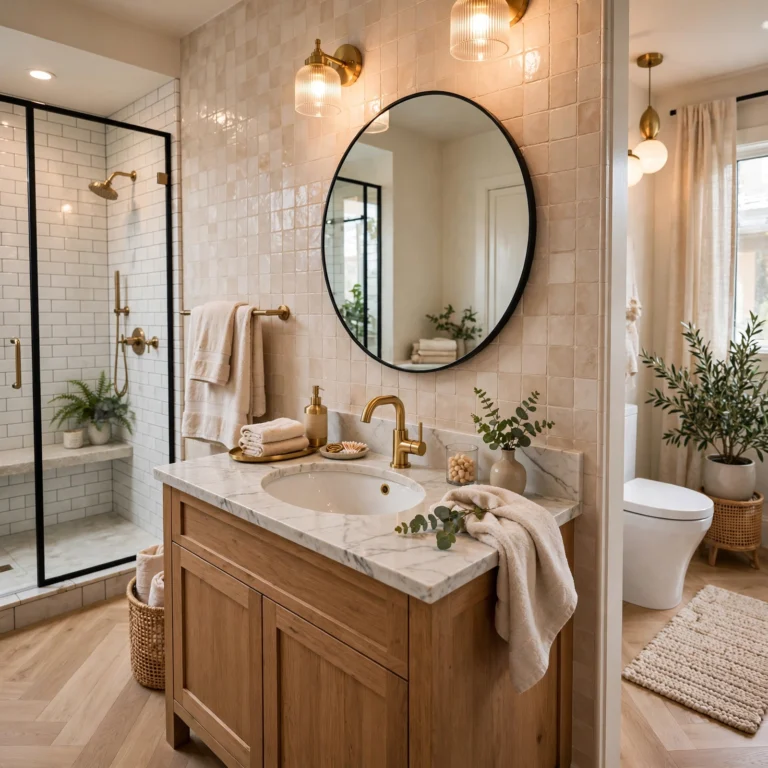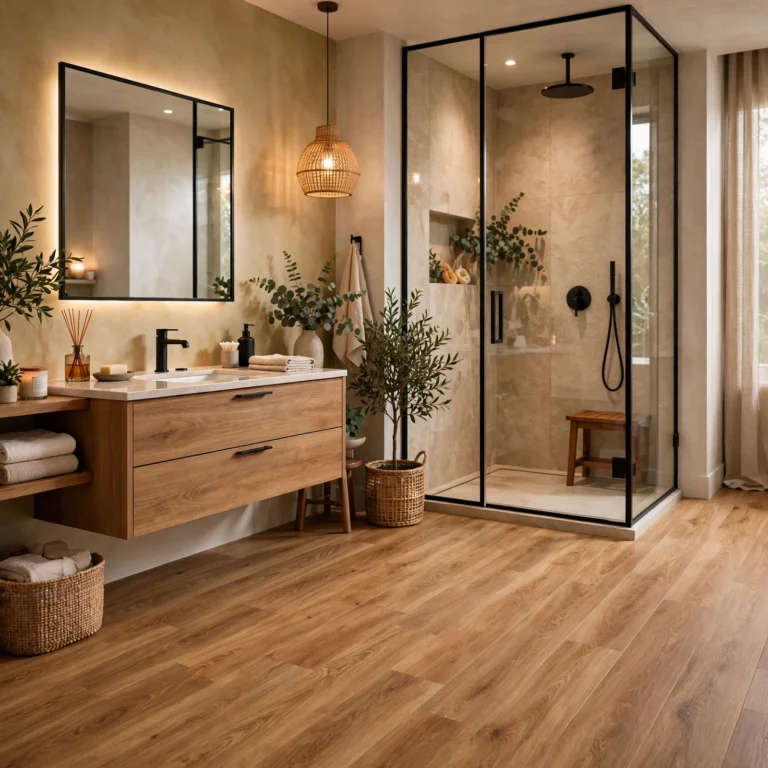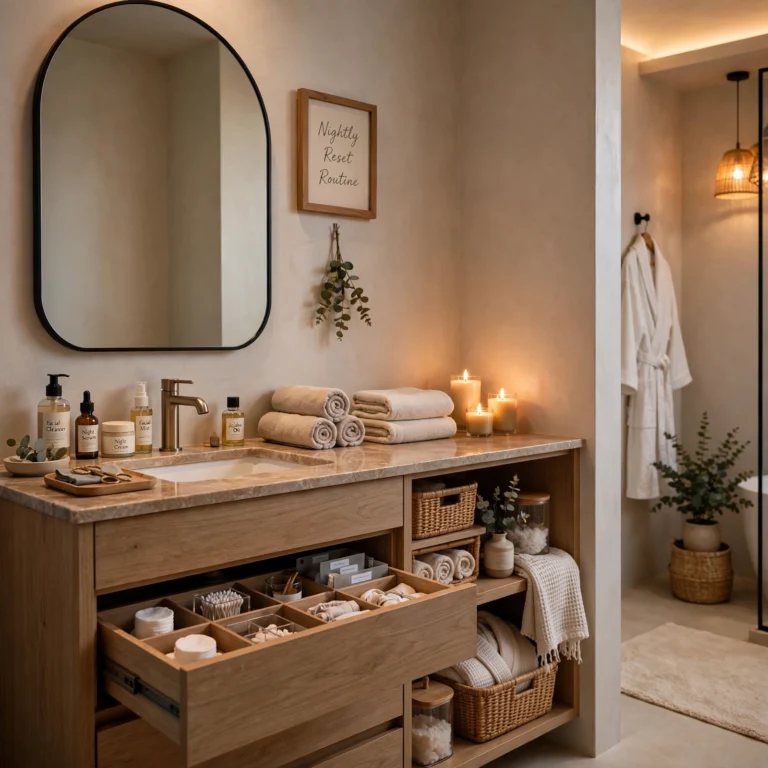
13 Clever Tiny Bathroom Ideas That Actually Create More Space
A Tiny bathroom ideas has a way of making every decision feel bigger than it should, since there’s no room to hide a bad layout choice or a piece of furniture that doesn’t quite fit. You’ve probably stood in yours wondering if it’s actually possible to fit more storage without making the room feel like a closet with plumbing. The good news is that most tiny bathroom ideas that work aren’t about adding more, they’re about tricking the eye and reclaiming space that’s already going to waste.
Trend & Background
Tiny bathrooms have become their own design category on Pinterest as more people renovate older homes, condos, and apartments where square footage simply isn’t negotiable. The current direction favors visual continuity and light over adding more objects, things like large format tile, wall mounted fixtures, and oversized mirrors that trick the eye into reading the room as bigger than it is. This shift comes largely from small space and tiny home living becoming mainstream, which pushed clever storage and layout tricks that used to be niche into everyday bathroom design. The goal has moved from filling a small space to opening it up.
Key Takeaways
- Wall mounted fixtures like floating vanities and toilets free up visual floor space, making tiny bathrooms feel less cramped.
- Large format tile and light, monochromatic color schemes trick the eye into perceiving a bigger space than it actually is.
- Vertical storage solutions, like tall slim cabinets or over the door organizers, maximize function without eating into limited square footage.
Tiny Bathroom Ideas
By the end of this guide you will learn that a few smart layout changes can make a cramped bathroom feel noticeably larger without moving a single wall.
1. Vanity with Visible Legs Tiny Bathroom Ideas
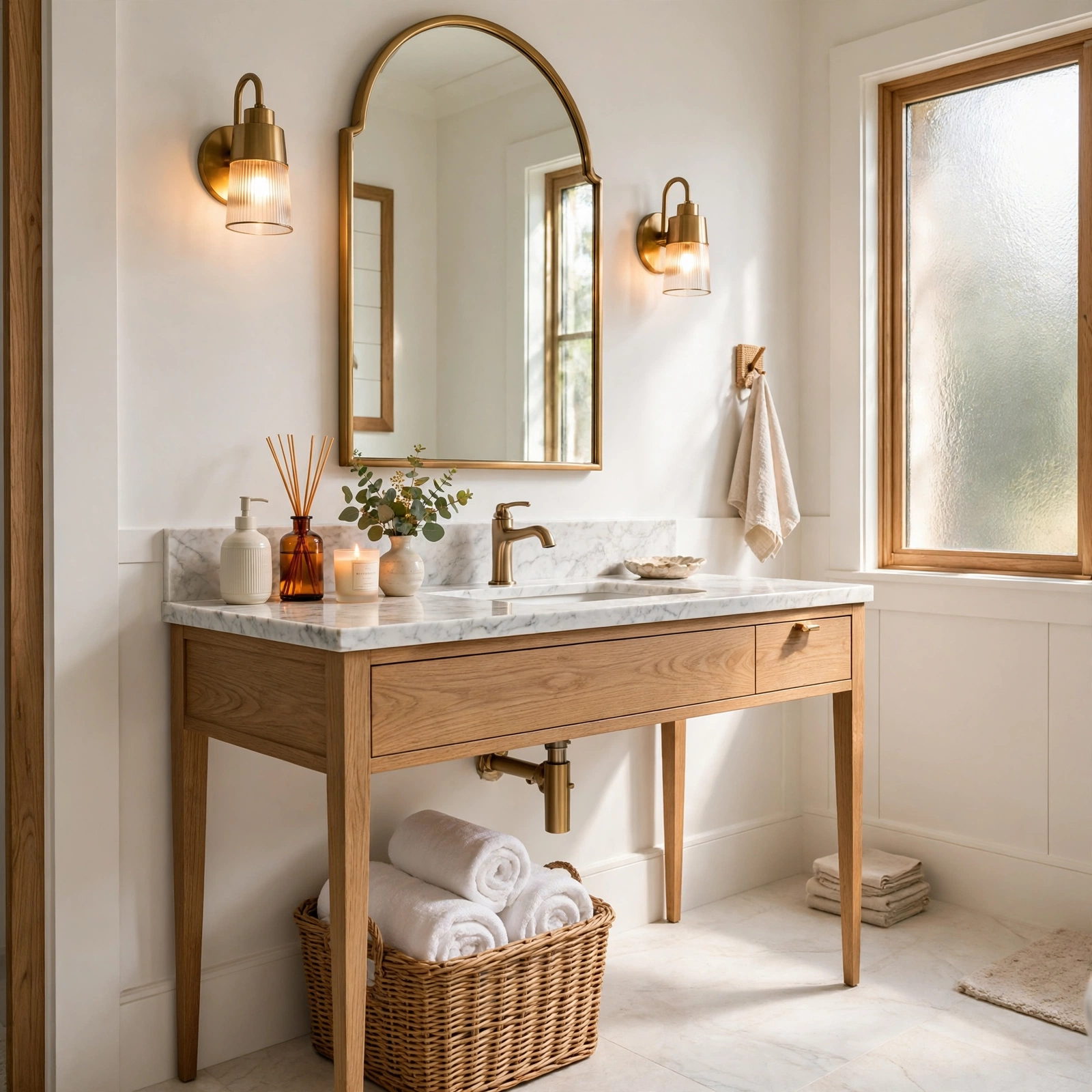
A vanity that sits flush to the floor blocks sightlines and makes a small bathroom feel like it stops at the cabinet. Choosing one with visible legs lets the eye travel underneath it, which reads as more floor space even though the actual square footage hasn’t changed at all. Leggy vanities run $150 to $400 depending on size and material, making this more of an investment swap than a weekend fix. It’s worth checking secondhand marketplaces first, since this style is common in older furniture pieces repurposed as bathroom vanities.
2. A Large Format Mirror Tiny Bathroom Ideas
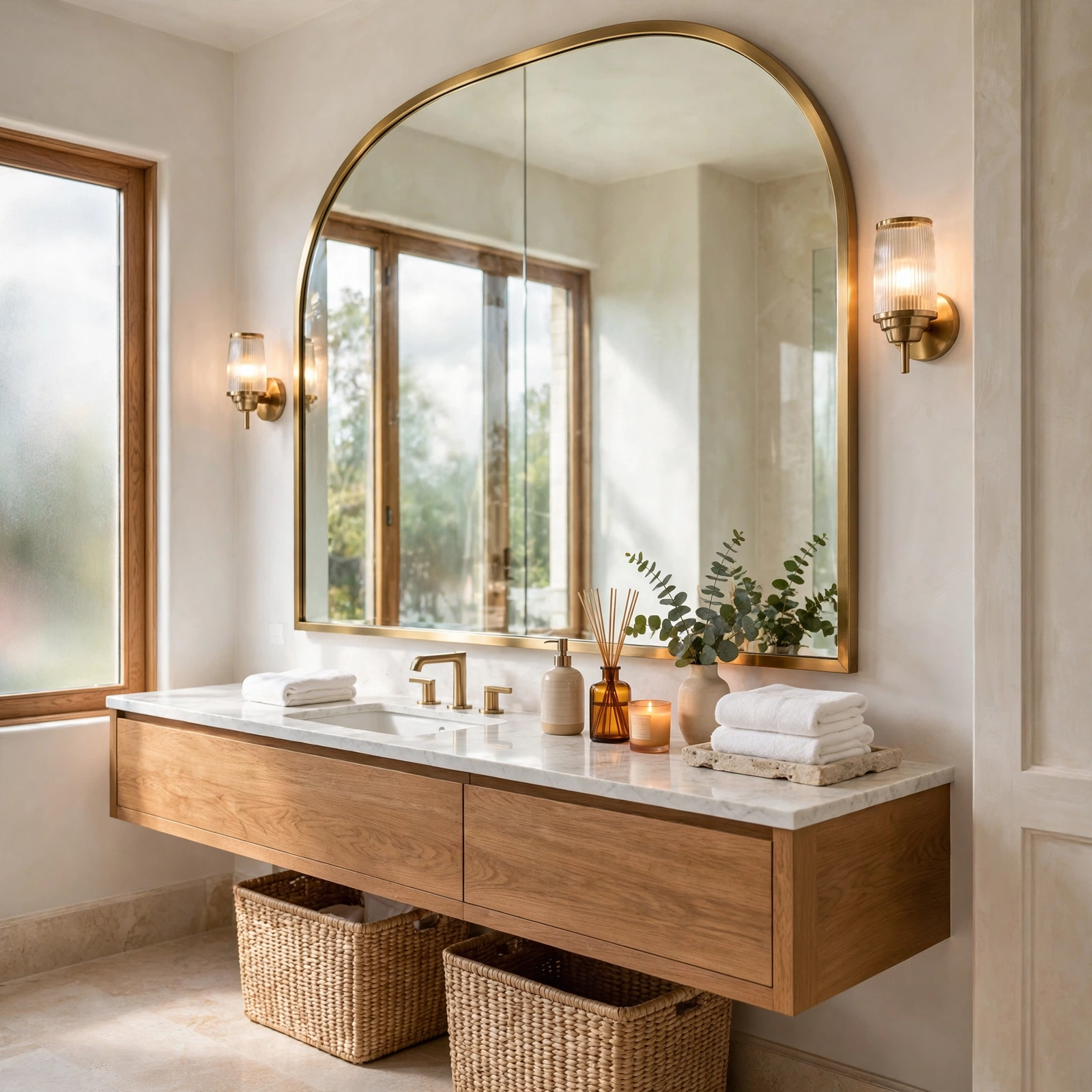
A mirror that spans most of the wall above the vanity bounces far more light around a tiny bathroom than a small, framed rectangle ever could. Placing it directly across from a window or light fixture doubles the perceived brightness and makes the whole room feel less boxed in. A large mirror runs $80 to $200 depending on style and frame. This hangs on a single wire or a couple of hooks, making it a renter friendly upgrade that takes under thirty minutes and requires no permanent changes to the wall.
3. A Recessed Medicine Cabinet Tiny Bathroom Ideas
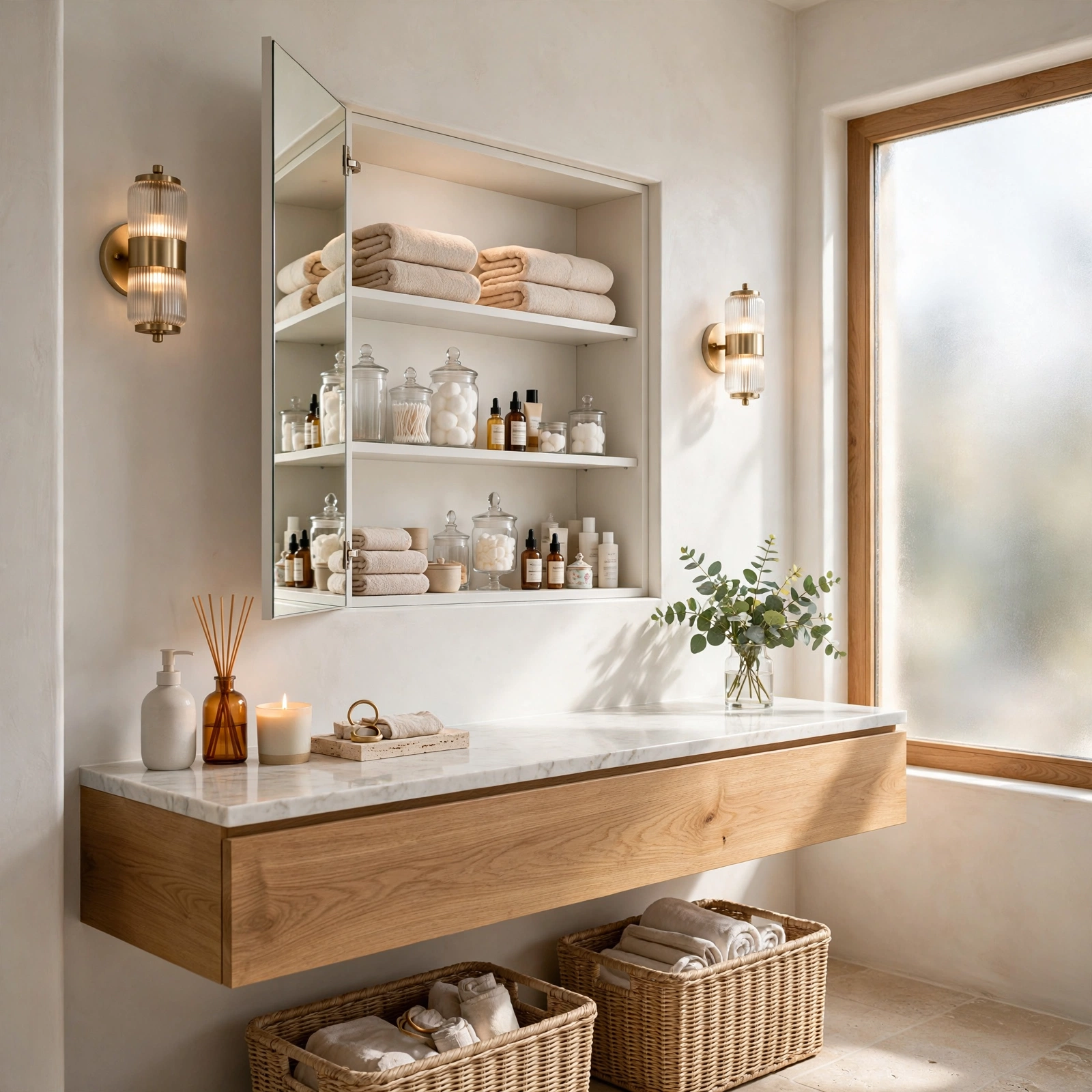
A surface mounted medicine cabinet sticks out several inches into a room that can’t spare them, while a recessed version sits flush inside the wall and gives back that lost depth. This matters more in a tiny bathroom than almost anywhere else, since a few inches of clearance near a doorway or shower can change how the whole room feels to move through. Recessed cabinets cost $100 to $250 including the cutout work, and installation typically needs a contractor since it involves cutting into drywall. This is a bigger investment, but one that pays off daily in a cramped layout.
See More About Guest Bathroom Ideas.
4. Frameless Glass Shower Door Instead of a Curtain Tiny Bathroom Ideas
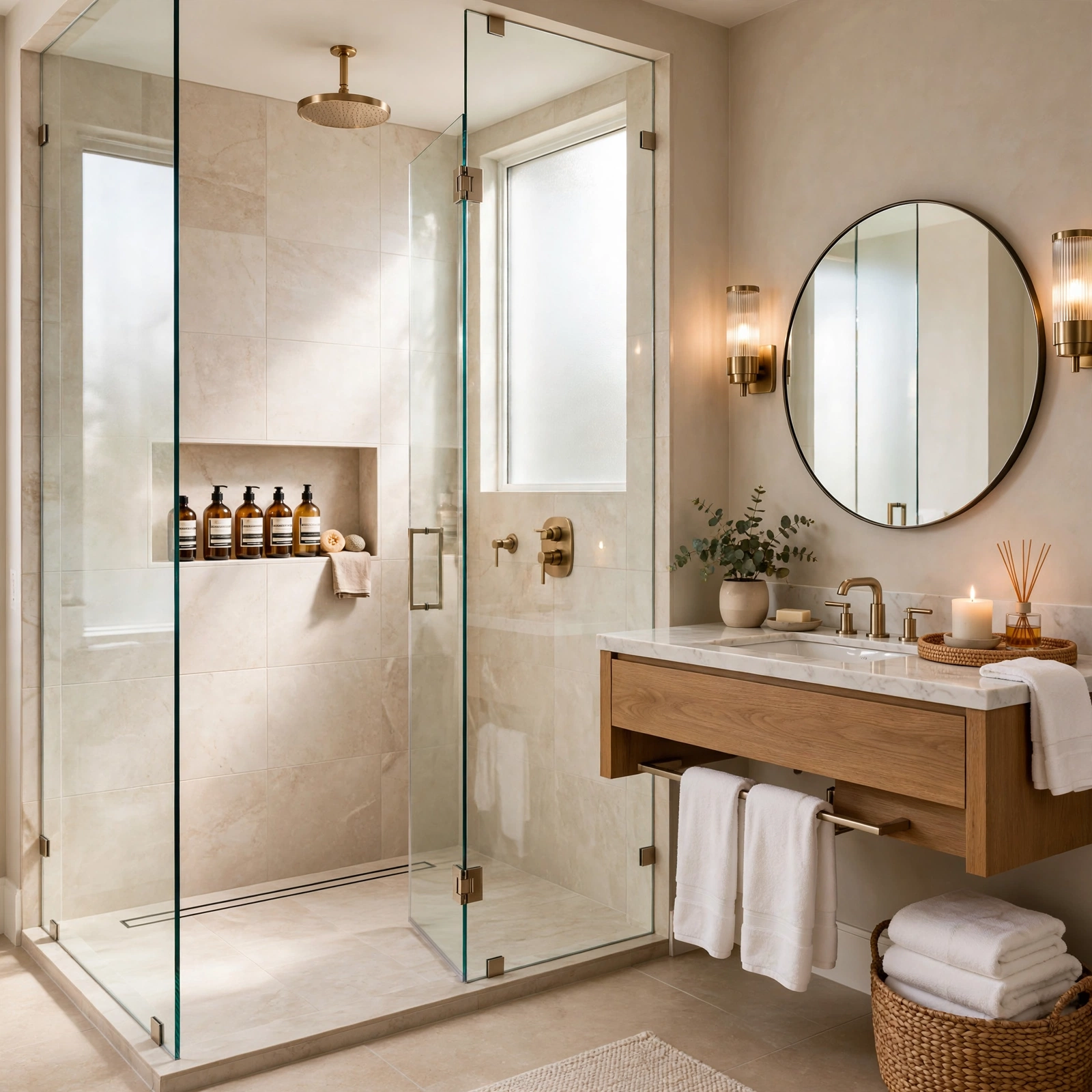
A shower curtain, even a nice fabric one, breaks up the sightline in a small bathroom and visually shrinks the room the moment it’s closed. A frameless glass door lets the eye see straight through to the far wall, which makes the whole bathroom read as more open even though the shower itself hasn’t changed size. Frameless doors run $300 to $800 depending on size and hardware finish, making this one of the pricier updates on this list. It’s best suited for owners rather than renters, given the permanent installation involved.
5. Go Vertical With Narrow Shelving Instead of Wide Furniture Tiny Bathroom Ideas
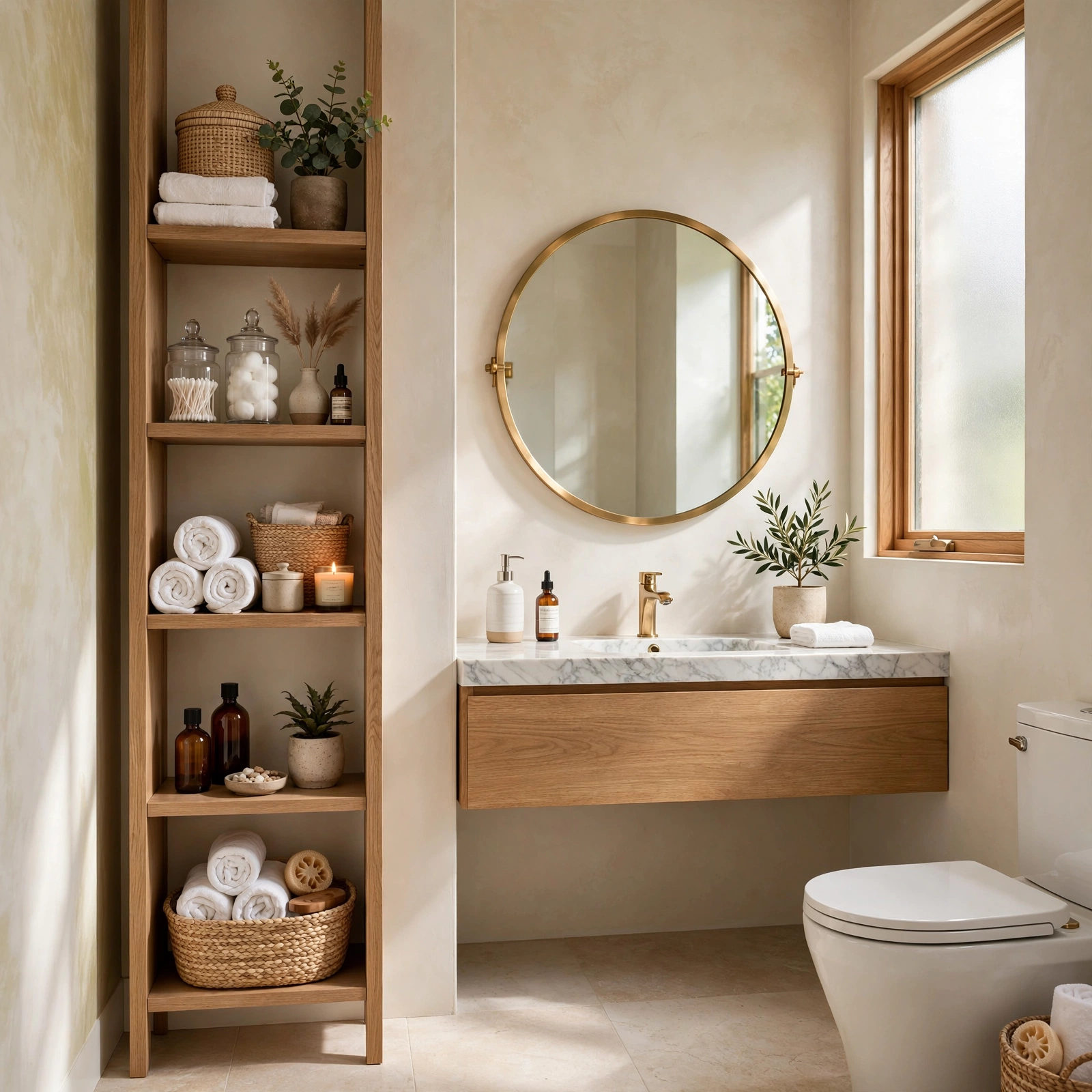
Floor space is the scarcest resource in a tiny bathroom, so any storage piece that takes up width is working against the room instead of for it. A tall, narrow shelving unit stores just as much as a wide cabinet while leaving the floor around it open and walkable. Narrow units run $40 to $90 depending on material and height. Most are freestanding, requiring zero tools and zero wall damage, which makes this one of the easiest and most renter friendly tiny bathroom ideas to try first.
6. Pick Large Tiles With Minimal Grout Lines Tiny Bathroom Ideas
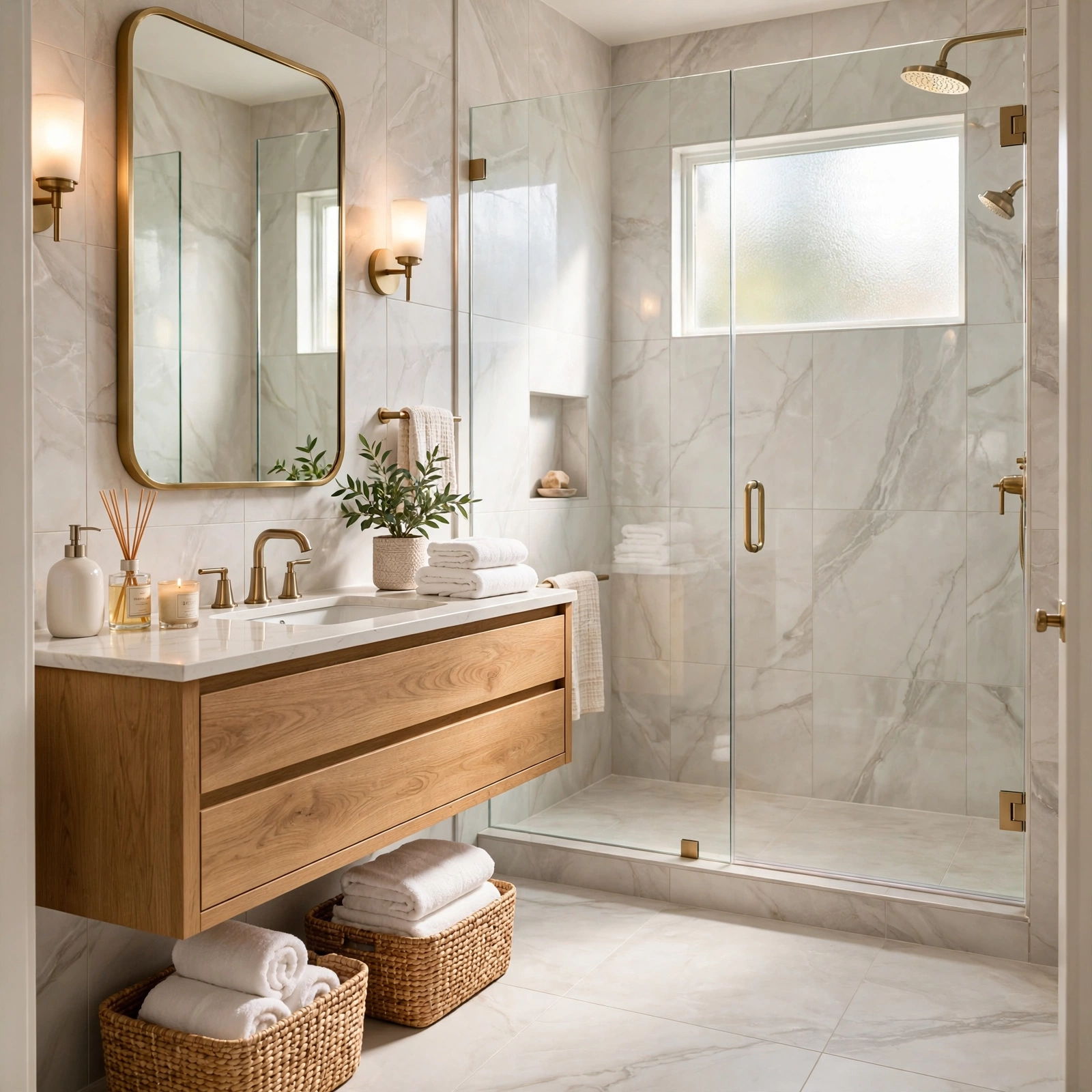
Small tiles create more grout lines, and more grout lines create more visual breaks, which subconsciously makes a floor or wall look busier and smaller than it actually is. Switching to larger format tile, even in the same square footage, reduces those breaks and lets the eye read the surface as one continuous plane. Large format tile runs $3 to $8 per square foot before installation, which typically adds $5 to $10 per square foot on top. This is a renovation level project best planned alongside any other flooring or shower work already underway.
7. Mount Towel Bars and Fixtures Higher on the Wall Tiny Bathroom Ideas
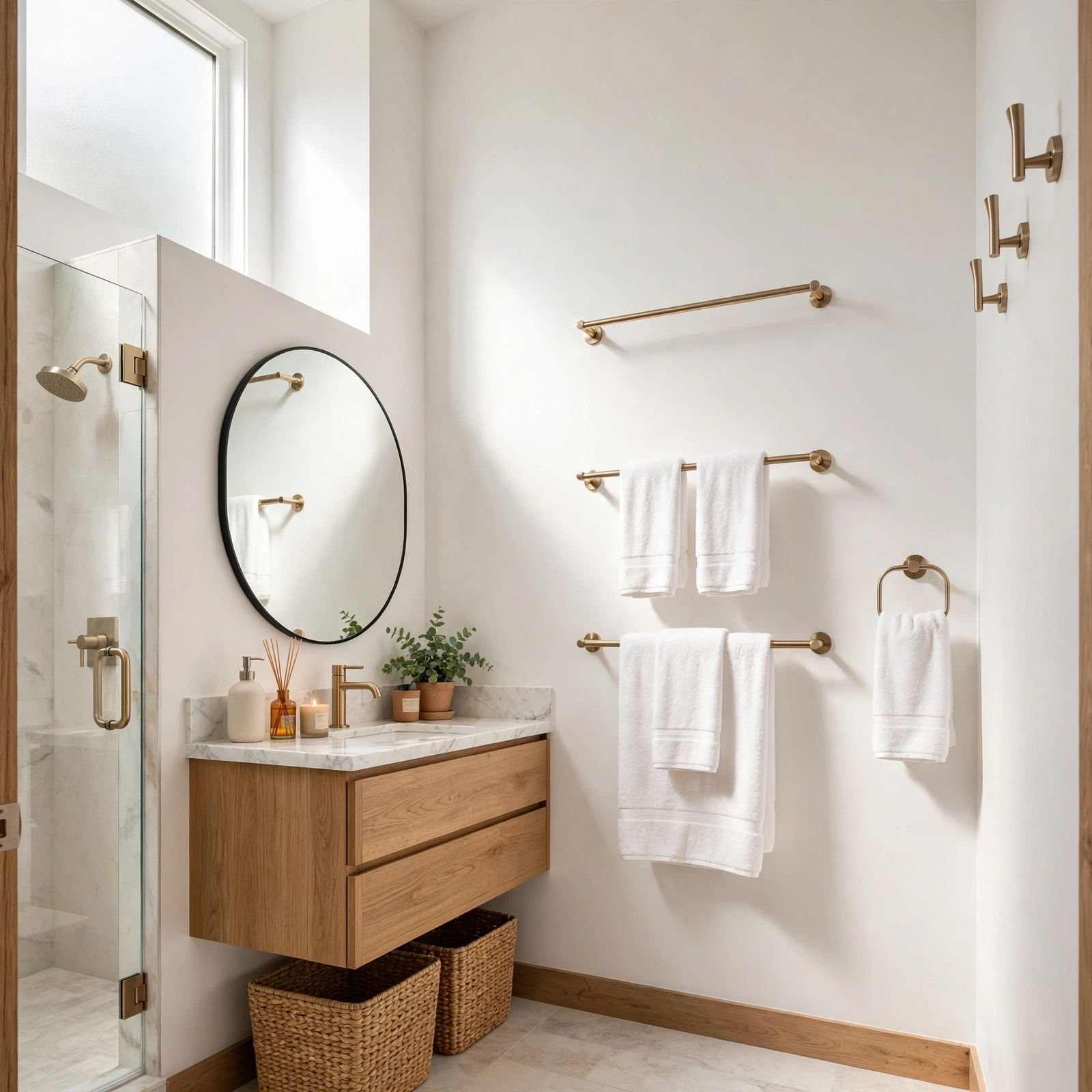
Placing towel bars, hooks, and even the toilet paper holder a few inches higher than standard draws the eye upward, which makes the walls feel taller and the room feel less compressed. This costs nothing beyond the hardware itself, since it’s simply a matter of where the holes go during installation. Basic towel bars and hooks run $10 to $30 total. This is a genuine weekend project requiring only a drill, and renters can achieve the same effect with adhesive mounted versions instead of drilling new holes.
8. Use a Pocket Door or Reverse the Swing Direction Tiny Bathroom Ideas
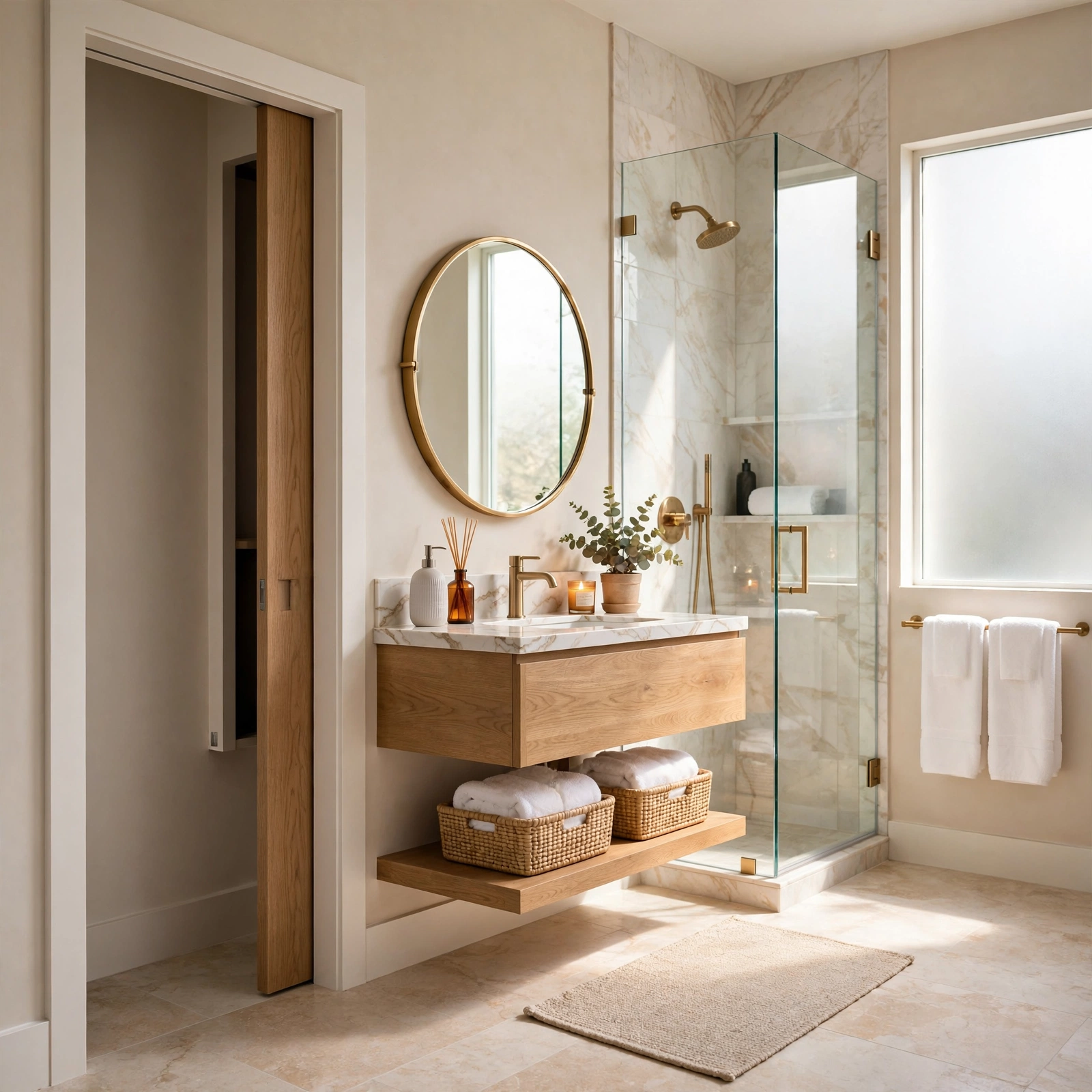
A standard swinging door needs a few feet of clear floor space just to open and close, which is a real loss in a bathroom that’s already tight on room. A pocket door that slides into the wall eliminates that clearance entirely, while simply reversing which way an existing door swings, so it opens outward into a hallway instead of inward, can free up space without any new construction. A pocket door conversion costs $500 to $1,200 depending on wall type, while reversing a swing direction costs closer to $50 to $100 in hardware and labor.
9. Keep the Color Palette Light and Continuous Tiny Bathroom Ideas
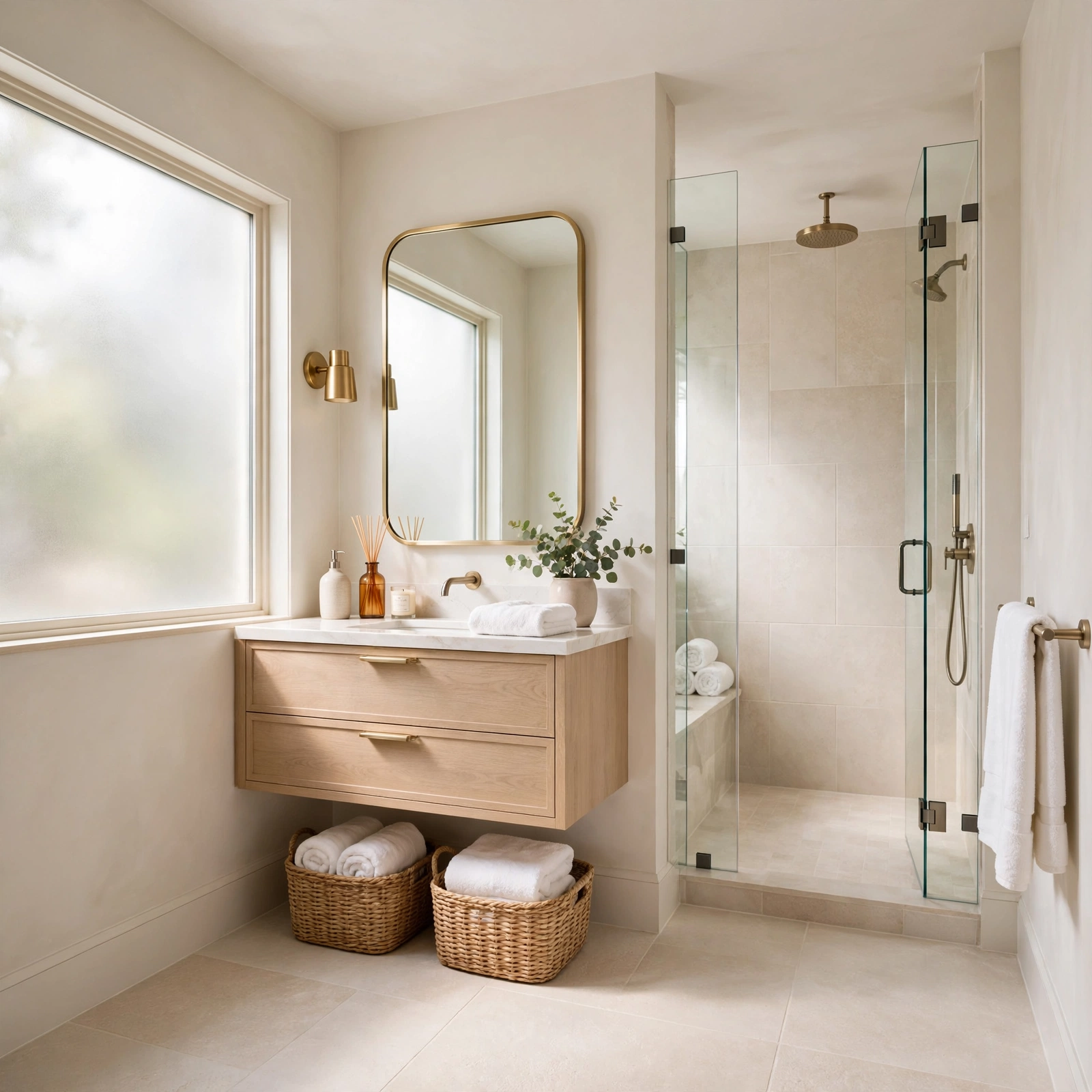
Using the same light color, or very closely related tones, across the walls, floor, and even the shower surround removes visual stopping points that make a small room look chopped into pieces. A tiny bathroom in five different tones and materials reads as busy no matter how clean it is, while one in a continuous palette reads as intentional and larger. This costs nothing extra if planned before purchasing tile or paint, since it’s a decision rather than an added expense. It’s one of the simplest, completely free tiny bathroom ideas to apply during any renovation.
10. Add a Slim Over the Toilet Storage Unit Tiny Bathroom Ideas
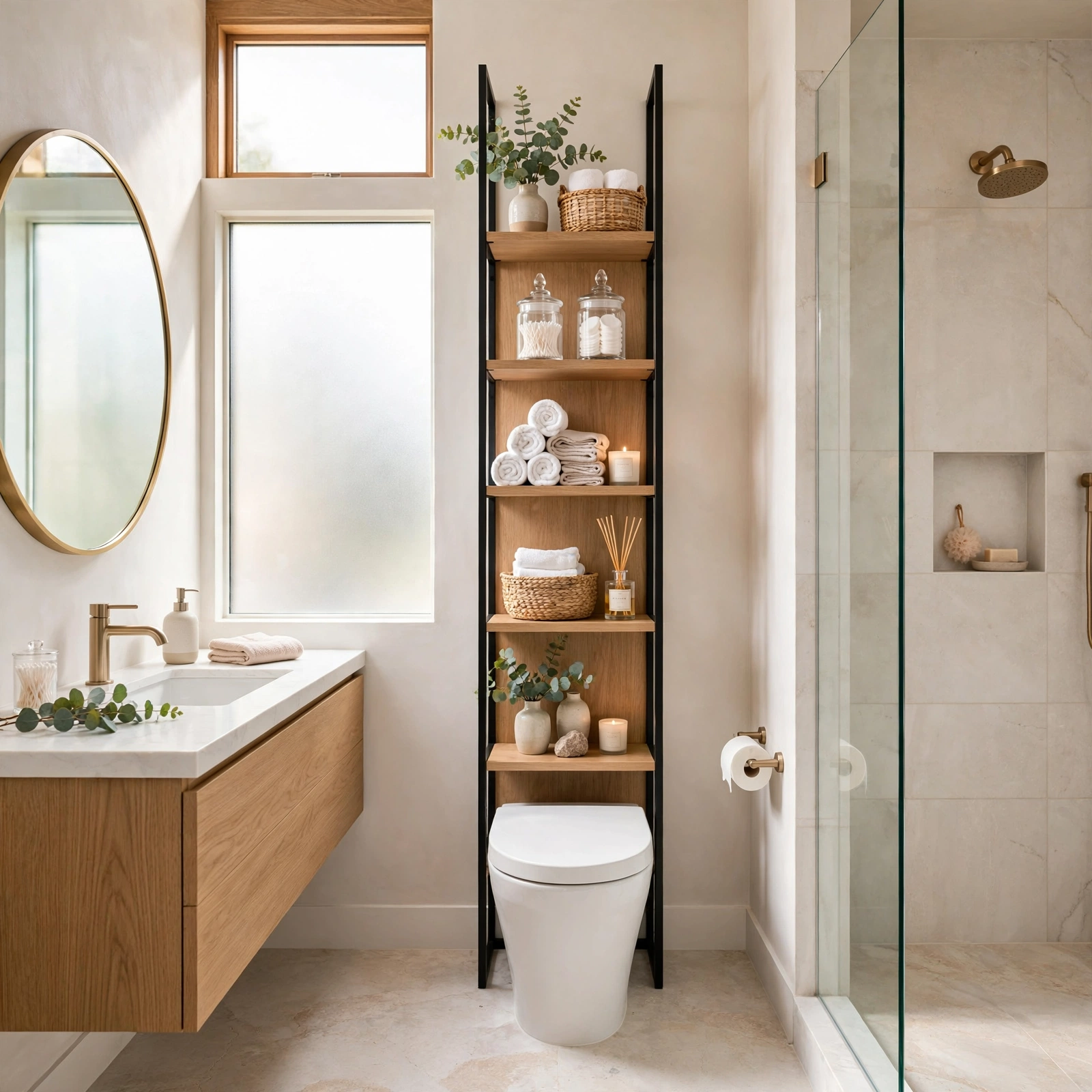
The space above a toilet is almost always empty in a tiny bathroom, and a slim, tall storage unit placed there adds real storage without taking a single inch of usable floor space elsewhere. Choosing a narrow depth, around eight to ten inches, keeps it from feeling like it’s closing in on the room. These units run $50 to $120 depending on material and finish. Most are freestanding and require no tools at all, making this a completely renter friendly way to add storage to a tiny bathroom in minutes.
11. Add a Stylish Tissue Box Cover Tiny Bathroom Ideas
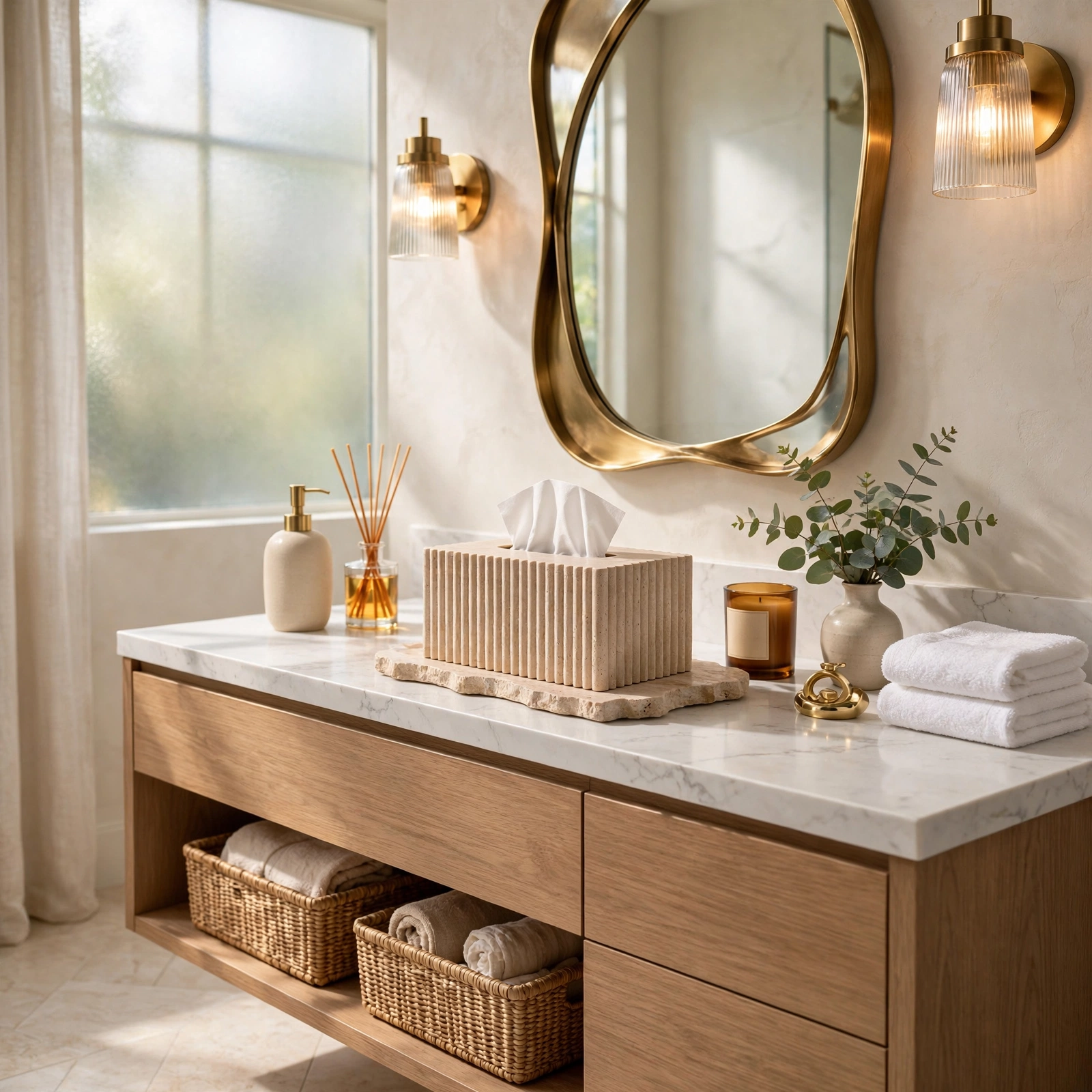
A cardboard tissue box sitting on the counter can make even a thoughtfully decorated guest bathroom feel unfinished. Swapping it for a ceramic, wood, or woven tissue box cover creates a cleaner, more cohesive look while keeping an everyday essential within easy reach. Choose a finish that complements your faucet or accessories for a more intentional design. A quality tissue box cover costs $15 to $35, requires no installation, and instantly elevates the countertop without adding clutter. It’s one of those guest bathroom ideas that feels subtle but makes the entire room look more polished.
12. Include a Small Lidded Trash Can Tiny Bathroom Ideas
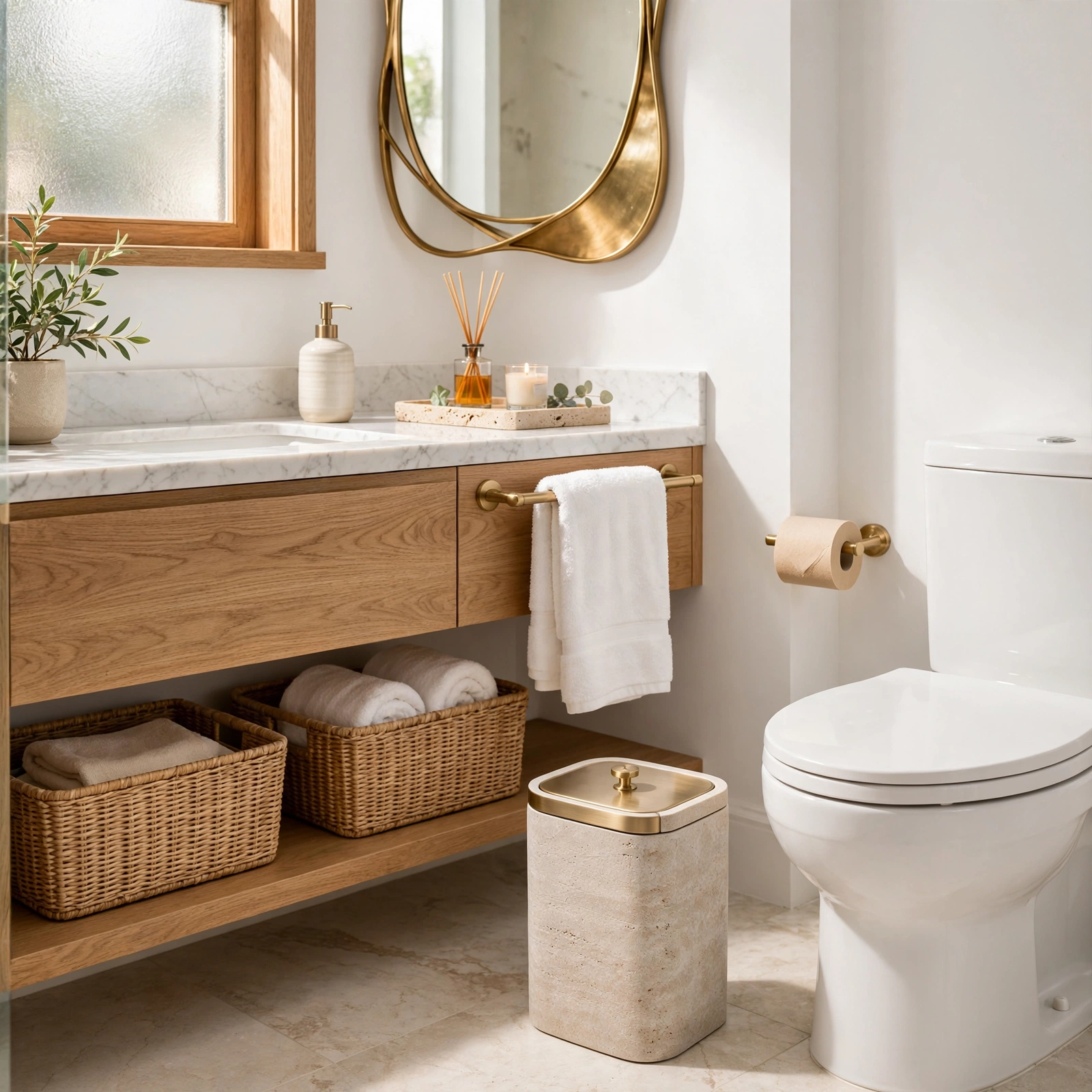
No guest should have to search around the bathroom wondering where to throw something away. A compact trash can with a lid placed beside the vanity or toilet offers both convenience and privacy while helping the space stay tidy throughout the visit. Look for a simple design in matte metal, wood, or textured plastic that blends into the room instead of standing out. Most models cost between $20 and $40, require no setup beyond placing them in position, and work equally well in owned homes or rentals. It’s a practical detail that thoughtful hosts never overlook.
13. Upgrade the Toilet Paper Display With a Decorative Holder Tiny Bathroom Ideas
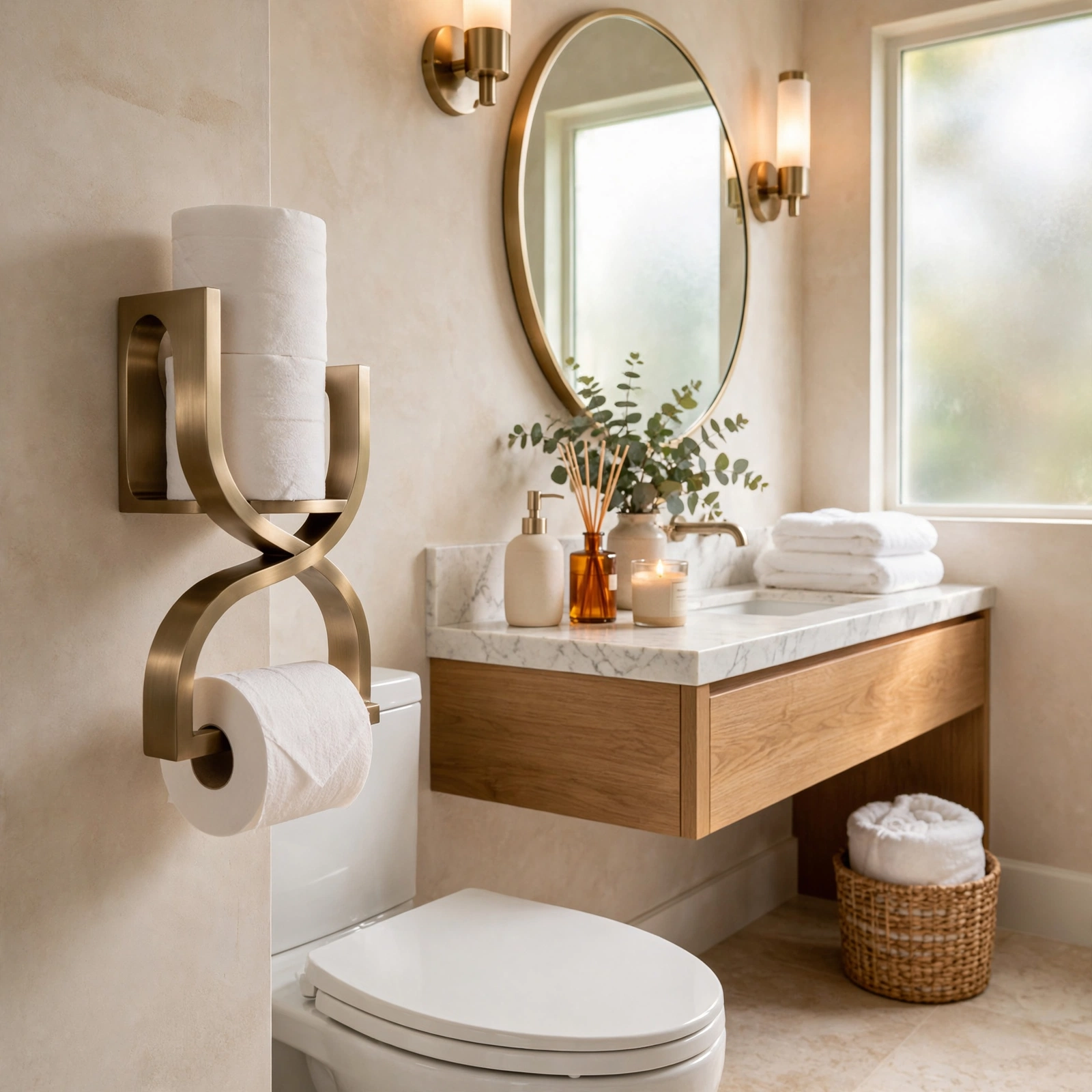
A spare roll balanced on the back of the toilet works, but it doesn’t exactly make the room feel finished. A freestanding toilet paper holder with built in storage or a wall mounted option keeps extra rolls neatly organized while adding another decorative element to the bathroom. Finishes like brushed brass, matte black, or natural wood can tie the room’s hardware together for a more cohesive appearance. Expect to spend $25 to $60, with most freestanding versions requiring no installation at all. This small upgrade makes an everyday necessity look like part of the overall design rather than an afterthought.
Shop the Look
For a space maximizing look, a wall mounted floating vanity ($300–$600) paired with a large frameless mirror ($60–$120) creates the illusion of extra square footage. A pocket door or sliding barn door ($150–$300) is a smart swap for a swinging door to reclaim floor space. For storage, a slim over the toilet cabinet ($80–$150) or vertical ladder shelf ($40–$80) adds function without crowding the room. Stick to light, monochromatic tones throughout to keep the space feeling open.
Common Mistakes to Avoid
Using small, busy tile patterns is a common mistake in tiny bathrooms, since it visually chops up the space rather than opening it up. Choosing a swinging door over a pocket or sliding door wastes precious floor clearance that’s especially valuable in compact layouts. Overloading the room with too much furniture or decor, rather than prioritizing wall mounted and vertical storage, makes the space feel more crowded than it needs to. Finally, skipping a large mirror or proper lighting is an easy oversight that makes an already small room feel darker and even more confined.
Frequently Asked Questions
What is the biggest mistake people make in a tiny bathroom?
The most common mistake is adding too much furniture or too many small decorative objects, which fills the limited floor space and makes the room feel more cramped rather than more finished. A better approach is choosing fewer, taller pieces that use vertical space instead of horizontal footprint, and keeping surfaces as clear as possible. Restraint almost always makes a tiny bathroom feel bigger than adding more storage or decor ever will.
How can you make a tiny bathroom look bigger without renovating?
A large mirror, lighter color towels, and vertical storage instead of wide furniture can noticeably change how big a tiny bathroom feels without touching a single wall or fixture. Keeping the countertop and floor as clear as possible also helps, since visual clutter shrinks a small room faster than almost anything else. These changes can typically be done in a single afternoon for under $150 total.
Is a shower curtain or glass door better for a small bathroom?
A frameless glass door generally makes a small bathroom feel more open since it doesn’t block the sightline the way a curtain does when closed, but it comes at a significantly higher cost and requires permanent installation. A curtain in a light, solid color is a reasonable renter friendly alternative that still avoids visually chopping up the room the way a patterned or dark curtain would. The choice often comes down to budget and whether the bathroom is rented or owned.
What layout works best for a very small bathroom?
Layouts that keep the door swing, shower entry, and vanity access from overlapping tend to feel the most functional, even at the same total square footage as a more cramped arrangement. Pocket doors, corner sinks, and wall mounted fixtures all help by removing clearance requirements that a standard layout demands. A professional can often suggest small layout shifts during a renovation that make a tiny bathroom feel dramatically more usable.
Do tiny bathrooms need less furniture than larger ones?
Tiny bathrooms generally need fewer, more purposeful pieces rather than smaller versions of what a larger bathroom would have, since every item takes up a proportionally bigger share of the room. Choosing multi purpose pieces, like a vanity with built in storage or a mirror that doubles as a cabinet, helps a tiny bathroom function well without feeling overloaded. Fewer, better chosen pieces almost always outperform more, smaller ones in a space this size.
Conclusion
A tiny bathroom doesn’t have to feel like a compromise once a few smart layout and visual tricks are in play, and most of them cost far less than a full renovation would suggest. Whether that starts with a $10 towel bar moved a few inches higher or working through several of these tiny bathroom ideas over time, the room can genuinely feel bigger without ever changing its actual size. Save this list now, so it’s ready whenever the next small upgrade feels worth tackling.