Wall Decor Living Room 17 Ideas for a Cozy, Stylish Space
A blank wall behind the sofa is usually the first thing people notice when a living room feels unfinished, which is exactly where most wall decor living room searches start. This guide walks through seventeen practical projects, from picture ledges to a vertical garden wall, that you can put together with basic tools and a free afternoon. You’ll learn what materials to buy, roughly what to spend, and how to avoid the layout mistakes that make a wall feel cluttered instead of curated. Each idea includes real dimensions and material names, not vague suggestions, so you know exactly what to look for at the store.
Trend & Background
Wall styling has become one of the fastest-growing categories in home decor as more people rent long-term and want a finished look without repainting or drilling into every stud. Picture ledges, removable wallpaper, and modular shelving systems have grown into their own retail niche because they solve a specific problem: a wall can look intentional and layered without a single permanent hole. This matters now because rising furniture costs have pushed people toward wall-based projects instead, since a well-planned wall can change a room’s entire mood for a fraction of the cost of new furniture.
Key Takeaways
- Seventeen wall projects cover art, shelving, texture, and lighting for living rooms of any size.
- Most ideas use materials under $60 and can be finished in a single weekend.
- Reference tables are included for shelf spacing, frame sizing, and paint budgets so you can plan before you buy.
- Small, layered changes like a gallery wall or picture ledge often shift a room’s feel more than a single large purchase.
1. Picture Ledge Shelves
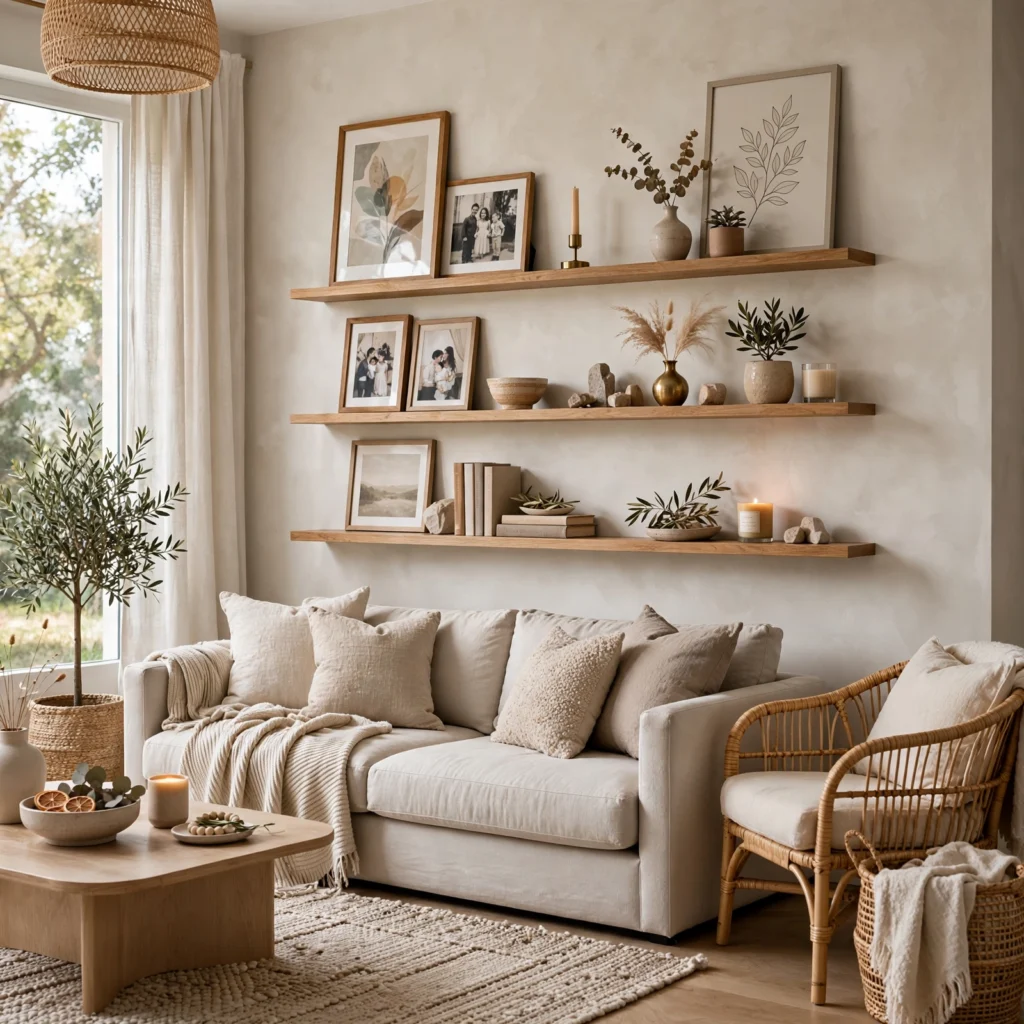
Picture ledges are shallow shelves designed to lean framed art against the wall rather than hang it, which makes rearranging as easy as sliding a frame sideways. Build them from a pine board with a routed groove along the front edge, or buy a pre-cut kit for under $25 per ledge. Mount two or three ledges at staggered heights above a console table or sofa, then layer frames of different sizes in front of each other for depth instead of lining them up in a flat row.
| Ledge Length | Recommended Spacing | Max Load |
| 24 inches | 8–10 inches apart | 10 lbs |
| 36 inches | 10–12 inches apart | 15 lbs |
| 48 inches | 12–14 inches apart | 20 lbs |
2. Gallery Frame Wall
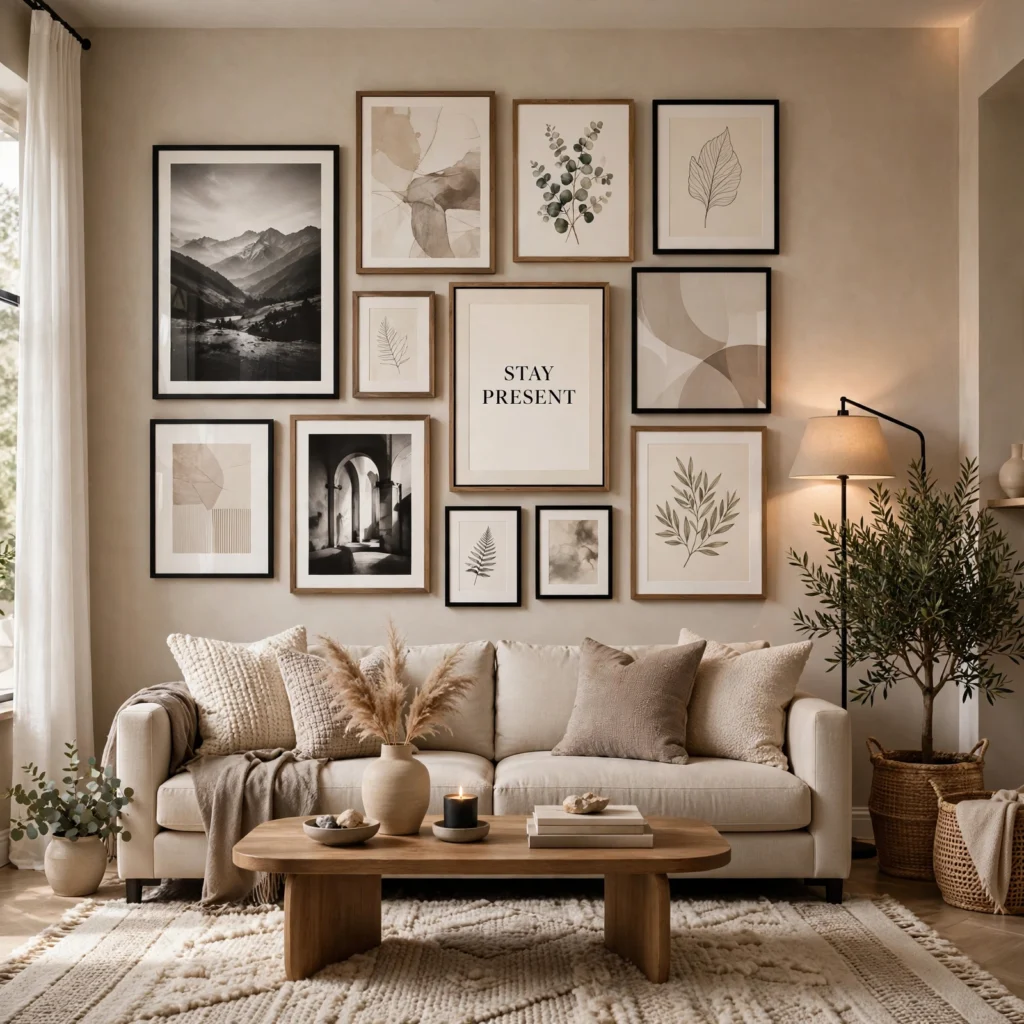
A gallery frame wall groups mismatched art, mirrors, and small objects into one visual block above the sofa instead of hanging a single oversized piece. Lay the arrangement out on the floor first, mixing frame finishes like black metal, natural oak, and thin brass, keeping two to three inches between each piece. Trace the layout onto kraft paper, tape it to the wall, and hammer nails through the paper before removing it, which keeps the spacing accurate on the first try.
3. Macrame Fiber Art
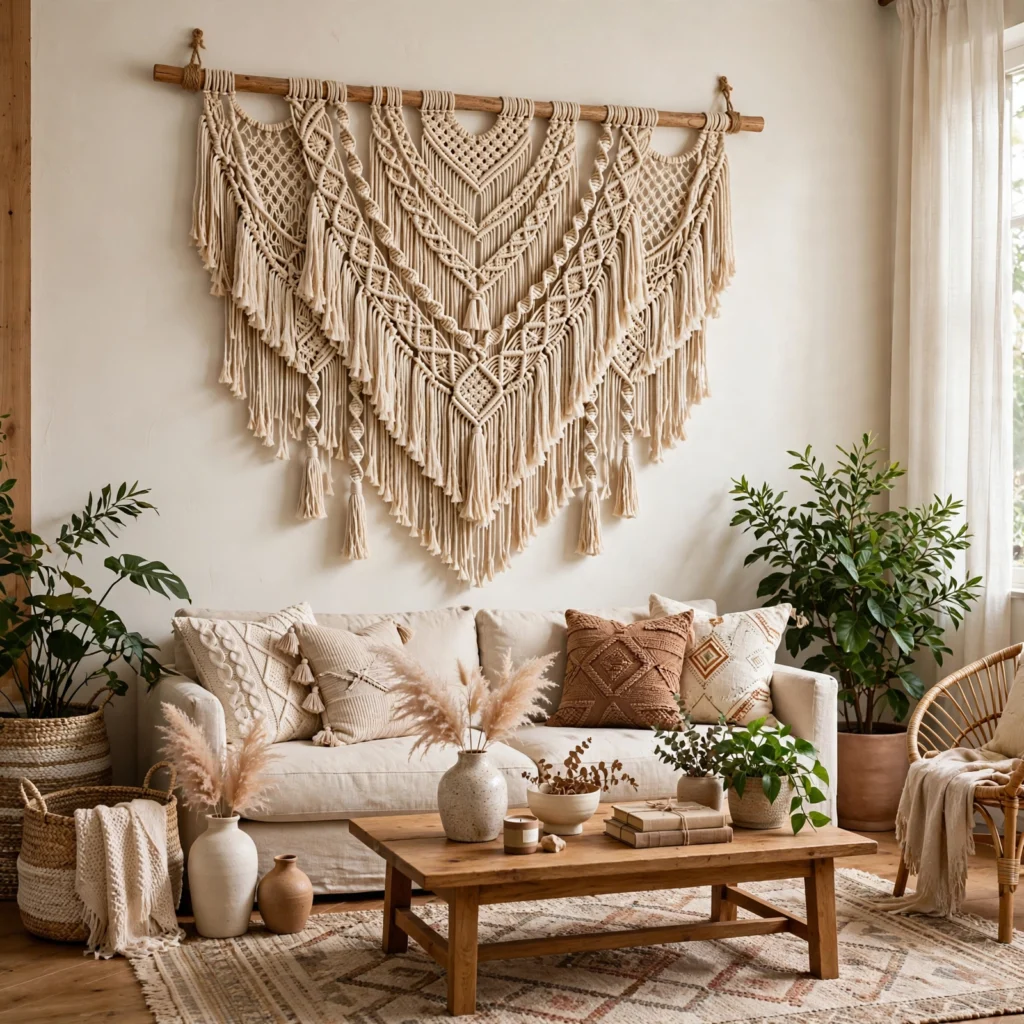
A large macrame or woven fiber panel adds texture to a plain wall using cotton rope and a wooden dowel, without needing a matching set of frames. Beginners can follow a basic square-knot pattern and finish a wide statement piece in an afternoon using roughly 400 feet of cotton cord. Center it above the sofa as a single focal point rather than pairing it with other large art, since the texture already carries enough visual weight to anchor the wall on its own.
In order to see more options for craft room decor CLICK HERE
4. Painted Accent Wall
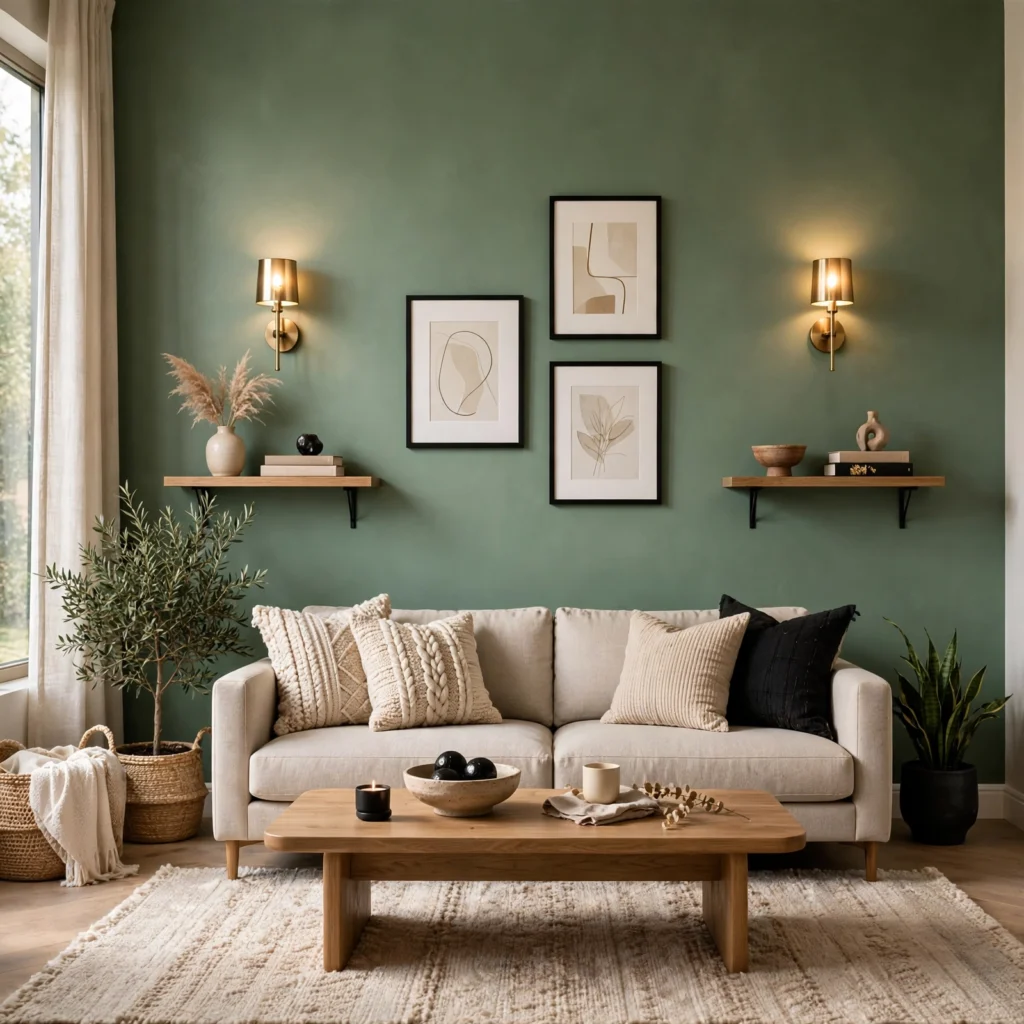
One painted wall, done in a saturated tone like Deep Indigo or Clay Terracotta, changes a living room’s mood more than almost any single furniture purchase. Choose the wall behind the sofa or the one you see first from the entryway, since both placements read as intentional focal points. Tape off trim and outlets, prime first if you’re going from light to dark, and plan on two coats of paint for even, saturated coverage across the full wall.
| Wall Size | Paint Needed | Approx. Cost |
| Small (12×8 ft) | 1 gallon | $35–$45 |
| Medium (14×9 ft) | 1.5 gallons | $50–$65 |
| Large (18×10 ft) | 2 gallons | $70–$90 |
5. Floating Corner Shelves
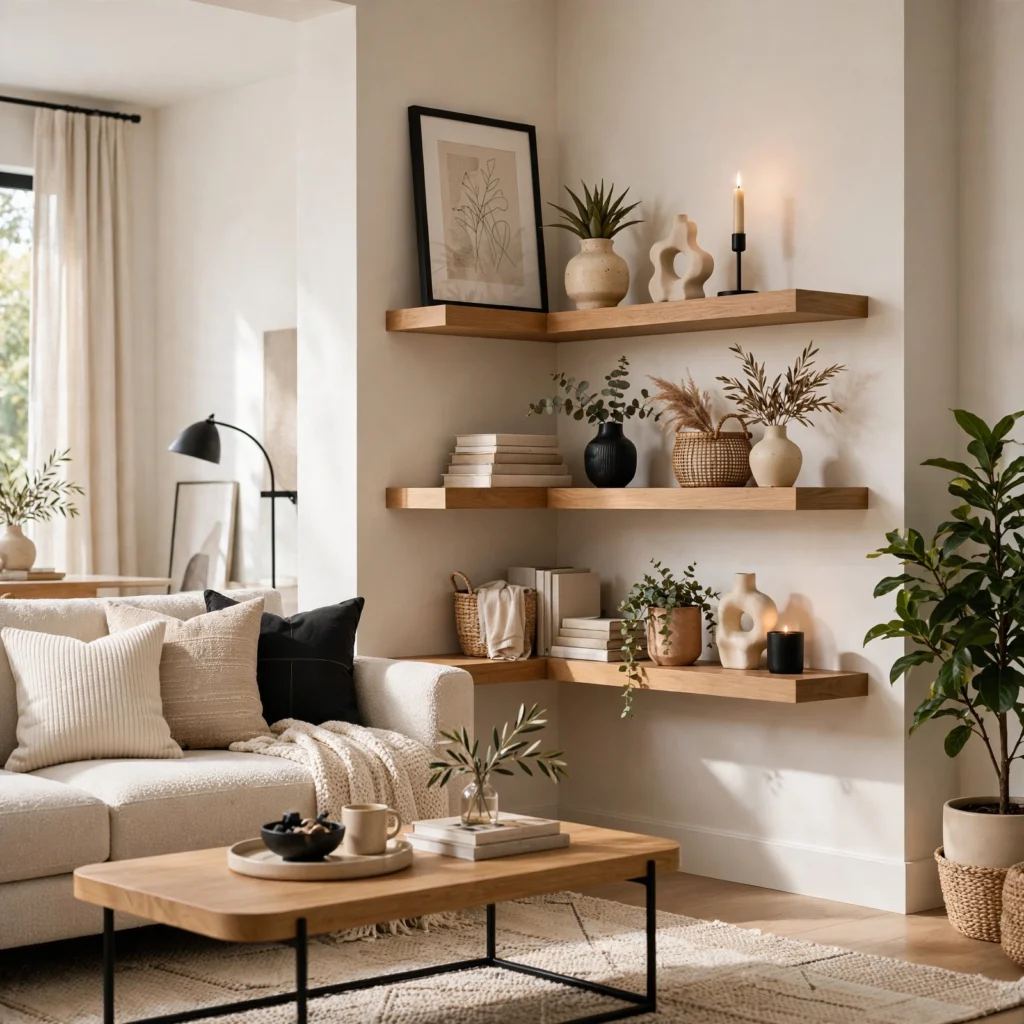
Floating corner shelves make use of the dead space most living rooms waste in each corner, turning it into display area without adding a bulky cabinet. Cut triangular boards to fit the corner angle, attach hidden brackets, and mount at staggered heights climbing upward. Style each shelf with a mix of books, a small plant, and one object rather than filling every inch, since a corner already draws the eye and doesn’t need much to look finished.
6. Woven Rattan Mirror Cluster
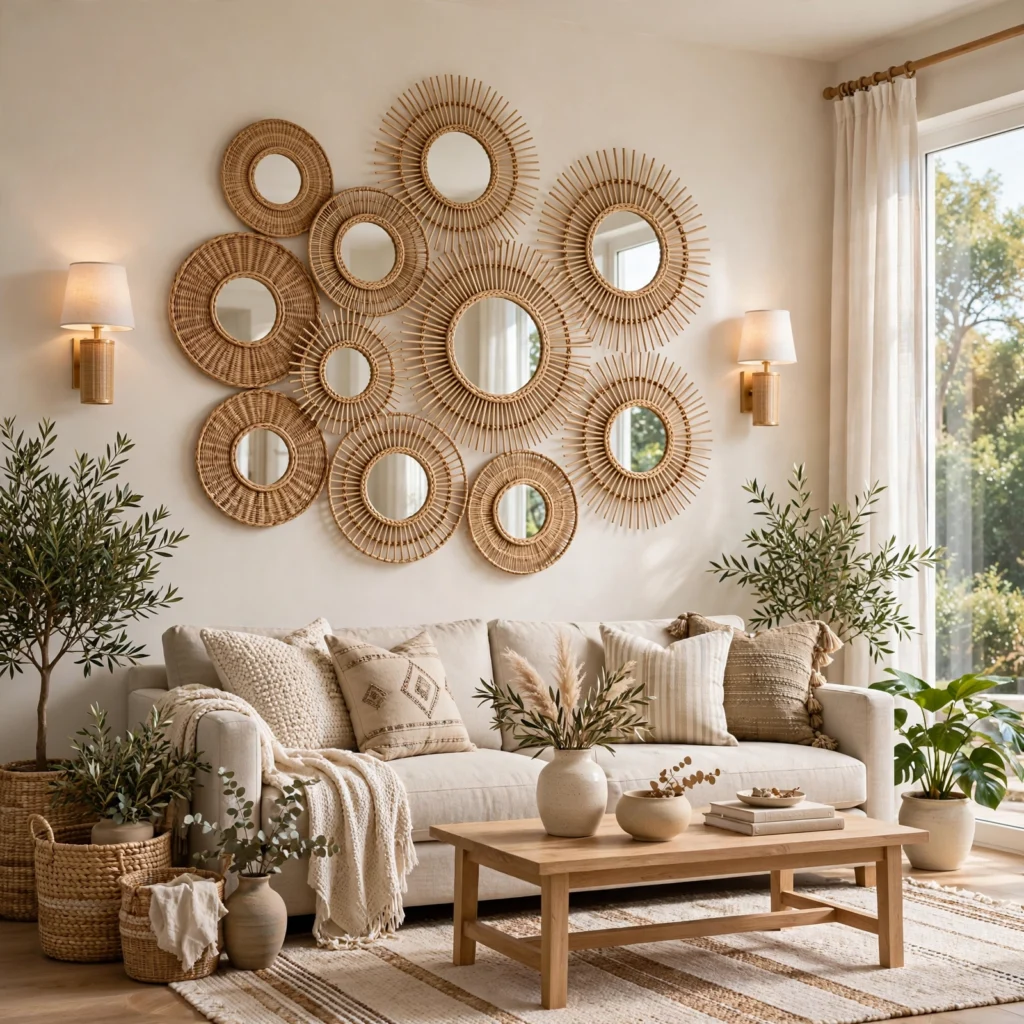
A cluster of three or four woven rattan mirrors in varying sizes adds texture and bounces extra light around a living room without hanging any actual art. Buy plain round mirrors and weave flat rattan reed around each edge, securing the loops with hot glue on the back. Arrange the cluster in a loose, asymmetrical grid rather than a straight line, leaving three to four inches between each mirror so the natural texture reads clearly instead of blending together.
7. Peel-and-Stick Wallpaper Panel
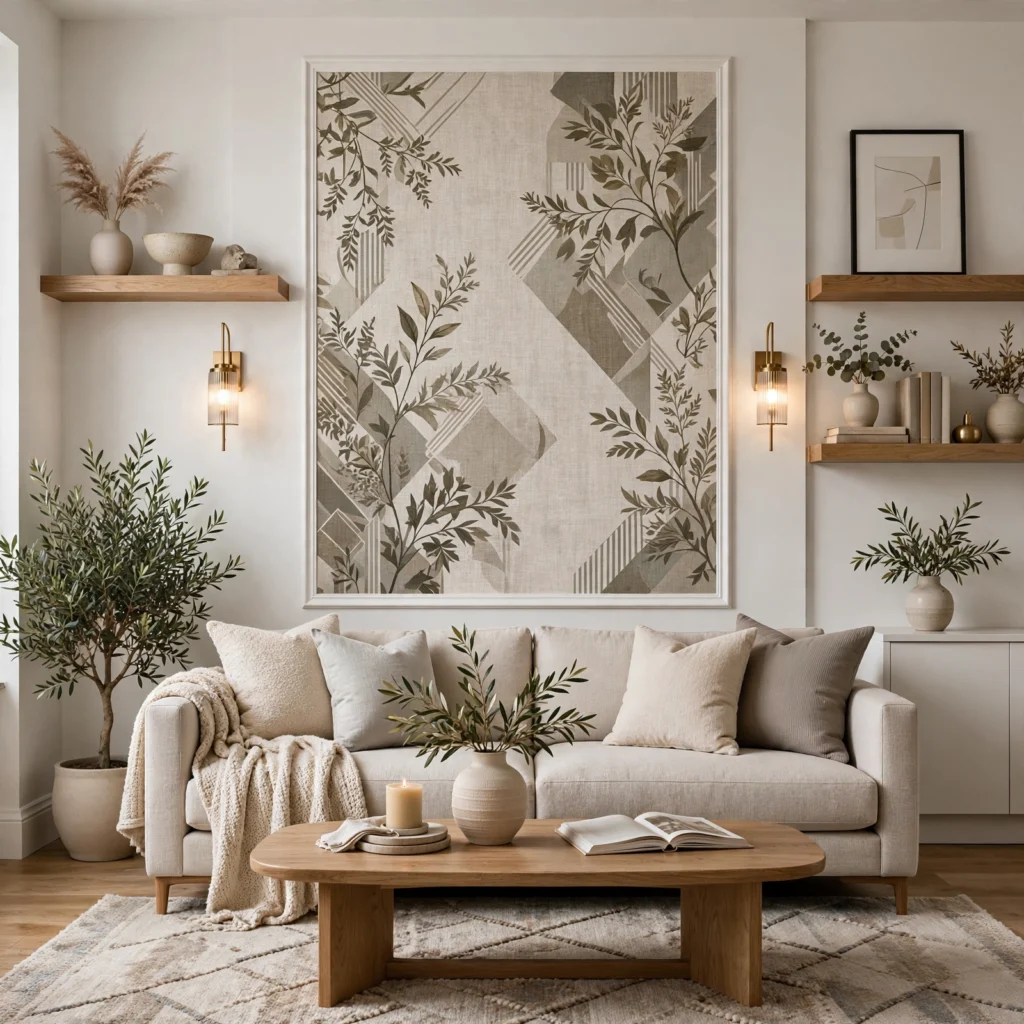
Rather than papering an entire wall, apply peel-and-stick wallpaper to a single defined panel, such as the space above a media console or between two windows. Measure the panel carefully, order slightly more material than the exact square footage for pattern matching, and smooth out air bubbles with a plastic scraper as you apply each strip. This approach costs less than covering a full wall and removes cleanly later, making it a lower-risk way to test a bold pattern.
| Panel Size | Rolls Needed | Approx. Cost |
| Small (4×6 ft) | 1 roll | $25–$35 |
| Medium (6×8 ft) | 2 rolls | $45–$60 |
| Large (8×10 ft) | 3 rolls | $65–$85 |
8. Wall Decor Living Room Moodboard
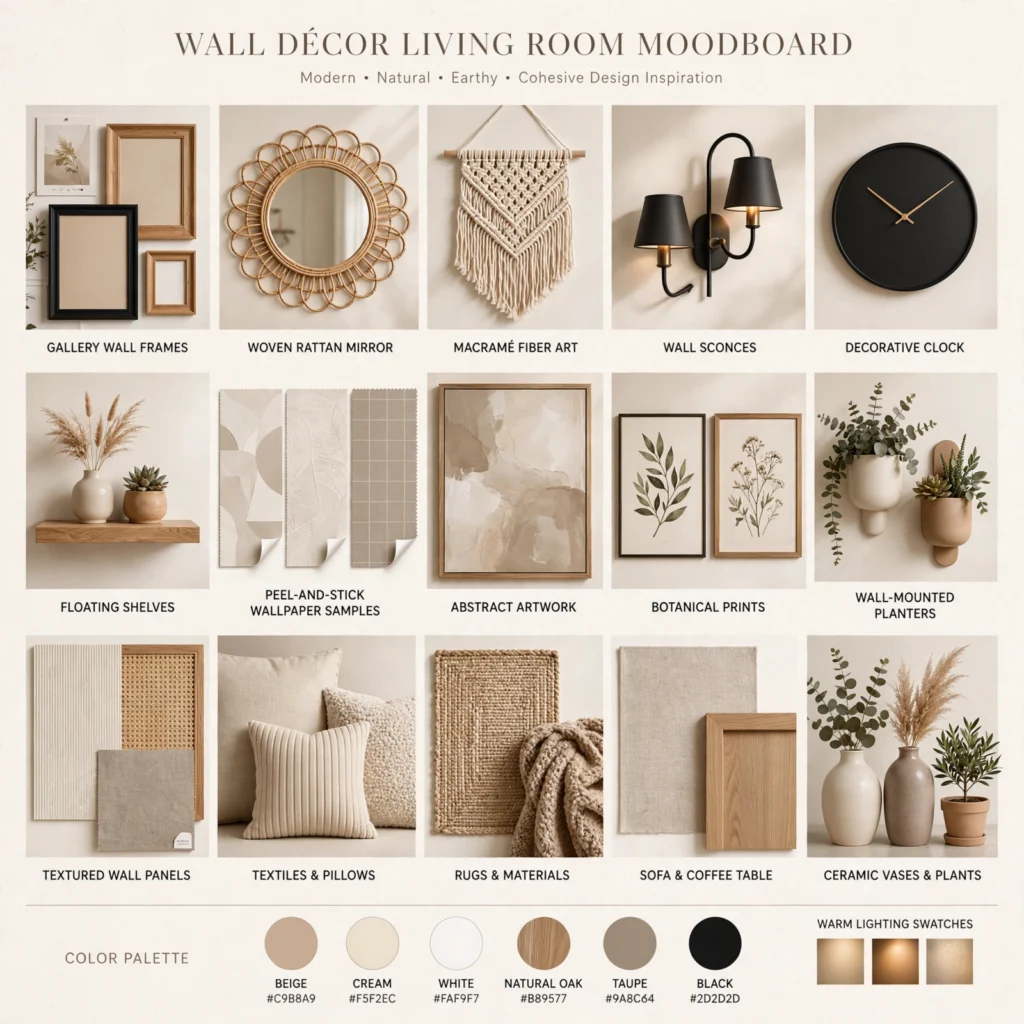
A moodboard acts as a rotating planning wall where you pin fabric swatches, paint chips, and clipped images while a living room comes together piece by piece. Build one from a cork panel wrapped in linen, framed with thin wood trim for a finished edge, and hang it in a spot you pass daily, like near a hallway entrance. Pinning ideas here before buying anything makes clashing colors or patterns obvious early, rather than after a return trip to the store.
9. Sculptural Wall Sconces
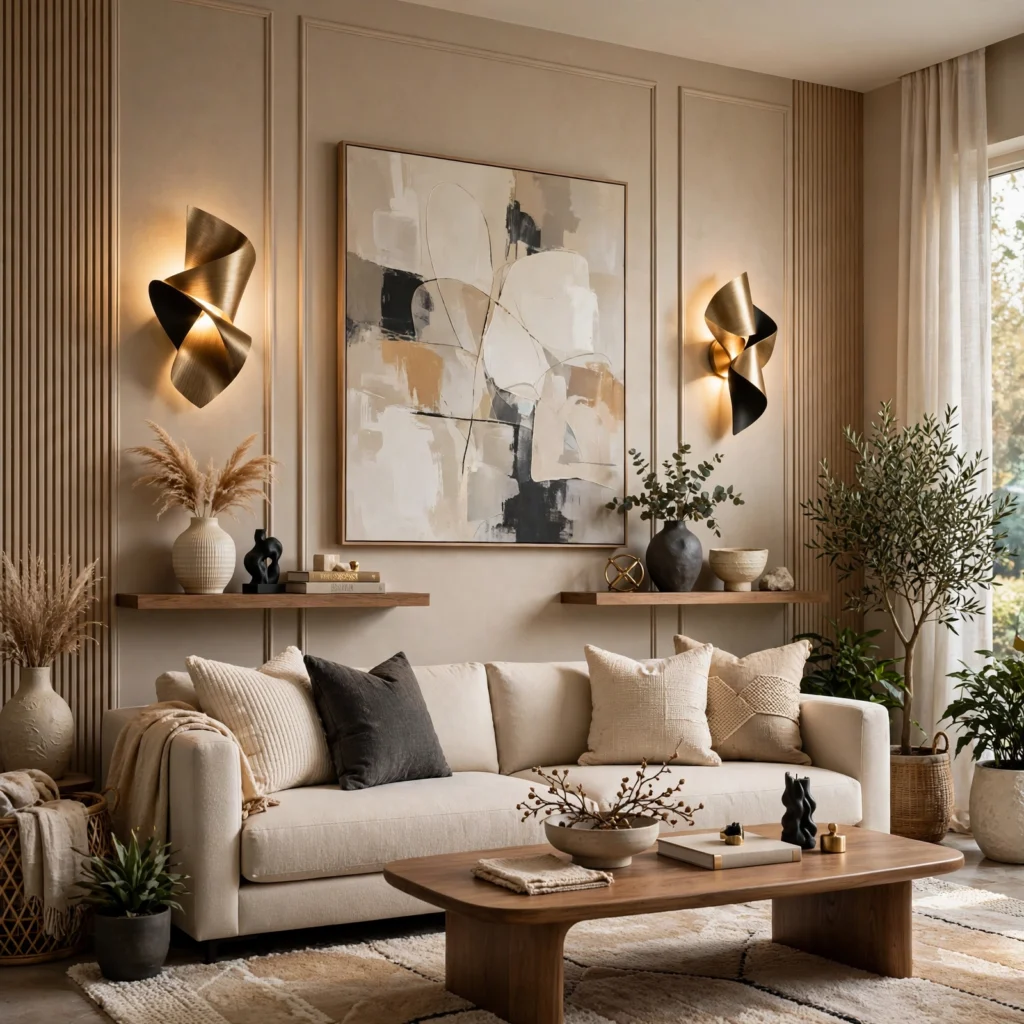
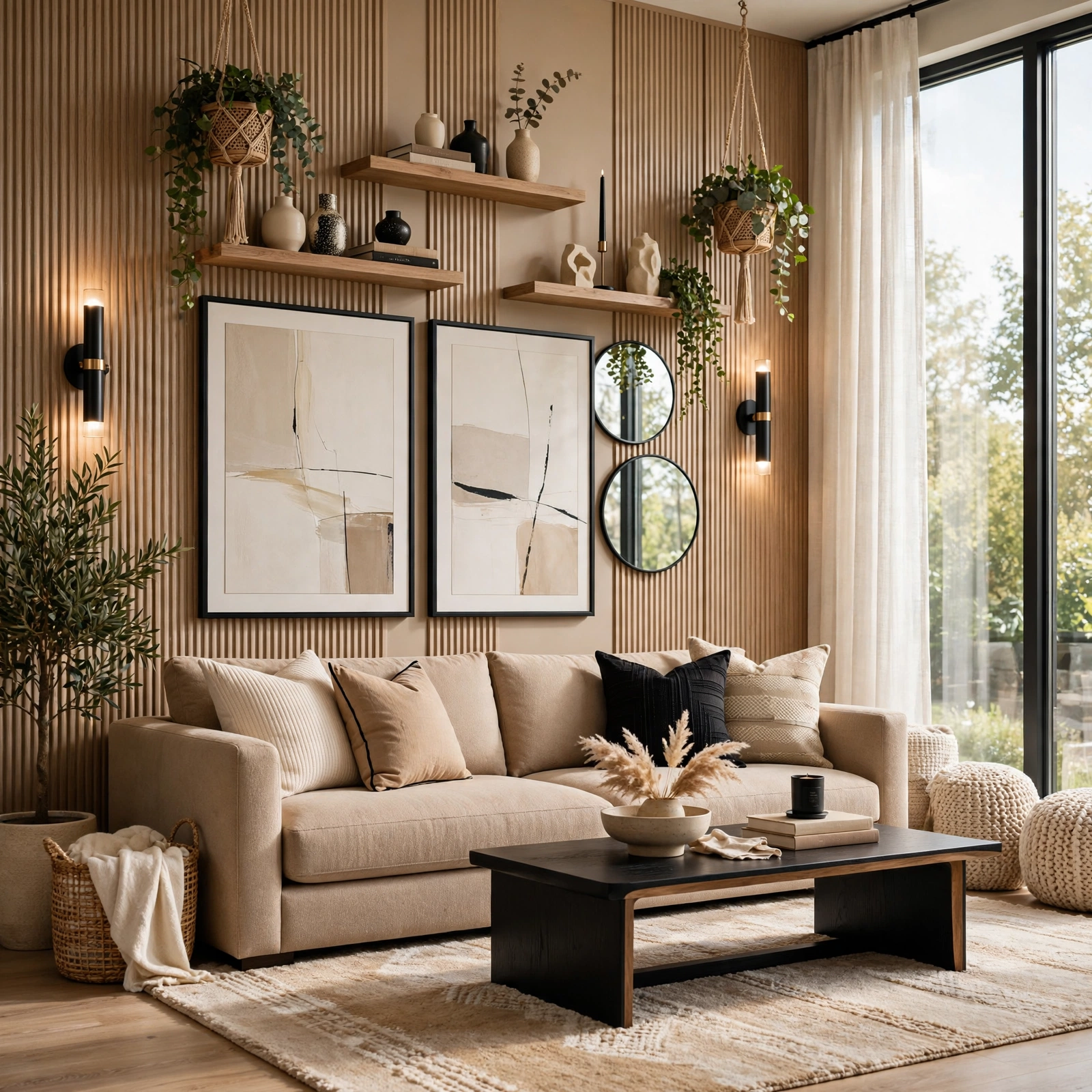
Battery-powered or plug-in wall sconces add dimension to a flat wall without an electrician, since many modern designs skip hardwiring entirely. Mount a pair symmetrically on either side of a media console or fireplace, positioned at roughly eye level when seated, for even ambient light in the evening. Choosing a sculptural shape, like a curved brass arm or a frosted glass globe, means the fixture reads as art during the day and functional lighting after dark.
10. Upcycled Crate Wall Storage
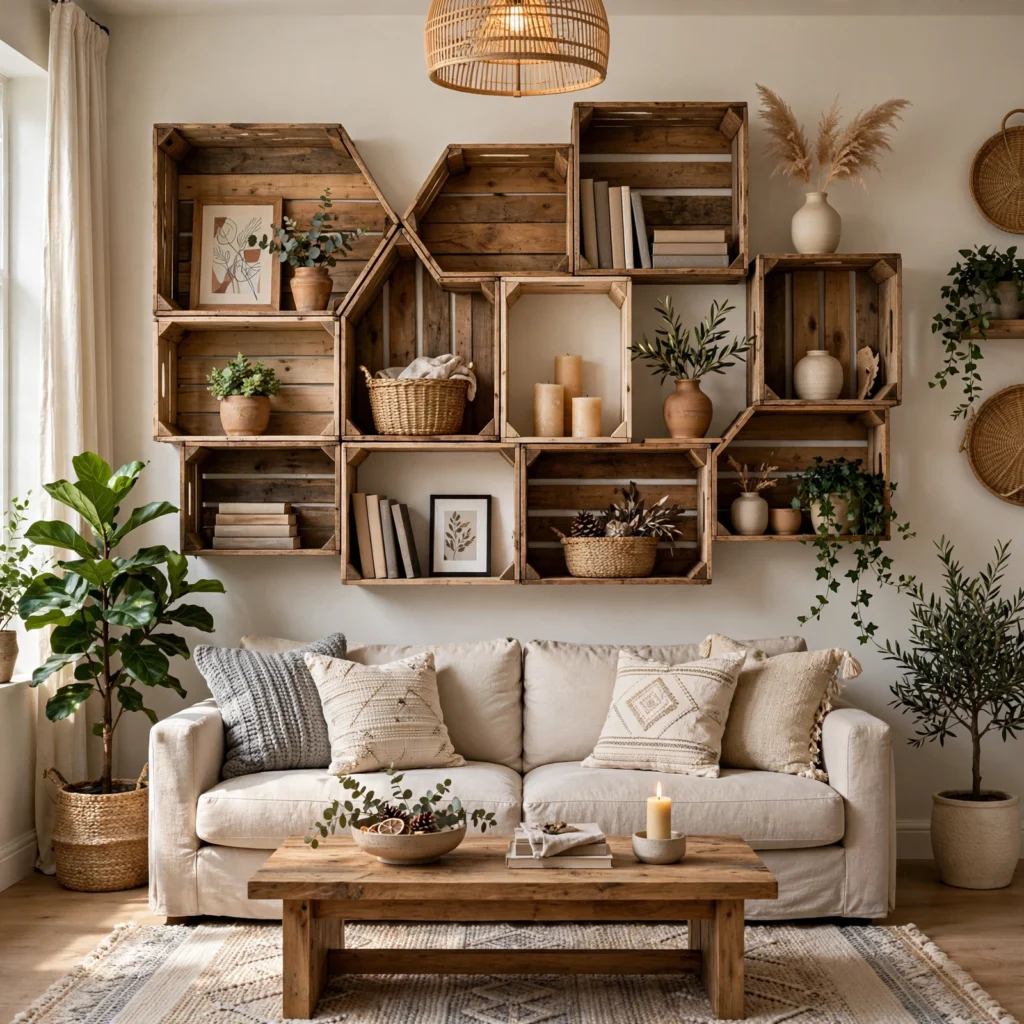
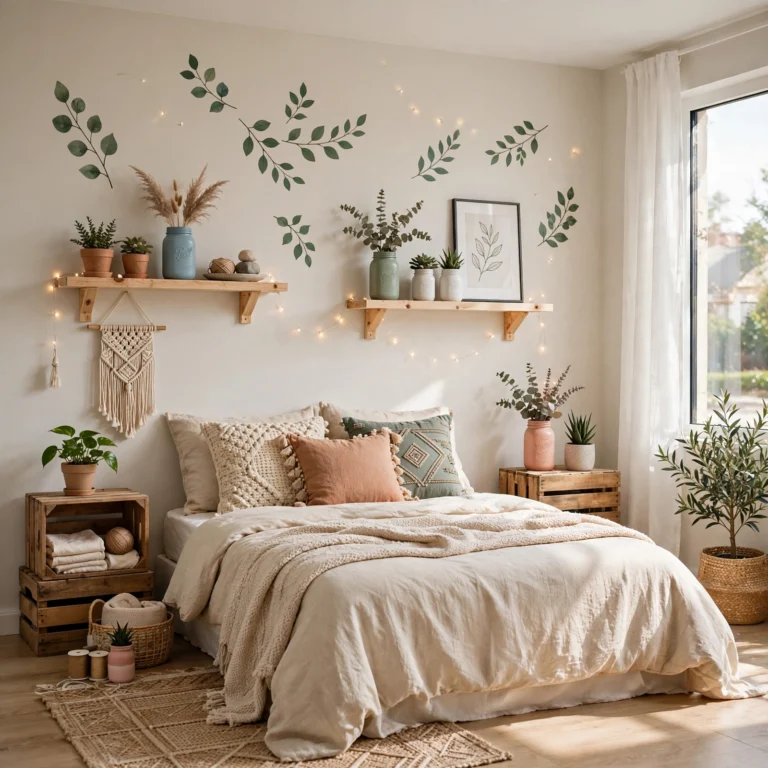
Wooden shipping crates, mounted directly to the wall in an offset grid, make an inexpensive modular display for books, records, or small plants. Sand the rough edges, stain or paint each crate to match existing furniture, and secure them to wall studs using L-brackets on the inside back panel. Stagger the crates rather than lining them up evenly, leaving a few open gaps in the grid for framed photos or a single hanging plant to break up the pattern.
11. Woven Basket Wall Grouping
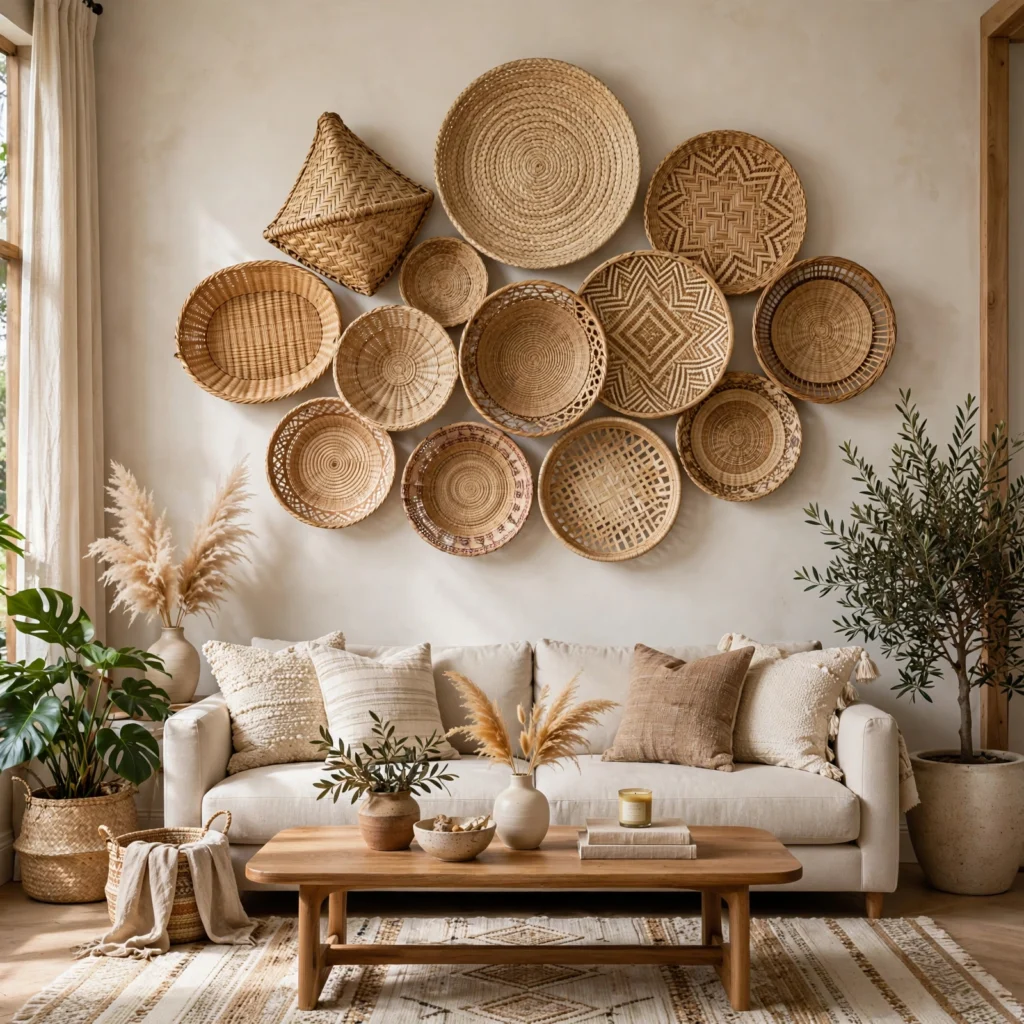
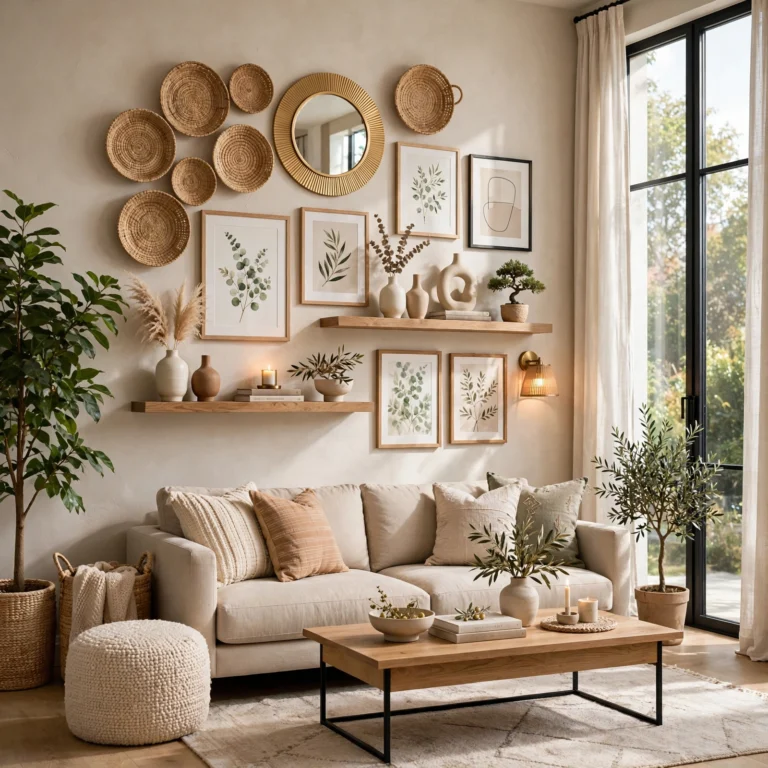
A cluster of flat woven baskets, mounted in a loose organic pattern, brings natural texture to a wall for a fraction of the cost of framed art. Source baskets in mixed sizes from a thrift store or import shop, then hang each with a single nail through the back weave, working from the largest basket outward. Keep the overall shape roughly circular or cloud-like rather than a strict grid, since the irregular sizes already give it a relaxed, handmade look.
12. Fabric Wall Hanging
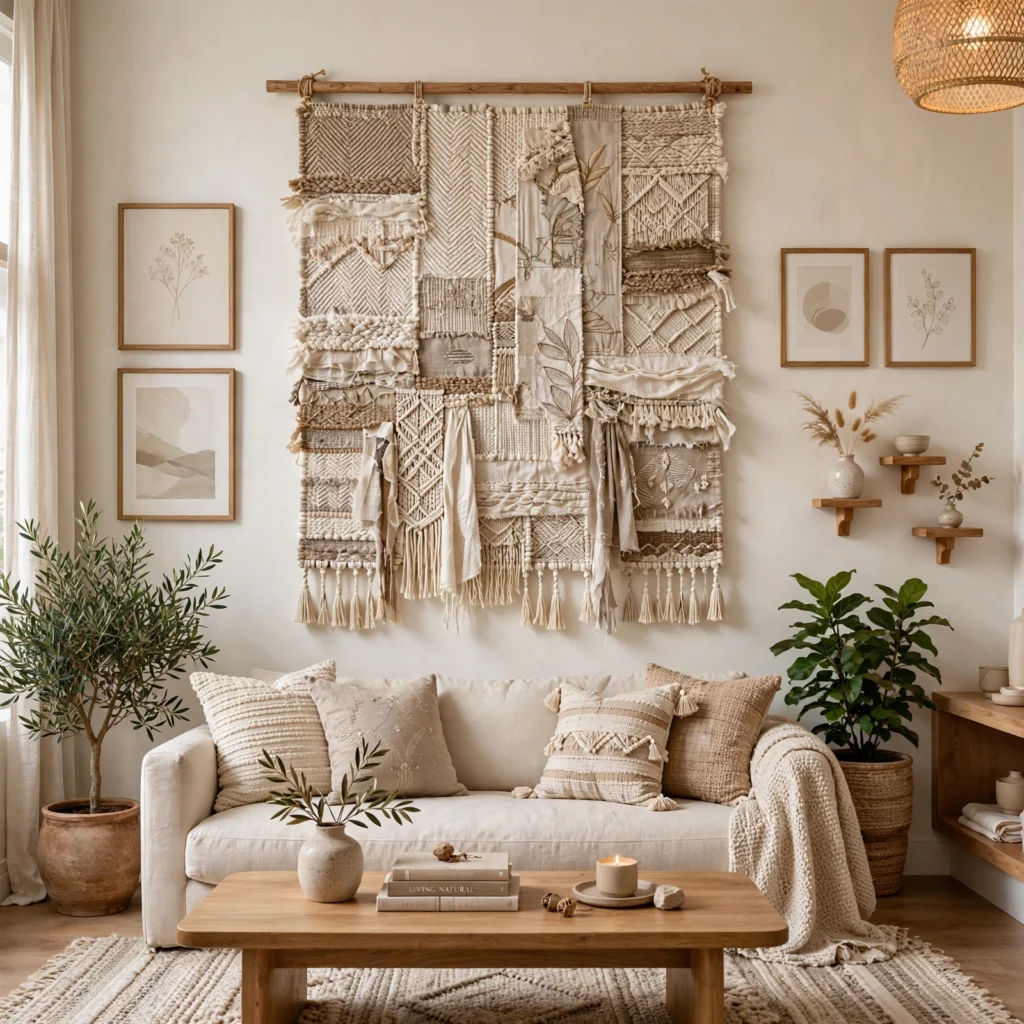
A large piece of patterned fabric, mounted to a wood dowel top and bottom, works as an oversized art piece for a fraction of the cost of a comparable framed print. Choose a mid-weight cotton or linen print, hem the top and bottom edges to create a dowel pocket, and hang it from two ceiling hooks or a curtain rod bracket. This project scales easily to fit an unusually wide or tall wall where standard framed art would look too small.
13. Framed Botanical Prints
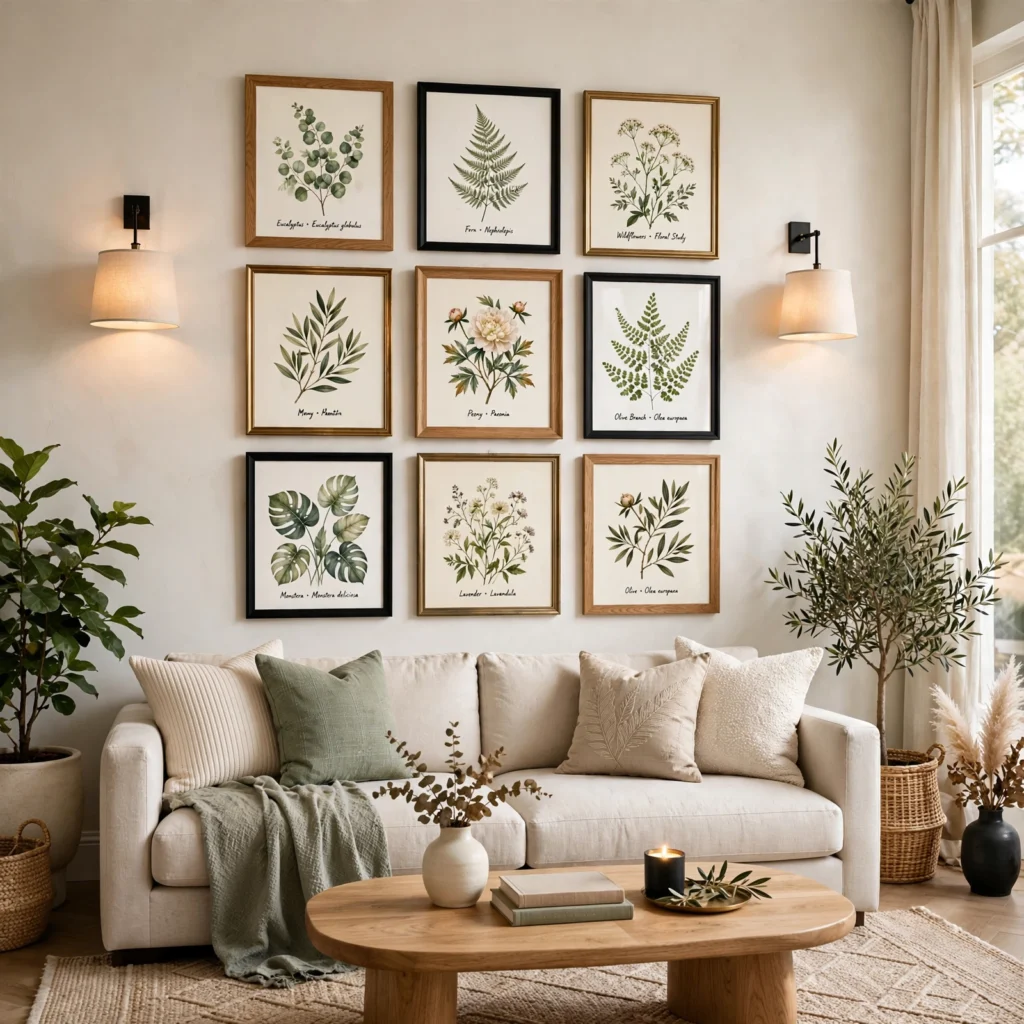
A row of matching framed botanical prints, hung in a clean horizontal line above a low console or sofa, gives a wall a gallery-like finish without the complexity of a mixed gallery layout. Choose identical frames in a single finish, like matte black or natural oak, and print or source three to five botanical images with a similar color palette. Space the frames evenly using a level and a paper spacer template so the final line reads crisp and intentional.
14. Cork Memory Wall Panel
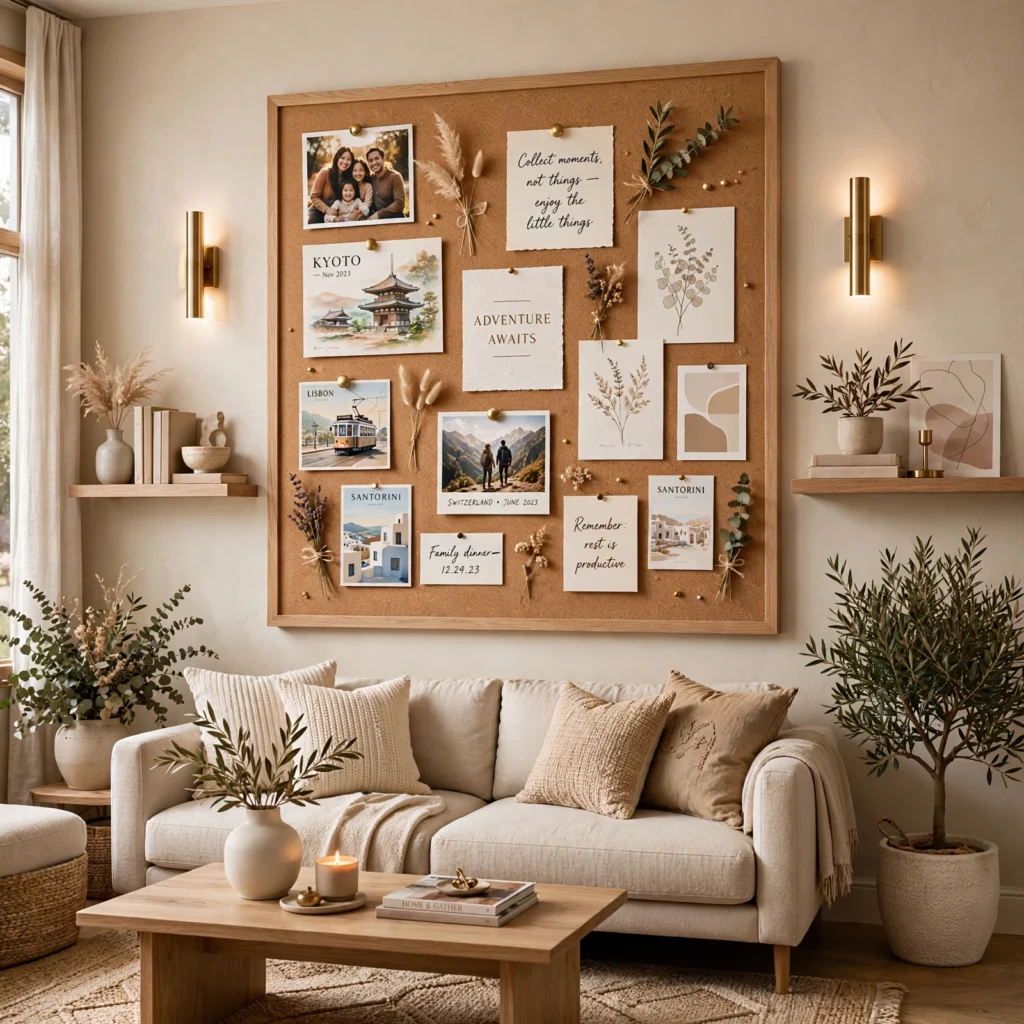
A cork memory panel covers a defined section of wall in interlocking cork tiles, creating one large pinboard rather than a single small square near a desk. Arrange the tiles edge to edge using strong adhesive strips, then fill the surface with photos, postcards, and ticket stubs over time. Unlike framed art, this version keeps growing and changing, which makes it a good fit for a living room that doubles as a gathering space for family photos.
15. Vertical Garden Wall
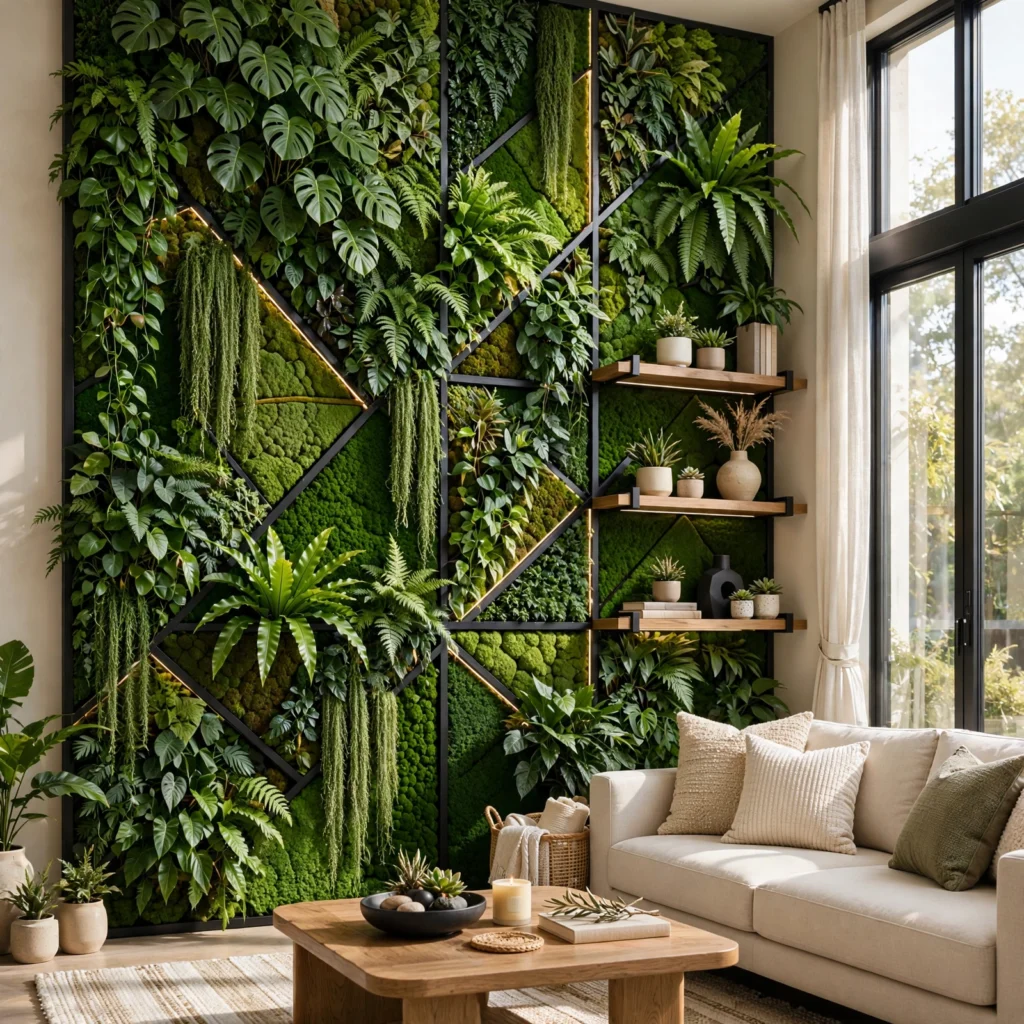
A vertical garden wall uses stacked planter pockets or a modular felt grid to turn a narrow strip of wall into a living, growing display. Mount a felt pocket panel to a plywood backing for stability, then plant low-maintenance species like pothos, ferns, or air plants that tolerate indoor light. Water with a small handheld sprayer rather than pouring directly, since excess moisture can damage the wall behind the panel if the backing isn’t sealed properly first.
16. Decorative Wall Clock Grouping
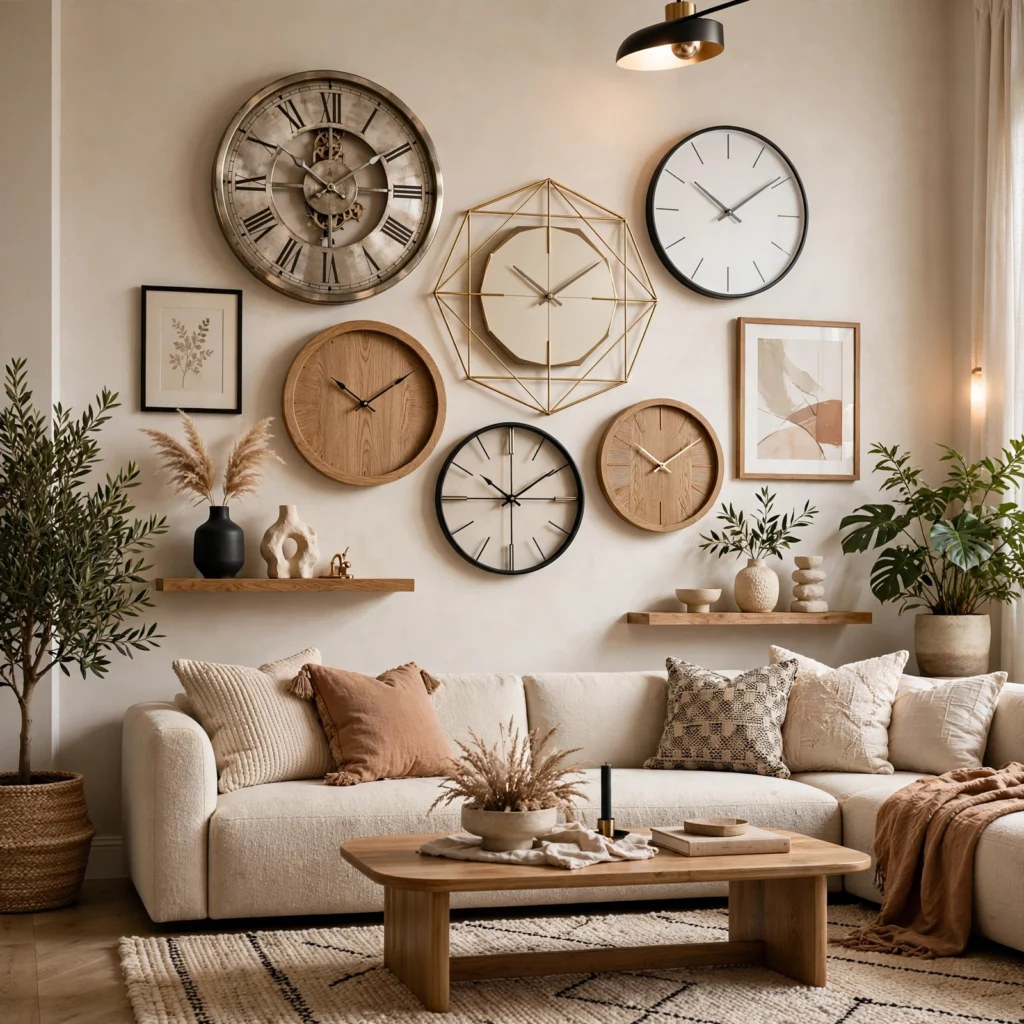
A cluster of three to five decorative wall clocks in mismatched sizes and frame finishes reads as sculptural art rather than a functional timepiece display. Source clocks from thrift stores or flea markets, then unify them with a quick coat of matte spray paint in a single color if the finishes clash too much. Arrange them in a loose diagonal line climbing up the wall, spacing each clock a few inches apart so the grouping feels deliberate rather than scattered.
17. Neon Sign Accent
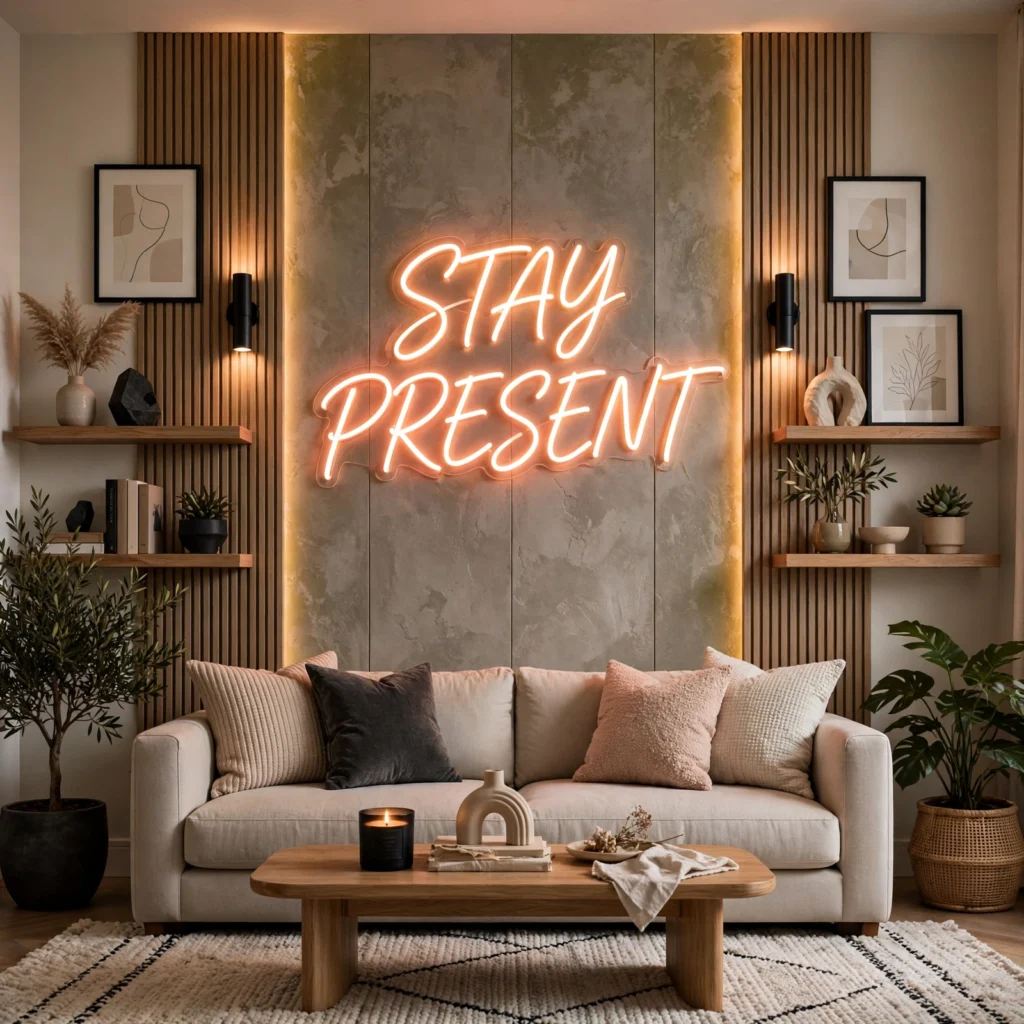
A small LED neon-style sign adds a warm glow and a personal touch to an otherwise plain wall, without the heat or fragility of traditional glass neon. Order a custom shape, like a short phrase or simple line drawing, in a warm white or soft pink tone that won’t clash with existing decor. Mount it using the included clear acrylic backing and adhesive hooks, positioning it slightly off-center above a shelf rather than dead-center for a more casual, gallery-style placement.
Shop the Look
A few specific products make these projects easier to execute well. Kwik-Hang no-stud shelf brackets are worth the extra cost for the picture ledge project if you’re not drilling into studs. Command Large Picture Hanging Strips work well for the gallery frame wall since they hold heavier frames without marking paint. RoomMate and Tempaper are two reliable peel-and-stick wallpaper brands with consistent pattern matching between rolls. For the vertical garden wall, a felt pocket planter panel from a brand like Woolly Pocket holds soil securely without leaking through the backing.
Common Mistake to Avoid
The most common mistake across nearly all of these projects is hanging everything at a uniform height without accounting for furniture below it. Art centered on a blank wall often ends up too high once a sofa or console is pushed in front of it, throwing off the whole composition. Always measure from the top of the nearby furniture piece, aiming for six to eight inches of clearance between furniture and the bottom of your frames or shelves, rather than centering on the wall itself.
People Also Ask
What is the cheapest way to add wall decor in a living room?
Painting one accent wall and adding a small cluster of thrifted frames is typically the cheapest combination, often costing under $80 total for an average-sized wall. Both projects use materials sold in small quantities at most hardware and craft stores, so there’s little waste. Skipping large art purchases in favor of a gallery wall built from secondhand frames, then adding a coat of matching paint to unify them, keeps the total cost low while still changing the room.
How high should wall decor be hung in a living room?
Most wall decor looks best with its center point at roughly 57 to 60 inches from the floor, which approximates average eye level while standing. Above furniture like a sofa or console, that rule shifts slightly lower, aiming for six to eight inches of clearance between the top of the furniture and the bottom edge of the art or shelf. Measuring from the furniture rather than the floor keeps the final placement feeling connected to the room instead of floating too high.
Can renters decorate living room walls without losing their deposit?
Yes, most of these projects are reversible when done correctly. Peel-and-stick wallpaper panels, gallery walls hung with removable strips, fabric hangings on tension rods, and freestanding shelving units all avoid permanent wall damage. The riskiest projects for renters are anything requiring stud-mounted brackets, like heavier floating shelves; check your lease terms first, or swap in a leaning ledge or freestanding unit instead of a wall-mounted version.
How much does it cost to fully decorate a living room wall?
A full wall project combining three or four of these ideas, such as an accent wall, a gallery frame cluster, and a pair of sconces, typically runs between $150 and $350 depending on wall size and material choices. That’s significantly less than most single large art purchases from retail galleries. Costs rise mainly with paint quantity and the number of frames purchased new rather than thrifted, so sourcing secondhand frames keeps the budget from creeping upward.
What wall decor works best for a living room with no natural light?
Rooms with limited natural light benefit most from reflective and light-toned projects like the woven rattan mirror cluster, sculptural wall sconces, and a neon sign accent for supplemental ambient light after dark. Avoid heavy dark accent colors as the dominant wall treatment in these rooms, since they absorb rather than bounce the limited light available. Positioning mirrors opposite the room’s main light source, even a small window, noticeably brightens the space without adding a new light fixture.
Conclusion
These seventeen wall decor living room ideas prove a blank wall doesn’t need a single expensive art piece to feel finished, just a clear plan, a short materials list, and a sense of what belongs where. Start with one focal project, like a gallery wall or accent color, see how the room feels, and layer in shelving or lighting from there. If this guide helped, save it to Pinterest for your next project weekend, or check out our related post on small living room layout ideas for more space-planning tips.