16 Modern Living Room Decor Ideas That Combine Comfort and Contemporary Style
Modern living room decor sometimes gets a reputation for feeling cold or impersonal, but the style actually has plenty of room for warmth when the right materials and layering techniques come into play. This guide walks through sixteen modern living room decor ideas covering furniture silhouette, material pairing, lighting, and styling technique that keep the aesthetic sleek without losing comfort. By the end, you’ll have specific materials, proportions, and layout suggestions to build a modern living room that still feels genuinely livable.
Trend & Background
Modern living room design has moved away from the starker, cooler-toned interiors of earlier trend cycles toward a warmer version of the same clean-lined aesthetic, incorporating natural wood, boucle, and warmer neutral colors rather than an all-white, high-gloss approach. Low-profile furniture with exposed legs remains a defining feature, but current modern design pairs it more often with organic materials and softer textures than the harder-edged, more industrial modern interiors of the past. This matters now because more people want their homes to feel both current and comfortable, pushing modern design toward a warmer, more livable version of its earlier, more austere iterations.
Key Takeaways
- Clean lines and a restrained color palette define modern style more than any single furniture brand or trend piece.
- Mixing warm materials, like wood and boucle, keeps a modern living room from feeling sterile or overly minimal.
- Low-profile furniture and open sightlines matter more here than in a more traditional or maximalist room.
- A few carefully chosen statement pieces work better than many smaller decorative objects scattered throughout the space.
1. Low-Profile Sofa Silhouette
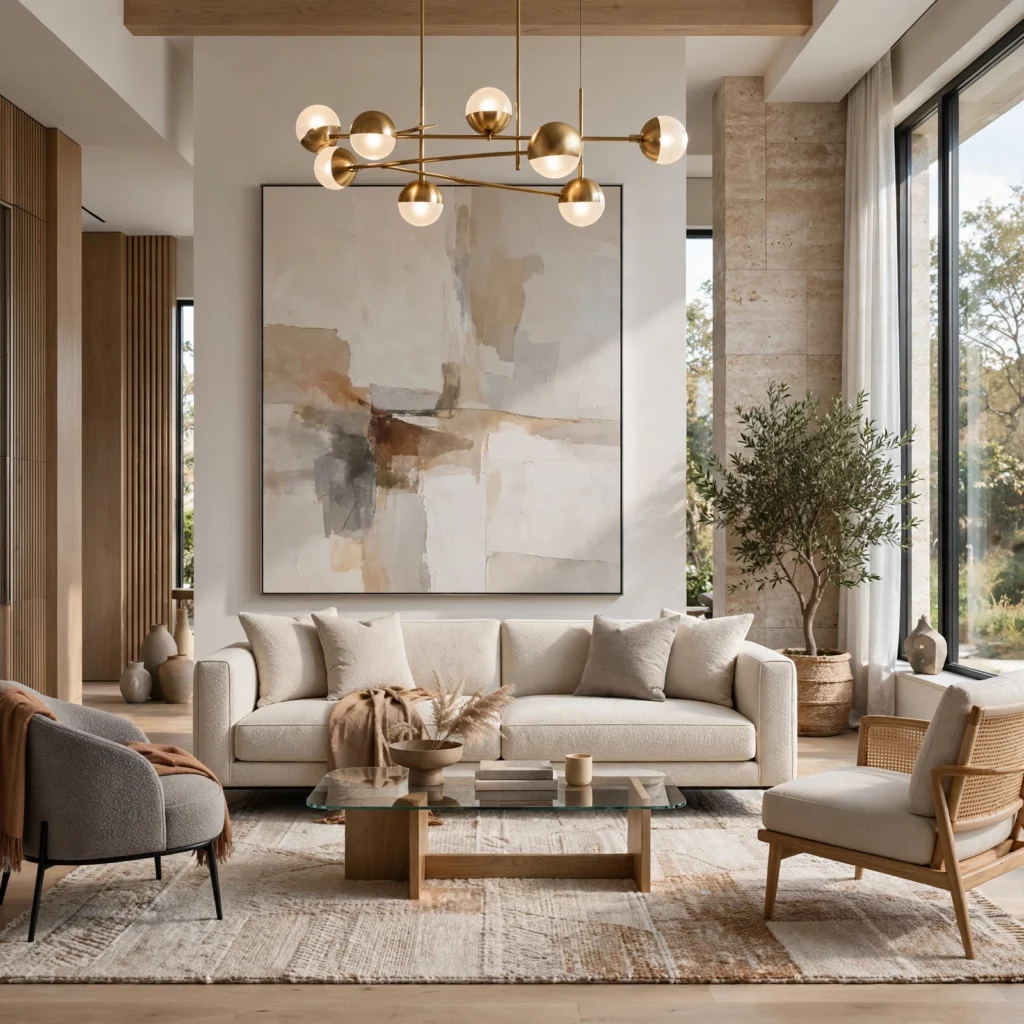
A low-profile sofa, with a seat height around 15 to 17 inches and a lower overall back height than a traditional sofa, defines much of modern living room design’s characteristic clean, grounded look. Choosing a sofa with exposed wood or metal legs, rather than a fully upholstered base, keeps the piece feeling light despite its horizontal emphasis. This silhouette works particularly well in rooms with lower ceilings, since the reduced furniture height helps the space feel more proportional overall.
2. Warm Wood Tone Furniture Pairing
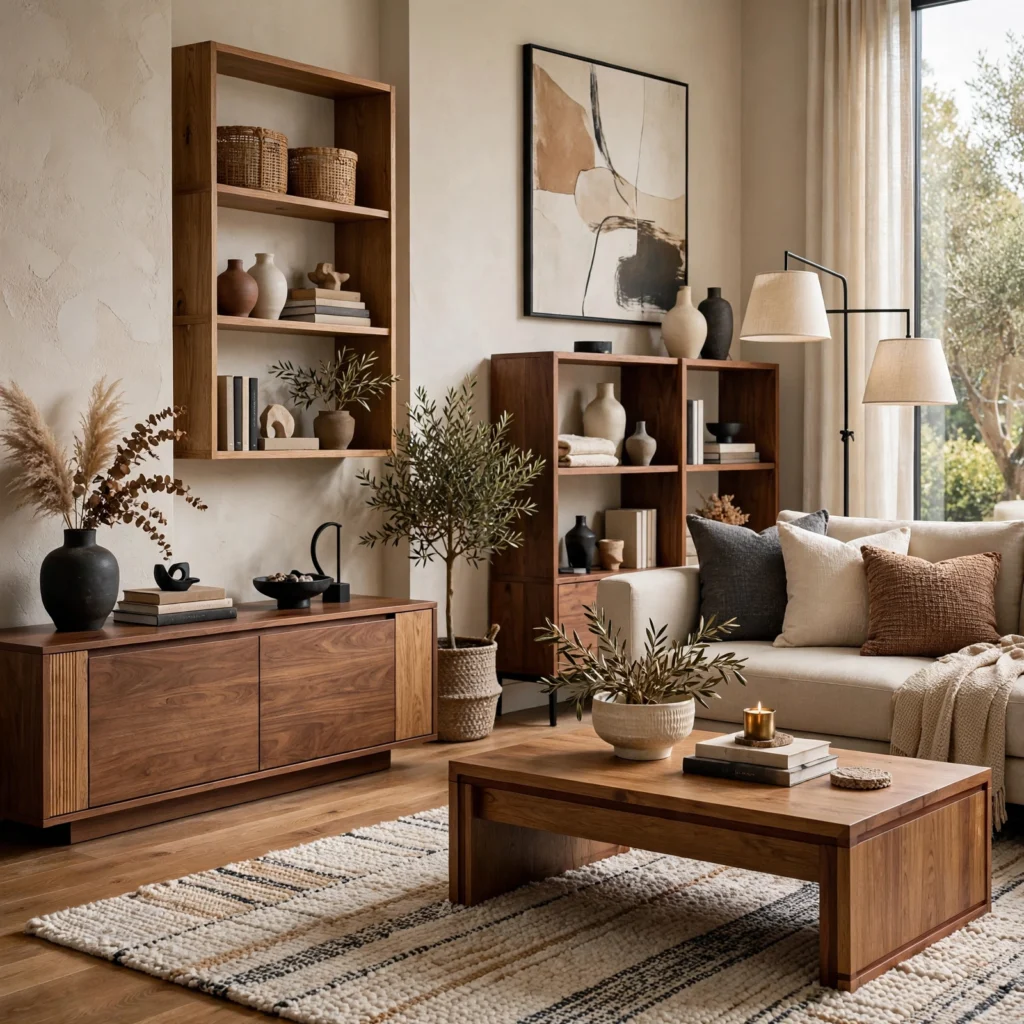
Warm wood tone furniture pairing incorporates walnut, oak, or teak pieces alongside upholstered furniture, softening modern design’s typically cooler material palette with natural grain and color variation. This pairing has become one of the defining shifts in current modern style, replacing the starker white and black material combinations of earlier design cycles. Choosing a consistent wood tone across the coffee table, media console, and any shelving units ties the room’s warmer elements together cohesively.
| Wood Tone | Undertone | Best Paired With |
| Walnut | Warm, reddish-brown | Black metal, cream textiles |
| Oak | Warm, golden | Sage green, terracotta accents |
| Teak | Warm, honey-toned | Rattan, natural linen |
3. Sculptural Coffee Table
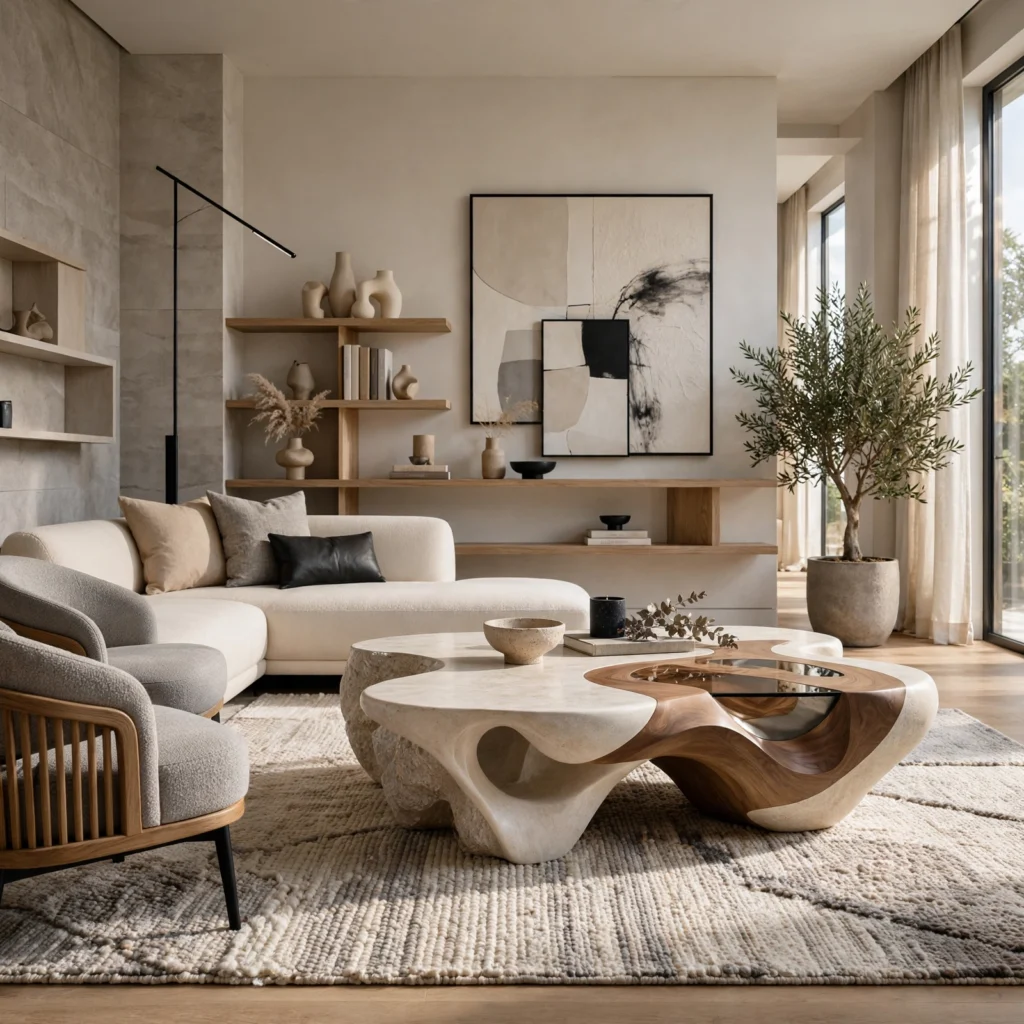
A sculptural coffee table, in a curved or asymmetrical shape rather than a standard rectangle, gives a modern living room a clear statement piece that anchors the seating area without relying on ornate detailing. Choosing a table in a single material, like solid wood, stone, or a smooth concrete finish, keeps the sculptural form itself as the main visual interest rather than competing with a busy pattern or texture. This piece works particularly well as the room’s central focal point when surrounded by simpler, lower-key seating.
In order to see more options for elegant living room decor CLICK HERE
4. Modern Living Room Decor With Statement Lighting
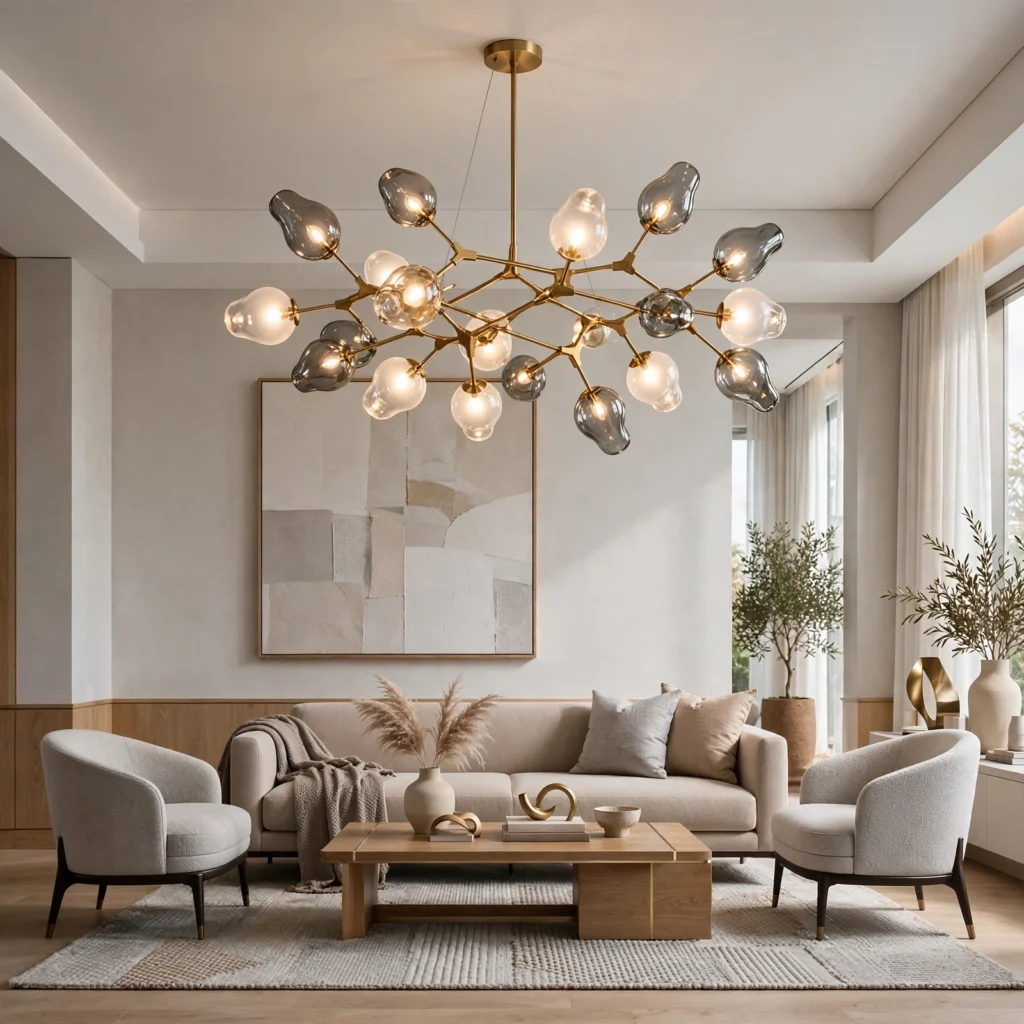
Statement lighting, through a sculptural floor lamp or an architectural pendant, gives modern living room decor a clear vertical focal point in a room otherwise dominated by horizontal, low-profile furniture. Choosing a fixture with a matte black, brushed brass, or unfinished metal finish suits the style’s typically restrained material palette better than an ornate, traditional chandelier would. This lighting choice often becomes one of the room’s most memorable design details, precisely because it stands in contrast to the surrounding furniture’s simpler lines.
5. Monochromatic Textile Layering
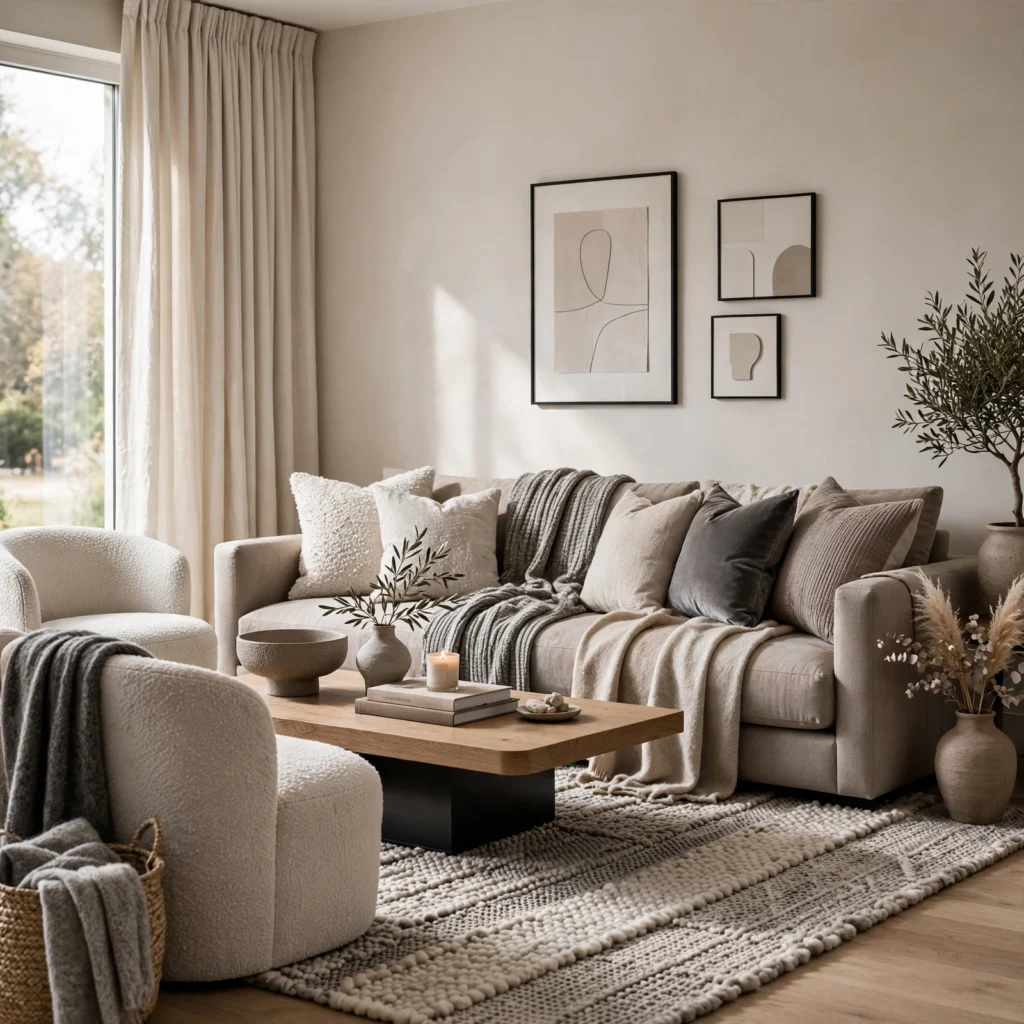
Monochromatic textile layering combines throw pillows, a rug, and upholstery within a single tonal family, like varying shades of warm gray or oatmeal, rather than introducing several distinct colors throughout the room. This restrained approach reads as more sophisticated and intentional than a busier, multi-color scheme, supporting modern design’s overall preference for visual calm. Introducing texture through boucle, linen, and wool within that single tone keeps the palette from feeling flat despite its limited color range.
6. Floating Media Console
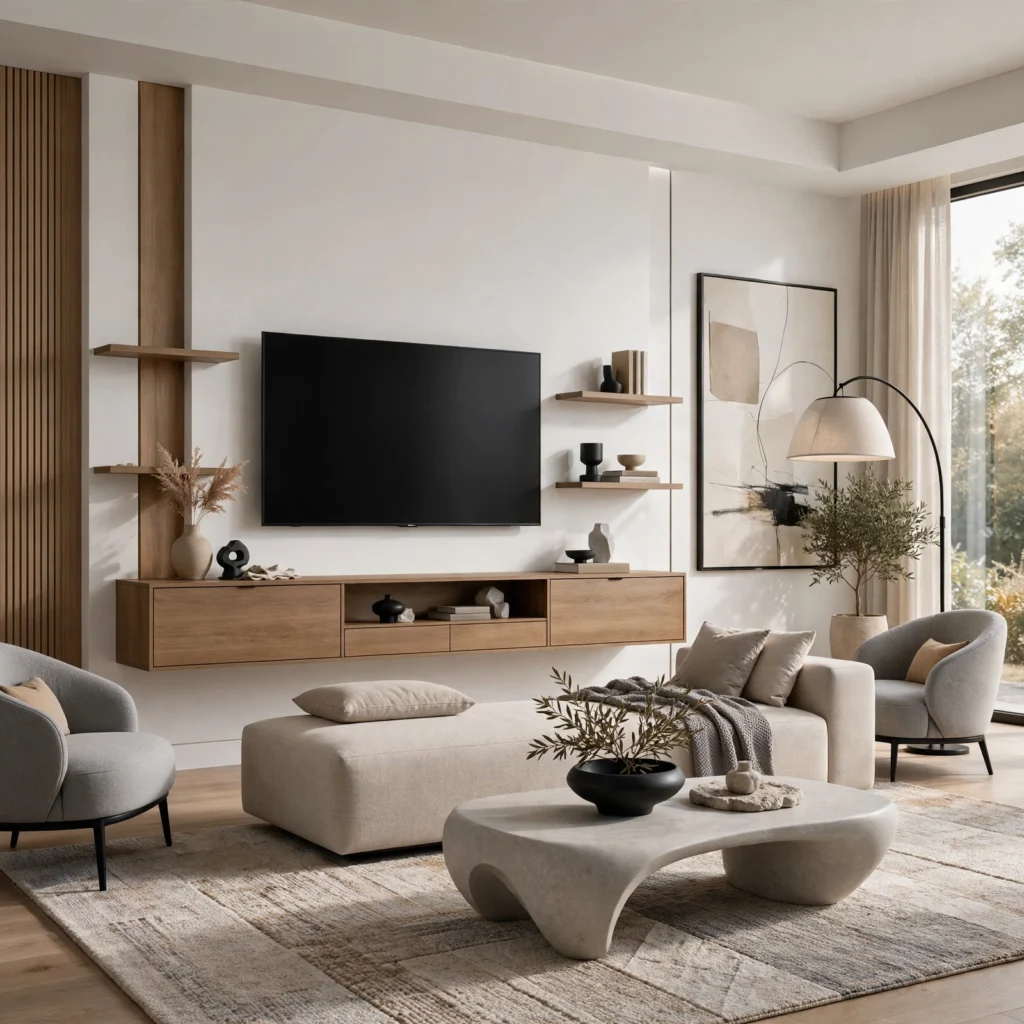
A floating media console mounts to the wall rather than sitting on the floor, keeping the area beneath it visually open in a way a traditional floor-standing console can’t achieve. This works particularly well in a modern living room, where open sightlines and a sense of visual lightness matter more than in a more traditional, grounded design style. Choosing a console with closed cabinet doors on one side and open shelving on the other balances hidden and visible storage for electronics and media.
7. Geometric Area Rug
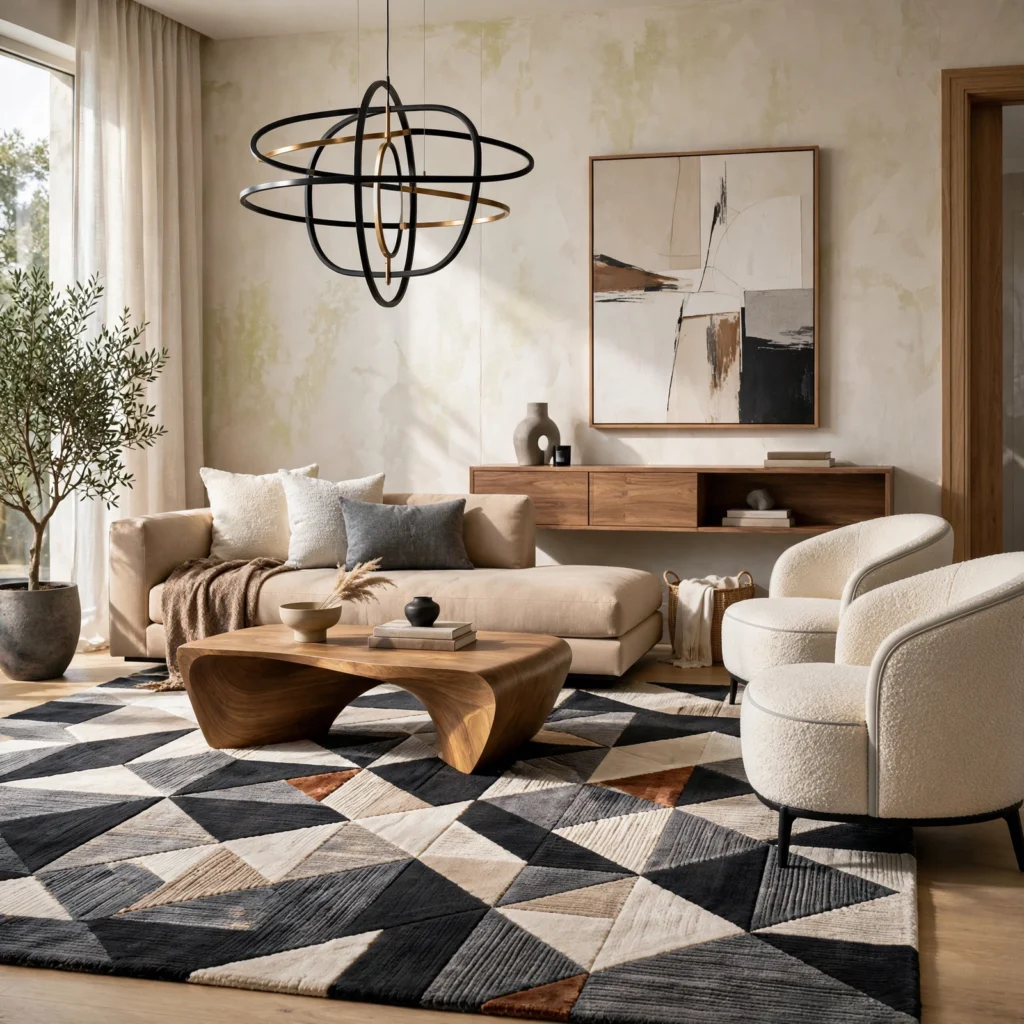
A geometric area rug, using clean lines and a restrained color palette rather than an ornate, traditional pattern, reinforces modern design’s overall aesthetic while still adding visual interest to the floor. Choosing a rug in wool or a wool-blend material provides durability alongside the softer hand-feel that supports the room’s warmer, more livable modern approach. This rug should generally read as a supporting element rather than the room’s boldest statement, letting furniture silhouette and material choice carry more of the design weight.
8. Minimal Gallery Wall
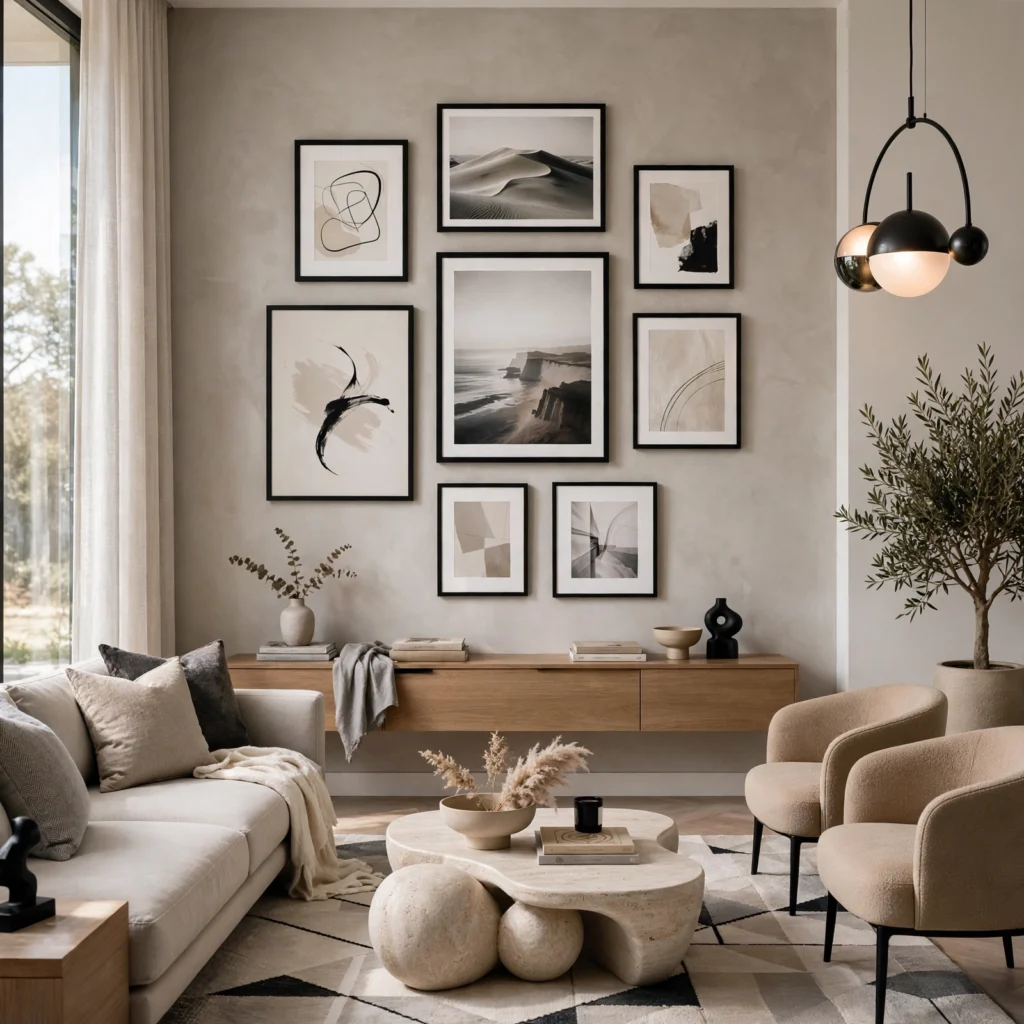
A minimal gallery wall groups two or three larger art pieces with generous spacing between them, rather than the denser, more layered gallery arrangements common in more traditional or maximalist rooms. Choosing frames in a single consistent finish, like thin black metal, keeps the grouping feeling restrained and intentional. This approach to wall art suits modern design’s overall preference for negative space and visual breathing room between elements.
9. Boucle Accent Chair
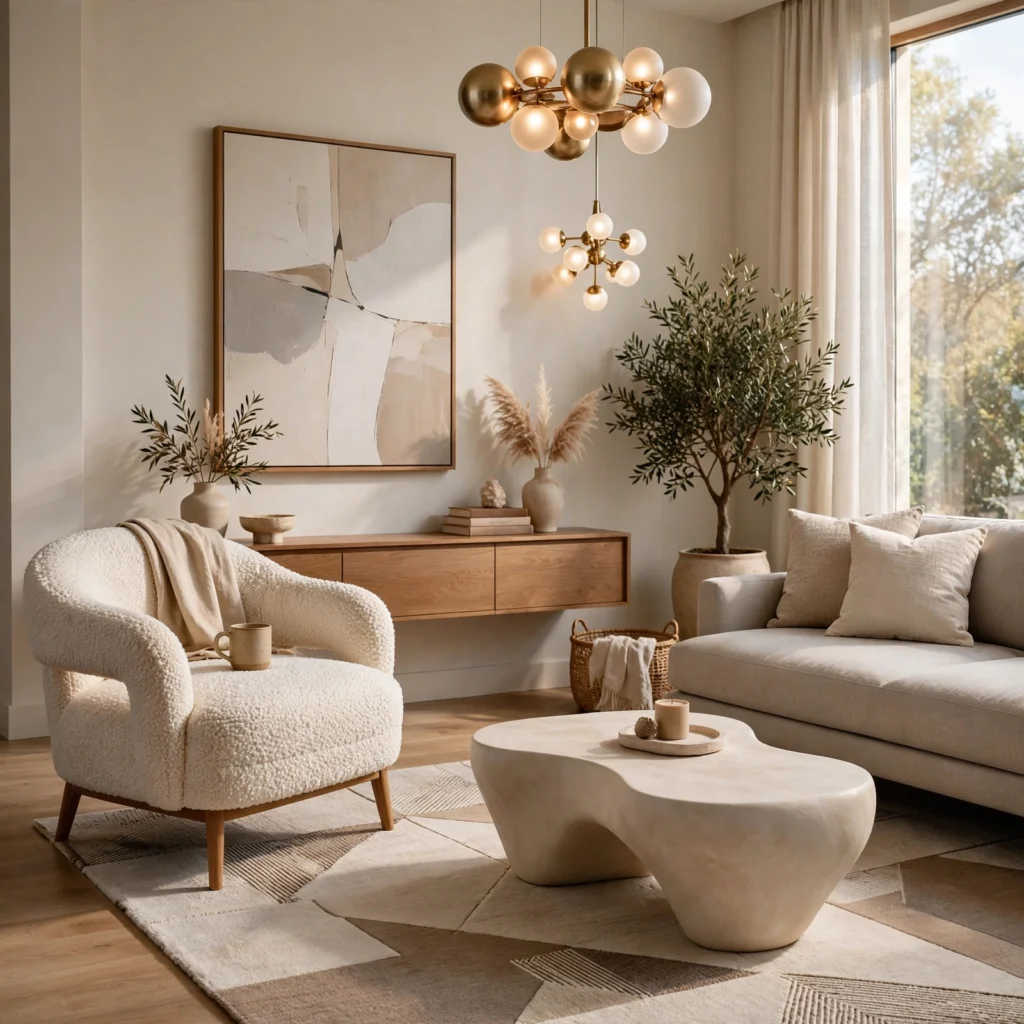
A boucle accent chair introduces texture and warmth against modern design’s typically cleaner, smoother surfaces, softening the overall room without abandoning the style’s core silhouette principles. Choosing a chair with the same low-profile, exposed-leg design language as the rest of the furniture keeps this textural addition consistent with the room’s broader aesthetic. This piece works particularly well as a secondary seat facing a larger sofa, adding both function and material variety to the seating area.
10. Concealed Storage Solutions
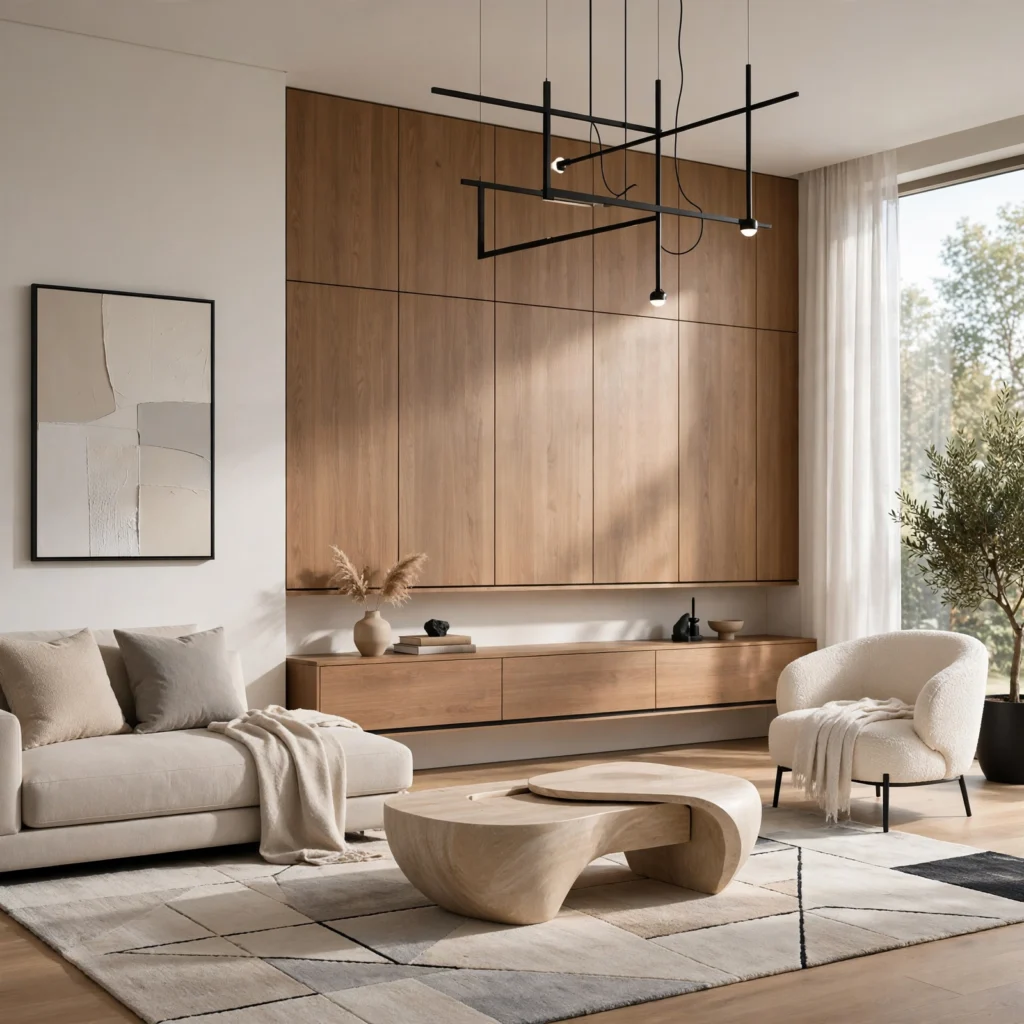
Concealed storage solutions, through closed cabinetry, ottoman storage, or a media console with hidden compartments, keep everyday clutter out of view, supporting modern design’s overall preference for clean, uncluttered surfaces. This matters more in modern living rooms than in more maximalist styles, since visible clutter disrupts the restrained aesthetic more noticeably against simpler furniture and fewer competing decorative objects. Choosing storage pieces that don’t visually announce their function keeps the room’s overall look consistent even when storage needs are addressed.
11. Indoor Tree or Large Plant
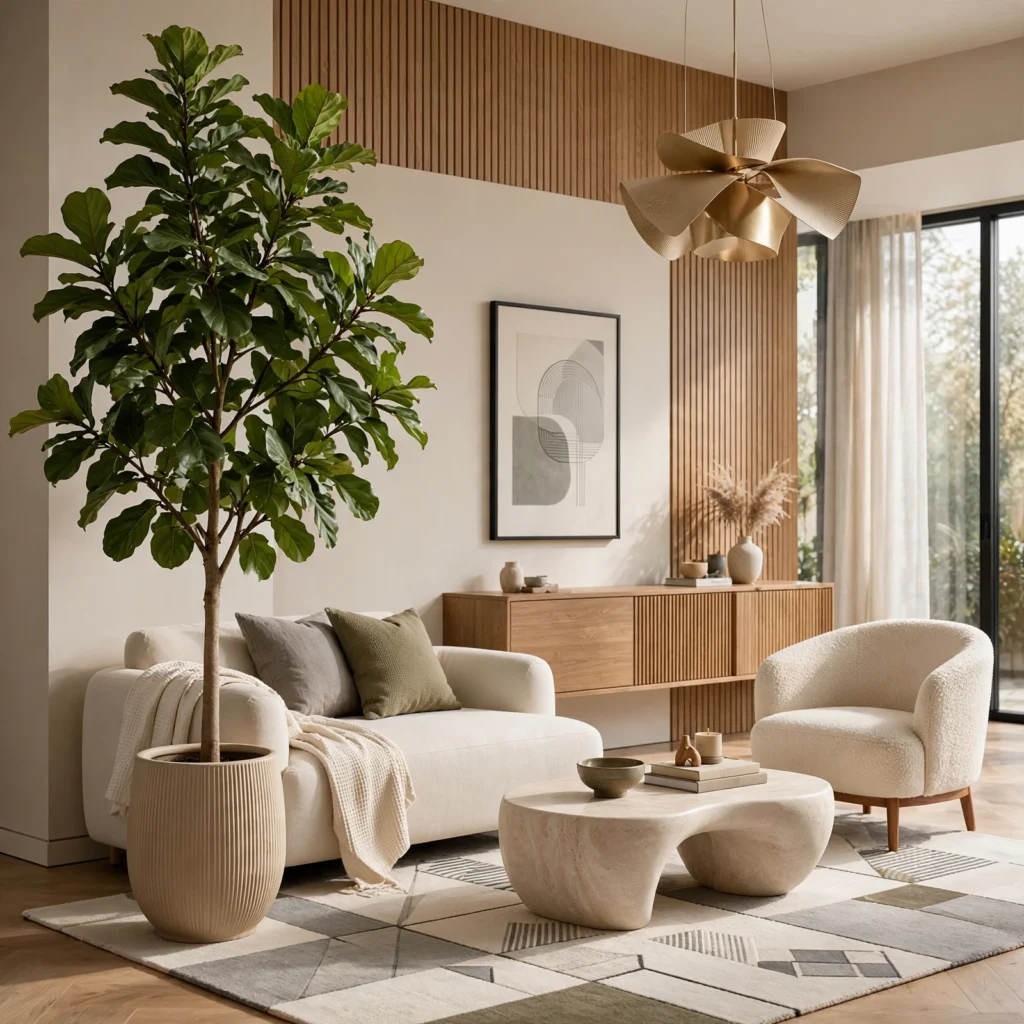
An indoor tree or large plant, like a fiddle leaf fig or a bird of paradise, brings organic texture and height into a modern living room’s typically clean-lined, low-profile furniture arrangement. This single large plant does more to soften the room’s overall feel than several smaller plants scattered throughout, since it provides one clear, impactful natural element rather than competing smaller details. Choosing a simple, unadorned planter in a neutral material keeps the focus on the plant itself rather than an ornate container.
| Plant Type | Light Needs | Room Placement |
| Fiddle leaf fig | Bright indirect light | Near a large window |
| Bird of paradise | Bright indirect light | Open corner with space |
| Snake plant | Low to moderate light | Any corner, low-maintenance |
12. Matte Black Metal Accents
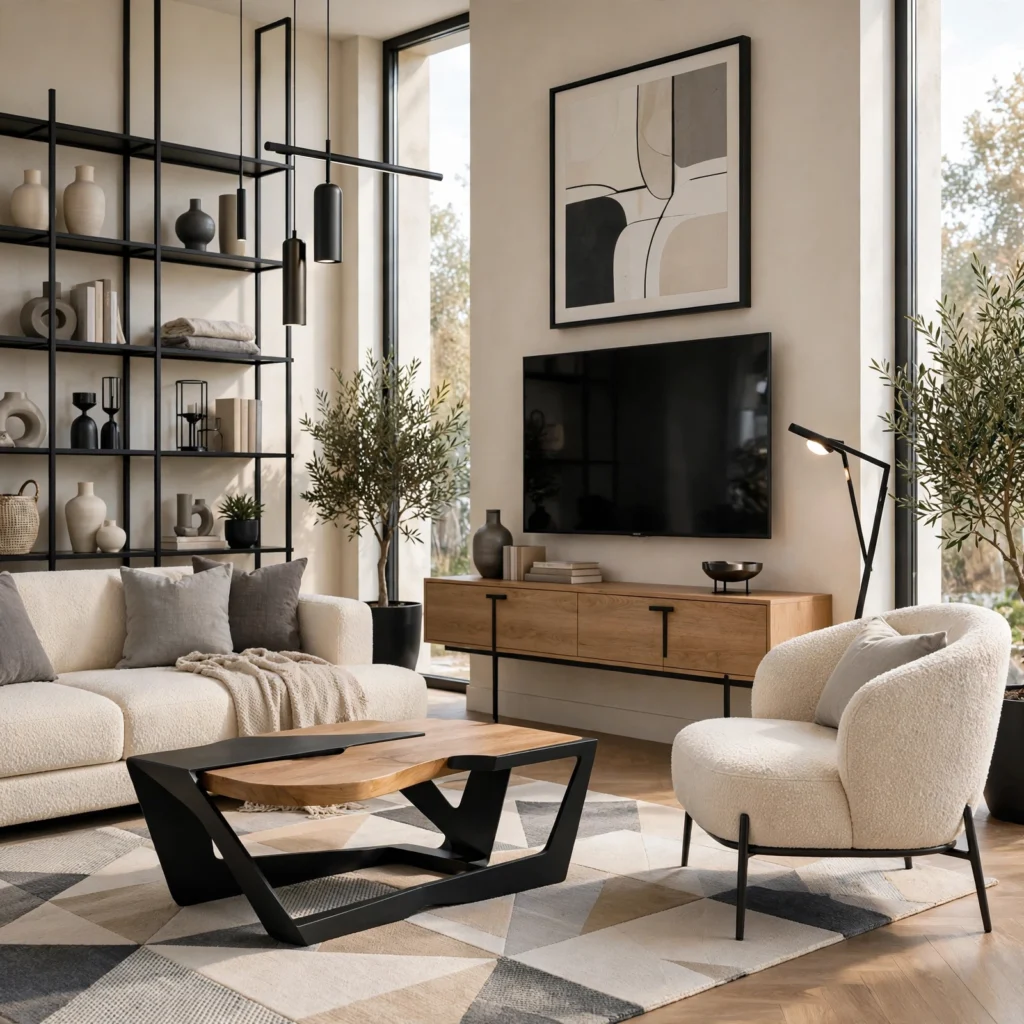
Matte black metal accents, through window frames, light fixtures, or furniture hardware, provide a consistent grounding element throughout a modern living room, tying together pieces that might otherwise feel disconnected from one another. This finish choice has remained a consistent thread in modern design across several trend cycles, since the deep, non-reflective black works well against both warmer and cooler surrounding palettes. Choosing this finish for at least two or three elements throughout the room creates a cohesive thread without requiring every metal piece to match exactly.
13. Open-Concept Furniture Arrangement
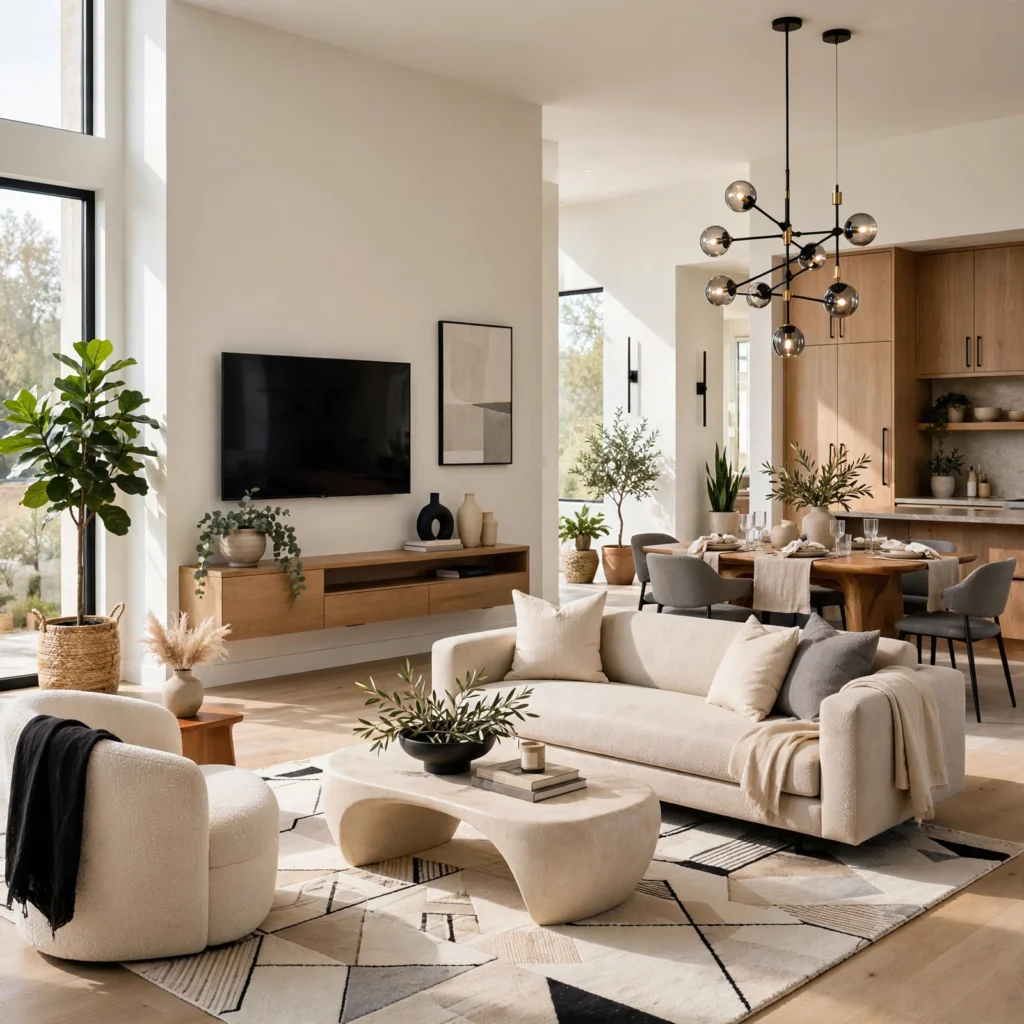
An open-concept furniture arrangement floats seating away from the walls, using a rug to define the conversational area rather than pushing every piece to the room’s perimeter. This layout suits modern design’s preference for open sightlines and a less boxed-in feeling, particularly in a room that connects visually to a dining or kitchen area. Choosing furniture with a lower overall profile supports this open feeling, since taller pieces would block sightlines across the floating arrangement.
14. Linear Fireplace Feature
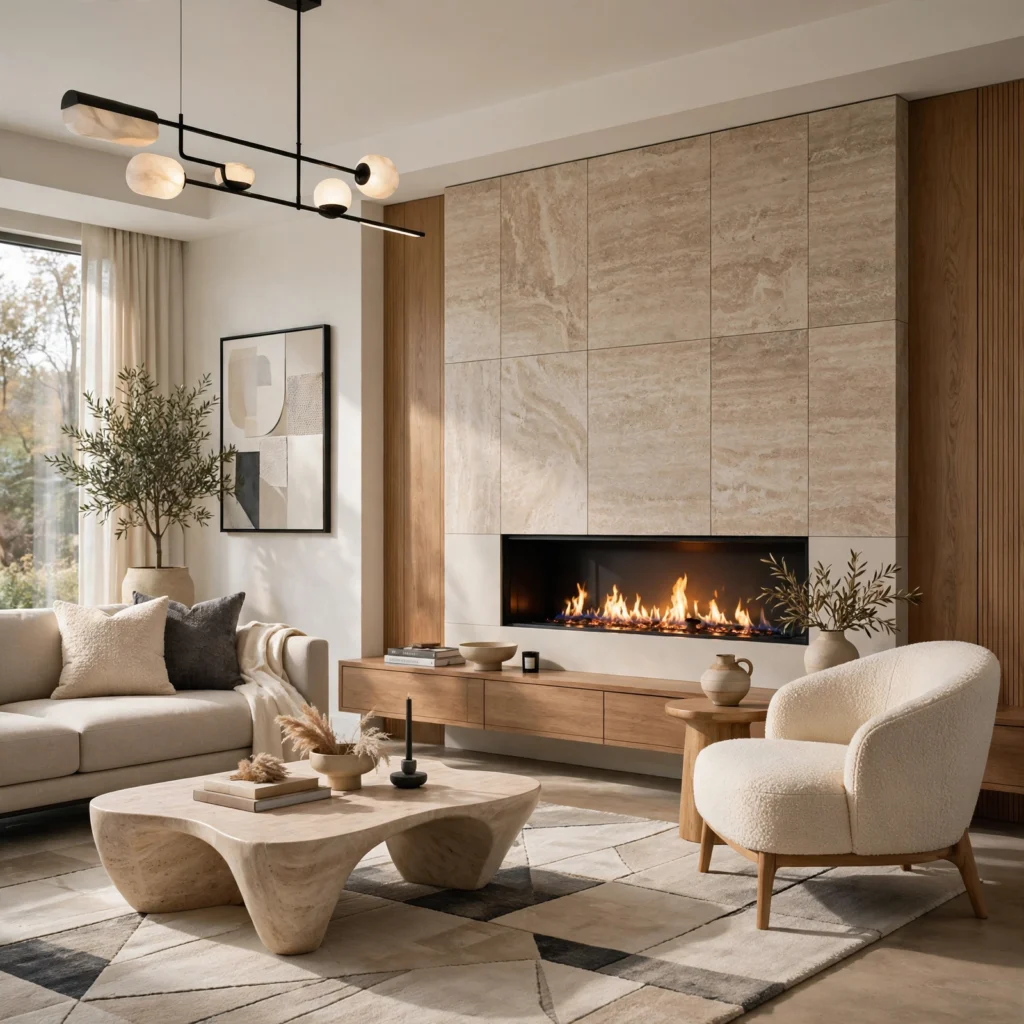
A linear fireplace feature, using a horizontal, low-profile design rather than a traditional taller mantel-style fireplace, fits modern design’s overall emphasis on clean horizontal lines throughout the room. Choosing a surround material like large-format tile or a smooth plaster finish keeps the fireplace visually consistent with the room’s other simplified surfaces. This feature works particularly well as the room’s architectural focal point, especially when paired with simpler furniture that doesn’t compete for the same visual attention.
15. Curated Coffee Table Styling
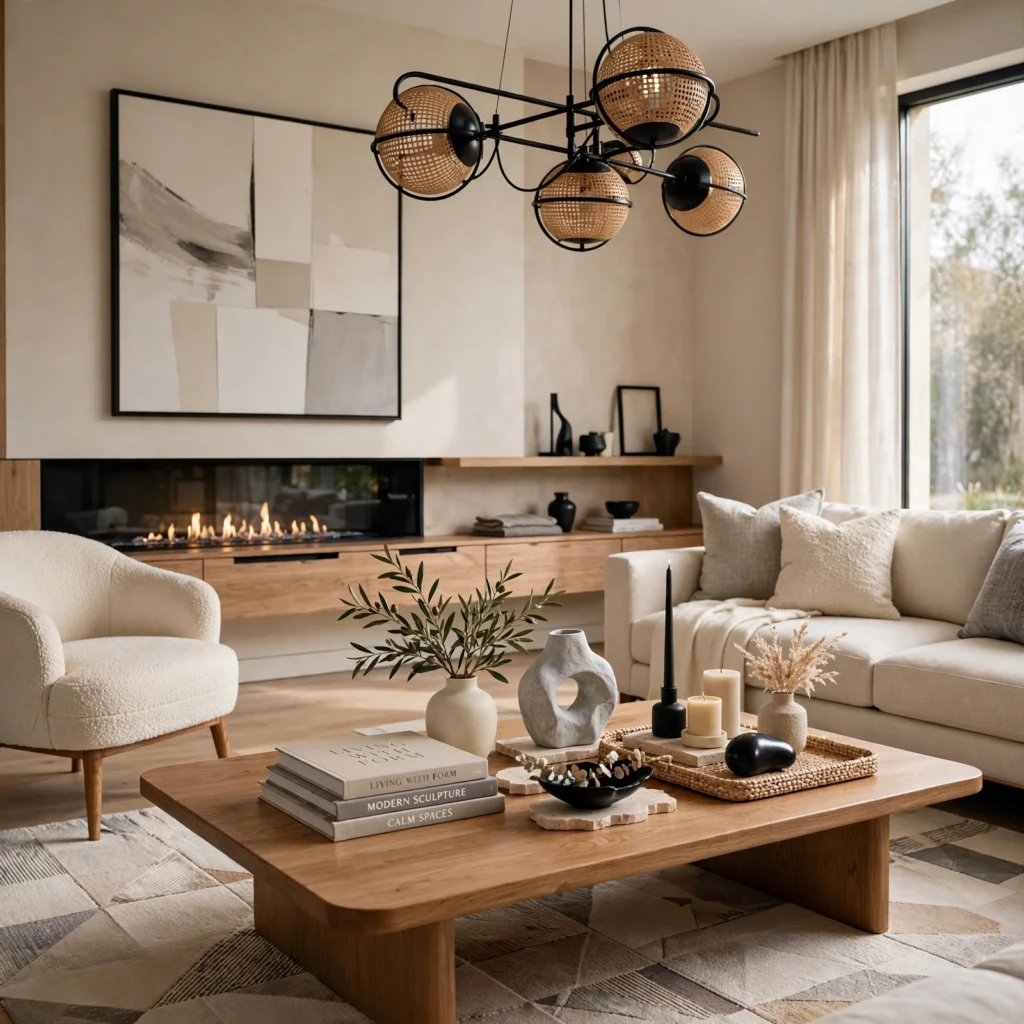
Curated coffee table styling arranges a single sculptural object, a stack of two or three art books, and perhaps a small tray into a restrained, intentional grouping rather than covering the surface with several smaller decorative items. Keeping the arrangement to a handful of pieces, with visible empty space around them, reinforces modern design’s overall preference for negative space and visual calm. This detail work matters as much to the room’s overall modern feel as larger furniture choices, since the coffee table sits at the visual center of the seating area.
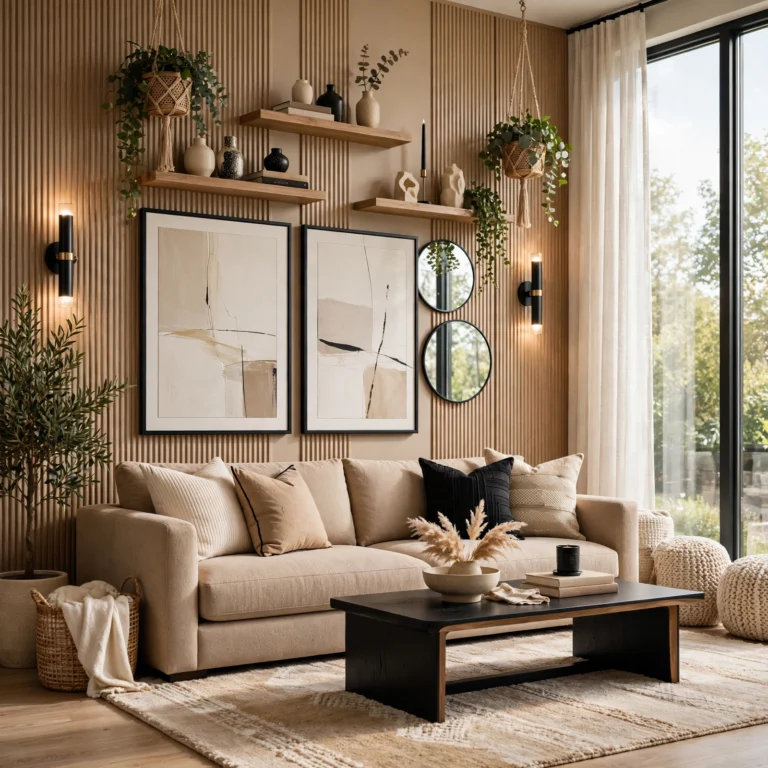
16. Vertical Slat Wood Wall
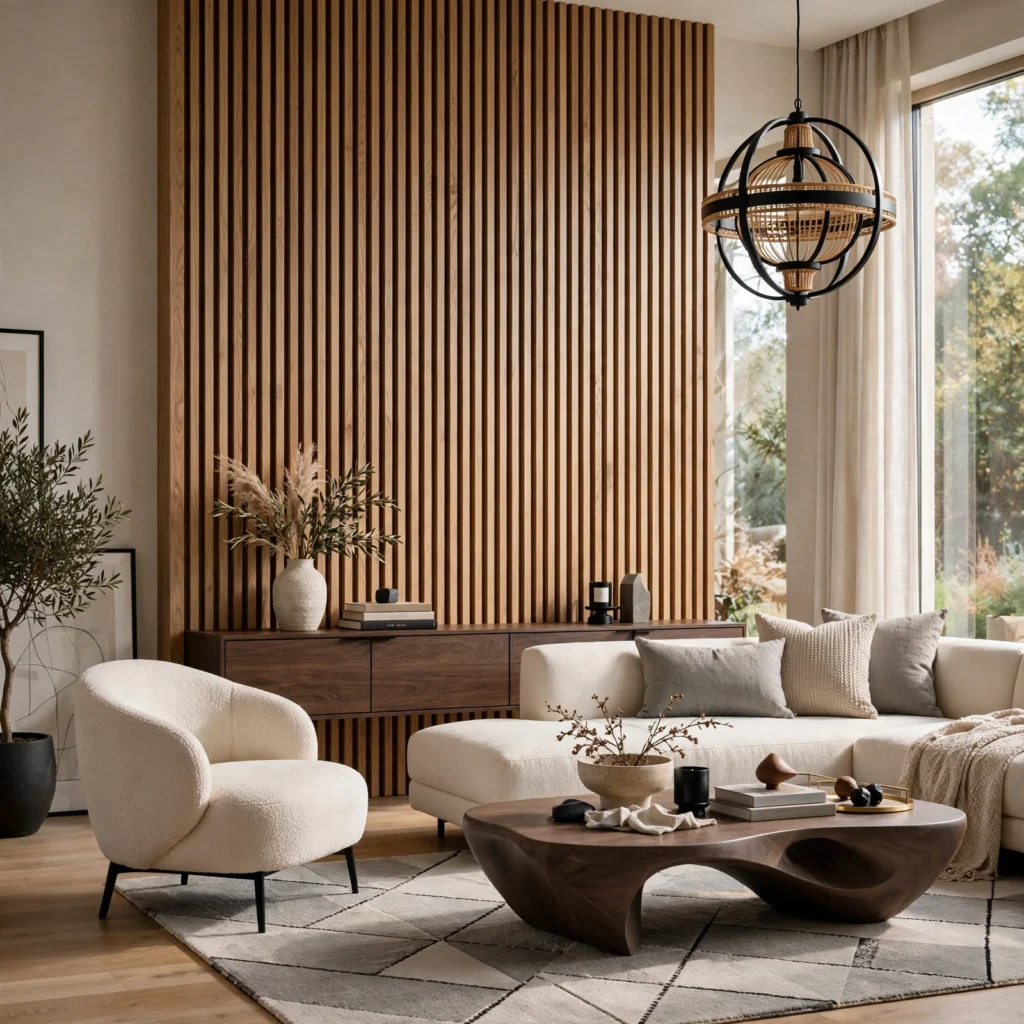
A vertical slat wood wall installs thin, evenly spaced wood battens across a single accent wall, adding architectural texture and a warm material contrast against the room’s other simpler, flatter surfaces. This detail has become one of the more popular current modern design features, since it introduces pattern and dimension without relying on color or an ornate finish. Choosing a wood tone that complements the room’s existing furniture keeps this feature wall integrated into the broader material palette rather than standing apart from it.
Shop the Look
For this palette, look for a low-profile sofa with exposed walnut legs, a sculptural curved coffee table, a floating media console, a boucle accent chair, and a matte black architectural floor lamp. These pieces work together across several of the ideas above without requiring a full furniture replacement.
Common Mistake to Avoid
The most common mistake in modern living room decor is confusing minimal with cold, stripping out warmth and texture entirely in favor of a stark, all-neutral palette that ends up feeling more like a showroom than a livable room. A modern living room without any wood tone, textured fabric, or organic material like a plant often reads as unfinished rather than intentionally restrained. Balancing modern design’s clean lines with at least a few warm, textural elements produces a room that stays true to the style while still feeling comfortable to actually spend time in.
FAQs
What modern living room decor choices make the biggest difference?
Low-profile sofa silhouette and warm wood tone furniture pairing tend to make the biggest difference among modern living room decor choices, since these two elements establish both the room’s overall proportions and its material warmth before any smaller styling details get added. Statement lighting is a close third, since it provides the vertical focal point a room full of horizontal, low-profile furniture typically needs. These three choices together address the foundational feel of a modern room before decorative styling comes into play.
How much does a modern living room refresh typically cost?
A budget refresh using monochromatic textile layering, curated coffee table styling, and matte black accent hardware can run under $200 total, while adding a boucle accent chair or a geometric area rug typically pushes the range to $400–$1,000. Larger investments like a low-profile sofa, a sculptural coffee table, or a vertical slat wood accent wall cost significantly more, often landing between $2,000 and $6,000 depending on materials and whether any installation work is involved.
Does modern design have to feel cold or minimal?
Modern design doesn’t have to feel cold, provided warm materials like wood, boucle, and organic textiles get incorporated alongside the style’s characteristic clean lines and restrained color palette. Current modern trends specifically favor this warmer approach over the starker, more monochromatic modern interiors of earlier design cycles. The style’s core principles, clean lines and intentional restraint, remain compatible with a genuinely warm, livable feel when material choice and texture get proper attention.
What furniture leg style suits a modern living room?
Exposed, tapered legs in wood or thin metal suit a modern living room best, since this silhouette keeps furniture feeling light and allows more of the floor to remain visible, reinforcing the style’s overall preference for open sightlines. This applies to sofas, accent chairs, and media consoles alike, rather than pieces that sit flush to the floor with a fully upholstered or paneled base. Choosing this leg style consistently across multiple furniture pieces in the room ties the overall look together more cohesively.
How do I add color to a modern living room without breaking the aesthetic?
Adding color to a modern living room without disrupting the aesthetic generally works best through a single accent color introduced in smaller doses, like a sage green or terracotta throw pillow set, rather than painting an entire wall or choosing a boldly colored sofa. Keeping the base palette neutral and warm, then layering in one accent color through textiles or a single statement object, maintains the restraint central to modern design while still avoiding an overly monochromatic result. This approach keeps color feeling intentional rather than like a departure from the room’s overall style.
Conclusion
These modern living room decor ideas cover everything from a simple textile layering swap to larger furniture and lighting investments, giving you options regardless of your room’s current state or how far into the style you want to commit. Start with furniture silhouette and wood tone pairing, since those two choices establish the room’s overall feel, then layer in statement lighting and smaller styling details as budget allows. Save this guide to Pinterest for later, and check out our related post on living room decor ideas for more general styling guidance.