15 Classic Wall Decor Living Room Ideas That Actually Work
Wall decor living room ideas can turn a flat, forgettable space into the room guests actually notice first. Whether you’re staring at a bare stretch above the sofa or trying to fill an awkward accent wall, the right combination of texture, scale, and material makes all the difference between a room that feels finished and one that feels unplanned.
Trend & Background
Living room walls have shifted away from single large canvases toward layered, collected over time arrangements that mix textures and materials. Homeowners are pulling from vintage shops, local artists, and handmade textiles instead of matching furniture store sets. This shift reflects a broader move toward rooms that feel personal rather than staged. Pinterest searches for organic shapes, plaster finishes, and mixed media gallery walls have climbed steadily, signaling that people want walls with history and texture rather than flat, mass produced prints.
Key Takeaways
- Gallery walls, statement mirrors, and textured panels remain the most requested wall decor living room styles this year
- Scale and spacing matter more than the individual pieces you choose
- Mixing materials like wood, metal, and woven fiber creates depth without clutter
- Budget friendly options like framed textiles work as well as expensive art in the right layout
Wall Decor Living Room Ideas
This guide walks through fifteen distinct approaches, from gallery arrangements to sculptural shelving, so you can pick a direction that matches your space and your budget.
1. Gallery Wall Grid Living Room Decor Ideas
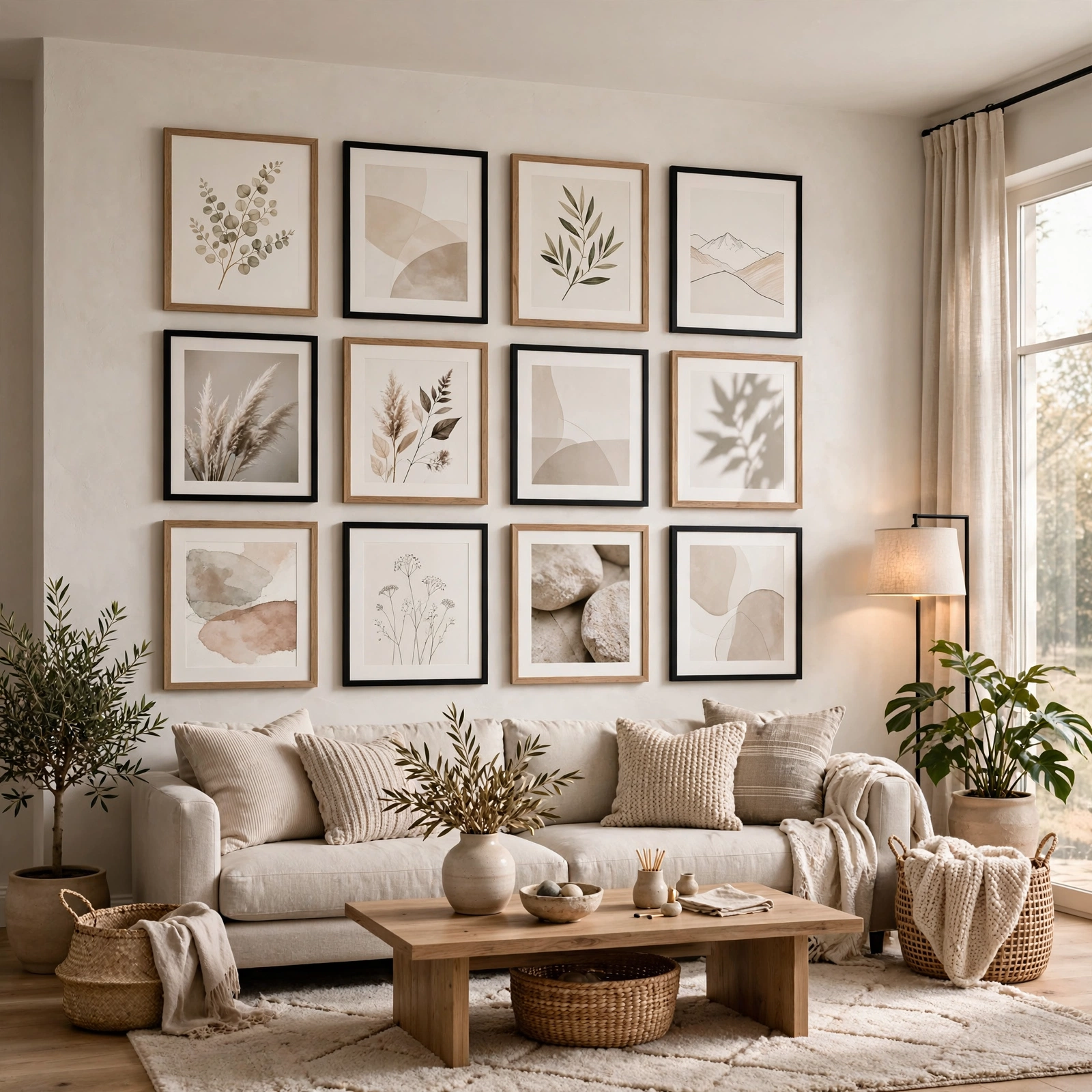
A gallery wall grid arranges framed pieces in even rows and columns, creating a structured, gallery like display above a sofa or console. This layout works best with frames of the same color or finish, even if the art inside varies in subject. Measure your wall space first, then lay the grid out on the floor to confirm spacing before hanging anything. A grid reads as polished and intentional, making it a strong choice for formal or minimalist living rooms.
2. Oversized Statement Mirror Living Room Wall Decor Ideas
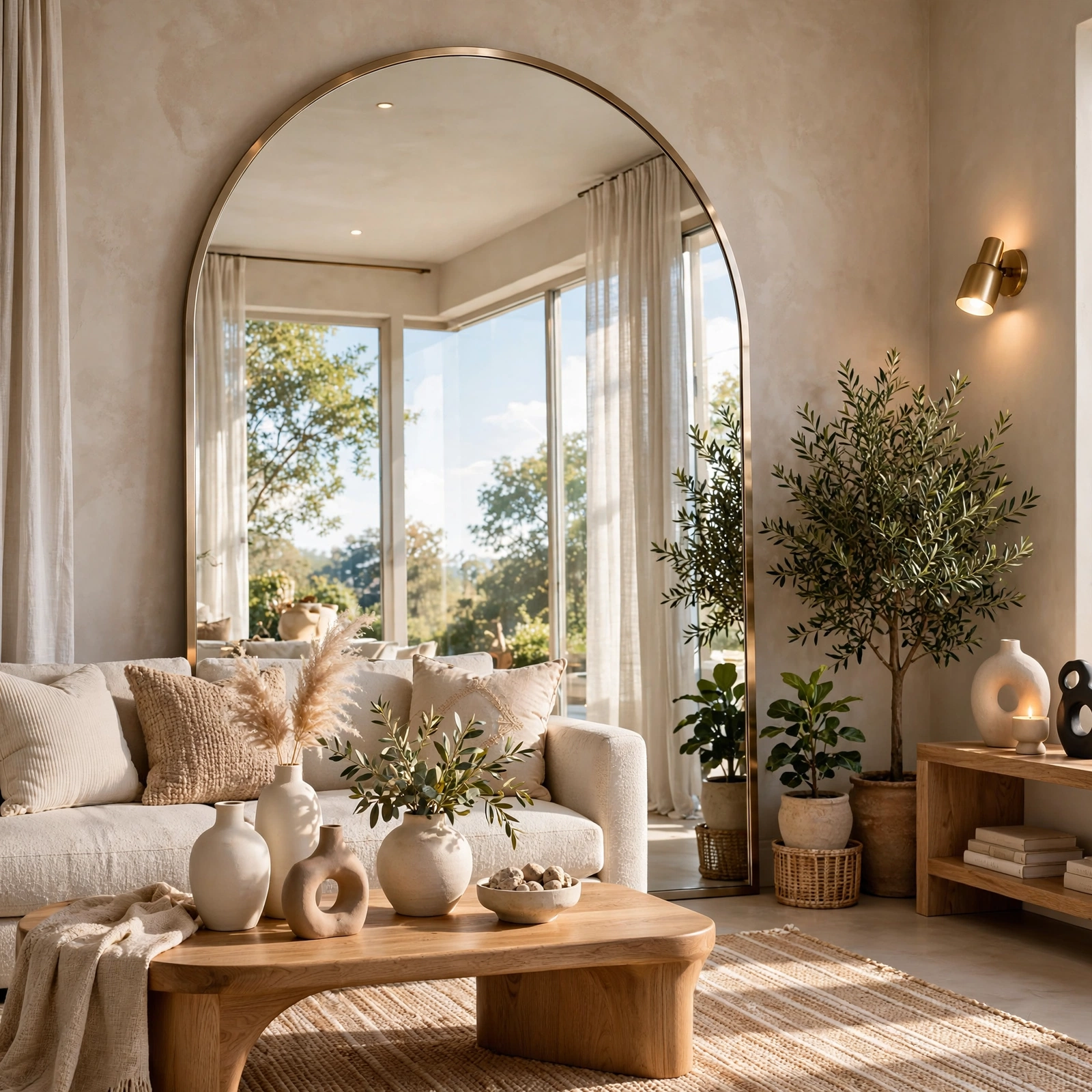
An oversized mirror leaning or mounted above a console table bounces light around the room and makes a narrow living room feel wider. Look for shapes beyond the standard rectangle, such as arched or asymmetrical frames, to add visual interest. Brass and walnut frames pair well with warm palettes, while black metal frames suit more industrial spaces. Position the mirror to reflect a window or light source for the strongest effect.
3. Woven Wall Hanging Living Room Decor Ideas
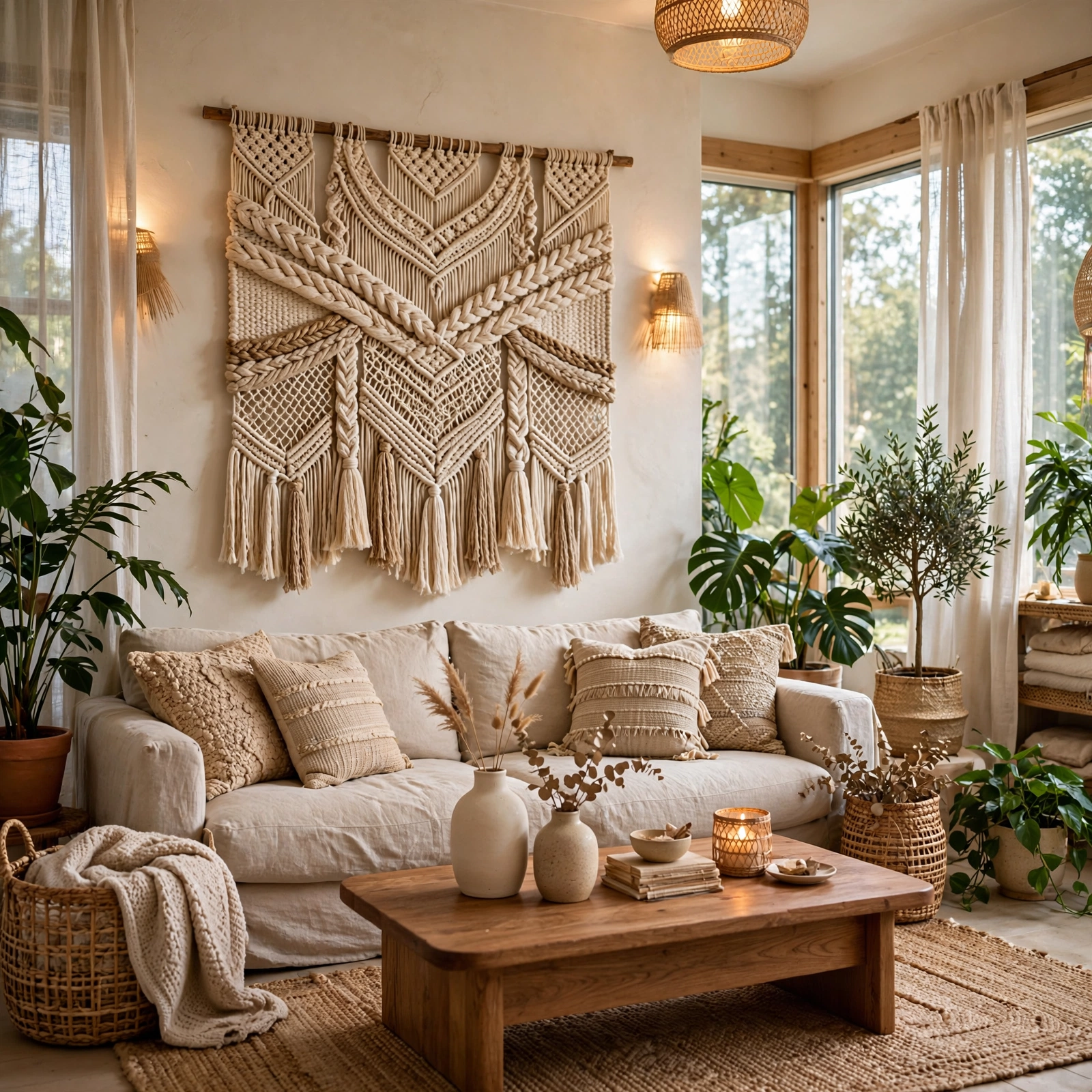
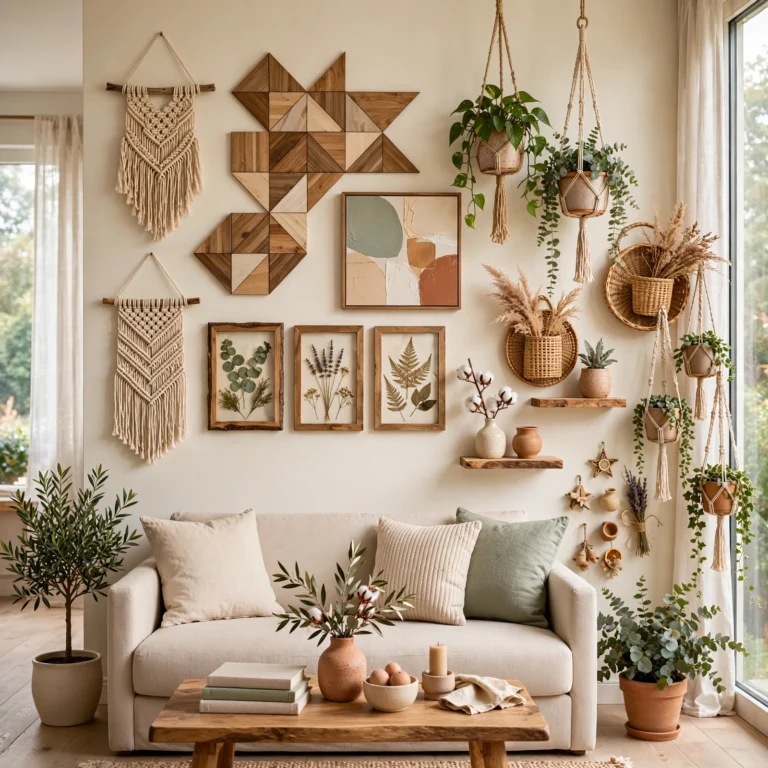
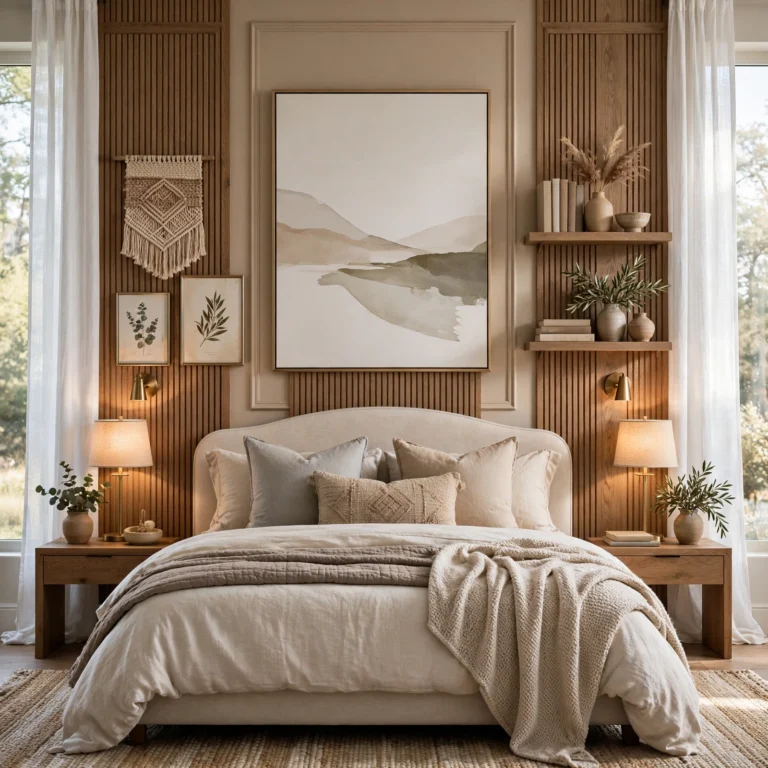
A large woven wall hanging made from jute, cotton, or wool rope adds texture without requiring a full gallery arrangement. These pieces work especially well above a sofa where a single anchor point is needed. Choose a neutral fiber tone if your furniture already has pattern, or a bolder dyed piece if your room leans minimal. Woven hangings soften hard edged rooms full of leather and metal furniture.
Learn More About Living Room Wall Decor Ideas.
4. Floating Wall Shelves Living Room Decor Ideas
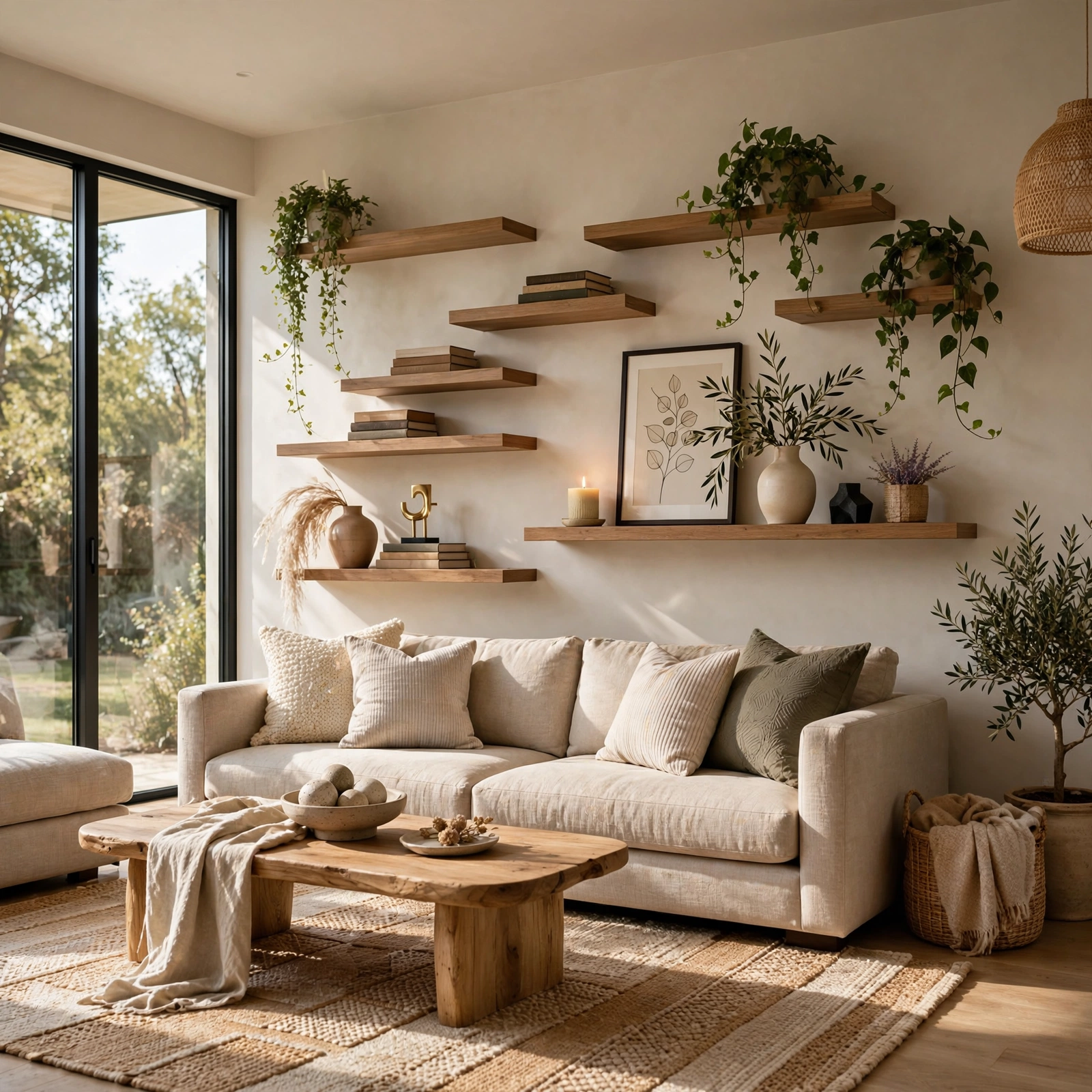
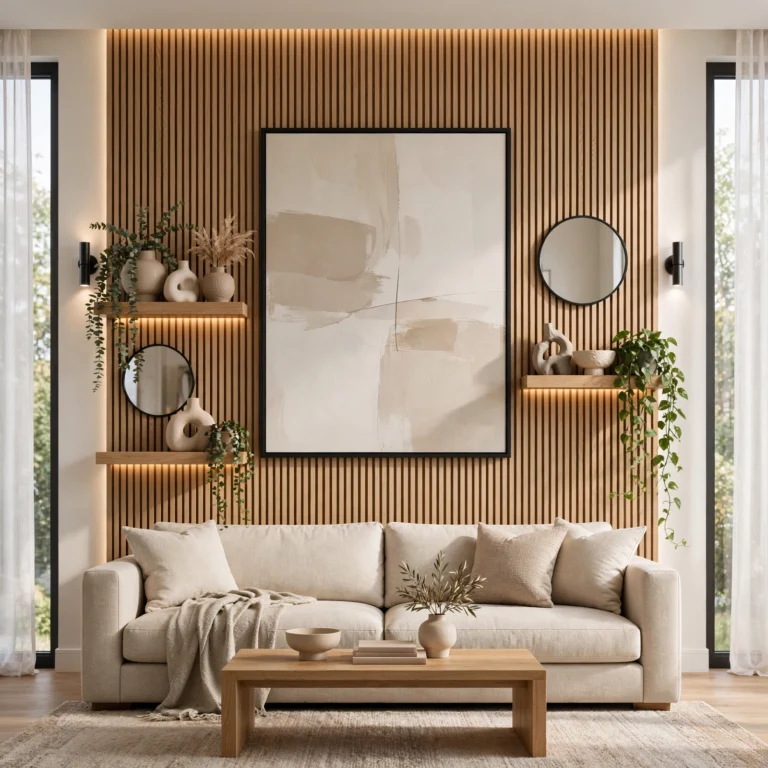
Floating wall shelves installed in a staggered or symmetrical pattern give you a rotating display space for books, small art, and objects. Because they have no visible brackets, they read as clean and modern against almost any wall color. Group shelves in sets of two or three at varying heights rather than spacing them evenly, which creates a more dynamic visual line. This option suits renters and homeowners alike since most shelves require minimal wall damage.
5. Textured Plaster Panels Living Room Wall Decor Ideas
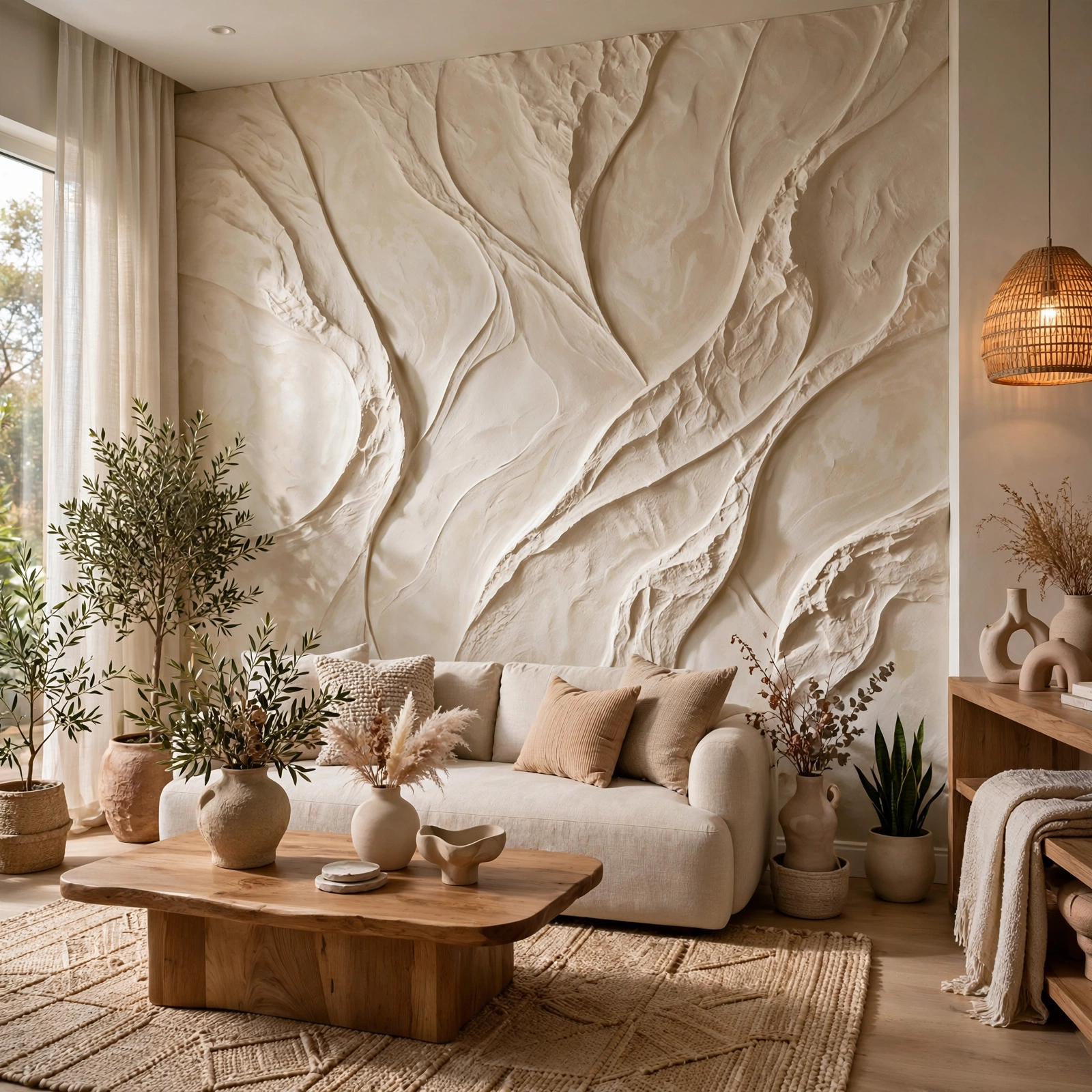
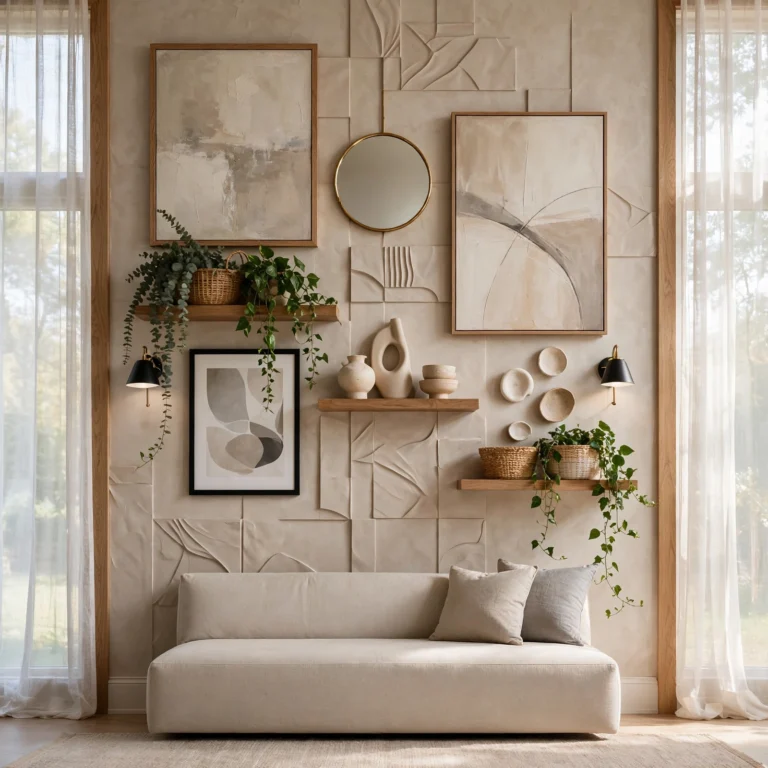
Textured plaster panels applied directly to a section of wall create a sculptural, tactile focal point that paint alone cannot achieve. Limewash and Venetian plaster finishes are popular for their subtle color variation and matte texture. This approach works well on a single accent wall behind the sofa rather than the entire room, keeping the look intentional instead of overwhelming. Plaster panels pair naturally with warm, earthy living room palettes.
6. Vintage Rug as Wall Art Living Room Decor Ideas
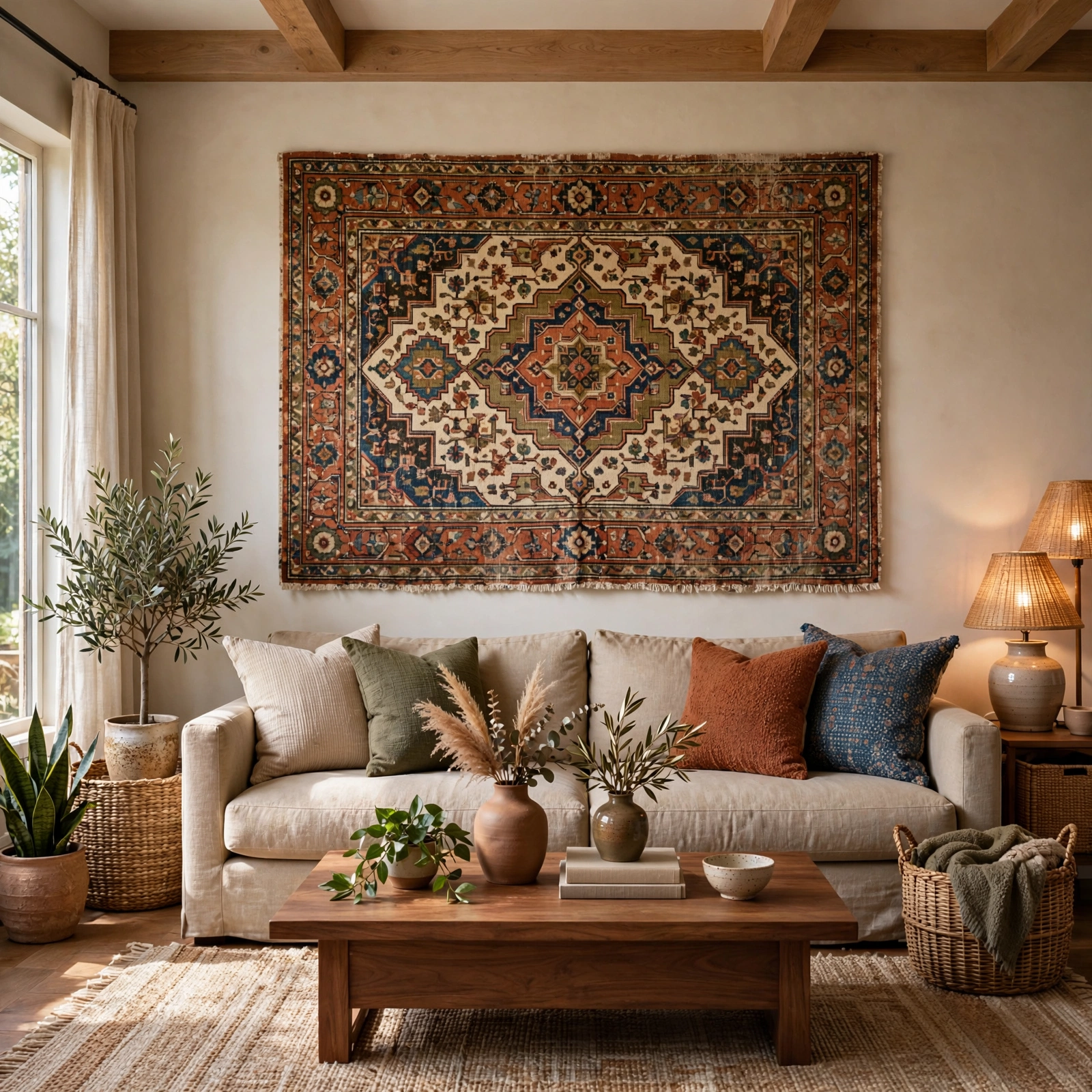
Hanging a vintage or antique rug on the wall introduces pattern, color, and history in a single piece. Use a wooden dowel and fabric sleeve or a discreet wall mount designed for textiles to avoid damaging the rug. This idea works especially well in living rooms with high ceilings or awkward tall wall sections that standard art doesn’t fill. A rug’s worn patina adds a sense of collected character that new decor often lacks.
7. Sculptural Wall Sconces Living Room Decor Ideas
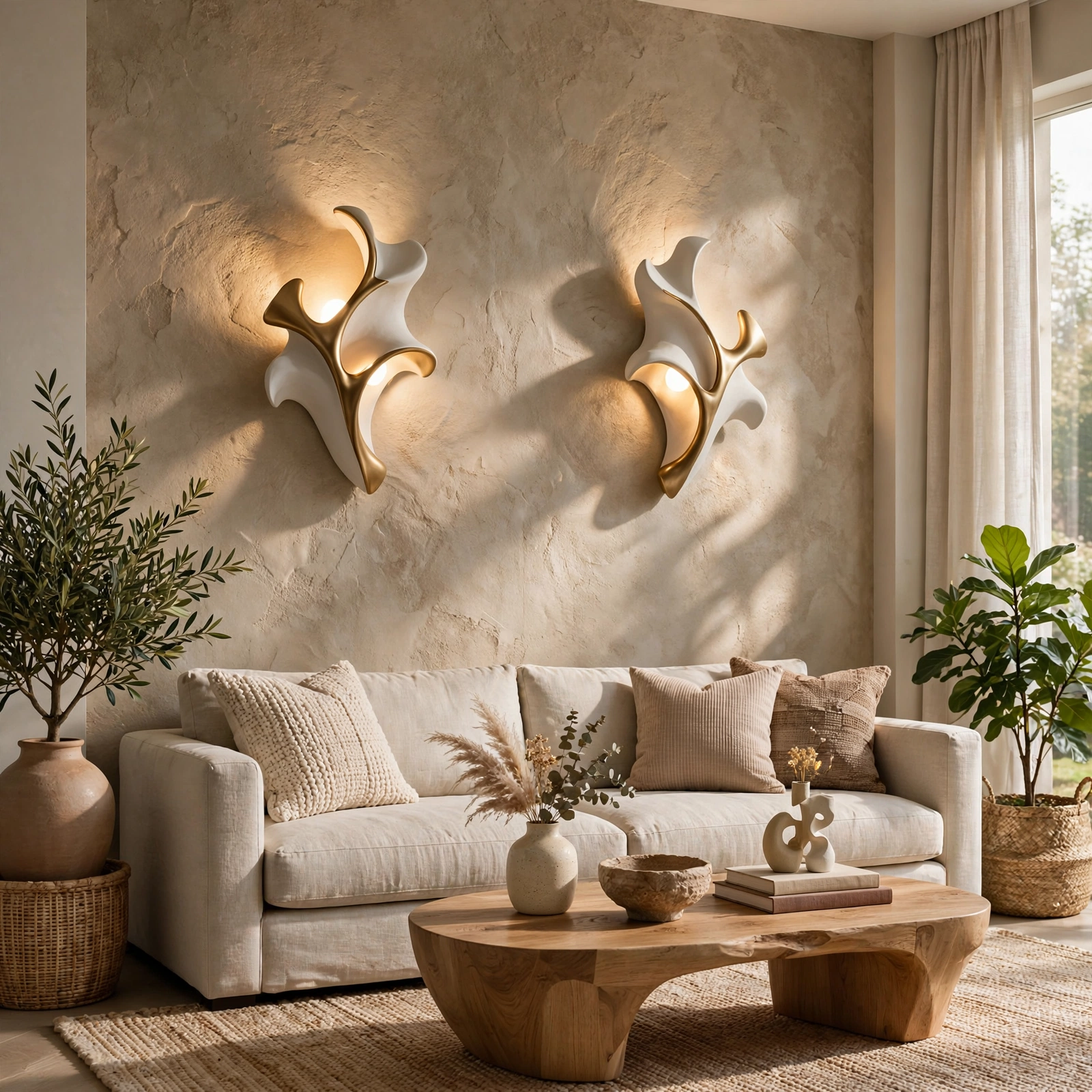
Sculptural wall sconces double as lighting and decor, filling wall space while adding warm ambient light in the evening. Choose fixtures with an interesting silhouette, such as arc shapes or fluted glass, so they function as art even when unlit. Position sconces at eye level flanking a sofa or fireplace for balance. This idea is particularly useful in living rooms that rely too heavily on a single overhead fixture.
8. Framed Textile Art Living Room Wall Decor Ideas
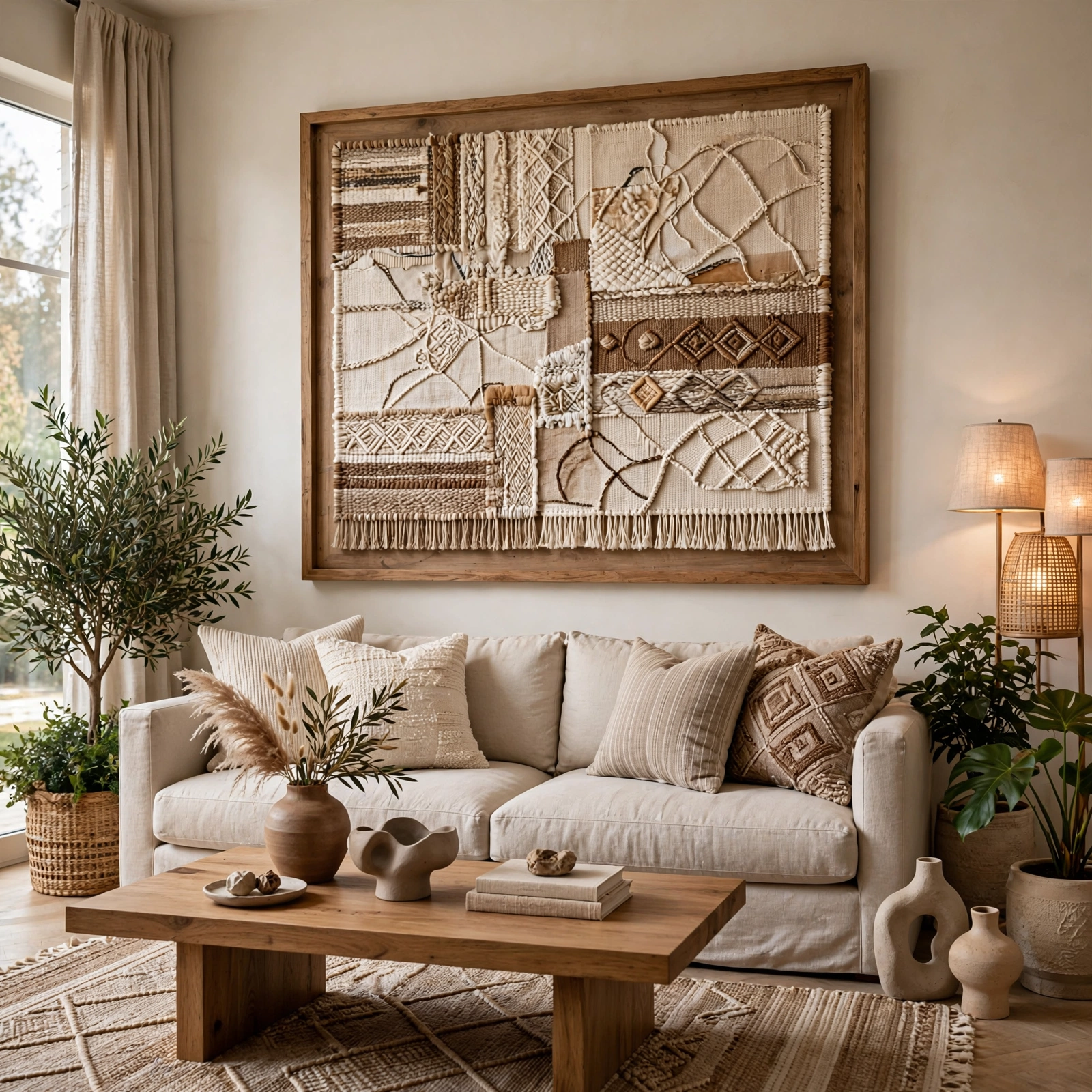
Framed textile art, including embroidery, quilting squares, or fabric remnants, offers an affordable and unique alternative to printed art. Secondhand textiles from estate sales or fabric markets often have richer color and texture than mass produced prints. Choose simple wood or metal frames that let the fabric pattern stay the focal point. This approach works particularly well for collectors who want one of a kind pieces without gallery pricing.
9. Wall Decor Living Room Gallery Ledge
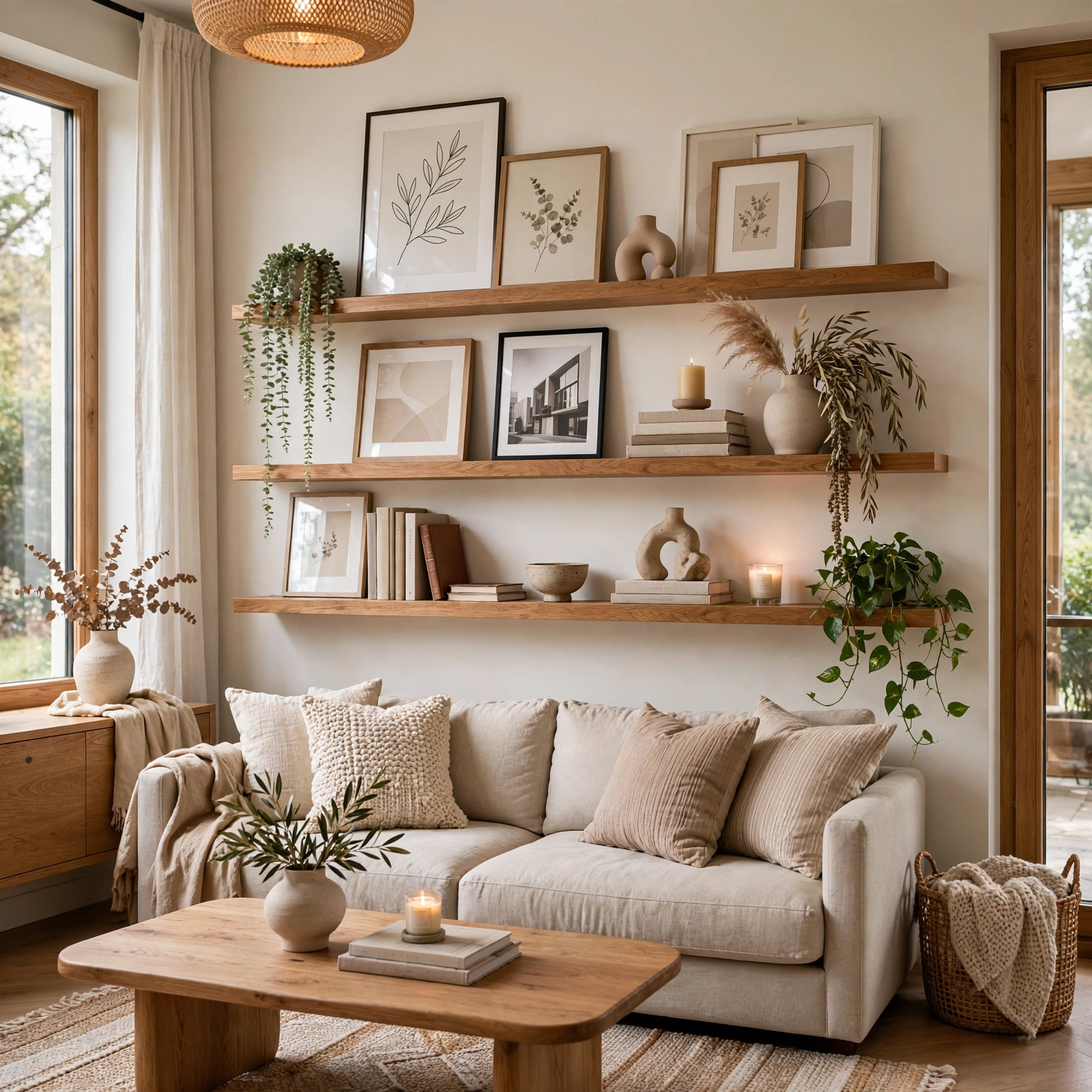
A wall decor living room gallery ledge uses a long, narrow shelf to lean and layer framed art rather than hang it directly. This setup allows you to rearrange pieces seasonally without new nail holes, layering smaller frames in front of larger ones for depth. Ledges work particularly well above low furniture like a media console or daybed. The layered look feels more relaxed and collected than a rigid, symmetrical hang.
10. Botanical Wall Planters Living Room Decor Ideas
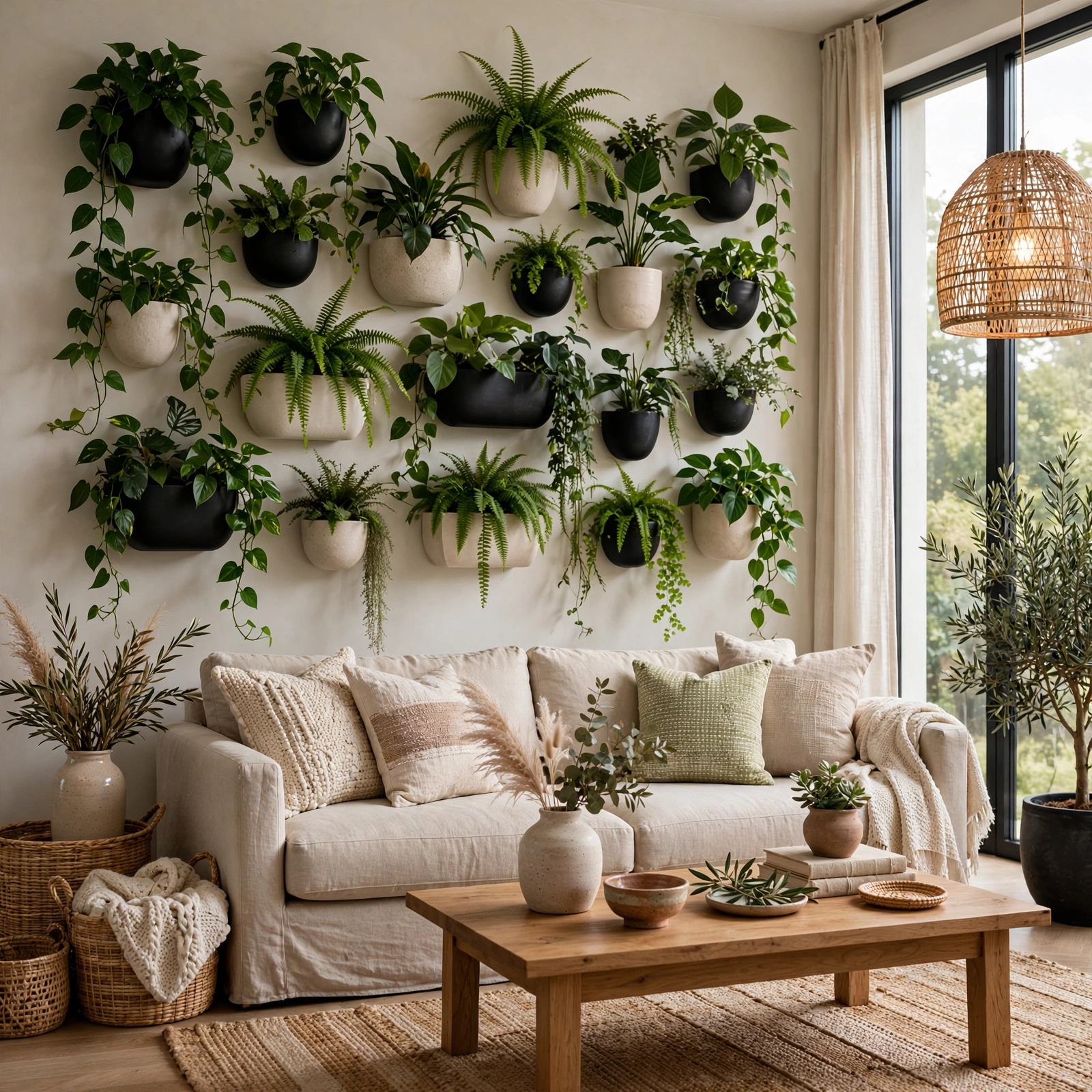
Botanical wall planters mounted in a cluster bring greenery off the floor and onto the wall, freeing up living room space while adding color and life. Terra cotta, ceramic, and glass vessel styles all work, though grouping similar materials keeps the display cohesive. Trailing plants like pothos or string of pearls add movement as they grow over time. This idea suits living rooms with strong natural light near the display wall.
11. Black and White Photo Cluster Living Room Wall Decor Ideas
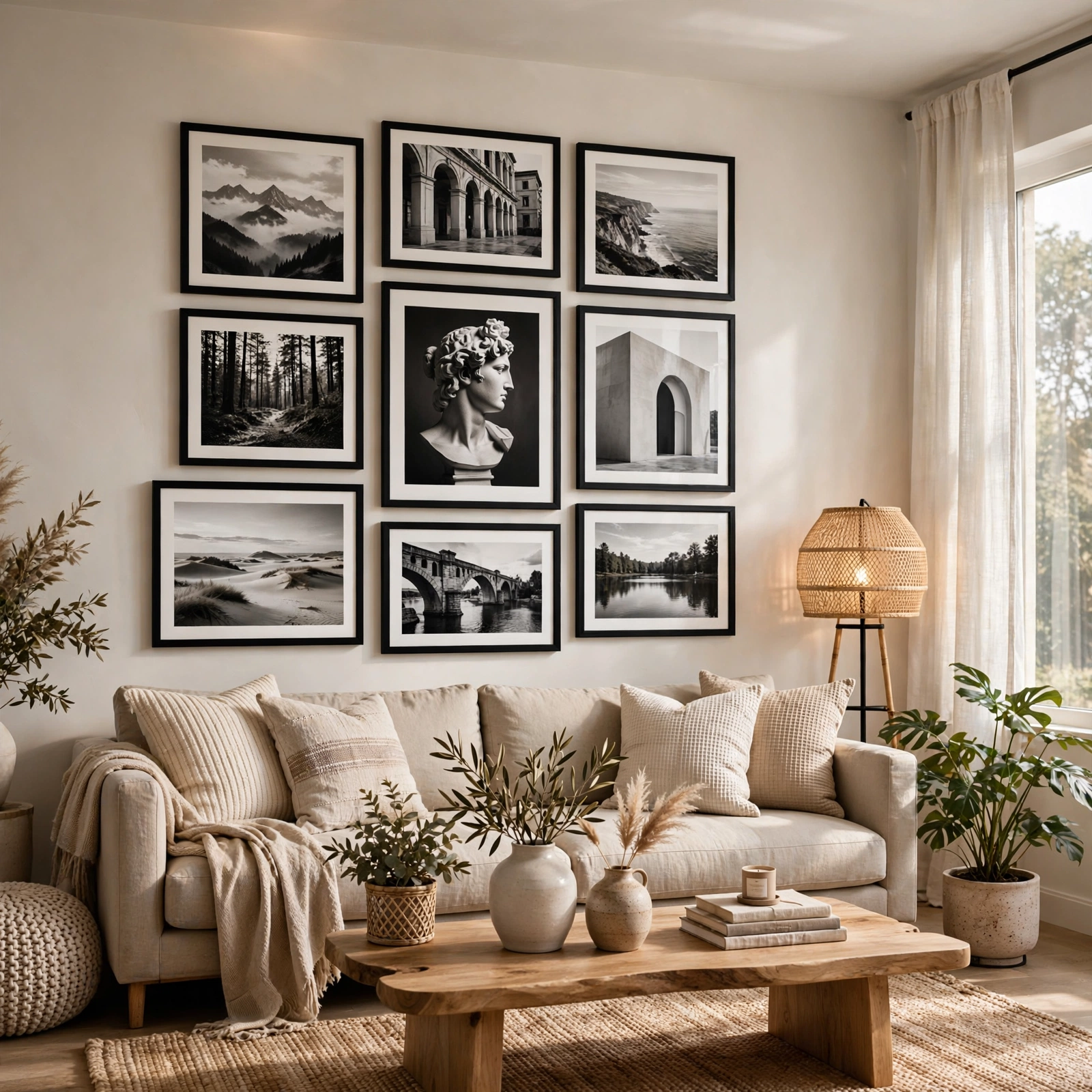
A black and white photo cluster groups personal or vintage style photography in matching frames for a cohesive, gallery quality look. Sticking to a single color palette, rather than mixing full color and black and white images, keeps the cluster feeling curated instead of scattered. This idea works particularly well in living rooms used for family gatherings, since it doubles as a personal history wall. Matting each photo with extra white space adds a more polished, editorial finish.
12. Geometric Wood Wall Art Living Room Decor Ideas
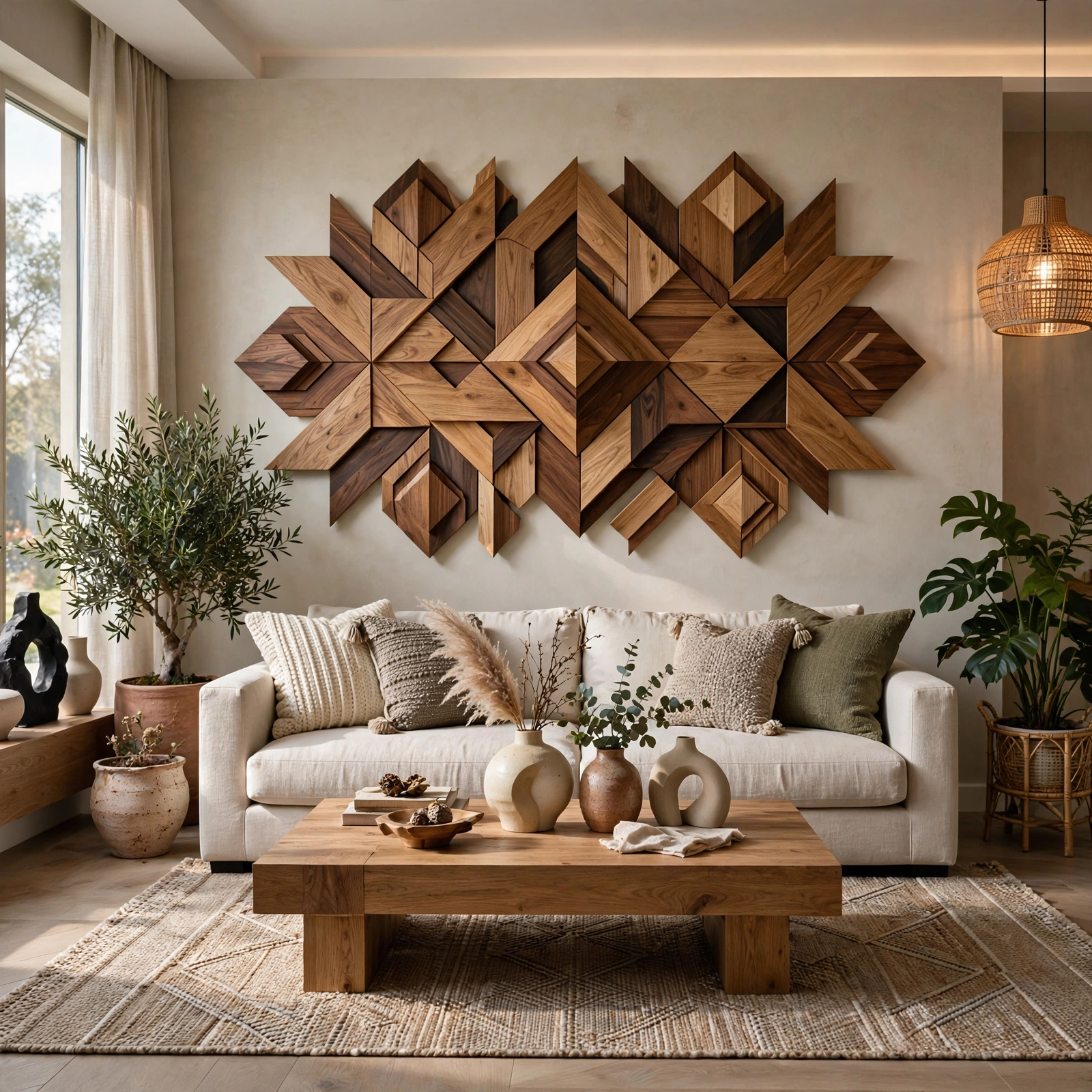
Geometric wood wall art, whether a single sculptural piece or a modular set, introduces warmth and dimension without requiring color commitment. Walnut and oak tones pair naturally with mid century and Scandinavian inspired living rooms. Modular wood panels can be rearranged into different configurations over time, giving the display long term flexibility. This option works well for wall decor living room setups where furniture already carries most of the room’s color.
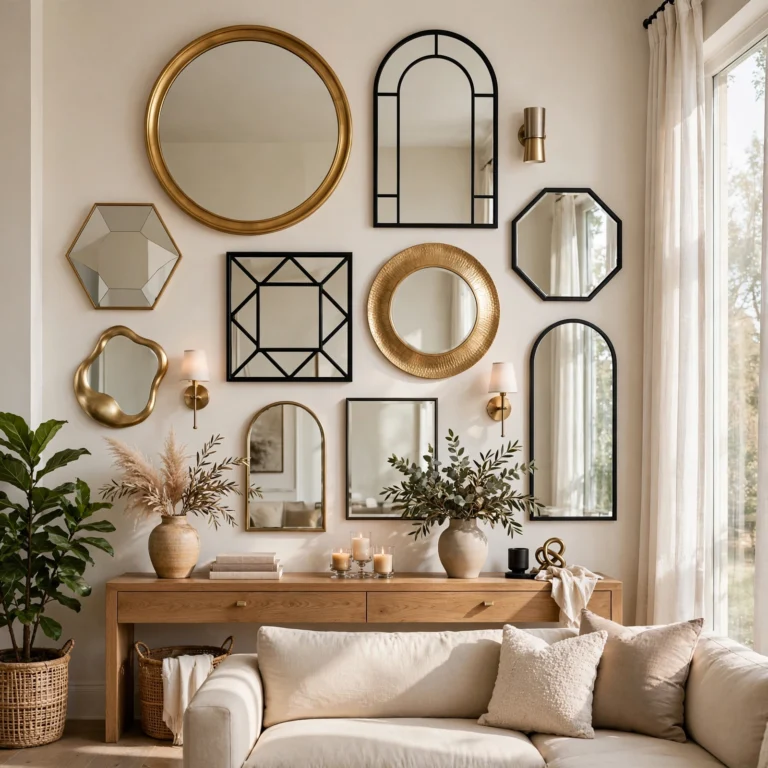
13. Decorative Wall Mirror Cluster Living Room Decor Ideas
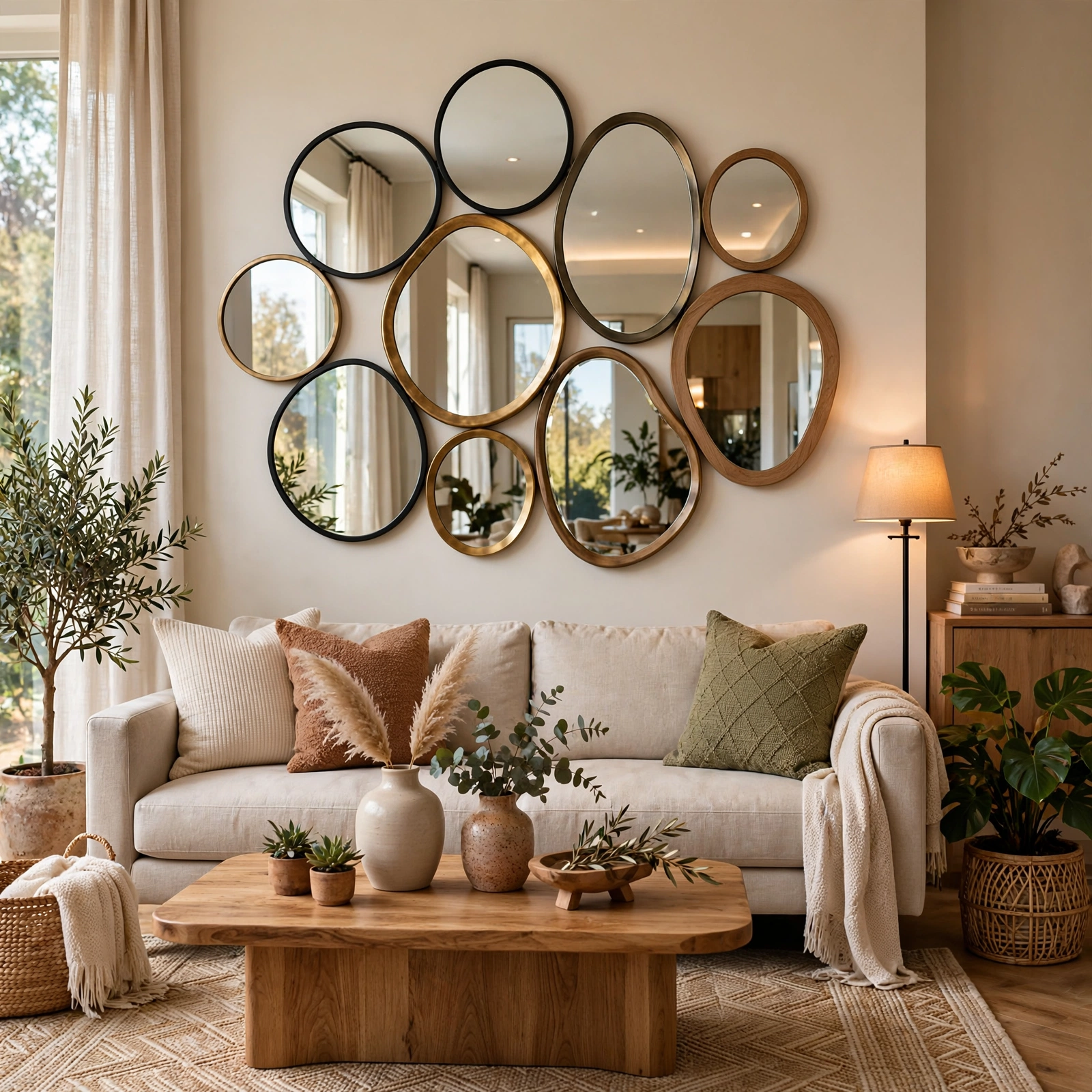
A decorative wall mirror cluster groups several small mirrors of varying shapes rather than relying on one large piece. This layout multiplies light reflection throughout the room while adding an eclectic, collected feel. Mixing round, arched, and sunburst shapes keeps the cluster from feeling too matched or formulaic. This idea works especially well on a wall that receives limited natural light, since it maximizes what’s available.
14. Built In Display Niches Living Room Wall Decor Ideas
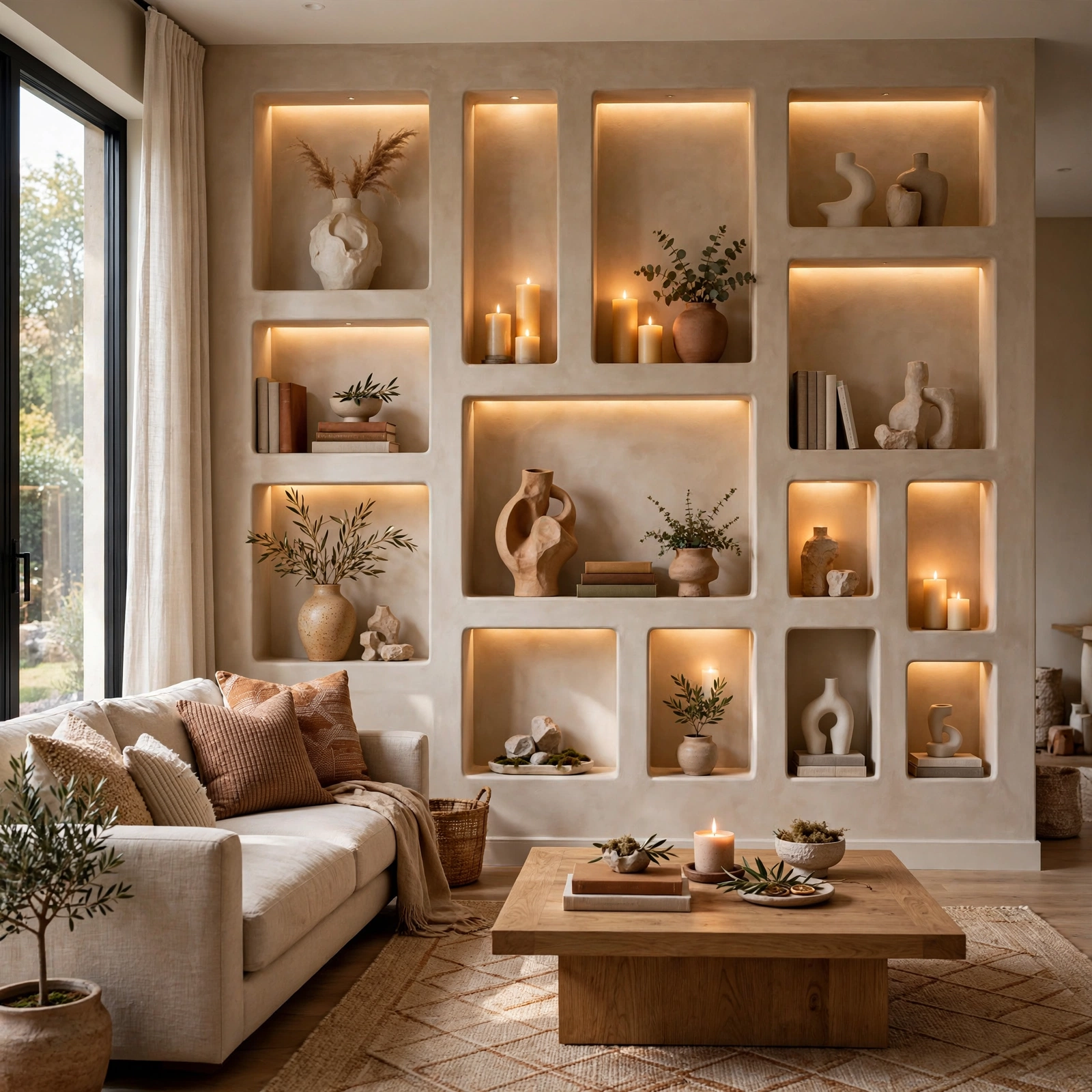
Built in display niches carved into the wall create recessed spaces for books, ceramics, or small art pieces without adding visual bulk. This option requires more construction than others on this list but delivers a permanent, architectural result. Niches work particularly well flanking a fireplace or television, filling otherwise awkward flanking walls. Painting the interior of the niche a contrasting color makes the display pop against the surrounding wall.
15. Large Scale Abstract Canvas Living Room Wall Decor Ideas
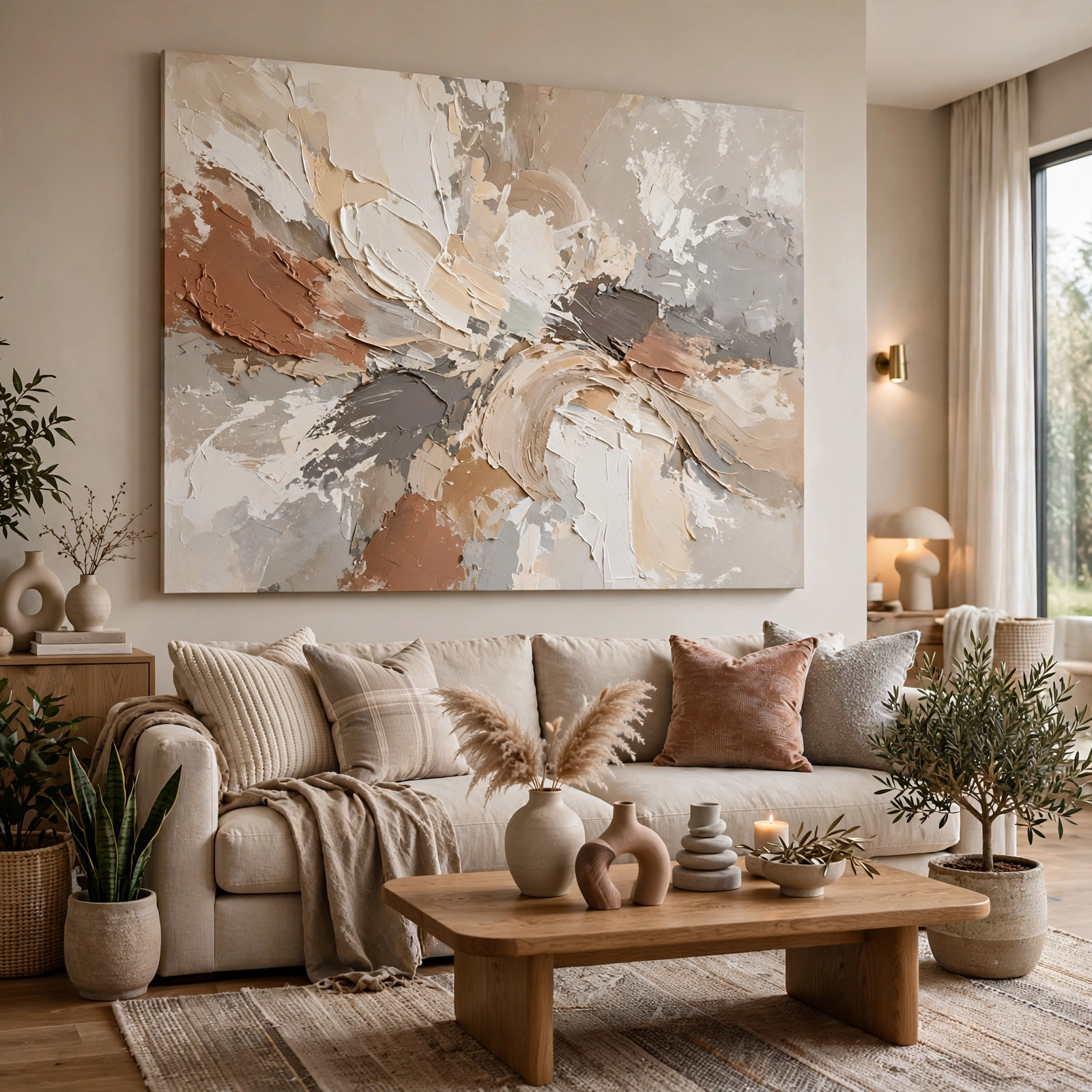
A large scale abstract canvas gives a living room a single bold focal point without the complexity of arranging multiple pieces. Choosing a canvas that pulls one or two accent colors from your existing furniture ties the piece into the room rather than letting it compete. This option suits living rooms with high ceilings or long, uninterrupted wall runs where smaller pieces would look scattered. A single oversized canvas often reads as more intentional than several small ones.
| Wall Space | Recommended Idea | Approx. Size |
| Above sofa | Large Scale Abstract Canvas | 48–60 in wide |
| Console table | Oversized Statement Mirror | 30–40 in wide |
| Narrow accent wall | Textured Plaster Panels | Full wall height |
| Flanking fireplace | Built In Display Niches | 12–18 in deep |
| Low furniture | Gallery Ledge | 36–48 in long |
Shop the Look
Pair a walnut framed mirror with a set of brass sconces for a warm, layered console display. A woven jute wall hanging alongside two ceramic wall planters creates texture over a sofa without needing framed art. For a gallery grid, choose matching black metal frames in three sizes to keep the arrangement feeling intentional rather than random.
Common Mistake to Avoid
The most common mistake is hanging art too high, which leaves an awkward gap between the furniture and the piece and makes the whole wall feel disconnected from the seating area. As a general guideline, the center of your art should sit roughly 57 inches from the floor, or 6 to 8 inches above the back of a sofa. Skipping this measurement step is why so many living rooms feel visually off, even when the individual pieces are well chosen.
Frequently Asked Questions
What size wall art should I choose for my living room?
A good rule of thumb is choosing art that covers roughly two thirds the width of the furniture below it, such as a sofa or console table. Oversized pieces read as more intentional than several small, scattered ones on a large wall. If you’re working with a gallery arrangement instead, treat the entire grouping as one visual unit and apply the same two thirds rule to the whole cluster rather than each individual frame.
How high should I hang wall decor above a sofa?
Hang the piece so its center sits about 6 to 8 inches above the top of the sofa back, which typically lands around 57 inches from the floor. This keeps the art visually connected to the furniture rather than floating awkwardly near the ceiling. If you’re hanging a cluster or gallery arrangement, treat the lowest row as the anchor point and measure up from there.
What is the best material for wall decor in a small living room?
Mirrors and light toned woven textiles work especially well in small living rooms because they reflect light and avoid visual heaviness. Bulky sculptural pieces or dark, oversized canvases can make a small wall feel more crowded. Floating shelves in a light wood tone also add storage and display space without consuming floor area, which matters more in compact rooms than in larger ones.
Should all my wall decor match in style?
No, most designers recommend mixing materials and eras rather than matching everything exactly, since a fully matched set can feel more like a showroom than a home. A shared color palette or frame finish is usually enough to tie pieces together. Vintage finds mixed with newer pieces tend to create the most visually interesting and personal feeling walls.
How do I arrange a gallery wall without making mistakes?
Lay your frames out on the floor first in your intended arrangement, then trace the layout onto craft paper and tape it to the wall before hammering any nails. This lets you adjust spacing and confirm the composition works before committing. Keep gaps between frames consistent, typically 2 to 3 inches, so the grouping reads as one cohesive display rather than a random scatter.
Conclusion
With fifteen distinct directions to choose from, finding the right wall decor living room approach comes down to matching the idea to your wall’s size, light, and existing furniture. Save this guide to Pinterest so you can revisit it while planning your layout, and check out our related post on living room gallery wall spacing for more detailed measurements.