12 Trending Interior Design Bedroom Ideas for Rest and Style
Interior design bedroom ideas need to balance two goals that can pull in different directions, creating a space calm enough for genuine rest while still reflecting personal style and visual interest. This post covers twelve specific design concepts, each with real materials and placement guidance, so you can plan a bedroom that feels both restful and considered rather than either sterile or overly busy. Whether you’re furnishing a small apartment bedroom or a larger primary suite, you’ll find sizing notes and comparisons to help you choose pieces that support both sleep quality and everyday style.
Key Takeaways
- These interior design bedroom ideas balance a calm, restful atmosphere with genuine visual interest and personality.
- Layered textiles and warm, muted color palettes are replacing the stark, minimal bedroom looks popular in past years.
- Several ideas include size, spacing, or budget comparisons to help you plan a layout before purchasing furniture or bedding.
- Small additions like a bench at the foot of the bed or a well-placed reading light can shift a bedroom’s feel without a full renovation.
Trend & Background
Bedroom design has shifted away from the stark, minimal, all-white or all-gray palettes that dominated recent years toward warmer, more layered spaces that incorporate muted color, natural textures, and a mix of vintage and new furniture pieces. This reflects a broader move toward bedrooms treated as genuine retreat spaces, particularly as more people prioritize sleep quality and view the bedroom as a room worth investing in beyond pure function. This matters now because a bedroom is one of the most frequently used rooms in a home in terms of total hours spent, making thoughtful design meaningfully connected to daily wellbeing rather than purely aesthetic concerns.
1. Layered Bedding Textures
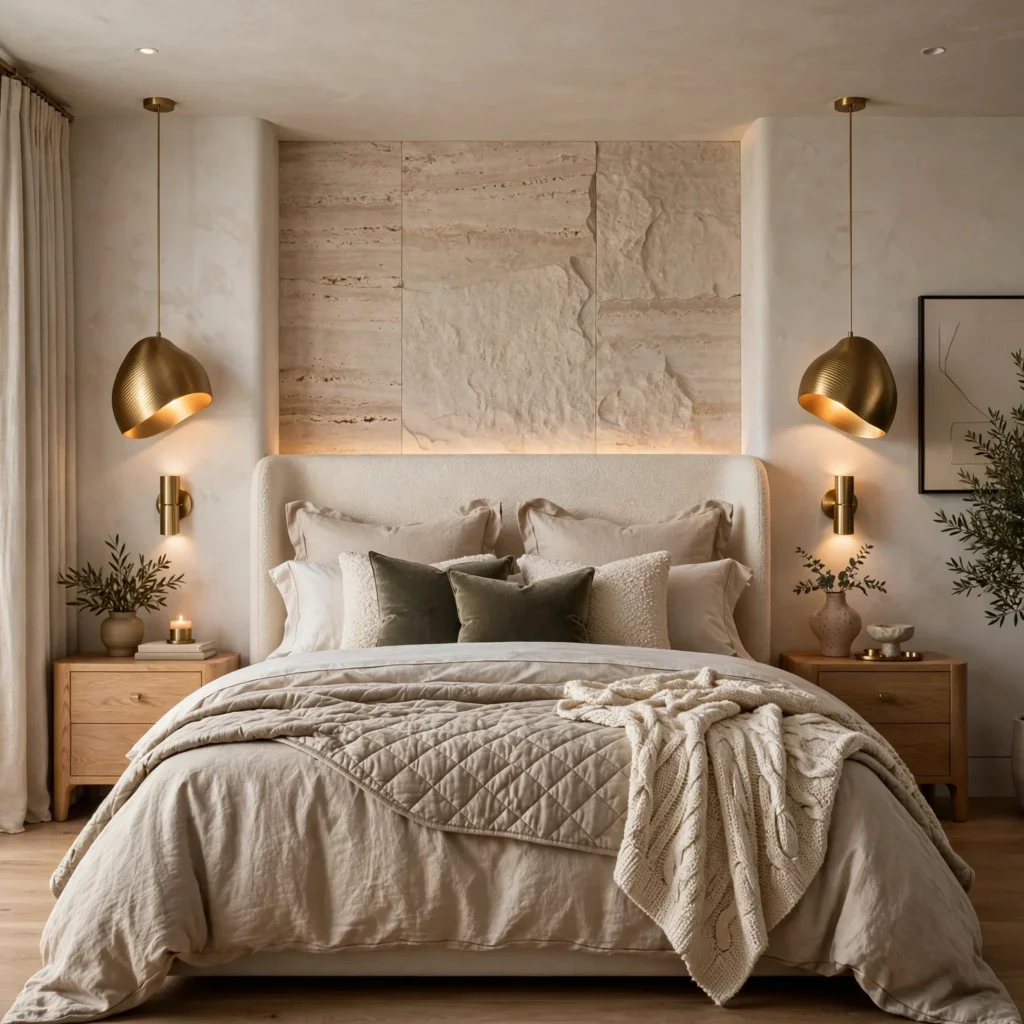
Combining a textured duvet cover, a woven throw blanket, and a mix of pillow shapes and fabrics, rather than a single flat bedspread, adds visual depth and a more inviting, hotel-like quality to the bed itself. Natural fiber materials like linen or cotton percale tend to hold up well to regular washing while still offering a soft, textured look. Keeping the overall color palette within two or three complementary tones, even while mixing textures, helps the layered look read as intentional rather than mismatched. This idea works as one of the most impactful, relatively low-cost updates available for any bedroom.
| Bedding Layer | Material | Purpose |
| Duvet Cover | Linen or cotton | Primary texture, warmth |
| Throw Blanket | Wool or knit | Visual layering, extra warmth |
| Pillows (mixed) | Various fabrics | Textural variety, support |
2. Warm Wood Bed Frame
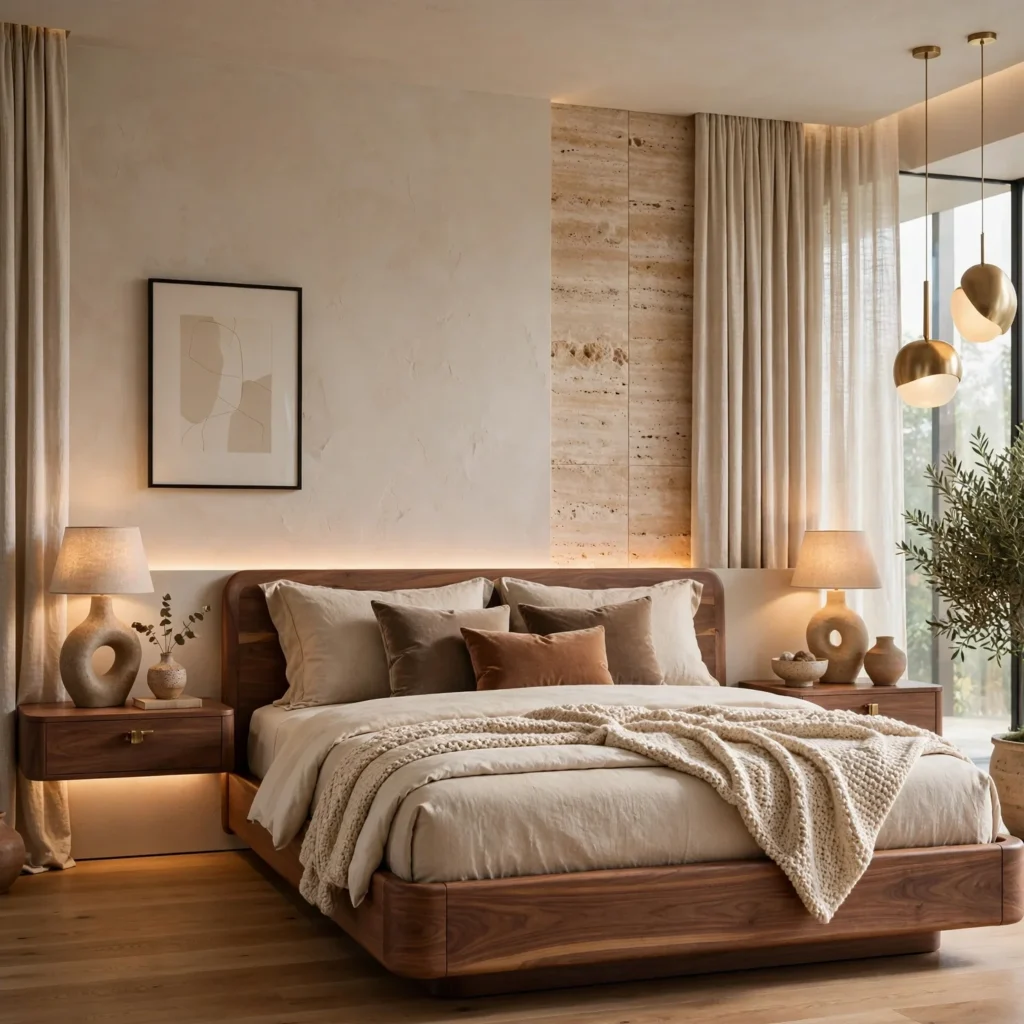
A bed frame in warm wood, such as white oak or walnut, adds visual warmth to a bedroom and tends to read as more timeless than a fully upholstered or metal frame alone. This works particularly well paired with woven natural fiber rugs and linen textiles for a cohesive, organic material story throughout the room. A wood frame with a low, simple profile suits a wider range of bedroom styles than an ornately carved or heavily detailed frame, keeping the piece from feeling dated as broader design trends shift.
3. Dedicated Reading Nook
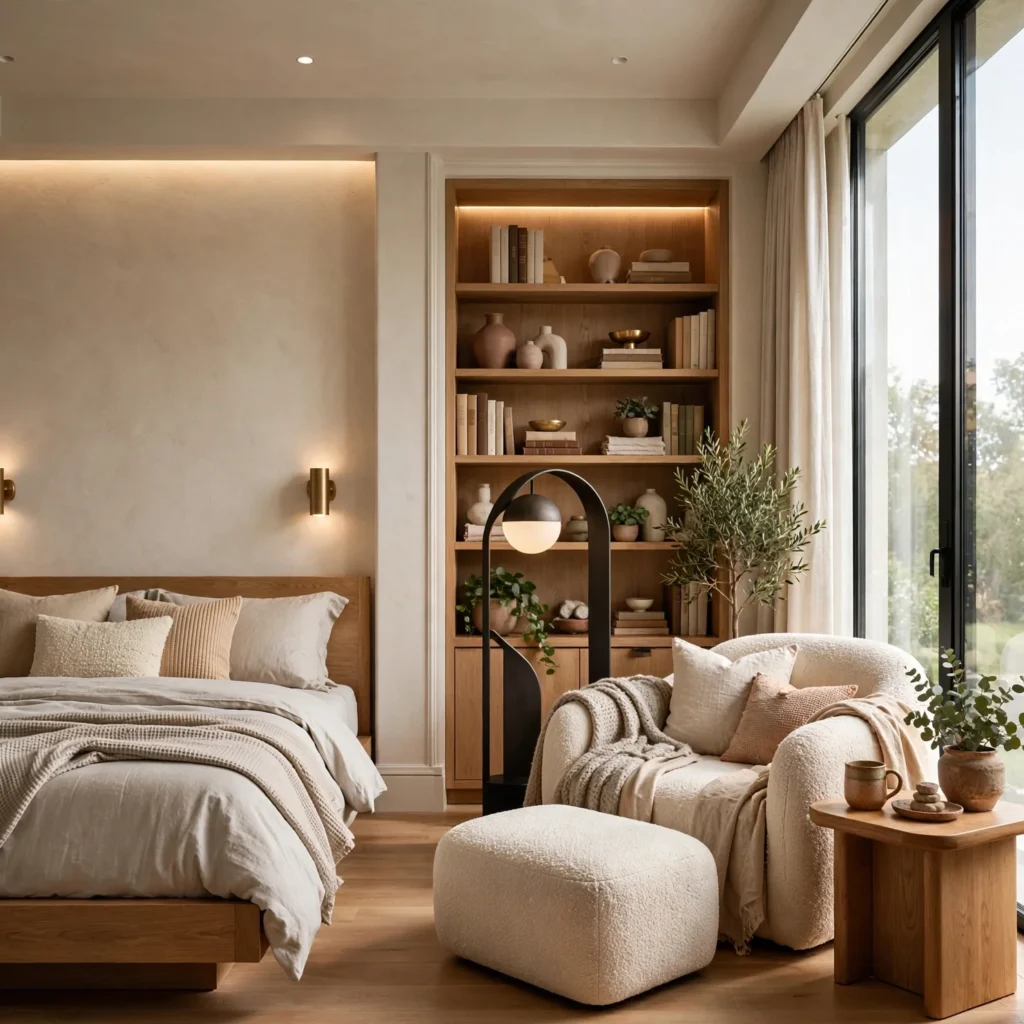
A small reading nook, using an accent chair and a floor lamp positioned near a window or in an underused corner, gives the bedroom a secondary function beyond sleeping, supporting a wind-down routine separate from being in bed itself. This works particularly well in bedrooms with at least a small amount of extra floor space beyond what the bed and primary furniture require. Pairing the chair with a small side table for a book or a cup of tea completes the nook as a genuinely usable spot rather than a purely decorative corner.
4. Layered Window Treatment
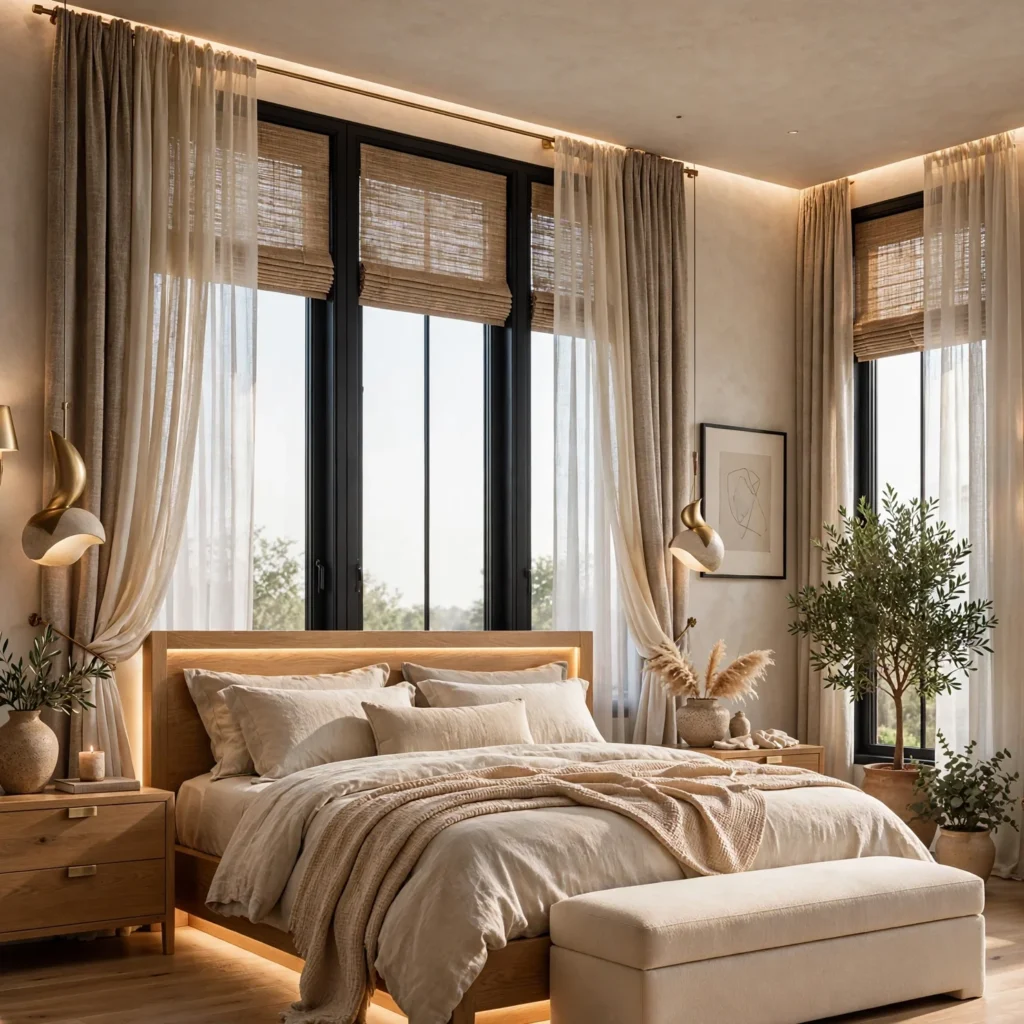
Combining a sheer curtain layer with a blackout curtain or shade behind it allows for flexible light control, softening harsh daylight during the day while still providing full darkness for sleep when needed. This works particularly well in bedrooms facing significant morning light or street-level windows where privacy and light control both matter. Mounting curtain rods close to the ceiling, rather than just above the window frame, also helps a bedroom’s walls feel taller, similar to the effect used in other rooms of the home.
Transform your workspace with our interior design kitchen ideas featuring modern layouts, ergonomic furniture, and productivity-boosting décor.
5. Muted, Warm Color Palette
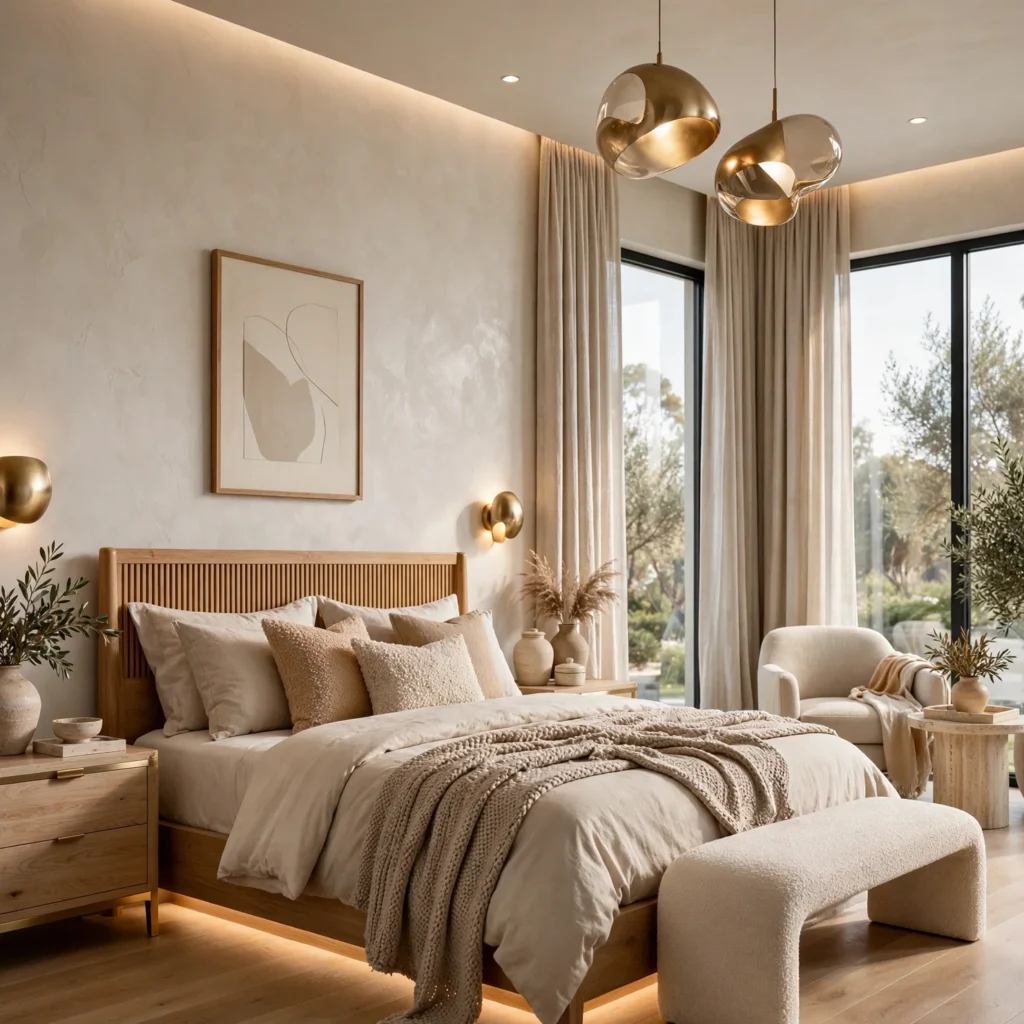
A muted, warm color palette, using tones like soft terracotta, warm greige, or a dusty sage, tends to support a calmer atmosphere than a stark white or a cooler gray, without requiring a bold, saturated color choice. This works well applied to walls, bedding, or a combination of both, depending on how much color commitment feels right for the space. Testing paint or fabric samples under the bedroom’s actual lighting, particularly in the evening when the room is used most for winding down, helps confirm the color reads as intended rather than shifting unexpectedly under artificial light.
6. Bench or Bedroom Ottoman
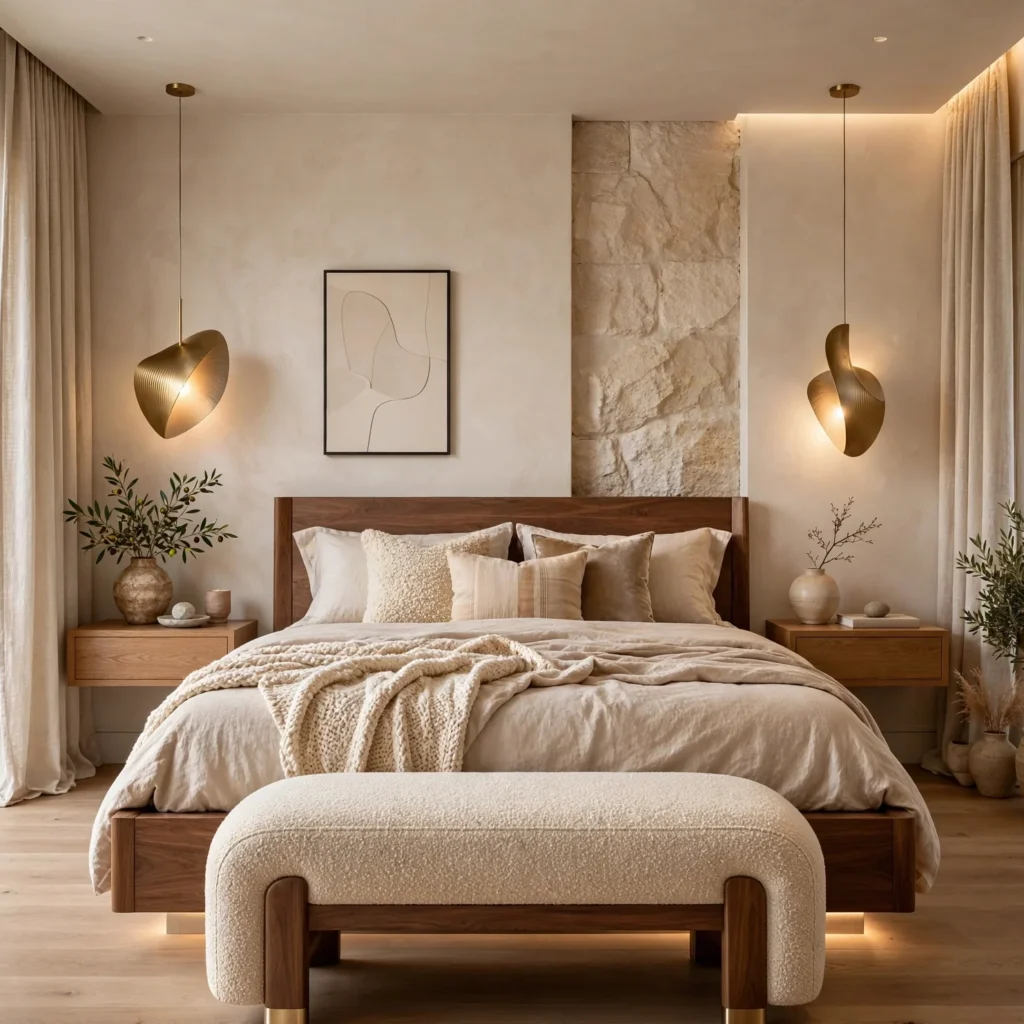
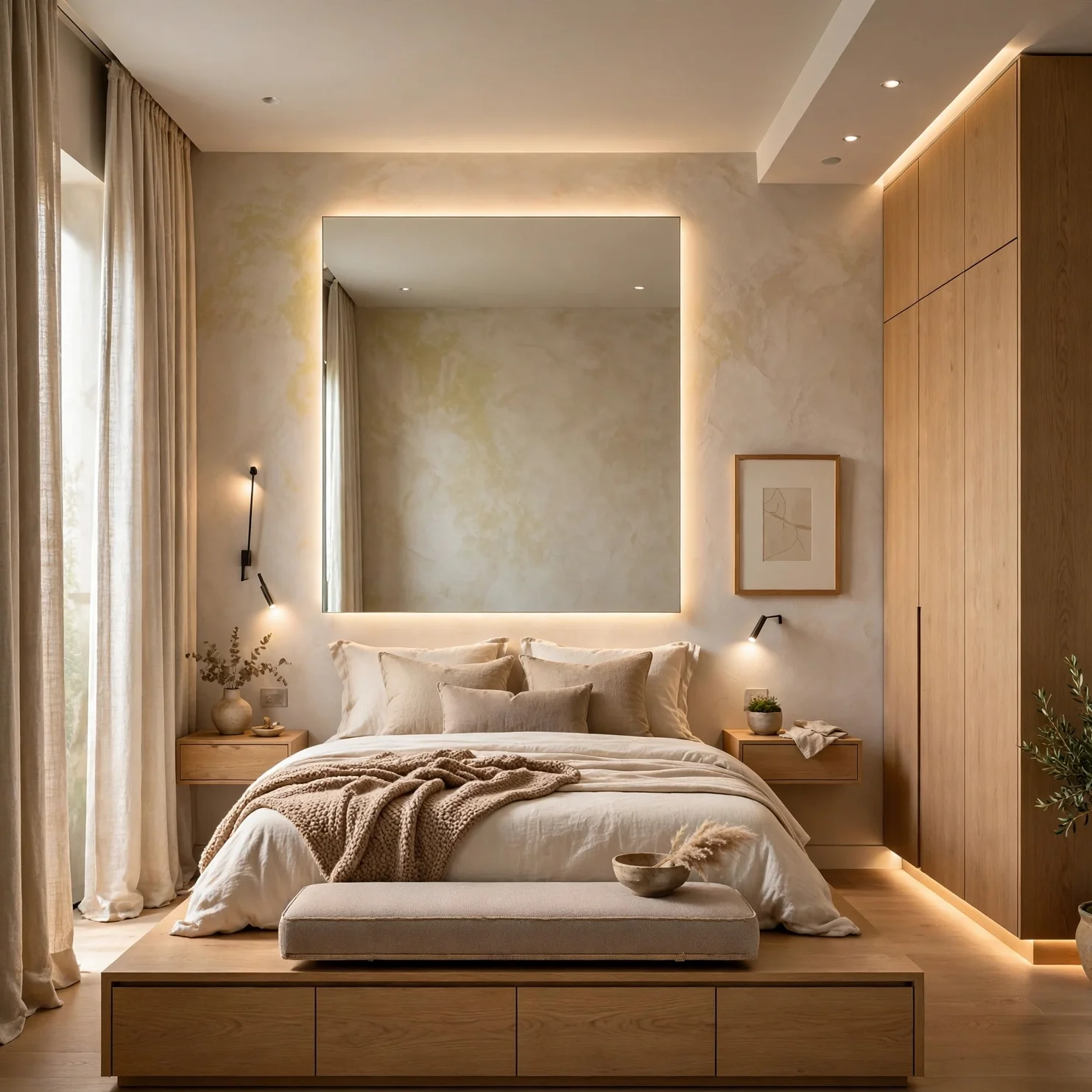
A bench or upholstered ottoman placed at the foot of the bed adds both a functional spot for sitting while getting dressed and a visual anchor that fills what might otherwise be an empty stretch of floor space. Performance fabric or a durable woven material holds up well to daily use, particularly if the bench also serves as a spot to set clothing or bags temporarily. Sizing the bench to roughly two-thirds the width of the bed frame tends to look proportionate rather than either too small or overwhelming the footboard area.
| Bench Width Ratio | Visual Effect | Best For |
| Half of bed width | Understated | Smaller bedrooms |
| Two-thirds of bed width | Balanced, proportionate | Most standard bedrooms |
| Full bed width | Bold statement | Larger primary bedrooms |
7. Statement Headboard
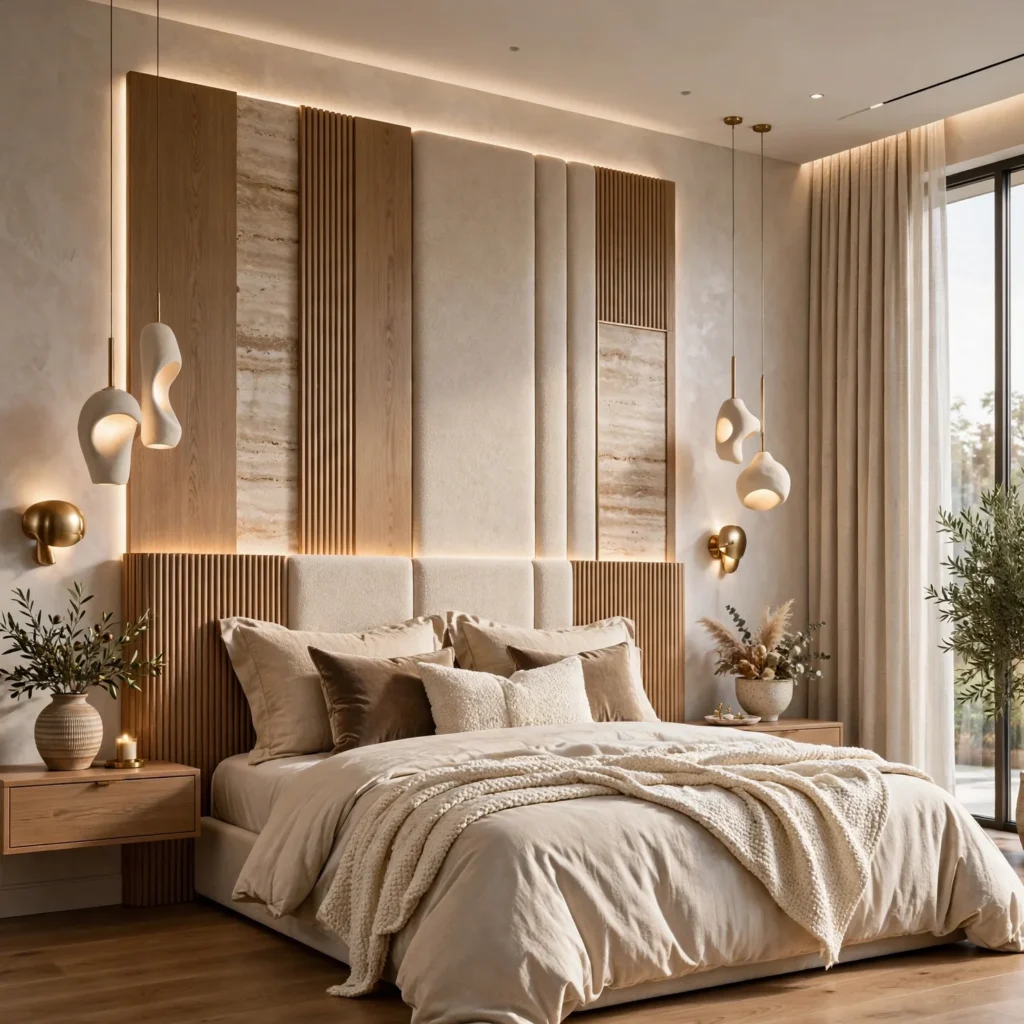
A statement headboard, whether upholstered in a textured fabric, built from wood paneling, or featuring a distinctive shape like an arch or a channel-tufted design, serves as the bedroom’s primary focal point above the bed. This works particularly well in bedrooms with otherwise simple, neutral furniture and bedding, letting the headboard carry more visual weight than a purely functional flat panel would. Upholstered headboards in a durable, easy-to-clean fabric also add a softer, more tactile element to the head of the bed compared to a hard wood or metal frame.
8. Layered Rug Placement
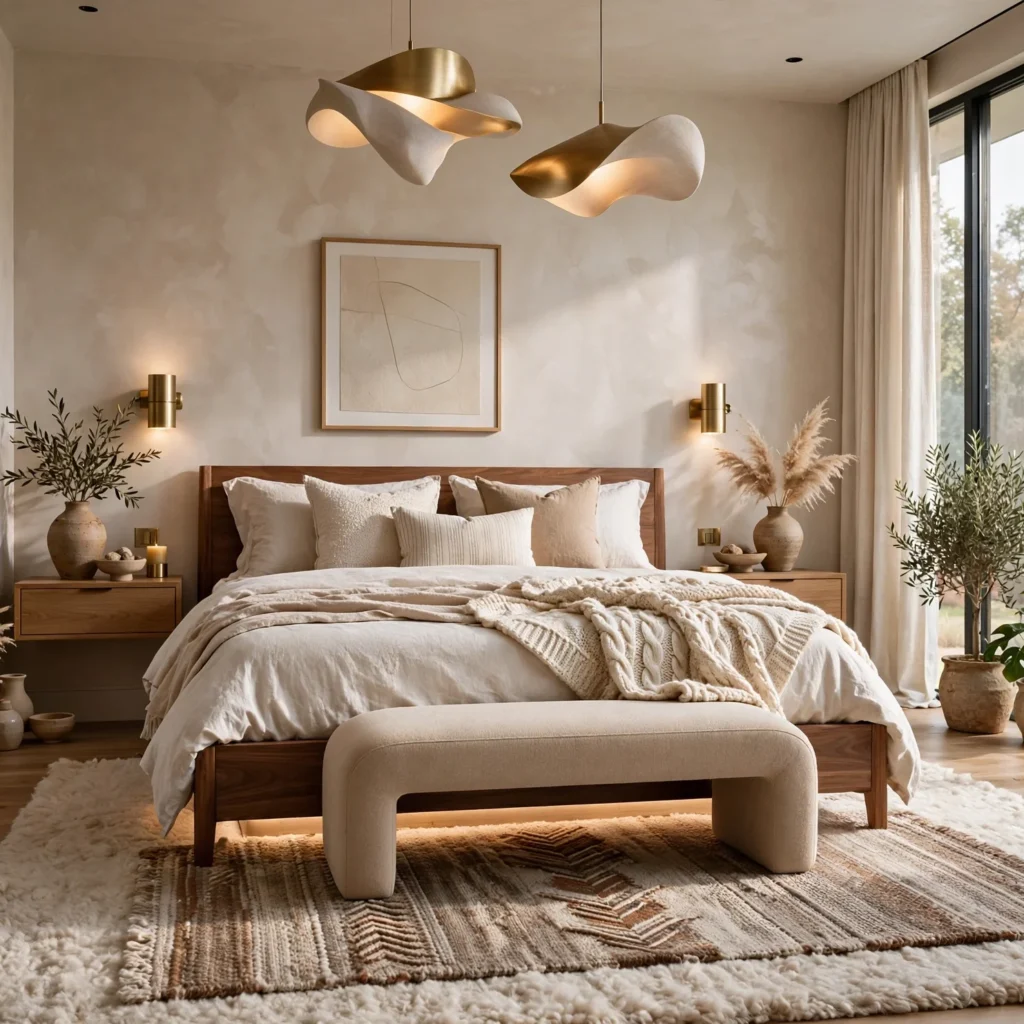
A rug placed either fully under the bed, extending at least 18 to 24 inches beyond each side, or as a runner on either side of the bed, adds warmth underfoot and visual texture to a bedroom with hard flooring. A rug that’s too small, sitting only partially under the bed or floating in front of it, tends to look undersized relative to the furniture arrangement. Wool or a wool blend in a low to medium pile suits a bedroom well, offering softness underfoot without the maintenance challenges of a very high pile in a room with regular foot traffic.
9. Nightstand Task Lighting
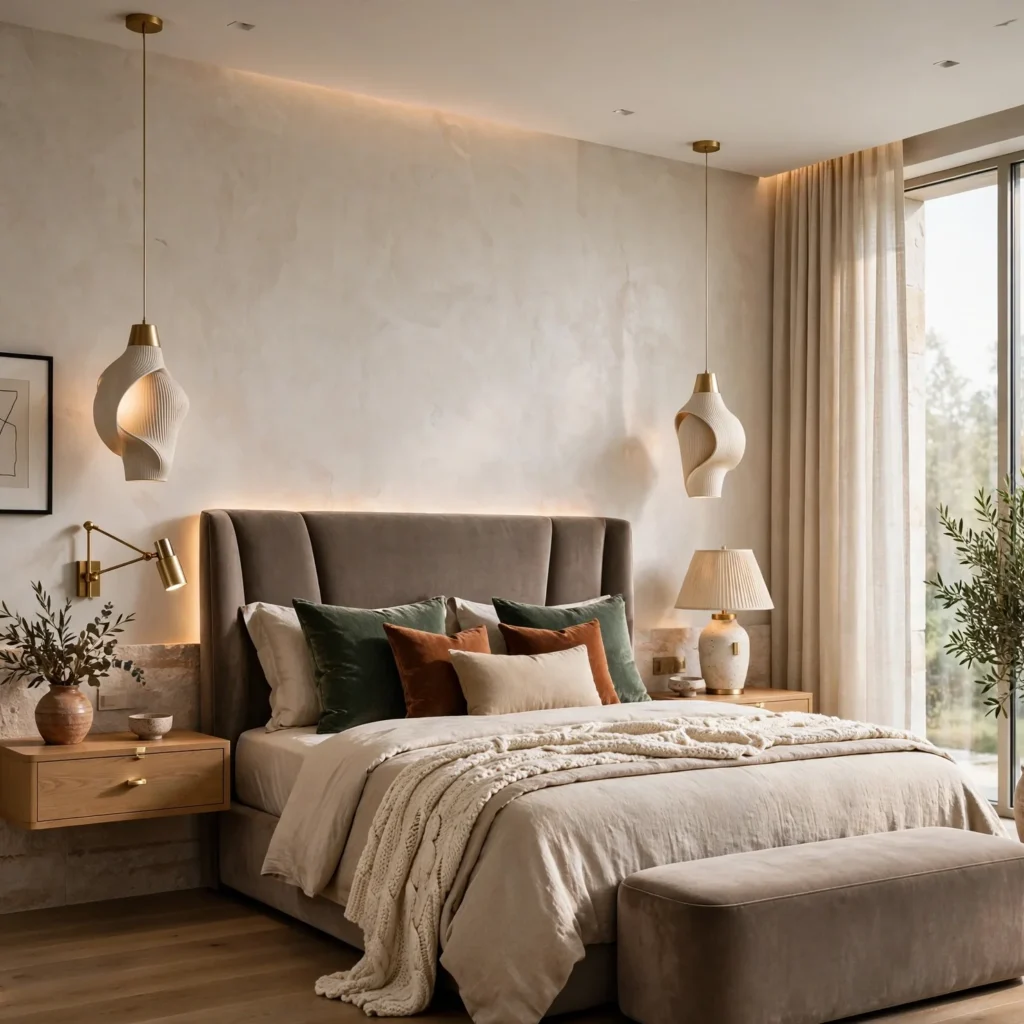
A dedicated reading lamp on each nightstand, rather than relying solely on an overhead fixture, gives the bedroom flexibility for reading in bed without requiring bright, room-wide lighting that can feel disruptive before sleep. Dimmable lamps or ones with adjustable color temperature allow the light to shift from a brighter reading tone to a warmer, softer glow closer to bedtime. This idea works in bedrooms of any size and represents one of the more functional, lower-cost lighting updates available for improving the room’s evening usability.
10. Gallery Wall Above the Headboard
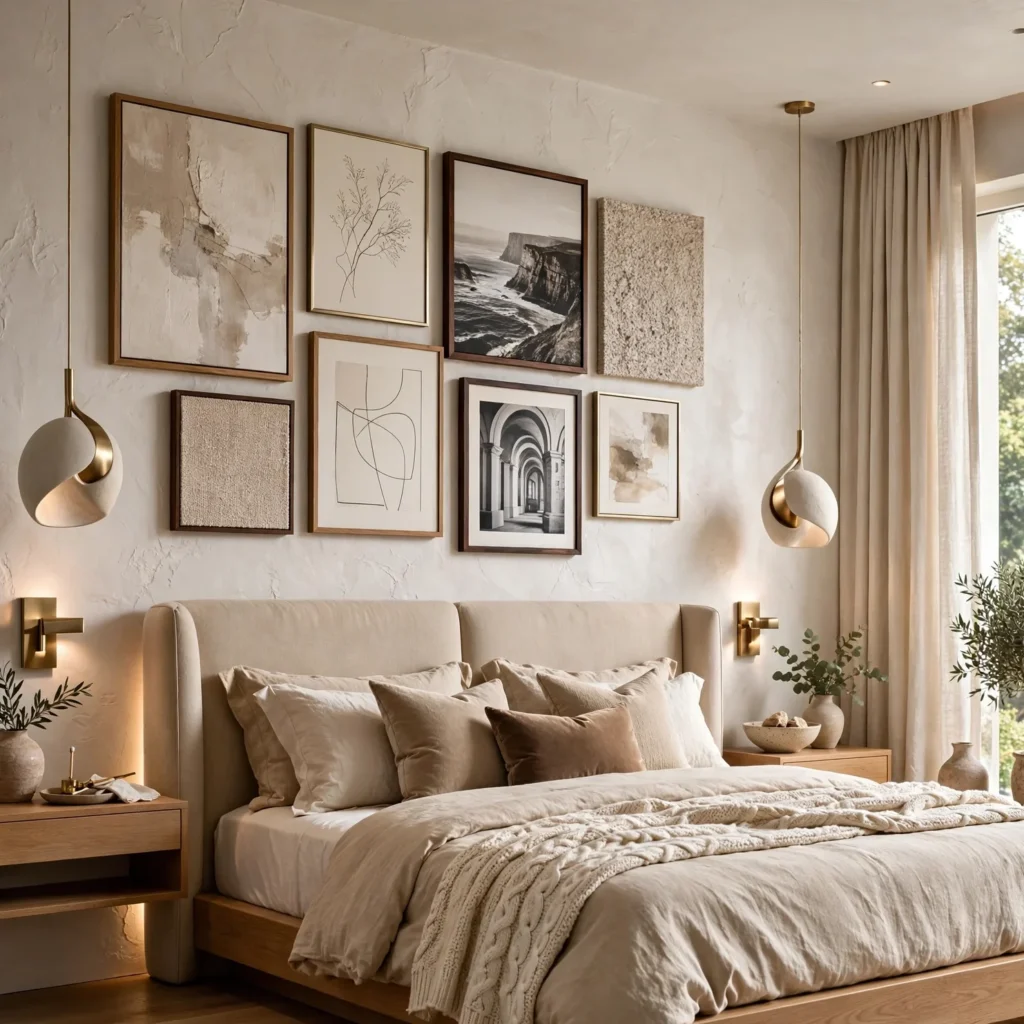
A curated gallery wall, positioned above and slightly wider than the headboard, adds personality and visual interest to the wall behind the bed without requiring a bold paint color or wallpaper commitment. Keeping frame styles loosely consistent, even with varied artwork, helps the gallery wall read as intentional rather than randomly assembled. This idea suits bedrooms of nearly any size, since gallery wall scale can adjust to fit the available wall space above the headboard.
11. Closed Storage for Visual Calm
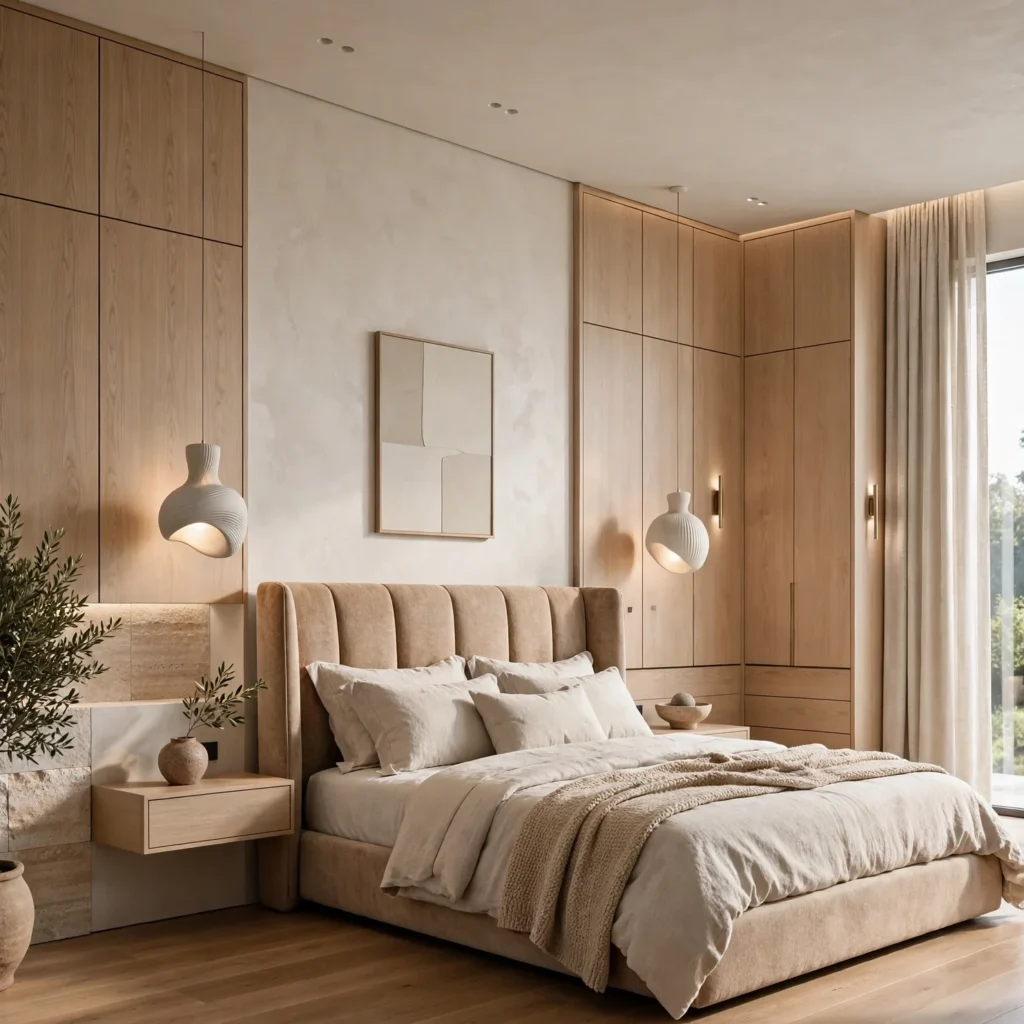
Prioritizing closed storage, such as a dresser with drawers or a closet system with doors, over open shelving or visible clothing racks helps maintain a calmer, less visually busy bedroom atmosphere, which matters more here than in rooms like a kitchen or living room where open storage can add welcome personality. This works particularly well for bedrooms doubling as a quiet retreat space, where visual clutter from clothing or accessories can undermine the restful quality the room is meant to support. This idea suits bedrooms prioritizing calm over maximized display opportunities.
12. Interior Design Bedroom Ideas for Small Spaces
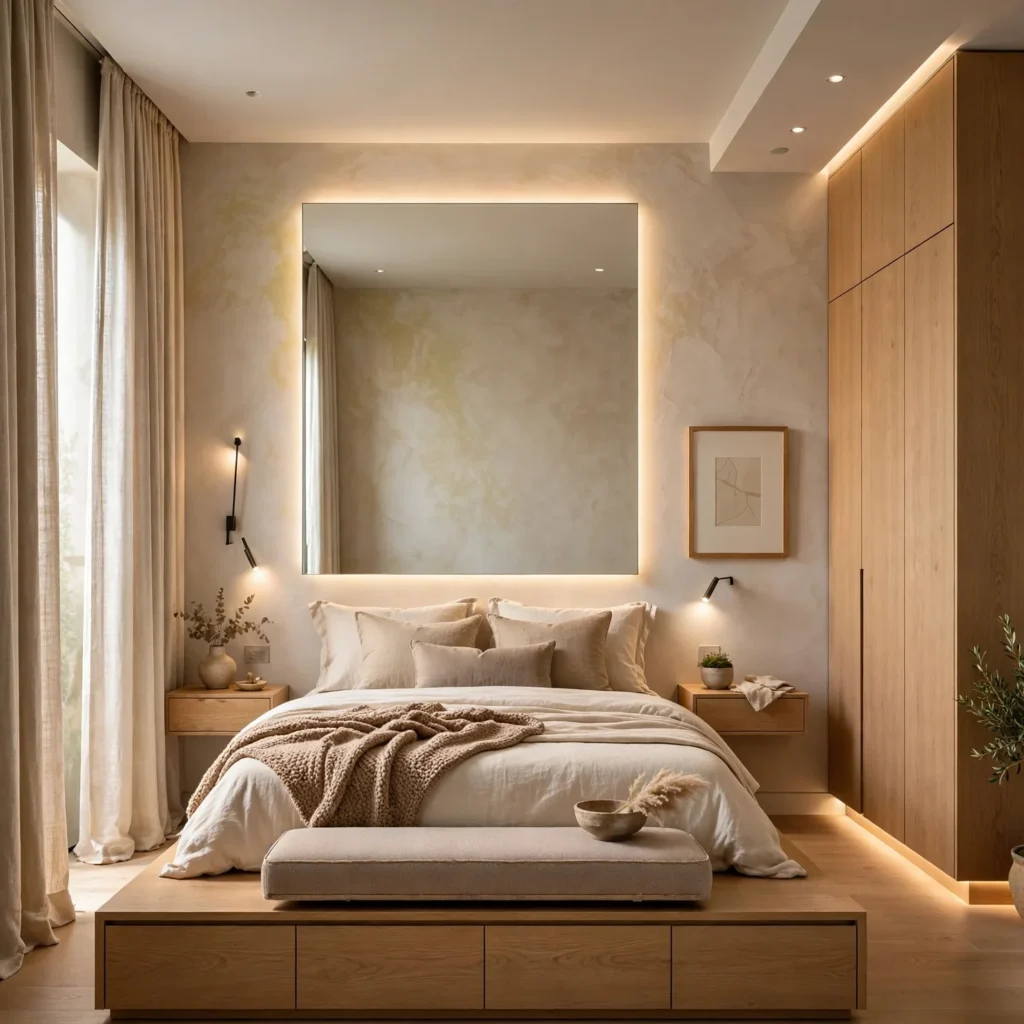
Among interior design bedroom ideas, small bedrooms benefit most from a platform bed without a bulky frame, wall-mounted nightstands or sconces instead of floor-standing furniture, and a light, unified color palette to avoid the room feeling visually chopped up. Vertical storage, like a tall narrow dresser rather than a wide low one, also helps preserve floor space in a compact footprint. This approach keeps a small bedroom feeling calm and open rather than cramped, even with all the same functional furniture a larger bedroom would include.
Shop the Look
For a bedroom built around these ideas, look at a low-profile white oak bed frame from a brand like Article or Room & Board, paired with linen bedding in a muted, warm tone. A wool area rug extending well beyond the bed frame anchors the room, while wall-mounted brass sconces on either side of the bed provide reading light without occupying nightstand surface space. An upholstered bench in a durable performance fabric completes the foot-of-bed styling, and a curated gallery wall above the headboard adds a personal, finished touch.
Common Mistake to Avoid
The most common mistake is prioritizing a bedroom’s visual styling, like a bold accent wall or an elaborate gallery wall, before addressing core comfort factors like mattress quality, lighting for reading, and adequate blackout window treatment, all of which matter more for actual sleep quality than decorative choices. A beautifully styled bedroom that doesn’t support genuinely restful sleep tends to undermine the room’s primary purpose, regardless of how well it photographs. Addressing comfort and function first, then layering in visual details like art and textiles, tends to produce a bedroom that supports both rest and personal style.
FAQs
What colors are best for a restful bedroom?
Muted, warm tones like soft terracotta, warm greige, or dusty sage tend to support a calmer atmosphere than very bright or highly saturated colors, without requiring a stark white that can feel sterile to some people. Cooler blues and greens in a muted, desaturated version can also work well for a calming effect, though warmer tones generally read as more inviting for a space meant to support both rest and everyday comfort.
How do I choose the right size rug for a bedroom?
A rug that extends at least 18 to 24 inches beyond each side of the bed frame, whether placed fully underneath or as runners flanking the bed, tends to look proportionate to the furniture arrangement. A rug that only partially reaches under the bed or sits significantly smaller than the bed frame itself often reads as undersized relative to the room’s main furniture piece.
Is layered lighting necessary in a bedroom?
Layered lighting, combining an overhead ambient fixture with dedicated nightstand task lighting, significantly improves a bedroom’s evening usability by allowing bright light for tasks like getting dressed and a softer, dimmer option for reading or winding down before sleep. Relying on a single overhead fixture alone tends to limit the room’s flexibility across different times of day and different activities within the space.
Should a bedroom have an accent wall?
An accent wall can work well in a bedroom, particularly behind the headboard, adding visual interest without requiring a full-room color or wallpaper commitment. Whether to include one depends on personal preference for boldness versus a more uniformly muted room, and a well-chosen headboard or gallery wall can achieve a similar focal point effect without the commitment of a painted or papered accent wall.
How much storage should a bedroom prioritize?
Prioritizing closed storage, like a dresser with drawers or a closet system with doors, over open shelving tends to support a calmer bedroom atmosphere, since visible clutter from clothing or accessories can undermine the room’s restful quality more than in other rooms of the home. The exact amount of storage needed depends on closet space elsewhere in the home, but a bedroom generally benefits from erring toward closed rather than open storage solutions.
Conclusion
These interior design bedroom ideas range from low-cost updates like layered bedding to bigger investments like a statement headboard, giving you a starting point no matter your bedroom’s size or your design budget. If one of these stood out, save this post to Pinterest for later, or check out our related guide on interior design living room ideas for more room-specific inspiration.