16 Trending Walnut Kitchen Cabinets Ideas for a Warm, Modern Kitchen
Walnut has become one of the most requested wood tones in kitchen design, replacing the painted-white cabinets that dominated for over a decade. This post walks through sixteen specific, real ways to bring walnut kitchen cabinets into a kitchen, covering exact cuts, finishes, hardware pairings, and layout tricks. Whether you’re planning a full remodel or introducing walnut through just the island or open shelving, you’ll come away with concrete direction instead of a vague wood-tone mood board.
Trend & Background
Walnut has overtaken oak and painted finishes as the wood of choice among kitchen designers, driven by a broader shift back toward natural materials after years of flat, painted cabinetry. Unlike lighter woods, walnut’s deep, reddish-brown tone hides everyday wear well and photographs warm under both daylight and evening lighting. This matters now because kitchens are increasingly treated as design-forward, furniture-grade spaces rather than purely functional ones, and walnut offers a way to introduce richness and texture without relying on paint color or trend-driven finishes.
Key Takeaways
- Walnut kitchen cabinets range from light, natural-grain finishes to deep, near-black stains, and the cut of wood used changes the look as much as the stain does.
- Pairing walnut with the right metal hardware and countertop matters more than the wood tone itself for a kitchen that feels cohesive rather than heavy.
- Using walnut on only part of the kitchen, such as the island or open shelving, is an easy way to introduce the wood without darkening the entire room.
- Matte, low-sheen finishes are currently favored over high-gloss lacquer for a more natural, furniture-grade look
1. Rift-Cut Walnut Cabinets
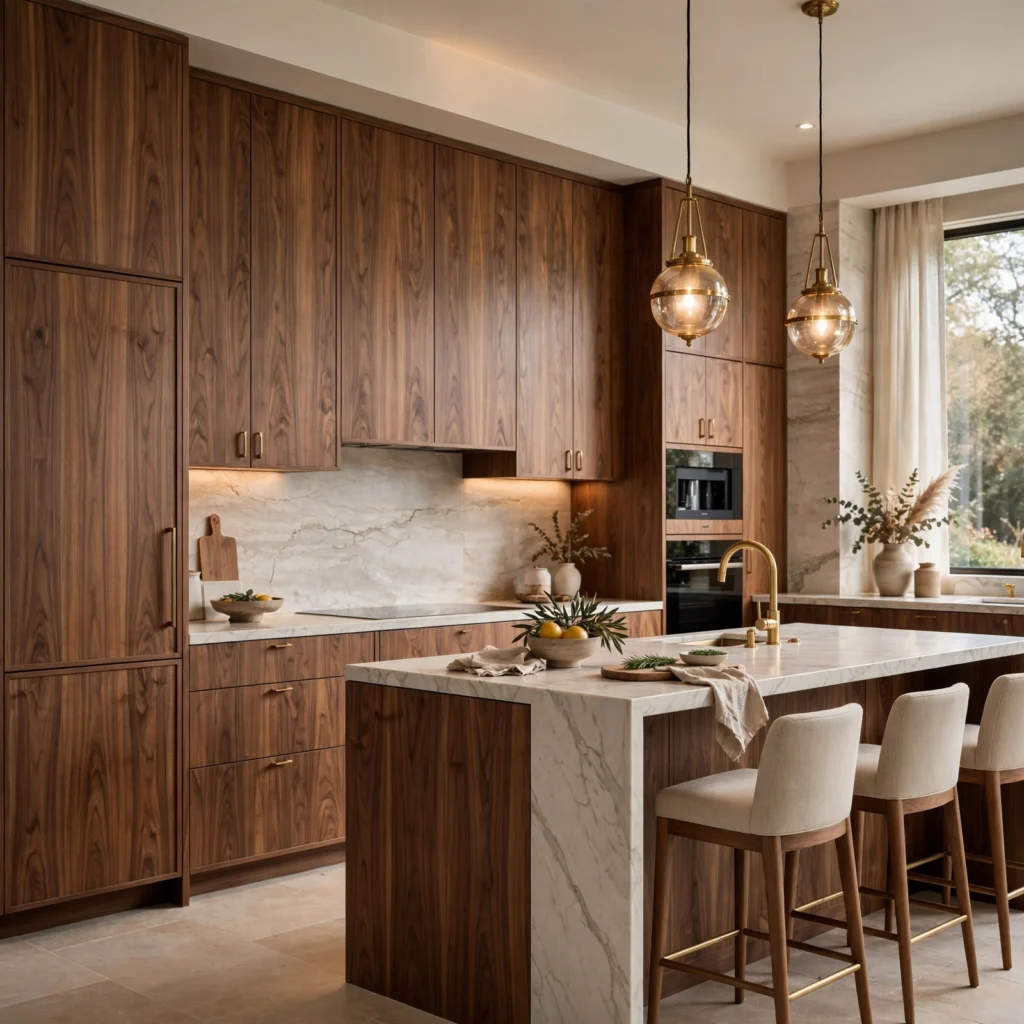
Rift-cut walnut cabinets use a straight, linear grain pattern free of the cathedral swirls found in plain-sawn wood, giving the cabinetry a clean, modern look that suits flat-panel or slab-front doors particularly well. Because the grain runs consistently in one direction, rift-cut panels line up seamlessly across large expanses of cabinetry, which matters most on oversized islands or floor-to-ceiling pantry walls. This cut tends to cost more than plain-sawn walnut but is worth it for a more tailored, less rustic result.
2. Walnut Island With White Perimeter
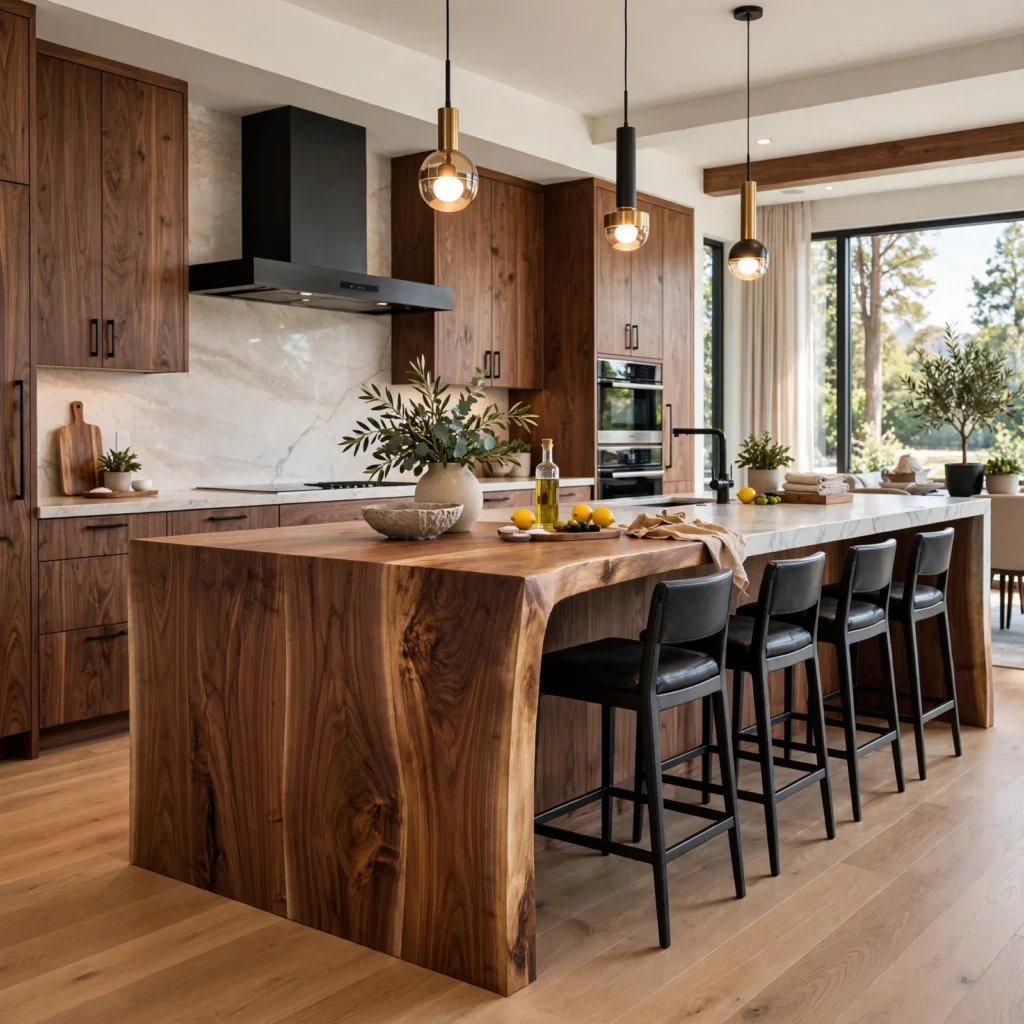
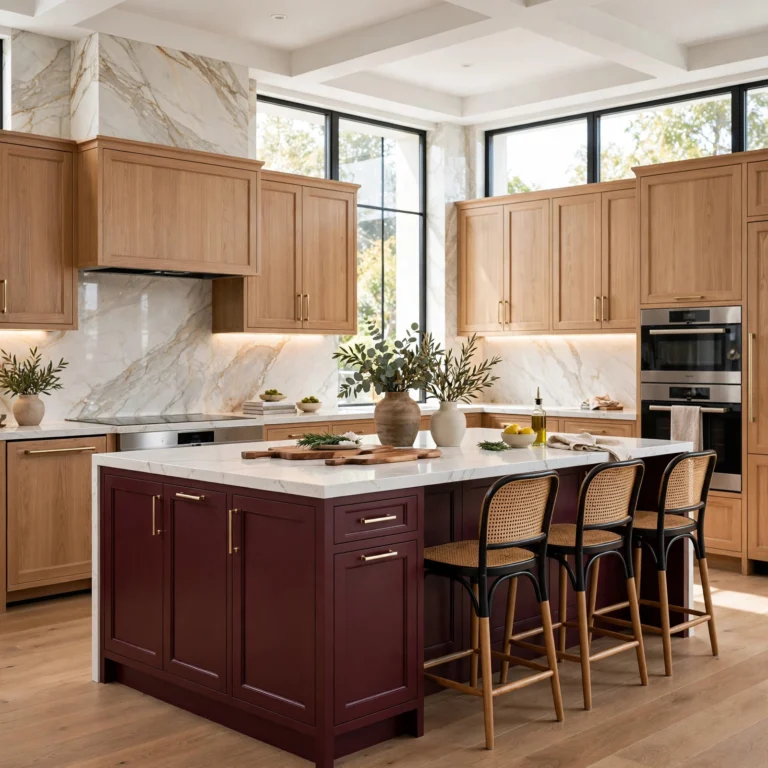
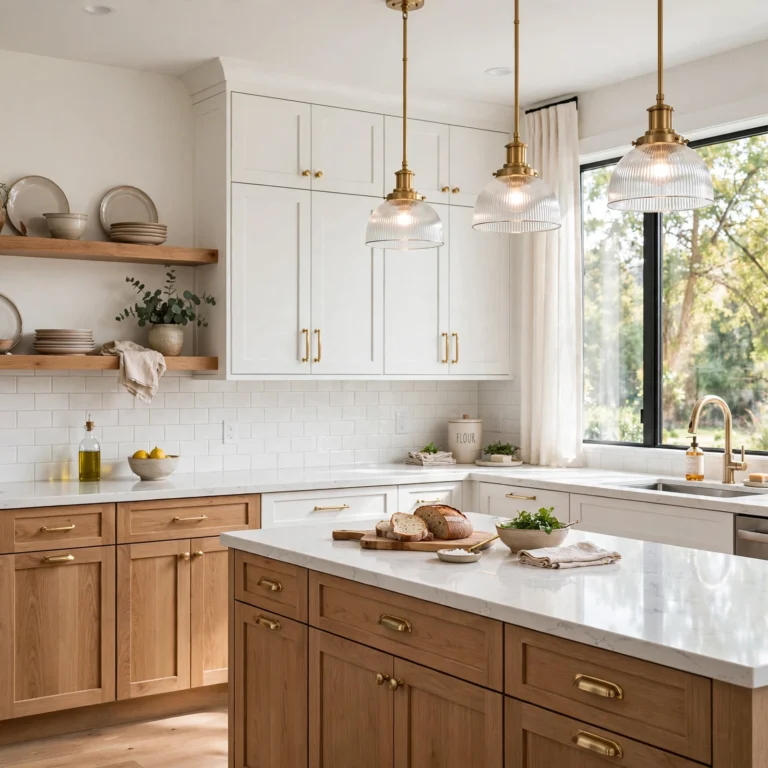
A walnut island set against white or light-painted perimeter cabinets is one of the most popular ways to introduce the wood tone without committing to a full walnut kitchen. This two-tone approach keeps the room feeling bright while giving the island the visual weight to function as the room’s natural focal point. Pairing the walnut island with a white or light stone countertop on the perimeter, and a contrasting butcher block or stone top on the island itself, sharpens the distinction further.
| Kitchen Size | Island Approach | Perimeter Finish |
| Under 150 sq ft | Walnut lower only | White upper cabinets |
| 150–250 sq ft | Full walnut island | White or light oak |
| 250+ sq ft | Walnut island + shelving | White with walnut accents |
3. Slab-Front Walnut Doors
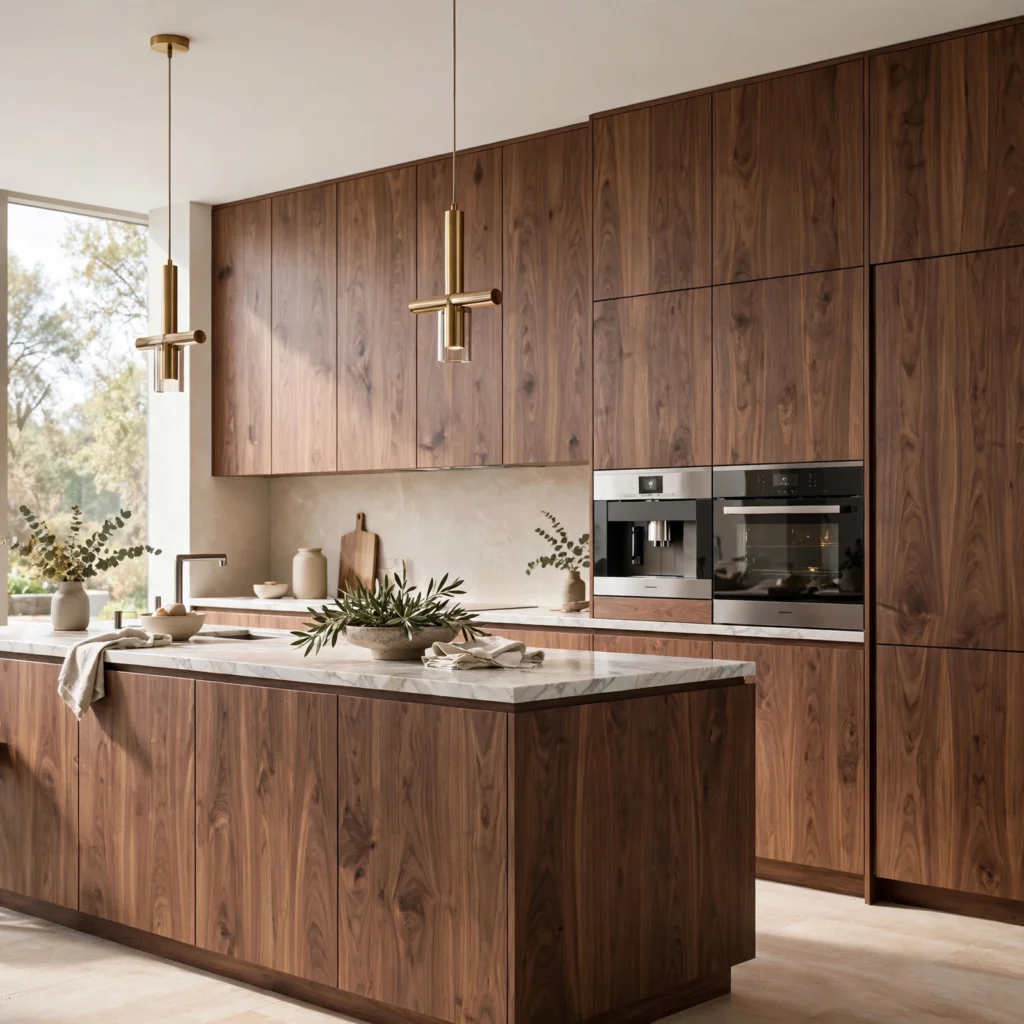
Slab-front walnut doors, flat and free of any panel detailing, let the natural wood grain function as the design element rather than door styling, which suits modern and minimalist kitchens especially well. This door style also makes the grain pattern more visible across the full height of the cabinet, so choosing rift-cut or quarter-sawn walnut here has a bigger visual payoff than it would on a shaker-style door with more surface breaks.
In order to see more options for two tone kitchen cabinets
4. Walnut and Black Kitchen
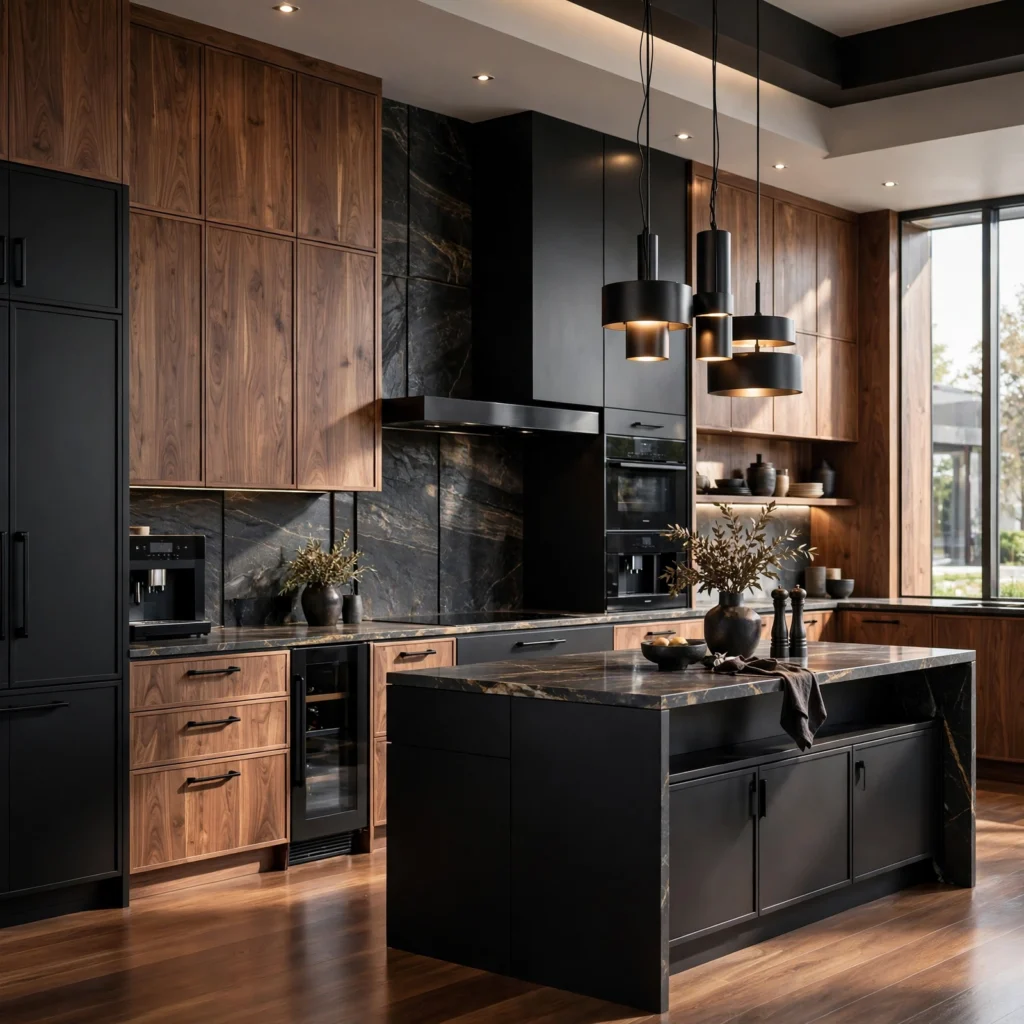
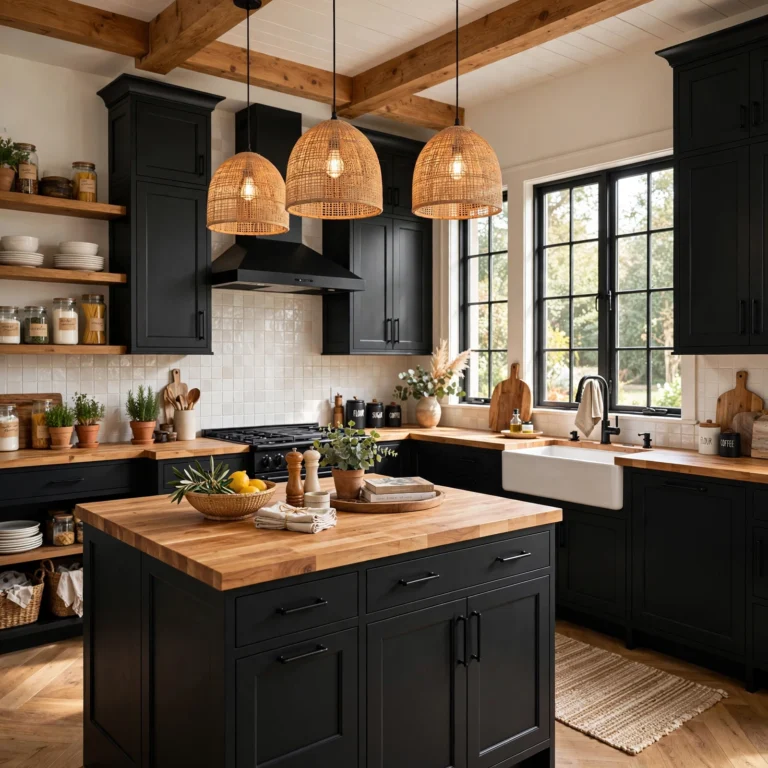
Pairing walnut cabinetry with matte black fixtures, faucets, and window frames creates a higher-contrast, more dramatic look than walnut paired with lighter finishes. The black elements ground the warmth of the wood and keep the kitchen from feeling too monochromatic when walnut is used across most of the cabinetry. This combination pairs particularly well with black or dark bronze hardware, which reads as a natural extension of the black fixtures rather than a separate finish.
5. Walnut Open Shelving
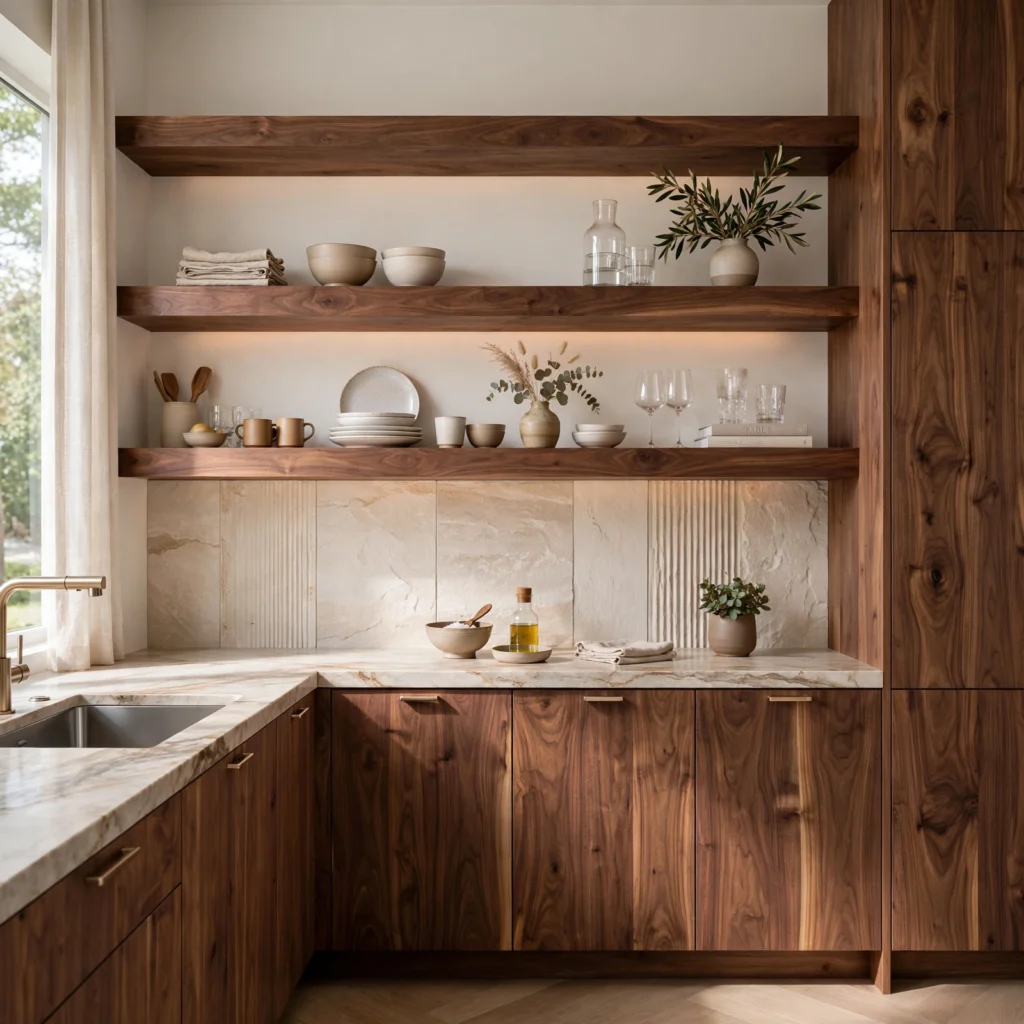
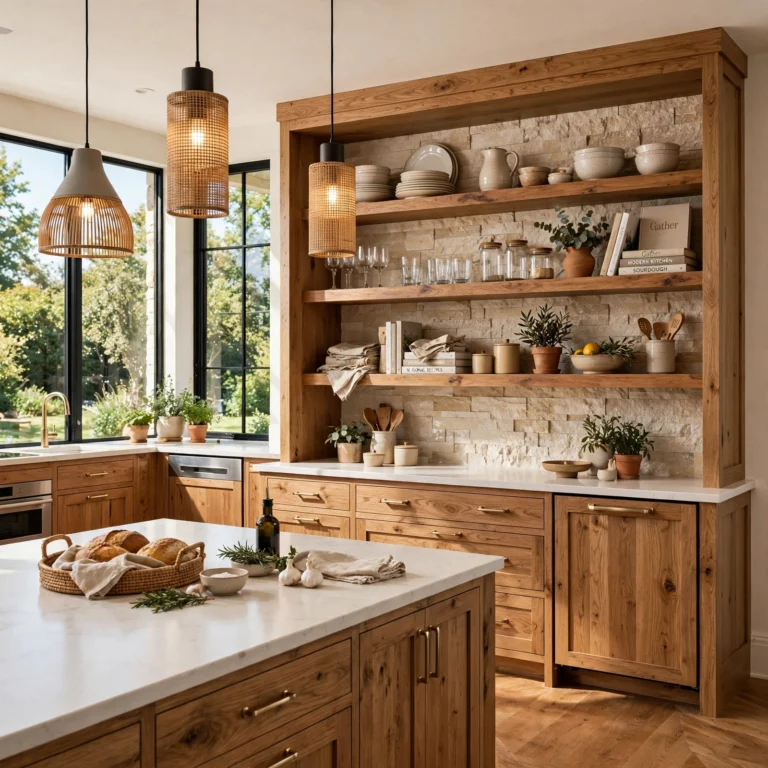
Walnut open shelving, mounted in place of upper cabinets, breaks up a wall of closed doors and gives the kitchen a lighter, less boxy feel while still introducing the wood tone. This works especially well flanking a range hood, where two shelves balance the visual weight of the hood without requiring full walnut upper cabinets. Keeping the shelving styled with a limited number of ceramics or glassware, rather than fully loaded, keeps the look intentional rather than cluttered.
6. Book-Matched Walnut Panels
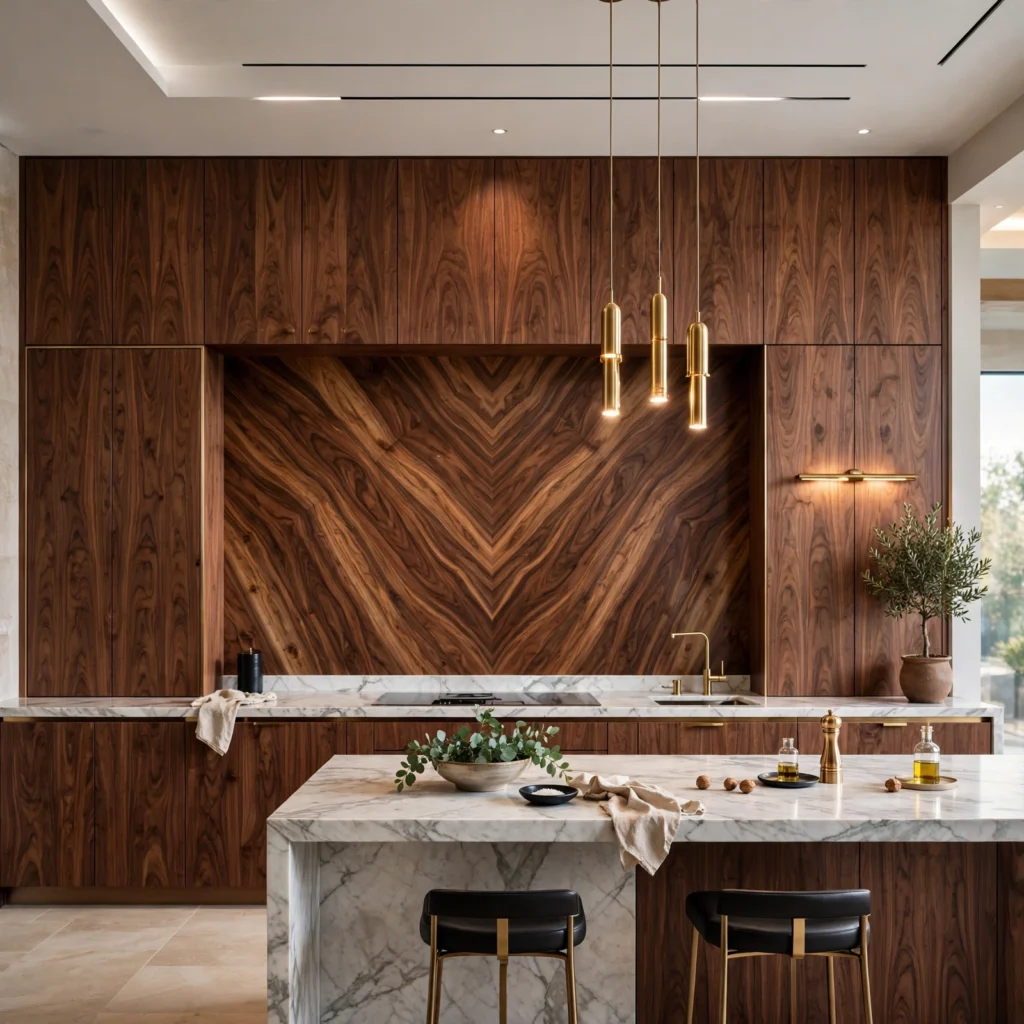
Book-matched walnut panels, where two adjacent boards are cut and mirrored so their grain patterns reflect each other symmetrically, create a striking, almost marbled effect that’s typically reserved for a single feature area like a pantry wall or a large island end panel. This technique costs more than standard paneling but delivers a furniture-grade result that reads as custom millwork rather than stock cabinetry, making it worth the added expense on a single focal wall.
7. Walnut Cabinets With Brass Hardware
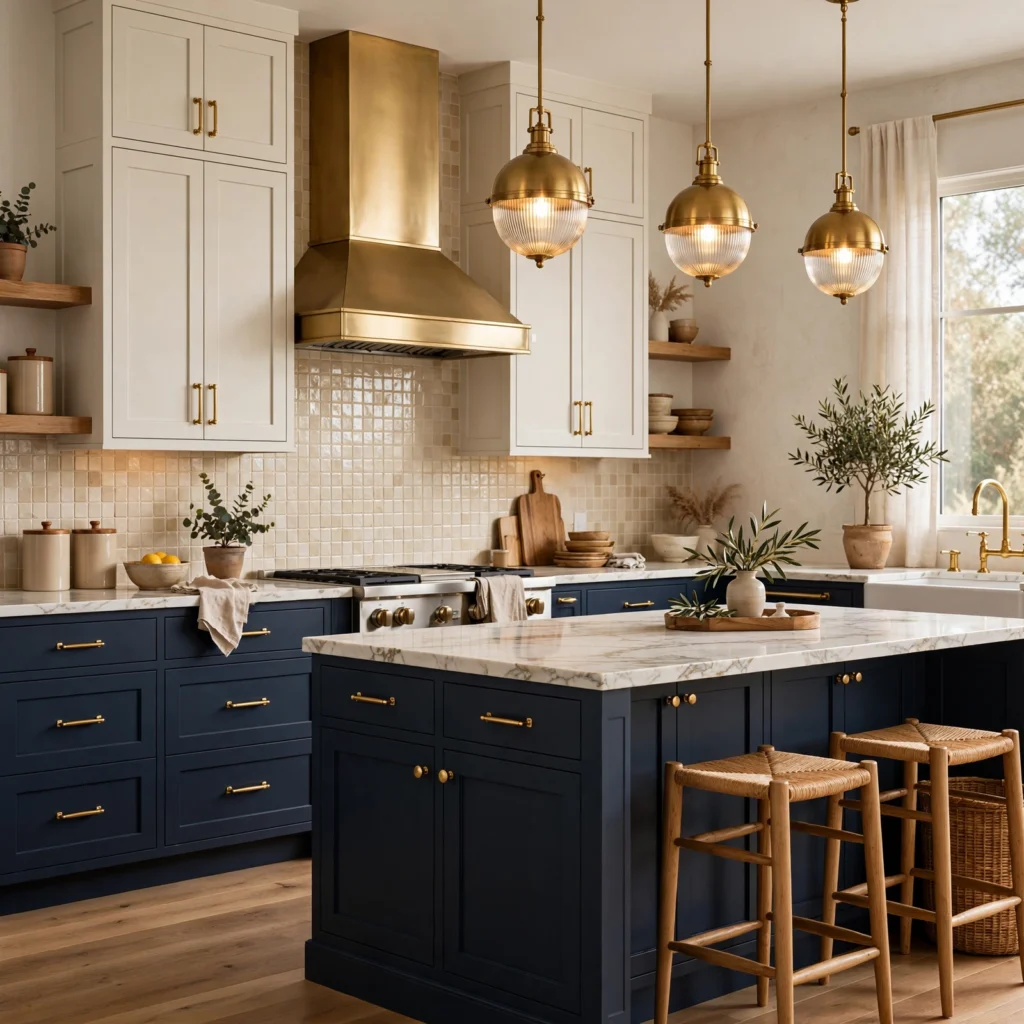
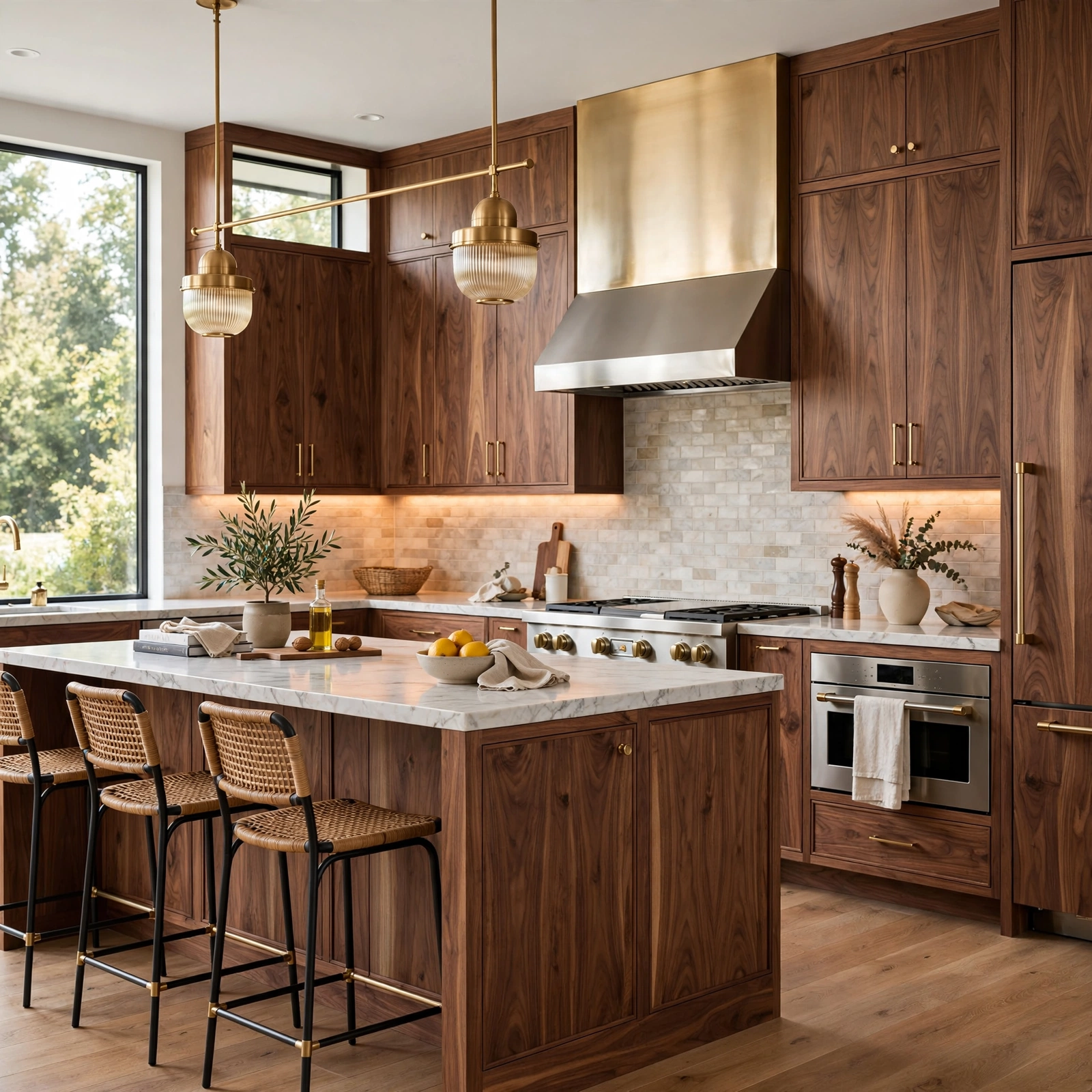
Unlacquered or brushed brass hardware is the most common pairing for walnut cabinetry, since the warm gold tone complements the reddish-brown wood without introducing a cooler, competing metal finish. Brass knobs and bin pulls in particular develop a soft patina over time that many designers prefer over the uniform shine of polished brass. This pairing suits both traditional shaker-style walnut cabinets and more modern slab-front versions equally well.
| Hardware Finish | Best With | Style Fit |
| Unlacquered brass | Reddish walnut tones | Traditional, transitional |
| Matte black | Dark, near-black walnut | Modern |
| Brushed nickel | Lighter walnut stains | Contemporary |
8. Walnut Base, White Marble Uppers
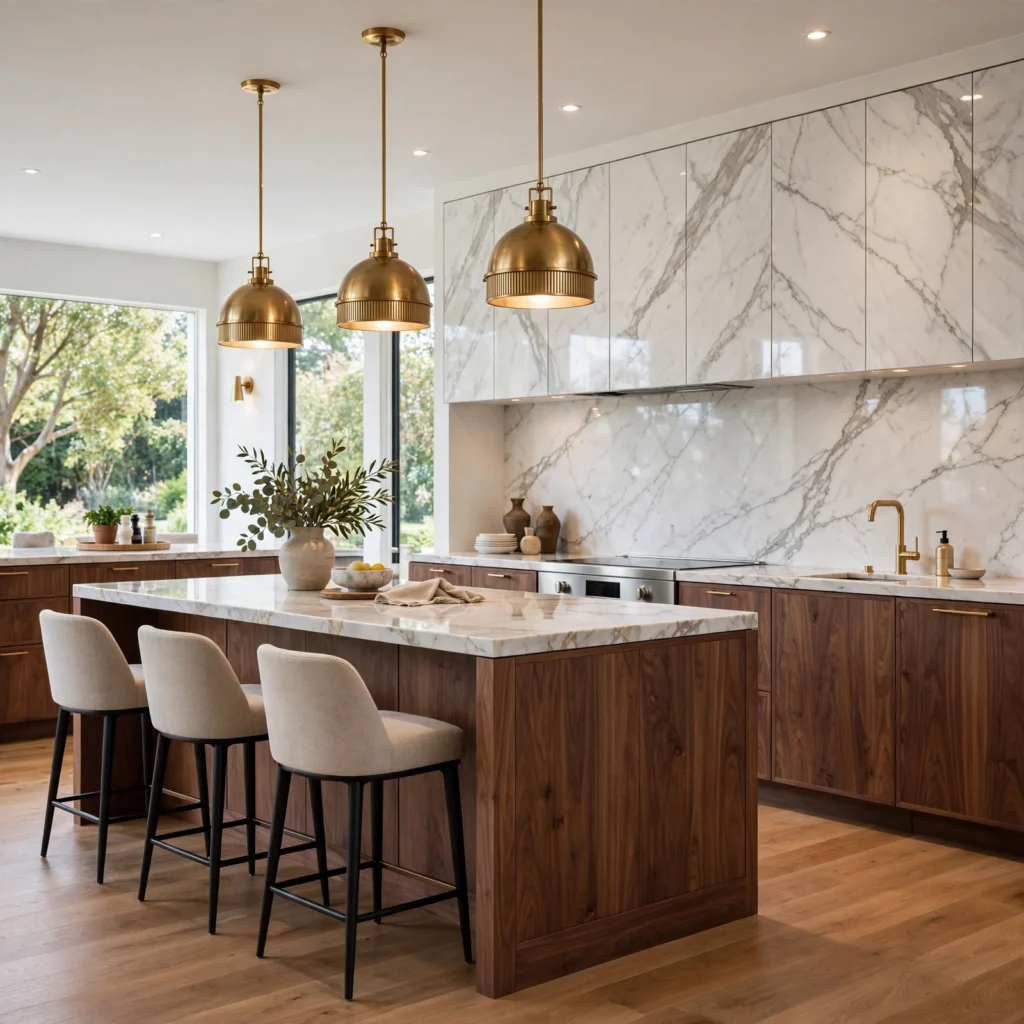
A less common but increasingly popular layout reverses the typical two-tone split, using walnut for the lower cabinets and white or light-veined marble open shelving in place of upper cabinetry. The stone shelving keeps the top half of the kitchen feeling airy and reflective, while the walnut base grounds the room and hides daily wear near the dishwasher and sink. This combination suits kitchens with strong natural light, where the marble’s reflectivity gets the most benefit.
9. Walnut Pantry Wall
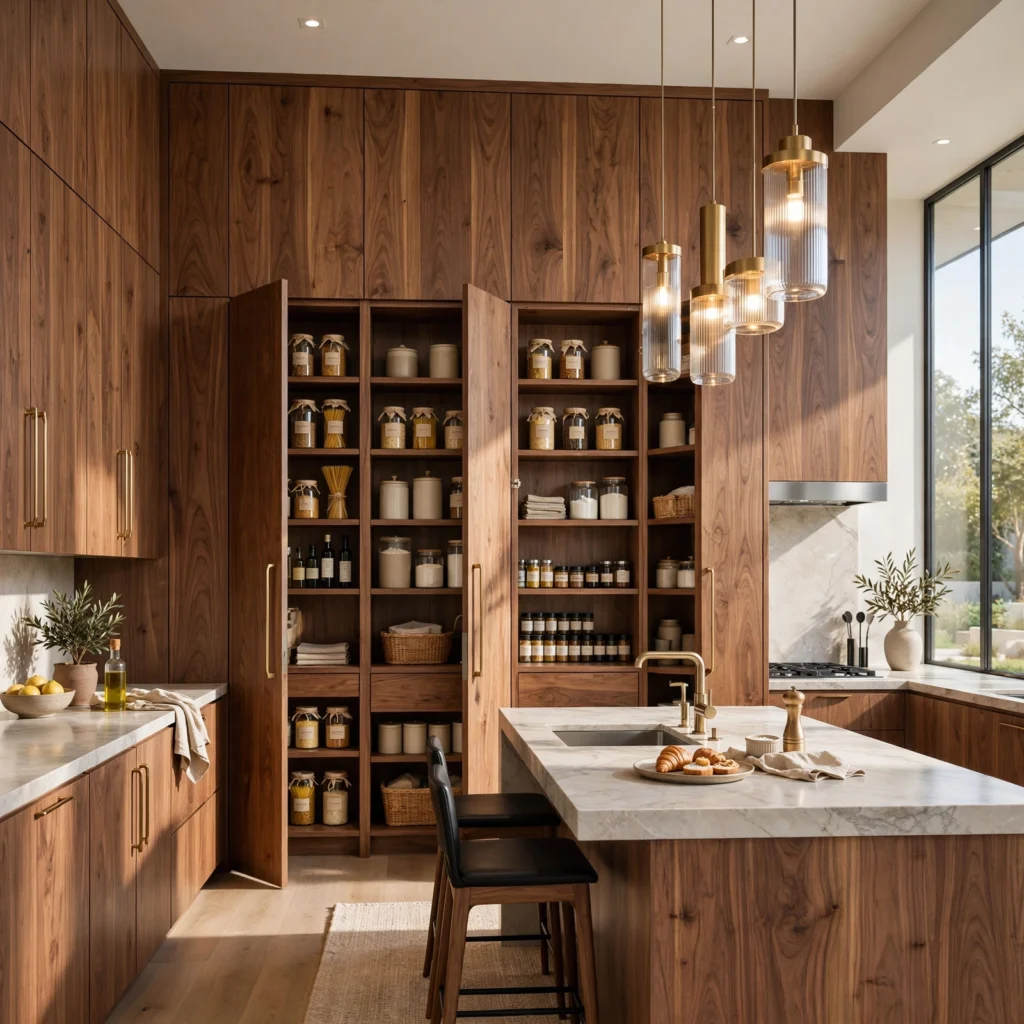
A full-height walnut pantry wall, run floor to ceiling rather than stopping at standard upper-cabinet height, uses the wood grain to draw the eye upward and gives even a standard 8-foot ceiling a taller, more considered feel. Integrated, finger-pull hardware rather than surface-mounted knobs keeps the wall reading as a single uninterrupted plane of wood rather than a bank of individual cabinet doors, which is part of what makes this treatment feel custom.
10. Quarter-Sawn Walnut Cabinetry
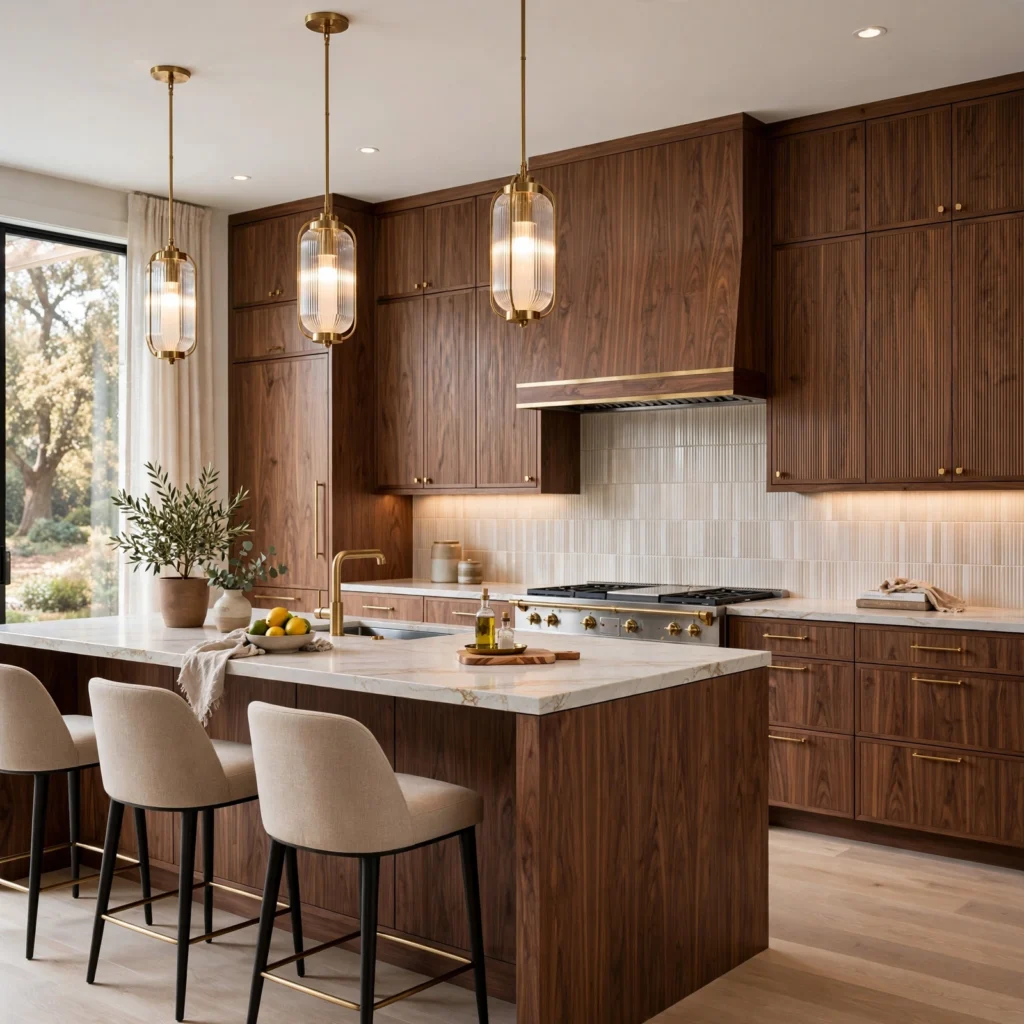
Quarter-sawn walnut features a distinctive fleck and ray pattern across the grain that’s different from both plain-sawn and rift-cut walnut, giving the cabinetry a more textured, almost tweed-like visual quality up close. This cut is less commonly used than rift-cut but suits traditional or Arts and Crafts-influenced kitchens particularly well, since the fleck pattern echoes detailing often found in that design style’s furniture and trim work.
11. Walnut Cabinets With Terracotta Tile
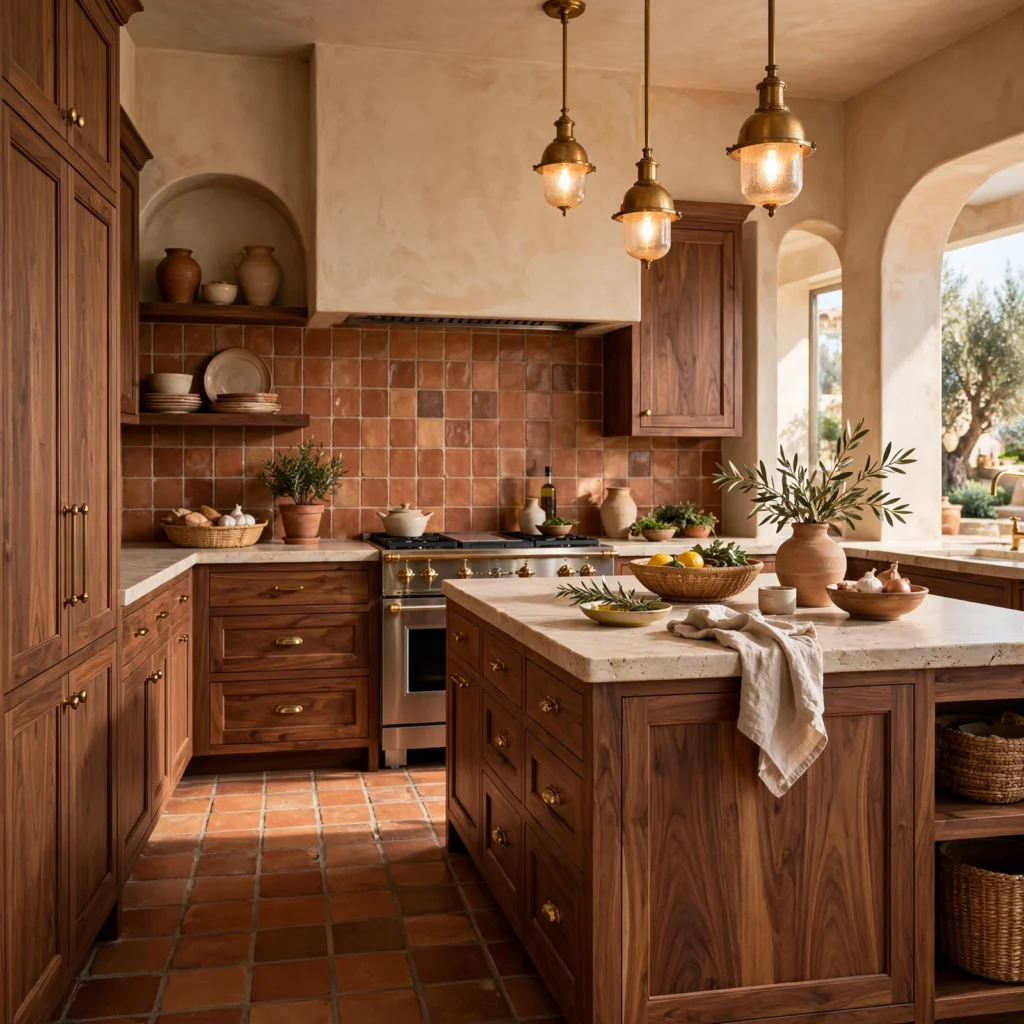
Walnut cabinetry paired with terracotta or clay-toned floor tile leans into a warm, earthy palette where the reddish-brown wood and the warm clay tones echo rather than compete with each other. This combination works particularly well in kitchens with Mediterranean or Spanish-influenced architecture, and it pairs naturally with brass hardware and cream-colored walls that keep the overall palette from feeling too heavy or dark.
12. Walnut Waterfall Island Edge
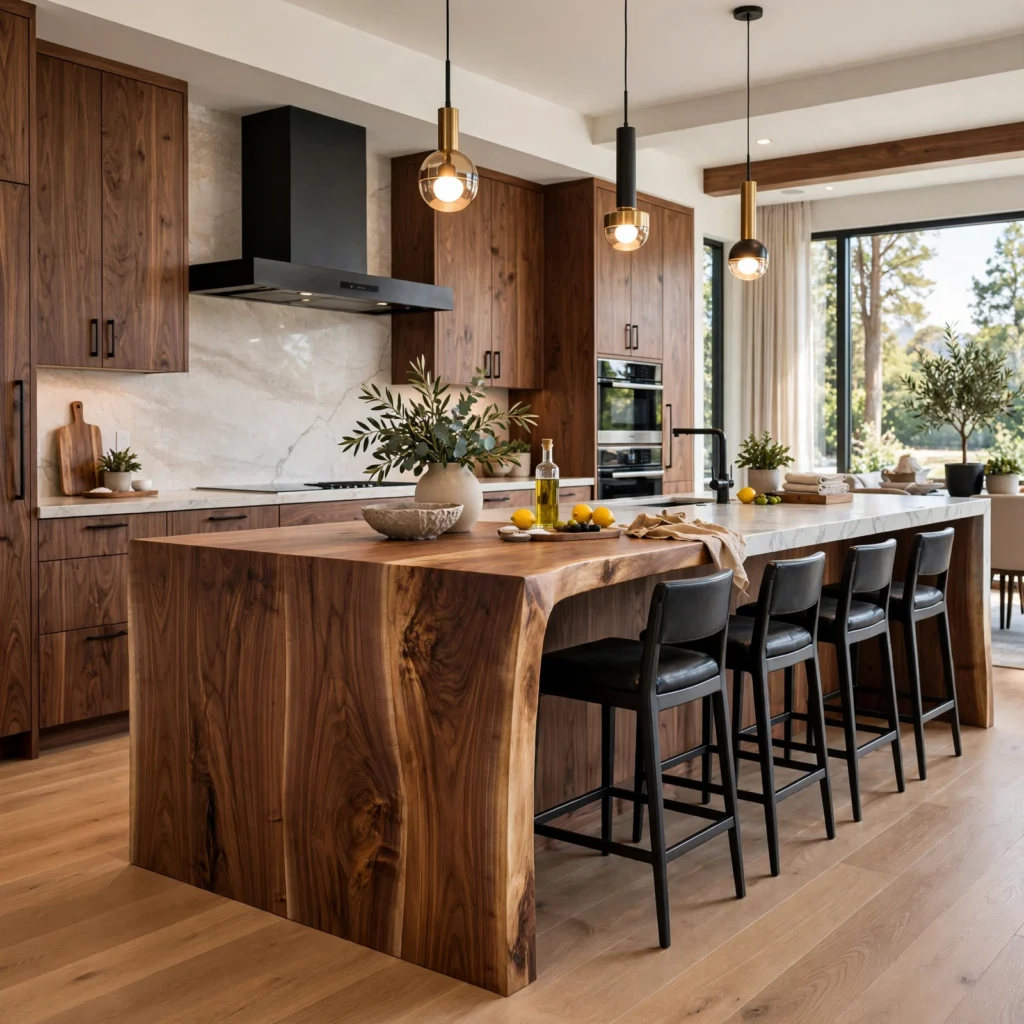
A waterfall edge, where the walnut countertop or panel material wraps continuously down the side of the island rather than stopping at a standard countertop overhang, creates a single unbroken plane of wood grain that reads as high-end, custom furniture rather than standard cabinetry. This detail works particularly well with book-matched or rift-cut walnut, since the continuous grain pattern is most visually striking when it isn’t interrupted by a hard edge or seam.
13. Walnut and Sage Green Kitchen
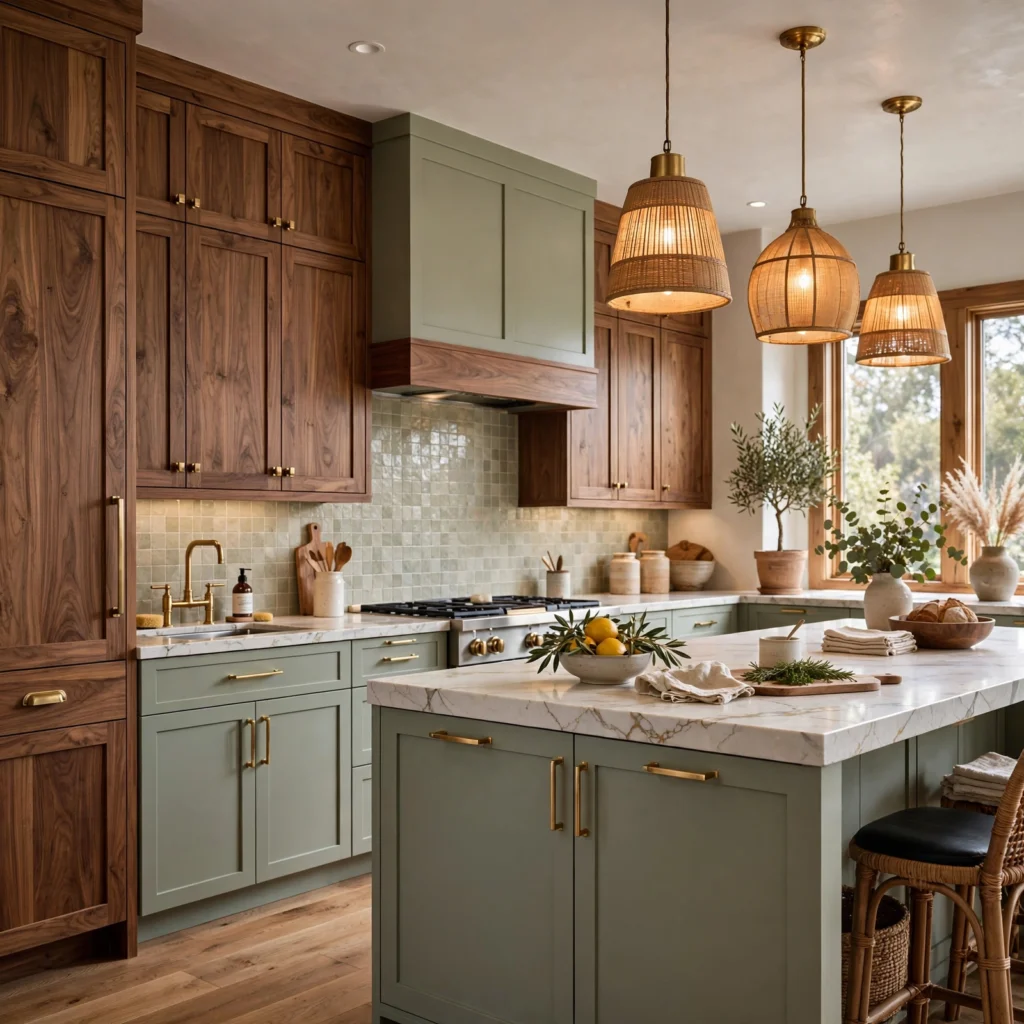
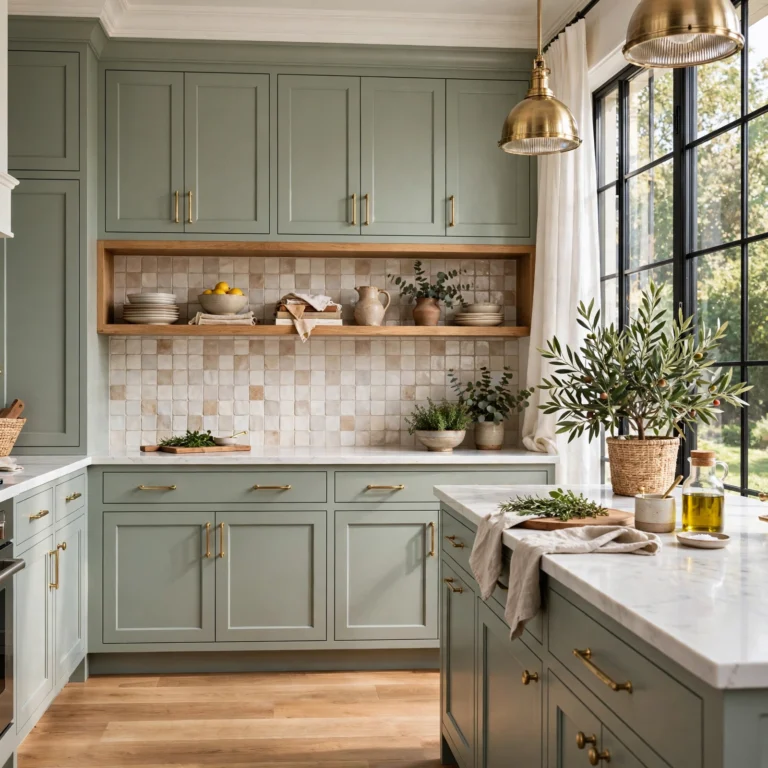
Combining walnut cabinetry with sage green accents, whether on an island, a pantry door, or lower cabinets, brings a muted, earthy pairing that feels calmer than higher-contrast combinations like walnut and black. The grayed-down green tone doesn’t compete with the wood’s warmth the way a brighter green might, which keeps the overall palette feeling cohesive. This combination is particularly popular in farmhouse and transitional kitchens with natural stone countertops.
14. Floating Walnut Vanity-Style Cabinets
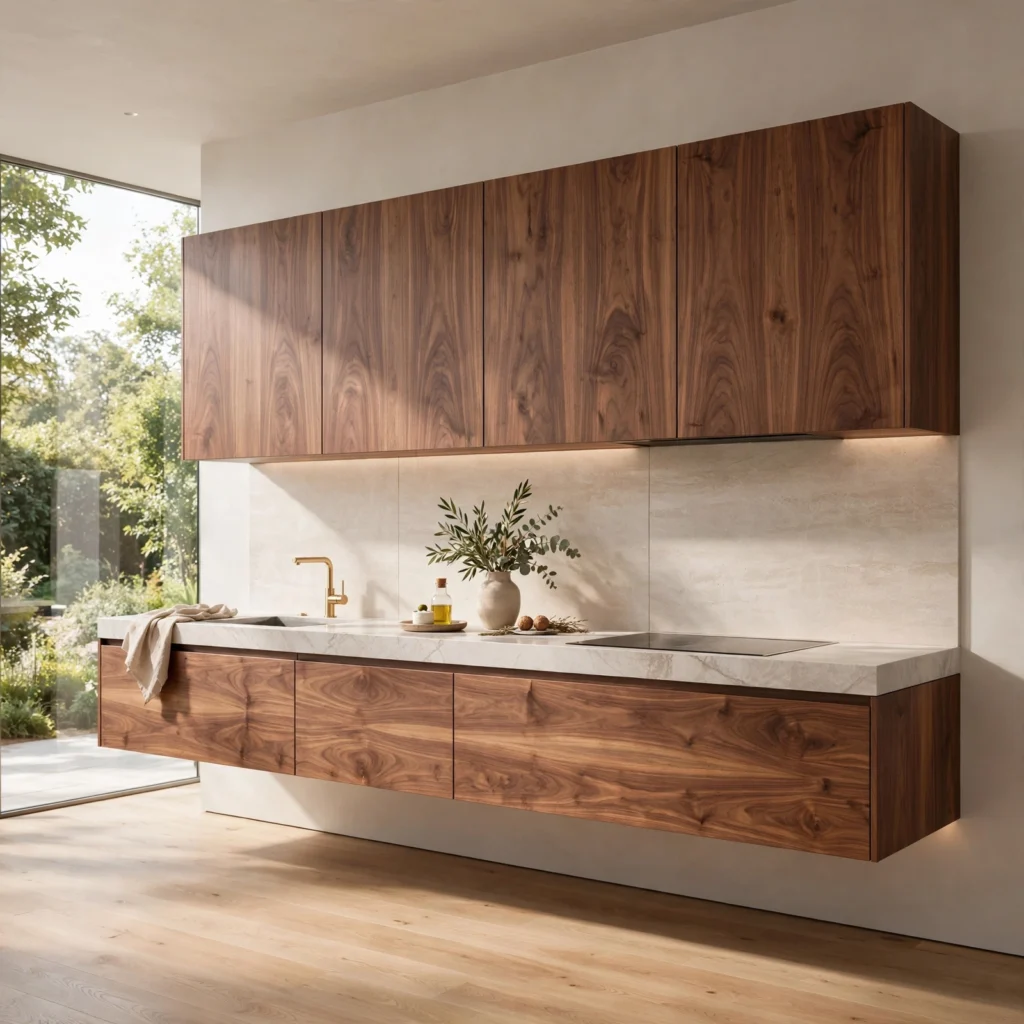
Floating walnut cabinets, mounted without visible legs or a toe-kick base so they appear to hover slightly above the floor, give a kitchen a lighter, more contemporary feel despite the visual weight of the wood itself. This treatment is most common on lower cabinets along a single wall rather than a full run, and it works particularly well in kitchens with statement flooring, such as patterned tile, since the floating cabinets leave more of the floor visible.
15. Walnut Cabinets With Fluted Detailing
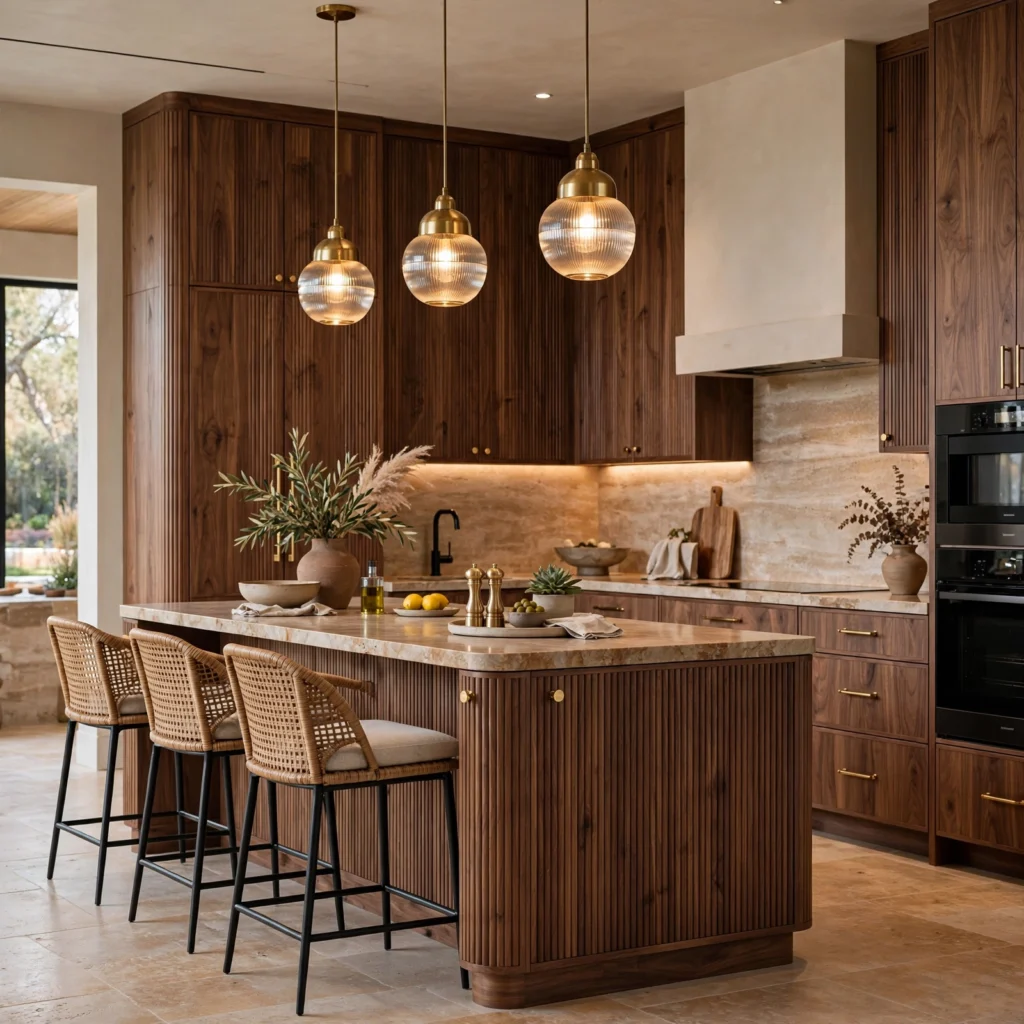
Fluted walnut cabinet fronts, cut with vertical grooves across the door or drawer face, add texture and a subtle play of light and shadow that a flat slab door doesn’t offer on its own. This detailing is often reserved for a single feature element, such as an island end panel or a bar cabinet, rather than applied across every door in the kitchen, since the technique is more costly and visually busy at full scale.
16. Two-Toned Walnut and Charcoal Cabinets
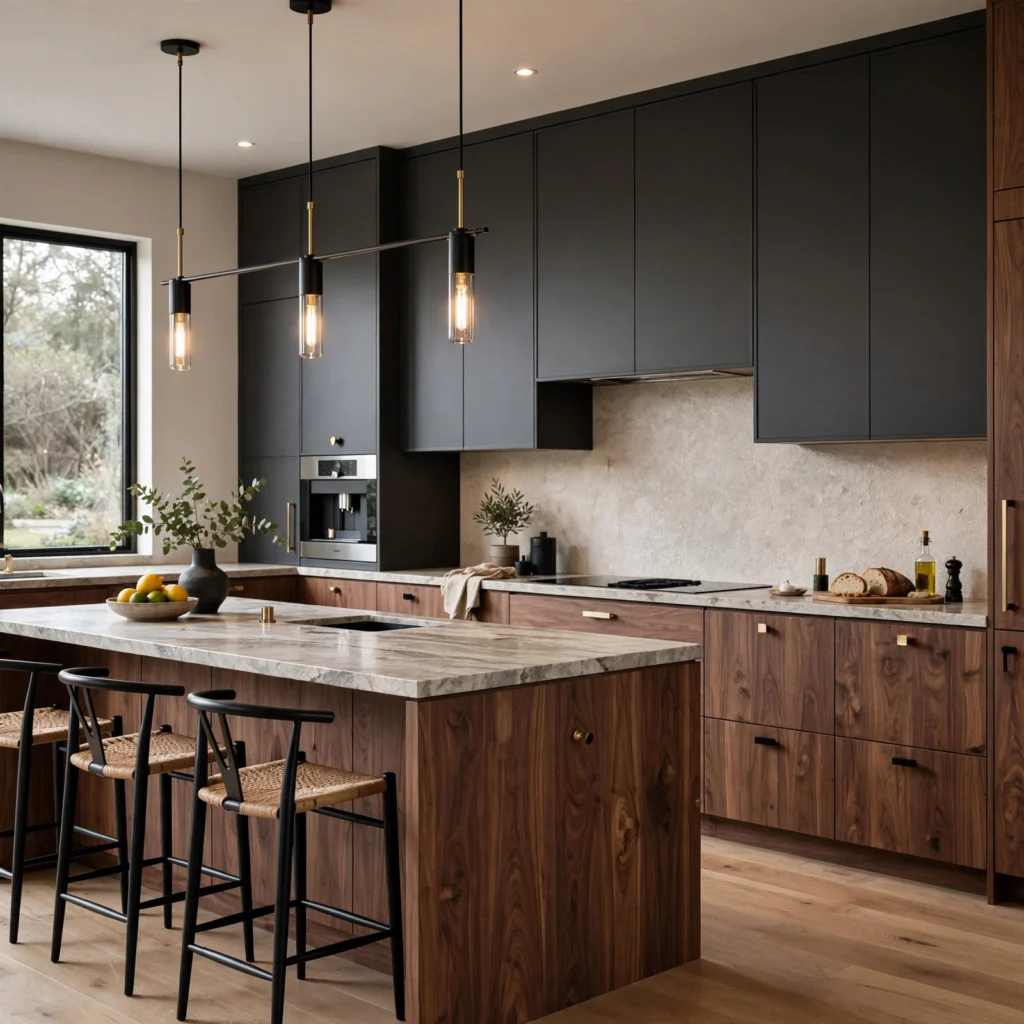
Pairing walnut cabinetry with charcoal gray lower cabinets or an island offers a softer alternative to full walnut-and-black contrast, since the charcoal reads as slightly less severe than true black while still grounding the warmth of the wood. This combination suits kitchens that want a modern, layered look without the starkness of pure black accents, and it pairs well with either brass or matte black hardware depending on the desired level of contrast.
Shop the Look
Start with a walnut-veneer or solid walnut base cabinet run in a rift-cut or plain-sawn grain, a set of unlacquered brass bin pulls and knobs, a white Calacatta-style quartz countertop for contrast, a set of walnut floating shelves for open storage, and a matte black or brushed gold kitchen faucet. These five elements cover cabinetry, hardware, surfaces, and fixtures without requiring a full kitchen renovation.
Common Mistake to Avoid
The most common mistake is mixing two noticeably different wood tones, such as a reddish walnut with a yellow-toned oak floor, without a clear transition point, which makes the kitchen look unplanned rather than intentionally layered. Bringing home a physical wood sample and viewing it directly against existing flooring before committing to cabinetry is worth the extra step. Another frequent error is choosing a high-gloss lacquer finish on walnut, which can look plastic-like and obscure the natural grain that makes the wood worth using in the first place.
People Also Ask
Do walnut kitchen cabinets go out of style?
Walnut has stayed in favor for several years now because it functions similarly to a neutral, pairing easily with a wide range of countertop colors, hardware finishes, and tile choices as trends shift around it. Unlike painted cabinet colors, which can look dated once a specific shade falls out of favor, natural wood grain doesn’t carry the same trend-sensitivity. Choosing a classic cut like rift-sawn or plain-sawn walnut, rather than a heavily distressed or rustic finish, helps the look age well long-term.
What countertop goes best with walnut cabinets?
White or light gray marble and quartz, particularly with visible veining, are the most popular pairings because the cool, neutral stone balances the warmth and saturation of walnut cabinetry. Butcher block in a lighter wood tone also works well for a more layered, natural look, though pairing two different wood tones requires more care to avoid clashing. Darker countertops like black granite tend to work best only on kitchens with lighter walnut stains, since two dark surfaces together can feel heavy.
What hardware finish works best with walnut cabinets?
Unlacquered or brushed brass is the most common pairing, since its warm gold tone complements the reddish-brown wood without introducing a cooler, competing finish. Matte black is the second most popular option, offering more contrast, particularly on darker or near-black walnut stains. Polished chrome and nickel are used less often with walnut, since their cooler, brighter finish can make the wood tone feel colder or more mismatched than intended.
Is walnut a good choice for kitchen cabinets?
Walnut is a durable hardwood that holds up well to daily kitchen use, resisting dents and scratches better than softer woods like pine, while its naturally dark, reddish-brown tone hides everyday wear and water spots better than lighter finishes. It’s a heavier investment than painted MDF cabinetry, but the natural grain and durability tend to make it a longer-term choice that doesn’t require repainting or refinishing as often as painted alternatives.
Should walnut cabinets be used throughout the whole kitchen or just the island?
Using walnut only on the island or a single feature wall is a lower-cost, lower-commitment way to introduce the wood tone, and it also keeps the kitchen from feeling visually heavy in smaller spaces with less natural light. A full walnut kitchen tends to work best in larger rooms with ample windows, where the wood’s warmth doesn’t make the space feel closed in. The right approach ultimately depends on the room’s size and how much natural light it receives.
Conclusion
These sixteen approaches to walnut kitchen cabinets show how much range the wood offers, from a single floating shelf to a full floor-to-ceiling pantry wall with book-matched paneling. Start small if you’re unsure, a walnut island or a set of open shelves is a low-risk way to test the wood tone before committing to a full cabinet run. Save this guide to Pinterest for your next kitchen update, and check out our related post on the best cabinet hardware finishes for 2026.
Author Expertise Note
Written by a design writer who has covered kitchen and cabinetry trends for home publications for several years, working closely with cabinetmakers and kitchen designers to track which wood tones and finishes actually hold up over time.