Craft Room Decor 13 Ideas to Create an Organized and Inspiring Workspace
A craft room needs to look inspiring while still functioning as genuine workspace, which makes it a different design challenge than a purely decorative room. This guide walks through thirteen craft room decor ideas covering storage, work surfaces, lighting, and display strategies that keep supplies organized without sacrificing style. By the end, you’ll have specific materials, sizing guidance, and layout suggestions to build a craft space that actually gets used rather than one that looks nice but stays cluttered within a week.
Trend & Background
Craft room design has moved toward modular, adjustable storage systems that can adapt as hobbies and supply collections change, replacing the fixed shelving units that used to dominate hobby room design. A growing interest in visible, well-organized supply storage, treating materials like yarn, fabric, and paint as part of the room’s decor rather than something to hide away, has also shaped current trends. This matters now because more people are picking up hobbies like sewing, painting, and paper crafting at home, making a genuinely functional and inspiring dedicated space worth the planning effort rather than working from a kitchen table or a corner of another room.
Key Takeaways
- Clear storage and labeled bins matter more in a craft room than almost any purely decorative choice.
- A large, durable work surface should take priority over furniture that looks good but limits actual project space.
- Good task lighting affects both the quality of finished work and how long a session feels comfortable.
- Displaying finished projects or supplies as decor gives the room personality without adding purely ornamental clutter.
1. Clear Labeled Storage Bins
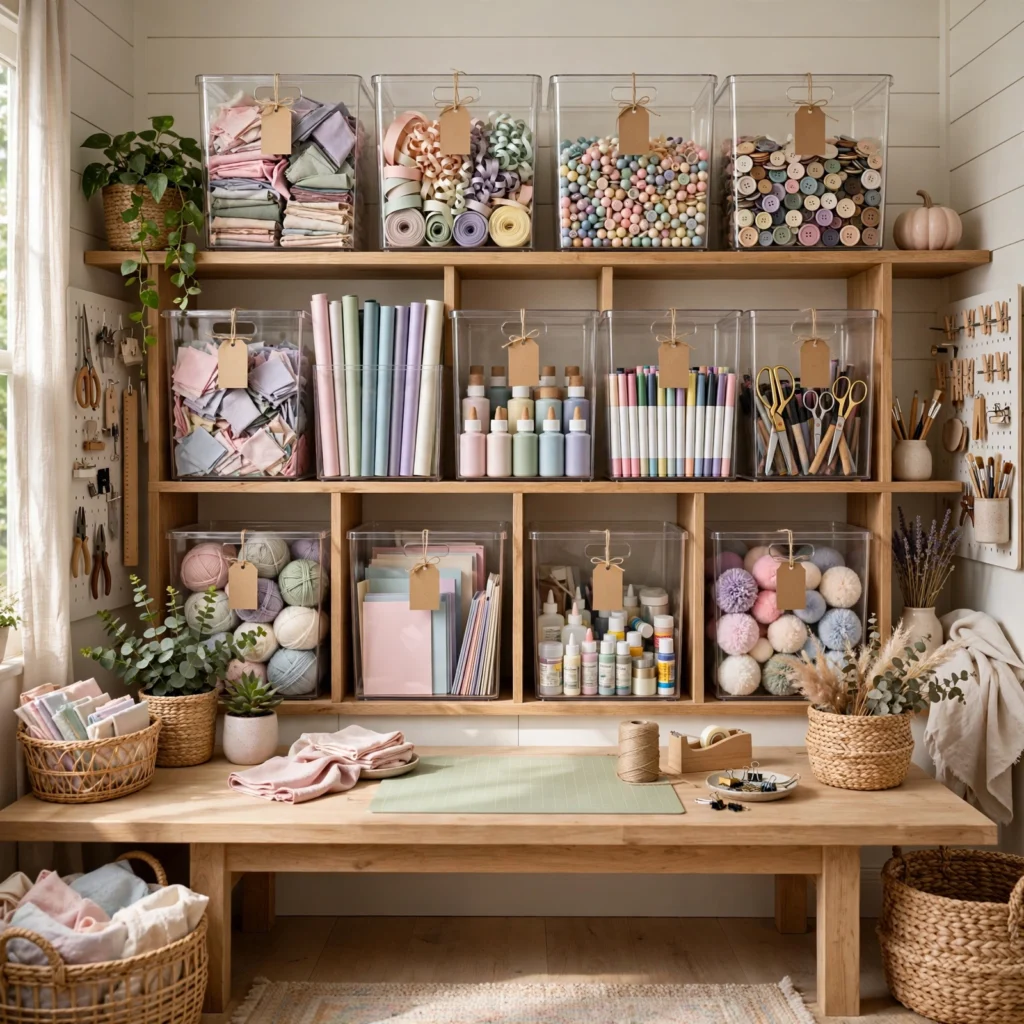
Clear labeled storage bins organize supplies like beads, fabric scraps, or paint tubes into visible, easily identifiable containers rather than opaque boxes that require opening several before finding the right one. Choosing uniform bin sizes across a shelving unit creates a more cohesive look than mismatched containers of varying shapes. This is one of the most functional craft room decor ideas on this list, since visible organization directly reduces the time spent searching for materials mid-project.
2. Large Central Work Table
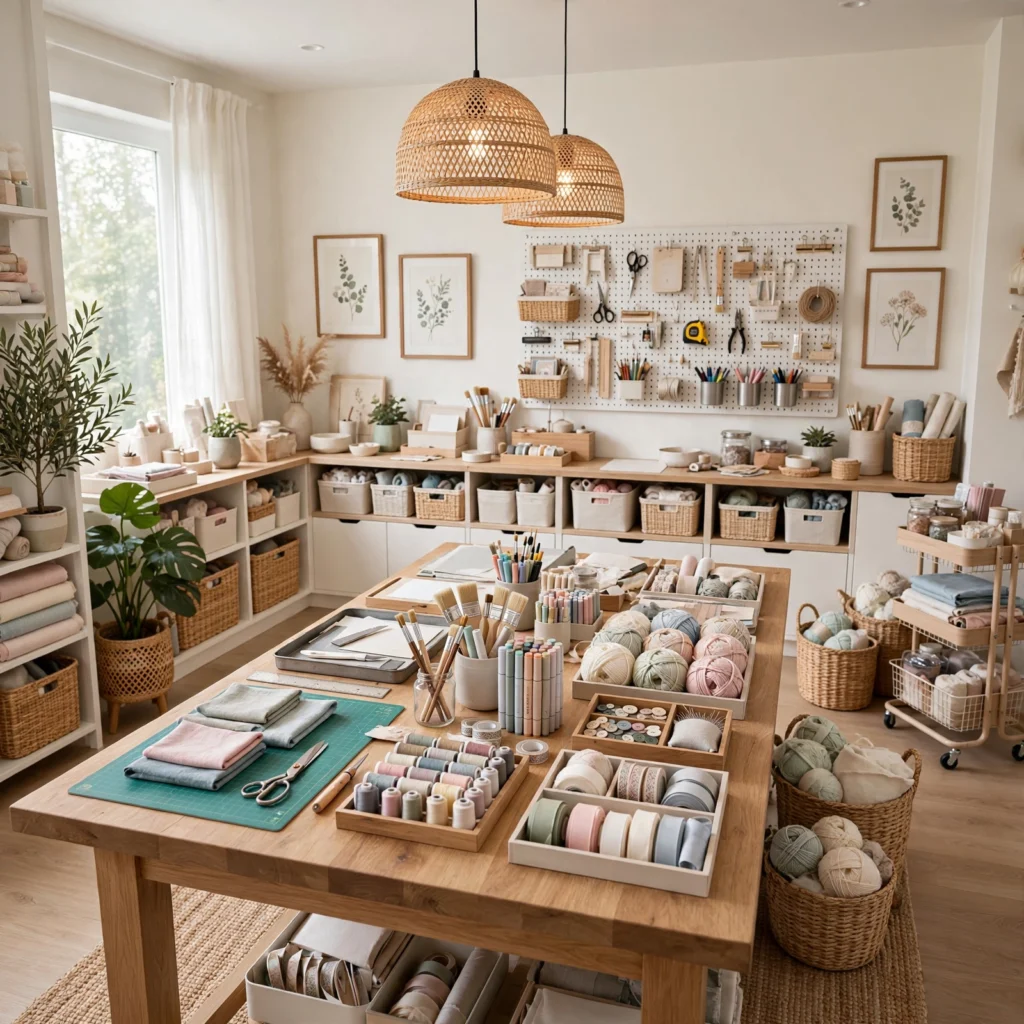
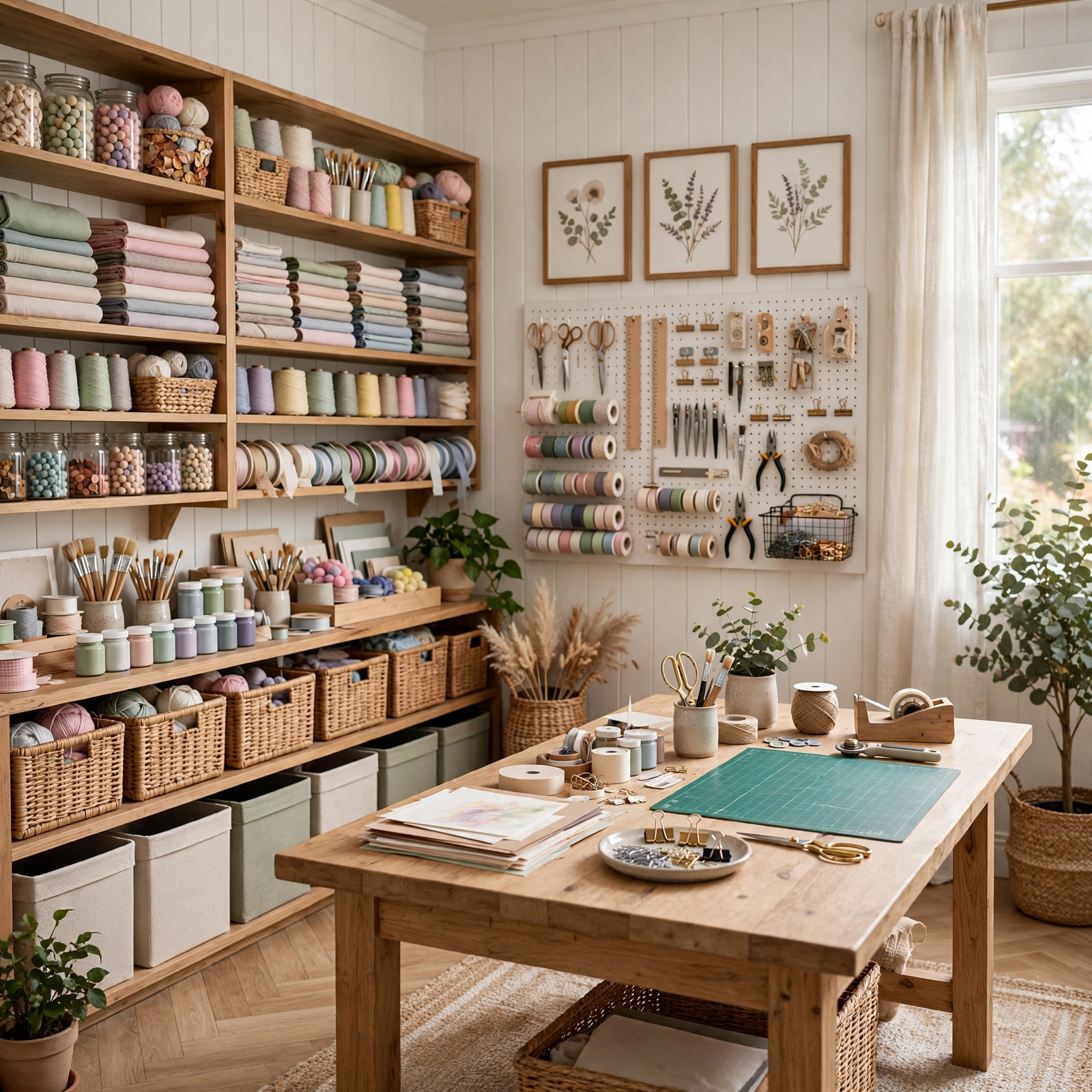
A large central work table, sized to at least 4 by 2 feet, gives enough surface area for cutting, painting, or assembling larger projects without needing to constantly clear and reset a smaller desk. Choosing a table with a durable surface, like laminate or a self-healing cutting mat topper, protects the material from scratches, spills, and adhesive residue over time. This table should take priority in the room’s layout, since most craft activities need more surface space than a standard desk provides.
| Table Size | Best Craft Types | Room Size Needed |
| 3×2 feet | Paper crafts, jewelry making | Small room, under 80 sq ft |
| 4×2 feet | Sewing, general crafting | Medium room, 80–120 sq ft |
| 6×3 feet | Quilting, large-format painting | Larger room, 120+ sq ft |
3. Pegboard Tool Organization Wall
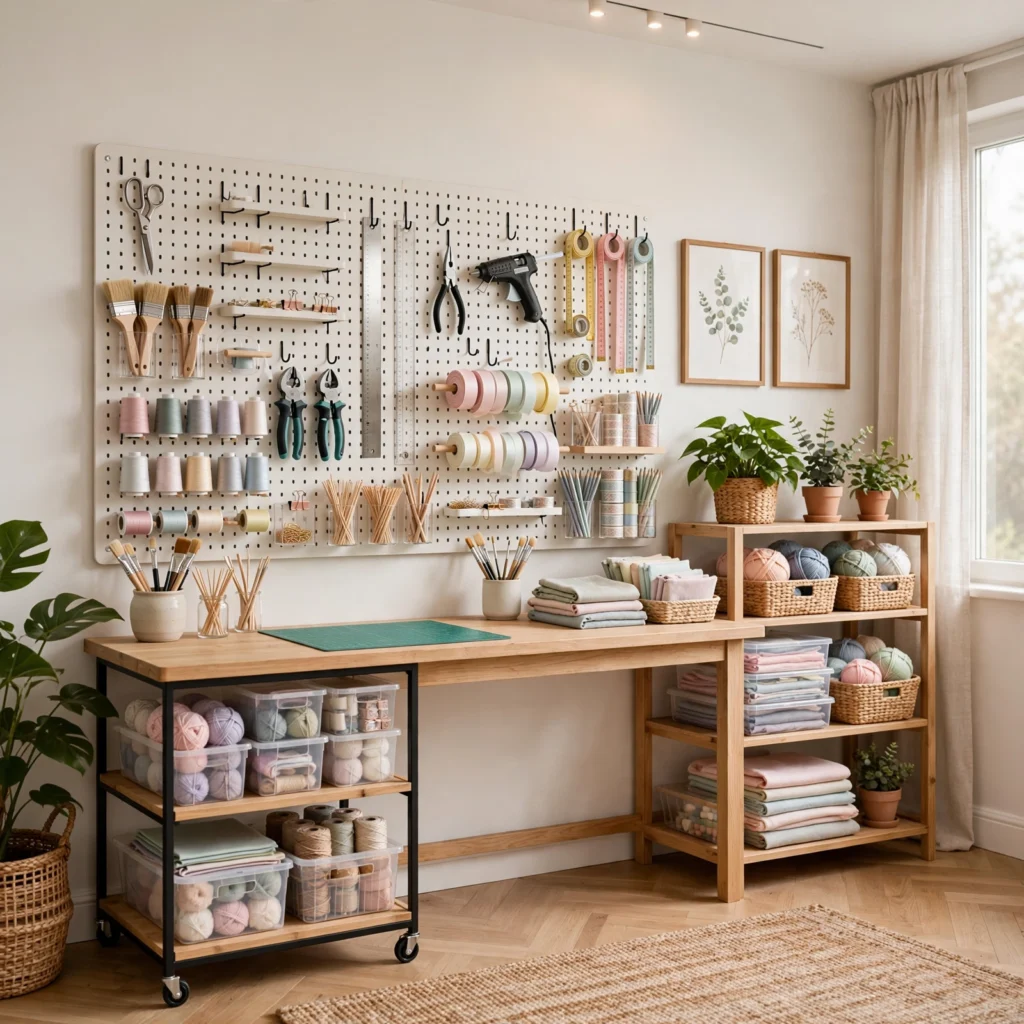
A pegboard tool organization wall mounts a full sheet of pegboard above the work table, holding scissors, rulers, and frequently used tools on adjustable hooks that keep them visible and within reach. This system adapts easily as tool collections grow or change, unlike fixed drawer organizers that can’t accommodate new shapes and sizes as easily. Painting the pegboard to match the room’s wall color keeps the display feeling intentional rather than like an unfinished workshop fixture.
In order to see more options for living room wall decor ideas CLICK HERE
4. Craft Room Decor With Rolling Cart Storage
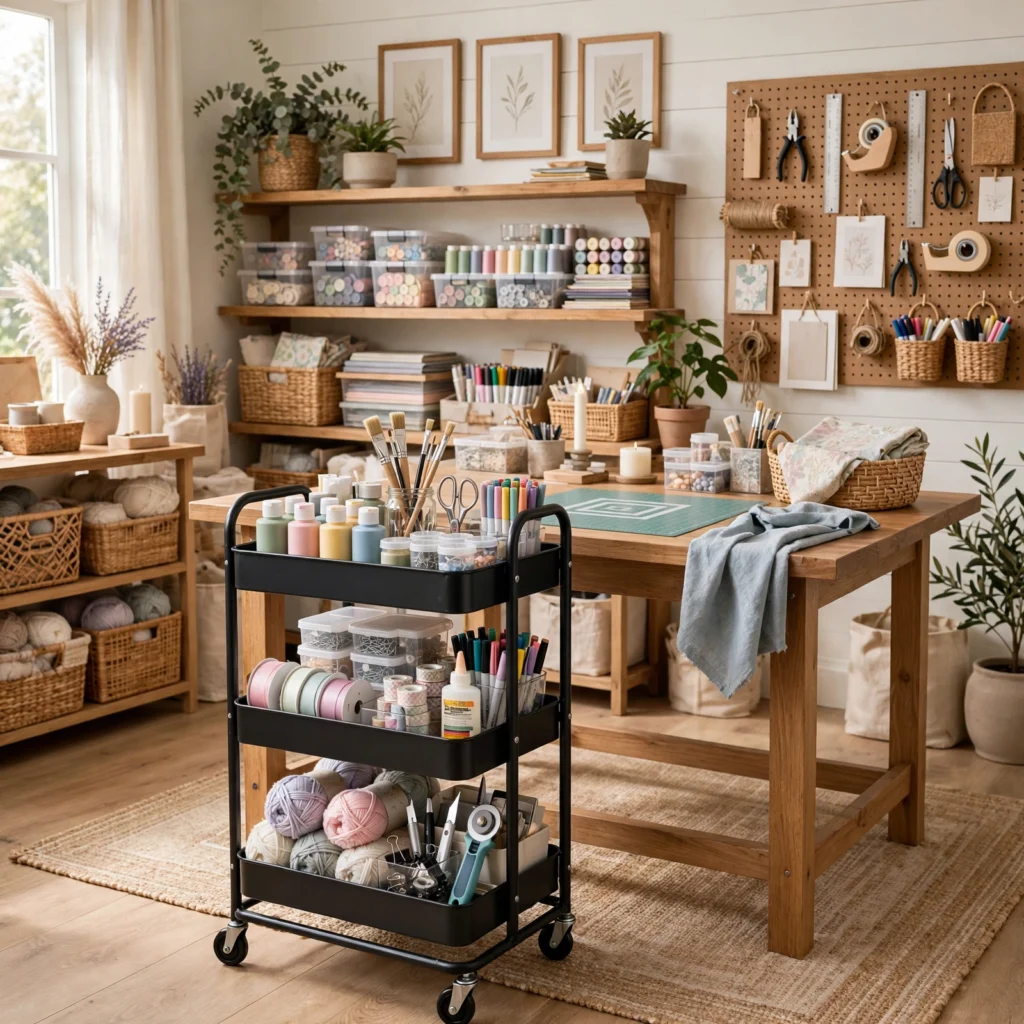
Rolling cart storage uses a multi-tier metal or wood cart on wheels to hold frequently used supplies, keeping them mobile enough to move directly beside the work table during a project and out of the way when not in use. This flexible approach to craft room decor works particularly well in a shared or multi-purpose room, since the cart can roll into a closet or corner when the space needs to serve another function. Choosing a cart with drawers on one tier and open shelving on another balances hidden and visible storage.
5. Fabric or Ribbon Wall Display
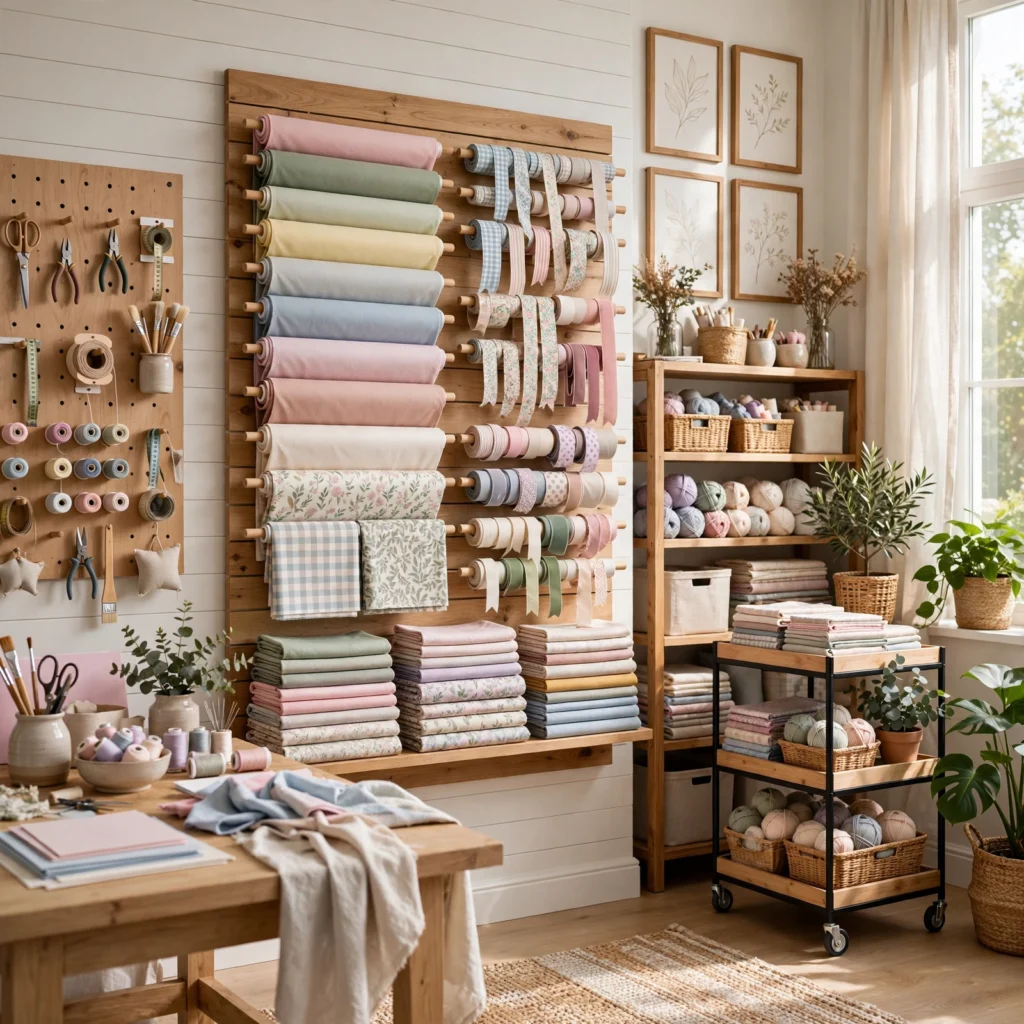
A fabric or ribbon wall display uses a wall-mounted dowel rack or a tension rod system to hang fabric bolts or ribbon spools vertically, turning frequently used craft materials into a colorful, functional wall feature. This keeps materials visible and easy to select from without requiring a fully enclosed cabinet. Grouping fabrics or ribbons by color creates a visually striking display that also functions as a practical organization system.
6. Adjustable Task Lighting
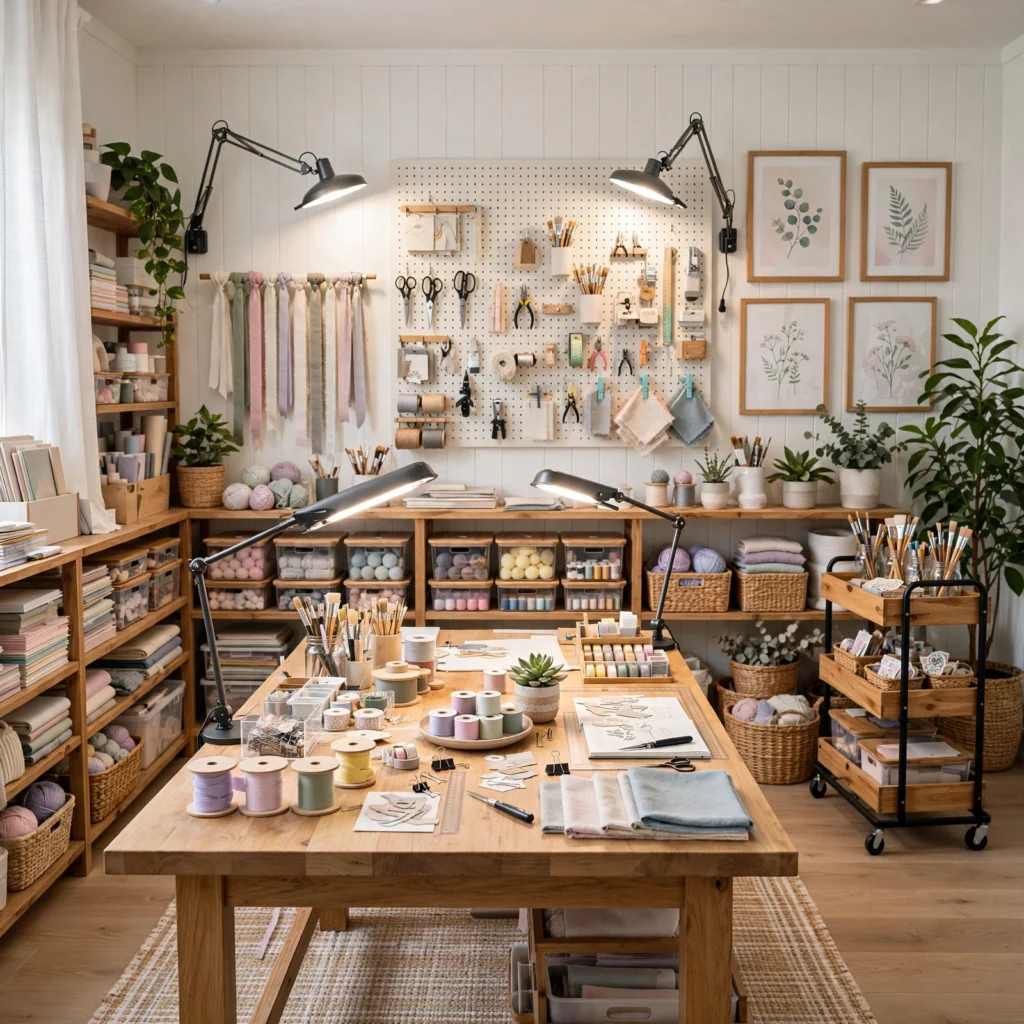
Adjustable task lighting, through a flexible-arm desk lamp or an under-shelf LED strip positioned directly above the work surface, provides focused, shadow-free light for detailed craft work like sewing, painting, or fine paper cutting. Choosing a daylight-balanced bulb, generally in the 5000K range, helps colors read accurately during projects like painting or fabric selection. This matters more in a craft room than almost any other room in the house, since color accuracy and precision work depend heavily on adequate, well-positioned light.
7. Pull-Out Drawer Fabric or Paper Storage
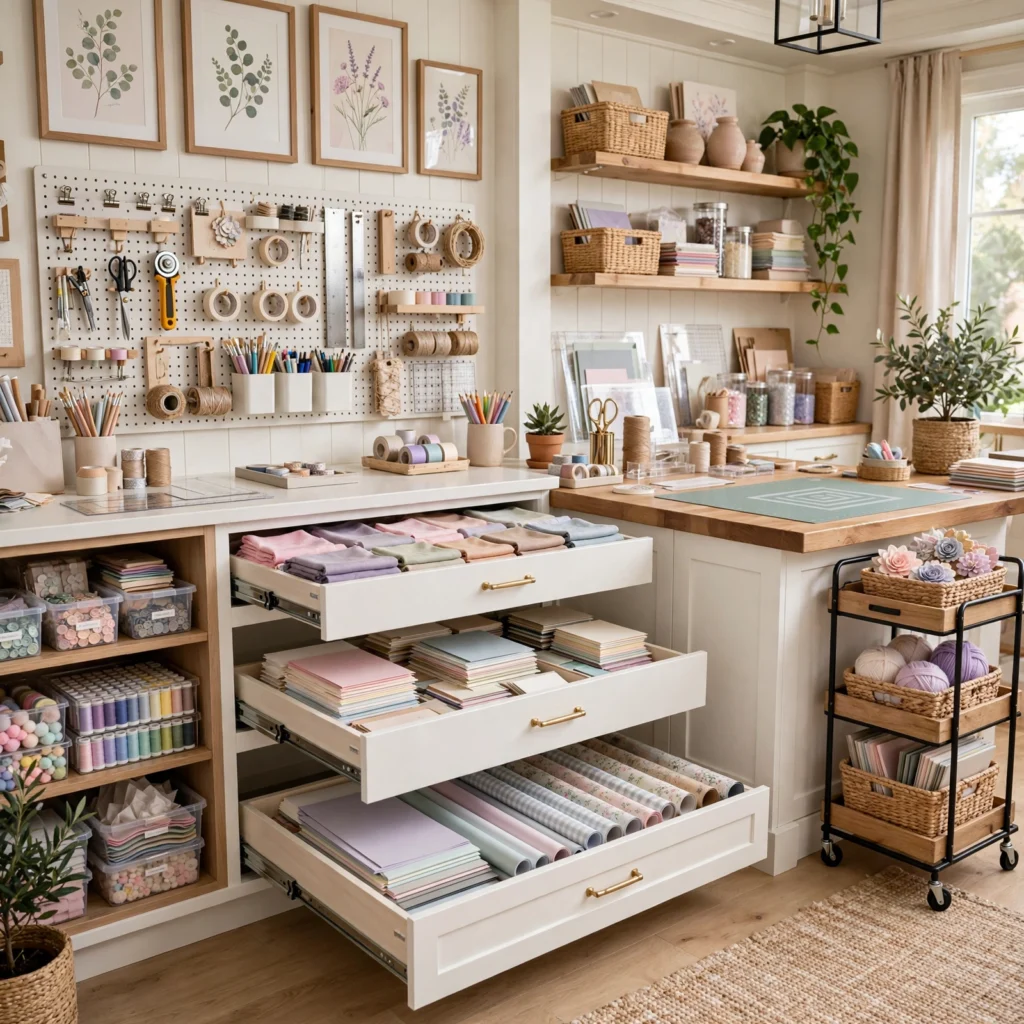
Pull-out drawer storage, using wide, shallow drawers sized for flat fabric or paper sheets, prevents these materials from creasing or curling the way they would if stored upright or folded into a standard bin. This system works particularly well for scrapbooking paper, fabric yardage, or large sheets of cardstock that need to stay flat for future use. Choosing drawers with dividers allows different paper or fabric types to stay separated within the same storage unit.
8. Inspiration Board Wall
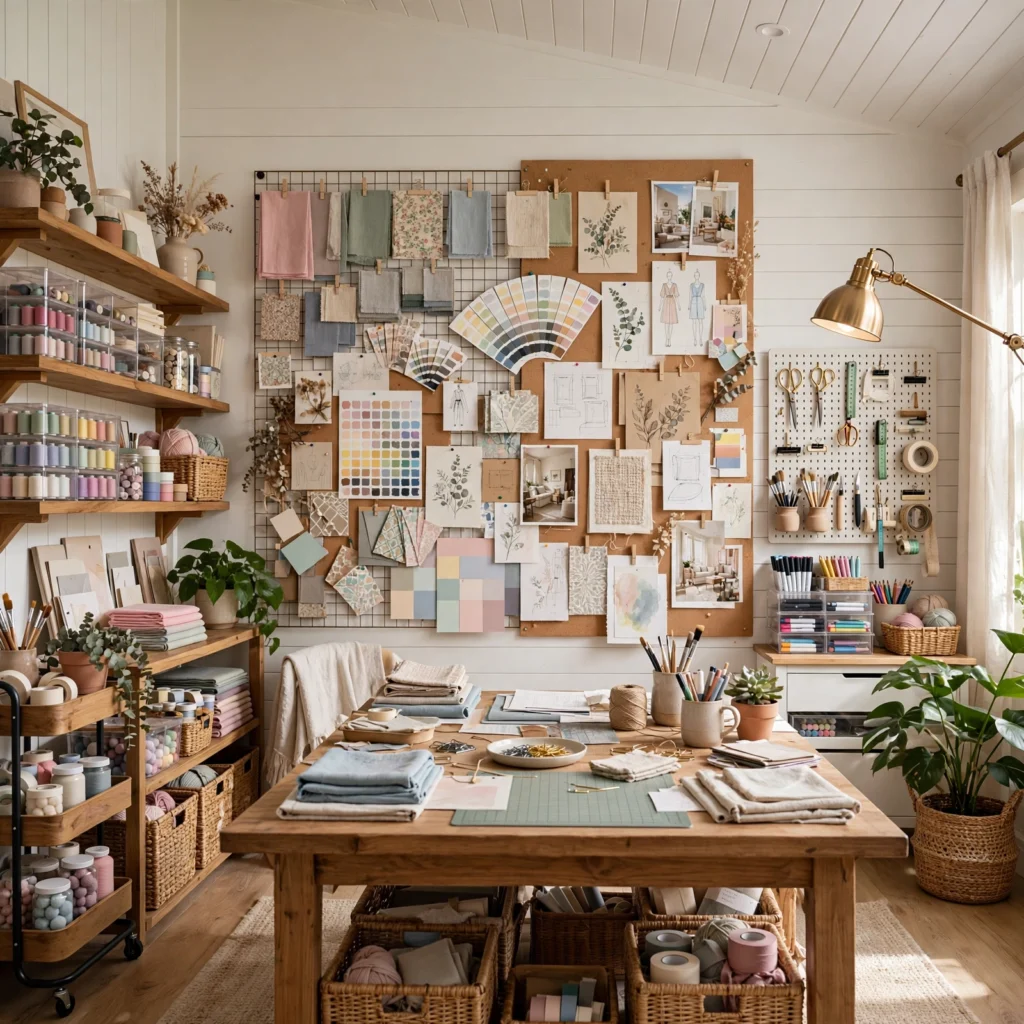
An inspiration board wall combines a corkboard, a magnetic panel, or simply a section of exposed wall for pinning fabric swatches, color palettes, and project references, giving the room a visible source of creative direction. This works well positioned near the work table, where it stays in view during active project planning and execution. Rotating the board’s contents as projects change keeps this display functional rather than becoming a static, ignored collection of old references.
9. Vertical Yarn or Thread Storage
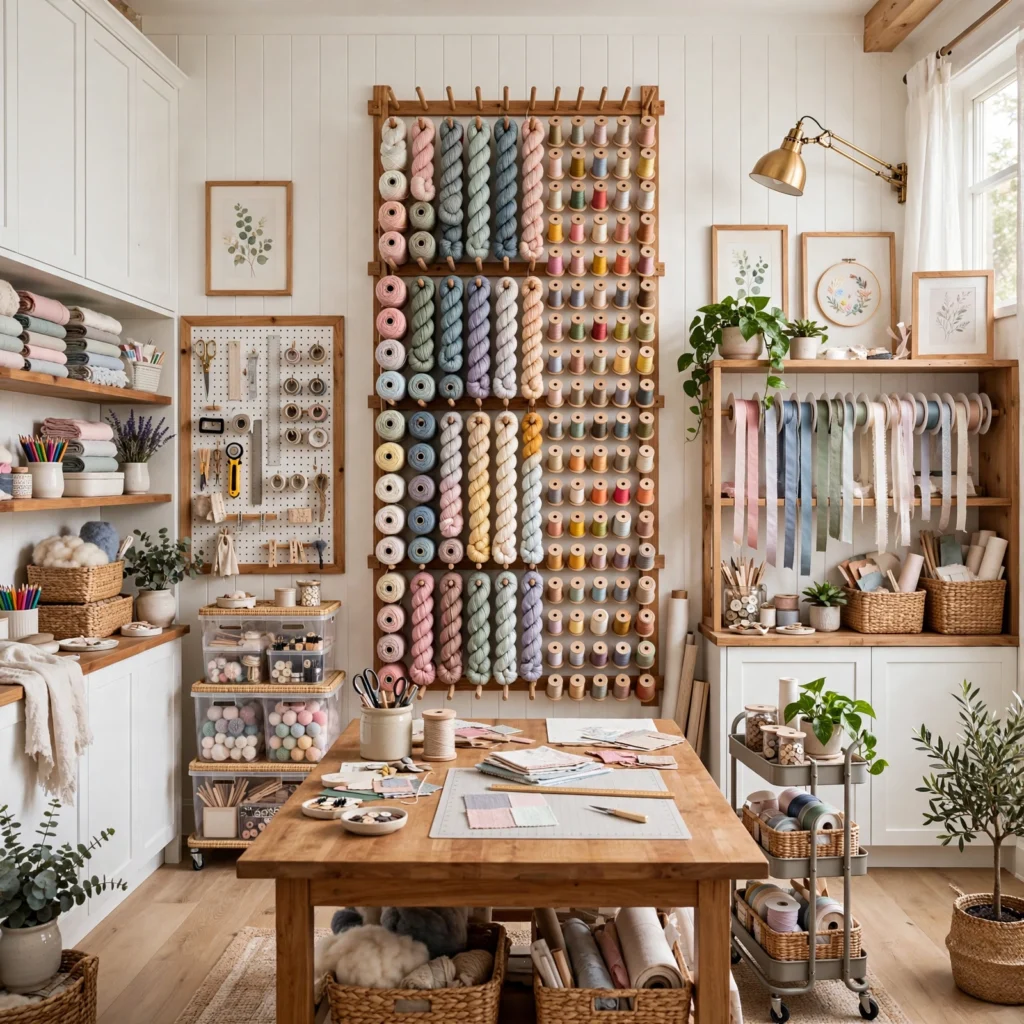
Vertical yarn or thread storage uses a wall-mounted dowel system or a tiered cone rack to hold spools and skeins upright, rather than piled into a bin where finding a specific color or weight becomes difficult. This display doubles as a colorful, textural wall feature in a room dedicated to fiber crafts specifically. Organizing the display by color gradient, rather than randomly, creates a more visually cohesive and functional arrangement.
10. Finished Project Display Shelf
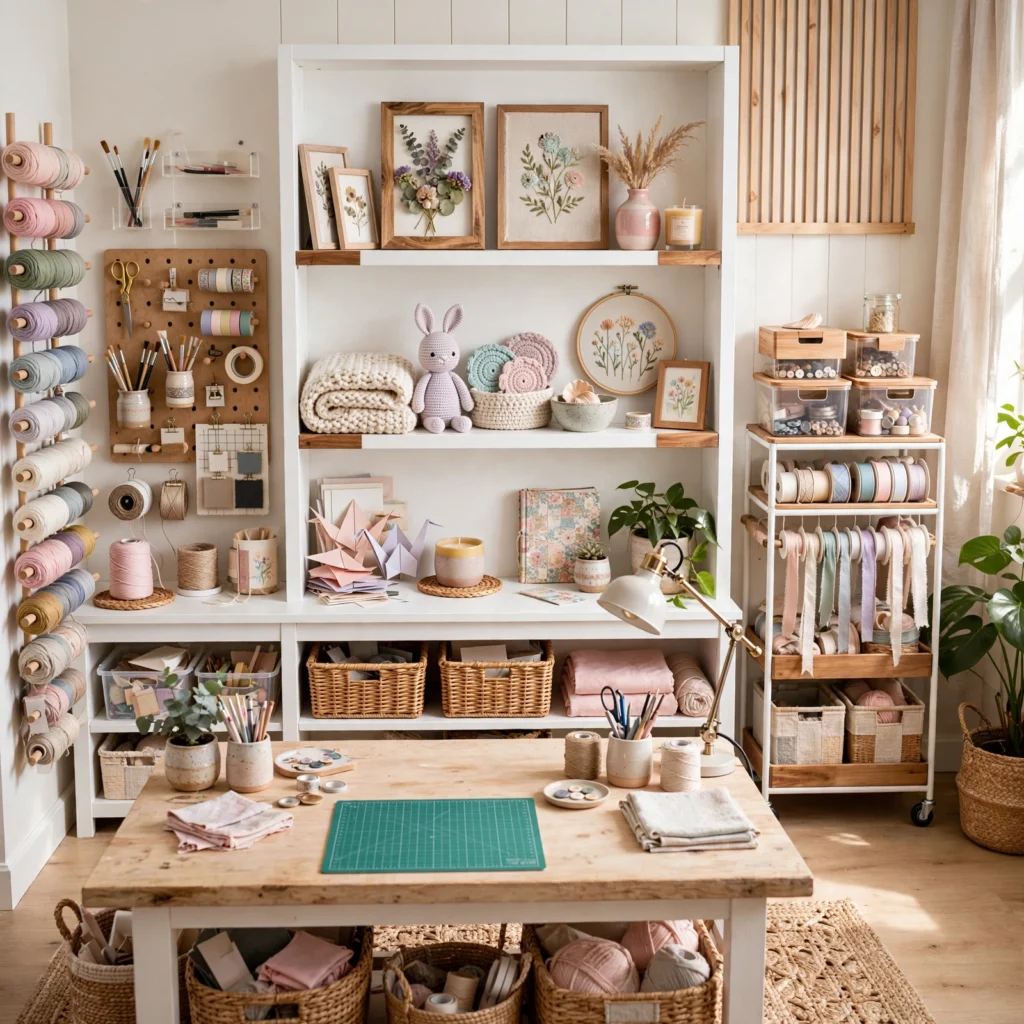
A finished project display shelf dedicates a section of open shelving to completed crafts, giving the room a rotating gallery of past work rather than storing everything away once finished. This detail adds personal character to the room that purchased decor can’t replicate, since the displayed items are entirely unique to the person crafting them. Rotating the display seasonally or as new projects finish keeps the shelf feeling current rather than static.
| Display Element | Best For | Rotation Frequency |
| Open shelf | 3D projects, finished pieces | Every 1–2 months |
| Wall-mounted frame rail | Flat art, embroidery | Every 2–3 months |
| Small easel | Single featured piece | Every 2–4 weeks |
11. Under-Table Bin Storage
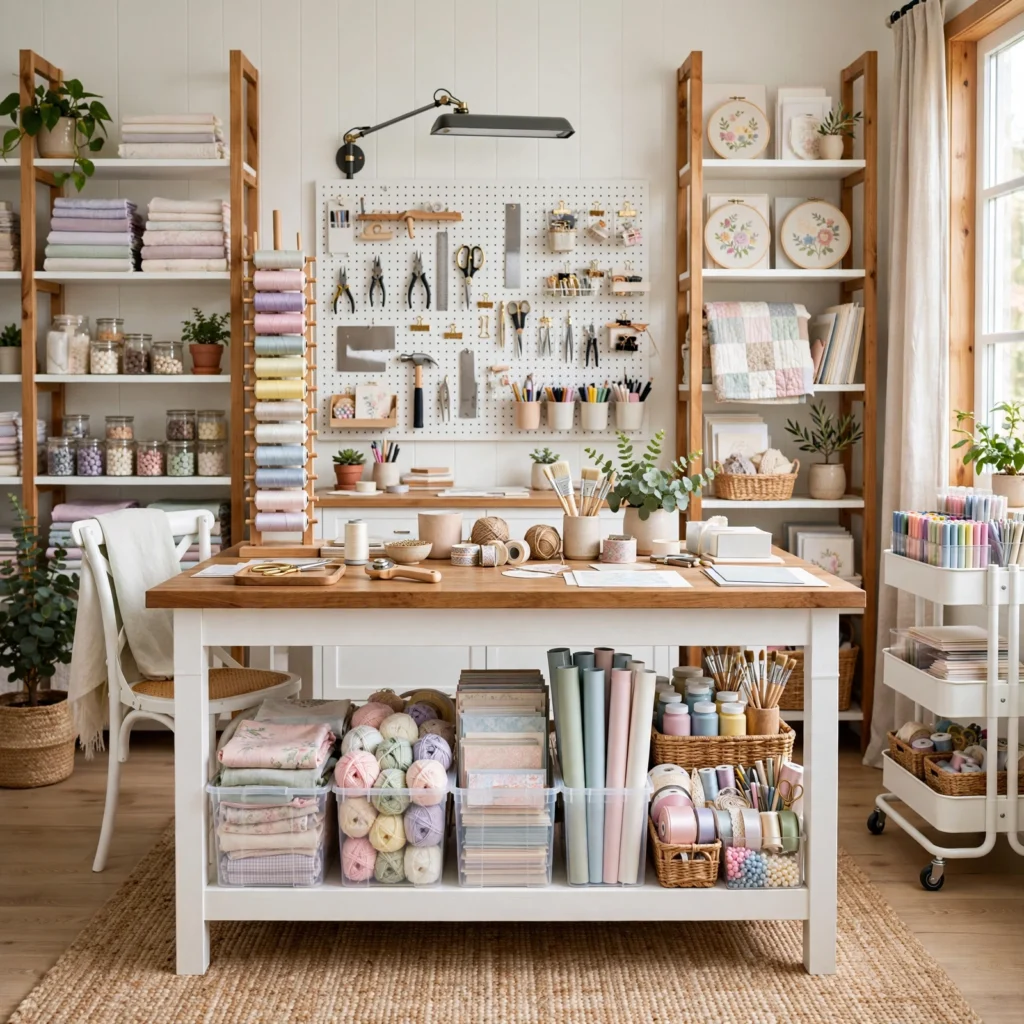
Under-table bin storage uses the space beneath the central work table for large, stackable bins holding bulkier supplies like fabric bolts, larger paint canvases, or seasonal project materials. This makes use of a footprint that would otherwise stay empty beneath the table’s surface, particularly valuable in a smaller craft room without much additional floor space for separate storage furniture. Choosing bins on casters allows them to slide out easily when access is needed mid-project.
12. Color-Coded Supply Wall
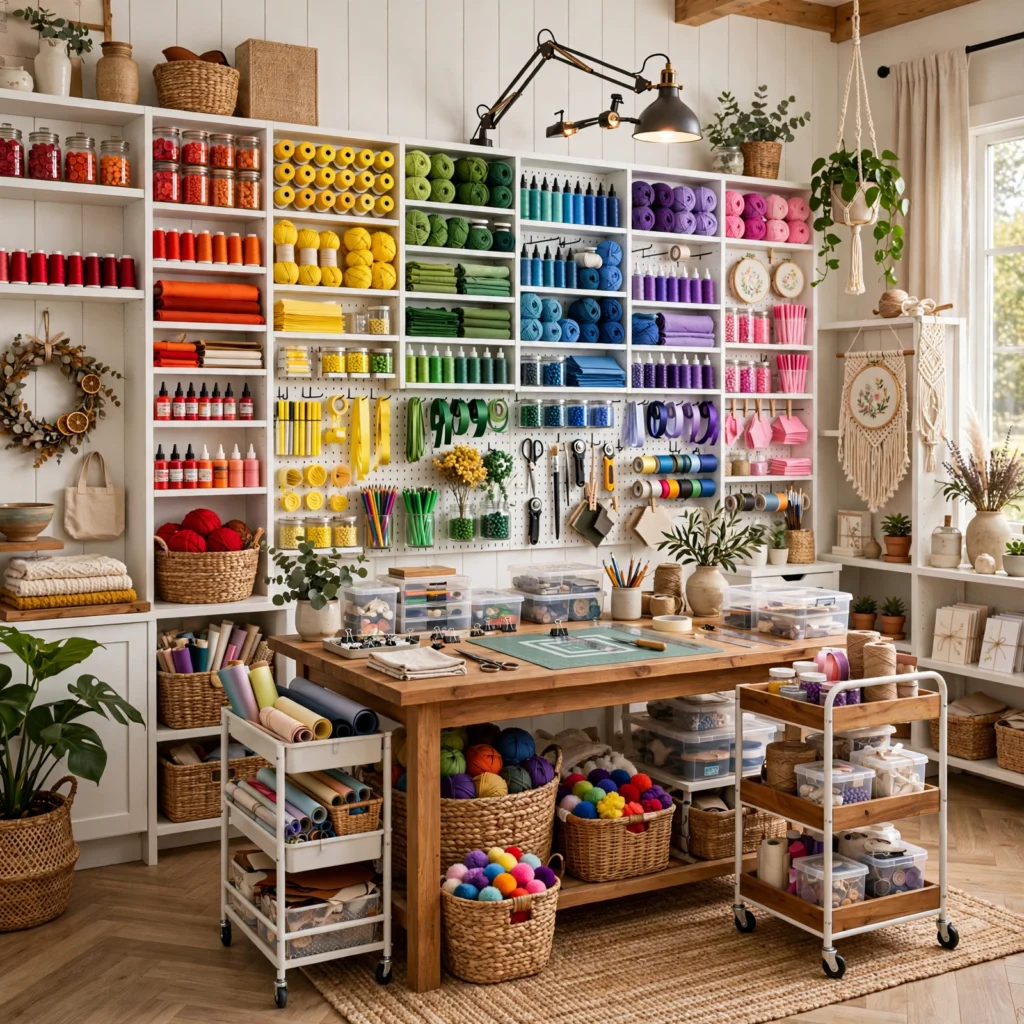
A color-coded supply wall organizes paints, markers, or thread by color family across open shelving or a pegboard system, creating a visually striking rainbow effect while also making it faster to locate a specific shade during a project. This works particularly well for supplies that naturally come in a wide range of colors, like acrylic paint tubes or embroidery floss. Grouping by color rather than by brand or type tends to produce both the most functional and most visually appealing result for this kind of display.
13. Comfortable Task Seating
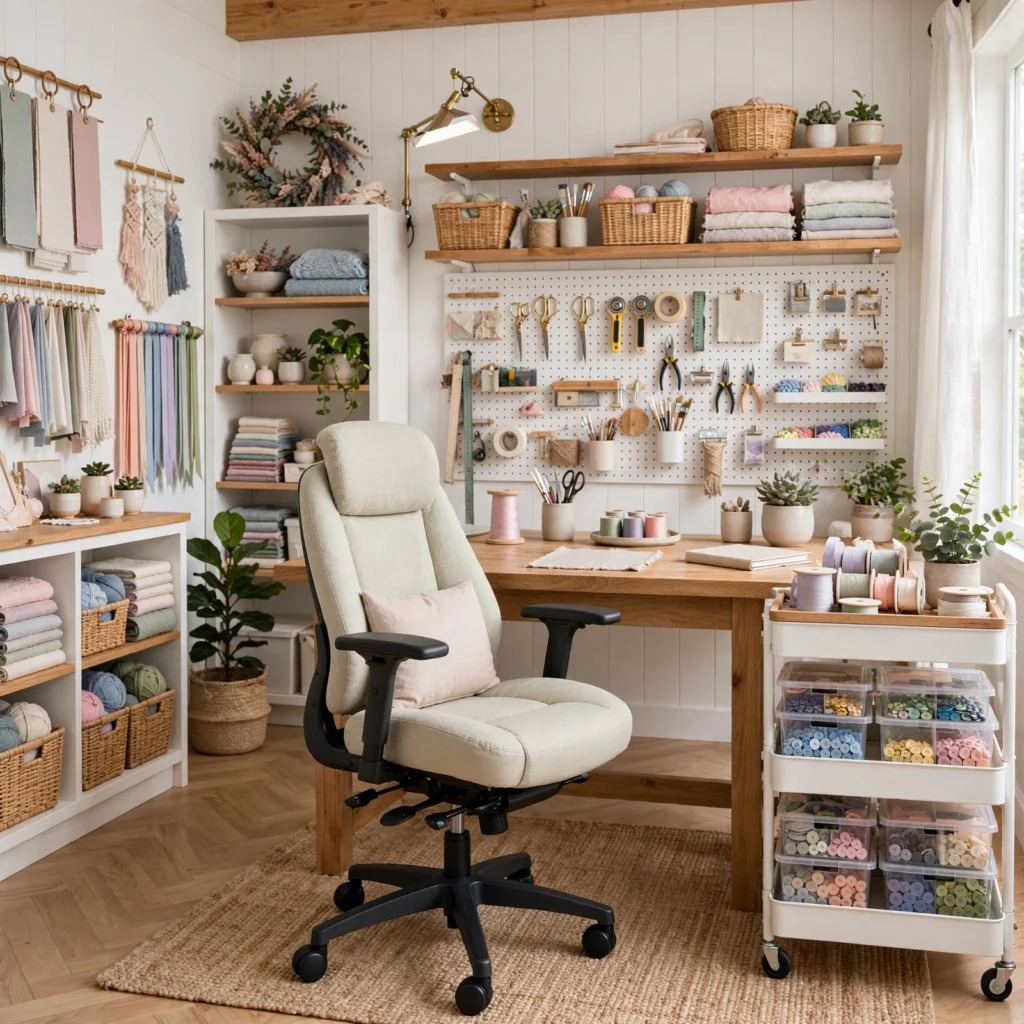
Comfortable task seating, choosing an adjustable-height chair with good back support rather than a purely decorative accent chair, matters more in a craft room than almost any other seating decision in the house, given how many consecutive hours a crafting session can involve. Choosing a chair with wheels and a swivel base also improves efficiency when moving between the work table, storage, and a cutting or pressing station within the same room. This functional priority should outweigh purely aesthetic seating choices in a room built around actual production work.
Shop the Look
For this palette, look for a large laminate-top work table, a full pegboard tool wall painted to match the room, a rolling multi-tier storage cart, an adjustable-arm task lamp with a daylight bulb, and a set of clear labeled storage bins in uniform sizes. These pieces work together across several of the ideas above without requiring a full room build-out.
Common Mistake to Avoid
The most common mistake is prioritizing decorative elements, like art and color palette, before establishing adequate storage and a functional work surface, which often results in a beautiful room that becomes cluttered and hard to use within just a few project sessions. A craft room without enough labeled storage or a large enough table tends to accumulate loose supplies on every available surface regardless of how well the walls are decorated. Establishing storage and workspace function first, then layering in decorative details afterward, produces a room that stays both organized and visually appealing over time.
FAQs
What craft room decor ideas work best for a small space?
Rolling cart storage, a pegboard tool wall, and under-table bin storage all work particularly well in a small craft room, since these ideas add significant storage capacity without requiring additional floor space for separate furniture. Vertical yarn or fabric display also makes use of wall height rather than competing for limited floor area. Prioritizing multi-functional and vertical storage solutions matters more in a small craft room than in a larger dedicated space.
How much does it cost to set up a craft room on a budget?
A budget setup using clear labeled bins, a pegboard tool wall, and an inspiration board can run under $150 total, while adding a proper work table and adjustable task lighting typically pushes the range to $300–$700. Larger investments like a full rolling cart system, custom pull-out drawer storage, and a color-coded supply wall cost more depending on scale, often landing between $800 and $2,000 for a fully outfitted dedicated craft room.
What lighting is best for detailed craft work?
Daylight-balanced LED lighting, generally in the 5000K to 5500K range, works best for detailed craft work since it renders colors more accurately than the warmer, dimmer lighting suited to relaxation-focused rooms like a bedroom or living room. An adjustable-arm task lamp positioned directly over the work surface reduces shadows that can interfere with precision tasks like sewing or fine painting. Combining this focused task lighting with brighter ambient overhead lighting throughout the room supports both detailed work and general visibility.
How do I organize craft supplies that come in many different sizes?
Organizing craft supplies with varied sizes generally works best through a mix of storage types, like clear bins for smaller loose items, pull-out drawers for flat materials like paper or fabric, and open vertical display for larger spools or bolts that don’t fit neatly into a standard bin. Grouping by project type or by color, rather than trying to force everything into uniform containers, often produces a more functional system than forcing consistency where the materials themselves vary significantly in shape and size. Reassessing the system every few months as supply collections grow also keeps the storage adapting to actual use.
Should a craft room double as a guest room?
A craft room can double as a guest room successfully with some planning, typically using a daybed or a sofa bed as the primary seating and sleeping furniture, paired with storage solutions that can be tidied away or covered when guests visit. Rolling carts and closed storage bins work particularly well in this dual-purpose setup, since supplies can be quickly consolidated compared to a room with everything left out on open shelving. This combination works best when the craft supplies have a designated, easily concealed storage system built in from the start.
Conclusion
These craft room decor ideas cover everything from a simple labeled bin system to a fuller storage and lighting investment, giving you options regardless of your room’s size or which specific hobby the space needs to support. Start with storage and a proper work surface, since those two elements affect daily function the most, then layer in display and decorative details as the room comes together. Save this guide to Pinterest for later, and check out our related post on small room decor ideas for more space-saving guidance.