17 Room Decor Ideas Bedroom Styling for Better Rest
A bedroom carries more responsibility than almost any other room, since it needs to support actual rest while still reflecting personal style. This guide walks through seventeen room decor ideas bedroom spaces can use, covering the bed, lighting, storage, and smaller styling details that work across studio apartments, primary suites, and guest rooms alike. By the end, you’ll have specific materials, sizing guidance, and layout suggestions to build a bedroom that looks considered and actually functions well for sleep.
Trend & Background
Bedroom decor has shifted toward warmer, layered spaces built around natural materials like linen, wood, and boucle, replacing the starker, more minimal bedrooms that dominated design for much of the last decade. This reflects a broader cultural focus on sleep quality and wind-down routines, pushing homeowners to think about the bedroom as a wellness space rather than just a place to store a bed. This matters now because more people work from home and spend additional waking hours in their bedrooms, making the room’s function and feel worth more careful planning than treating it as an afterthought compared to more public rooms in the house.
Key Takeaways
- Layering soft textiles and warm lighting does more to make a bedroom feel restful than any single furniture purchase.
- Headboard choice sets the tone for the whole room more than most people initially plan for.
- Storage-focused pieces, like a bench or nightstand with drawers, matter most in bedrooms without a large closet.
- Keeping electronics and clutter out of direct sightline from the bed supports better sleep as much as it improves the room’s look.
1. Upholstered Headboard
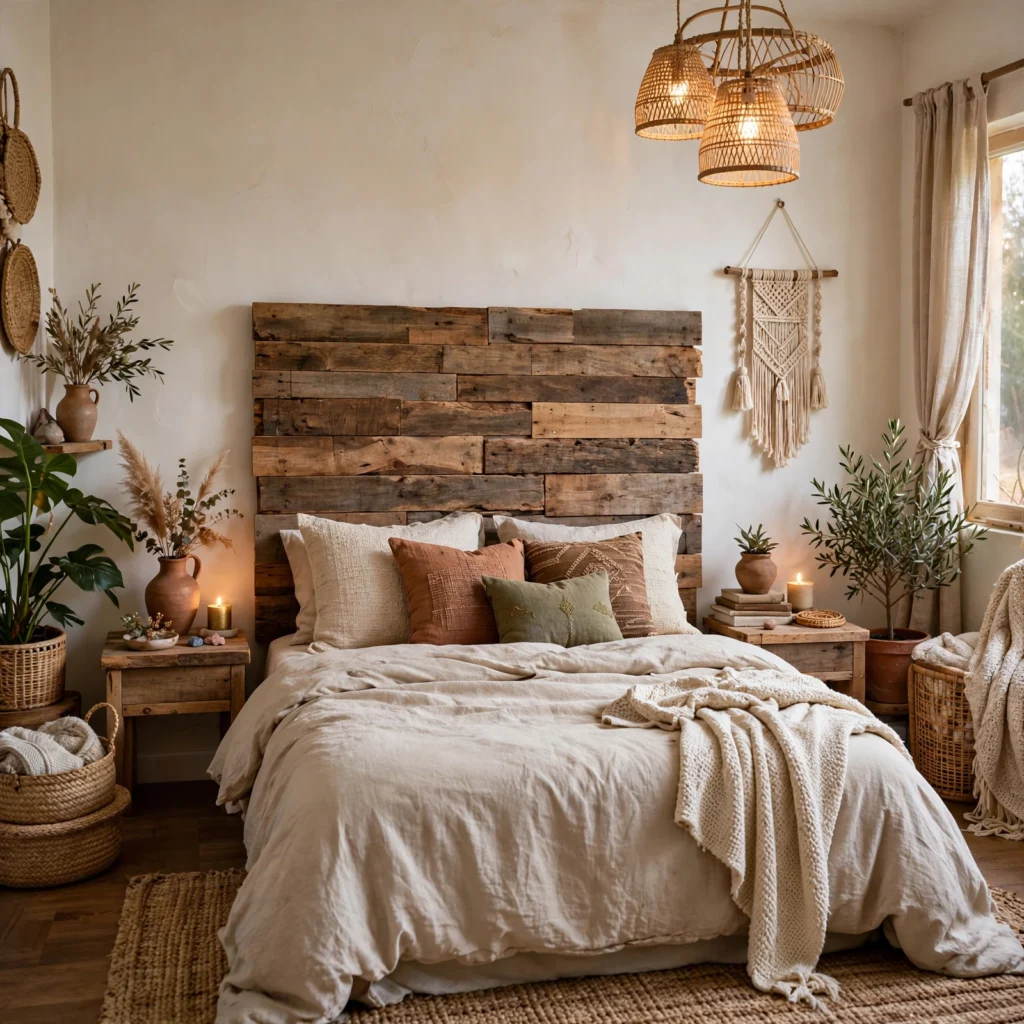
An upholstered headboard, in linen, boucle, or performance velvet, softens the bed’s overall silhouette and adds a comfortable surface to lean against while reading or working from bed. Choosing a headboard height of 48 to 54 inches gives the bed enough visual presence to anchor the room without overwhelming a smaller space. A channel-tufted or simple wingback style both work depending on whether the room leans more contemporary or traditional.
2. Layered Bedding With Textural Contrast
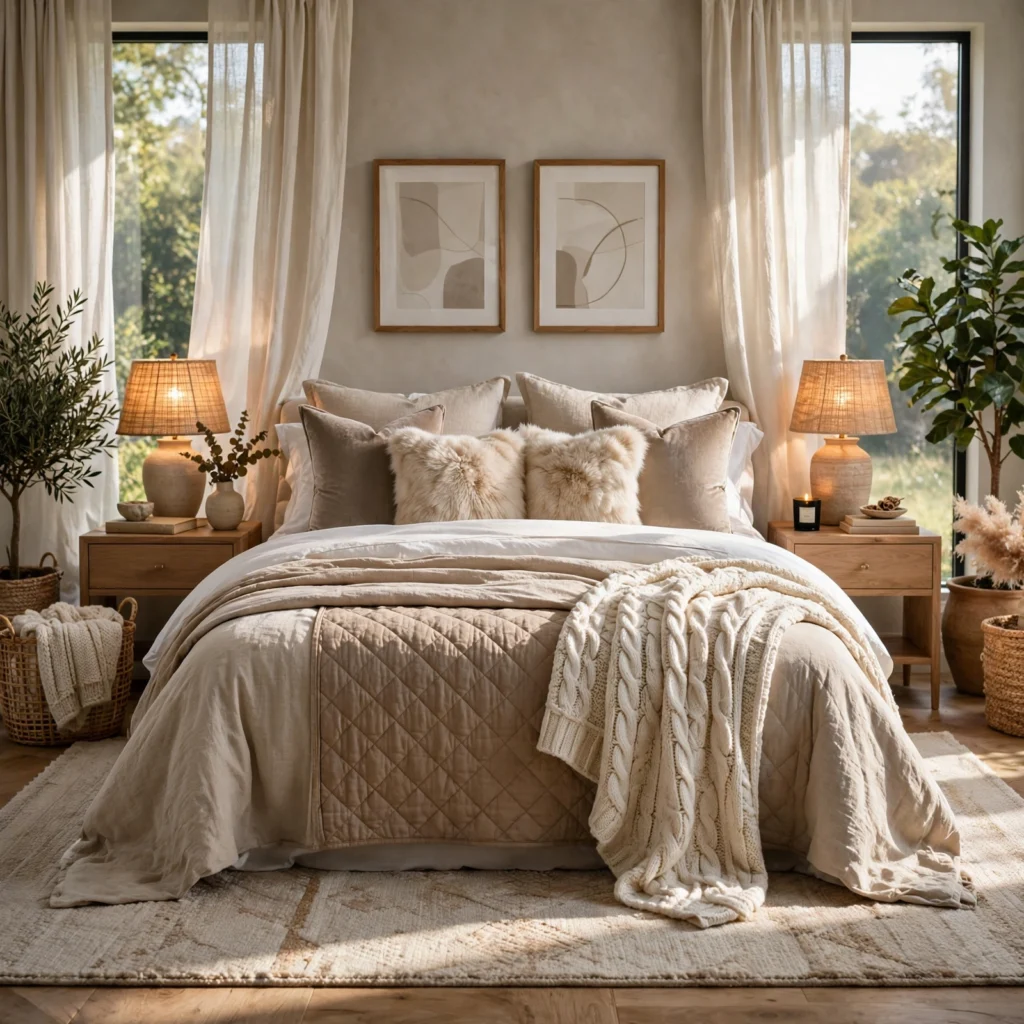
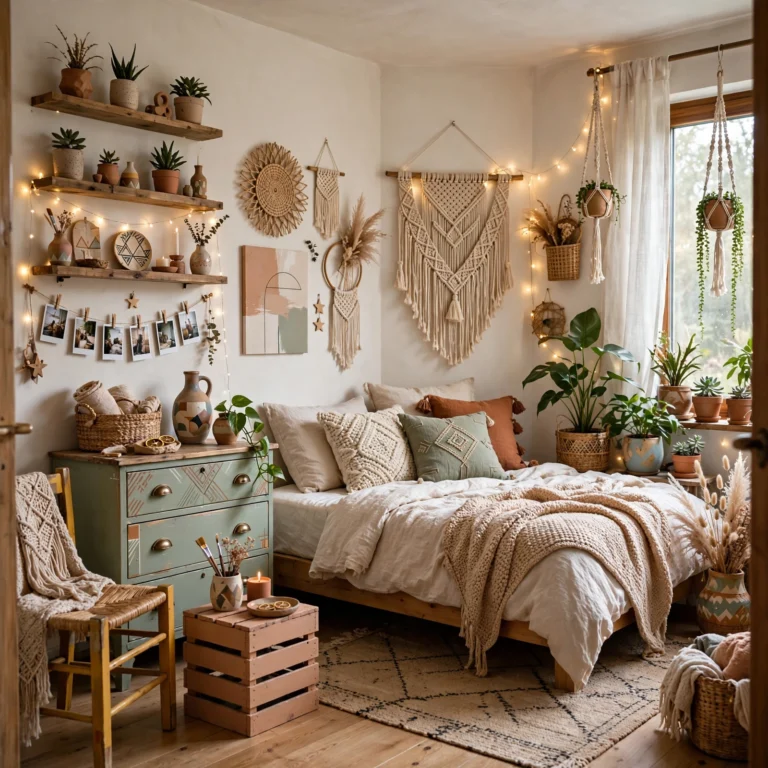
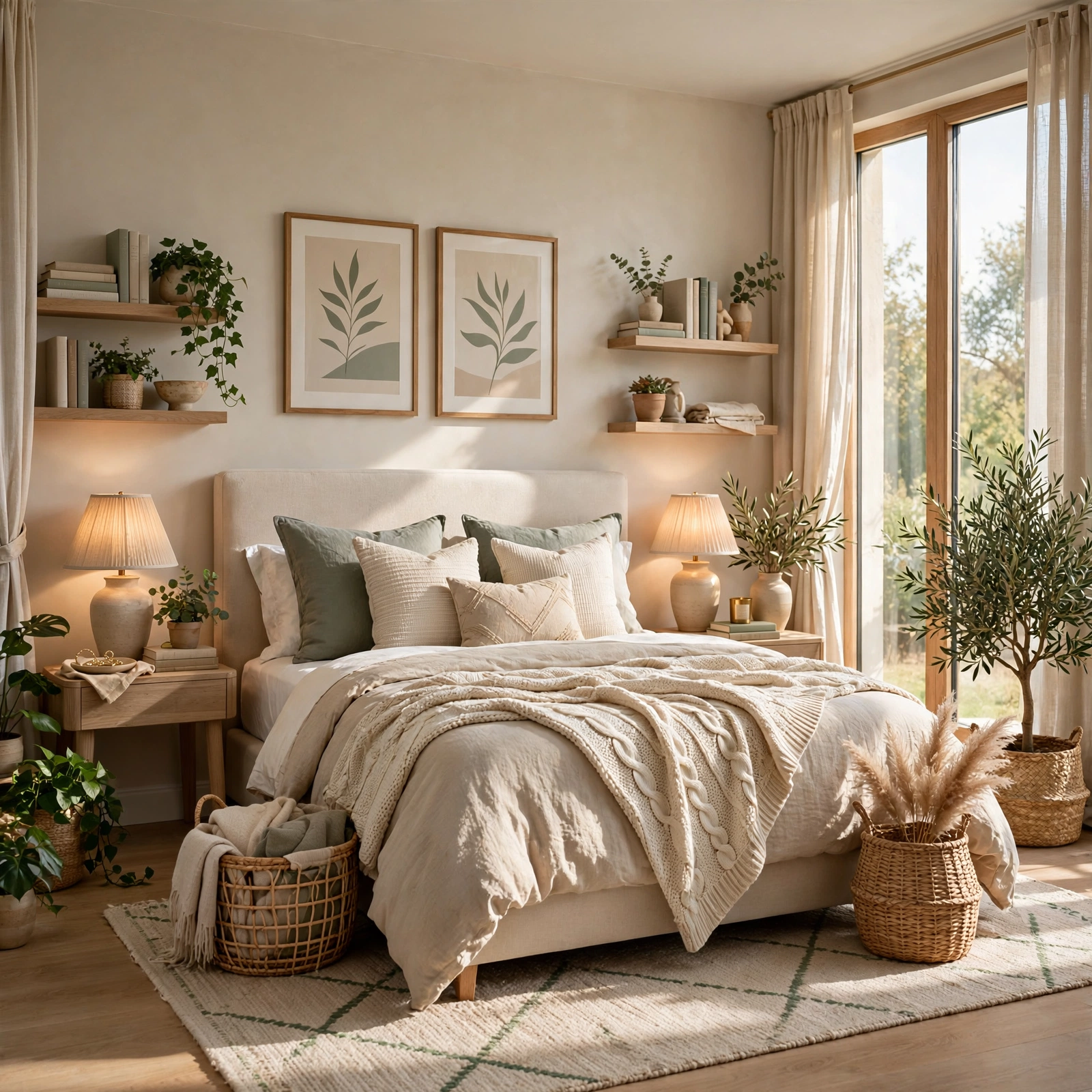
Layered bedding with textural contrast combines a linen duvet cover, a waffle-weave blanket, and a mix of velvet and knit throw pillows, adding depth to the bed that a single flat comforter can’t achieve. Keeping the color palette within two or three coordinating tones prevents the layering from looking mismatched despite the varied textures. This is one of the highest-impact room decor ideas bedroom spaces can use, since the bed typically takes up the largest single visual area in the room.
| Bedding Layer | Material Suggestion | Purpose |
| Base sheets | Cotton percale or linen | Everyday comfort |
| Duvet or quilt | Linen or cotton matelasse | Main visual layer |
| Throw blanket | Chunky knit or waffle weave | Texture and warmth |
3. Nightstand With Drawer Storage
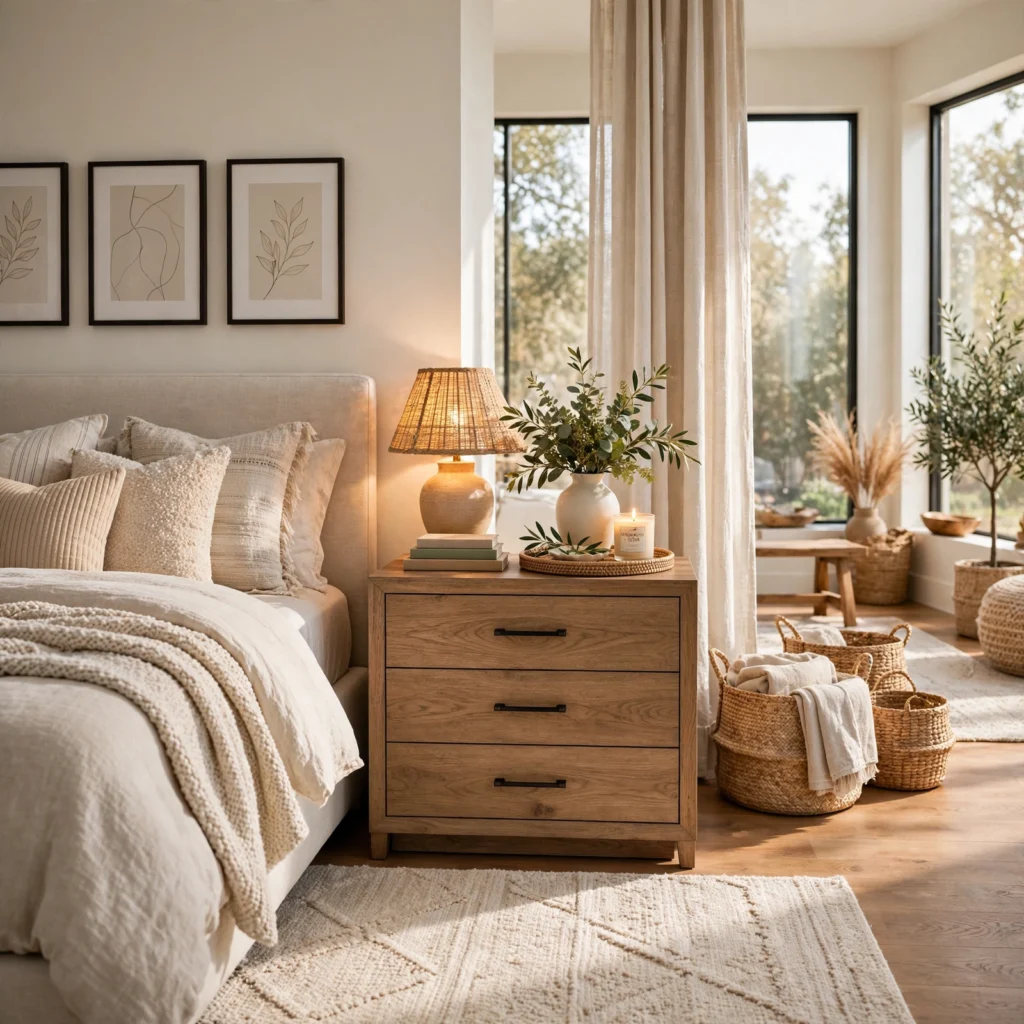
A nightstand with drawer storage, rather than an open shelf design, keeps everyday items like glasses, chargers, and books contained and out of sight, supporting a calmer visual environment right beside the bed. Choosing a nightstand roughly level with the top of the mattress keeps reachable surface space at a comfortable height. Pairing two matching nightstands on either side of the bed creates symmetry, while mismatched pairs work well in a more eclectic room.
In order to see more options for room decor ideas diy CLICK HERE
4. Warm-Toned Bedside Lighting
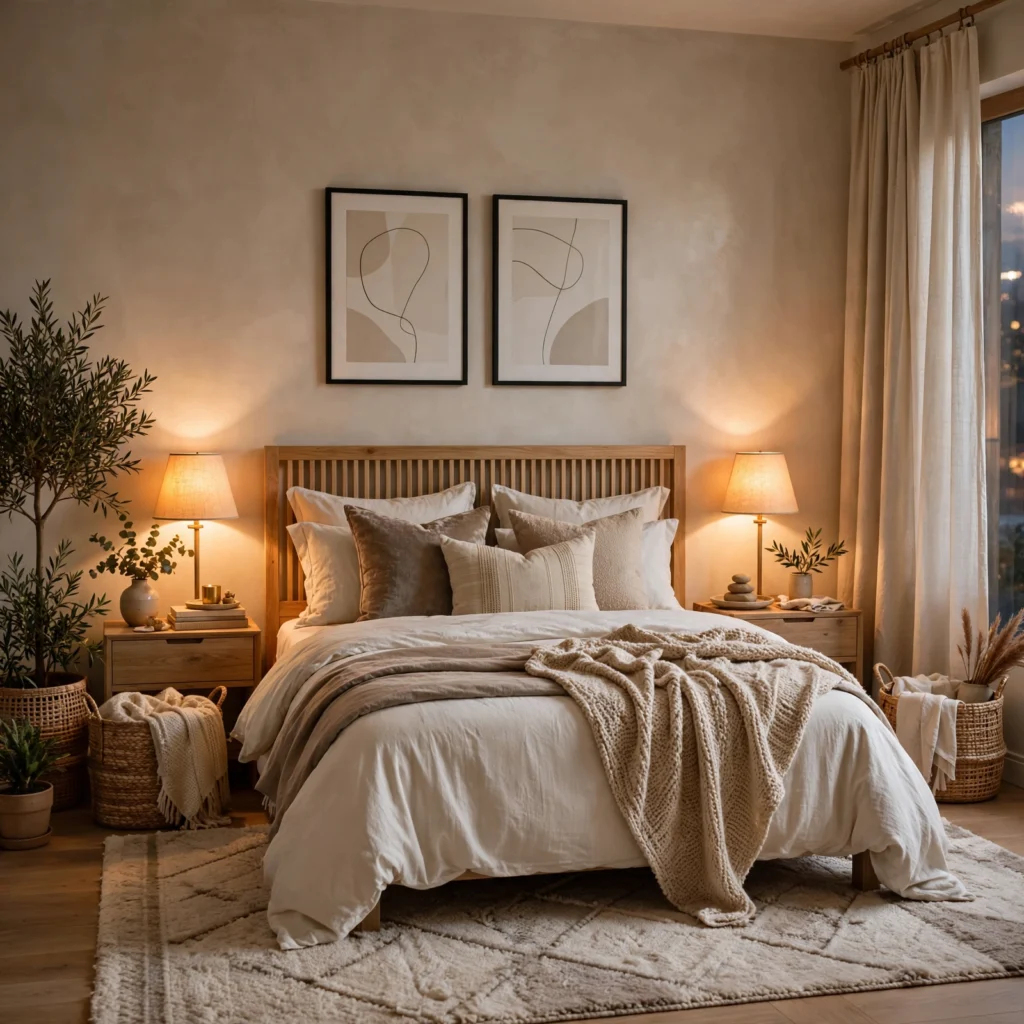
Warm-toned bedside lighting, through a table lamp or a wall-mounted sconce, replaces harsh overhead lighting as the room’s primary evening light source, supporting a better wind-down routine before sleep. Choosing bulbs around 2700K gives off a warmer, more amber glow than the cooler white light many overhead fixtures use by default. A dimmable option adds further flexibility for reading versus fully relaxing before turning the light off entirely.
5. Room Decor Ideas Bedroom Gallery Wall
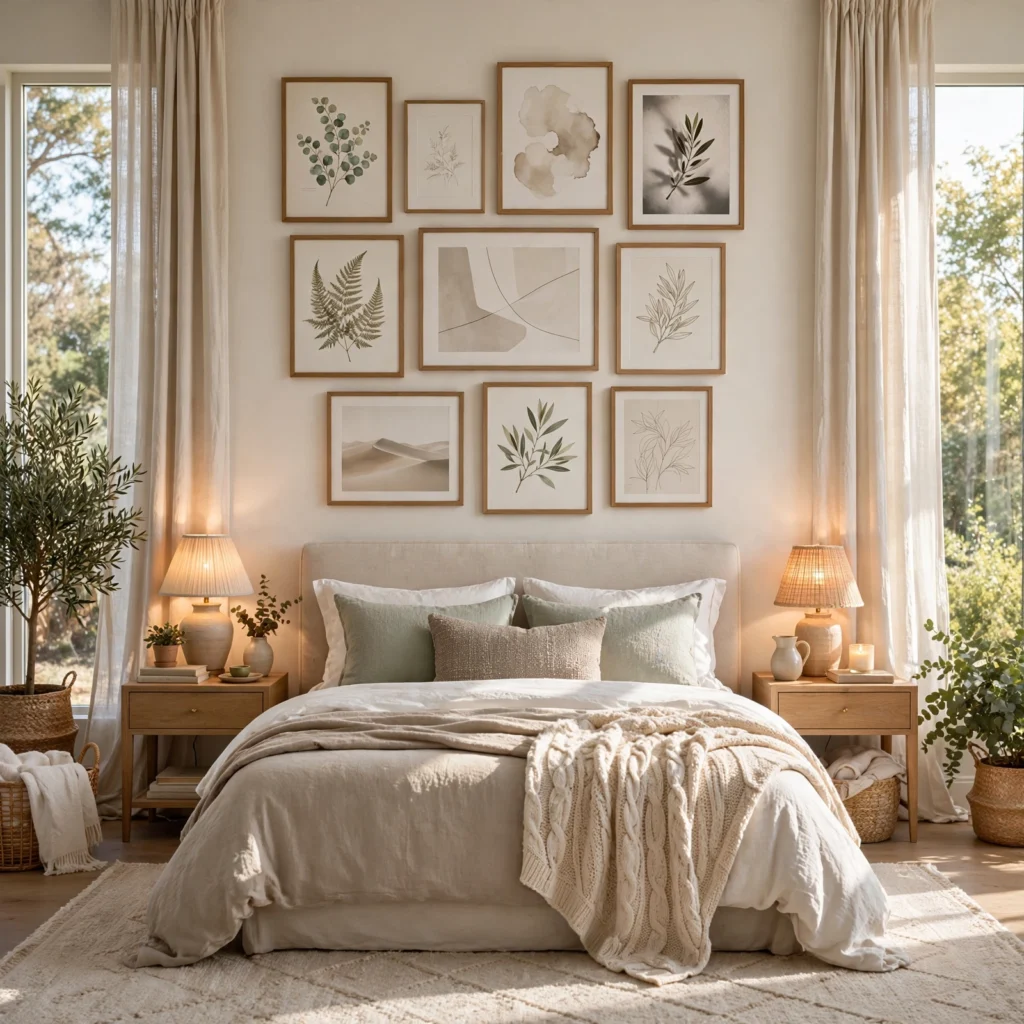
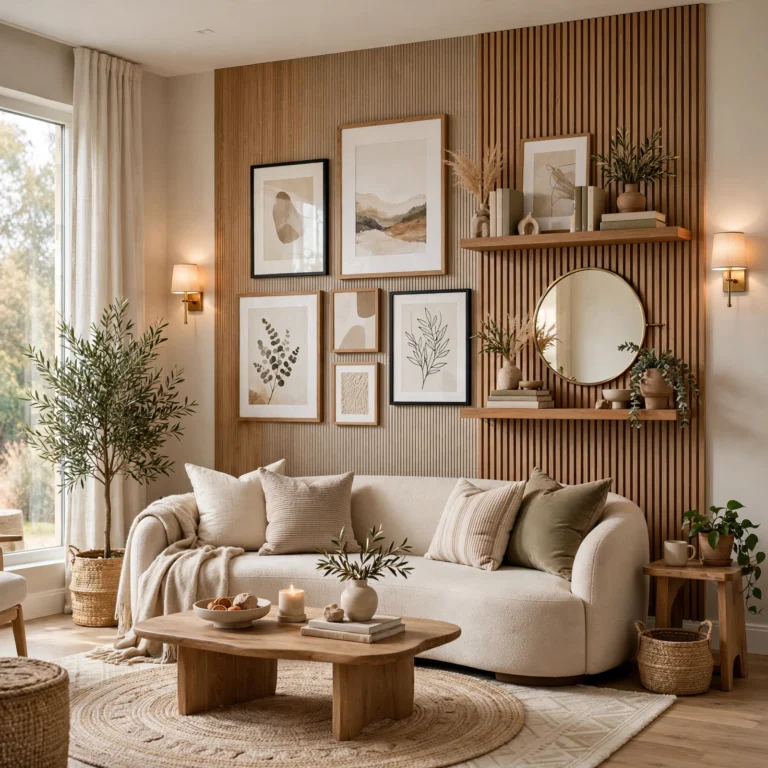
A gallery wall above the headboard groups framed prints, photos, or textile art into a single composition, giving the wall behind the bed a defined focal point rather than leaving it bare or reliant on a single centered piece. This approach to room decor ideas bedroom styling works particularly well since the wall behind the headboard is visible from nearly every angle of the room. Keeping the total width of the gallery roughly aligned with the bed’s width below it keeps the composition feeling proportional.
6. Woven Area Rug Beneath the Bed
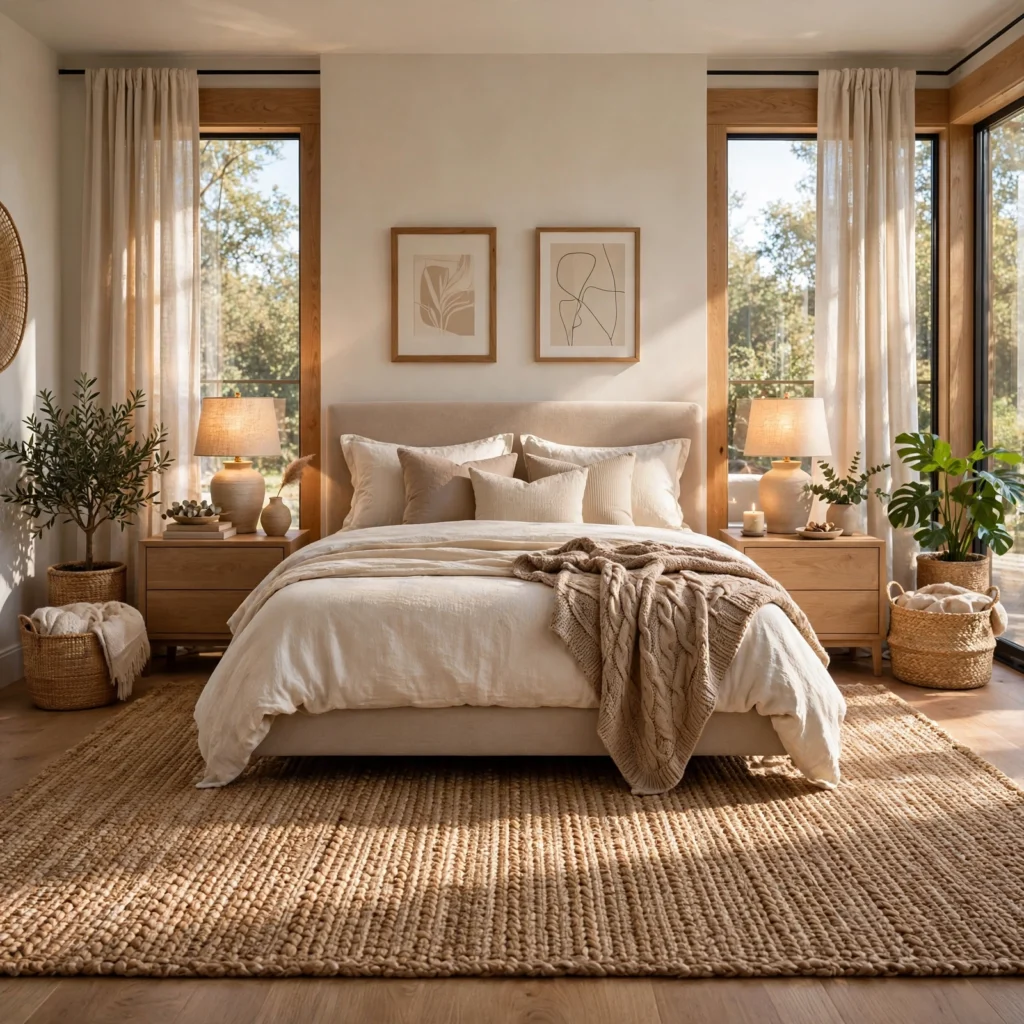
A woven area rug placed beneath the bed, extending at least 18 to 24 inches beyond each side, softens the transition to hard flooring like hardwood or tile while adding warmth underfoot when getting in and out of bed. Choosing a rug in jute or a low-pile wool blend balances softness with durability for daily use. This placement also visually anchors the bed as the room’s central focal point, rather than letting it float on bare floor.
7. Blackout Curtain Layering
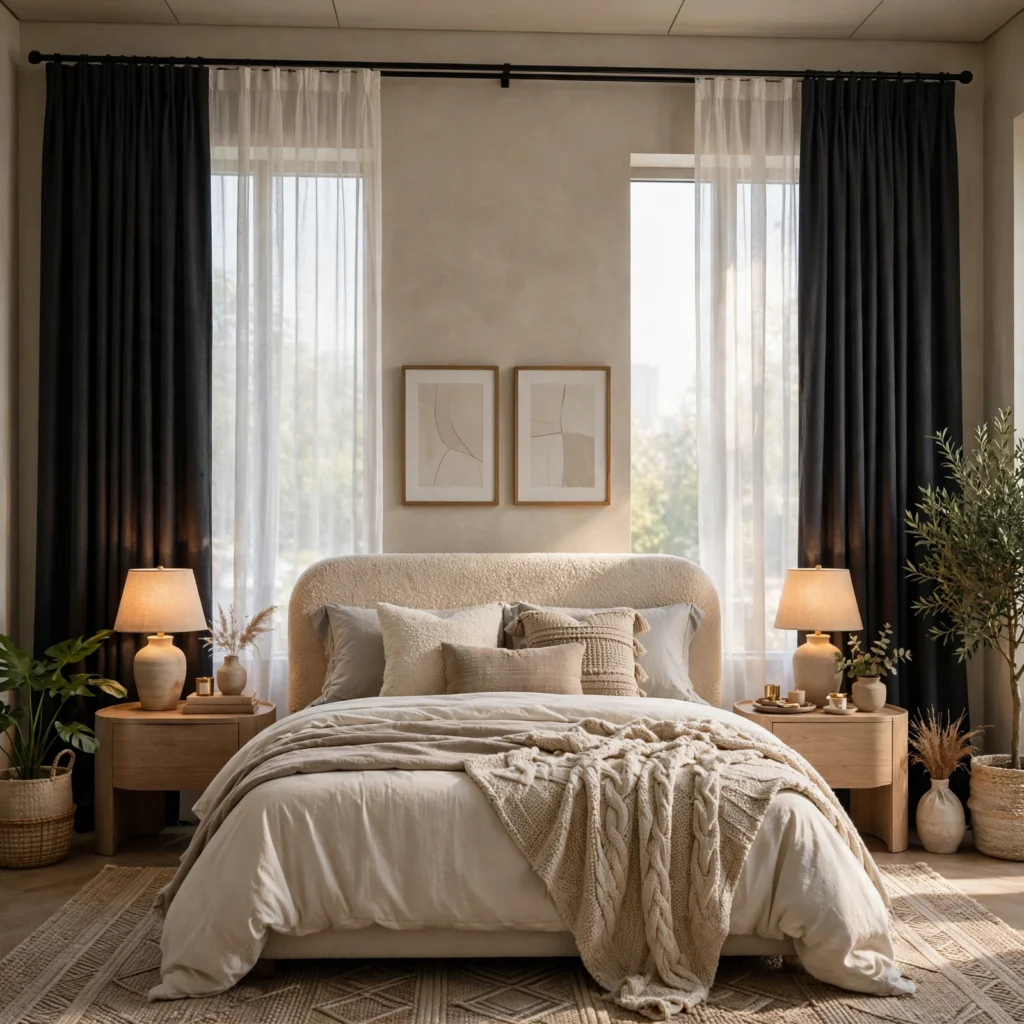
Blackout curtain layering pairs a functional blackout panel with a sheer or lighter linen curtain in front, allowing the room to shift between fully dark for sleep and softly lit during the day. Mounting the curtain rod a few inches above the window frame and extending it slightly past the sides makes the window appear larger while still providing full coverage when the blackout layer is closed. This idea supports both the room’s function and its overall styled appearance more effectively than a single curtain layer.
8. Reading Chair or Small Bench
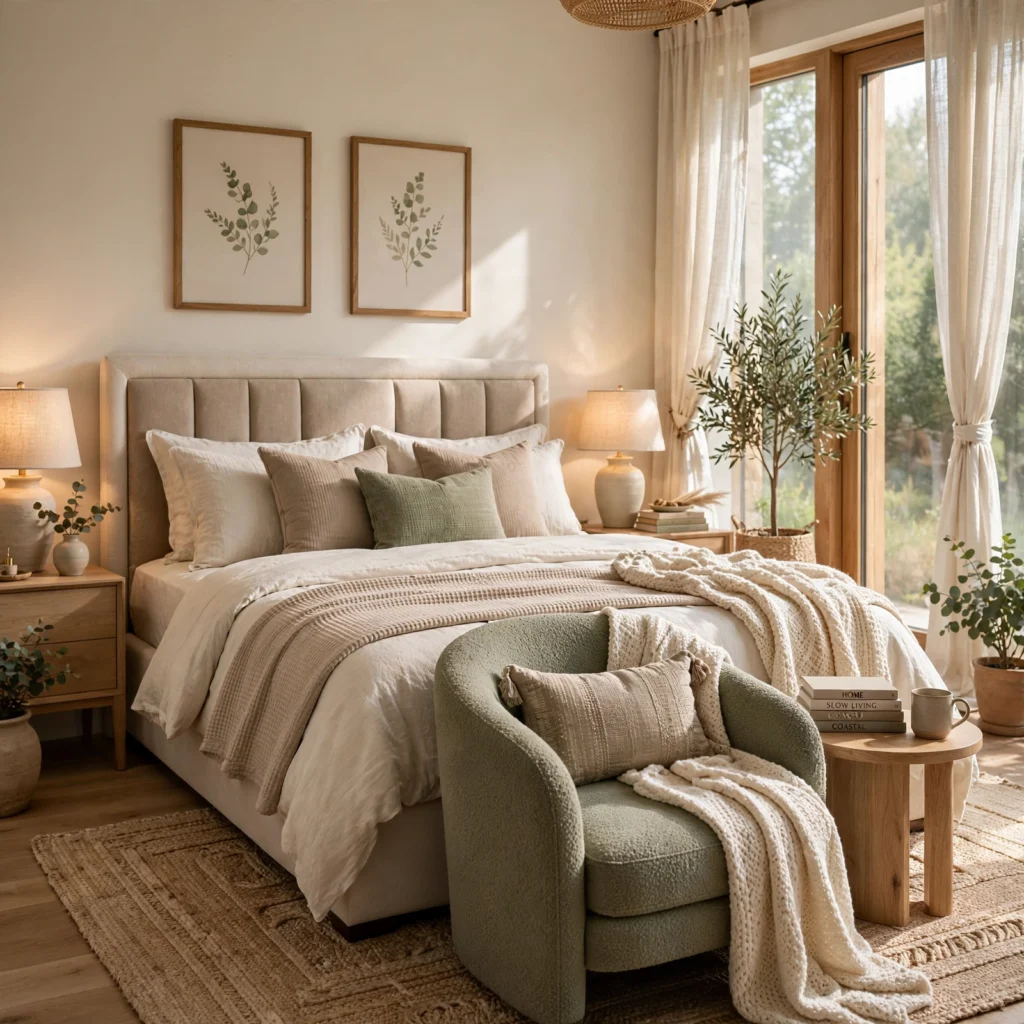
A reading chair or small bench, placed in a corner or at the foot of the bed, gives the room a secondary function beyond sleeping, whether that’s a spot to read, get dressed, or simply set down clothes for the next day. Choosing a piece scaled to the room’s actual size, rather than a bulky oversized chair, keeps this addition from overwhelming a smaller bedroom. A boucle or velvet upholstery adds texture that complements the bedding without exactly matching it.
9. Dimmable Overhead Fixture
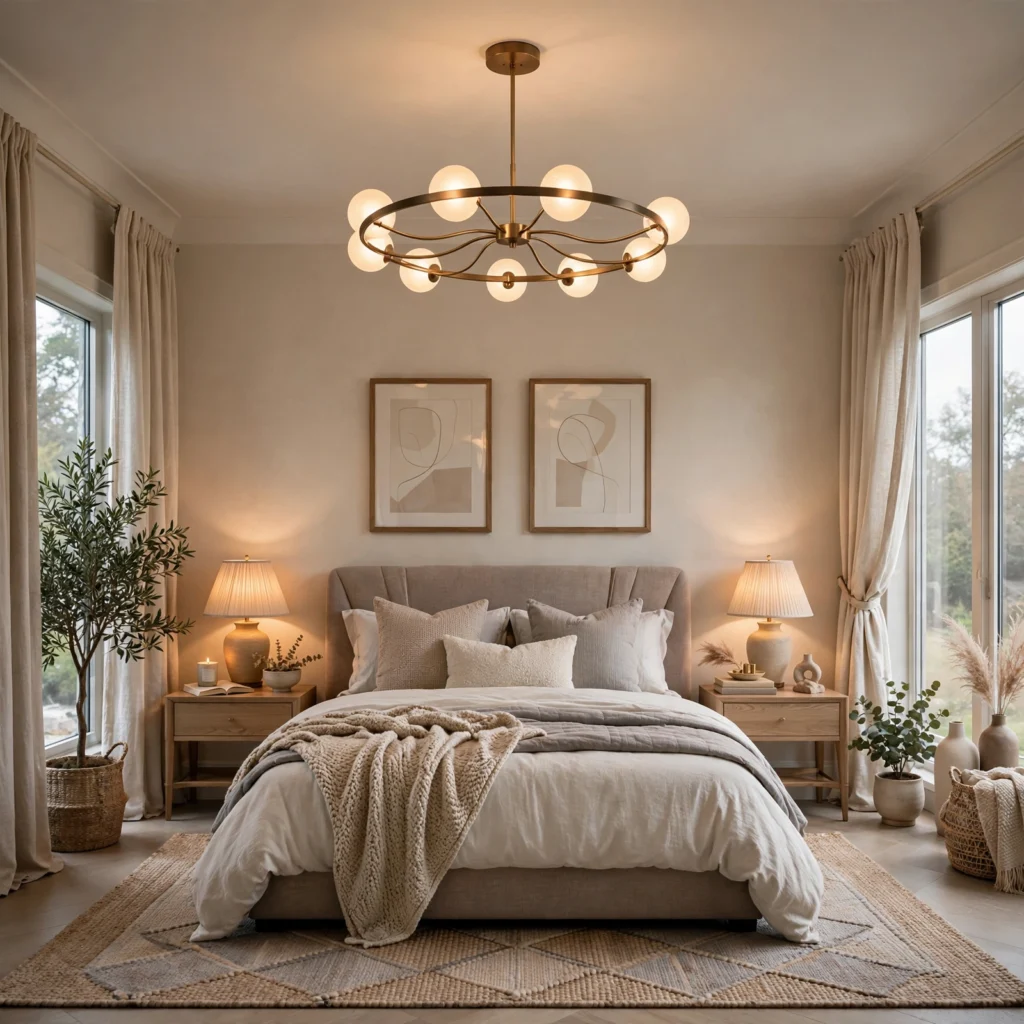
A dimmable overhead fixture replaces a single-setting ceiling light with one that adjusts from bright to soft, supporting different needs throughout the day from getting dressed in the morning to winding down in the evening. Choosing a fixture with a warm-toned bulb, rather than a stark white one, keeps the overhead option feeling cohesive with the room’s other lighting sources. This upgrade matters more in a bedroom than almost any other room, given how directly lighting affects sleep readiness.
10. Wall-Mounted Reading Sconces
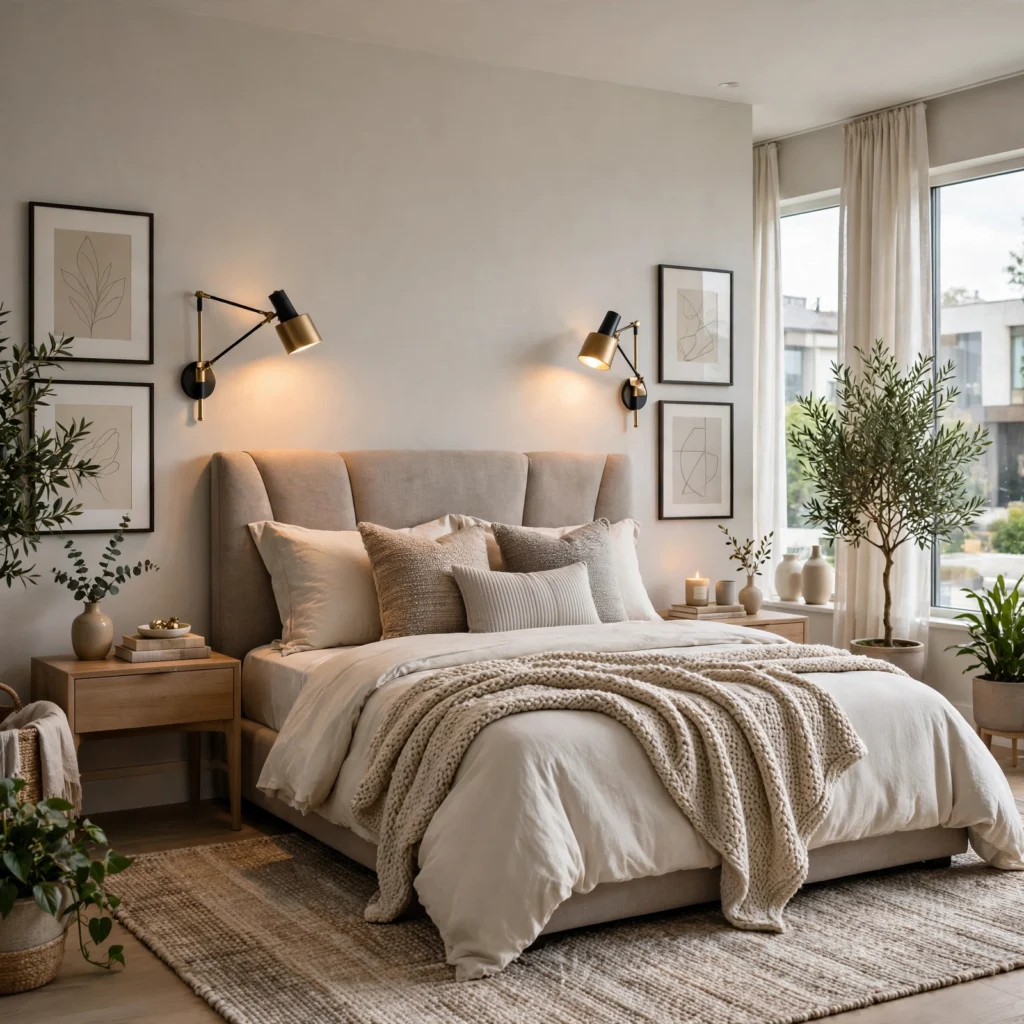
Wall-mounted reading sconces, installed on either side of the bed at a height reachable while lying down, provide focused light for reading without requiring a table lamp to take up nightstand surface space. Choosing a sconce with an adjustable arm allows the light to be directed exactly where needed. This idea frees up the nightstand for other items, like a glass of water or a small plant, while still providing the same functional lighting a lamp would.
11. Closet Organization System
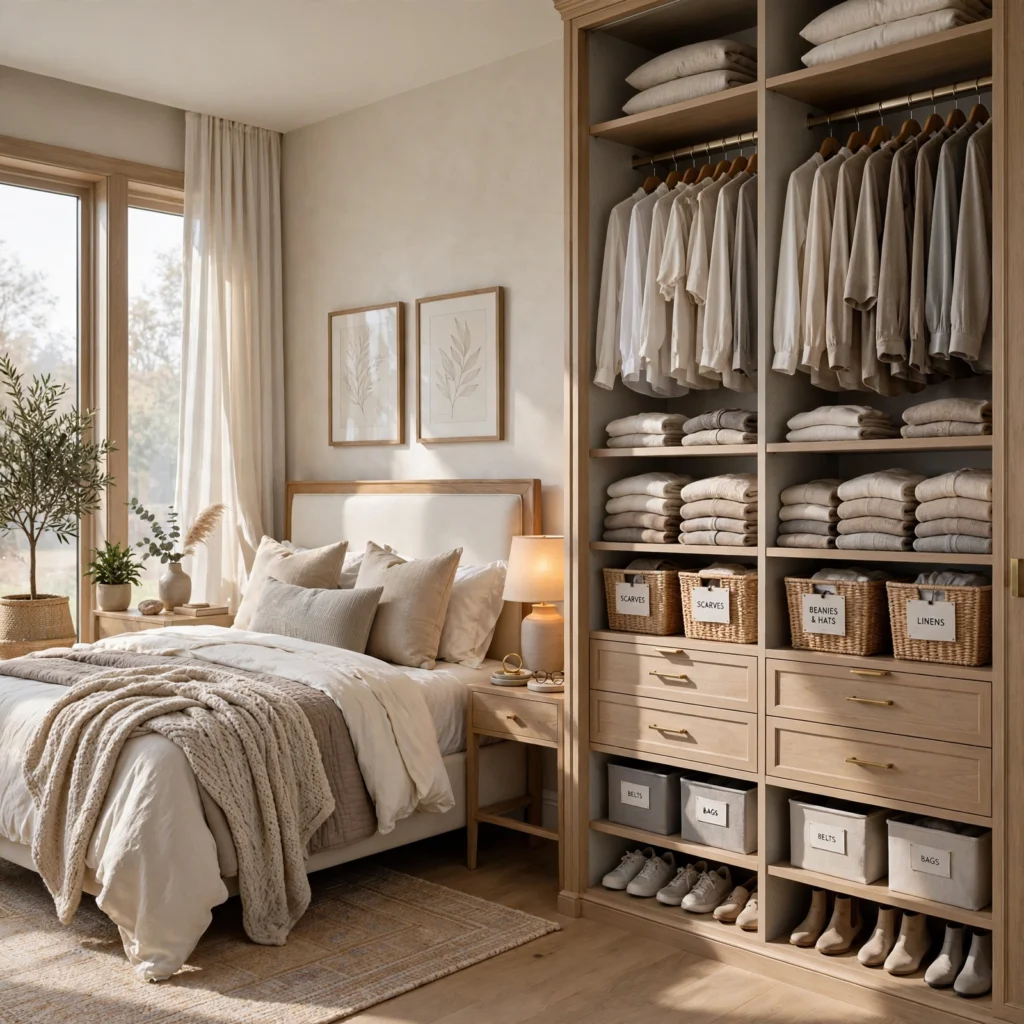
A closet organization system uses adjustable shelving, hanging rods at varying heights, and labeled bins to maximize storage within an existing closet footprint, reducing the need for additional freestanding furniture elsewhere in the bedroom. This matters particularly in a smaller bedroom where every square foot outside the closet needs to serve the room’s primary function of rest. Choosing an adjustable system, rather than a fixed single-rod setup, allows the closet to adapt as clothing and storage needs change over time.
12. Textured Wall Treatment Behind the Bed
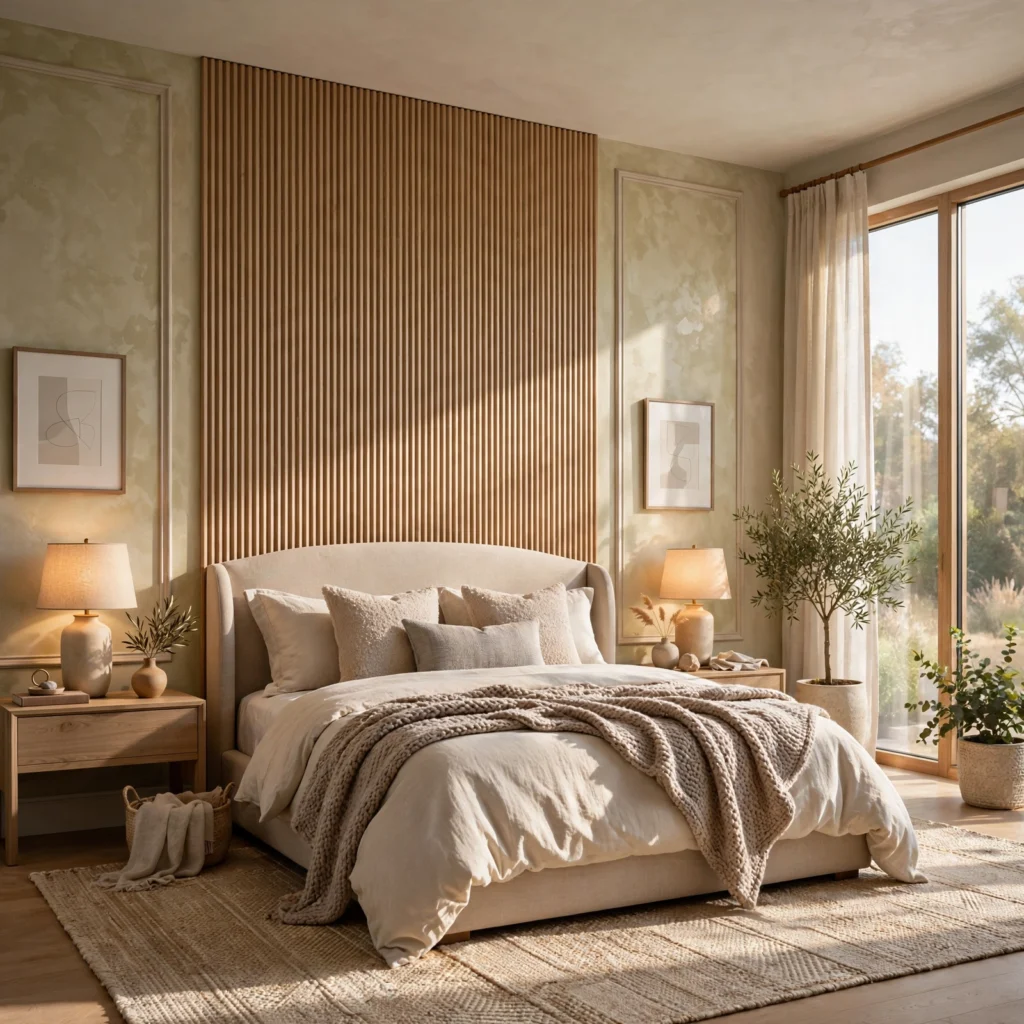
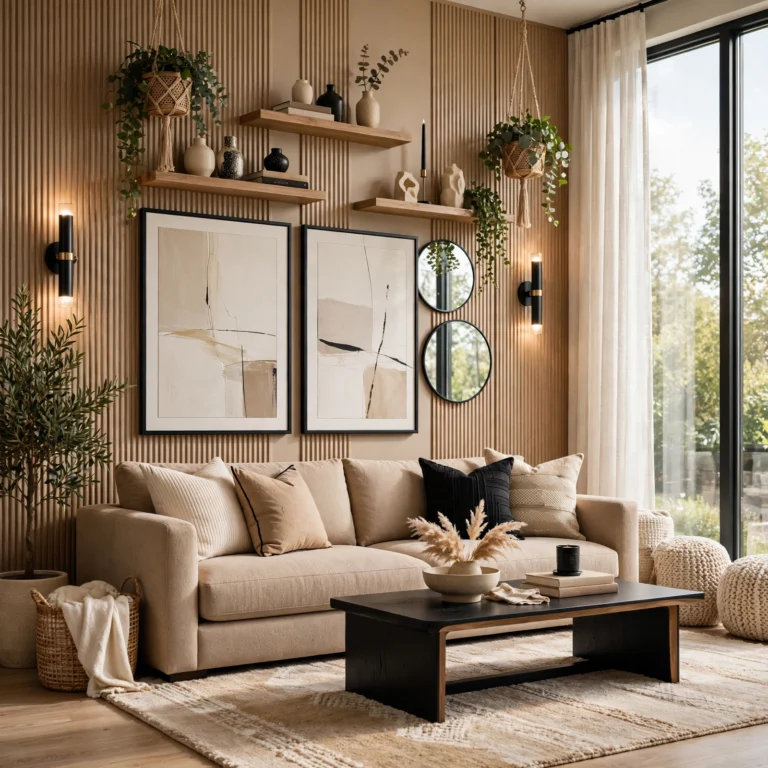
A textured wall treatment behind the bed, like wood paneling, a grasscloth wallpaper, or a limewash paint finish, gives the headboard wall a distinct material identity separate from the rest of the room’s flat painted walls. This treatment draws attention to the bed as the room’s clear focal point while adding warmth and texture that flat paint alone can’t achieve. Keeping this treatment to just the one wall, rather than the whole room, maintains the focal effect without overwhelming a smaller bedroom.
| Treatment Type | Best Wall Size | Installation Difficulty |
| Wood paneling | Any size, works best full height | Moderate, DIY possible |
| Grasscloth wallpaper | Any size | Moderate, professional recommended |
| Limewash paint | Any size | Easy, DIY friendly |
13. Vanity or Dressing Corner
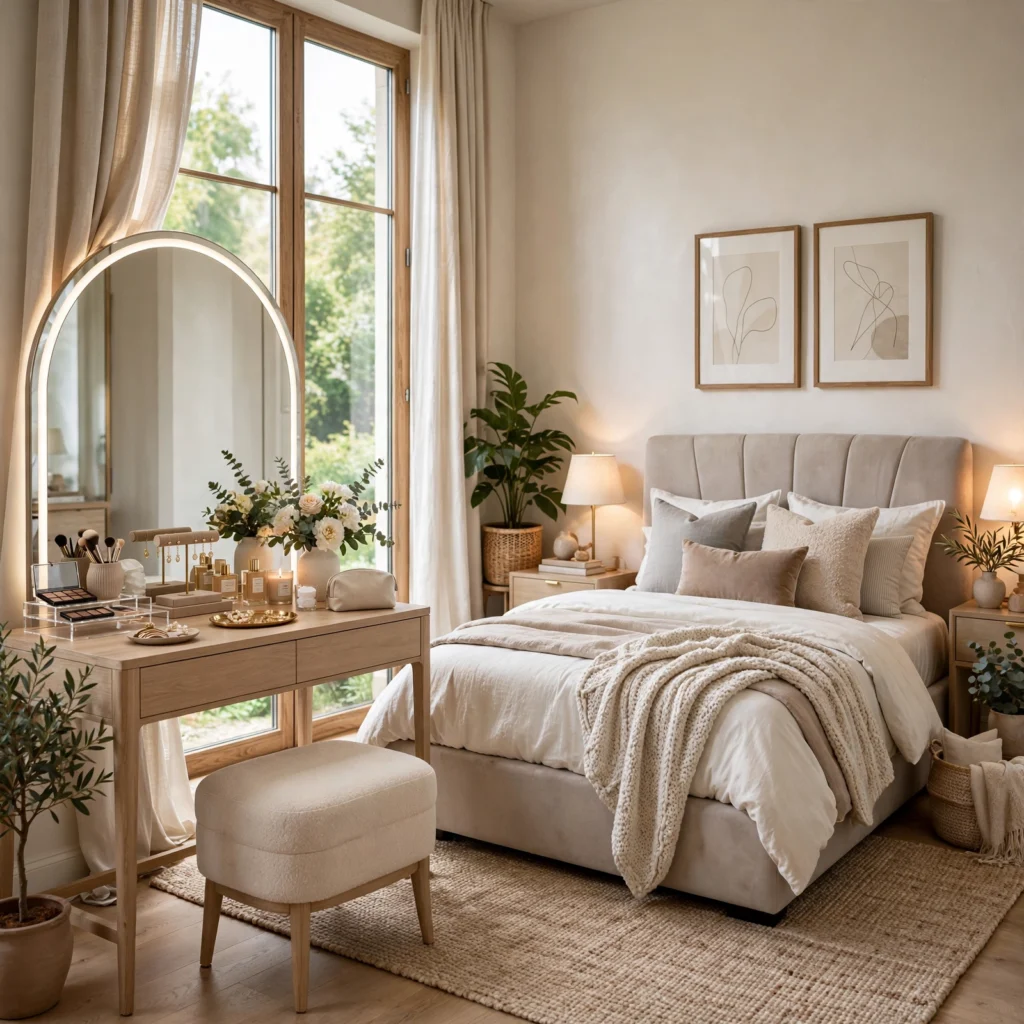
A vanity or dressing corner dedicates a small desk-like surface with a mirror and good lighting to a corner of the bedroom, giving the room a defined spot for getting ready that doesn’t require sharing space with a shared bathroom. Choosing a slim console-style vanity, rather than a bulky traditional dressing table, keeps this addition from consuming too much floor space in a smaller room. Adding a small stool that tucks fully underneath keeps the corner feeling open when not in use.
14. Layered Plant Display
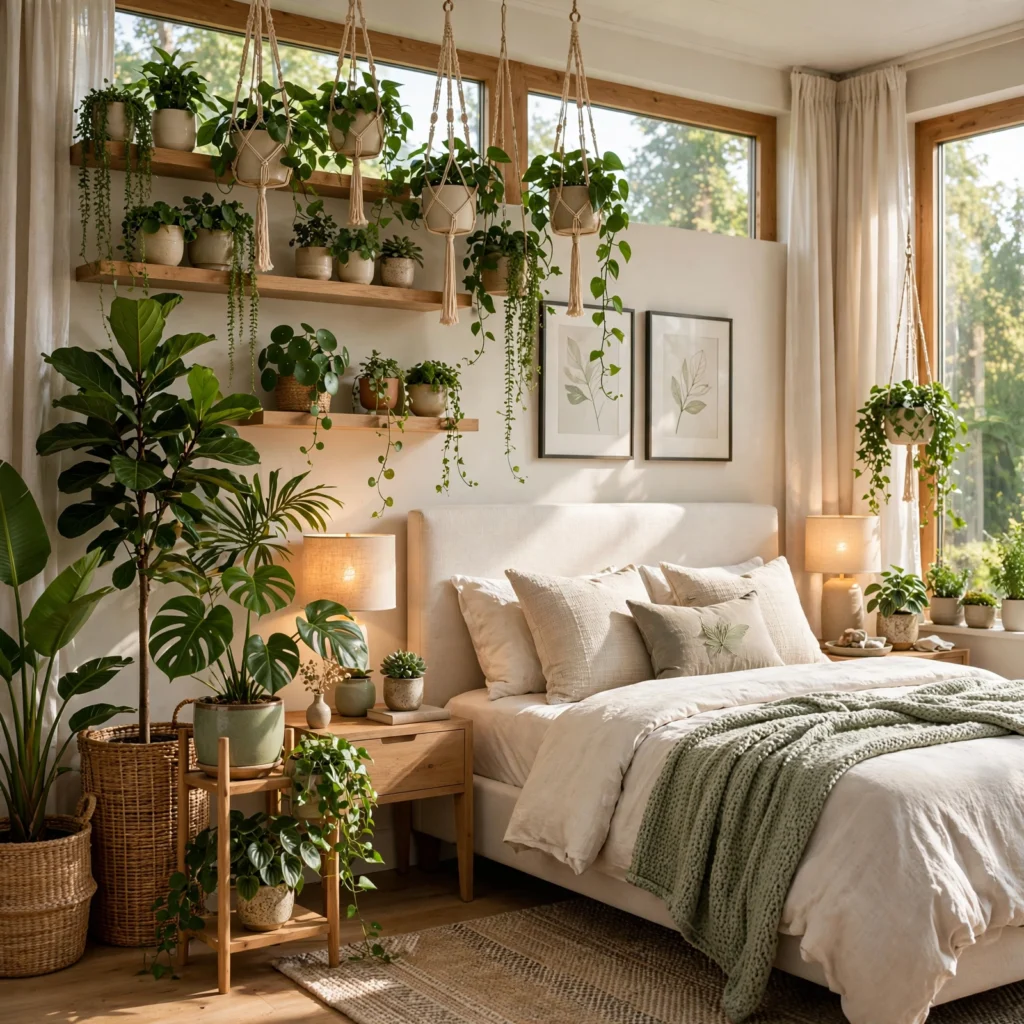
A layered plant display groups two or three plants of varying heights on a windowsill, a small shelf, or the floor beside a dresser, bringing natural texture into a room that otherwise relies on fabric and furniture for warmth. Choosing low-light-tolerant varieties, like a snake plant or a pothos, suits bedrooms that may not have the brightest natural light exposure throughout the day. This idea also supports the room’s overall wellness-focused feel, aligning with the broader trend toward treating the bedroom as a calming retreat.
15. Concealed Cord and Charging Station
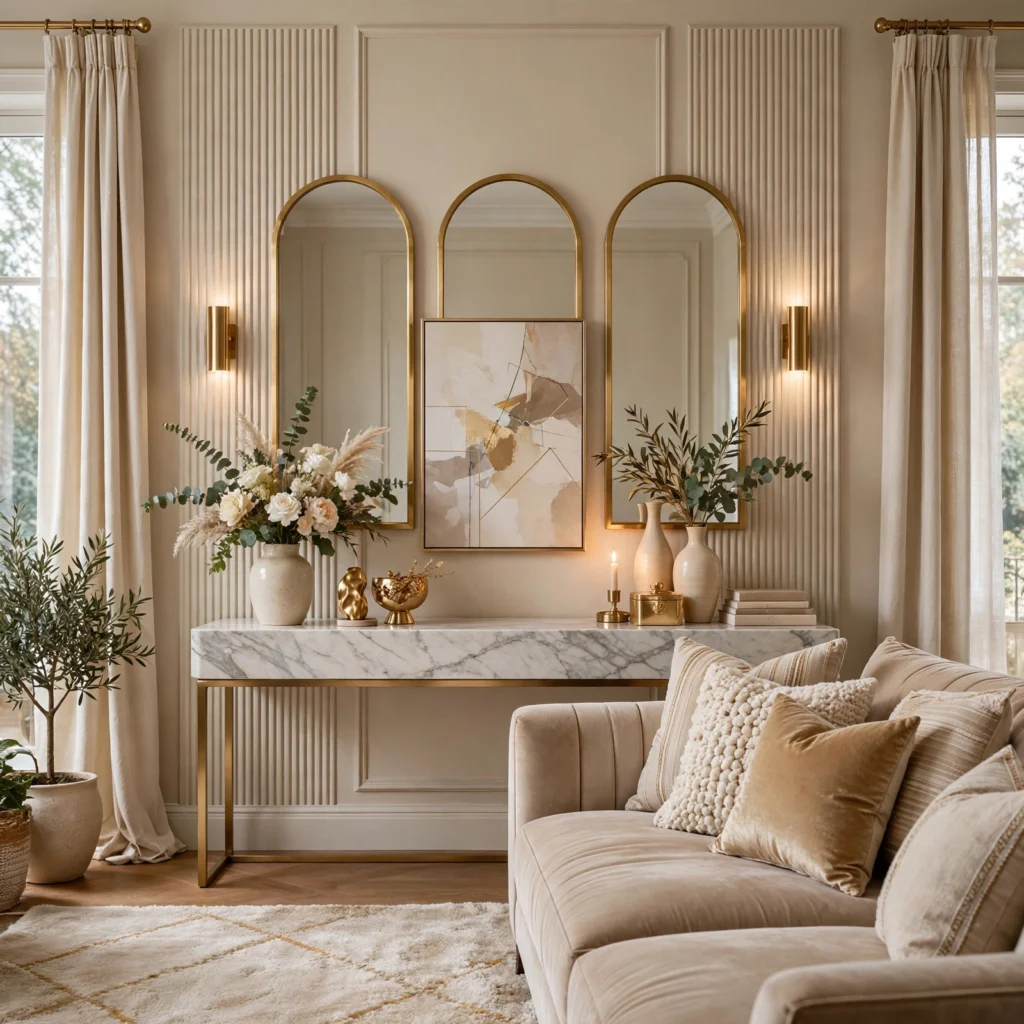
A concealed cord and charging station routes phone chargers and small electronics through a drawer or a cord management box on the nightstand, keeping visible cords from cluttering the surface closest to the bed. This detail supports both a cleaner look and a better sleep environment, since reducing visible screens and cords near the bed is commonly recommended for winding down before sleep. Choosing a nightstand with a built-in cord pass-through hole simplifies this setup considerably.
16. Scented Candle or Diffuser Corner
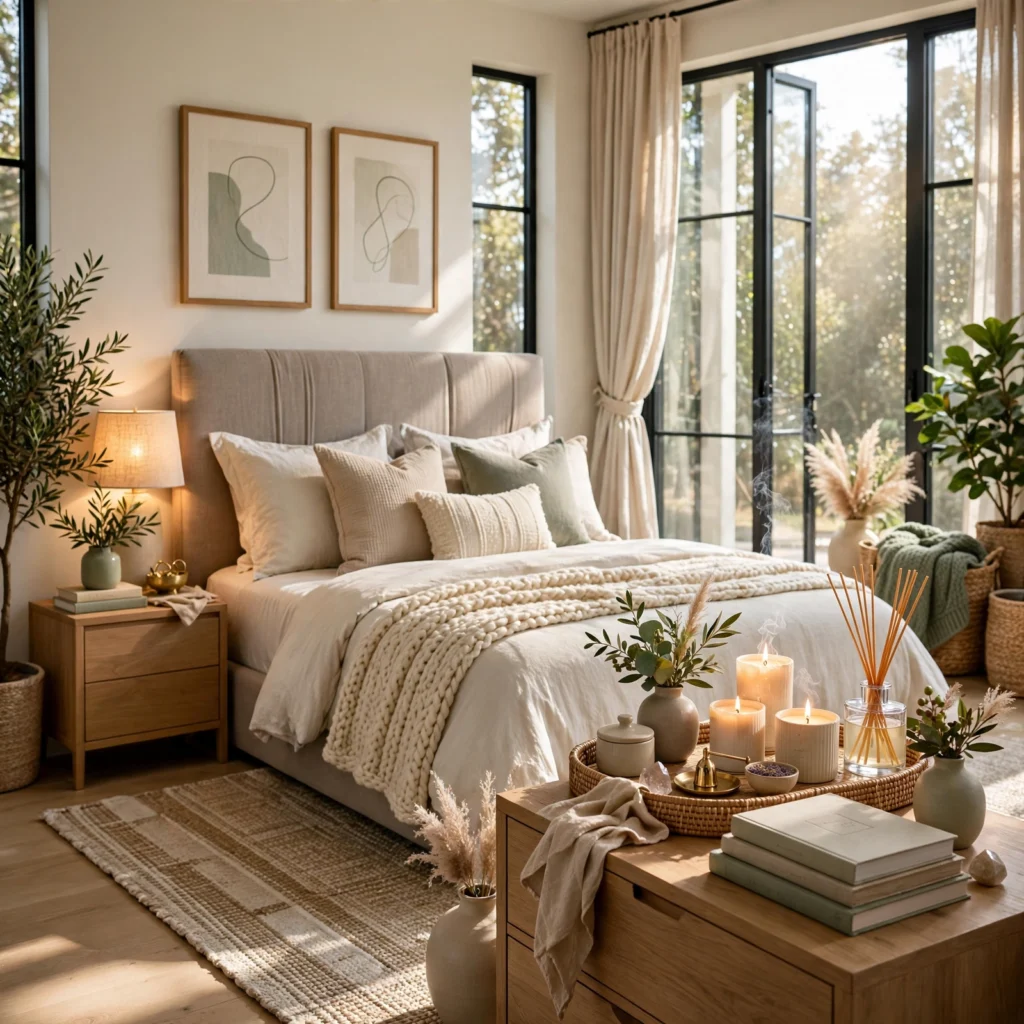
A scented candle or diffuser corner places a candle or reed diffuser on the dresser or a small tray, adding a consistent, calming scent to the room that supports the same wind-down routine as warm lighting and soft textiles. Choosing a subtle scent like lavender, sandalwood, or a similar calming fragrance suits a bedroom better than a stronger, more energizing scent that might work in a kitchen or living space. Placing the diffuser away from direct bed contact keeps this detail both safe and functional.
17. Curated Dresser Top Styling
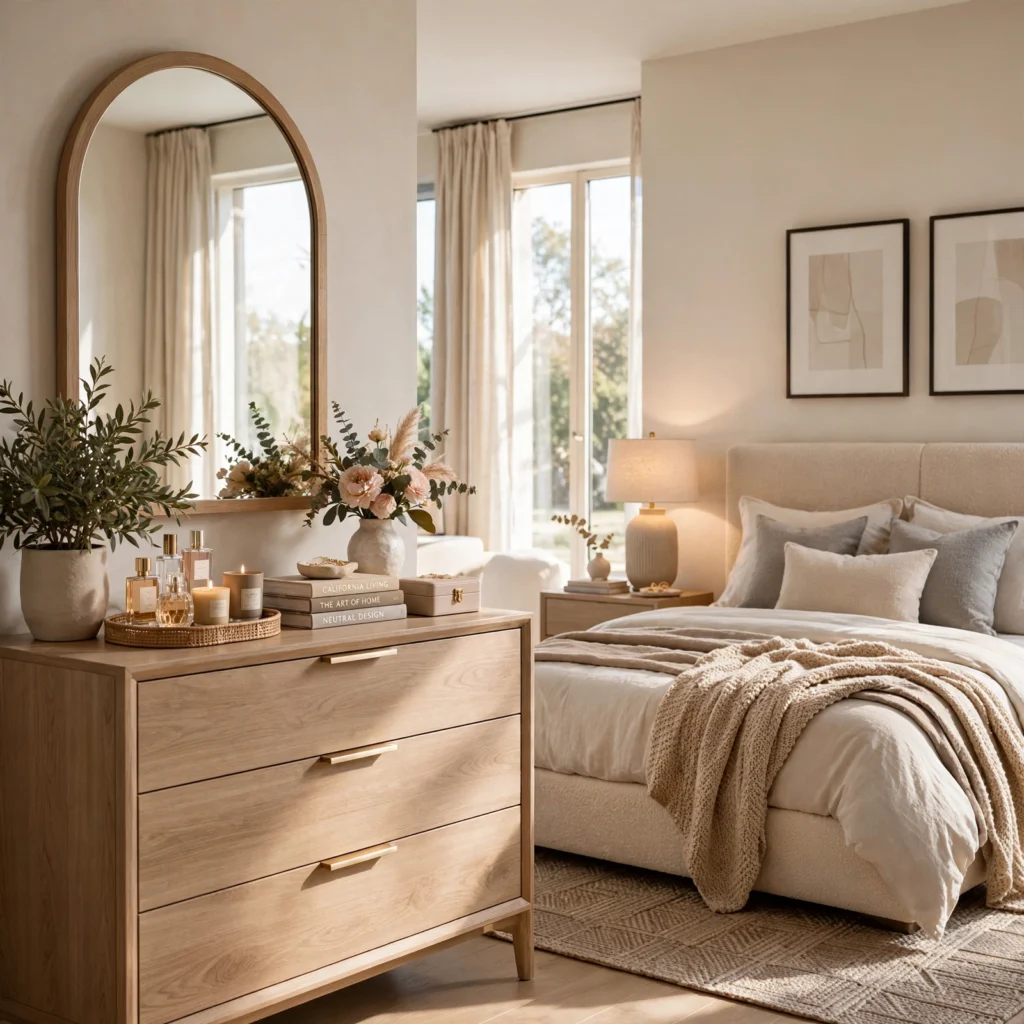
Curated dresser top styling arranges a small tray, a stack of books, and a single decorative object or a small vase into a balanced grouping rather than leaving the surface cluttered with everyday items like jewelry or loose change. Keeping the arrangement to three or four pieces maintains a tidy, intentional look even in a room that sees daily use getting ready each morning. Rotating the specific objects seasonally is one of the simplest ways to refresh the bedroom’s look without any furniture changes.
Shop the Look
For this palette, look for an upholstered linen headboard, a layered bedding set combining linen and a chunky knit throw, a pair of matching nightstands with drawer storage, wall-mounted reading sconces, and a jute area rug sized to extend well beyond the bed frame. These pieces work together across several of the ideas above without requiring a full bedroom furniture replacement.
Common Mistake to Avoid
The most common mistake is prioritizing how a bedroom photographs over how it actually functions for sleep, leading to choices like harsh overhead lighting left as the only light source, or an undersized rug that leaves the floor feeling cold and disconnected around the bed. A bedroom that looks styled in photos but relies on cool white overhead light and no layered lighting options often falls short of actually supporting good rest. Balancing visual styling with functional choices, like dimmable and warm-toned lighting, produces a room that looks good and works well for its primary purpose.
FAQs
What room decor ideas bedroom spaces should prioritize first?
Layered bedding and warm-toned bedside lighting should generally come first among room decor ideas bedroom spaces need, since these two elements affect both the room’s overall look and its actual function for rest more than almost any other single choice. An upholstered headboard is a close third priority, since it anchors the room’s visual focal point. Storage and smaller styling details, like a gallery wall or dresser top arrangement, work well as a next layer once these foundational choices are settled.
How much does it cost to update bedroom decor on a budget?
A budget refresh using layered bedding, a curated dresser top arrangement, and a scented candle can run under $150 total, while adding wall-mounted sconces or a woven area rug typically pushes the range to $250–$600. Larger investments like an upholstered headboard or a textured wall treatment behind the bed cost more depending on materials, often landing between $500 and $1,500 for a more complete bedroom refresh.
What lighting is best for a bedroom?
A bedroom benefits most from layered lighting, combining a dimmable overhead fixture with warm-toned bedside lamps or sconces around 2700K, rather than relying on a single bright overhead source for every activity in the room. This layering allows the lighting to shift between bright and functional for getting dressed and softer for winding down before sleep. Avoiding cool white bulbs throughout the bedroom specifically supports a more restful evening routine compared to a kitchen or home office, where cooler light works better.
How do I choose the right size rug for a bedroom?
Choosing the right rug size for a bedroom generally means selecting one large enough to extend at least 18 to 24 inches beyond each side of the bed frame, ensuring the rug reaches areas where feet actually land getting in and out of bed. A rug that only fits under a nightstand, or one significantly smaller than the bed itself, tends to look disconnected rather than intentional. Measuring the bed frame’s actual dimensions before purchasing prevents this common sizing mistake.
Does bedroom decor affect sleep quality?
Bedroom decor can affect sleep quality, particularly through lighting choices, since warm, dimmable lighting supports a better wind-down routine than harsh overhead light left on until the moment of turning in. Reducing visible clutter and concealing cords or electronics near the bed also supports the kind of calm visual environment associated with easier sleep onset. While decor alone won’t resolve significant sleep issues, thoughtful choices around lighting and clutter do meaningfully support the room’s function as a place to rest.
Conclusion
These room decor ideas bedroom spaces can use cover everything from a simple bedding layering swap to a fuller headboard and lighting investment, giving you options regardless of your room’s size or how much of a refresh you’re ready for. Start with lighting and bedding, since those two areas affect both style and actual sleep function the most, then layer in storage and smaller styling details as time and budget allow. Save this guide to Pinterest for later, and check out our related post on room decor ideas for more general styling guidance.