17 White Christmas Tree Decorating Ideas for a Stunning Holiday Look That Feels Elegant and Fresh
A white or flocked Christmas tree offers a blank canvas that shows off ornament color and finish more clearly than a traditional green tree, which is exactly why the right white christmas tree decorating ideas matter more here than on almost any other tree type. This guide walks through seventeen distinct color and ornament combinations, from silver and crystal to peacock blue and teal, that make the most of a white tree’s neutral base. You’ll learn what ornament ratios and lighting choices actually create a cohesive look, roughly what to budget, and how to avoid the common mistake of adding too many competing colors to a surface that shows every choice clearly. Each idea includes real material names and ornament ratios.
Trend & Background
White and flocked Christmas trees have grown significantly in popularity as more people treat holiday decorating as a defined design project rather than a once-a-year obligation using whatever ornaments happen to be on hand. A white base has become popular specifically because it photographs well and pairs easily with nearly any accent color scheme, from icy silver to warm copper, without the green base color competing for attention the way a traditional tree does. This matters now because ornament manufacturers have responded with expanded metallic and jewel-tone collections specifically marketed for white and flocked trees, making a fully coordinated look easier to source than it was even a few seasons ago.
Key Takeaways
- Seventeen ornament and color combinations show how to style a white or flocked Christmas tree for different aesthetics.
- Reference tables are included for ornament ratios, light temperature, and ribbon width so you can plan before you decorate.
- A white tree’s neutral base makes color and finish choices more visible than on a green tree, so consistency matters even more.
- Most combinations use two to three accent colors rather than scattering many unrelated tones across the branches.
1. Silver and Crystal Ornament Mix
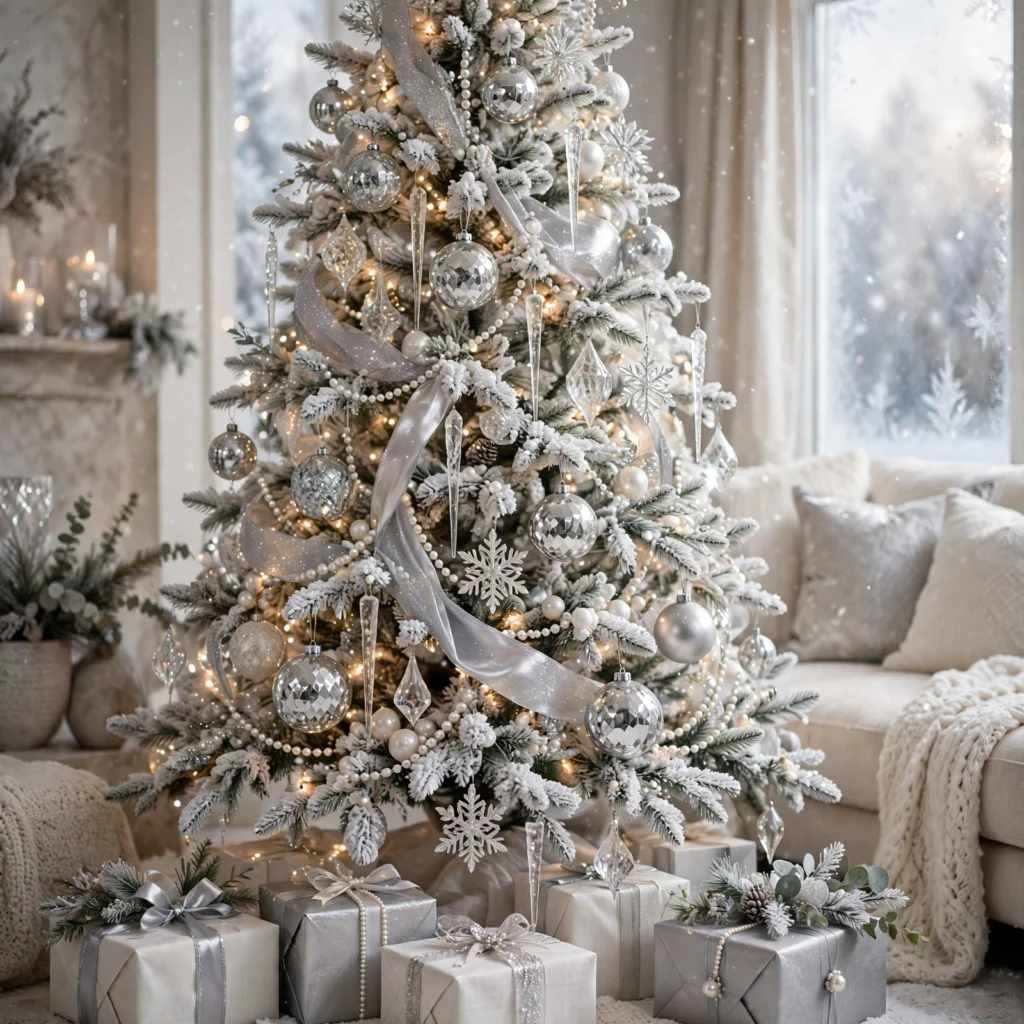
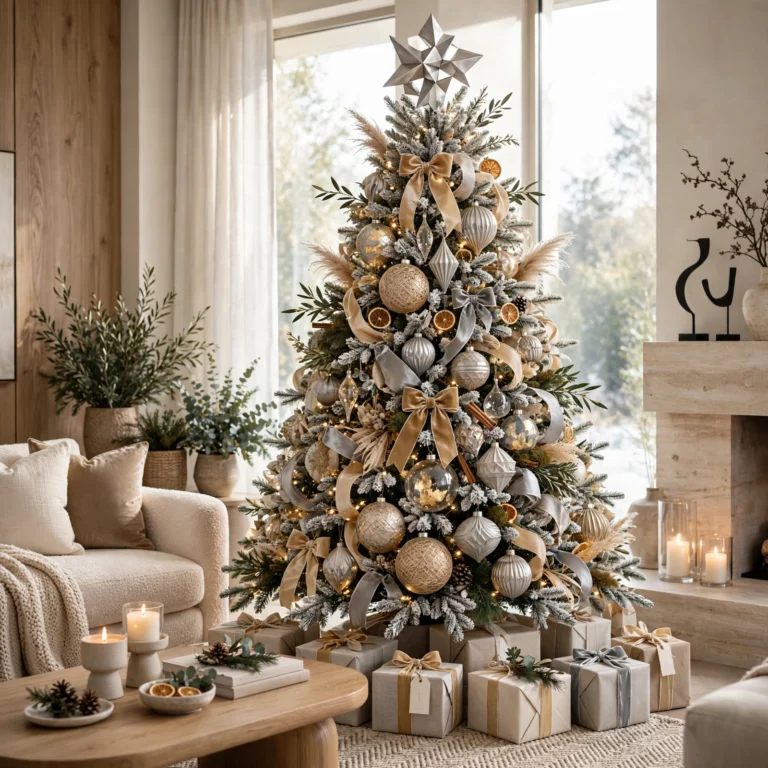
Silver and crystal ornaments against a white tree create a classic, icy elegance that reads as timeless rather than tied to a specific trend. Mix faceted crystal ball ornaments with brushed and mirrored silver finishes for texture variation, and use clear or cool-white lights rather than warm white, since the cooler light temperature enhances the reflective quality of both the silver and crystal pieces.
| Ornament Finish | Approx. Ratio | Placement |
| Mirrored silver | 40% | Even distribution |
| Crystal/glass | 35% | Clustered near light sources |
| Brushed silver | 25% | Scattered accents |
2. Blush Pink and Gold Accents
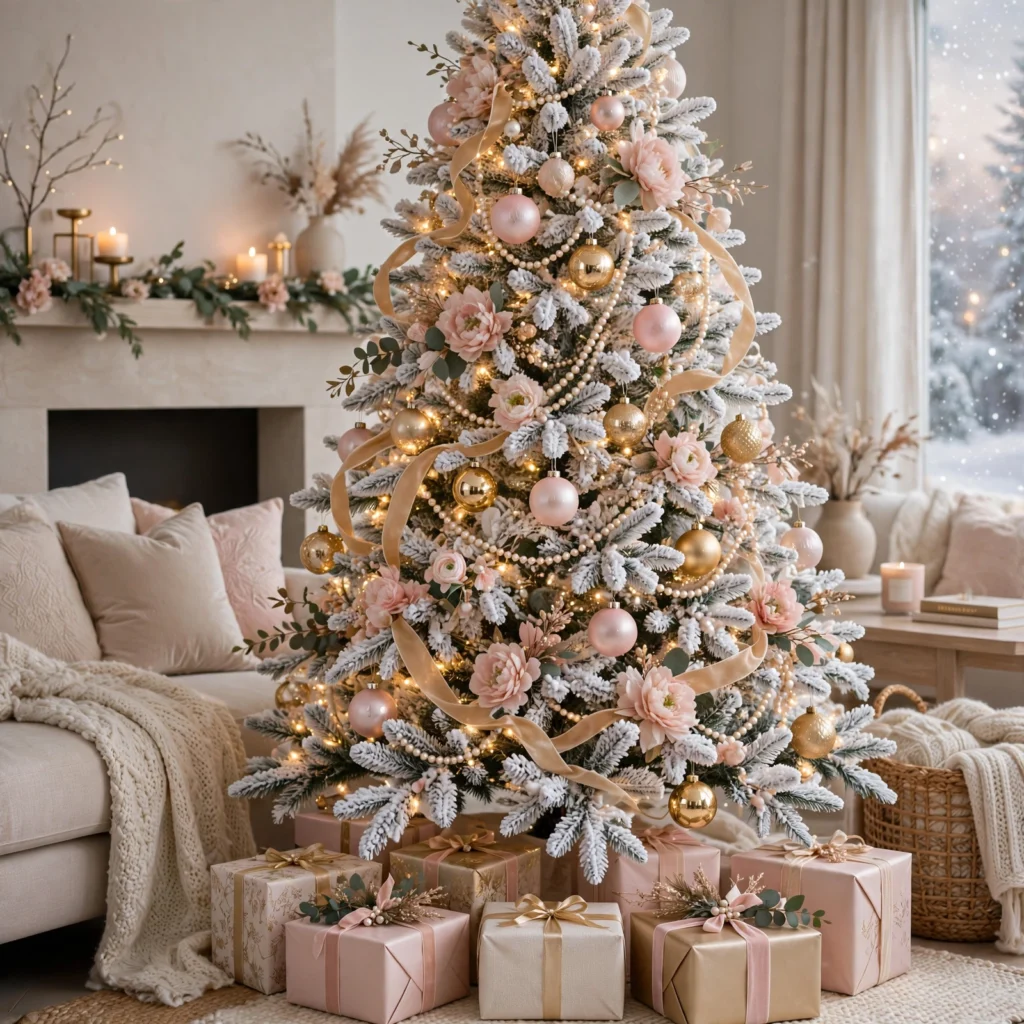
Blush pink paired with gold against a white base creates a soft, feminine palette without leaning into a strictly traditional holiday color scheme. Use blush as the dominant ornament color, and layer in gold through ribbon, a star topper, and smaller metallic accents, keeping the gold in a supporting role so the softer blush tone stays the tree’s primary visual character.
In order to see more options for christmas tree ideas red CLICK HERE
3. Classic Red and White Traditional
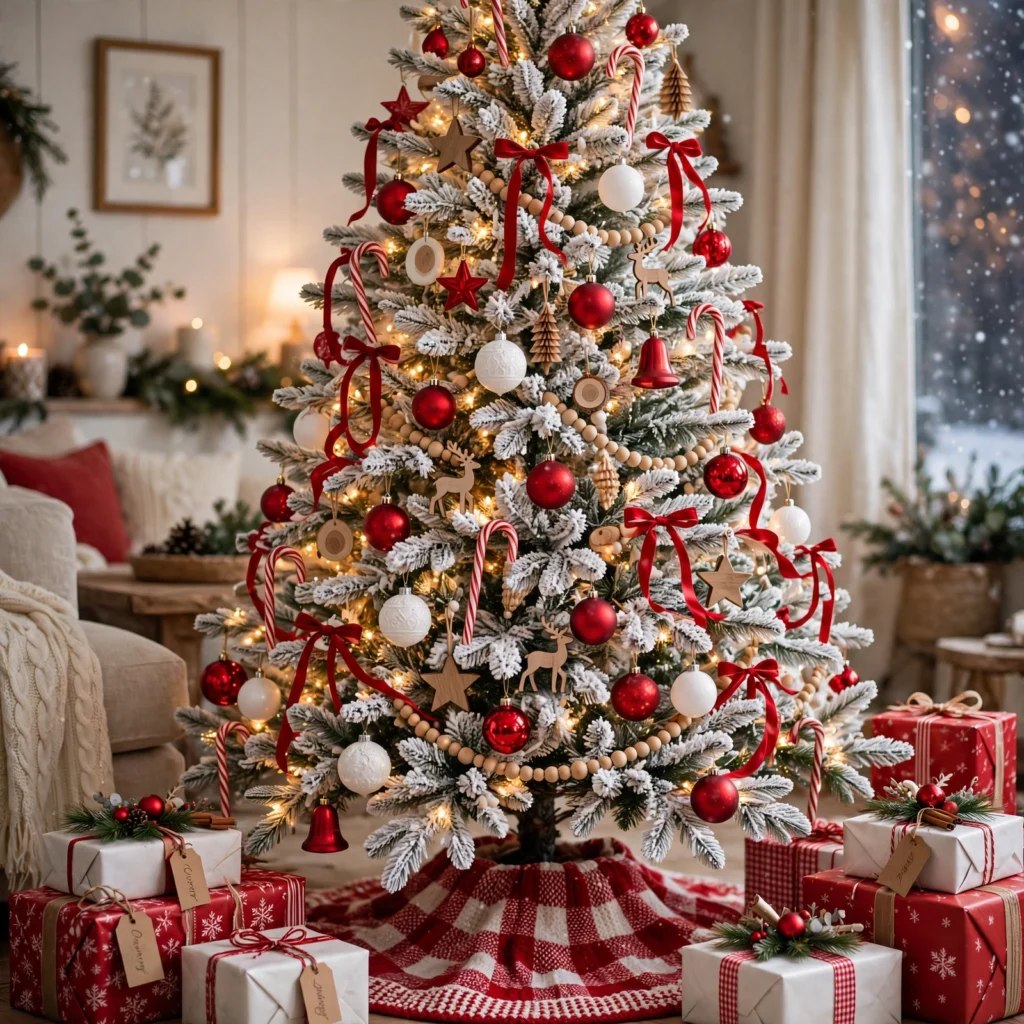
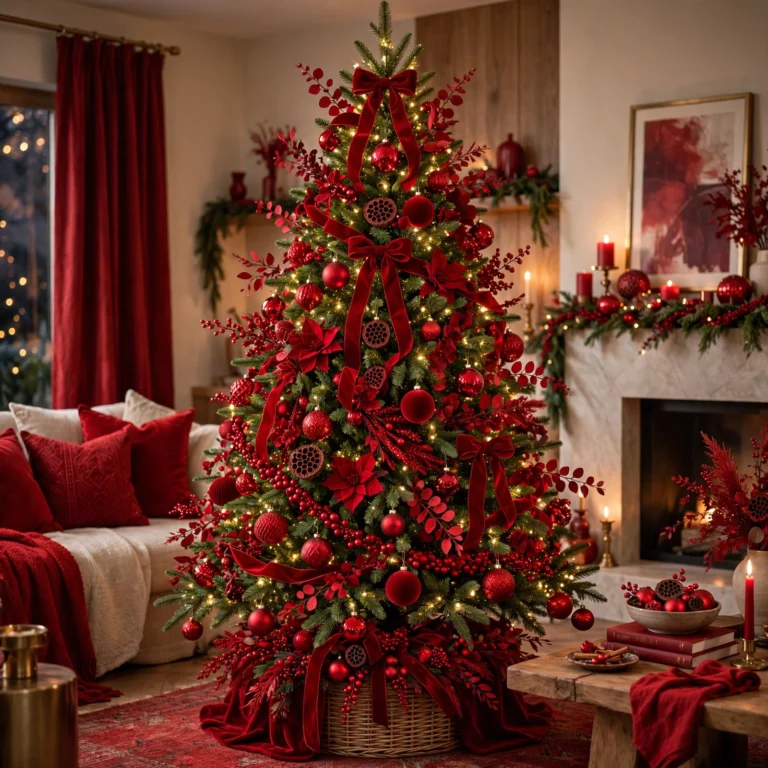
Classic red ornaments against a white tree deliver a bold, traditional holiday look with more visual punch than red would have against a standard green tree, since the white base provides maximum contrast. Use a mix of matte and glossy red ball ornaments in varying sizes, and add white or cream ribbon woven through the branches so the white base color is echoed intentionally rather than left as an untouched background.
| Ornament Type | Color | Approx. Quantity (7 ft tree) |
| Round ball ornaments | Red (matte/gloss mix) | 40–50 pieces |
| Ribbon | White or cream | 15–20 yards |
| Accent picks | Red berries | 10–15 stems |
4. Black and White Modern Contrast
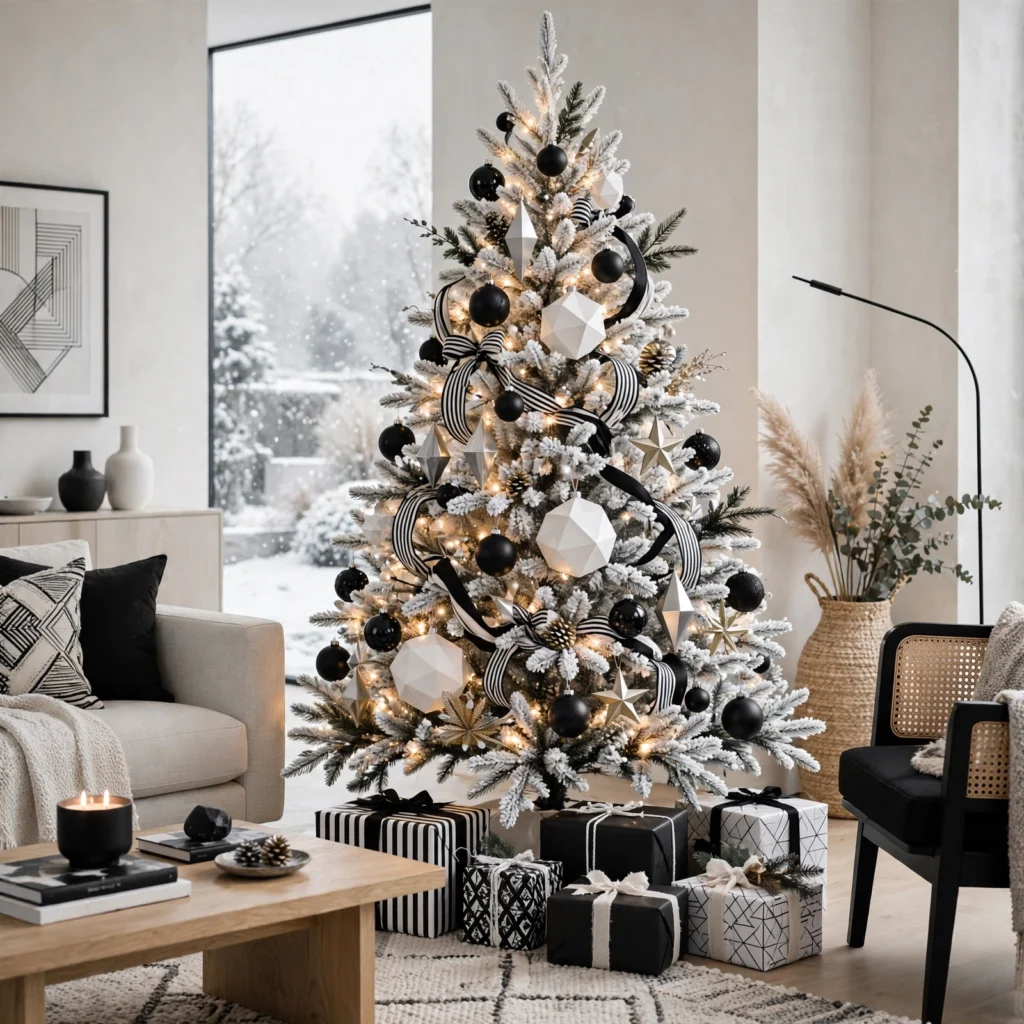
Black ornaments against a white tree create a graphic, high-contrast modern look well suited to a contemporary or minimalist home. Use matte black ball ornaments and thin black ribbon in a restrained, intentional pattern rather than dense coverage, since this theme depends on visible negative space between elements to maintain its clean, graphic character.
5. Navy and Silver Nautical Twist
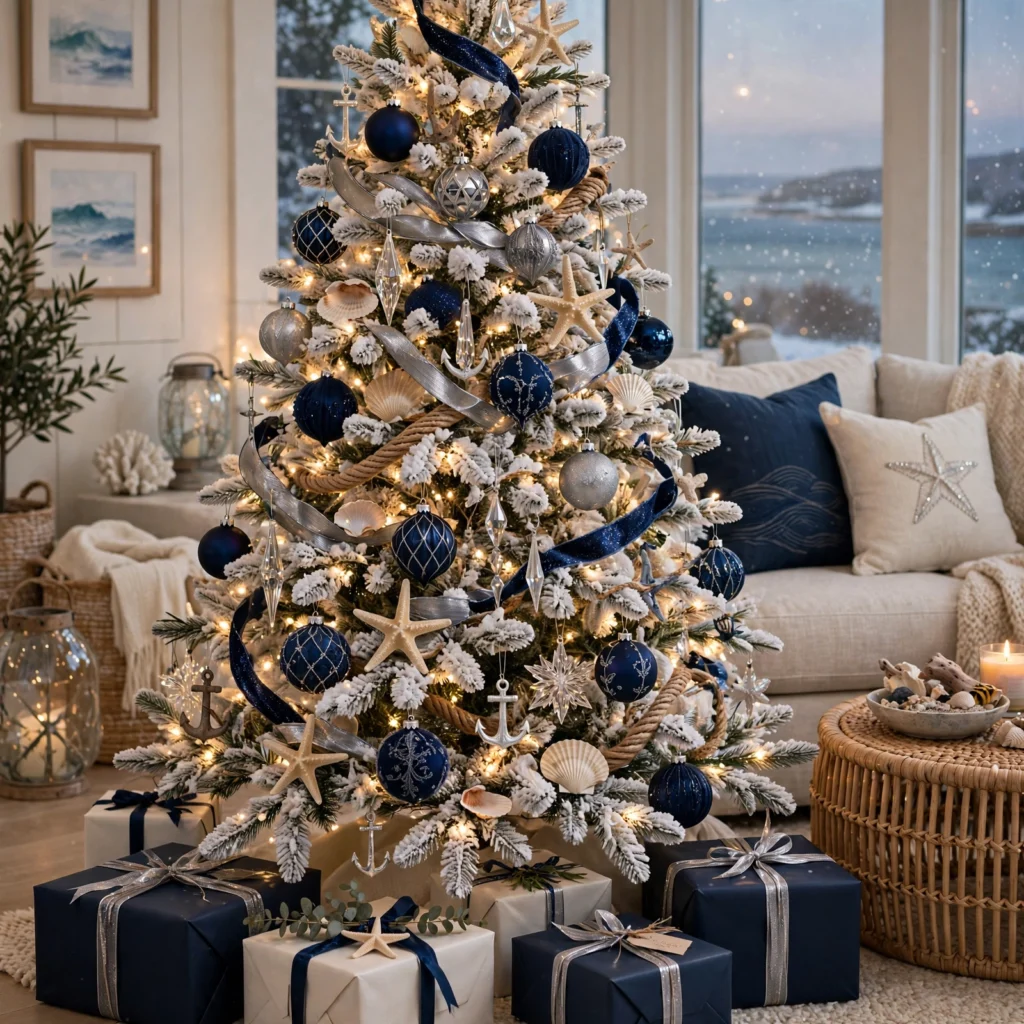
Navy blue paired with silver against a white base creates a fresh, slightly nautical-leaning palette that stands apart from typical red or gold holiday schemes. Use navy as the dominant ornament color, and bring in silver through star ornaments and ribbon accents, since the cool navy tone reads as sophisticated rather than purely seasonal when balanced against the tree’s white backdrop.
| Color | Hex Reference | Best Use |
| Navy | #1B2A41 | Ball ornaments, ribbon |
| Silver | #C0C0C0 | Stars, accent picks |
6. White Christmas Tree Decorating Ideas Moodboard
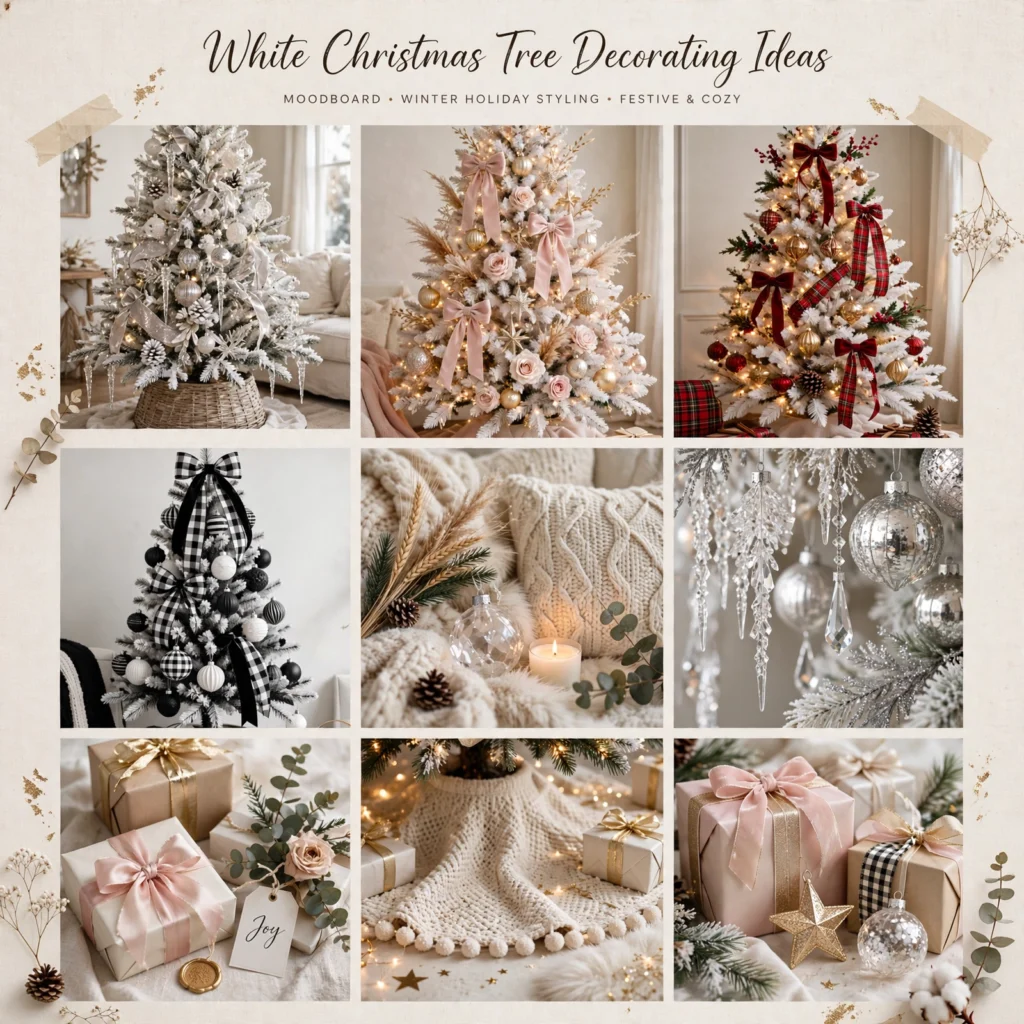
A moodboard acts as a rotating planning tool where you pin ornament photos, ribbon swatches, and color references while narrowing down a specific accent palette for a white tree. Build one from a cork panel wrapped in linen, framed with thin wood trim, and pin actual ornament and ribbon samples side by side, since a white tree’s neutral base makes color mismatches more noticeable than on a green tree, so testing combinations physically before buying matters even more here.
7. All-White Monochrome Tree
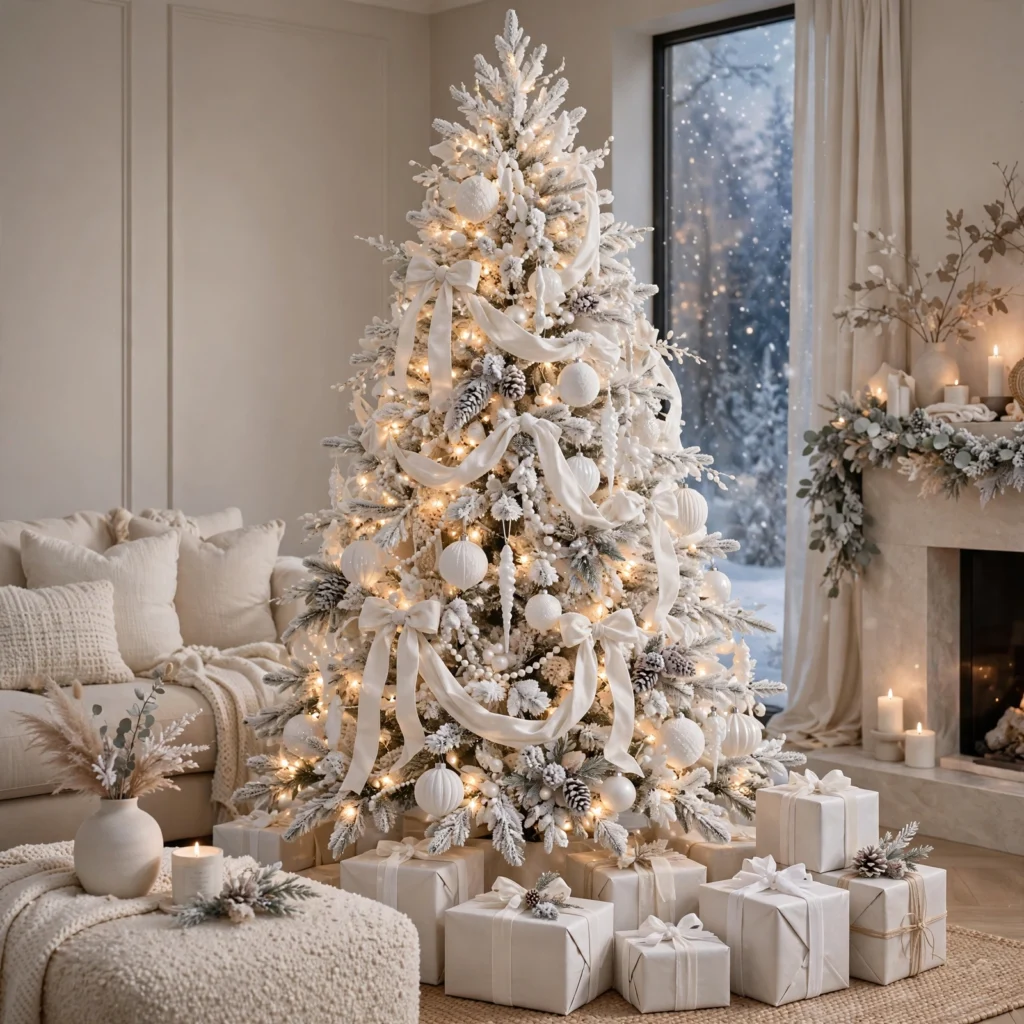
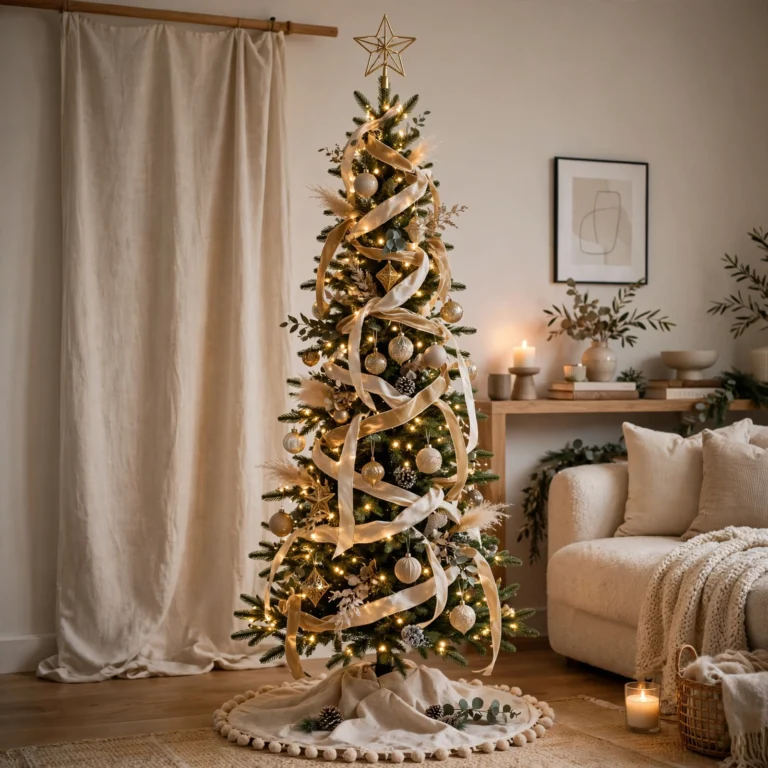
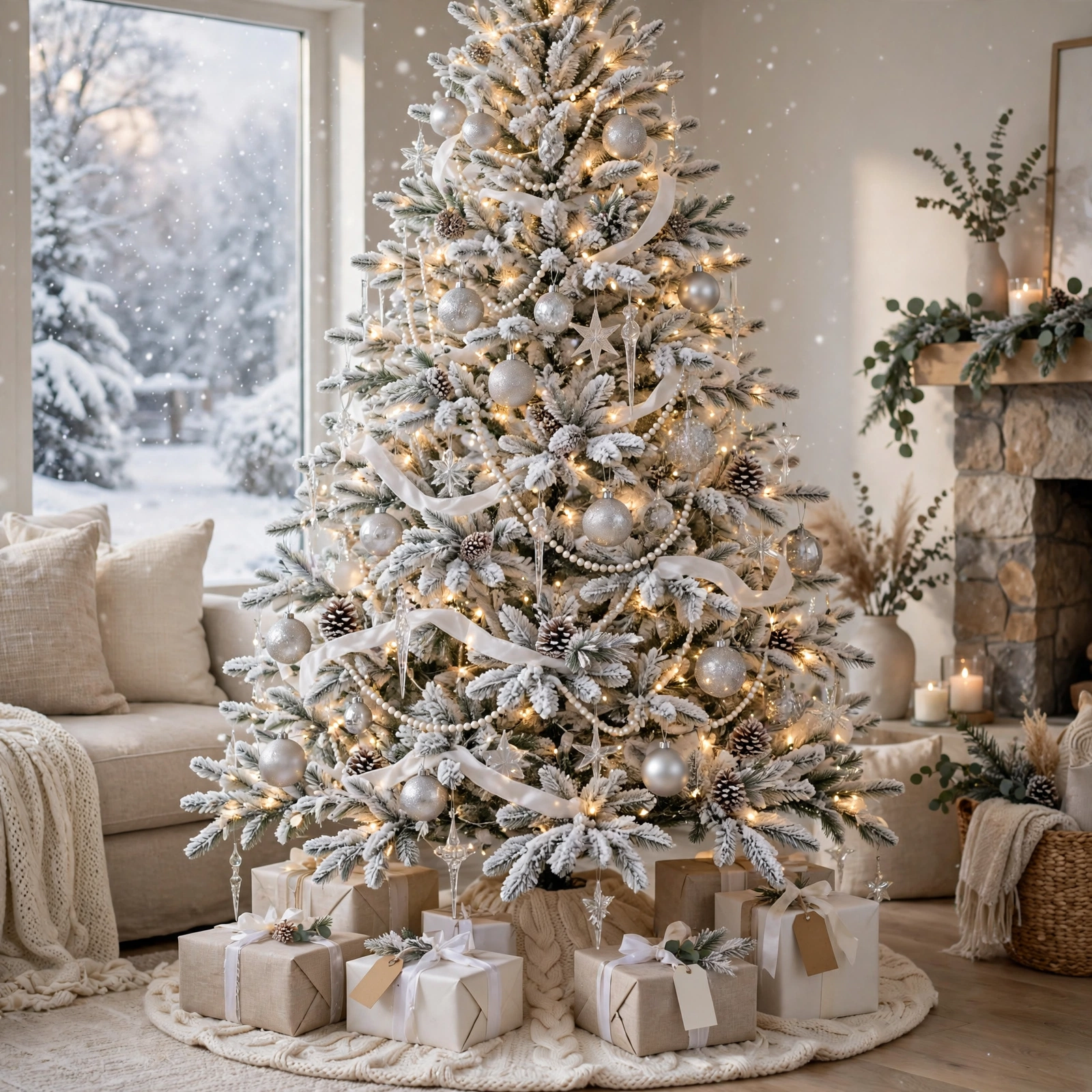
An all-white monochrome tree layers white and cream ornaments in varied textures, like matte, glossy, glitter, and feathered finishes, without introducing any additional accent color at all. This approach relies entirely on texture variation to create visual interest, so mixing finishes deliberately, such as pairing a smooth glass ball with a textured yarn-wrapped ornament, prevents the tree from reading as flat despite using only one color family throughout.
8. Copper and Rose Gold Glow
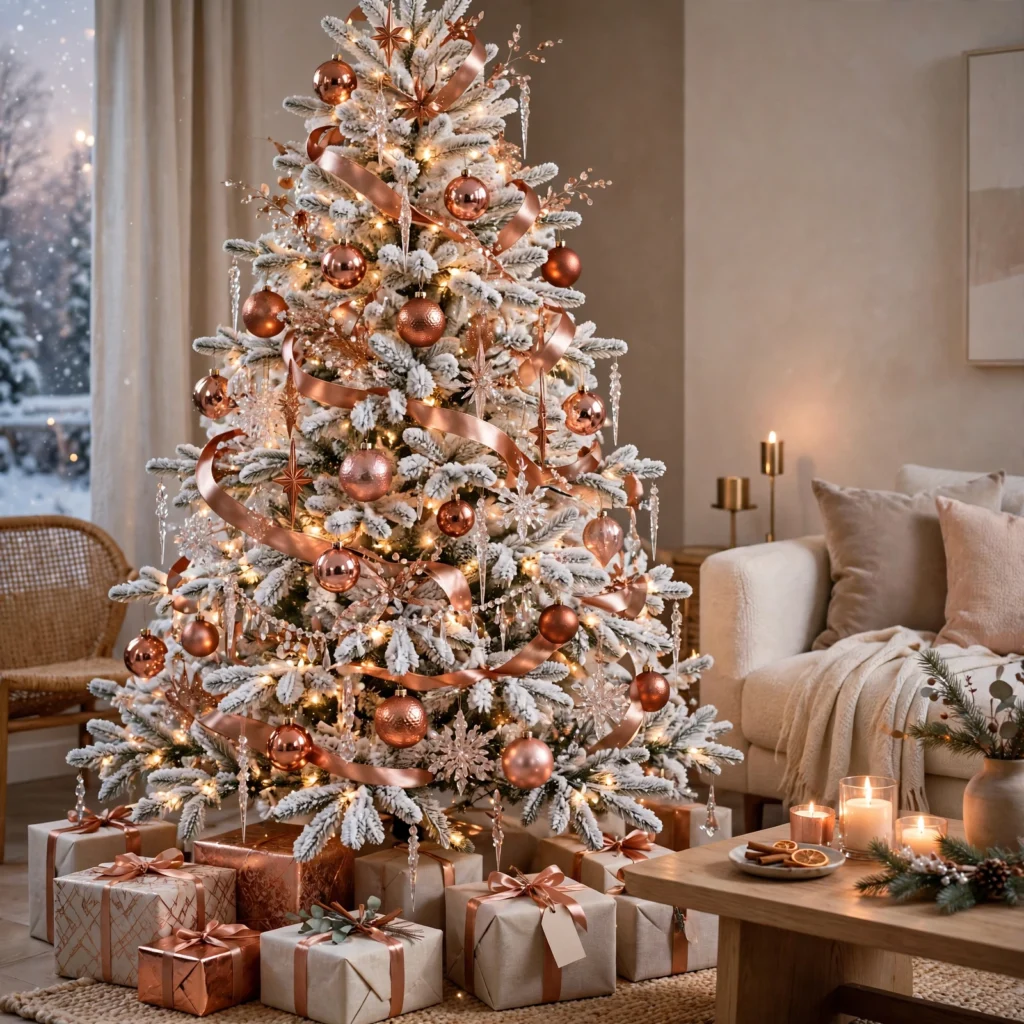
Copper and rose gold ornaments against a white tree create a warm, glowing palette that softens the coolness a white base can sometimes have on its own. Use warm white lights rather than cool white to reinforce the metallic warmth, and mix copper and rose gold finishes rather than choosing one exclusively, since the slight variation between the two warm metallics adds depth without introducing a completely separate color.
| Ornament Finish | Approx. Ratio | Light Temperature |
| Copper | 50% | 2700K warm white |
| Rose gold | 50% | 2700K warm white |
9. Emerald Green and Gold Jewel Tones
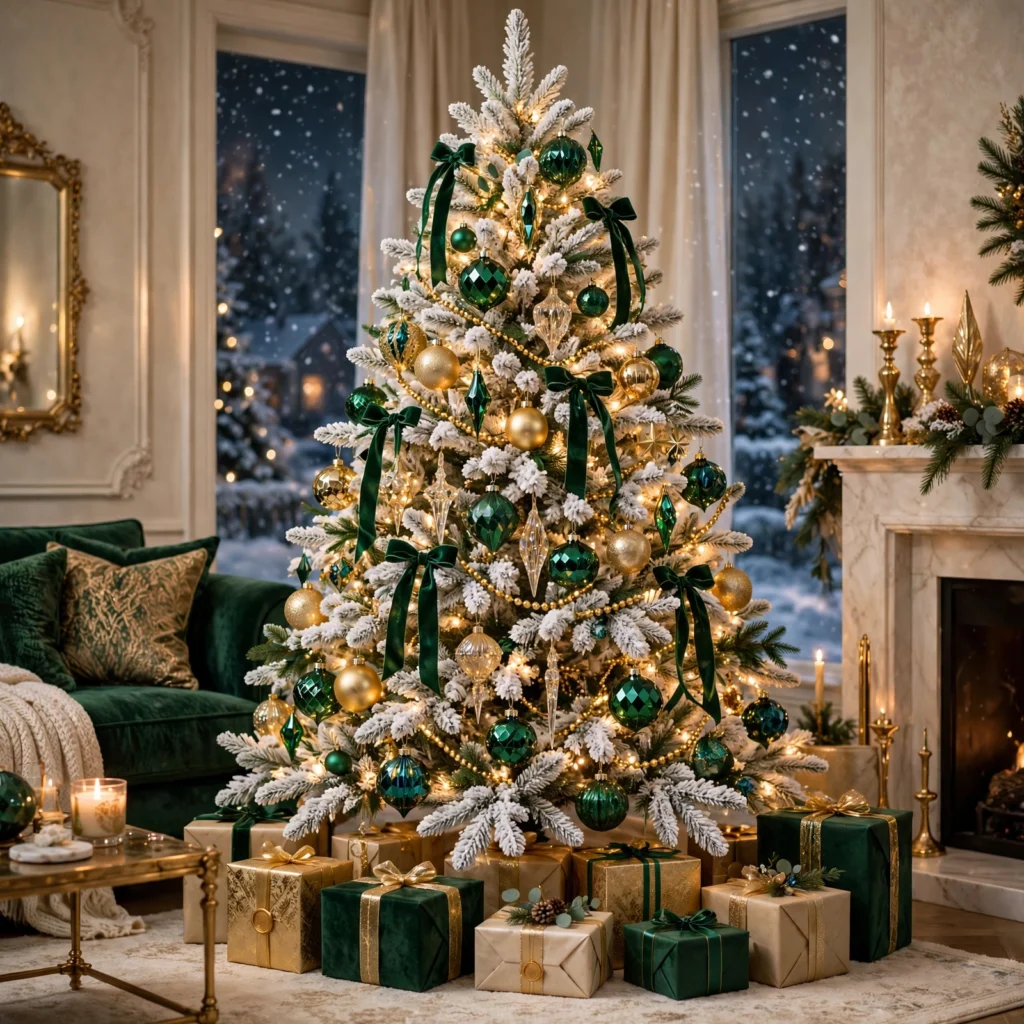
Emerald green paired with gold against a white tree creates a rich, formal palette that still feels distinct from a traditional tree, since the white base keeps the deep jewel tones from reading as heavy or dark. Use emerald as the dominant ornament color, and layer gold through ribbon, a topper, and smaller metallic picks, keeping the ratio weighted toward emerald so gold reads as an accent rather than competing equally for attention.
10. Pastel Rainbow Ornament Mix
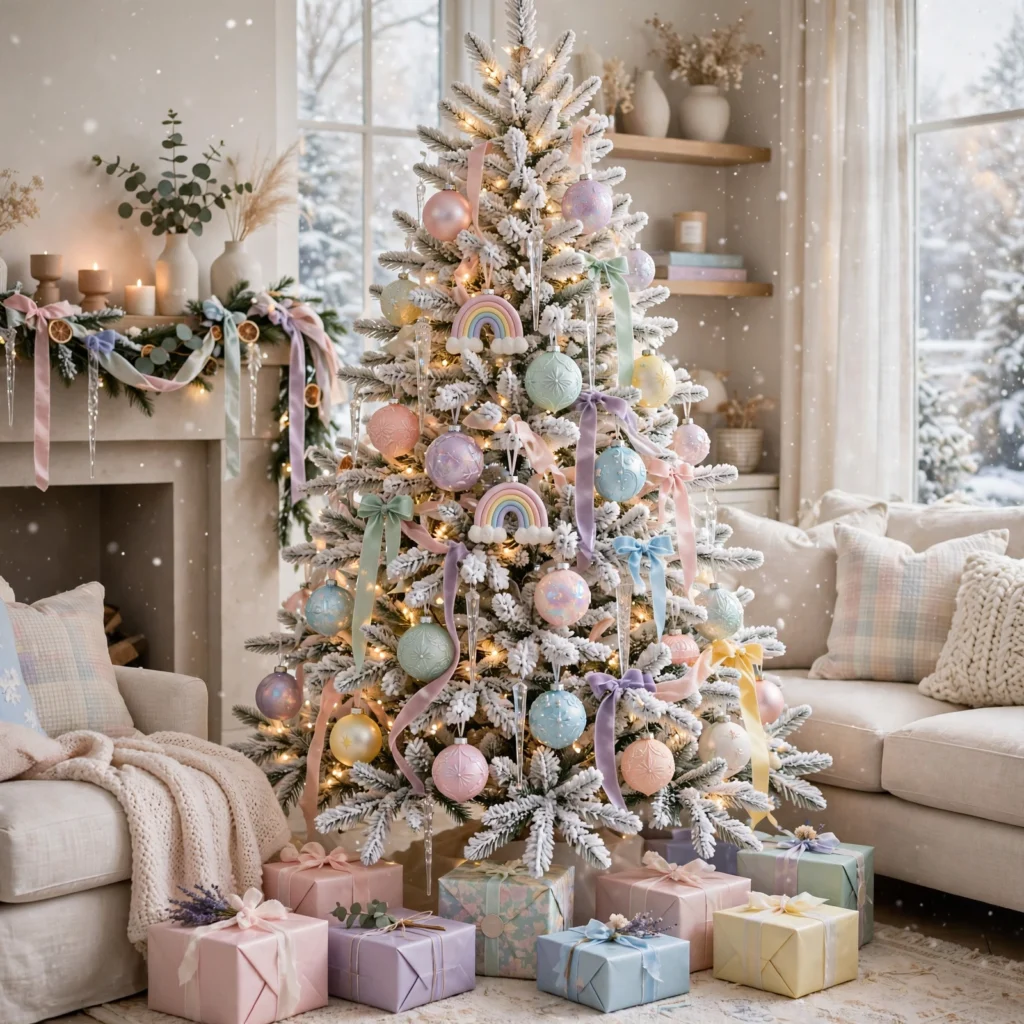
A pastel rainbow mix, using soft pink, mint, lavender, and pale blue ornaments together, creates a playful, whimsical look against a white base that feels fresh compared to traditional holiday color schemes. Keep every pastel at a similarly light, muted saturation level so no single color dominates, and distribute the colors evenly throughout the tree rather than clustering by color, which keeps the rainbow effect from reading as sectioned or uneven.
| Color | Approx. Ratio | Saturation Level |
| Soft pink | 25% | Light, muted |
| Mint | 25% | Light, muted |
| Lavender | 25% | Light, muted |
| Pale blue | 25% | Light, muted |
11. Woodland Natural Accents on White
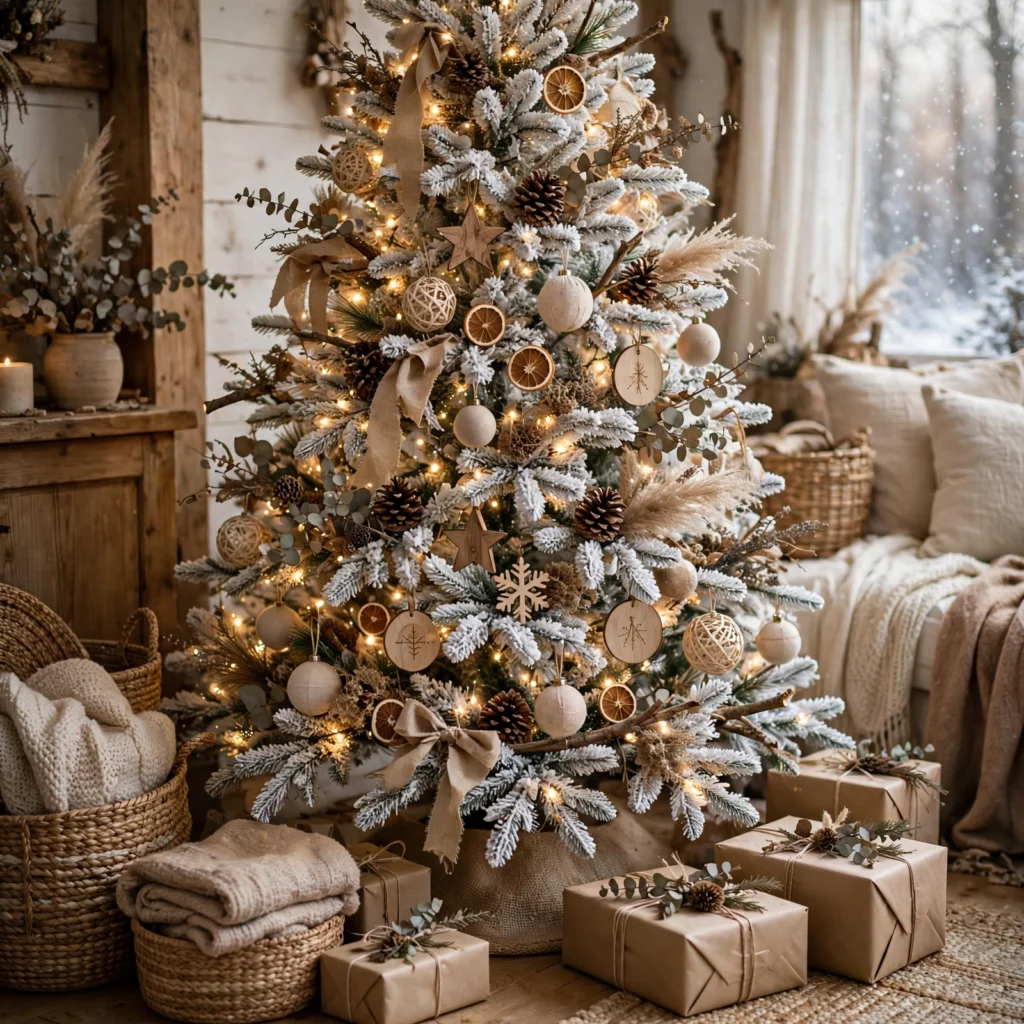
Natural elements like pinecones, wood slice ornaments, and burlap ribbon against a white base create an unexpected pairing that softens the natural, rustic materials against the tree’s clean white backdrop. Use unlit natural pinecones and wood ornaments in their raw, unfinished tones, and add a light dusting of faux snow spray directly to the pinecones for a cohesive, wintry finish that ties the natural elements back to the white base they’re displayed against.
12. Turquoise and Silver Coastal
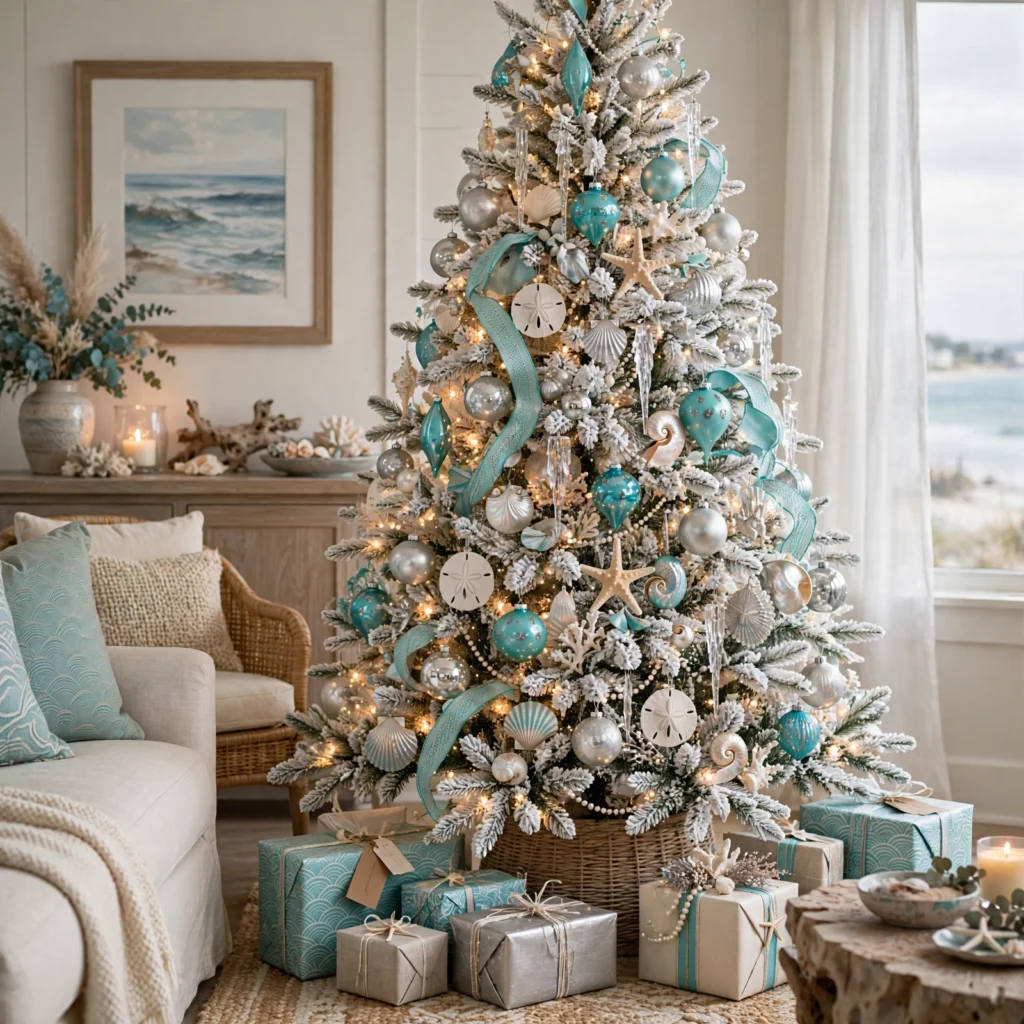
Turquoise paired with silver against a white tree creates a bright, coastal-inspired palette that stands apart from more traditional holiday color schemes entirely. Use turquoise as the dominant ornament color in varying sizes, and bring in silver through star ornaments and thin ribbon accents, since this combination works particularly well in a beach house or coastal-styled home during the holiday season.
13. Purple and Lavender Winter Frost
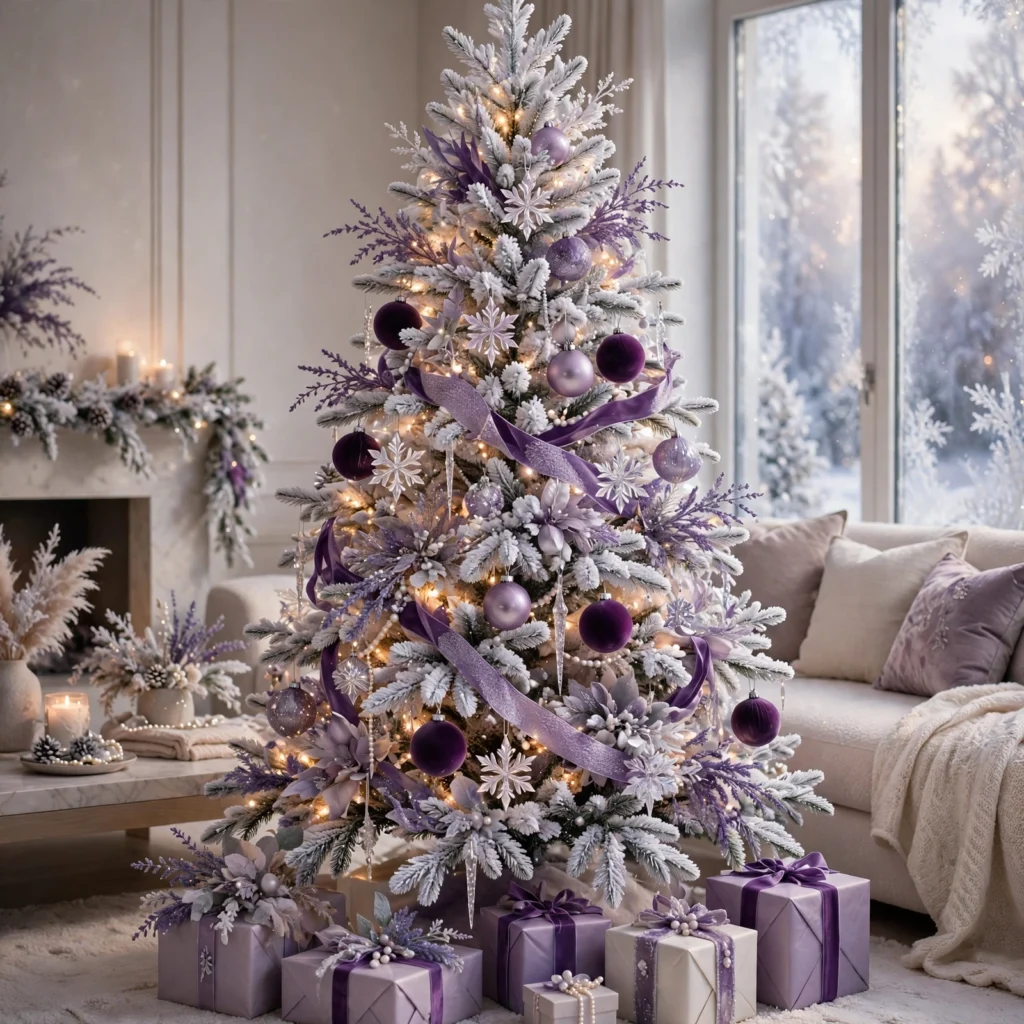
Deep purple paired with soft lavender against a white base creates a cool, frosty palette suited to a more unconventional but still elegant holiday look. Use deep purple as the anchor tone through larger ball ornaments, and layer lavender through smaller accents and ribbon, keeping both tones within the same color family so the gradient from deep to light reads as intentional rather than mismatched.
| Color | Hex Reference | Best Use |
| Deep purple | #4A2E6B | Large ball ornaments |
| Lavender | #D8C6E8 | Ribbon, small accents |
14. Champagne and Ivory Elegance
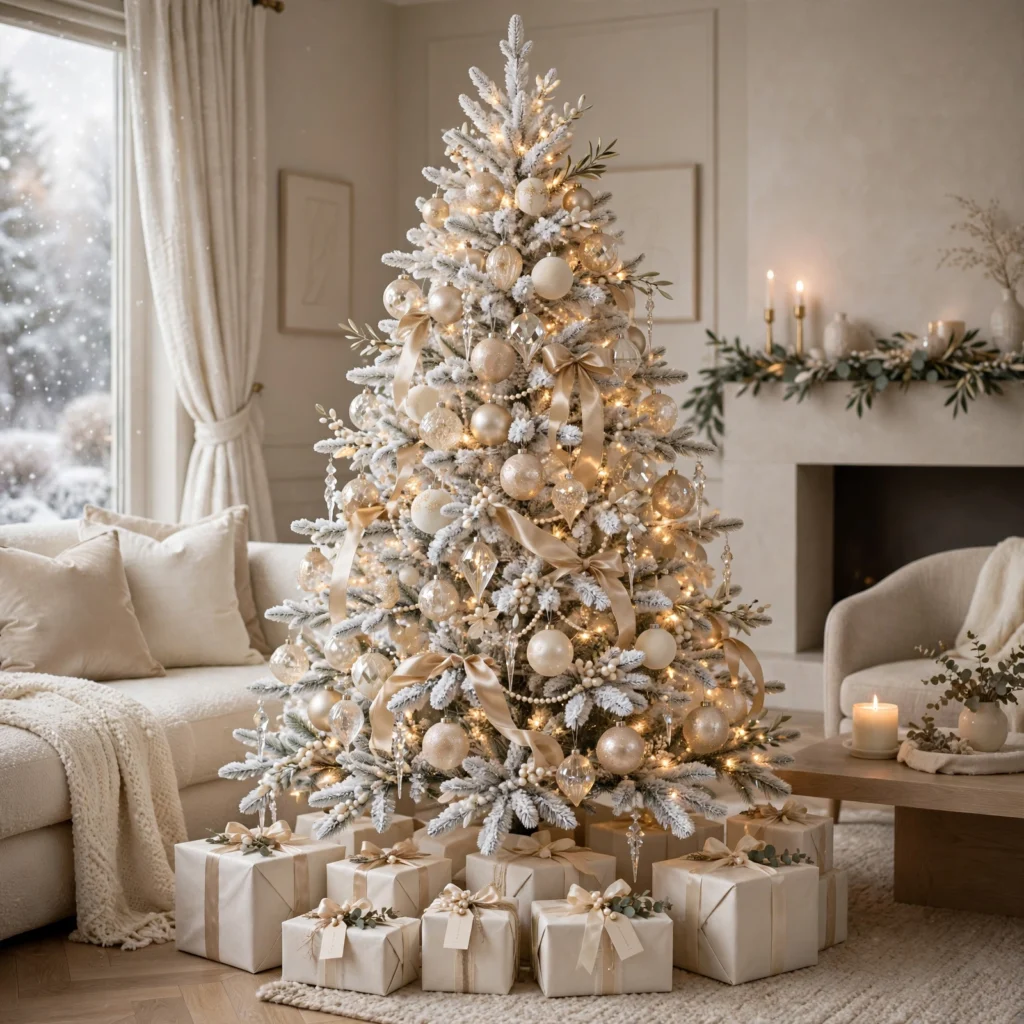
Champagne and ivory tones against a white base create a soft, elegant palette with minimal contrast, relying on subtle finish variation rather than bold color to create visual interest. Mix matte ivory ornaments with glossy and glitter champagne pieces, and use a warm white light temperature to reinforce the overall soft, glowing quality this understated palette depends on.
15. Peacock Blue and Teal Jewel Accents
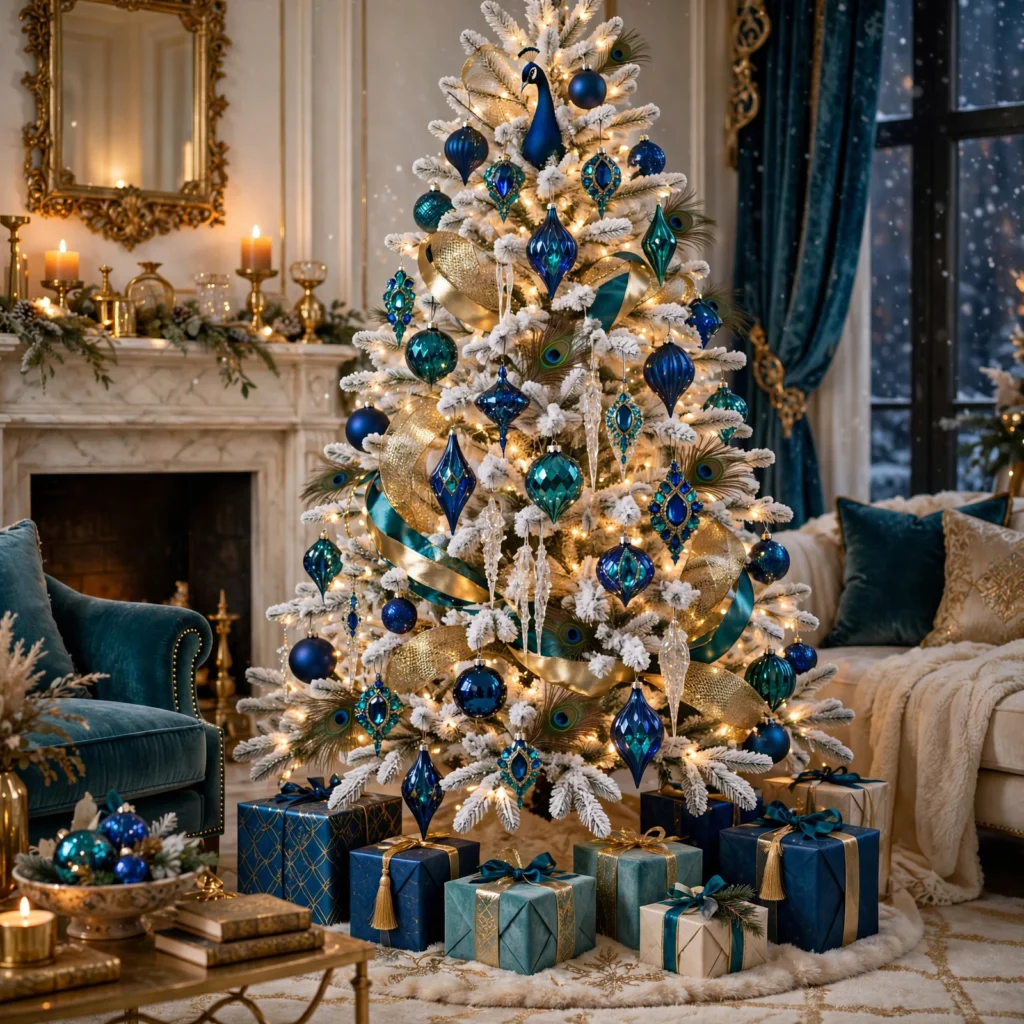
Peacock blue paired with teal against a white tree creates a vivid, jewel-toned palette that offers a distinctive alternative to more common red, gold, or silver schemes. Use peacock blue as the dominant tone, and layer teal through smaller accents and ribbon, since the close relationship between these two colors on the color wheel keeps the combination feeling cohesive rather than like two competing blues.
16. Vintage Ornament Collage on White
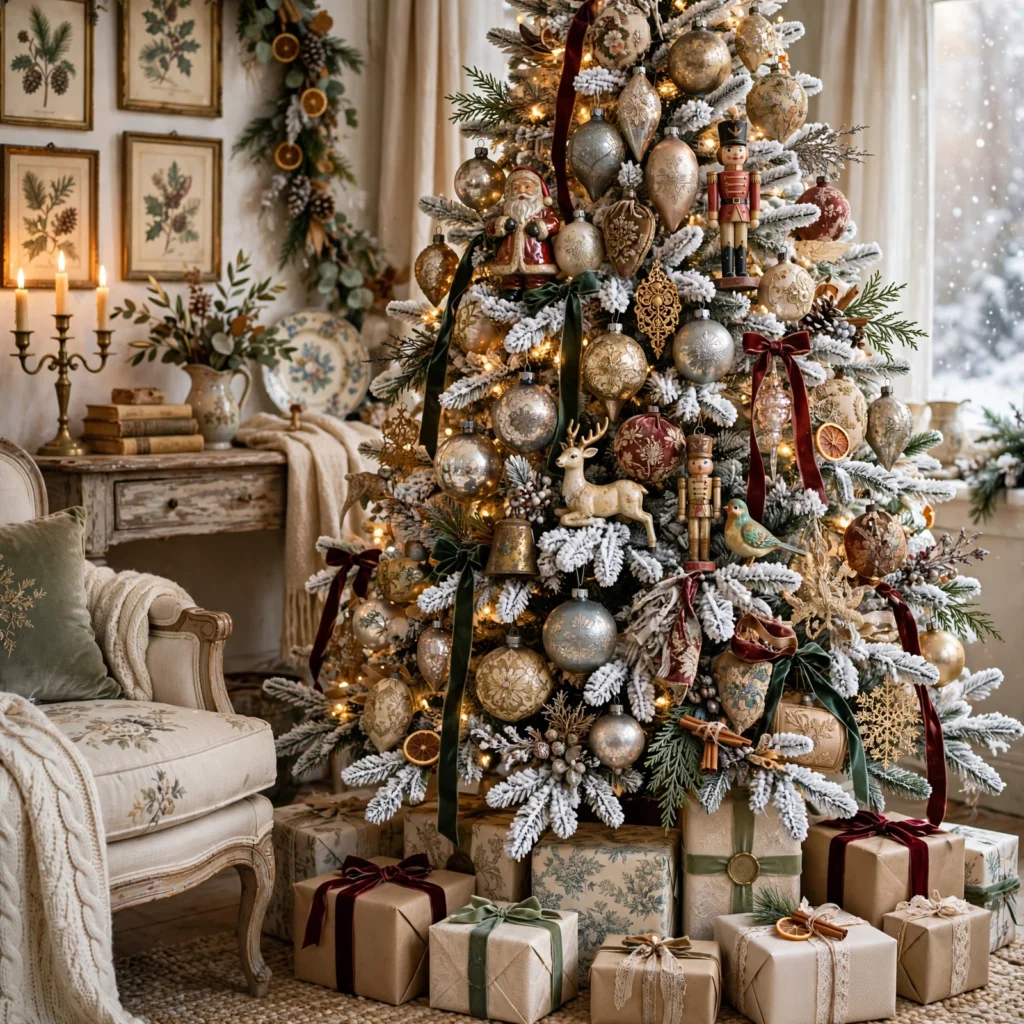
A collection of mismatched vintage or antique-style ornaments, unified by a limited color palette like muted red, gold, and cream, reads as intentional and collected against a white base rather than random. Sort existing vintage ornaments by color first, setting aside any that fall outside your chosen palette, and use the white tree’s neutral background to let each individual vintage piece stand out clearly rather than competing with a busy green backdrop.
17. Ribbon Cascade Statement Topper
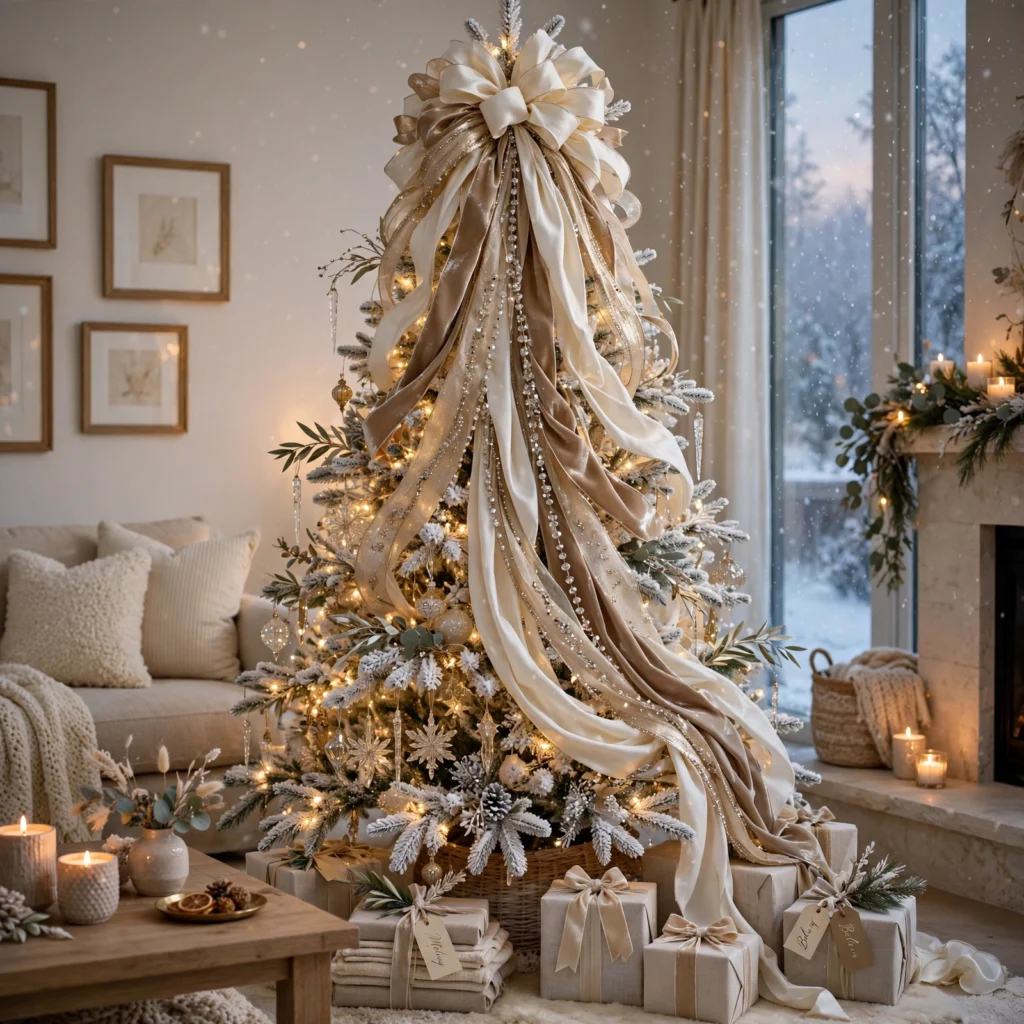
Rather than a traditional star or angel topper, a cascading ribbon arrangement flowing down from the top of the tree creates a dramatic focal point that stands out clearly against a white base. Use wired ribbon in coordinating widths and tones matching your chosen ornament palette, securing multiple ribbon tails at the top and letting them flow down through the branches at varying lengths for a dynamic, layered effect.
| Ribbon Width | Quantity | Cascade Length |
| 4 inches | 2–3 tails | Top third of tree |
| 2.5 inches | 3–4 tails | Middle to lower third |
| 1.5 inches | 2–3 tails | Full tree length |
Shop the Look
A few specific products make these palettes easier to execute well. Balsam Hill and King of Christmas both offer high-quality pre-flocked white trees with realistic branch texture. Kurt Adler and Kurt S. Adler ornament lines carry coordinated metallic and jewel-tone collections suited to several combinations above. Offray’s wired ribbon holds its shape well for both woven accents and the cascading topper idea. For the woodland natural theme, Afloral carries faux snow spray and natural pinecone picks that pair well against a white base.
Common Mistake to Avoid
The most common mistake in decorating a white Christmas tree is choosing an accent color palette without testing the light temperature alongside it, since a white tree shows the shift between warm and cool lighting far more clearly than a green tree does. A cool silver and crystal palette can look washed out under warm white lights, while a warm copper and rose gold scheme can look flat and lifeless under cool white lights. Always test your chosen ornaments under the actual lights you plan to use before committing to a full decorating session.
People Also Ask
What colors look best on a white Christmas tree?
Nearly any color reads clearly against a white base, since the neutral background doesn’t compete with ornament color the way a traditional green tree does, but jewel tones like emerald and sapphire, along with metallics like silver, gold, and rose gold, tend to photograph and display particularly well due to the strong contrast against white. Softer pastels also work well for a gentler, more whimsical look.
Should I use warm or cool lights on a white Christmas tree?
Cool white lights, typically in the 5000K to 6500K range, complement icy palettes like silver, crystal, and turquoise particularly well, reinforcing the crisp, wintry character of those combinations. Warm white lights, closer to 2700K, work better with metallic warm tones like gold, copper, and rose gold, since the warmer light temperature enhances rather than fights against those warmer ornament finishes.
How many ornaments do I need for a white Christmas tree?
The same general guideline applies to white trees as any other: roughly 12 to 15 ornaments per vertical foot of tree height, meaning a 7-foot white tree typically needs 90 to 100 ornaments for a fully decorated look. Because a white base shows sparse coverage more clearly than a green tree, slightly increasing ornament density toward the higher end of that range often produces a more finished result on a white tree specifically.
Does a flocked white tree need different ornaments than an unflocked white tree?
Flocked trees, which have a snow-like textured coating on the branches, generally pair best with ornaments that have some weight and visible dimension, since the textured branches can visually compete with very flat or thin ornaments. Unflocked white trees have smoother branches and work well with a wider range of ornament styles, including flatter or more delicate pieces that might get visually lost against flocked texture.
Can a white Christmas tree work with a traditional red and green color scheme?
Yes, though red against a white base creates noticeably more contrast and visual punch than red against a traditional green tree, so using slightly fewer red ornaments than you would on a green tree, combined with a secondary neutral like cream or gold, generally keeps the look balanced. Green ornaments against a white tree read as more of a deliberate accent color than they do on a green tree, where the base color already establishes that tone.
Conclusion
These seventeen white christmas tree decorating ideas show that a white base makes color and finish choices more visible than a traditional tree, which means committing to two or three coordinated tones produces a considerably more polished result than scattering ornaments without a clear palette. Start by testing your chosen ornaments under your actual tree lights before a full decorating session, then build out the palette from there. If this guide helped, save it to Pinterest for your next holiday decorating session, or check out our related post on themed christmas tree ideas for more full-tree concepts beyond the white base.