15 Trending Wood Kitchen Cabinets Ideas for a Warm Modern Kitchen
Wood kitchen cabinets have quietly become the centerpiece of some of the most photographed kitchens on Pinterest and Instagram, and for good reason. Unlike painted cabinetry, wood grain brings a texture and depth that photographs beautifully in any lighting. In this post, you’ll find fifteen practical, design-forward ideas for working wood kitchen cabinets into a renovation, from full oak builds to two-tone layouts, along with the materials, finishes, and small details that make each option work in a real home.
Trend & Background
After nearly a decade of all-white kitchens dominating renovation trends, homeowners and designers have shifted back toward natural materials that feel grounded and lived-in. White oak, walnut, and rift-cut cabinetry now appear regularly in high-end kitchen remodels, often paired with warm metal fixtures and honed stone counters instead of glossy quartz. This shift is partly aesthetic and partly practical, since wood cabinetry hides daily wear better than painted MDF and tends to hold resale value in markets where buyers are tired of cold, sterile kitchens.
Key Takeaways
- Wood kitchen cabinets remain one of the most reliable ways to add warmth, texture, and resale value to a kitchen renovation.
- Mixing wood tones with matte black, brass, or stone accents keeps a wood-heavy kitchen from feeling dated.
- Species choice (white oak, walnut, maple, cherry) affects grain pattern, cost, and how the cabinets age over time.
- Proper sealing, spacing, and hardware selection prevent the most common mistakes homeowners make with wood cabinetry.
1. White Oak Shaker Cabinets
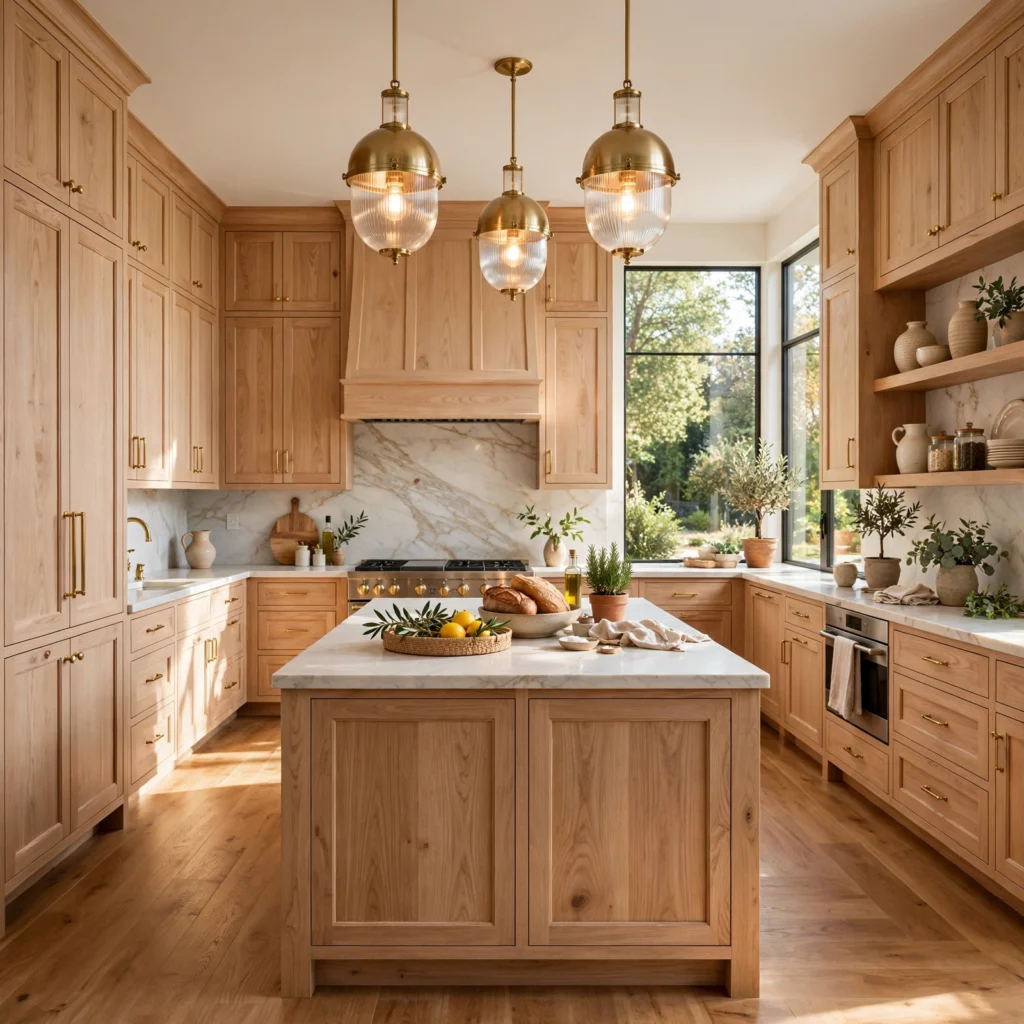
White oak shaker cabinets pair a straightforward five-piece door frame with a wood species known for its light, even grain and slight golden undertone. The style works because the flat recessed center panel lets the natural wood grain do the visual work without competing with busy hardware or ornate molding. Homeowners typically finish white oak with a clear matte or satin topcoat to preserve its pale color, rather than a dark stain that would mute the grain pattern the wood is chosen for in the first place.
2. Walnut Waterfall Island
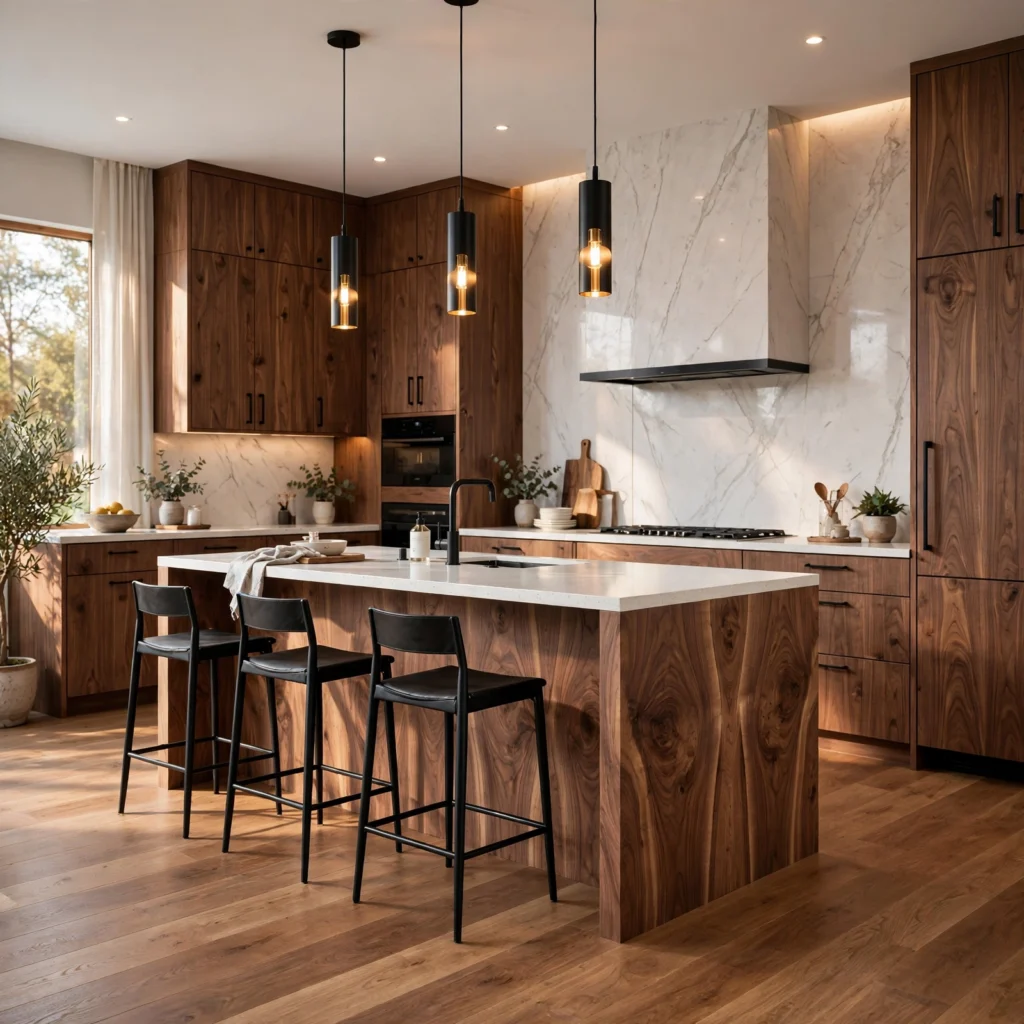
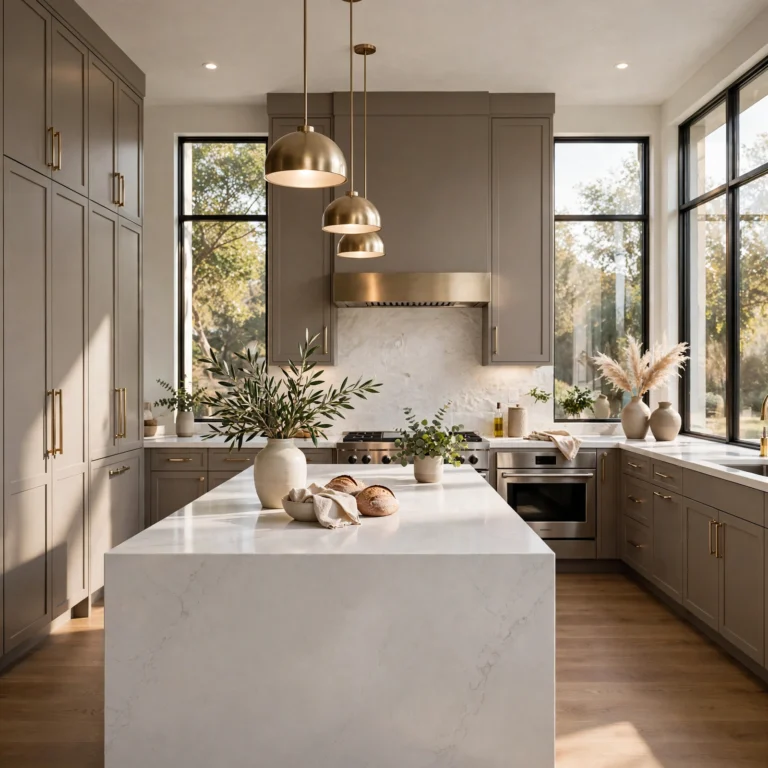
A walnut waterfall island wraps a single continuous slab of wood-grain material down both vertical sides of an island, eliminating the visible seam where the countertop meets the cabinet face. Walnut’s deep chocolate tone and tight grain make it a natural choice for this look because the color variation reads as intentional rather than mismatched. This idea works especially well as a contrast piece in a kitchen where the perimeter cabinets are painted a lighter color, giving the island a furniture-like presence in the room.
3. Two-Tone Wood and Painted Combo
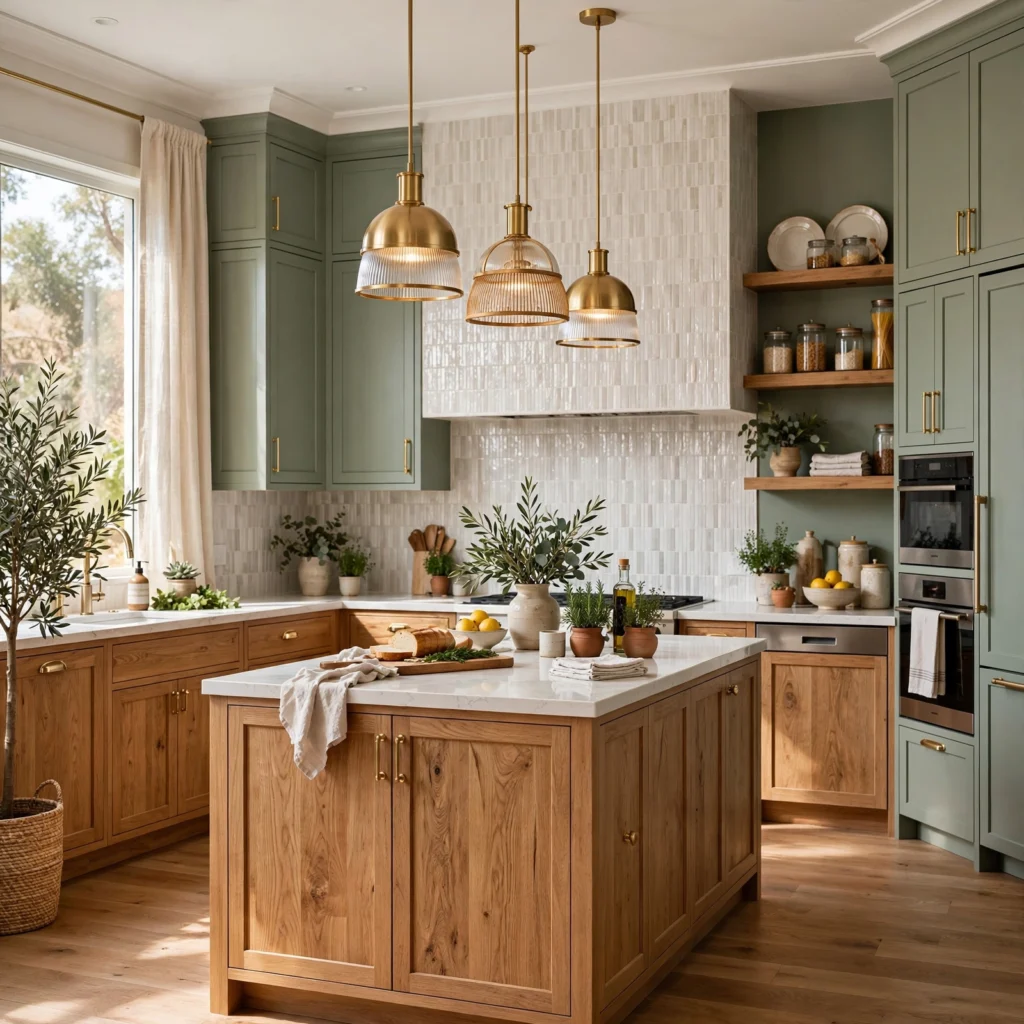
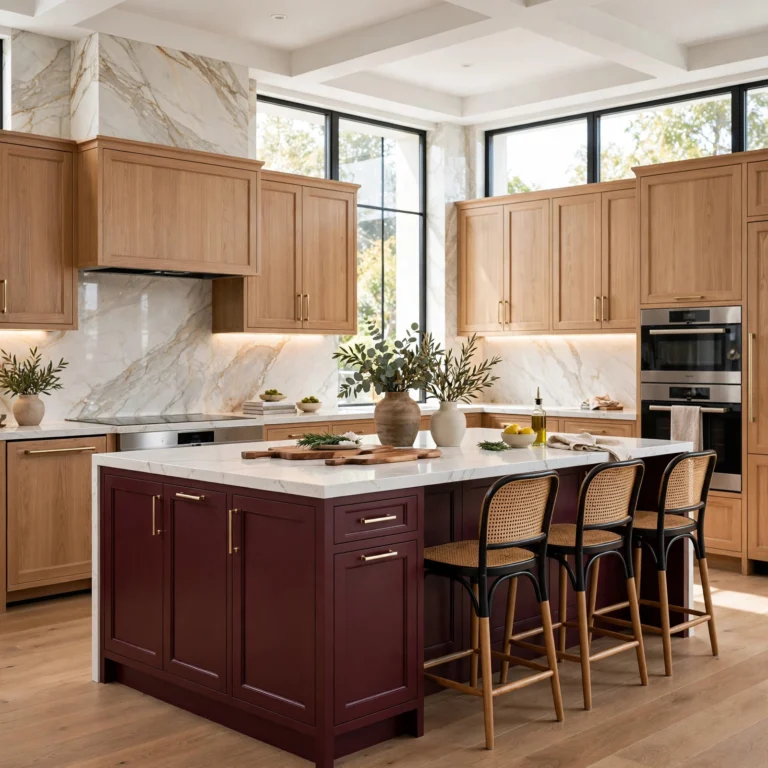
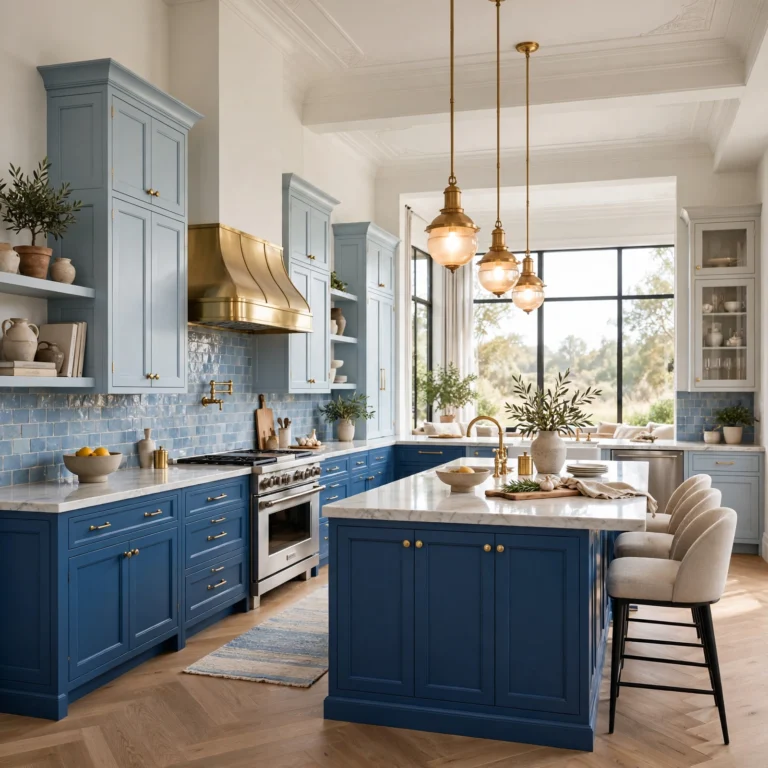
Two-tone wood and painted combo cabinetry mixes stained wood uppers or lowers with a painted contrast, most often navy, sage, or charcoal, on the remaining cabinet run. The pairing keeps a kitchen from feeling like one uninterrupted wall of wood while still letting the grain read as a focal point. A common layout places wood on the island or lower cabinets and paint on the perimeter uppers, which also visually lowers the ceiling line in kitchens with taller cabinet stacks.
| Combination | Wood Placement | Paint Placement | Best For |
| Wood Lower / Paint Upper | Base cabinets | Wall cabinets | Small kitchens |
| Wood Island / Paint Perimeter | Island only | All other cabinets | Open-concept layouts |
| Wood Upper / Paint Lower | Wall cabinets | Base cabinets | High-ceiling kitchens |
4. Rift-Cut Oak Flat Panel
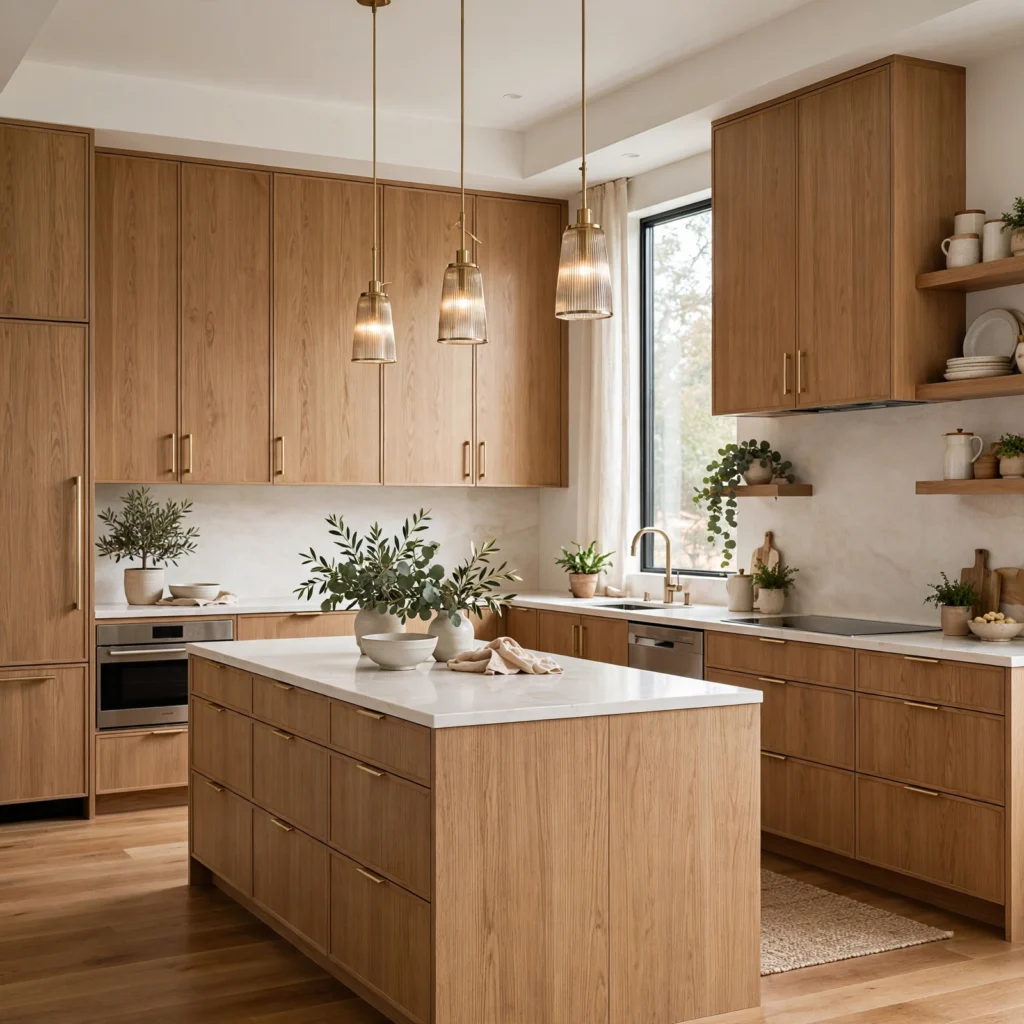
Rift-cut oak flat panel doors are milled specifically to produce a straight, linear grain pattern with none of the cathedral swirls typical of plain-sawn oak. This cutting method is more expensive because it produces more waste per board, but it delivers a cleaner, more contemporary look that suits minimalist kitchens. Designers often specify rift-cut oak for handleless or slab-front cabinet systems, since the straight grain lines up cleanly across adjacent doors and drawer fronts without visual interruption.
To see more grey kitchen cabinets
5. Reclaimed Barnwood Uppers
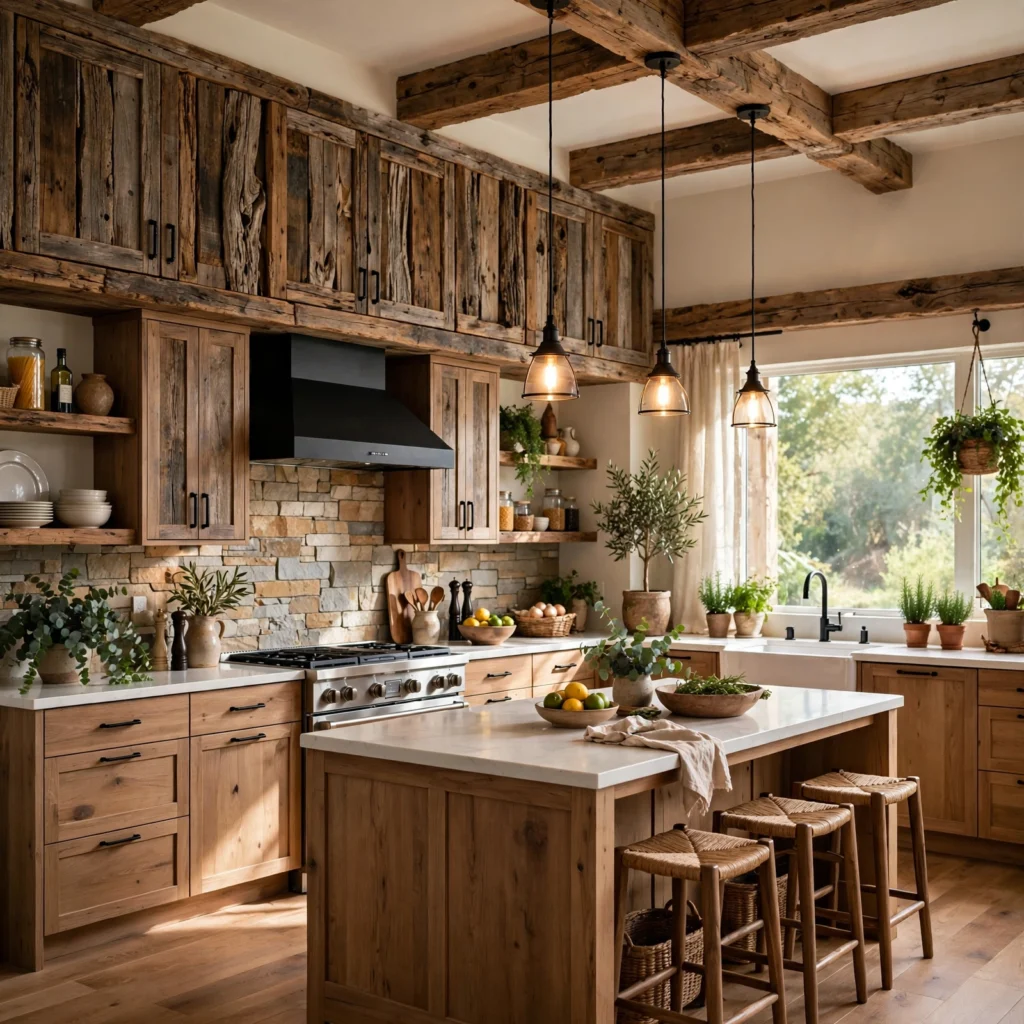
Reclaimed barnwood uppers use salvaged timber, often from old barns, factories, or shipping pallets, milled down into cabinet door fronts that retain nail holes, saw marks, and weathering. This idea suits farmhouse or industrial-style kitchens where a slightly imperfect, aged surface is the point rather than a flaw. Because reclaimed wood varies board to board, most suppliers recommend ordering a full matched set at once rather than sourcing pieces separately over time.
6. Natural Cherry Cabinetry
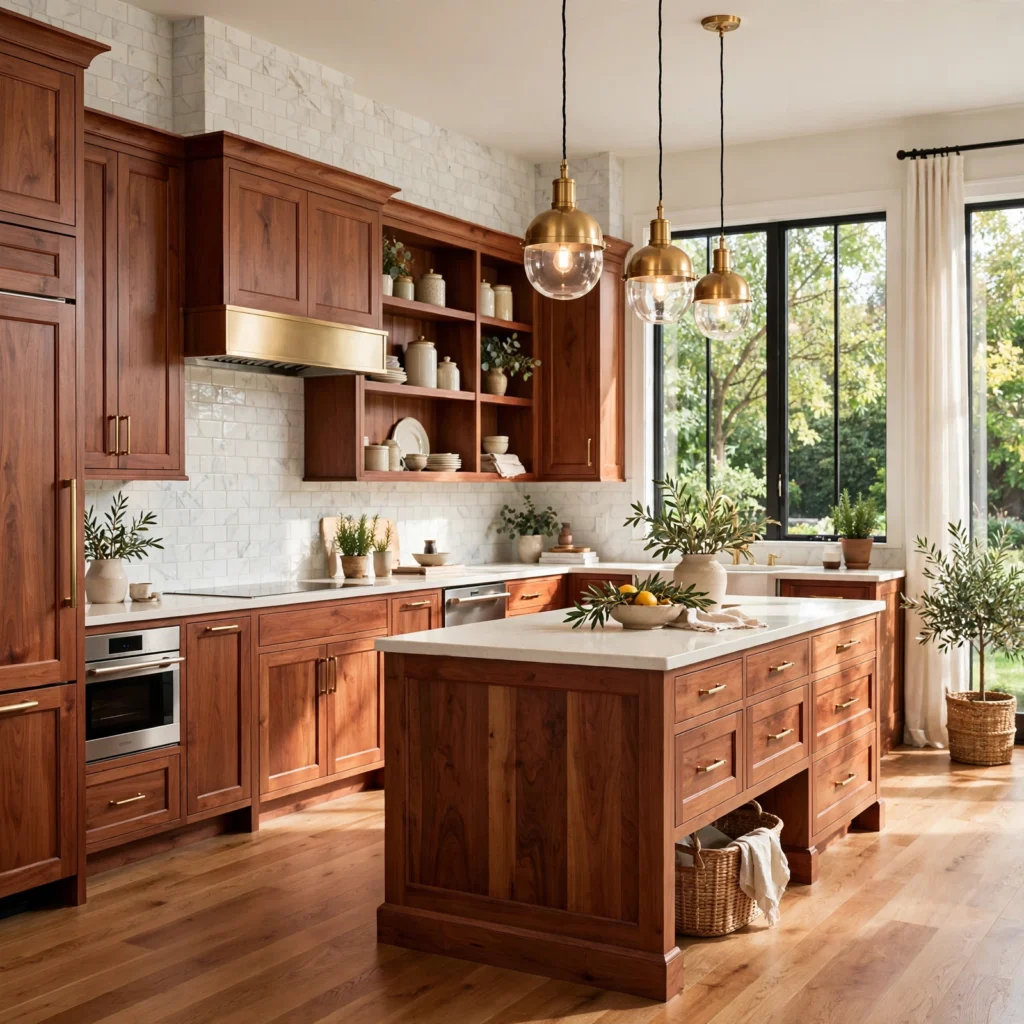
Natural cherry cabinetry starts out a warm pinkish-brown and darkens with UV exposure over several years into a rich reddish-amber tone, a process cabinetmakers call patina development. This idea appeals to homeowners who want their kitchen to visibly age and deepen in character rather than staying static, similar to how leather furniture develops over time. Cherry also takes a clear finish well, so many installations skip staining entirely and let the wood’s natural color shift happen on its own.
7. Matte Black Hardware on Wood Doors
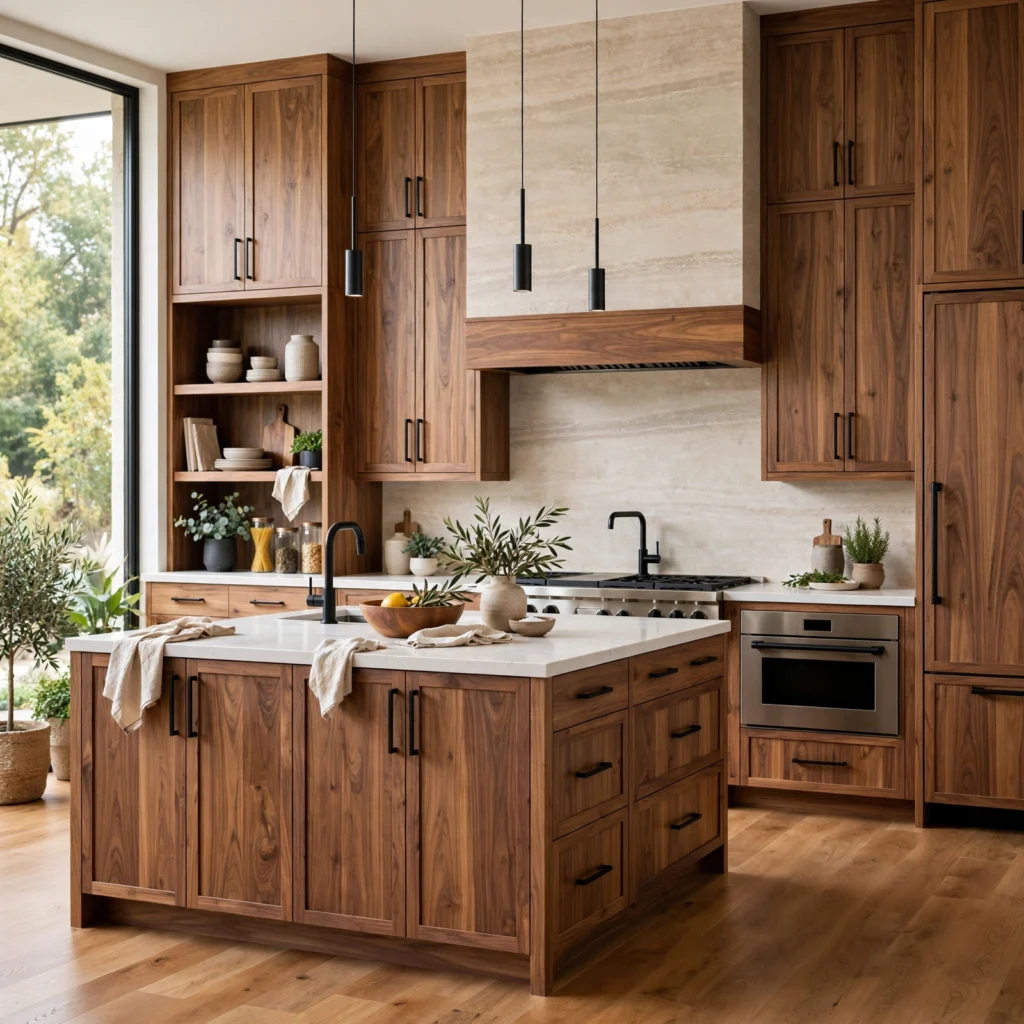
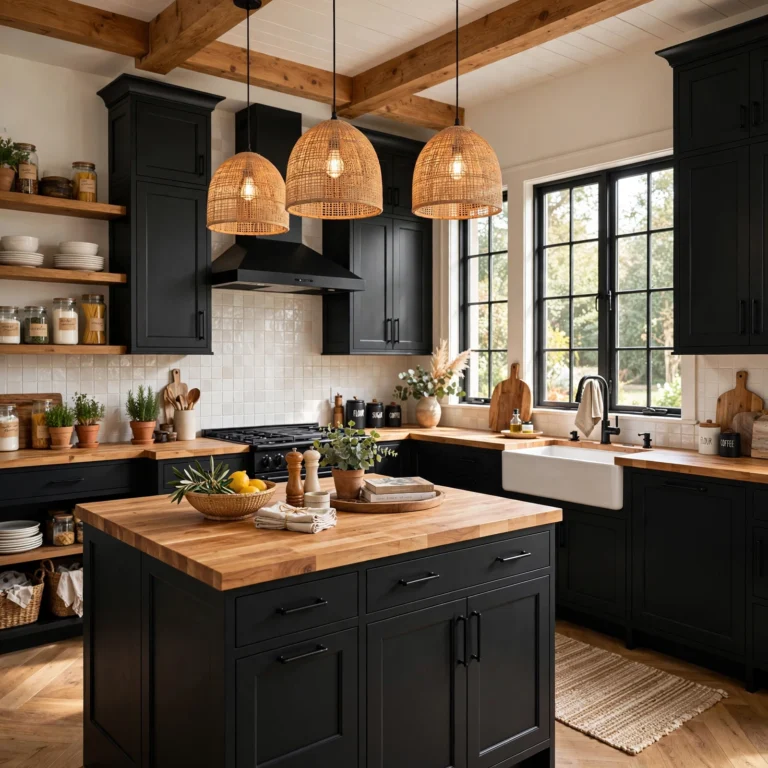
Matte black hardware on wood doors pairs black bar pulls, cup pulls, or knobs against a warm wood tone like white oak or maple to create contrast without introducing a second wood species or paint color. The black finish reads as neutral against most wood grains, which makes this one of the lowest-risk ways to modernize a wood cabinet kitchen. Brushed or unlacquered brass works as an alternative for a warmer, more traditional pairing instead of the cooler black option.
8. Vertical Slat Wood Panels
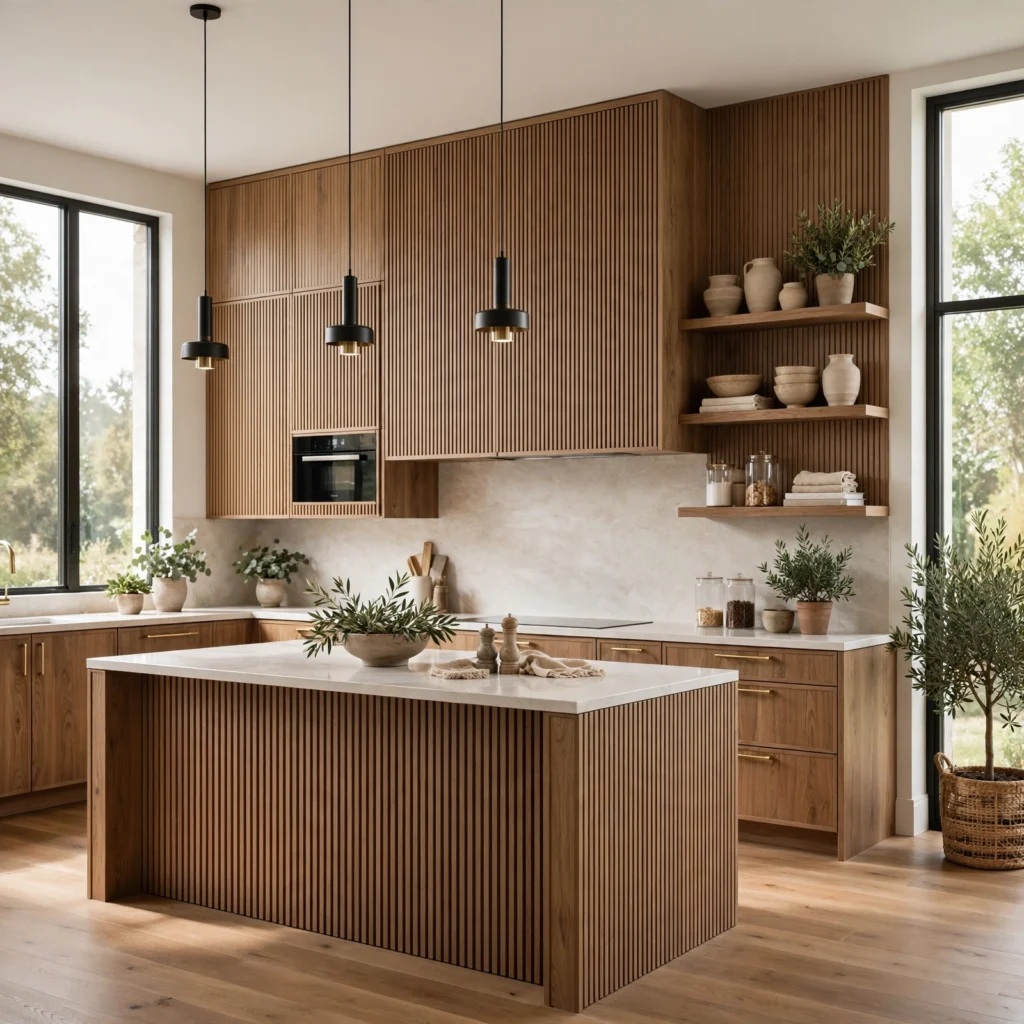
Vertical slat wood panels apply thin, evenly spaced wood strips over cabinet fronts or a kitchen island base, creating a ribbed, architectural texture instead of a flat door surface. This idea has become common on islands and pantry doors specifically because the vertical lines add visual height and a furniture-grade detail without the cost of full custom millwork. Slats are typically installed over a plywood substrate and finished to match or contrast with the surrounding cabinetry.
| Slat Width | Spacing Gap | Visual Effect |
| 1 inch | 0.5 inch | Fine, tightly ribbed texture |
| 2 inches | 0.75 inch | Balanced, most common choice |
| 3 inches | 1 inch | Bold, slower rhythm |
9. Maple Cabinets with a Clear Finish
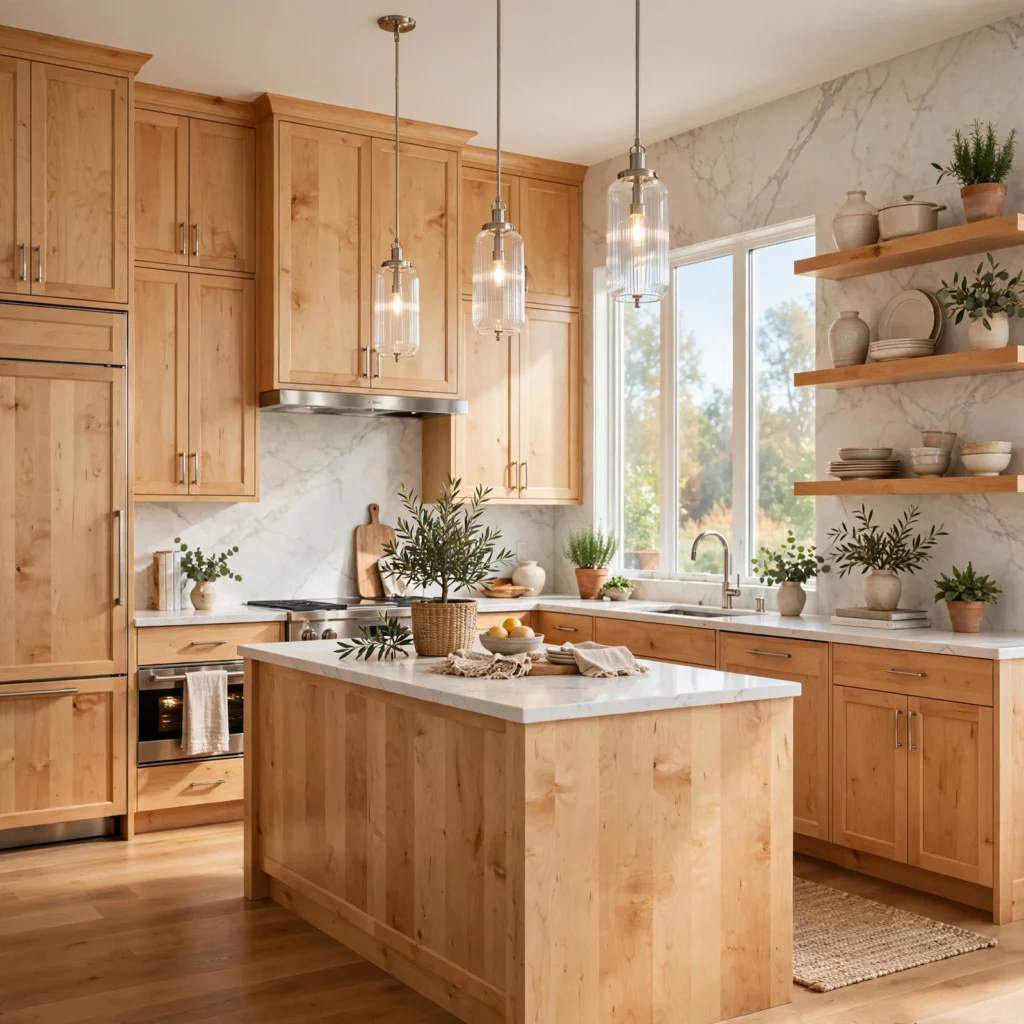
Maple cabinets with a clear finish highlight the wood’s naturally pale, tight grain and smooth surface, which takes stain unevenly and is therefore better suited to a clear or lightly tinted topcoat. Maple is also one of the hardest domestic cabinet woods, which makes it a practical choice for high-traffic kitchens where doors and drawers see heavy daily use. Left unstained, maple brightens a kitchen in a way that reads as clean and contemporary rather than rustic.
10. Floor-to-Ceiling Wood Pantry Wall
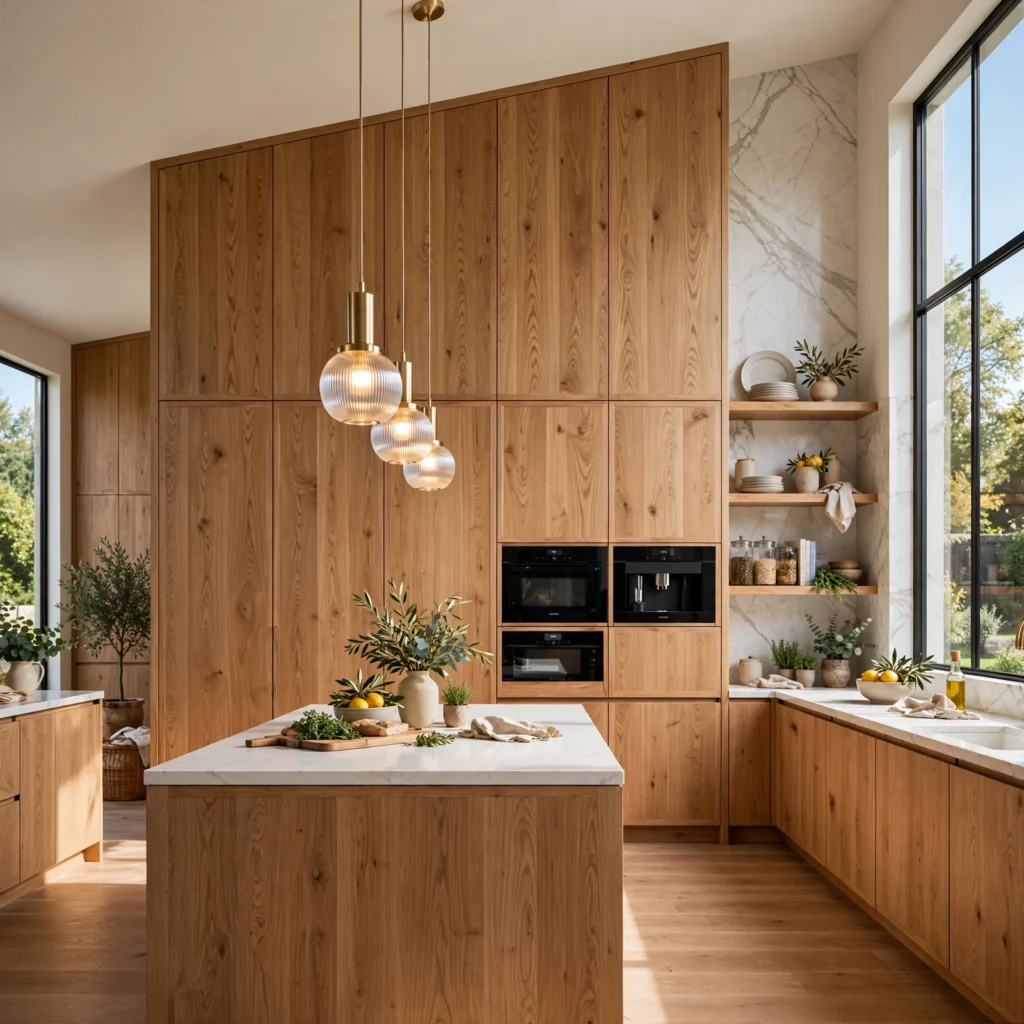
A floor-to-ceiling wood pantry wall extends cabinetry all the way to the ceiling line in a single uninterrupted wood-grain run, eliminating the gap above standard-height uppers that usually collects dust. This idea works particularly well in kitchens with nine-foot or taller ceilings, where the extra vertical cabinet space also adds meaningful storage instead of just visual height. Integrated appliance panels, such as a paneled refrigerator front, help the pantry wall read as one continuous wood surface.
11. Wood Grain Laminate Cabinets
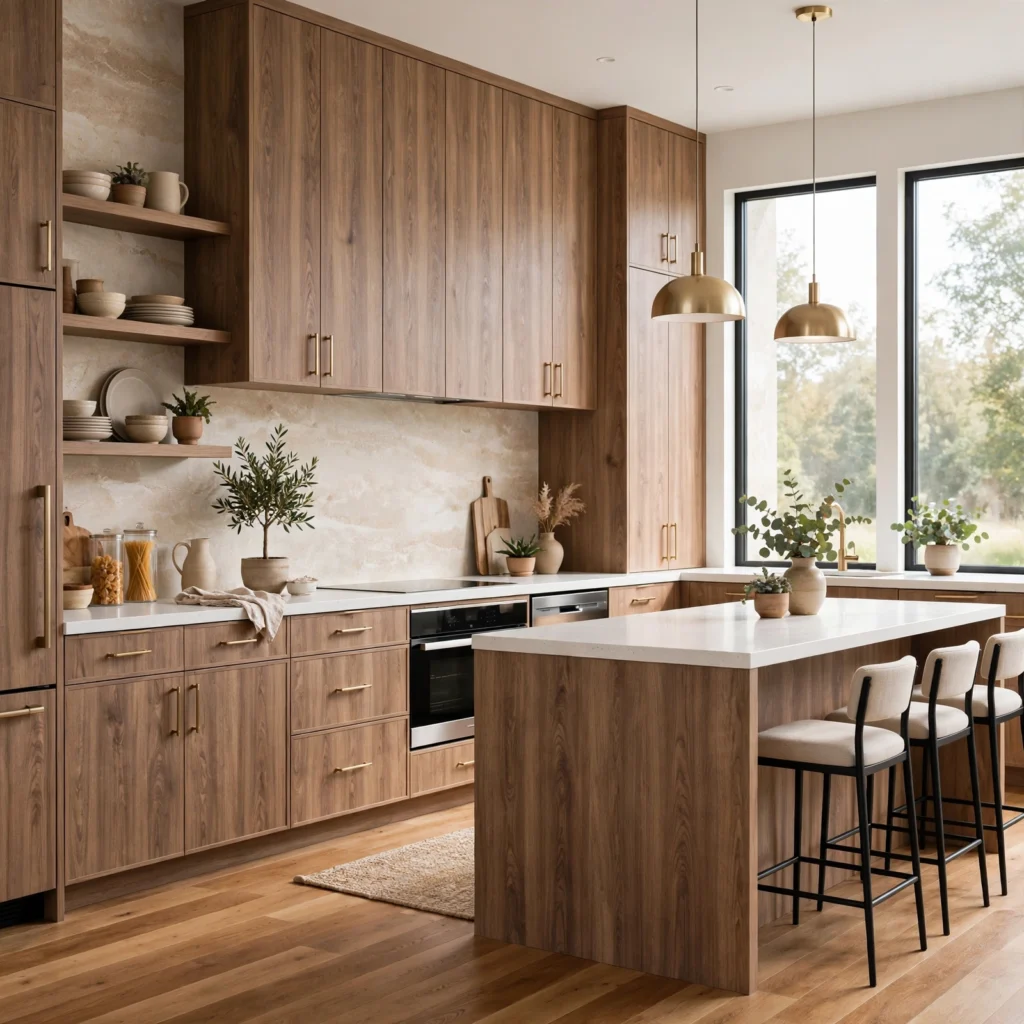
Wood grain laminate cabinets replicate the look of solid wood or veneer using a printed and textured laminate surface over an engineered wood core, offering a lower-cost, more moisture-resistant alternative to solid wood. This idea suits budget-conscious renovations or rental kitchens where the durability of laminate matters more than the authenticity of real grain. Higher-end laminate lines now include embossed textures that mimic open-pore wood closely enough to pass casual inspection in finished photos.
12. Two-Toned Grain-Matched Drawer Stack
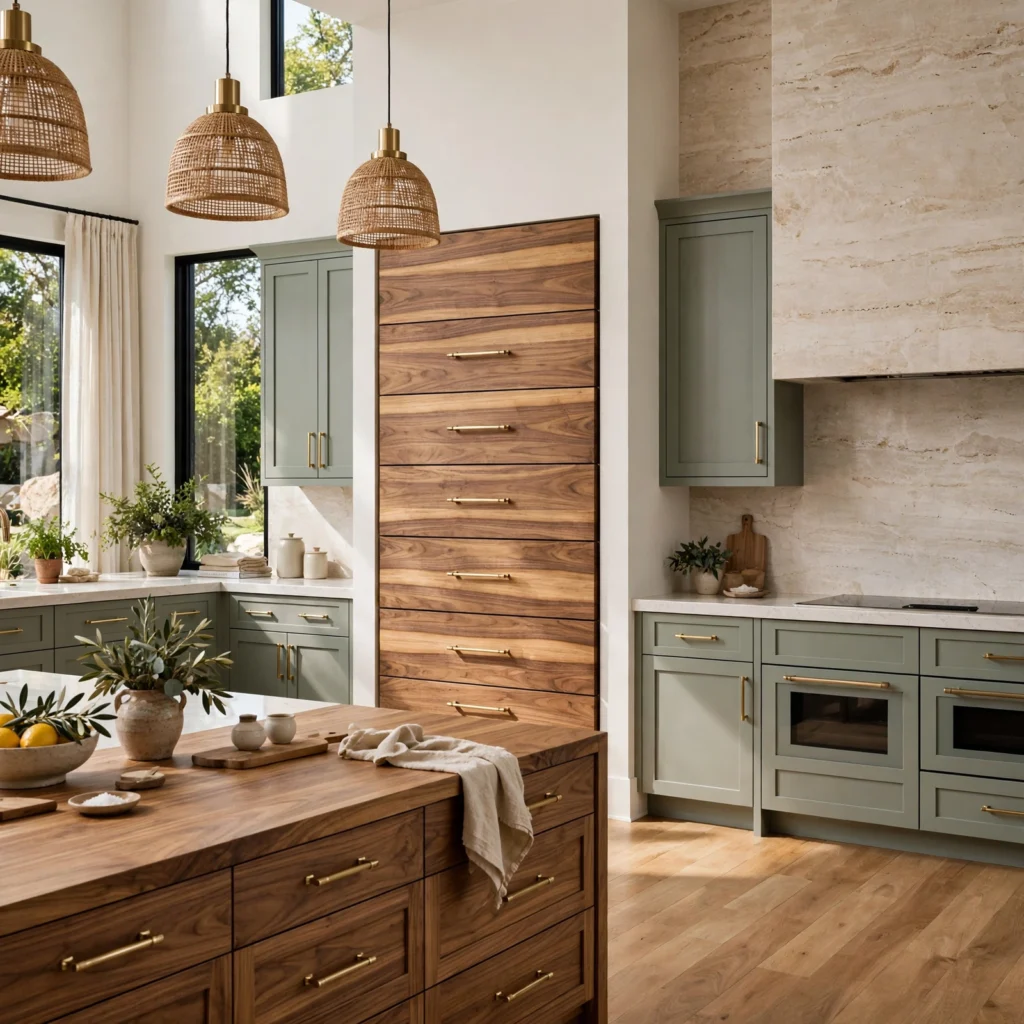
A two-toned grain-matched drawer stack arranges a vertical run of drawers cut from a single continuous board so the grain pattern flows unbroken from top to bottom, similar to bookmatching in fine furniture. This idea is typically reserved for a focal point, like an island end panel or a baking station stack, because grain-matching requires custom milling and drives up cost. The result reads as a single sculptural piece rather than a row of separate drawer fronts.
13. Espresso-Stained Wood Cabinets
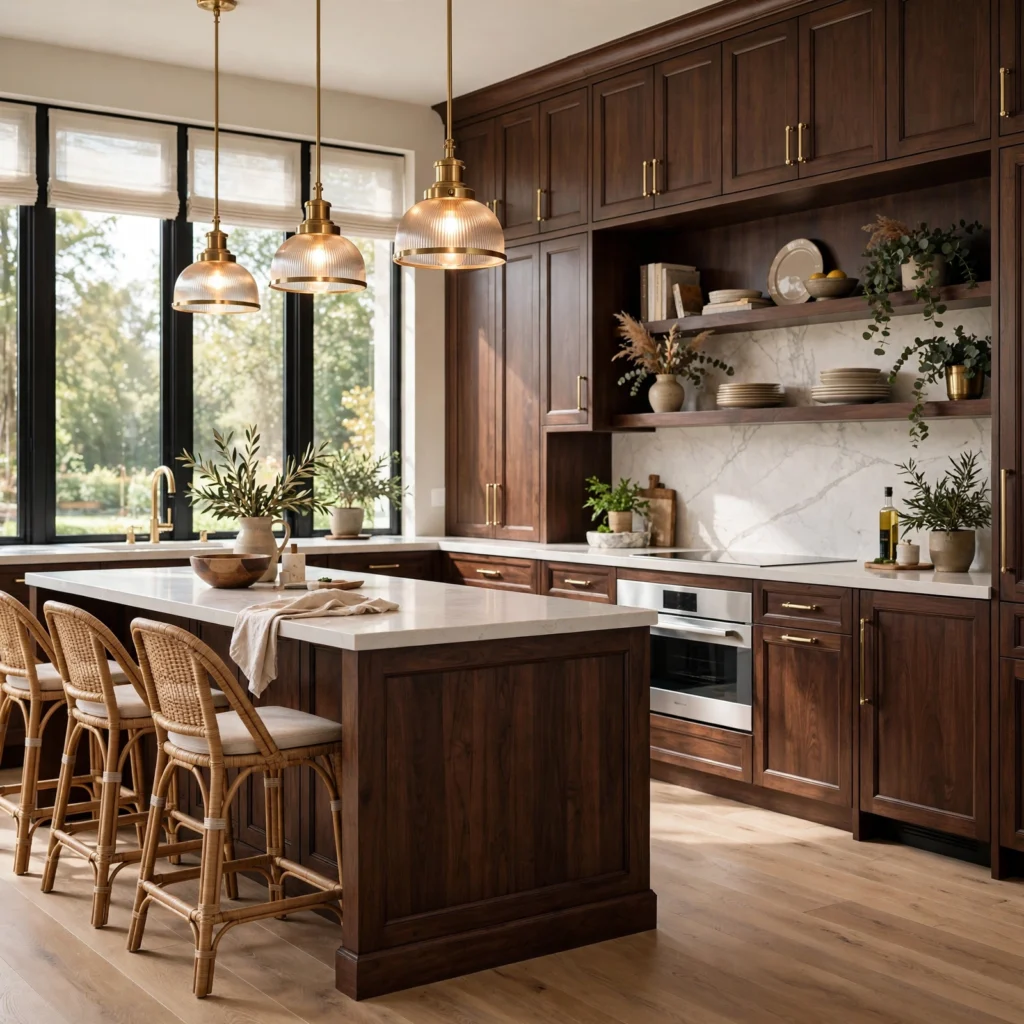
Espresso-stained wood cabinets apply a very dark, near-black stain over a wood species like oak or maple, keeping enough grain visibility to distinguish the finish from painted black cabinetry. This idea suits kitchens that want dramatic contrast against white countertops or light stone backsplashes without fully committing to a black lacquer finish. Espresso stain also hides scuffs and fingerprints more effectively than lighter finishes, which makes it a practical choice for busy family kitchens.
| Stain Level | Wood Species Best Suited | Grain Visibility |
| Light Stain | Maple, White Oak | High |
| Medium Stain | Red Oak, Cherry | Moderate |
| Espresso Stain | Oak, Alder | Low to Moderate |
14. Open Wood Shelving with Cabinet Base
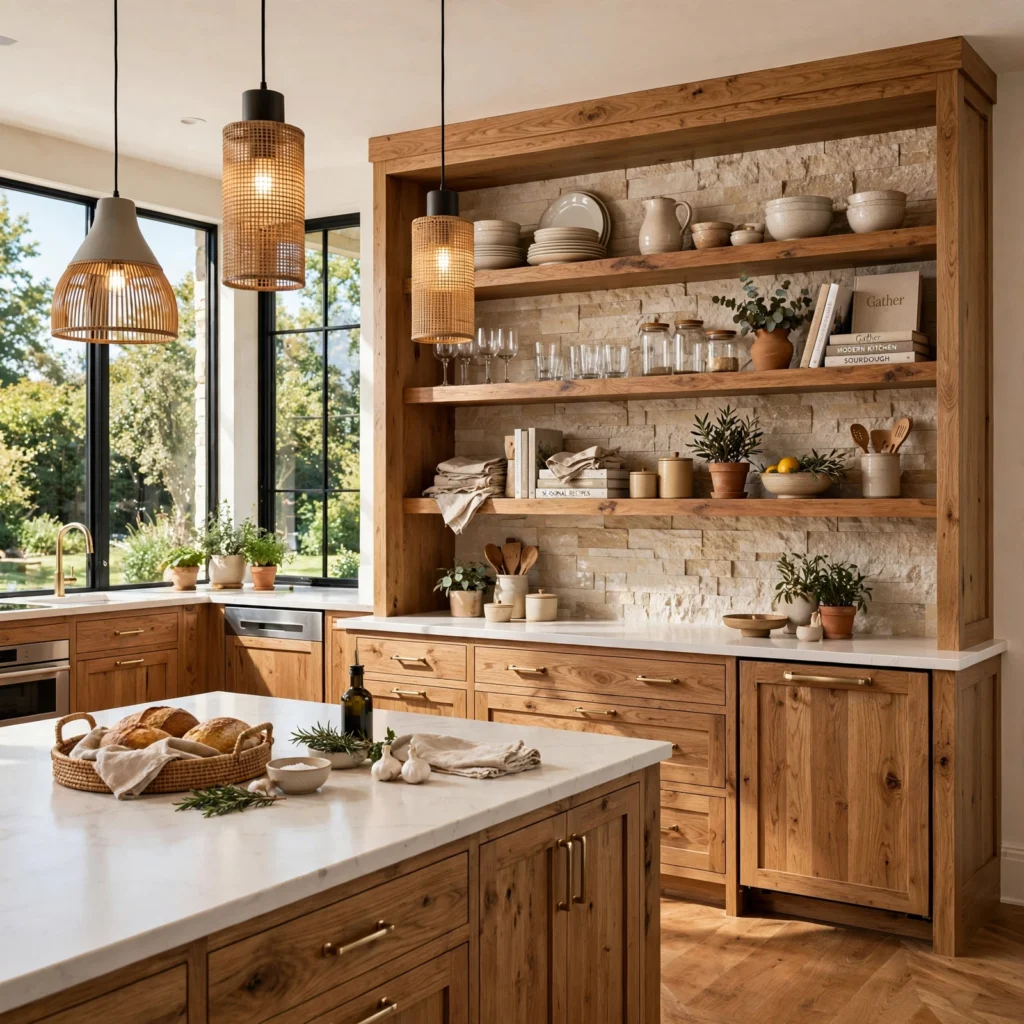
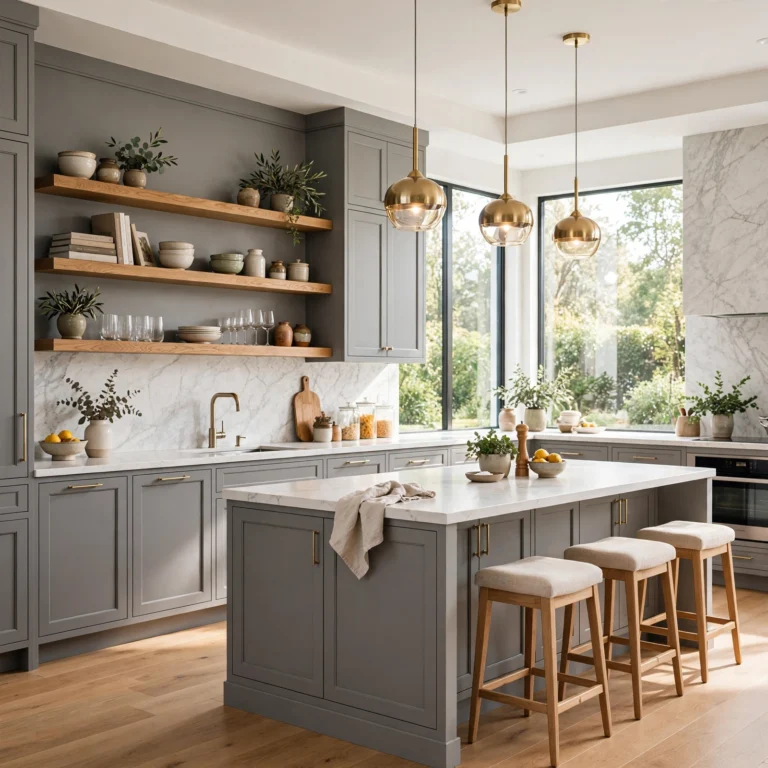
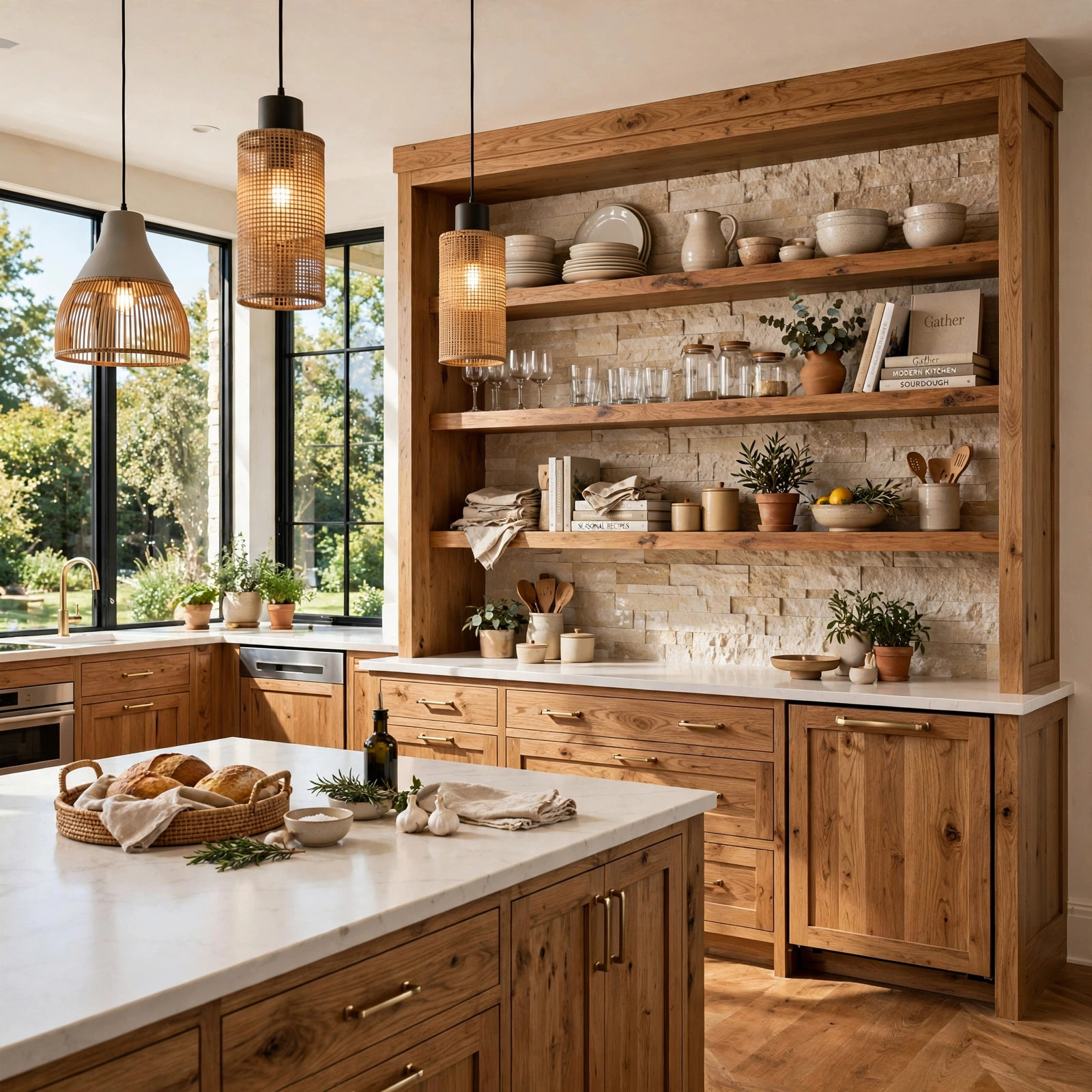
Open wood shelving with cabinet base pairs solid or engineered wood floating shelves above the counter with closed wood cabinets below, breaking up a kitchen that would otherwise feel like one solid wall of doors. This idea works best when the shelf wood matches or closely coordinates with the base cabinet finish, since mismatched tones in the same sightline tend to look accidental rather than styled. Open shelving also gives homeowners a spot to display dishware without the added cost of glass cabinet fronts.
15. Warm Wood Cabinets with Black Steel Windows
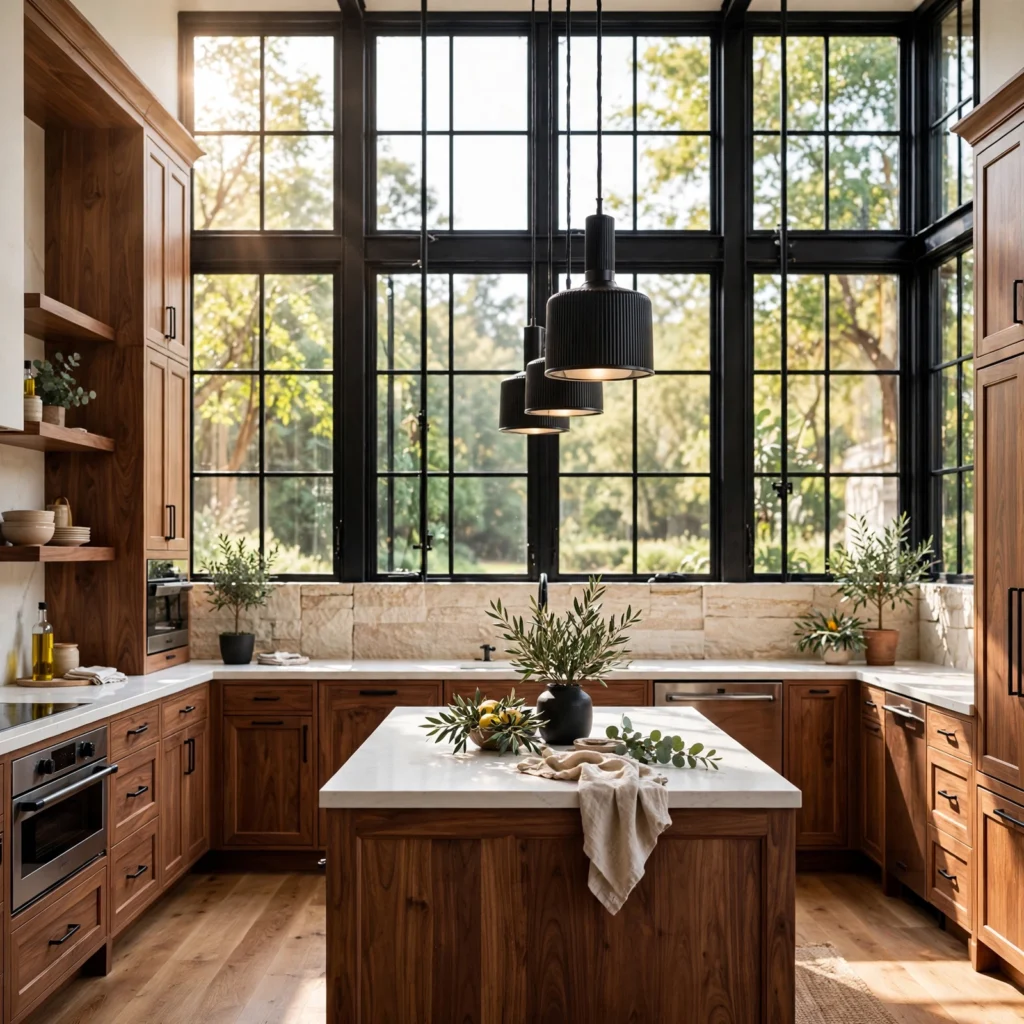
Warm wood cabinets with black steel windows pair the texture of a wood species like walnut or white oak against the thin black metal grid of steel-frame windows or interior glass partitions, a combination borrowed from industrial loft conversions. This idea works because the cool, linear steel frames offset the organic warmth of the wood, preventing the kitchen from feeling overly rustic or heavy. It’s most effective in kitchens with a garden window, sliding door, or interior pass-through already built into the layout.
Shop the Look
For a kitchen built around wood kitchen cabinets, a soft-close hinge system in a matching wood tone keeps hardware from disrupting the grain pattern. Unlacquered brass cabinet pulls develop a natural patina over time that complements species like walnut and cherry particularly well. A honed quartzite or soapstone counter pairs well with most wood tones without competing for attention. For lighting, a set of warm-dimmable pendant lights over an island helps wood cabinetry photograph accurately instead of appearing orange under cool LED bulbs. A wool or jute runner in a neutral tone finishes the look without introducing a competing pattern.
Common Mistake to Avoid
The most common mistake homeowners make with wood kitchen cabinets is choosing a species and stain based on a showroom sample instead of testing it under their kitchen’s actual lighting. North-facing kitchens pull cooler and can make warm woods like cherry look muddy, while south-facing kitchens with strong afternoon sun can wash out lighter woods like maple. Ordering a full-size door sample and viewing it in the kitchen at different times of day prevents an expensive mismatch between the sample chip and the finished installation.
People Also Ask
What is the most popular wood for kitchen cabinets right now?
White oak is currently the most requested wood for kitchen cabinets, largely because its light, even grain suits both modern and traditional kitchen styles without forcing a homeowner to commit to a heavily rustic or heavily contemporary look. It also finishes well with clear or lightly tinted topcoats, which keeps the natural color from shifting too dark. Designers frequently pair it with black or brass hardware, which has helped push its popularity ahead of maple and cherry in recent renovation projects.
Are wood kitchen cabinets more expensive than painted cabinets?
Solid wood cabinets generally cost more than painted MDF cabinets because the raw material itself is more expensive and requires more skilled labor to mill, stain, and finish evenly. However, wood cabinets tend to hold up better over time and rarely need repainting, which can offset some of the upfront cost difference across a decade of ownership. Species choice also affects price significantly, with walnut and cherry typically costing more than oak or maple.
Do wood kitchen cabinets need to be resealed over time?
Most wood kitchen cabinets with a quality factory finish do not need resealing for many years under normal household use, since the topcoat is applied and cured under controlled conditions before installation. Areas near the sink or dishwasher that see frequent moisture exposure are the exception and should be checked periodically for finish wear. A light coat of compatible wax or oil can refresh the surface if the sheen starts to look dull in high-use areas.
Can I mix two different wood species in one kitchen?
Mixing two wood species works well when the tones share an undertone, such as pairing a warm oak with a warm walnut rather than combining a cool-toned wood with a distinctly warm one. The safest approach is to use one species as the dominant surface, such as the perimeter cabinets, and the second as an accent on the island or open shelving. Bringing physical samples of both woods together before ordering prevents an unintentional clash once the cabinets are installed.
What hardware works best with wood kitchen cabinets?
Matte black and unlacquered brass are currently the two most common hardware finishes paired with wood kitchen cabinets, since both read as neutral against a range of wood tones without competing with the grain. Brushed nickel remains a safe, slightly more traditional option for homeowners who want a cooler-toned metal without the higher contrast of matte black. The right choice ultimately depends on the other fixed metal finishes already in the kitchen, like faucets and lighting.
Conclusion
Wood kitchen cabinets offer a level of warmth and texture that’s hard to replicate with paint alone, and the fifteen ideas above show just how many directions that warmth can take, from a full white oak build to a single walnut waterfall island as a focal point. Save this post to Pinterest for reference while you’re gathering samples, and check out our related guide on kitchen backsplash pairings for wood cabinetry before finalizing your renovation plan.
Author Expertise Note
This guide was compiled from firsthand kitchen renovation consultations and supplier conversations with cabinet millwork shops specializing in solid wood and veneer construction. Species recommendations reflect current material costs and availability as of this writing, which can shift regionally depending on lumber supply.