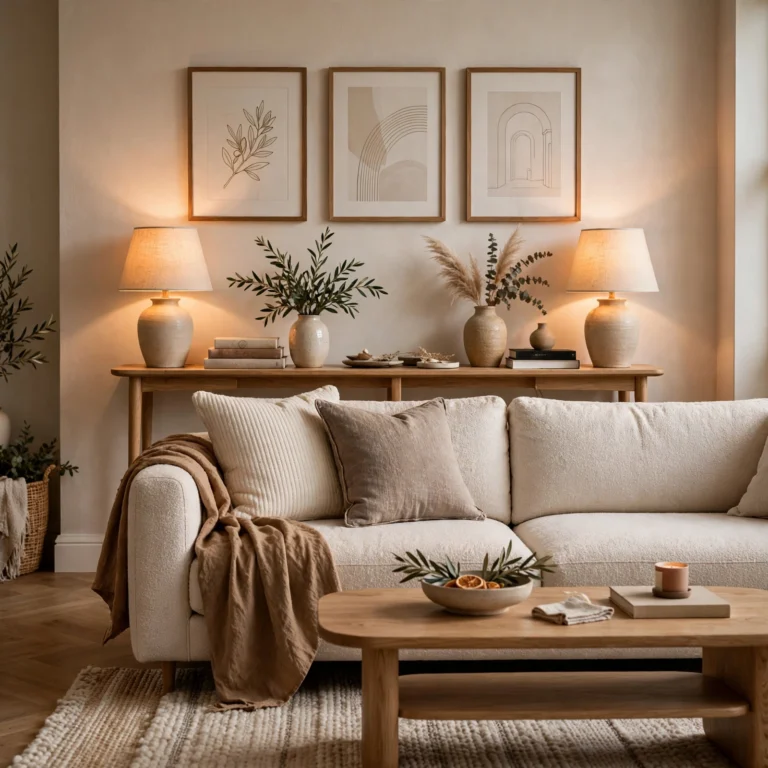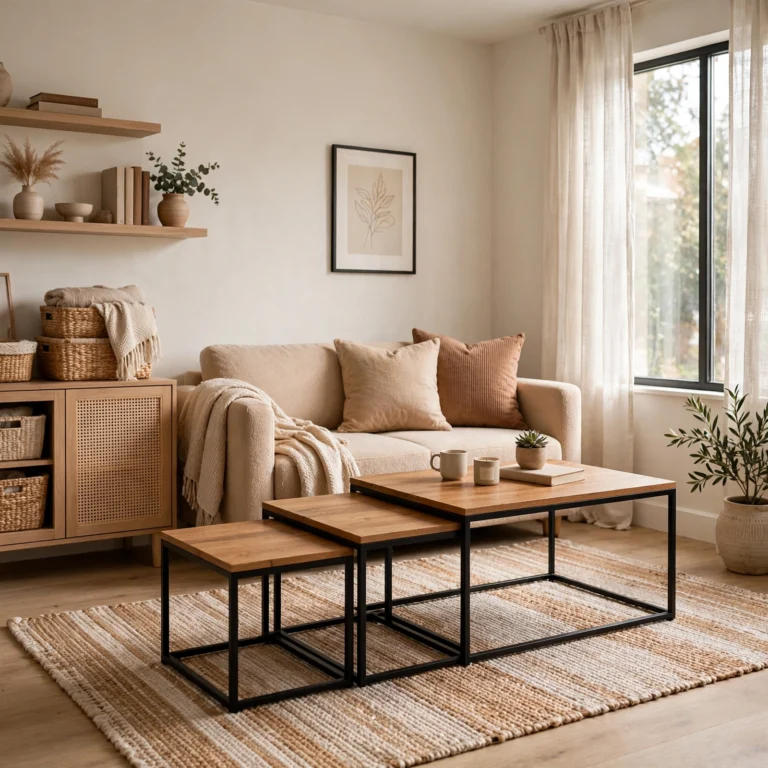
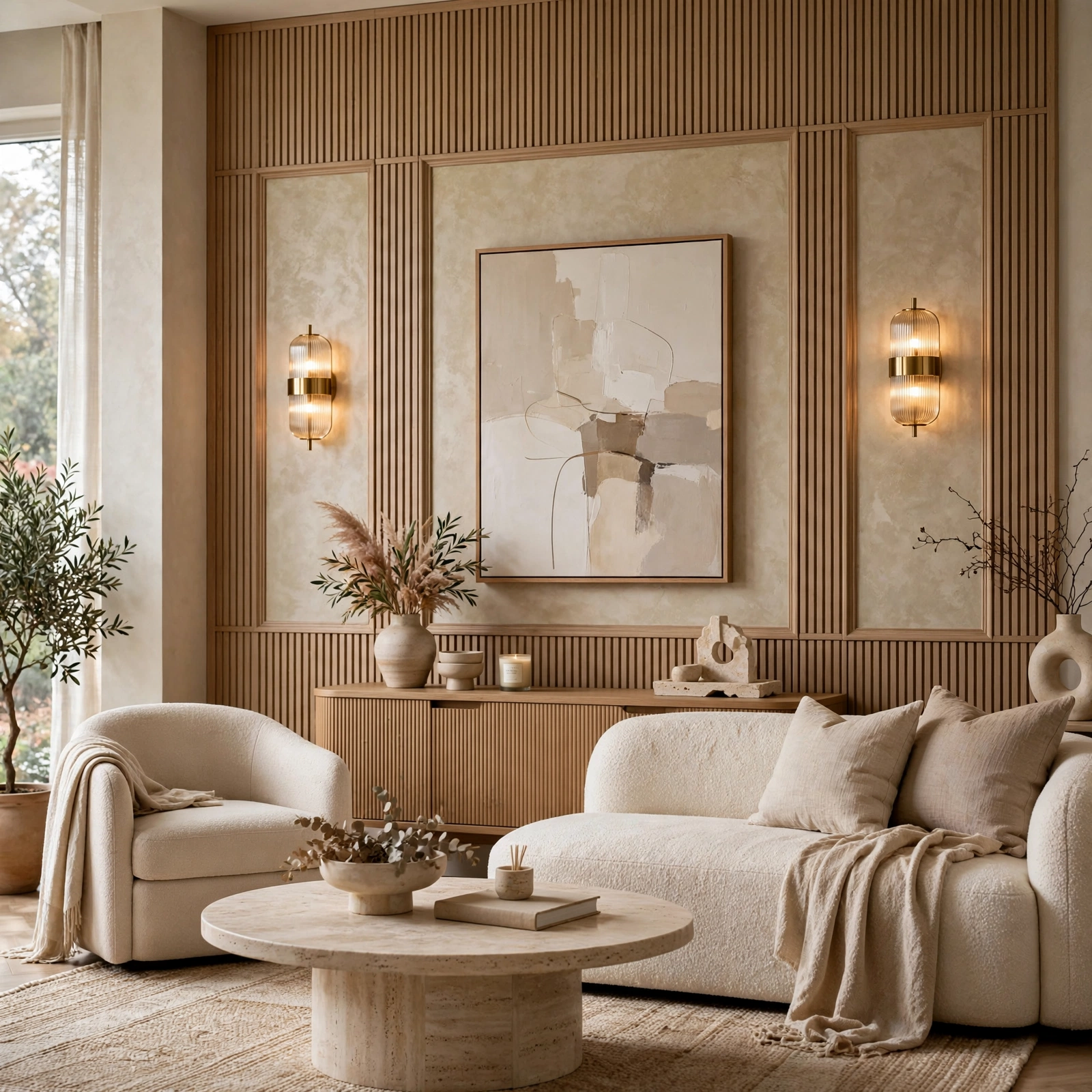
15 Trending Living Room Wall Designs That Redefine And Beautify Your Space
Bare drywall is quietly disappearing from living rooms across the country, replaced by texture, pattern, and intentional layering. Homeowners are treating vertical surfaces as the main event rather than an afterthought, and the right living room wall designs can change how a whole room reads before a single piece of furniture goes in. This guide walks through fifteen distinct approaches, from budget shelving to plaster finishes, so you can pick one that matches your skill level, timeline, and the mood you want the room to hold.
Trend & Background
Interior design has moved away from flat, single-color walls toward layered surfaces that catch light and shadow differently throughout the day. Part of this comes from more people working and entertaining at home, which puts extra scrutiny on rooms that used to serve one purpose. Material availability has also shifted; reclaimed wood, lime-based plasters, and fluted MDF panels that were once specialty items are now stocked by mainstream retailers. Social platforms have accelerated the trend further, turning wall treatments into shareable design statements rather than background details.
Key Takeaways
- Board and batten, fluted panels, and Venetian plaster are leading the shift toward textured, dimensional living room wall designs in 2026.
- Budget-friendly options like picture ledges and floating shelves deliver high visual impact without structural changes.
- Material choice (wood, plaster, wallpaper, brick veneer) should match room lighting, humidity, and existing furniture tone.
- Mixing two techniques, such as paneling with a bold paint block, creates depth without overwhelming a small footprint.
1. Board and Batten Living Room Wall Designs
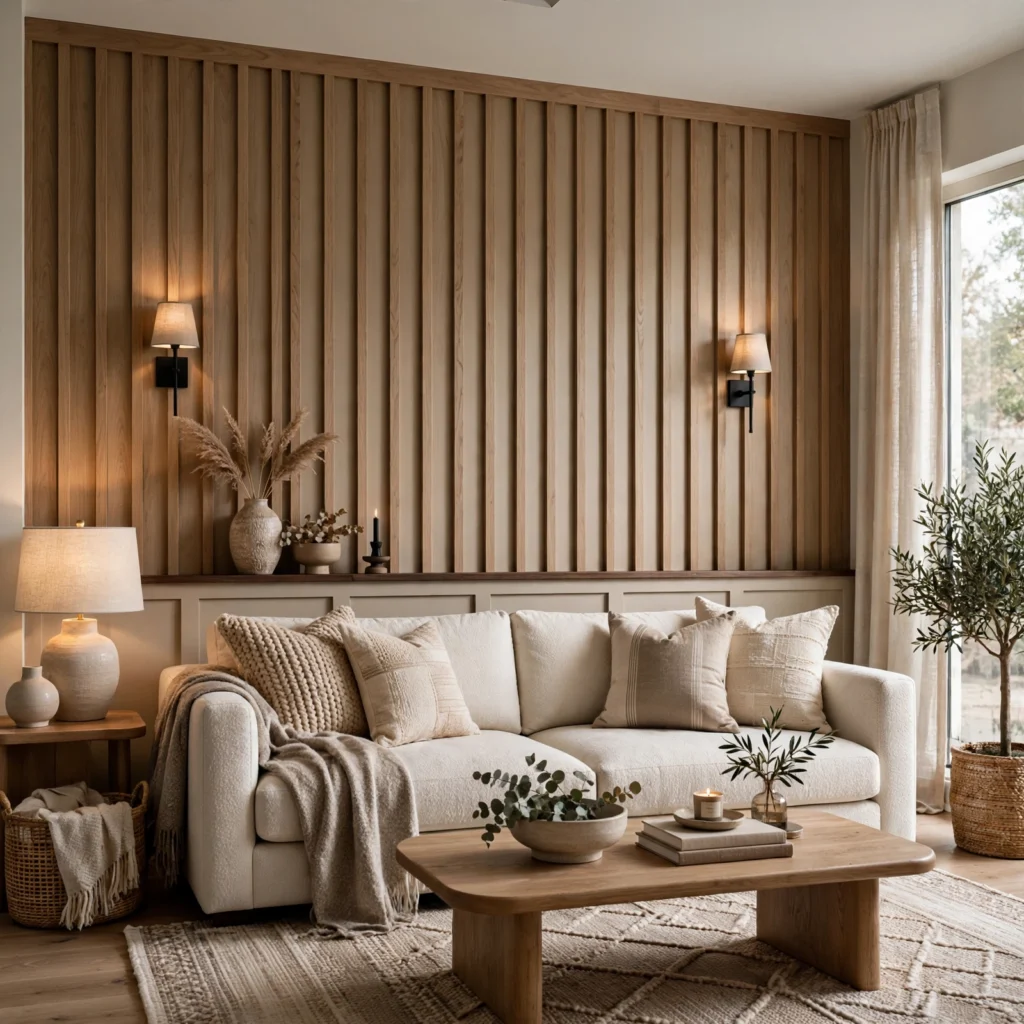
Board and batten uses vertical strips of wood or MDF applied over a flat wall to create raised, rhythmic paneling from floor to a set height, typically chair rail or higher. It reads as classic New England trim work but adapts easily to modern spaces when painted a single tone with the wall color, letting shadow lines do the visual work instead of contrast. Installation involves measuring even batten spacing, cutting to length, and securing with adhesive and finish nails before caulking and painting.
| Spacing Style | Batten Width | Gap Between Battens | Best Ceiling Height |
| Tight Modern | 2 in | 6-8 in | 8-9 ft |
| Classic Traditional | 3 in | 10-12 in | 9-10 ft |
| Wide Statement | 4 in | 14-16 in | 10+ ft |
2. Picture Ledge Gallery
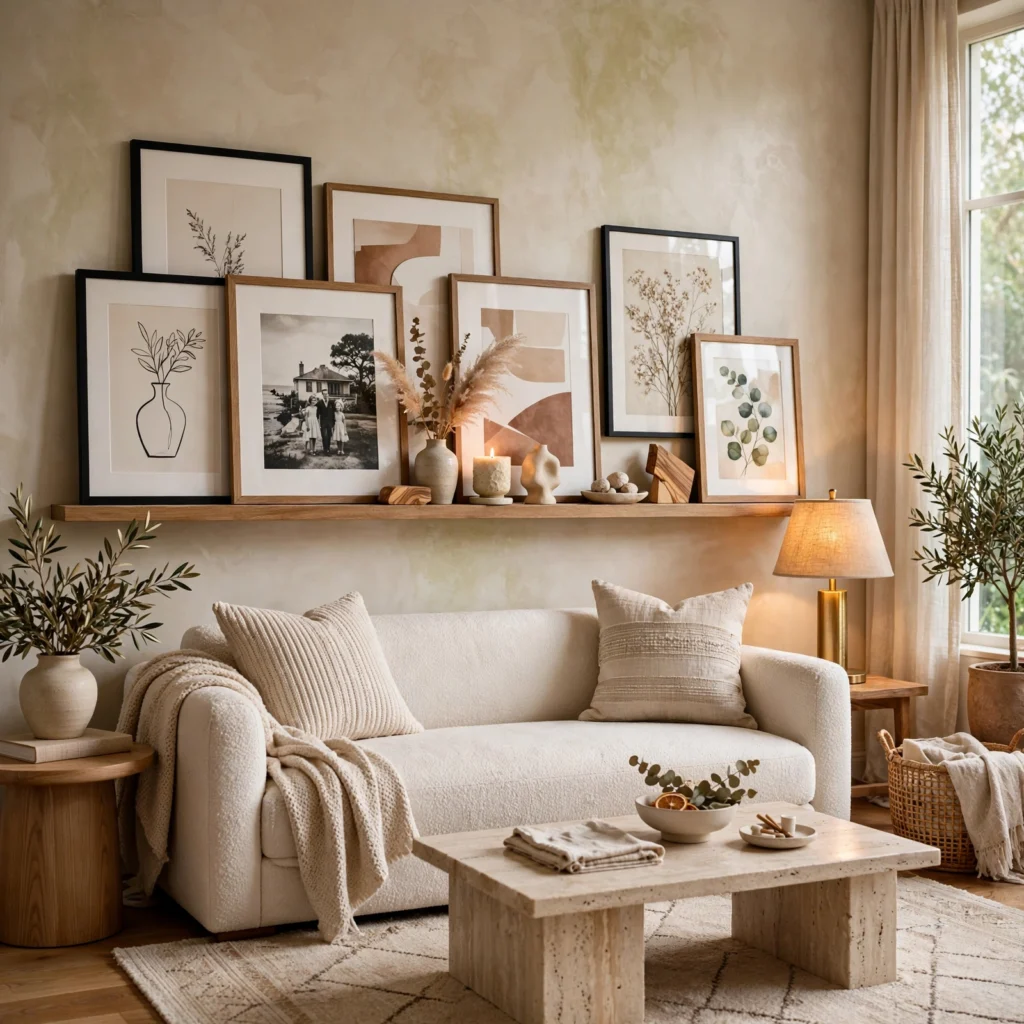
A picture ledge gallery swaps traditional hung frames for narrow floating shelves that hold art, propped rather than nailed in place, so the arrangement can be rearranged whenever the mood changes. The layered look comes from overlapping frames of varying sizes and depths against the ledge, mixing photography, prints, and small objects like ceramics or dried florals. Because nothing is permanently mounted, this works well for renters or anyone who redecorates seasonally without wanting to patch new holes each time.
3. Textured Lime Wash Finish
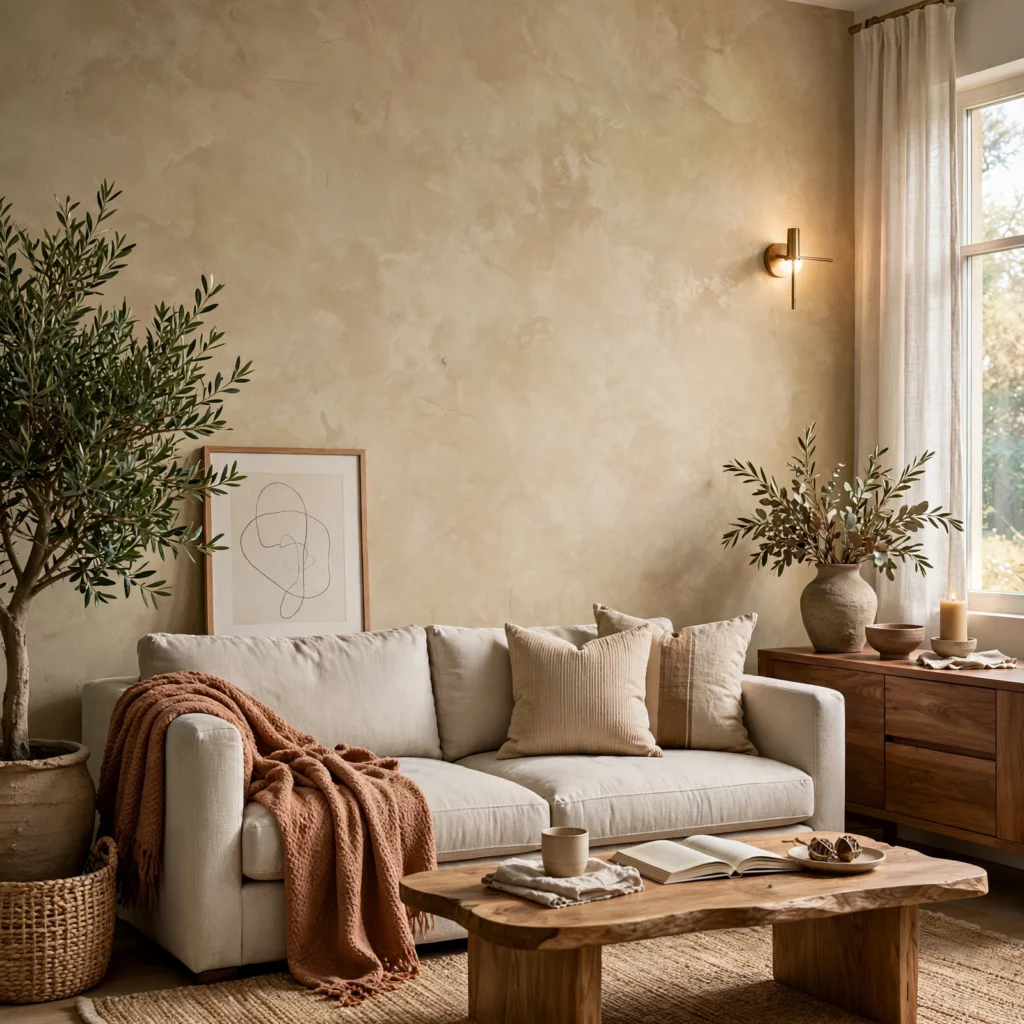
Lime wash is a mineral-based paint that dries with a soft, cloud-like variegation instead of a flat, uniform color, giving the wall an aged plaster quality that photographs beautifully in natural light. Applied with a wide brush in loose, overlapping strokes, it produces subtle streaks and depth that solid paint cannot replicate, and it works in earthy tones like terracotta, clay, or muted sage. The finish is breathable and naturally antimicrobial, making it a practical choice for humid climates as well as a design one.
To see more small living room
4. Floating Wall Shelves
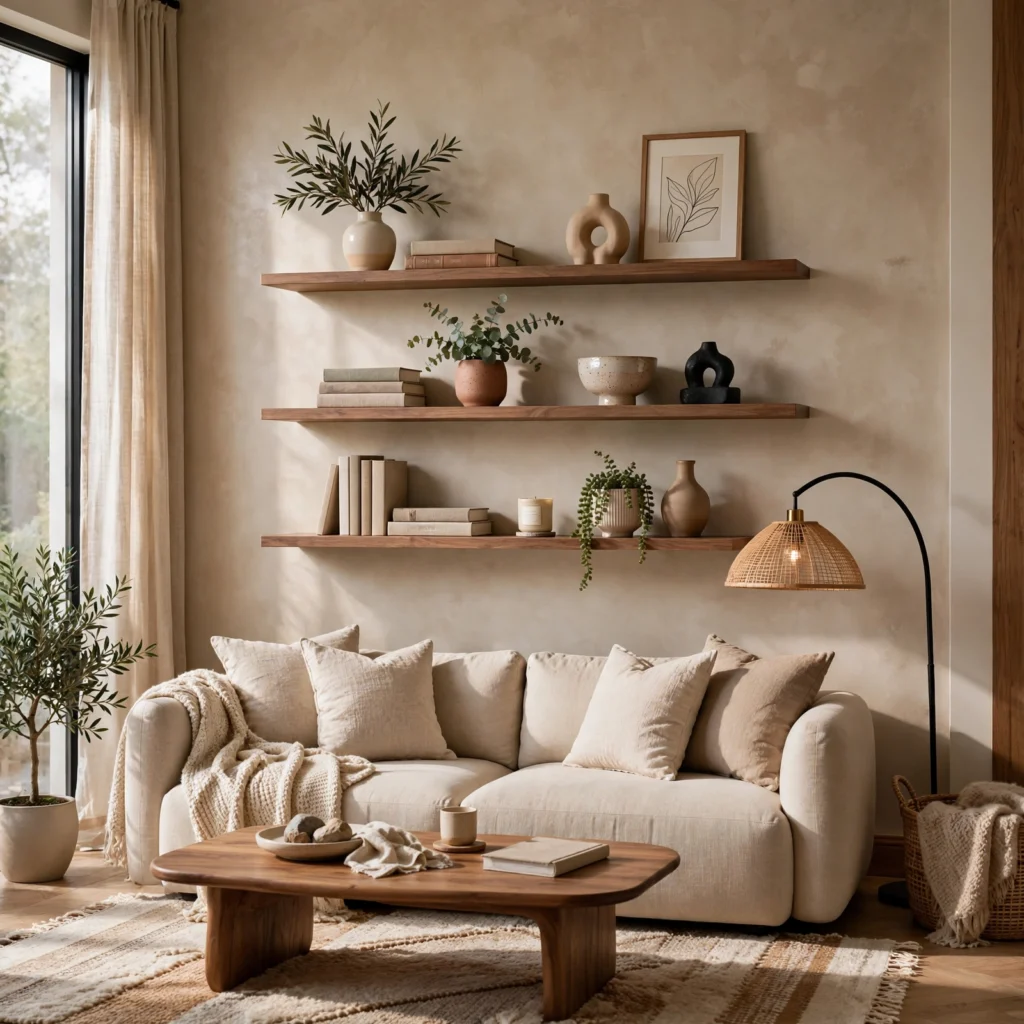
Floating shelves mount flush to the wall with hidden brackets, creating clean horizontal lines that hold books, plants, and decor without visible hardware interrupting the display. They work particularly well flanking a fireplace or television, breaking up a large blank expanse while keeping floor space open in smaller living rooms. Choosing a consistent material, like white oak or blackened steel, across all shelves keeps the arrangement cohesive even when the objects on display change often.
| Shelf Depth | Recommended Spacing | Ideal Use |
| 6 in | 10-12 in apart | Small decor, framed photos |
| 8 in | 12-14 in apart | Books, plants |
| 10-12 in | 14-16 in apart | Sculptural objects, speakers |
5. Reclaimed Wood Accent Wall
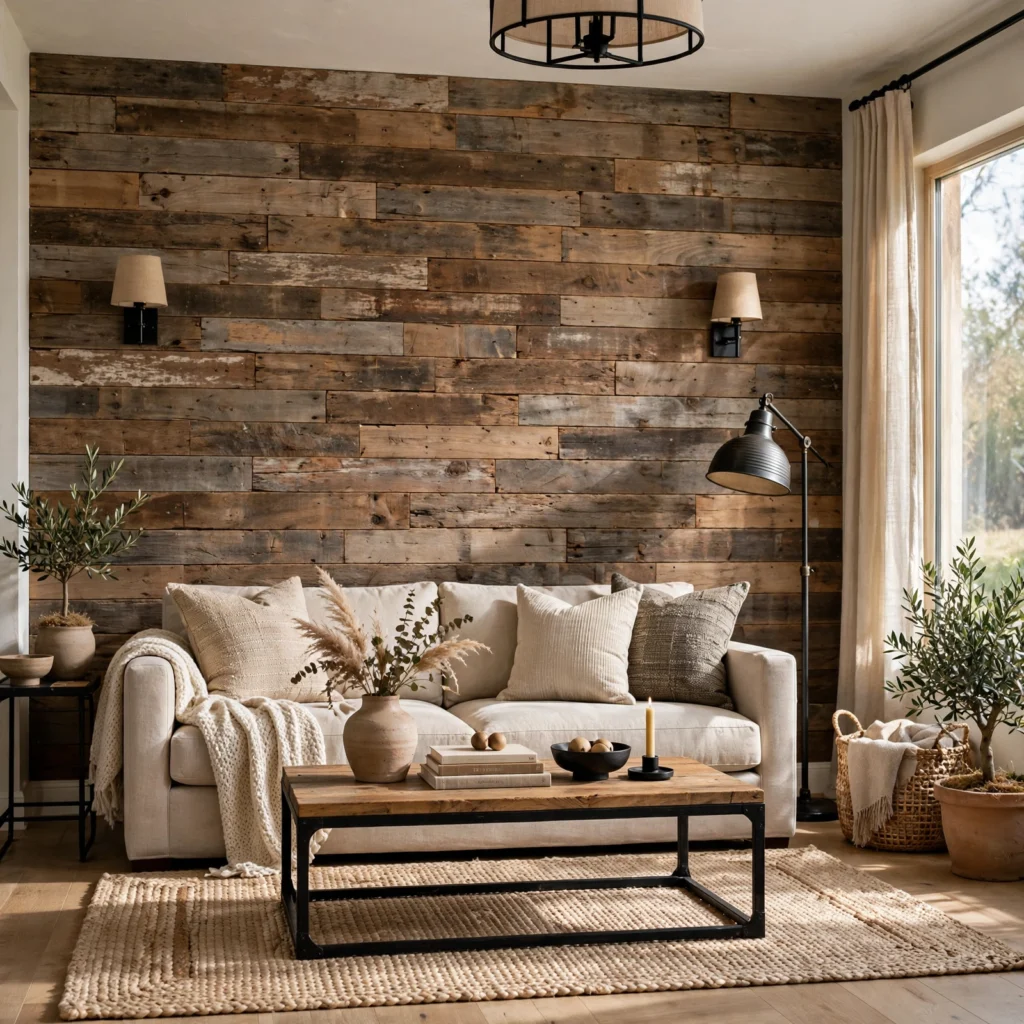
Reclaimed wood accent walls use salvaged barn boards, pallet wood, or milled beams with visible grain, nail holes, and weathering left intact rather than sanded smooth. The variation in tone from board to board is the point, giving one wall a warm, lived-in focal quality that contrasts against smoother painted surfaces elsewhere in the room. Installers typically stagger plank lengths in a running bond pattern and seal the wood with a matte topcoat to protect it without flattening its texture.
6. Fluted Wall Panels
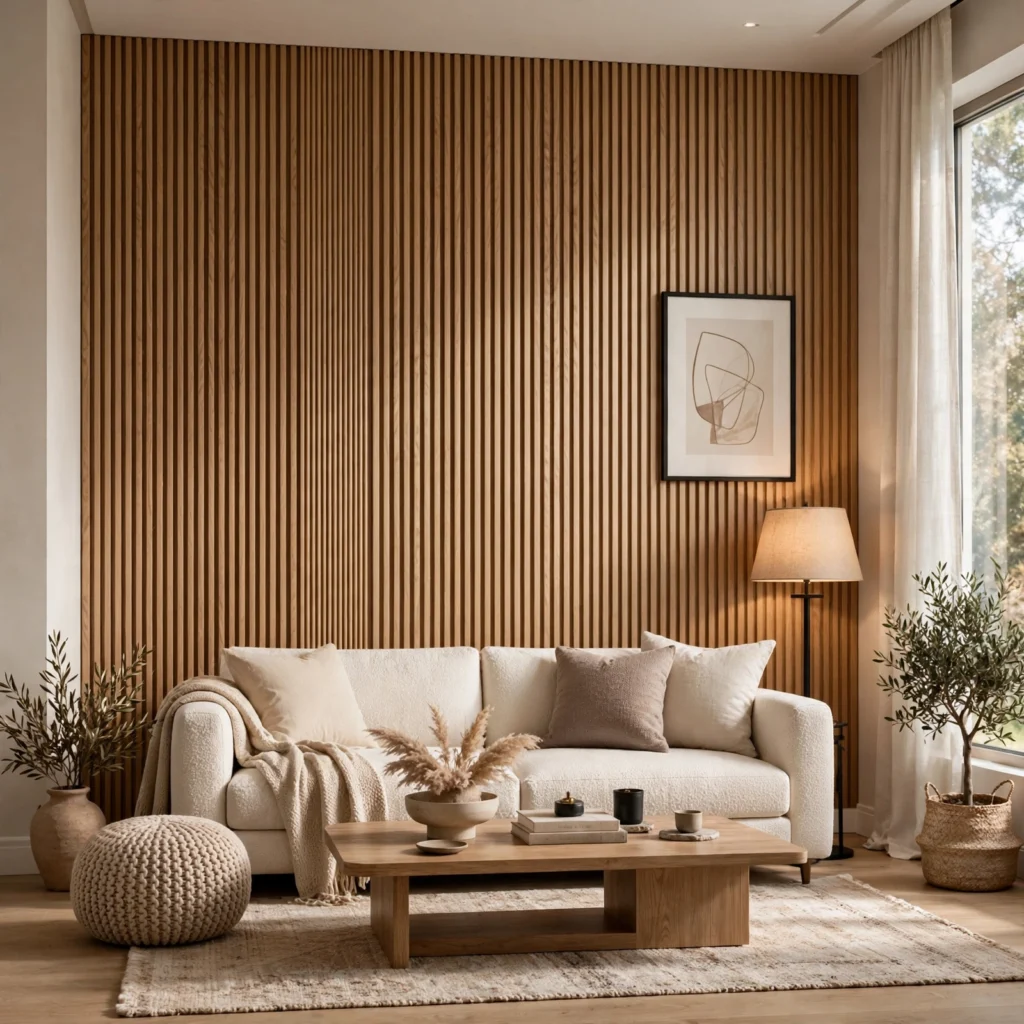
Fluted panels feature repeated vertical grooves milled into wood or MDF sheets, producing a ribbed, architectural texture that reads as sophisticated without requiring hand-applied plaster or paint technique. They install in large sheet sections rather than individual slats, which speeds up the process compared to board and batten while still delivering strong shadow definition. Painted in a deep tone like charcoal or forest green, fluted panels behind a sofa or media console turn that wall into an anchor point for the whole room.
7. Large-Scale Abstract Art
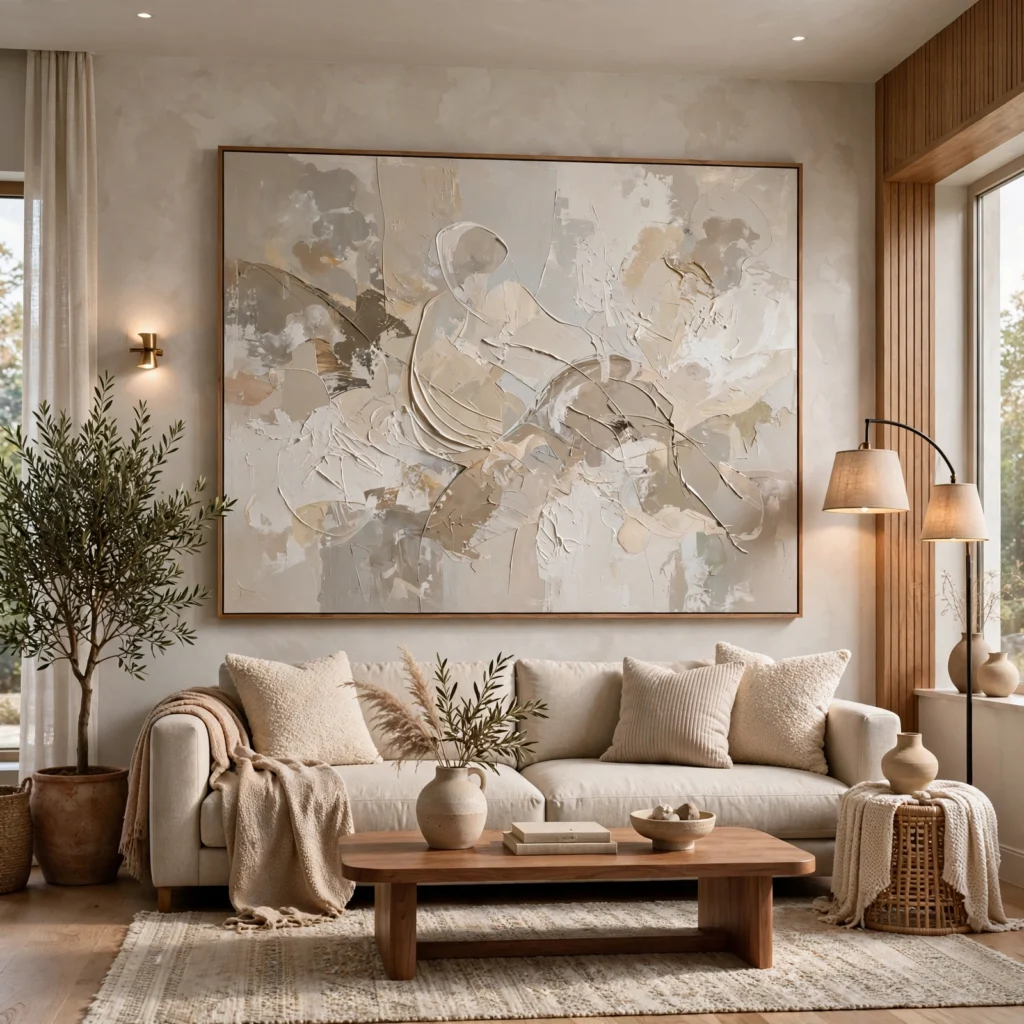
A single oversized abstract canvas, stretched to fill a substantial portion of the wall, functions as both artwork and focal point without needing additional decor to support it. The scale matters more than the subject matter here; a piece that’s too small on a large wall reads as an afterthought, while one sized to roughly two-thirds the width of the furniture below anchors the space properly. Warm, tonal abstracts in ochre or rust pair well with neutral furniture, while high-contrast pieces suit rooms that already lean minimal.
8. Built-In Media Wall
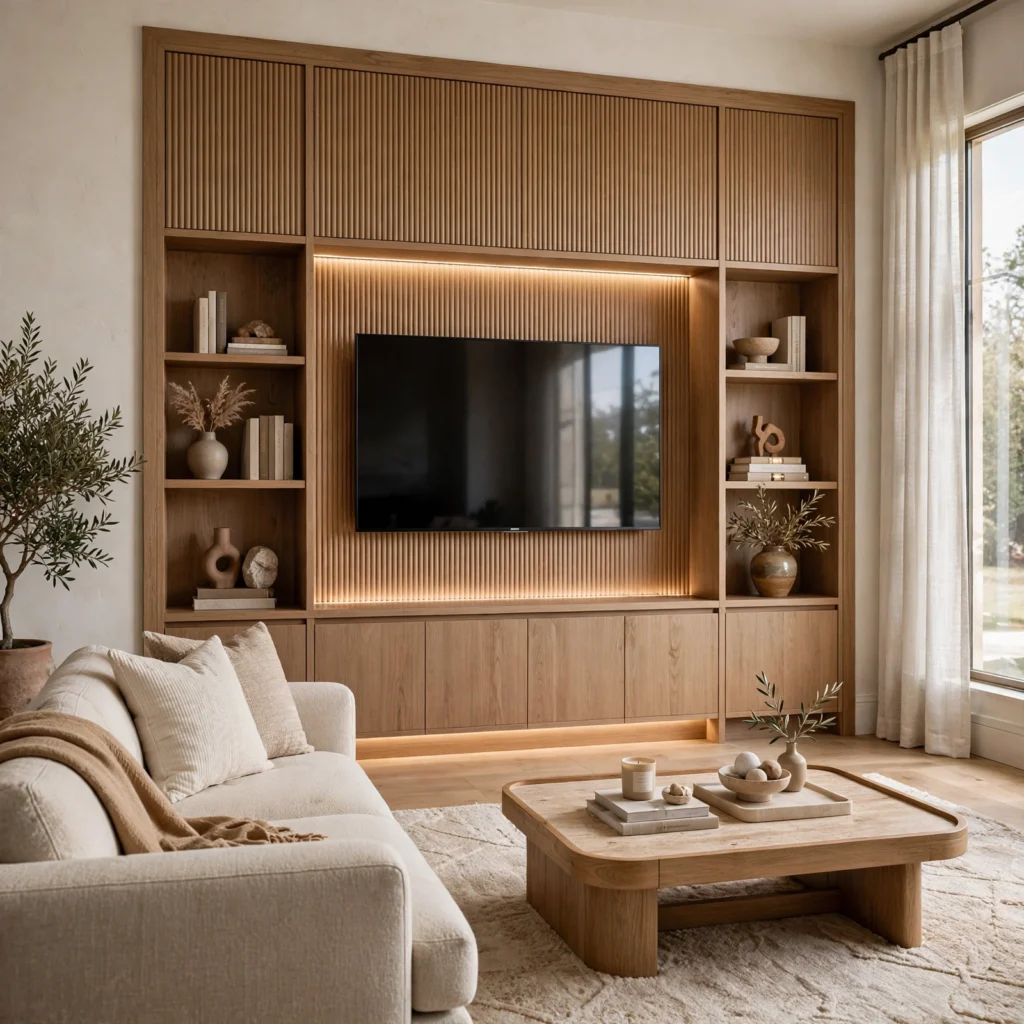
A built-in media wall combines custom cabinetry, open shelving, and a recessed or mounted television into one continuous unit that runs floor to ceiling or wall to wall. Unlike a freestanding entertainment center, built-ins are constructed to fit the exact dimensions of the room, eliminating gaps and giving the wall a finished, architectural presence. Adding integrated lighting behind or within the shelving, along with a mix of closed cabinets and open display sections, keeps the wall functional for storage while still working as a design centerpiece.
9. Wallpaper Mural
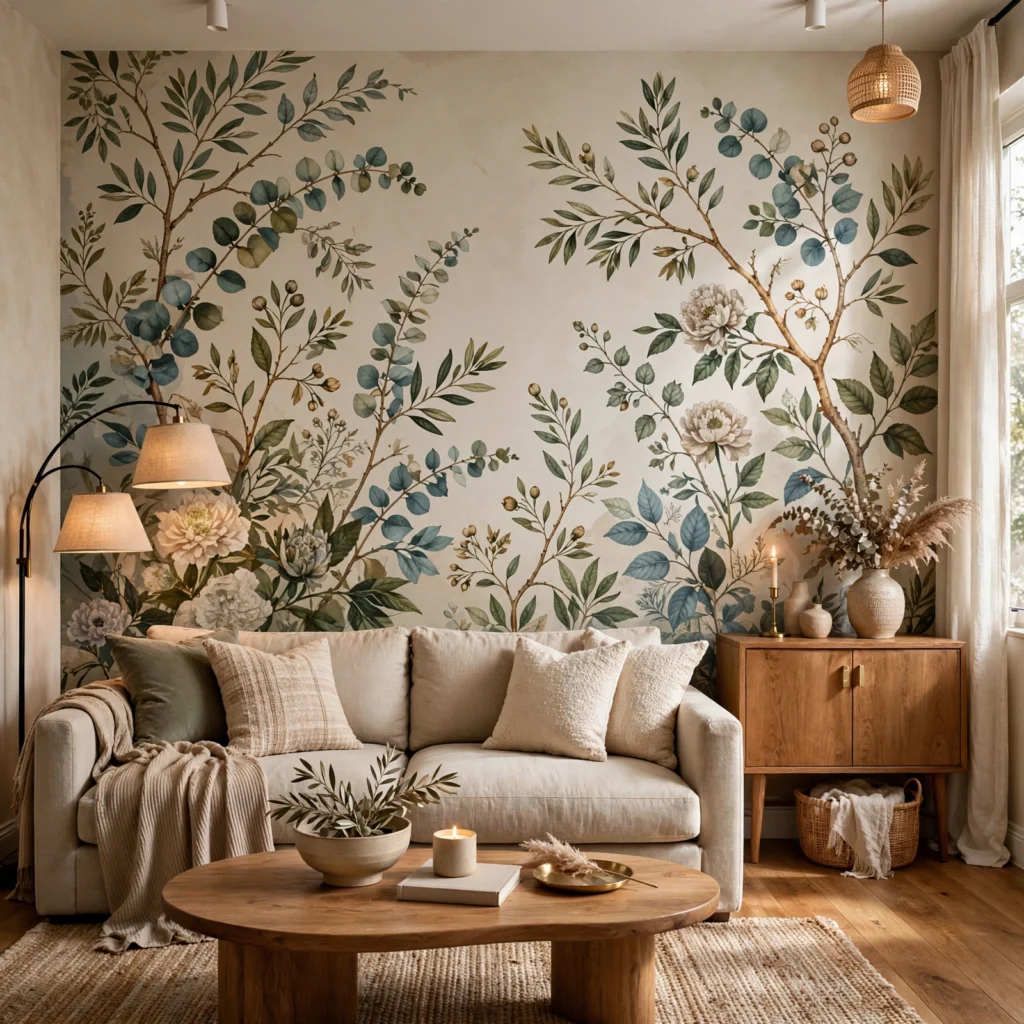
A wallpaper mural covers one wall in a single, continuous scene, whether botanical, abstract, or landscape-based, rather than a repeating small-scale pattern. Because the image spans the entire surface without an obvious repeat, murals create a sense of depth that flat paint or standard wallpaper can’t match, particularly in rooms with limited natural views outside. Pre-pasted, panel-based options have made installation far more approachable than traditional wallpaper, with most panels aligning by numbered sequence rather than requiring pattern matching.
10. Exposed Brick Veneer
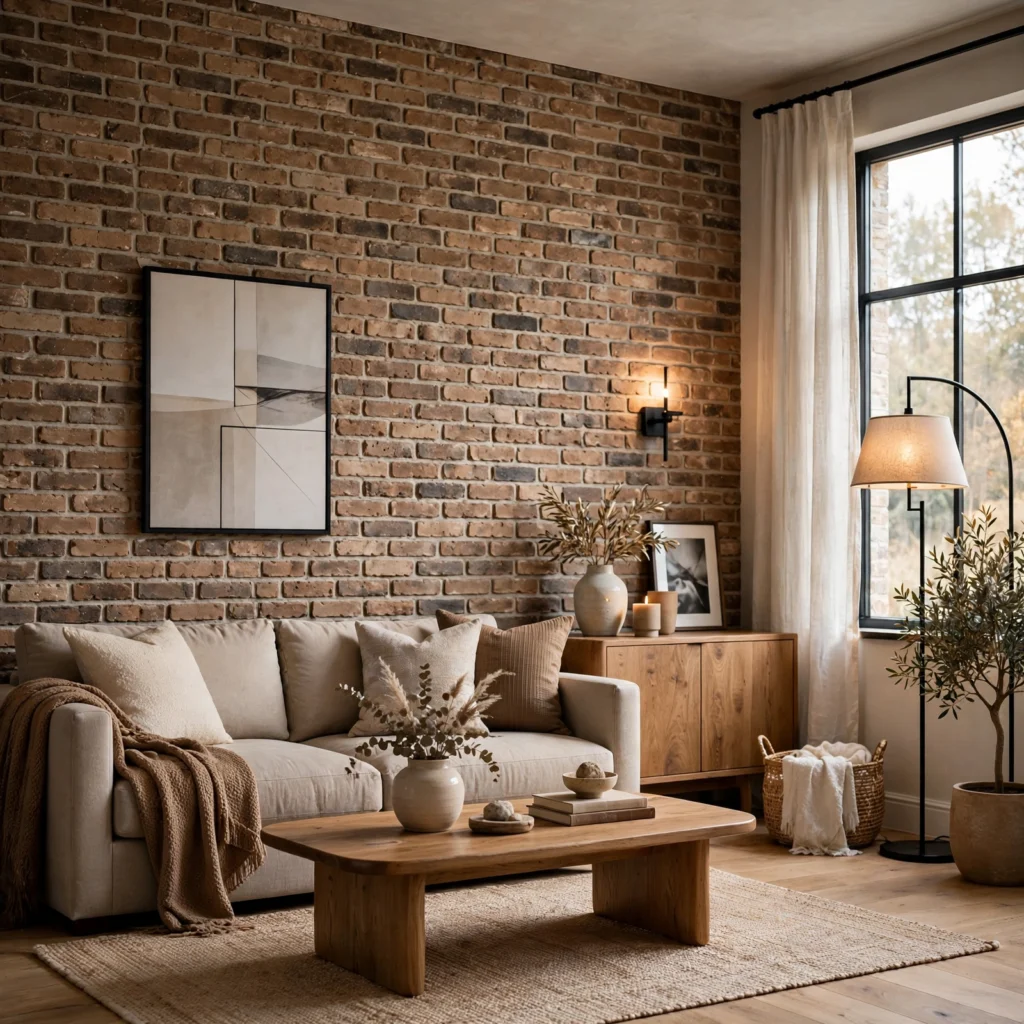
Brick veneer panels replicate the look of structural exposed brick using thin clay or manufactured brick slips adhered directly to drywall, giving loft-style texture without demolition. The uneven surface and warm reddish-brown tones bring an industrial edge that pairs naturally with leather furniture, black metal fixtures, and Edison-style lighting. Sealing the veneer with a matte masonry sealer protects it from dust buildup while keeping the raw, unfinished character that makes the look convincing in the first place.
11. Geometric Wood Inlay
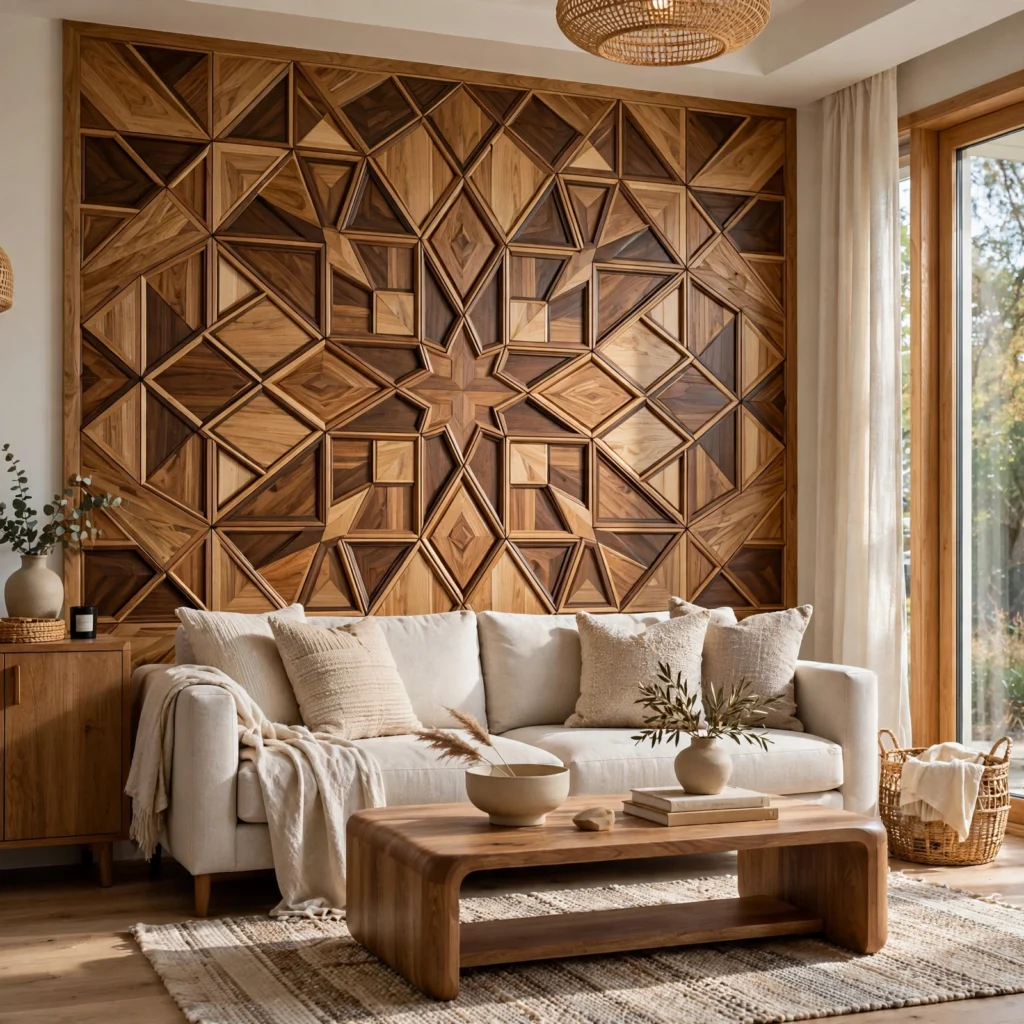
Geometric wood inlay arranges thin wood strips, often in a herringbone, chevron, or diamond pattern, directly onto the wall surface using two or three complementary wood tones for contrast. The repeating angles create movement across an otherwise flat wall and work especially well as a headboard-style feature behind a sofa rather than covering an entire room. This technique requires more precision than board and batten, so pre-cut inlay kits have become popular for homeowners attempting it without custom millwork.
12. Gallery Wall Frames
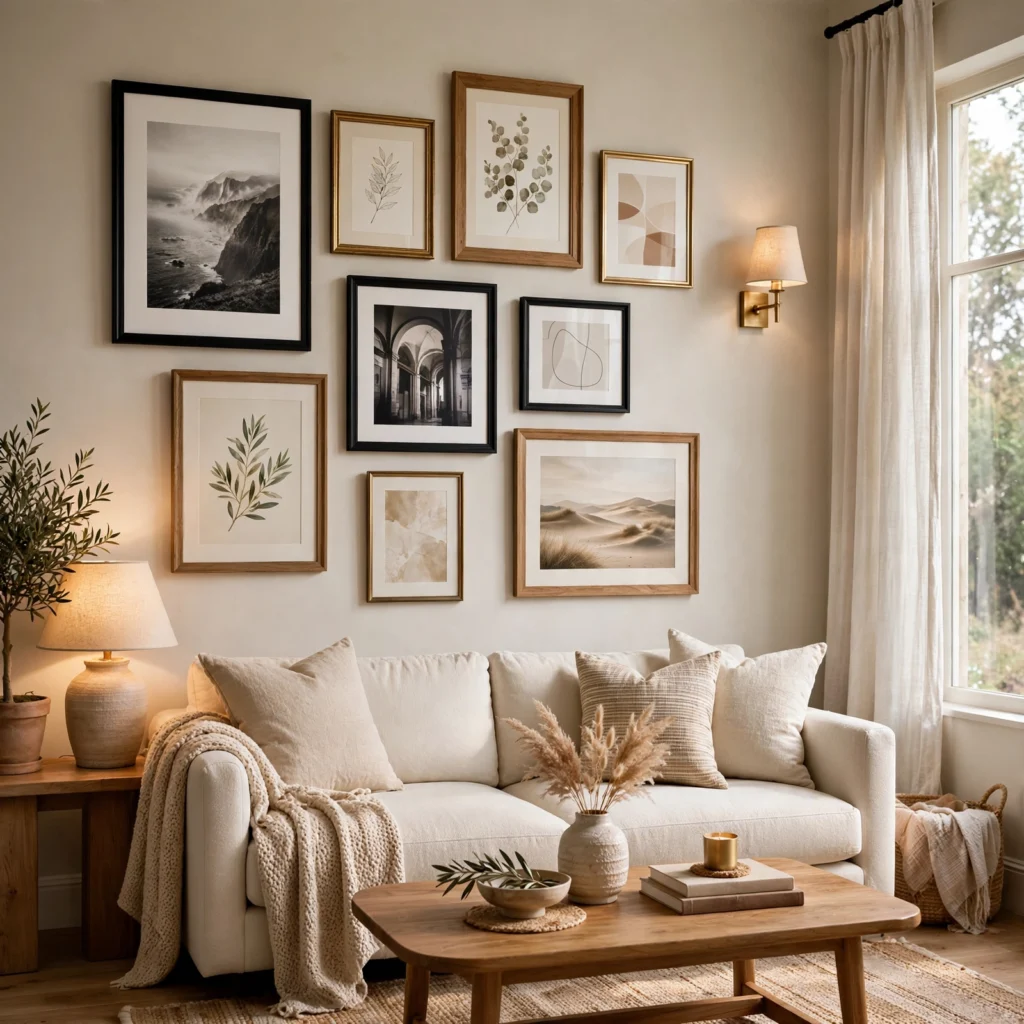
A gallery wall arranges a curated mix of framed art, photography, and mirrors in a deliberate grid or salon-style layout, using frame color and matting to unify pieces that vary in subject matter. Planning the layout on the floor first, then transferring measurements to the wall with painter’s tape, prevents uneven spacing and last-minute rehanging. Sticking to two or three frame finishes, such as black metal and natural oak, keeps a large collection from feeling cluttered or mismatched.
| Layout Style | Frame Count | Spacing Between Frames |
| Grid | 6-9 | 2-3 in uniform |
| Salon (freeform) | 10-15 | 2-4 in varied |
| Minimal Cluster | 3-5 | 3-5 in |
13. Venetian Plaster Wall
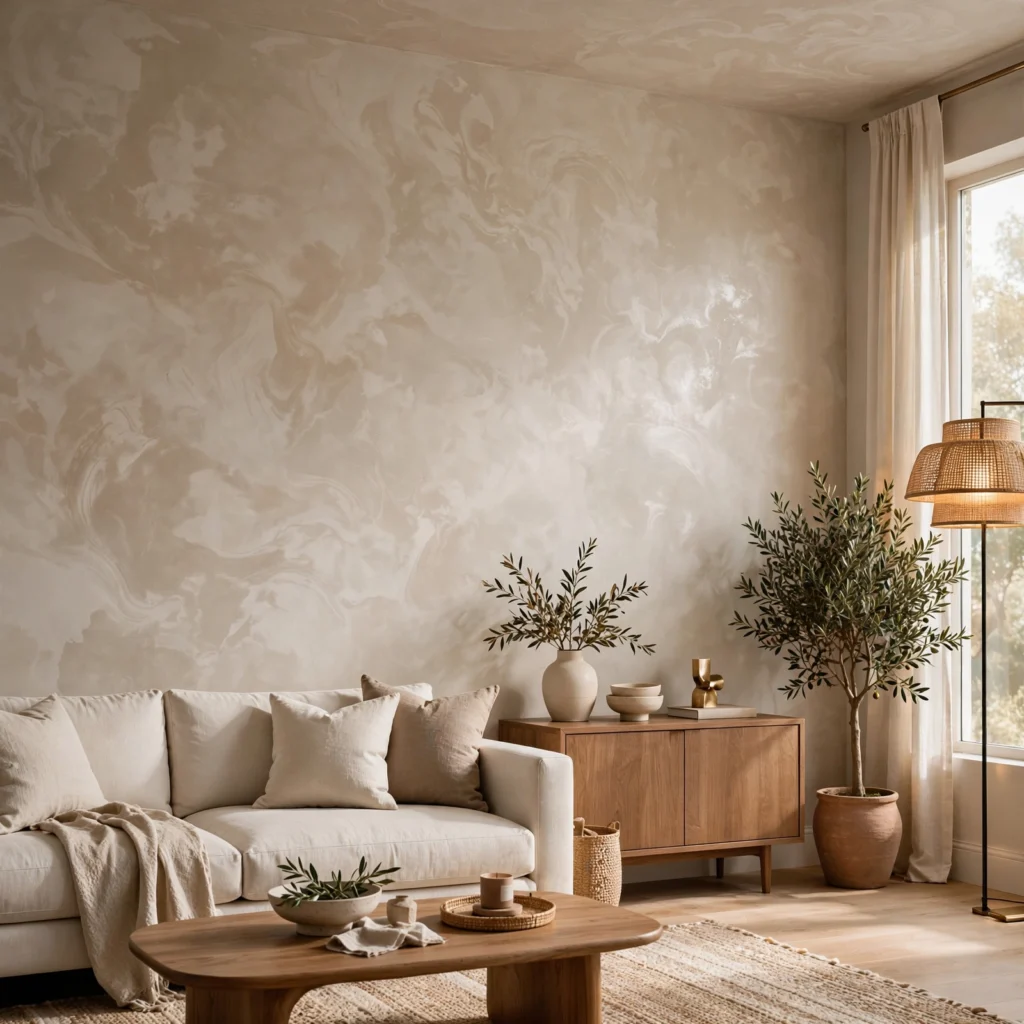
Venetian plaster is a polished lime-based finish applied in thin layers and burnished with a steel trowel until it develops a subtle sheen and marble-like depth. Unlike paint, the finish shifts appearance depending on the angle of light, appearing matte in shadow and glossy where light hits directly, which gives the wall a sense of movement throughout the day. It’s a slower, more labor-intensive process best suited to a single feature wall rather than an entire room, both for cost and for visual impact.
14. Statement Mirror Wall
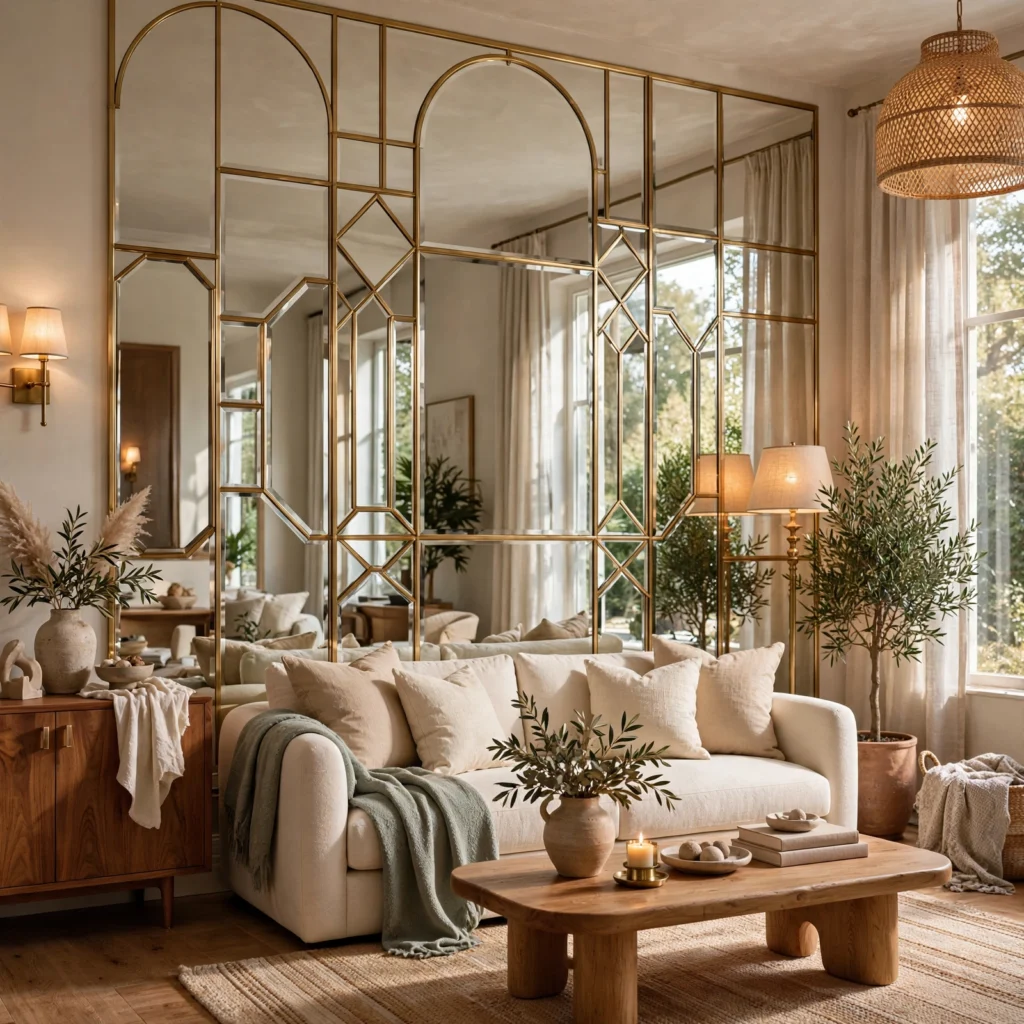
A statement mirror wall uses one oversized mirror, or several arranged together, to double the perceived light and depth of a living room, particularly effective in spaces with limited windows. Arched, sculptural, or asymmetrical frame shapes read as more intentional than a standard rectangular mirror and function as art in their own right. Positioning the mirror to reflect a window or a piece of art elsewhere in the room amplifies the effect rather than just reflecting a blank opposite wall.
| Mirror Size | Wall Type | Placement Height |
| 24-36 in | Small accent wall | 60-65 in center |
| 40-60 in | Standard feature wall | 62-66 in center |
| 70+ in / floor mirror | Large open wall | Floor to near-ceiling |
15. Color Block Paint Design
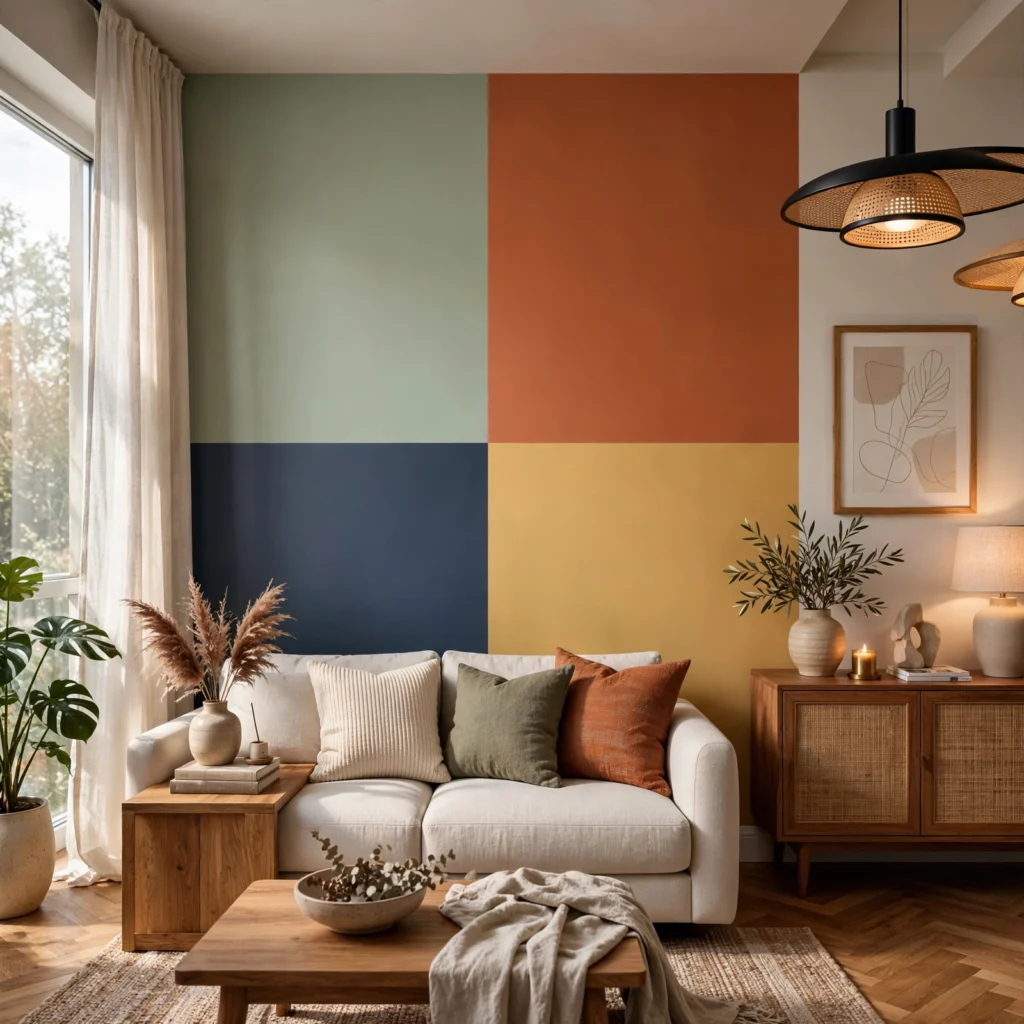
Color blocking divides a wall into distinct painted sections, often an arch, rectangle, or geometric shape in a saturated tone against a neutral background, using painter’s tape and a level for crisp edges. It’s one of the lowest-cost ways to add drama to a wall since it requires only paint and planning rather than materials or installation labor. Choosing a shape that echoes an existing element in the room, like an arched doorway or a low-profile sofa silhouette, keeps the design feeling connected rather than arbitrary.
Shop the Look
A few well-chosen pieces make any of these wall treatments easier to execute. Look for pre-primed MDF board and batten kits sold by the linear foot for a weekend-friendly paneling project, along with hidden-bracket floating shelves in solid white oak for a furniture-grade finish. Pre-pasted wallpaper mural panels from mid-range home retailers cut installation time significantly compared to traditional rolls. For lighting, slim LED strip channels designed to tuck behind built-in shelving add contrast without visible fixtures, and a lime-based plaster starter kit with a steel trowel covers everything needed for a first attempt at Venetian plaster on a small accent wall.
Common Mistake to Avoid
The most frequent mistake is choosing a wall treatment based on trend photos without accounting for the room’s actual light source and furniture layout. A deep charcoal fluted panel wall can feel dramatic in a bright, south-facing room and oppressive in a north-facing one with limited natural light. Similarly, textured finishes like lime wash or brick veneer placed directly behind a heavily patterned sofa compete for attention instead of complementing it. Always test paint and texture samples on the actual wall, at different times of day, before committing to full installation.
FAQs
What is the most affordable living room wall design idea?
Color block paint design and floating wall shelves are typically the most affordable options, since both rely on materials most homeowners already have access to at a hardware store. Paint costs far less than paneling, wood inlay, or plaster, and a single gallon can cover a full accent wall with color to spare. Floating shelves add dimension without covering the wall at all, making both approaches practical for renters or anyone working with a tight budget.
How do I choose between board and batten and fluted panels?
Board and batten suits traditional or transitional rooms and involves individual strip installation, giving more control over spacing but requiring more time. Fluted panels install in larger sheet sections, moving faster and leaning more modern with their continuous ribbed texture. If the room already has classic trim details like crown molding, board and batten will match better, while fluted panels suit rooms with cleaner, more contemporary lines.
Is wallpaper still a good option for living rooms in 2026?
Yes, particularly in mural form, since pre-pasted panel systems have made application far easier than traditional wallpaper rolls. Murals in botanical, abstract, or landscape styles add a focal point that flat paint can’t replicate, and removable versions now exist for renters. Standard repeating-pattern wallpaper also remains popular for smaller accent areas, such as behind a media wall or within built-in shelving nooks, rather than covering an entire room.
Can I combine two wall design ideas in one living room?
Yes, and it’s an effective way to add depth without visual overload, as long as one treatment stays dominant and the other plays a supporting role. A common pairing is board and batten on the lower half of a wall with a muted paint color above it, or a gallery wall arrangement layered onto a lime wash textured surface. The key is limiting the room to two techniques maximum so the combination reads as intentional rather than busy.
How much does a Venetian plaster accent wall typically cost?
Venetian plaster costs more than paint or wallpaper due to both material price and labor time, since the finish requires multiple thin layers and hand burnishing to achieve its signature depth. A single accent wall is far more cost-effective than plastering an entire room, both financially and in terms of the skill required to execute it evenly. Many homeowners hire a plaster specialist for this specific technique rather than attempting it as a first DIY project.
Conclusion
From budget-friendly floating shelves to labor-intensive Venetian plaster, these fifteen living room wall designs cover nearly every skill level, timeline, and style preference. The right choice comes down to matching the treatment to your room’s light, furniture, and how much change you’re ready to commit to. Save this list to Pinterest for reference while you plan, and check out our related post on choosing paint colors for open-concept living spaces.
Author Expertise Note
This guide was compiled by a writer who has spent the past several years covering residential renovation trends and consulting with contractors on material sourcing for accent wall projects.