15 Trending Farmhouse Living Room Ideas for a Cozy Rustic And Beautiful Home
Walking into a well-designed farmhouse living room feels like stepping into a home where every object has a story. This style pairs worn wood, soft linen, and quiet neutrals into a space that feels both practical and inviting. Whether you’re renovating a century-old farmhouse or bringing rustic warmth to a suburban build, this guide walks through fifteen farmhouse living room ideas that balance comfort, function, and timeless charm without feeling like a theme park version of the countryside.
Trend & Background
Farmhouse design surged over the last decade, largely fueled by renovation shows and a broader cultural pull toward slower, more grounded living. Homeowners tired of glossy, mass-produced interiors turned toward reclaimed materials, handmade textiles, and furniture with visible history. Today the style has matured past its trendiest phase, shedding some of the overused shiplap-and-mason-jar clichés in favor of a more layered, collected-over-time approach. It matters now because people want rooms that feel personal and durable, not disposable, and farmhouse design delivers exactly that kind of lasting warmth.
Key Takeaways
- A farmhouse living room blends reclaimed wood, neutral palettes, and vintage-inspired furniture for a warm, lived-in feel.
- Shiplap walls, exposed beams, and stone fireplaces are signature architectural details that anchor the style.
- Layering textures like linen, wool, and woven jute keeps the space soft without losing rustic character.
- Small updates such as galvanized metal accents or an antique mirror can shift a room toward farmhouse style without a full renovation.
1. Reclaimed Wood Coffee Table
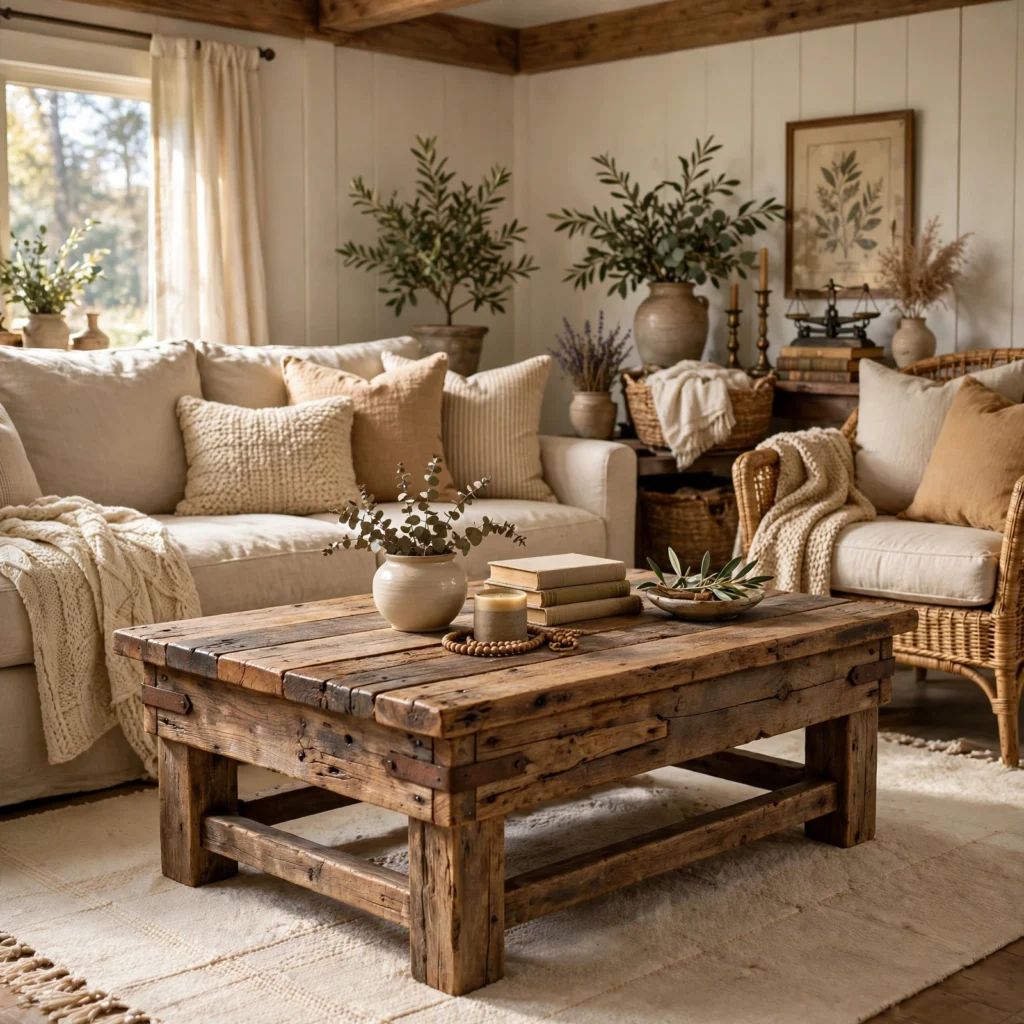
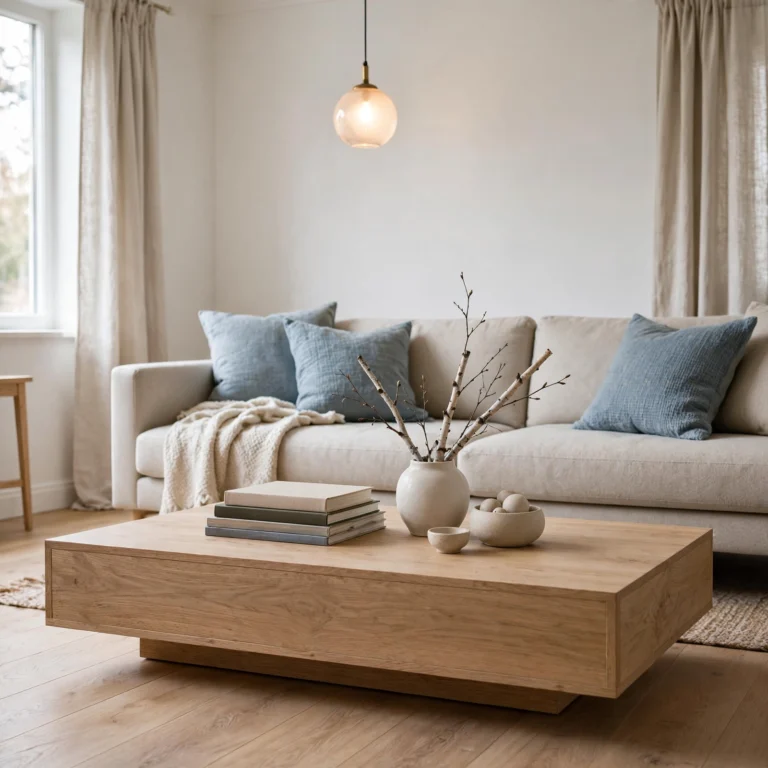
A coffee table built from reclaimed barn wood or salvaged oak brings texture and history into the center of the room. The visible grain, knots, and slight imperfections give the piece character that new furniture can’t replicate. Pair it with turned wood legs or a black iron base for contrast. This piece works as a functional anchor for the seating area while quietly reinforcing the farmhouse story through material choice rather than obvious decor accents.
2. Shiplap Accent Wall
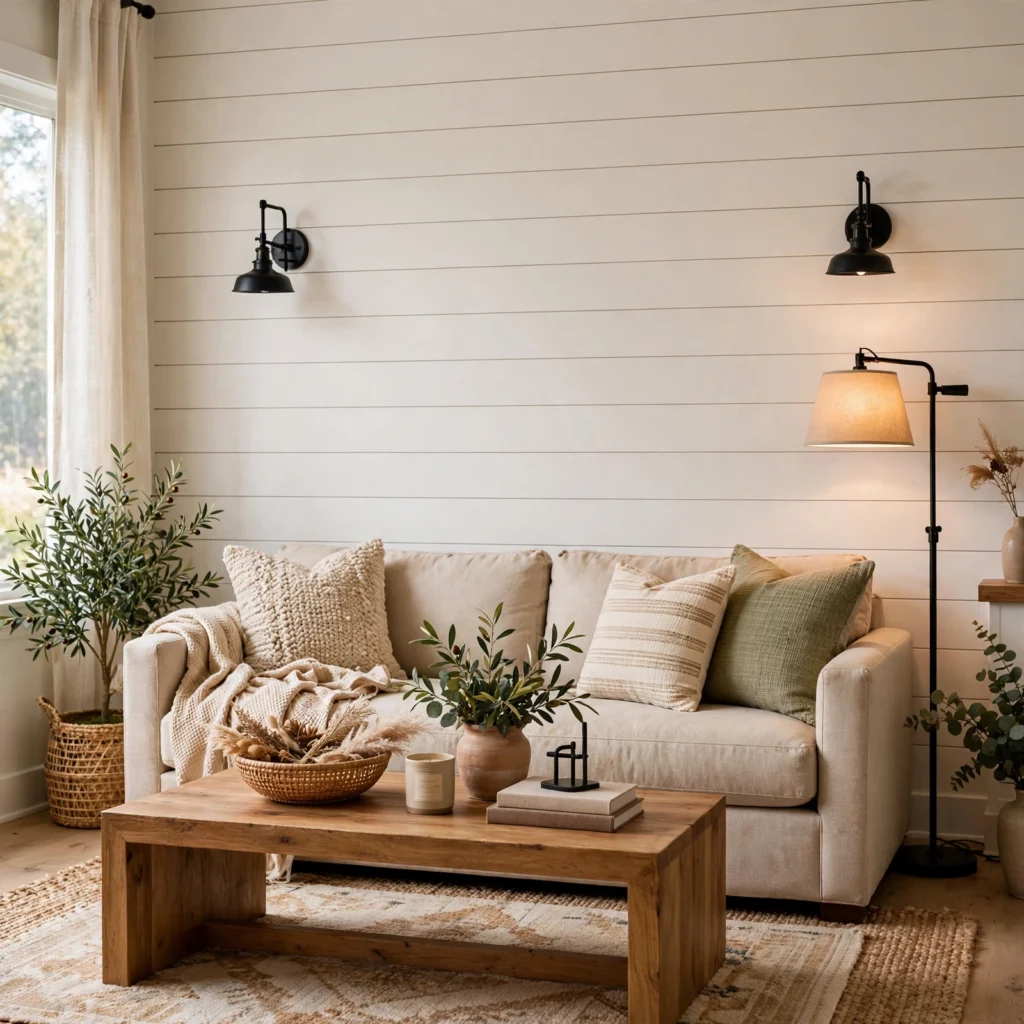
Horizontal shiplap paneling, painted in a soft white or warm greige, instantly signals farmhouse architecture. Install it behind the sofa or around the fireplace to create a focal point without overwhelming the room. The subtle shadow lines between boards add dimension even in a monochrome palette. Keep the rest of the walls plain drywall so the shiplap reads as an intentional architectural feature rather than a wall-to-wall pattern that competes with furniture and art.
3. Exposed Ceiling Beams
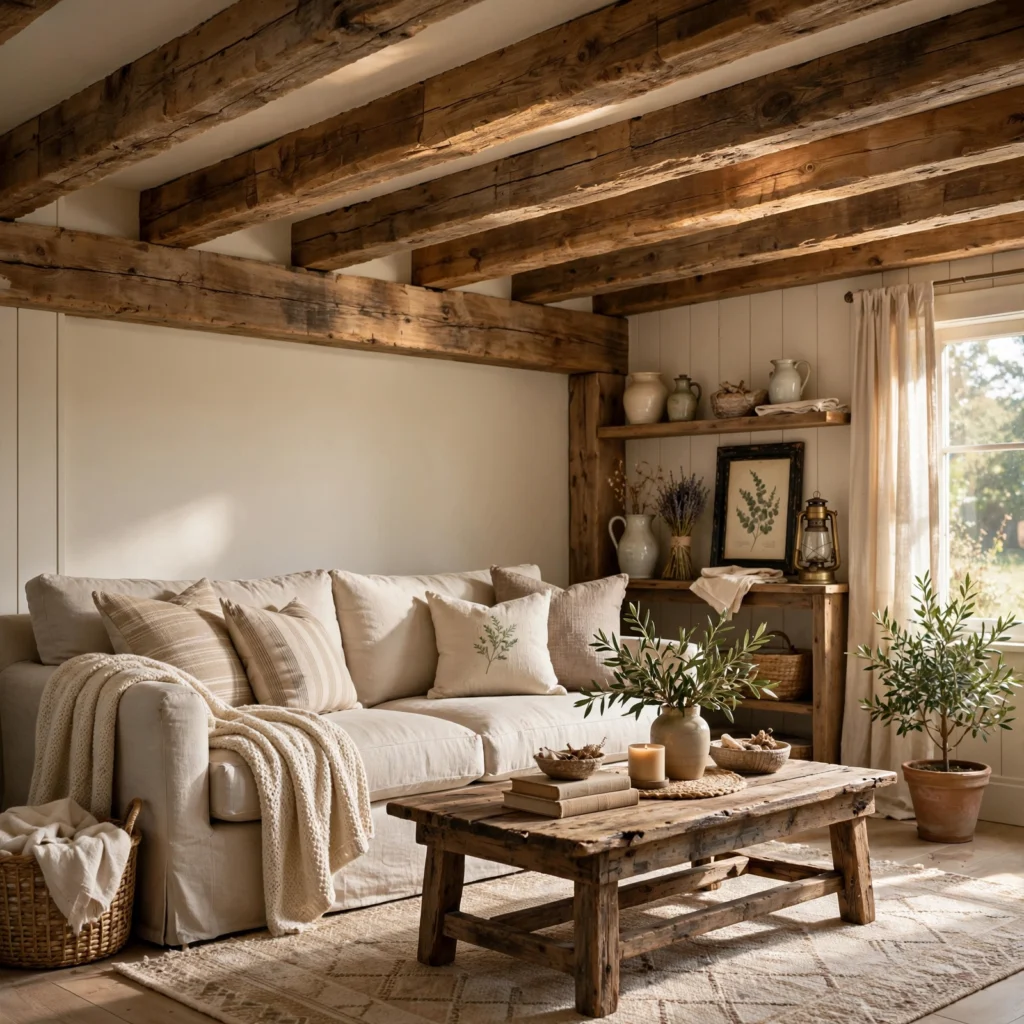
Real or faux wood beams running across the ceiling draw the eye upward and reinforce the sense of an older structure, even in newer builds. Choose a stain that complements your flooring, whether that’s a weathered gray or a deeper walnut tone. Beams work especially well in rooms with vaulted or higher ceilings, where they break up empty space and add architectural rhythm without requiring any additional furniture or decor changes.
To see living room wall designs
4. Stone or Brick Fireplace Surround
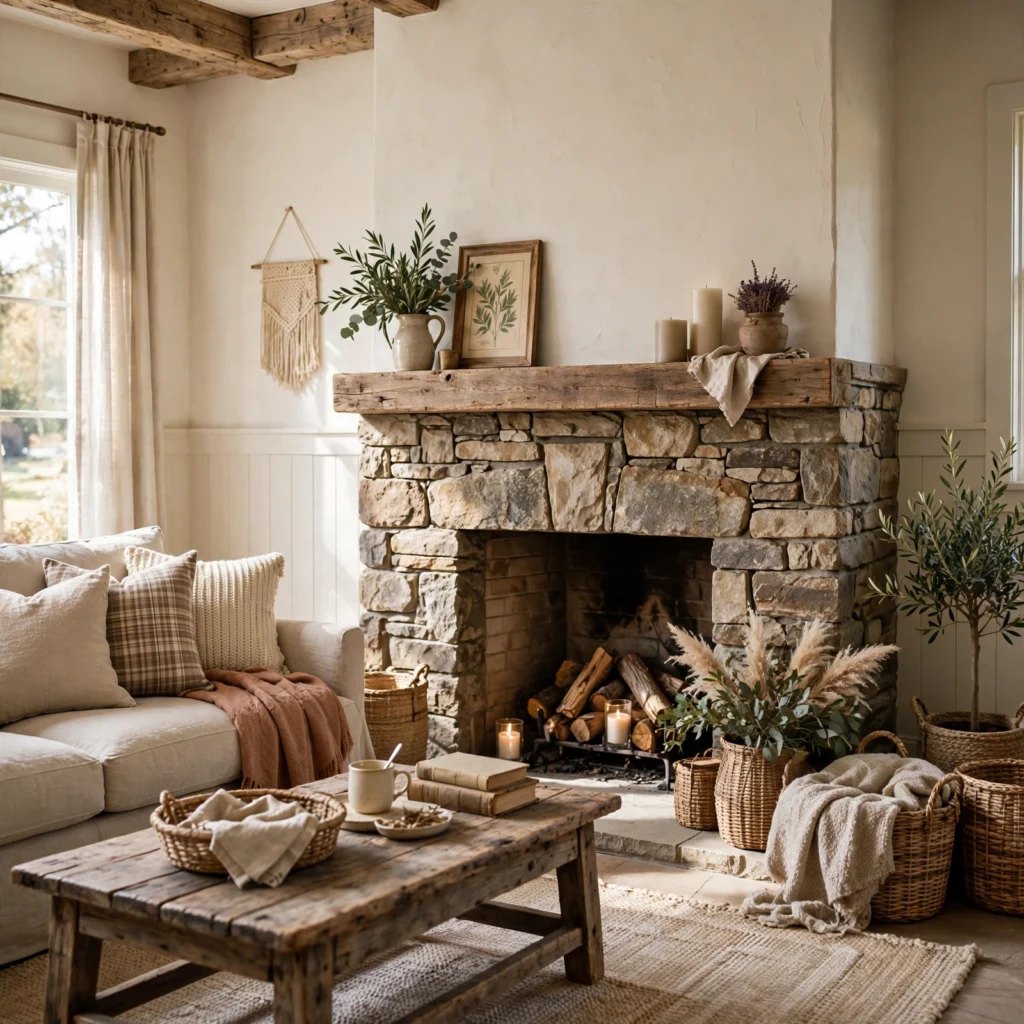
A fireplace faced in rough-cut stone or reclaimed brick becomes the emotional center of a farmhouse living room. The irregular texture contrasts nicely against smoother walls and upholstered furniture. Choose a mantel in a thick, unfinished wood slab to tie the fireplace back into the room’s material palette. This combination of stone and timber creates a grounded, substantial feel that photographs well and holds up to decades of daily use.
5. Slipcovered Sofa
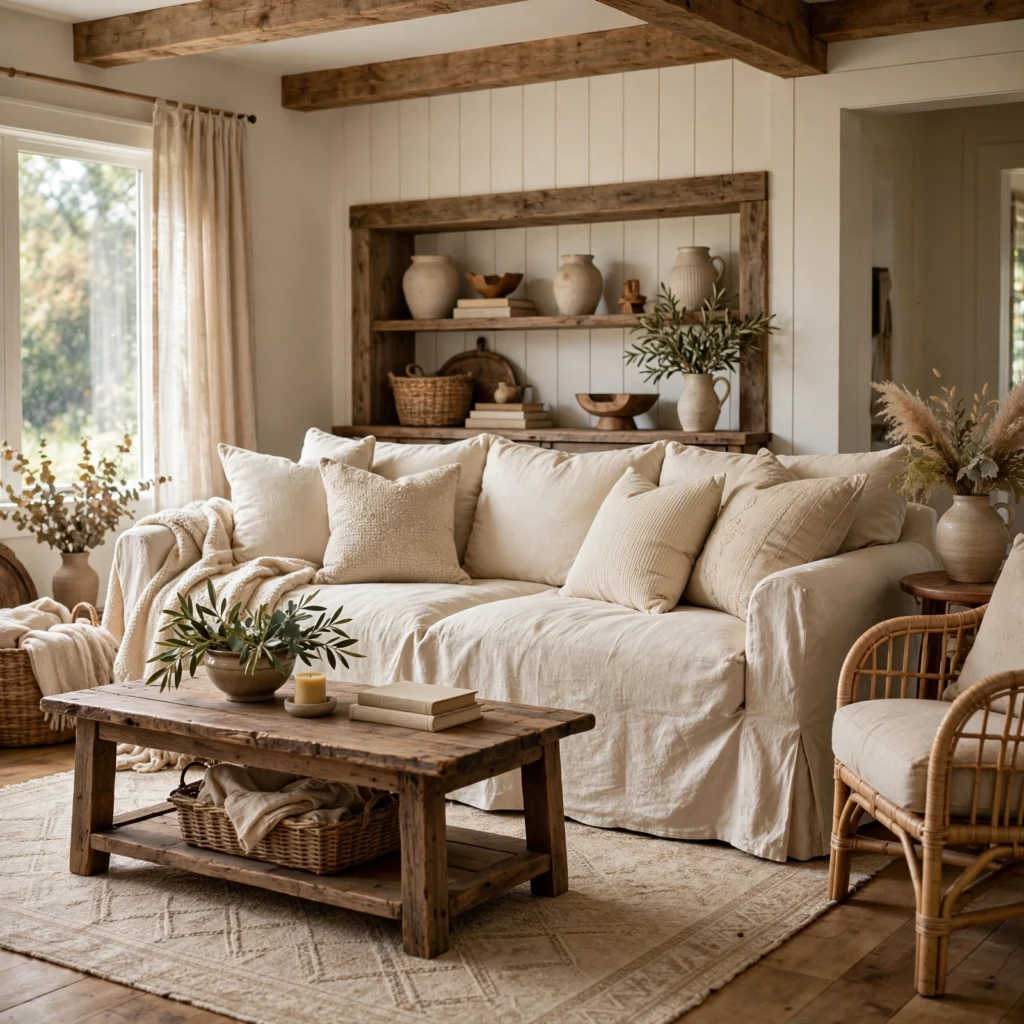
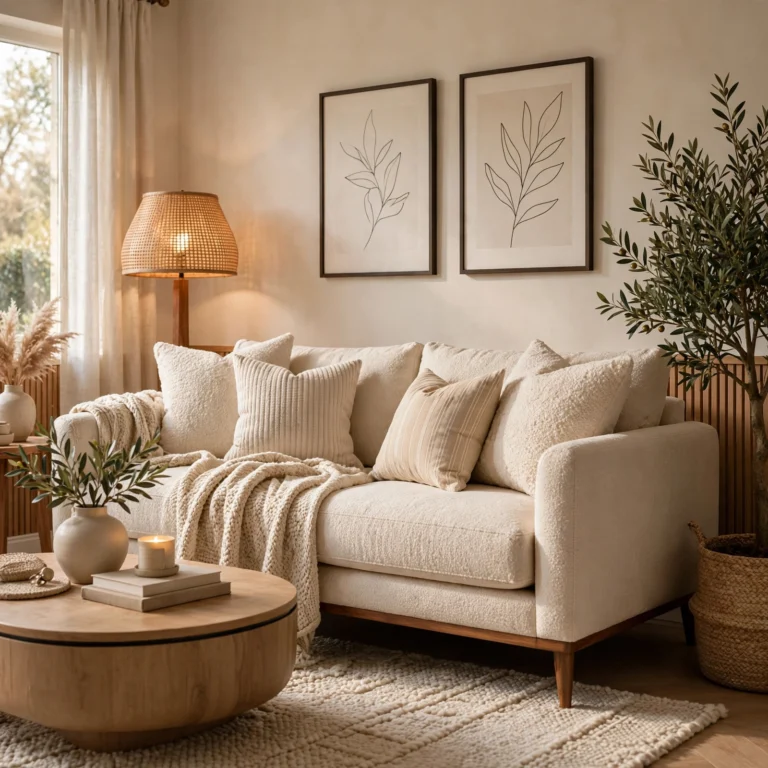
A slipcovered sofa in natural linen or cotton duck fabric softens the room and offers practical, removable, washable upholstery. The relaxed drape of the fabric contrasts nicely against harder surfaces like wood floors and stone. Choose a neutral shade such as oatmeal, dove gray, or off-white so the sofa reads as a backdrop rather than a statement piece. Slipcovers also make it easy to refresh the room’s look each season without buying new furniture.
6. Woven Jute Area Rug
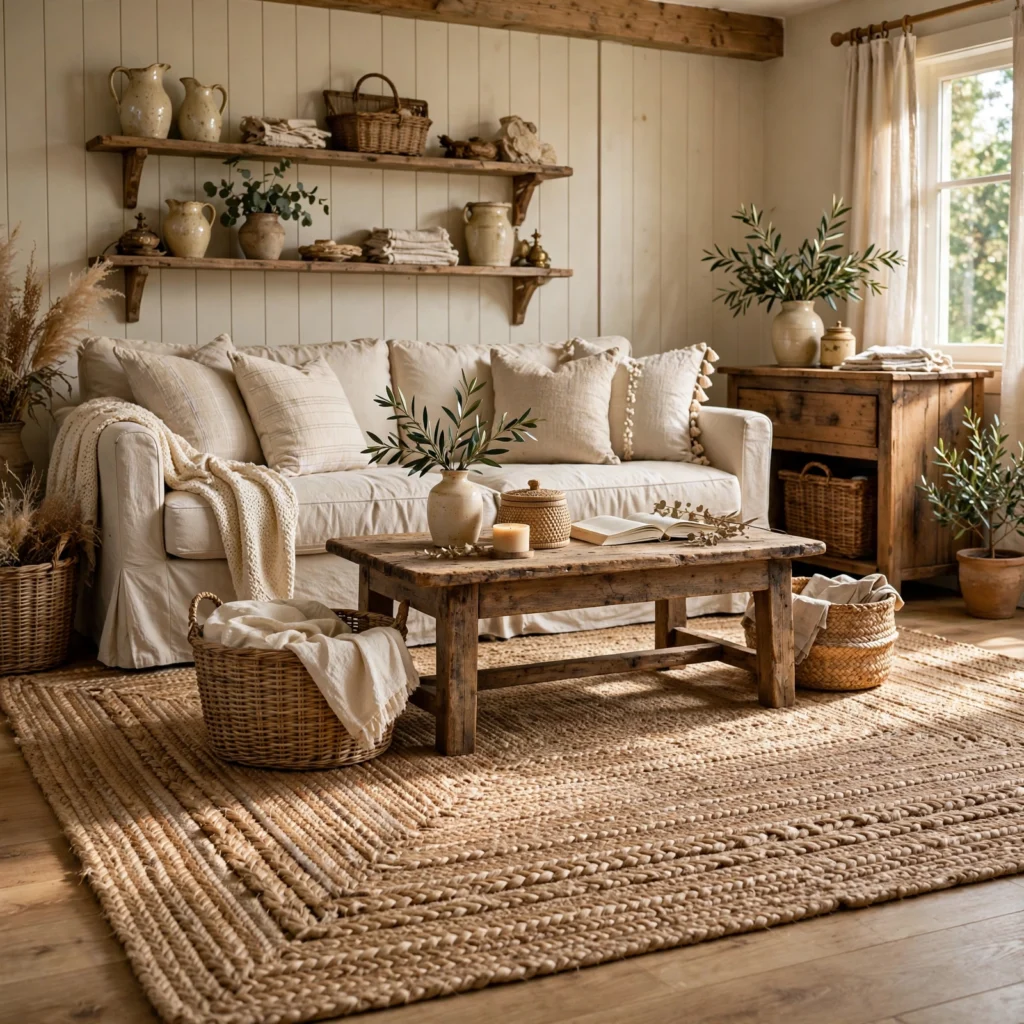
A jute or sisal area rug grounds the seating arrangement while adding natural texture underfoot. These rugs bring warmth without introducing bold color or pattern, which keeps the room’s palette calm. Layer a smaller vintage or Persian-style rug on top for added interest and softness. Jute pairs particularly well with wood flooring, since both materials share similar earthy, organic tones that reinforce the room’s overall farmhouse direction.
| Rug Size | Best For | Approx. Price Range |
| 5×7 ft | Small seating nook | $80–$200 |
| 8×10 ft | Standard living room | $200–$450 |
| 9×12 ft | Open-concept space | $350–$700 |
7. Antique Mirror
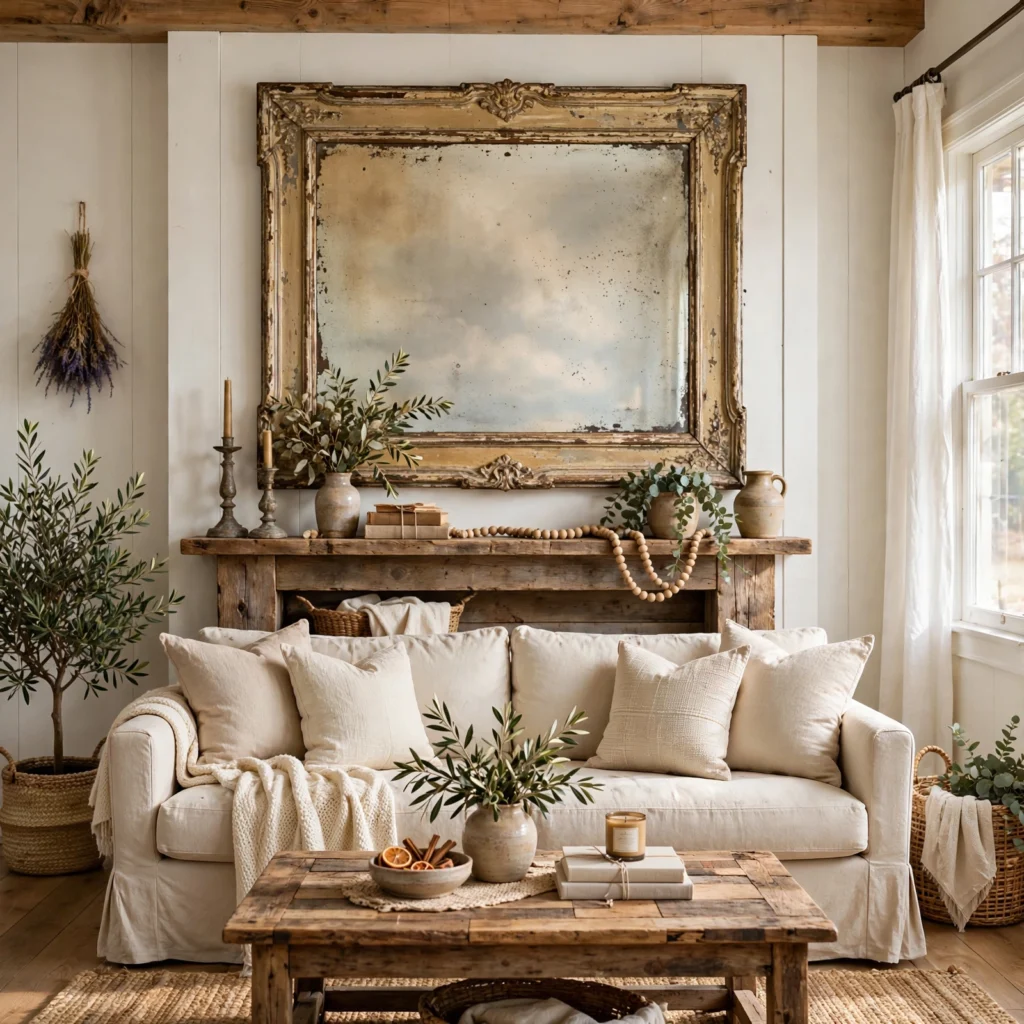
A large antique or antiqued-glass mirror hung above the mantel or console table reflects light and adds a sense of history to the wall. Look for pieces with distressed wood or aged metal frames at estate sales or salvage shops. Mirrors also visually expand a smaller living room, making them useful in older farmhouse layouts with modest square footage. Choose an oversized option so it reads as a design statement rather than a purely functional accessory.
8. Vintage Ladder Shelf
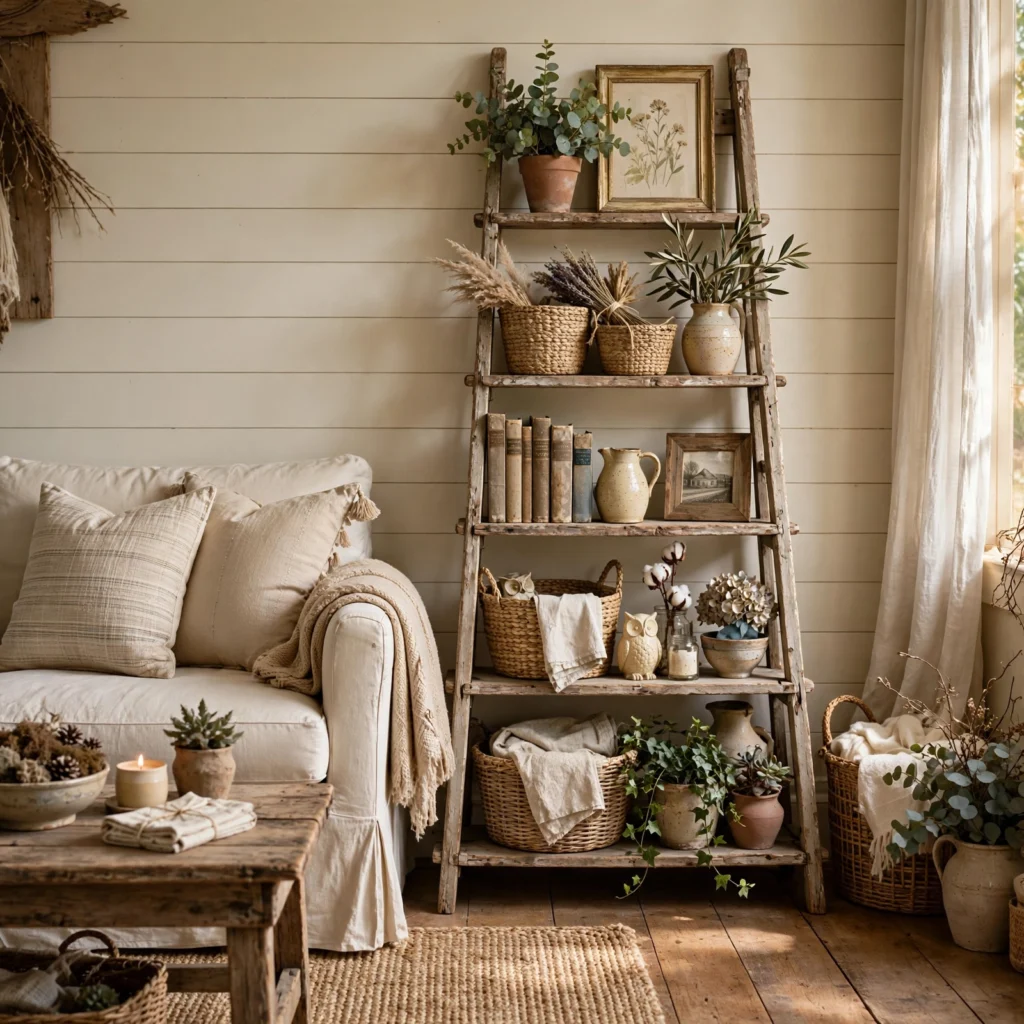
A wood ladder, either repurposed or newly built to look weathered, works well leaning against a wall for storage or display. Use it to hold folded quilts, magazines, or small potted plants. Unlike built-in shelving, a ladder shelf keeps the room flexible and easy to rearrange. Its slightly rustic, utilitarian look nods to the farmhouse’s agricultural roots while still functioning as genuinely useful storage in a small living space.
9. Galvanized Metal Accents
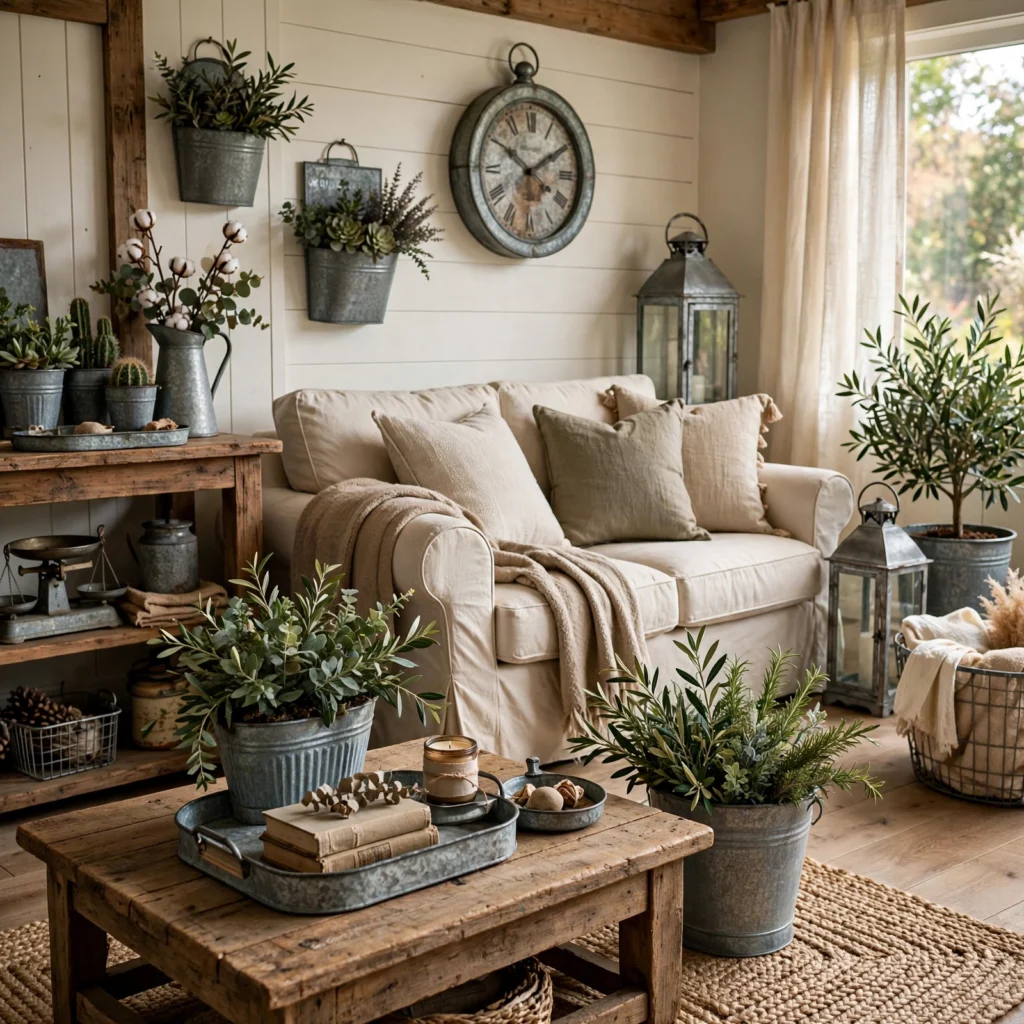
Galvanized metal buckets, trays, and light fixtures introduce an industrial-farmhouse contrast against all the soft wood and linen in the room. Use a galvanized tray as a coffee table centerpiece or swap in metal pendant lighting near a reading nook. The cool gray tone of galvanized metal balances warmer wood finishes, keeping the palette from feeling too monochromatic. A little goes a long way, so one or two pieces is usually enough.
10. Board and Batten Wainscoting
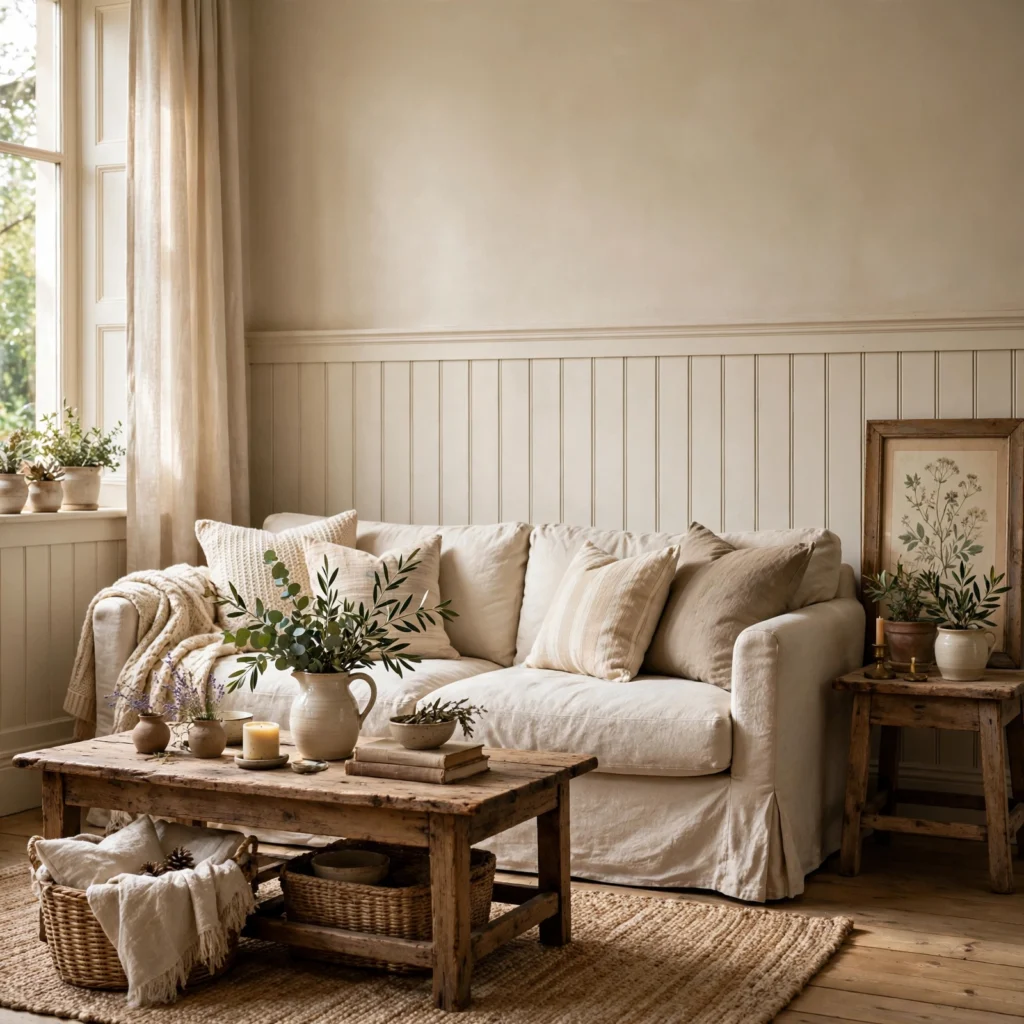
Board and batten paneling installed along the lower half of the walls adds architectural depth and a classic cottage feel. Paint it a crisp white or a muted sage green to keep things timeless. This treatment works especially well in dining-adjacent living rooms or hallways leading into the main seating area. Unlike shiplap, board and batten has a slightly more formal, tailored look while still fitting comfortably within the farmhouse aesthetic.
11. Neutral Linen Curtains
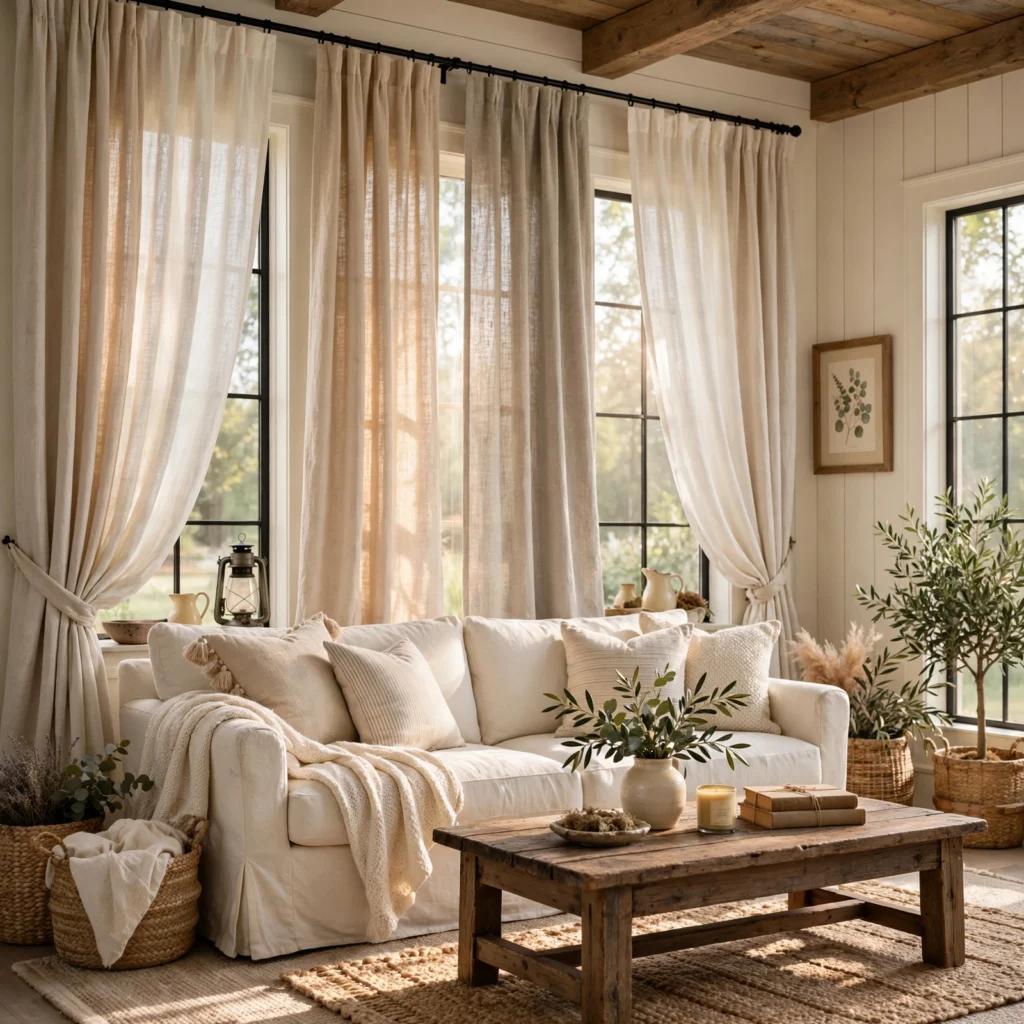
Floor-length linen curtains in ivory, oatmeal, or soft gray filter natural light while adding softness to window walls. The slightly wrinkled, organic texture of linen fits the farmhouse look better than crisp synthetic fabrics. Hang curtains close to the ceiling line to make windows feel taller and the room more spacious. Simple wood or wrought iron curtain rods complete the look without introducing any unnecessary shine or modern hardware finishes.
12. Farmhouse Living Room Gallery Wall
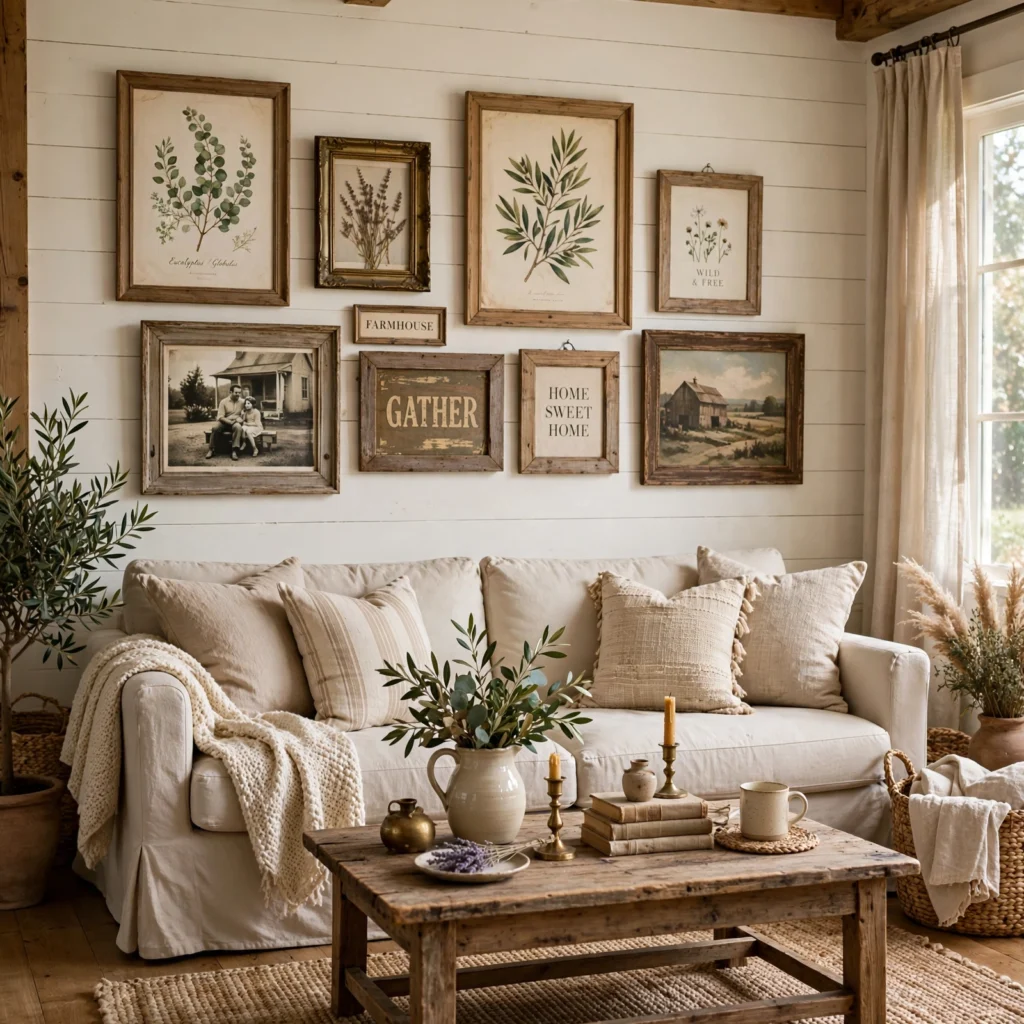
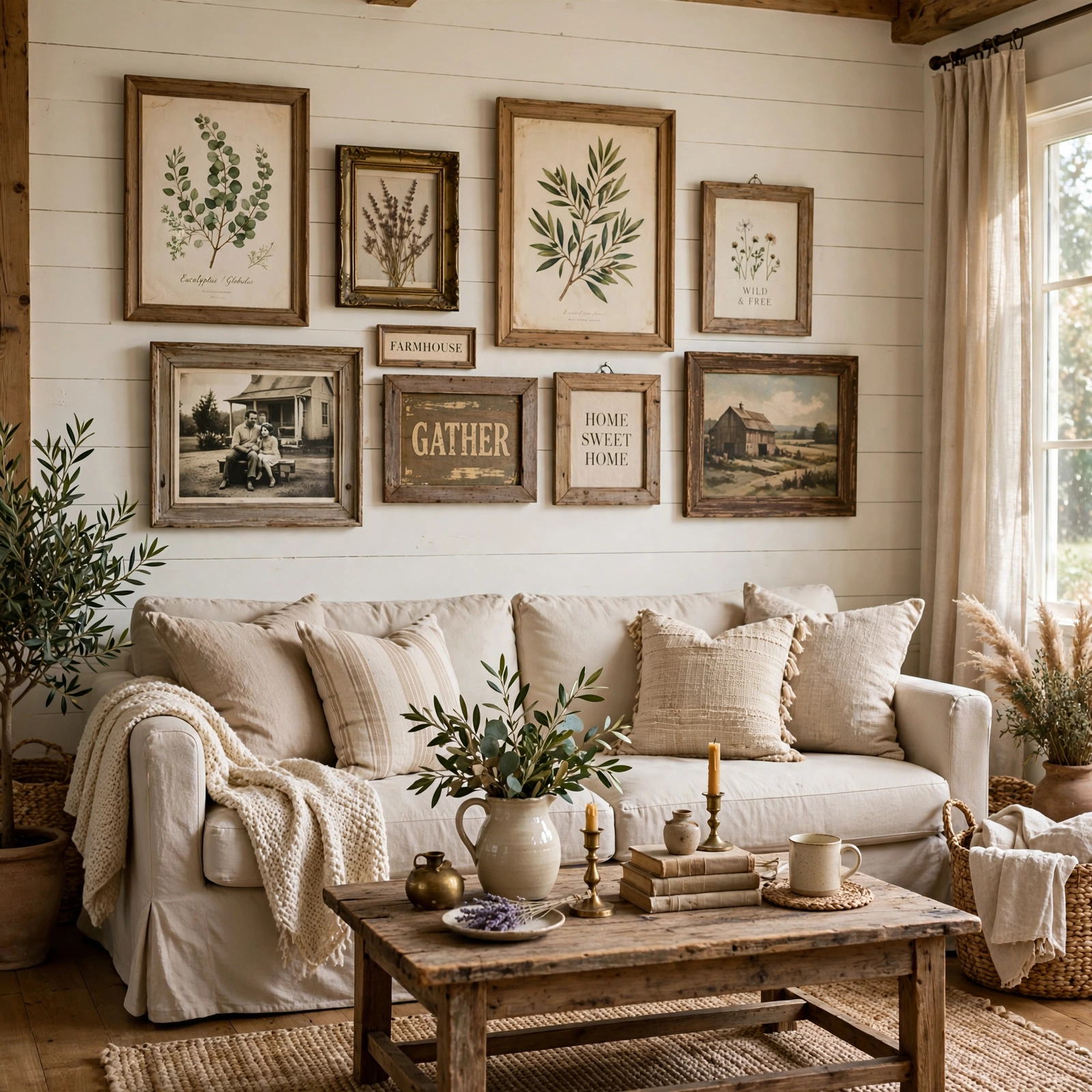
A gallery wall mixing black-and-white family photos, botanical prints, and small vintage frames creates a personal, collected-over-time feel that defines farmhouse living room design at its best. Use mismatched frame sizes and finishes, from aged gold to matte black, for an authentic layered look. Arrange pieces loosely rather than in a rigid grid. This wall becomes a natural conversation piece and softens larger blank walls near the sofa or staircase.
13. Distressed Wood Console Table
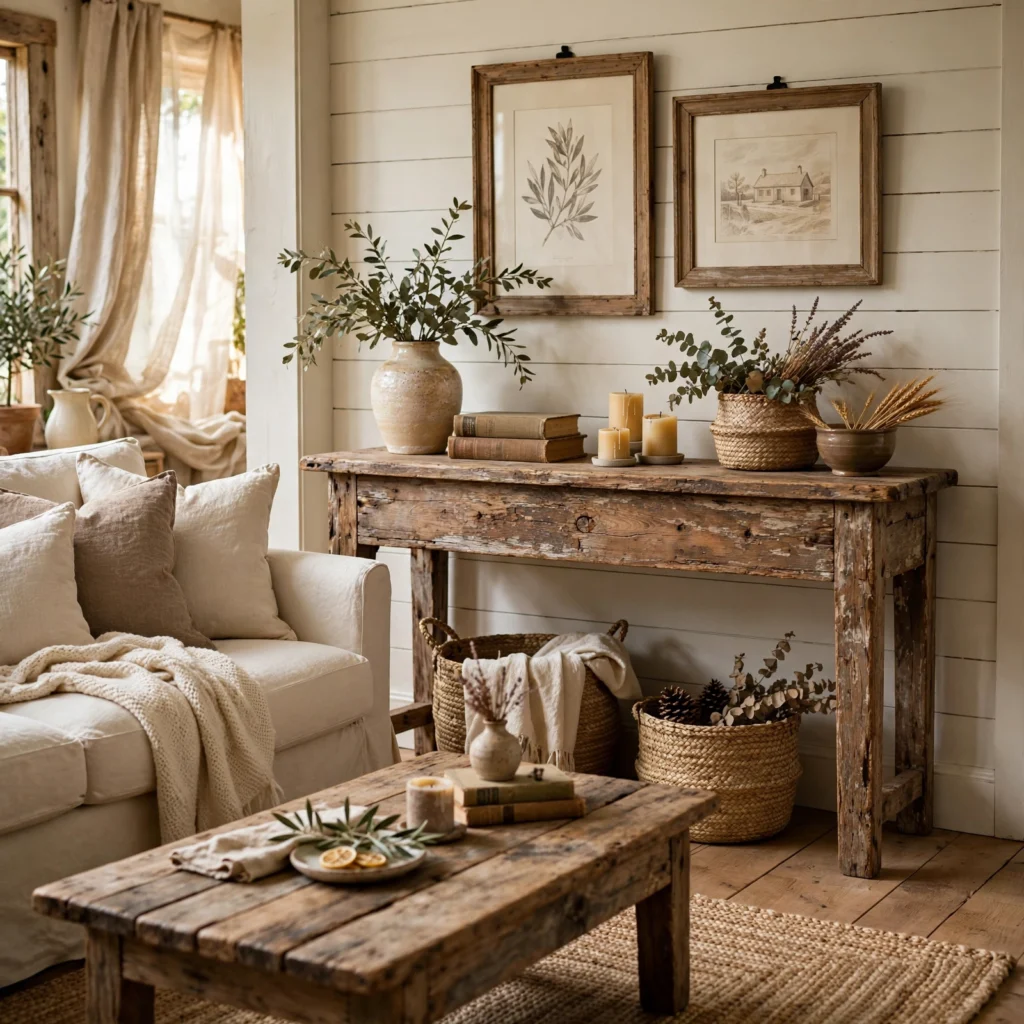
A console table with a chalky painted finish or naturally distressed wood surface works well behind a sofa or under a window. Use it to display books, lanterns, or a stack of woven baskets. Choose turned or tapered legs for an antique silhouette rather than sleek modern lines. This piece adds functional surface area for lamps and decor while reinforcing the room’s overall commitment to aged, textural materials over anything glossy or new-looking.
14. Cozy Reading Nook with Wingback Chair
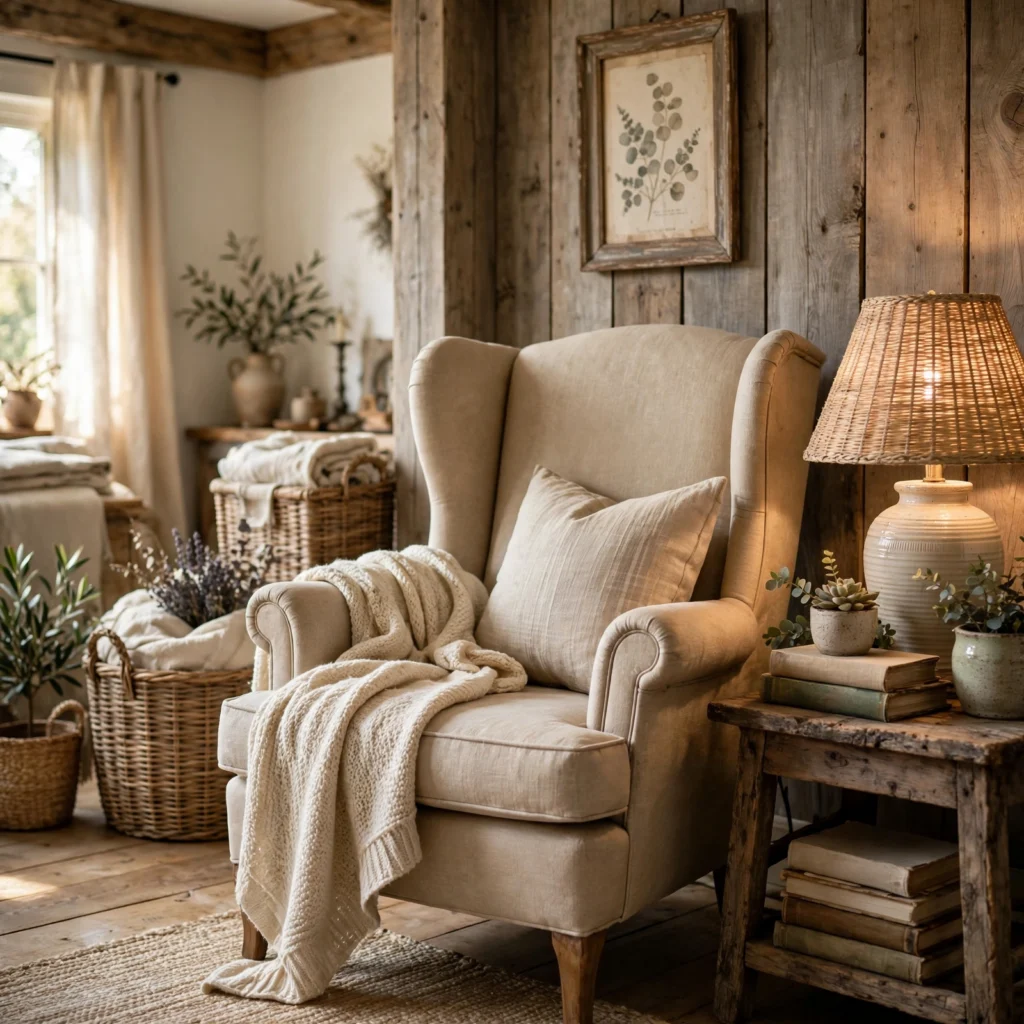
A single wingback or slipcover armchair tucked near a window, paired with a small side table and a floor lamp, creates a quiet reading corner. Add a chunky knit throw and a woven basket for extra magazines or blankets. This nook doesn’t need much square footage, just good natural light and a comfortable chair. It gives the room a secondary gathering spot beyond the main sofa arrangement, useful for smaller households or quiet mornings.
15. Woodburning Stove Accent
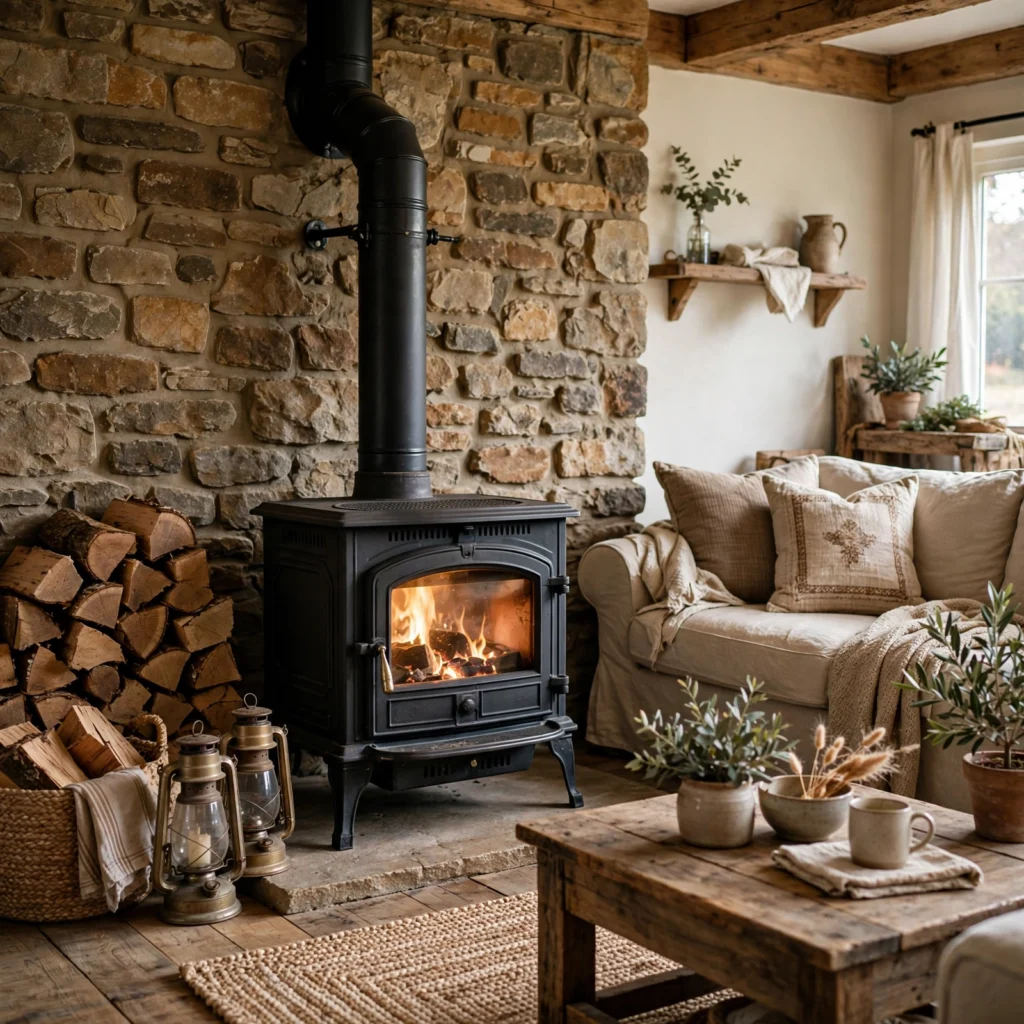
For rooms without a traditional fireplace, a freestanding woodburning or wood-look stove on a stone or brick hearth pad brings the same cozy focal point at a smaller scale. Choose a matte black finish to keep it visually grounded. Surround it with a simple wood mantel shelf for displaying candles or greenery. This option works particularly well in cabin-style or smaller farmhouse living rooms where a full masonry fireplace isn’t practical.
Shop the Look
Consider a reclaimed oak coffee table paired with a slipcovered linen sofa in oatmeal or dove gray. Add a jute area rug layered under a smaller vintage-pattern runner, along with a set of galvanized metal trays for the mantel or coffee table surface. Finish the room with an oversized antiqued-glass mirror and a pair of turned-leg wood side tables to keep every surface functional and textural.
Common Mistake to Avoid
The most common mistake is overloading the room with farmhouse clichés all at once, mason jar sconces, “Live Laugh Love” signage, and heavy faux-distressed everything, which reads as costume rather than considered design. A more effective approach mixes just two or three signature materials, like reclaimed wood, linen, and stone, and lets them repeat naturally throughout the space. Restraint, not accumulation, is what makes a farmhouse living room feel authentic instead of themed.
FAQs
What colors work best in a farmhouse living room?
Soft neutrals dominate farmhouse color palettes, including warm white, oatmeal, greige, and pale sage green. These tones act as a calm backdrop for natural wood and textured fabrics. Deeper accent colors like navy or charcoal can appear on a single piece, such as an armchair or throw pillow, but the overall wall and furniture palette should stay muted so the room’s texture and material choices carry most of the visual interest.
Is shiplap still in style for farmhouse rooms?
Shiplap remains a recognizable farmhouse feature, though designers now use it more selectively than during its peak popularity. Instead of covering every wall, it works best as a single accent wall behind a sofa or fireplace. Pairing it with board and batten or plain painted drywall elsewhere in the room keeps the look current and prevents the space from feeling like an outdated renovation-show set.
How do I make a small living room look farmhouse style?
Focus on a few strong material choices rather than filling the room with furniture. A slipcovered sofa, a jute rug, and one reclaimed wood piece like a coffee table or console can establish the style in a compact footprint. Light, neutral wall colors and an oversized mirror help the room feel larger. Avoid bulky furniture or heavy dark wood pieces that can make a small farmhouse room feel cramped.
What fabrics fit a farmhouse living room?
Natural fibers define the farmhouse textile palette, including linen, cotton canvas, wool, and jute. These materials have visible texture and a slightly relaxed drape that fits the style’s unpolished character. Avoid glossy synthetics, heavy velvet, or high-shine finishes, which read as more formal or modern. Mixing two or three natural textures, such as a linen sofa with a wool throw and jute rug, keeps the room layered and tactile.
Can farmhouse style work in a modern house?
Yes, modern farmhouse is a well-established substyle that pairs cleaner architectural lines with traditional farmhouse materials and textures. In a modern home, keep wall colors crisp white or light gray, then introduce farmhouse character through furniture choices like a reclaimed wood table, linen upholstery, or vintage-inspired lighting. This blend lets a newer build feel warm and collected without requiring structural changes like exposed beams or shiplap paneling.
Conclusion
A farmhouse living room comes together through material choices more than any single decor trend, reclaimed wood, linen, stone, and a few well-chosen vintage pieces layered with restraint. Start with one or two ideas from this list rather than overhauling the entire room at once. Save this guide to Pinterest for later reference, and check out our related post on modern farmhouse kitchen design for more room-by-room inspiration.
Author Expertise Note
Written by a interior design writer who has spent the past six years covering rustic and cottage-style home renovations, with hands-on experience sourcing reclaimed materials for residential remodels.