13 Trending Center Table Living Room Ideas for Every Style
Choosing the right center table living room piece is one of those decisions that quietly shapes how a room feels and functions every single day. It’s the surface where coffee mugs land, feet rest, and game nights unfold. This guide walks through fifteen distinct table styles, covering materials, shapes, and storage solutions, so you can match a table to your space, your budget, and the way you actually live in your living room.
Trend & Background
Center tables have shifted from purely functional furniture into statement pieces that anchor a room’s design identity. Interior designers now treat the coffee table the way they treat a light fixture or a piece of art, choosing materials like terrazzo, brass, and live-edge wood to add texture and personality. This shift matters now because open-concept living spaces demand furniture that works from every angle, and because more people are furnishing smaller apartments where a single table has to multitask as storage, display space, and daily workstation.
Key Takeaways
- A center table living room choice should match your seating layout, traffic flow, and daily habits, not just the trend of the moment.
- Materials like marble, rattan, reclaimed wood, and glass each bring a different mood, from rustic warmth to polished modern minimalism.
- Storage-forward options like lift-top and trunk tables solve clutter problems in small apartments and multi-use rooms.
- Sizing and spacing matter as much as style; a table that’s too large or too small throws off the whole room’s proportions.
1. Live-Edge Walnut Slab Table
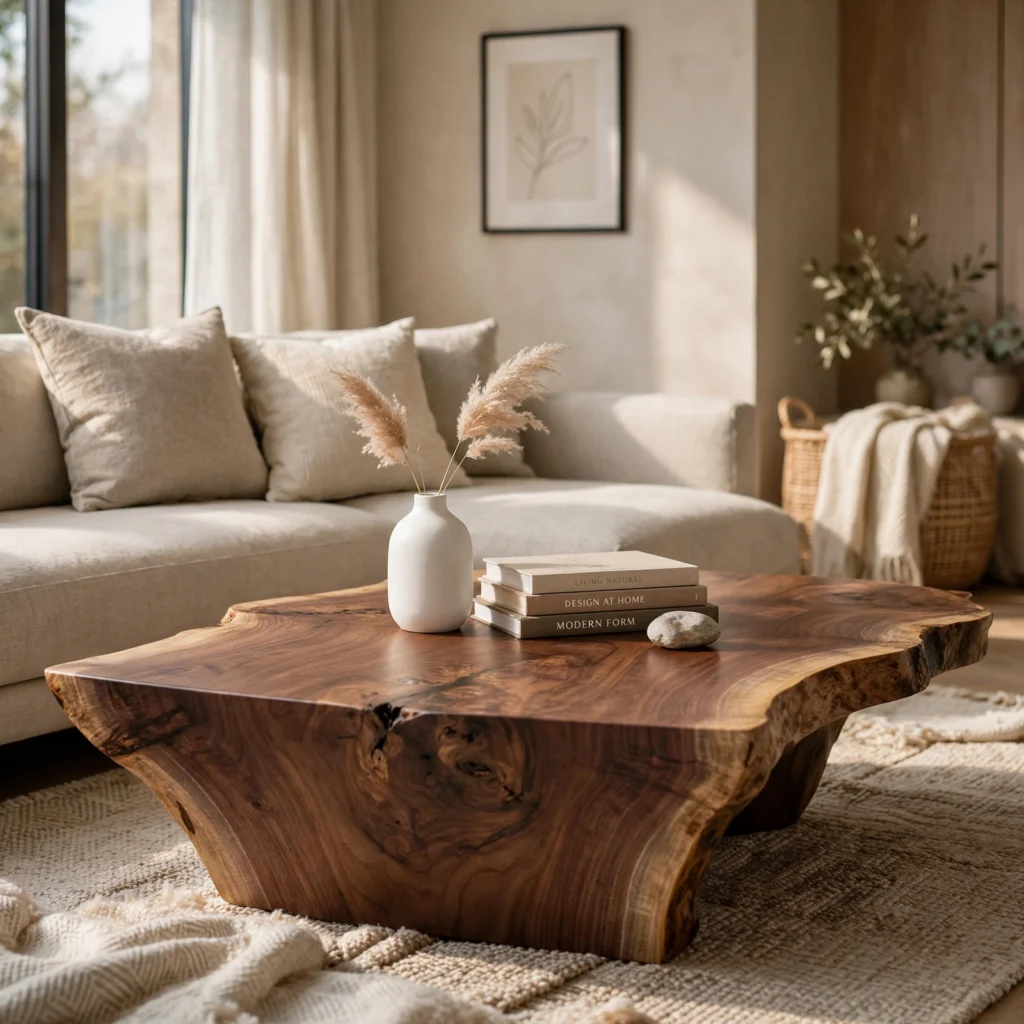
A live-edge walnut slab keeps the natural, irregular contour of the tree it came from, so no two tables look alike. This works well in living rooms that lean toward organic modern or cabin-inspired styles, especially when paired with black metal hairpin legs for contrast. The raw grain pattern becomes a focal point on its own, meaning you can keep the rest of the room’s decor simple without the space feeling empty or underdesigned.
2. Carrara Marble Pedestal Table
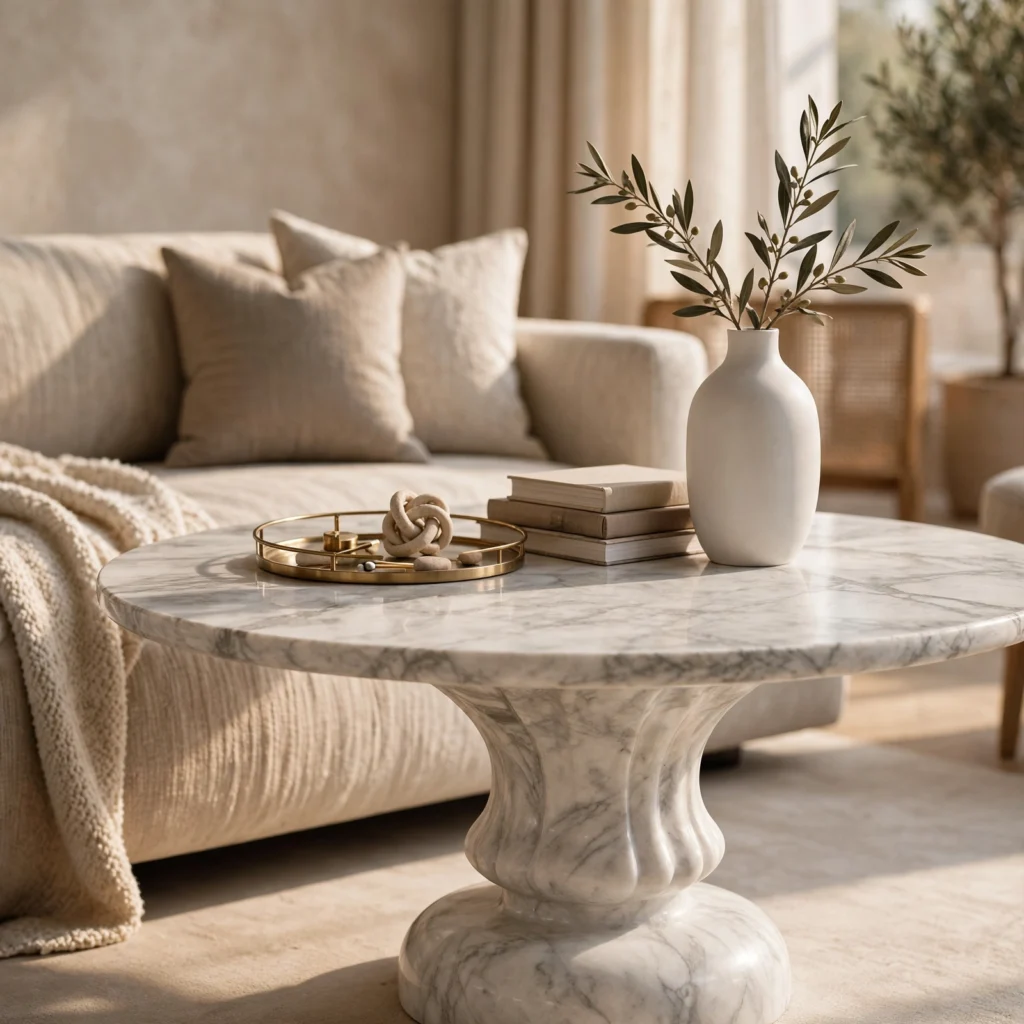
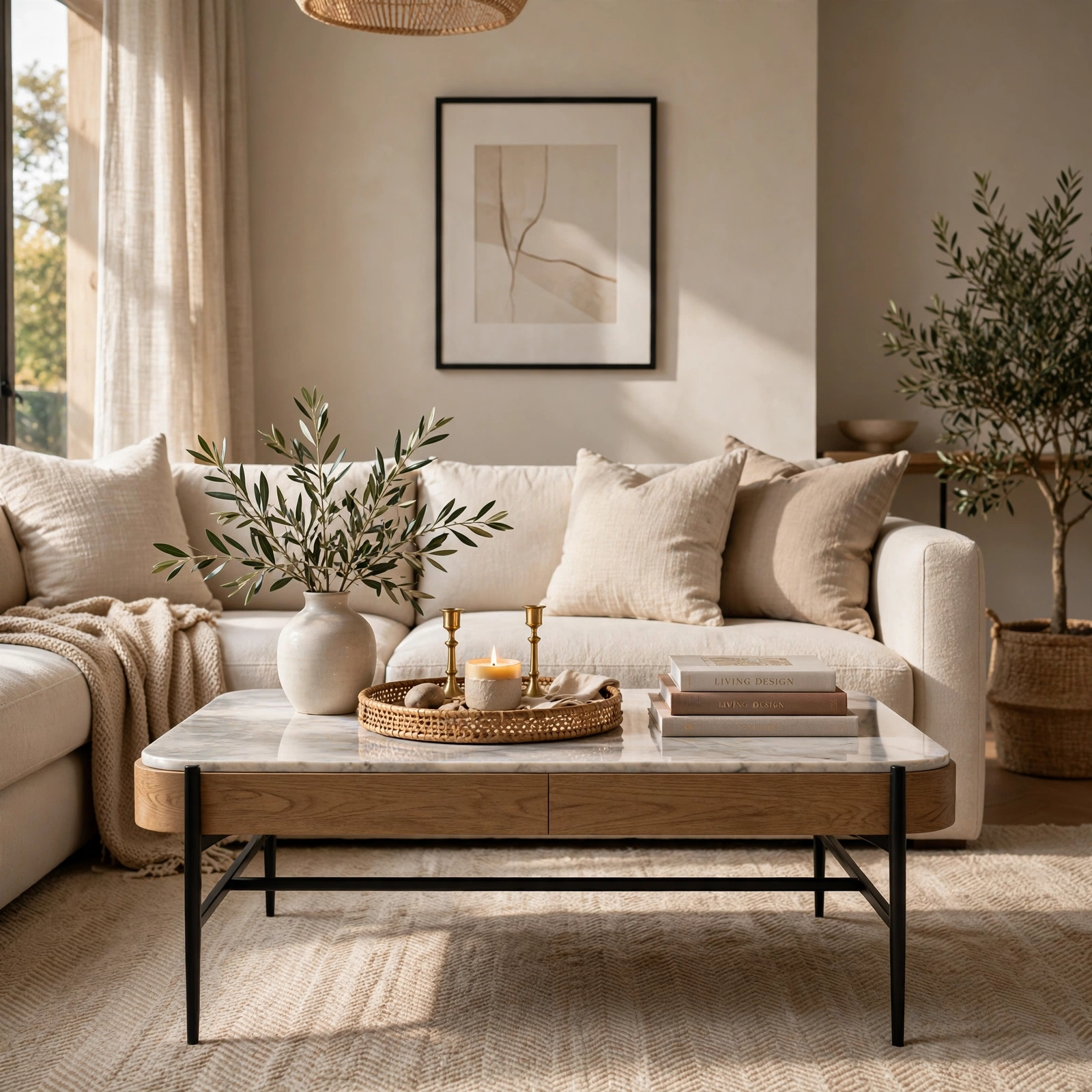
Carrara marble brings a cool, veined surface that instantly reads as upscale without requiring an ornate design around it. A single pedestal base, rather than four legs, keeps the silhouette light and makes the table easier to place near a sofa without visual clutter underneath. This style suits Art Deco, glam, or contemporary Italian-inspired rooms, and it pairs especially well with brass or black accents elsewhere in the space.
To see more apartment living room
3. Nesting Table Trio
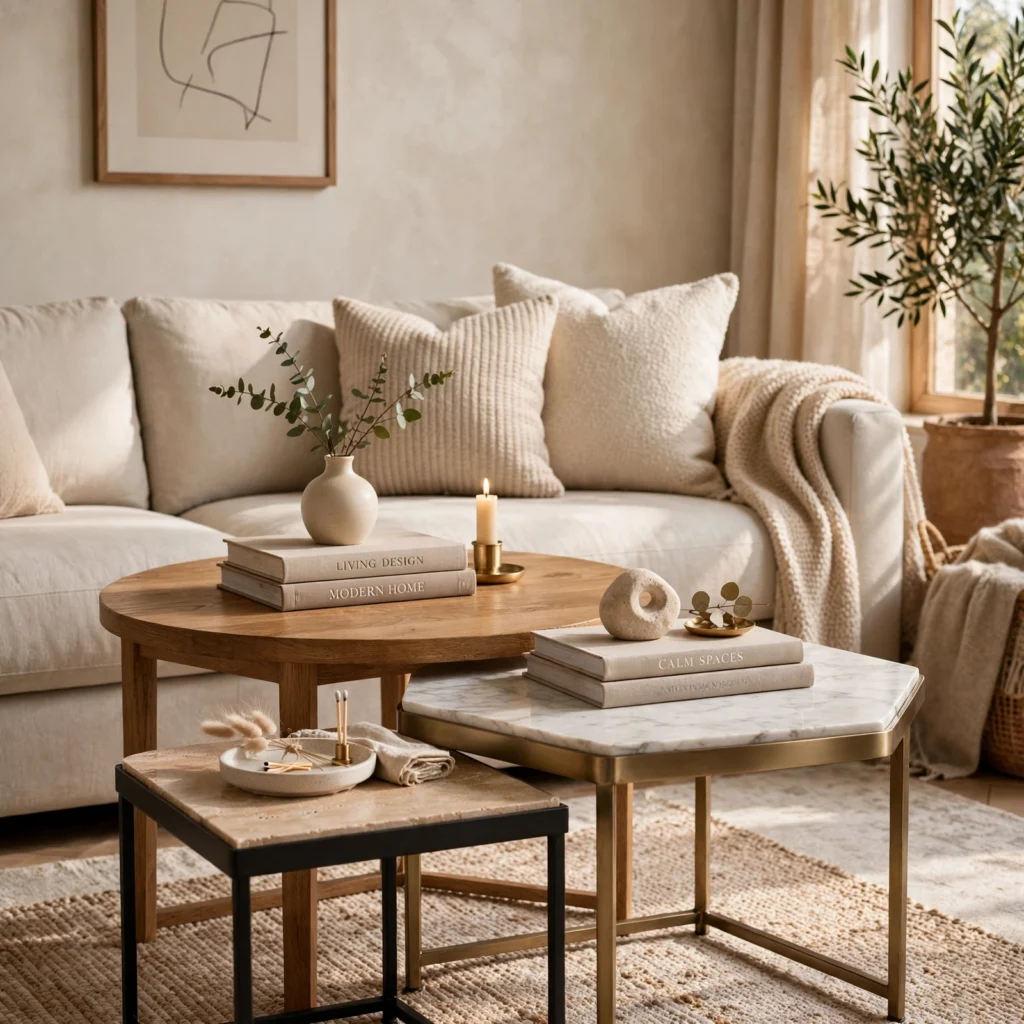
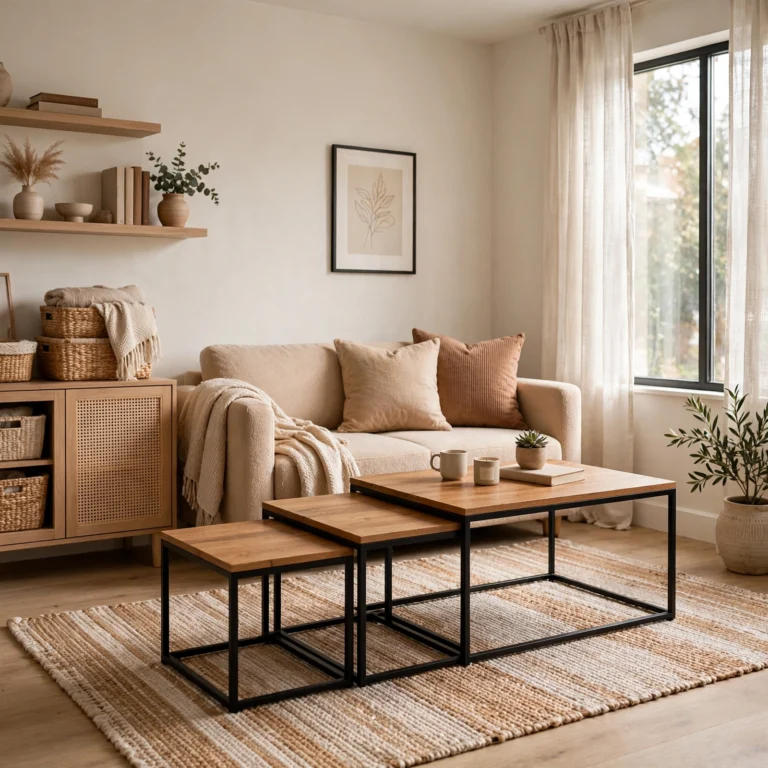
A trio of nesting tables in graduated sizes tucks neatly together when not in use and pulls apart when guests arrive or extra surface space is needed. Each table can hold its own drink, book, or plant, which makes this option genuinely practical for smaller living rooms or apartments where a single bulky table would dominate the floor plan. Mixed-height nesting sets also add visual rhythm to an otherwise flat furniture layout.
| Table Size | Approx. Dimensions | Best Use |
| Small | 16″ x 16″ x 18″H | Tucked fully under the largest table |
| Medium | 20″ x 20″ x 20″H | Extra drink or plant surface |
| Large | 24″ x 24″ x 22″H | Main coffee table position |
4. Woven Rattan Drum Table
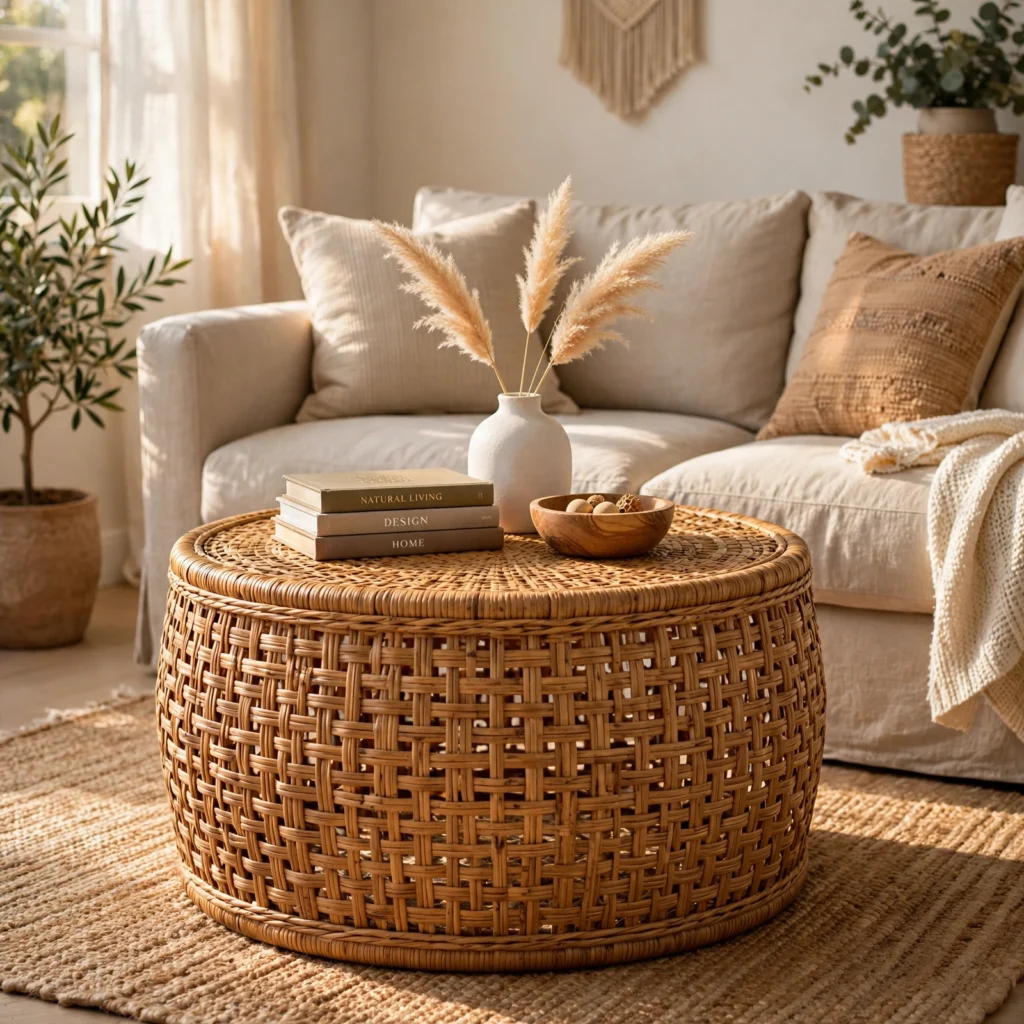
The rattan drum shape has rounded sides and an open weave that lets light filter through instead of blocking it, which keeps a small room from feeling boxed in. It brings warmth and texture without the visual weight of solid wood, making it a natural fit for coastal, boho, or Japandi-style living rooms. Because rattan is lightweight, this table is also easy to reposition for cleaning or when rearranging furniture for a gathering.
5. Chrome-Frame Glass Table
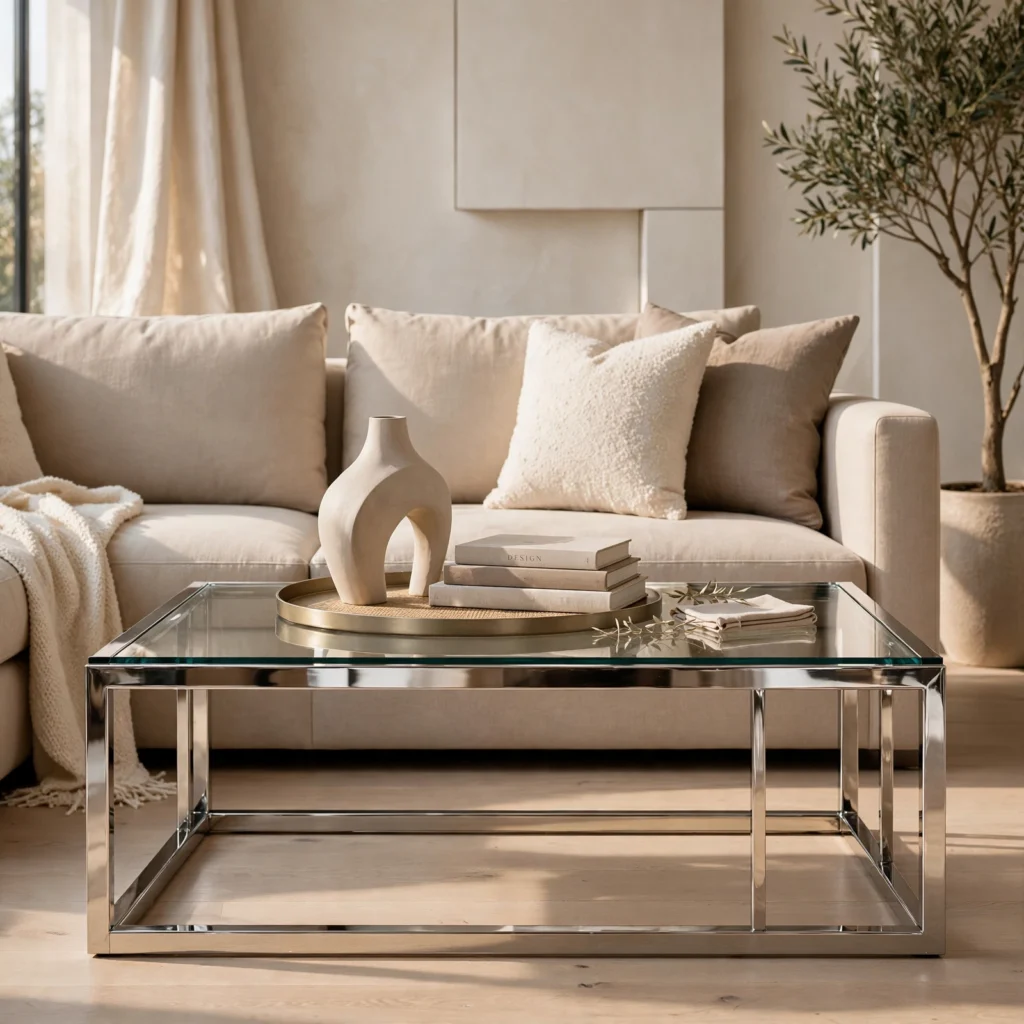
A glass top on a slim chrome frame keeps sightlines open across the room, which is especially useful in smaller or lower-ceilinged living rooms where bulkier furniture can feel cramped. The reflective surface bounces light around the space and pairs cleanly with mid-century or contemporary minimalist decor. Tempered safety glass is worth the extra cost here, since it holds up better to daily wear from mugs, remotes, and shifting weight.
6. Lift-Top Storage Table
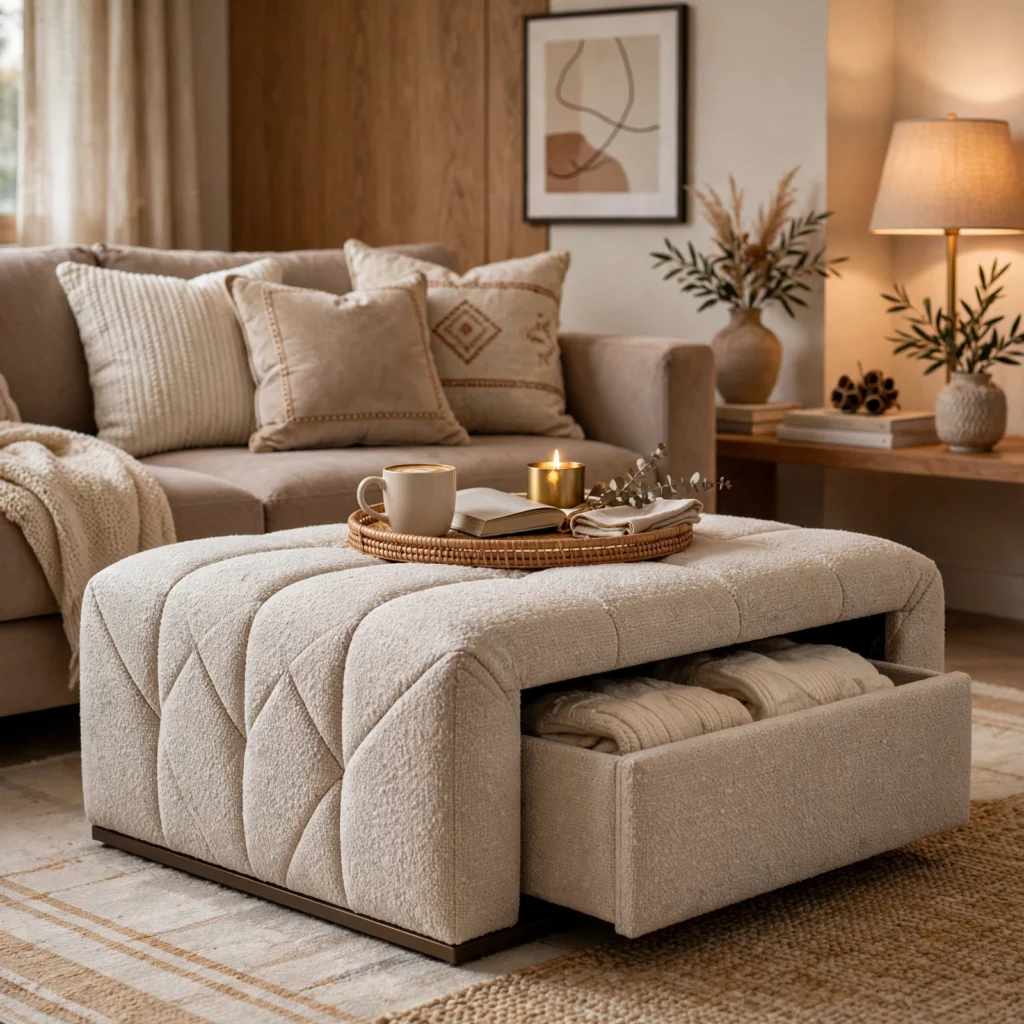
A lift-top table hinges upward into a makeshift desk or dining surface, revealing hidden storage underneath for blankets, remotes, or board games. This design solves a real problem in studio apartments and multi-purpose living rooms where the coffee table also doubles as a laptop station or a spot to eat dinner in front of the television. Look for soft-close hinges so the mechanism holds up over years of daily use.
7. Modular Center Table Living Room Set
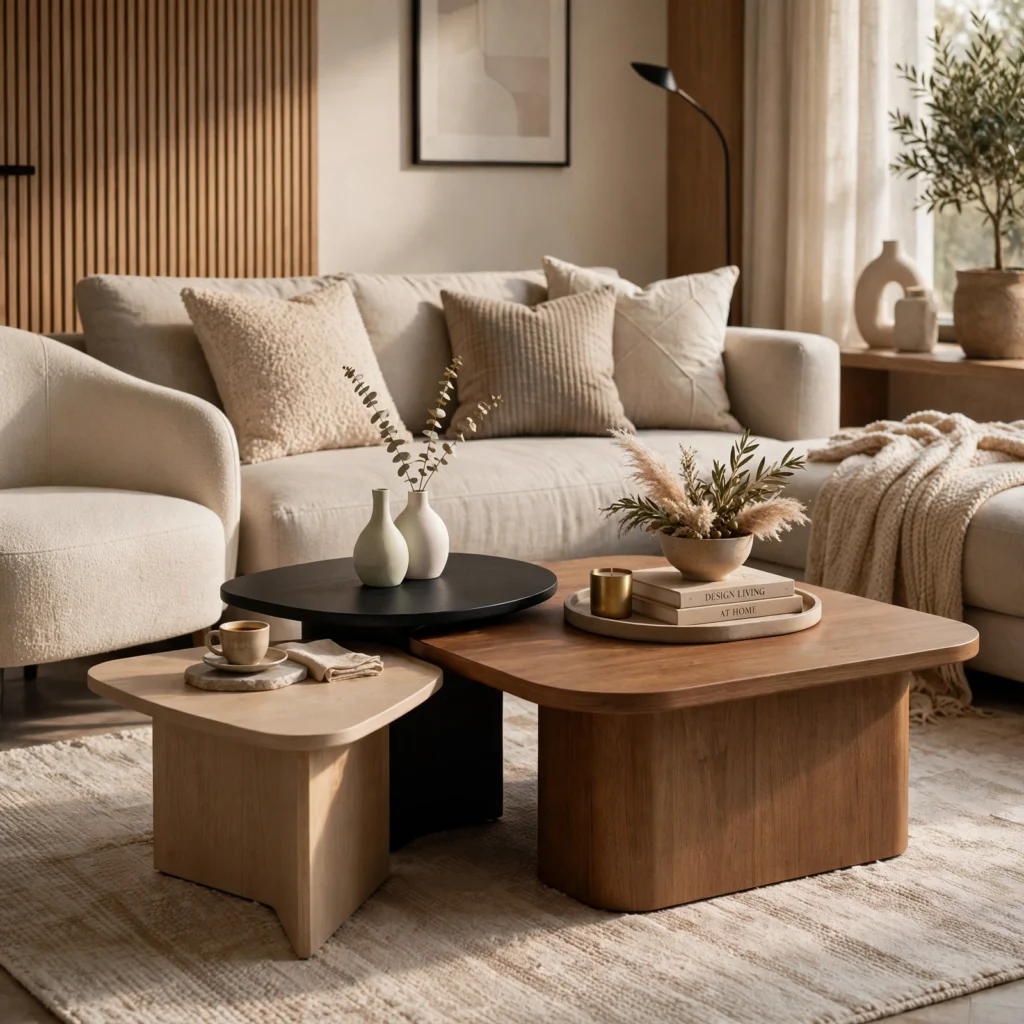
A modular center table living room set breaks one large surface into two or three interlocking pieces that can be pushed together or split apart depending on the occasion. This flexibility suits households that host often, since the modules can flank a sectional or form an L-shape around a corner sofa. Choosing pieces with matching wood tones or a shared metal base keeps the set feeling intentional rather than mismatched.
8. Reclaimed Wood Trunk Table
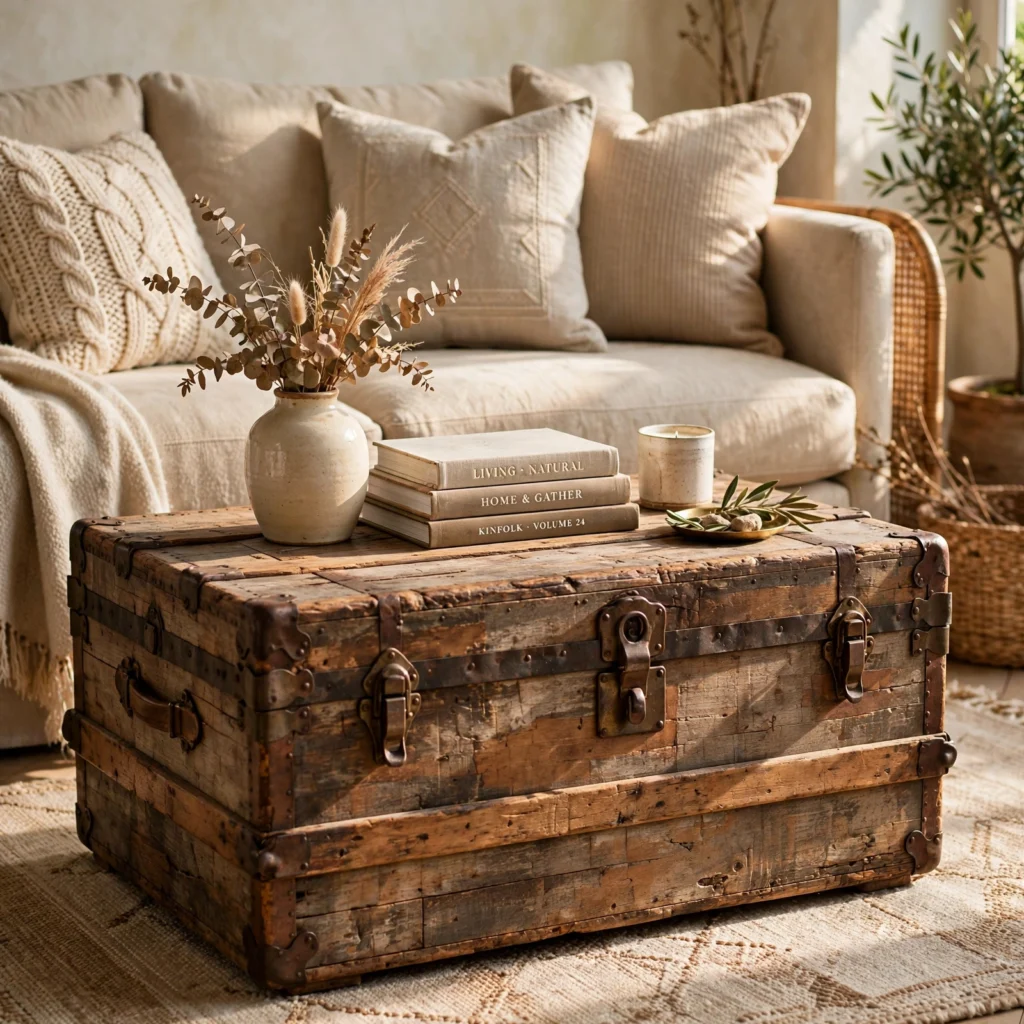
A reclaimed wood trunk brings visible history into the room through worn edges, old hardware, and mismatched grain patterns, giving a living room instant character without looking staged. Many trunk-style tables open from the top for storage, making them a practical stand-in for a linen closet or toy bin. This option fits farmhouse, industrial, or eclectic-vintage interiors particularly well, especially when left slightly imperfect rather than over-restored.
9. Terrazzo Slab Table
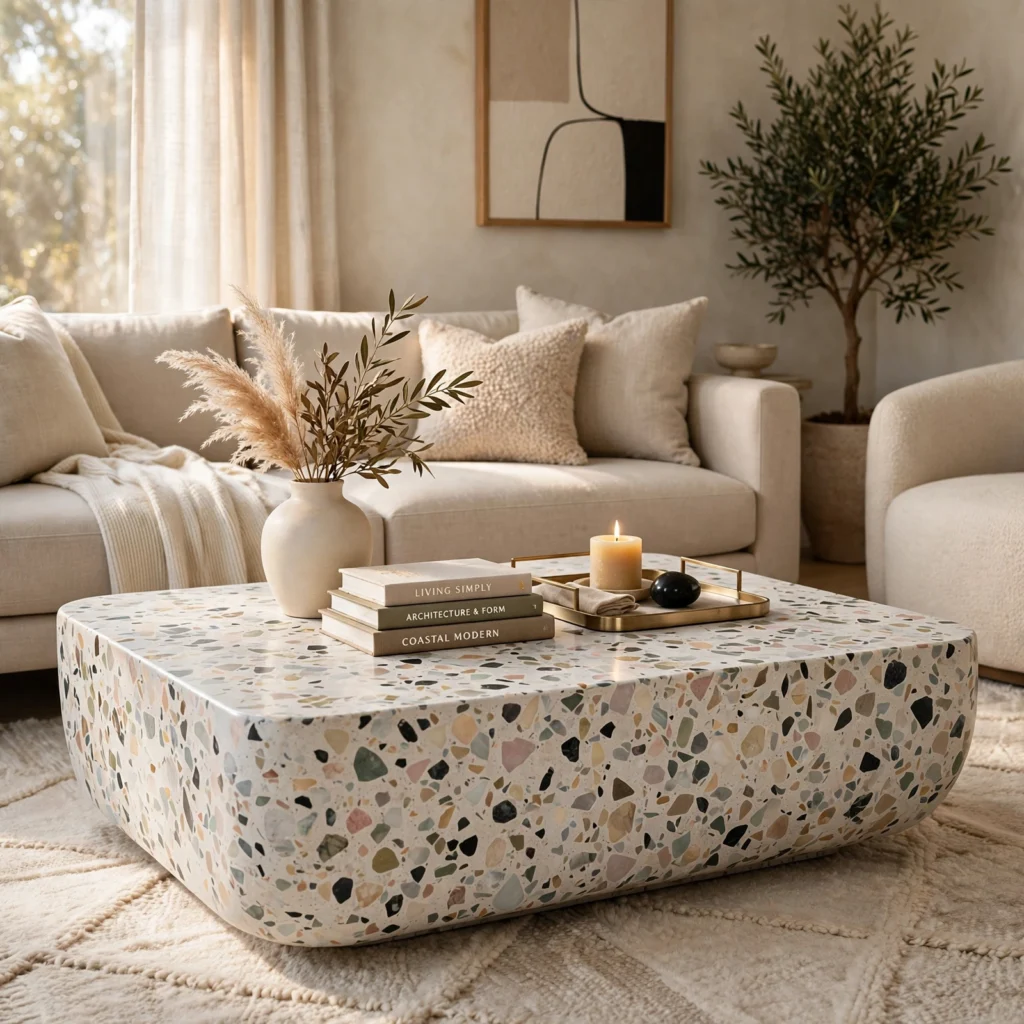
Terrazzo’s speckled composite surface, made from chips of marble, quartz, or glass set in cement, gives a table a playful, retro-modern look that photographs well and holds up to spills better than raw stone. It works as a bold centerpiece in an otherwise neutral living room, letting the flecks of color do the visual work. Pair it with a simple black or brass base so the terrazzo pattern stays the star of the setup.
10. Upholstered Ottoman Table
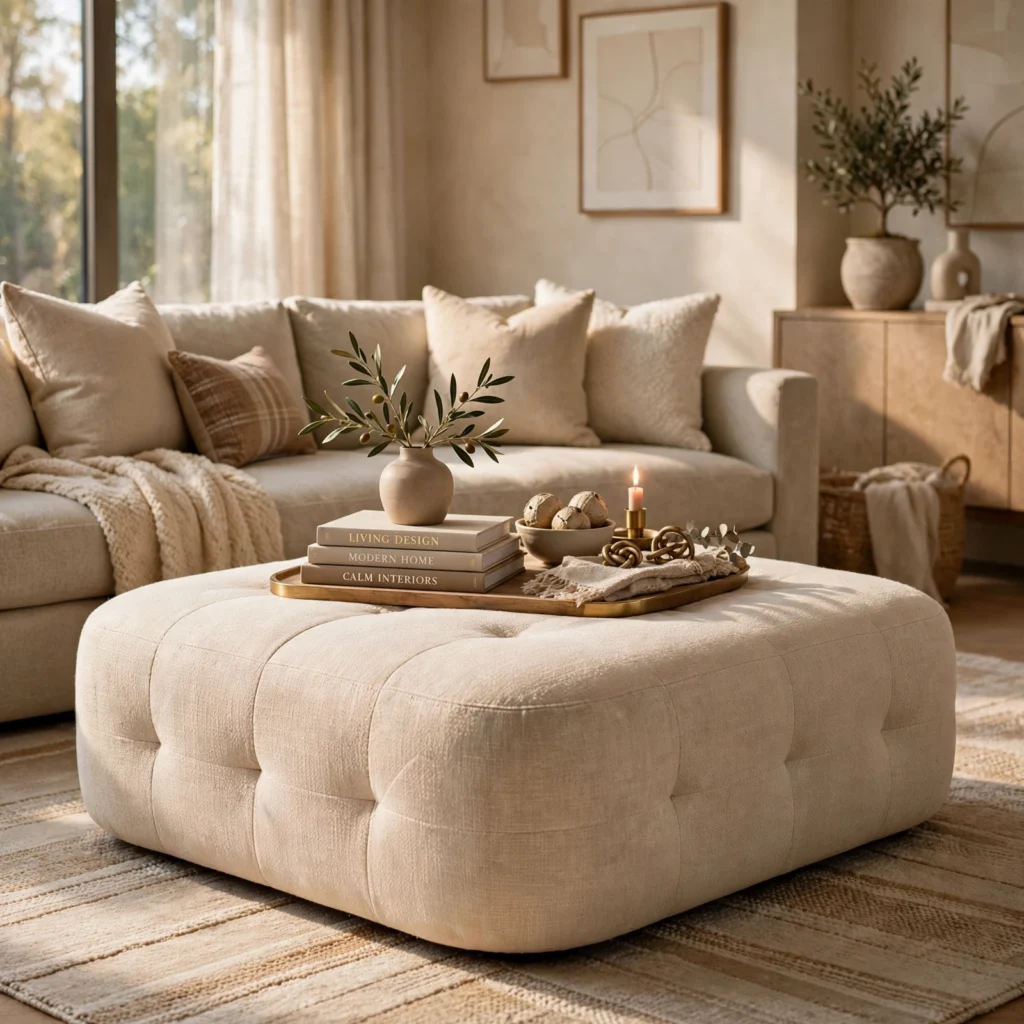
An upholstered ottoman swaps a hard surface for a padded top, often finished with nailhead trim or channel tufting, and works double duty as extra seating during gatherings. A removable wood or acrylic tray placed on top restores a flat surface for drinks or books when needed. This is a strong pick for households with young kids, since there are no hard corners to worry about during everyday living room use.
11. Industrial Pipe-Leg Table
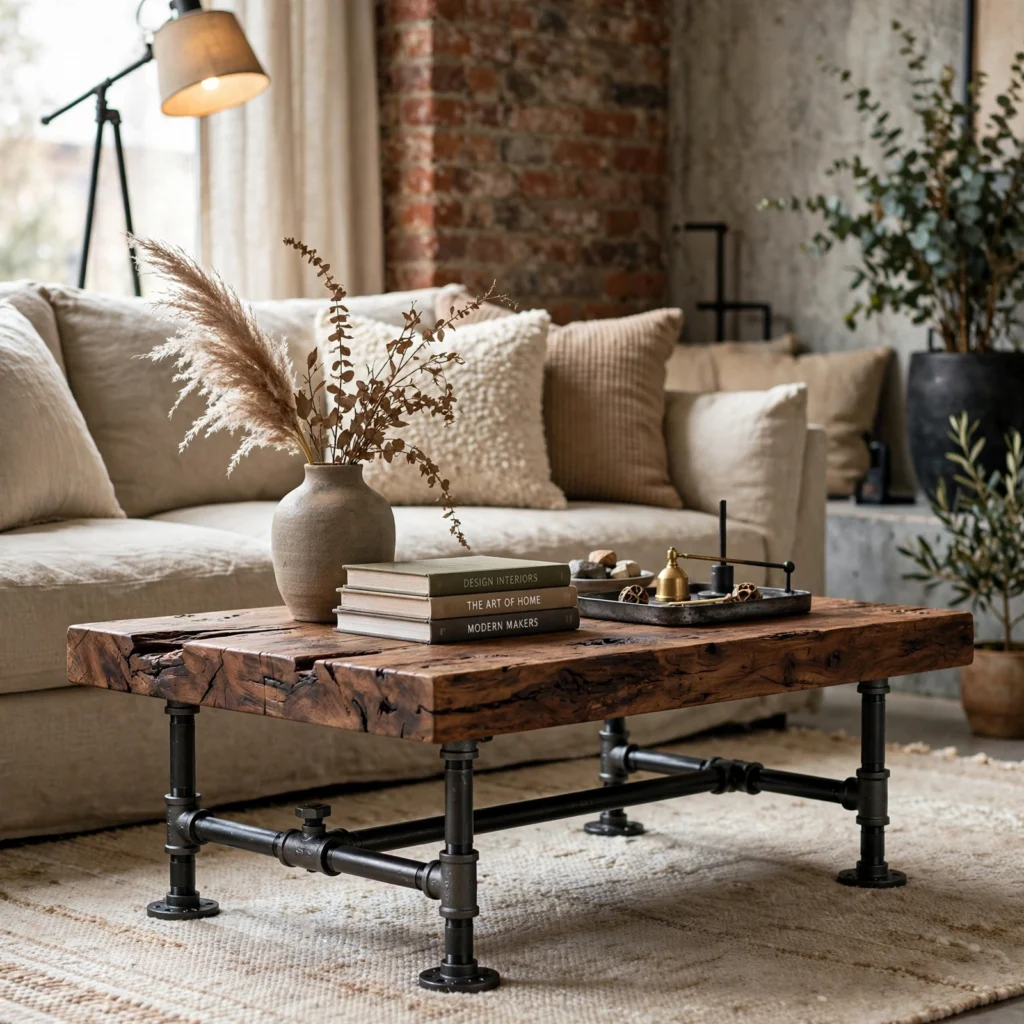
Black iron pipe fittings assembled into an X-frame or A-frame base give a table a workshop-inspired look that pairs naturally with reclaimed wood, leather seating, and exposed brick. The raw hardware stays visible rather than hidden, which is the whole point of the industrial aesthetic. This style holds up well in high-traffic living rooms since the metal frame resists wobbling better than many all-wood constructions at a similar price point.
12. Stone Drum Side Table
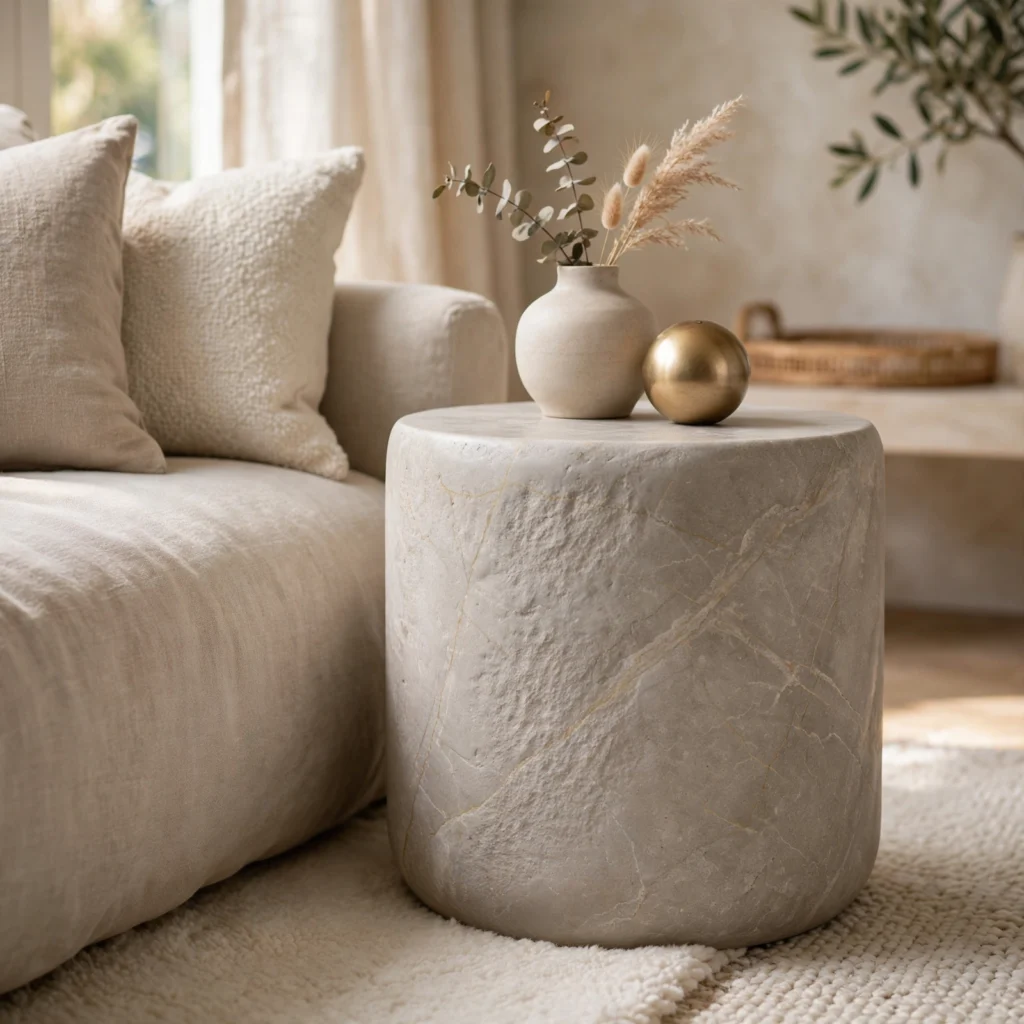
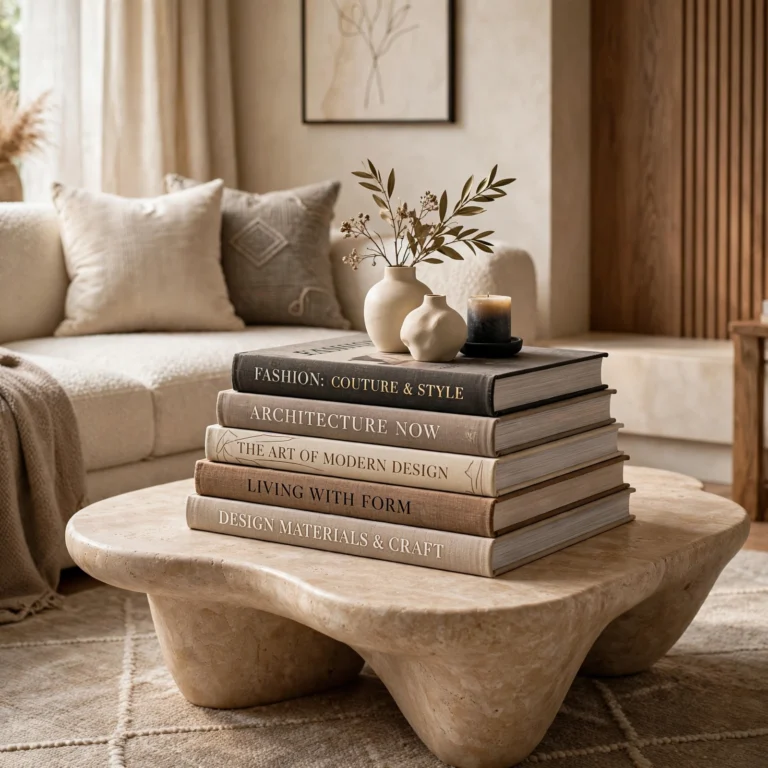
A solid stone drum, often travertine or sandstone, works as a sculptural low table that reads more like a piece of art than standard furniture. Its rounded, armless silhouette makes it safer around kids and pets compared to sharp-edged rectangular tables. Because natural stone varies piece to piece, no two drum tables look identical, which appeals to homeowners who want a one-of-a-kind anchor for a minimalist or organic modern living room.
13. Two-Tier Rattan Table
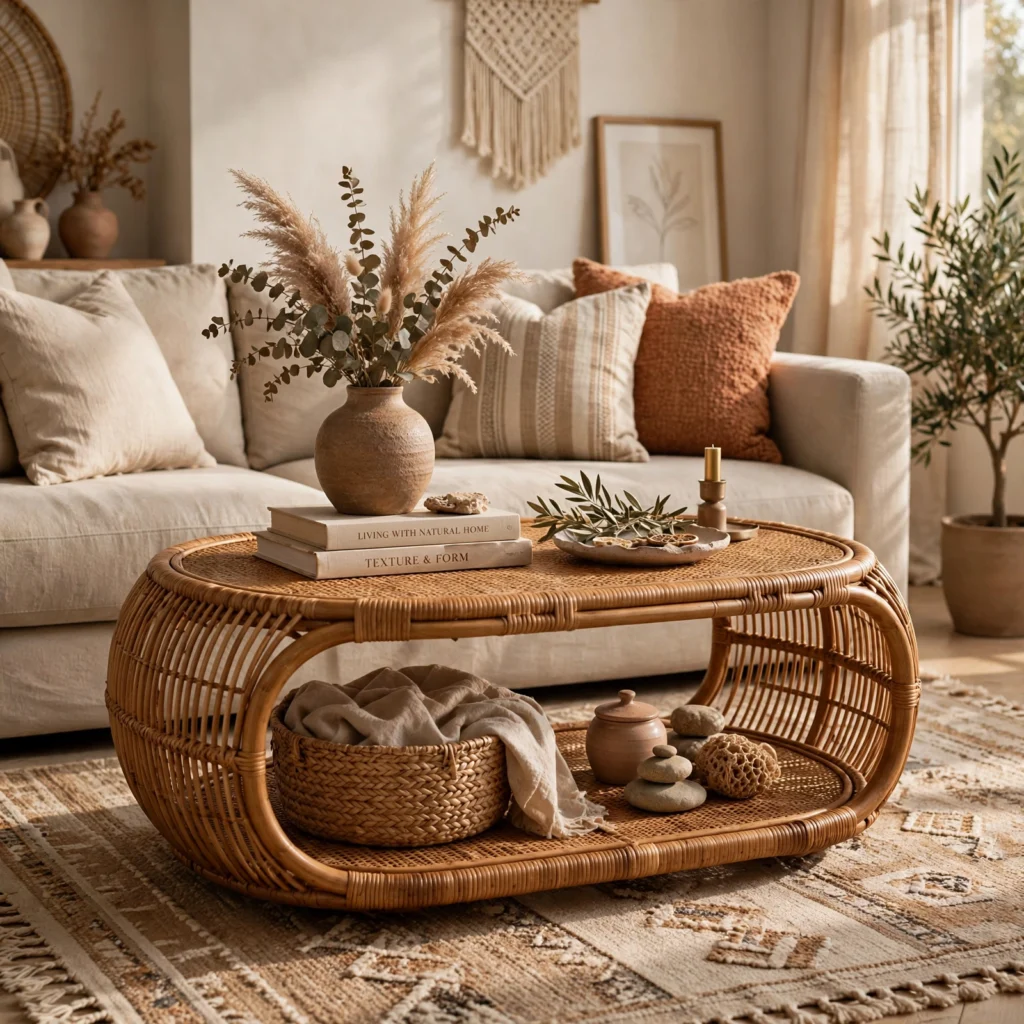
A two-tier design adds a lower shelf beneath the main tabletop, giving extra room for stacked magazines, baskets, or decorative objects without adding visual bulk to the room. Rattan or bamboo construction keeps the whole piece lightweight, which matters in rentals or rooms where furniture gets rearranged often. This style suits living rooms that need a bit more built-in storage but still want an airy, natural-material look overall.
| Tier | Typical Height | Common Use |
| Top | 16″-18″ | Drinks, books, decor |
| Bottom | 4″-6″ from floor | Baskets, magazines, throws |
Shop the Look
For a marble pedestal look, search for round Carrara or faux-marble tables with a single sculpted base around 30 inches wide. For rattan drum styles, look for natural or whitewashed weave finishes paired with a tempered glass insert for easier cleaning. Brass and glass cocktail tables are widely available in slim hairpin or geometric frame designs, and lift-top storage tables come in oak, walnut, or painted MDF finishes depending on budget.
Common Mistake to Avoid
The most common mistake is choosing a center table based on looks alone without measuring the space between it and surrounding seating. A table placed too close to the sofa blocks legroom, while one placed too far away forces people to lean or stand to reach their drink. Aim for 14 to 18 inches of clearance between the table edge and the sofa, and keep the tabletop roughly the same height as the seat cushions for comfortable use.
FAQs
What size center table should I get for my living room?
A center table typically works best at about two-thirds the length of your sofa, so an 84-inch sofa pairs well with a table around 48 to 56 inches long. Height should sit close to your sofa’s seat cushion level, usually 16 to 18 inches, so drinks and plates are easy to reach without straining up or reaching down awkwardly during everyday use.
How much space should be between a coffee table and a sofa?
Leave 14 to 18 inches of clearance between the edge of the table and the front of the sofa. This gap is wide enough for legroom and walking past comfortably, but tight enough that reaching for a drink or remote doesn’t require leaning far forward. Rooms with heavy foot traffic can lean toward the wider end of that range.
What material center table is best for a living room with kids?
Rounded shapes in softer materials like upholstered ottomans or rattan drum tables tend to work best around young children, since there are no sharp corners and less risk of injury during falls. Lift-top storage tables also help by keeping toys and clutter contained in one spot, which cuts down on tripping hazards scattered across the floor.
Should a center table match the wood tone of other furniture?
It doesn’t need to match exactly, but it should relate to the room’s existing tones through either color family or material weight. A dark walnut table can sit comfortably in a room with lighter oak flooring as long as another element, like a picture frame or accent chair, echoes the darker tone somewhere else in the space.
Are glass top tables hard to maintain in a living room?
Glass tables show fingerprints, dust, and water rings more visibly than wood or stone, so they need wiping down more often to stay looking clean. Choosing tempered glass reduces the risk of cracking under daily use, and a matte or lightly frosted finish hides smudges better than a fully clear, glossy surface if low maintenance is a priority.
Conclusion
The right center table living room choice comes down to matching material, size, and function to how your household actually uses the space day to day. Whether that means a marble pedestal for a formal look or a lift-top table for hidden storage, small proportion and clearance details make the biggest difference. Save this guide to Pinterest for later, or check out our related post on sofa and sectional layout ideas for more living room planning tips.
Author Expertise Note
This guide was put together after years of sourcing and styling furniture for real client living rooms, where sizing mistakes and material wear show up fast in daily use.