17 Stylish Couches Living Room Ideas for Every Layout, Budget, and Decorating Style to Create a Cozy and Inviting Home
Choosing the right couch is rarely just about comfort anymore; it sets the tone for the entire room around it. With so many silhouettes, fabrics, and configurations available, picking couches living room pieces that actually fit your space and lifestyle can feel overwhelming. This guide breaks down seventeen distinct couch styles and layout approaches, covering everything from compact apartments to open-concept great rooms, so you can narrow down what will genuinely work before you start shopping.
Trend & Background
Living room seating has shifted noticeably away from rigid three-piece matched sets toward modular and sculptural pieces that can adapt to how people actually use their space. Remote work and more time spent at home have pushed buyers toward deeper, more lounge-friendly cushions rather than firm, formal upholstery meant only for short sits. Fabric technology has also advanced, with stain-resistant performance weaves now common even in higher-end pieces, making bold colors and light fabrics more practical than they were a decade ago. Sustainability concerns have additionally driven interest in modular designs that can be reconfigured or partially replaced instead of discarded whole.
Key Takeaways
- Sectionals, modular pieces, and curved silhouettes are dominating couches living room layouts in 2026, replacing boxy matched sets.
- Fabric choice matters as much as shape; performance weaves and bouclé now outsell traditional leather in most mid-range homes.
- Small living rooms benefit most from armless, modular, or apartment-sized couches that can be reconfigured as needs change.
- Mixing one statement seating piece with neutral supporting furniture keeps a room from feeling matchy or dated.
1. Modular Sectional Couches Living Room
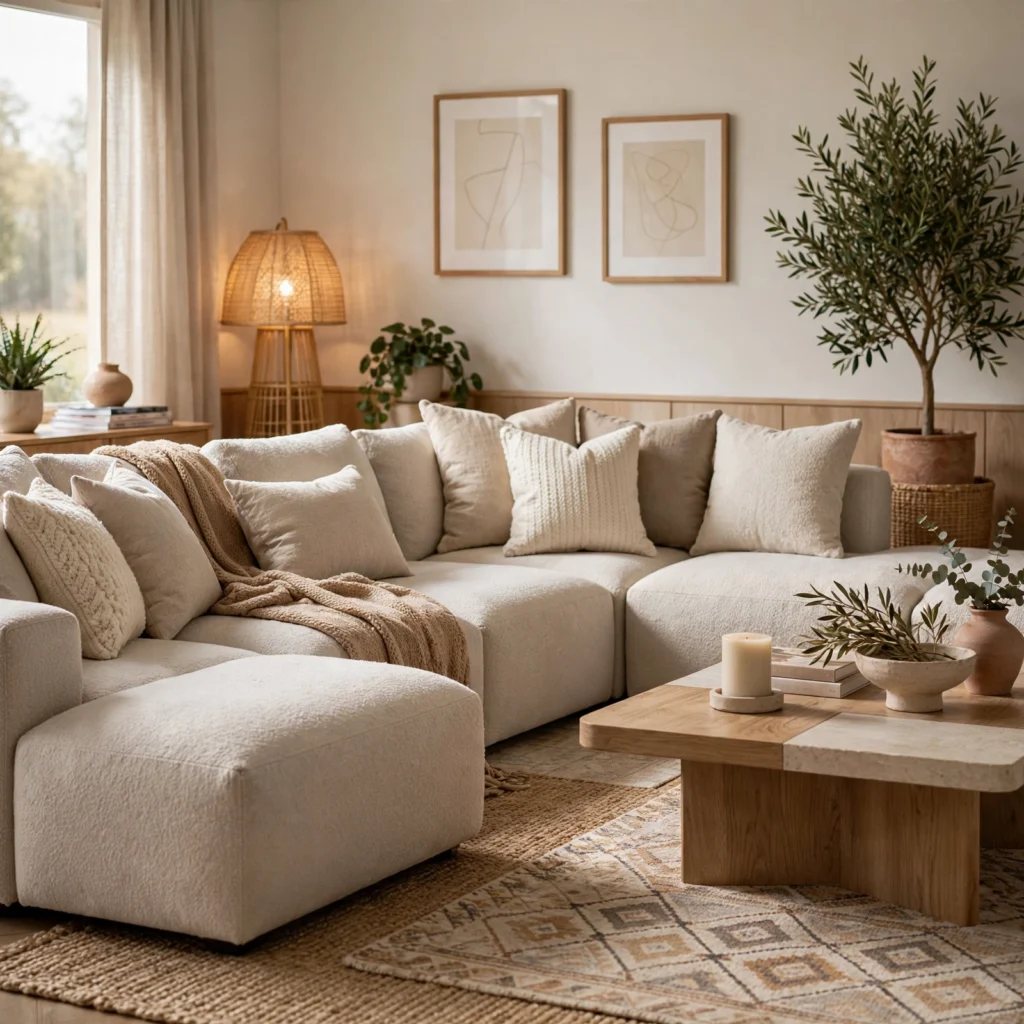
Modular sectionals are built from individual seat, corner, and chaise pieces that connect and detach freely, letting the configuration shift from an L-shape to a straight run or even separate loveseats as the room’s needs change. This flexibility makes them a strong fit for anyone who moves apartments often or wants a couch that can adapt around a growing family. Most modular systems use consistent cushion depth and back height across pieces, so additional sections can be purchased later without mismatched proportions.
| Configuration | Seat Count | Best Room Size |
| Loveseat + Corner | 3-4 | Small (under 200 sq ft) |
| L-Shape Sectional | 5-6 | Medium (200-350 sq ft) |
| U-Shape / Add-On | 7+ | Large open-concept |
2. Curved Sofa Silhouette
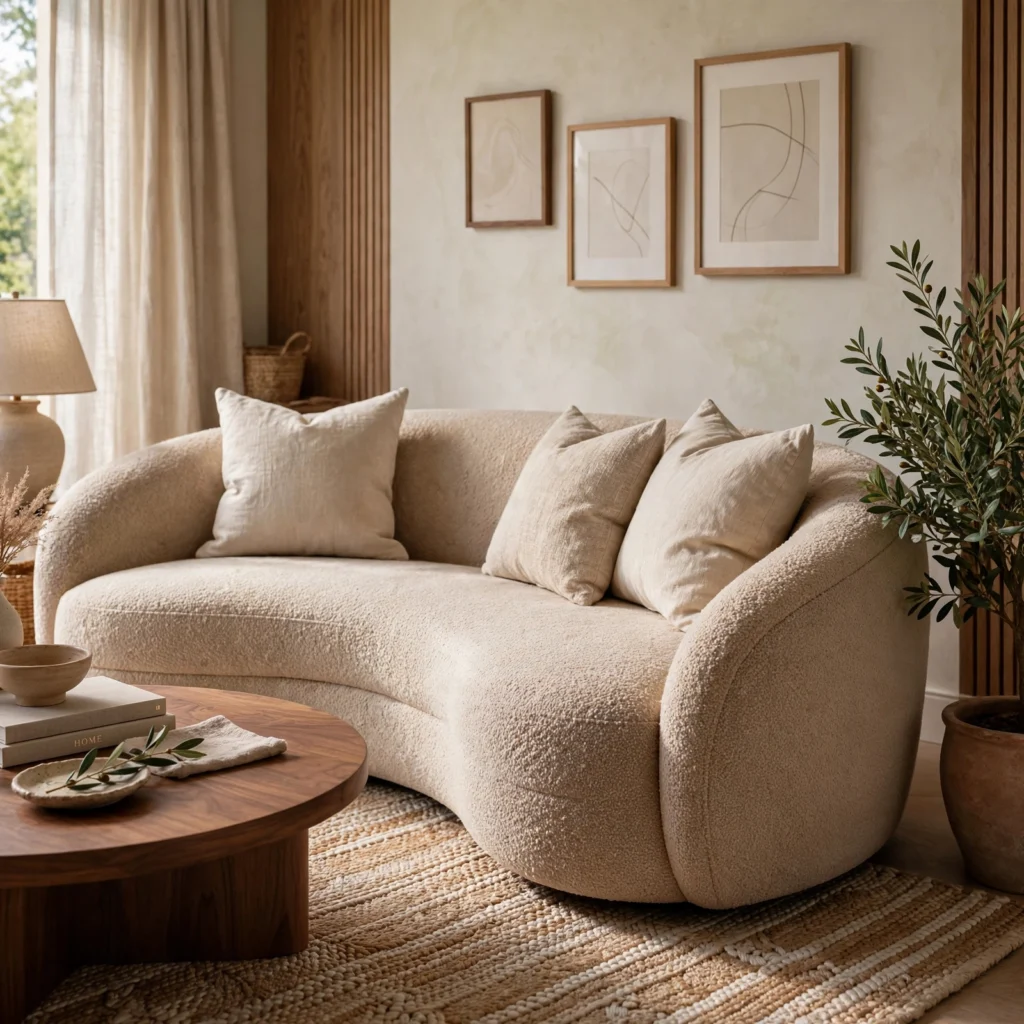
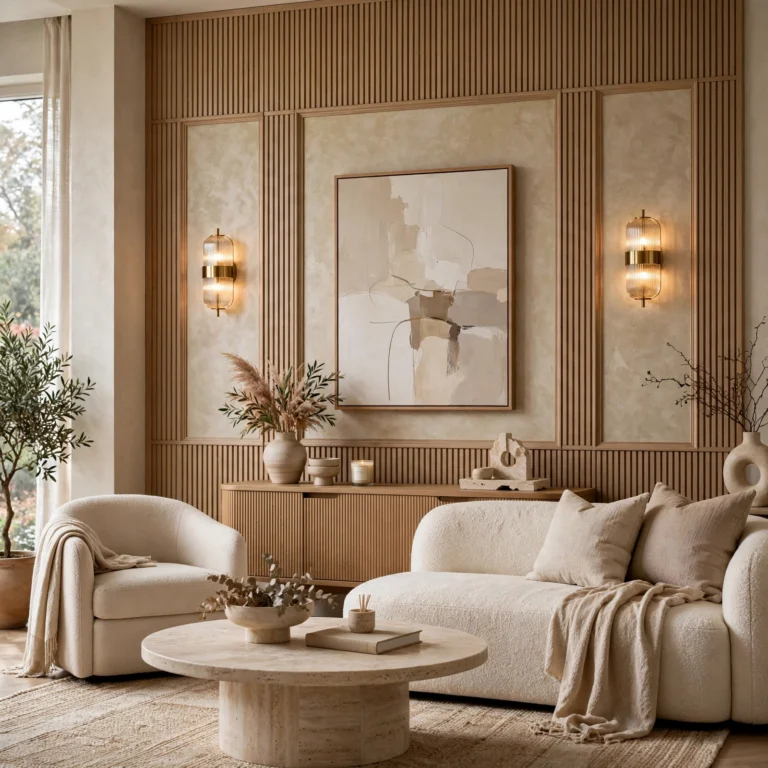
Curved sofas trade sharp right angles for a rounded frame and back, softening the overall look of a room and creating a more conversational seating arrangement when paired with a round or oval coffee table. The shape works particularly well in rooms with awkward corners or circular architectural details, since it avoids the visual stiffness of a straight-backed couch fighting an irregular layout. Curved frames are typically upholstered in a single continuous fabric run, which also tends to hide seams better than angular designs.
3. Low-Profile Lounge Sofa
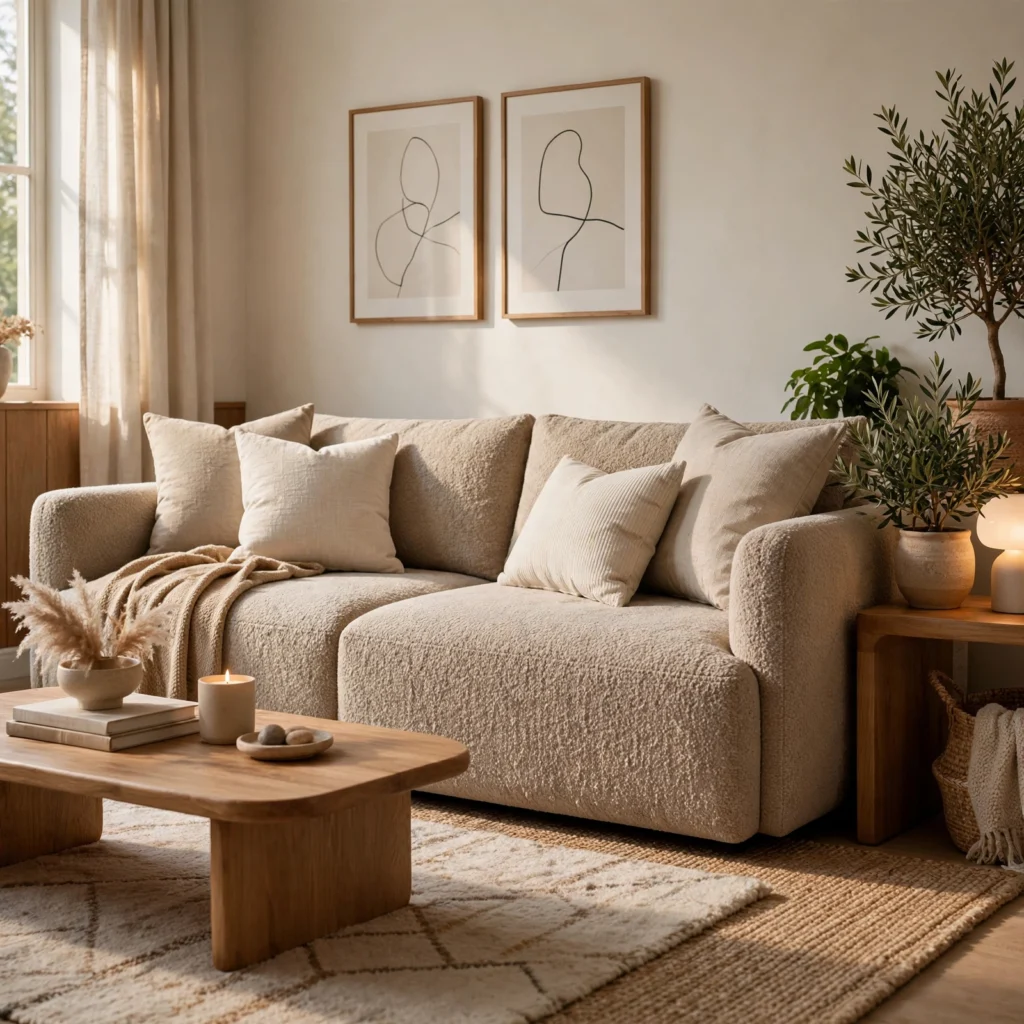
Low-profile sofas sit closer to the ground, usually with a seat height under 16 inches, giving a room a more relaxed, mid-century feel and making ceilings appear taller by contrast. They pair naturally with low coffee tables and floor-level lighting, and their reduced visual bulk makes them a good option for rooms with lower ceilings where a tall-backed couch would feel cramped. Thin metal or wood legs on these frames reinforce the airy look rather than grounding the piece too heavily.
To see more living room aesthetic CLICK HERE
4. Bouclé Upholstered Couch
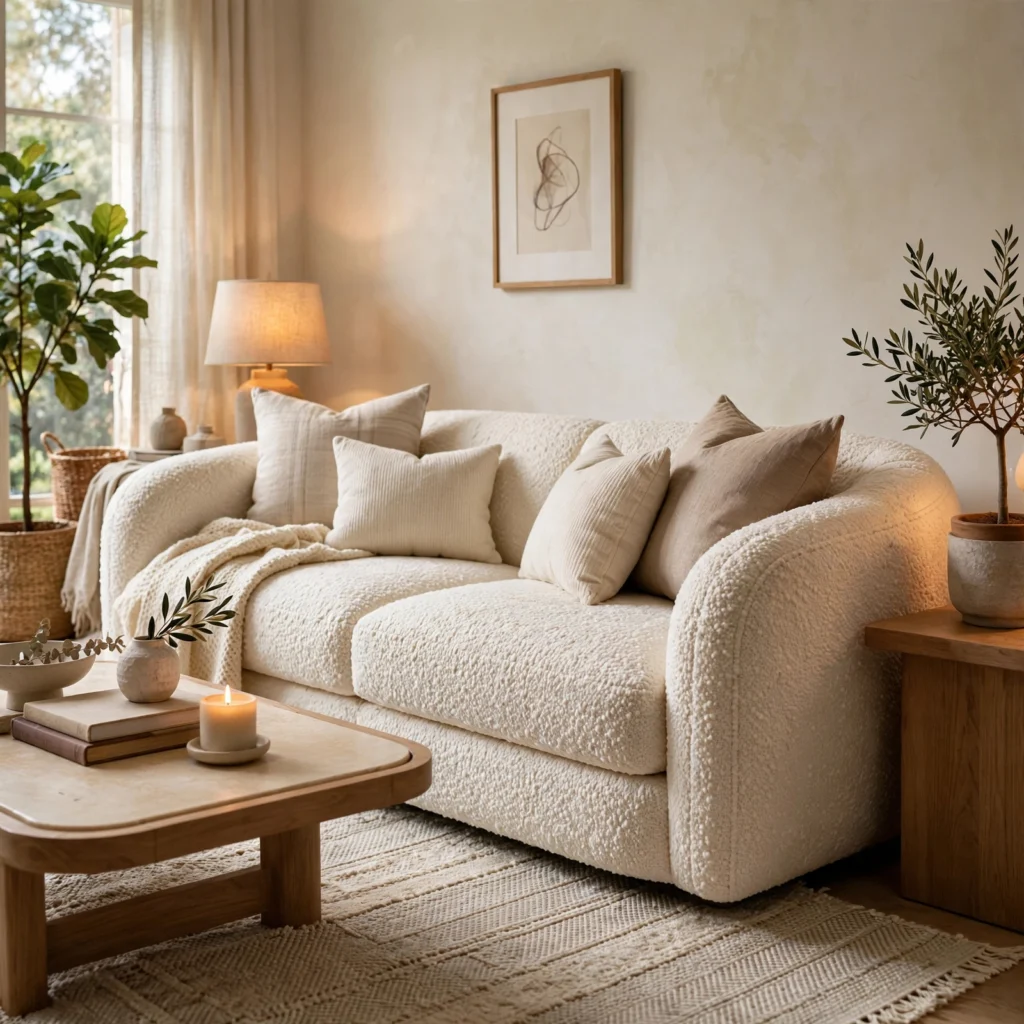
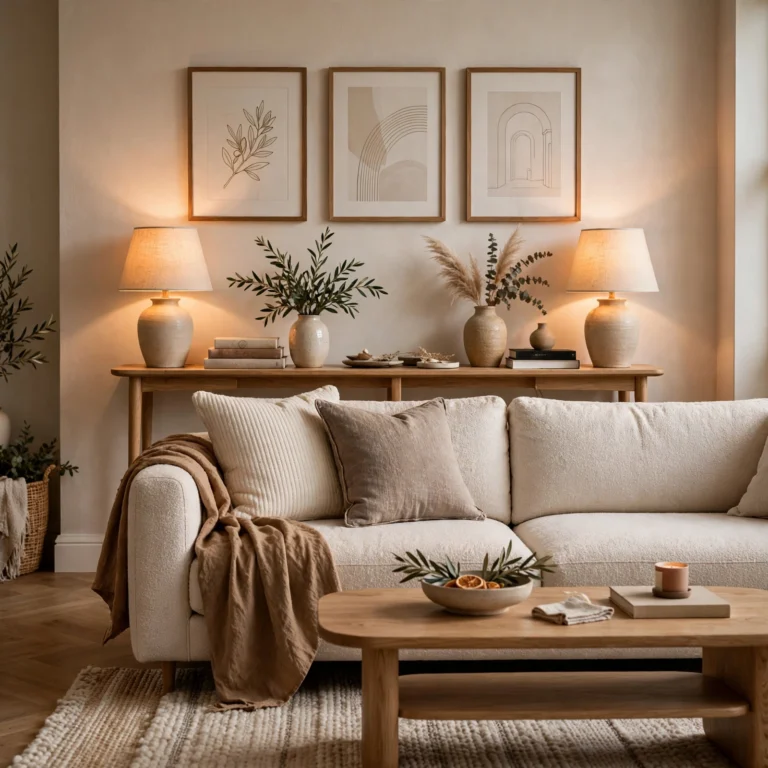
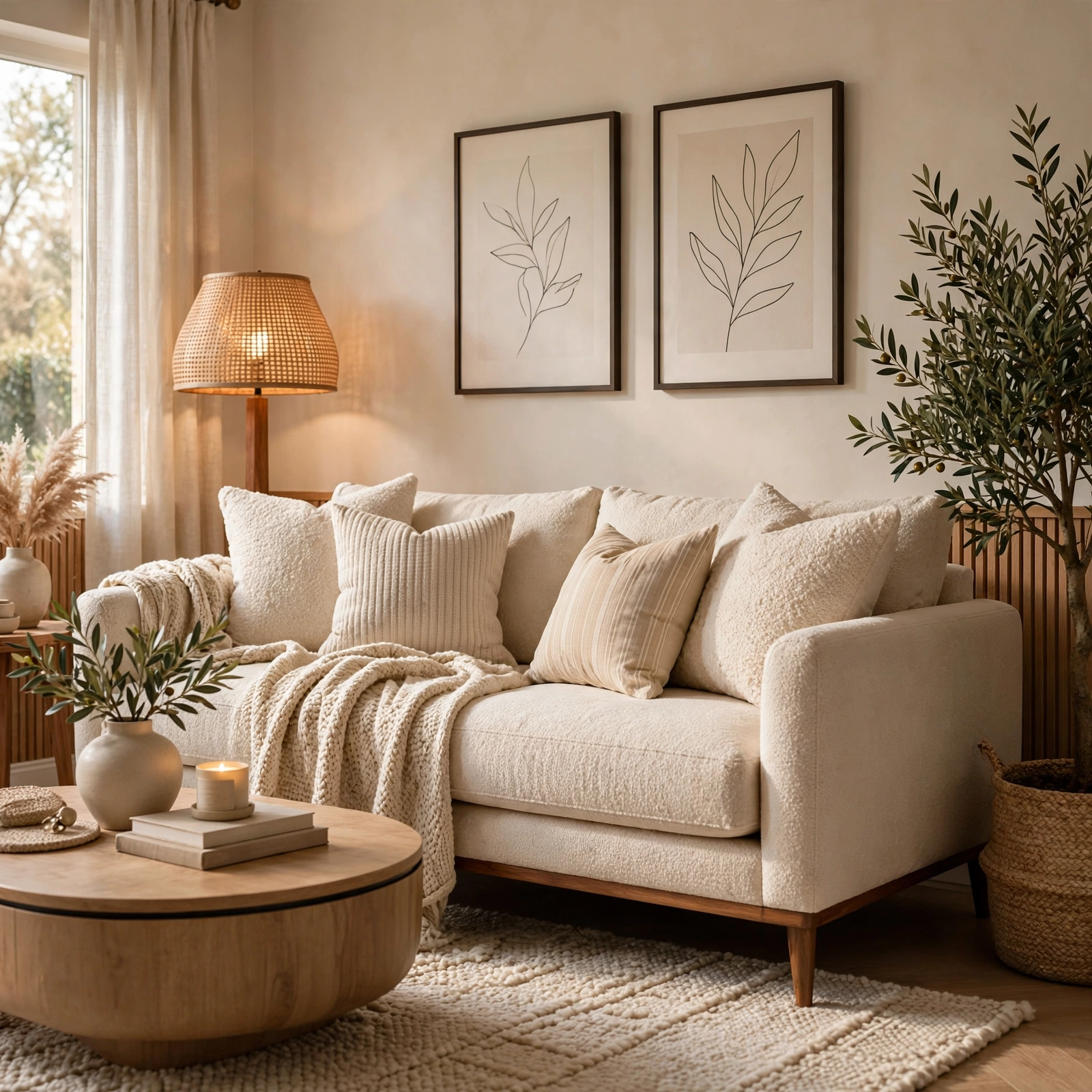
Bouclé fabric has a looped, textured surface that reads as soft and tactile from across the room, giving a couch visual interest without relying on pattern or color. It tends to show in cream, oatmeal, or muted sage tones, working as a neutral base that still feels considered rather than plain. Because the loops can catch on pet claws or rough denim over time, bouclé suits households without heavy pet traffic better than high-wear family rooms.
5. Leather Chesterfield Sofa
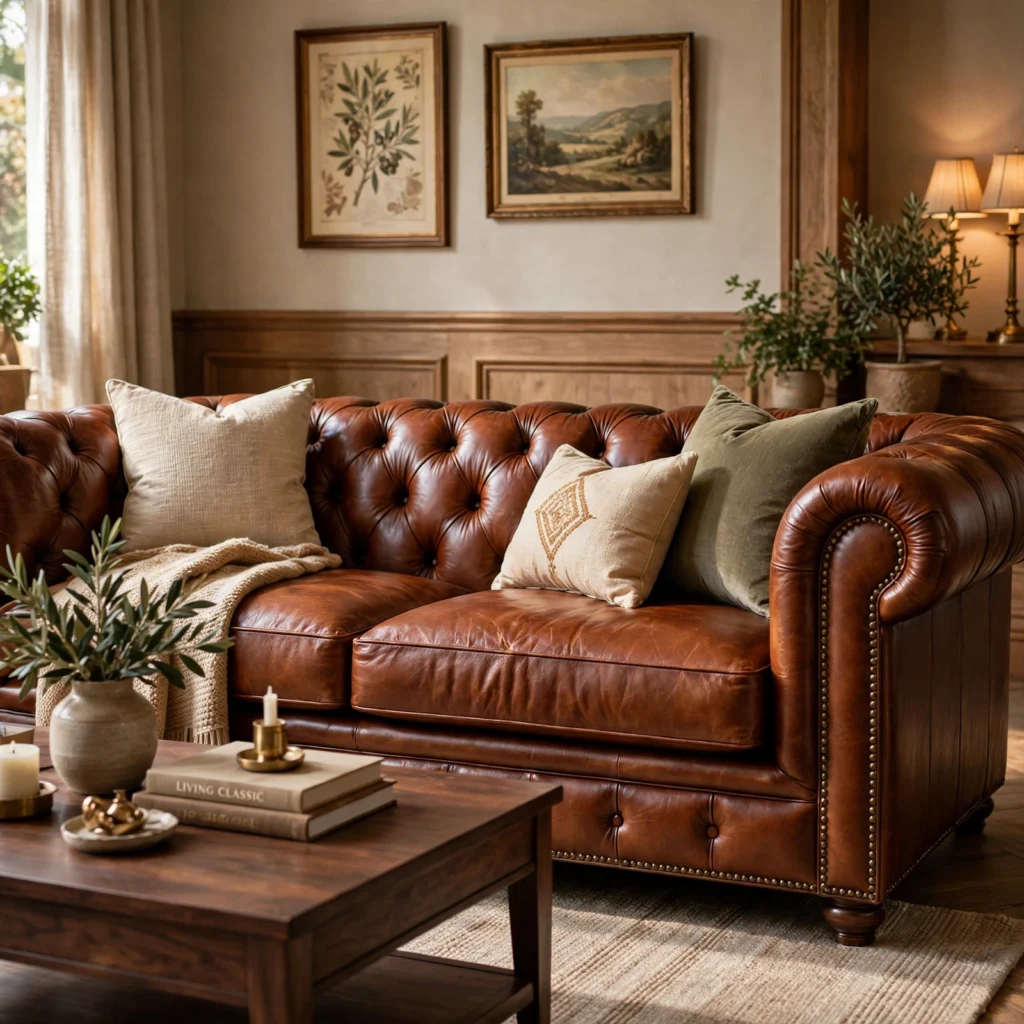
The Chesterfield’s deep button-tufted back, rolled arms, and nail-head trim give it an unmistakably traditional silhouette that anchors a room with weight and formality other couch styles don’t attempt. Full-grain leather versions develop a patina over years of use, which many buyers consider a feature rather than a flaw, deepening in color where hands and cushions see the most contact. This style suits rooms leaning traditional or English-inspired rather than minimal or Scandinavian spaces.
6. Apartment-Sized Sofa
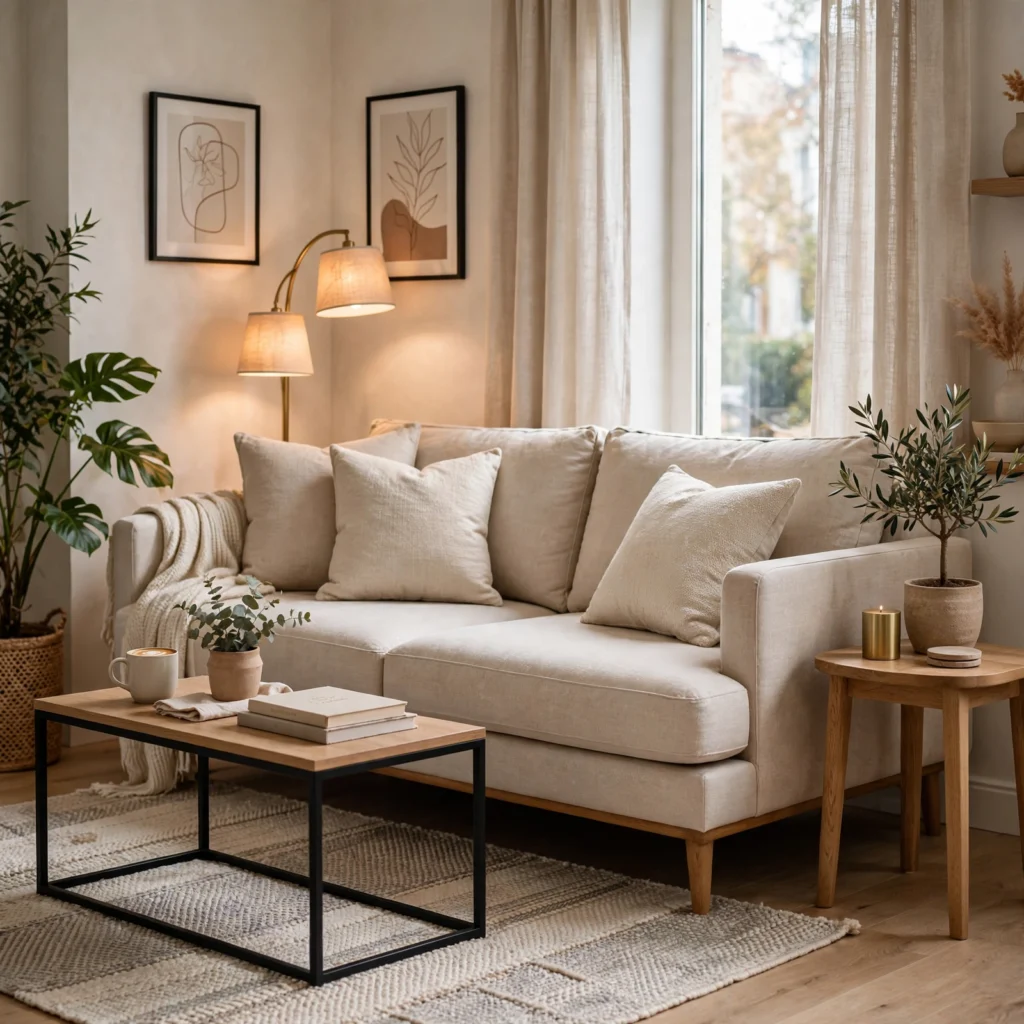
Apartment-sized sofas are scaled down from standard three-seat dimensions, typically running 60 to 72 inches wide instead of 80-plus, so they fit through narrow doorways and stairwells common in older buildings. Despite the smaller footprint, most maintain full seat depth so comfort isn’t sacrificed for size, just the number of people who can sit shoulder to shoulder. This category has grown significantly as more buyers furnish city apartments and starter homes with tighter floor plans.
| Standard Sofa | Apartment Sofa | Loveseat |
| 80-96 in wide | 60-72 in wide | 52-60 in wide |
| 3 seats | 2-3 seats | 2 seats |
| Best for large living rooms | Best for city apartments | Best for small dens |
7. Sleeper Sofa With Storage
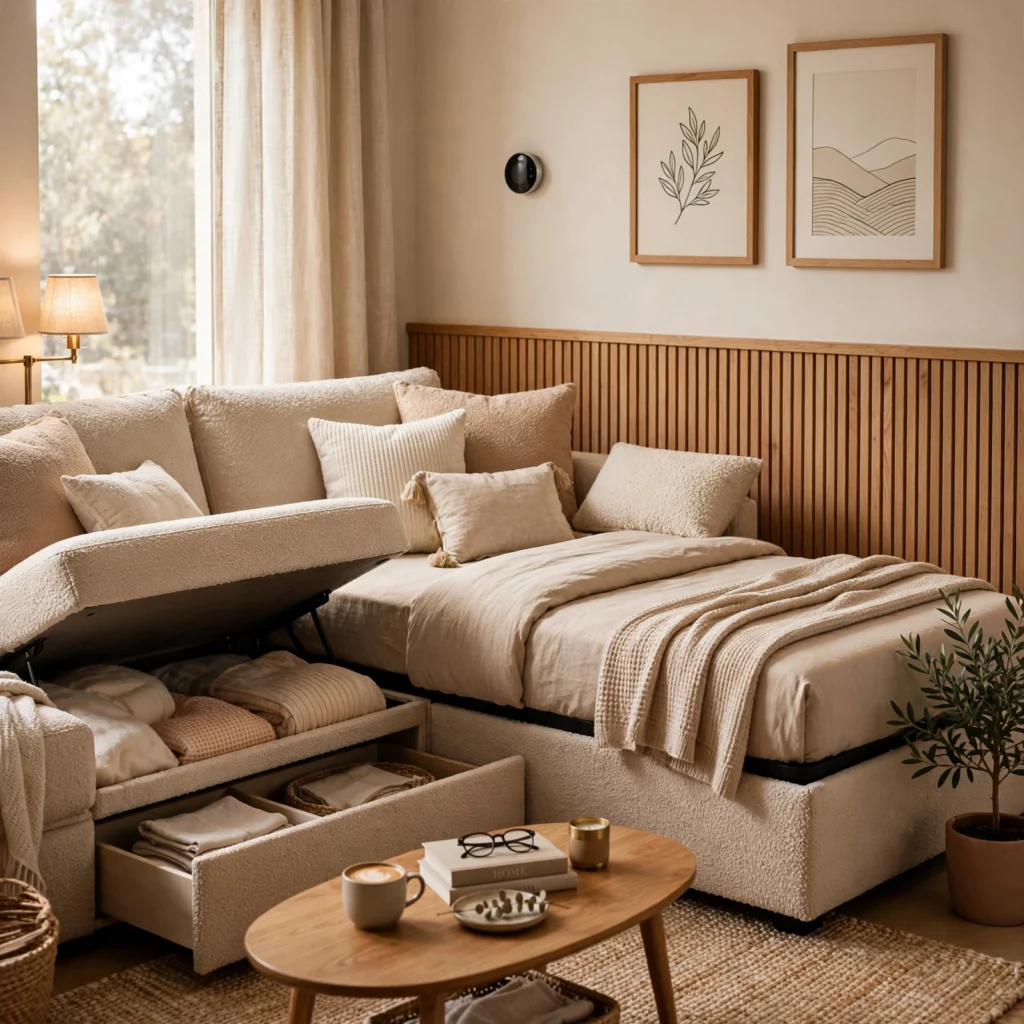
Sleeper sofas fold out into a usable bed, and newer designs pair this function with under-seat storage compartments for extra bedding or blankets, addressing the two biggest complaints about older pull-out models: comfort and bulk. Memory foam mattress inserts have largely replaced the thin, spring-based pads that made older sleepers uncomfortable for overnight guests. These work especially well in multi-purpose living rooms that double as guest space in smaller homes.
8. Velvet Jewel-Tone Couch
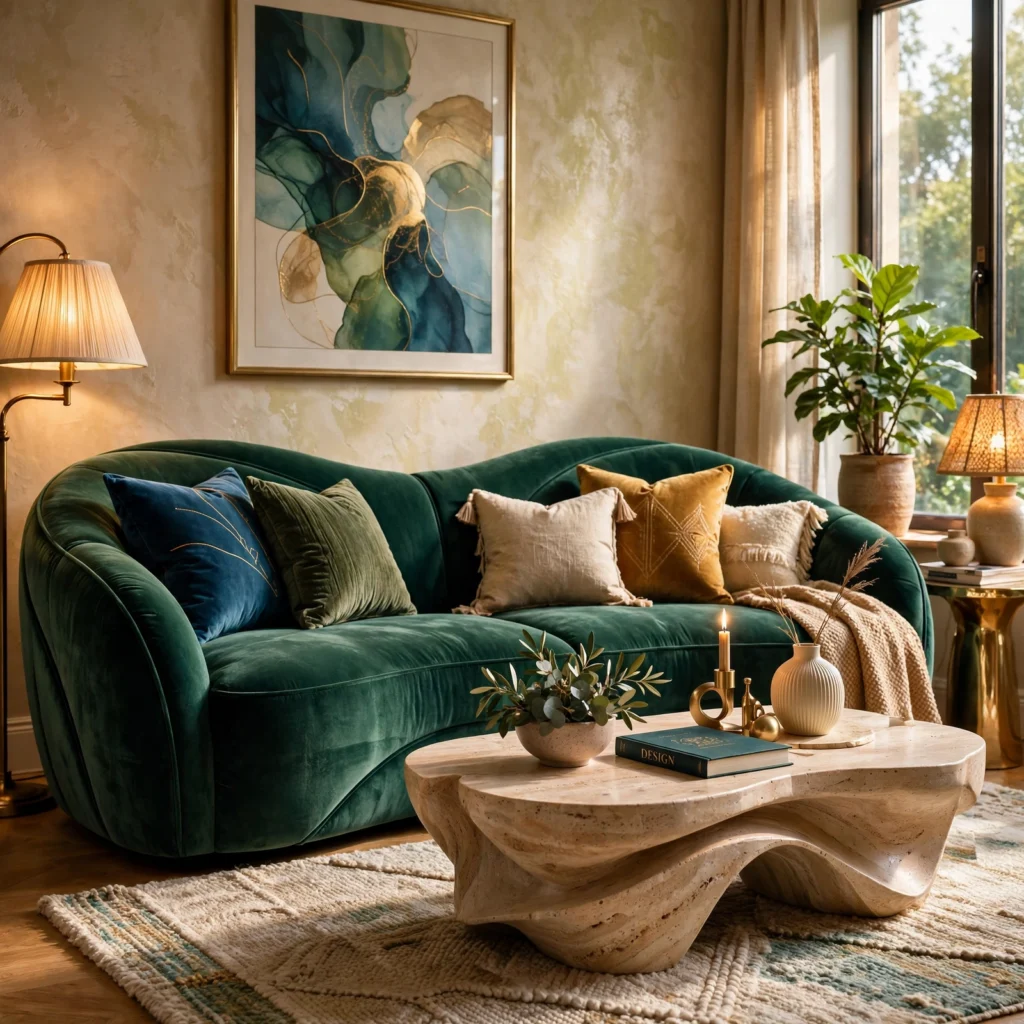
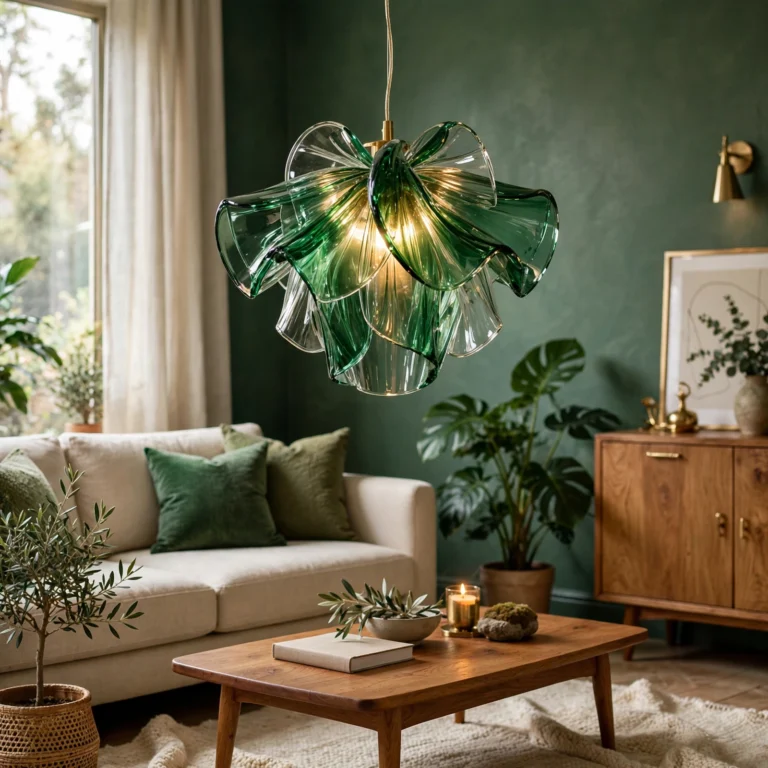
Velvet upholstery in emerald, sapphire, or burgundy turns a couch into the room’s clear focal point, catching light differently depending on the direction the pile is brushed. Because the color commitment is significant, this style works best when the rest of the room stays neutral, letting the couch carry the visual weight without competing patterns or finishes nearby. Velvet also tends to resist everyday wrinkling better than cotton or linen blends, keeping the couch looking tailored between cleanings.
9. Convertible Daybed Sofa
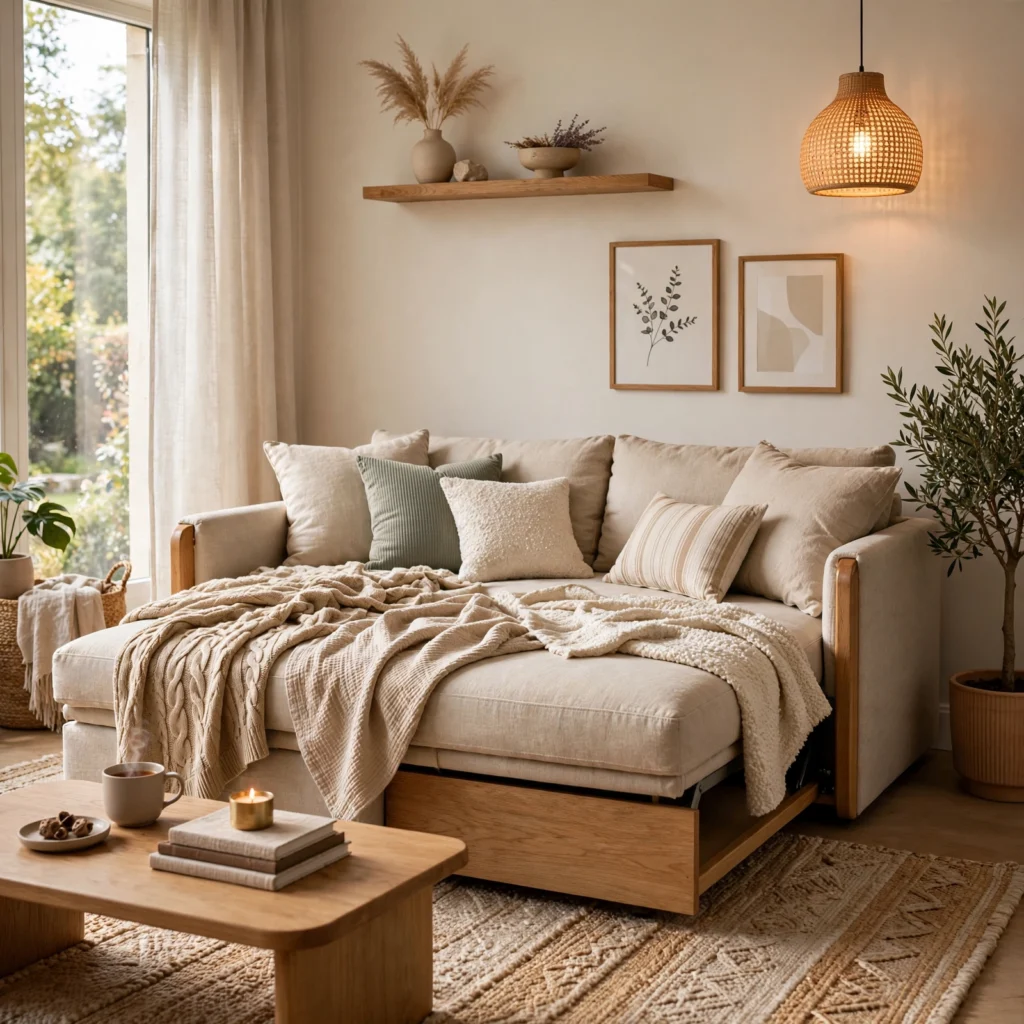
Daybed-style sofas function as both seating and a lounging surface, typically with a single back or side rather than the two arms of a traditional couch, allowing someone to stretch out fully. They suit smaller living rooms doing double duty as a reading nook or occasional guest space, since the low, open profile takes up less visual room than a bulky sectional. Bolster cushions along the open side help define the seating area when it’s being used upright.
10. Track Arm Sofa
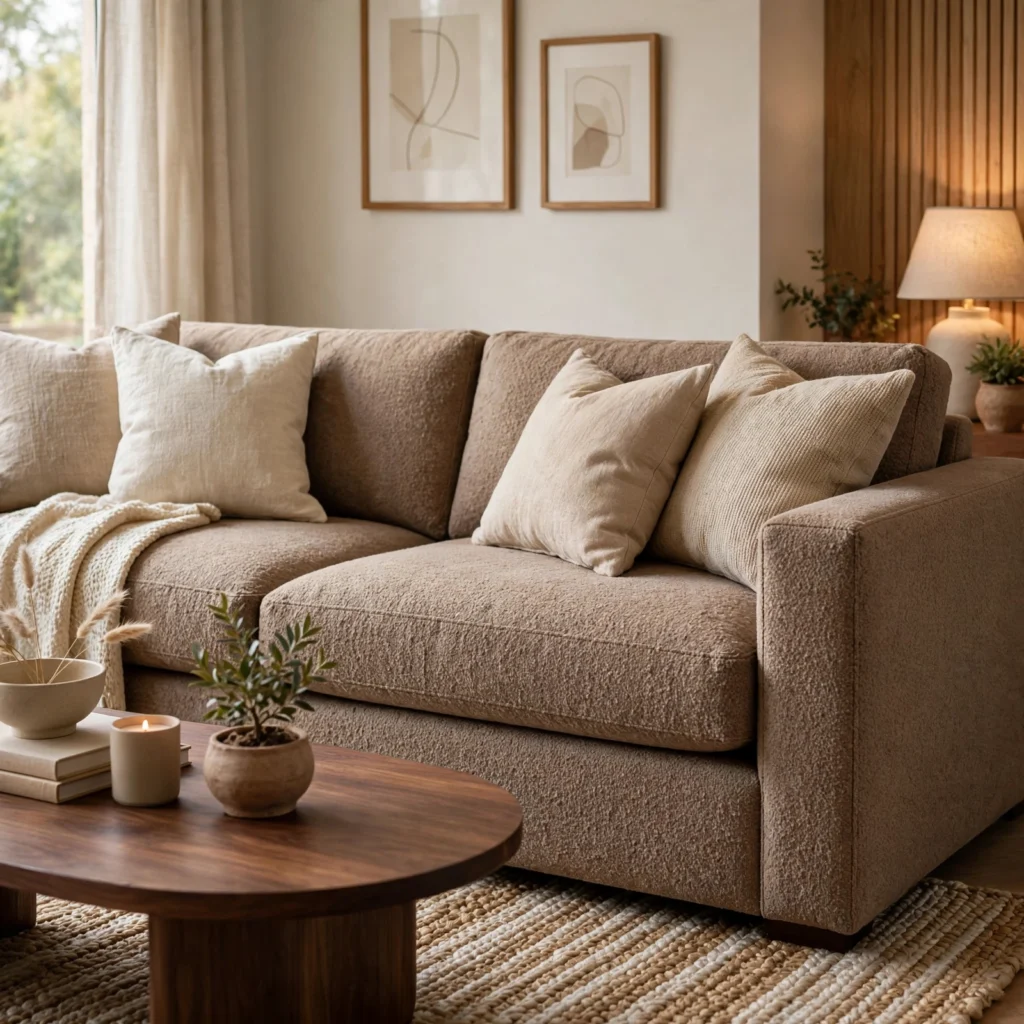
Track arm sofas feature thin, straight arms that run flush with the back cushion height rather than curving or rolling outward, giving the whole piece a cleaner, more architectural line. This style reads as contemporary and works well in rooms already leaning minimal, since the reduced arm bulk means the couch takes up less visual space than rolled-arm designs of the same actual footprint. Track arms also tend to be more budget-friendly to manufacture, which often puts them at a lower price point.
11. Slipcovered Linen Sofa
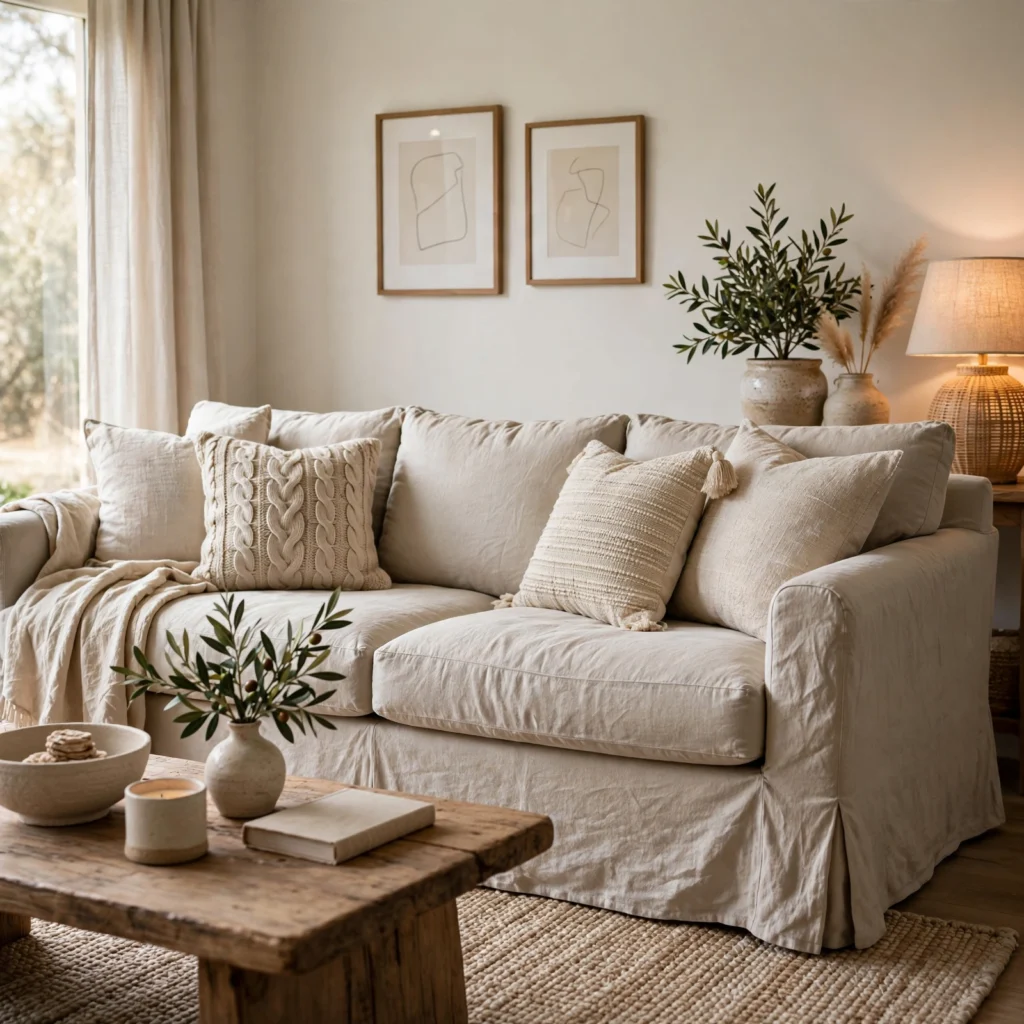
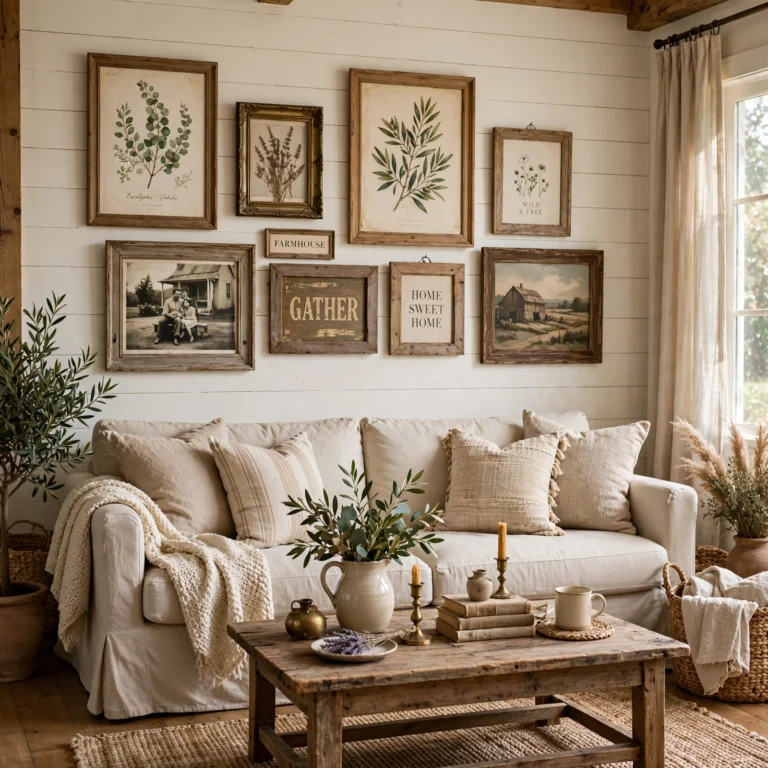
Slipcovered sofas use a removable fabric cover over the frame and cushions, usually in washable linen or cotton blends, making them practical for households with kids or pets who need to deal with spills regularly. The relaxed, slightly rumpled look of linen slipcovers has become associated with coastal and farmhouse-adjacent interiors, though it works in more traditional rooms too when paired with structured accent furniture. Replacing a worn slipcover is also far cheaper than reupholstering a fixed frame.
12. Two-Toned Sectional
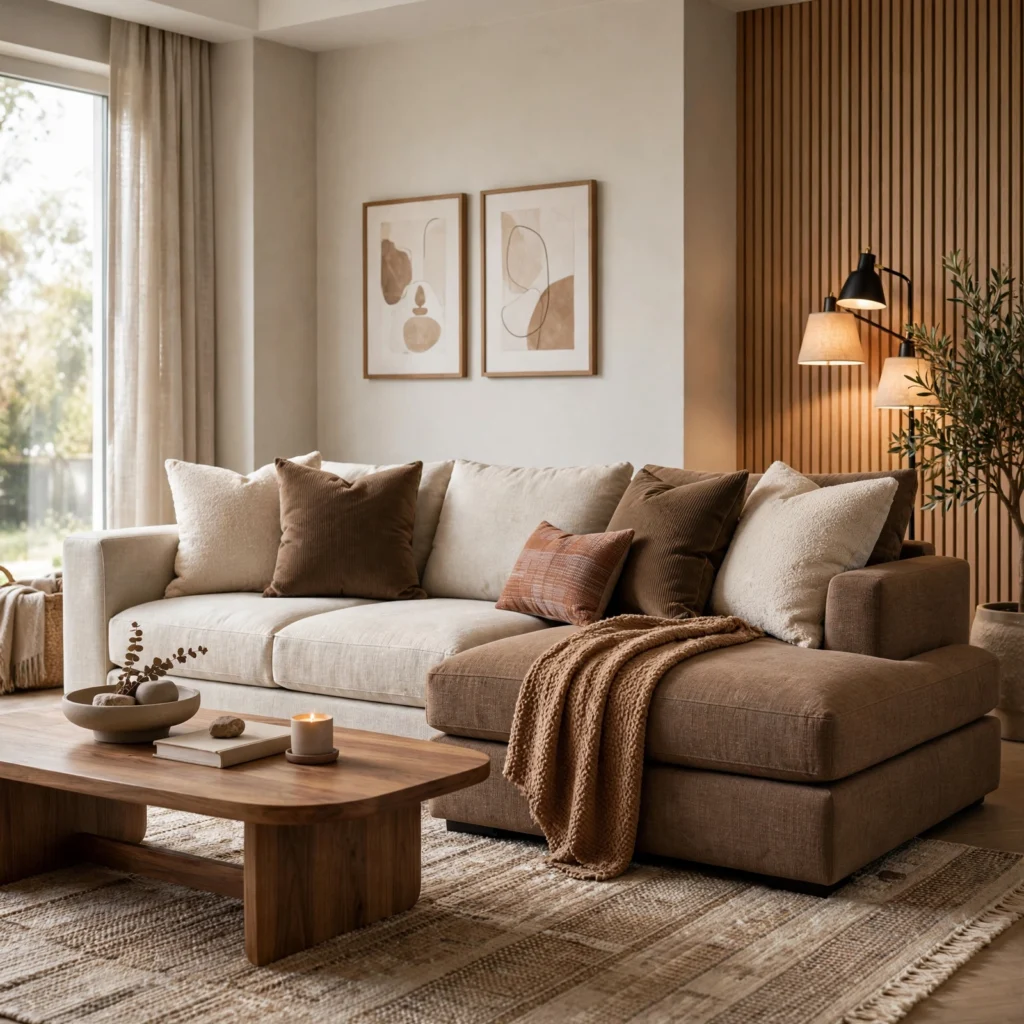
Two-toned sectionals pair a contrasting fabric or material on the chaise, cushions, or base versus the main frame, creating built-in visual interest without needing extra throw pillows or accessories to break up a large expanse of fabric. A common approach uses a leather base with fabric cushions, or a neutral frame with a bold chaise section, letting the couch itself do double duty as both seating and a design statement. This works especially well on large sectionals where a single uninterrupted color can otherwise read as heavy.
13. Mid-Century Tuxedo Sofa
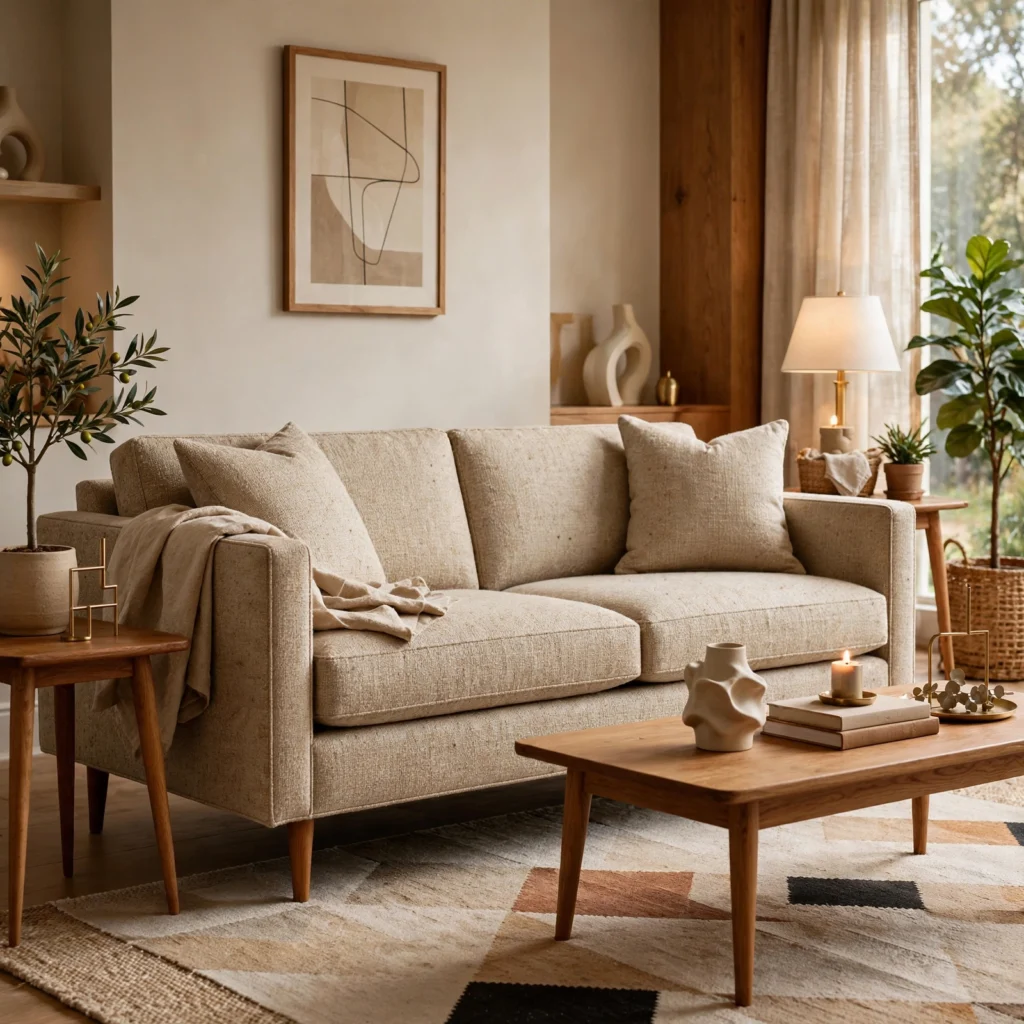
Tuxedo sofas have arms and a back of equal height, forming a clean rectangular silhouette without the curves or rolls of more traditional designs, a shape strongly associated with mid-century and contemporary interiors alike. Tapered wood legs are almost always paired with this style, reinforcing the geometric, low-to-the-ground look that mid-century furniture is known for. The flat arm surface also doubles conveniently as a spot to set a drink or a book.
14. Chaise-End Sectional
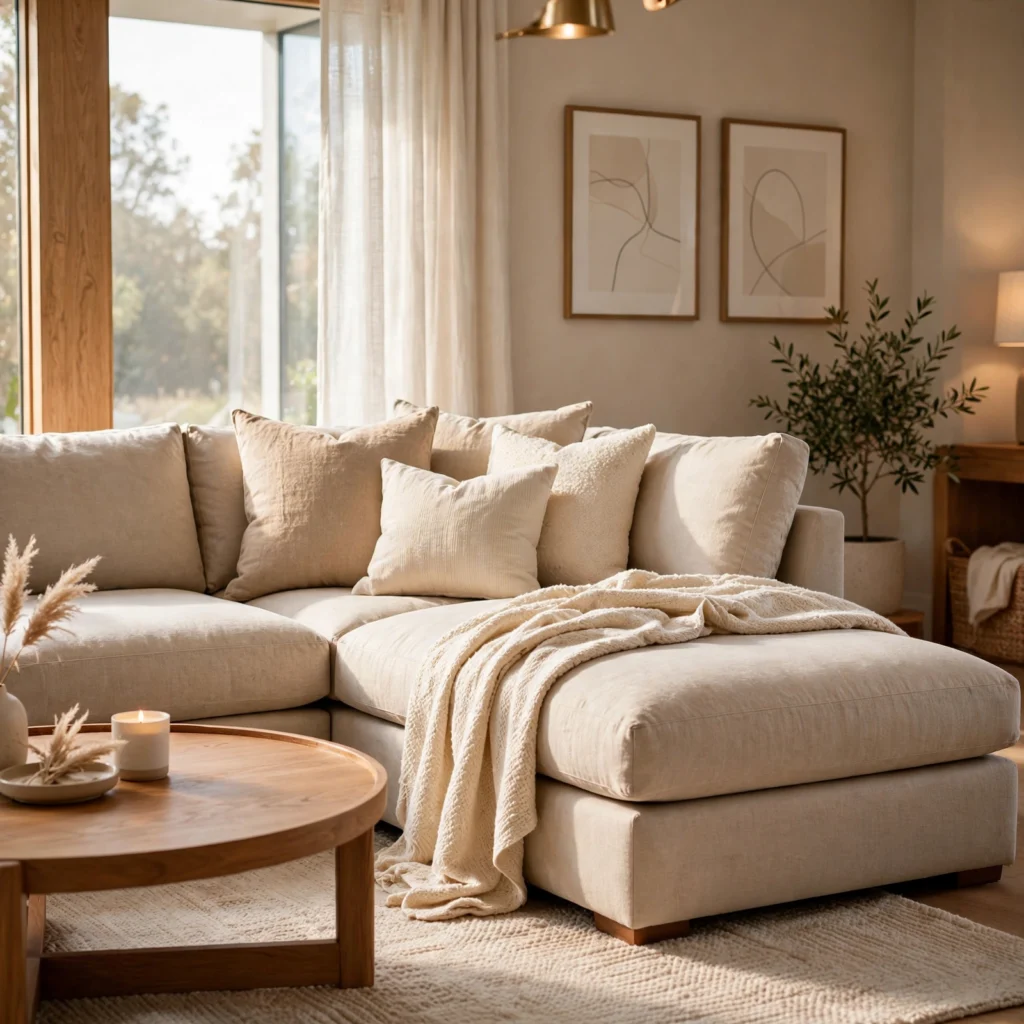
Chaise-end sectionals extend one end of the couch into a longer, armless section for stretching out fully, without committing to a full L-shaped or U-shaped modular system. This configuration works particularly well against a wall with a window at one end, letting the chaise section serve as a daytime lounging spot with natural light. Reversible chaise options, where the long end can be swapped to either side, add flexibility for rooms where the layout might change later.
15. Boucle Swivel Chair Pairing
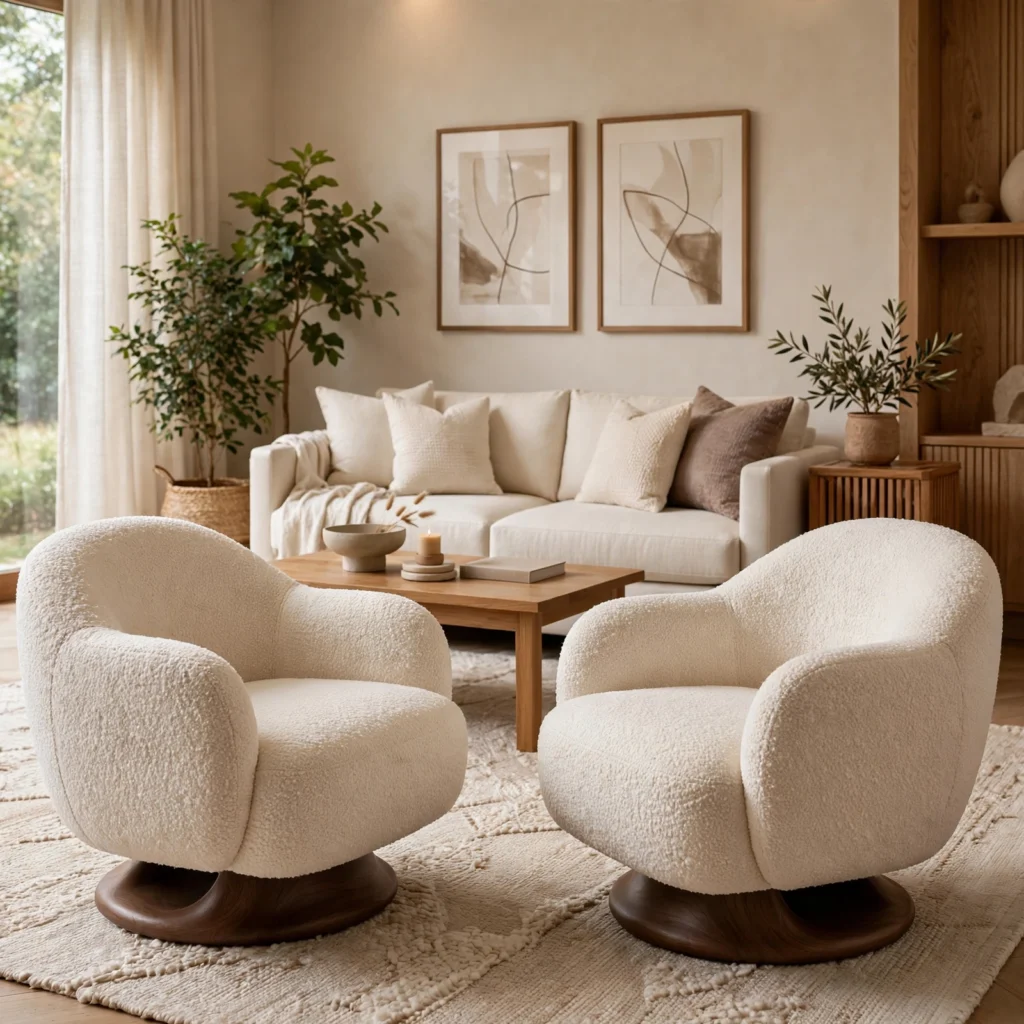
Rather than a single large couch, this approach pairs a smaller loveseat or two-seat sofa with a pair of swivel accent chairs in a complementary bouclé or textured fabric, creating a more conversational, flexible seating arrangement. Swivel bases let occupants turn toward the television, the fireplace, or each other without rearranging furniture, which suits living rooms used for both entertaining and everyday relaxing. This layout also tends to fit awkward or narrow rooms better than one long, fixed sectional.
16. High-Back Wingback Sofa
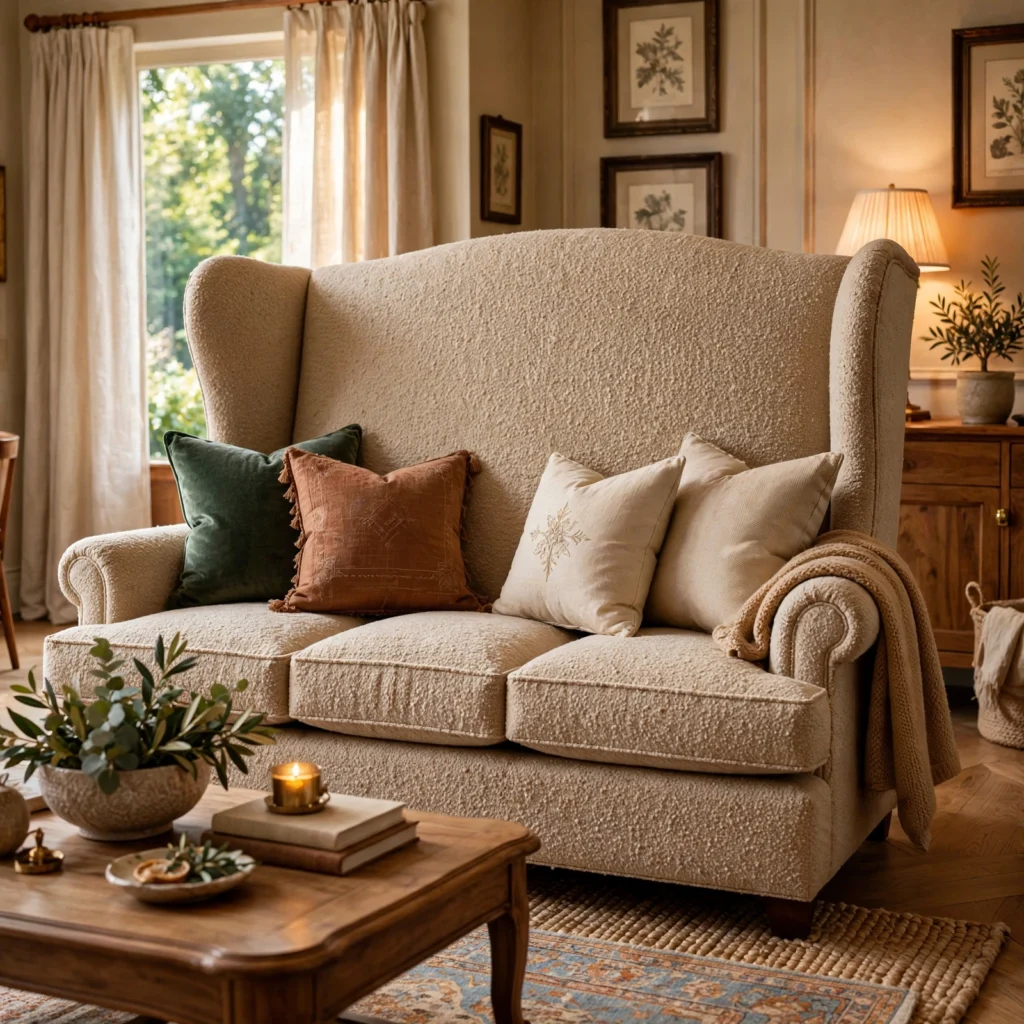
Wingback sofas extend the back cushion upward and outward into two protruding “wings” flanking the head area, a design historically meant to block drafts near fireplaces and now used primarily for its dramatic, tall silhouette. The added height makes these sofas a strong choice for rooms with high ceilings that need a piece of furniture substantial enough to balance the vertical space. Because of their formal associations, wingback sofas suit traditional and transitional living rooms more than casual or minimal ones.
17. Outdoor-Grade Indoor Sofa
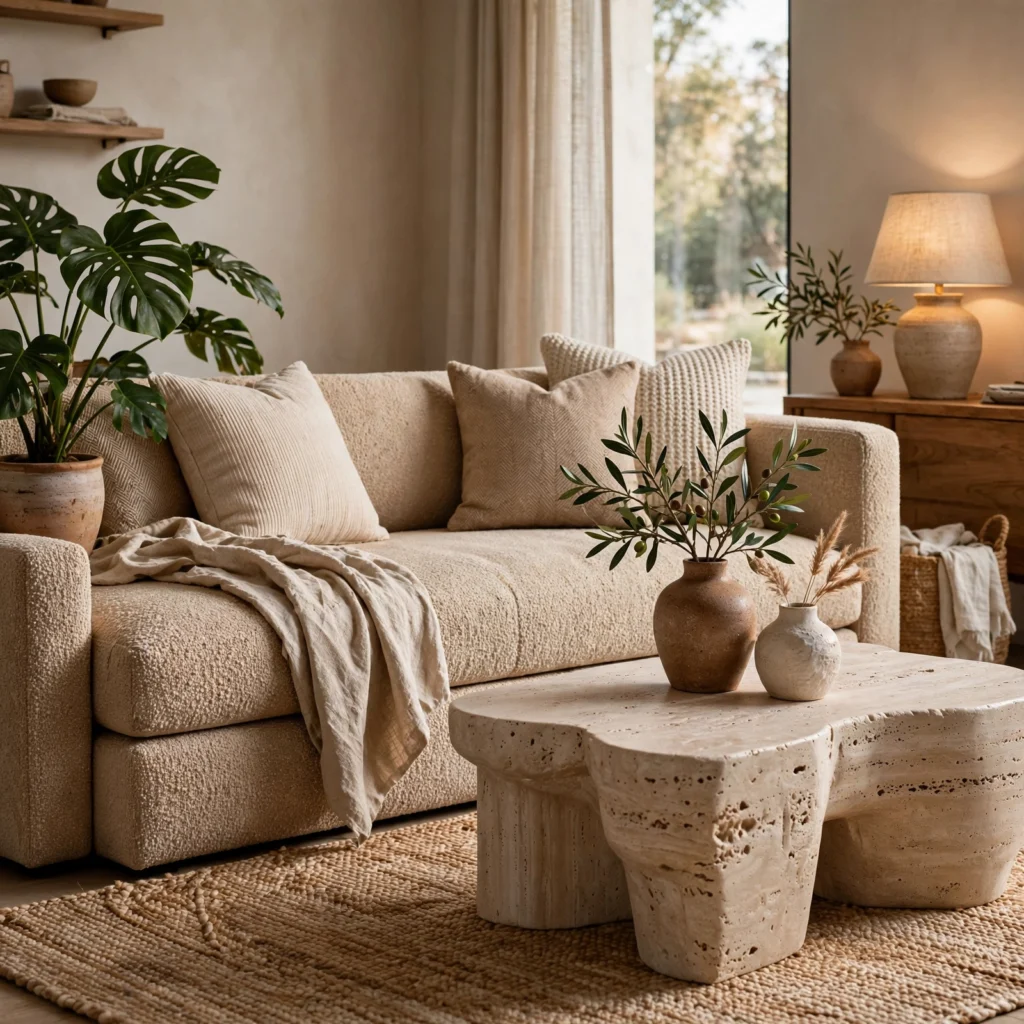
Performance fabrics originally developed for patio furniture, like solution-dyed acrylic and polyester blends, have moved indoors as couch upholstery for households prioritizing durability over plush texture. These fabrics resist fading, staining, and moisture significantly better than traditional cotton or linen blends, making them a practical choice for sunrooms, homes near the coast, or families with young kids and pets. The trade-off is a slightly firmer hand-feel compared to natural fiber upholstery, though newer weaves have narrowed that gap considerably.
Shop the Look
A few supporting pieces round out any of these couch styles. Pair a modular sectional with a low, oversized ottoman that can double as extra seating or a footrest between sections. A curved sofa looks strongest next to a round marble or travertine side table rather than a rectangular one. For velvet or bouclé pieces, add two or three contrasting linen throw pillows rather than matching the couch fabric exactly. A slipcovered linen sofa pairs well with a natural jute or wool rug underneath to keep the palette cohesive, and a brass or blackened-steel floor lamp works as a finishing accent behind track arm or tuxedo-style sofas.
Common Mistake to Avoid
The most common mistake is choosing a couch based on the showroom floor rather than the actual room it will occupy, which often results in a piece that’s too large, too formal, or too low-contrast for the space. A deep sectional that looks proportional in a spacious showroom can overwhelm a smaller living room and block natural walking paths. Always measure doorways, hallways, and the intended room before ordering, and consider taping out the couch’s footprint on the floor to confirm the scale works before committing.
FAQs
What is the most popular couch style for small living rooms in 2026?
Apartment-sized sofas and modular sectionals with detachable pieces are currently the most popular choices for small living rooms, since both allow full seating without overwhelming a tight floor plan. Apartment sofas keep the footprint narrow while maintaining seat depth, and modular pieces can be reconfigured into a smaller shape as needed. Low-profile designs with slim arms and legs also help, since they reduce visual bulk even when the actual dimensions aren’t dramatically smaller than a standard couch.
How do I know what size couch will fit my living room?
Measure the length of the wall you intend to place the couch against and leave at least three feet of clearance for walking paths on the remaining sides. As a general guideline, a couch should take up no more than two-thirds of the wall length it sits against to avoid crowding the room. Taping the couch’s exact footprint onto the floor with painter’s tape before ordering is one of the most reliable ways to confirm the scale works in person.
Is a sectional or a standard sofa better for an open-concept living room?
Sectionals generally work better in open-concept spaces because they can help define the living area without needing walls, using the couch’s shape to separate seating from dining or kitchen zones. A standard sofa paired with additional armchairs can achieve a similar effect but requires more individual pieces to fill the same visual space. The right choice ultimately depends on how much floor area needs to be defined and how many people the seating needs to accommodate regularly.
What fabric holds up best for couches with kids or pets?
Performance fabrics, including solution-dyed acrylics and tightly woven synthetic blends originally designed for outdoor furniture, tend to hold up best against spills, scratches, and general wear from kids and pets. Leather is also a durable option since it wipes clean easily, though it can show claw marks more readily than woven fabric. Bouclé and looped textures are best avoided in heavy pet households, since claws can snag the fabric loops over time.
Should couches living room pieces match other furniture in the room exactly?
No, matching every piece of furniture to the couch exactly tends to make a room feel flat and overly coordinated rather than intentional. A better approach pairs the couch with furniture in complementary tones and materials, such as a leather couch with wood-framed accent chairs, rather than an identical fabric or finish throughout. Repeating one or two colors from the couch elsewhere in the room, through pillows or a rug, ties the space together without requiring an exact match.
Conclusion
Whether you’re drawn to a sculptural curved sofa or a practical modular sectional, the right couches living room choice comes down to matching scale, fabric, and configuration to how the room actually gets used day to day. Save this roundup to Pinterest for reference while you shop, and check out our related post on arranging furniture in open-concept living spaces for layout tips that pair well with any of these styles.
Author Expertise Note
This guide was put together by a writer who has spent years reviewing furniture lines and walking showroom floors to compare fabric durability and frame construction firsthand.