18 Scandinavian Living Room Ideas for a Calm, Bright, Cozy, and Beautifully Minimal Space
Few interior styles have stayed as consistently popular as the Scandinavian living room, prized for its ability to make even a small, dim space feel open and calm. This guide walks through eighteen specific, actionable ideas covering flooring, furniture, lighting, and decor, each explained in enough detail to apply directly to your own space. Whether you’re starting from a blank rental or reworking an existing room, these ideas are built around the same principles Nordic designers have relied on for decades: light, function, and natural material honesty.
Trend & Background
Scandinavian design emerged from Denmark, Sweden, Norway, and Finland in the early-to-mid twentieth century, shaped in part by long, dark winters that pushed designers toward maximizing natural light and warmth indoors. The style gained global traction through furniture brands and minimalist home tours that popularized its clean lines and pale palettes. It remains relevant today because it solves a practical, widespread problem: making compact modern apartments and open-plan homes feel airy rather than cramped, without relying on expensive materials or constant redecorating to stay current.
Key Takeaways
- A Scandinavian living room relies on light woods, white walls, and a restrained neutral palette to maximize brightness and calm.
- Texture wool, sheepskin, linen, rattan replaces pattern and color as the main source of visual interest.
- Functional, low-profile furniture with visible legs keeps small and large rooms alike feeling open rather than crowded.
- Natural materials and simple, unfussy lighting are prioritized over ornate or heavily upholstered pieces.
1. Light Oak Flooring
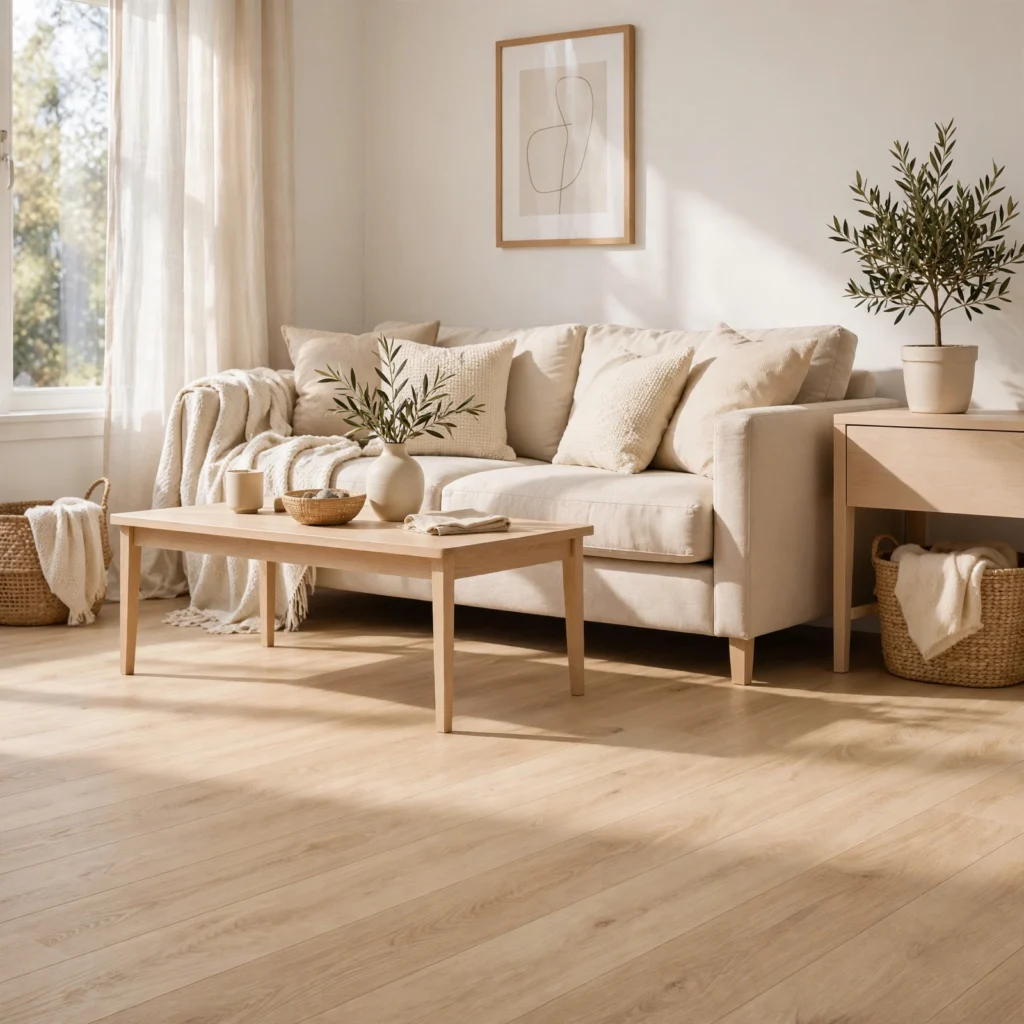
Pale, wide-plank oak flooring is one of the defining features of a Scandinavian living room, reflecting available light far better than dark walnut or espresso-stained wood. Choose a matte or low-sheen finish rather than high-gloss, which can feel more formal than the relaxed, natural look this style calls for. If replacing flooring isn’t realistic, a light oak-toned area rug or floor-effect vinyl can approximate the same effect. The goal is a floor that recedes visually, letting furniture and texture carry the room instead of competing for attention.
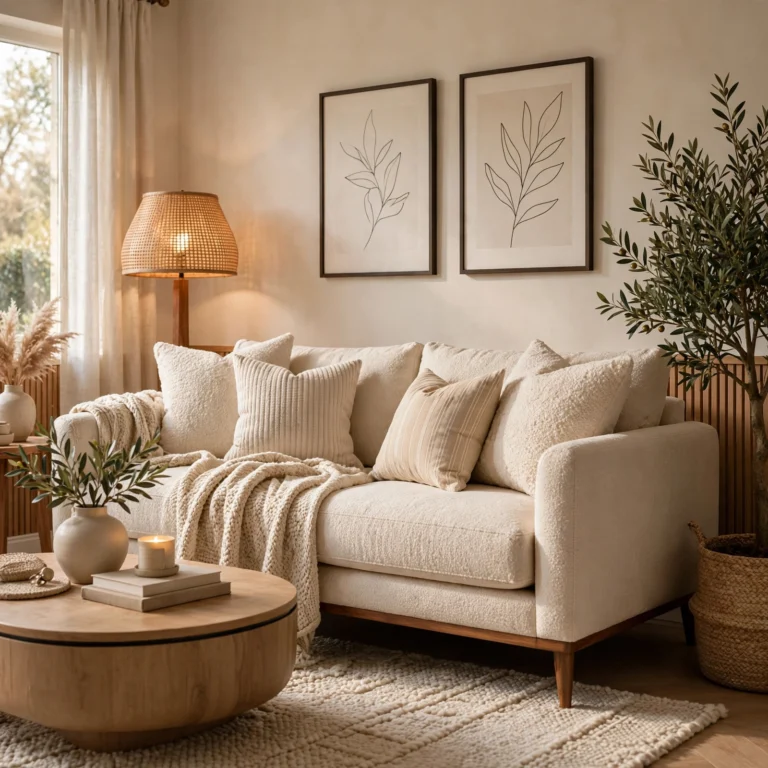
2. Neutral Wool Sofa
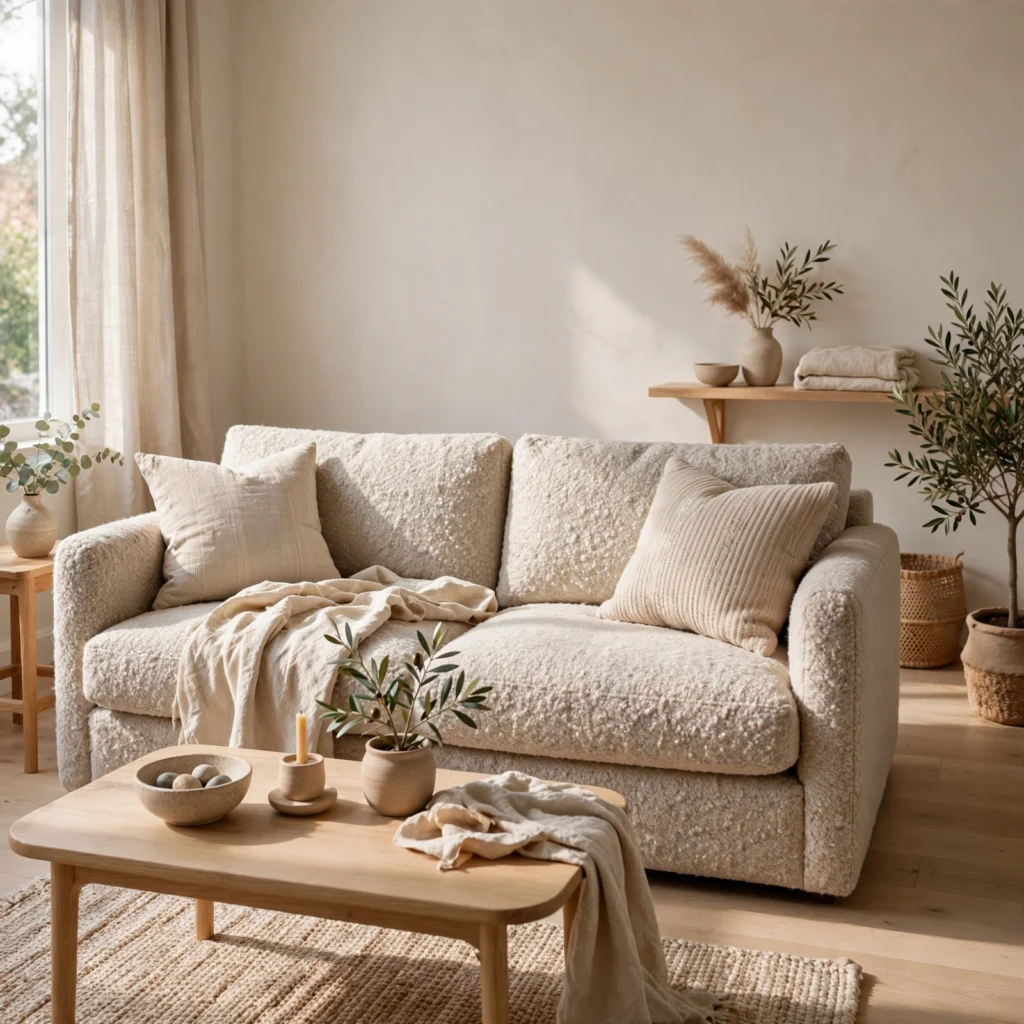
A sofa upholstered in undyed or lightly dyed wool, in shades of oatmeal, dove gray, or soft white, forms the anchor piece of the room. Wool holds its shape better than cotton or linen over time and adds subtle texture without introducing pattern. Look for a simple silhouette with exposed tapered wood legs, which keeps the piece feeling light rather than heavy or overstuffed. Avoid deep tufting or ornate trim; the emphasis in Scandinavian upholstery is always on clean proportions over decorative detail.
3. Pendant Globe Lighting
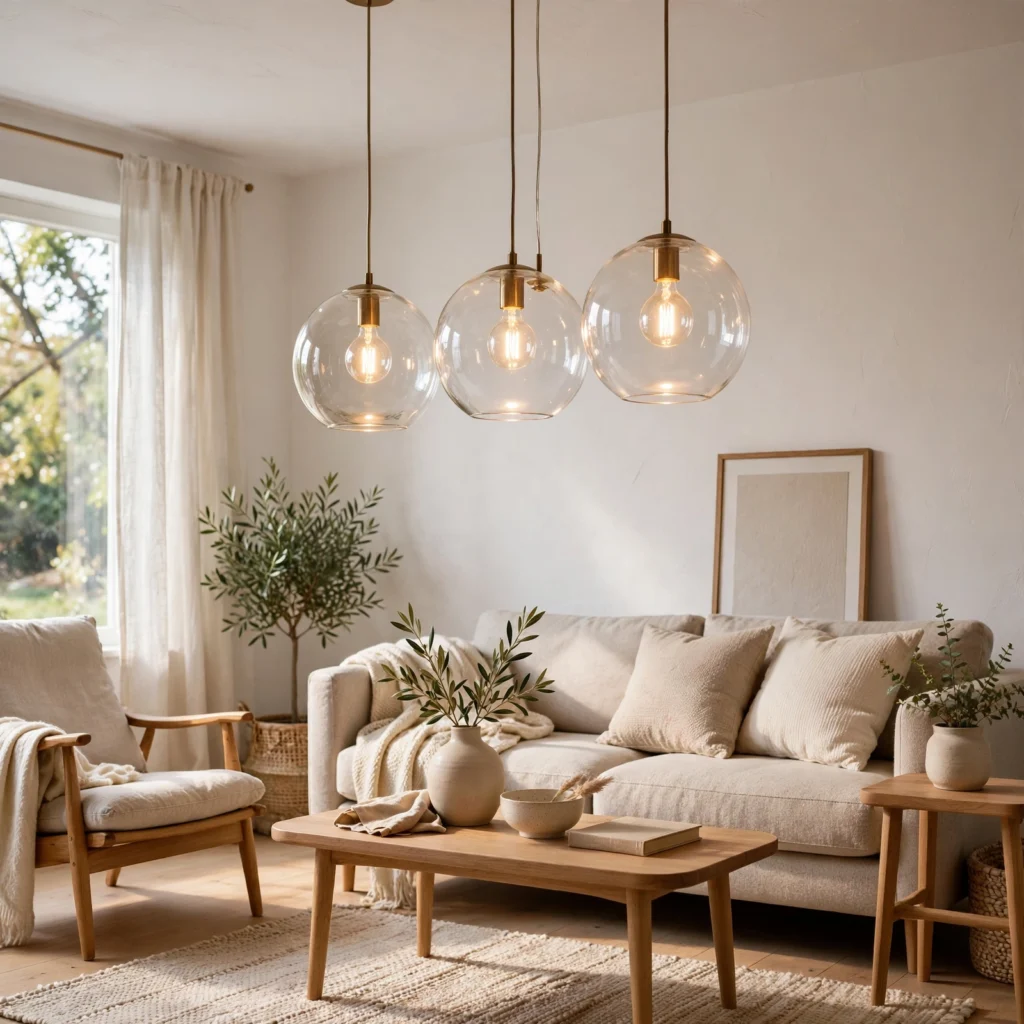
A single pendant light with a simple glass, paper, or matte metal globe shade delivers soft, diffused light that suits the Scandinavian preference for gentle, layered illumination over harsh overhead lighting. Hang it low over a seating area or reading corner rather than centered high on the ceiling, which creates a more intimate pool of light. Brands known for mid-century Nordic lighting design are a reliable source, though simpler paper lantern-style pendants achieve a similar mood at a much lower price point.
To see more living room furniture
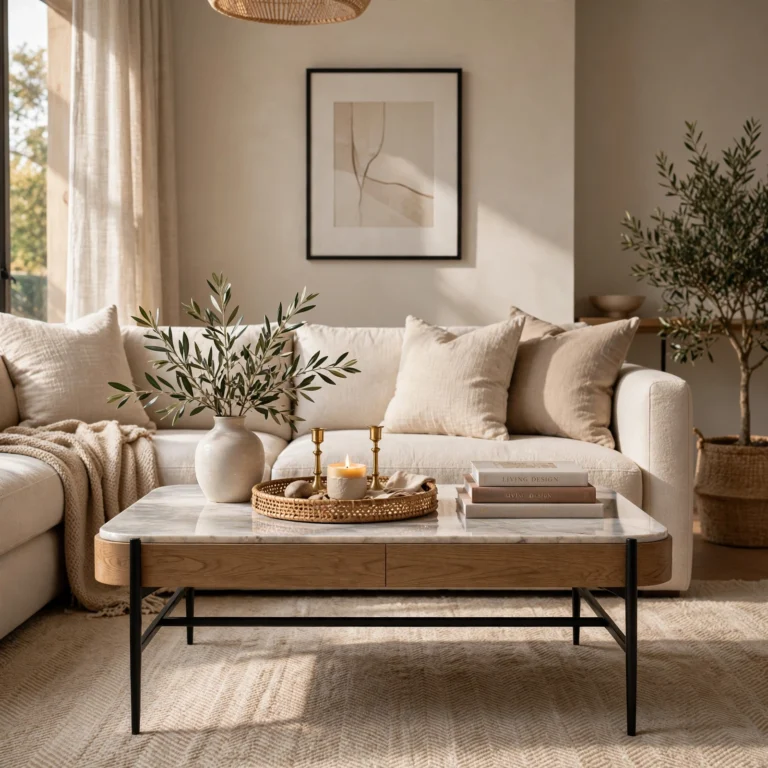
4. White Painted Walls
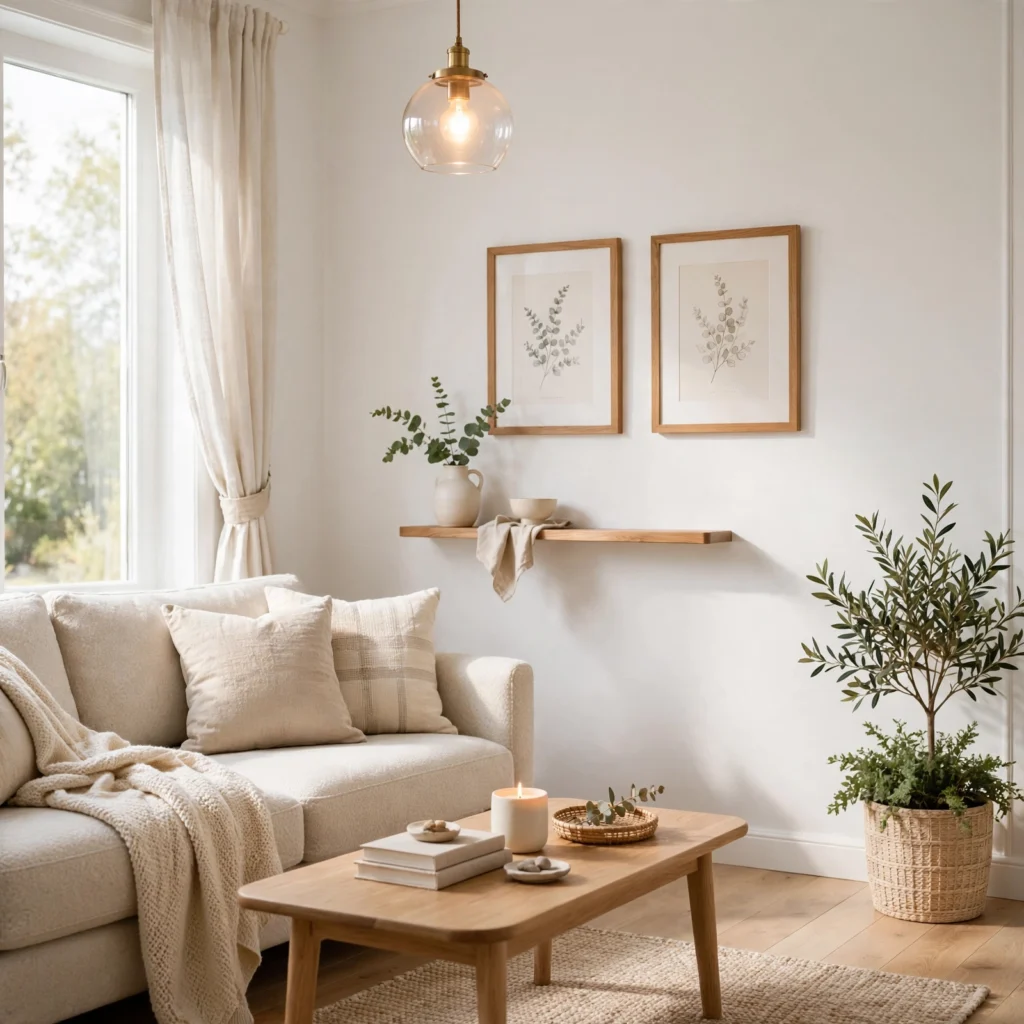
Walls in a warm off-white or soft white keep the room bright through all seasons, which matters most in climates with limited natural daylight. Avoid stark, cool-toned whites, which can feel clinical; a warmer white with slight cream or gray undertones reads as softer and more livable. This blank backdrop also makes it easy to rotate artwork, textiles, and seasonal decor without repainting, since the walls are designed to support the room’s texture and furniture rather than serve as a focal point themselves.
5. Sheepskin Throw
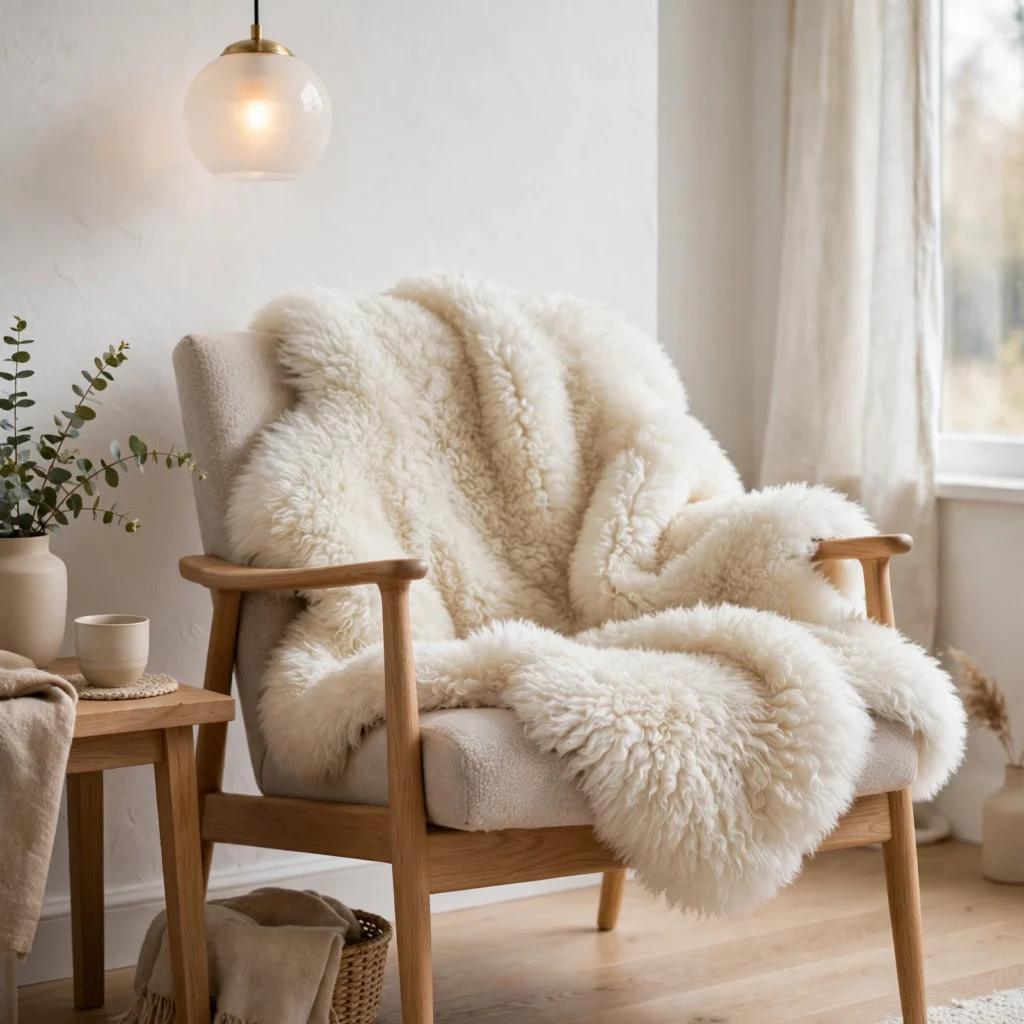
Draped over an accent chair, sofa arm, or laid flat on the floor near a reading nook, a sheepskin throw adds tactile warmth that balances the room’s otherwise cool, pale palette. It’s one of the most recognizable Scandinavian textile choices, rooted in the practical need for warmth during harsh Nordic winters. Choose natural white, gray, or a soft caramel tone rather than a dyed or patterned version, and avoid using more than one or two in a single room so the effect stays intentional rather than excessive.
6. Minimalist Console Table
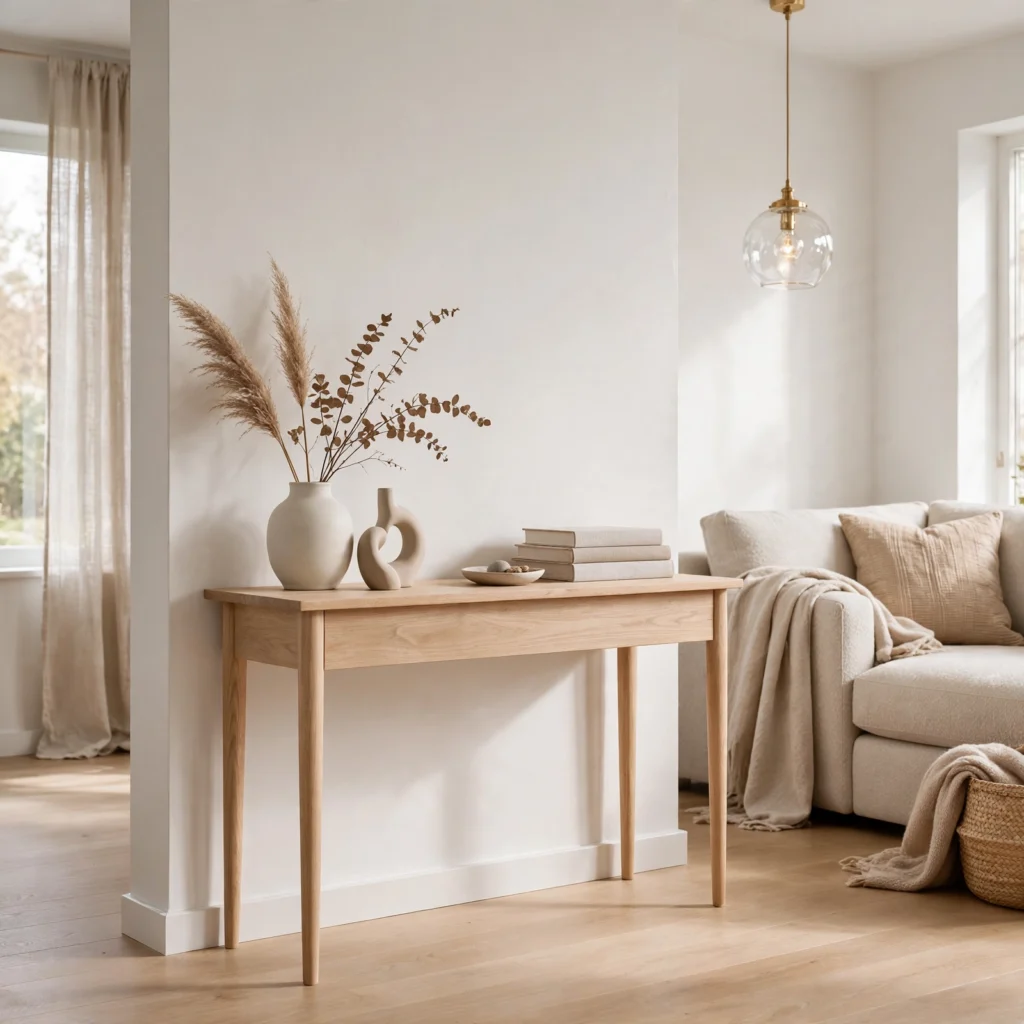
A narrow console table in light ash or birch, with simple straight or slightly tapered legs, works well behind a sofa or along an entry wall without visually crowding the room. Skip ornate hardware or carved detailing in favor of clean joinery and visible wood grain. Style it sparingly with a single ceramic vase, a small stack of books, and one piece of art leaned against the wall rather than hung, which is a common styling technique in Scandinavian interiors to keep surfaces feeling uncluttered.
7. Linen Curtains
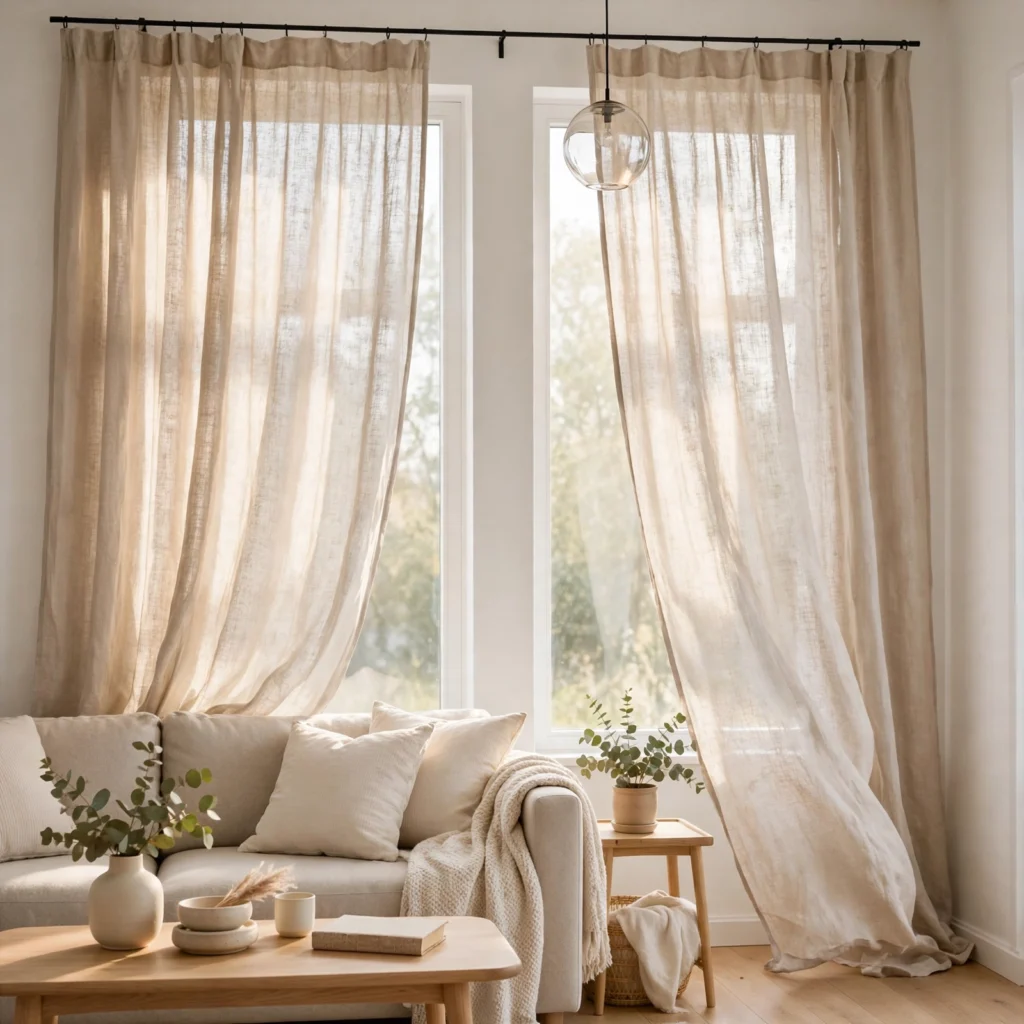
Lightweight linen curtains in white or natural undyed linen let daylight filter through softly rather than blocking it out entirely, which matters in a style built around maximizing available light. Hang them from ceiling height rather than just above the window frame to make ceilings feel taller and the room feel larger overall. Avoid heavy blackout drapes or busy patterned fabric; if you need more privacy or light control, a simple white roller shade underneath the linen panels solves the problem without disrupting the airy look.
8. Black Metal Floor Lamp
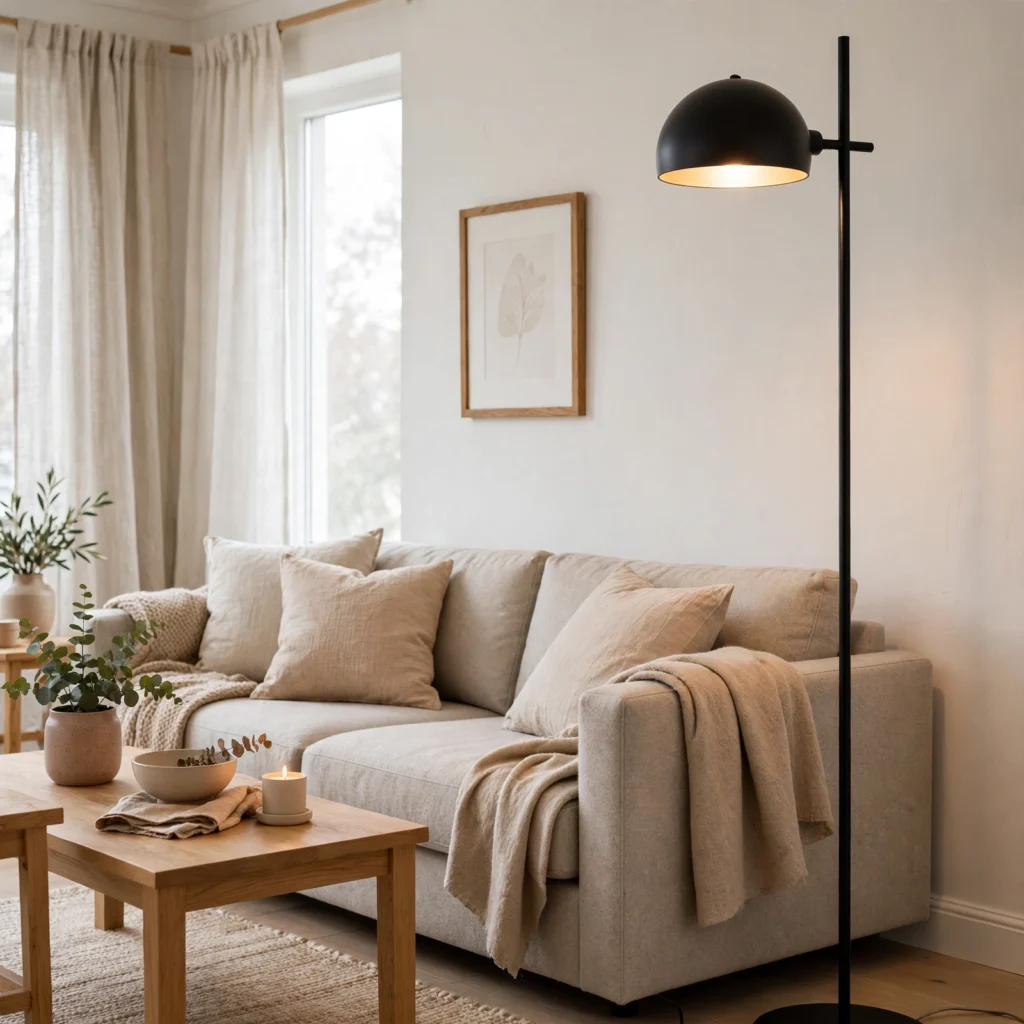
A single black metal floor lamp with a slim arched or straight silhouette introduces contrast against the room’s pale palette without overwhelming it. Position it beside an accent chair or in a reading corner where task lighting is genuinely useful, rather than purely decorative. The thin black lines of the frame echo the same restrained, linear quality found in Scandinavian furniture legs and window frames, tying the lighting choice back into the room’s overall material language.
9. Woven Wall Hanging
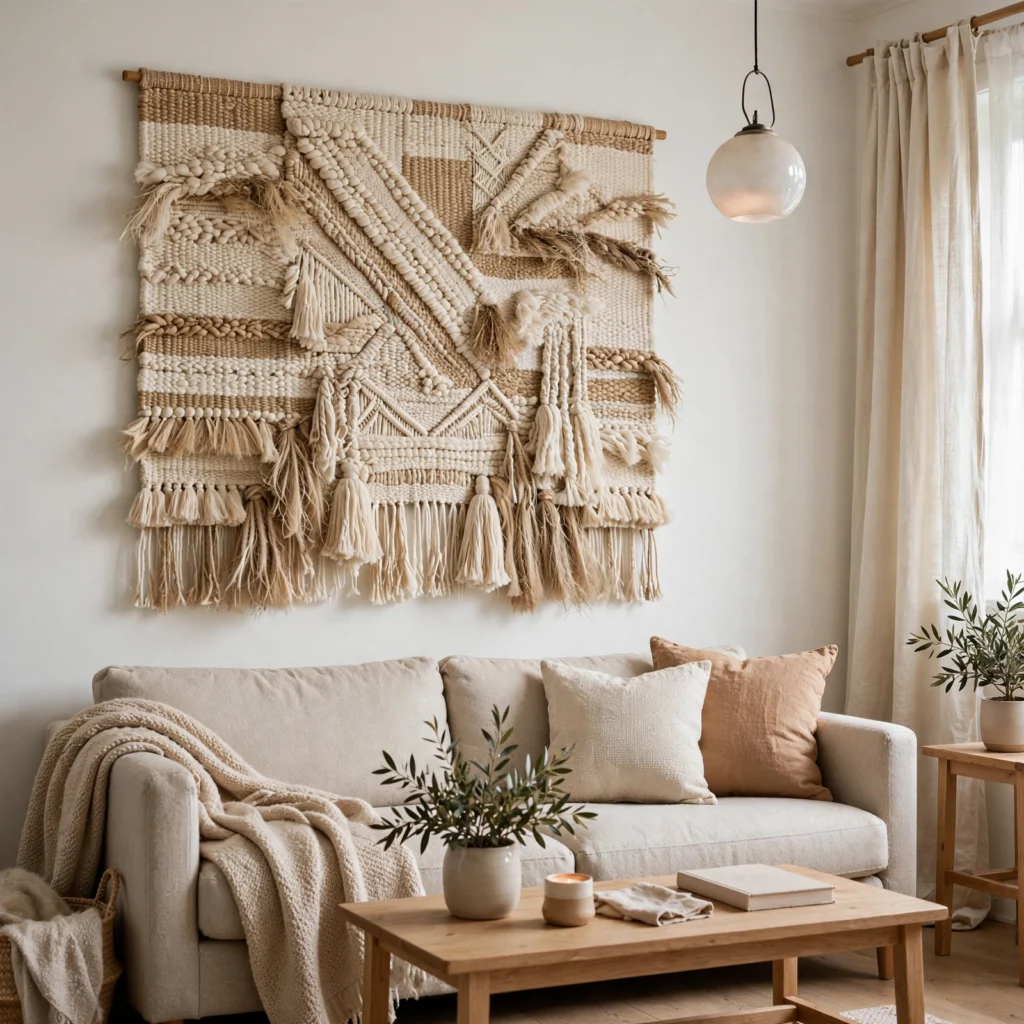
A handwoven wall hanging in undyed cotton or wool, featuring simple geometric patterns or fringe detailing, adds texture and a handmade quality to an otherwise smooth-surfaced room. Hang it above the sofa or in place of traditional framed art for a softer focal point. Because these pieces are typically neutral in color, they add visual interest without disrupting the room’s restrained palette, and their texture photographs and reads well against a plain white or pale gray wall.
10. Rattan Accent Chair
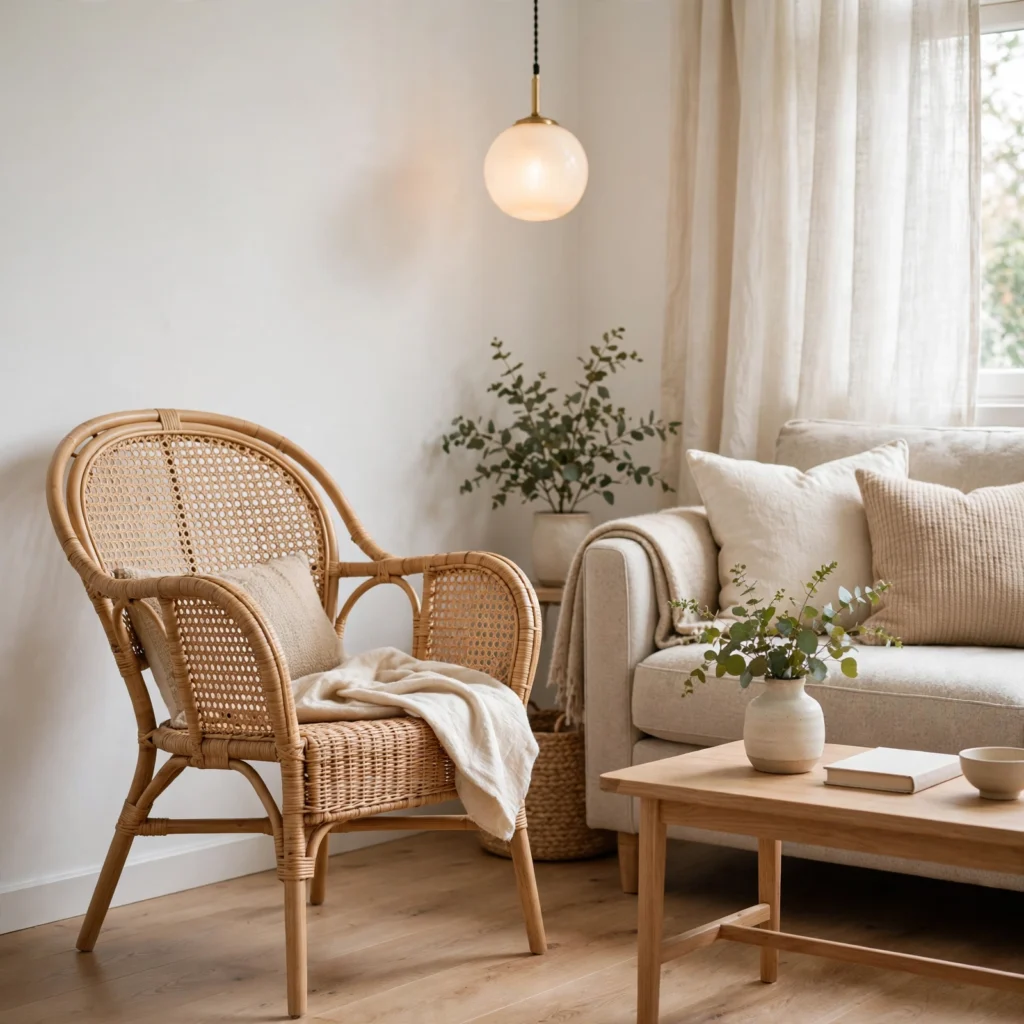
A rattan or cane-backed accent chair brings a warm, organic material into a room that might otherwise lean too cool or clinical with only wood and wool present. Pair it with a simple wool or linen seat cushion in a neutral tone, and position it near a window to take advantage of natural light on the woven texture. This piece works particularly well as a secondary seat that doesn’t require matching the main sofa, since mixing materials intentionally is a hallmark of the style.
11. Layered Area Rugs
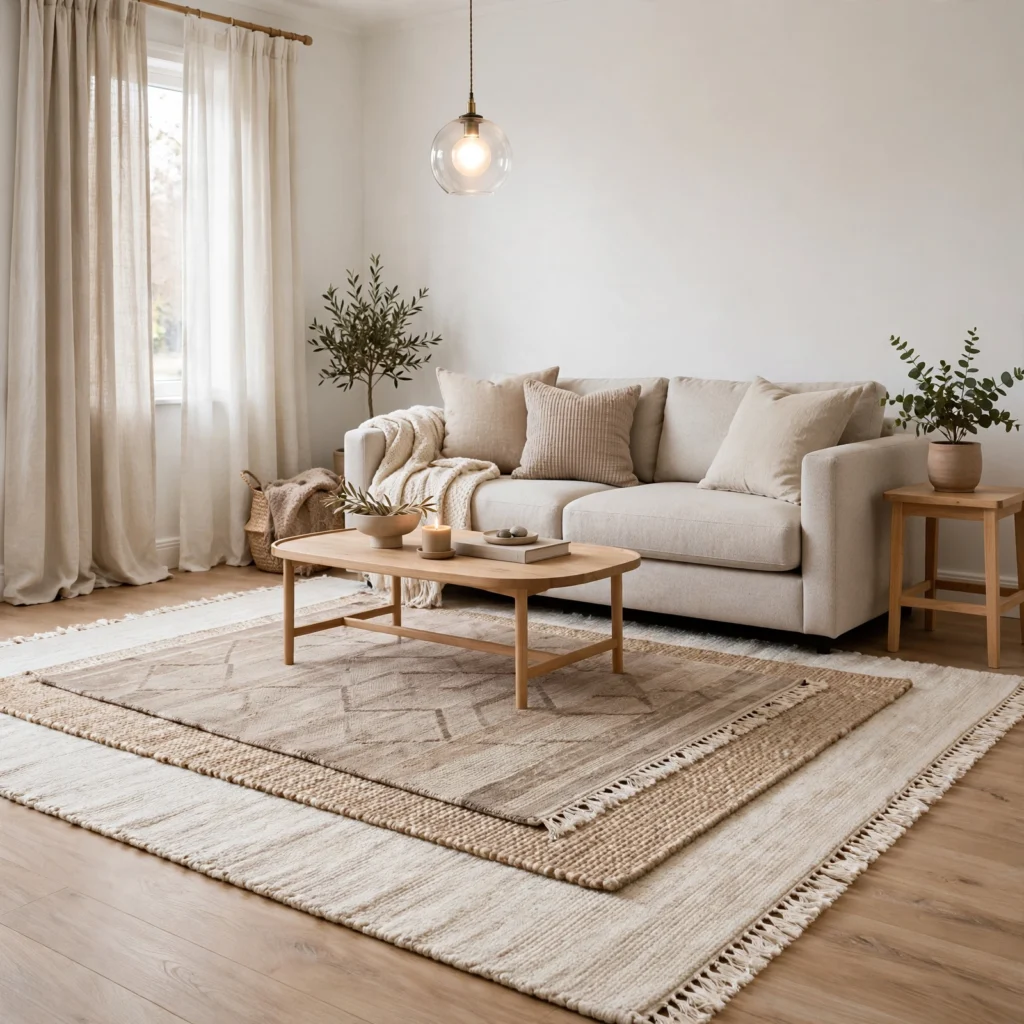
A large, low-pile wool or jute rug beneath the seating area, topped with a smaller flatweave rug in a subtle geometric pattern, adds depth without introducing bold color. Sizing correctly matters more here than almost anywhere else in the room, since an undersized rug is one of the fastest ways to make a Scandinavian living room feel unfinished or poorly planned.
| Room Size | Recommended Rug Size | Placement Rule |
| Small (10×10 ft) | 5×8 ft | Front legs of furniture on rug |
| Medium (12×15 ft) | 8×10 ft | All furniture legs on rug |
| Large (15×18 ft) | 9×12 ft | All furniture legs on rug |
| Open-concept | 10×14 ft or larger | Rug defines seating zone |
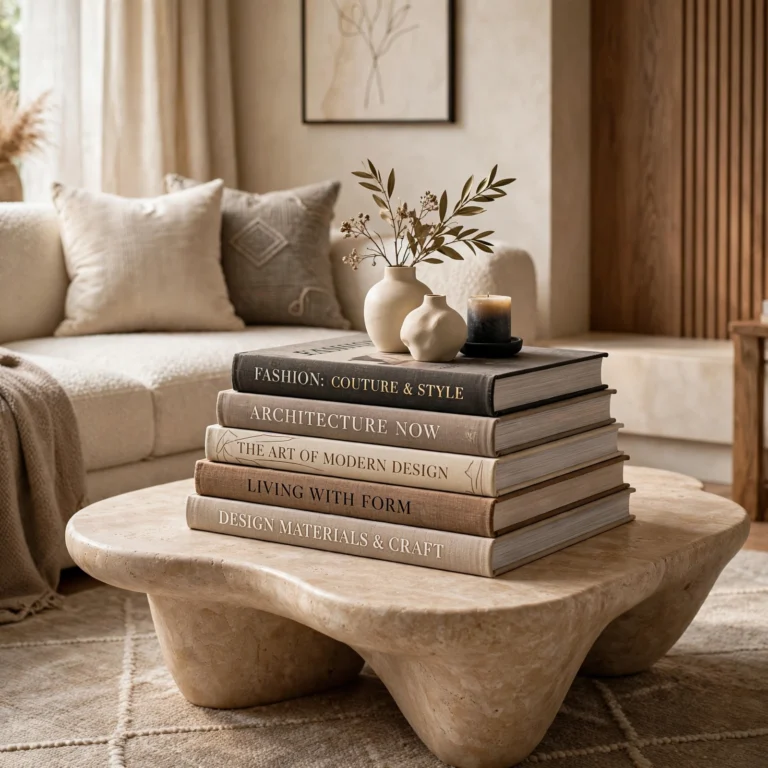
12. Ceramic Vase Collection
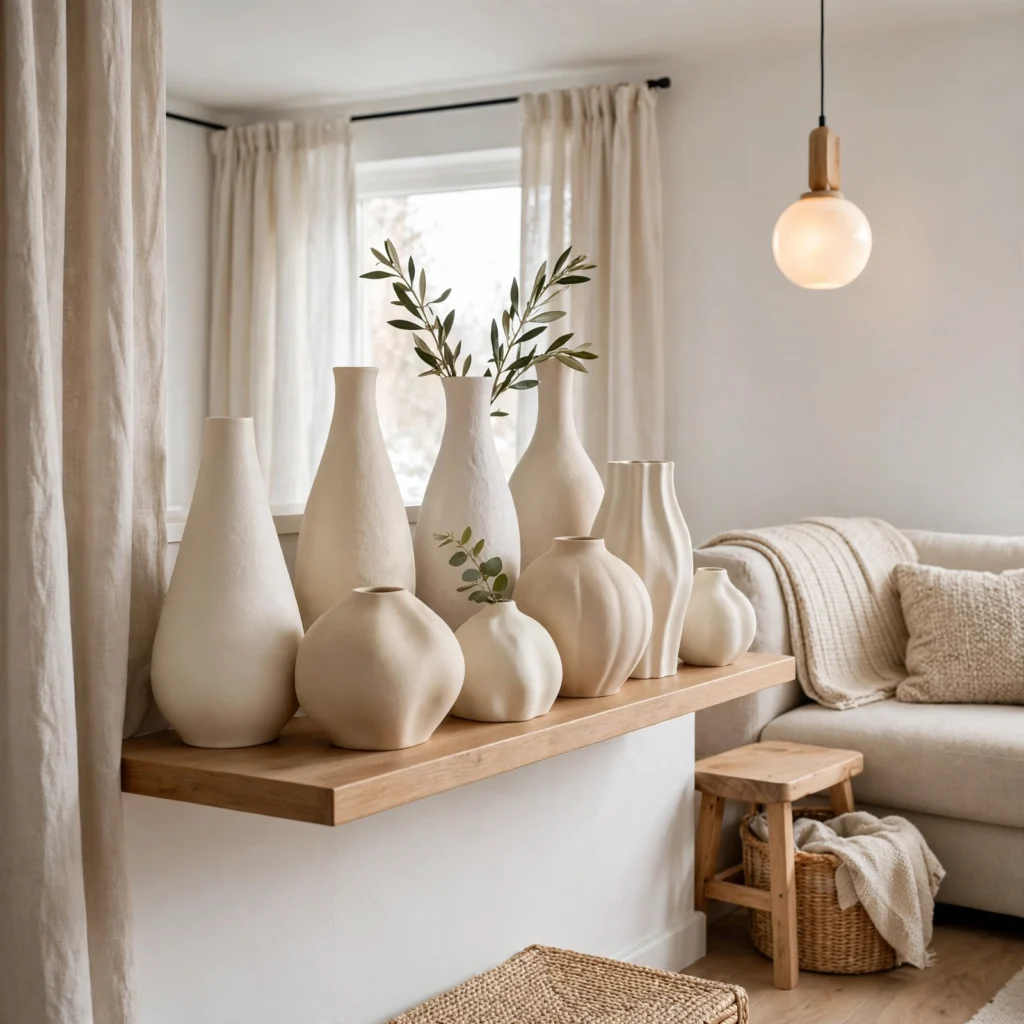
A small grouping of handmade or hand-thrown ceramic vases in varying heights and matte glazes, clustered on a console table or shelf, adds sculptural interest without relying on color or pattern. Stick to a tight palette of white, sand, and soft gray-green so the collection reads as curated rather than cluttered. Leave one or two vases empty and place a single stem or dried branch in another, since Scandinavian styling generally favors restraint over full, dense floral arrangements.
13. Built-In Wood Shelving
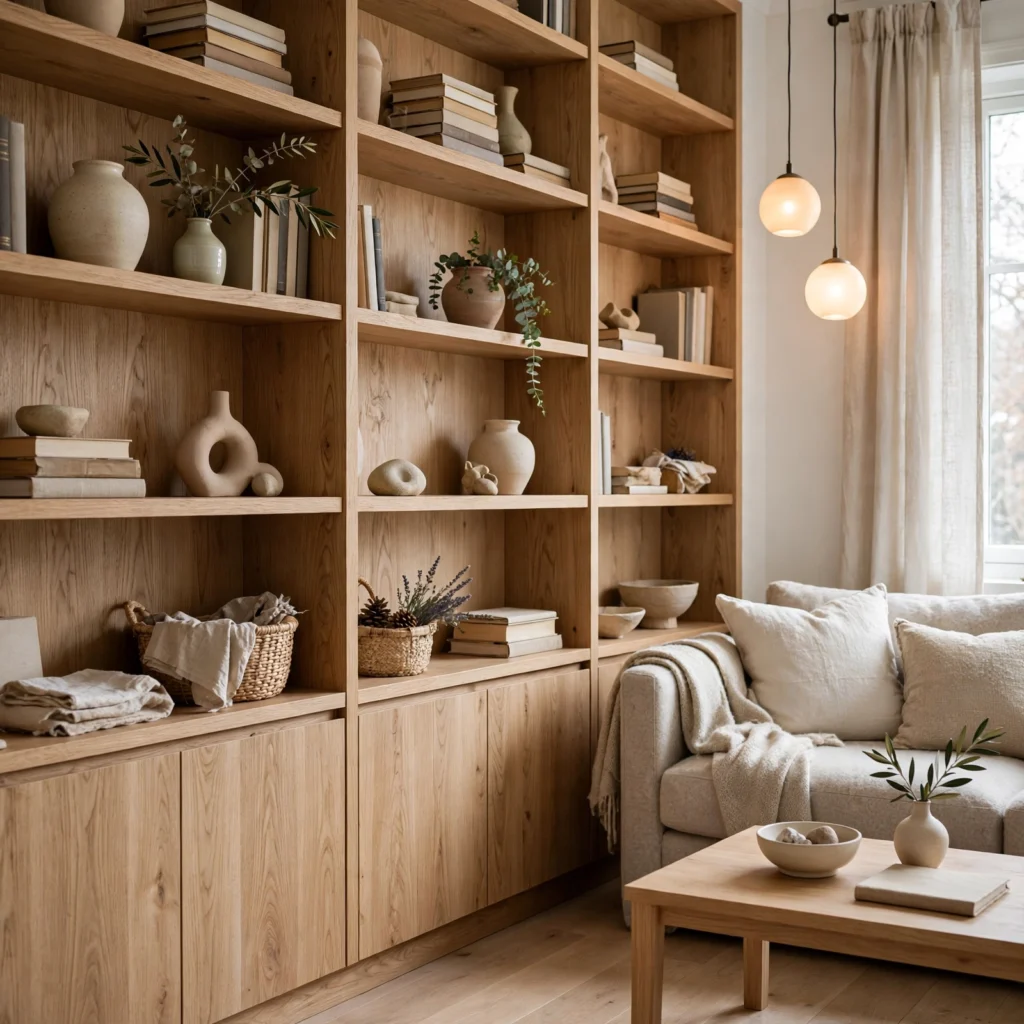
Simple, floor-to-ceiling shelving in light birch or ash plywood, built flush against a wall, provides storage and display space without the visual bulk of a freestanding bookcase. Keep the design boxy and unornamented, with thin shelf edges and minimal trim, and style it with a mix of books, ceramics, and negative space rather than filling every inch. This idea works especially well in smaller apartments where built-ins can replace several pieces of furniture at once, keeping the floor plan open.
14. Muted Blue Accent Pillows
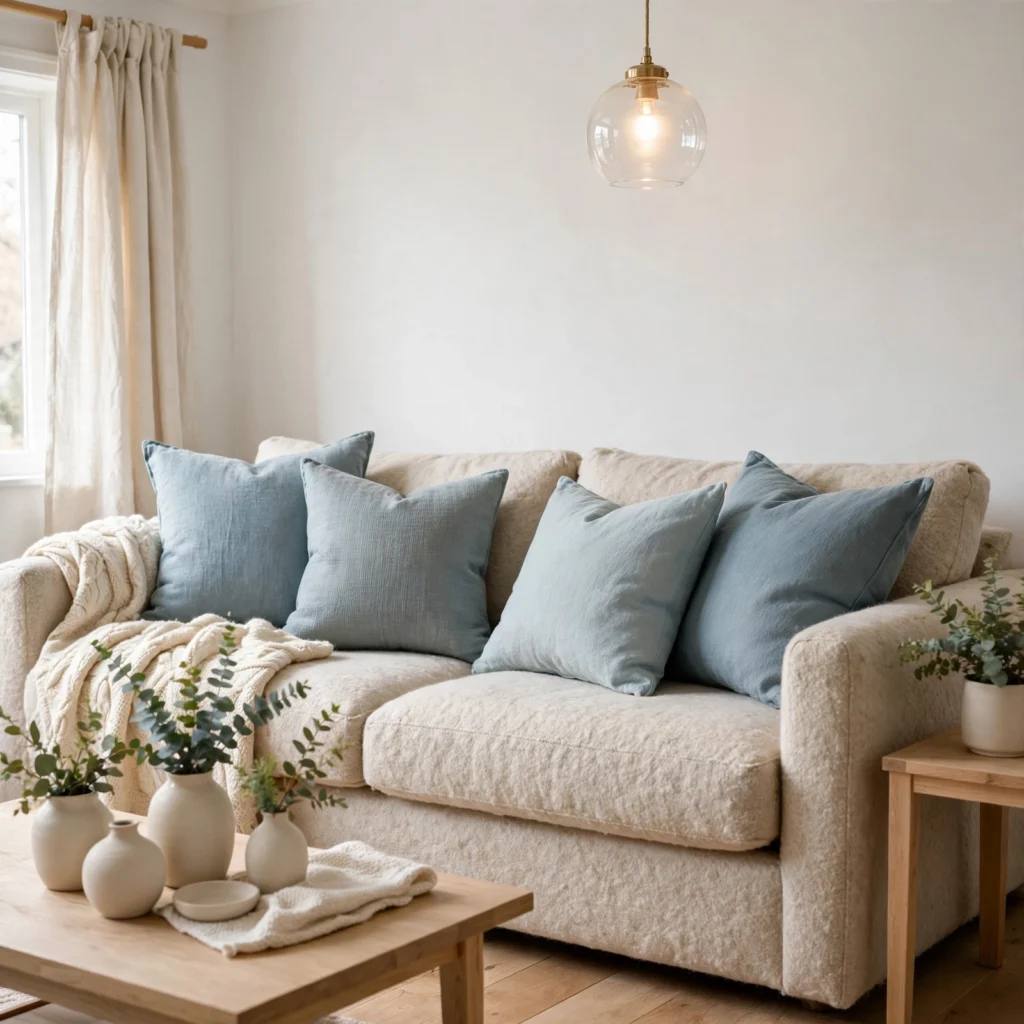
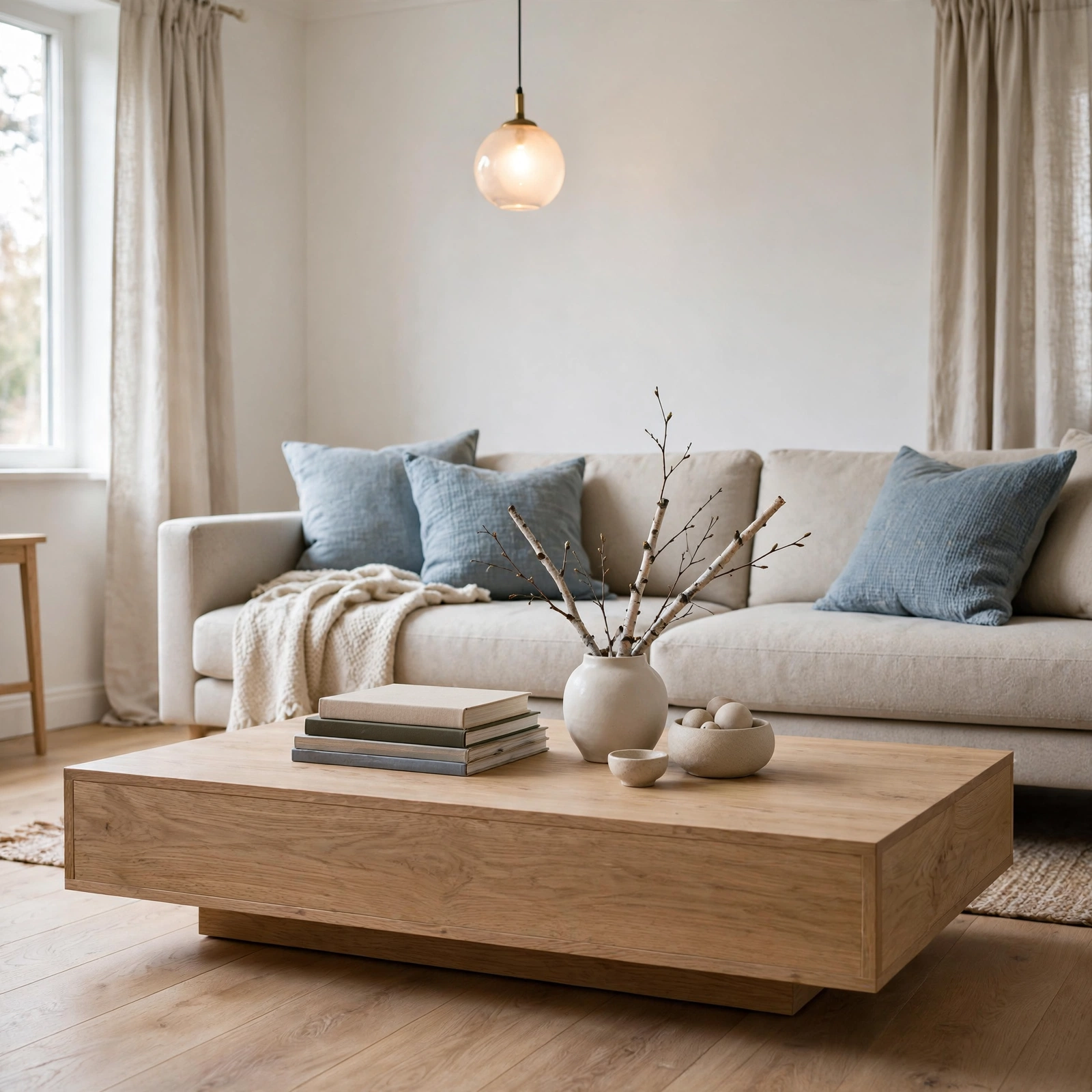
A pair of throw pillows in a soft, dusty blue closer to slate or fog than navy or royal blue introduces color without breaking from the room’s overall calm, desaturated palette. Pair the fabric in a linen or cotton-linen blend rather than velvet or silk, which would read as too formal. This is typically the only saturated color choice in an otherwise neutral room, and keeping it to one or two small accents prevents it from competing with the wood tones and white walls.
15. Birch Branch Decor
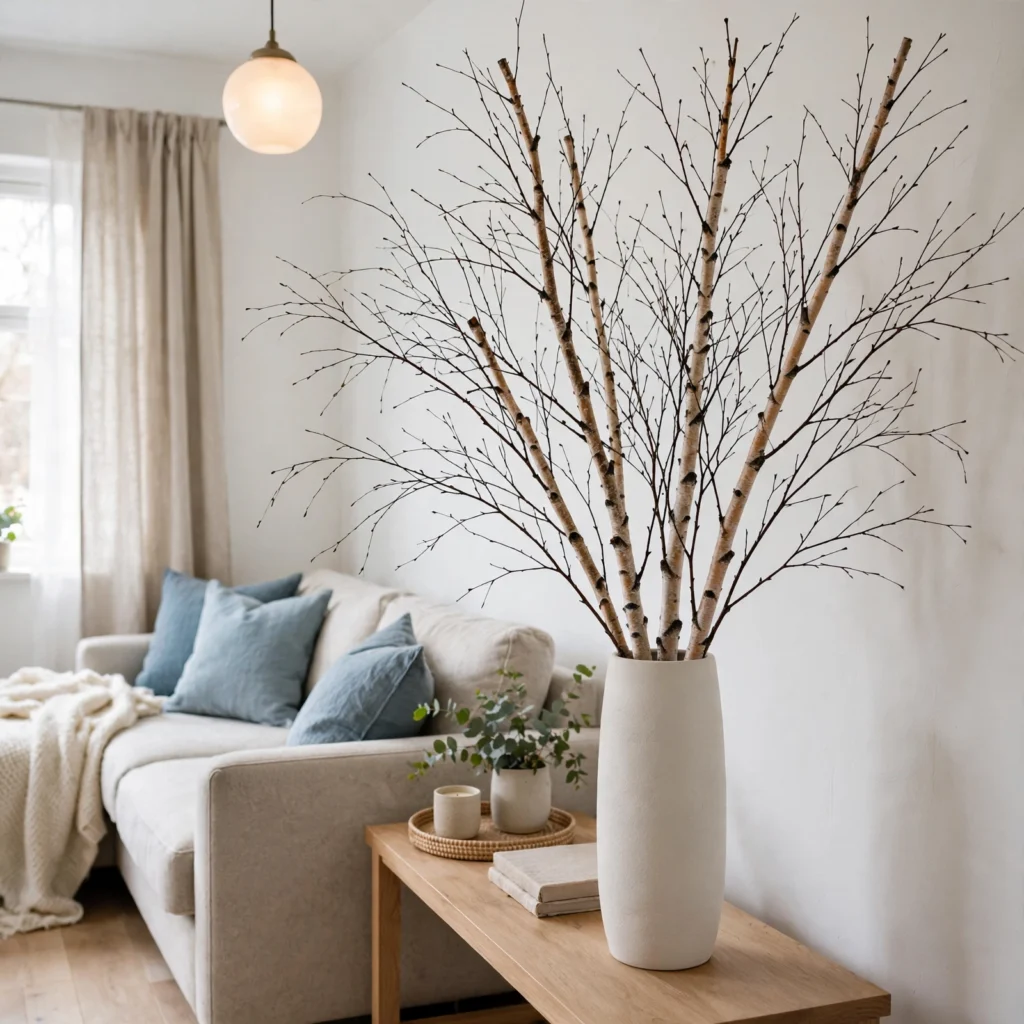
A tall vase filled with bare birch branches or dried pampas grass adds height and organic texture to a corner or beside the sofa, without the upkeep of fresh flowers. Birch branches specifically tie back to the light wood tones used elsewhere in the room, reinforcing the connection to Nordic forests that inspired the style originally. This is one of the lowest-cost ideas on this list and works well in both small apartments and larger open-concept living rooms alike.
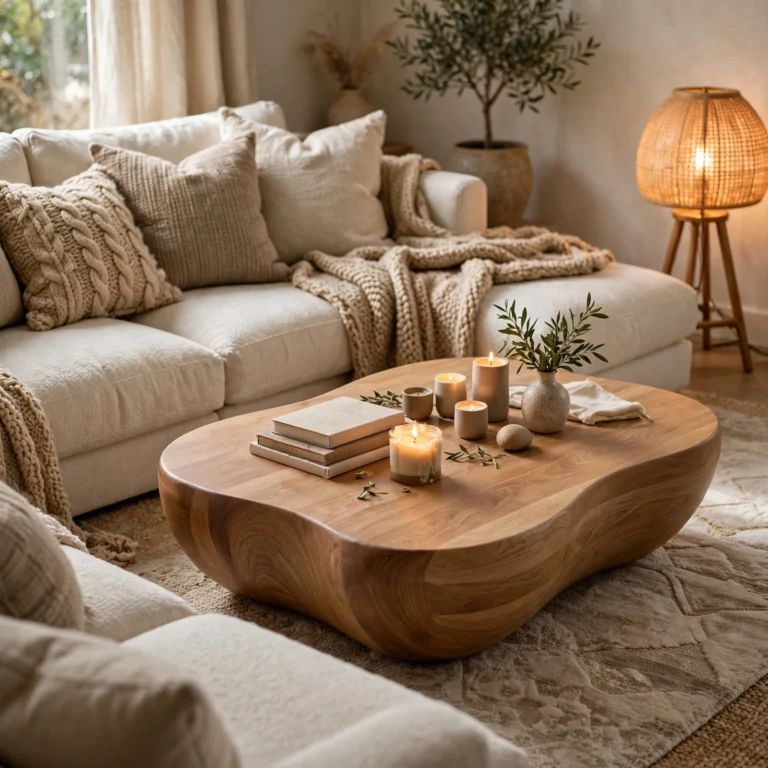
16. Low-Profile Coffee Table
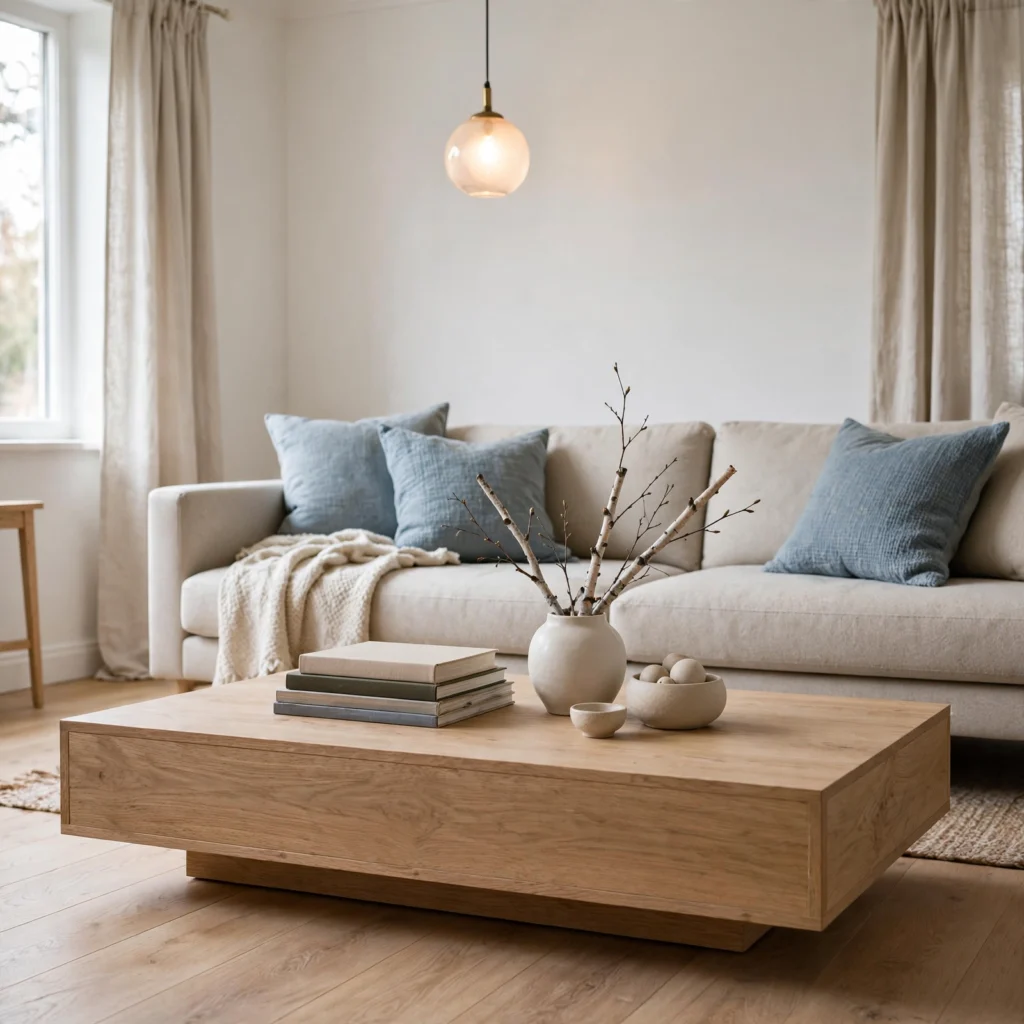
A coffee table with a low profile, thin legs, and either a round or softly rounded rectangular top keeps sightlines open across the room, which matters in smaller Scandinavian living rooms where visual weight needs to stay low. Light oak or ash with a matte oil finish is the most common material choice, though a table with a white lacquered top can work well in rooms that lean slightly more modern than rustic. Avoid heavy stone or dark wood tables, which read as more traditional or industrial.
17. Wood-Burning Stove
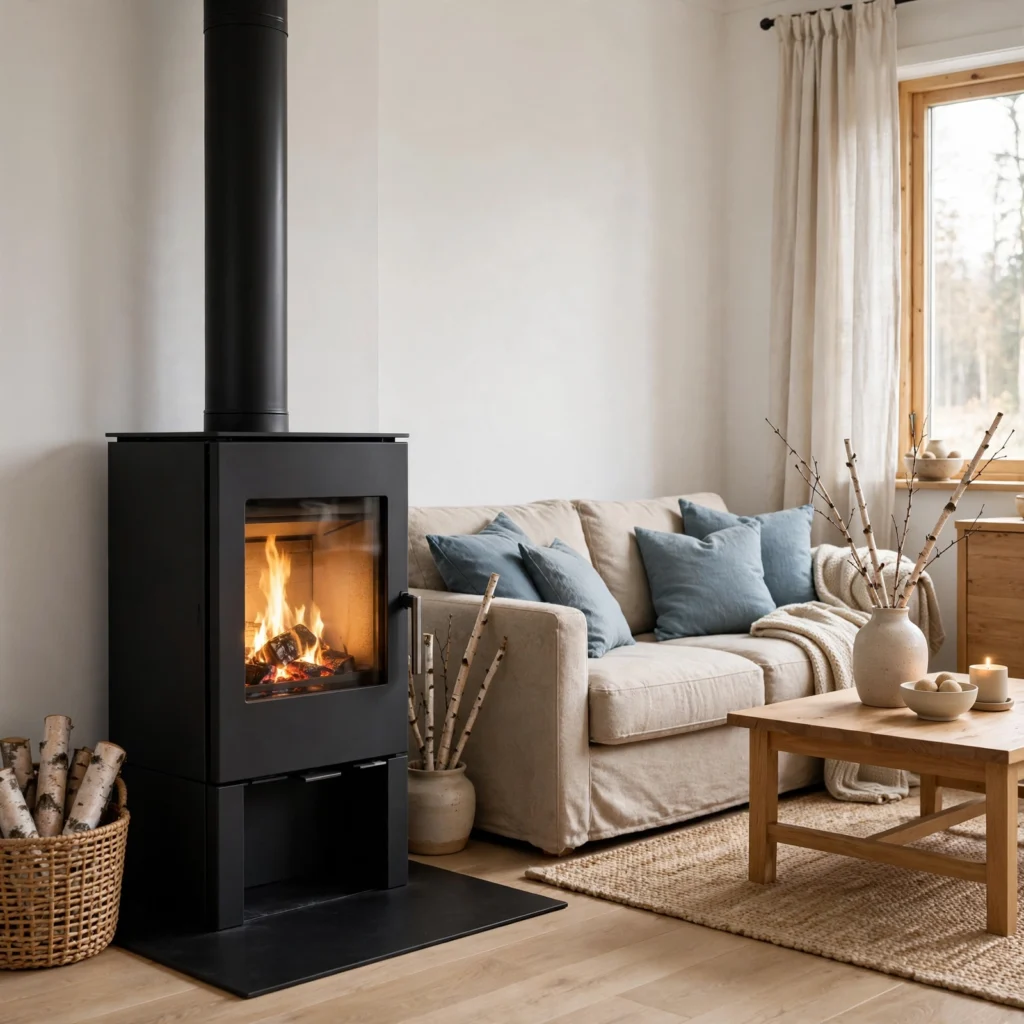
A compact, freestanding wood-burning or electric stove in matte black steel introduces both function and a strong focal point, echoing the traditional Nordic hearth. Even where a full fireplace isn’t feasible, a small electric stove with a realistic flame effect delivers a similar sense of warmth and gathering space. Position seating around it the way you would a fireplace, and pair it with a simple wood log holder nearby, which doubles as both storage and texture.
18. Gallery Wall Art
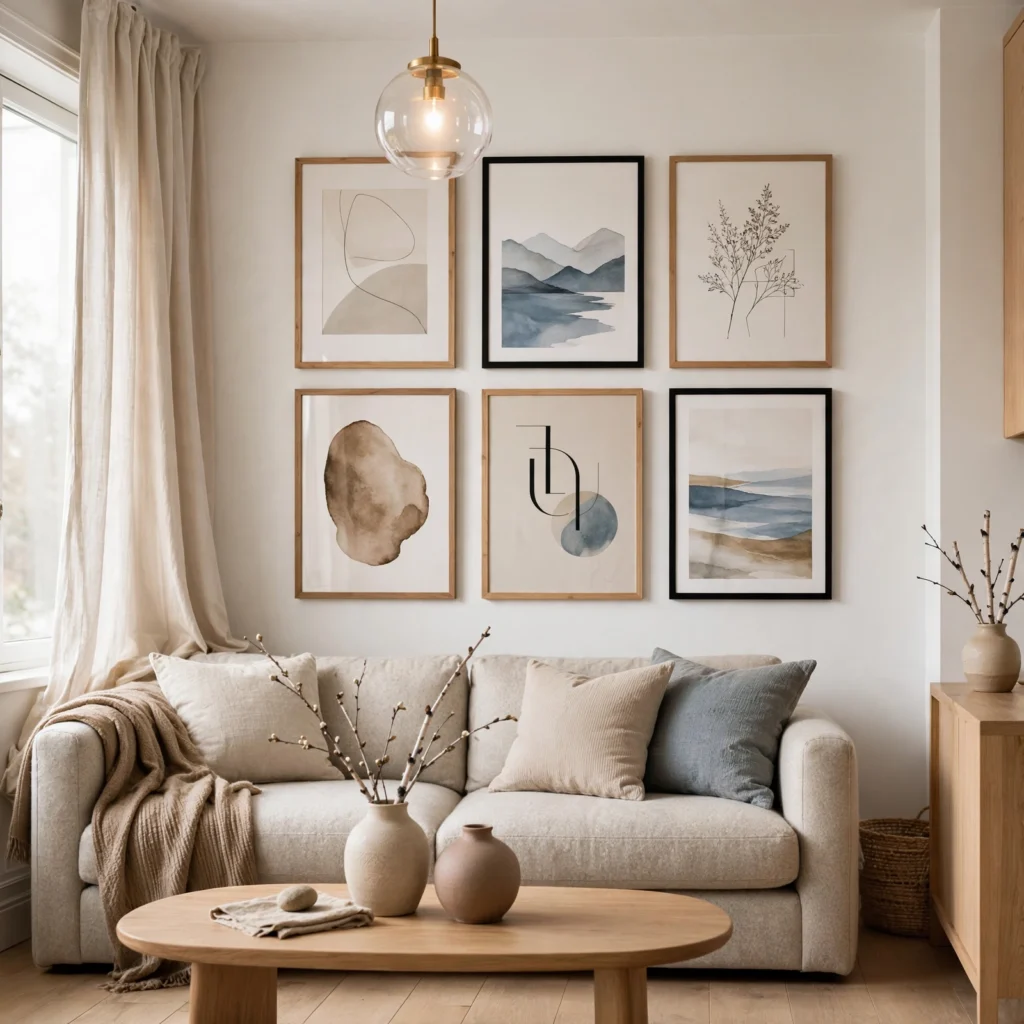
A small cluster of framed prints in thin black or natural wood frames, featuring simple line drawings, botanical studies, or abstract shapes in muted tones, adds personality without introducing visual clutter. Keep the frame styles consistent and the spacing even, typically two to three inches between each piece, so the arrangement reads as one composed element rather than several unrelated pieces. This scandinavian living room detail works especially well above a console table or sofa where a single large artwork might otherwise feel too heavy.
Shop the Look
Look for a wool-upholstered sofa with exposed tapered wood legs, a globe-shaped glass or paper pendant light, a low oak coffee table with a matte oil finish, a natural sheepskin throw, and a set of matte-glazed ceramic vases in varying heights. Most of these pieces are widely available across mid-range Scandinavian-inspired furniture retailers, making it possible to build the full look gradually without sourcing everything from specialty import shops.
Common Mistake to Avoid
The most common mistake is over-styling the room with too many decorative objects at once, which works against the restraint the style depends on. Scandinavian interiors read as calm specifically because of what’s left out empty shelf space, bare walls between art pieces, and surfaces that aren’t fully covered. A stronger approach is choosing a handful of intentional pieces per surface and resisting the urge to fill every open space, since visual breathing room is as important here as any single piece of furniture.
FAQs
What colors are used in a Scandinavian living room?
The palette centers on white, light gray, and pale wood tones, occasionally paired with one muted accent color like dusty blue, sage, or blush. These tones are chosen for how well they reflect natural light rather than for boldness, which keeps rooms feeling bright even in climates with limited daylight. Saturated or dark colors typically appear only in small doses, such as a single accent pillow or piece of art, rather than across major furniture pieces or walls.
Is Scandinavian design the same as minimalism?
They overlap but aren’t identical. Minimalism generally prioritizes owning fewer objects overall, while Scandinavian design allows for more decor and texture as long as it stays functional and restrained in color and form. A Scandinavian living room can include layered rugs, textiles, and collected ceramics that a strict minimalist space would likely omit, so the style is better described as warm, functional simplicity rather than the pared-back austerity associated with minimalism alone.
How do I add warmth to a Scandinavian living room without breaking the style?
Warmth comes from texture rather than color in this style, so layering wool throws, sheepskin, linen curtains, and woven baskets achieves it without introducing pattern or saturated tones. Warm-toned lighting, such as amber-hued bulbs in a pendant or floor lamp, also softens what could otherwise feel like a cool, all-white space. A wood-burning stove or simple candle grouping on the coffee table adds both literal and visual warmth in a way that stays true to the style’s Nordic origins.
What furniture materials are typical in Scandinavian interiors?
Light woods like oak, ash, and birch dominate, often left with a natural or lightly oiled finish rather than a dark stain. Wool, linen, and cotton are the primary textile choices, occasionally supplemented with rattan or cane for texture. Metal accents, when used, are typically black or brushed steel rather than brass or gold, keeping the overall material palette cohesive, natural, and free of high-shine or heavily lacquered finishes that would clash with the style’s understated character.
Can a small apartment pull off a full Scandinavian living room look?
Small apartments are often where this style works best, since its core principles light colors, low-profile furniture, and minimal clutter are specifically suited to making compact spaces feel larger. Prioritize furniture with visible legs, keep the rug and sofa scaled appropriately to the room, and lean on wall-mounted or built-in storage instead of large freestanding pieces. A single well-chosen light fixture and a consistent, pale color palette will do more for a small space than adding more furniture.
Conclusion
A Scandinavian living room comes together through a handful of consistent choices light wood, neutral wool and linen textiles, and restrained, functional furniture rather than any single statement piece. Start with the flooring and sofa as your foundation, then layer in texture and one or two natural material accents from this list. Save this guide to Pinterest for your next update, or check out our related post on Scandinavian bedroom design for more room-by-room ideas.
Author Expertise Note
I’ve helped clients furnish everything from studio apartments to full family homes around Nordic-inspired principles, and these eighteen ideas reflect the specific choices that consistently hold up in daily use rather than just in styled photos.