17 Stunning Green Couch Living Room Ideas for a Fresh, Cozy, and Stylish Home
A green couch living room can be one of the most striking choices in a home, but building the rest of the space around it takes some intention so the sofa doesn’t end up fighting with everything else in the room. This guide covers seventeen ideas for colors, materials, and accessories that pair naturally with a green sofa, whether it’s emerald velvet or a muted sage sectional, so the whole room reads as considered rather than accidental.
Trend & Background
Green has moved from an occasional accent color to one of the most requested sofa colors in furniture showrooms, driven by a broader shift toward richer, more saturated upholstery after years of neutral gray and beige dominance. Shades like emerald, forest, and sage now show up as core options rather than special orders. This matters now because pairing a colored sofa well requires more planning than a neutral one, and getting the surrounding palette right is what separates a room that feels current from one that feels like a single bold purchase surrounded by mismatched pieces.
Key Takeaways
- A green couch living room works best when the surrounding palette leans on warm neutrals, wood tones, and one or two supporting accent colors rather than competing greens.
- Emerald, sage, and olive each pair with a different set of materials and lighting, so the exact shade of green should guide the rest of the room’s choices.
- Texture rattan, brass, linen, boucle does as much work as color in keeping a green sofa from feeling like the only decision in the room.
- Small, low-cost swaps like pillows, lamps, and a rug can shift a green couch from feeling seasonal to feeling like a permanent design choice.
1. Emerald Velvet Sofa
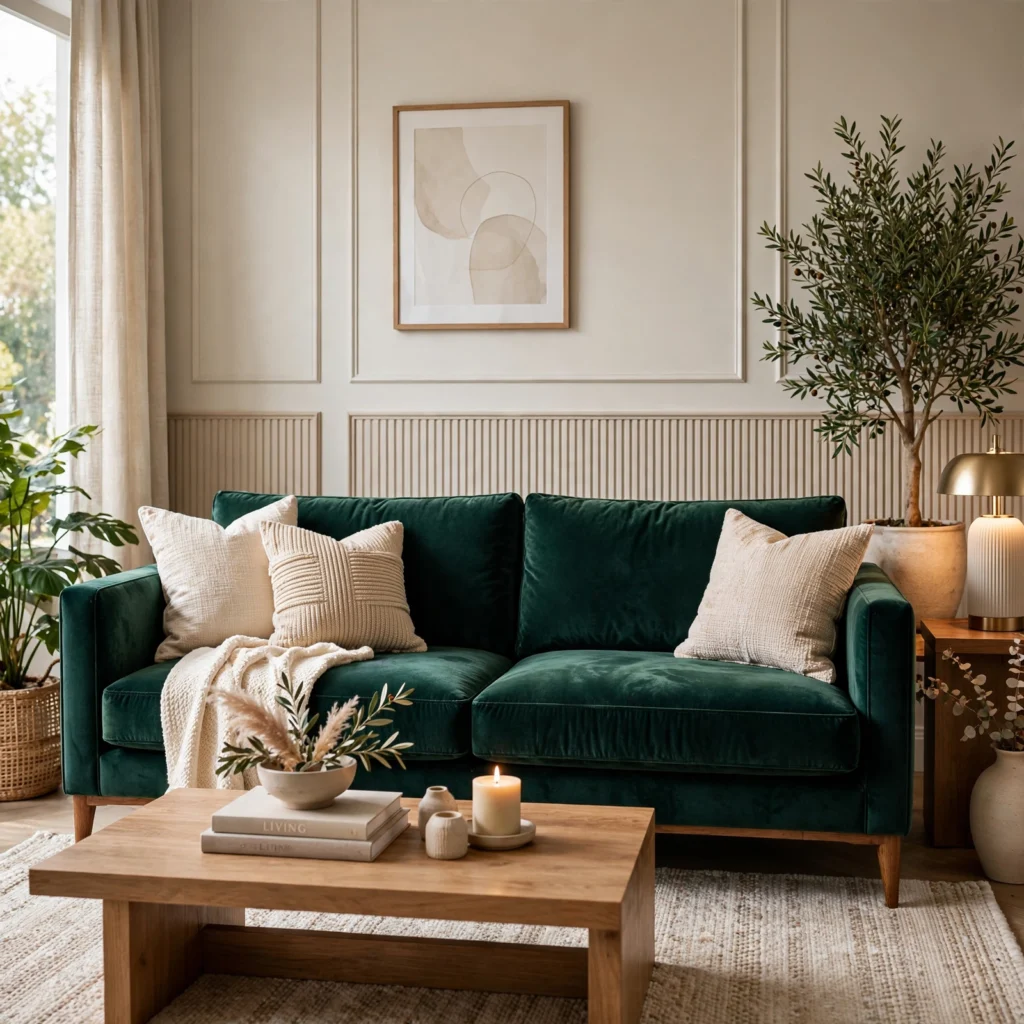
An emerald velvet sofa reads as rich and slightly formal, working best in rooms with warm lighting and materials like brass, walnut, and leather that can stand up to its saturation. The velvet’s sheen shifts depending on the light in the room, which adds depth that a flat-finish fabric wouldn’t. Because the color is bold, keeping the surrounding walls and flooring in a neutral tone lets the sofa stay the clear focal point without the room feeling overwhelming.
2. Sage Green Sectional
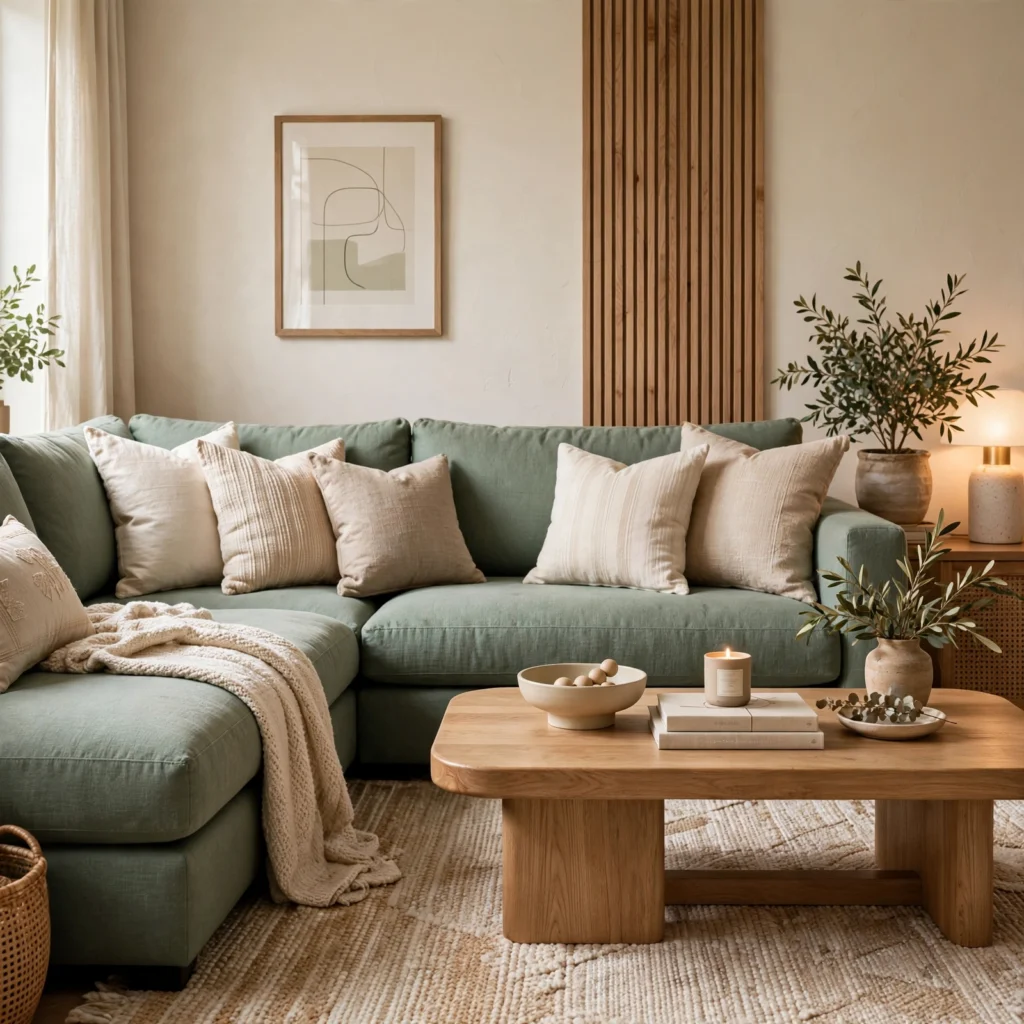
A sage green sectional works as a softer, more neutral entry point into a green couch living room, since the muted, grayed-out tone pairs easily with almost any wood finish or accent color. Its lower saturation also makes it more forgiving in smaller rooms, where a brighter green might feel overwhelming across a larger piece of furniture. Pairing it with cream, oatmeal, and warm wood tones keeps the overall room feeling calm rather than themed.
3. Green Couch Living Room Color Palette
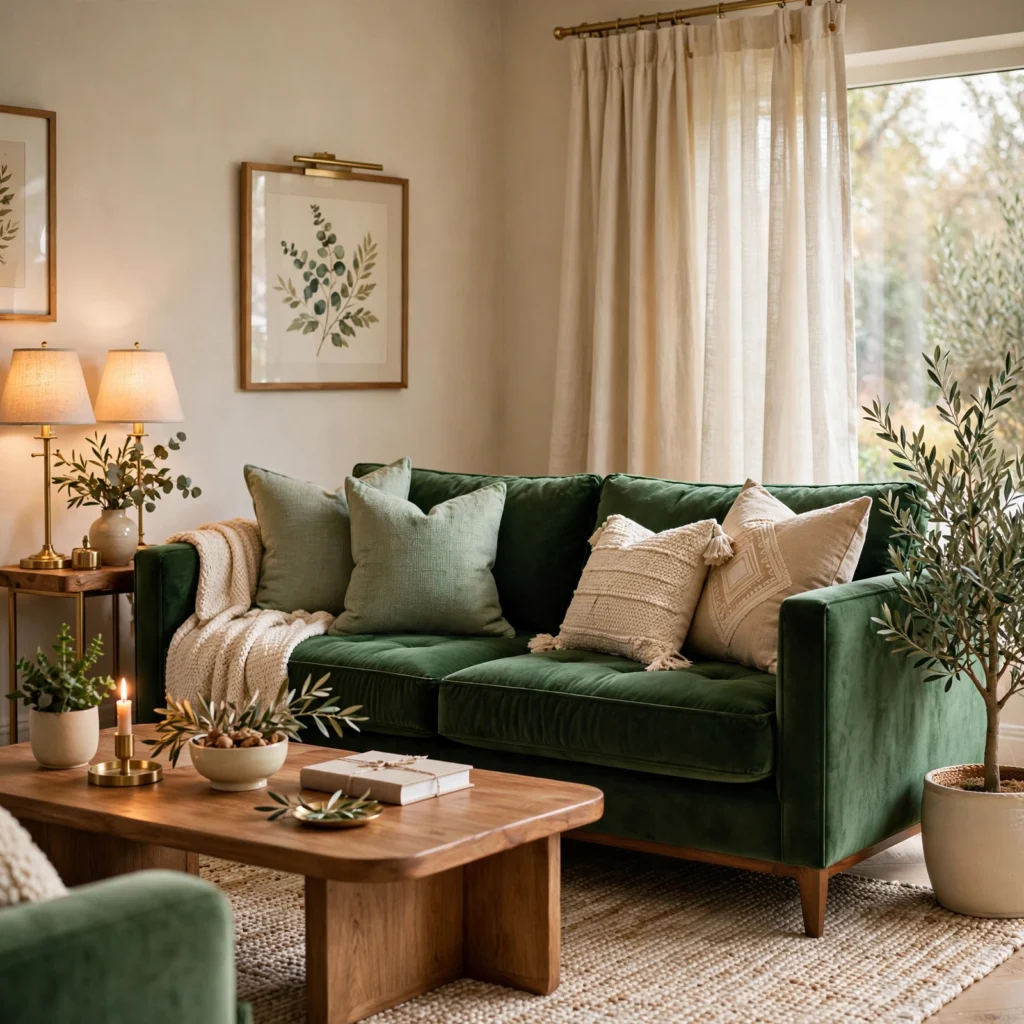
Building a green couch living room color palette around the sofa’s undertone, rather than picking accent colors at random, keeps the whole space from feeling disjointed. Warm greens like olive and moss pair naturally with terracotta, mustard, and rust, while cooler greens like emerald and forest lean better toward brass, navy, and cream. Testing paint and fabric swatches next to the actual sofa fabric, rather than a photo, is the most reliable way to confirm the pairing works in the room’s actual light.
| Sofa Green | Undertone | Best Accent Colors |
| Emerald Velvet | Cool | Brass, navy, cream |
| Sage | Neutral-cool | Oatmeal, blush, walnut |
| Olive | Warm | Terracotta, mustard, rust |
| Forest | Cool-deep | Brass, burgundy, charcoal |
4. Botanical Print Wallpaper
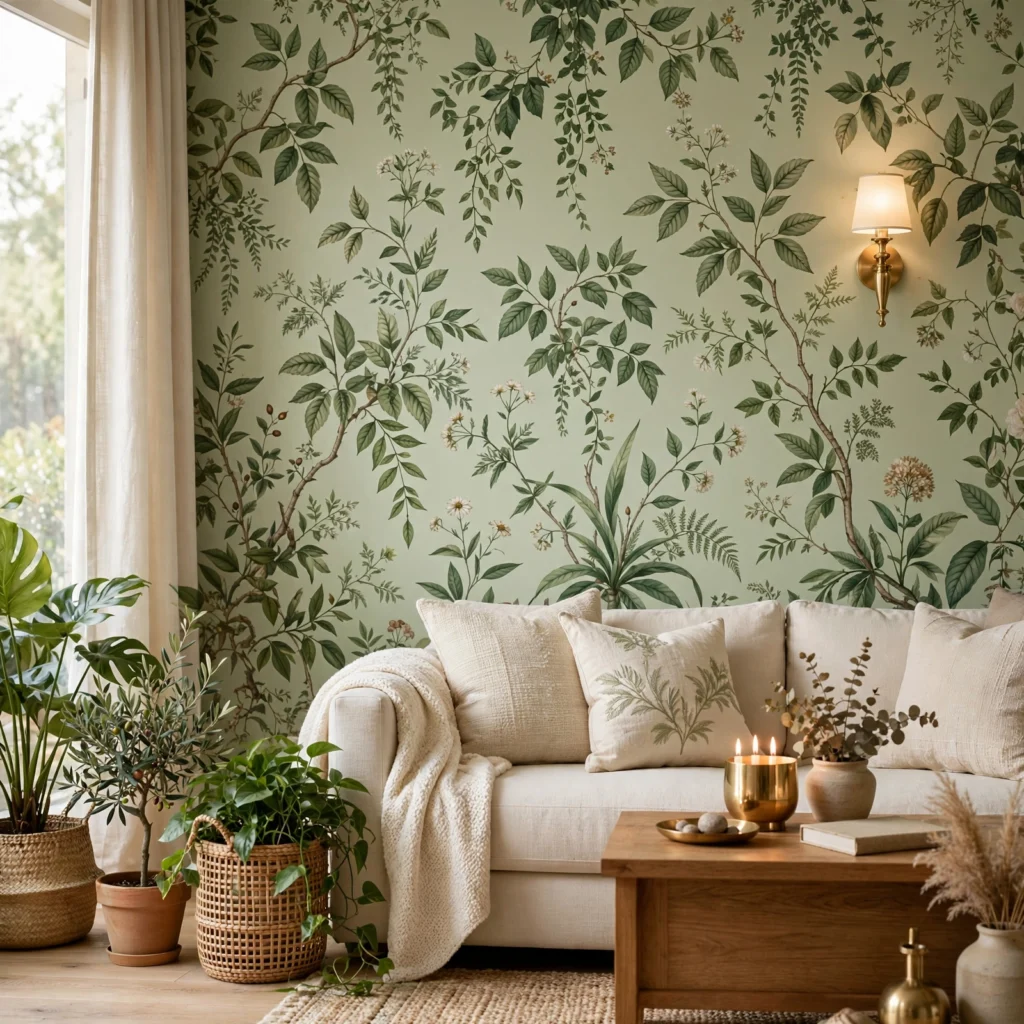
A botanical print wallpaper on one accent wall extends the green couch’s color story into the architecture of the room rather than isolating it to a single piece of furniture. Choosing a print with a cream or off-white background keeps the wall from competing directly with the sofa’s saturation. This works particularly well behind a media console or fireplace, where the pattern becomes a backdrop rather than the room’s primary focal point.
To see more green living room CLICK
5. Rattan Coffee Table
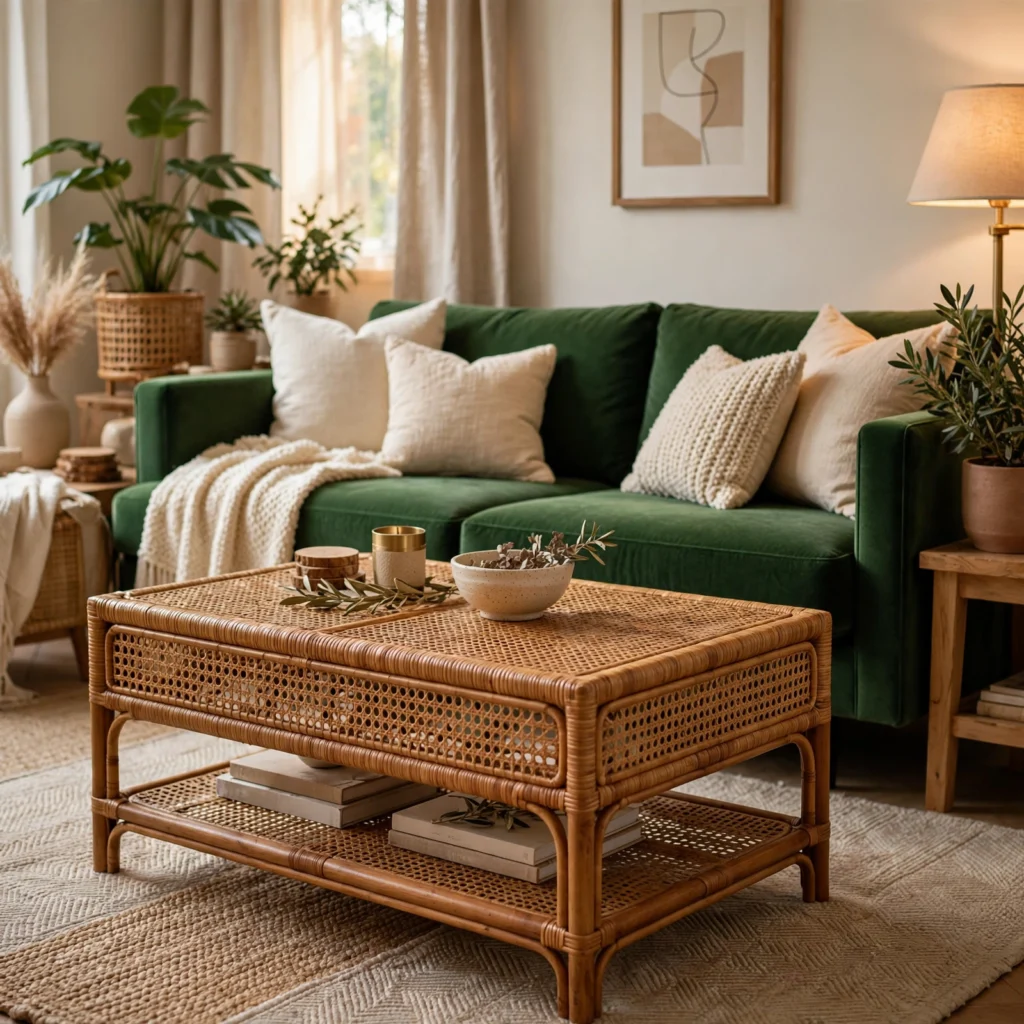
A rattan or woven-rattan coffee table adds a natural, textured contrast to a green sofa’s smooth upholstery, echoing the organic, botanical quality that green furniture often calls for. Its light, airy frame also keeps the room from feeling heavy, since a green sofa already carries visual weight on its own. Pairing it with a glass or marble top adds a bit of polish without losing the material’s natural texture.
6. Brass Accent Lighting
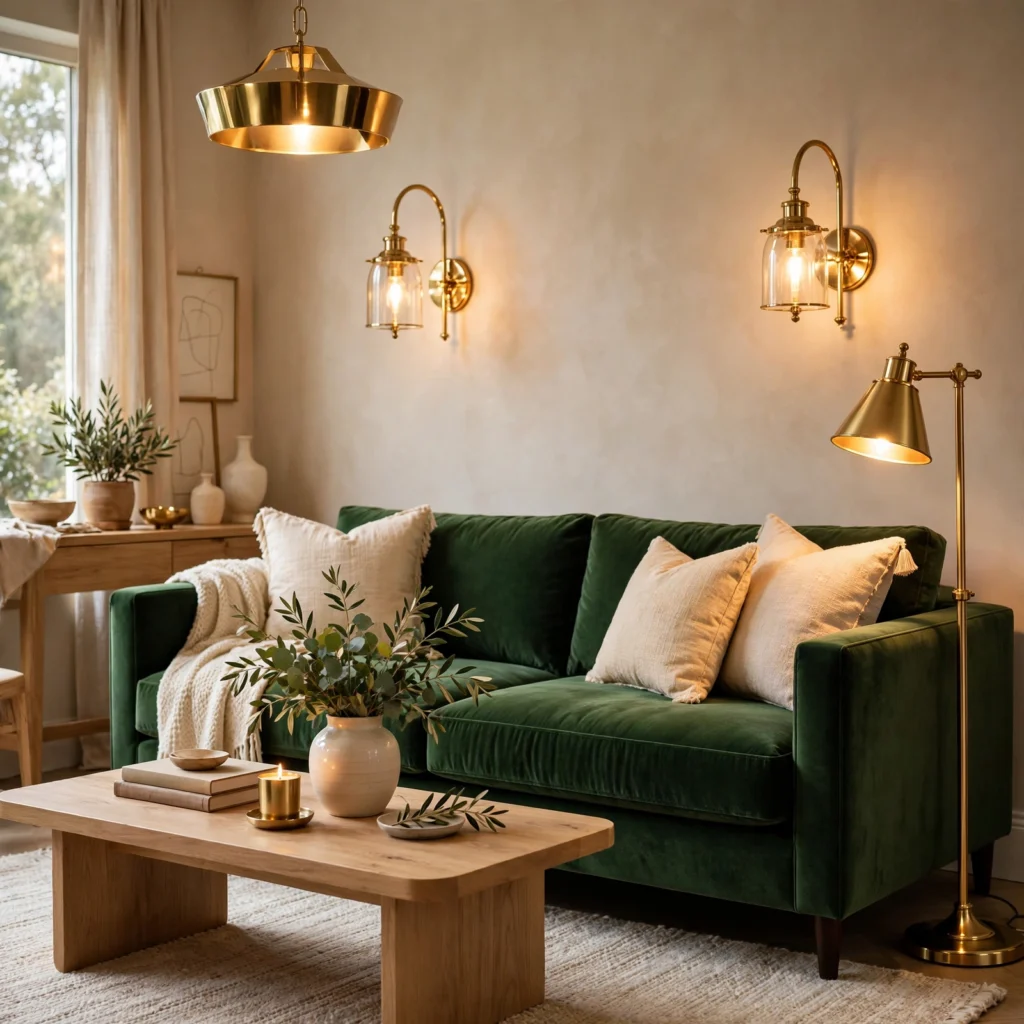
Brass table lamps, sconces, or a floor lamp add warmth that balances the coolness of emerald or forest green upholstery, especially in a room with limited natural light. Unlacquered brass develops a soft patina over time, which fits naturally into a room built around a rich, saturated sofa color. Placing at least one brass fixture near the seating area ties the metal tone back to any other brass hardware in the room, like drawer pulls or curtain rods.
7. Terracotta Throw Pillows
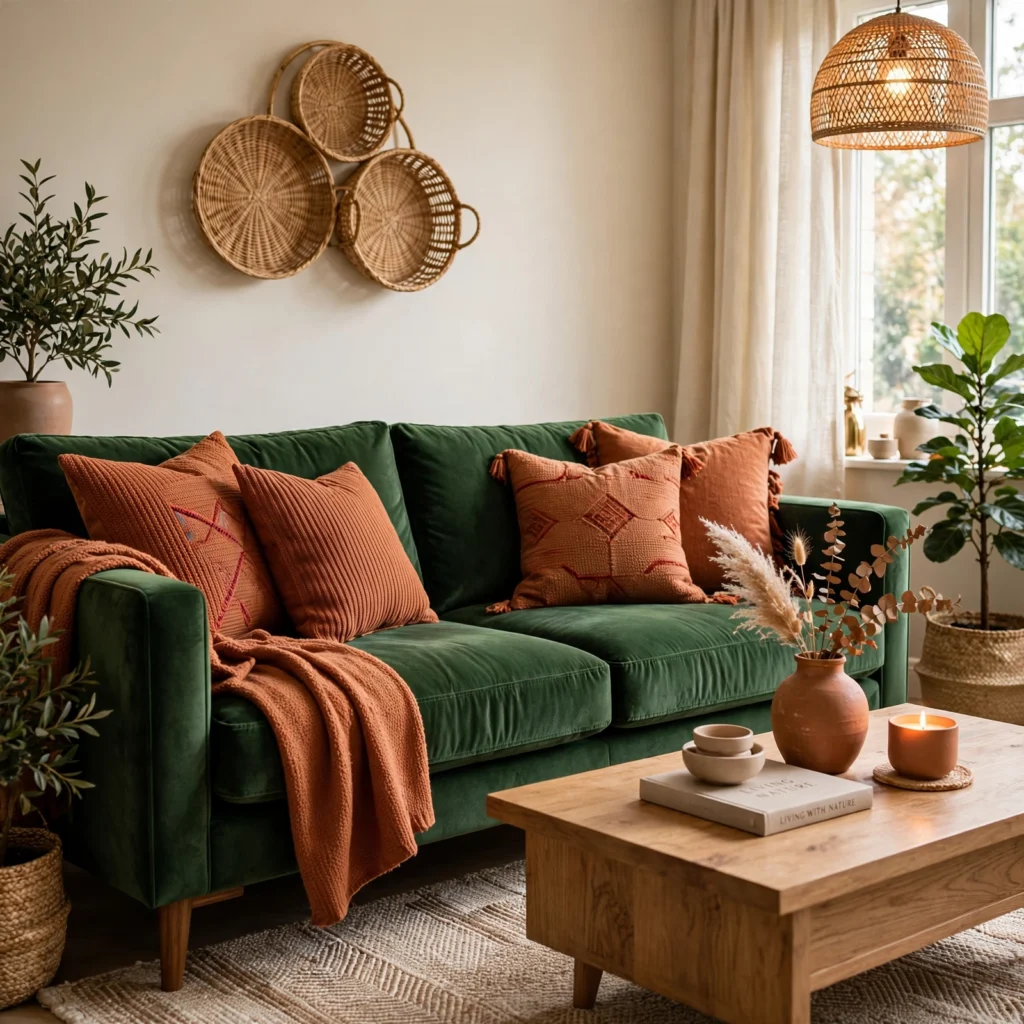
Terracotta or burnt-orange throw pillows create a warm contrast against a green sofa, since orange and green sit opposite each other on the color wheel and naturally balance one another. Choosing a textured fabric like a nubby weave or linen blend keeps the pillows from feeling too flat next to a velvet or boucle sofa. Two or three pillows in varying sizes, rather than a matched set, gives the arrangement a more collected, less staged look.
8. Mustard Accent Chair
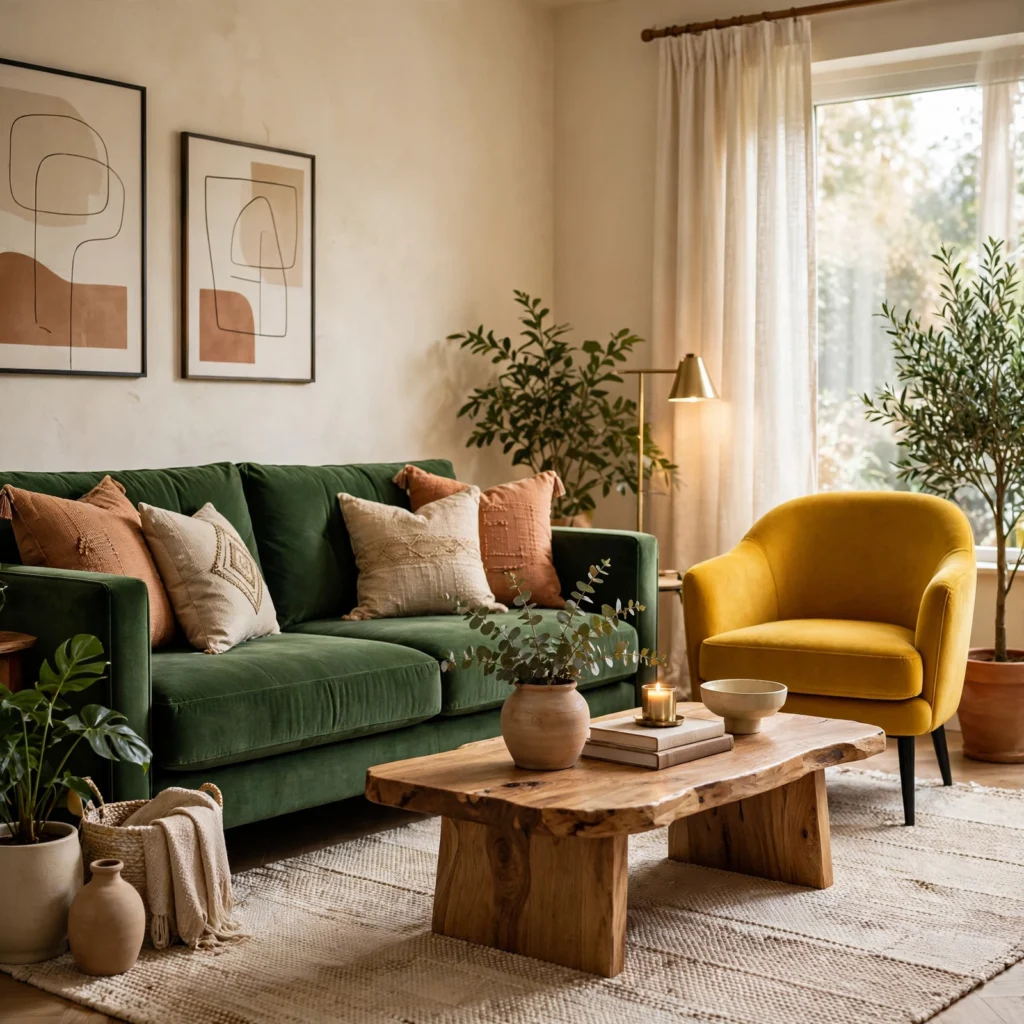
A mustard or ochre accent chair placed opposite a green sofa adds a second saturated color that still reads as harmonious, since warm yellows and greens share a similar tonal family. The chair works best as a single statement piece rather than paired with additional bold colors, which keeps the room from feeling overloaded. A boucle or corduroy upholstery on the chair adds texture that plays well against a smoother sofa fabric like velvet.
9. Wood-Tone Side Tables
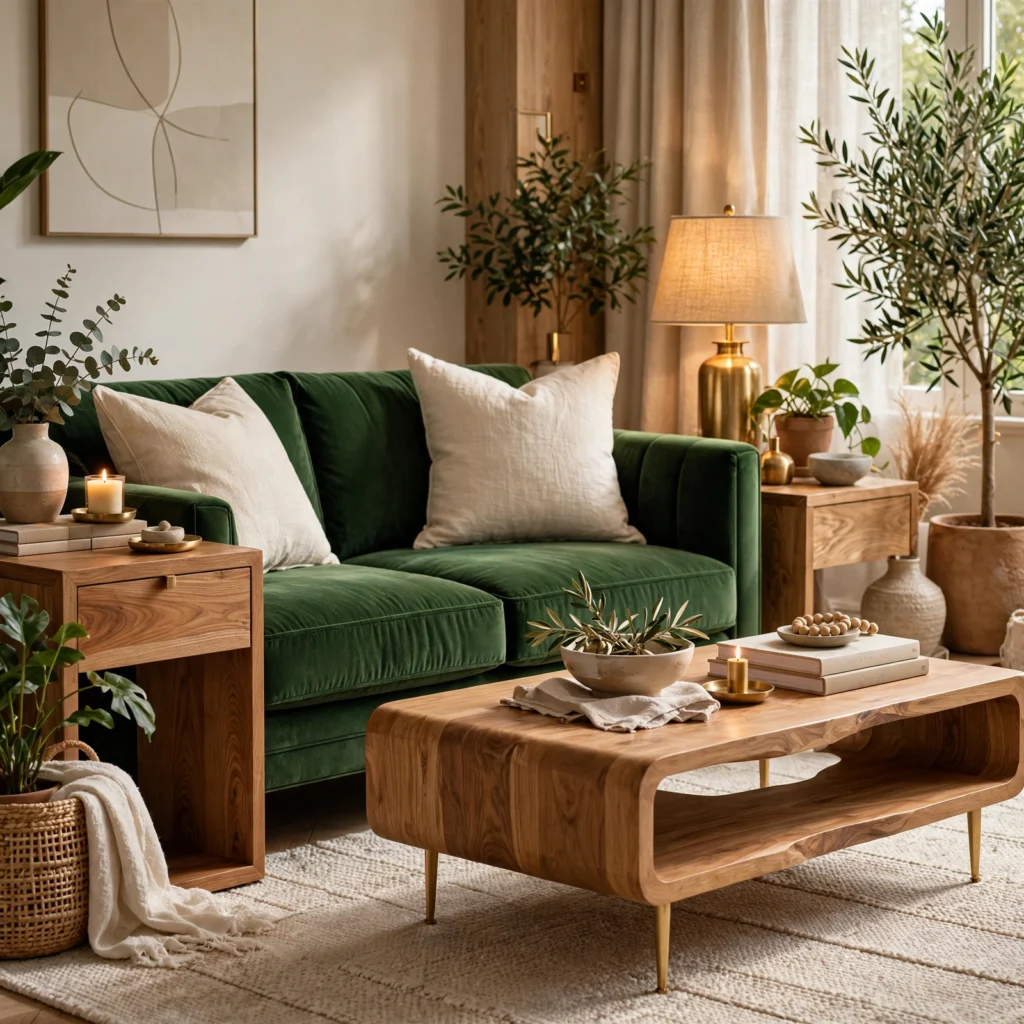
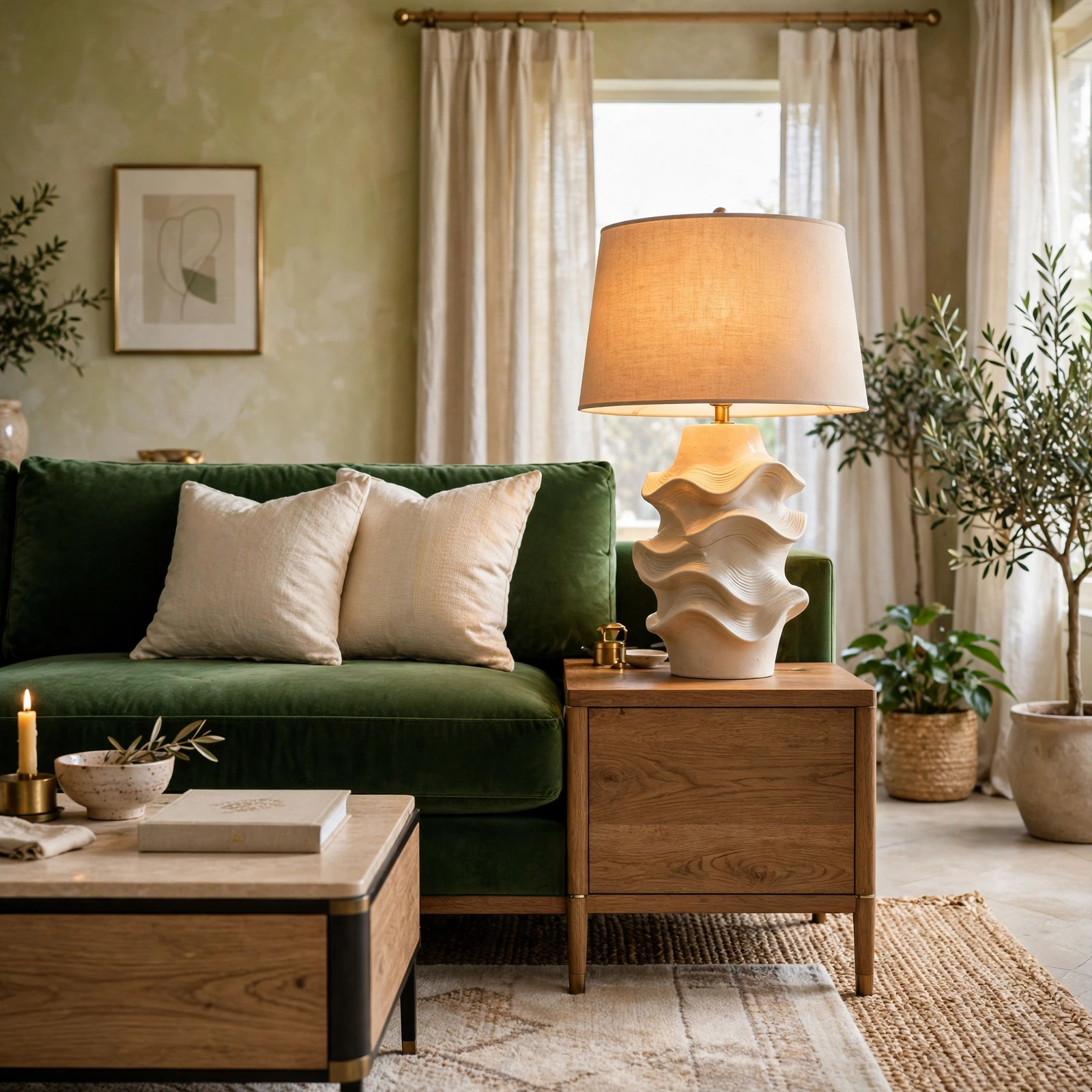
Wood side tables in a walnut or white oak finish ground a green sofa with a warm, natural material that doesn’t compete with the upholstery’s color. Walnut pairs especially well with cooler greens like emerald and forest, while lighter oak complements warmer tones like olive and moss. Choosing a simple, unadorned silhouette keeps the table from pulling attention away from the sofa as the room’s main focal point.
10. Layered Neutral Rug
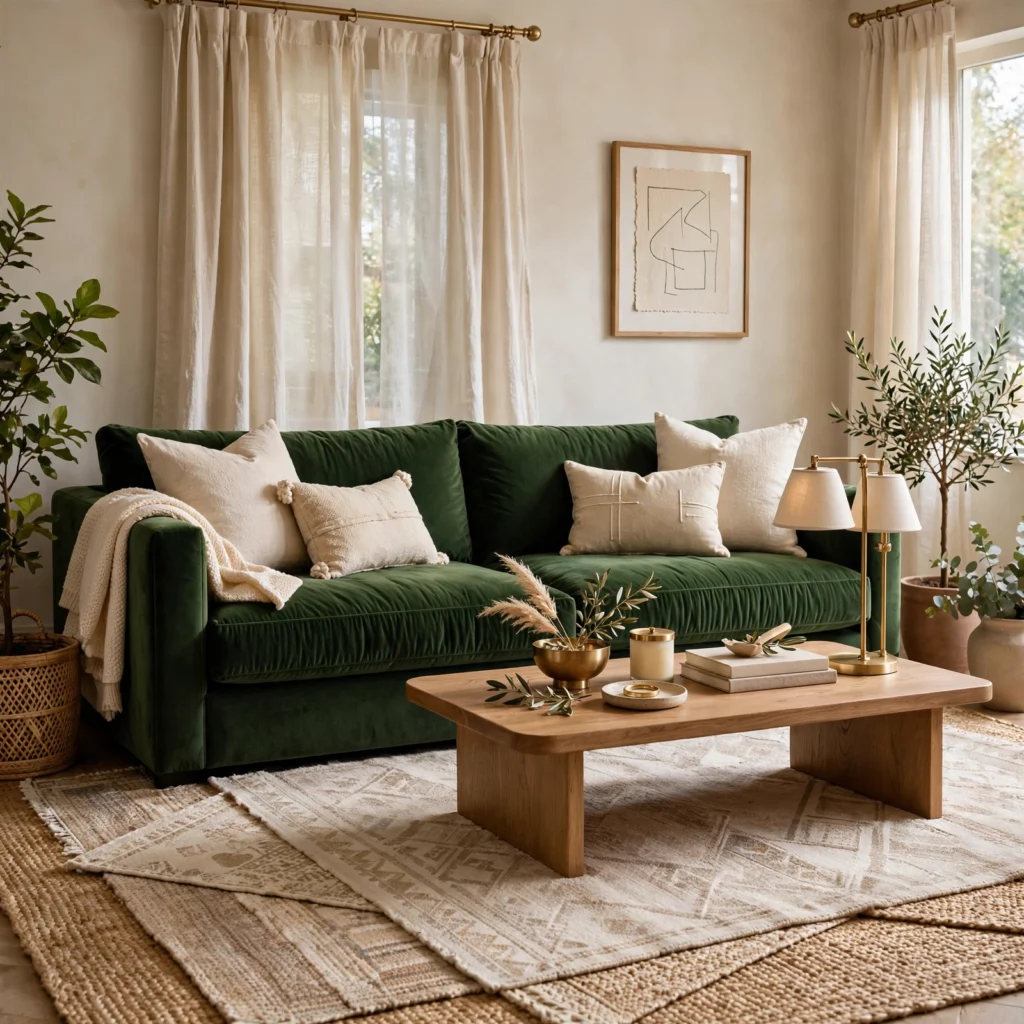
A neutral base rug, like a jute or wool sisal blend, gives a green sofa room to be the boldest element without a patterned or colored rug competing for attention. Layering a smaller, subtly patterned rug on top adds texture without introducing another dominant color into the space. Keeping the rug’s tone in the cream-to-taupe range, rather than stark white, also helps it read as a grounding element rather than a contrast piece.
| Room Size | Base Rug | Rug Tone |
| Small (under 120 sq ft) | 6×9 ft | Cream / oatmeal |
| Medium (120–160 sq ft) | 8×10 ft | Taupe / natural jute |
| Large (over 160 sq ft) | 9×12 ft | Warm gray / sisal |
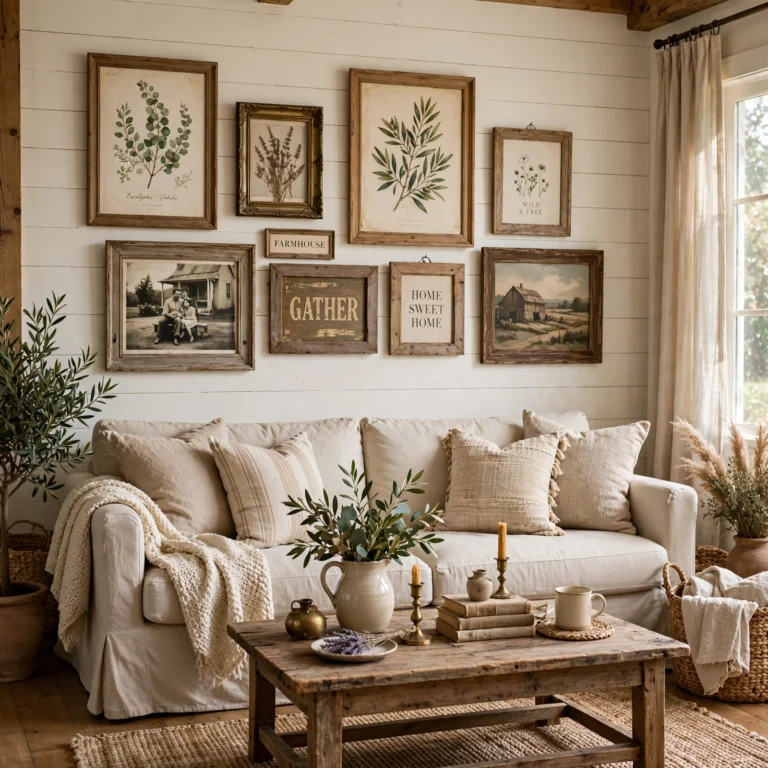
11. Gallery Wall Above Sofa
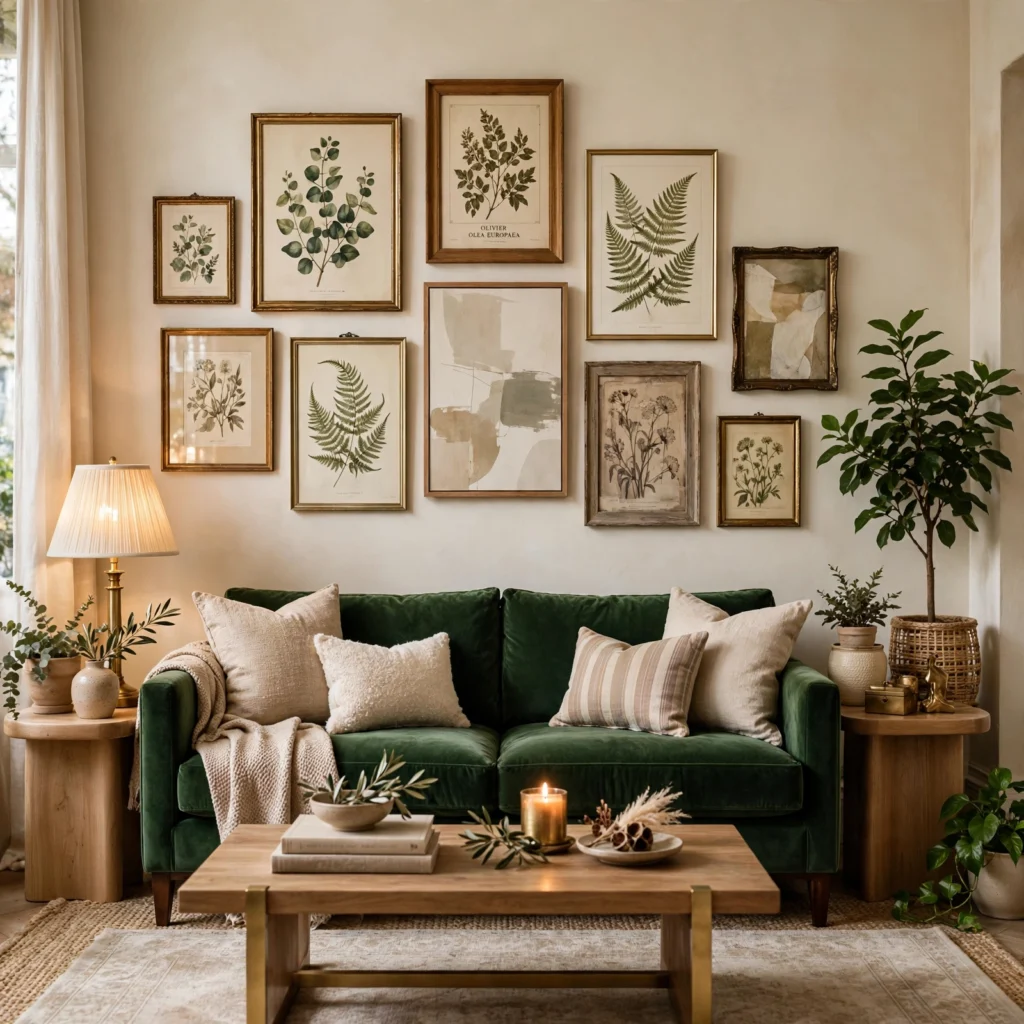
A gallery wall positioned above a green sofa gives the eye somewhere else to land, breaking up a large block of saturated color with smaller, varied frames. Choosing artwork with warm neutral or botanical tones keeps the wall connected to the sofa’s palette rather than introducing an unrelated color scheme. Limiting the frame finishes to one or two metals, like brass and black, keeps the arrangement feeling intentional despite the mix of pieces.
12. Woven Basket Storage
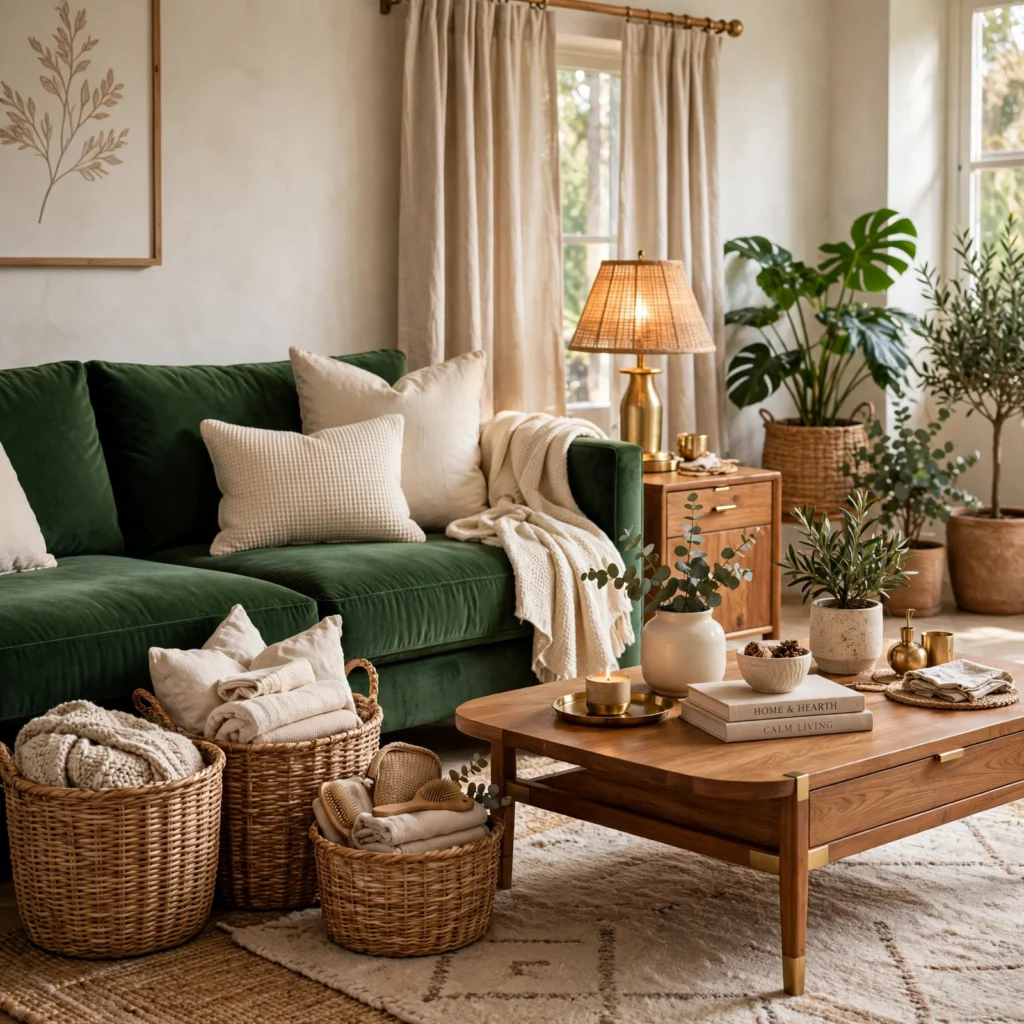
Woven seagrass or rattan baskets placed near a green sofa add practical storage for blankets or magazines while reinforcing the natural, textured material palette that pairs well with green upholstery. Stacking two or three baskets of varying sizes in a corner is more visually interesting than a single large basket. This also keeps the room functional without introducing plastic bins or storage pieces that would clash with the room’s material story.
13. Linen Curtain Panels
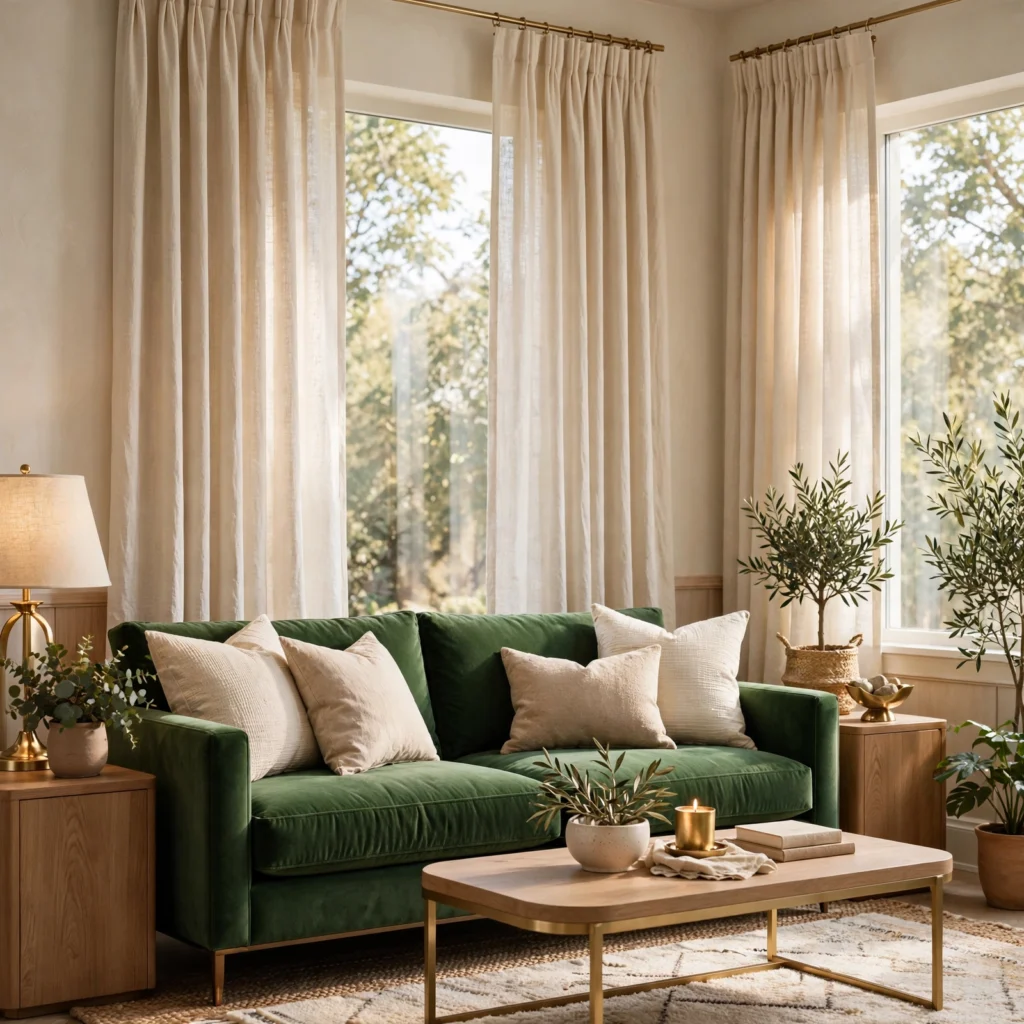
Floor-to-ceiling linen curtains in a warm white or oatmeal tone soften the hard lines of a window while staying neutral enough not to compete with a green sofa’s color. Linen’s natural texture and slight wrinkle also add a lived-in quality that pairs well with the organic materials, like rattan and wood, that typically surround green furniture. Hanging the rod close to the ceiling line makes the window, and the room overall, feel taller.
14. Vintage Brass Floor Lamp
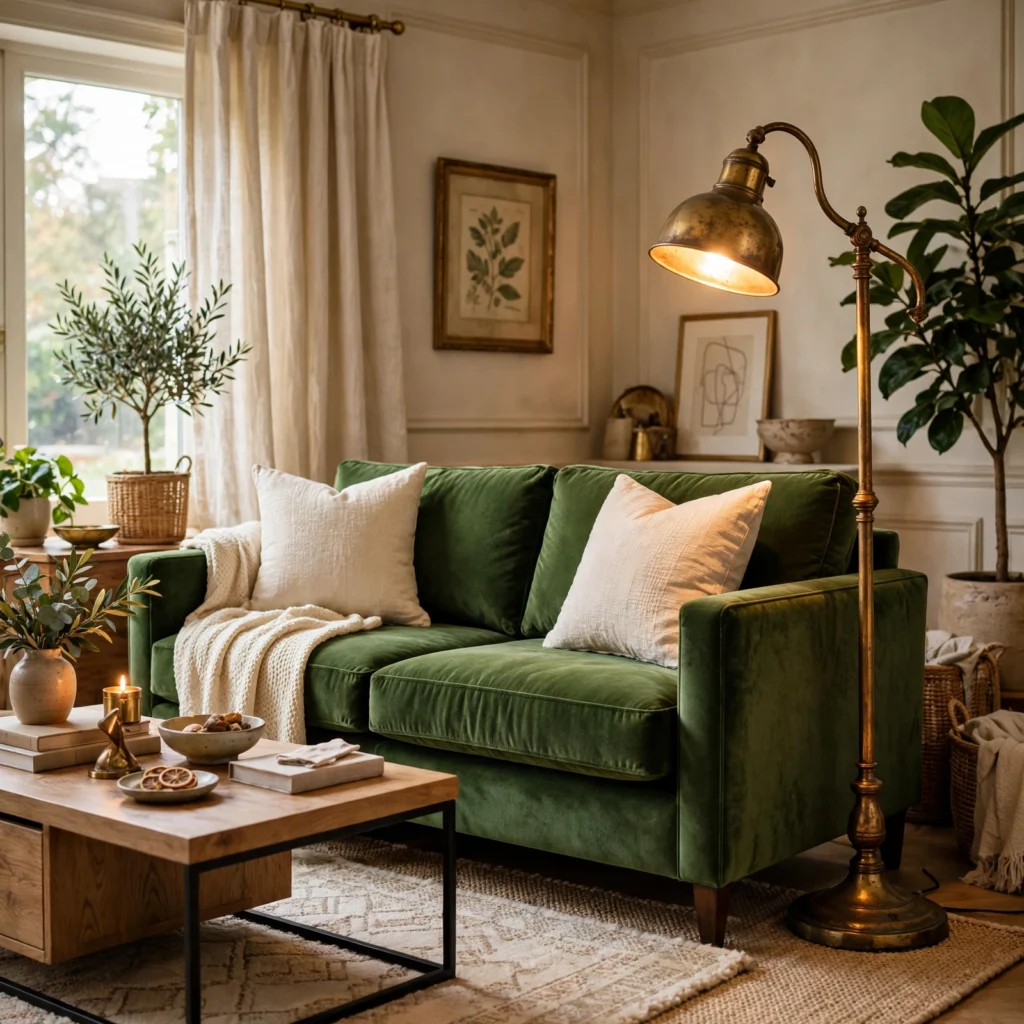
A vintage or vintage-style brass floor lamp with an arched or curved arm adds both function and a sculptural silhouette near a green sofa, filling a corner that might otherwise go unused. Its warm metal tone continues the brass accents used elsewhere in the room, from lighting to hardware, tying the space together. A linen or paper shade keeps the light warm and diffused rather than harsh, which suits the cozier mood a green sofa often sets.
15. Patterned Throw Blanket
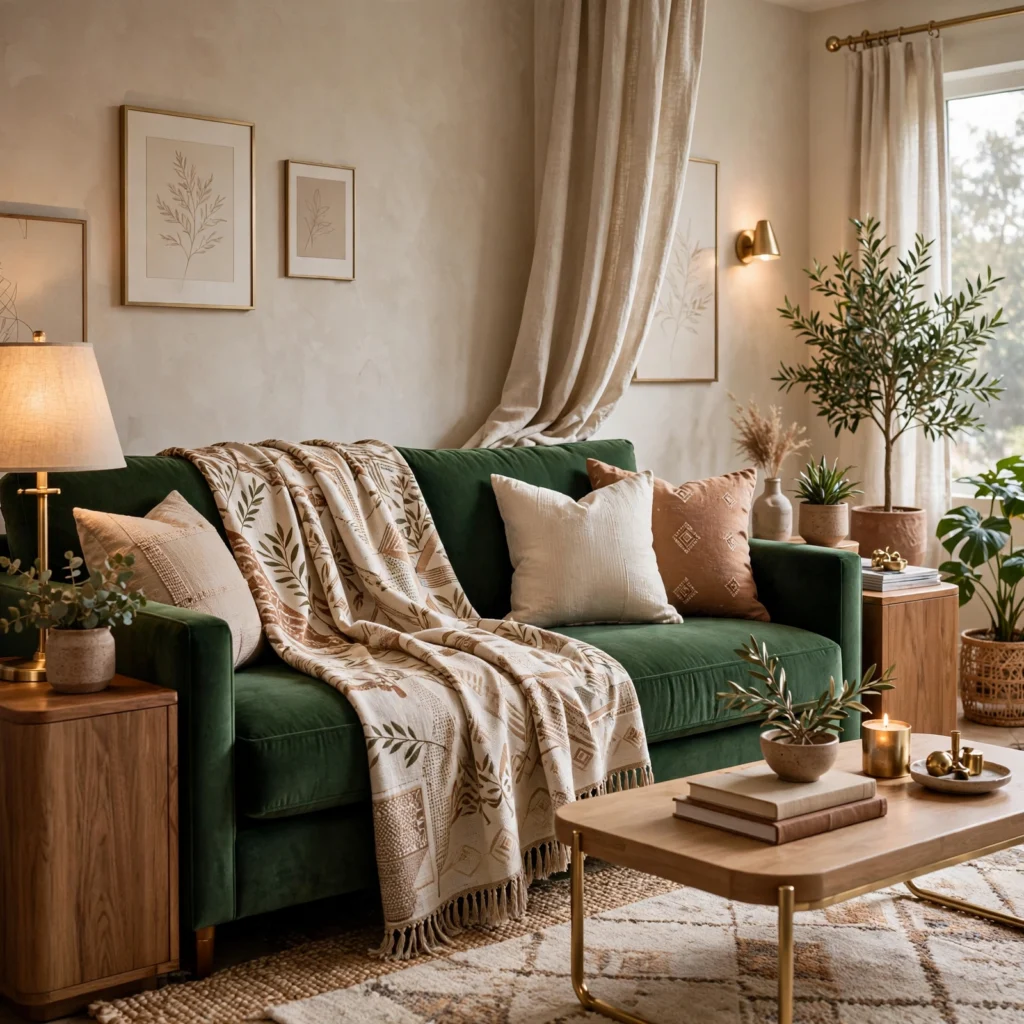
A patterned throw blanket in a complementary warm tone, like rust, mustard, or cream, adds a layer of texture and color across the arm or back of a green sofa without requiring a full reupholstering commitment. Choosing a chunky knit or woven wool keeps the blanket visually substantial rather than looking like an afterthought. Draping it loosely rather than folding it precisely gives the sofa a more relaxed, lived-in appearance.
16. Ceramic Table Lamp
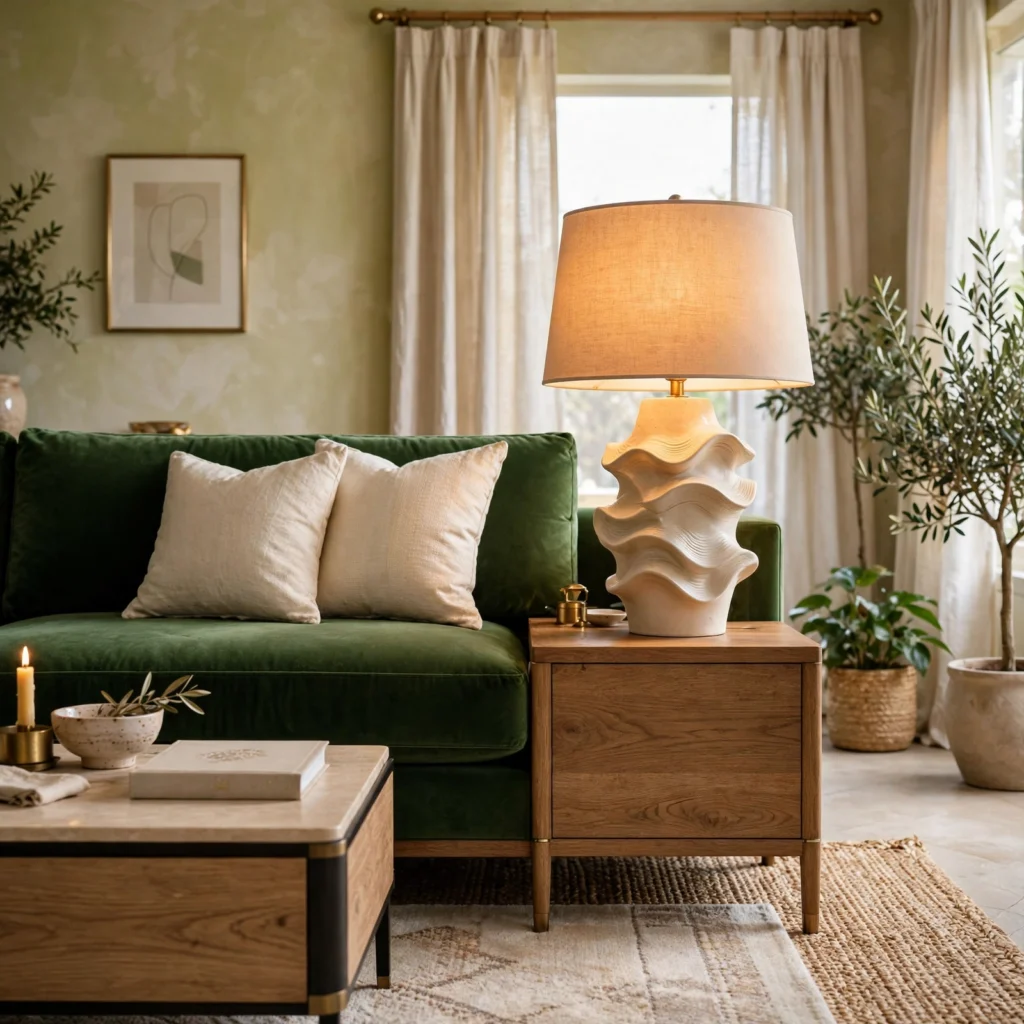
A ceramic table lamp in a warm cream, terracotta, or speckled glaze finish adds a soft, handmade quality that pairs naturally with a green sofa’s organic color story. Its rounded silhouette also contrasts nicely against the straighter lines most sofas have, adding visual variety to the side table it sits on. A linen or rattan lamp shade keeps the fixture consistent with the other natural materials used throughout the room.
17. Statement Area Rug
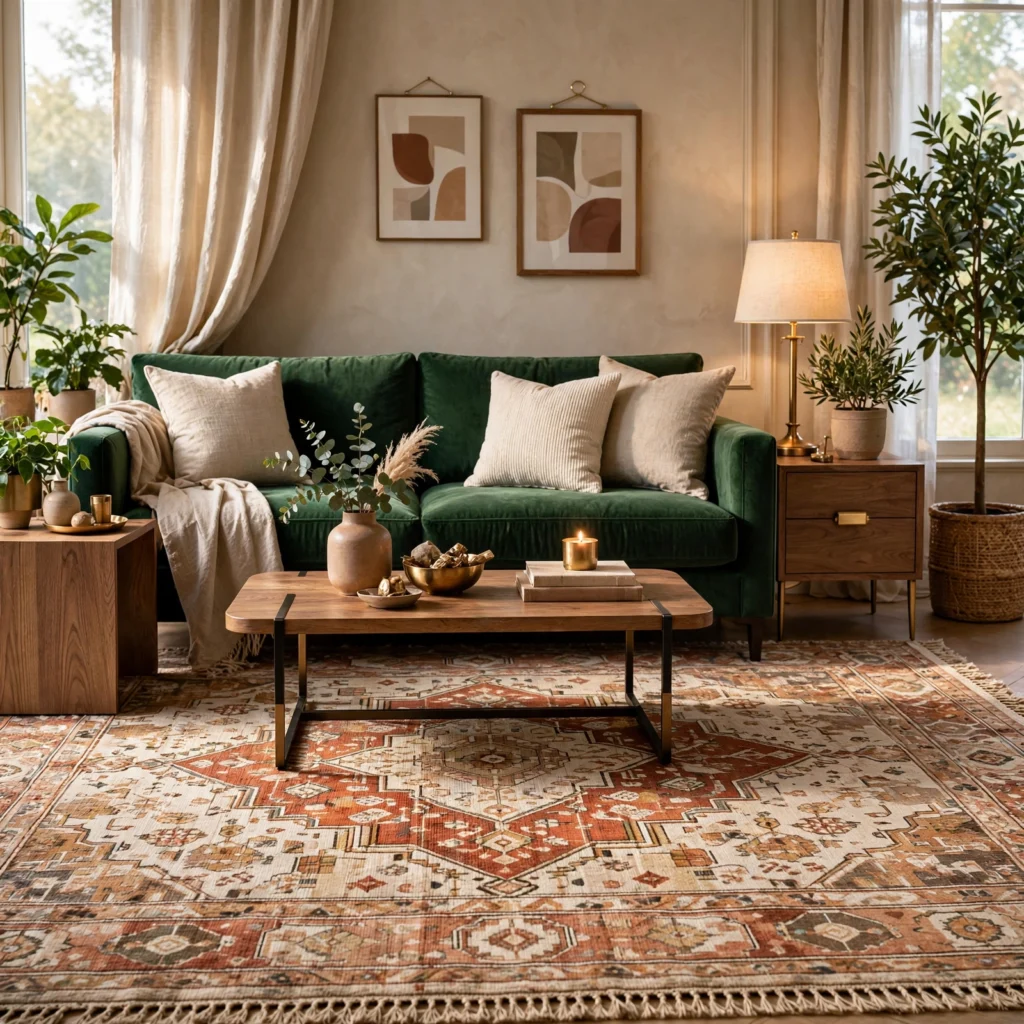
A patterned area rug in a warm, muted colorway, like a faded terracotta or vintage-inspired medallion print, can serve as the room’s secondary focal point alongside a green sofa without clashing with it. Choosing a rug with some of the same warm undertones found in the room’s pillows or lamps ties the color story together across the floor and furniture. This works especially well in rooms without much other pattern, where the rug can carry more visual interest.
Shop the Look
An emerald velvet sofa pairs naturally with an unlacquered brass arc floor lamp and a walnut-finished coffee table for warmth and contrast. Add a set of terracotta linen throw pillows and a chunky wool throw blanket in rust for texture across the seating area. Round out the room with a jute base rug layered with a faded medallion-print accent rug and a cluster of seagrass storage baskets tucked near the sofa’s base.
Common Mistake to Avoid
The most common mistake in a green couch living room is treating the sofa as a neutral and pairing it with cool grays or stark whites, which tends to make the space feel clinical rather than cohesive. Green upholstery almost always needs a warm counterpart, whether that’s brass lighting, wood tones, or a terracotta accent, to keep the room from feeling flat. Skipping texture altogether, and relying only on color to do the work, is the second most common misstep that leaves the room looking unfinished.
FAQs
What colors go with a green couch in a living room?
Warm neutrals like cream, oatmeal, and terracotta generally pair best with a green couch, along with metal accents in brass or unlacquered gold rather than cool chrome or silver. The exact shade of green matters too, since a cooler emerald leans toward navy and brass, while a warmer olive pairs naturally with mustard and rust. Testing fabric swatches against the actual sofa color, rather than guessing from memory, gives the most reliable result.
Is a green couch a good choice for a small living room?
A green couch can work well in a small living room as long as the surrounding palette stays mostly neutral, since a saturated sofa color already adds enough visual weight to the space. Sage or a lighter, muted green tends to feel less overwhelming in a compact room than a darker forest or emerald tone. Keeping other furniture pieces simple and letting the sofa be the room’s one bold statement usually works better than layering multiple bold colors.
What rug works with a green couch?
A neutral base rug in jute, wool, or a warm taupe tone typically works best with a green couch, since it grounds the room without competing with the sofa’s color. Layering a smaller patterned rug with warm undertones, like rust or faded terracotta, on top adds interest without overwhelming the space. Rugs in cool blues or stark white tend to clash more easily with green upholstery than warmer, earthier tones.
Does a green couch go out of style?
Green has held steady as a popular upholstery color for several years now, particularly muted tones like sage and olive that read as more timeless than trend-driven. Because green is a natural color found throughout interior design history, from mid-century modern to traditional English rooms, it tends to age better than more novelty-driven sofa colors. Choosing a classic silhouette for the sofa itself also helps the piece feel less tied to a specific trend cycle.
What wall color works best with a green couch?
A warm white, cream, or soft greige wall color generally works best with a green couch, since it keeps the room bright while still complementing the sofa’s warmth rather than competing with it. Painting the walls a matching or closely related green can work in more dramatic, monochromatic rooms, but it requires careful attention to undertone and lighting. Avoiding cool grays or stark white on the walls typically prevents the room from feeling disconnected from the sofa’s color.
Conclusion
A green couch living room comes together when the sofa’s undertone guides every other decision in the room, from wall color to lighting to the smallest throw pillow. Pick two or three ideas from this list to start, layering in texture and warmth around the sofa rather than trying to match everything at once. Save this guide to Pinterest for later, and check out our related post on living room aesthetic ideas for more direction on pulling the rest of the room together.
Author Expertise Note
This guide is based on firsthand experience styling several green sofas across different rooms and lighting conditions, testing which accent colors actually held up once the furniture was delivered rather than just how they looked on a mood board.