Bathroom Tile Ideas: 15 Worth Trying Ideas for Every Style
Bathroom tile ideas cover far more ground than picking a color, since the size, shape, layout pattern, and grout choice all shape how a room feels once it’s finished. This list walks through options that range from a budget friendly subway tile refresh to a full zellige or terrazzo installation, so there’s something here whether you’re tiling a shower wall or just a backsplash behind the sink.
Trend & Background
Tile trends in bathrooms have shifted toward more texture and handmade imperfection after years of flat, uniform subway tile dominating most builds. Zellige, a hand glazed Moroccan tile with slight variations in color and surface, has become one of the most requested materials for shower walls and backsplashes. At the same time, large format porcelain slabs have grown in popularity for their low maintenance, minimal grout lines. This mix of handmade texture alongside sleek, oversized material reflects a broader preference for bathrooms that feel warm and personal rather than clinical, without giving up the practicality tile is chosen for in the first place.
Key Takeaways
- Tile size and pattern have a bigger visual impact than color alone, with large format tile opening up a room and mosaic patterns adding texture.
- Zellige, encaustic cement, and marble hexagon tile bring in handmade character, while large porcelain slabs offer a more streamlined, low maintenance look.
- Grout color is one of the cheapest ways to change a tile’s overall effect, from a seamless blend to a bold graphic outline.
- Mixing one statement tile with a simpler field tile keeps a bathroom from feeling too busy while still adding personality.
Stunning Bathroom Tile Ideas
Each idea includes practical notes on where it works best and what it typically costs to help you plan a project that fits your space and budget.
1. Zellige Tile Bathroom Ideas
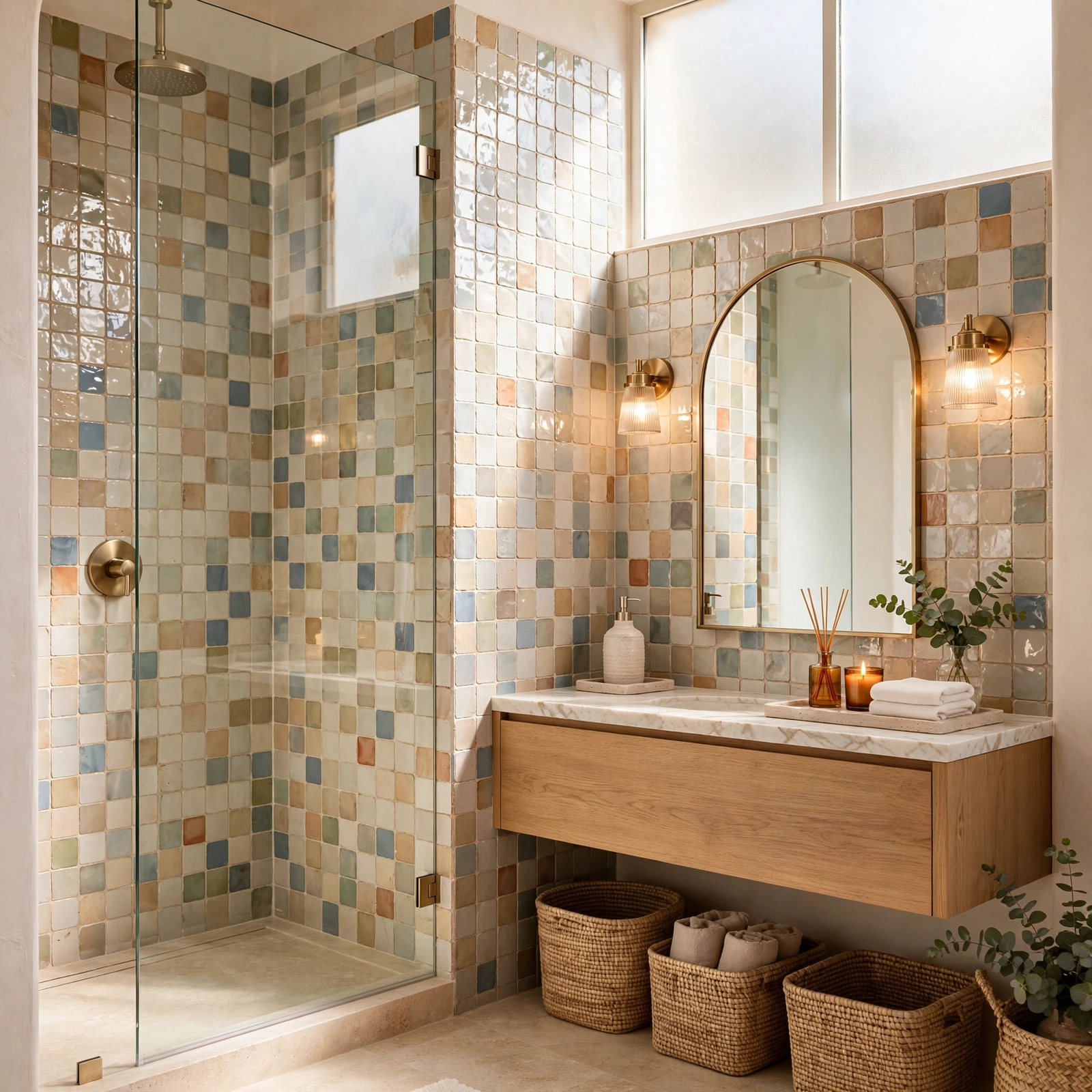
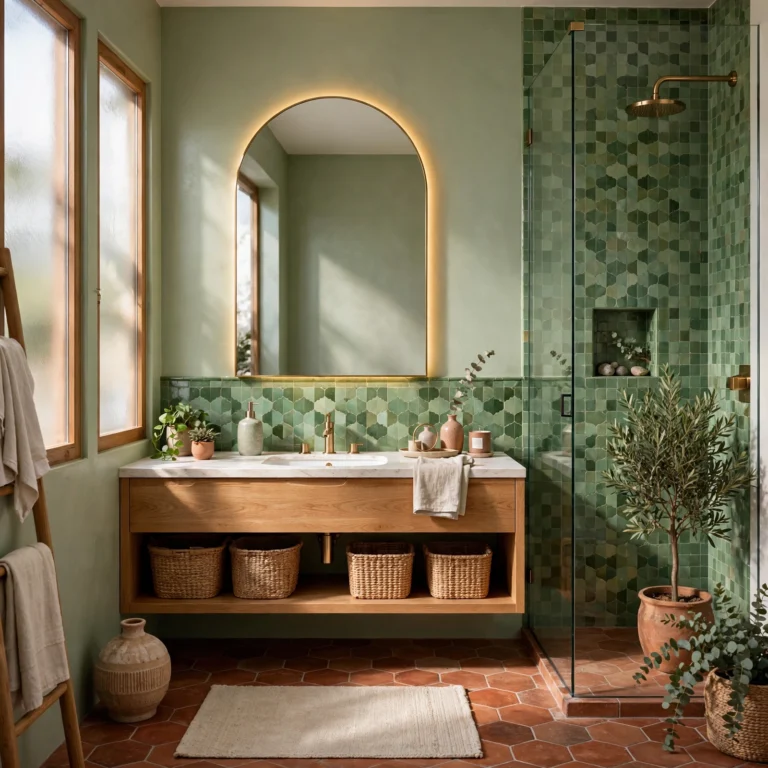
Zellige tile is a hand glazed ceramic tile made in Morocco, known for its slightly irregular edges and subtle variation in tone from one tile to the next, which gives an entire wall a handmade, textured look rather than a flat, uniform surface. It works especially well on a shower wall or as a backsplash, where the light catches the glaze differently across the surface throughout the day. Because each tile is made by hand, zellige costs more than standard ceramic tile and requires a skilled installer familiar with its irregular sizing.
2. Herringbone Pattern Bathroom Tile Ideas
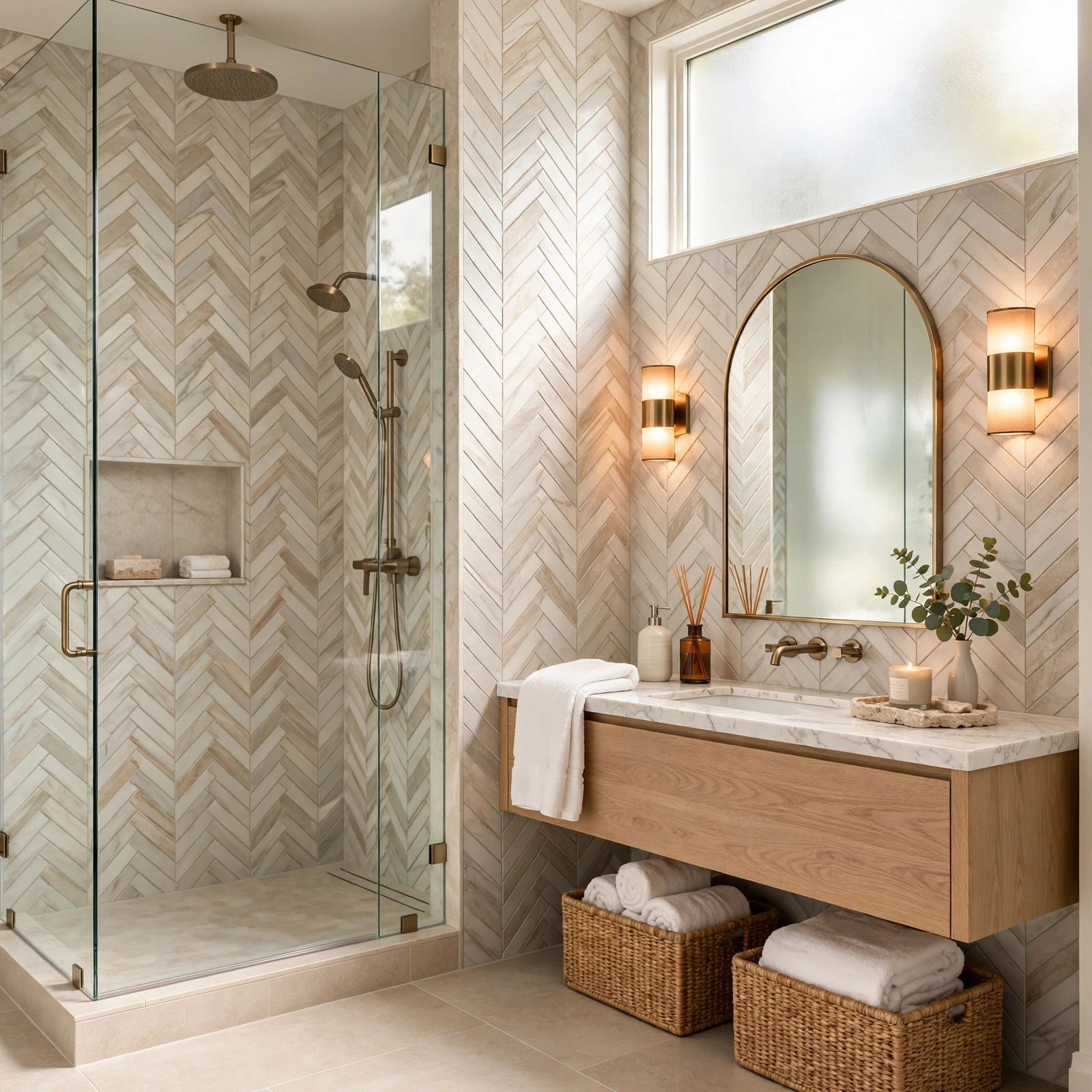
A herringbone pattern lays rectangular tiles at alternating forty five or ninety degree angles, creating a zigzag effect that adds movement to a floor or wall without needing a patterned tile itself. This layout works particularly well with a plain subway or marble tile, since the pattern itself becomes the main visual interest rather than the tile’s color or texture. Herringbone does require more cutting and a longer installation time than a straight or offset layout, so labor costs typically run higher for this pattern than for simpler options.
| Layout Pattern | Installation Difficulty | Visual Effect |
| Straight Stack | Low | Clean, minimal |
| Herringbone | High | Dynamic, textured |
| Basketweave | Moderate | Classic, structured |
3. Large Format Porcelain Slab Bathroom Tile Ideas
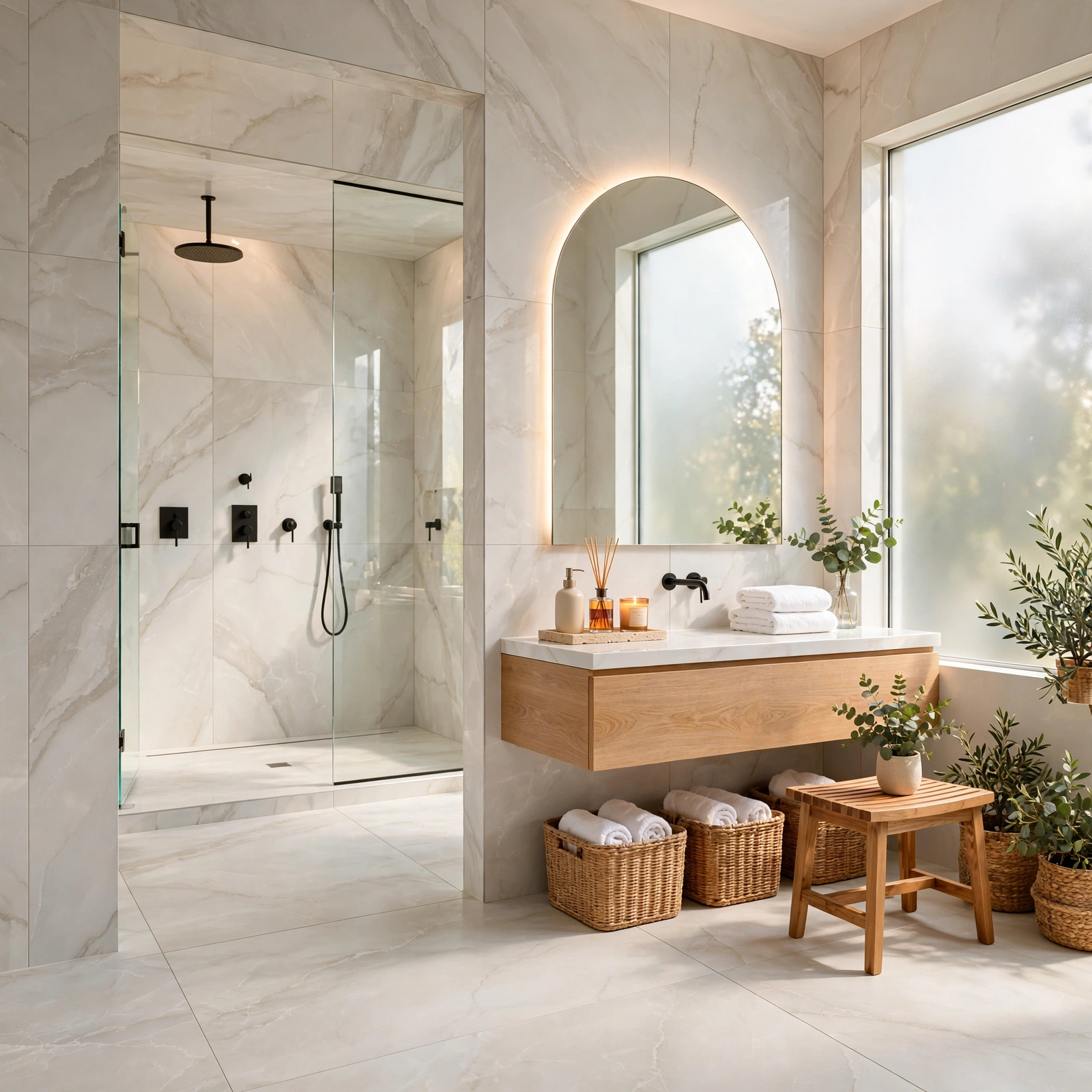
A large format porcelain slab refers to sheets of tile often reaching five feet or more in length, used to cover an entire shower wall or floor with just one or two seams total. This dramatically reduces the amount of visible grout, which cuts down on cleaning and the risk of mold building up in grout lines over time. Because the slabs are heavy and require precise cutting, installation generally needs a specialized contractor experienced with large format material rather than a standard tile installer.
Learn More About Half Bathroom Ideas.
4. Subway Tile Bathroom Ideas
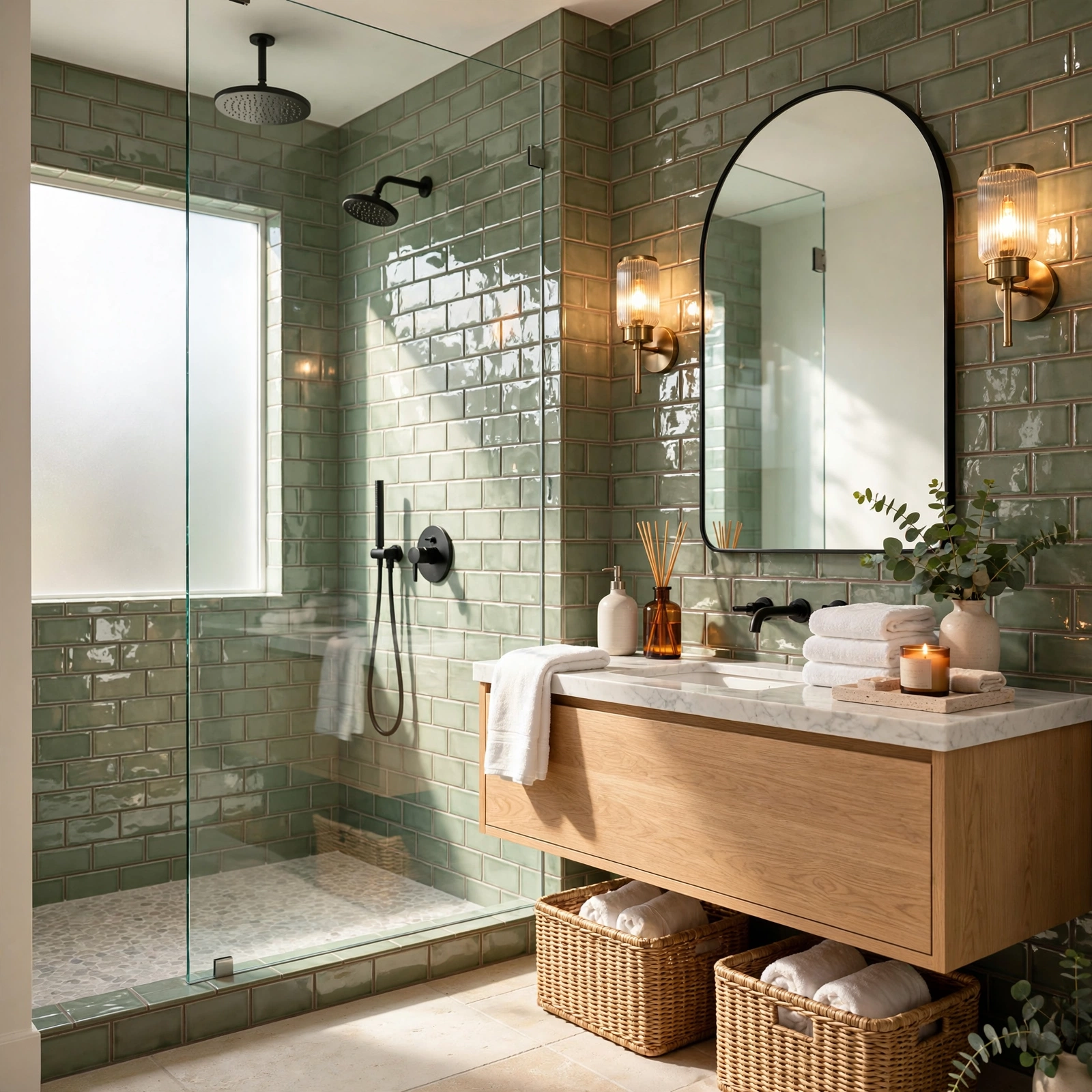
Subway tile, the classic three by six inch rectangular ceramic tile, remains one of the most affordable and widely available options for a bathroom wall or shower surround. Laying it in a vertical stack pattern instead of the traditional offset brick pattern gives a more current look without changing the tile itself or adding cost. Subway tile also comes in a wide range of finishes now beyond basic white, including a matte black or a soft celadon green, which keeps this budget friendly option from feeling dated.
| Subway Tile Finish | Approx. Cost per Sq Ft | Feel |
| Glossy White | $1 $4 | Classic, bright |
| Matte Colored | $4 $8 | Current, understated |
| Handmade Ceramic | $8 $15 | Textured, artisanal |
5. Penny Tile Bathroom Ideas
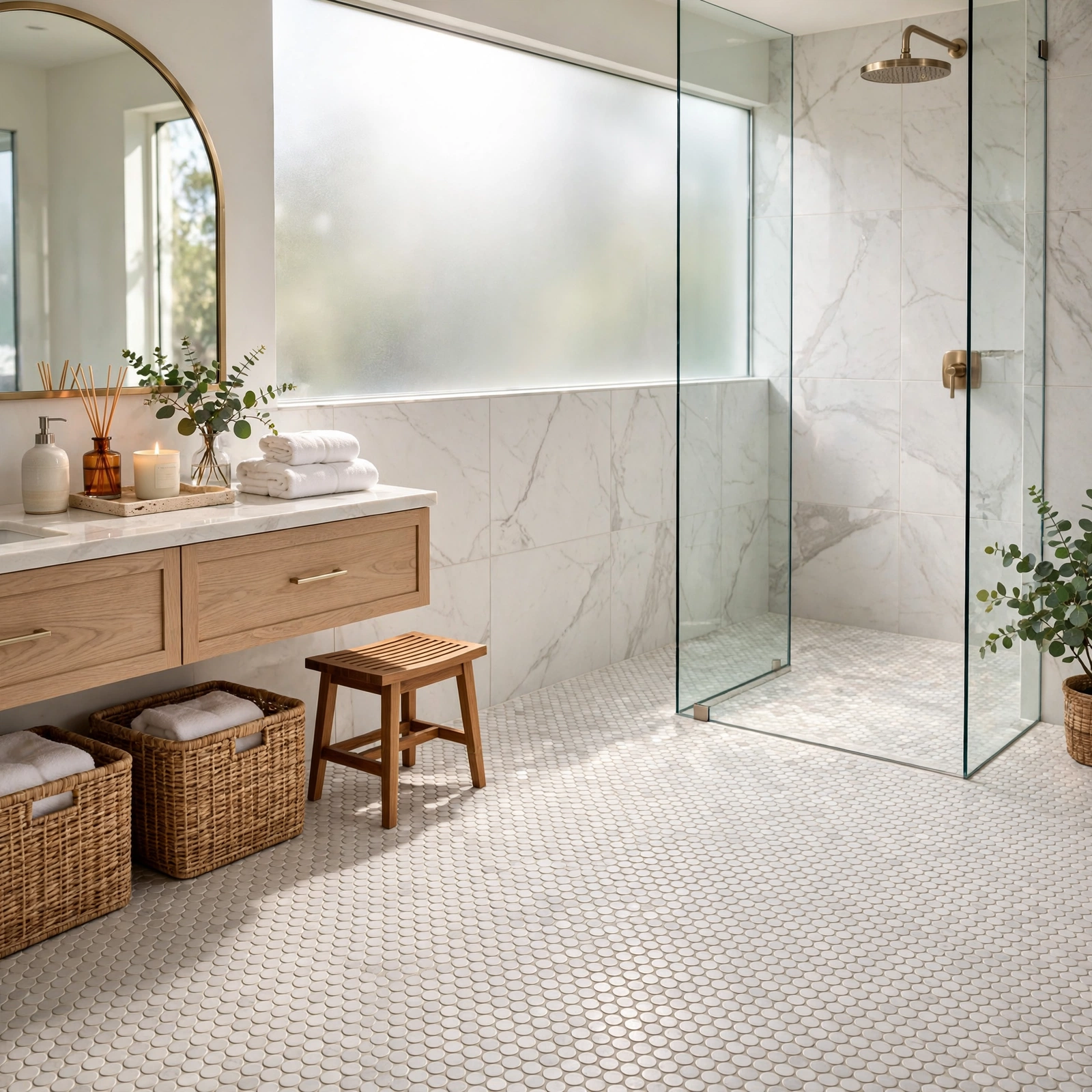
Penny tile consists of small, round tiles, typically about three quarters of an inch across, arranged in a mosaic sheet that works especially well on a bathroom floor where a smaller pattern reads better than a large single tile. Because the tiles are small, penny tile also handles the slope needed around a shower drain more easily than a rigid, large format tile would. A two tone penny tile pattern, such as white with a black dot every few tiles, adds subtle detail without overwhelming the small floor area typical of most bathrooms.
6. Fluted Tile Bathroom Ideas
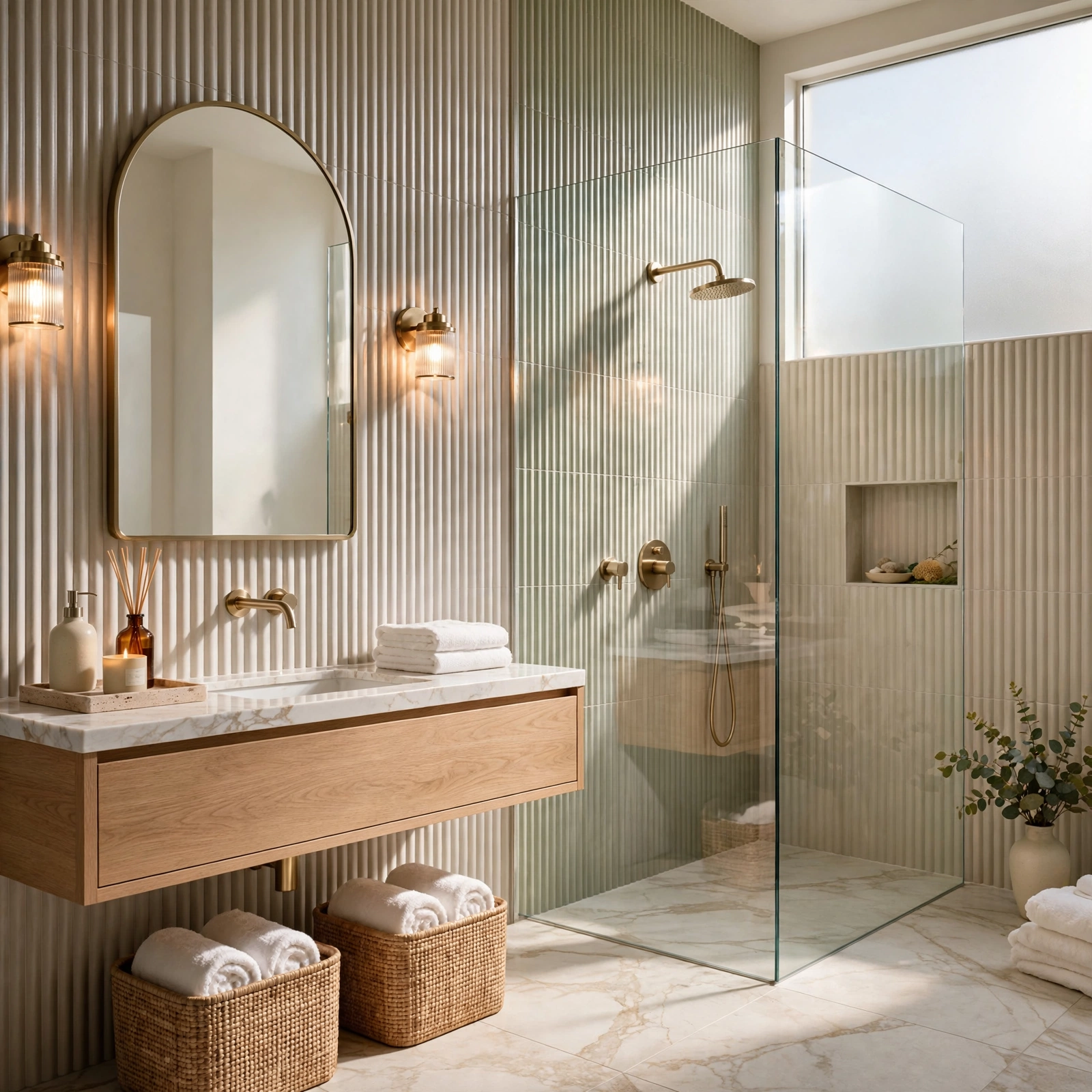
Fluted tile has a raised, ribbed surface texture running vertically across each piece, adding a three dimensional quality to a wall that a flat tile can’t replicate. This style works particularly well on a vanity backsplash or a half height accent wall, where the texture catches light and shadow as it changes throughout the day. Because the ridges collect more dust and grime than a flat surface, fluted tile is better suited to a wall that isn’t inside the direct shower spray zone.
7. Terrazzo Tile Bathroom Ideas
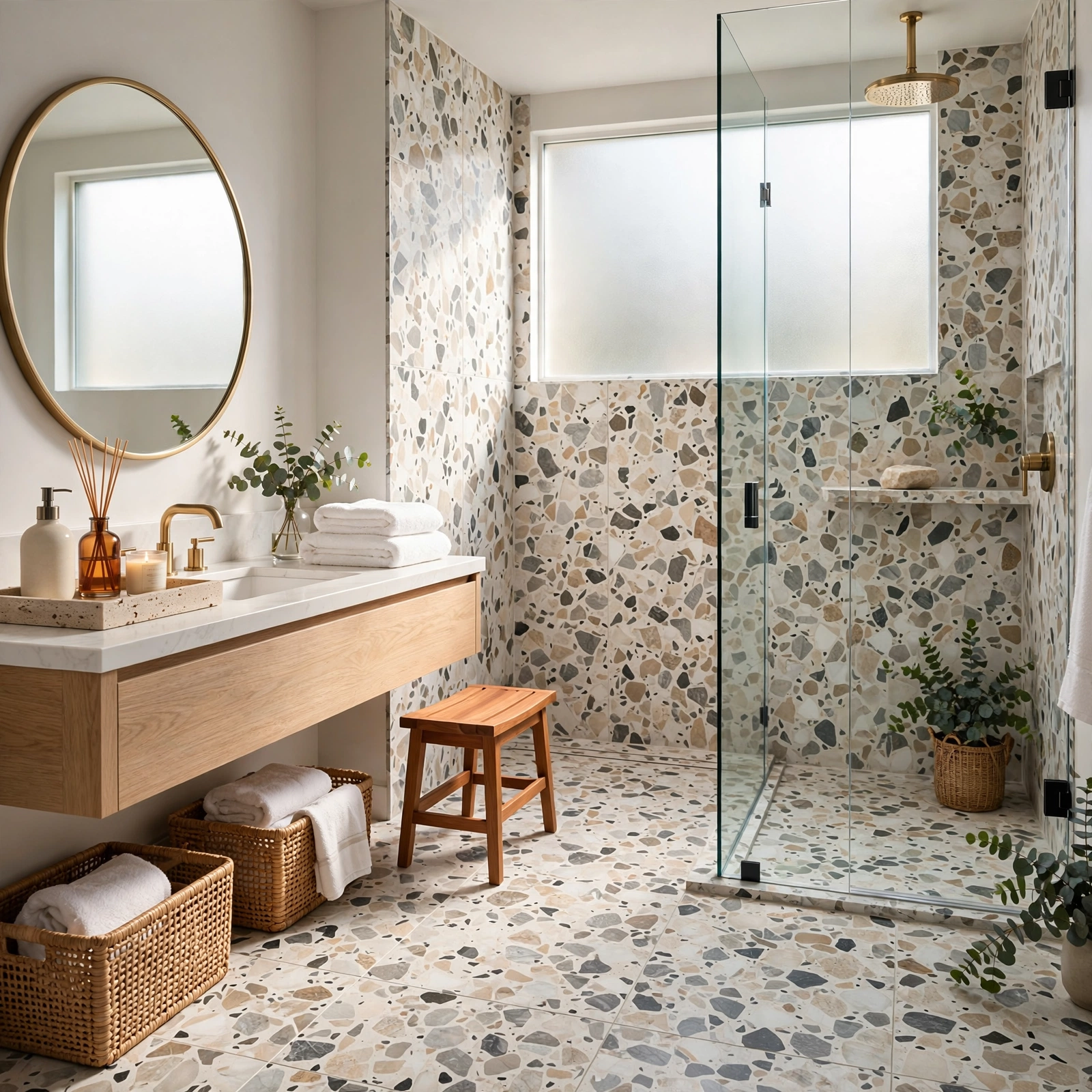
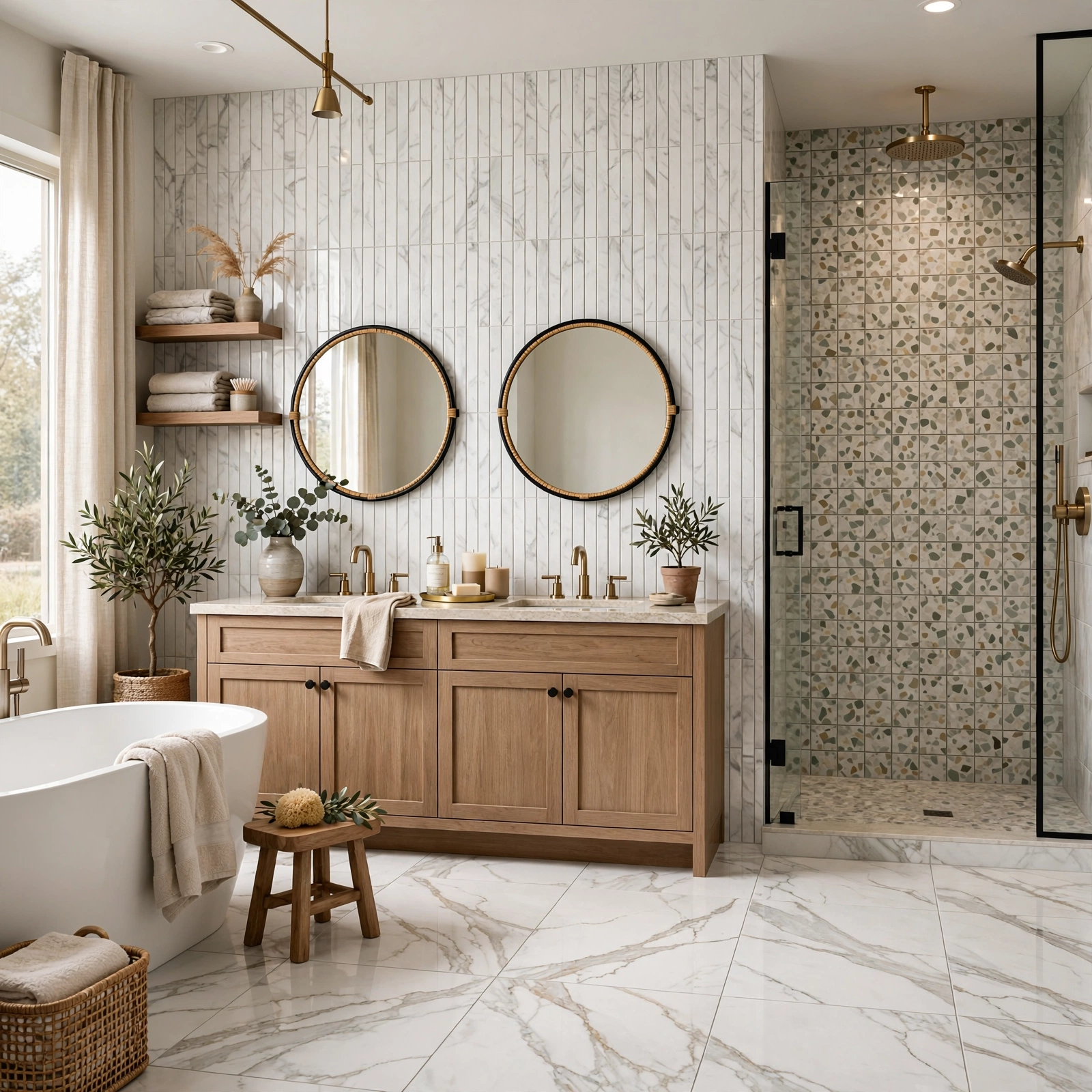
Terrazzo tile is made from chips of marble, quartz, or glass embedded in a cement or resin base, giving each tile a speckled, one of a kind pattern that reads as more custom than a solid color option. It works well on both floors and shower walls, and pairs naturally with brass fixtures and warm wood vanities for a softer, less clinical bathroom look. Terrazzo tile is available in both large format slabs and smaller standard tile sizes, which makes it flexible enough to fit a range of project budgets.
8. Marble Hexagon Tile Bathroom Ideas
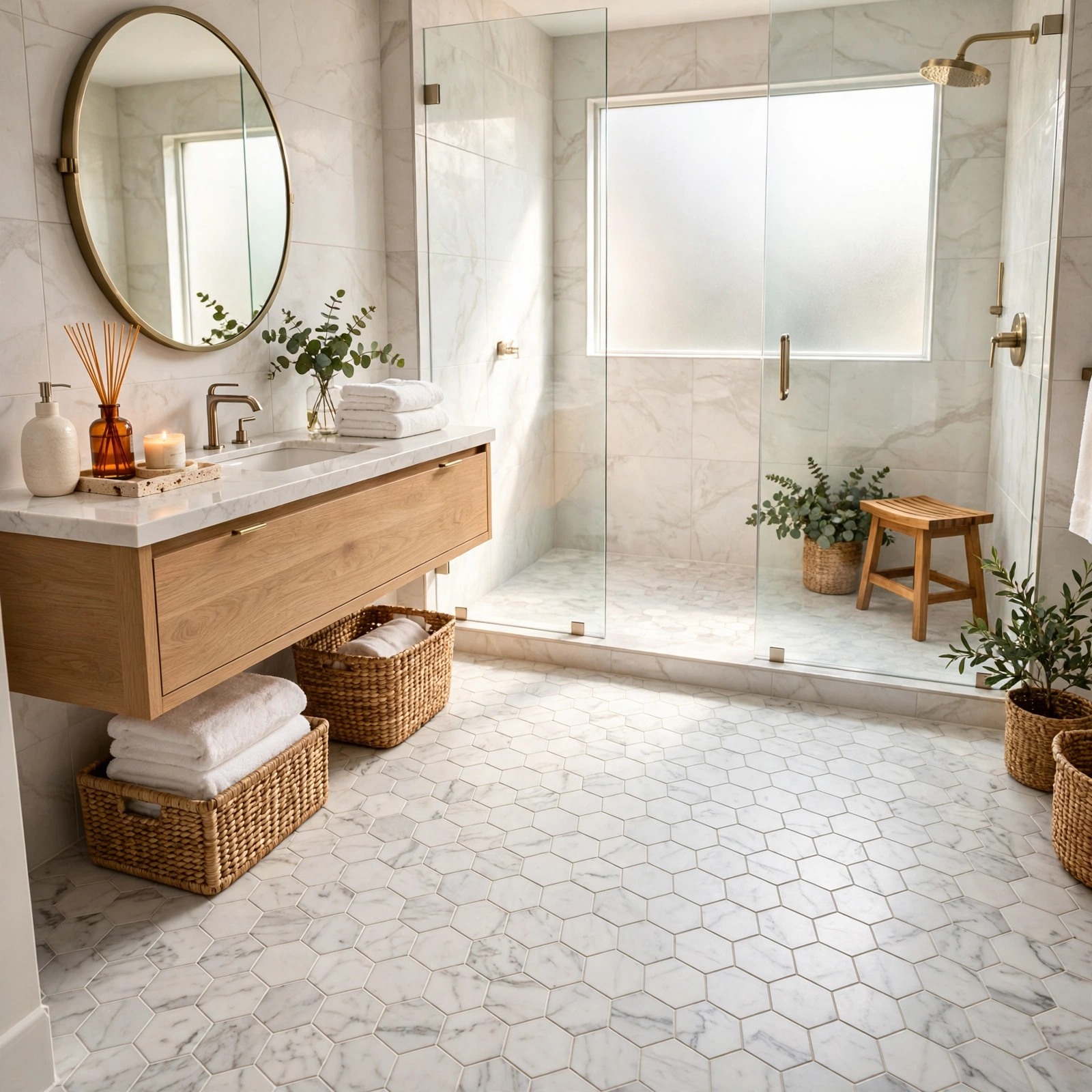
Marble hexagon tile brings natural stone into a bathroom through a small, geometric shape that reads as more detailed and higher end than a standard square tile, especially on a floor. Carrara and Calacatta marble are the most common choices, both offering white backgrounds with gray veining that varies from tile to tile. Because natural marble is porous, it requires periodic sealing to resist staining and etching from bathroom products, which is worth factoring into the long term maintenance plan before committing to this material.
| Tile Material | Porosity | Maintenance Level |
| Marble | High | Regular sealing needed |
| Porcelain | Low | Minimal upkeep |
| Terrazzo | Moderate | Occasional sealing |
9. Vertical Stack Bond Bathroom Tile Ideas
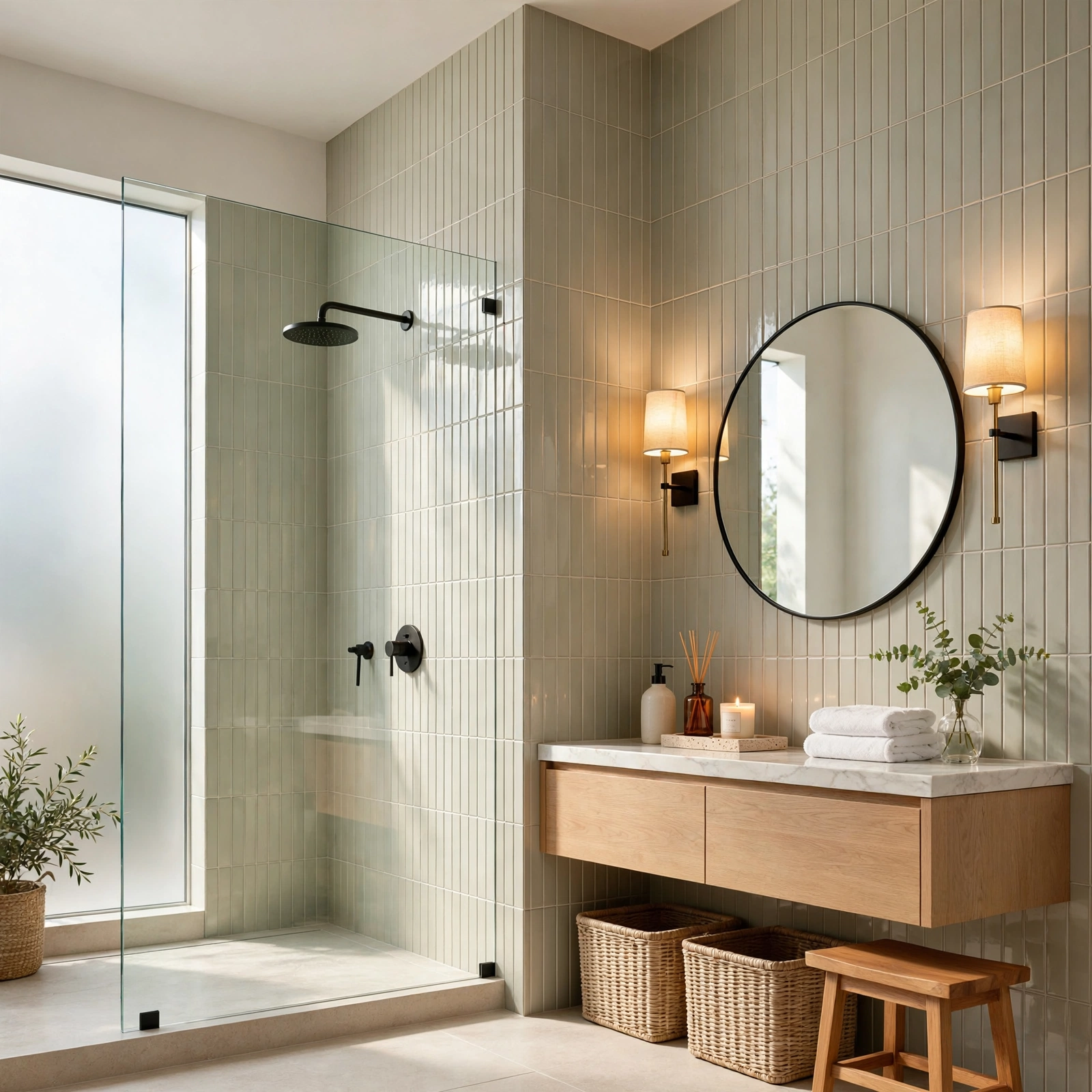
A vertical stack bond lines rectangular tiles up directly on top of one another rather than offsetting each row, which draws the eye upward and can make a bathroom with a lower ceiling feel slightly taller. This layout works best with a longer, narrower tile rather than a square one, since the vertical lines are what create the visual effect. Because the grout lines all align in a stack bond, the wall surface also needs to be especially flat and even, or the misalignment becomes more noticeable than it would with an offset pattern.
10. Accent Tile Niche Bathroom Ideas
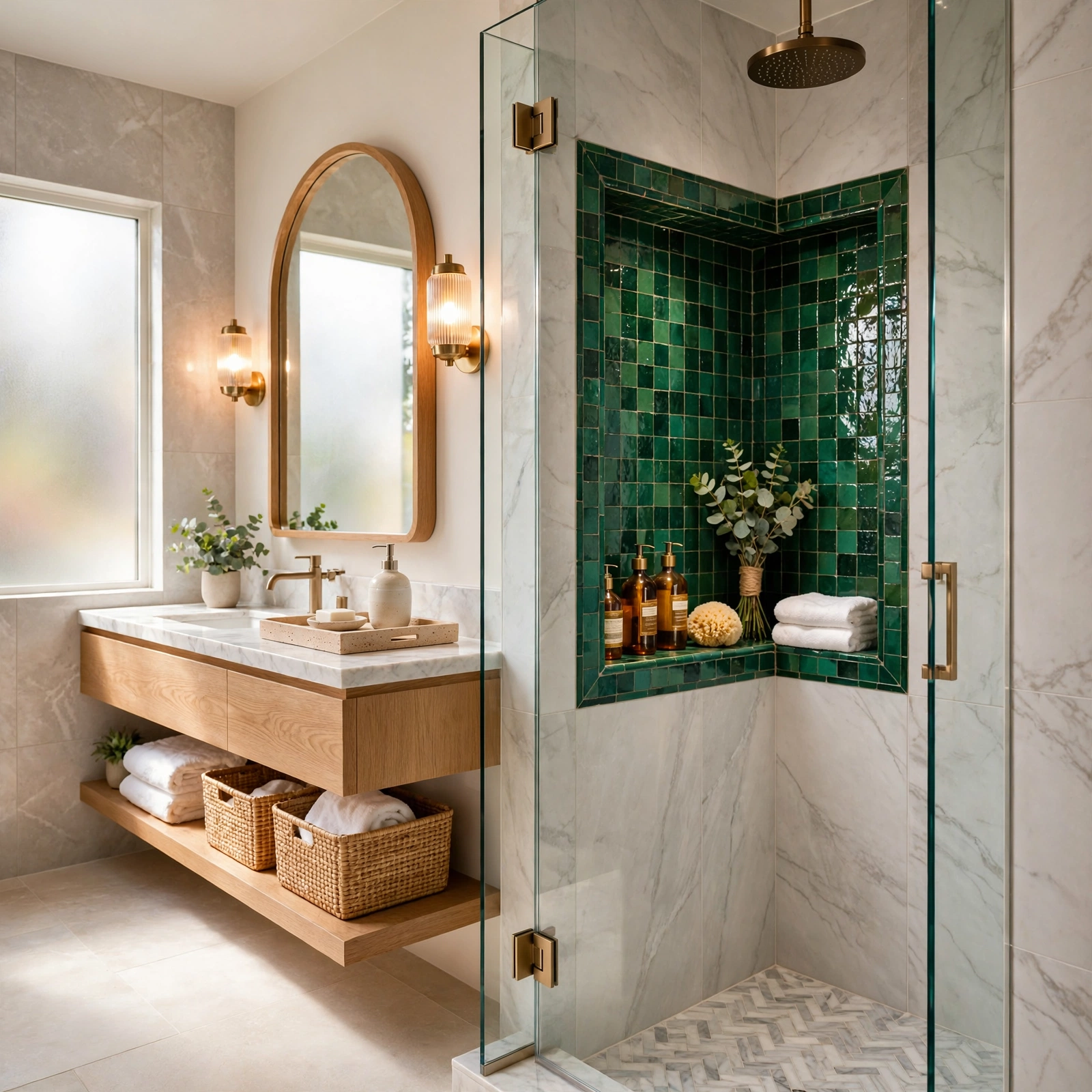
An accent tile niche uses a different tile inside a recessed shower shelf than what covers the rest of the shower wall, turning a purely functional storage spot into a small design detail. A mosaic or patterned tile inside the niche against a plain large format tile on the surrounding wall creates contrast without overwhelming the whole shower. Planning the niche during the framing stage, before drywall goes up, is considerably easier and cheaper than adding one into an already finished and tiled shower wall.
11. Encaustic Cement Tile Bathroom Ideas
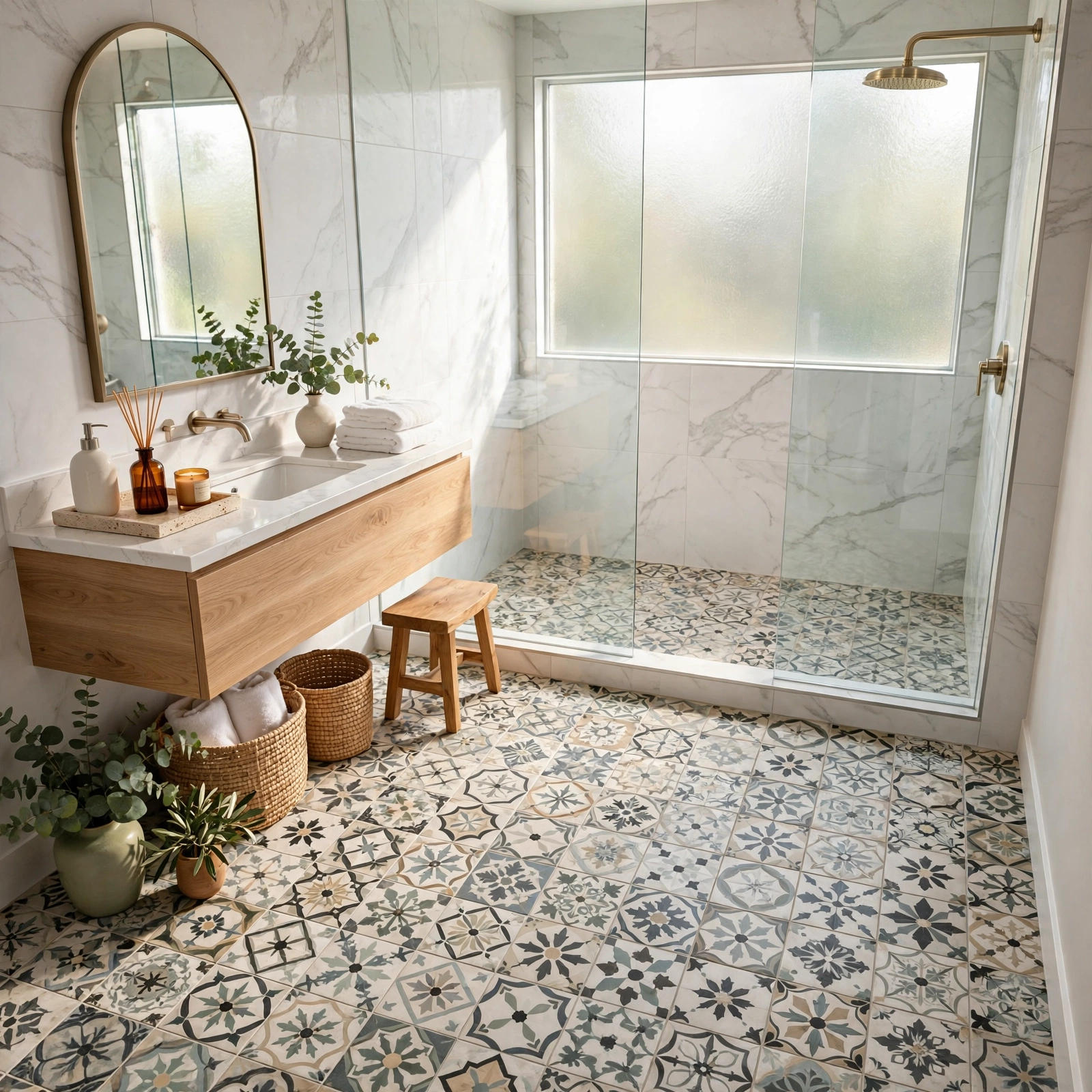
Encaustic cement tile is made by pouring pigmented cement into a mold rather than firing clay like ceramic tile, resulting in a matte surface with bold, often geometric patterns that go all the way through the material rather than sitting on a glazed top layer. This makes it a strong choice for a bathroom floor, since the pattern won’t wear away even with years of foot traffic. Because cement tile is porous, it needs to be sealed both before grouting and periodically afterward to prevent staining from water and cleaning products.
12. Basketweave Mosaic Bathroom Tile Ideas
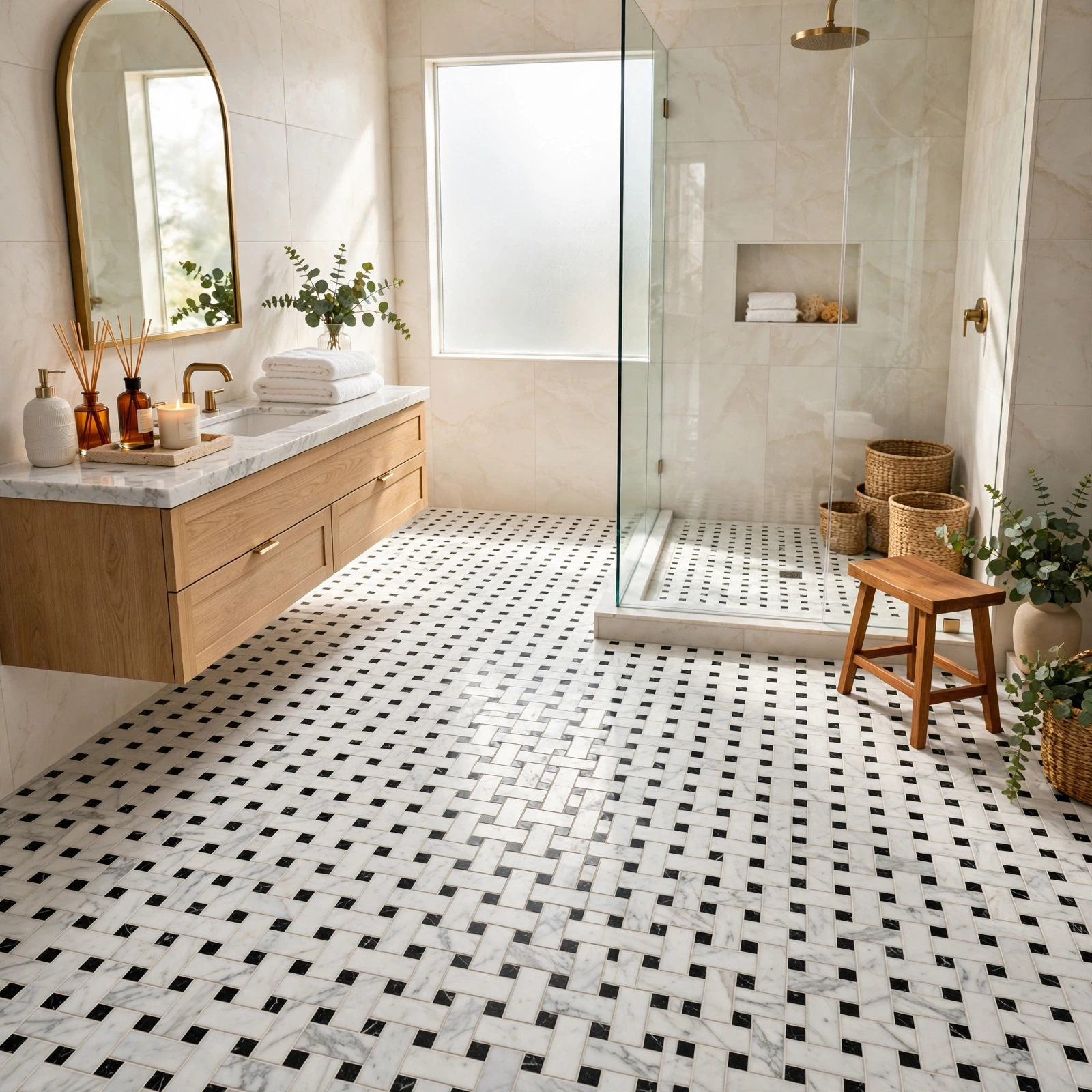
A basketweave mosaic arranges small rectangular tiles in a pattern that mimics the over under weave of a basket, typically using a combination of white marble or ceramic tile for a classic, timeless look. This pattern works especially well on a bathroom floor, where the smaller scale of the mosaic sheet handles curves and drain slopes more easily than a large tile would. Adding a single dark accent tile at each intersection point gives the pattern more definition without requiring a full color change across the floor.
13. Textured Matte Tile Bathroom Ideas
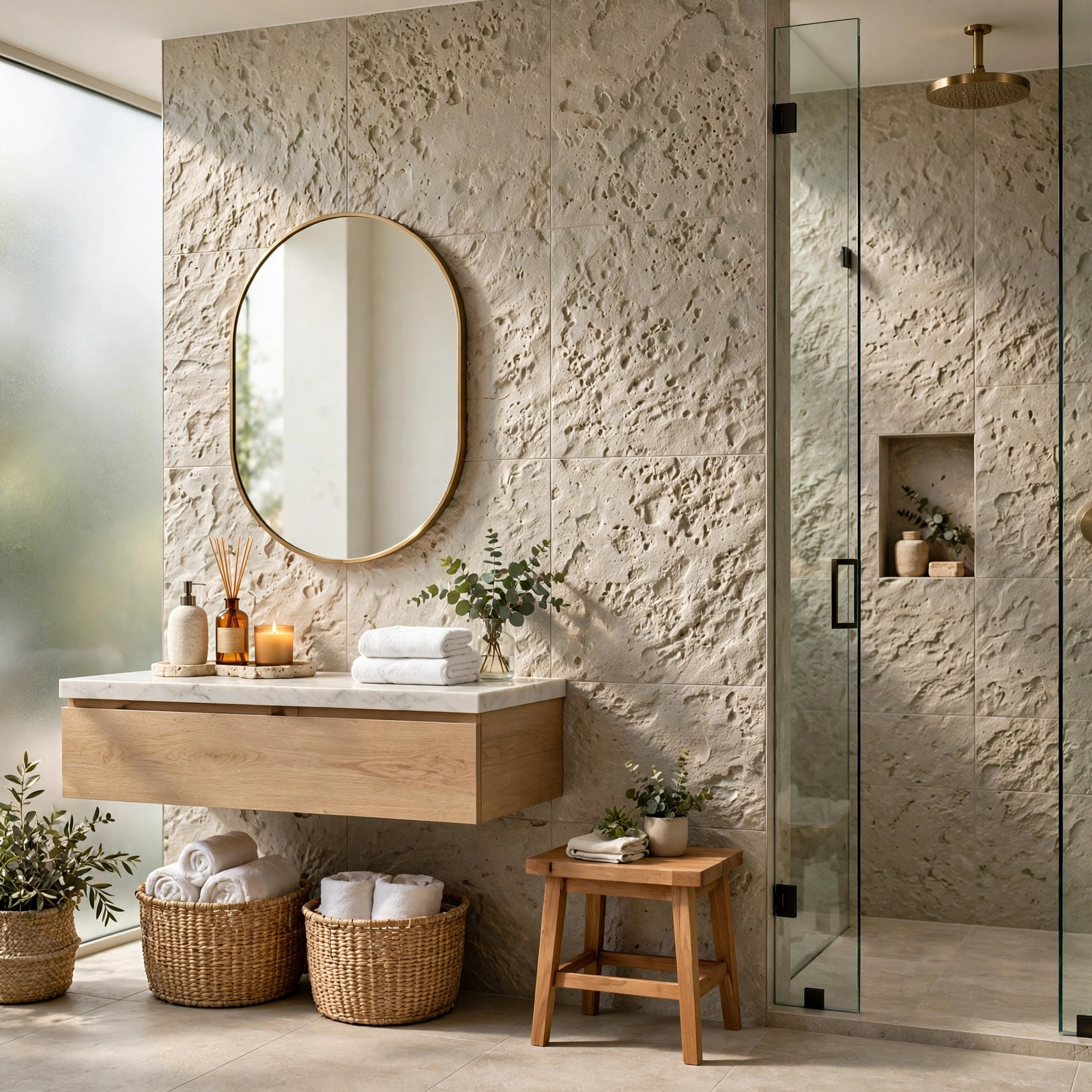
Textured matte tile has a slightly raised or hand finished surface instead of the smooth, reflective glaze found on standard ceramic or porcelain, which reduces glare under bathroom lighting and hides water spots better between cleanings. This finish works well on both shower walls and floors, though a textured floor tile also provides more slip resistance, which matters in a room that’s frequently wet. Pairing a matte tile with polished brass or chrome fixtures creates a bit of contrast between the soft wall finish and the fixtures themselves.
14. Half Tiled Wainscot Wall Bathroom Ideas
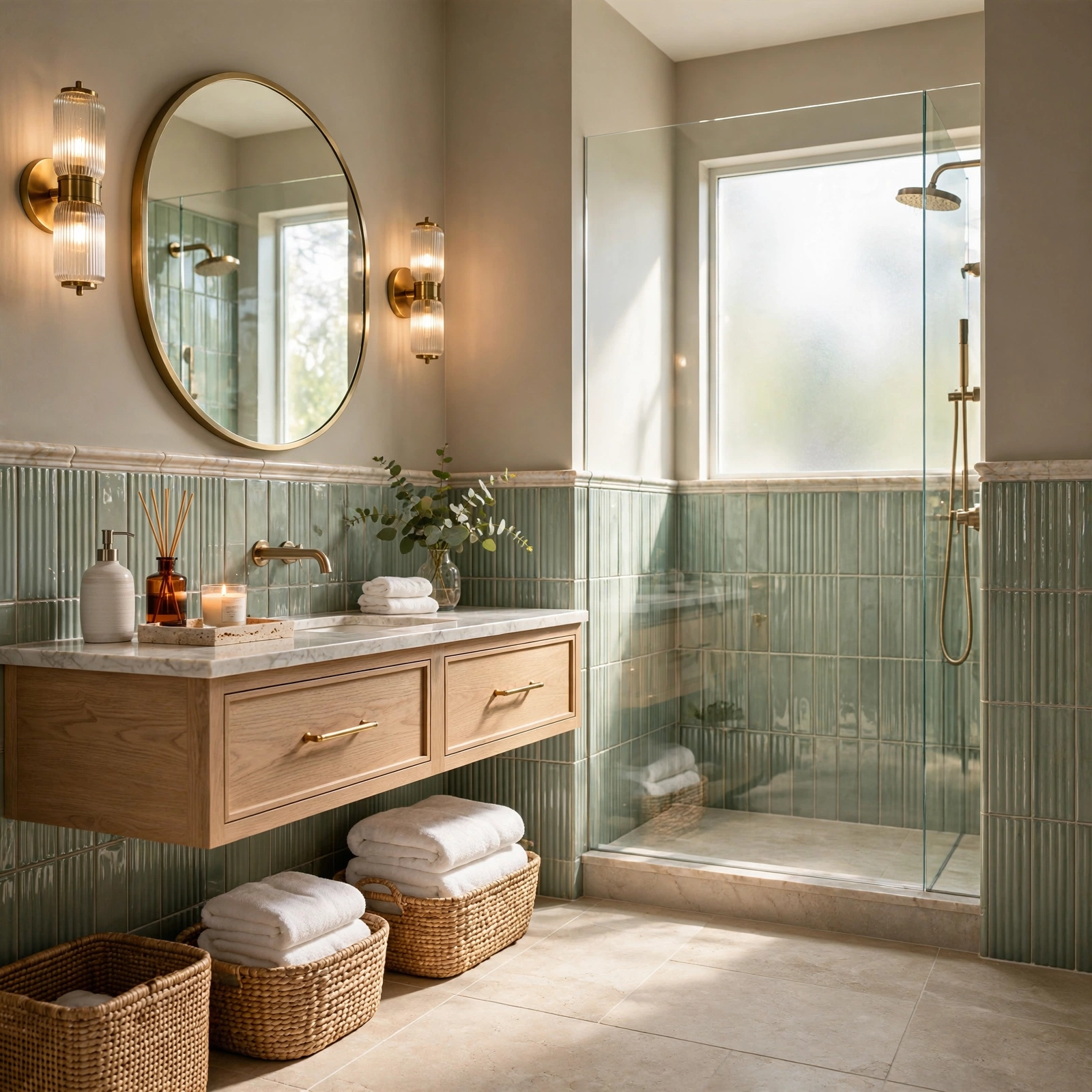
A half tiled wainscot wall covers only the lower portion of a bathroom wall, typically up to about chair rail height, with tile transitioning to paint or wallpaper above that line. This approach costs less than tiling a full wall floor to ceiling while still protecting the lower wall from water splashes near the sink or toilet. A contrasting paint color above the tile line, rather than a matching one, gives the wainscot a more deliberate, finished look instead of appearing like an unfinished project.
15. Contrasting Grout Color Bathroom Tile Ideas
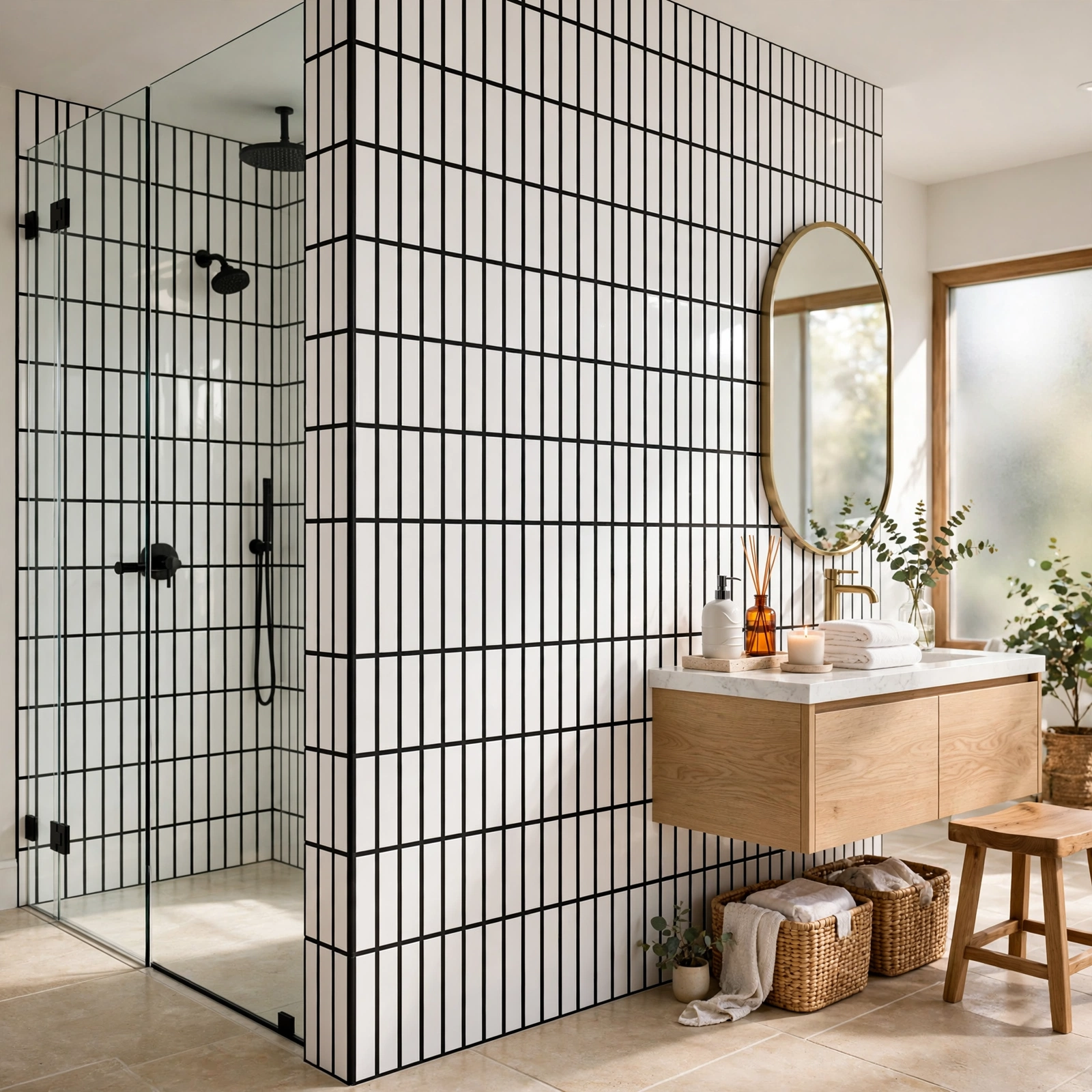
Contrasting grout color pairs a tile with a grout shade that’s noticeably darker or lighter than the tile itself, which outlines each individual piece and makes the layout pattern far more visible than a matching grout would. This works particularly well with subway tile or a geometric pattern like herringbone, where the pattern itself is meant to be a focal point. A matching grout, by comparison, blends the tiles together into a more uniform surface, which suits a large format slab or a busier, more textured tile better than a simple rectangular one.
| Grout Approach | Visual Effect | Best Paired With |
| Matching Grout | Seamless, blended | Large format, textured tile |
| Contrasting Grout | Graphic, defined pattern | Subway tile, herringbone |
| Colored Grout | Bold, decorative | Patterned mosaic, penny tile |
Shop the Look
A well planned bathroom tile scheme usually combines two or three materials rather than one tile used everywhere. A zellige tile in a soft celadon or clay tone works well as a shower wall accent. A large format porcelain slab in a warm white or light gray covers the main floor and remaining shower walls with minimal grout lines. A marble hexagon mosaic adds detail to the vanity floor area or a small accent niche. Brass or matte black grout lines and fixtures tie the different tile materials together into one cohesive palette.
Common Bathroom Tile Ideas Mistake to Avoid
The most common mistake is choosing too many different tile patterns or materials in one small room, which can make even a well executed bathroom feel chaotic rather than intentional. A floor pattern, a shower wall pattern, and a separate accent tile all competing for attention leaves no single element as the clear focal point. Picking one statement tile, whether that’s a patterned floor or a textured shower wall, and keeping the remaining surfaces simpler gives the eye a place to land and keeps the overall design feeling planned.
Frequently Asked Questions
What is the most durable tile for a bathroom floor?
Porcelain tile is generally considered the most durable option for a bathroom floor because it’s dense, low porosity, and resistant to both water absorption and scratching compared to natural stone or ceramic. It also comes in a wide range of finishes now, including options that mimic the look of marble or cement tile without the higher maintenance those natural materials require. For a floor with heavy daily use, porcelain typically holds up better over time than any natural stone option.
How much does it cost to retile a shower?
Retiling a standard shower typically costs between fifteen hundred and five thousand dollars, depending on the tile material chosen and whether any plumbing or waterproofing work is needed underneath. Basic ceramic subway tile sits at the lower end of that range, while handmade zellige or natural stone can push costs toward the higher end once labor and sealing are factored in. Labor generally makes up a larger portion of the total cost than the tile material itself.
Should the shower floor tile match the wall tile?
Shower floor tile does not need to match the wall tile, and many bathrooms use a smaller mosaic or penny tile on the floor specifically because it handles the slope toward the drain better than a larger wall tile would. A complementary but distinct floor tile, often in a similar color family as the wall, tends to look more intentional than trying to force one tile to work in both applications. The floor tile should also have more slip resistance than a wall tile.
Is patterned tile a good long term choice or just a trend?
Patterned tile, particularly encaustic cement or classic mosaic layouts like basketweave, has remained a design staple for well over a century rather than a short lived trend, which suggests it holds up well over time. The key to longevity is choosing a pattern with a more classic geometric structure rather than an overly specific color trend that might feel dated in a decade. A neutral color palette within the pattern also helps it stay relevant longer than a bold, saturated color choice would.
Can I tile over an existing bathroom tile?
Tiling over existing tile is possible in some cases, provided the existing surface is flat, structurally sound, and free of any cracks or loose sections, since new tile needs a stable base to bond to properly. This approach can save on the cost and mess of demolition, though it does raise the finished floor height slightly, which can affect door clearance and transitions to adjoining rooms. A professional assessment is recommended before deciding whether this shortcut will work for a specific bathroom.
Conclusion
These bathroom tile ideas show just how much size, pattern, and material choice can shape the final look of a room, often more than color alone. Start with one statement tile, whether that’s a zellige shower wall or a patterned cement floor, and build the rest of the palette around it. Save this post to Pinterest for your next tile project, and check out our related post on small bathroom layout ideas for more space planning tips.