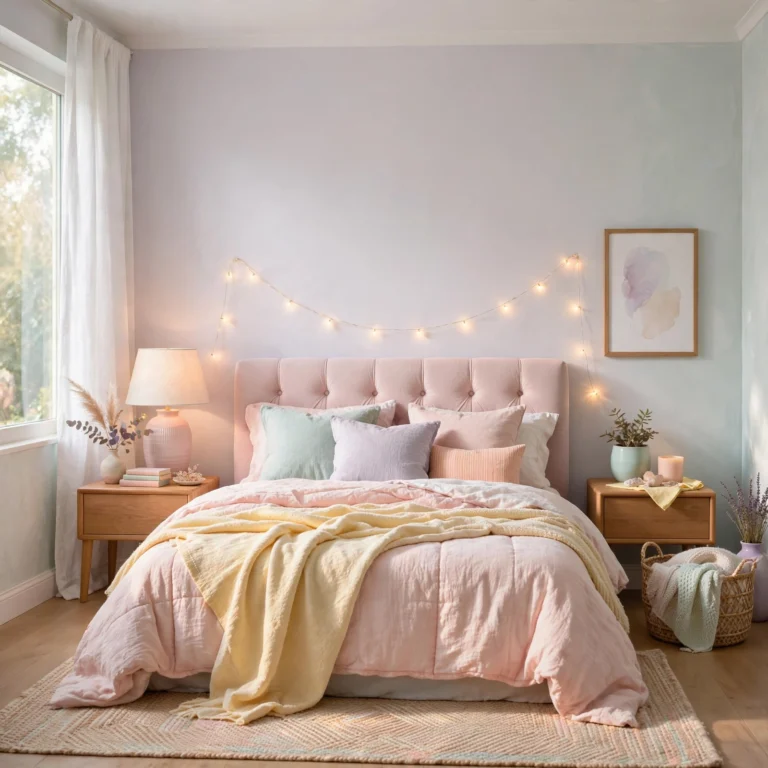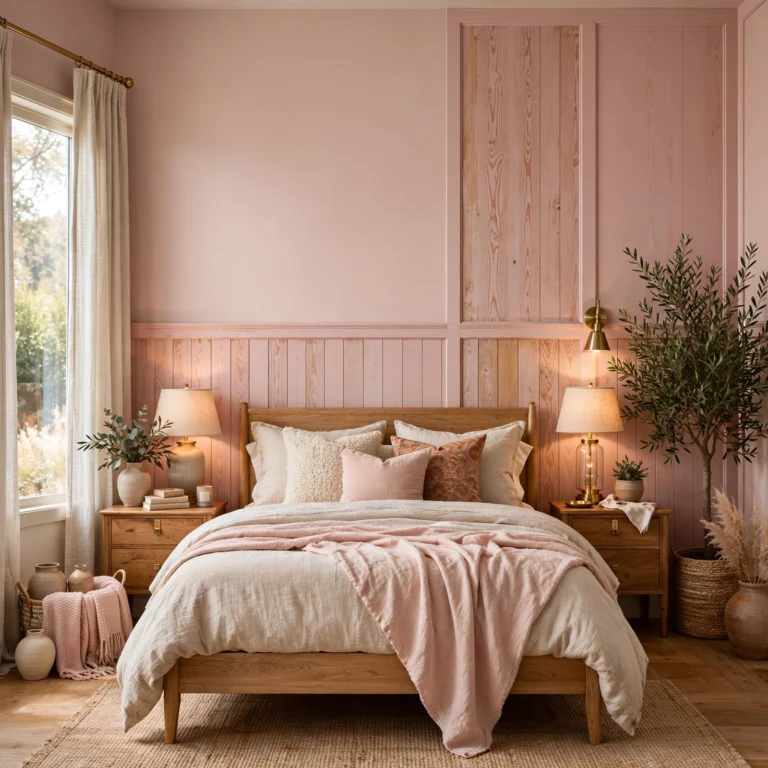
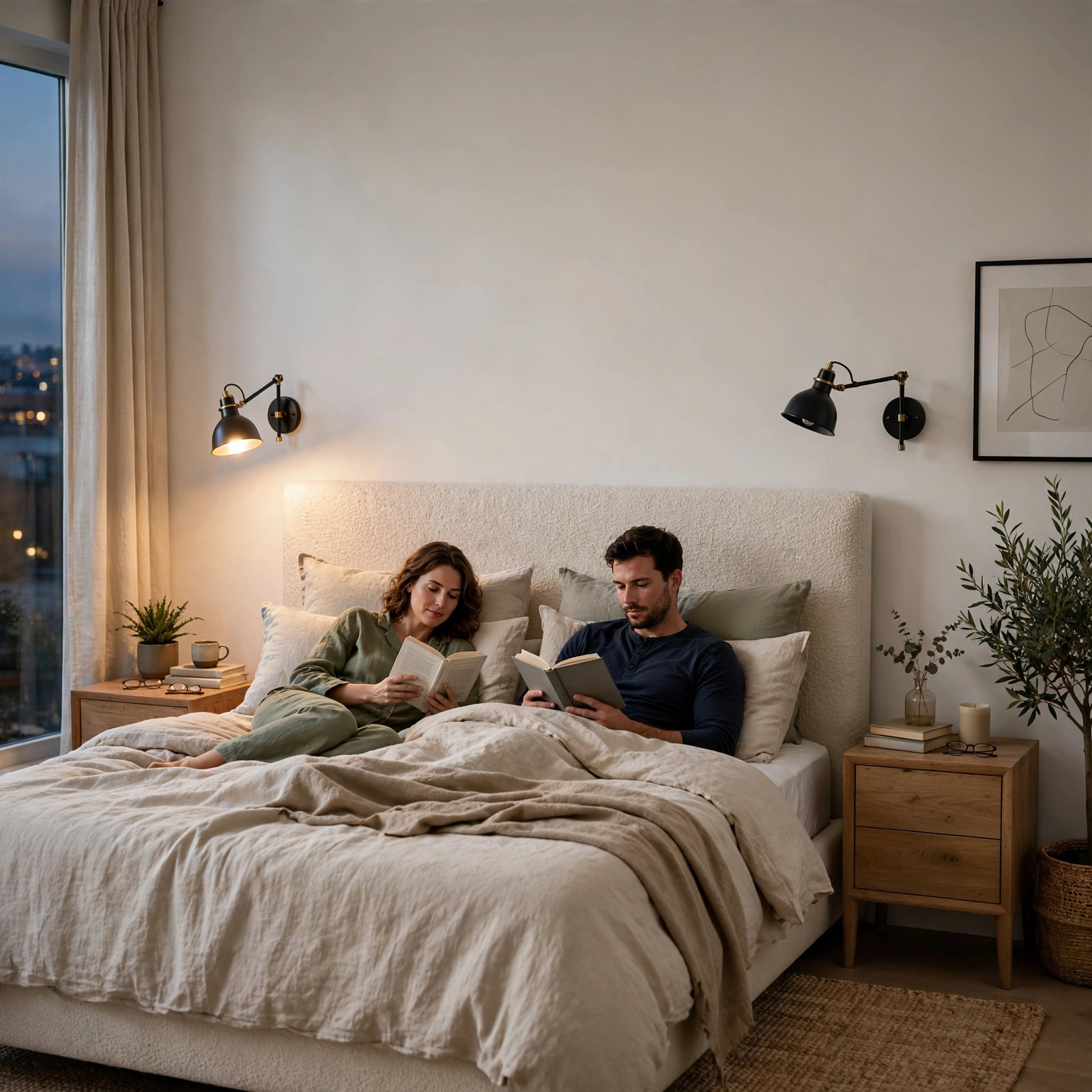
12 Trending Bedroom Ideas for Couples Sharing a Space
Sharing a bedroom with a partner means designing around two sets of habits, storage needs, and style preferences instead of just one. These twelve bedroom ideas for couples cover layout choices, storage solutions, and lighting setups that help a shared space feel balanced and functional rather than like one person’s room with a second side tacked on. By the end, you’ll have specific updates that work whether you’re furnishing a bedroom from scratch or adjusting an existing one to better fit two people.
Trend & Background
As more couples share smaller apartments and starter homes, bedroom design has shifted toward layouts that intentionally divide space and storage rather than assuming one shared closet and dresser will work for two people. Designers have also leaned into compromise palettes, blending each partner’s preferences into a single cohesive scheme rather than letting one person’s taste dominate the room. This matters now because mismatched schedules, from different work hours to different sleep habits, have made features like independent lighting and blackout options more relevant to how couples actually use a bedroom day to day.
Key Takeaways
- Bedroom ideas for couples focus on balancing two people’s storage, style, and routines within a single shared room.
- Symmetrical furniture layouts, like matching nightstands, help a shared bedroom feel equally divided rather than favoring one person’s side.
- Separate storage zones and a shared neutral palette reduce the visual clutter that comes from combining two wardrobes and routines.
- Layered, dimmable lighting supports different sleep and wake schedules without one partner disrupting the other.
1. Matching Nightstands
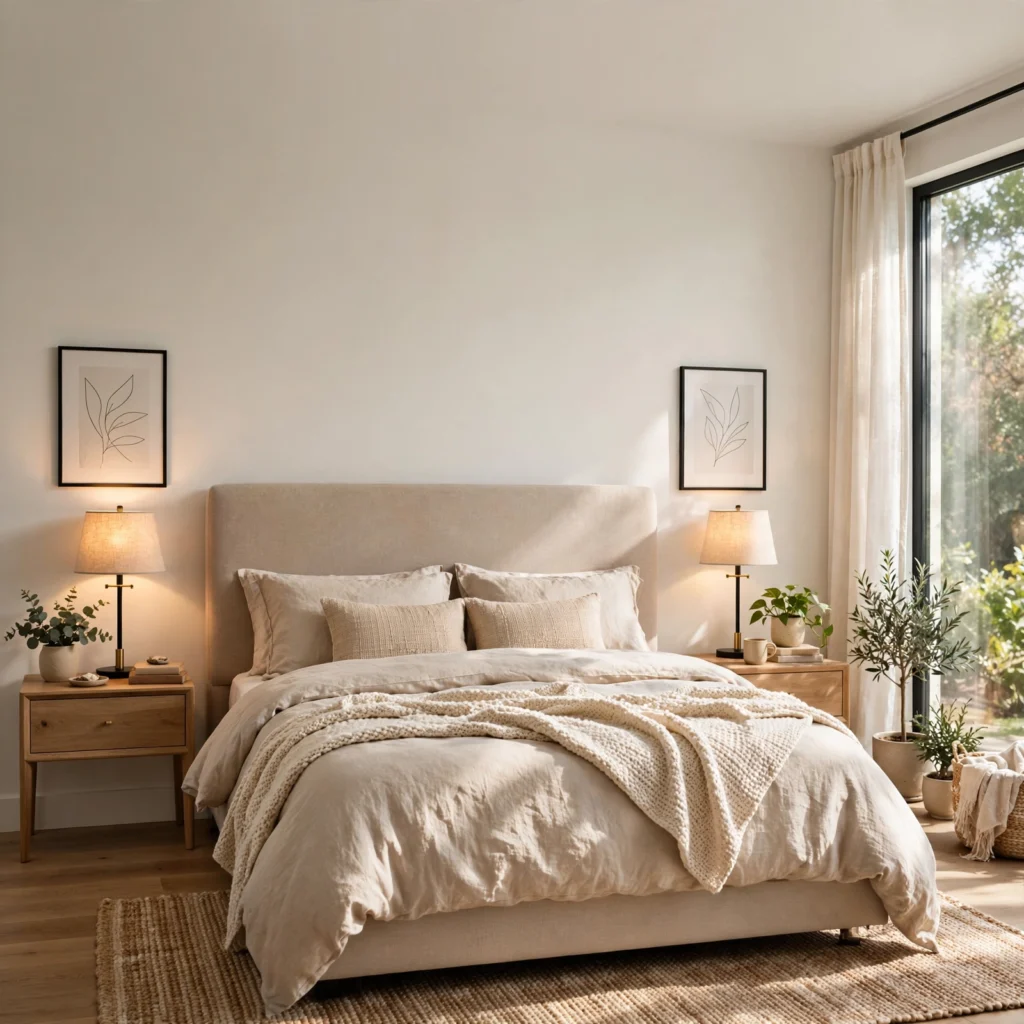
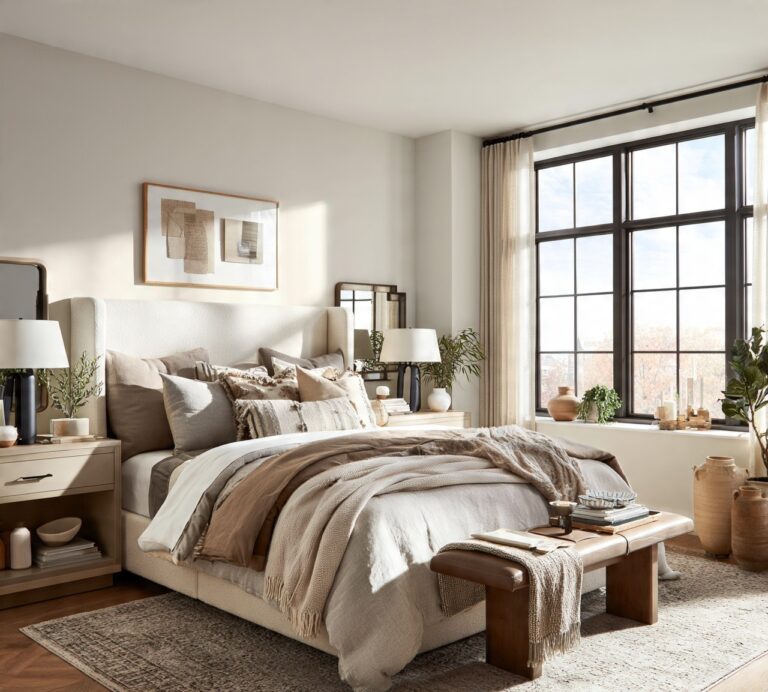
Placing a nightstand of the same size and style on each side of the bed creates visual balance and signals that the room is shared equally between both people. This works even when the rest of the room’s furniture varies in style, since the symmetry at the bed itself tends to have the biggest visual impact. Choosing nightstands with at least one drawer each also gives both partners a private, contained storage spot for personal items.
| Furniture Element | Symmetrical Approach | Best For |
| Nightstands | Matching pair | Most shared bedrooms |
| Reading Lamps | Matching pair, independent switches | Different sleep schedules |
| Closet Storage | Split evenly by zone | Two full wardrobes |
2. His-and-Hers Closet Zones
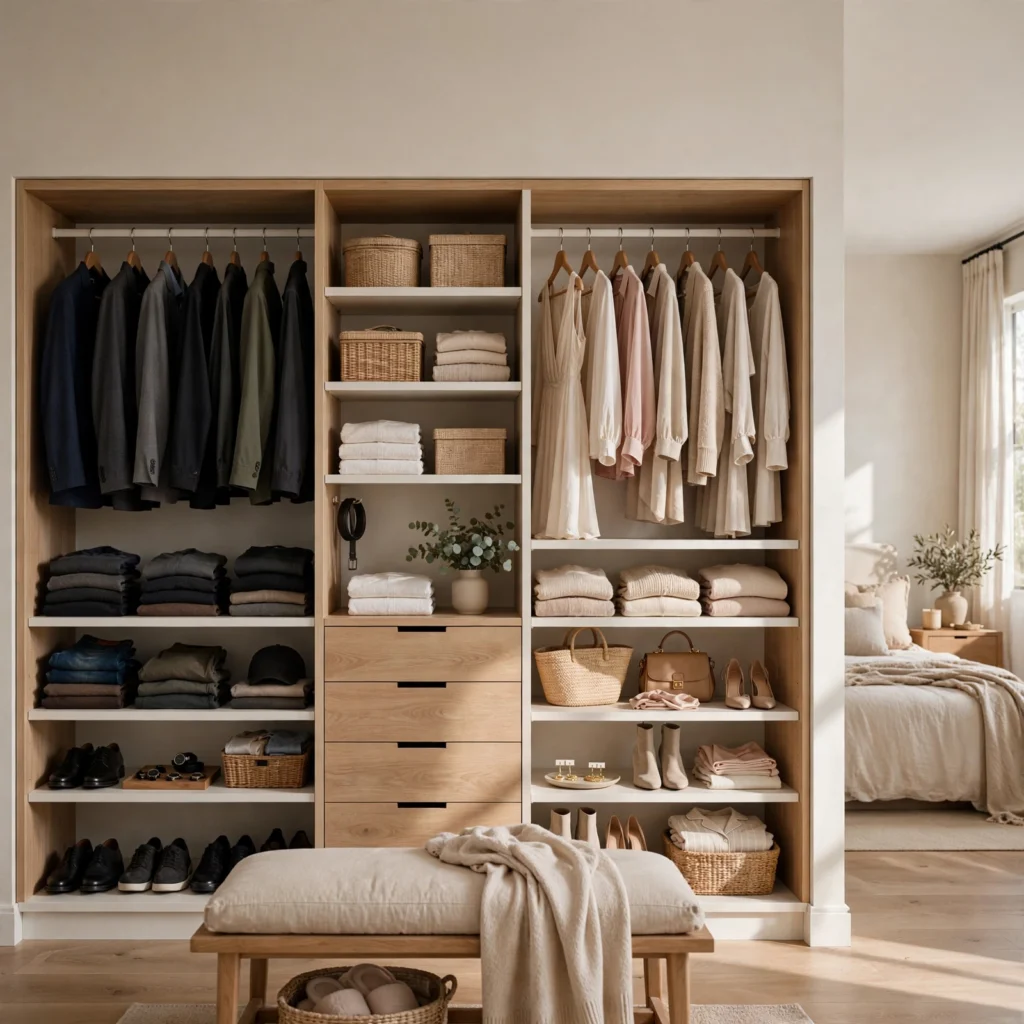
Dividing an existing closet into two clearly defined zones, rather than mixing both partners’ clothing together, makes daily dressing faster and reduces the friction of searching through a combined space. This can be as simple as designating one side for each person or adding a visual divider, like a different rod height or a labeled shelf section. In smaller closets, adding vertical dividers or stackable bins helps make the split feel more intentional than just a rough halfway point.
3. Independent Reading Lights
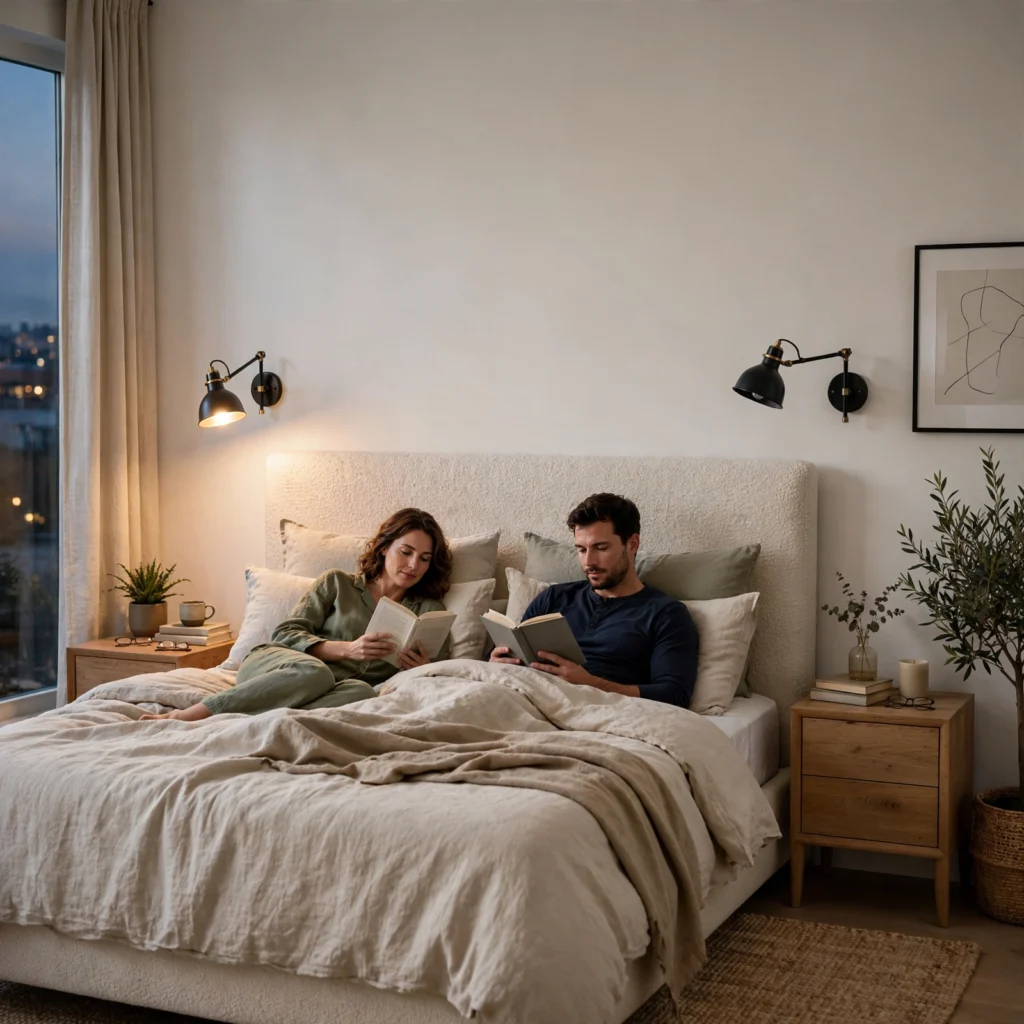
Wall-mounted or clip-on reading lights installed on each side of the bed let one partner read or scroll on their phone without disturbing the other if bedtimes don’t align. Choosing fixtures with individual switches, rather than a single shared lamp, matters more here than the specific style chosen. This setup also frees up nightstand surface space compared to a traditional table lamp on each side.
4. Neutral Base with Two Accent Colors
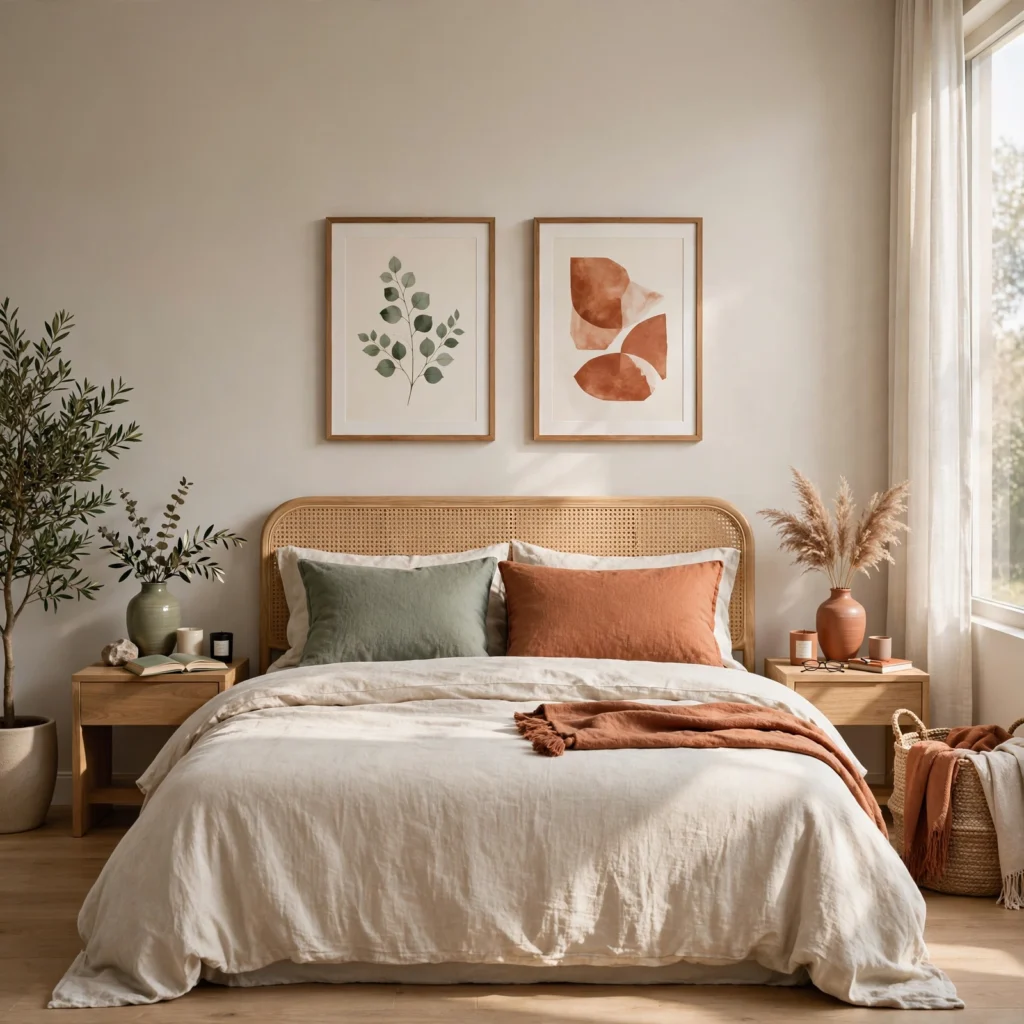
Building the room around a shared neutral, like warm greige or soft white, and then layering in one accent color from each partner’s preferences avoids the common problem of one person’s taste overriding the other’s entirely. A neutral bedspread paired with one partner’s preferred color in the throw pillows and the other’s in a piece of art or a lamp base keeps both represented without clashing. This approach also makes it easier to update the room later without a full repaint.
5. Symmetrical Bed Placement
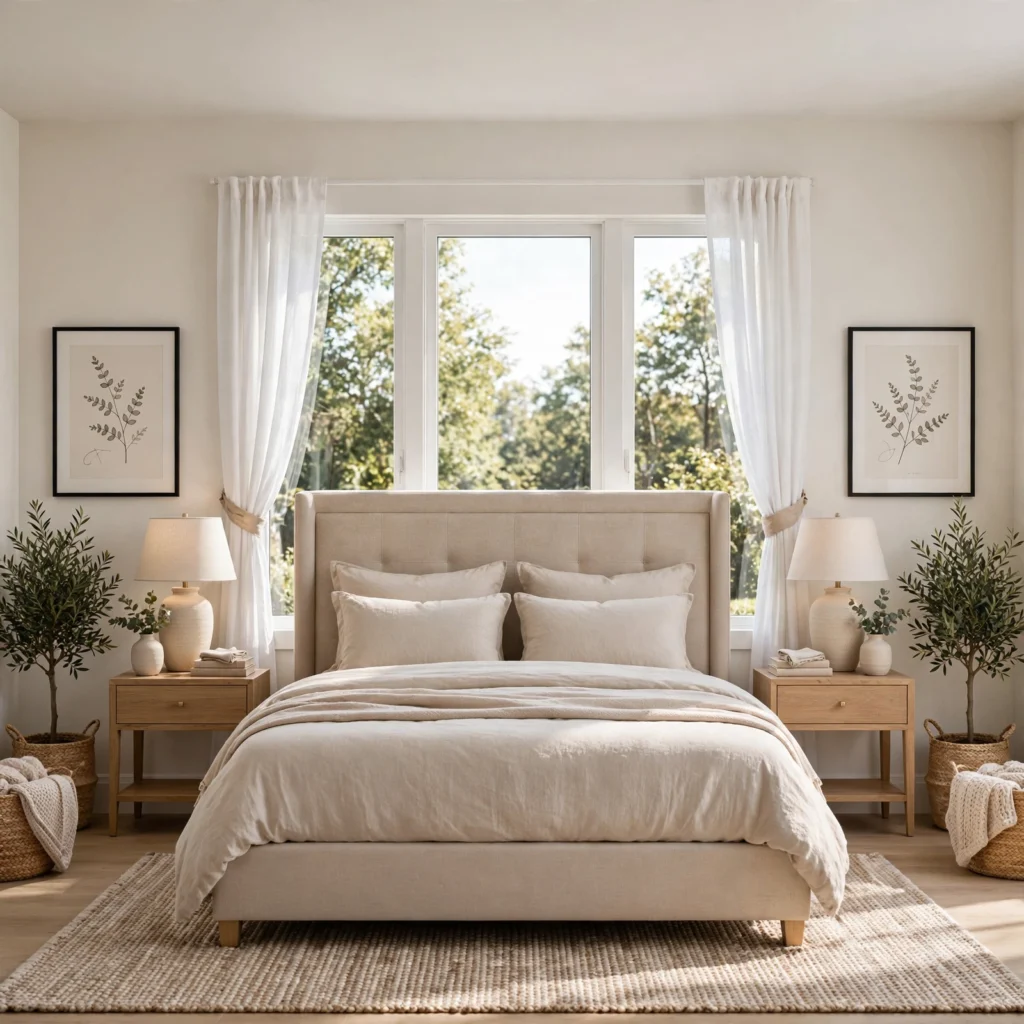
Centering the bed on the room’s longest wall, with equal walking space on both sides, prevents one partner’s side from feeling cramped or like an afterthought. This layout also makes it easier to add matching furniture and lighting on each side, reinforcing the sense of a shared, balanced space rather than a room built around one person’s existing furniture. In smaller bedrooms, this sometimes means sacrificing a dresser or bench at the foot of the bed to preserve equal clearance on both sides.
6. Layered Blackout and Sheer Curtains
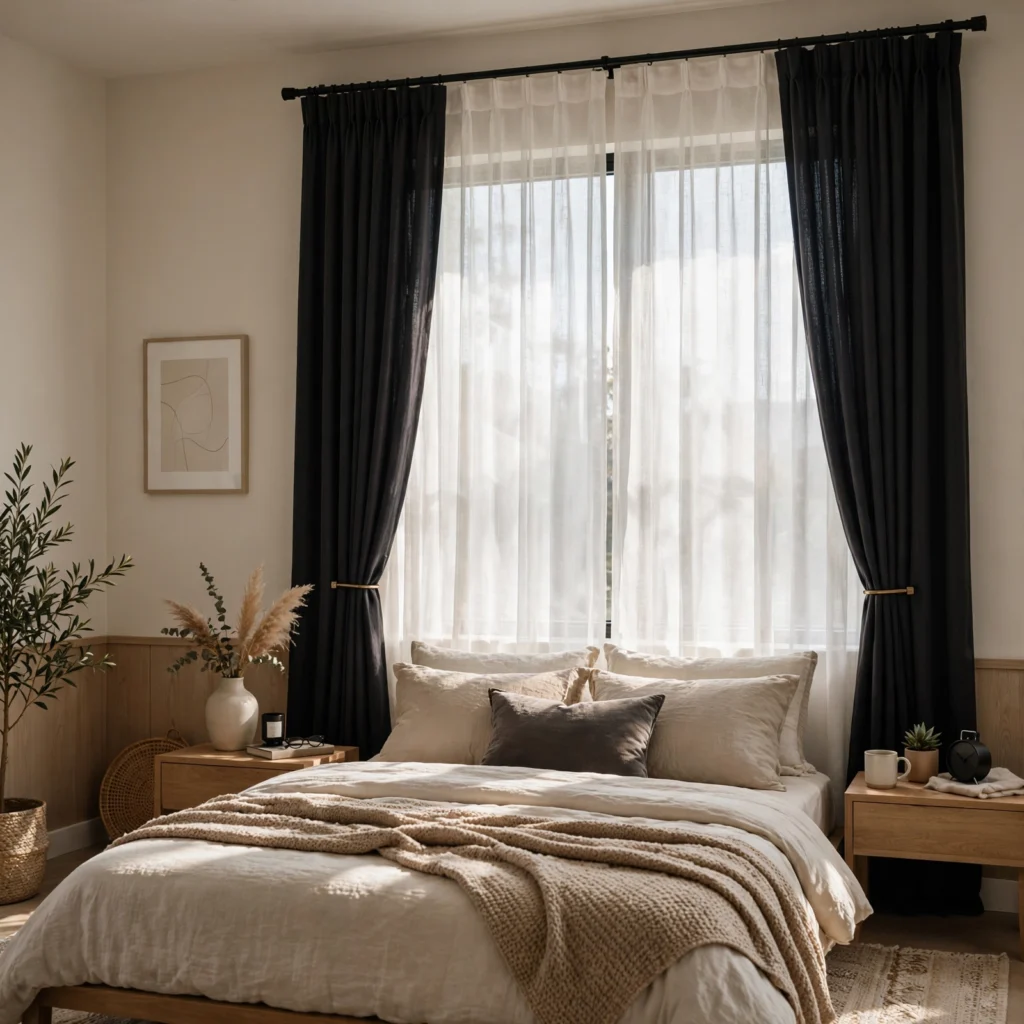
Installing both a blackout curtain and a sheer panel on the same rod gives each partner more control over the room’s light level depending on differing wake times or nap schedules. The sheer panel can stay closed during the day for privacy and diffused light, while the blackout layer closes fully when one partner needs to sleep later or darker than the other. This setup works with most standard double curtain rod hardware, without requiring a full window treatment overhaul.
Explore our expert modern bedroom ideas for choosing the perfect furniture, lighting, colors, and accessories.
7. Dual-Purpose Bench at the Foot of the Bed
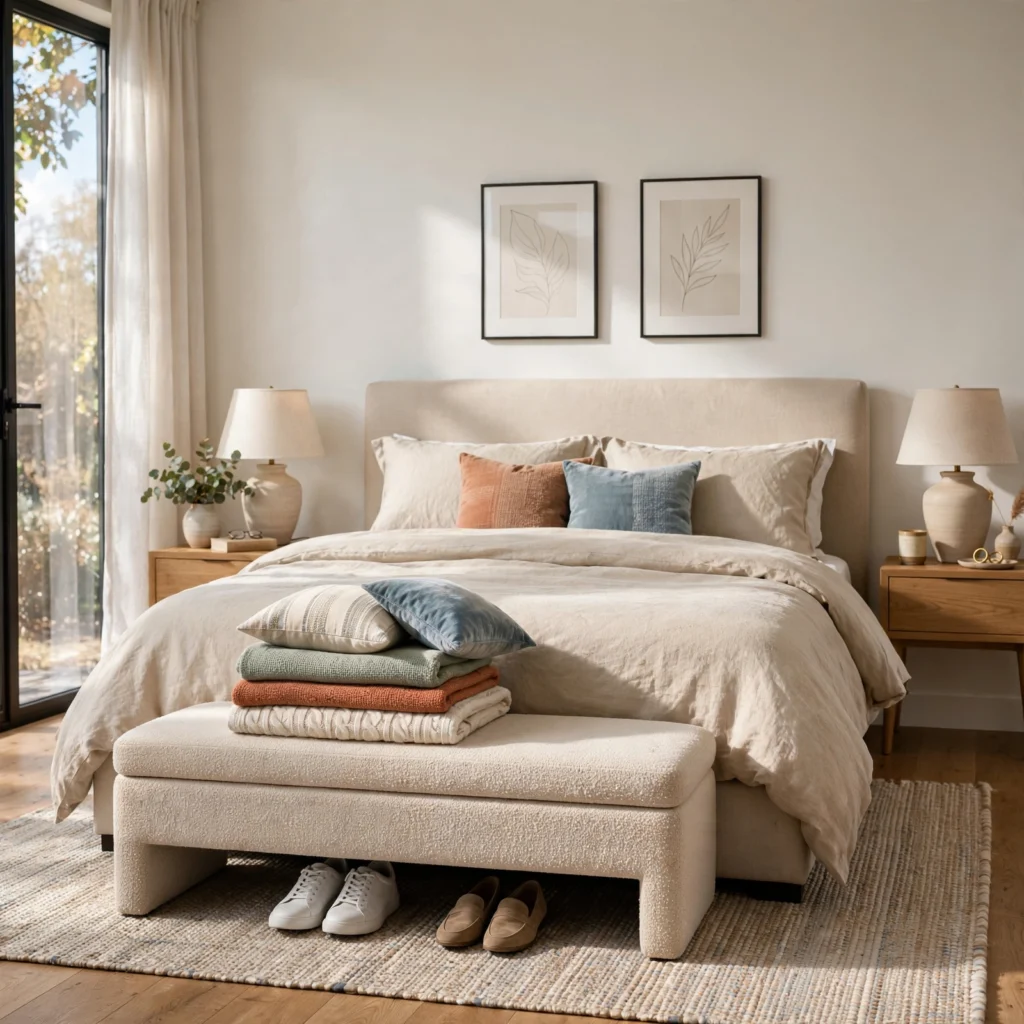
A storage bench placed at the foot of the bed adds a spot to sit while dressing and doubles as extra storage for shared or seasonal items underneath the lid. This is particularly useful for couples getting ready at the same time, since it gives a second seating option beyond a single vanity stool or chair. Choosing a bench sized to the width of the bed keeps the proportions balanced rather than looking like an awkward add-on.
8. Shared Gallery Wall
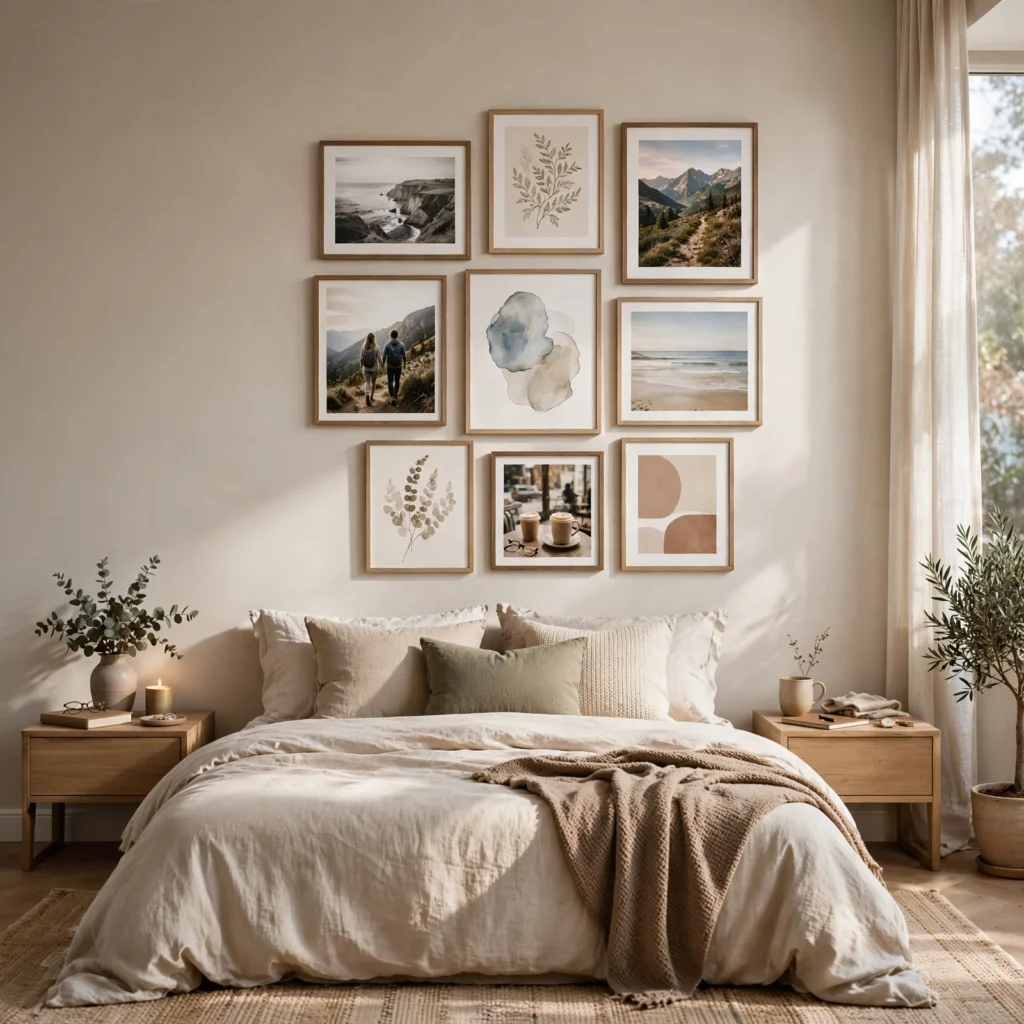
A gallery wall combining photos, art, and mementos from both partners creates a personal display that represents the couple rather than just one person’s taste. Mixing frame styles contributed by each partner, rather than a uniform matched set, tends to read as more genuine and collected over time. This works well positioned above a shared dresser or on the wall opposite the bed, where both partners see it daily.
9. Adjustable Dual-Zone Mattress or Base
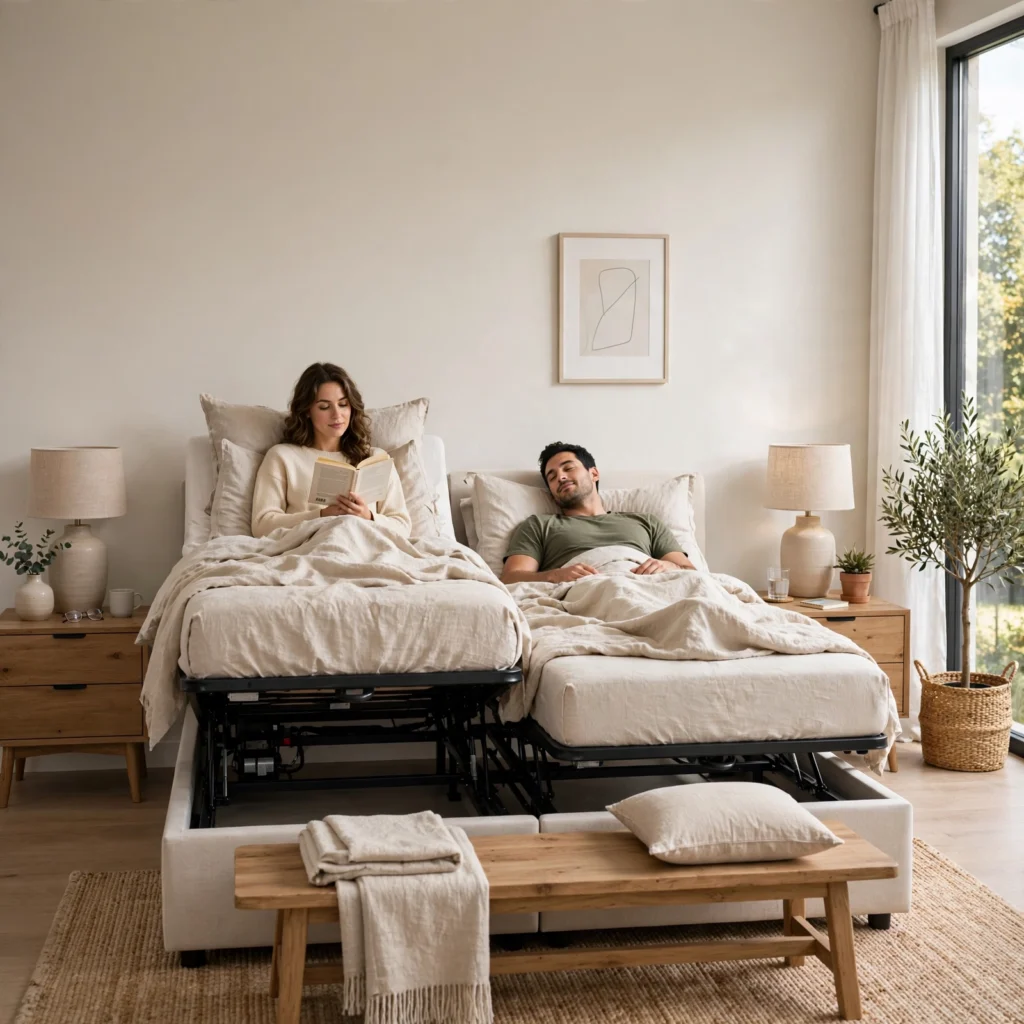
A mattress or adjustable base with independent firmness settings on each side addresses one of the more common sources of shared-bedroom compromise, since partners often have different comfort preferences. This is a bigger investment than most updates on this list, but it directly resolves an issue that layout and decor changes can’t fix. For couples not ready for a full mattress change, a mattress topper with different firmness zones offers a lower-cost partial solution.
10. Matching Dressers, Split by Drawer
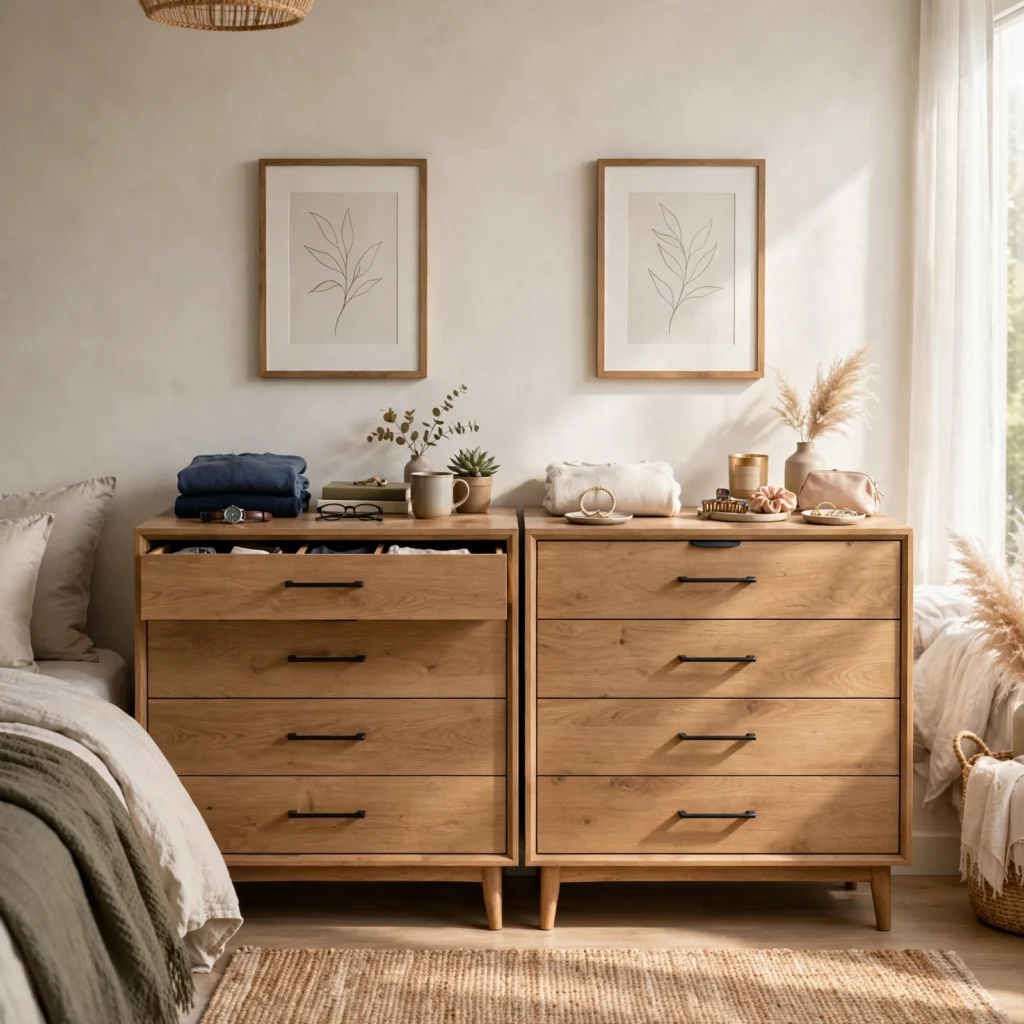
Rather than assigning an entire dresser to each partner, splitting the drawers of one or two dressers evenly, like top drawers for one person and bottom for the other, can save floor space compared to fitting two full dressers into a smaller room. Labeling or simply agreeing on a consistent split keeps the system functional long-term. This works especially well in bedrooms too small to comfortably fit separate furniture for each person.
11. Shared Charging Station
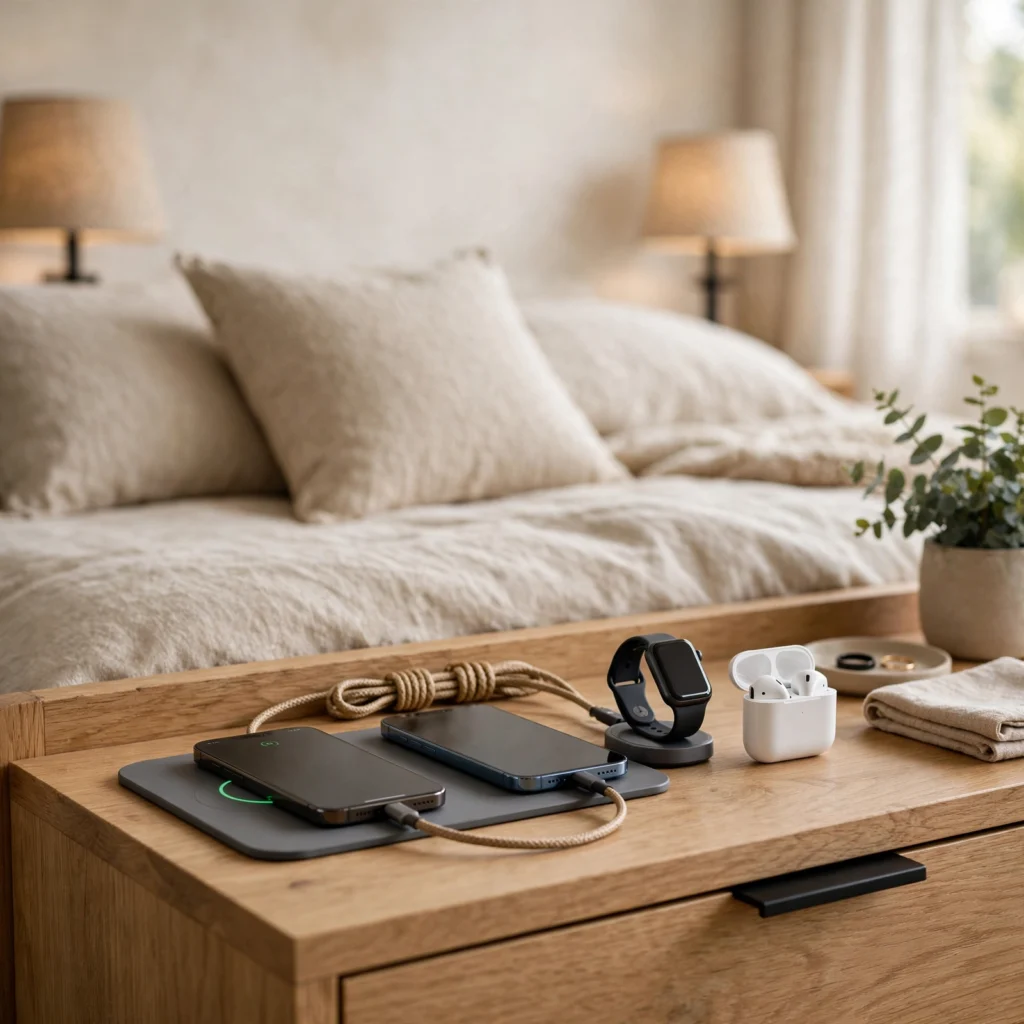
A small charging station built into or placed on a shared surface, like a dresser top or a wall-mounted shelf, keeps both partners’ phones, watches, and other devices from cluttering individual nightstands. A model with multiple ports or cubbies allows each person to have a designated spot, reducing the tangle of cords that often builds up on a shared nightstand otherwise. This also helps keep the space beside the bed clear for a lamp or a book.
12. Compromise Headboard Style
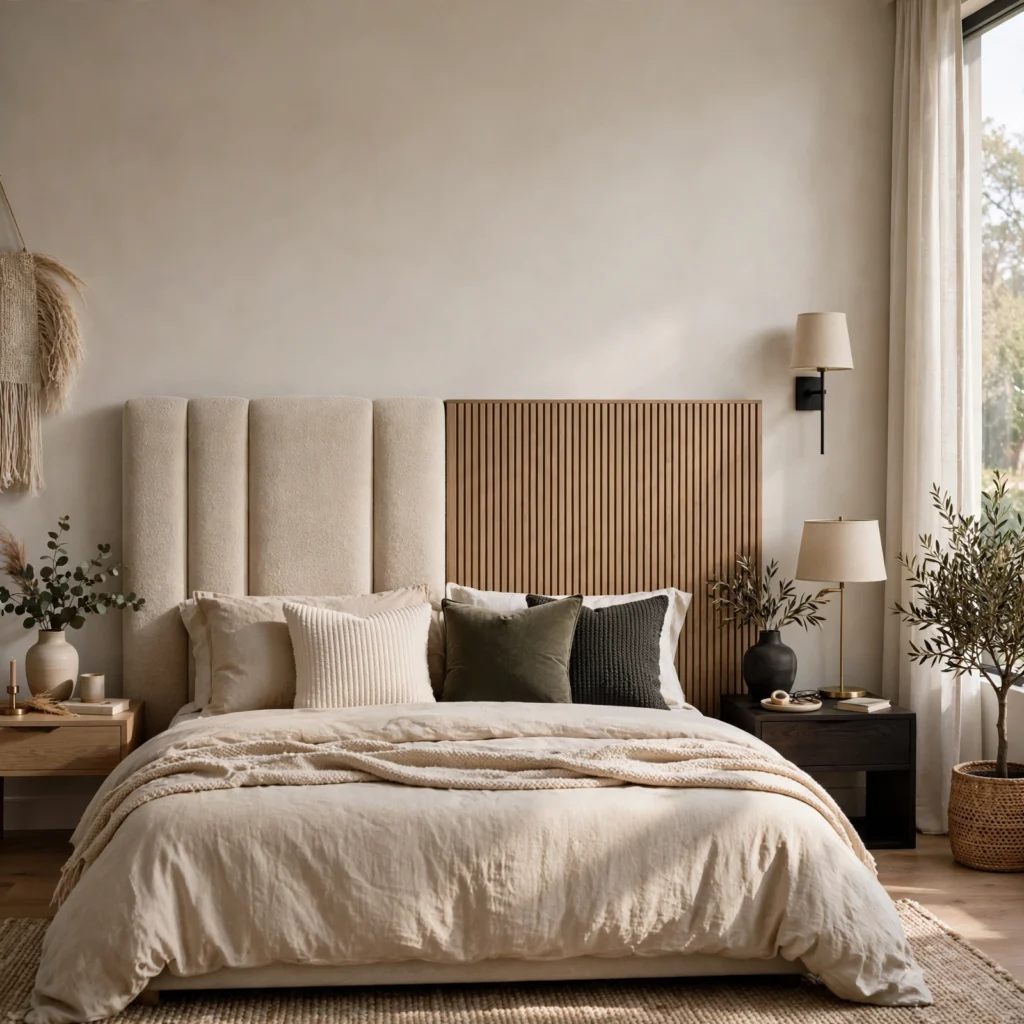
Choosing a headboard that blends both partners’ preferences, like a neutral upholstered frame if one person wants more texture and the other wants something simpler, avoids the bed becoming a point of ongoing disagreement. An upholstered headboard in a mid-tone neutral fabric tends to satisfy a wider range of preferences than a strongly patterned or highly specific style choice. This piece often has the biggest visual impact in the room, making it worth the extra discussion before purchasing.
Shop the Look
A few specific pieces make these ideas easier to put into practice. Look for a matching pair of wall-mounted reading lights with independent switches, a set of two identical nightstands with at least one drawer each, a double curtain rod set that holds both a blackout and a sheer panel, a storage bench sized to a queen or king bed width, and a neutral upholstered headboard in a mid-tone fabric.
Common Mistake to Avoid
The most common mistake in bedroom ideas for couples is decorating the room entirely around one partner’s taste while treating the other partner’s side as an afterthought, often visible in mismatched nightstands or storage that clearly favors one person. This imbalance tends to show up gradually, as one partner’s items accumulate on shared surfaces while the other’s stay minimal by comparison. Involving both partners in furniture and storage decisions from the start, even for small details like nightstand style, prevents this imbalance from settling in.
FAQs
How do you decorate a bedroom for two different styles?
Building the room around a shared neutral base and then layering in one accent color or detail from each partner’s preferences usually works better than trying to fully merge two distinct styles. A neutral bedspread with two different accent pillow colors, or a shared gallery wall with contributions from both people, allows both tastes to show without clashing.
How do couples with different sleep schedules share a bedroom?
Independent reading lights, layered blackout and sheer curtains, and a white noise machine or earplugs for the partner going to bed later are the most common solutions. Keeping phone and alarm sounds on vibrate or a low volume during the other partner’s sleep hours also helps reduce disruption from mismatched schedules.
How much closet space does a couple need?
This varies significantly based on each person’s wardrobe size, but dividing an existing closet into two clearly defined zones, rather than combining everything, tends to work better than assuming a single shared space will function well for two people. Adding vertical dividers or a second hanging rod can increase usable space without requiring a full closet renovation.
Should couples have matching nightstands?
Not necessarily, but matching nightstands do create a sense of visual balance and equal division in a shared bedroom, which many couples find helps the room feel fairly split. Some couples prefer mismatched nightstands as a way to reflect each person’s individual style instead, and either approach can work depending on preference.
How do you compromise on bedroom decor with a partner?
Starting with a shared neutral base for the largest elements, like walls and bedding, and then letting each partner choose smaller accent pieces, like art, pillows, or a lamp, tends to reduce conflict compared to trying to agree on every single detail together. Involving both people early in bigger purchases, like the headboard or mattress, also helps avoid one partner feeling overridden later.
Conclusion
These bedroom ideas for couples work best when both partners’ habits and preferences are built into the room from the start, rather than adjusting one person’s existing setup to make room for a second person later. Whether you start with matching nightstands or a bigger change like a dual-zone mattress, each idea here scales to fit your space and how differently you and your partner actually live day to day. Save this post to Pinterest for later, and check out our related guide on small bedroom storage solutions for more design inspiration.