12 Trending Bedroom Lighting Ideas for Every Layout
Good bedroom lighting rarely comes from a single source, and rooms lit only by an overhead fixture often feel flat or harsh regardless of how nice the furniture looks. These twelve bedroom lighting ideas cover ambient, task, and accent lighting options, along with the fixture styles and bulb choices that make each one work well together. By the end, you’ll have a shortlist of specific lighting updates suited to your room’s layout, whether you’re starting from scratch or adding to existing fixtures.
Trend & Background
Bedroom lighting has moved away from a single centered ceiling fixture toward layered setups that combine several smaller light sources at different heights and brightness levels. This shift has been driven partly by the wider availability of affordable plug-in and battery-powered fixtures, which let people add lighting without rewiring a rented or older home. This matters now because a layered lighting setup supports the different things people actually do in a bedroom, from winding down at night to getting ready in the morning, in a way a single overhead light never could.
Key Takeaways
- Bedroom lighting ideas work best when layered across several sources rather than relying on a single overhead fixture.
- Dimmable and warm-toned bulbs matter as much as the fixture style itself for creating a restful atmosphere.
- Wall-mounted and plug-in options solve most lighting problems without requiring new wiring or electrical work.
- Task lighting, like reading lamps, should be considered separately from ambient and accent lighting rather than combined into one fixture.
1. Dimmable Overhead Fixture
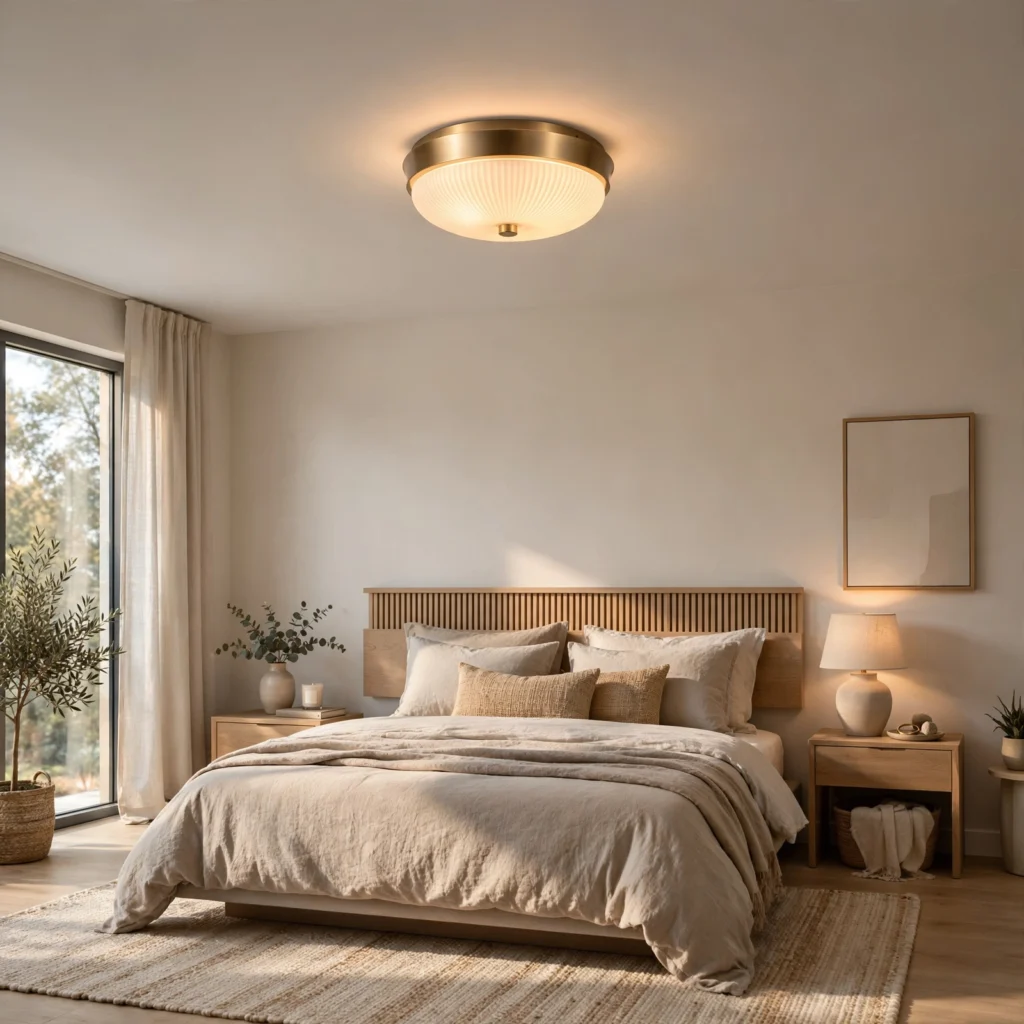
Swapping a standard ceiling light for a dimmable version gives a single fixture the flexibility to work as both bright, functional lighting during the day and softer ambient light at night. Pairing the fixture with a compatible dimmer switch, rather than relying on a bulb’s built-in settings alone, tends to give smoother control across the full brightness range. This is one of the more impactful updates on this list, since it changes how the room’s main light source functions without requiring any additional fixtures.
| Light Type | Purpose | Typical Placement |
| Ambient | Overall room brightness | Ceiling or wall-mounted |
| Task | Focused activity light | Nightstand, desk |
| Accent | Mood and highlight | Behind furniture, along shelves |
2. Wall-Mounted Reading Sconces
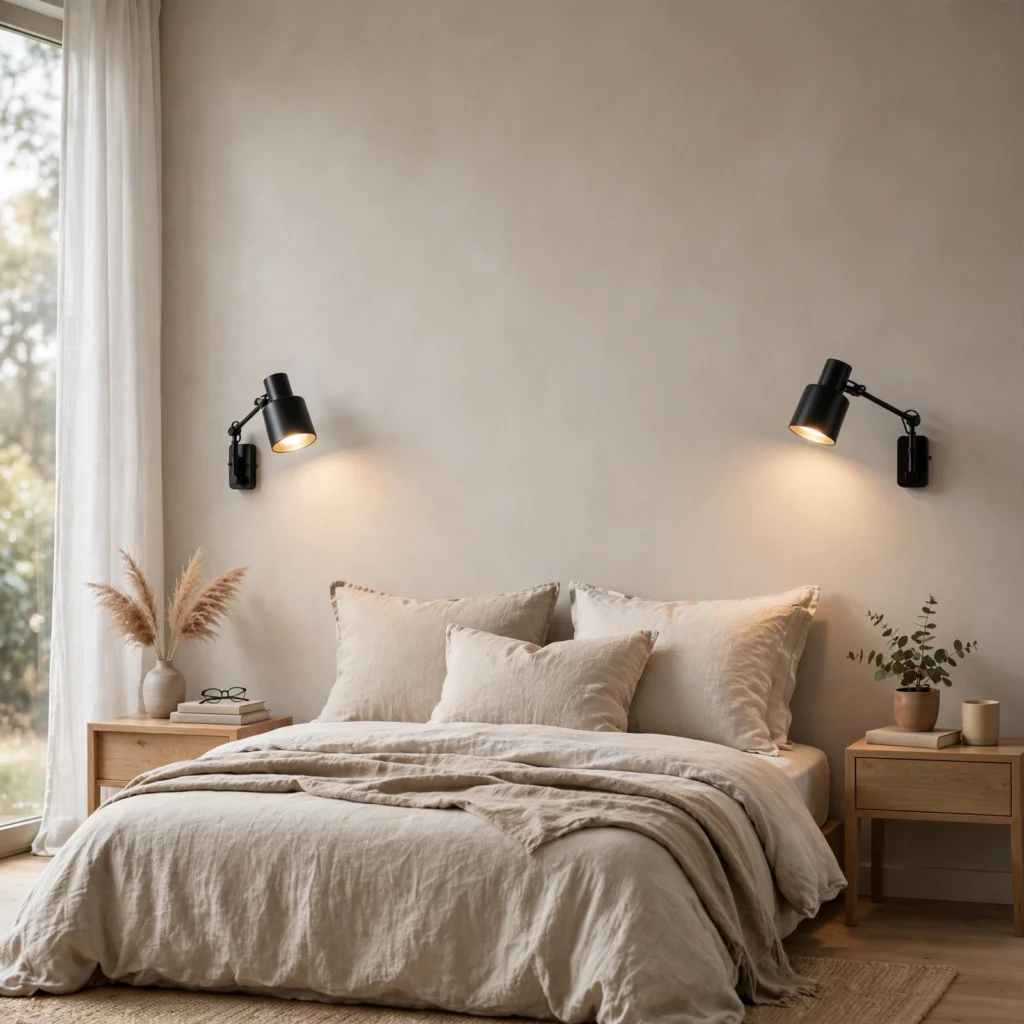
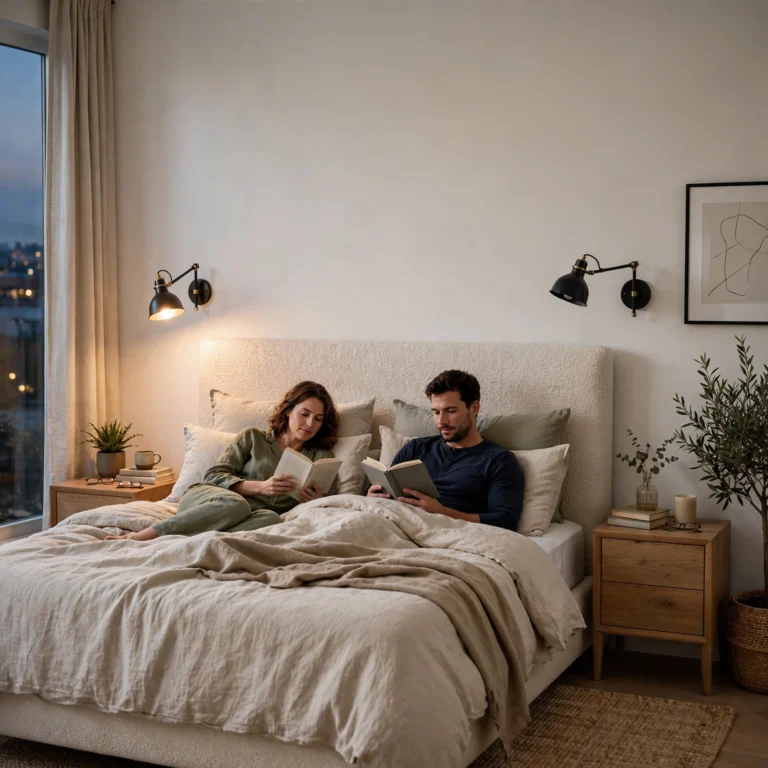
Sconces mounted on the wall beside the bed free up nightstand space that a table lamp would otherwise occupy, while still providing focused light for reading. Positioned at roughly shoulder height when seated in bed, they direct light downward onto a book or phone without spilling across the rest of the room. Battery-powered or plug-in versions both work well in rooms where adding hardwired fixtures isn’t practical.
3. String Lights Along the Headboard
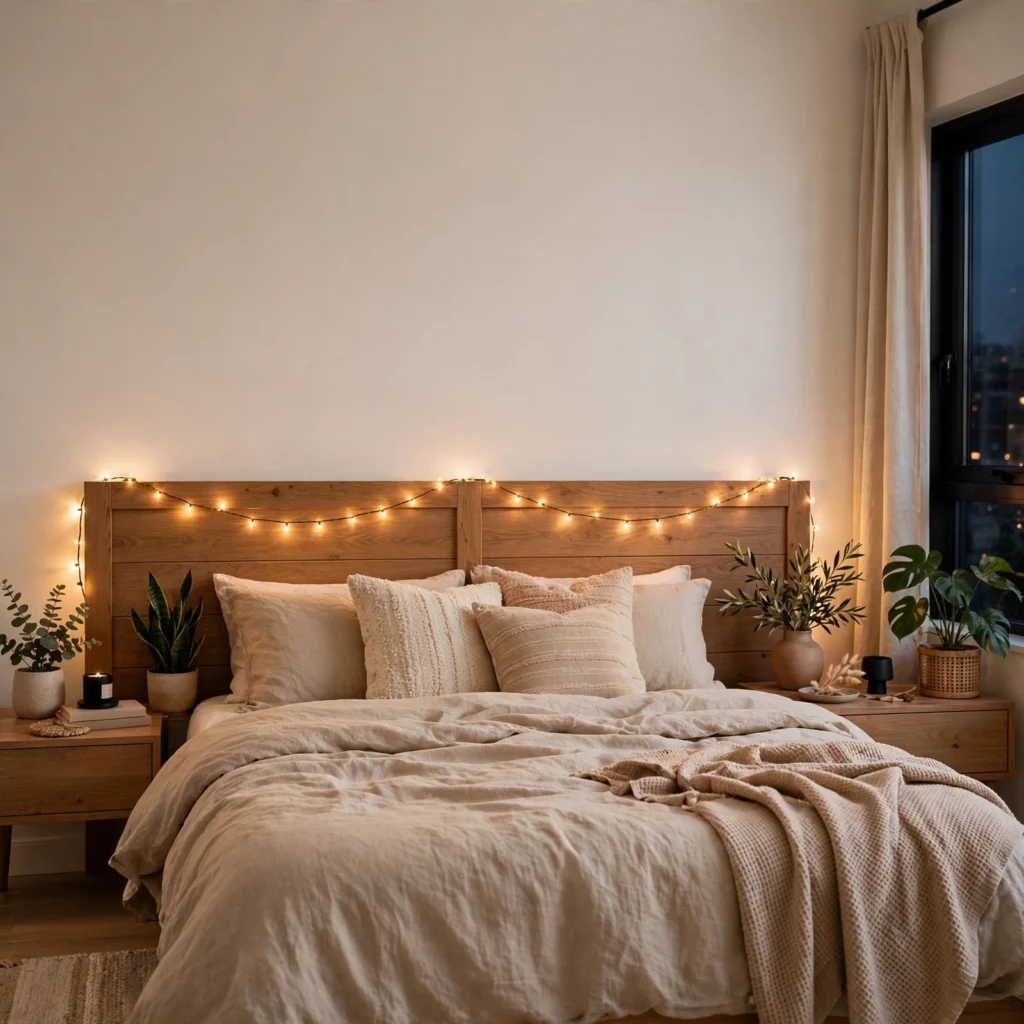
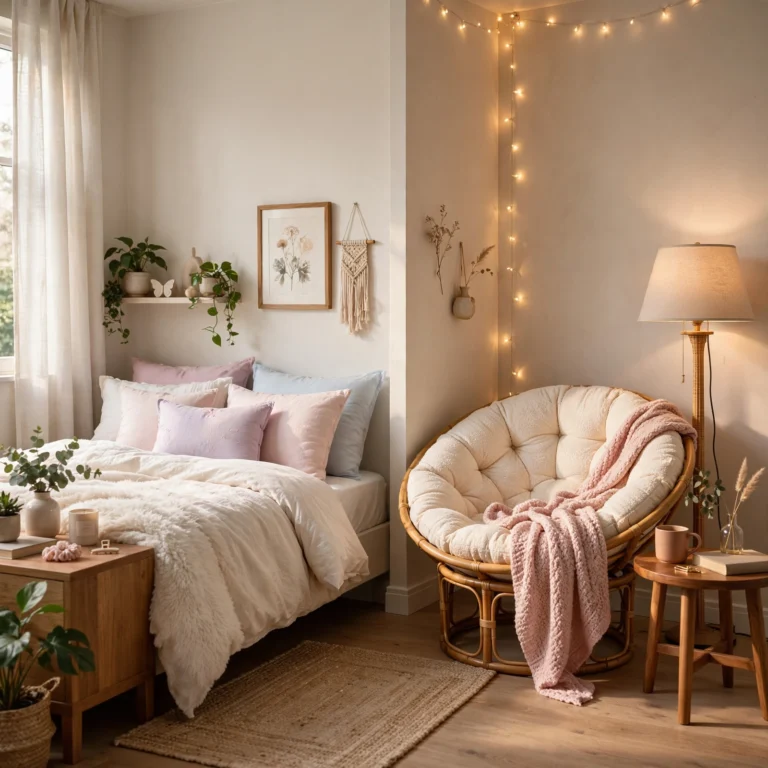
Draping string lights across the headboard or along the wall above the bed adds a soft, warm glow that works well as secondary ambient lighting rather than the room’s main source. Warm white bulbs read as cozier than cool white, and many battery-powered sets now include timers, so the lights turn off automatically without needing to be unplugged each night. This is one of the lowest-cost updates on this list and requires no tools or permanent installation.
4. Statement Pendant Light
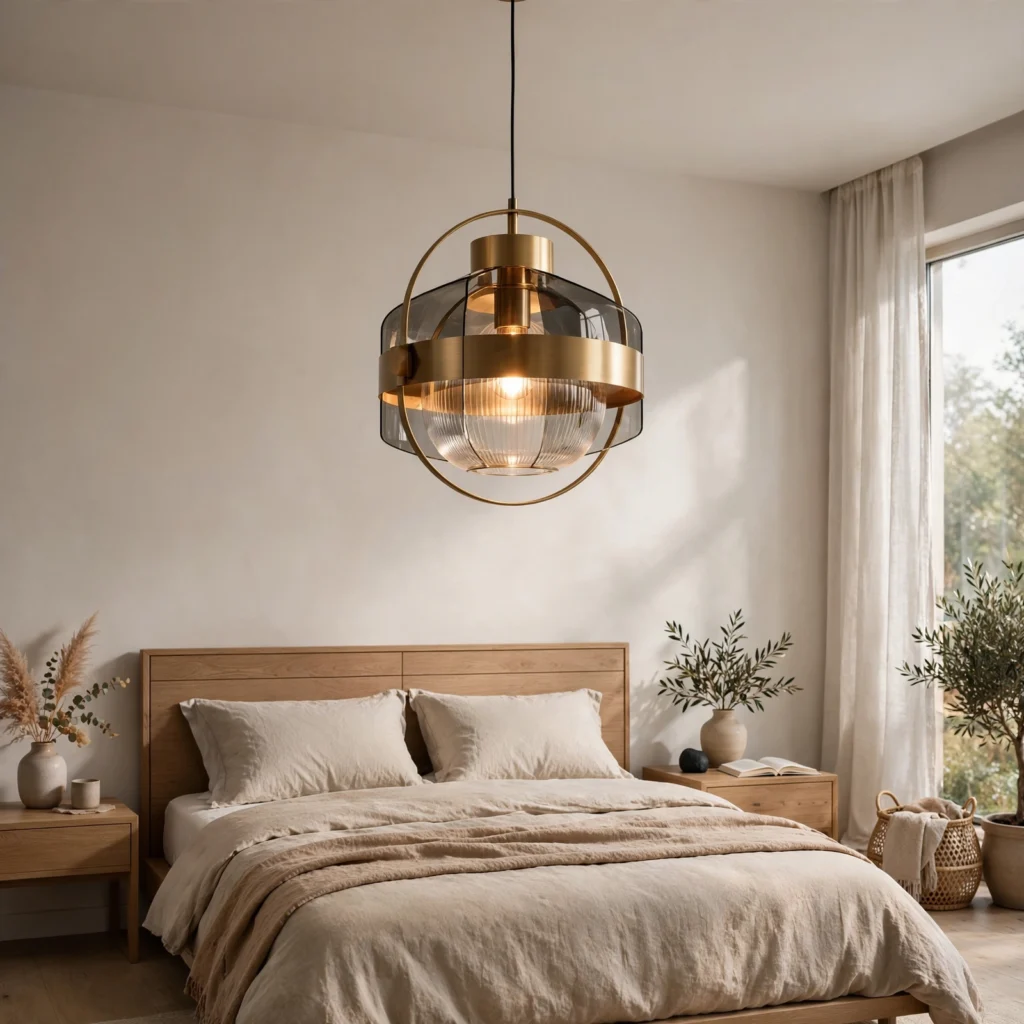
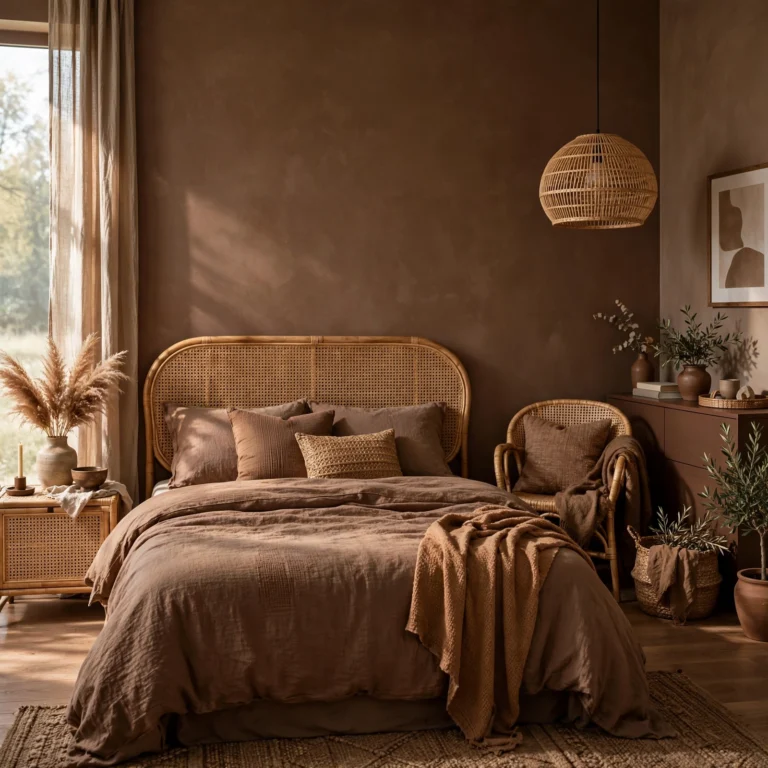
A single sculptural pendant, hung either centered in the room or above a nightstand, replaces a standard flush-mount ceiling fixture with something that also functions as a design element. Hanging it slightly off-center, above one side of the bed rather than dead-center in the room, tends to read as more deliberate than a purely symmetrical placement. This works particularly well in bedrooms with higher ceilings, where the fixture has room to hang without crowding the space below it.
5. Under-Bed LED Strip Lighting
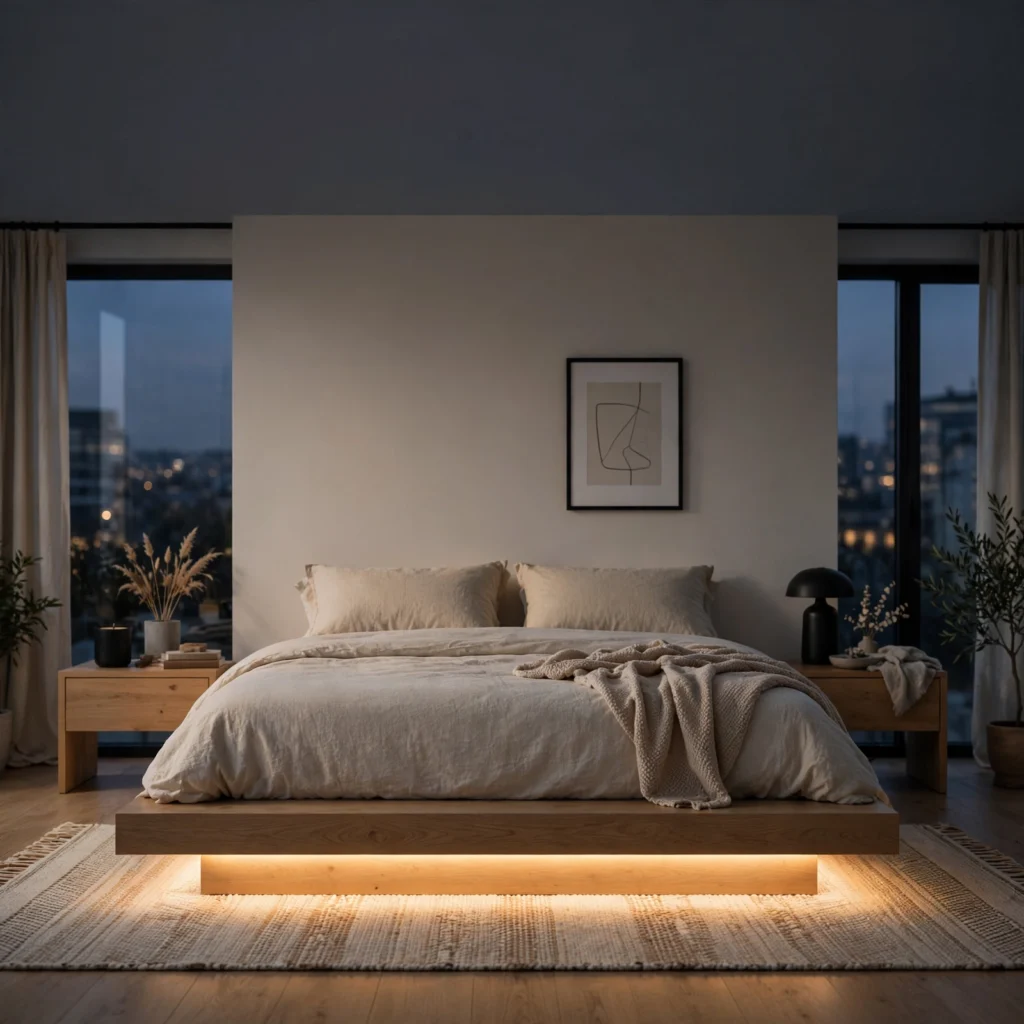
LED strips installed along the underside of a bed frame create a soft, floating glow that works well as a nightlight without the harshness of a lamp or overhead fixture. This is particularly useful for nighttime bathroom trips, since it provides just enough light to navigate the room without fully waking up. Battery-powered or motion-activated strips avoid the need for a nearby outlet, making this a relatively simple addition to most existing bed frames.
Browse our collection of bedroom ideas for couples to find inspiration for small bedrooms, master suites, and guest rooms.
6. Floor Lamp in a Reading Corner
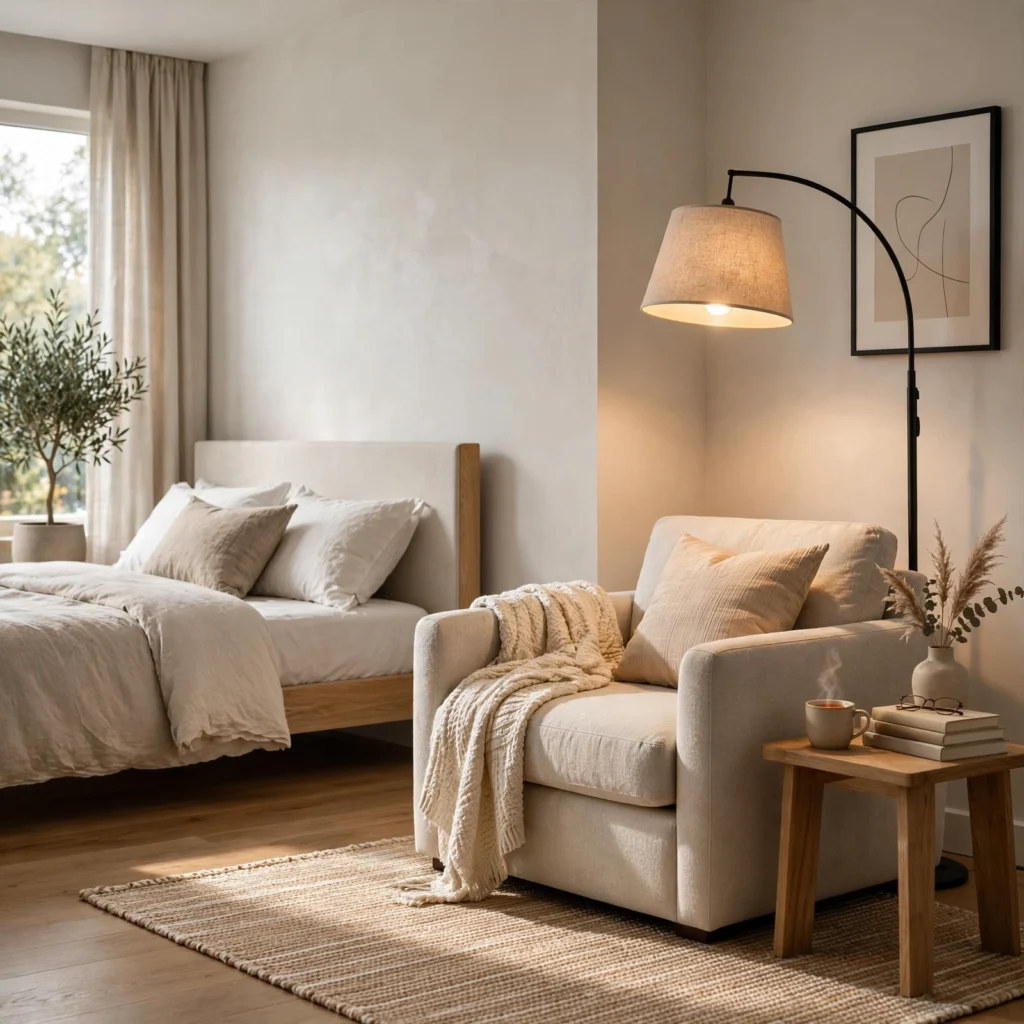
A floor lamp positioned beside a chair or in an unused corner adds a dedicated light source for reading or relaxing away from the bed, filling a role that ceiling or bedside lighting doesn’t cover. An adjustable arm or shade angle lets the light be directed exactly where needed, which matters more for a floor lamp than for ambient fixtures elsewhere in the room. This also adds a layer of lighting at a different height than either the ceiling or nightstand, which helps the room feel more balanced overall.
7. Backlit Headboard Panel
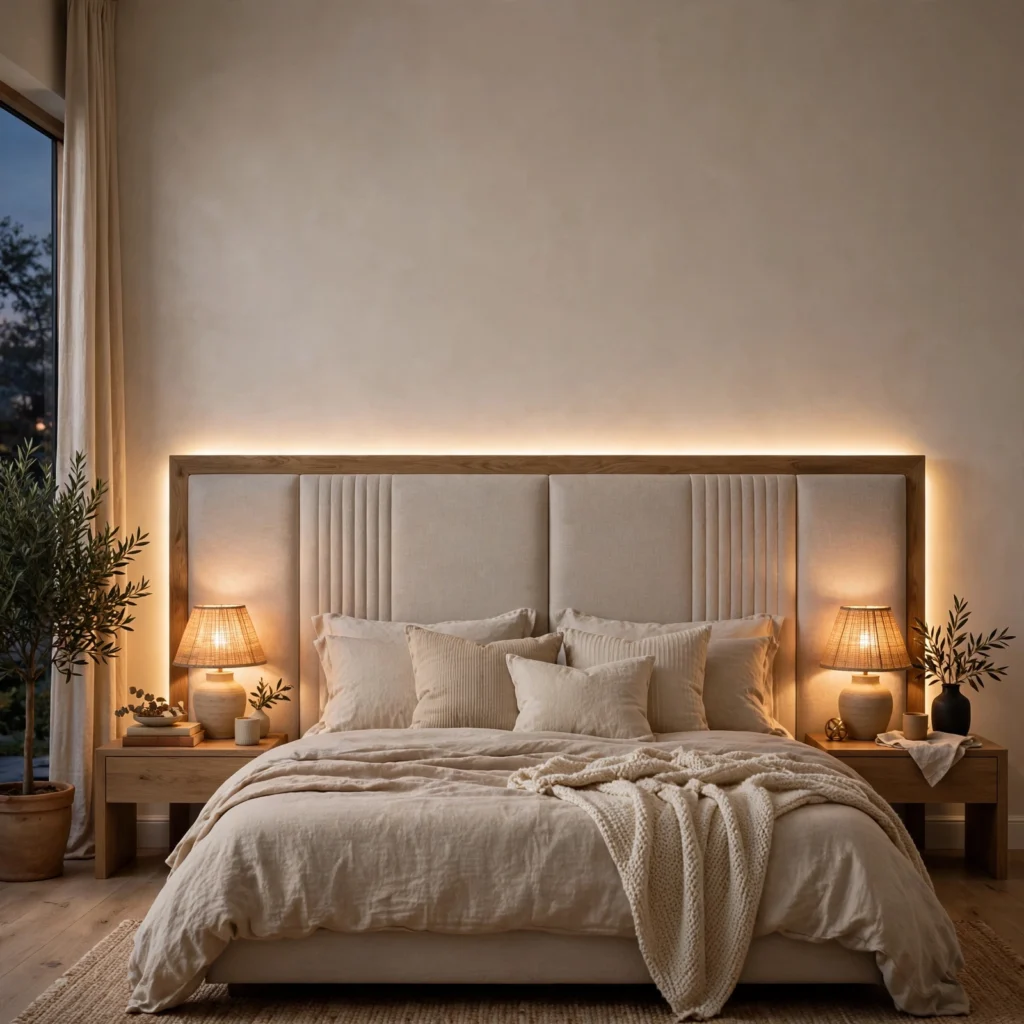
Installing LED strip lighting behind an upholstered or wood headboard creates an indirect glow that outlines the bed without a visible light source. This works as a purely ambient or accent light rather than something bright enough for reading, and it’s often paired with a smart dimmer or color-changing controller for adjustable mood lighting. This update requires a headboard with enough depth or a wall-mounted panel to hide the LED strip and its wiring.
8. Table Lamps with Fabric Shades
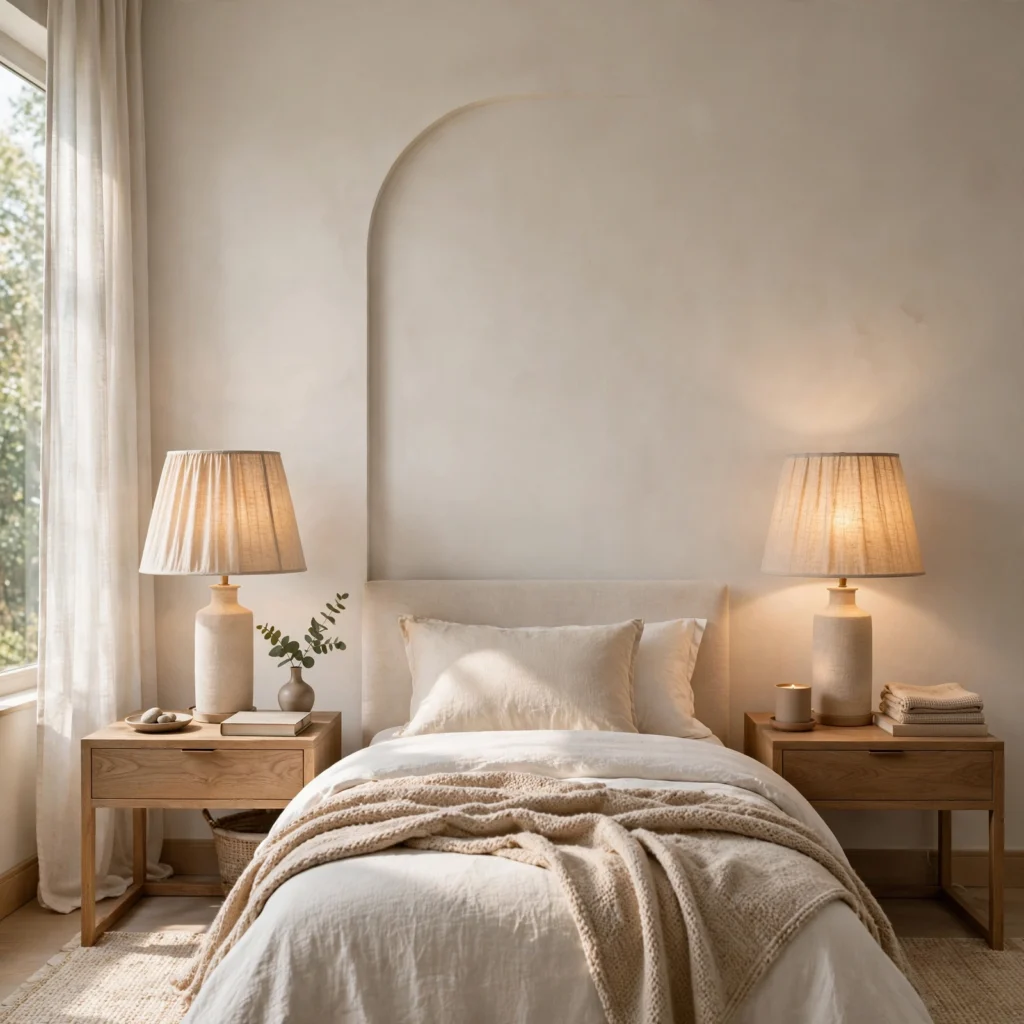
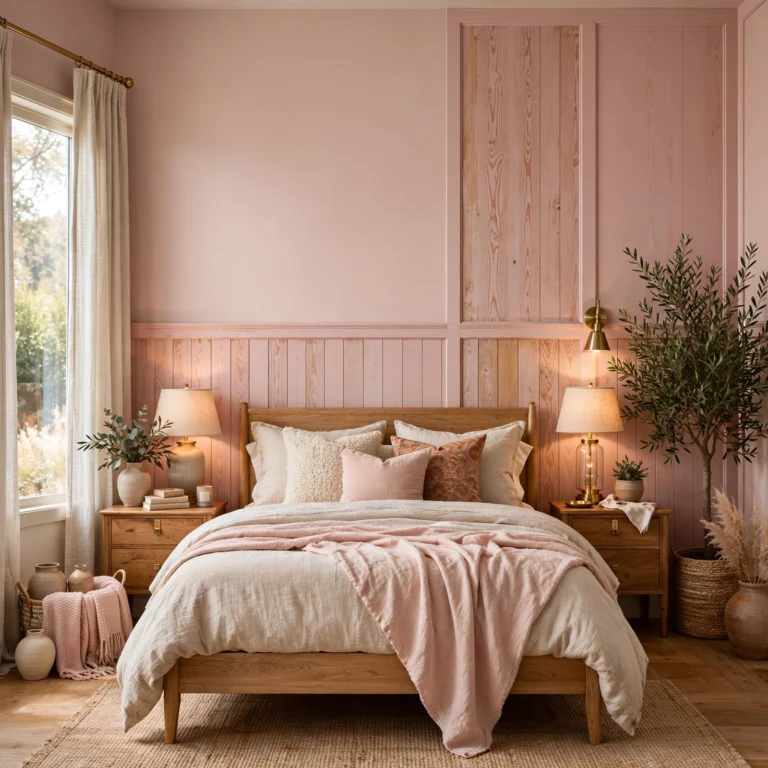
A pair of table lamps with fabric, rather than glass or metal, shades diffuses light more softly than an exposed bulb or a hard-surfaced shade. This matters directly in a bedroom, where harsher, more direct light tends to feel less restful in the evening. Choosing lamps of the same height and shade style on each nightstand also reinforces a balanced, symmetrical look at the bed.
9. Closet Motion-Sensor Light
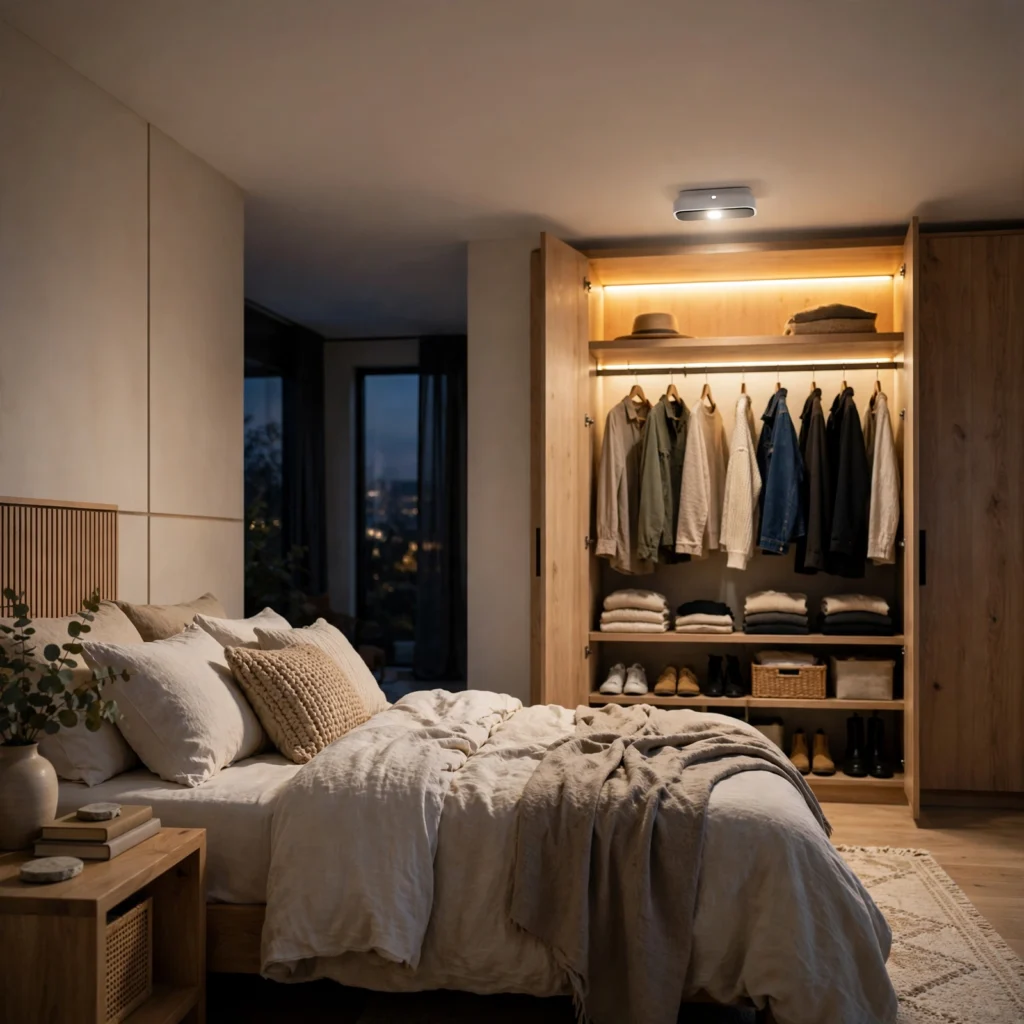
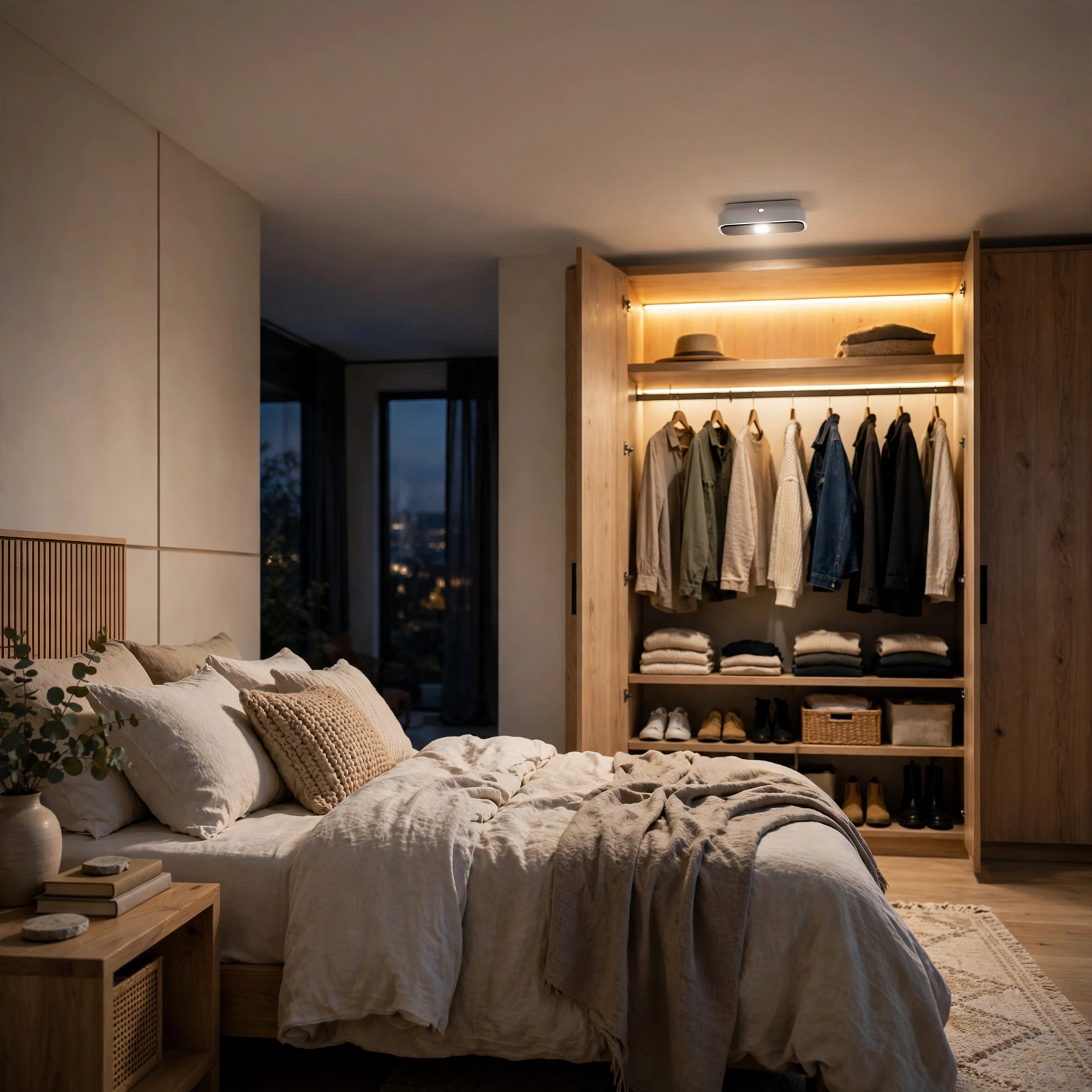
A battery-powered or plug-in motion-sensor light installed inside a closet turns on automatically when the door opens, removing the need to search for clothes in the dark or fumble for a switch. This is a small, functional addition rather than a mood-setting one, but it solves a specific daily frustration that ambient bedroom lighting doesn’t address. Stick-on or magnetic-mount versions require no wiring, making this one of the easiest updates on this list to install.
10. Warm-Toned Smart Bulbs
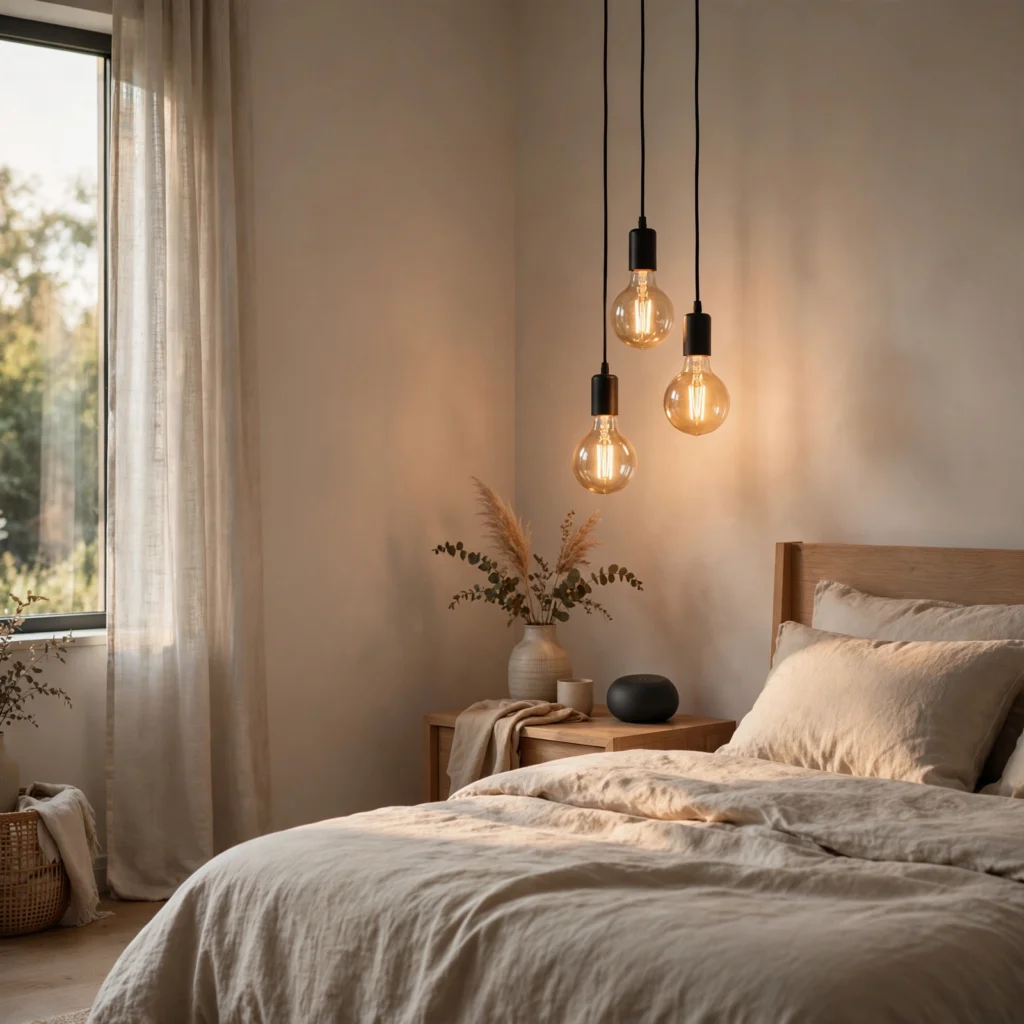
Smart bulbs that adjust both brightness and color temperature let a single fixture shift from bright, cool-toned light in the morning to warmer, dimmer light in the evening without swapping bulbs or fixtures. Scheduling the bulbs to shift automatically at set times can also support a more consistent wind-down routine before bed. This works especially well paired with an existing overhead or lamp fixture that doesn’t otherwise have dimming capability.
11. Uplighting Behind a Plant or Sculpture

A small, low-wattage uplight placed behind a floor plant or a decorative object casts shadows upward onto the wall or ceiling, adding depth and visual interest without functioning as a primary light source. This kind of accent lighting works best in a room that already has adequate ambient and task lighting elsewhere, since its role is purely decorative rather than functional. Plug-in puck lights or small spotlights both work for this purpose without requiring any electrical work.
12. Vanity Mirror with Integrated Lighting
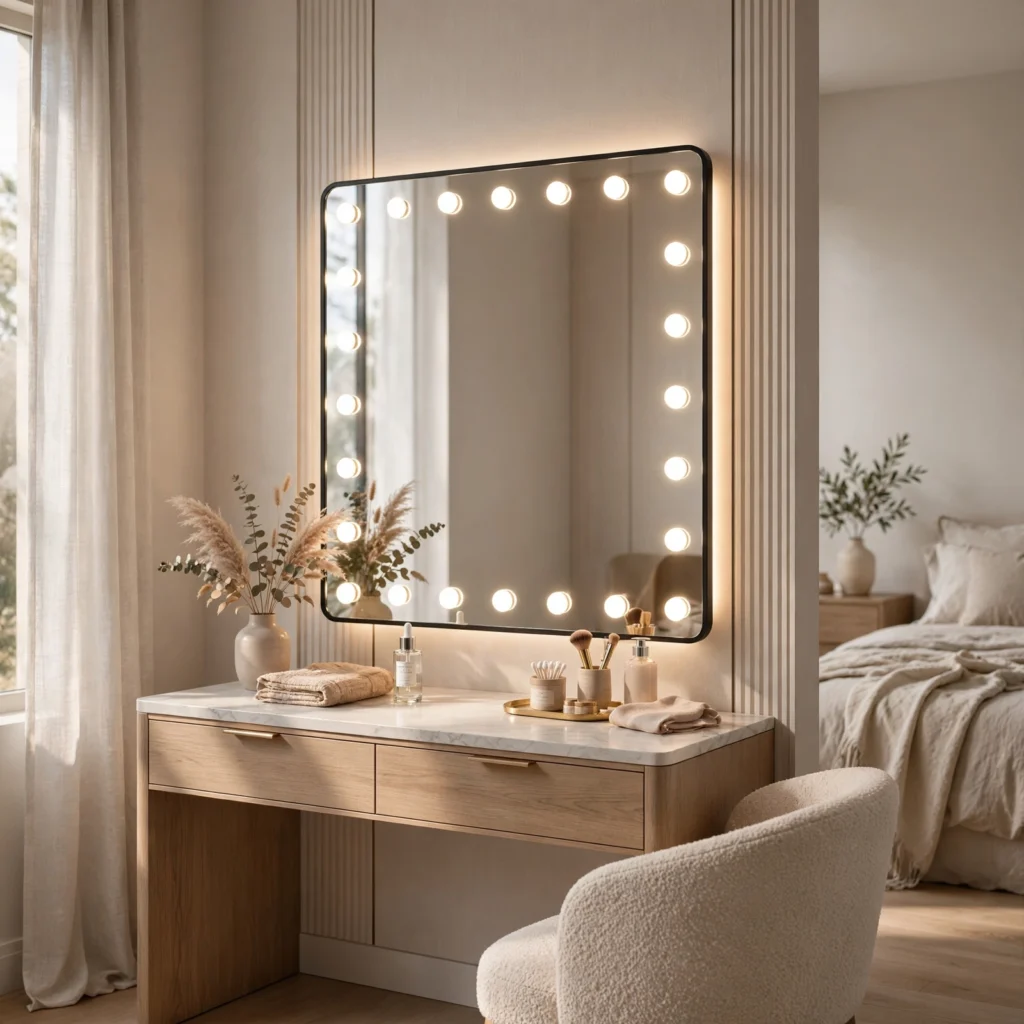
A mirror with built-in LED lighting around the frame provides even, shadow-free light for makeup, skincare, or grooming, which overhead or lamp lighting alone doesn’t do well. This works as a dedicated task light for a specific activity, separate from the room’s ambient lighting, and it’s particularly useful in bedrooms without a nearby bathroom mirror with strong lighting. Adjustable brightness settings allow the mirror to work for both daytime and evening use.
Shop the Look
A few specific pieces make these ideas easier to put into practice. Look for a set of wall-mounted swing-arm sconces with individual switches, a warm-white LED string light set with a built-in timer, a dimmable smart bulb compatible with existing lamp fixtures, a sculptural ceramic or fabric pendant light, and a battery-powered motion-sensor closet light.
Common Mistake to Avoid
The most common mistake with bedroom lighting ideas is relying entirely on a single overhead fixture and assuming it can handle every function the room needs, from reading to relaxing to getting ready. A single bright, cool-toned ceiling light often feels harsh at night and inadequate for focused tasks like reading in bed. Layering in at least one additional light source, like a bedside lamp or wall sconce, addresses both problems without requiring a full rewiring of the room.
FAQs
How many light sources should a bedroom have?
Most bedrooms benefit from at least three layers of lighting: an ambient source like an overhead fixture, task lighting such as bedside lamps or sconces, and an optional accent light for mood or highlighting specific features. This layered approach supports the different activities a bedroom needs to accommodate, rather than relying on one fixture to do everything.
What color temperature is best for bedroom lighting?
Warm white light, generally in the 2700K to 3000K range, tends to feel more restful and cozy than cooler, bluish-white light, which reads as more energizing and is better suited to task-focused spaces like a kitchen or office. Smart bulbs that adjust color temperature throughout the day can offer the benefits of both without needing separate fixtures.
Can I add bedroom lighting without hiring an electrician?
Yes, in many cases. Plug-in sconces, battery-powered string lights, motion-sensor closet lights, and smart bulbs installed in existing fixtures all add meaningful lighting improvements without requiring new wiring or professional installation. Hardwired additions, like a backlit headboard panel or a new ceiling fixture, typically do require an electrician.
What lighting works best for a small bedroom?
Wall-mounted sconces and pendant lights work particularly well in small bedrooms, since they don’t take up nightstand or floor space the way table and floor lamps do. Under-bed LED strips and closet motion-sensor lights also add functional lighting without requiring any additional furniture or floor footprint.
Should bedroom lighting be dimmable?
Dimmable lighting is generally worth prioritizing in a bedroom, since it allows the same fixture to work for both brighter daytime tasks and softer, more restful lighting in the evening. A dimmer switch paired with the main overhead fixture, or dimmable smart bulbs in table and floor lamps, are both practical ways to add this flexibility.
Conclusion
These bedroom lighting ideas work best when layered together rather than relying on a single fixture to cover every function the room needs. Whether you start with a simple bedside sconce swap or a bigger update like a dimmable overhead fixture, each idea here scales to fit your space and how the room actually gets used throughout the day. Save this post to Pinterest for later, and check out our related guide on small bedroom storage solutions for more design inspiration.