12 Trending Bedroom Paint Ideas Worth Trying
Picking a bedroom paint color involves more decisions than just the shade on the swatch, from finish and undertone to where exactly the color gets applied within the room. These twelve bedroom paint ideas cover full-room colors, accent treatments, and less common approaches like color-blocking and ceiling paint, along with the practical details that keep each one from going wrong. By the end, you’ll have a shortlist of specific approaches suited to your room’s light, size, and style.
Trend & Background
Bedroom paint trends have moved away from a single safe neutral covering every wall toward more deliberate, layered approaches, including accent walls, painted ceilings, and two-tone color blocking. This shift has been driven partly by paint brands releasing more nuanced, specific shades, and partly by a broader move toward bedrooms that feel personal rather than generic. This matters now because a painted ceiling or a color-blocked wall can be tested in a single weekend, giving people a lower-risk way to experiment with bolder color choices than committing to a full-room repaint from the start.
Key Takeaways
- Bedroom paint ideas work best when the finish and undertone are chosen alongside the color itself, not as an afterthought.
- Accent walls and ceiling treatments let you test bolder colors without committing to a full room.
- Two-tone and color-blocked walls add dimension that a single flat color can’t achieve on its own.
- Matte and eggshell finishes remain the most forgiving choices for bedroom walls, since they hide imperfections better than satin or gloss.
1. Moody Charcoal Accent Wall
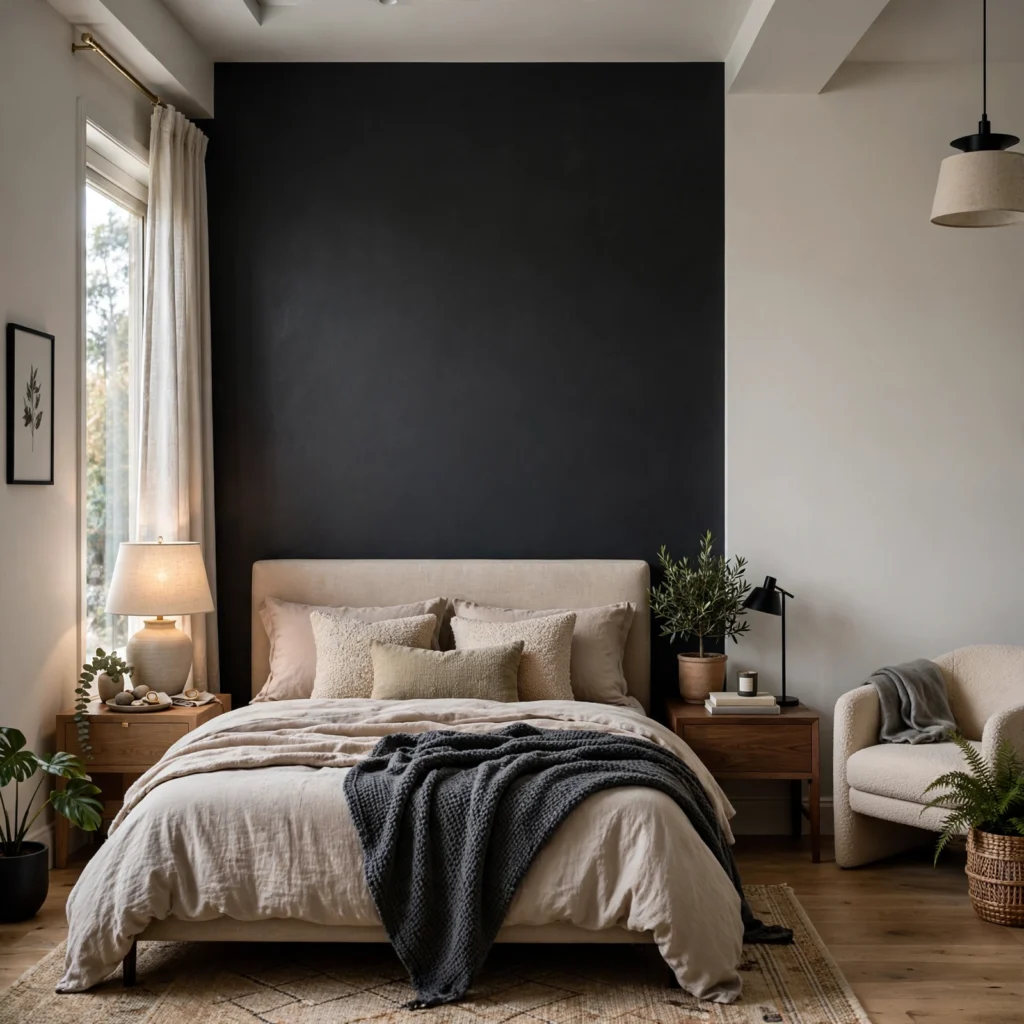
Charcoal painted on a single wall, typically behind the headboard, adds depth and a sense of enclosure without the visual weight of covering the entire room in a dark color. A matte finish keeps the charcoal from reflecting too much light, which helps it read as rich rather than flat or shiny under overhead fixtures. This approach works particularly well in bedrooms with strong natural light, where the darker wall can absorb some of the room’s brightness without feeling cave-like.
| Finish Type | Light Reflection | Best For |
| Matte | Low | Accent walls, larger surfaces |
| Eggshell | Moderate | Full-room application |
| Satin | Higher | Trim, doors, high-traffic areas |
| Gloss | Highest | Small accents only |
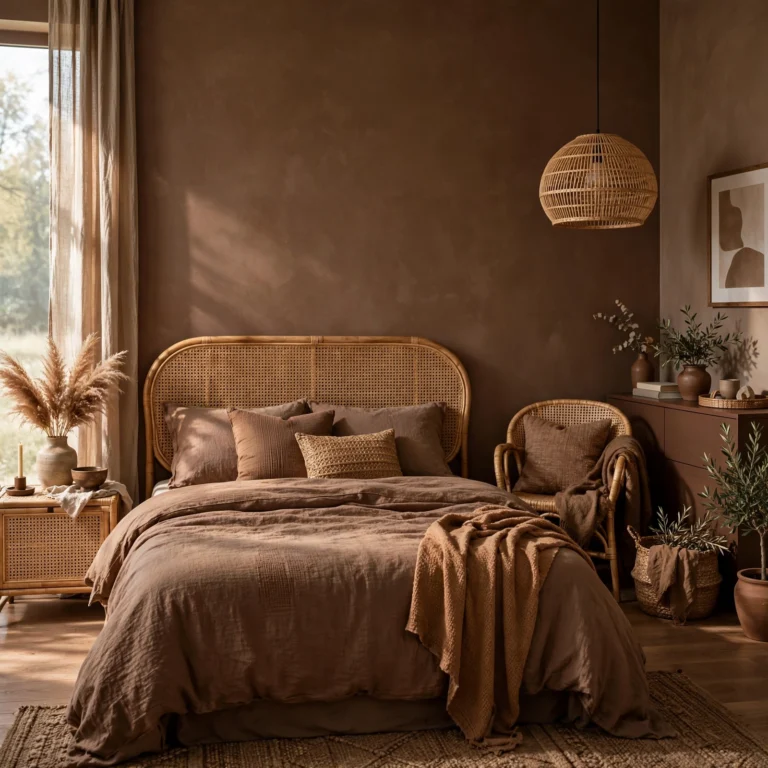
2. Warm Terracotta Full Room
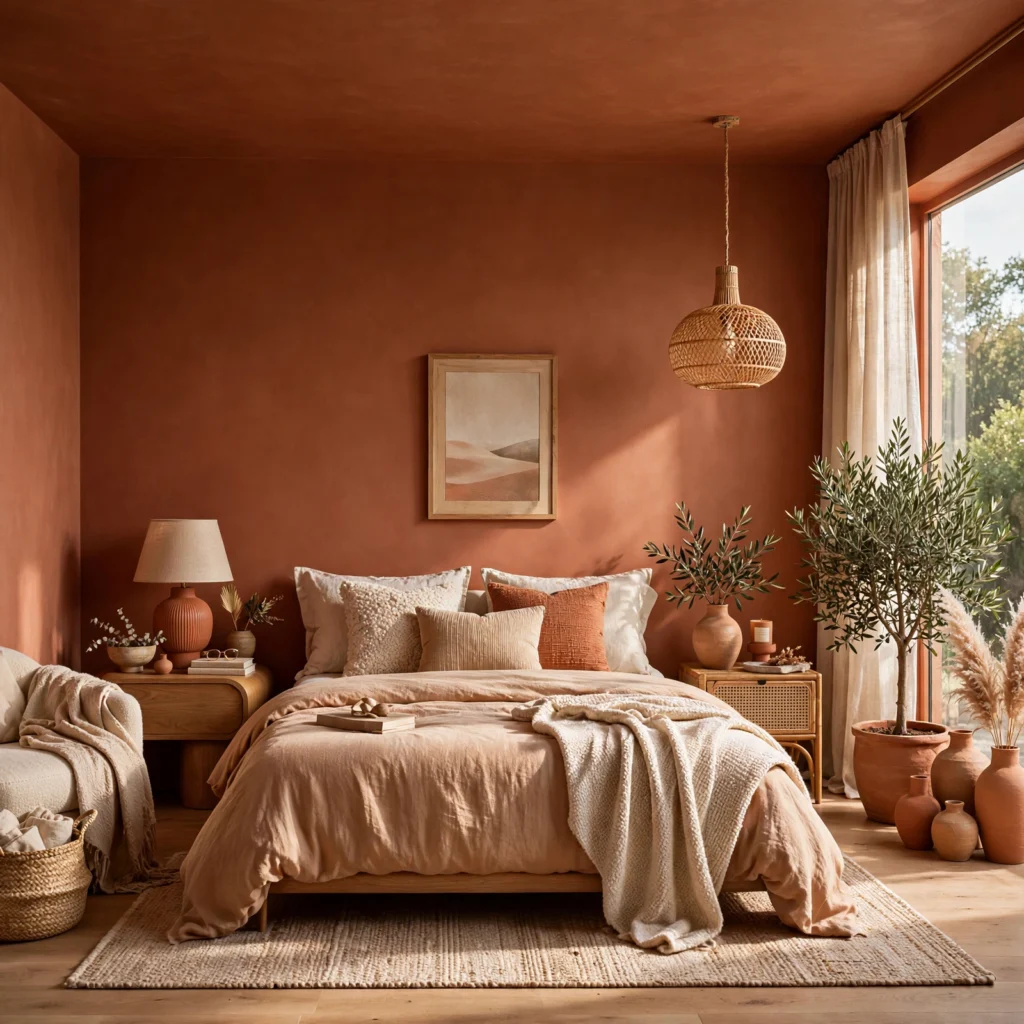
Painting an entire bedroom in a muted terracotta creates a warm, enveloping space that reads earthy rather than intense, especially compared to a brighter orange. Because the color is applied on every wall rather than as an accent, choosing a more muted, clay-toned version rather than a saturated shade keeps the room livable rather than overwhelming. This works best in rooms with good natural light, since terracotta can read slightly heavier in a dim, north-facing space.
3. Two-Tone Wall with Chair Rail
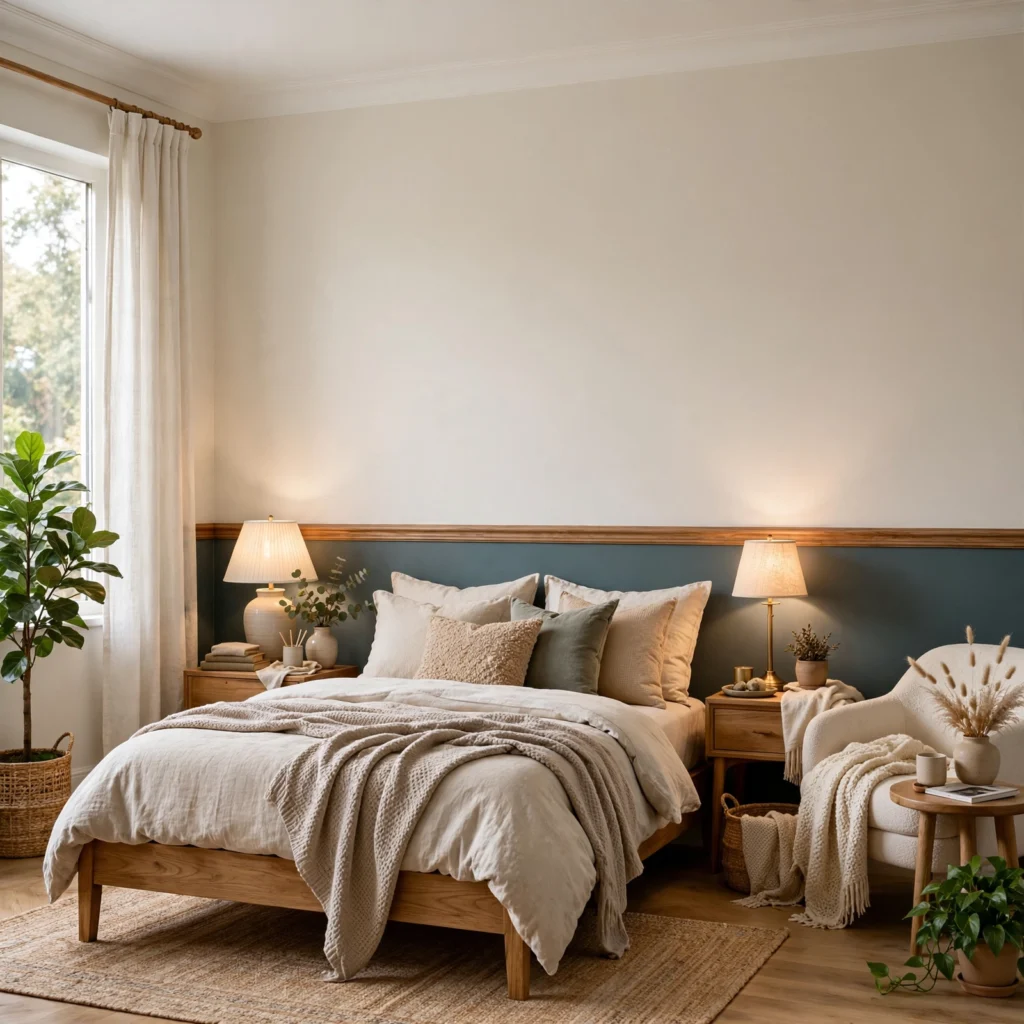
Splitting a wall into two colors, with a lighter shade on top and a deeper tone below a chair rail or painted line, adds dimension without requiring a bold, saturated color across the entire surface. This approach works particularly well in bedrooms with lower ceilings, since a darker lower half visually grounds the room while the lighter upper portion keeps it from feeling closed in. Choosing two shades from the same color family, rather than contrasting hues, keeps the look cohesive rather than choppy.
4. Painted Ceiling to Match Walls
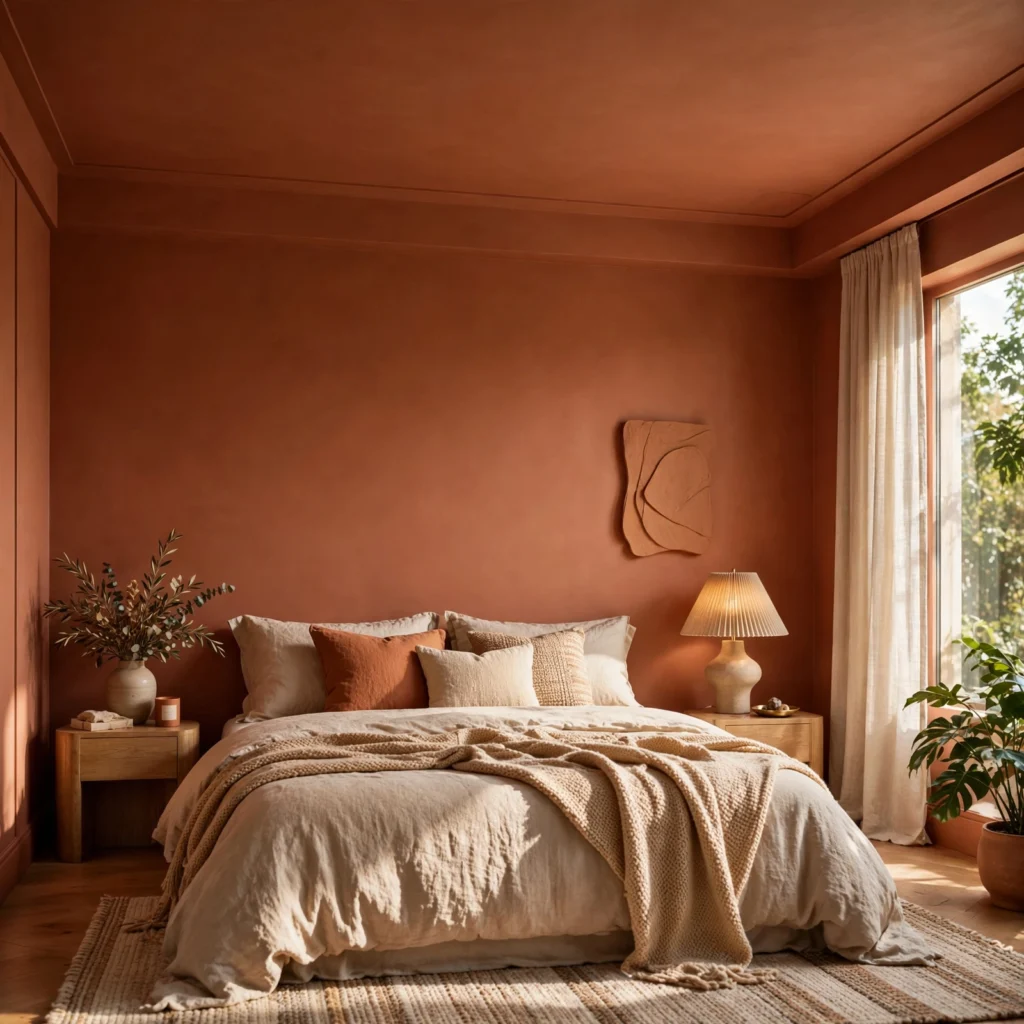
Extending the wall color up onto the ceiling, sometimes called color drenching, wraps the entire room in one continuous tone rather than stopping at the crown molding. This treatment works particularly well in bedrooms with lower or uneven ceilings, since removing the visual break between wall and ceiling can make the room feel taller and more intentional. A slightly lighter version of the wall color on the ceiling keeps the room from feeling like a solid box while still reading as cohesive.
5. Soft Sage Full Room
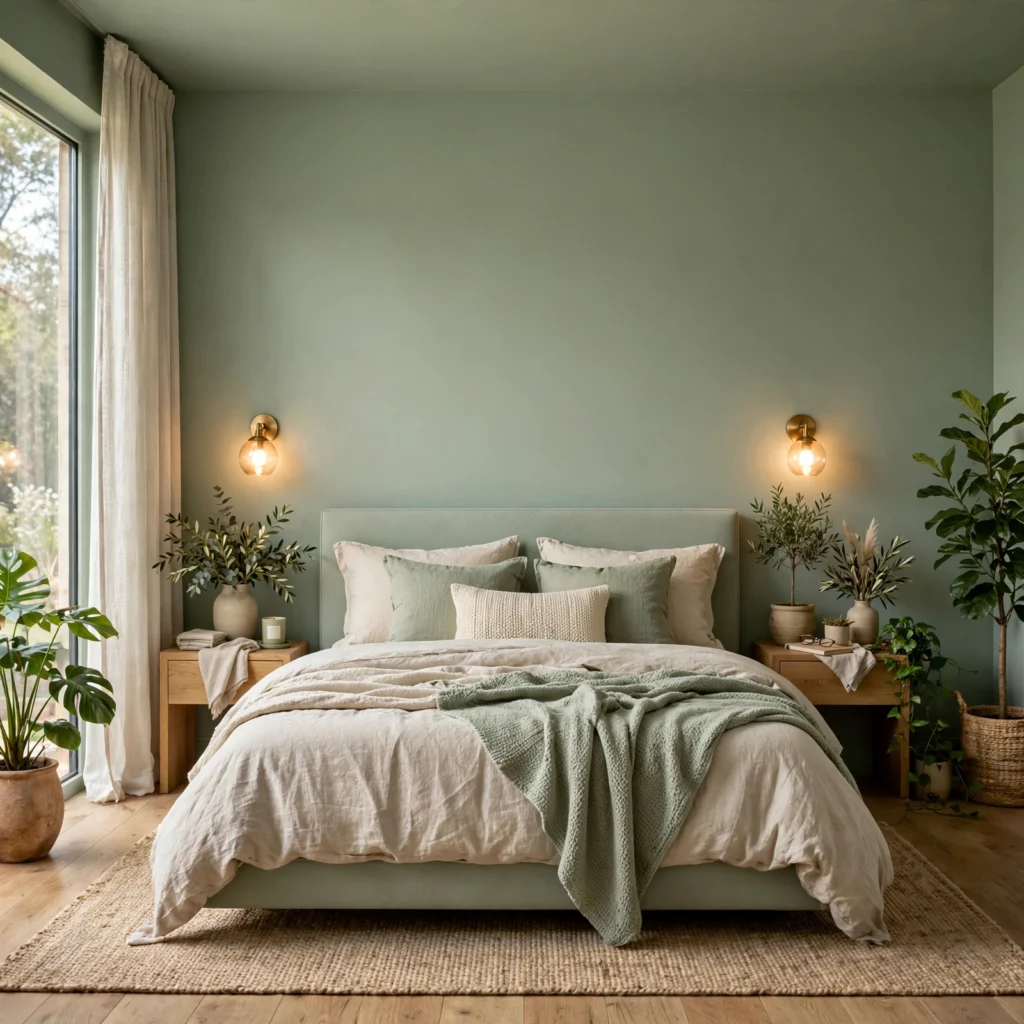
Sage sits between green and gray, making it one of the more forgiving colors to use across an entire bedroom without the shade feeling overwhelming or trend-heavy. It pairs easily with both white trim and natural wood furniture, and it tends to hold its appearance consistently across different light conditions compared to more saturated greens. This makes it a practical choice for a full-room application in bedrooms where the paint needs to work well at all times of day.
6. Navy Trim with White Walls
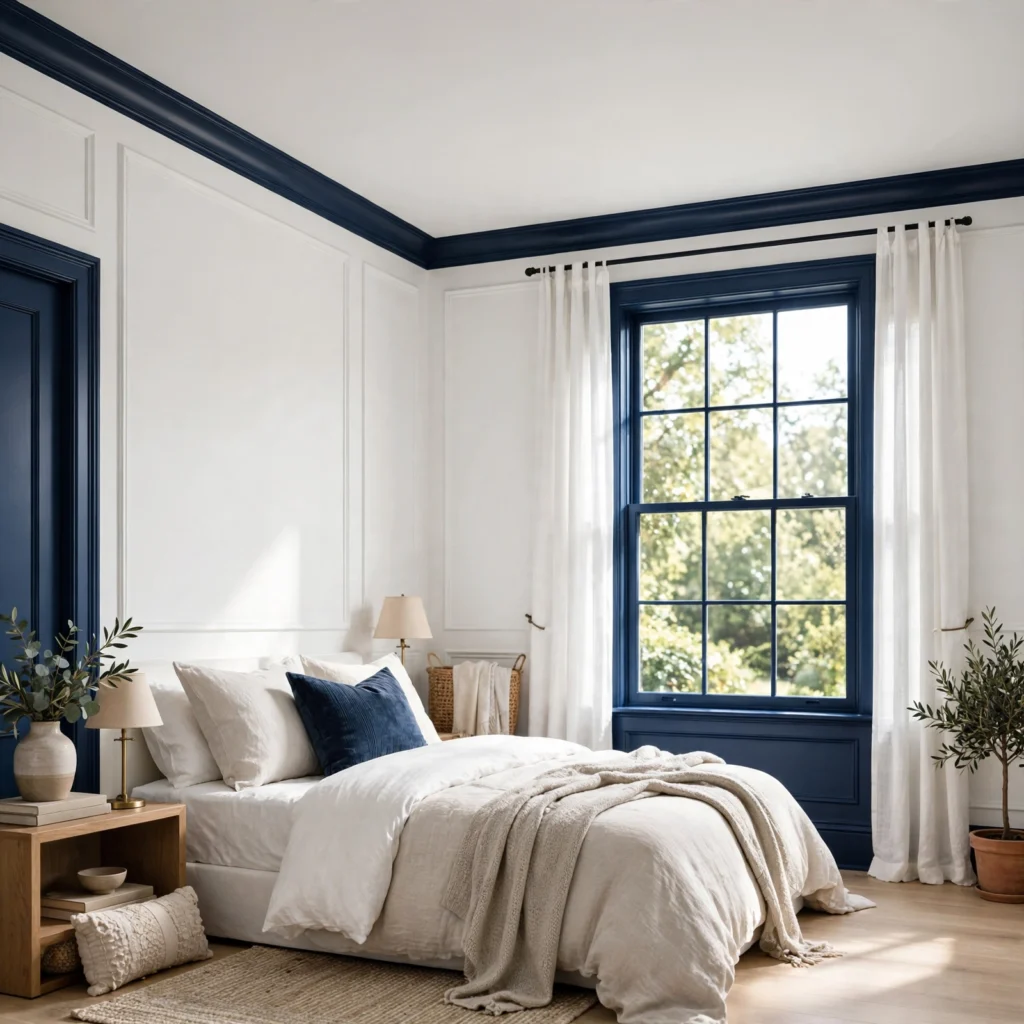
Painting the trim, window frames, and baseboards in a deep navy while keeping the walls a soft white creates contrast through the architectural details rather than the wall color itself. This approach adds definition and a slightly more traditional, tailored look without the commitment of a fully colored room. It works particularly well in bedrooms with existing molding or trim detail, since the painted contrast draws attention to those features.
7. Color-Blocked Headboard Wall
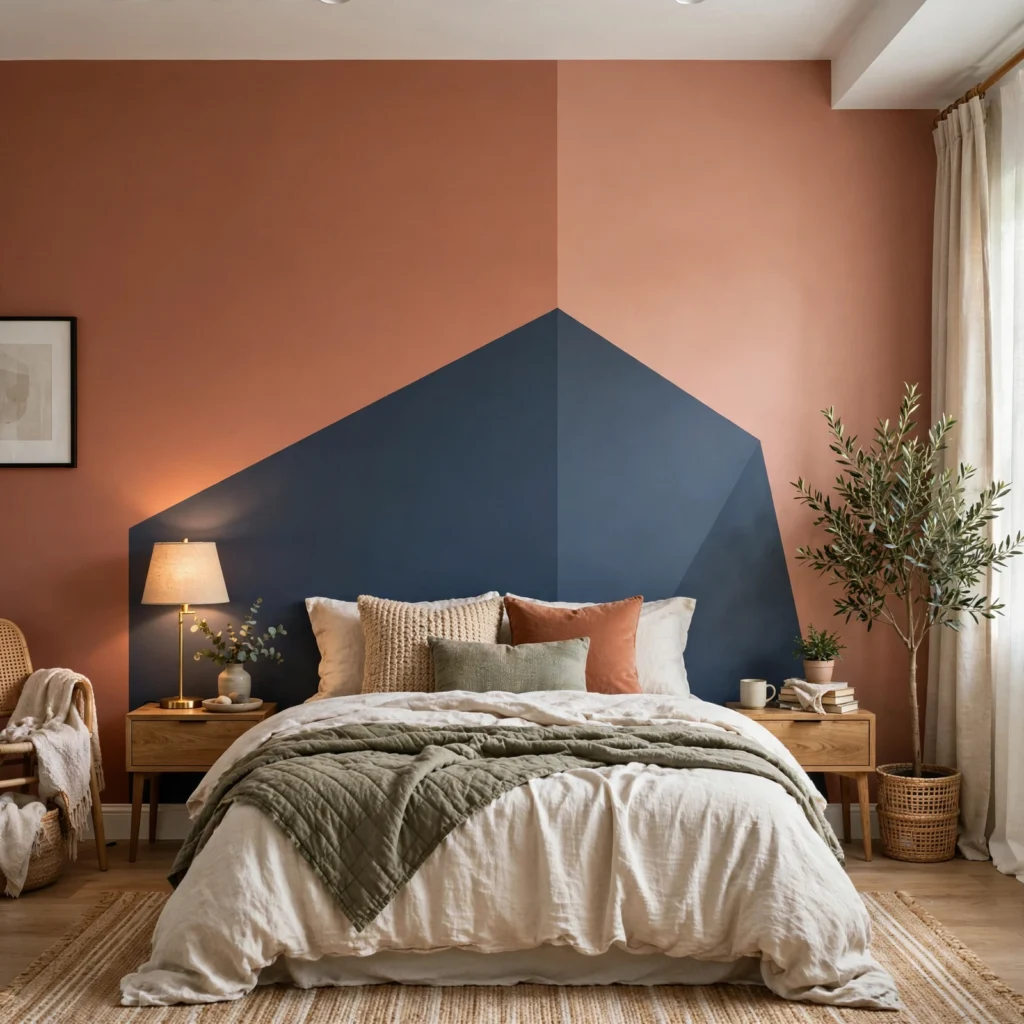
Painting a large geometric shape, like an arch or rectangle, directly on the wall behind the bed creates a faux headboard effect using only paint. This works as a lower-cost alternative to an upholstered headboard, and it can be sized and shaped to fit the exact proportions of the bed and wall. A contrasting but complementary color, rather than a jarring opposite, keeps the shape reading as intentional rather than like an unfinished patch.
Whether you’re remodeling or decorating, our white bedroom ideas will help you create a peaceful and inviting retreat.
8. Dusty Blue Full Room
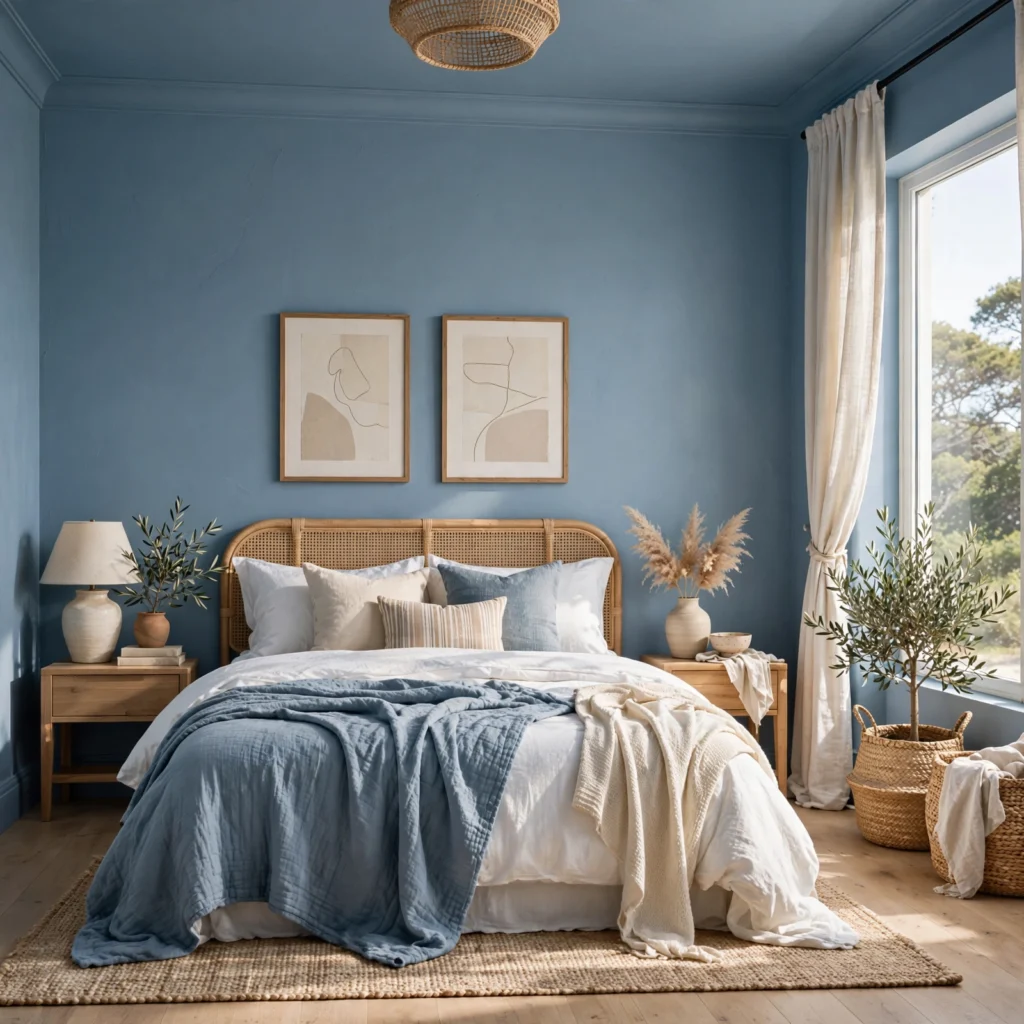
A muted, grayed-down blue works well across an entire bedroom because it avoids the coldness of a brighter, more saturated blue while still reading as calm and restful. It shifts noticeably with the room’s light direction, appearing more blue in bright afternoon sun and more gray in rooms with limited direct light. This makes it worth testing at different times of day before committing to a full-room application.
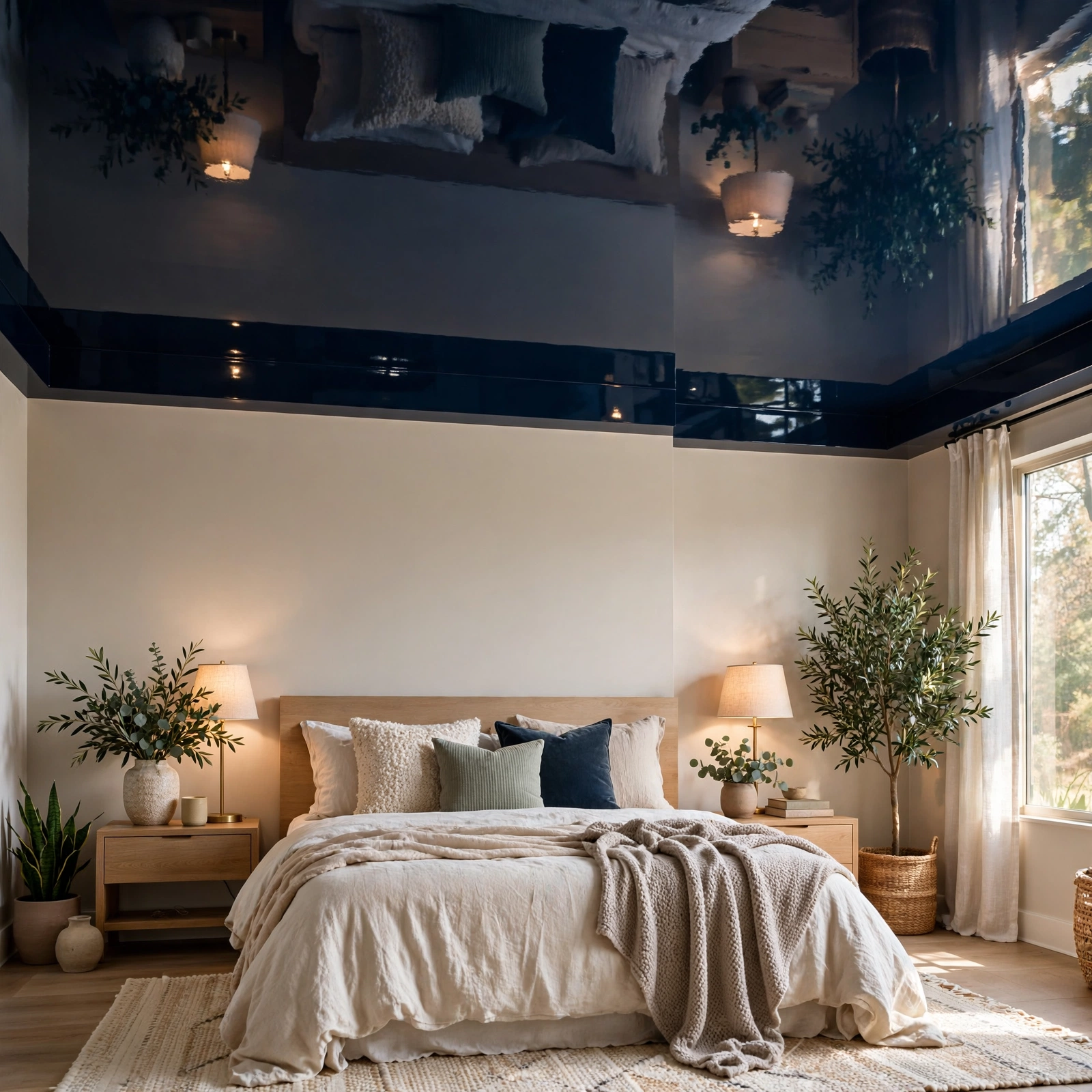
9. High-Gloss Ceiling Accent
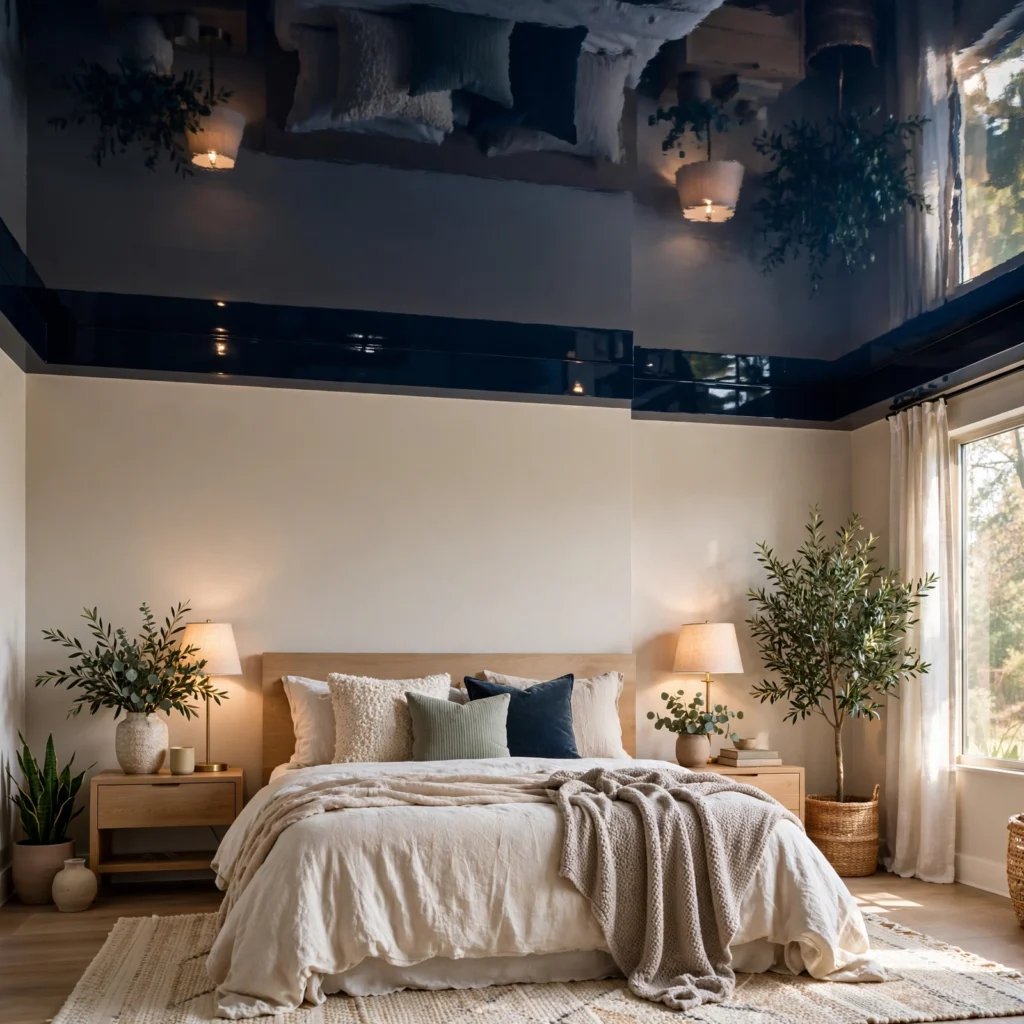
Painting the ceiling in a high-gloss finish, in either white or a color matching the walls, reflects light in a way a flat or matte ceiling doesn’t, adding a subtle sense of height and polish to the room. This works particularly well in bedrooms with crown molding or other ceiling detail, since the gloss finish catches and highlights those architectural lines. It requires more careful prep and application than a matte finish, since gloss shows imperfections in the surface more readily.
10. Warm Greige Full Room
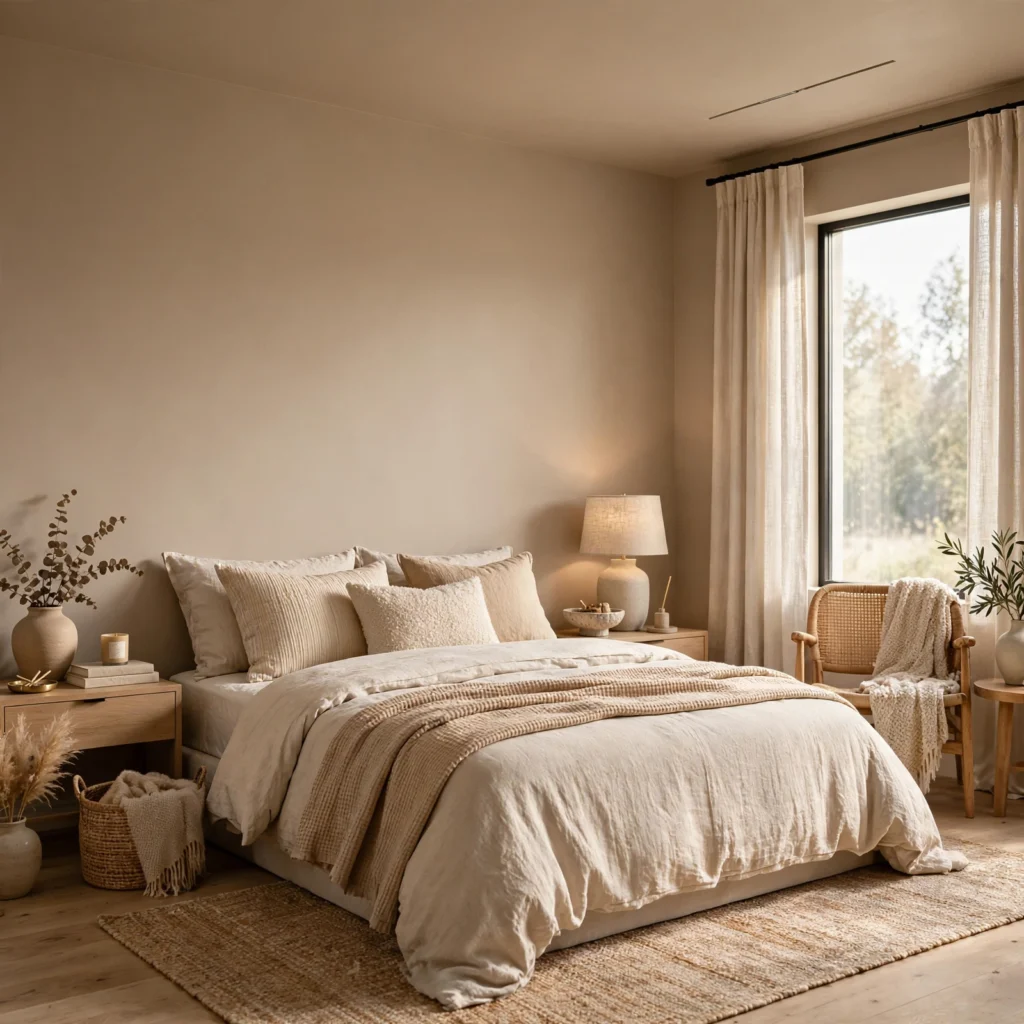
Greige blends gray and beige into a single neutral that avoids both the coldness of a pure gray and the yellow undertone that can make some beige shades feel dated. It works as a flexible, adaptable base color for bedrooms planning to layer in bolder color through bedding, art, or furniture rather than the walls themselves. This shade also tends to hold its appearance consistently across different lighting conditions, making it one of the more predictable full-room choices.
11. Black Accent Nook or Alcove
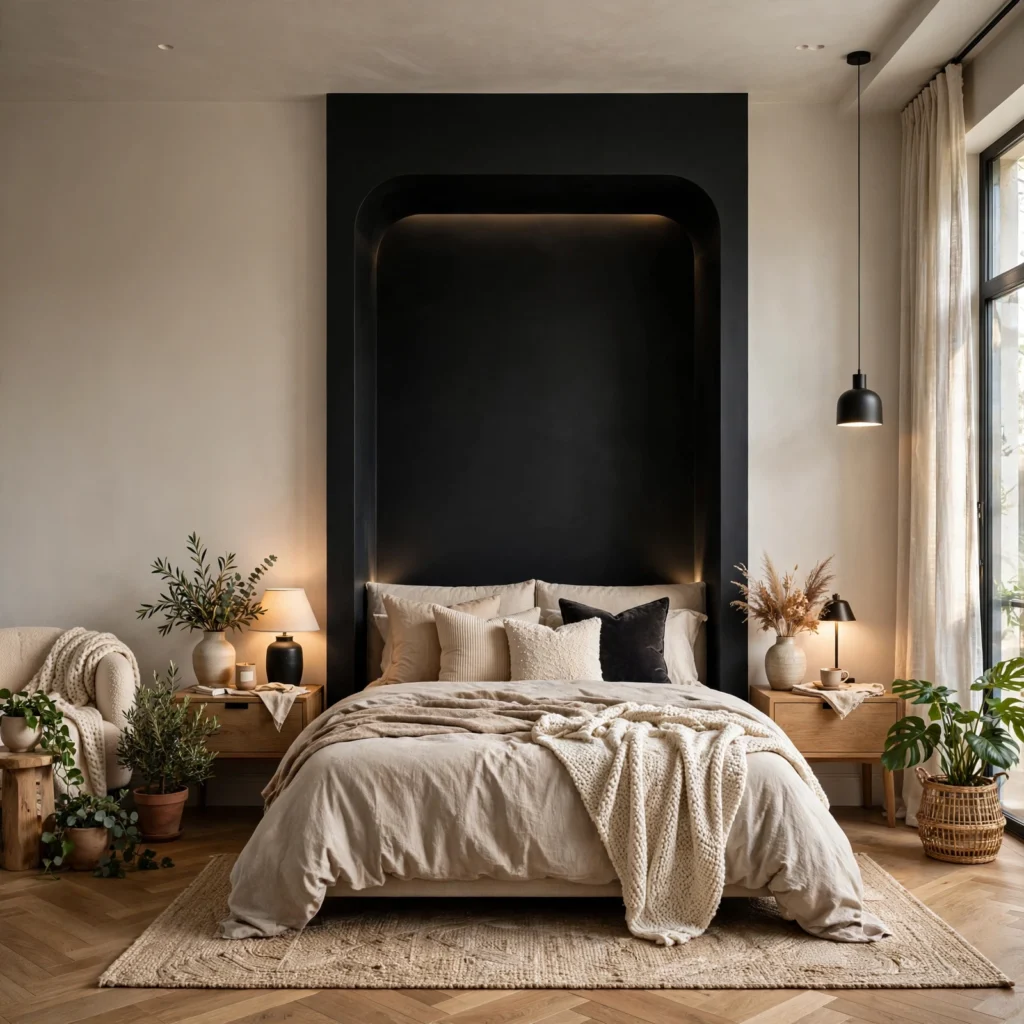
Painting a recessed nook, alcove, or built-in shelving unit in matte black creates contrast and depth within a single section of the room, rather than committing to a full black wall. This works particularly well in bedrooms with an existing architectural feature, like a window seat or built-in shelving, since the black paint defines and highlights that specific area. The surrounding walls staying a lighter neutral keeps the black from feeling overwhelming.
12. Ombre Wall Gradient
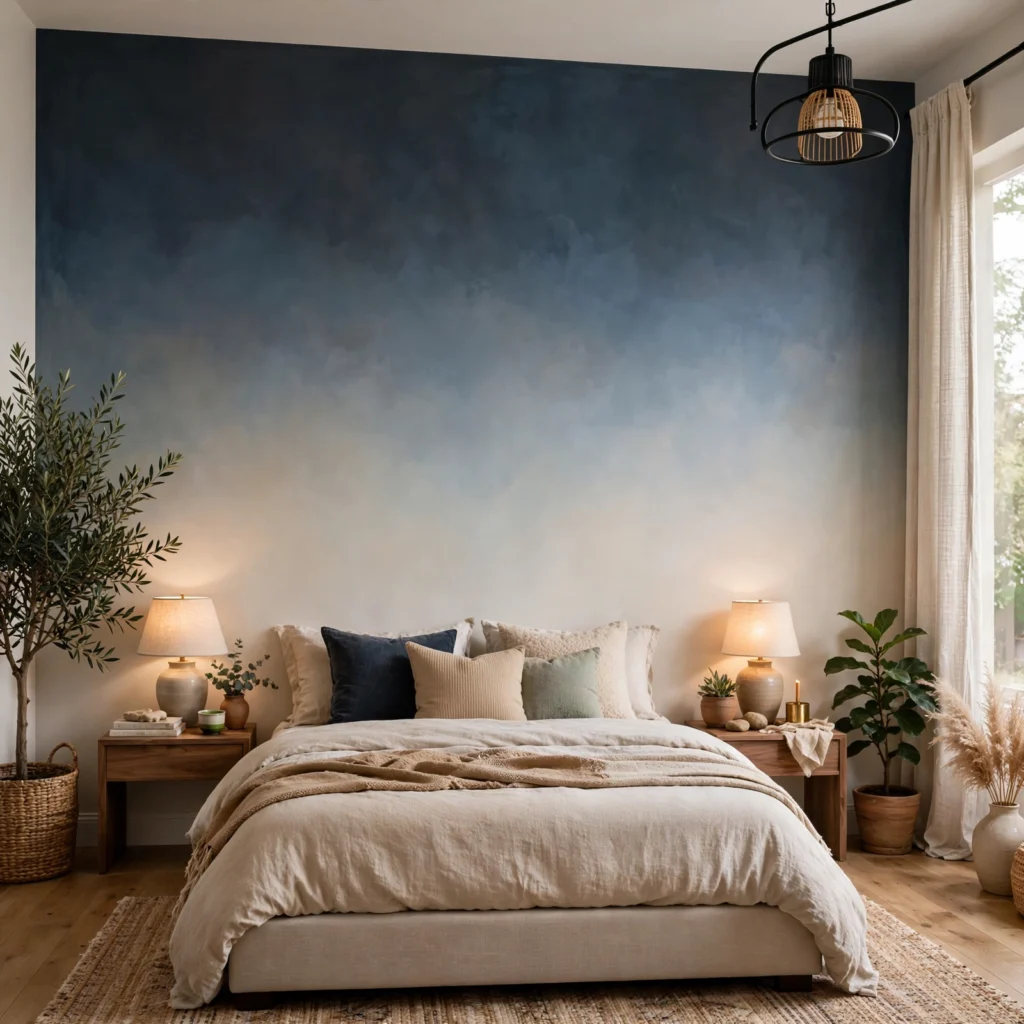
A hand-painted or sprayed gradient, transitioning from a deeper shade at the bottom of the wall to a lighter version of the same color near the ceiling, adds a soft, layered effect that a single flat color can’t achieve. This technique requires more time and a steadier hand than a standard paint job, often involving blending multiple mixed shades of the same base color. It works particularly well as a single accent wall rather than throughout an entire room, keeping the effect from feeling overly busy.
Shop the Look
A few specific supplies make these ideas easier to execute well. Look for a matte finish paint suited to bedroom walls, a small painter’s level for chair rail and color-blocking lines, a roll of sharp-edge painter’s tape, a high-gloss ceiling paint for accent applications, and a set of paint sample pots sized for large test swatches rather than small chips.
Common Mistake to Avoid
The most common mistake with bedroom paint ideas is skipping a large test swatch on the actual wall and relying only on a small paint chip or an online photo, since color shifts significantly based on a room’s specific light and existing fixtures. A shade that looks perfect in a store display or someone else’s photographed room can read entirely differently once it’s on your own walls under your own lighting. Always paint a swatch at least two feet wide directly on the wall and observe it at different times of day before committing to the full room.
FAQs
What is the most popular bedroom paint color right now?
Muted, nature-inspired shades like sage green, warm terracotta, and dusty blue have remained consistently popular, favored for their calming quality and their ability to work across a range of bedroom styles. That said, popularity varies by personal taste and region, and testing a shade in your own room’s light matters more than following a single trend.
What paint finish is best for bedroom walls?
Matte and eggshell finishes are generally the most forgiving choices for bedroom walls, since they hide minor surface imperfections better than satin or gloss. Gloss and satin finishes are more commonly reserved for trim, doors, and smaller accent areas where a bit more shine and durability are useful.
Should I paint my bedroom ceiling the same color as the walls?
It’s a matter of preference, though extending the wall color onto the ceiling can make a room with lower or uneven ceilings feel more cohesive and intentional. A white or lighter ceiling, by contrast, tends to keep a room feeling taller and more open, which matters more in smaller bedrooms.
How do I choose a paint color for a north-facing bedroom?
North-facing rooms generally receive cooler, less direct light, so warmer shades like terracotta, warm greige, or soft yellow tend to read better than cool blues or grays, which can appear flat or overly cold in that light. Testing a swatch specifically during the hours the room gets the most use is the most reliable way to confirm a shade works.
Is an accent wall still a good idea for a bedroom in 2026?
Yes, accent walls remain a practical, lower-risk way to introduce a bolder color without committing to a full-room repaint. Placing the accent wall behind the headboard, rather than on a random wall, tends to create the most cohesive and intentional-looking result.
Conclusion
These bedroom paint ideas work best when the color, finish, and placement are all considered together rather than choosing a shade in isolation. Whether you start with a full sage green room or a smaller color-blocked headboard wall, each idea here scales to fit your space, your light, and how bold you’re ready to go. Save this post to Pinterest for later, and check out our related guide on small bedroom storage solutions for more design inspiration.