12 Trending White Bedroom Ideas for a Clean, Layered Look
An all-white bedroom sounds simple, but it’s one of the harder palettes to get right, since flat, matched white can easily tip into feeling cold or unfinished. These twelve white bedroom ideas cover the shades, textures, and material pairings that keep a white room feeling layered and warm rather than sterile. By the end, you’ll have specific ways to build depth into a white palette without introducing another color at all.
Trend & Background
White bedrooms have remained a consistent choice for years, prized for their flexibility and the way they make a space feel larger and brighter than a darker palette would. What’s changed more recently is the emphasis on texture and undertone, with designers moving away from a single flat, cool white toward layered combinations of warm ivory, soft bone, and creamy off-white. This matters now because an all-white room reveals texture and lighting choices more clearly than a colored room does, which has pushed the trend toward richer materials rather than relying on paint color alone to carry the space.
Key Takeaways
- White bedroom ideas depend heavily on undertone, since warm and cool whites read very differently on the same wall.
- Texture, from linen to boucle to rattan, prevents an all-white room from feeling flat or clinical.
- Mixing white with one or two natural materials, like wood or stone, keeps the palette from reading as sterile.
- Layering multiple shades of white, rather than matching everything exactly, adds depth that a single flat white can’t achieve.
1. Warm Ivory Walls
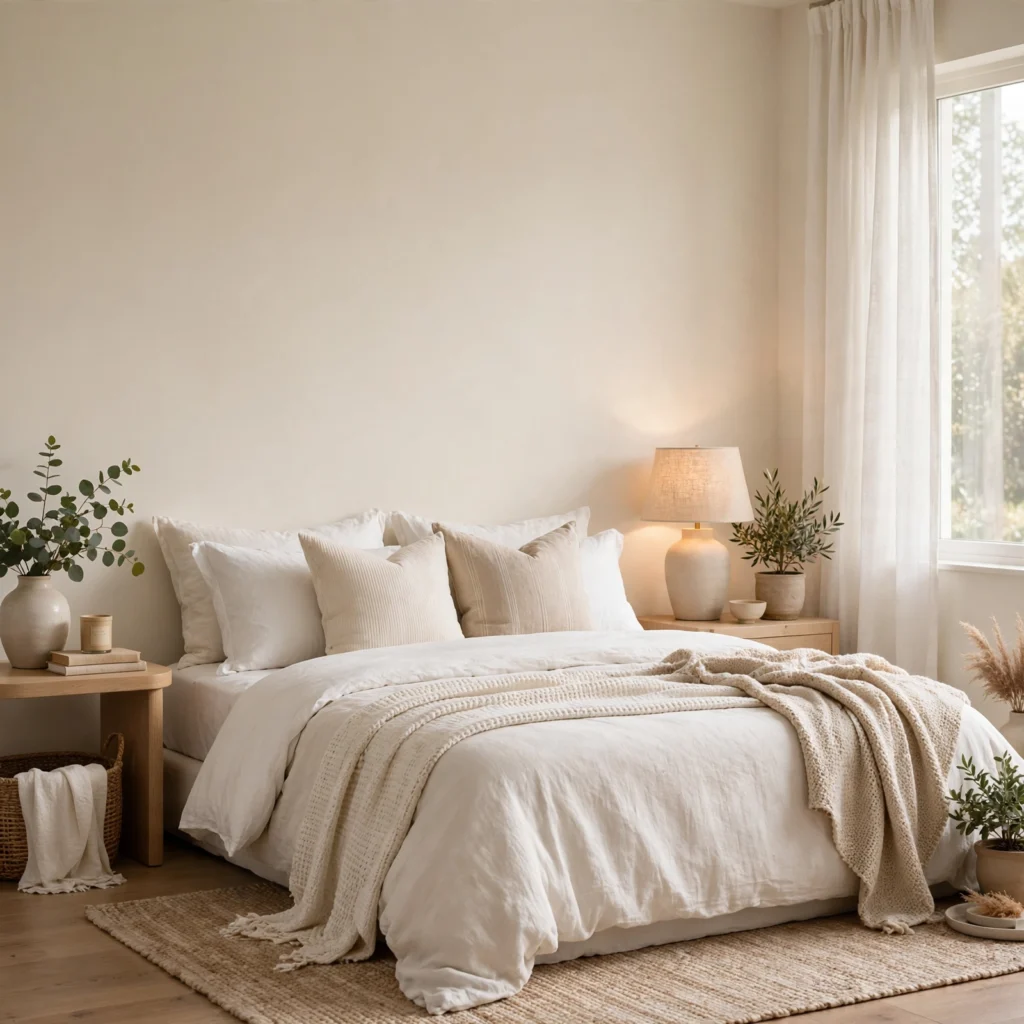
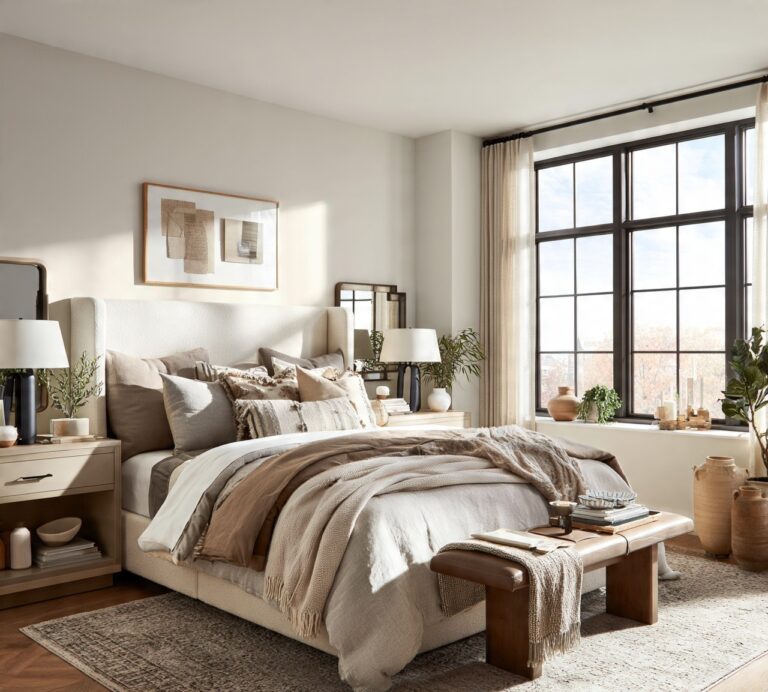
Ivory leans slightly yellow compared to a true white, which keeps a full-room application from feeling cold or clinical, especially in rooms with limited natural light. It reads warmer under incandescent bulbs and slightly more neutral in direct daylight, making it one of the more adaptable whites across different times of day. This shade pairs particularly well with natural wood furniture, since both share the same warm undertone rather than competing against each other.
| White Shade | Undertone | Best Light Exposure |
| Warm Ivory | Yellow-based | North-facing, low light |
| Cool White | Blue-based | South-facing, bright rooms |
| Bone | Gray-beige | Any exposure |
| Off-White | Neutral, soft | Any exposure |
2. Boucle Upholstered Headboard
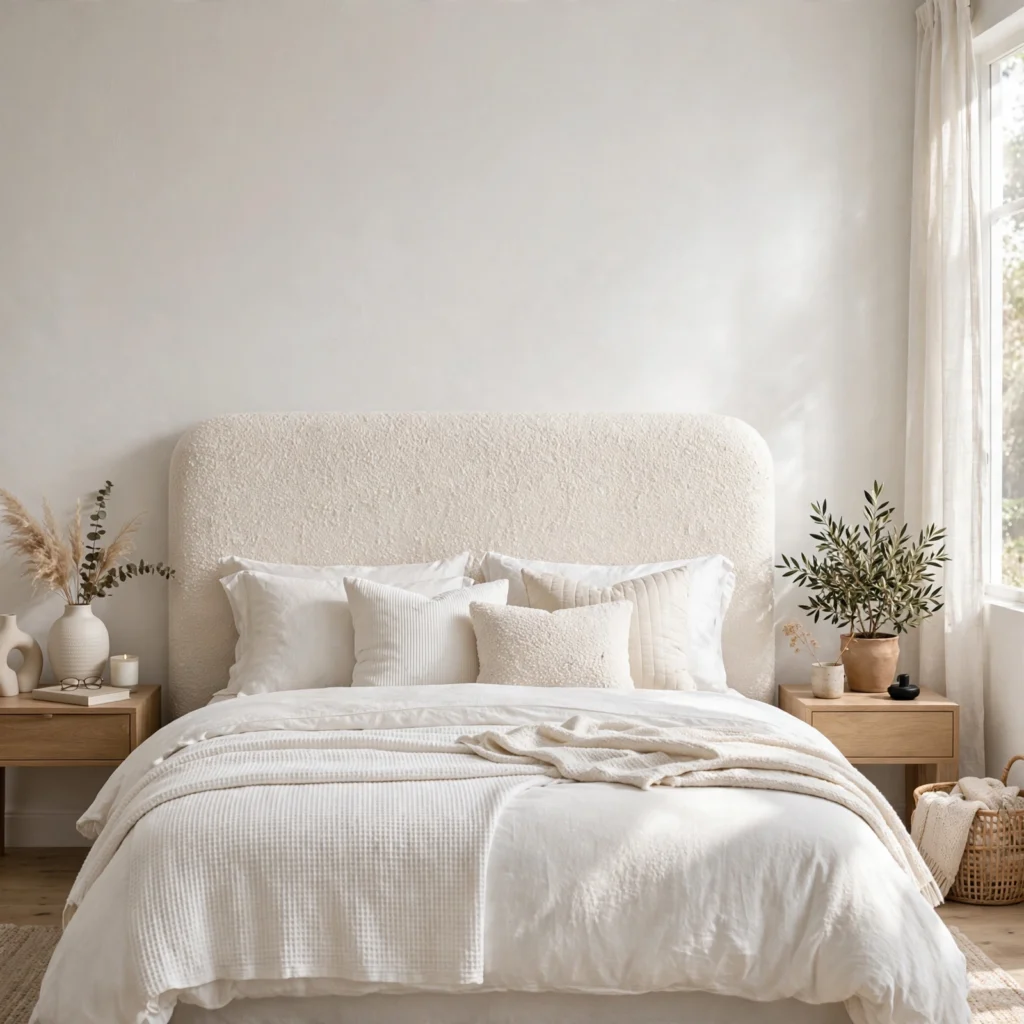
A headboard upholstered in white or cream boucle adds texture that flat paint or smooth fabric can’t replicate, giving the bed visual interest even within a single-color palette. The nubby, looped texture catches light and shadow differently across its surface, which keeps the headboard from disappearing into a white wall behind it. This works particularly well as the room’s main textural statement, allowing the rest of the furniture to stay simpler.
3. Linen Bedding in Layered Whites
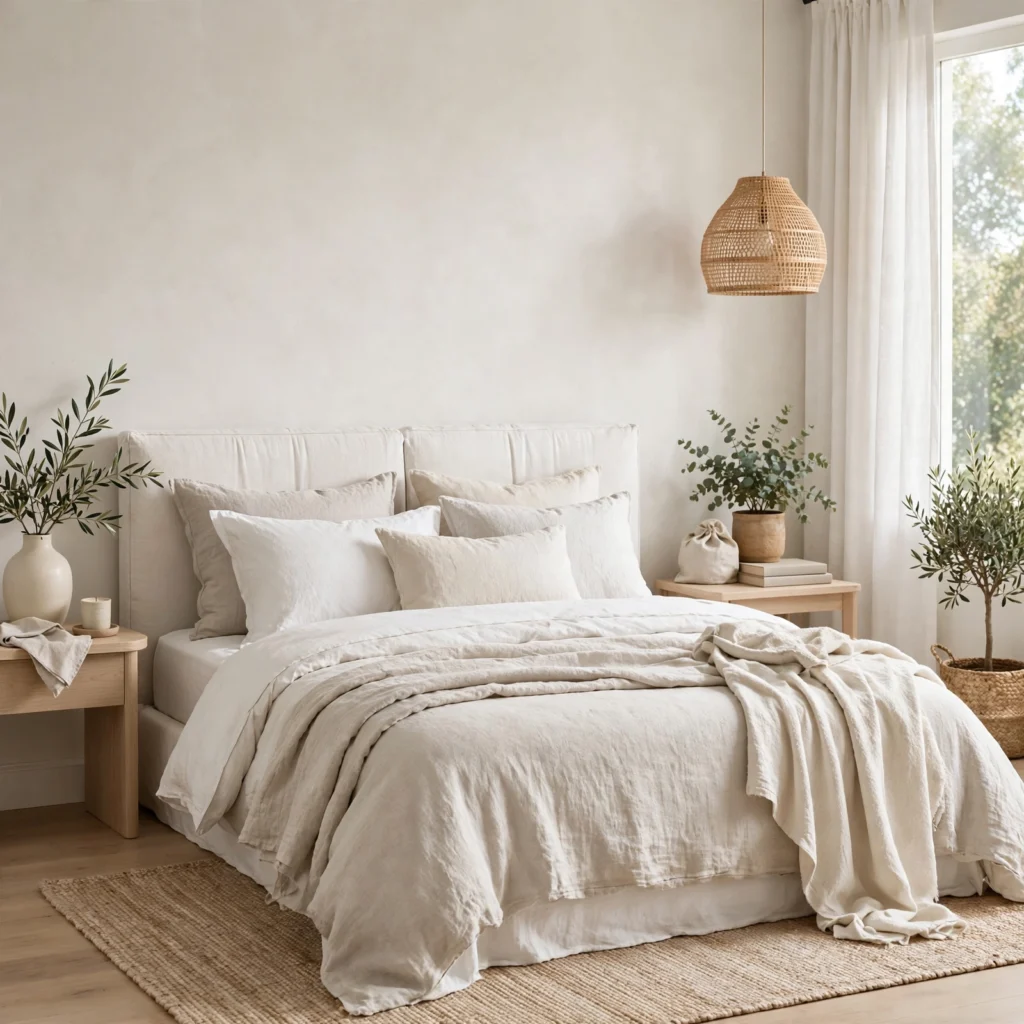
Combining two or three slightly different shades of white linen, rather than matching the sheets, duvet, and shams exactly, adds depth to the bed without introducing any additional color. A cream flat sheet under a bone-colored duvet, for example, reads as intentional layering rather than a mismatch. Linen’s naturally rumpled texture also keeps the bedding from looking too flat or overly crisp, which matters more in an all-white room than almost any other palette.
4. Natural Wood Furniture
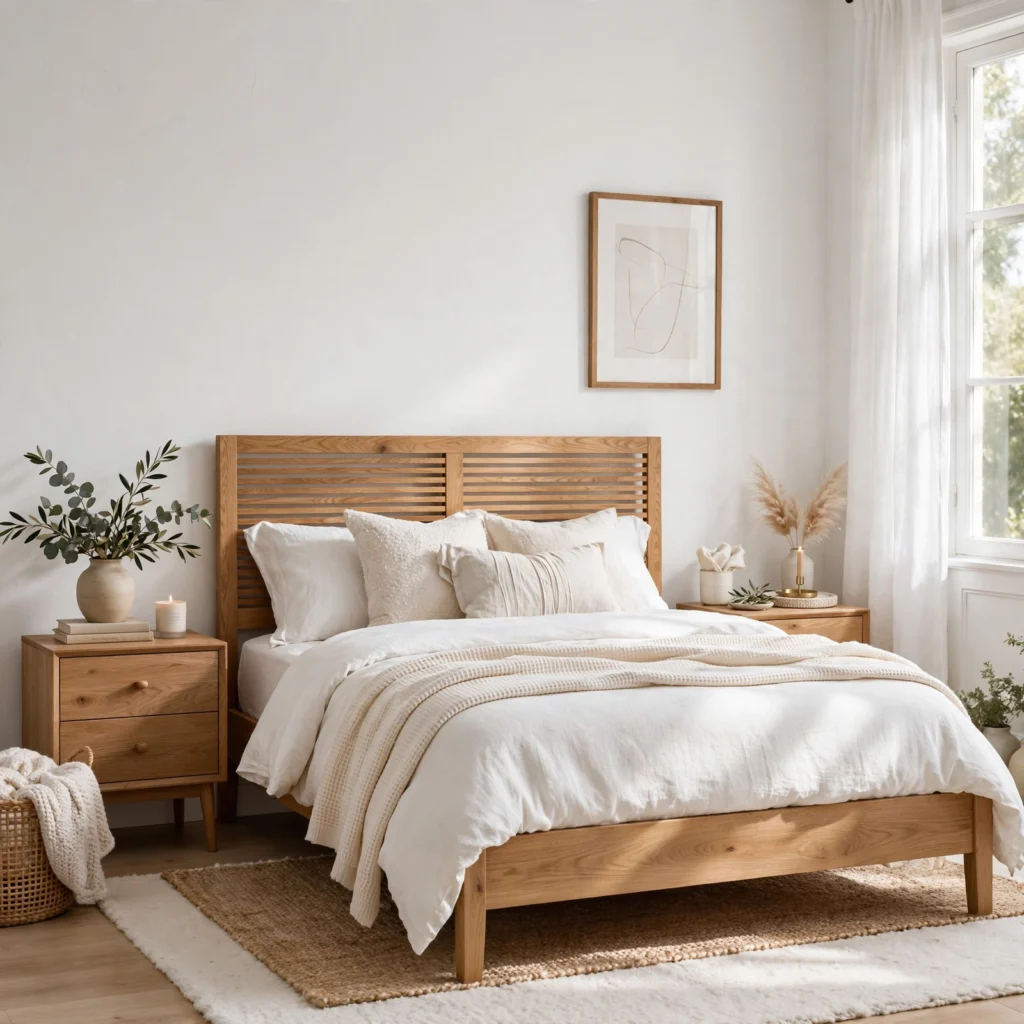
Pairing white walls with unpainted, natural wood furniture, like oak or walnut, introduces warmth and grain texture that white alone can’t provide. This combination keeps the room from feeling like a blank canvas, since the wood grain adds visual movement even in an otherwise minimal space. A single large piece, like a wood bed frame or dresser, tends to have more impact than several smaller wood accents scattered throughout the room.
5. Rattan Headboard or Mirror
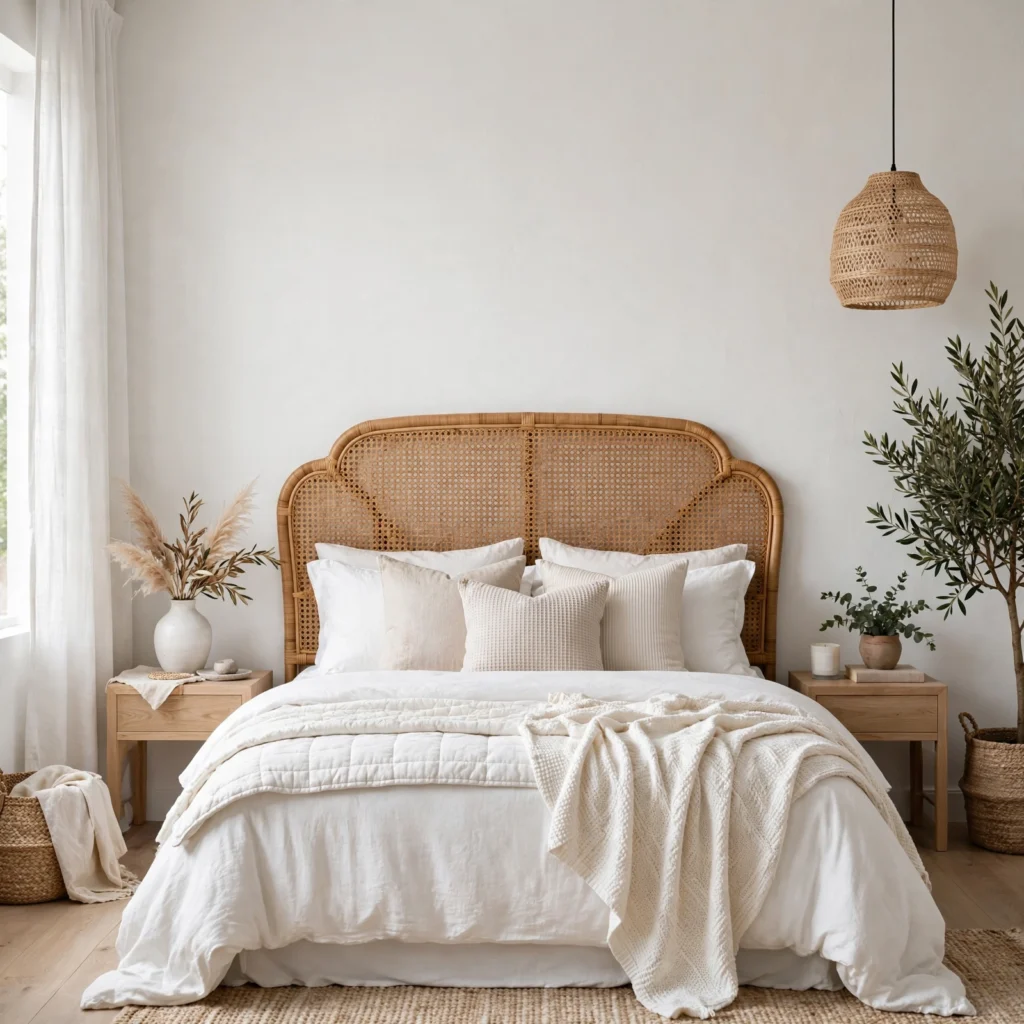
A woven rattan headboard or a rattan-framed mirror adds texture and warmth to a white bedroom without introducing any additional color. The open weave catches shadow in a way that flat white walls don’t, giving the room a layered, textured focal point. This pairing works particularly well in bedrooms leaning toward a relaxed, natural style, where rattan reinforces the material choices elsewhere in the room.
6. White Wainscoting
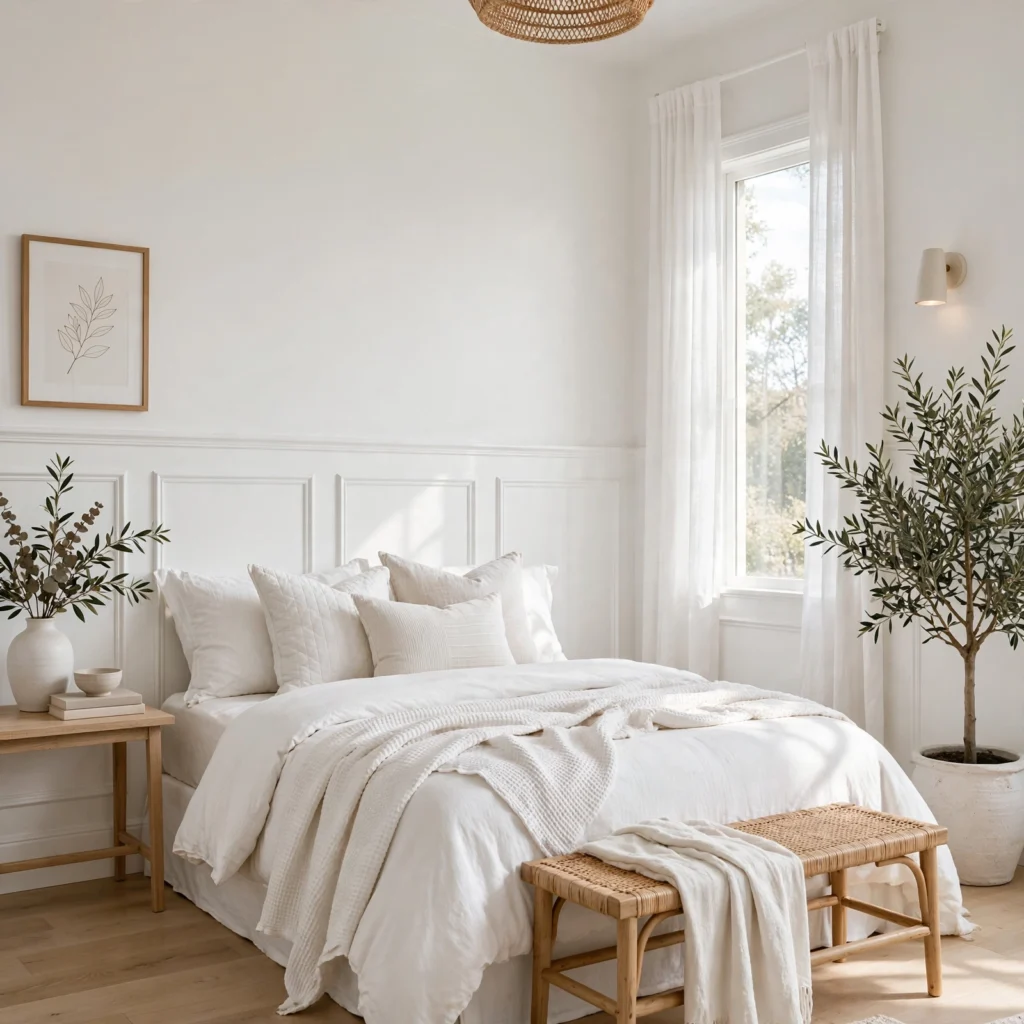
Wainscoting, or wood paneling installed on the lower portion of a wall and painted white, adds architectural texture that flat drywall doesn’t provide. The horizontal lines and shadow gaps between panels catch light differently throughout the day, breaking up what might otherwise be a single flat surface. This works particularly well in bedrooms with existing molding or trim, since the wainscoting can tie into those details rather than standing apart from them.
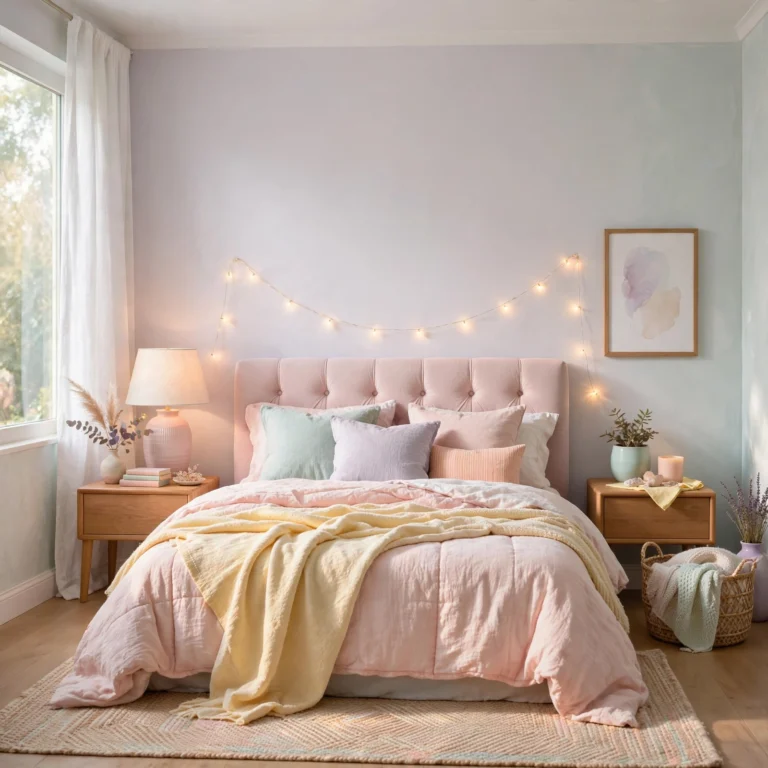
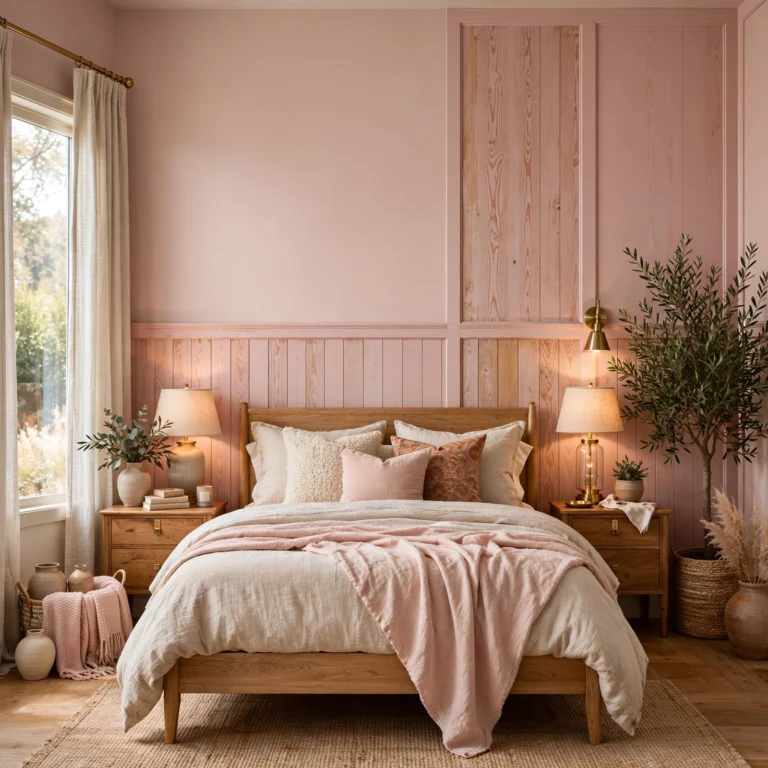
Get inspired by our modern pink bedroom ideas featuring cozy textures, calming color palettes, and space-saving solutions.
7. Cream Wool Area Rug
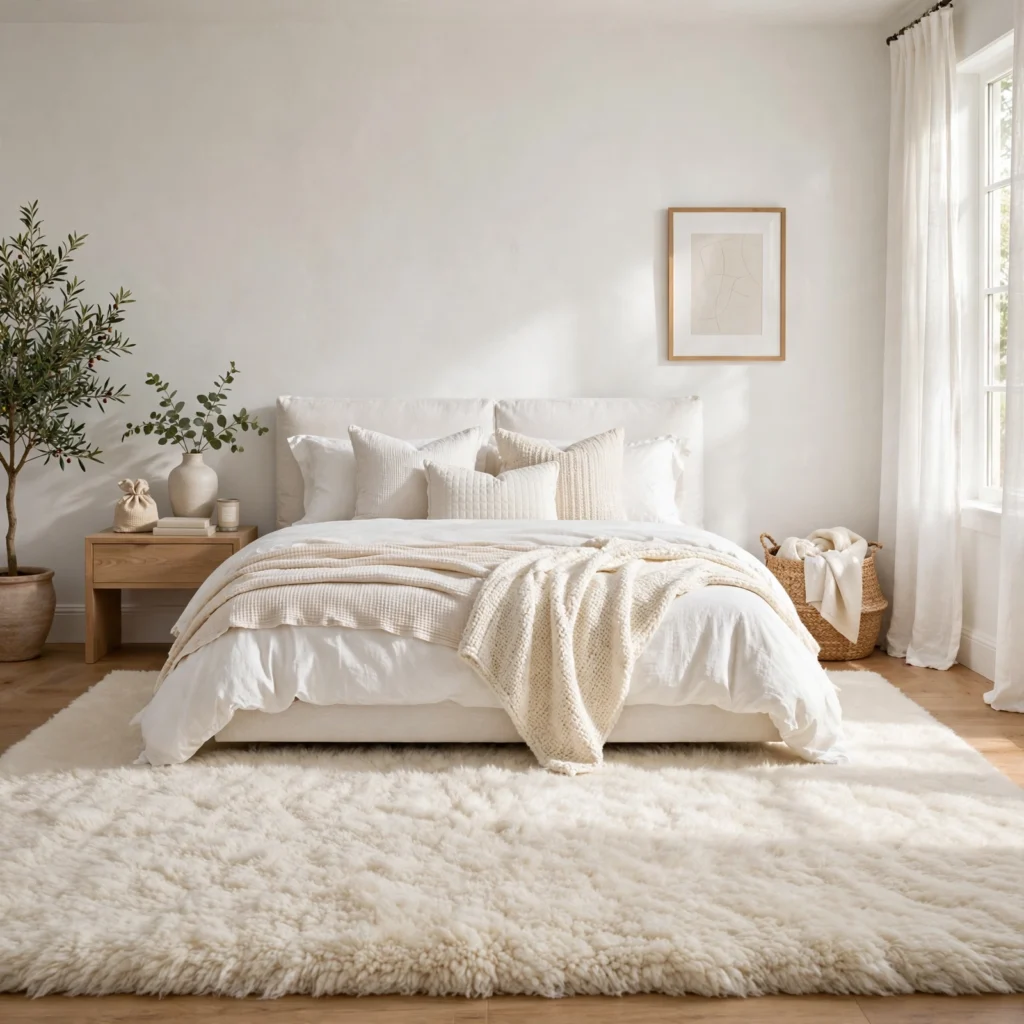
A plush wool rug in a warm cream or off-white tone adds texture underfoot while staying within the room’s overall white palette. Choosing a rug with a subtle woven pattern, rather than a completely flat surface, adds visual interest without introducing color. This is also one of the easier updates to swap out seasonally, layering in a different texture without touching the walls or furniture.
8. Matte Black Window Frames
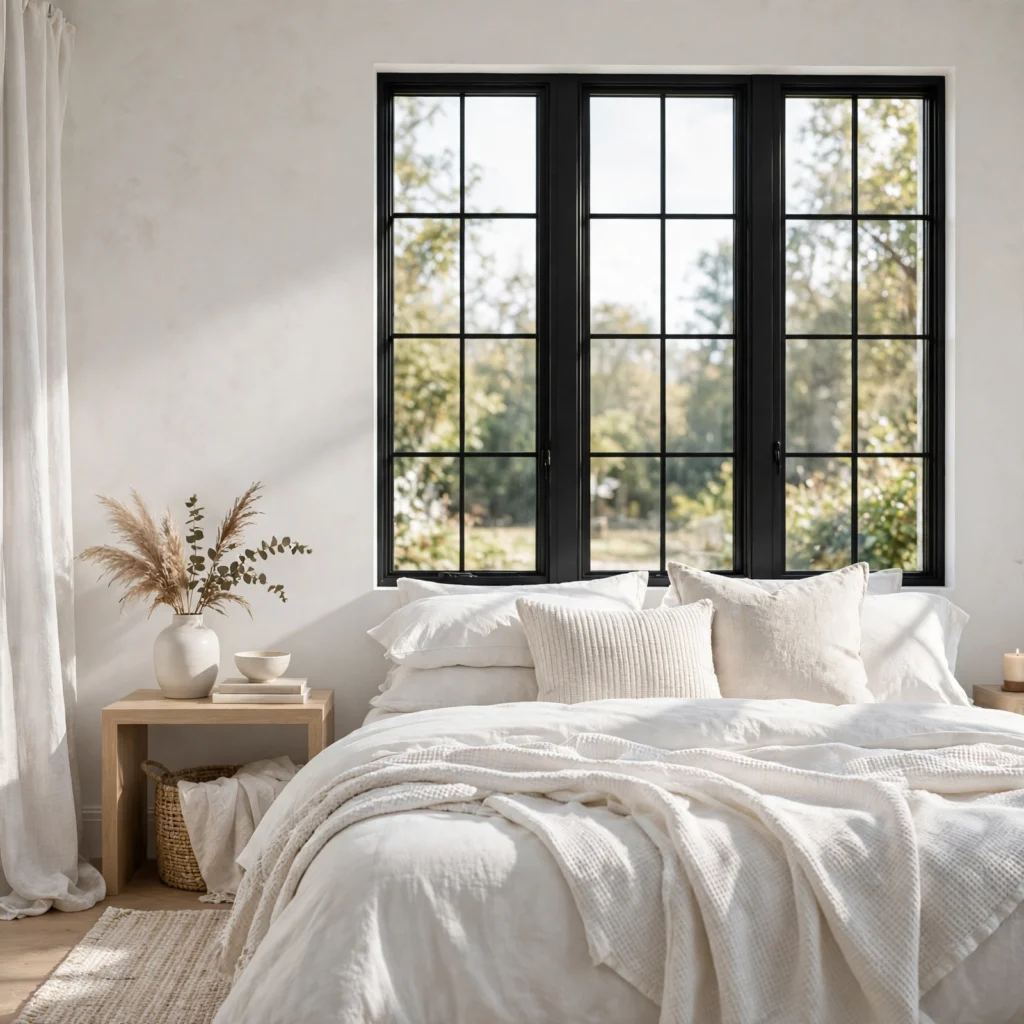
Black-framed windows or a black curtain rod add a single, sharp contrast point in an otherwise all-white bedroom, keeping the palette from reading as flat or one-dimensional. This works especially well in rooms with large windows, where the black frame becomes a defining architectural line against the white walls. Because it’s a fixed, minimal detail rather than a full accent wall, this pairing keeps the room predominantly white while still adding definition.
9. Textured Plaster Walls
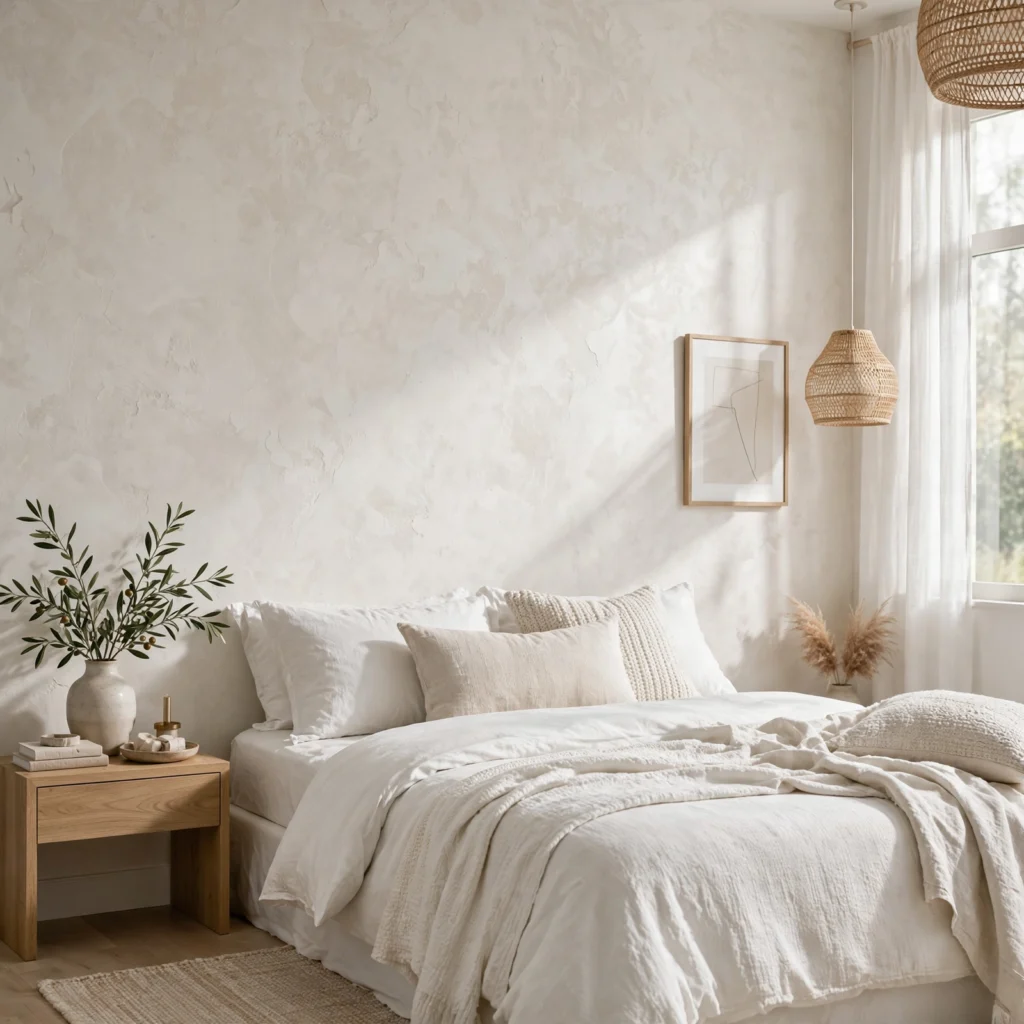
A limewash or textured plaster finish, rather than flat paint, gives white walls a subtle, cloud-like variation that flat paint can’t replicate. The texture catches light differently depending on the time of day and viewing angle, adding movement to a surface that would otherwise stay static. This finish works particularly well in bedrooms aiming for an organic, handmade feel rather than a crisp, modern look.
10. White Canopy with Sheer Curtains
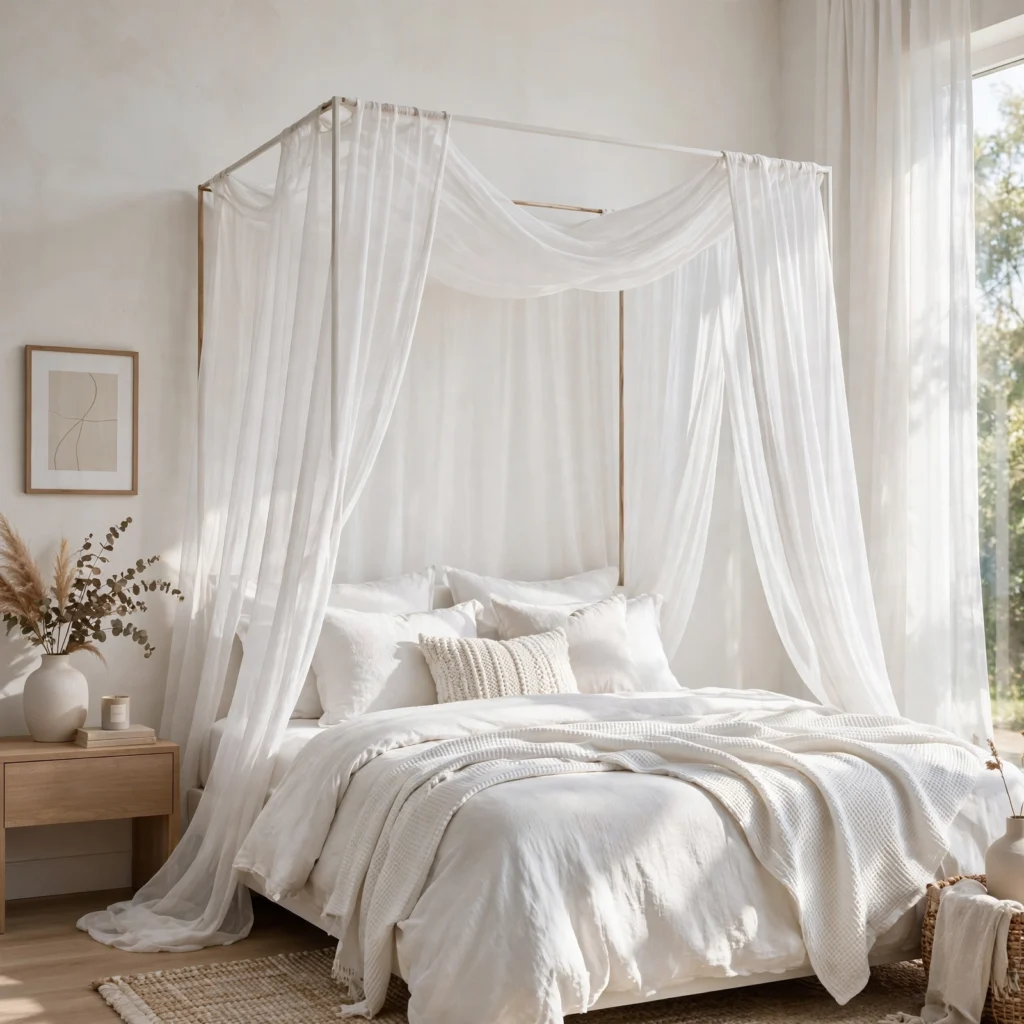
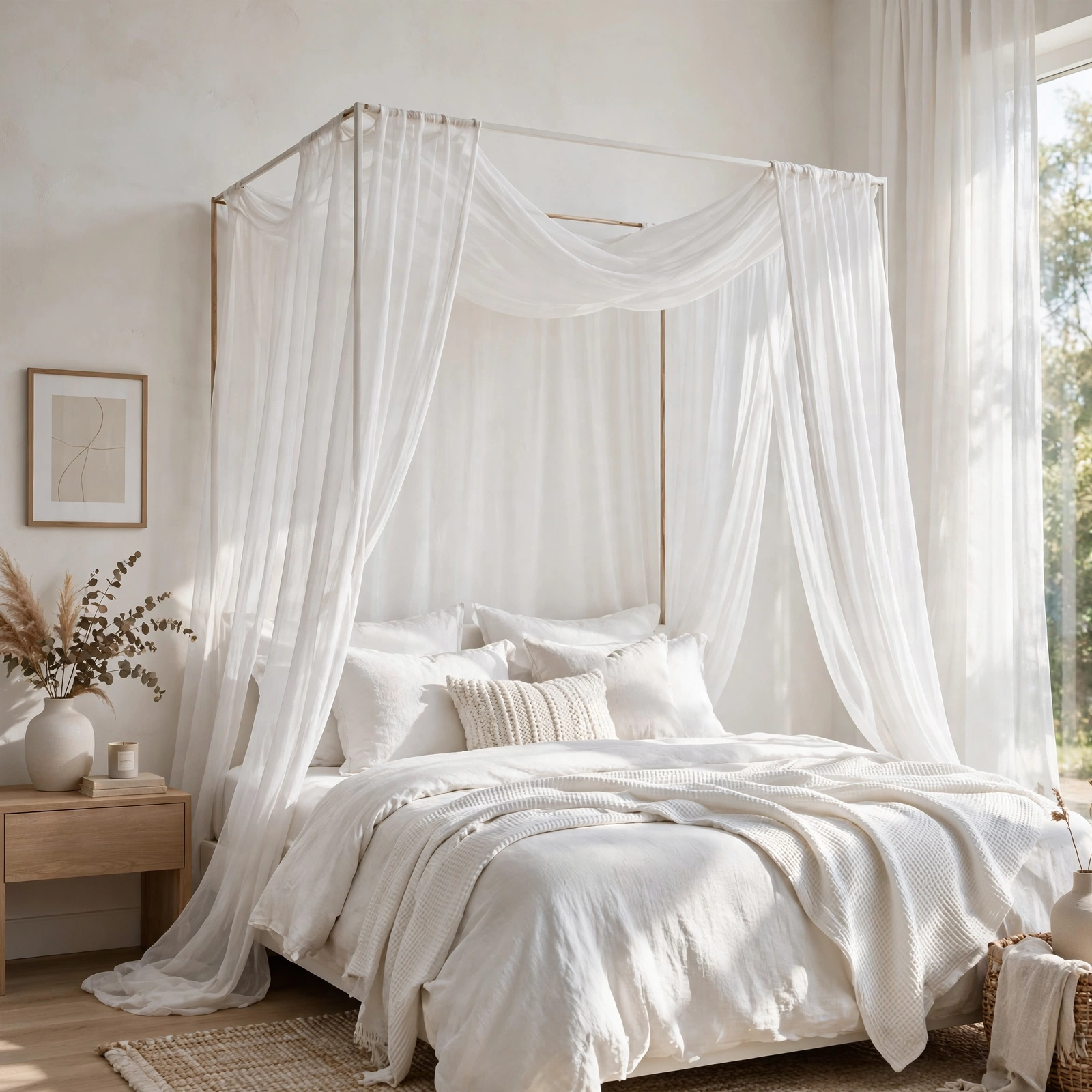
Sheer white curtain panels hung from a ceiling-mounted frame or hoop add a soft, layered element above the bed without introducing pattern or color. Left open during the day, the sheer fabric still reads as part of the room’s white palette while adding a sense of height and softness. This works particularly well in bedrooms with higher ceilings, where the canopy draws the eye upward without feeling heavy.
11. Off-White Ceiling Treatment
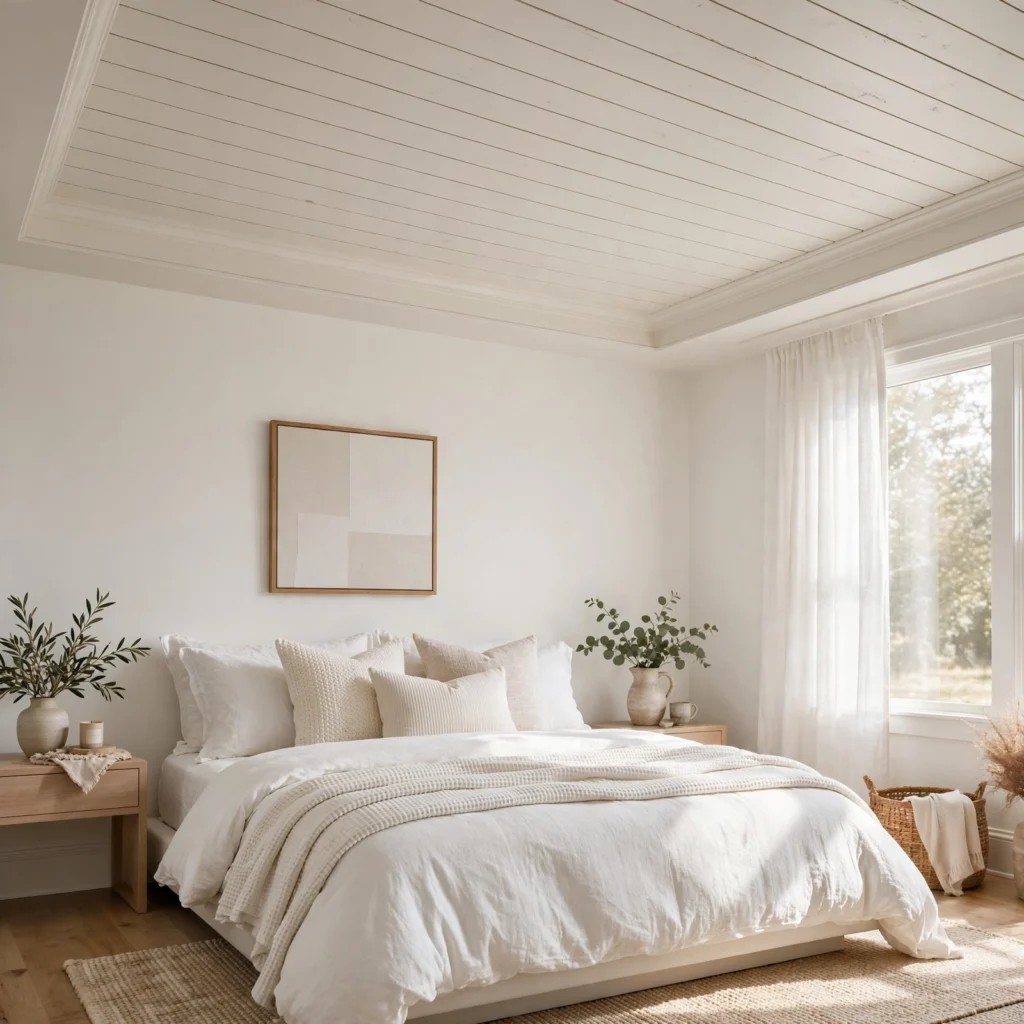
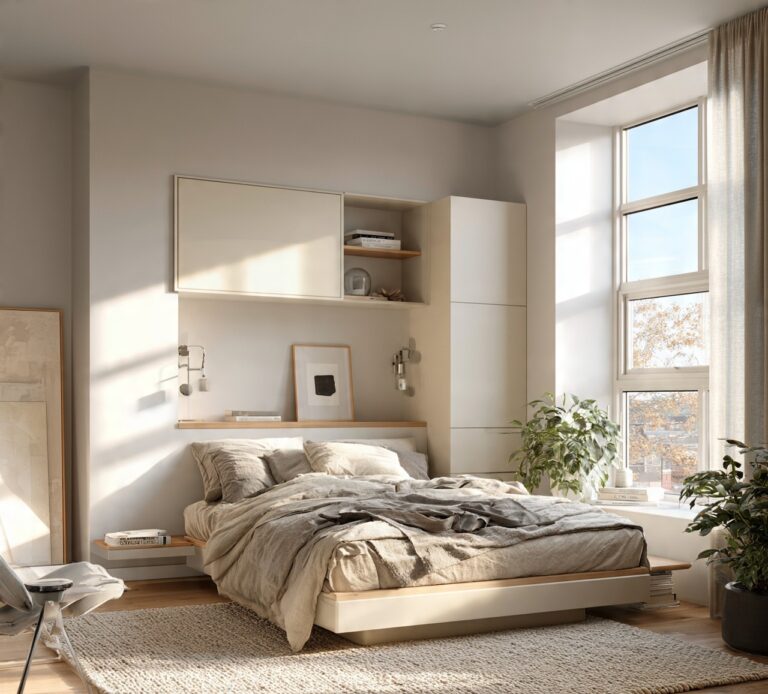
Extending a soft off-white onto the ceiling, rather than leaving it a stark, cooler white, removes the visual break between wall and ceiling that can make a room feel disjointed. This treatment works particularly well in bedrooms where the walls are already a warm ivory or bone shade, since matching the ceiling keeps the entire room reading as one cohesive tone rather than two competing whites.
12. Stone or Concrete Accents
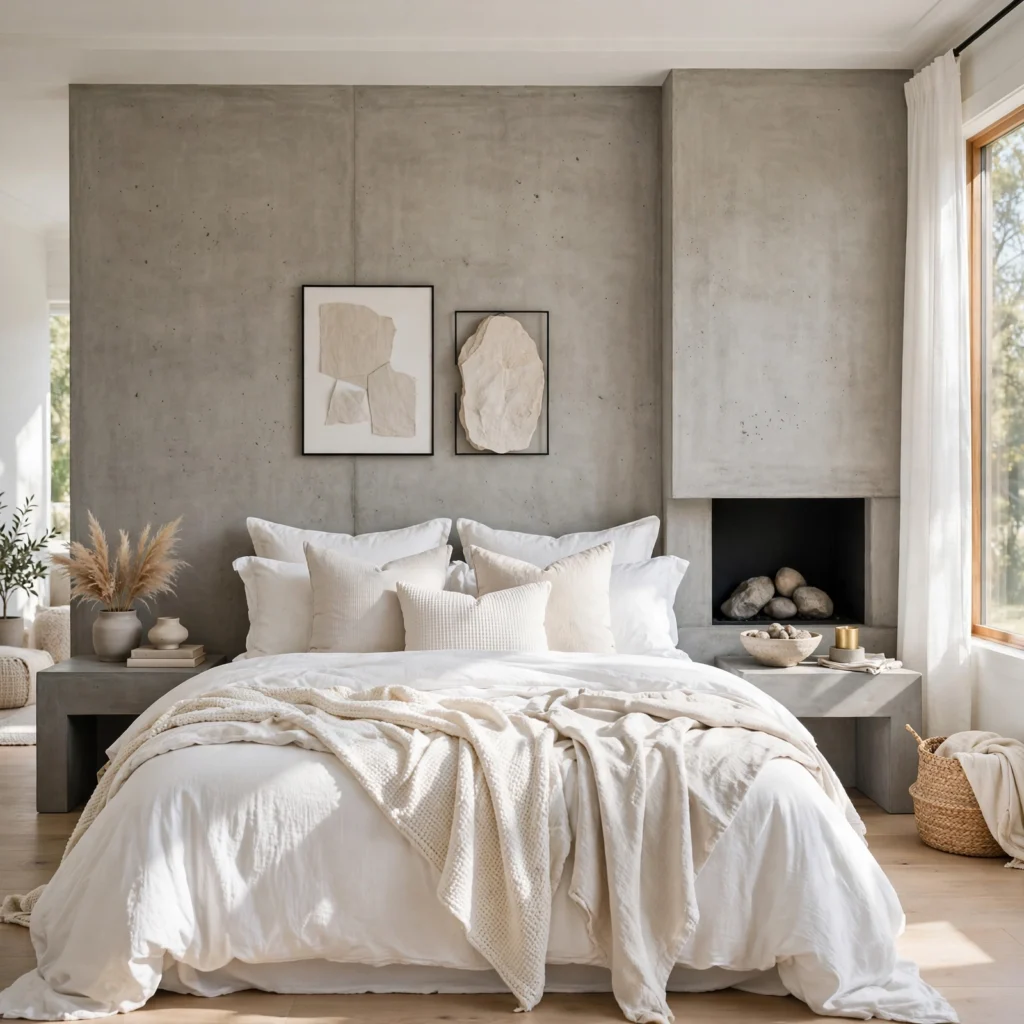
A concrete-topped nightstand or a stone-based lamp introduces a cool, mineral texture that contrasts with the softer materials, like linen and boucle, elsewhere in a white bedroom. This pairing keeps the room from feeling overly soft or one-note, adding a more grounded, architectural element to the space. It works particularly well in bedrooms leaning toward a modern or minimal style, where the material itself becomes the room’s visual interest.
Shop the Look
A few specific pieces bring these ideas together well. Look for a warm ivory matte wall paint suited to bedrooms, a boucle upholstered headboard in cream or off-white, a set of layered white linen bedding in two complementary tones, a natural oak nightstand, and a cream wool area rug with a subtle woven texture.
Common Mistake to Avoid
The most common mistake with white bedroom ideas is matching every white element in the room to the exact same shade, which flattens the space and removes the layering that makes an all-white room feel intentional. A wall, bedding, and furniture all in the identical cool white tends to read as unfinished or clinical rather than calm. Mixing at least two or three different whites, along with a natural material like wood or rattan, keeps the palette from collapsing into one flat surface.
FAQs
What is the best white paint for a bedroom?
The right shade depends on the room’s light exposure, with warm ivory or bone tones working better in rooms with limited natural light and cooler, true whites working better in bright, south-facing rooms. Testing a swatch directly on the wall at different times of day is the most reliable way to confirm which undertone suits your specific room.
How do you make an all-white bedroom feel warm instead of cold?
Texture is the key factor, including linen or boucle bedding, a woven rug, and natural wood furniture. Warm-toned lighting, rather than cool white bulbs, also softens the overall feel, as does choosing a warm ivory or cream shade over a stark, blue-based white.
Does a white bedroom need color to avoid feeling boring?
No, though it does need variation. Layering different shades of white, along with natural materials like wood, rattan, or stone, adds enough visual interest to avoid a flat, boring look without introducing any additional color at all.
What furniture works best in a white bedroom?
Natural wood furniture, like an oak dresser or walnut nightstand, tends to work particularly well, since the wood grain adds texture and warmth that white alone can’t provide. Black metal accents, like window frames or a curtain rod, also add useful contrast without disrupting the overall white palette.
Is a white bedroom harder to keep clean than a colored one?
White walls and bedding can show marks and stains more visibly than darker or patterned options, though a washable matte paint finish and machine-washable linens make upkeep manageable. Choosing slightly off-white or cream tones over a stark white can also help minor marks blend in more easily.
Conclusion
These white bedroom ideas work best when texture and layered shades do the visual work that color would otherwise provide, rather than relying on one flat white to carry the entire room. Whether you start with a warm ivory repaint or a smaller boucle headboard swap, each idea here scales to fit your space and how much texture you want to build in. Save this post to Pinterest for later, and check out our related guide on small bedroom storage solutions for more design inspiration.