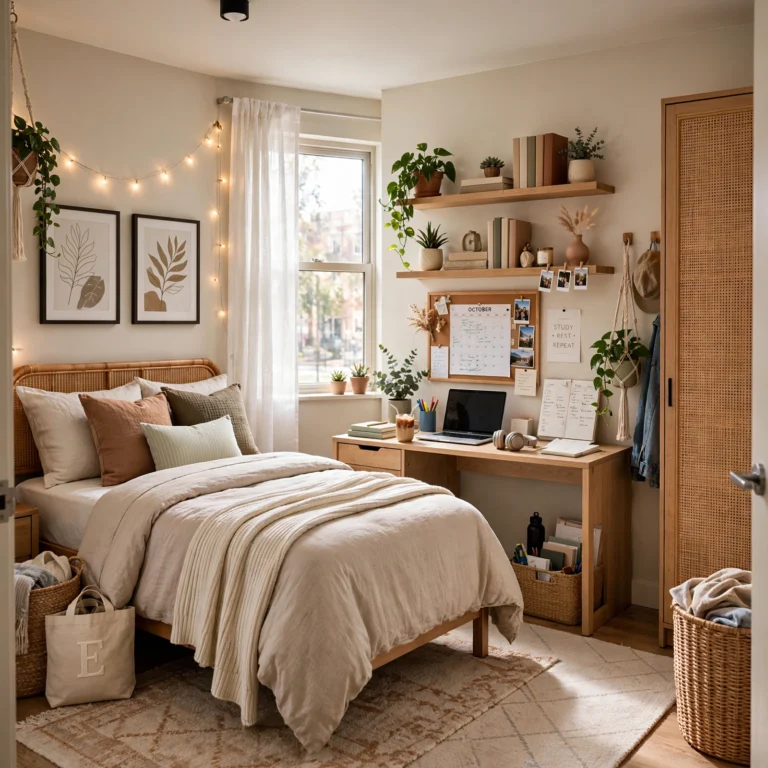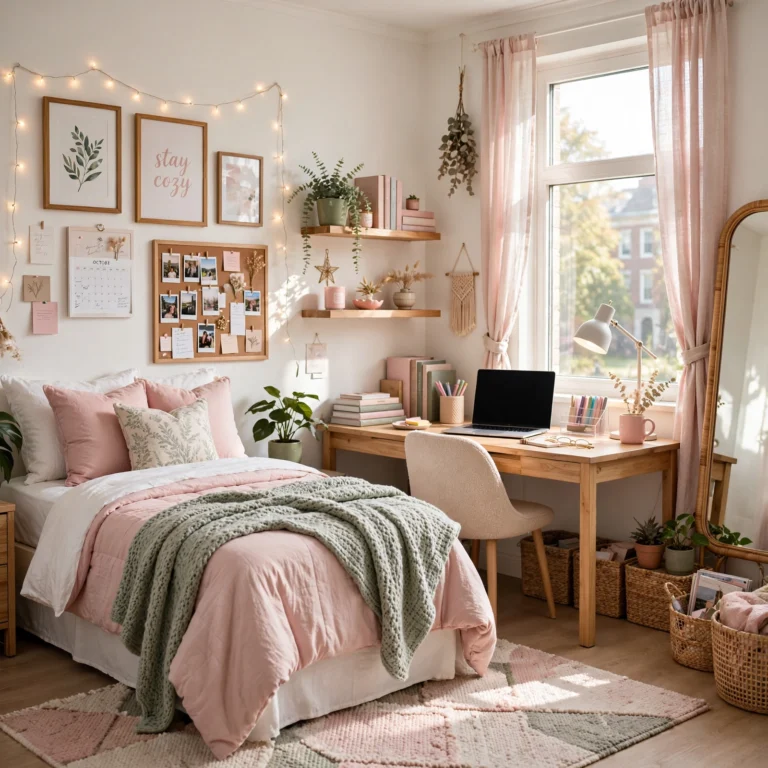
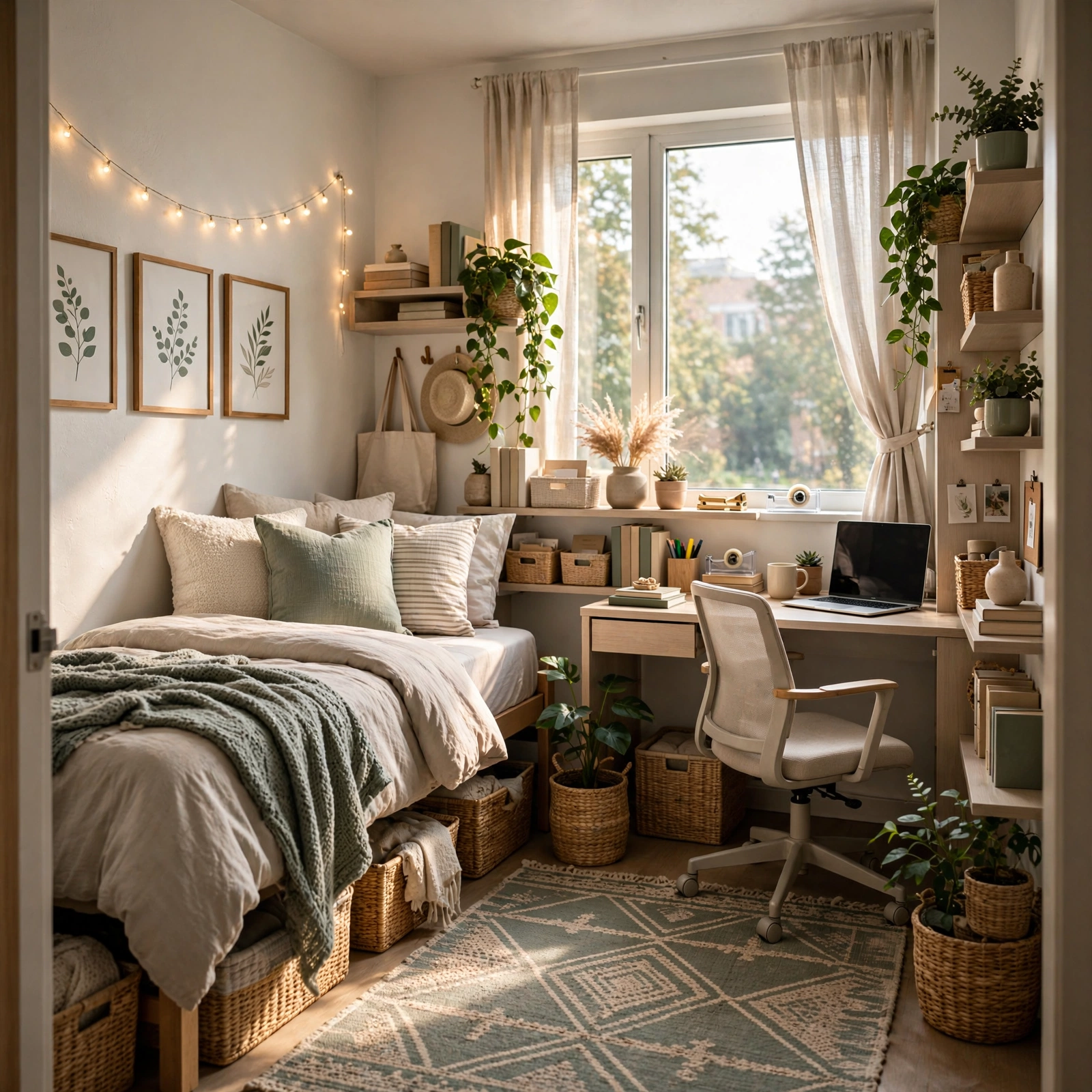
15 Unmissable College Dorm Room Ideas for Small Shared Spaces That Feel Cozy, Organized, and Stylish
Moving into a dorm room for the first time means fitting an entire life into roughly 130 to 200 square feet, often shared with a roommate and furnished with whatever the school provides. The right college dorm room ideas can turn that cinder-block box into a space that feels personal, organized, and livable for two semesters at a time. This guide covers fifteen practical approaches, from lighting to closet systems, that work within typical dorm restrictions like no-drilling policies and shared square footage, so you can decorate with confidence before move-in day.
Trend & Background
Dorm room styling has become a much bigger category over the past few years, driven largely by social media move-in videos and a generation of students treating their first dorm as a real design project rather than an afterthought. At the same time, most universities have tightened rules around nails, paint, and permanent fixtures, pushing students toward removable adhesive hooks, tension rods, and modular furniture instead. Rising dorm costs have also made students more focused on maximizing every square foot they’re paying for, which is why storage-first decorating has become just as popular as purely decorative choices.
Key Takeaways
- College dorm room ideas that rely on vertical storage, command-strip hardware, and layered lighting make the biggest difference in tight shared spaces.
- Bed risers, over-the-door organizers, and stackable bins let students add storage without violating most housing lease agreements.
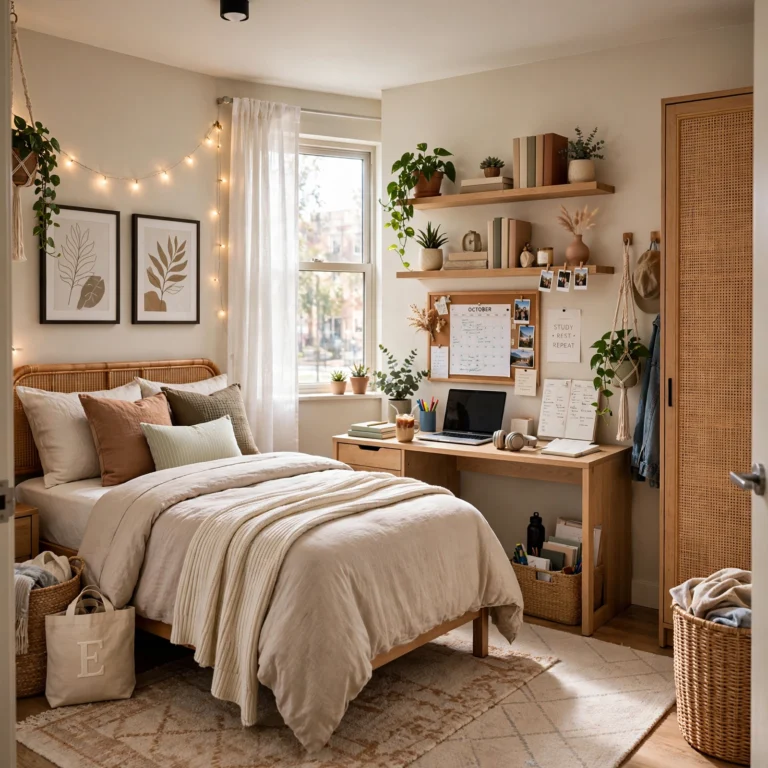
- Textiles like tapestries, string lights, and rugs are the fastest way to personalize a room that has to be reset at move-out.
- Desk and closet organization matter as much as decor, since most dorm rooms lack built-in storage for two roommates.
1. Command Strip Gallery Wall
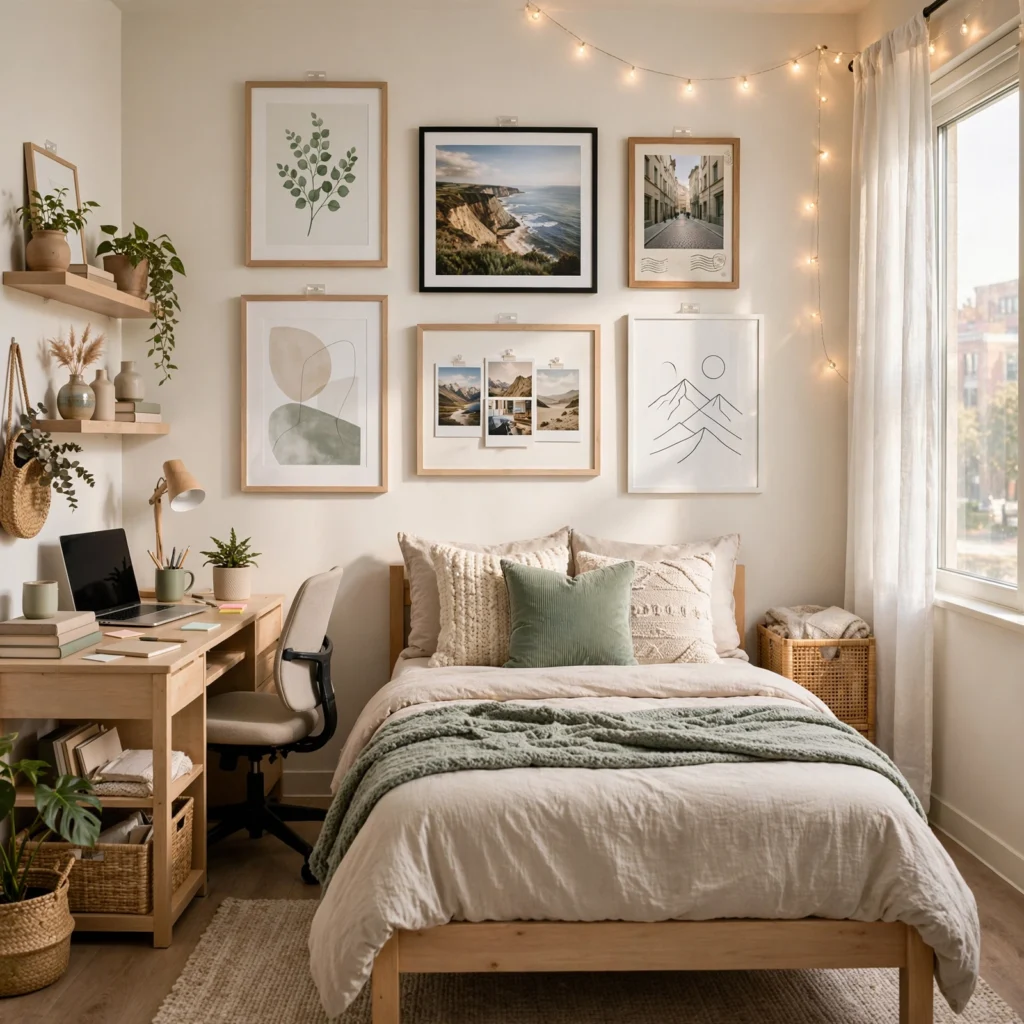
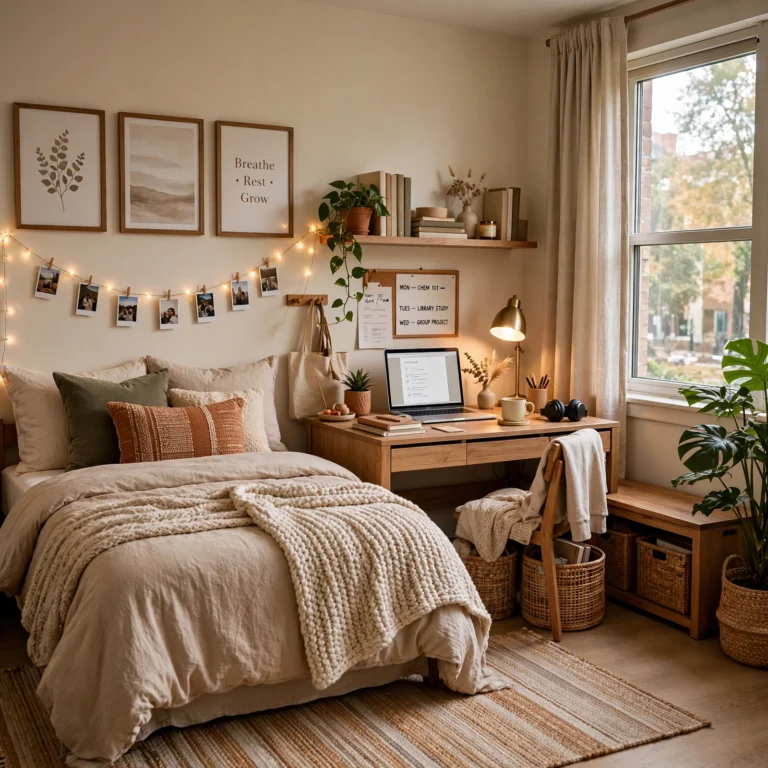
A gallery wall built entirely with adhesive strips lets students personalize blank walls without breaking most housing agreements that prohibit nails or tape residue. Mixing photos, posters, and small art prints in varying sizes creates a collected-over-time look rather than a single flat poster. Arrange the layout on the floor first before committing anything to the wall, and leave roughly two inches of breathing room between each piece so the wall doesn’t read as cluttered in a small room.
2. Bed Risers
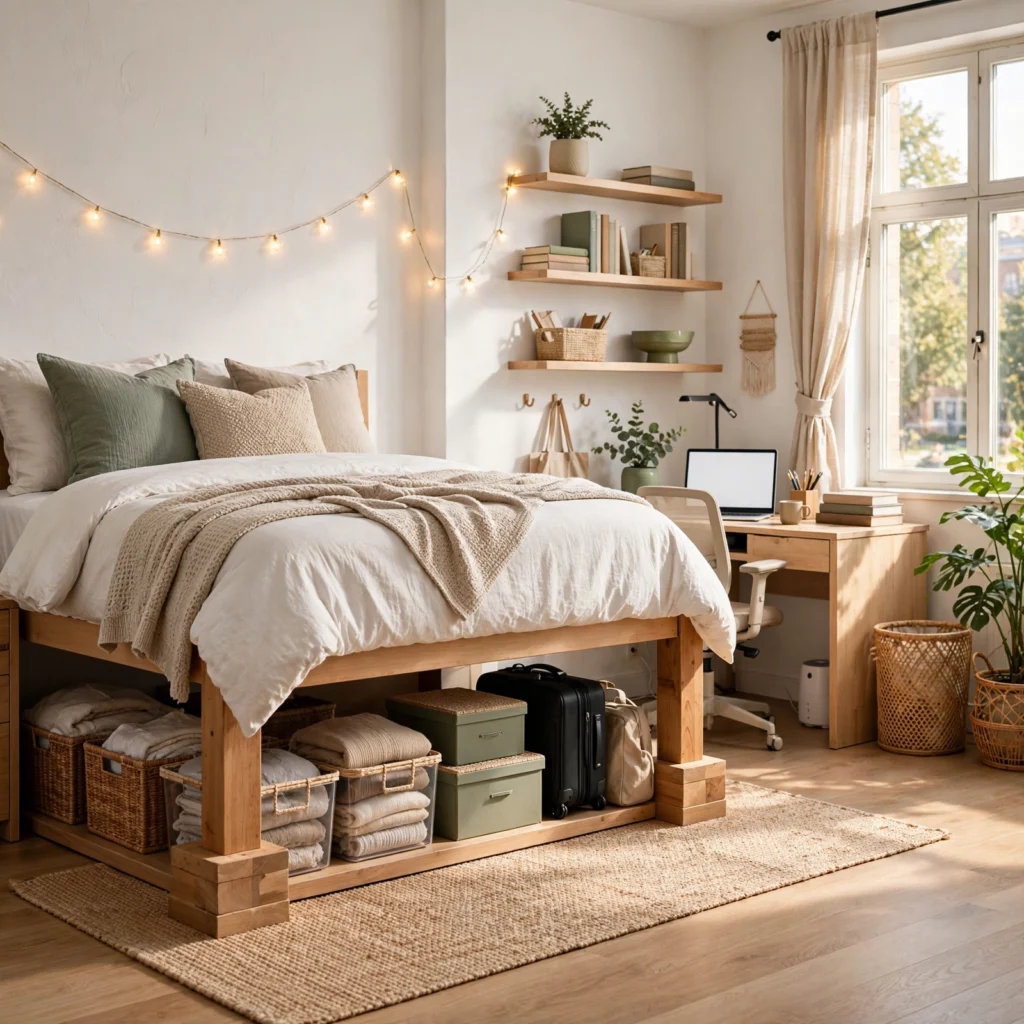
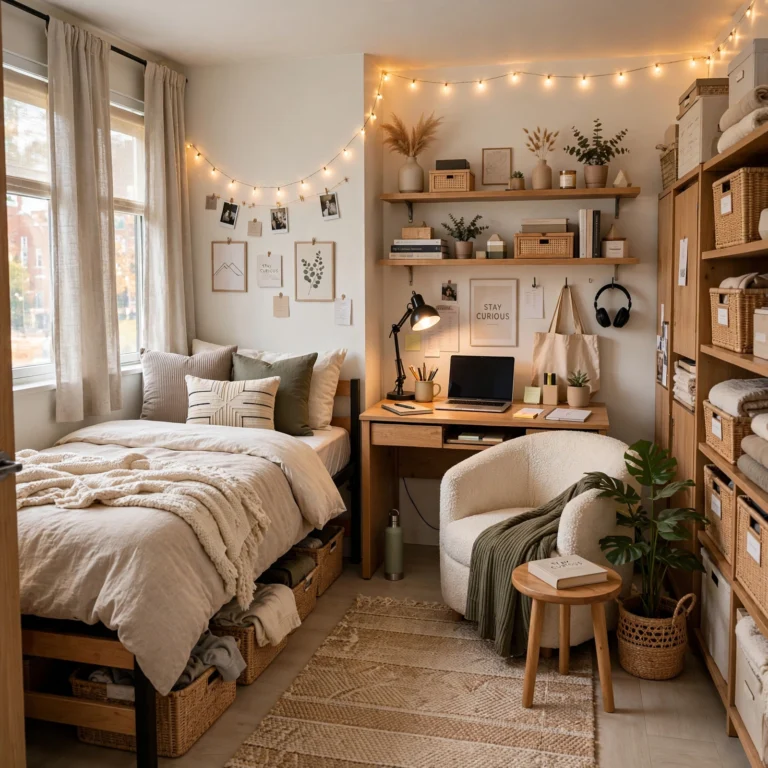
Raising a dorm bed frame six to eight inches with sturdy risers opens up significant storage space underneath for bins, suitcases, or a mini fridge. This is one of the simplest college dorm room ideas to execute, since risers require no tools and can be removed instantly at the end of the year. Choose risers rated for at least 300 pounds per leg, and measure the underbed clearance carefully so storage bins slide in and out without scraping the frame.
| Riser Height | Underbed Clearance | Best For |
| 3 inches | Shoe boxes, flat bins | Minimal extra storage |
| 6 inches | Medium storage bins | Standard dorm setups |
| 8 inches | Large bins, mini fridge | Maximum storage needs |
3. Over-the-Door Shoe Organizer
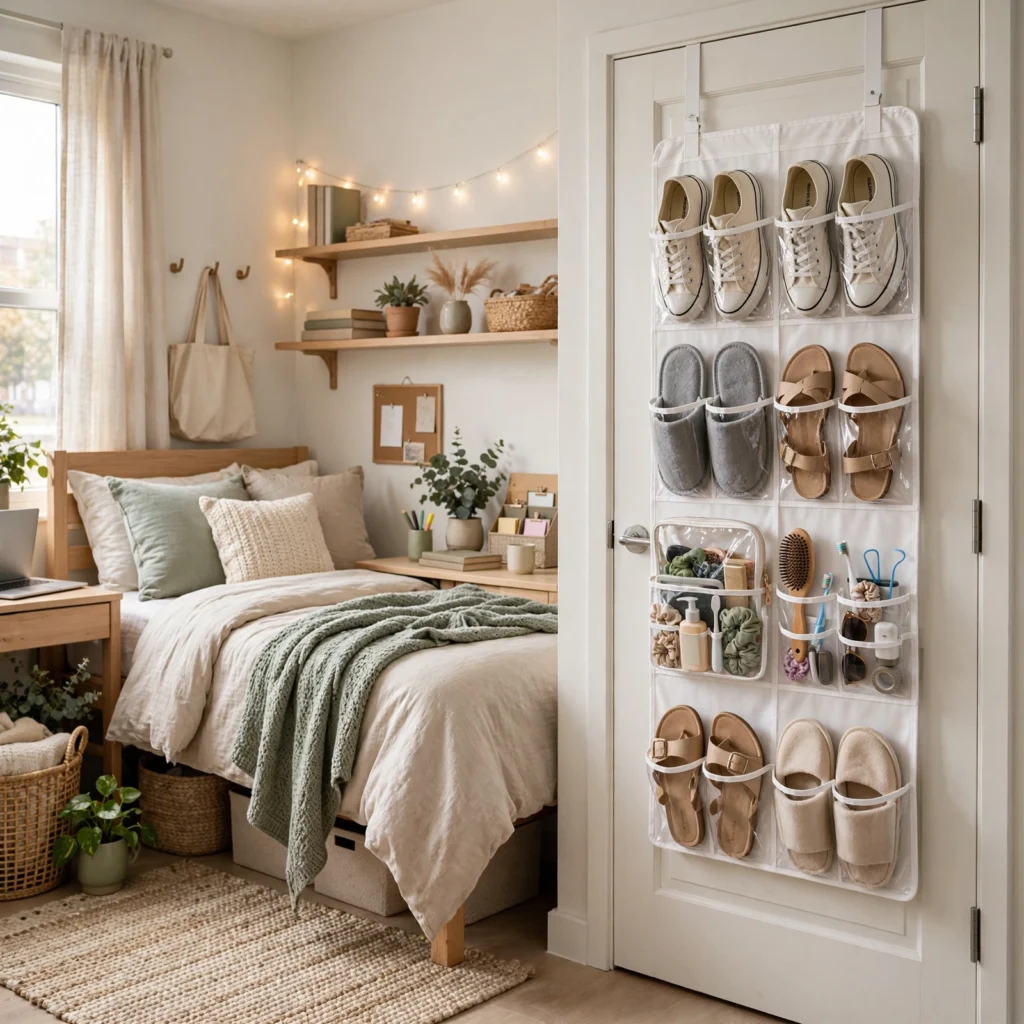
A canvas or clear-pocket shoe organizer hung over the closet or entry door holds far more than footwear, working just as well for toiletries, snacks, or school supplies. Because it hangs from the door itself, it requires zero wall damage and takes up no floor space in an already tight room. Clear pocket versions make it easy to spot items quickly, which matters when two roommates are sharing the same closet and getting ready at the same time each morning.
To see more options for ideas for dorm room CLICK HERE
4. String Lights Canopy
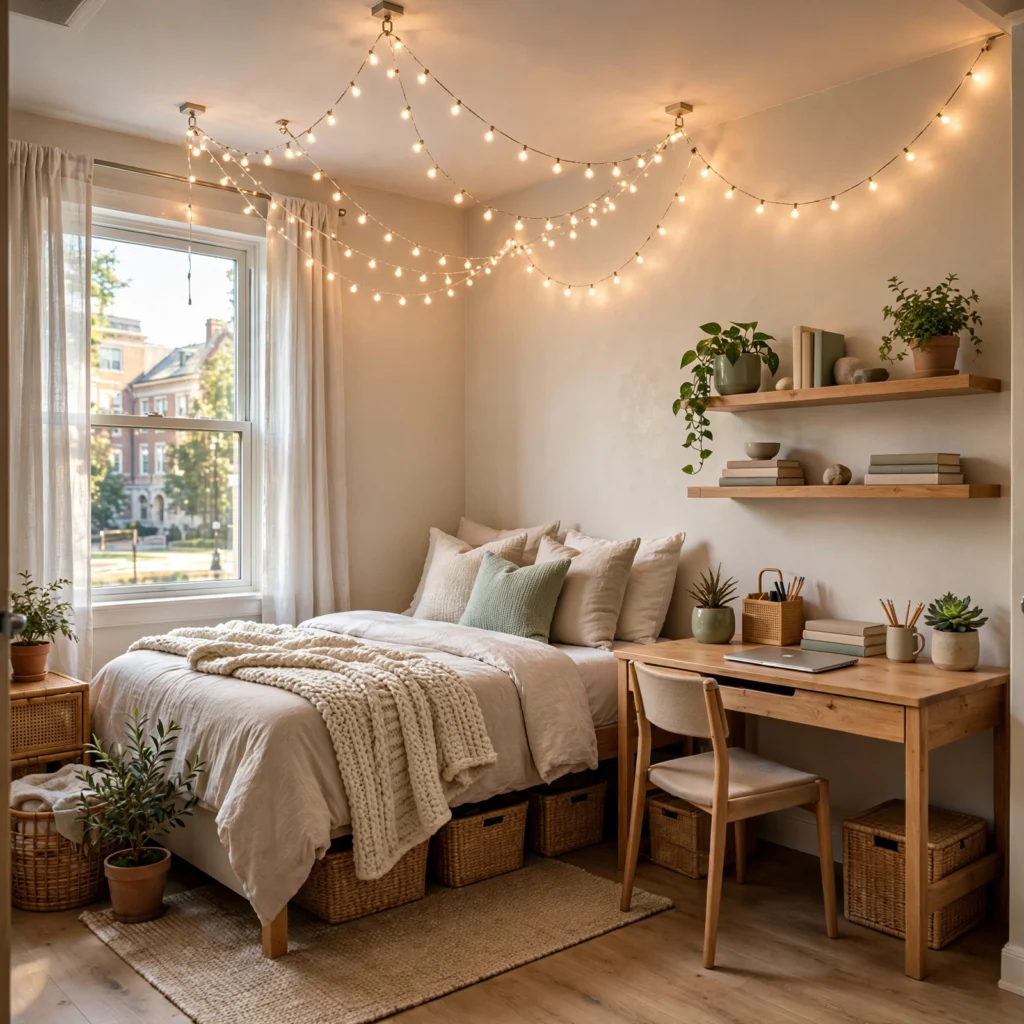
Draping warm white string lights across the ceiling or along the perimeter of a lofted bed softens the harsh overhead fluorescent lighting most dorms rely on by default. A canopy-style installation, where lights run from a central point outward to the corners of the ceiling, adds a cozy, finished look above the bed without any hardwired electrical work. Battery-operated or USB-powered sets are worth prioritizing, since many dorms restrict extension cords and outlet access is often limited.
5. Tapestry Wall Hanging
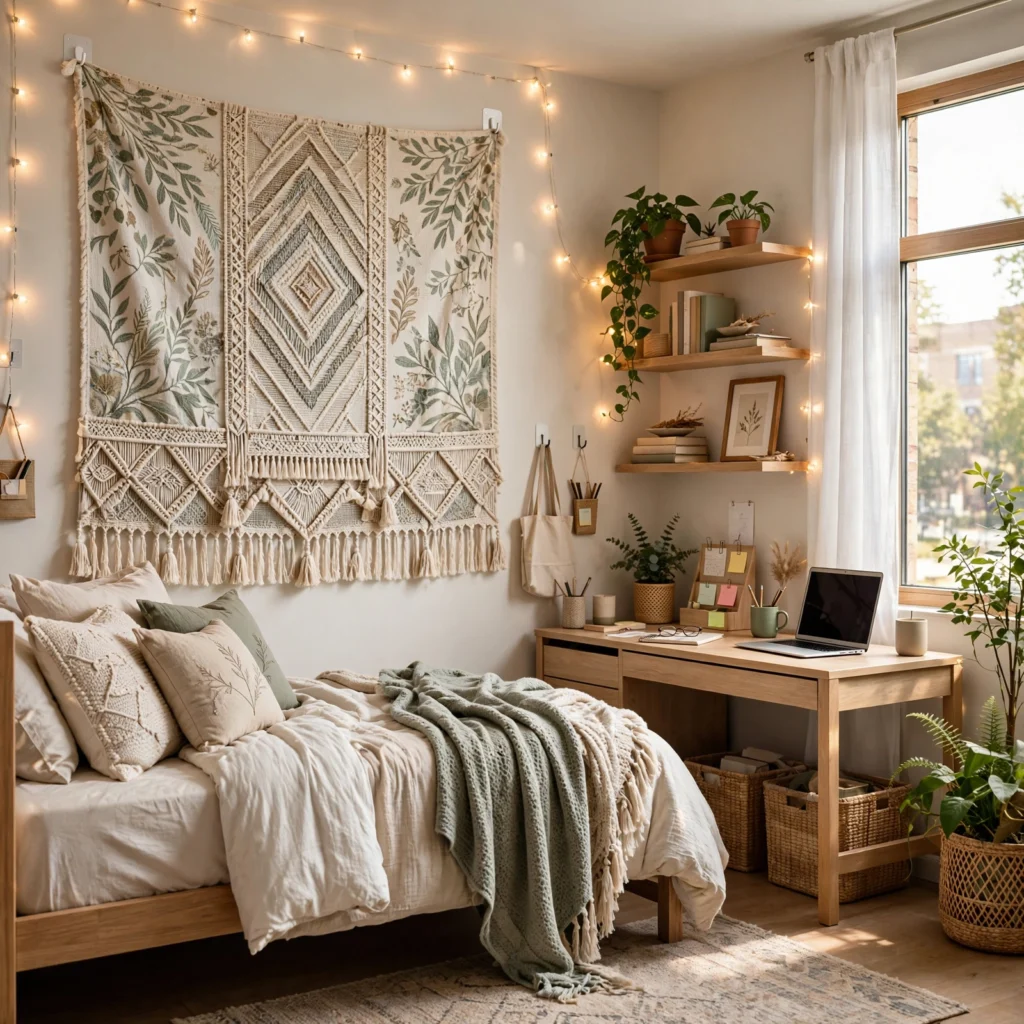
A large fabric tapestry covers far more wall space per dollar than framed art, making it an efficient way to add color and pattern to a dorm room’s largest blank surface. Mounting it with removable adhesive hooks or a tension rod along the top edge avoids any wall damage while still allowing the fabric to hang naturally. Choose a pattern that can anchor the rest of the room’s color palette, since most other decor pieces will be smaller and easier to coordinate around one bold textile.
6. Stackable Storage Bins
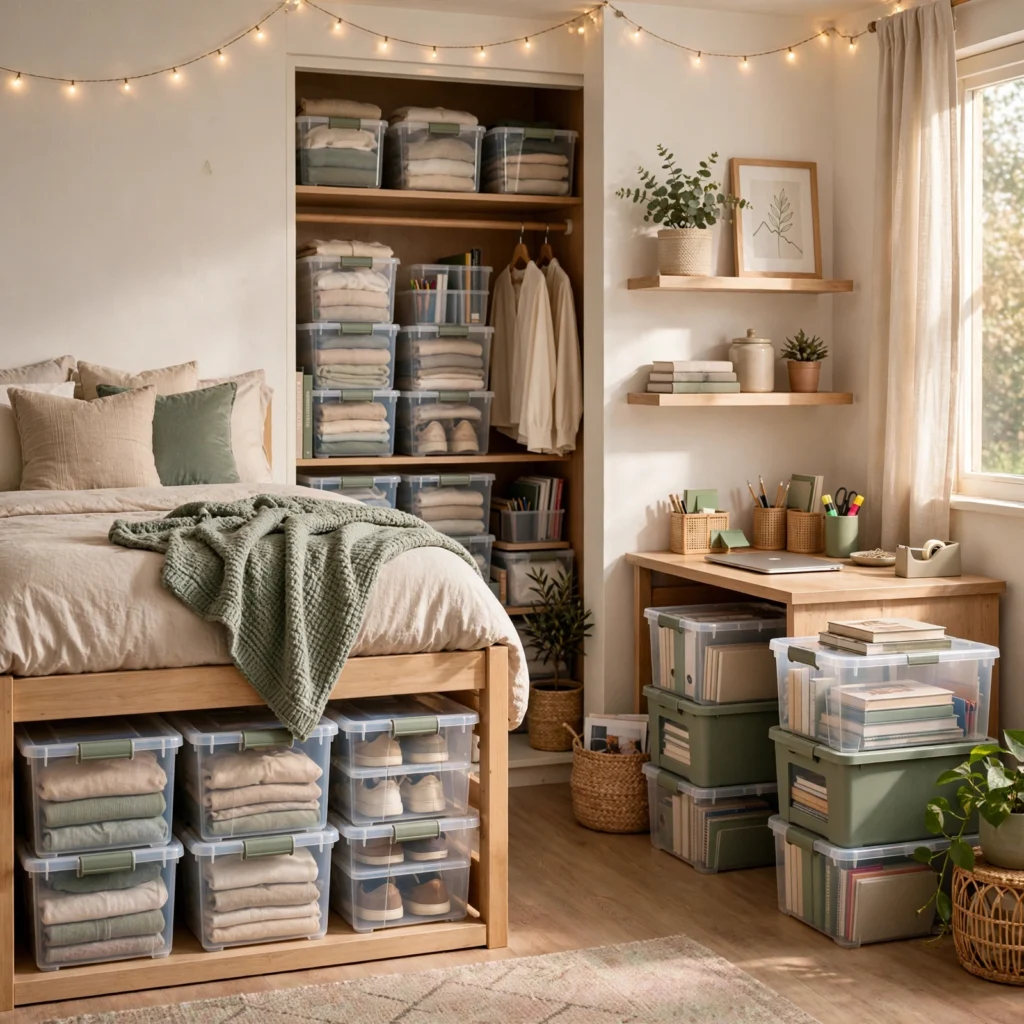
Clear or color-coded stackable bins make the most of closet shelves and under-bed space, especially in rooms where two students are sharing a single closet built for one. Labeling each bin by category, such as seasonal clothes, school supplies, or extra bedding, cuts down on the daily digging that happens in cramped shared storage. Because the bins stack vertically, they use height rather than floor space, which is almost always the more available resource in a dorm room.
7. Corkboard Command Center
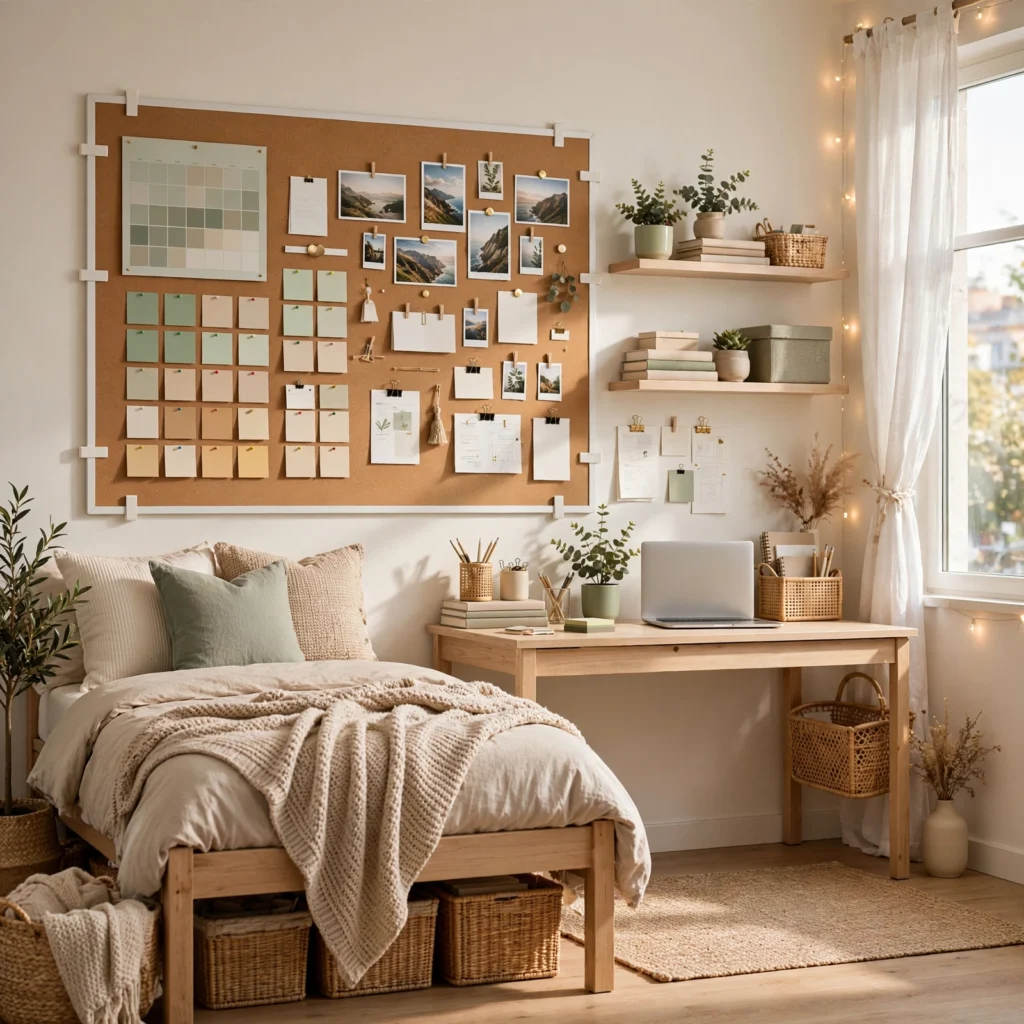
A corkboard mounted with adhesive strips above the desk gives students a spot to pin schedules, reminders, and photos without resorting to sticky notes directly on the wall. Keeping this command center near the desk rather than above the bed helps separate study space from sleep space, which matters in a room where both functions happen within a few feet of each other. Layer in a small whiteboard beside the corkboard for quick to-do lists that change daily.
8. Lofted Bed with Desk Underneath
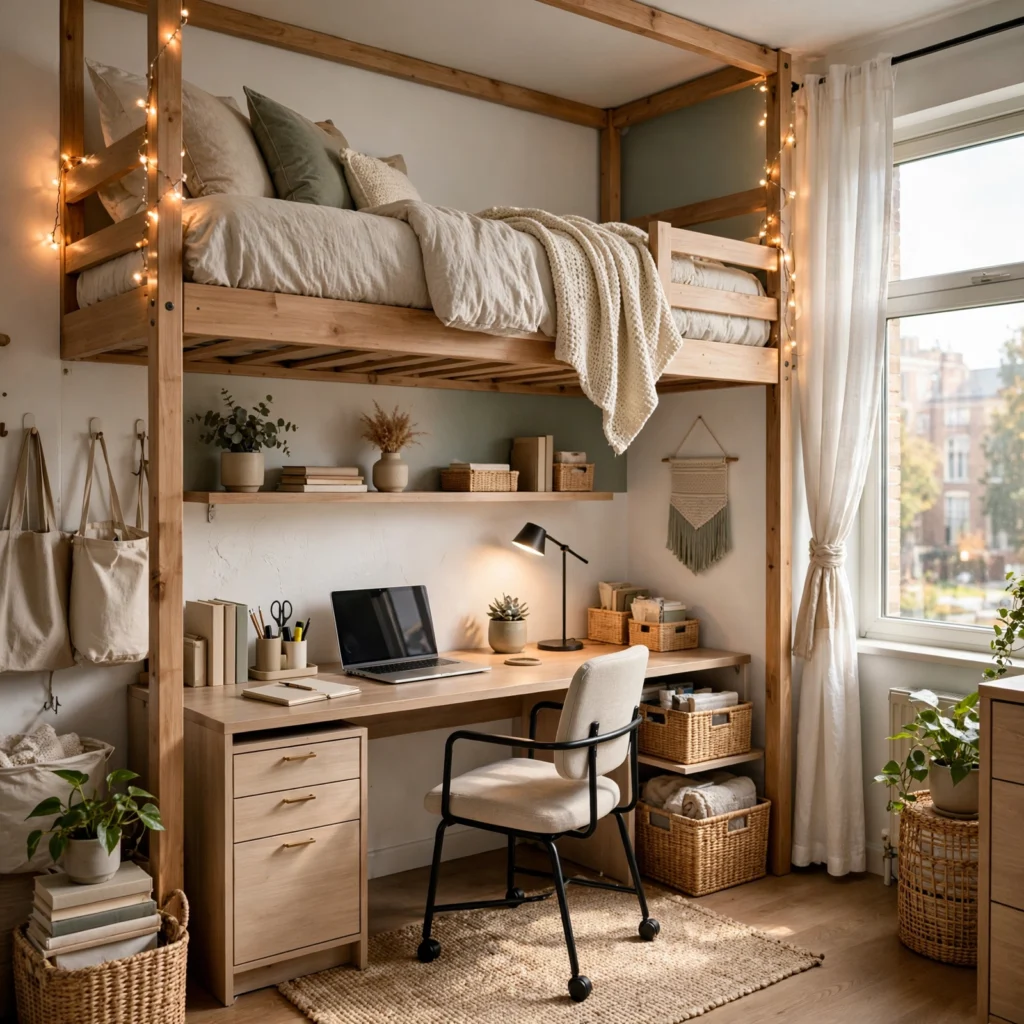
Lofting the bed frame, when the dorm’s furniture allows it, frees up an entire section of floor for a desk, dresser, or small seating area underneath. This is one of the most space-efficient college dorm room ideas for rooms under 150 square feet, since it essentially doubles the usable footprint by building vertically instead of horizontally. Check with housing services before lofting, since some schools require university staff to handle the bed frame adjustment rather than students doing it themselves.
9. Area Rug Layer
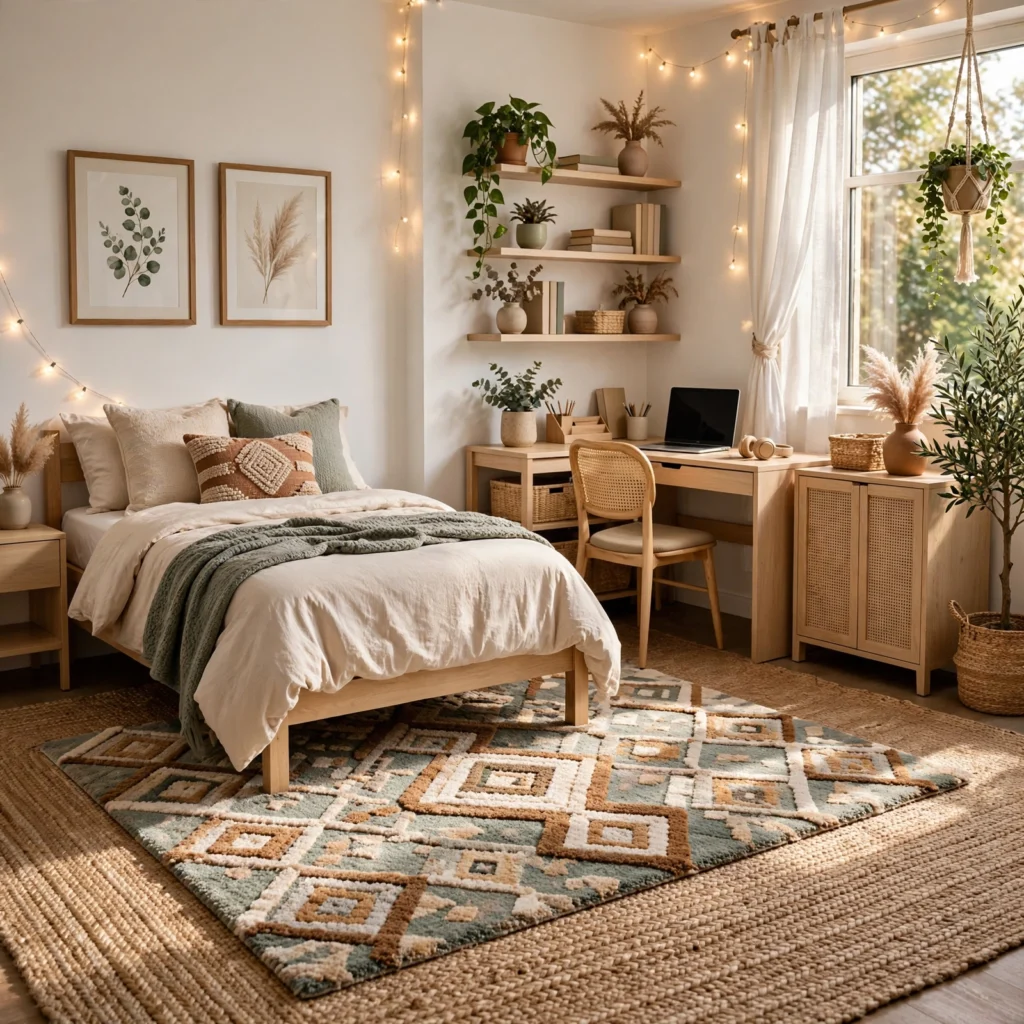
A soft area rug placed over standard dorm carpet or tile adds warmth underfoot and helps define separate zones within a single small room, such as a sleeping area versus a study nook. Choose a rug small enough to fit within furniture restrictions but large enough to anchor either the bed or the desk chair on top of it. A rug also muffles footstep noise for downstairs neighbors, which roommates in older dorm buildings tend to appreciate.
10. Mini Fridge and Microwave Cart
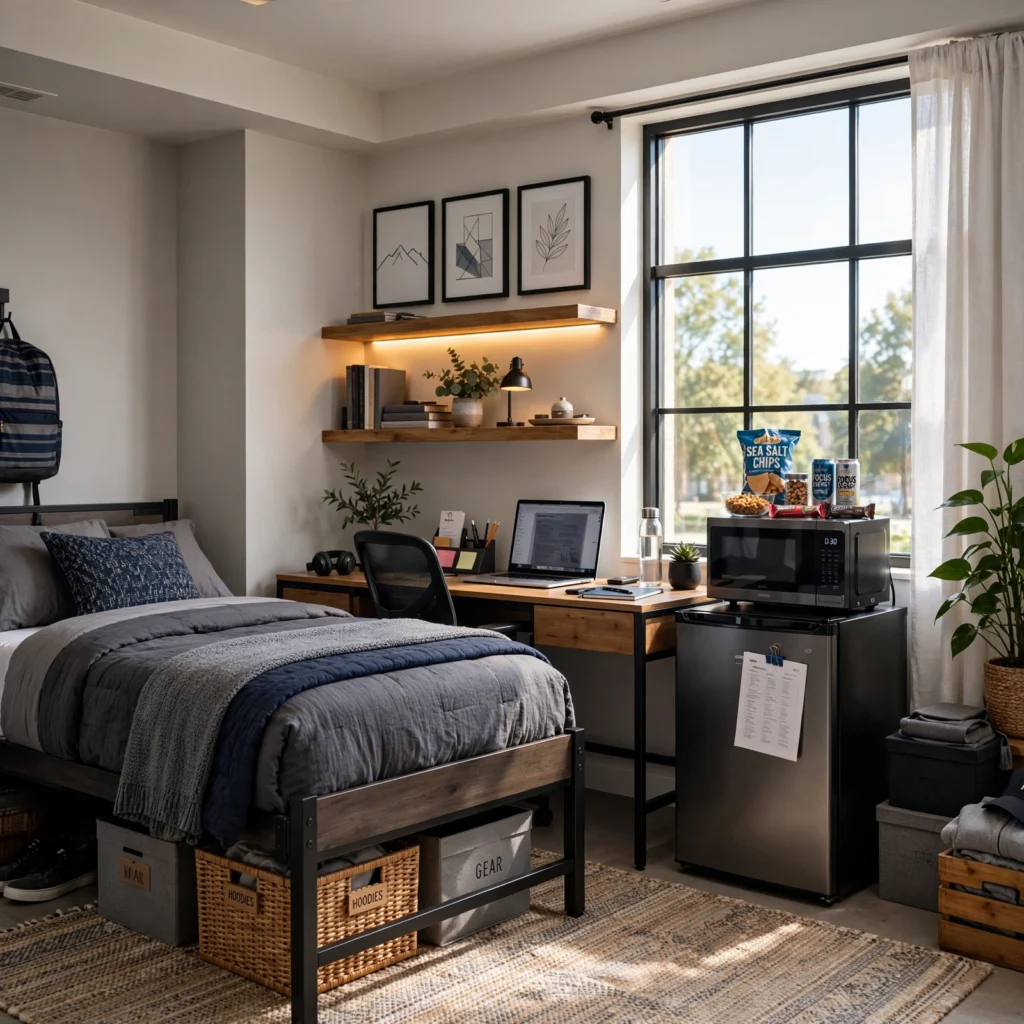
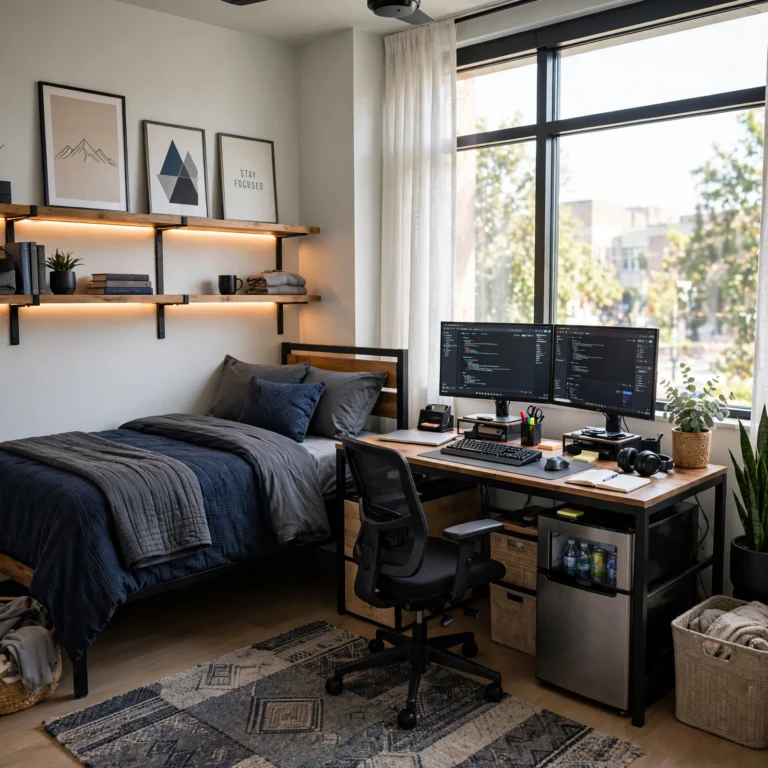
A rolling cart sized for a mini fridge and microwave keeps small kitchen appliances organized in one mobile unit rather than scattered across a desk or dresser. Look for a cart with an added shelf for snacks or dishware, since most dorm rooms don’t include kitchen storage of any kind. Wheels make it easy to reposition the cart when rearranging furniture at the start of a new semester or when a roommate situation changes.
11. Command Hook Jewelry and Accessory Rail
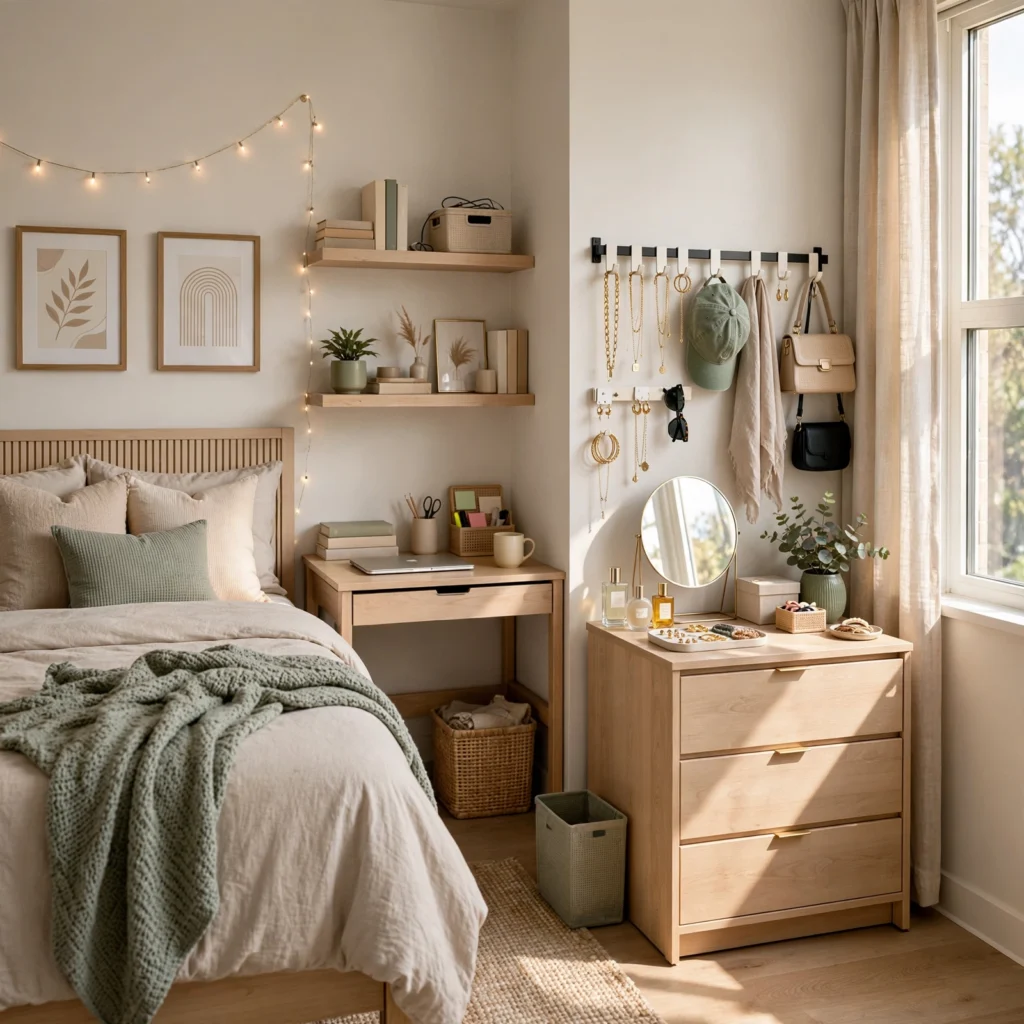
A row of small adhesive hooks mounted in a straight line near the closet or mirror keeps jewelry, lanyards, and bags visible and untangled without requiring drawer space. This works especially well for students who share a single dresser with a roommate, since it moves accessories off shared surfaces entirely. Space hooks about two inches apart and test weight limits before hanging anything heavier than lightweight jewelry or tote bags.
12. Curtain Room Divider
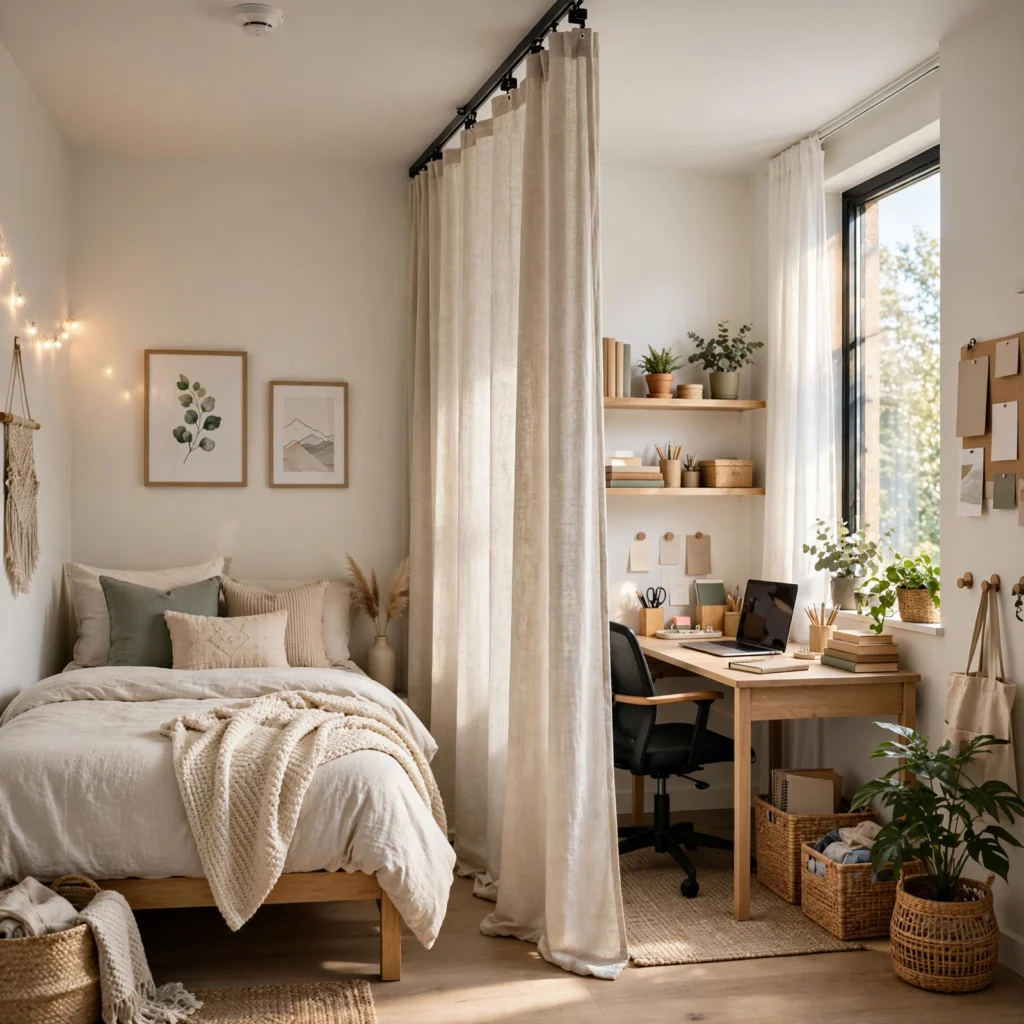
A tension rod and curtain panel strung across a portion of the room can visually separate a sleeping area from a study or lounge zone, which is especially useful in larger dorm rooms or suites. Because the rod is tension-mounted rather than drilled in, it comes down easily at the end of the year without any wall repair. Choose a lightweight curtain fabric so the divider doesn’t feel heavy or dark in a room that likely already has limited natural light.
13. Desk Riser Shelf
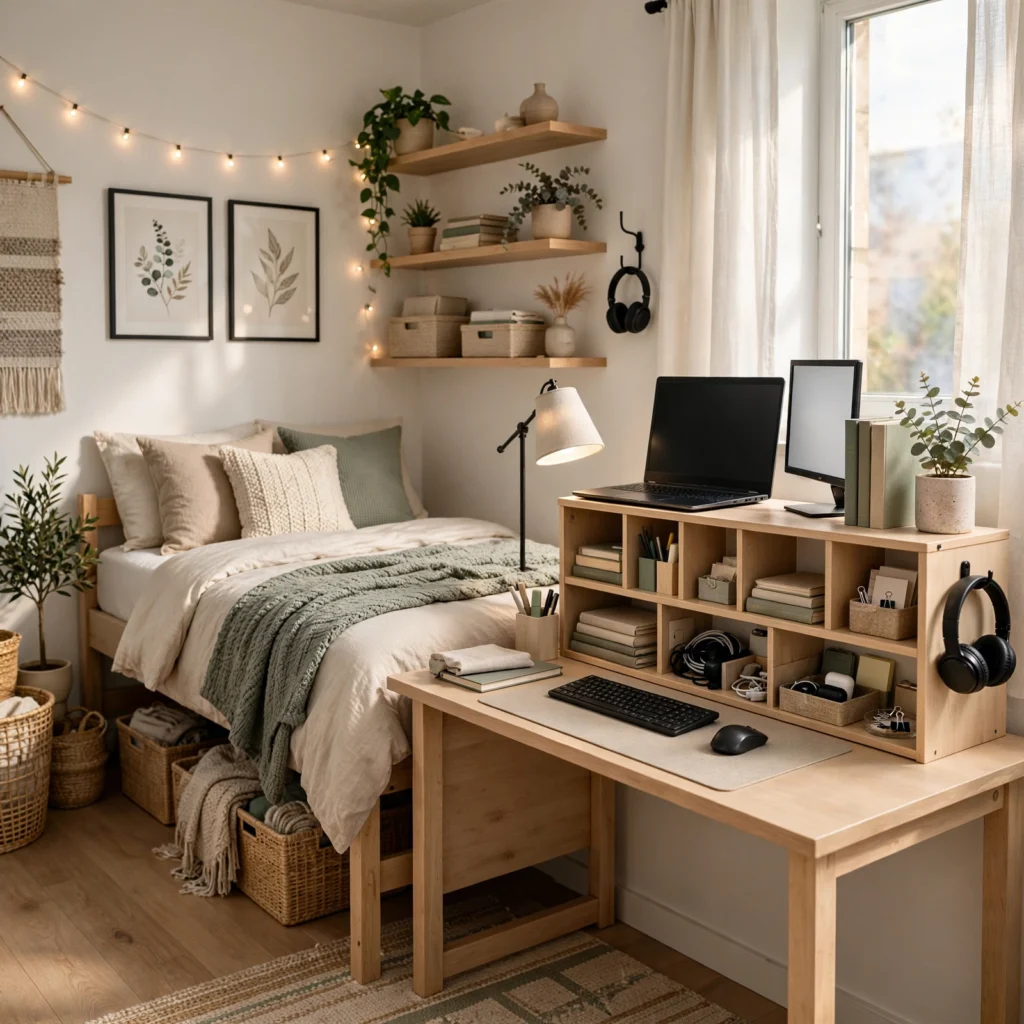
A small wooden or wire riser shelf placed on top of a dorm desk lifts a laptop or monitor to eye level while creating a lower shelf underneath for notebooks or a planner. This addition helps students avoid neck strain during long study sessions and makes better use of vertical desk space that would otherwise sit empty above the surface. Look for a riser with cable management cutouts if charging cords and monitor cables tend to clutter the desktop.
14. College Dorm Room Ideas With a Photo String Display
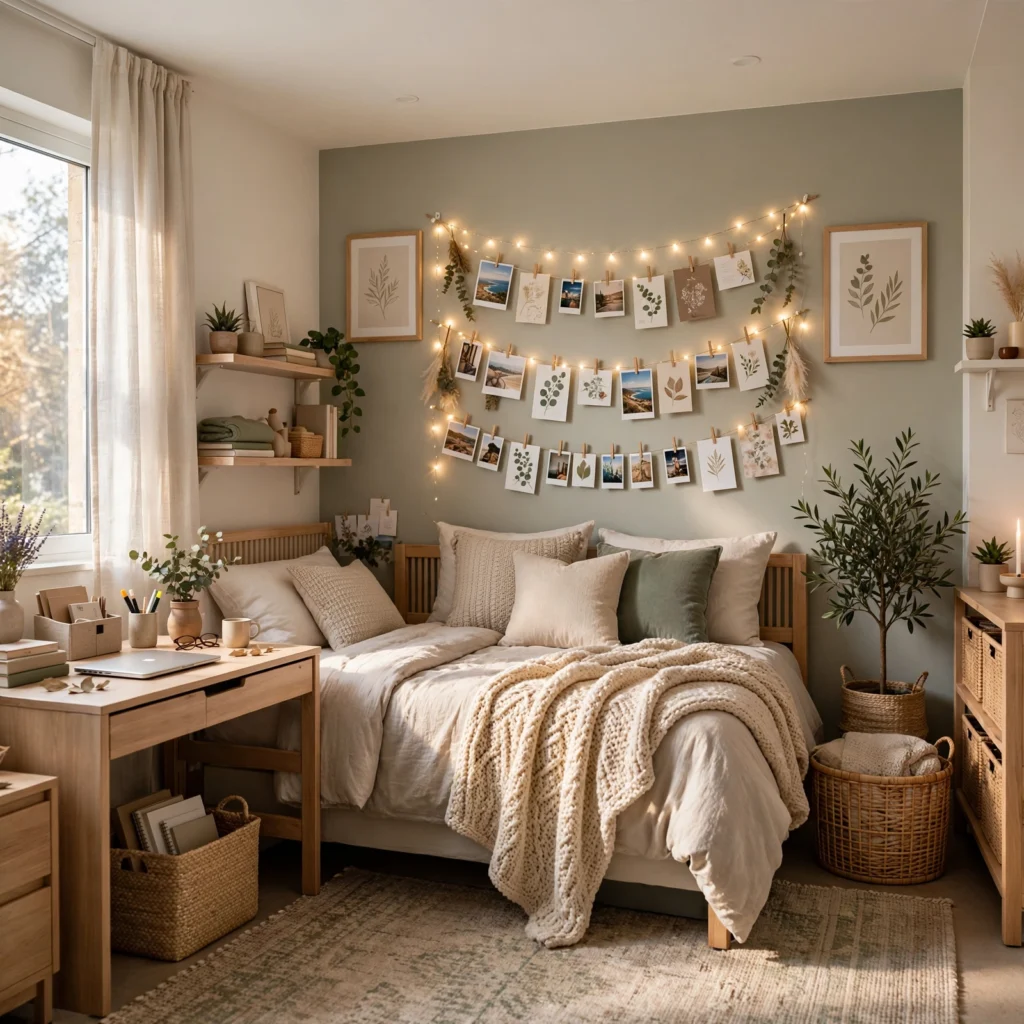
Running a length of twine or fairy lights across one wall and clipping printed photos to it with small clothespins is one of the most personal college dorm room ideas for students who want a rotating, low-commitment gallery. Unlike a fixed collage, a photo string display can be updated throughout the year as new photos come in, without needing new adhesive strips each time. Mount the twine ends with small adhesive hooks so the entire display comes down cleanly at move-out.
15. Closet Organizer System
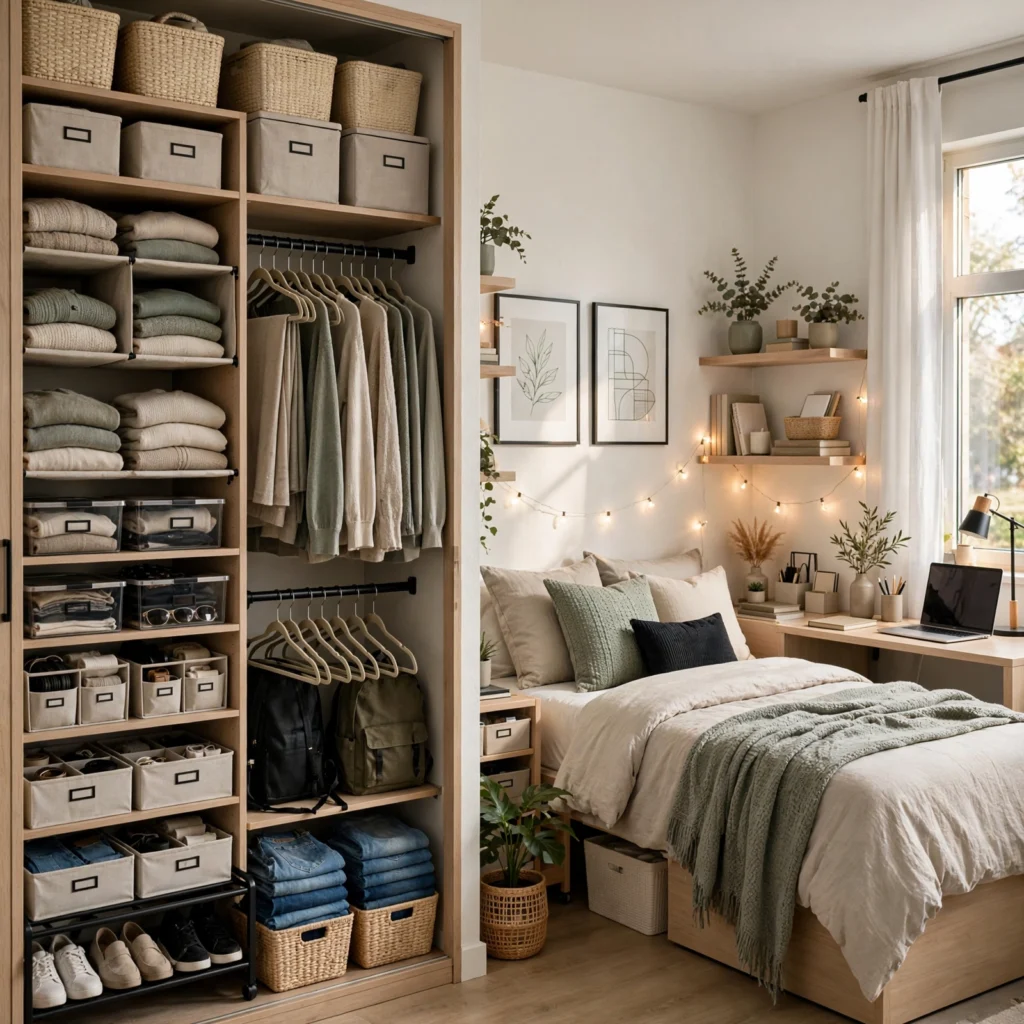
A hanging closet organizer with multiple shelf inserts maximizes the single closet rod most dorm rooms provide, especially when that closet has to serve two roommates. Adding a second tension rod below the existing one doubles hanging space for shorter items like shirts and folded pants, while shelf inserts handle folded sweaters and shoes. This system requires no tools to install and adjusts easily if a roommate’s wardrobe needs change partway through the year.
| Organizer Type | Best For | Approx. Cost |
| Hanging shelf inserts | Folded clothes, shoes | $15–$30 |
| Second tension rod | Doubling hanging space | $10–$20 |
| Over-door shoe rack | Shoes and small items | $12–$25 |
Shop the Look
A set of warm white LED string lights on a USB-powered remote works well for a ceiling canopy above the bed. A large botanical or abstract tapestry anchors a color palette across the room’s biggest blank wall. A set of stackable clear storage bins keeps a shared closet organized by category. A rolling two-tier cart handles mini fridge and microwave storage without taking up desk space. A tension-rod closet organizer with shelf inserts doubles usable hanging space for two roommates sharing one closet.
Common Mistake to Avoid
The most common mistake students make is buying full-size furniture or decor before confirming the exact dimensions of their assigned room and existing furniture. A rug, curtain, or storage cart that measures perfectly in a sample dorm photo online can end up blocking a door or overlapping a roommate’s side of the room in practice. Always check the university’s published room dimensions and furniture list before ordering anything larger than a small accessory, and confirm what’s already bolted down.
FAQs
What decorations are usually allowed in dorm rooms?
Most universities allow removable adhesive strips, tension rods, and command hooks, while prohibiting nails, screws, wallpaper, and anything that leaves permanent marks or holes. Battery-powered or USB string lights are typically fine, though some schools restrict candles, incense, and certain space heaters for fire safety reasons. Always check the specific housing handbook for the school, since rules vary significantly between institutions and even between different dorm buildings on the same campus.
How can I add storage to a small dorm room?
Vertical solutions like bed risers, over-the-door organizers, and stackable closet bins add meaningful storage without requiring any additional floor space, which is almost always the most limited resource in a shared dorm room. Rolling carts for small appliances and desk riser shelves also help reclaim surface area that would otherwise get cluttered. Prioritizing height over floor space is the general rule that makes the biggest difference in rooms shared by two people.
How do I make a dorm room feel less like a hotel room?
Layering in textiles like a tapestry, area rug, and patterned bedding does more to personalize a dorm room than any single decor item, since these pieces cover the largest visual surfaces in the room. String lights and a rotating photo display add warmth and a sense of ongoing personalization throughout the year. Coordinating a simple two or three color palette across these pieces also helps the room feel intentional rather than randomly assembled.
Can I loft my dorm bed to add space?
Many schools allow students to loft their provided bed frame, but the process and rules vary widely, and some universities require facilities staff to handle the adjustment rather than students doing it themselves. Lofting the bed frees up significant floor space underneath for a desk, dresser, or seating area, making it one of the most effective space-saving moves available in a small room. Always confirm the school’s specific lofting policy with housing services before attempting it.
What should I buy before move-in day versus after?
Items tied to exact room measurements, like rugs, curtains, and closet organizers, are worth waiting to buy until after seeing the actual assigned room and existing furniture in person. Flexible items like storage bins, command hooks, string lights, and bedding can reasonably be purchased ahead of time, since they adapt to most standard room layouts. This staggered approach avoids the common mistake of ordering furniture or decor that doesn’t fit the specific space once move-in happens.
Conclusion
These college dorm room ideas work because they focus on flexible, damage-free solutions that maximize a small shared footprint without requiring a big budget or violating housing rules. Start with the essentials, like bed risers and a closet organizer, before layering in personal touches like string lights and a tapestry. If this guide was helpful for planning your own move-in, save it to Pinterest or check out our related post on small bathroom decor ideas for more small-space inspiration.