13 Practical Dorm Room Ideas to Make Your Shared Space Feel Like a Cozy, Stylish Home of Your Own
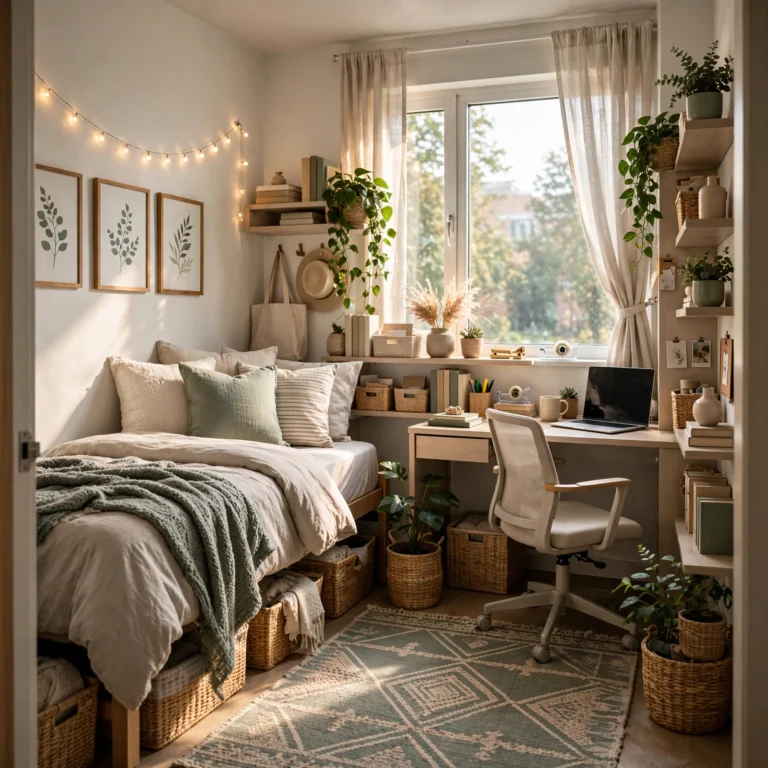
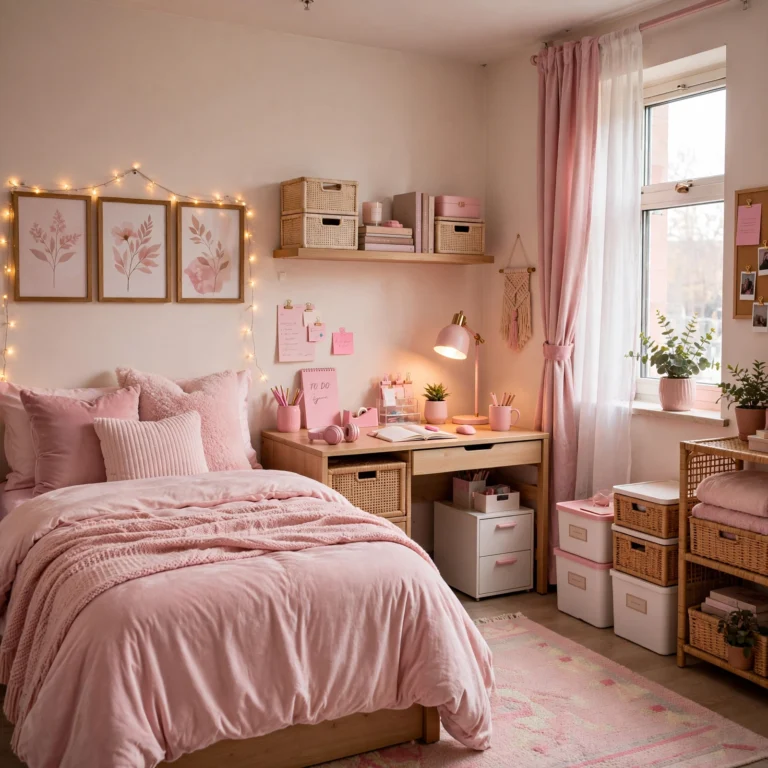
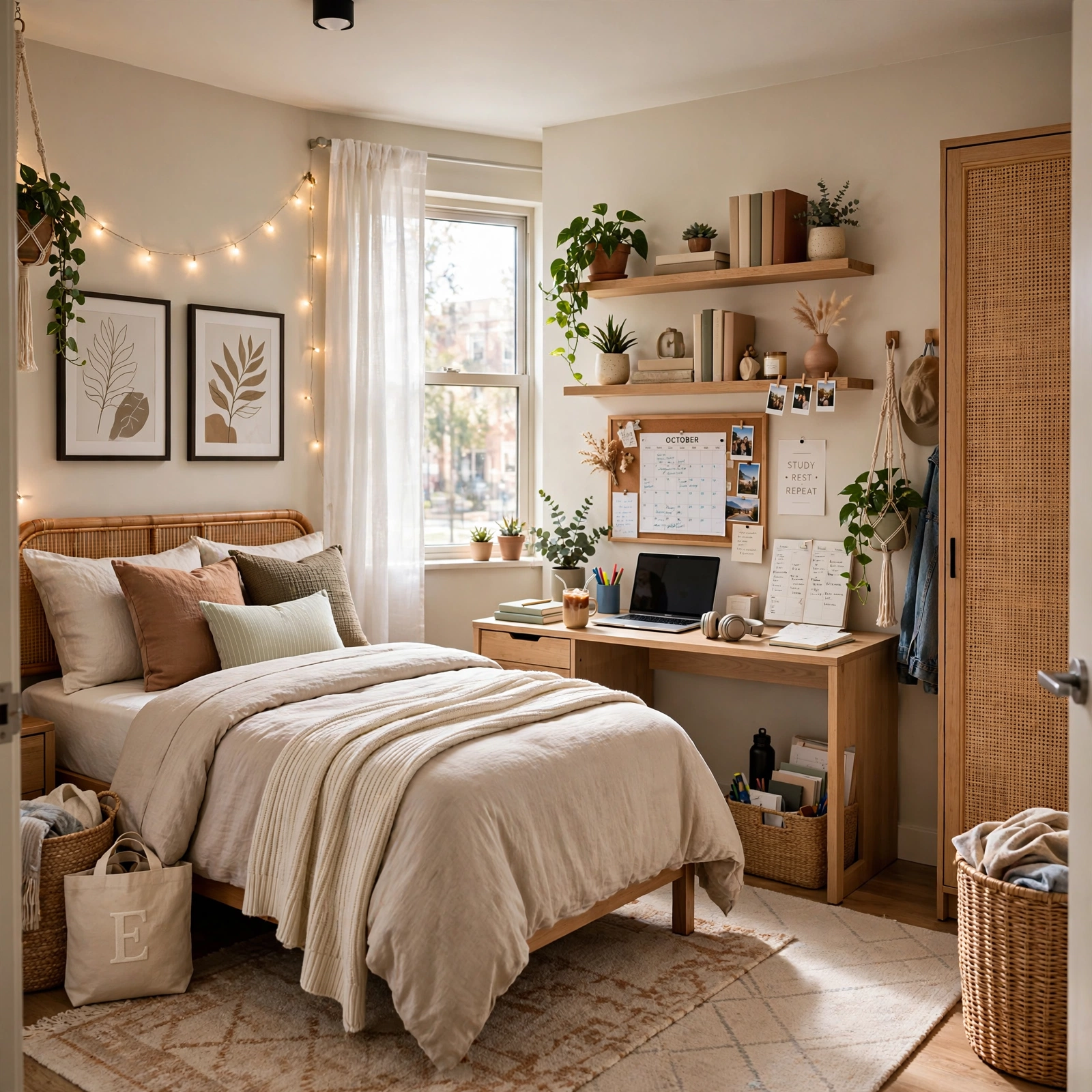
A dorm room comes with strict limits on space, storage, and what can actually be attached to the walls, but that doesn’t mean it has to look like every other room down the hall. This guide walks through thirteen dorm room ideas covering storage, bedding, lighting, and wall decor that work within typical university housing rules. By the end, you’ll have specific materials and placement suggestions to make a shared, temporary space feel more personal without breaking any housing policies or damaging the walls.
Trend & Background
Dorm room decor has leaned further into multi-functional furniture and modular storage in recent years, reflecting both shrinking dorm square footage at many schools and a stronger overall interest in personalizing temporary living spaces. Removable adhesive products, from wall decals to command-style hooks, have also improved enough to handle real functional weight, giving students far more decorating options than tape and thumbtacks used to allow. This matters now because students are spending more time in their dorm rooms for studying and downtime alike, making a well-organized, personalized space worth the extra planning before move-in day.
Key Takeaways
- Vertical storage and bed-based organization matter more in a dorm than almost any single decorative purchase.
- Removable, damage-free products handle most personalization needs within typical dorm policy restrictions.
- Layering soft textiles over standard-issue furniture does more to warm up the room than new furniture would.
- Coordinating with a roommate on a shared color palette prevents a split, mismatched look across the room.
1. Under Bed Storage Bins
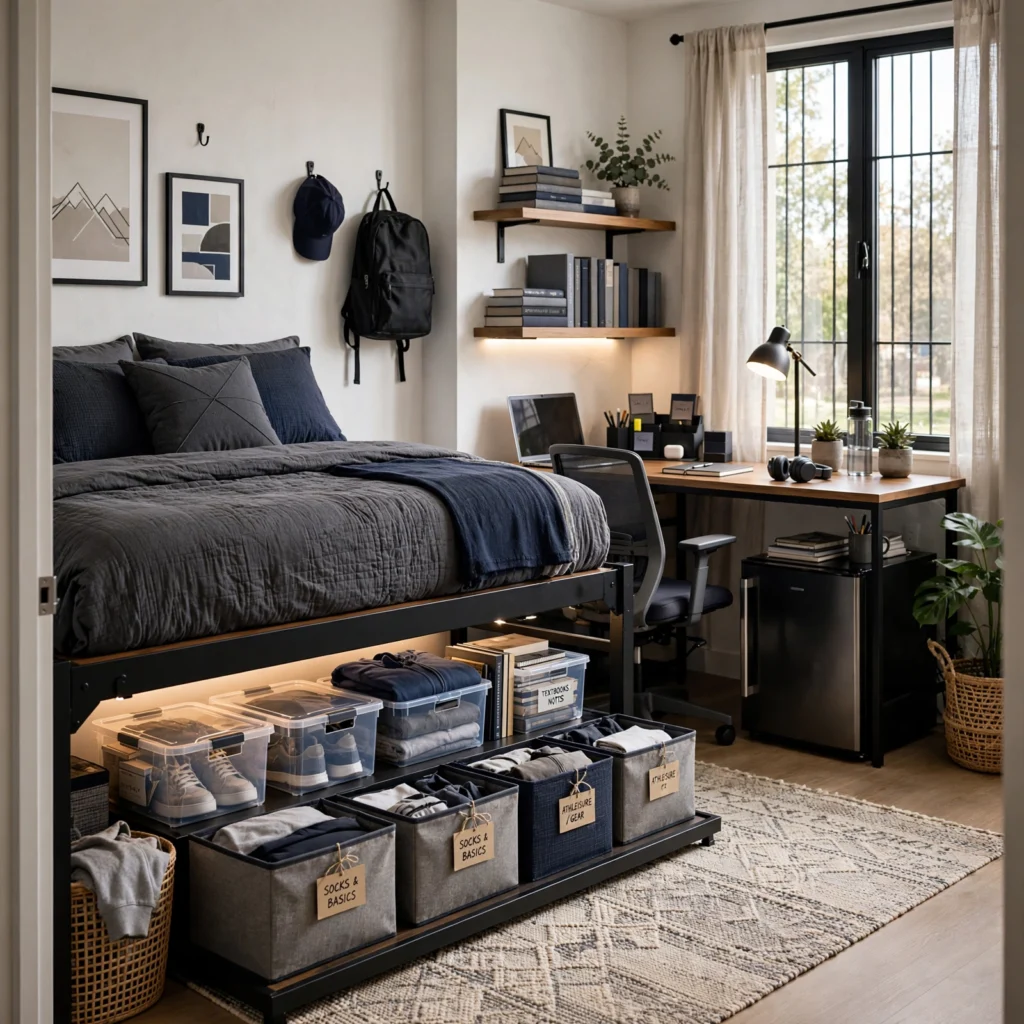
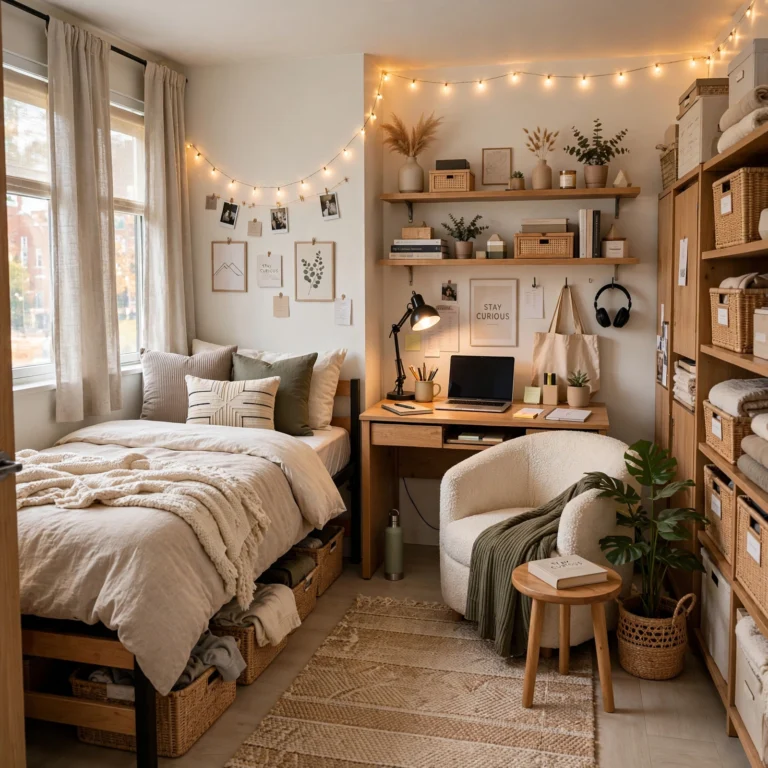
Under-bed storage bins use the space beneath a lofted or standard dorm bed frame to store off-season clothing, extra bedding, or bulkier items that would otherwise take up closet space. Choosing stackable, clear bins makes it easy to see contents without pulling everything out, while rolling bins on casters simplify access in a lofted setup with less clearance. This is one of the highest-impact storage ideas for a dorm room, since the space under the bed often goes completely unused otherwise.
2. Command Hook Wall Organization
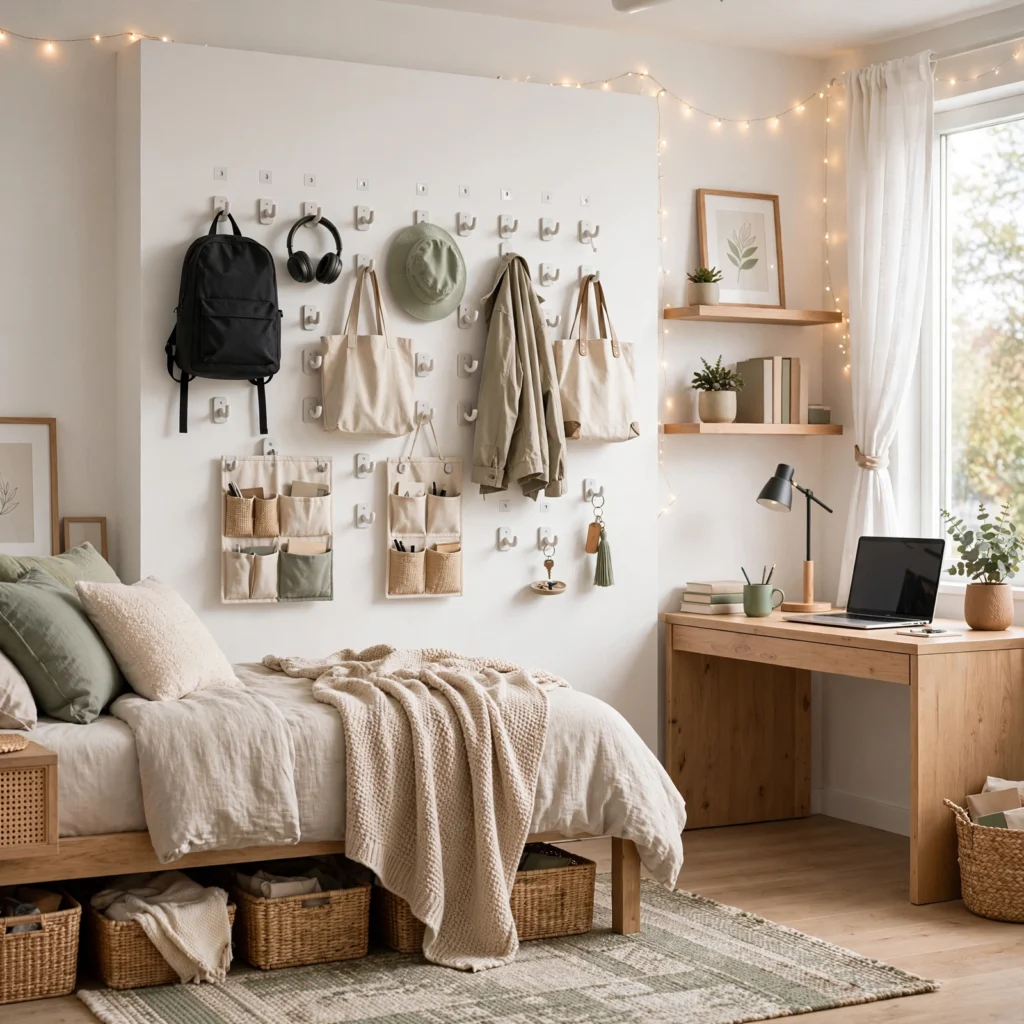
Command hook wall organization mounts adhesive hooks throughout the room for hanging bags, towels, or a small mirror, all without violating the no-nail policies most dorms enforce. Choosing hooks rated for the specific weight of what’s being hung, and allowing the full recommended cure time before loading any weight, prevents early failures. This system also removes cleanly at the end of the year, avoiding the damage fees some housing departments charge for wall marks.
3. Dorm Room Ideas Tapestry Wall Backdrop
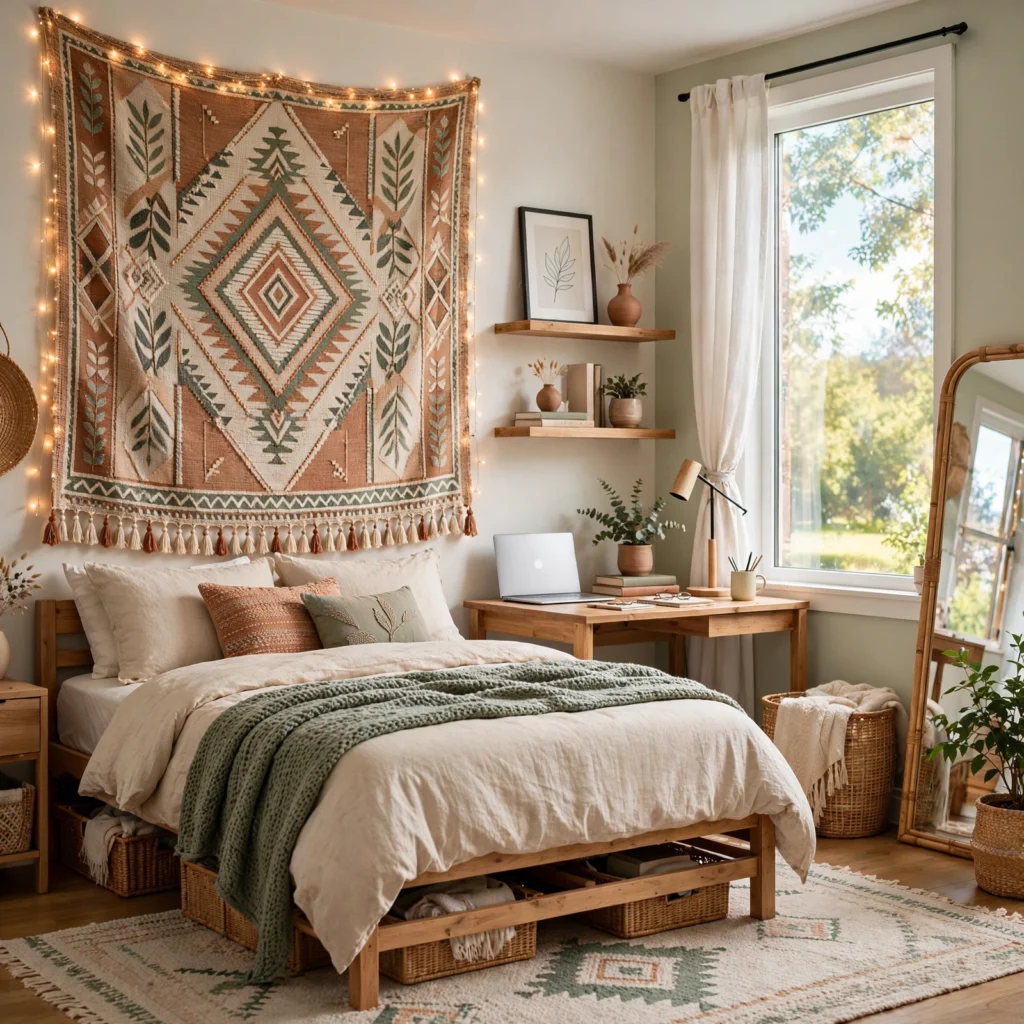
A tapestry wall backdrop hangs a large fabric piece behind the bed or across the room’s largest blank wall, instantly adding color and pattern without any paint or drilling required. Using removable adhesive hooks or a tension rod to hang the tapestry keeps the installation fully reversible. This dorm room ideas staple remains popular for good reason, since a single large piece of fabric covers more visual area per dollar spent than almost any other decor option available.
| Wall Size | Tapestry Size | Hanging Method |
| Small (single bed wall) | 51×59 inches | 2–3 adhesive hooks |
| Medium (full wall) | 60×80 inches | Tension rod or 4 hooks |
| Large (statement wall) | 80×90+ inches | Tension rod with weighted bottom |
4. Lofted Bed Curtain Privacy Panel
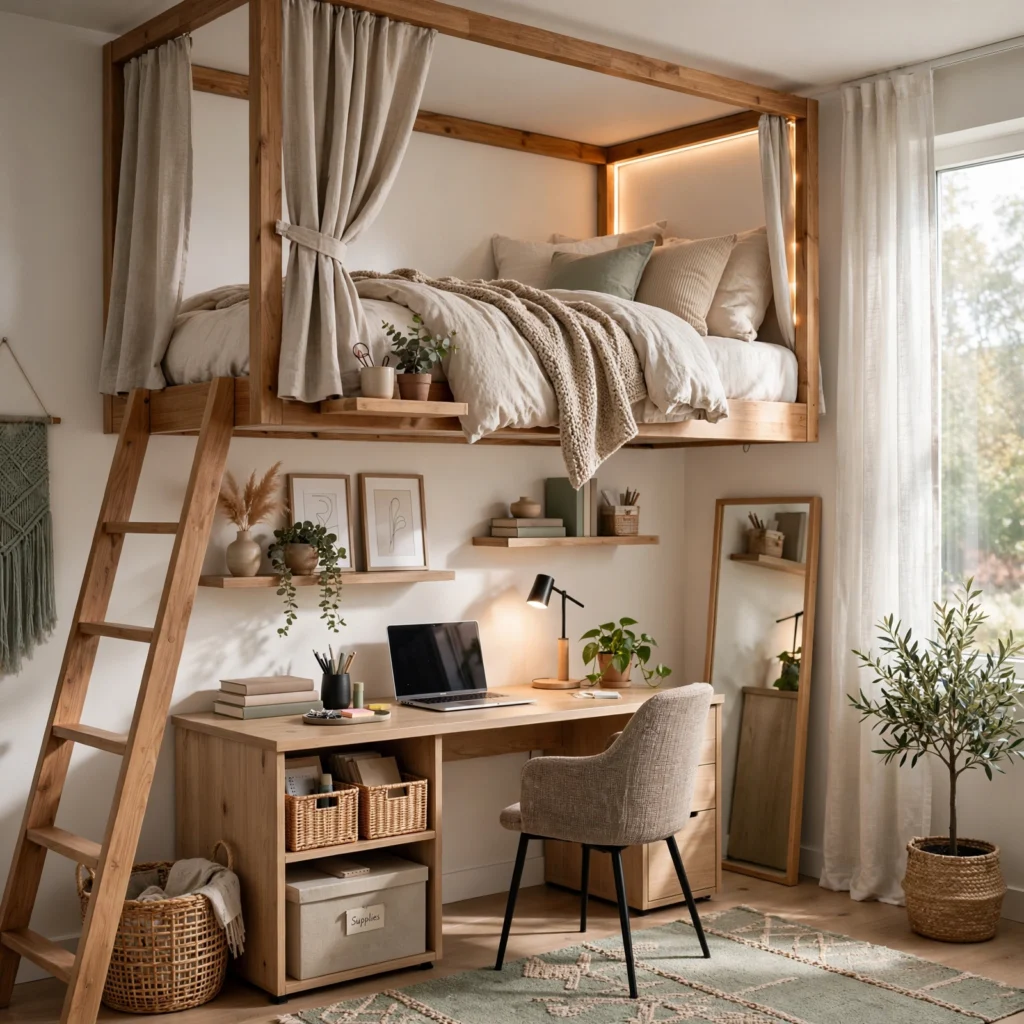
A lofted bed curtain privacy panel hangs a lightweight fabric panel around the underside of a lofted bed frame, creating a semi-private nook for the desk or seating area typically placed beneath it. Using tension rods or small adhesive hooks along the bed frame itself, rather than the wall or ceiling, keeps the installation contained to furniture the student already controls. This idea works particularly well in a shared triple or quad room, giving each student a bit more visual separation within a fully shared space.
5. Layered Bedding With Throw Pillows
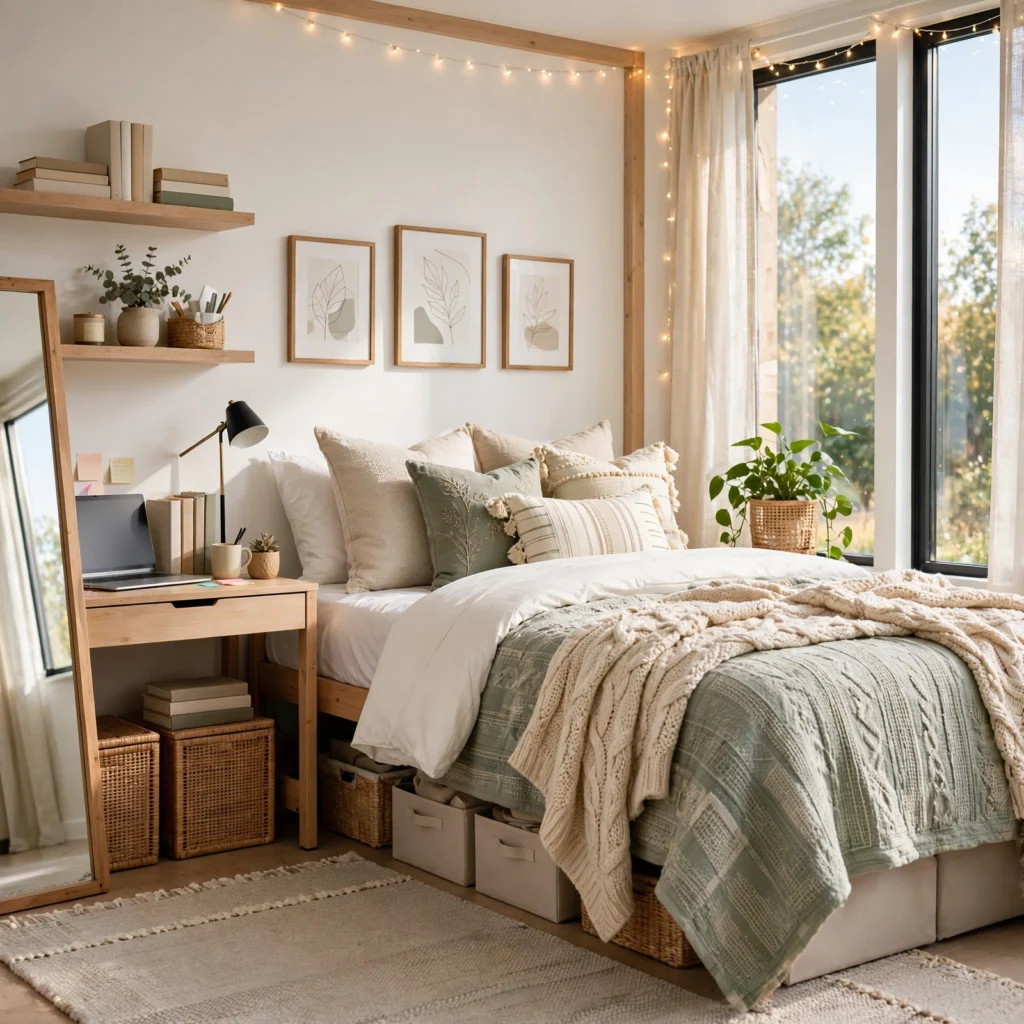
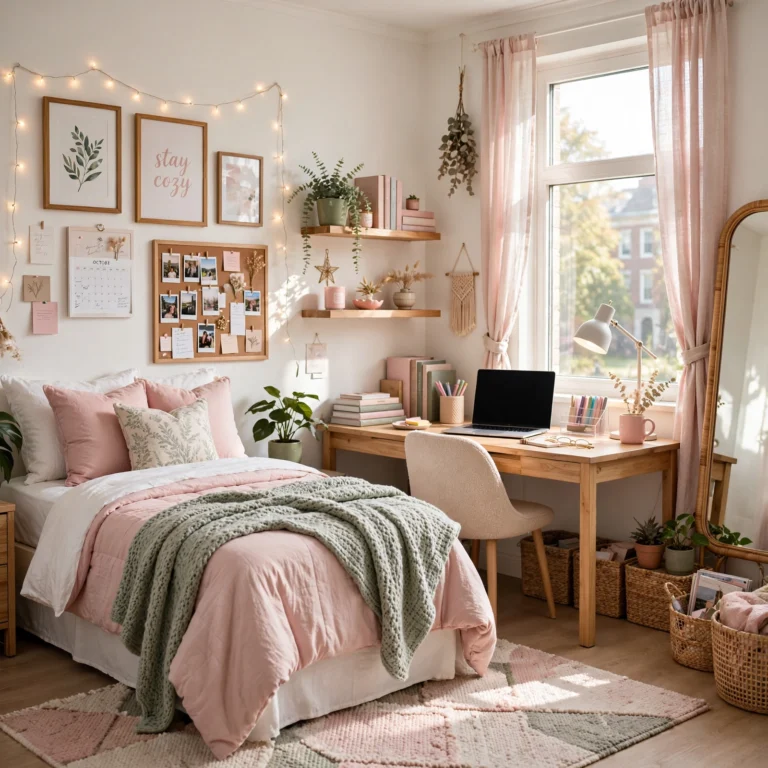
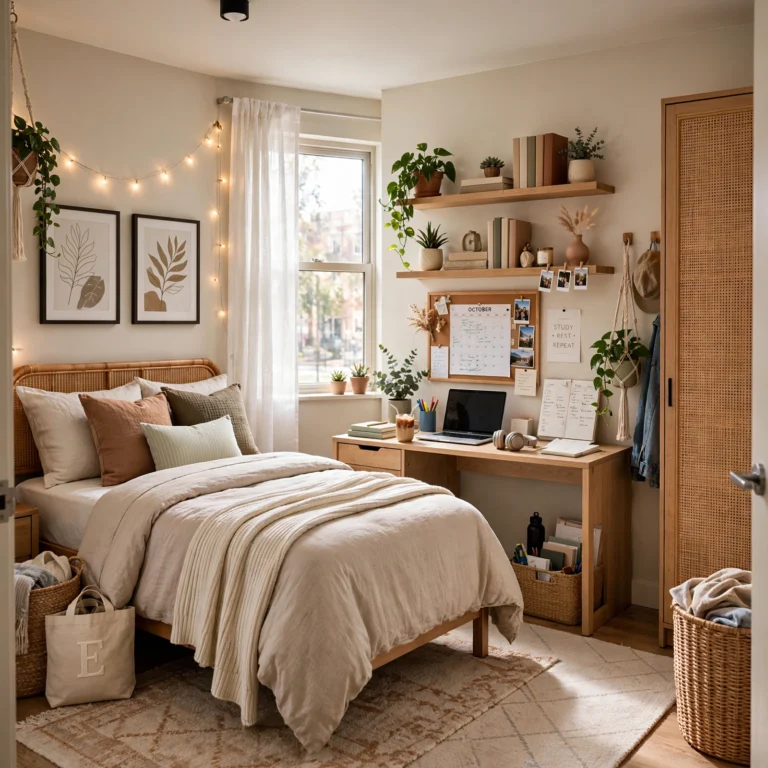
Layered bedding with throw pillows swaps the standard dorm-issued comforter for a duvet or quilt in a coordinated pattern, adding two or three throw pillows in complementary textures on top. Choosing a duvet cover rather than a fitted comforter makes seasonal washing and swapping considerably easier throughout the year. This is one of the most visually impactful updates on this list, since the bed typically takes up the largest single area of floor space in a standard dorm room.
6. Command Strip Photo Display
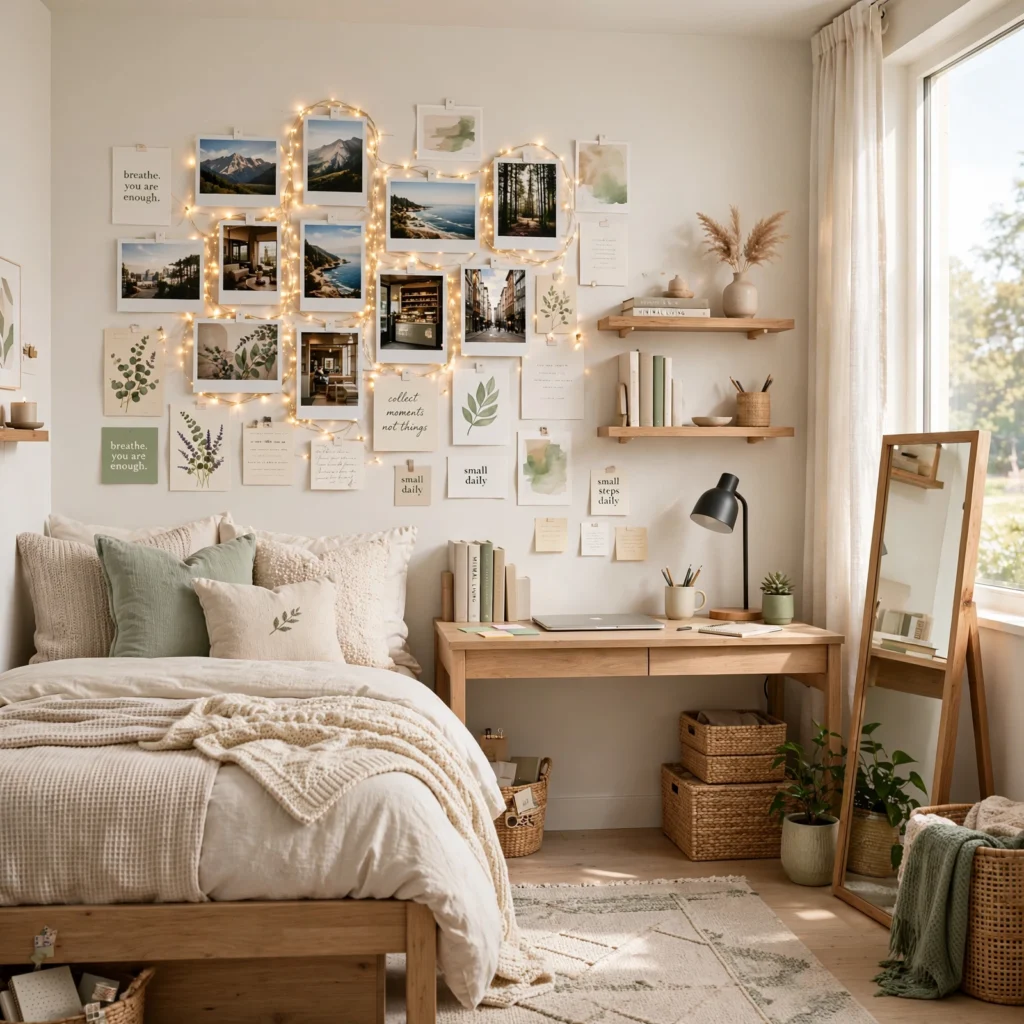
A command strip photo display arranges printed photos, polaroids, or postcards across a section of wall using small removable strips or clips, creating a personal gallery without a single nail. Stringing a thin cord or twine between two points and clipping photos along it offers a flexible alternative that’s easy to update as new photos come in throughout the year. This idea gives a dorm room some of its most personal, non-generic character, since the display is built entirely from the student’s own memories rather than purchased decor.
To see more options for ideas for christmas decor diy CLICK HERE
7. Modular Cube Storage Shelf
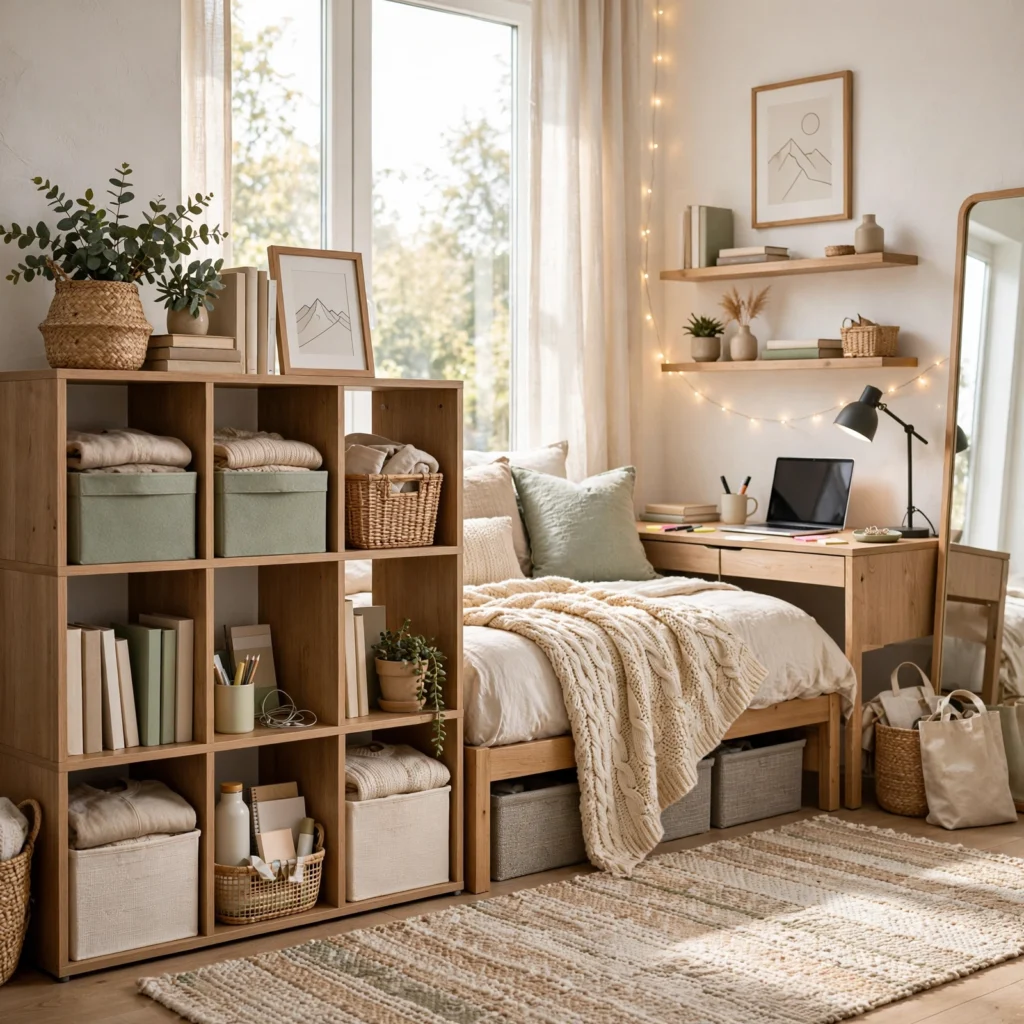
A modular cube storage shelf stacks lightweight, often collapsible fabric or wood cubes into a custom configuration that fits beside a desk or in an unused corner, providing flexible storage for books, clothing, or supplies. Because these units are typically freestanding rather than wall-mounted, they move easily between dorm rooms or apartments in future years without any installation to undo. Choosing a unit with a few fabric bin inserts keeps smaller, less visually tidy items hidden while leaving room for open display elsewhere.
8. String Light Ceiling Accent
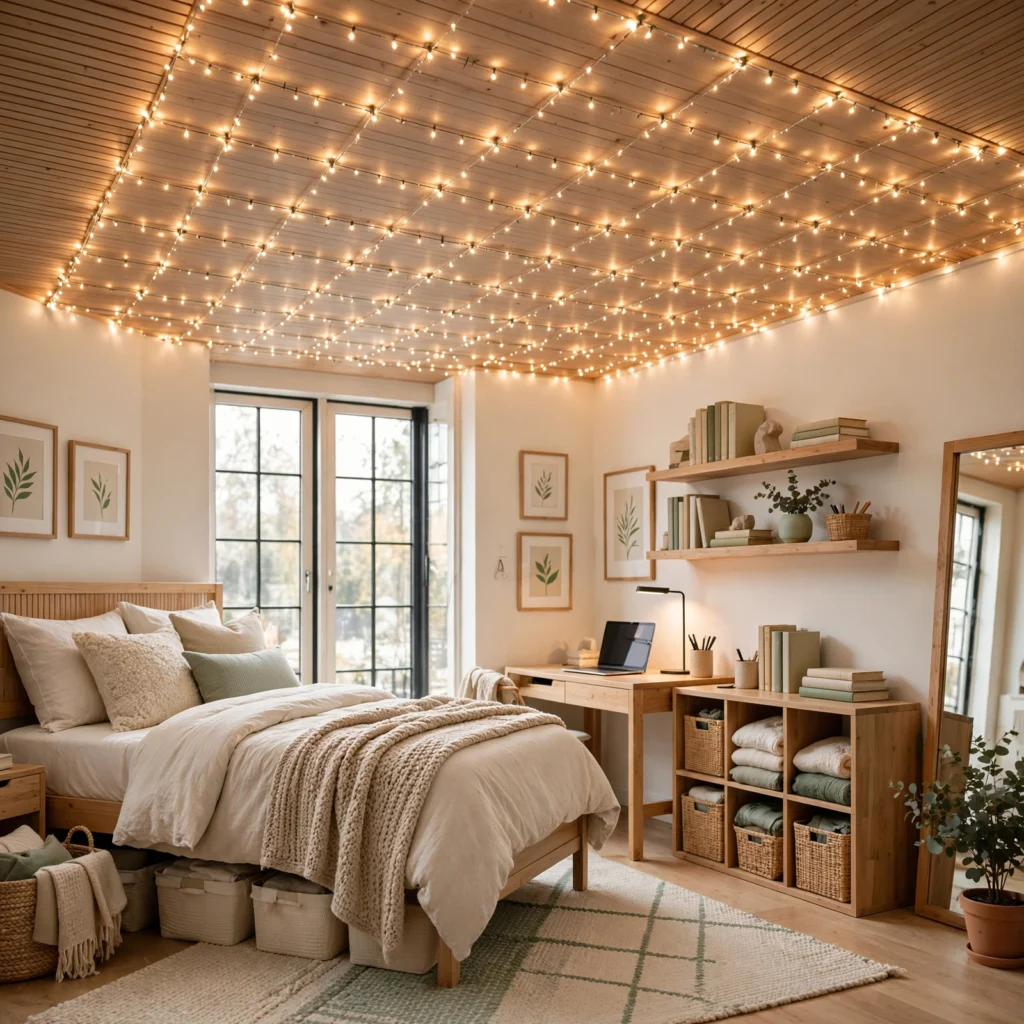
A string light ceiling accent drapes warm-toned string lights across the ceiling or along the top edge of a wall, using removable adhesive clips rather than nails or tacks. This adds a softer, more ambient light source than the harsh overhead fixture most dorm rooms come with by default. Choosing battery-powered or USB-powered string lights, rather than ones requiring a wall outlet directly above the bed, gives more flexibility in exactly where the lights get draped.
9. Desk Organizer Caddy System
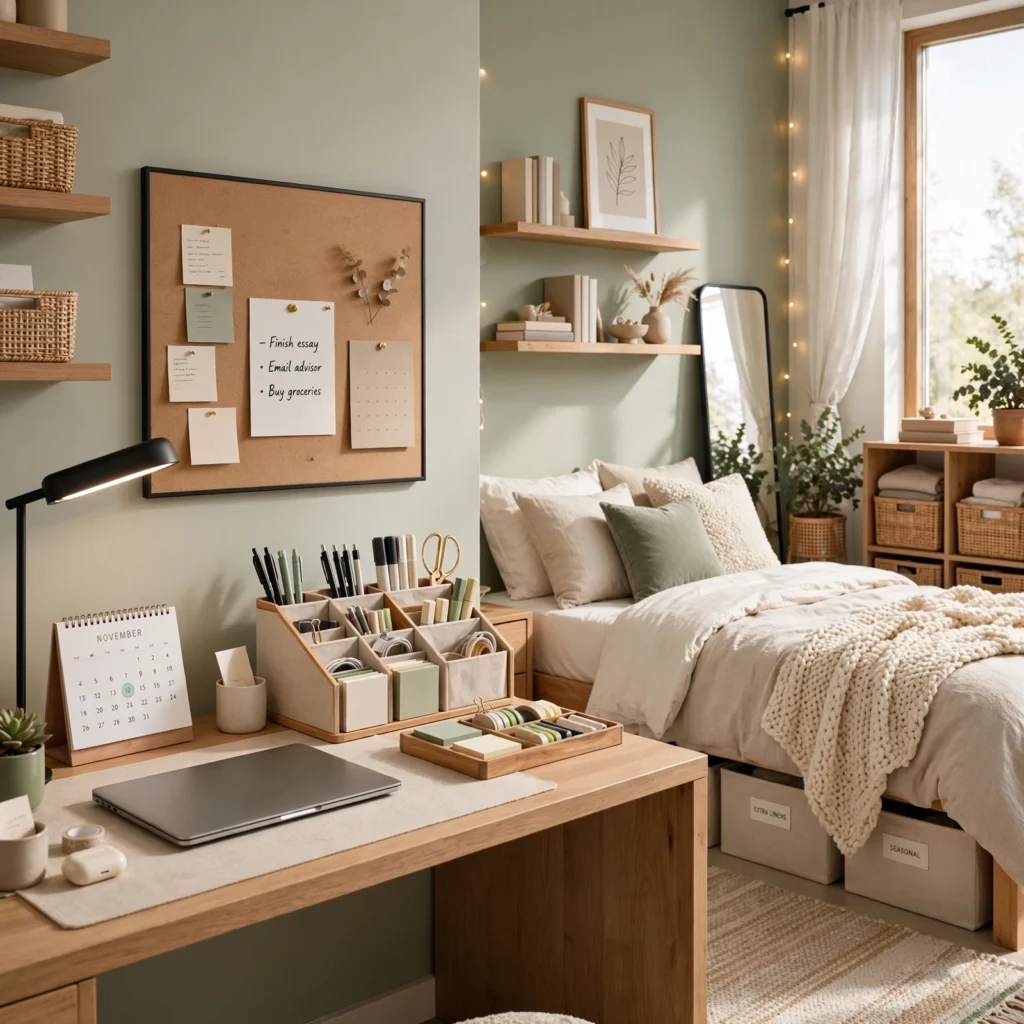
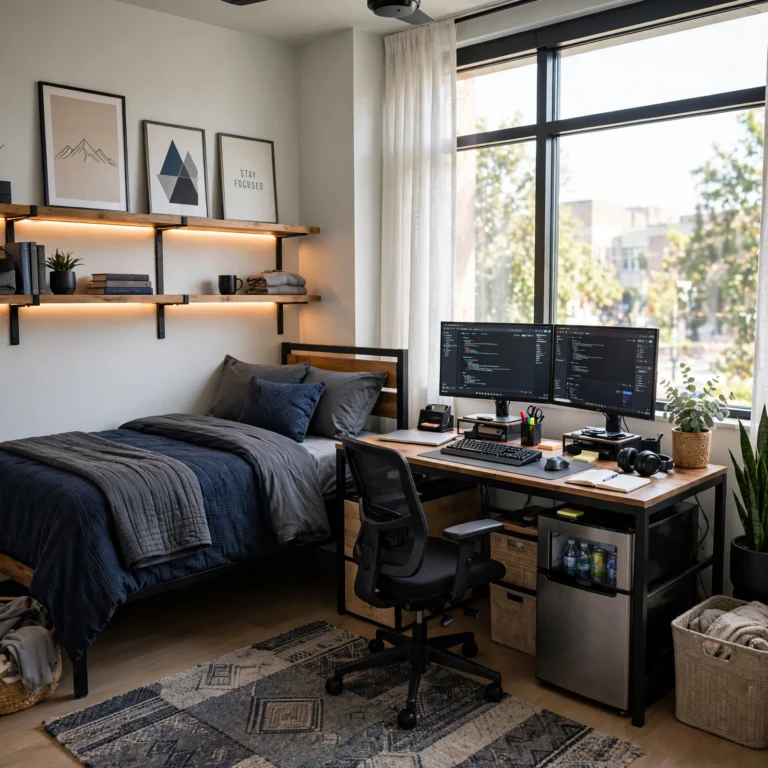
A desk organizer caddy system groups pens, notebooks, and small supplies into a set of two or three coordinated trays or cups rather than letting them spread across the whole desk surface. Choosing a caddy in a material that matches the room’s broader color palette, like a woven basket or a simple wood tray, keeps the organization looking intentional rather than purely utilitarian. This idea matters more in a dorm than in a home office, since desk space is often shared with limited storage for supplies elsewhere in the room.
10. Peel-and-Stick Rug Layer
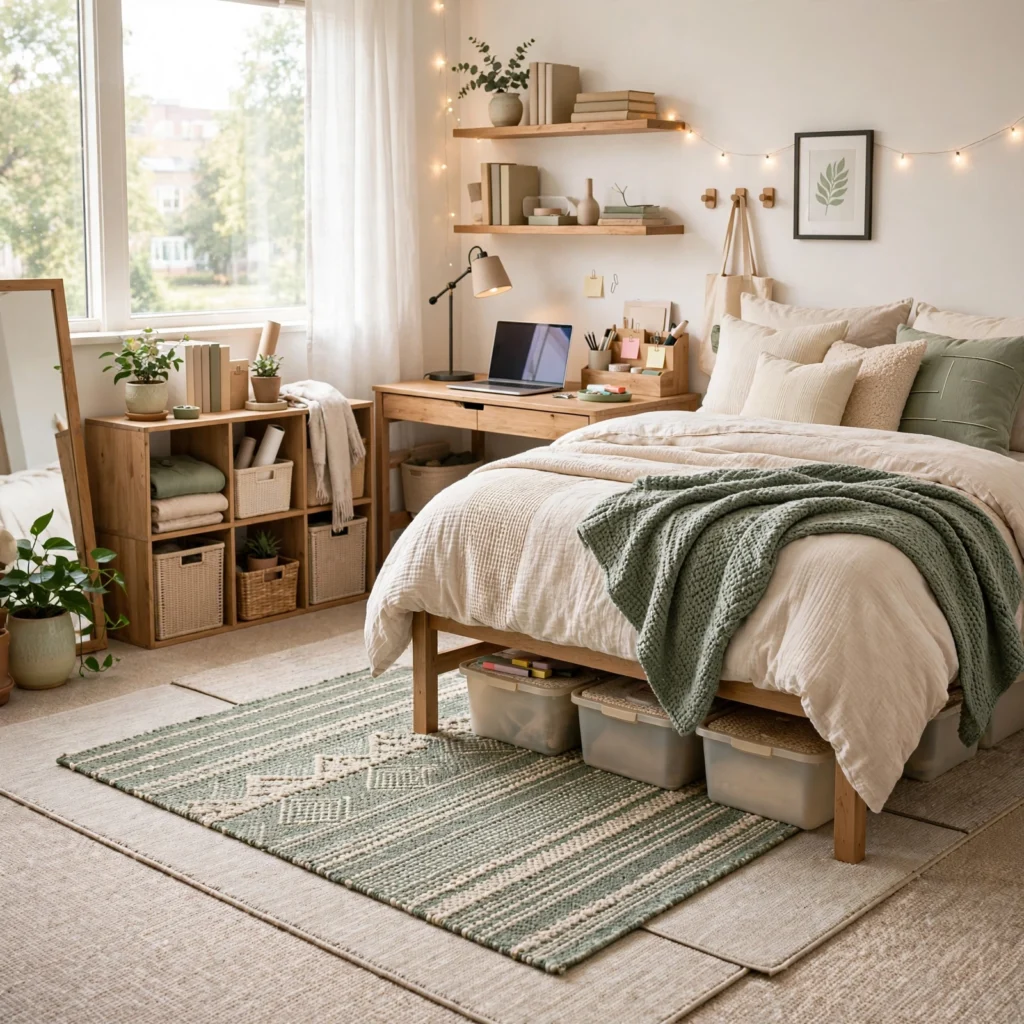
A peel-and-stick rug layer, or simply a small area rug placed loosely on the floor, adds warmth and softens the standard hard flooring most dorm rooms have, whether that’s tile, laminate, or thin carpet. Choosing a washable, low-pile rug simplifies cleaning in a room that sees heavy daily foot traffic. This idea works particularly well combined with a matching or complementary bedding palette, tying the floor and bed together into one cohesive look.
11. Command Strip Corkboard or Memo Board
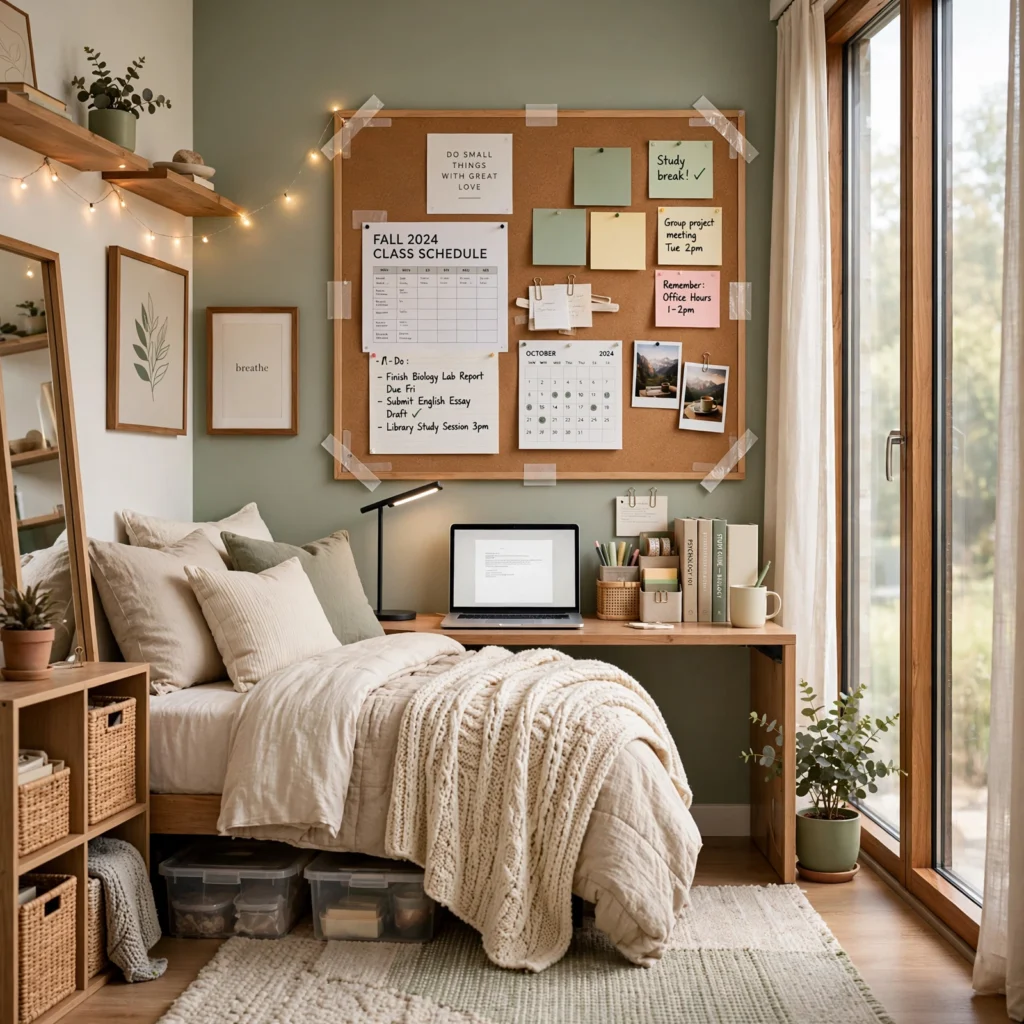
A command strip corkboard or fabric memo board mounts to the wall using adhesive strips, giving a dedicated spot for reminders, ticket stubs, or small photos that would otherwise clutter the desk surface. Choosing a board with a fabric or patterned backing, rather than plain cork, adds a bit more visual interest to a purely functional item. This idea keeps important reminders visible without resorting to sticky notes stuck directly to painted walls or furniture.
12. Coordinated Roommate Color Palette
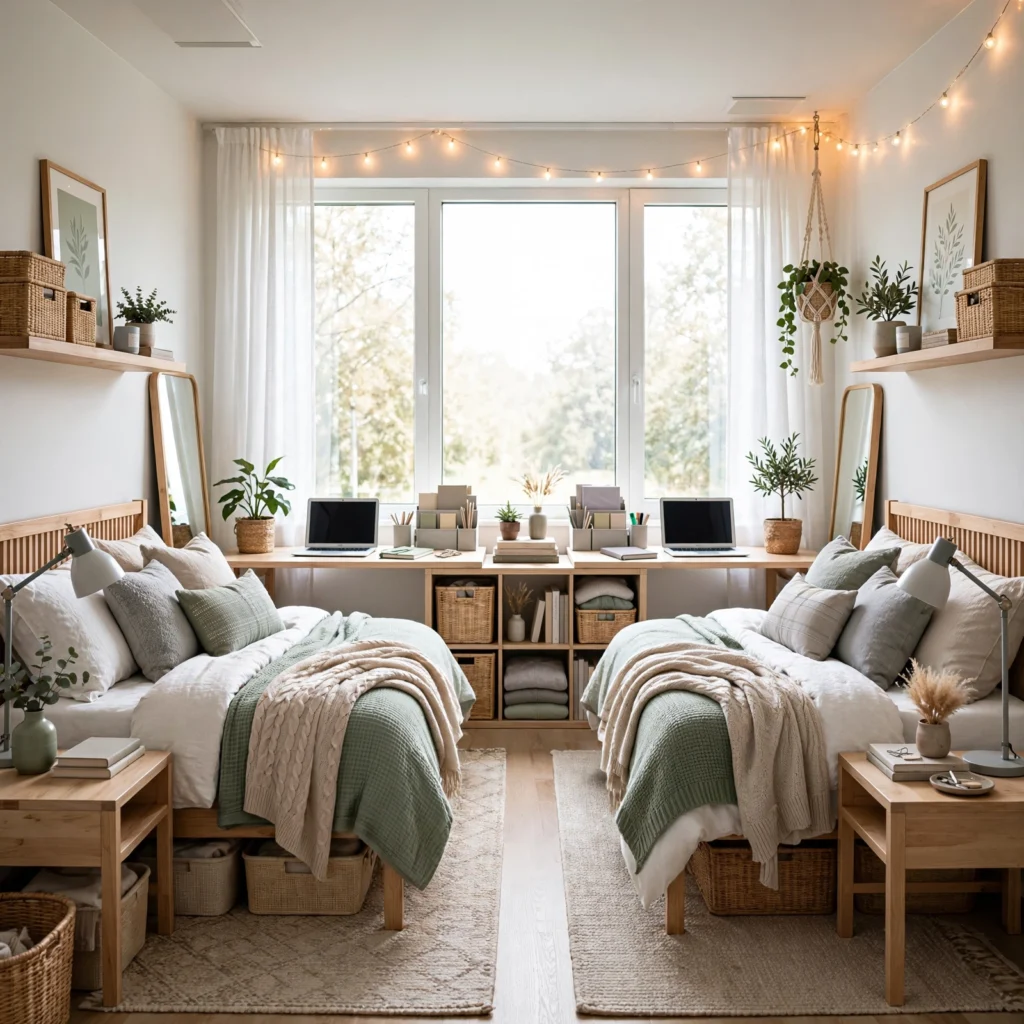
A coordinated roommate color palette agrees on two or three shared colors for bedding, rugs, and any communal decor before move-in, preventing the room from reading as two visually disconnected halves. This doesn’t require identical decor on both sides, just a shared color thread that ties the whole space together even with different individual styles. This idea matters more in a dorm than almost any other living situation, since roommates typically share the full visible room rather than separate private spaces.
13. Freestanding Full-Length Mirror
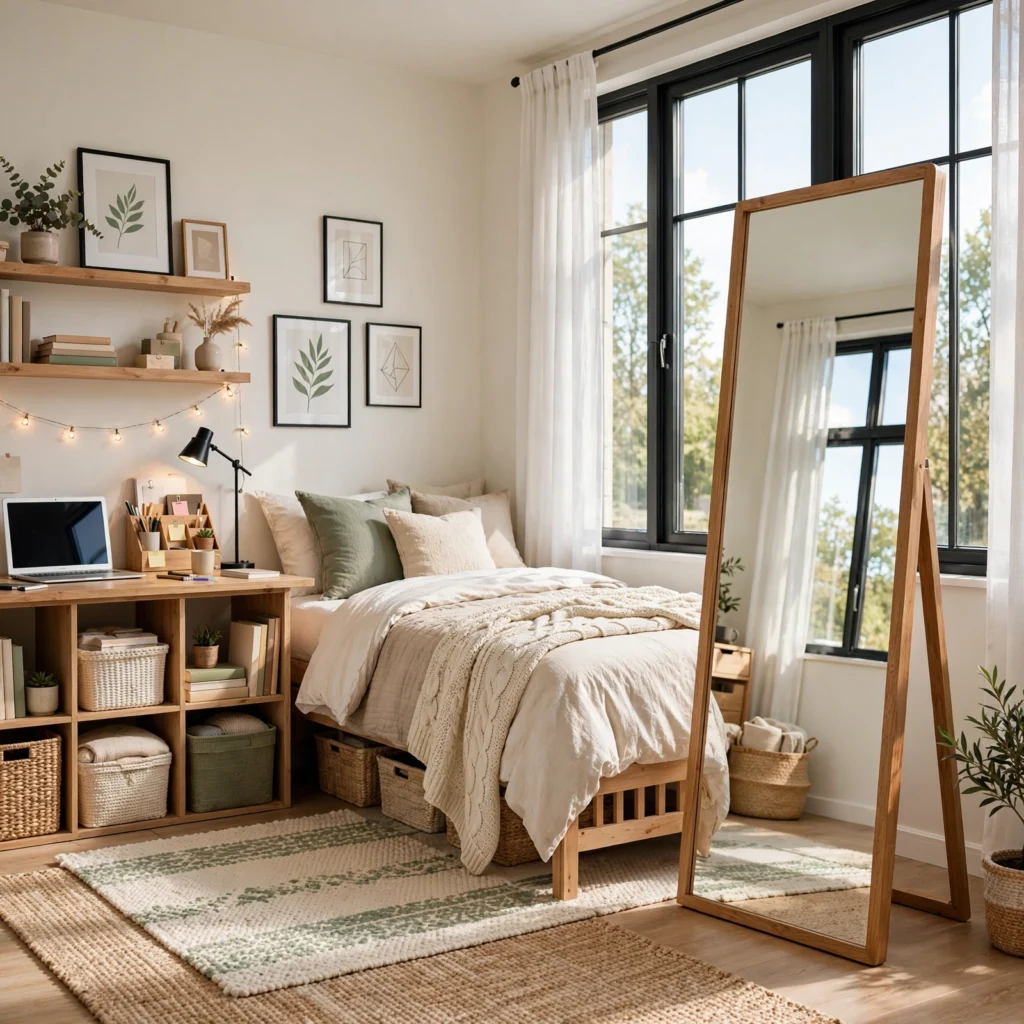
A freestanding full-length mirror leans against an open wall or the back of a closet door, adding both function for daily outfit checks and a reflective element that makes a small dorm room feel slightly larger. Choosing a mirror with a simple frame in wood or metal keeps it blending into a range of decor styles without competing with other wall decor. Because it’s freestanding rather than mounted, this piece also transfers easily to a new room the following year without any installation to reverse.
Shop the Look
For this palette, look for a large fabric tapestry for the main wall, a set of stackable clear under-bed storage bins, a coordinated duvet cover with two or three throw pillows, a modular fabric cube storage unit, and a small washable area rug. These pieces work together across several of the ideas above without requiring any permanent installation or violating typical dorm housing policies.
Common Mistake to Avoid
The most common mistake is over-planning decor before actually seeing the room’s real layout and furniture placement, leading to purchased items that don’t fit the specific wall dimensions or bed configuration once move-in day arrives. A tapestry sized for a much larger wall than what’s actually available, or storage bins that don’t fit beneath a specific bed frame’s clearance, are both common results of this early guesswork. Waiting to measure the actual room, or checking the university’s specific floor plan in advance, prevents wasted purchases and last-minute scrambling.
FAQs
What dorm room ideas work best for a small, shared triple room?
Under-bed storage bins, a lofted bed curtain privacy panel, and a modular cube storage shelf all work particularly well in a small, shared triple room, since they add function and a bit of personal separation without requiring much floor space. A coordinated roommate color palette also matters more here than in a double room, since three students sharing one space benefits even more from some shared visual thread tying everything together. Prioritizing storage and privacy solutions over purely decorative purchases makes the most sense in this tighter room type.
How much does it cost to decorate a dorm room?
A budget refresh using command hooks, a small rug, and a desk organizer caddy can run under $75 total, while adding a tapestry, string lights, and coordinated bedding typically pushes the range to $150–$350. Larger investments like under-bed storage bins paired with a modular cube shelving system cost more depending on quantity, often landing between $200 and $500 for a fully outfitted room, which still tends to be less than furnishing an off-campus apartment from scratch.
What decor is typically not allowed in dorm rooms?
Most university housing policies prohibit nails, screws, and any wall modification, along with open-flame candles, certain string light types not rated for dorm use, and sometimes specific furniture height restrictions for lofted beds. Checking a school’s specific housing handbook before purchasing decor is worth doing, since rules vary noticeably between institutions. Removable adhesive products, freestanding furniture, and battery-powered lighting generally clear these restrictions at most schools, though confirming with a resident advisor is always the safer approach.
How do I make a dorm room feel bigger?
A dorm room feels bigger through a freestanding mirror to bounce light and visually extend the space, under-bed storage that clears floor and closet clutter, and a lighter, coordinated color palette across bedding and rugs rather than several competing colors and patterns. Vertical storage solutions, like a modular cube shelf, also make use of height rather than consuming additional floor footprint. These techniques don’t change the room’s actual square footage, but they do reduce the visual clutter that makes small spaces feel smaller than they are.
Can roommates have different decor styles in the same dorm room?
Roommates can absolutely maintain different personal decor styles within the same dorm room, and a shared color palette for communal elements like a rug or window treatment is usually enough to keep the room feeling cohesive despite those individual differences. Full matching decor isn’t necessary or even common, since most students want their side of the room to reflect their own taste. Communicating early about big shared purchases, like a rug or a mini fridge, tends to matter more than requiring matched personal decor throughout the space.
Conclusion
These dorm room ideas cover everything from a five-minute command hook installation to a fuller storage and bedding refresh, giving you options regardless of room size or how much personalization your specific housing policy allows. Start with storage and bedding, since those two areas affect daily comfort the most, then layer in wall decor and lighting as your room’s actual layout becomes clear. Save this guide to Pinterest for later, and check out our related post on small room decor ideas for more space-saving guidance.