16 Trending Cozy Home Decor Ideas for a Warm, Inviting & Beautiful Space
A house can be fully furnished and still feel cold and unwelcoming if the details aren’t right. Cozy home decor is less about buying more things and more about layering warmth into the materials, lighting, and textures already in a room. This guide walks through sixteen practical ideas covering textiles, lighting, and small styling shifts, so you can turn any room into a space that actually feels good to spend time in, without a full remodel.
Trend & Background
Interest in cozy home decor has grown alongside a broader shift toward slower, more intentional living, with terms like hygge and Japandi shaping how people think about comfort at home. This matters now because more time is spent indoors working, relaxing, and hosting smaller gatherings, which puts more pressure on a home to feel restful rather than purely functional. Natural materials, muted color palettes, and layered lighting have replaced the stark, minimalist looks that dominated interiors a decade ago.
Key Takeaways
- Cozy home decor relies on layered textures, warm lighting, and soft materials more than any single statement piece.
- Natural elements like wood, wool, and linen do more to soften a room than heavy patterns or bold colors.
- Small changes, such as swapping overhead lighting for lamps, can shift a room’s mood without a full renovation.
- Scent, sound, and texture work alongside visuals to make a space feel genuinely lived-in rather than just styled.
1. Chunky Knit Throw Blanket
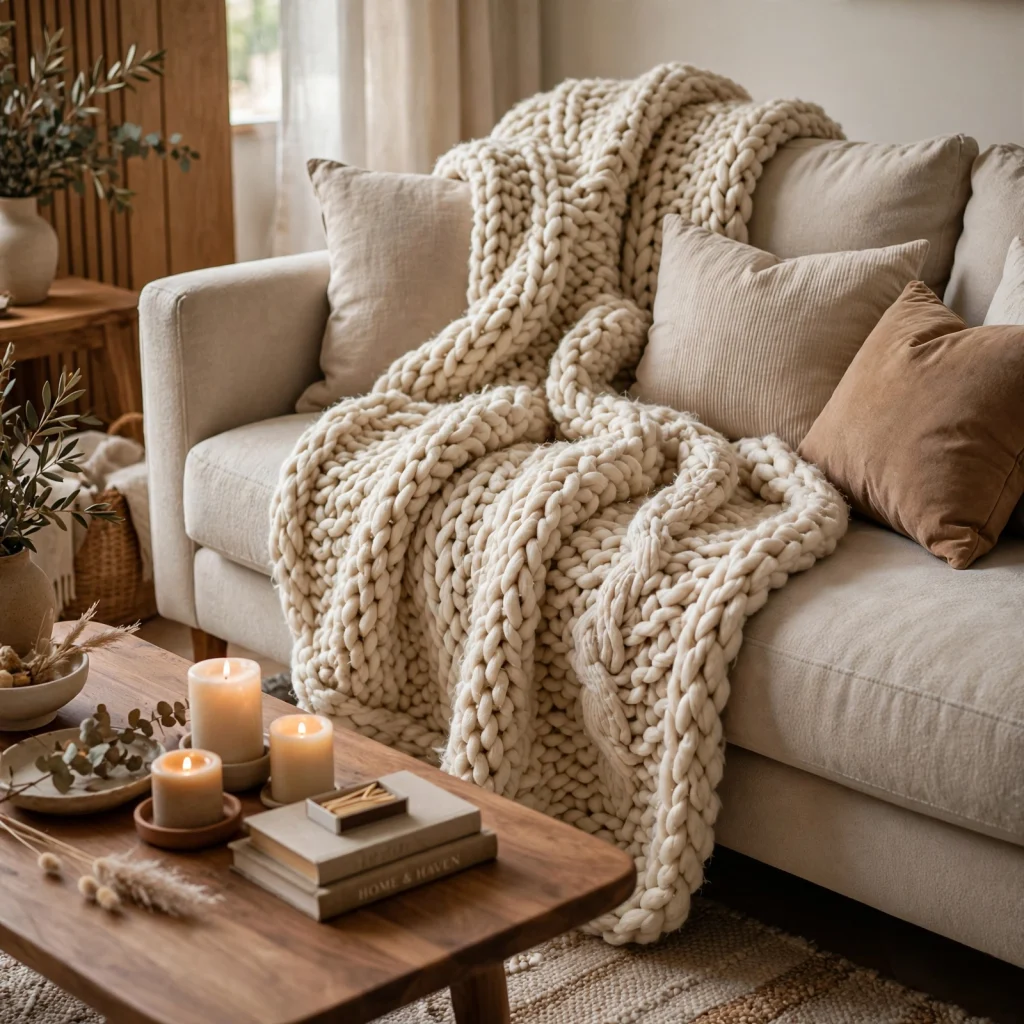
A chunky knit throw draped over the back of a sofa or folded at the foot of a bed adds immediate texture and an invitation to curl up. Wool or wool-blend versions hold their shape and warmth better than thinner acrylic options, and the oversized stitch pattern reads as intentional rather than an afterthought. Choosing a neutral tone like oatmeal or charcoal keeps it flexible enough to work with almost any existing color scheme.
2. Layered Area Rugs
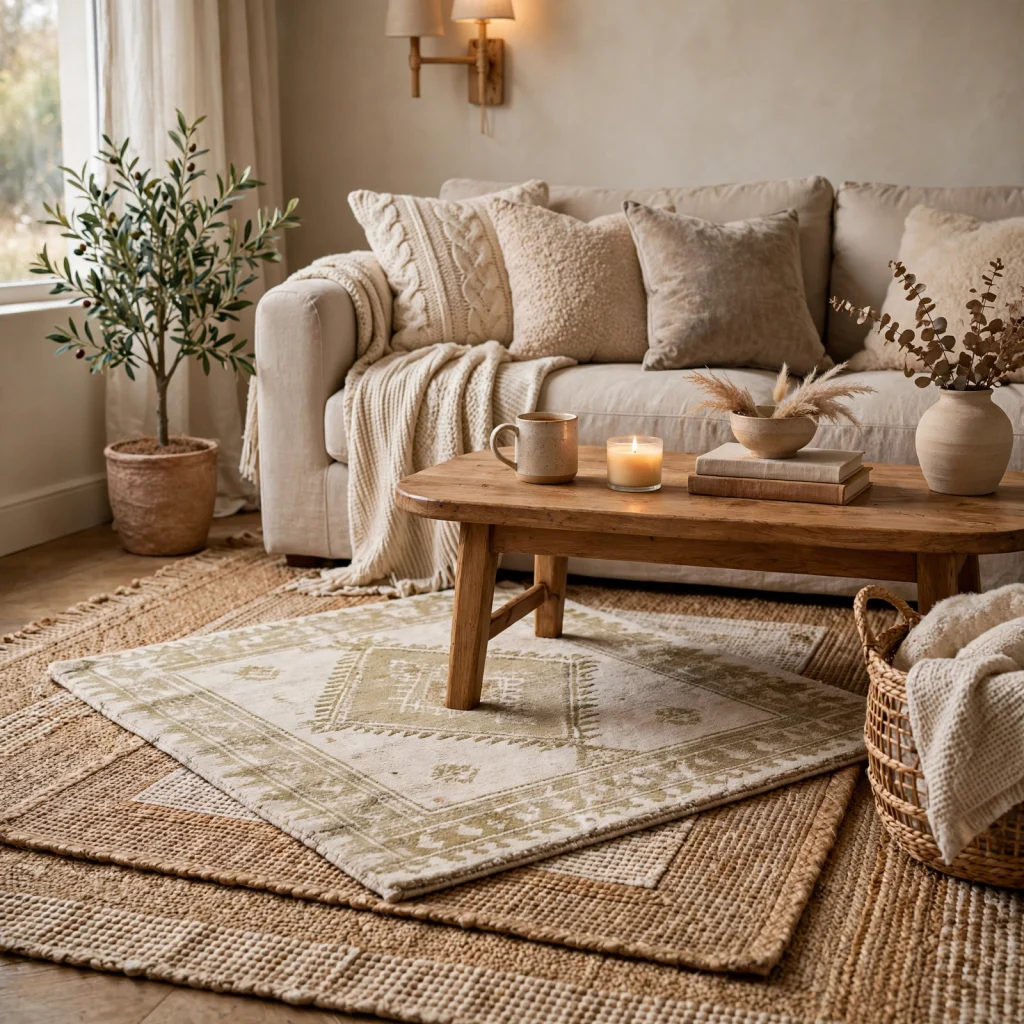
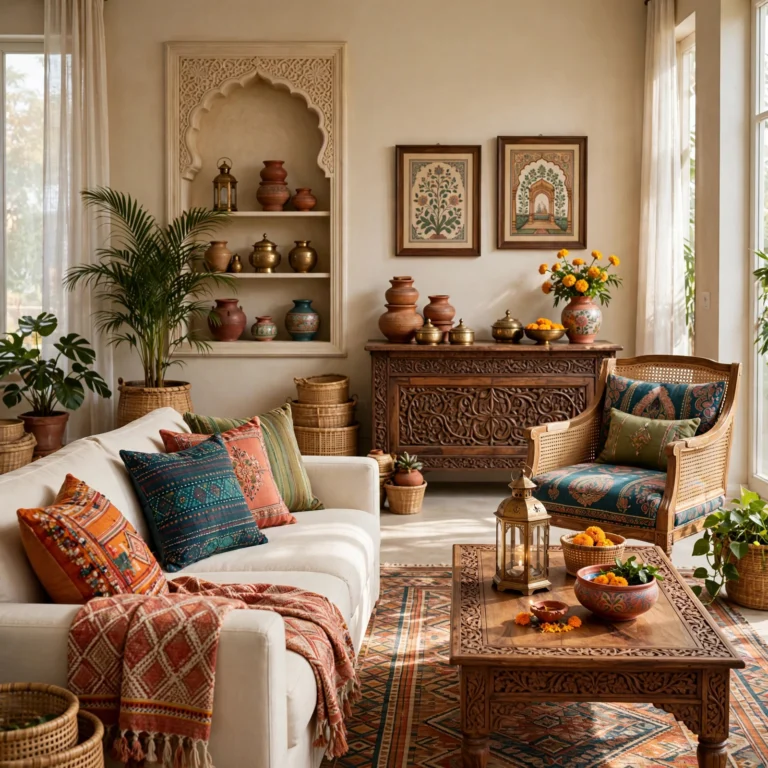
Placing a smaller patterned or textured rug on top of a larger flat-weave base rug adds depth to a floor that would otherwise read as flat and cold. This layering trick works particularly well over hardwood or tile, where a single thin rug can feel sparse. Wool, jute, and sheepskin layered together bring in different textures underfoot, which does more for a cozy feel than pattern or color alone.
3. Warm-Toned Table Lamps
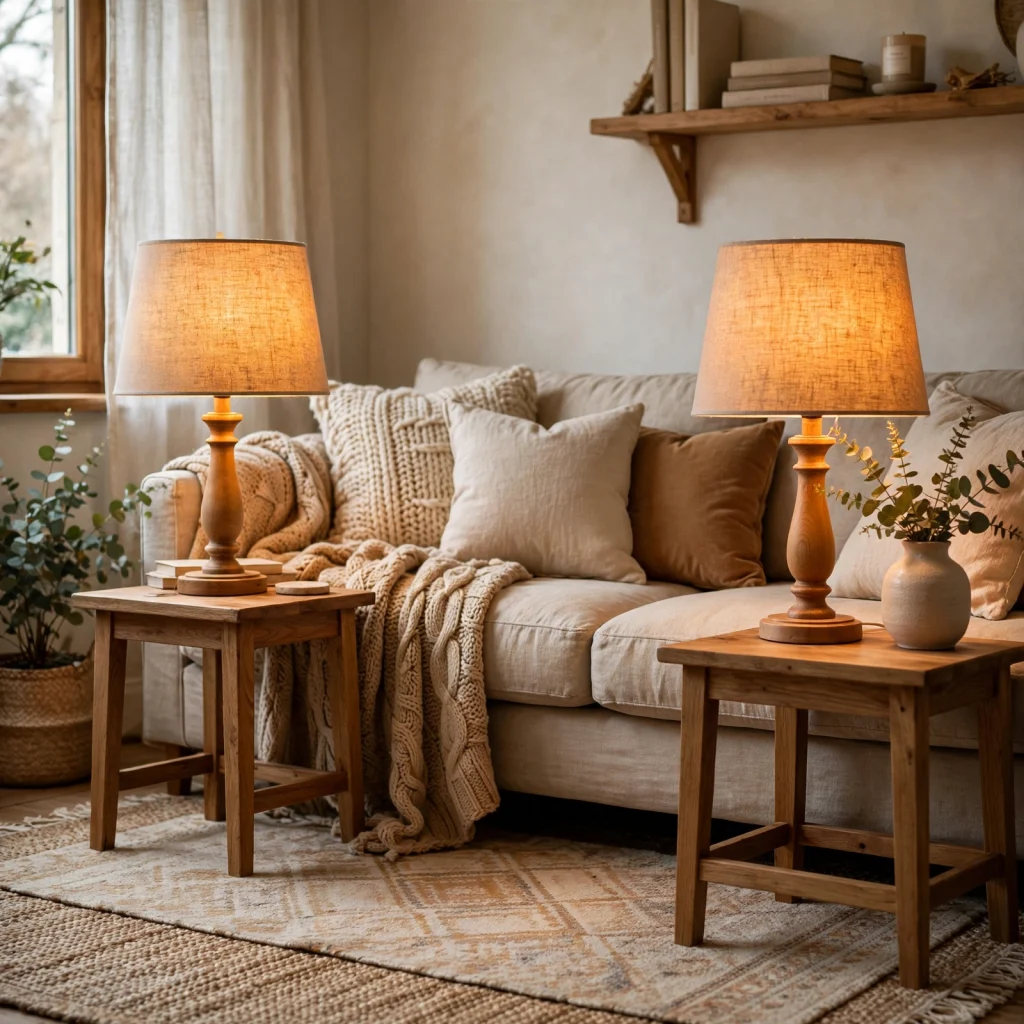
Swapping harsh overhead lighting for two or three table lamps with warm-toned bulbs, generally around 2700K, softens a room noticeably within minutes. Placing lamps at varying heights around a seating area, rather than relying on one central fixture, avoids flat lighting and creates pockets of warmth throughout the space. Linen or fabric shades diffuse the light further, giving off a softer glow than exposed bulbs or metal shades.
To see more home decor ideas living room and kitchen
4. Exposed Wood Beams
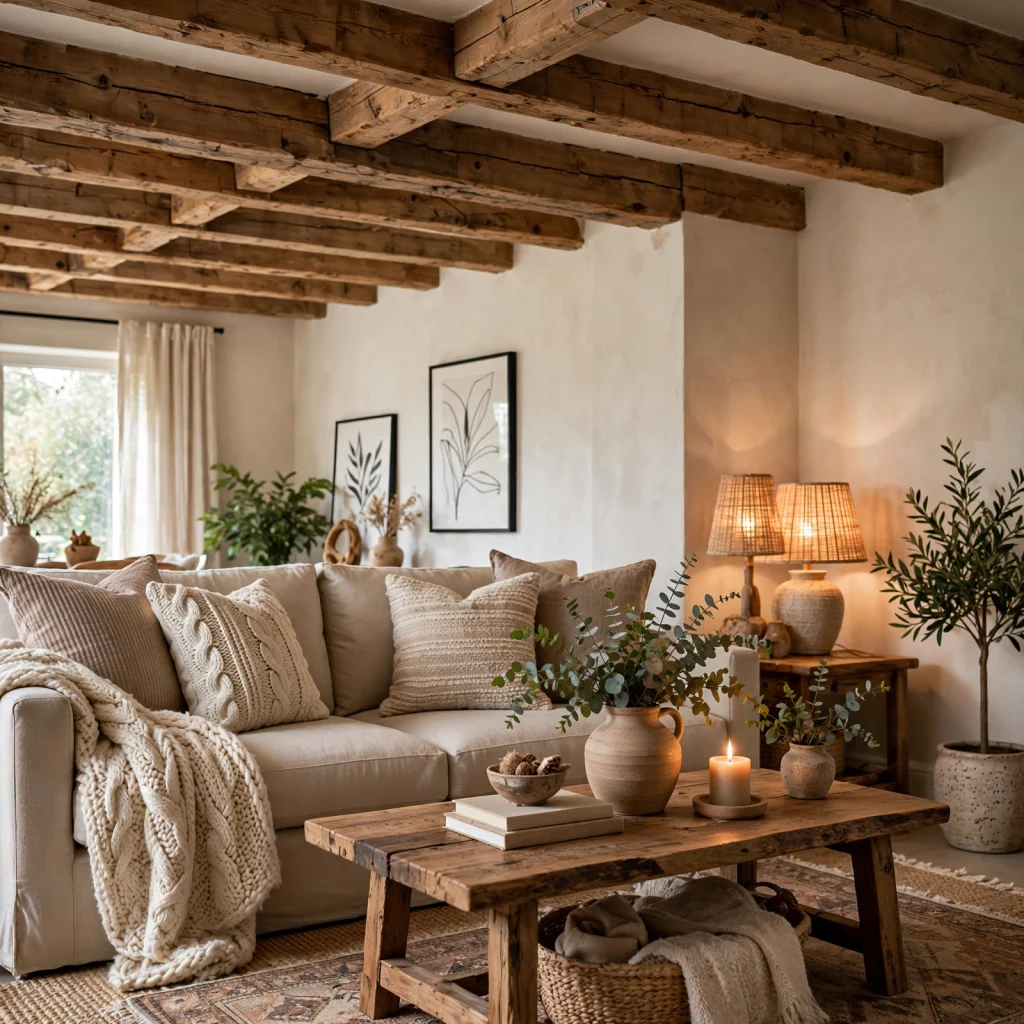
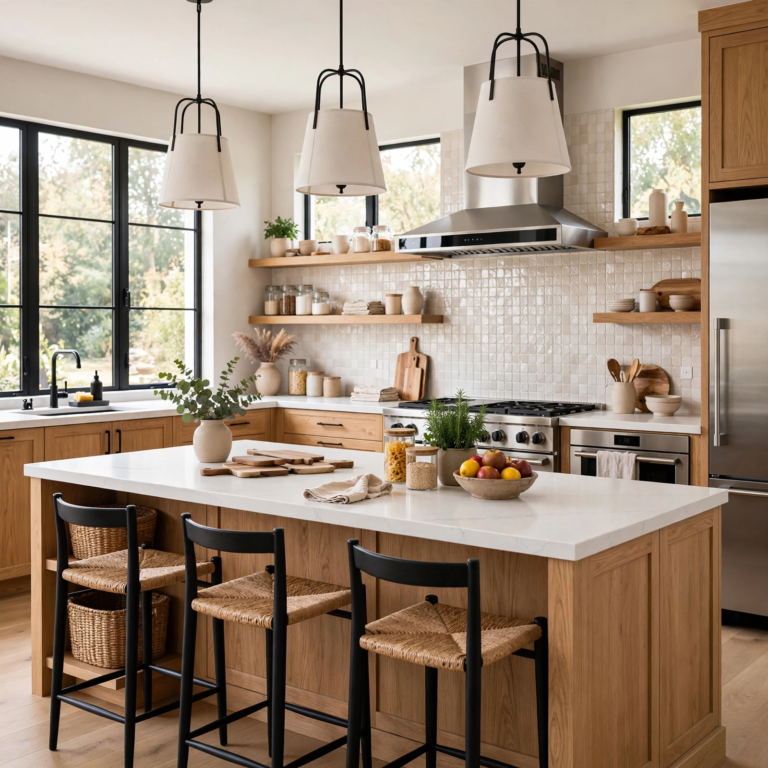
Exposed wood beams, whether original to a home or added as a decorative element, bring warmth and texture to a ceiling that would otherwise feel flat and unfinished. Even faux beam installations made from lightweight polyurethane can achieve a similar visual effect at a lower cost and easier installation than structural work. This detail works especially well in living rooms and kitchens with higher ceilings that could otherwise feel cold or cavernous.
For more home decor ideas living room and kitchen
5. Linen Curtains
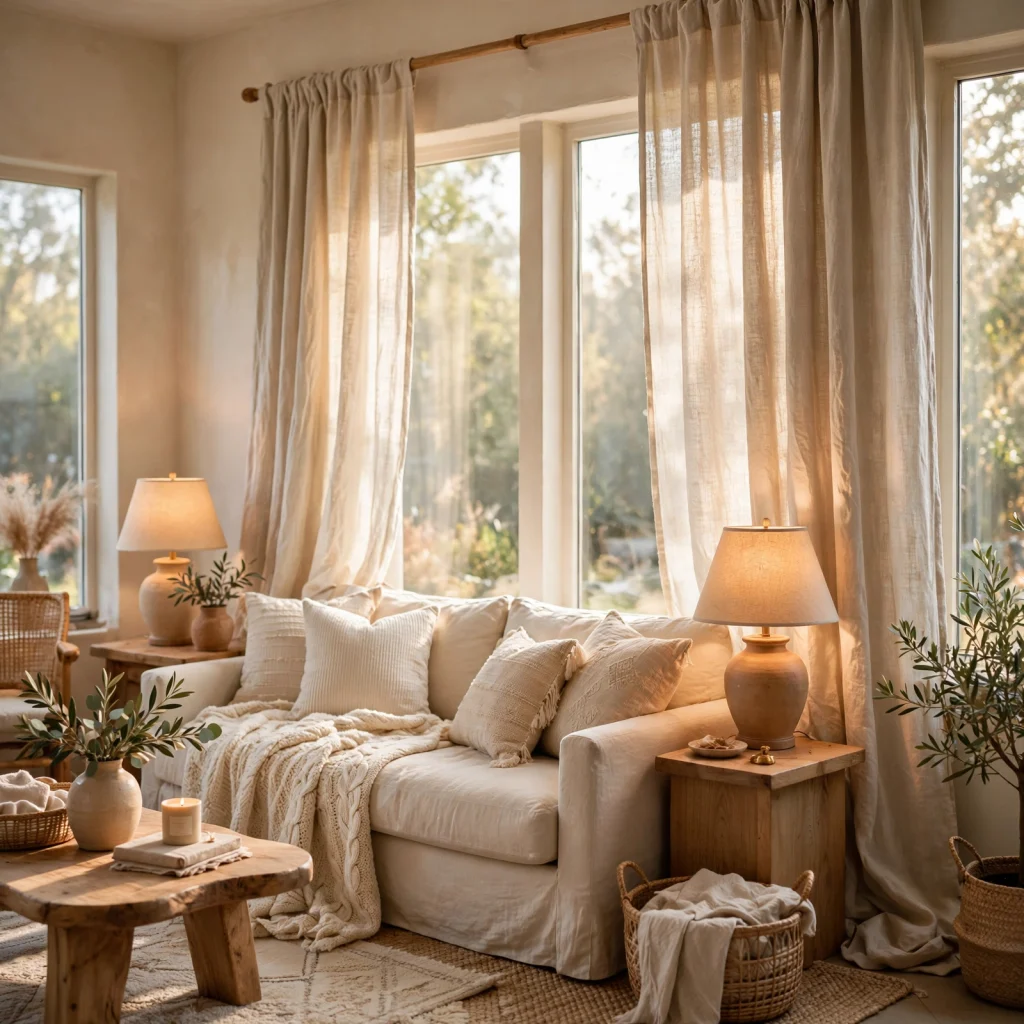
Heavy linen curtains hung close to the ceiling add softness to a window and help absorb sound in a room that might otherwise feel echoey and bare. Choosing a slightly wrinkled, natural linen texture over a stiff, pressed fabric keeps the overall look relaxed rather than formal. Curtains in warm neutral tones like terracotta, cream, or sage also filter incoming light with a gentler, warmer cast throughout the day.
6. Stacked Throw Pillows
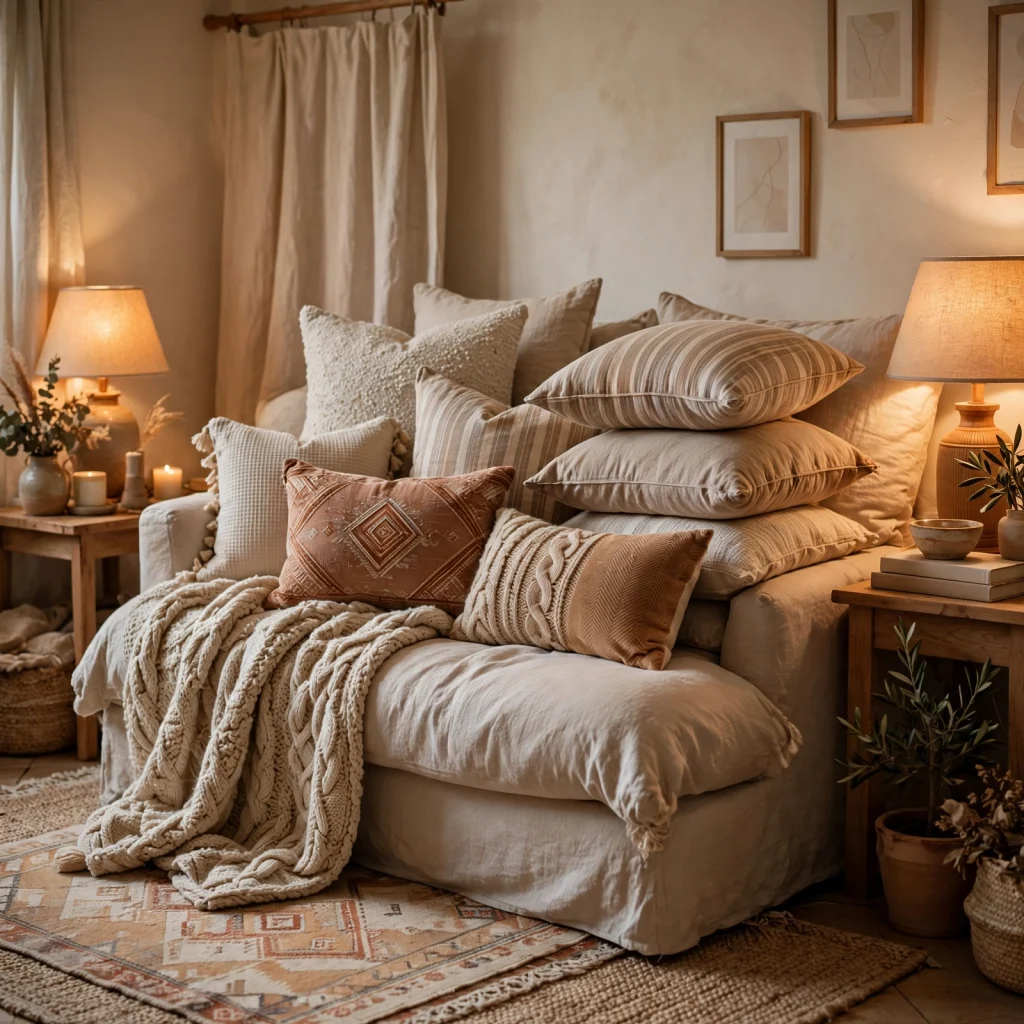
A mix of pillow sizes and textures, like a bouclé square paired with a ribbed knit lumbar pillow, adds visual layering to a sofa or bed without requiring any new furniture. Keeping the color palette within two or three tones prevents the stack from looking cluttered or mismatched. Down or down-alternative inserts also give pillows a fuller, softer shape than foam, which noticeably changes how inviting a seating area feels.
7. Candle Grouping
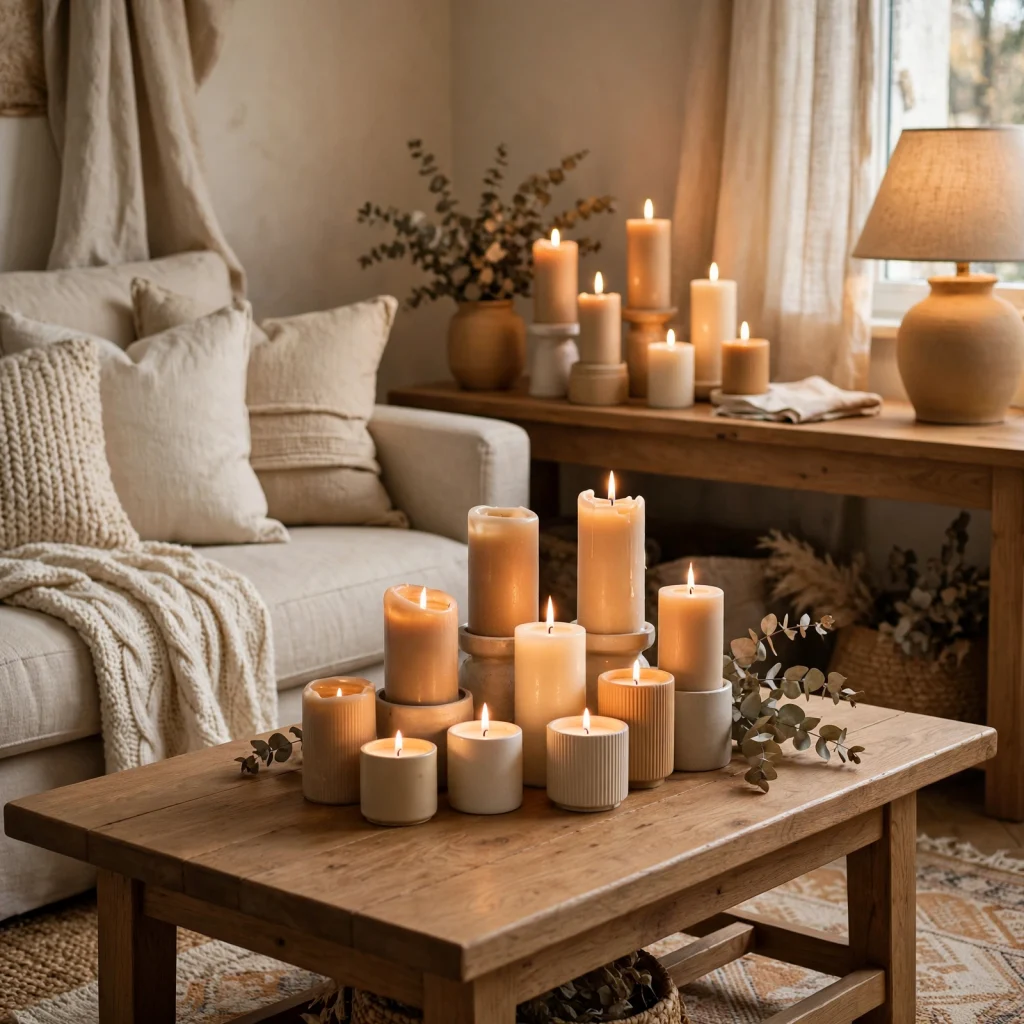
Clustering three or four candles of varying heights on a coffee table, mantel, or shelf adds both ambient light and scent to a room at a low cost. Unscented or lightly scented options, like sandalwood or fig, tend to feel warmer and less overpowering than heavily perfumed candles in a small space. Grouping them on a wood tray or ceramic dish also keeps wax drips contained and the display looking intentional.
8. Woven Wall Hanging
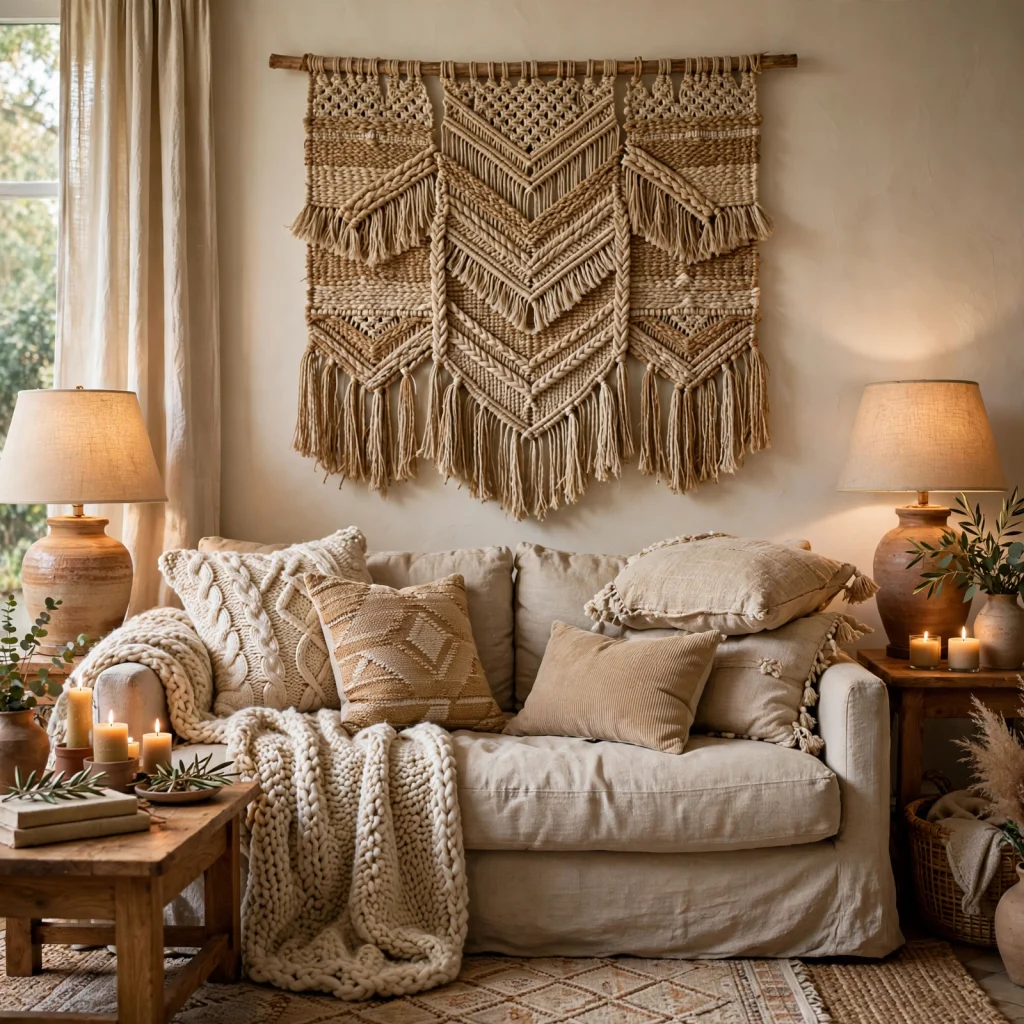
A woven macrame or fiber wall hanging brings texture to a blank wall in a way that flat artwork can’t replicate, catching shadow and light differently throughout the day. Natural fibers like cotton or jute in cream and rust tones tend to read as warmer than synthetic materials. This piece works especially well above a bed, sofa, or reading nook where a soft focal point matters more than a hard-edged frame.
9. Reading Nook Corner
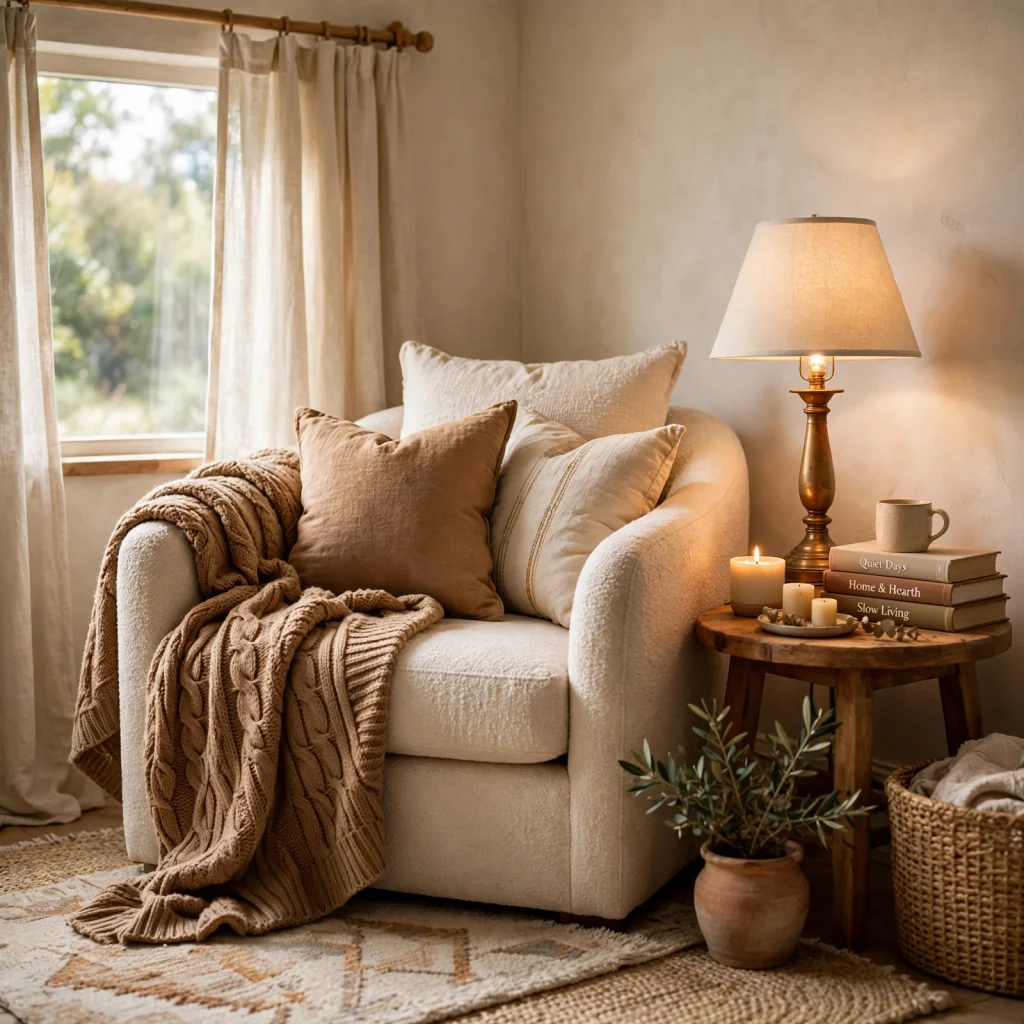
Dedicating a corner to an armchair, a small side table, and a floor lamp creates a defined cozy zone within a larger room, even without extra square footage. Adding a soft throw and a low stack of books nearby signals that the spot is meant for slowing down, not just passing through. This idea works particularly well near a window, where natural light adds to the warmth during the day.
10. Wood Tray Styling
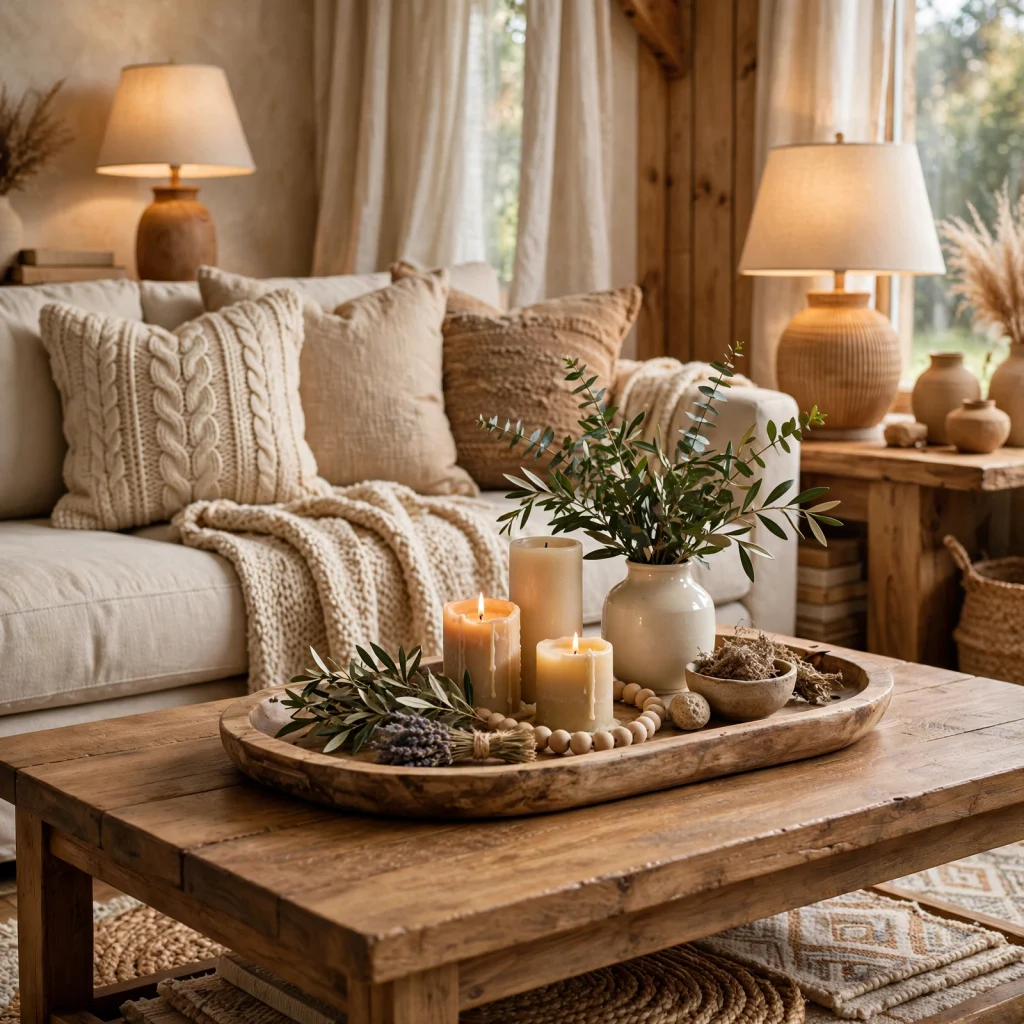
A simple wood tray placed on a coffee table or ottoman corrals smaller decor items like candles, coasters, or a small plant into one organized, intentional grouping. This keeps a surface from looking either cluttered or completely bare, both of which can undercut a cozy feel. Choosing a tray with a slightly raised edge and a natural, unfinished wood grain adds warmth without competing with the objects displayed on top.
11. Faux Fur Accent
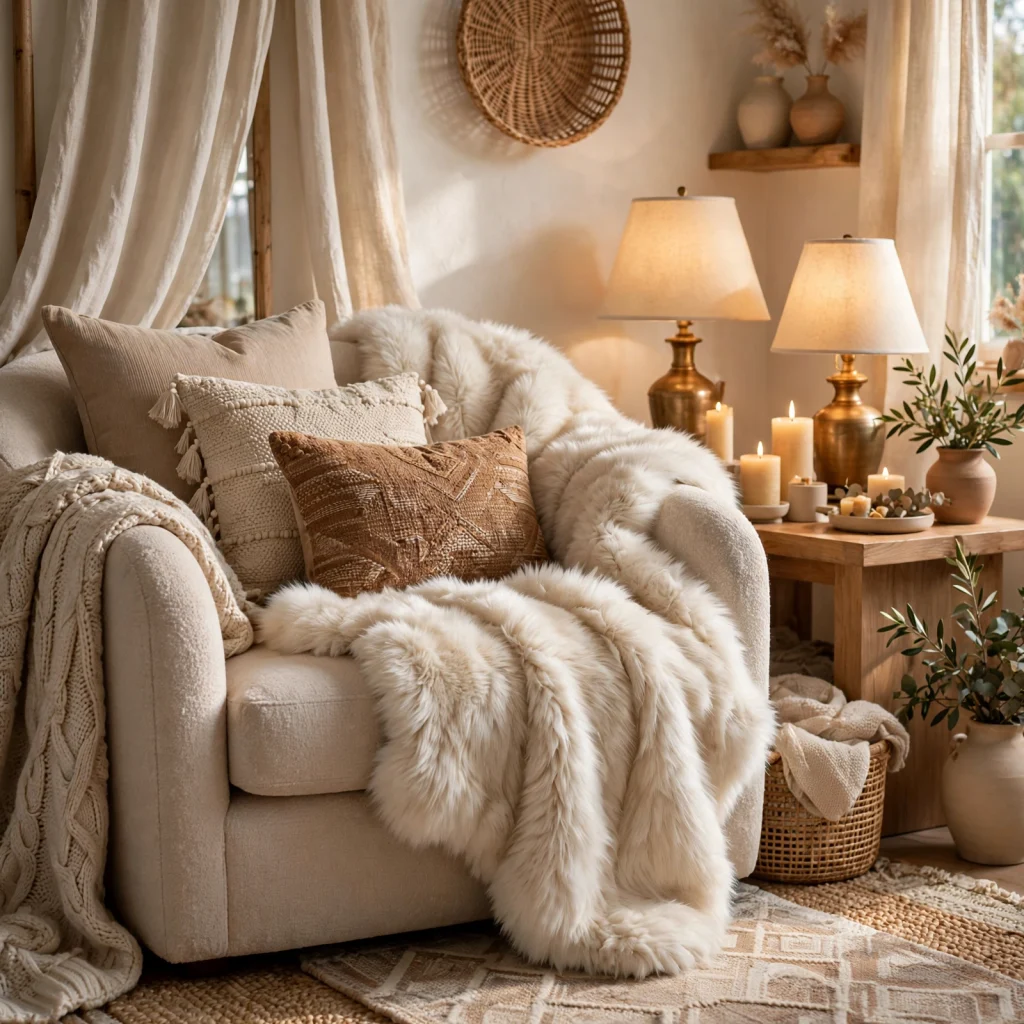
A faux fur throw or accent pillow adds tactile softness to a room, particularly effective draped over an armchair or the foot of a bed where it invites touch. Sticking to neutral tones like ivory or taupe keeps the piece from reading as overly trendy or costume-like. This works well layered with other textures, such as a wool blanket or linen pillow, rather than standing alone as the room’s only textured element.
12. Dimmable Lighting
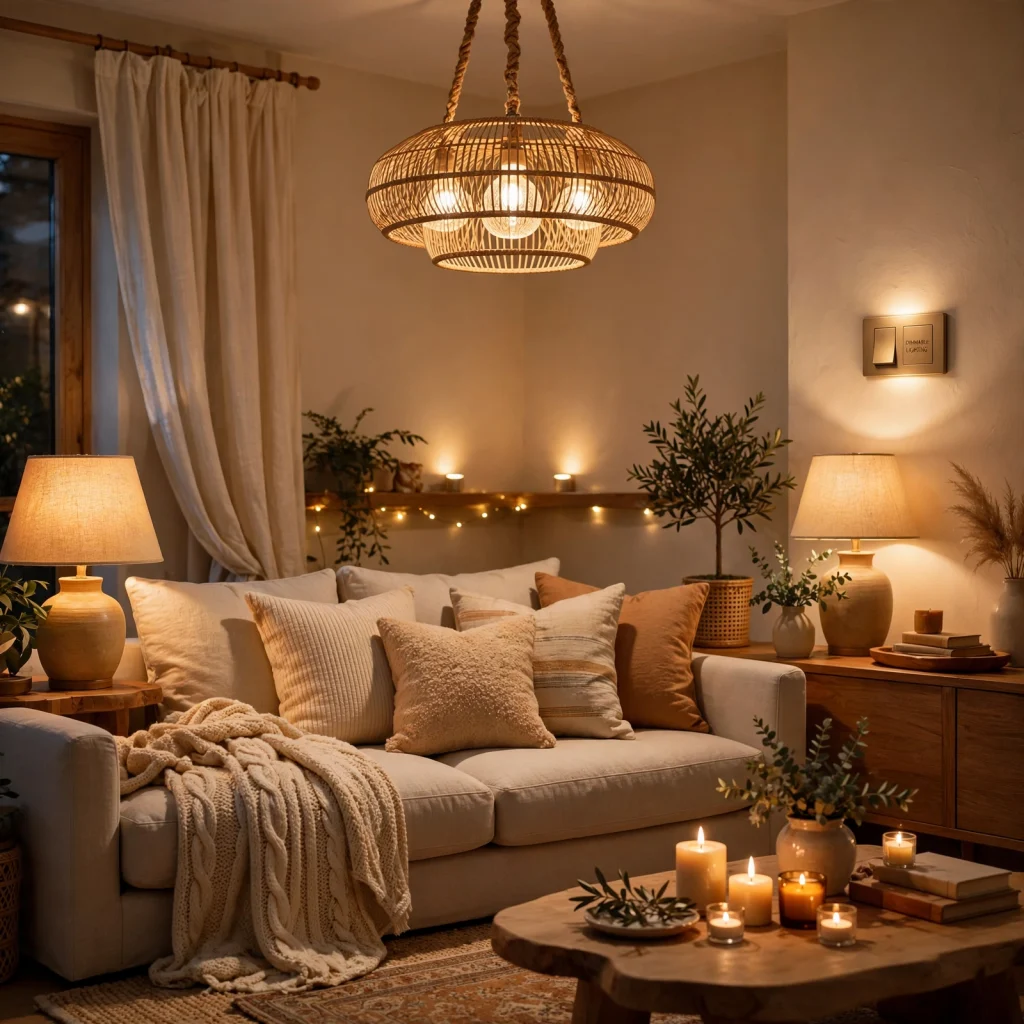
Installing dimmer switches or using lamps with adjustable brightness settings lets a room shift from bright and functional during the day to soft and relaxed in the evening. This flexibility matters more for a cozy feel than the specific fixtures chosen, since even simple lamps become warmer and more inviting at a lower brightness setting. Smart bulbs with app-based dimming offer this same control without any electrical rewiring required.
| Lighting Type | Warmth Level | Best Use |
| Overhead only | Low | Task lighting, cleaning |
| Table lamps | Medium-High | Evening relaxation |
| Dimmable lamps | High | Adjustable mood lighting |
13. Ceramic Vase Grouping
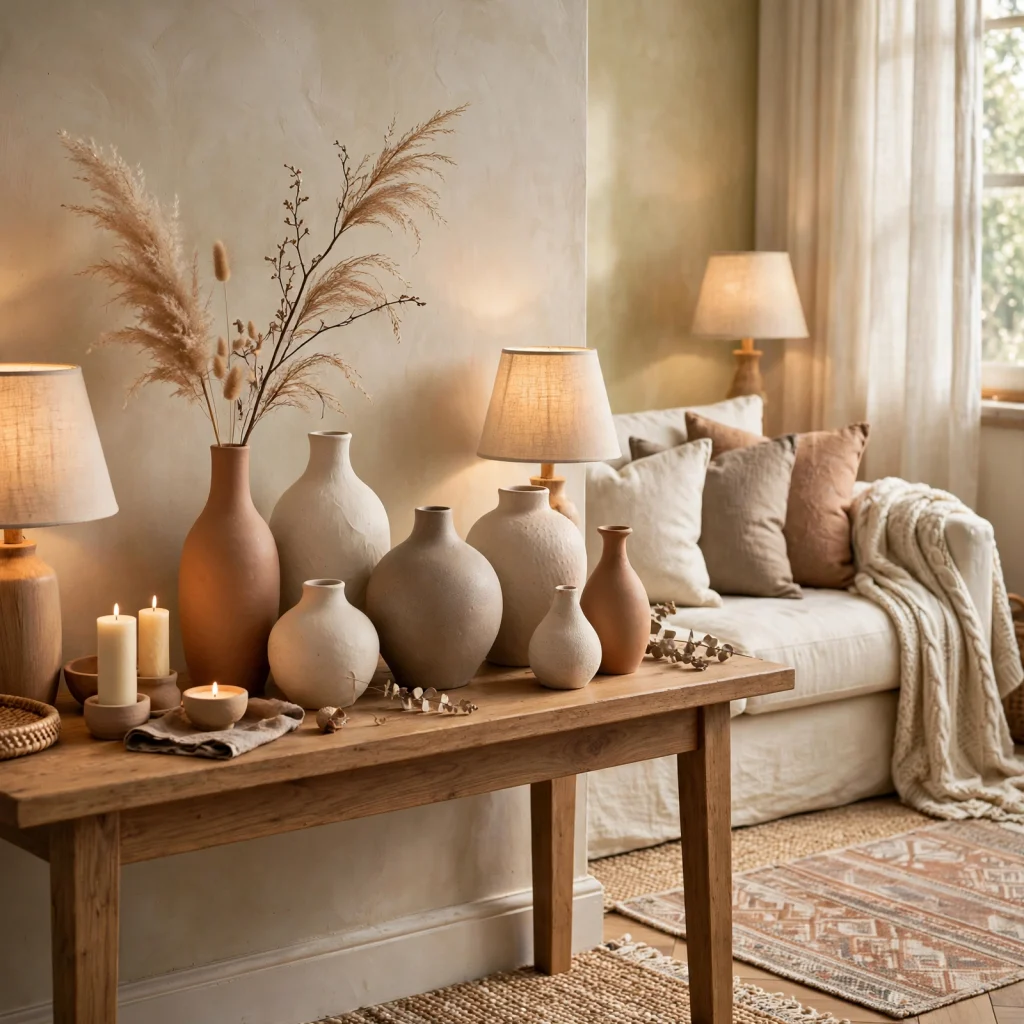
A cluster of ceramic vases in varying heights and earthy glazes adds organic shape to a shelf or table without requiring fresh flowers to look complete. Matte, textured finishes in terracotta or stoneware tones tend to feel warmer than glossy, uniform ceramics. Grouping odd numbers, typically three, and varying the heights slightly keeps the arrangement from looking too formal or evenly spaced.
14. Wool Pouf Seating
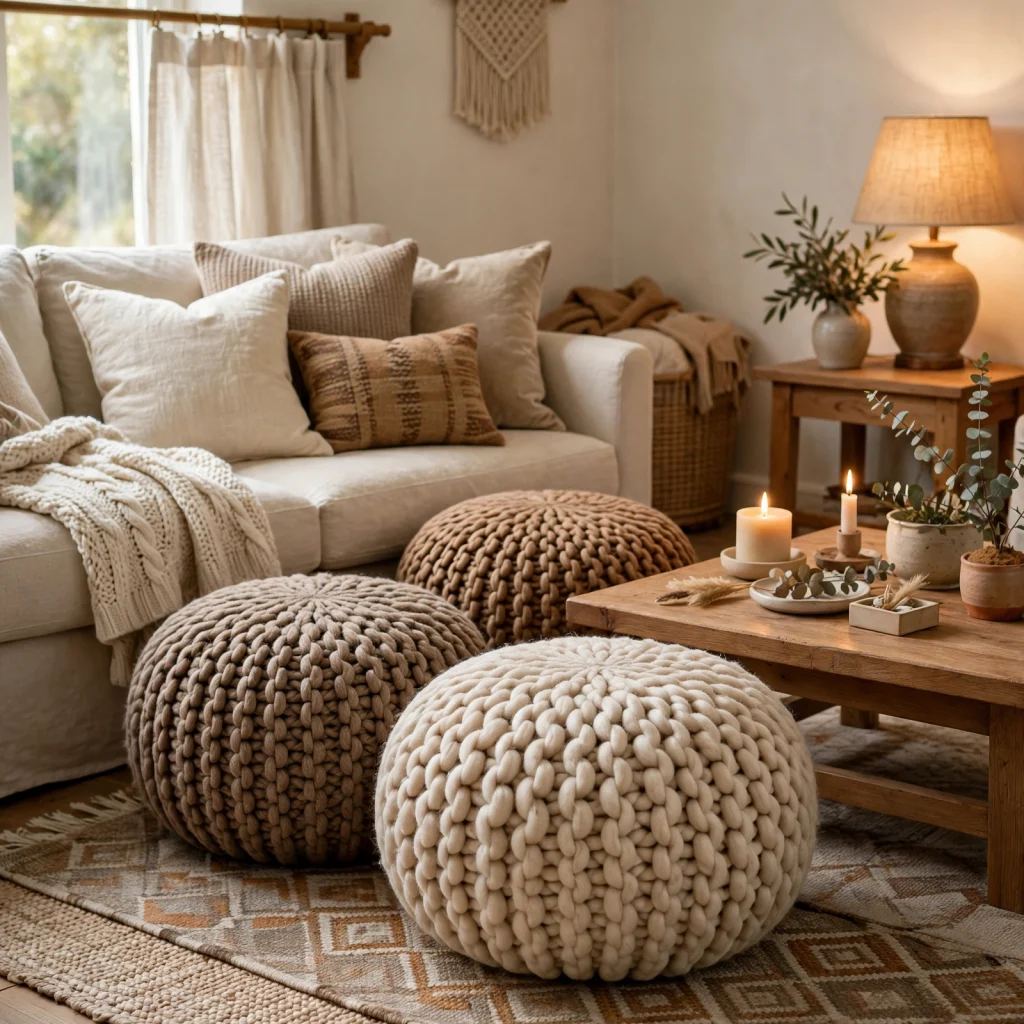
A wool pouf adds flexible low seating or a footrest that can move easily between a living room and a bedroom depending on the day’s needs. Its soft, rounded shape and often handwoven pattern bring texture to the floor level of a room, an area that’s frequently overlooked in decor planning. Neutral or subtly patterned wool poufs work in almost any color scheme without competing with existing furniture.
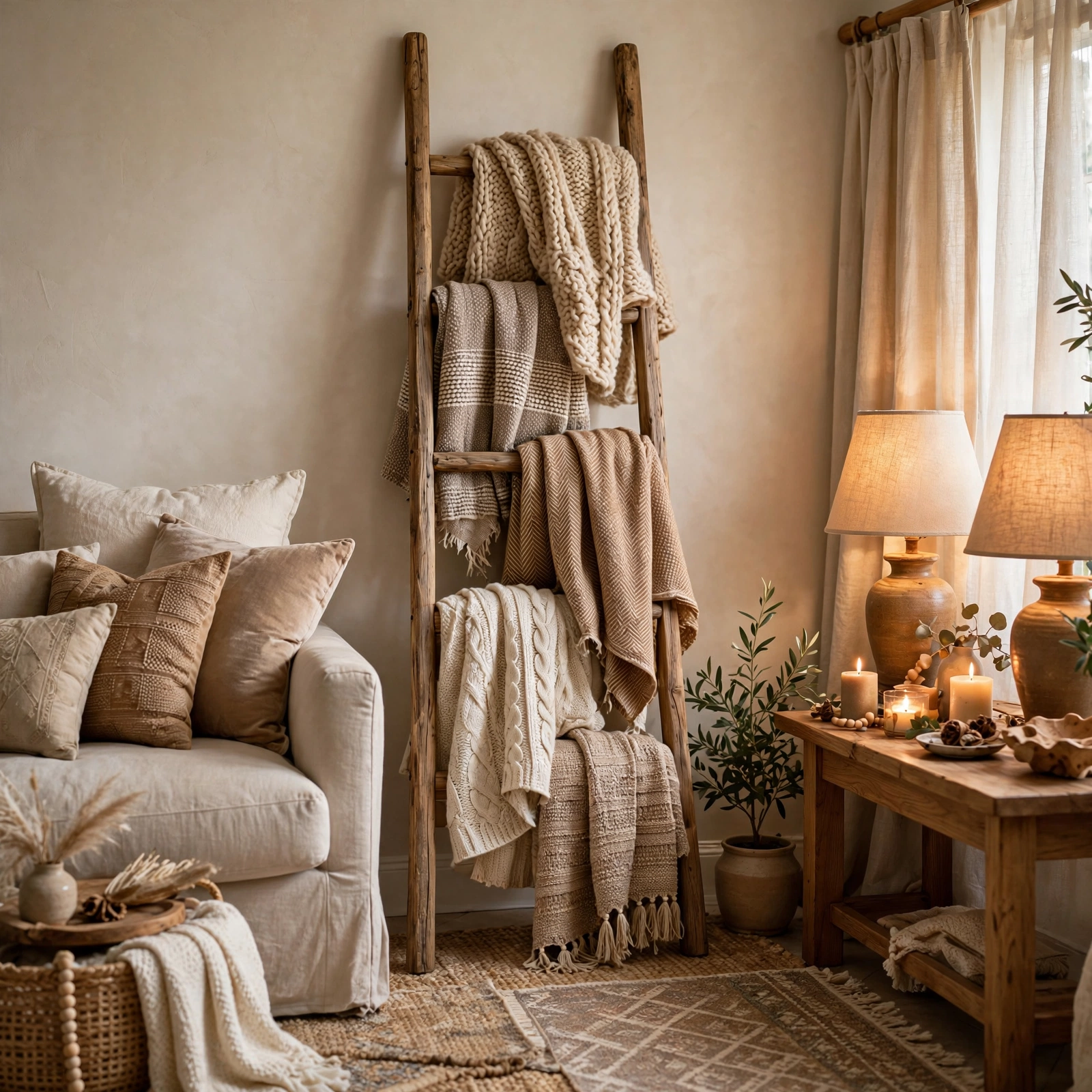
15. Cozy Home Decor Blanket Ladder
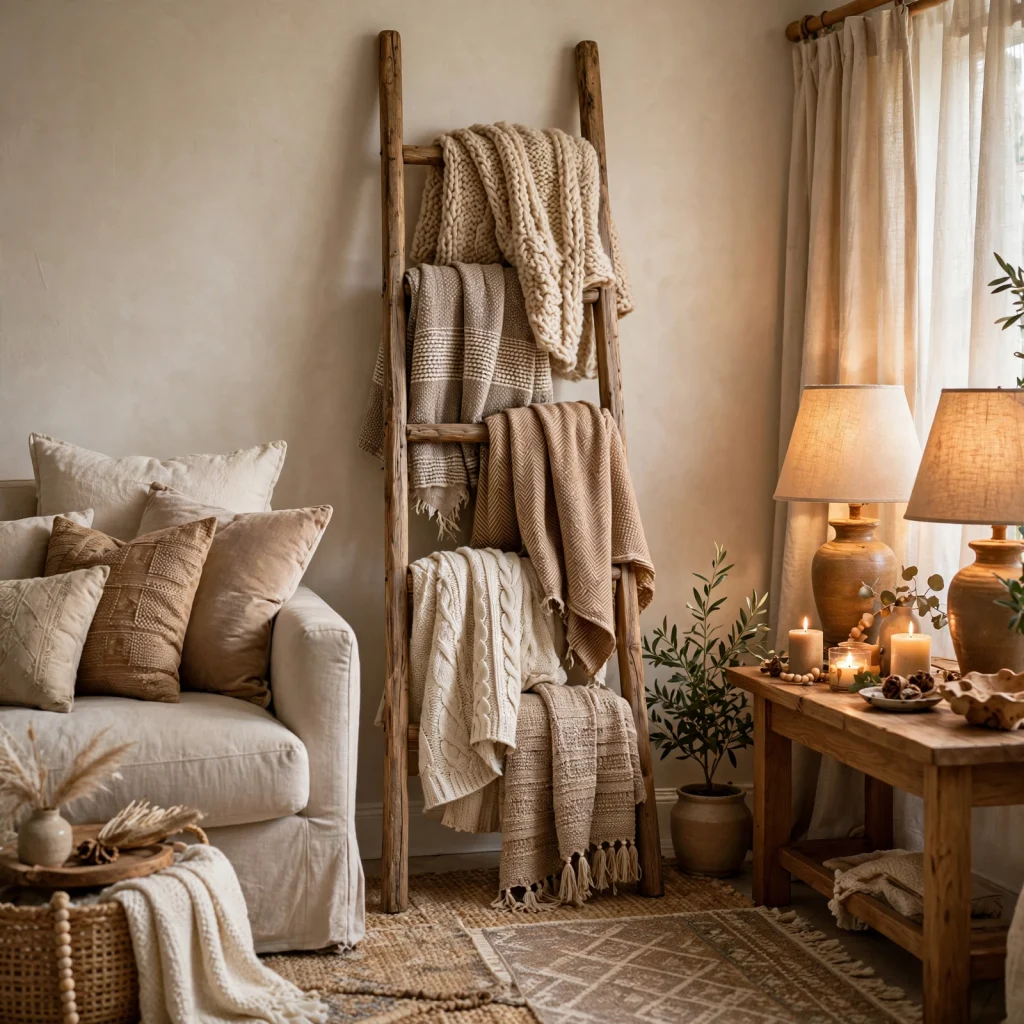
A blanket ladder leaned against a wall near a sofa or bed keeps throws accessible and visible rather than folded away in a closet, which reinforces the relaxed, ready-to-use feeling central to cozy home decor. Wood ladders in a natural or slightly distressed finish tend to fit more styles than painted versions. Draping two or three blankets in different textures across the rungs also adds instant color and texture to a bare wall.
16. Fireplace Mantel Styling
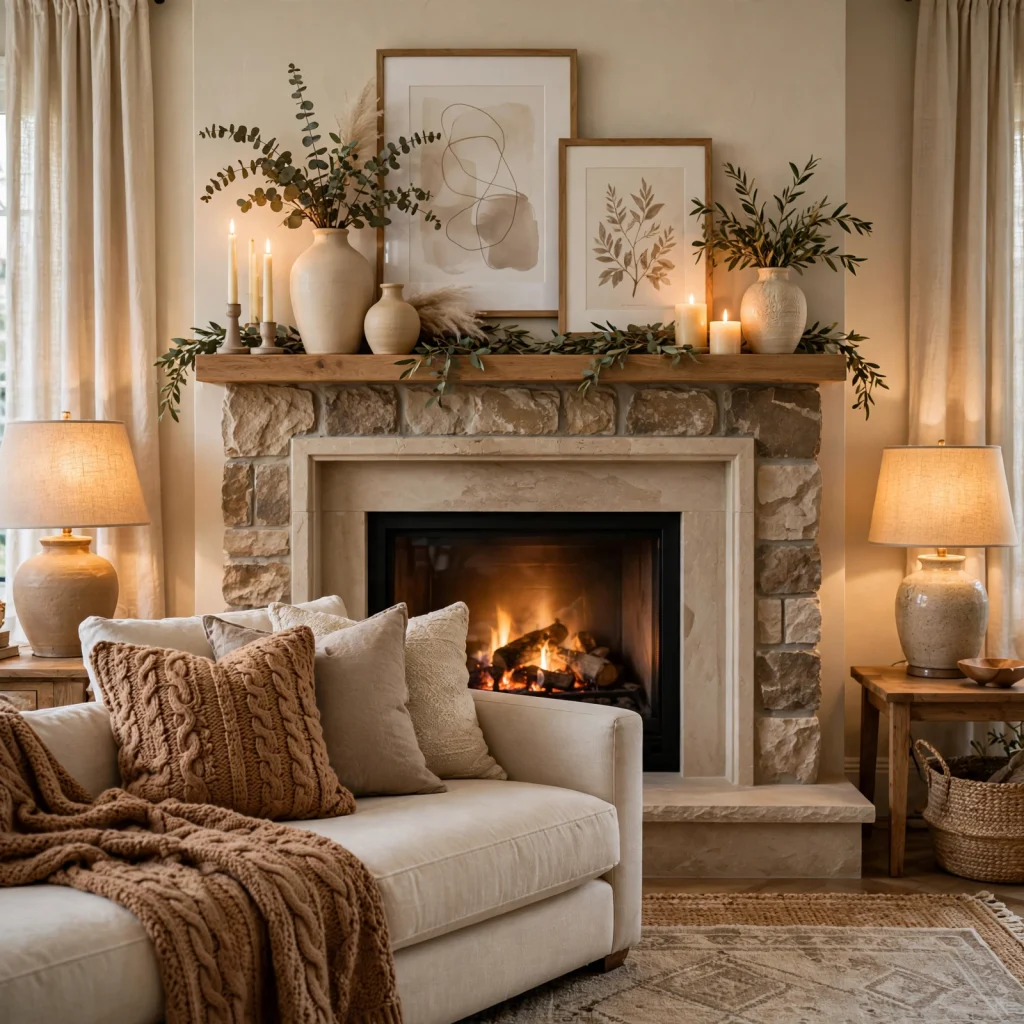
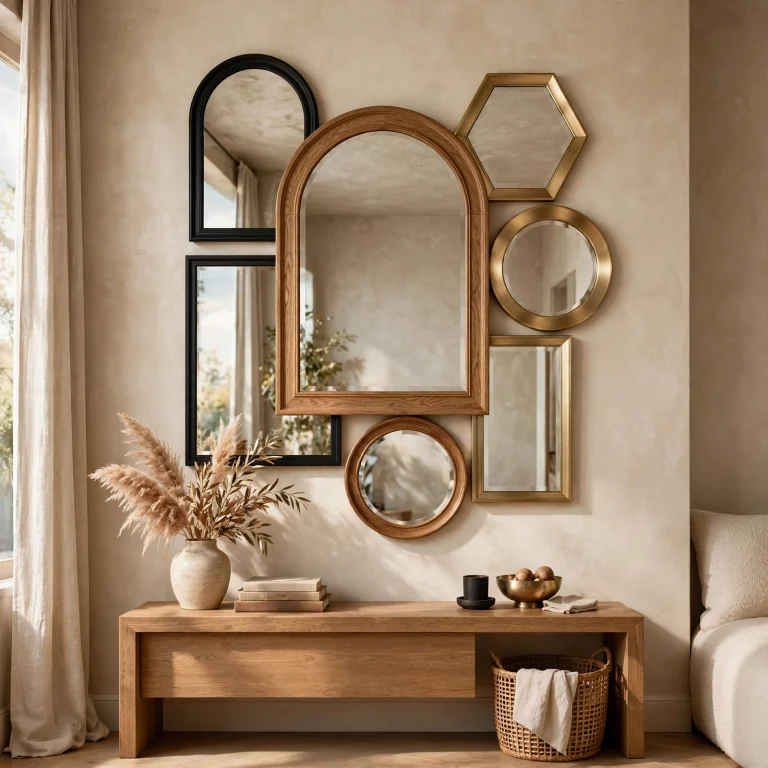
Styling a fireplace mantel with a mix of candles, a small mirror or artwork, and a few natural elements like dried branches turns a functional feature into the room’s warmest focal point. Keeping the arrangement slightly asymmetrical, rather than perfectly centered, gives it a more relaxed, collected-over-time look. Even in homes without a working fireplace, this styling approach works on a console table or shelf standing in as a mantel.
Shop the Look
For a chunky knit throw, look for 100% wool or wool-blend options in an oversized cable or waffle knit. Warm-toned table lamps with linen drum shades are widely available at mid-range price points and instantly soften overhead lighting. A jute or wool layered rug set adds texture underfoot, and unscented soy candles in a mixed-height grouping round out a simple, budget-friendly styling refresh.
Common Mistake to Avoid
The most common mistake is relying entirely on one bright overhead light source, which flattens a room and makes even well-chosen decor feel sterile and uninviting. Layering in table lamps, floor lamps, and candles at different heights does more to create a cozy atmosphere than any single decor purchase. Skipping this step means even a room full of soft textiles and warm colors can still feel harsh once the sun goes down.
FAQs
What makes a home feel cozy?
A cozy home typically combines warm, layered lighting with soft textures like wool, linen, and knit fabrics, along with a muted or earthy color palette. Natural materials such as wood and rattan add further warmth compared to glossy or metallic finishes. Small personal touches, like books, candles, and family photos, also contribute by making a space feel lived-in rather than staged for show.
How can I make my living room cozy on a budget?
Start with lighting, since swapping one overhead bulb for a warm-toned lamp costs very little and changes a room’s mood immediately. Adding a single throw blanket, a few pillows in mixed textures, and a scented or unscented candle grouping covers most of the visual and sensory changes needed. Rearranging existing furniture to create a defined seating area also helps without any new purchases at all.
What colors make a room feel cozy?
Warm neutrals like cream, oatmeal, terracotta, and soft brown tend to read as cozier than cool grays, stark whites, or bright primary colors. Deeper tones like rust, olive, or chocolate brown used in smaller doses, such as on pillows or a throw, add warmth without overwhelming a room. Avoiding overly cool undertones in paint and fabric choices makes the biggest difference in overall mood.
Is cozy home decor the same as hygge?
They overlap significantly, since both emphasize warmth, natural materials, and soft lighting over sleek or minimalist styling. Hygge, a Danish concept, places additional emphasis on comfort-driven rituals like candlelight, warm drinks, and slower daily routines, not just the physical decor itself. Cozy home decor can be seen as the visual and material side of that broader lifestyle approach.
What textures work best for a cozy home?
Wool, linen, boucle, and chunky knit fabrics tend to read as the warmest and most tactile textures for cozy styling. Natural wood, rattan, and jute add complementary texture without competing with softer textiles. Mixing at least two or three different textures within one space, rather than relying on a single fabric type, creates the layered look most associated with a genuinely cozy room.
Conclusion
Cozy home decor comes down to layering warmth through lighting, texture, and natural materials rather than chasing any single trend or statement piece. From a chunky knit throw to dimmable lamps and a styled fireplace mantel, small, intentional changes add up to a space that feels genuinely comfortable to live in. Save this guide to Pinterest for later, or check out our related post on living room furniture ideas for more styling inspiration.
Author Expertise Note
This guide comes from years of styling real homes for clients who wanted comfort first, where lighting and texture consistently made a bigger difference than any single furniture purchase.