17 Trending Home Wall Decor Ideas to Transform Every Empty Wall with Style
An empty wall can make even a well-furnished room feel unfinished, but home wall decor covers far more ground than a single framed print centered above the sofa. From gallery walls to woven hangings to sculptural shelving, the right wall treatment adds color, texture, and personality to a room without touching the floor plan at all. This guide walks through seventeen home wall decor ideas suited to living rooms, bedrooms, hallways, and entryways, covering everything from budget-friendly swaps to more permanent installations, so you can find an approach that matches your walls, your lease terms, and your existing furniture.
Trend & Background
Wall decor has expanded well beyond framed art and family photos over the past several years, as more homeowners and renters look for ways to personalize a space without major structural changes. This shift has been driven partly by rising interest in maximalist and eclectic interior styles, which favor layered, gallery-style walls over a single centered piece, and partly by renter-friendly product innovation from brands like Command and IKEA that make heavier wall treatments possible without permanent damage. Social platforms have also accelerated the trend, with picture ledges, plate walls, and woven hangings circulating widely as accessible ways to transform a blank wall. This matters now because home wall decor has become one of the most flexible, low-commitment categories in interior design.
Key Takeaways
- Gallery walls and picture ledges offer flexible, renter-friendly ways to layer art without committing to a single fixed arrangement.
- Textural elements like woven hangings, plates, and mirrors add dimension to home wall decor beyond flat framed prints.
- Statement pieces, such as an oversized clock or a sculptural wall shelf, work best as a single focal point rather than competing with other decor.
- Adhesive hanging strips and tension-based mounting solutions let renters achieve most of these looks without drilling into walls.
1. Gallery Wall with Mixed Frame Sizes
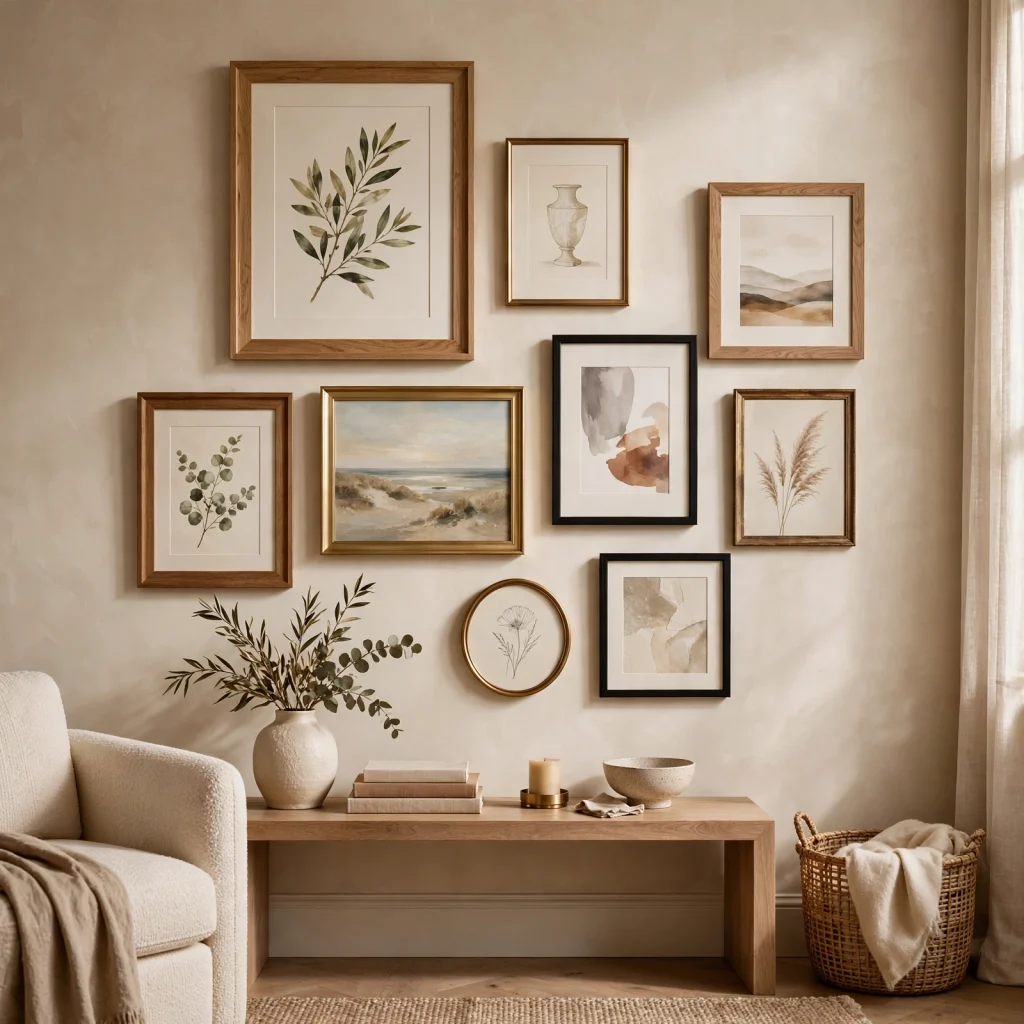
A gallery wall built from mixed frame sizes and finishes creates visual interest that a single large print can’t match, layering photography, illustration, and typography into one cohesive arrangement. Plan the full layout on the floor first, working from a large anchor piece outward, before transferring the arrangement to the wall using consistent spacing of two to three inches between frames. Mixing black, wood, and brass frames within the same wall keeps the look from feeling too matched, while a shared color palette across the artwork ties the arrangement together.
2. Floating Picture Ledges
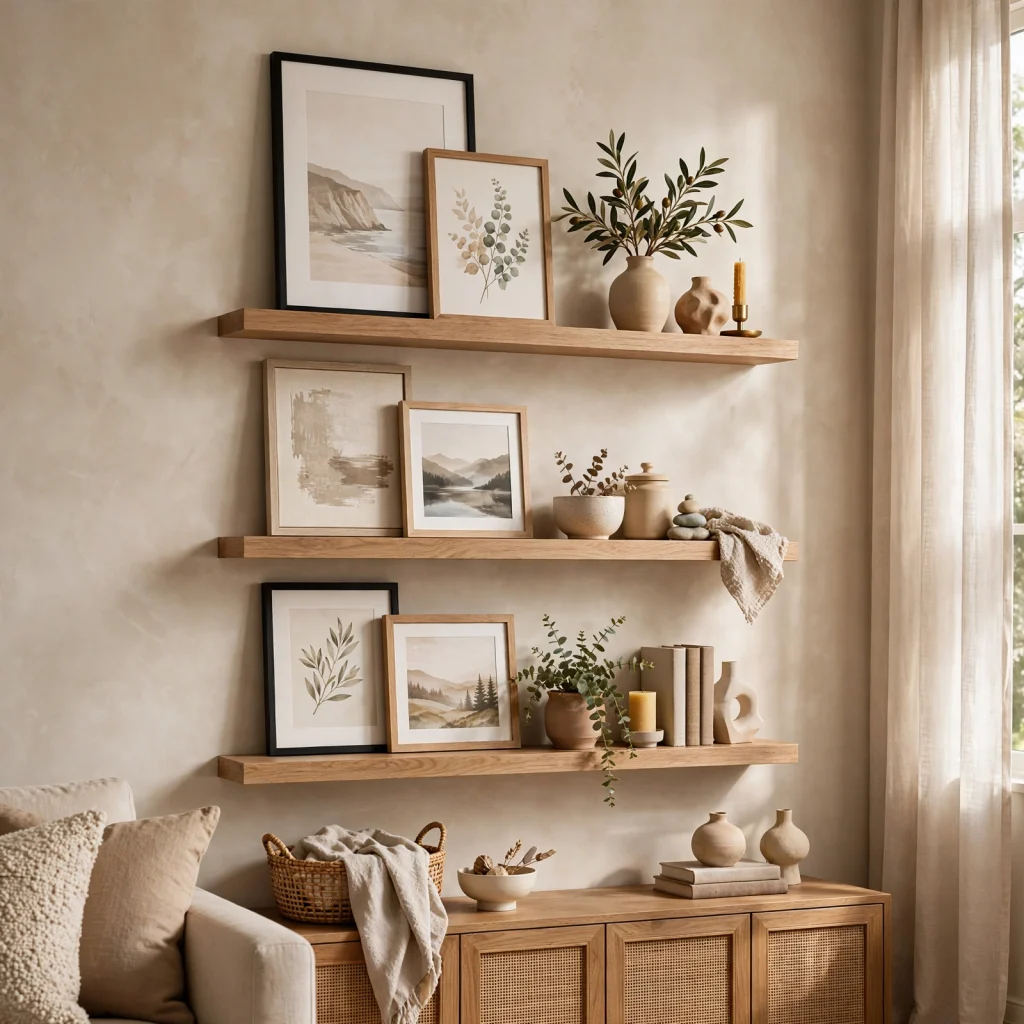
Floating picture ledges hold leaning frames rather than requiring each piece to be individually mounted, which makes rearranging and updating the display far easier than a traditional wall-hung gallery. This approach works particularly well for anyone who likes to rotate art seasonally or swap in new pieces frequently, since nothing beyond the ledge itself is permanently fixed. Stagger two or three ledges at varying heights, and layer frames two deep on each shelf for a curated, slightly overlapping look.
3. Oversized Statement Mirror
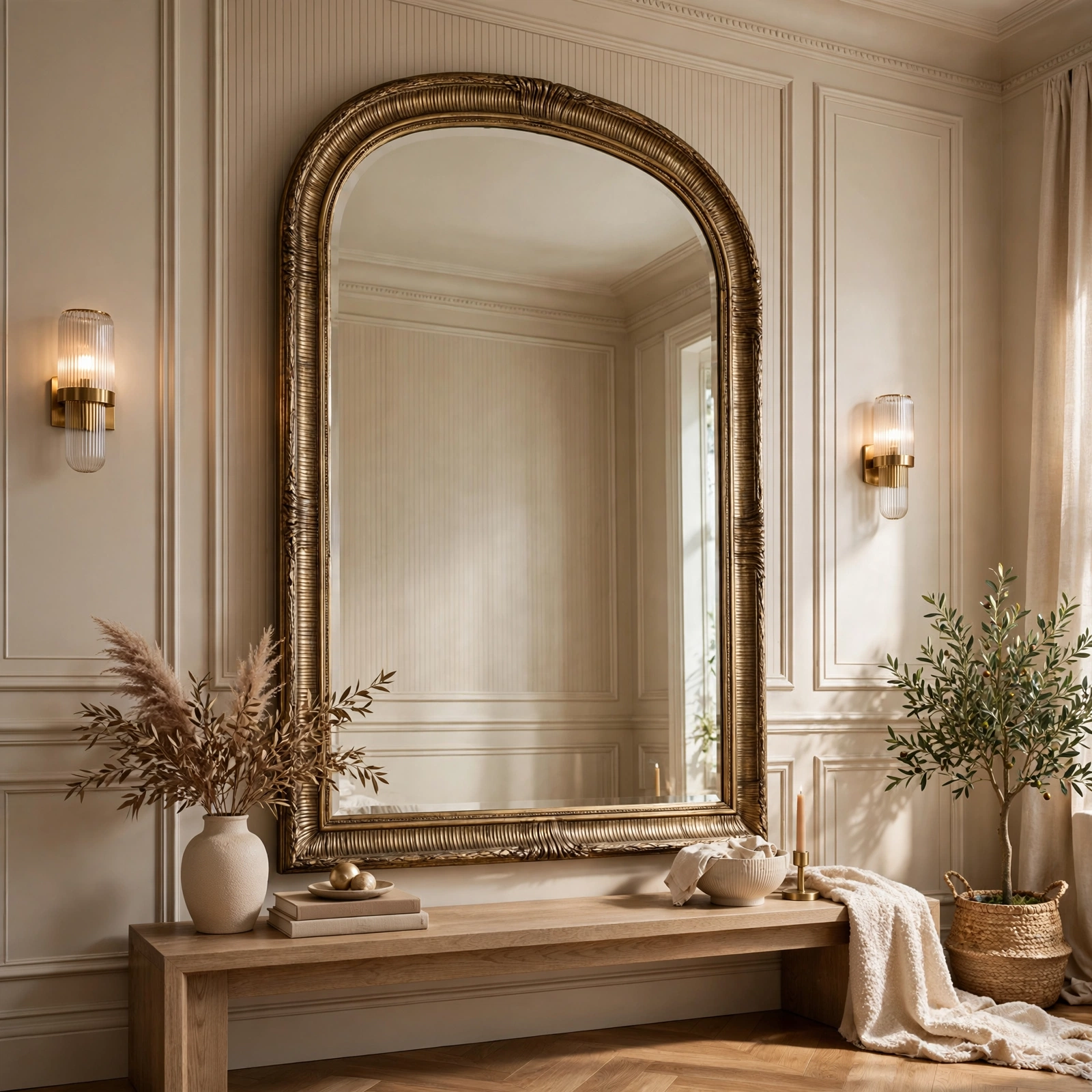
An oversized mirror functions as both a decorative focal point and a practical light-bouncing tool, making a room feel larger while giving a blank wall genuine presence. Arched, sunburst, and irregular organic shapes tend to read as more intentional than a standard rectangular mirror, especially when hung as the sole piece on a wall rather than grouped with other art. Position the mirror opposite a window when possible, since this placement reflects the most natural light back into the room throughout the day.
| Mirror Shape | Best Wall Placement | Visual Effect |
| Arched | Above console or mantel | Softens sharp corners |
| Round | Small accent walls | Balances rectangular furniture |
| Sunburst | Statement focal wall | Adds movement and texture |
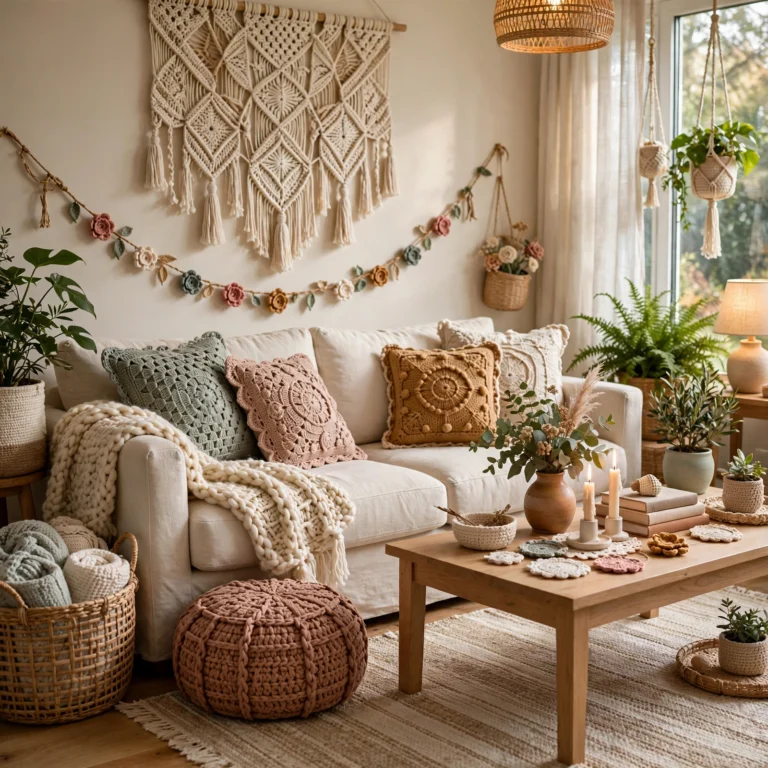
4. Woven Textile Wall Hanging
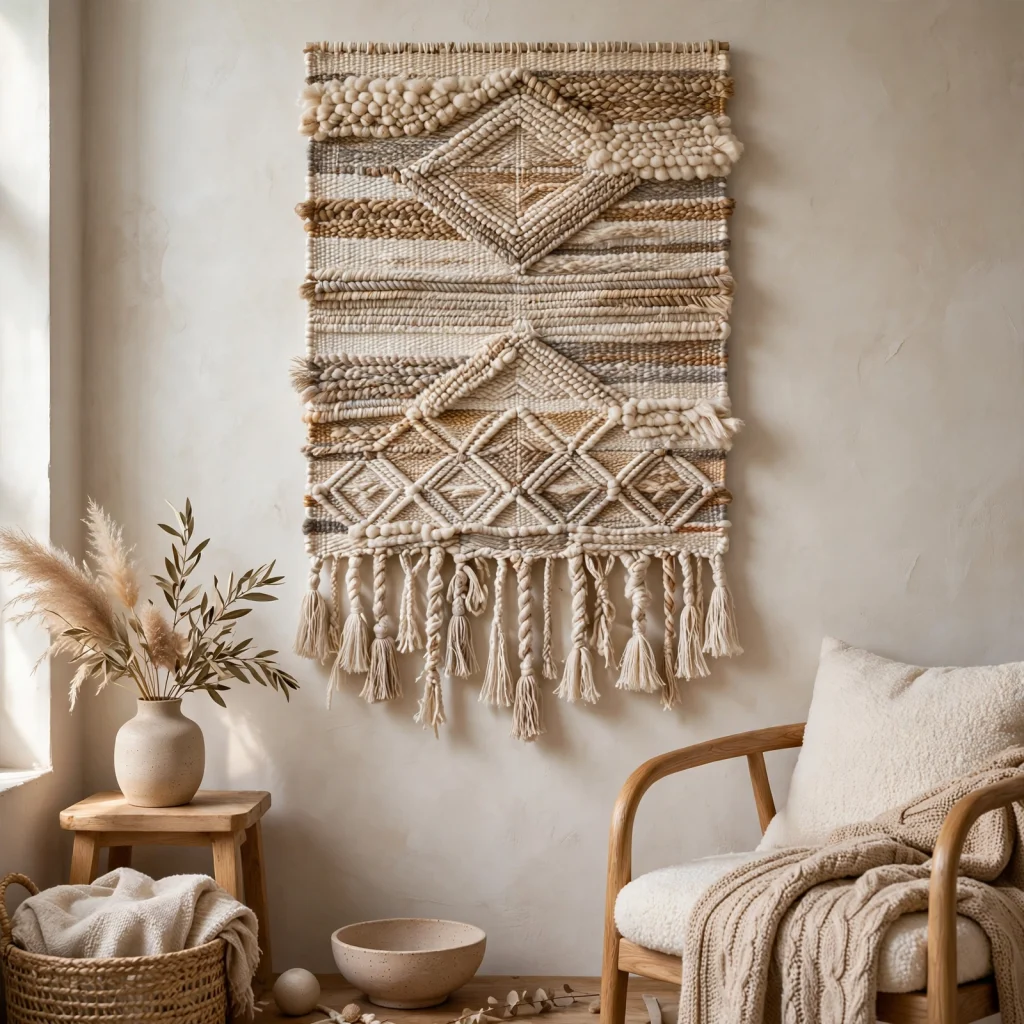
A woven wall hanging in natural fiber, such as cotton or jute, introduces texture and warmth to a wall in a way flat artwork can’t replicate, particularly above a headboard, sofa, or console table. Handmade or handloom pieces tend to carry more visual interest than mass-produced versions, since irregularities in the weave read as intentional rather than flawed. Choose a piece in cream, sand, or a single muted accent color so it stays flexible enough to pair with a range of existing decor styles over time.
For more options for gothic home decor CLICK HERE
5. Decorative Plate Wall
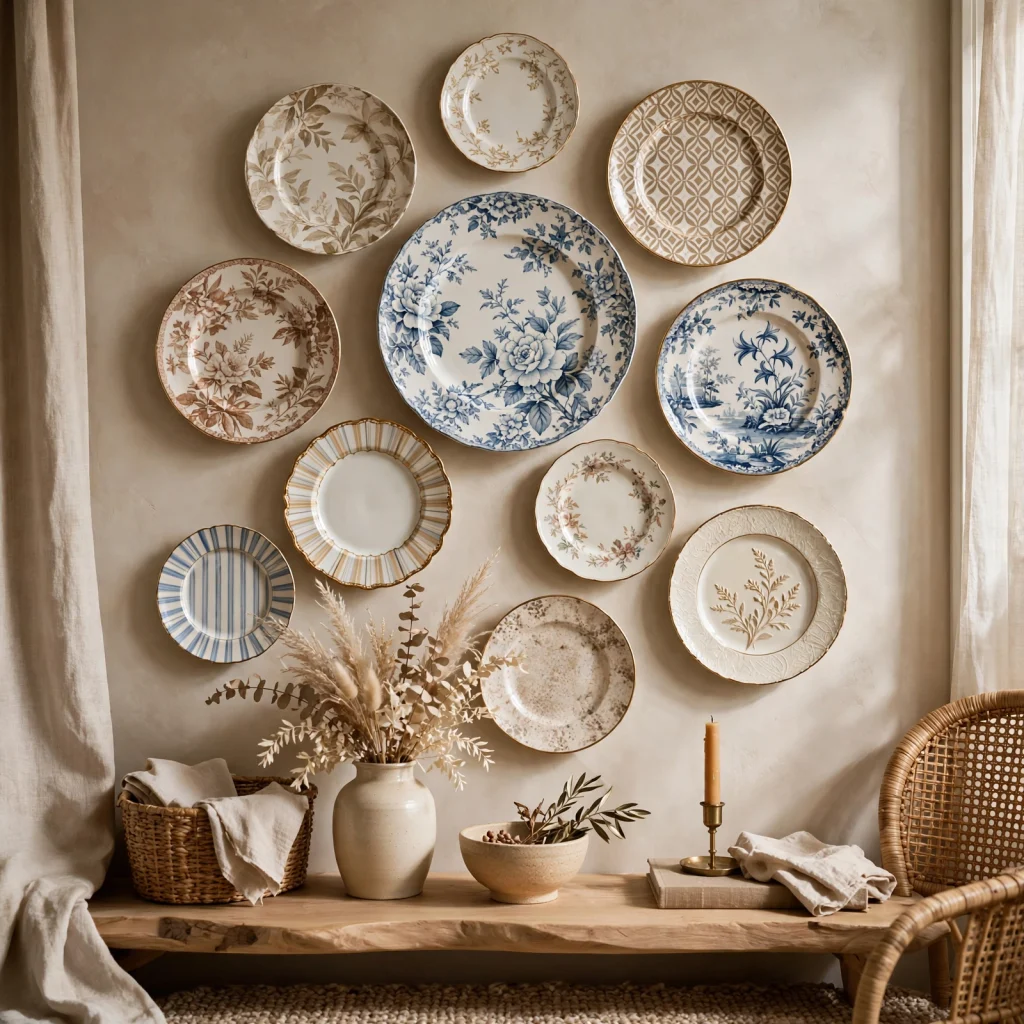
A decorative plate wall arranges vintage or patterned ceramic plates in a cluster, offering a more unexpected texture and shape than typical framed art while still working within a similar gallery-style layout. This treatment suits a dining room or kitchen wall particularly well, tying into the room’s existing tableware, but it also works in a living room or entryway for a more eclectic look. Use adjustable plate hangers rated for each plate’s weight, and plan the arrangement on the floor first, just as with a traditional gallery wall.
6. Wall-Mounted Sculptural Shelf
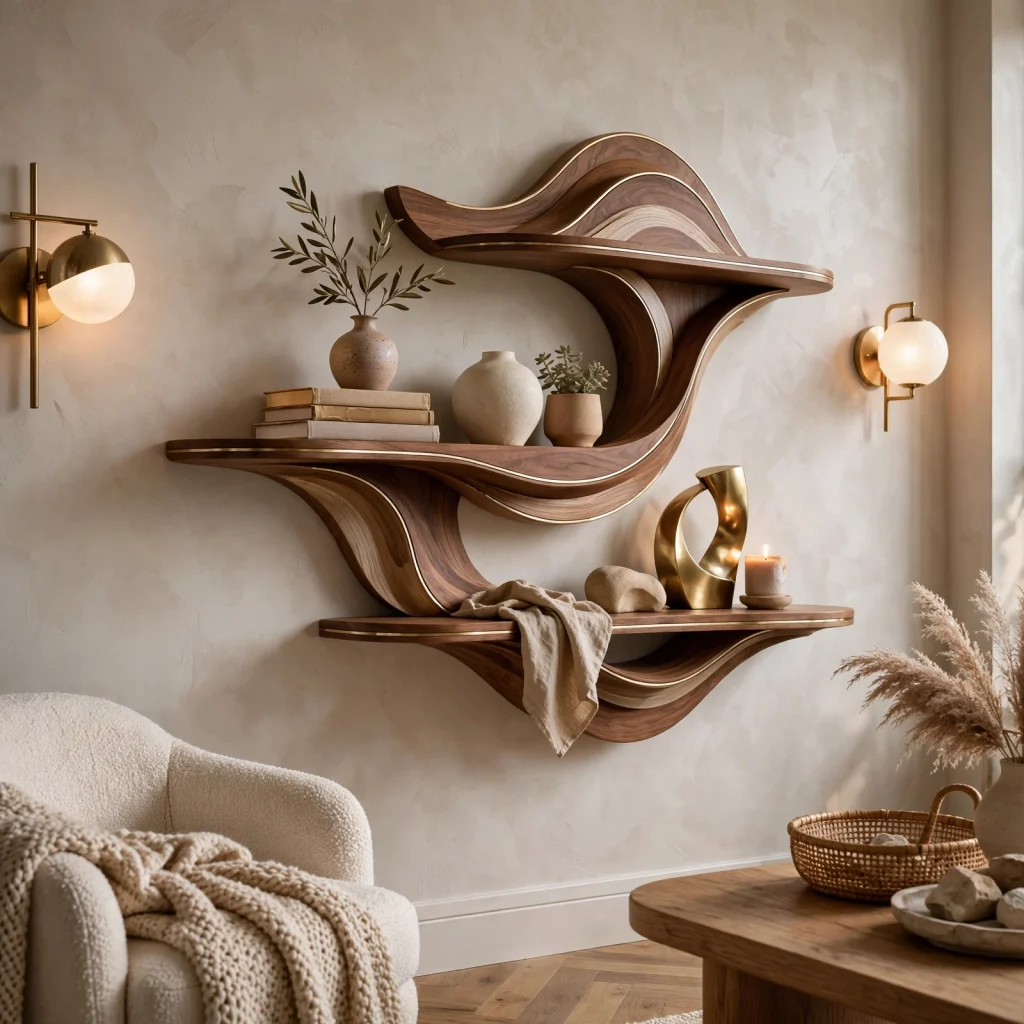
A single wall-mounted shelf with an unusual, sculptural silhouette, rather than a standard straight bracket shelf, functions as both storage and standalone wall art. Choose a shelf in a material like solid wood, powder-coated metal, or a curved ceramic form, and style it sparingly with one or two objects rather than a full row of items, letting the shelf’s shape carry the visual weight. This works particularly well as a single accent piece rather than part of a larger cluster, since its form is meant to stand out on its own.
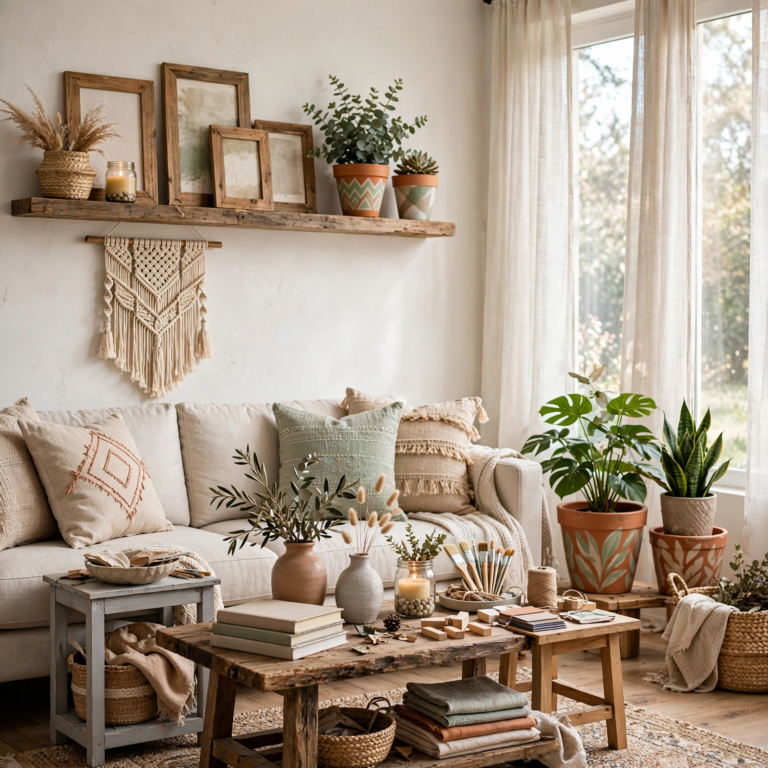
7. Botanical Pressed Flower Frames
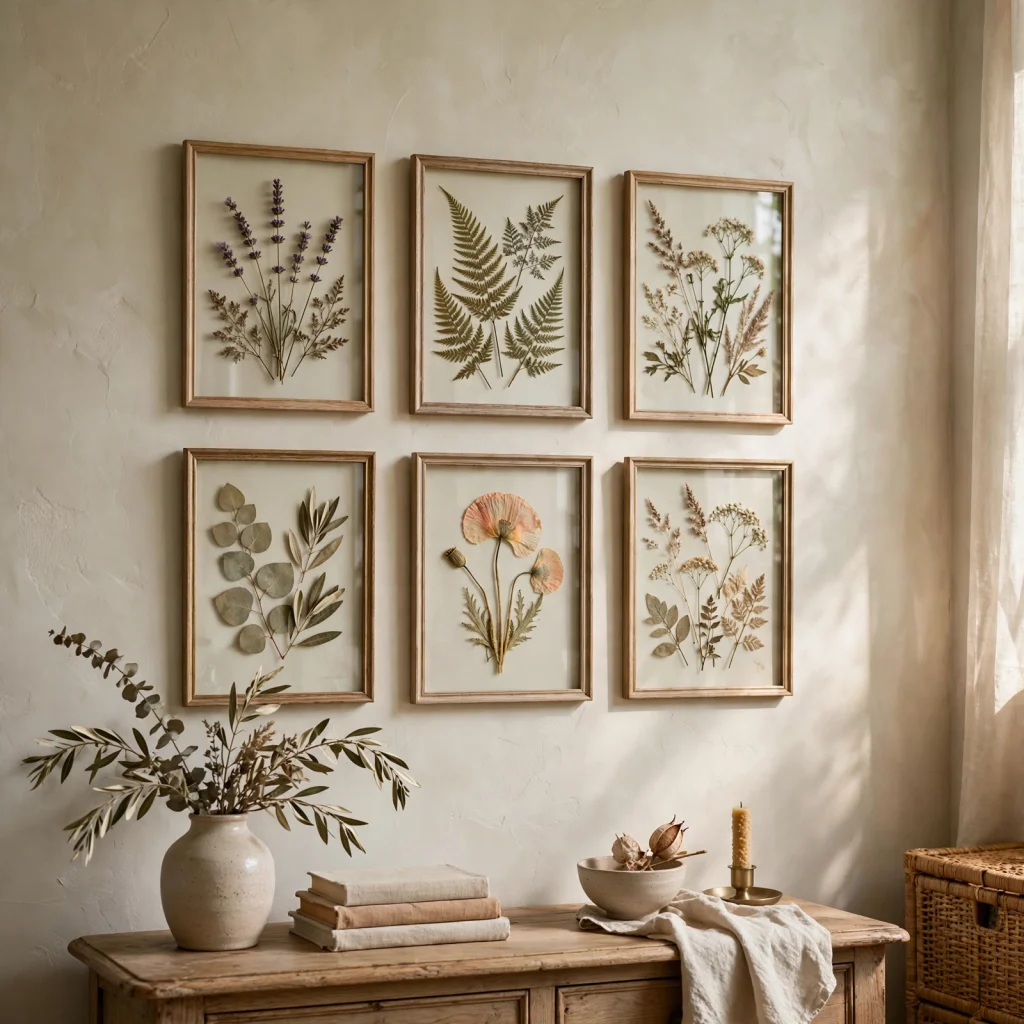
Framed pressed flowers or botanical specimens bring a soft, natural color palette to a wall without the maintenance of live plants or the cost of original artwork. This works well as a small grouping of three or four matching frames, arranged in a straight horizontal line above a console table or bed. Choose frames with a cream or linen mat rather than a stark white one, which keeps the overall look warmer and more cohesive with a room’s existing neutral tones.
8. Large-Scale Abstract Canvas
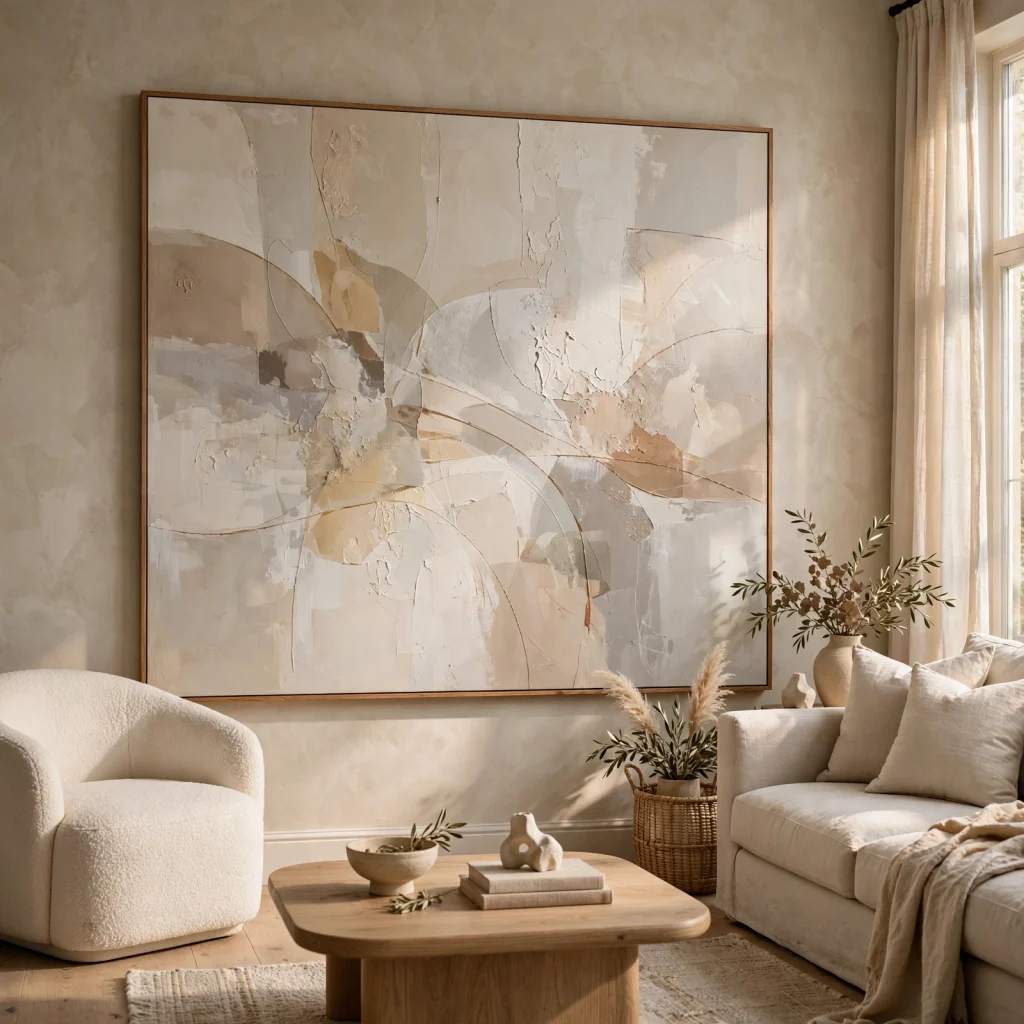
A single large-scale abstract canvas, sized to take up a significant portion of a wall, works as an alternative to a gallery arrangement for anyone who prefers one bold statement over multiple smaller pieces. This approach suits a living room’s main sofa wall particularly well, where the canvas becomes the room’s primary focal point and the rest of the decor stays intentionally simpler. Choose a canvas with colors that echo at least one other element in the room, such as a pillow or rug, to keep the piece from feeling disconnected from the rest of the space.
9. Wall-Mounted Bookshelf
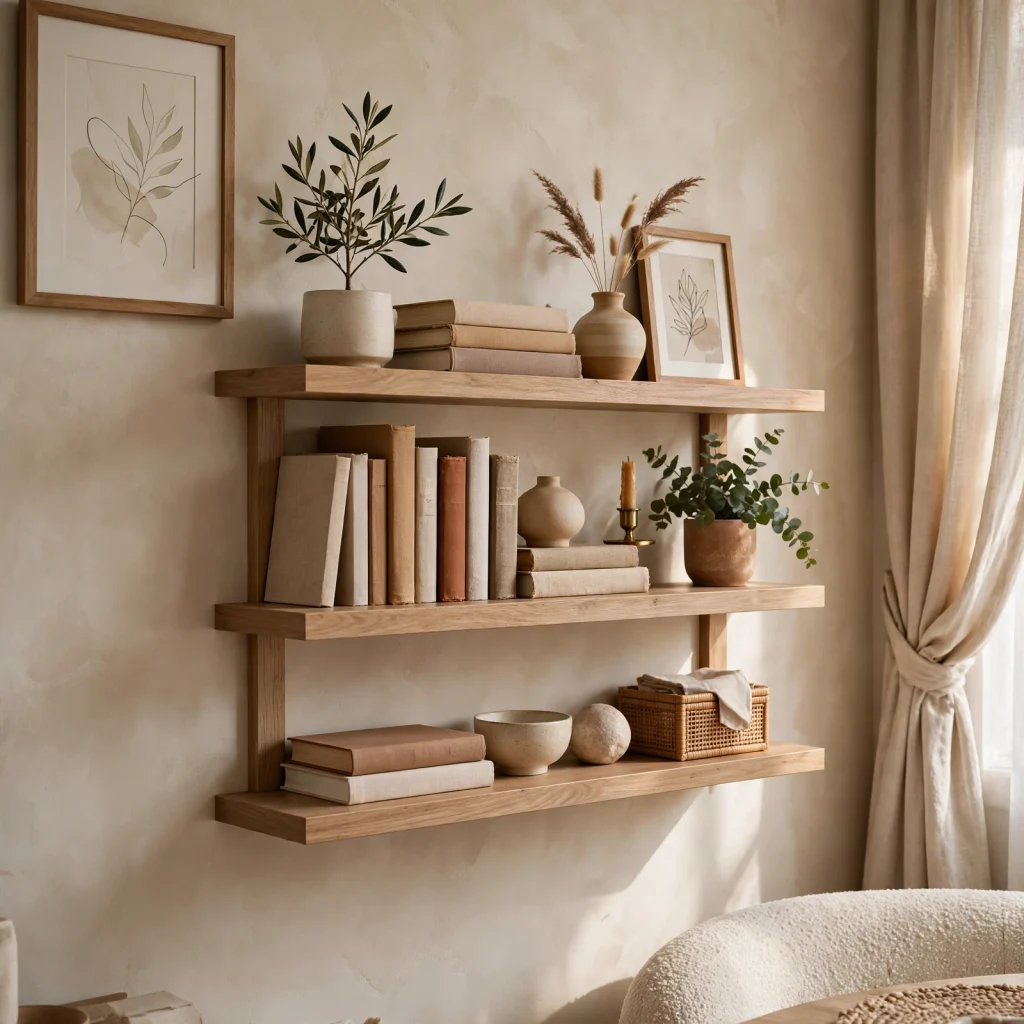
A wall-mounted bookshelf turns a display of favorite books into both storage and decor, freeing up floor space that a traditional bookcase would otherwise require. Arranging books both vertically and stacked horizontally, interspersed with small objects like framed photos or a candle, keeps the shelf from reading as too uniform or library-like. This works particularly well in a small living room or reading nook, where floor space for a full bookcase isn’t available.
| Shelf Style | Wall Space Needed | Best Use |
| Single floating shelf | 24–36 in | Small accent display |
| Ladder shelf | 48–60 in | Vertical storage plus decor |
| Wall-mounted bookshelf unit | 36–72 in | Book and object display |
10. Typography and Word Art
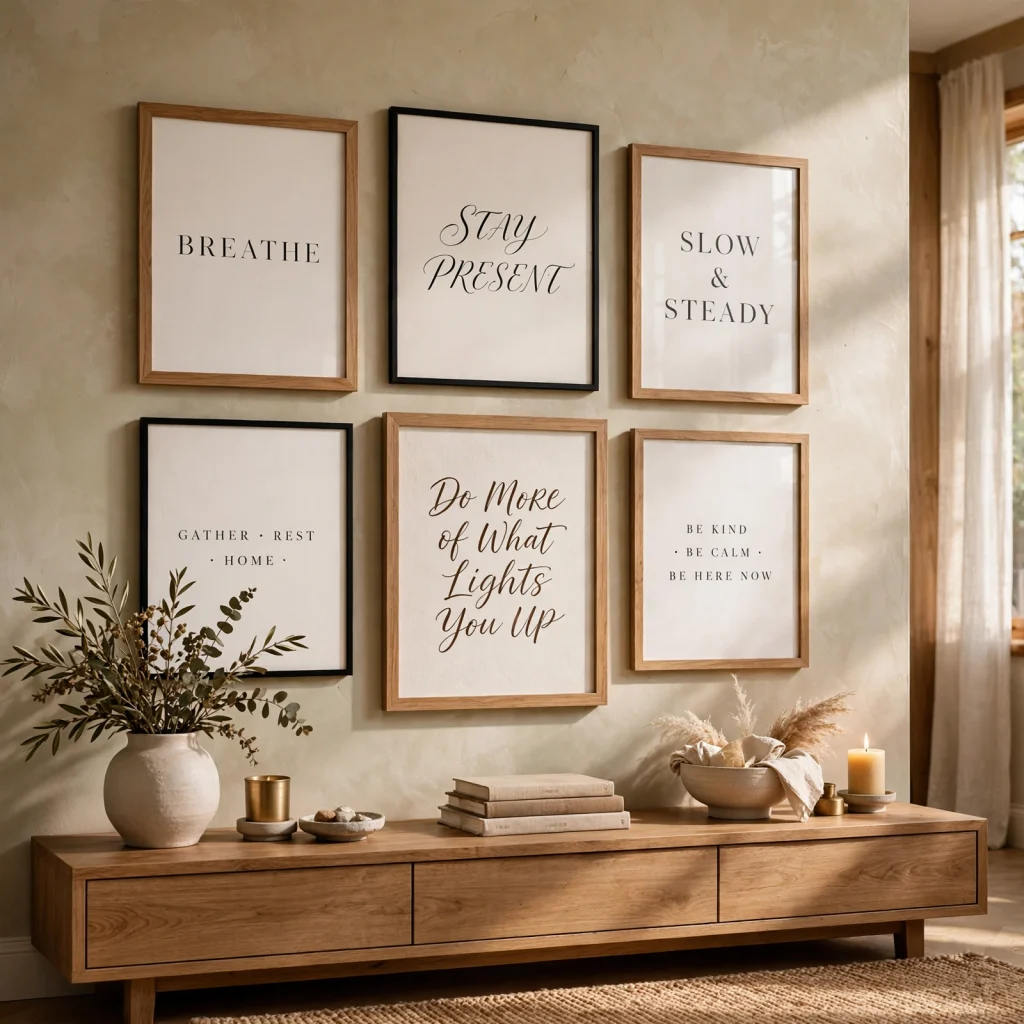
A single framed word or short phrase, rendered in a clean serif or hand-lettered typeface, adds a personal touch to a wall without the visual complexity of a full gallery arrangement. This works well in an entryway or above a bed, where a short, meaningful phrase feels intimate rather than generic. Choose a simple frame and a neutral background so the typography itself remains the focal point, rather than competing with a busy mat or an overly decorative frame.
11. Rattan Wall Panels
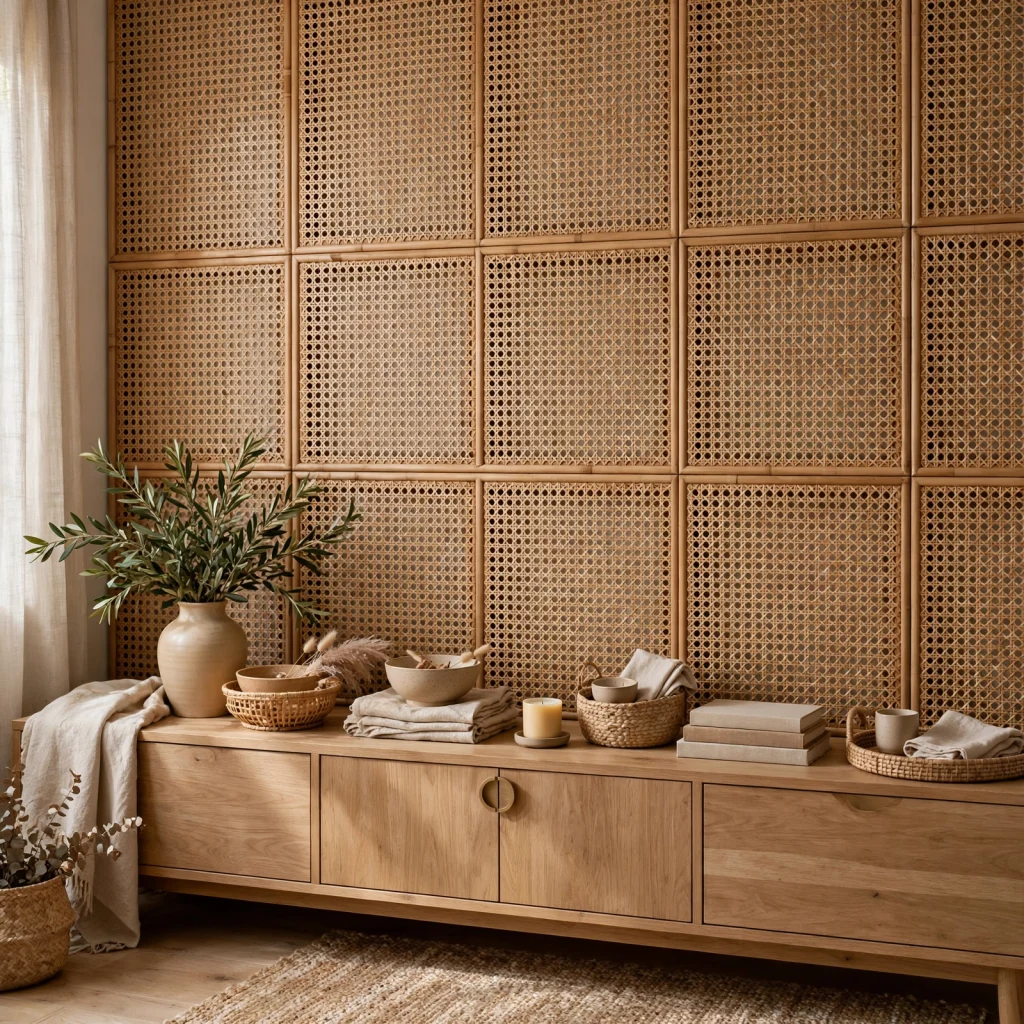
Rattan wall panels, whether a single circular piece or a set arranged in a grid, bring a natural, woven texture to a wall that pairs particularly well with a room already leaning into organic materials like linen and light wood. This treatment works as a lighter-weight alternative to a full accent wall of wallpaper or paint, since the panels can be removed easily without damaging the wall underneath. Hang a cluster of three to five panels in varying sizes for a more dynamic look than a single evenly spaced grid.
12. Oversized Wall Clock
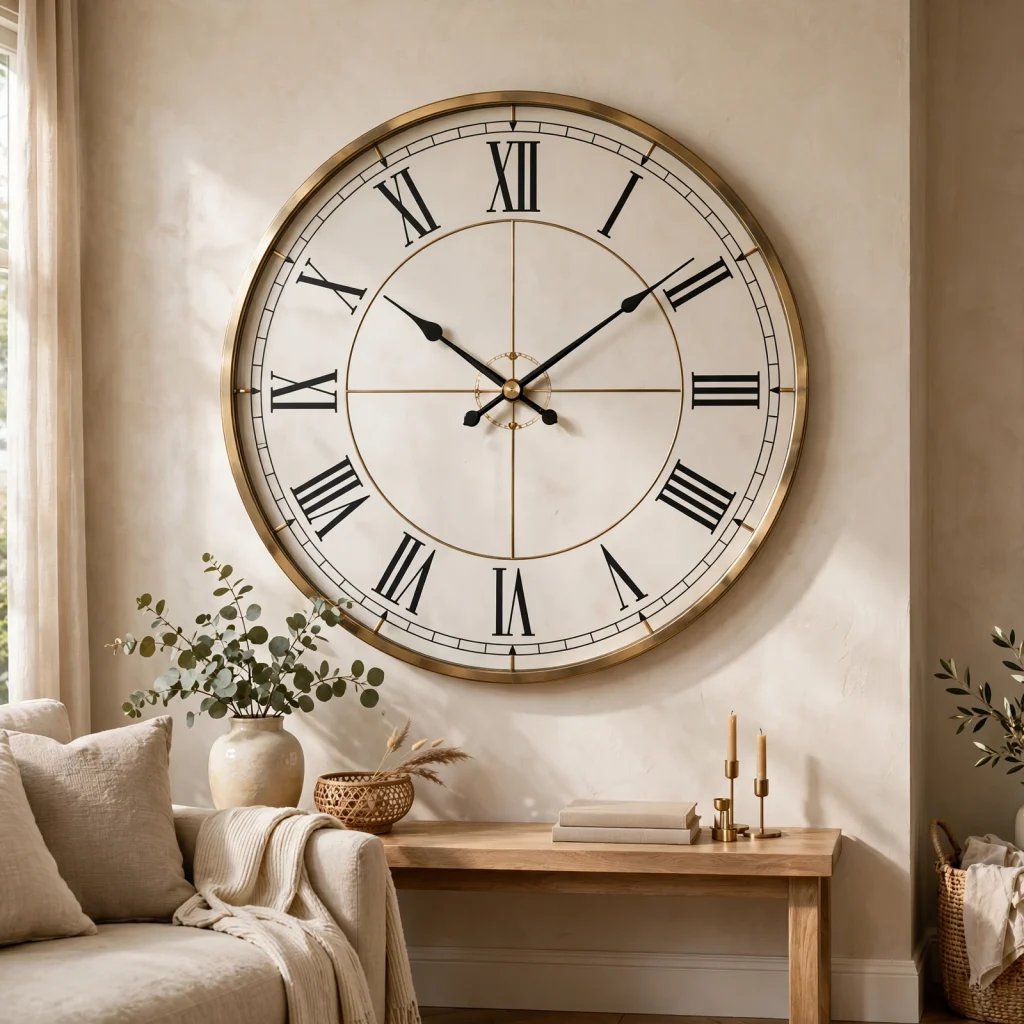
An oversized wall clock functions as a genuine piece of decor rather than a purely functional object, particularly in a black metal or wood frame that reads as sculptural from across the room. This works best as a single statement piece on an otherwise simple wall, such as above a sofa or in a dining room, where its scale gives it enough presence to stand alone. Choose a clock face with minimal numbering or a simple dot-marker design, since an overly busy face can compete with the room’s other decor rather than complementing it.
13. Fabric or Tapestry Panel
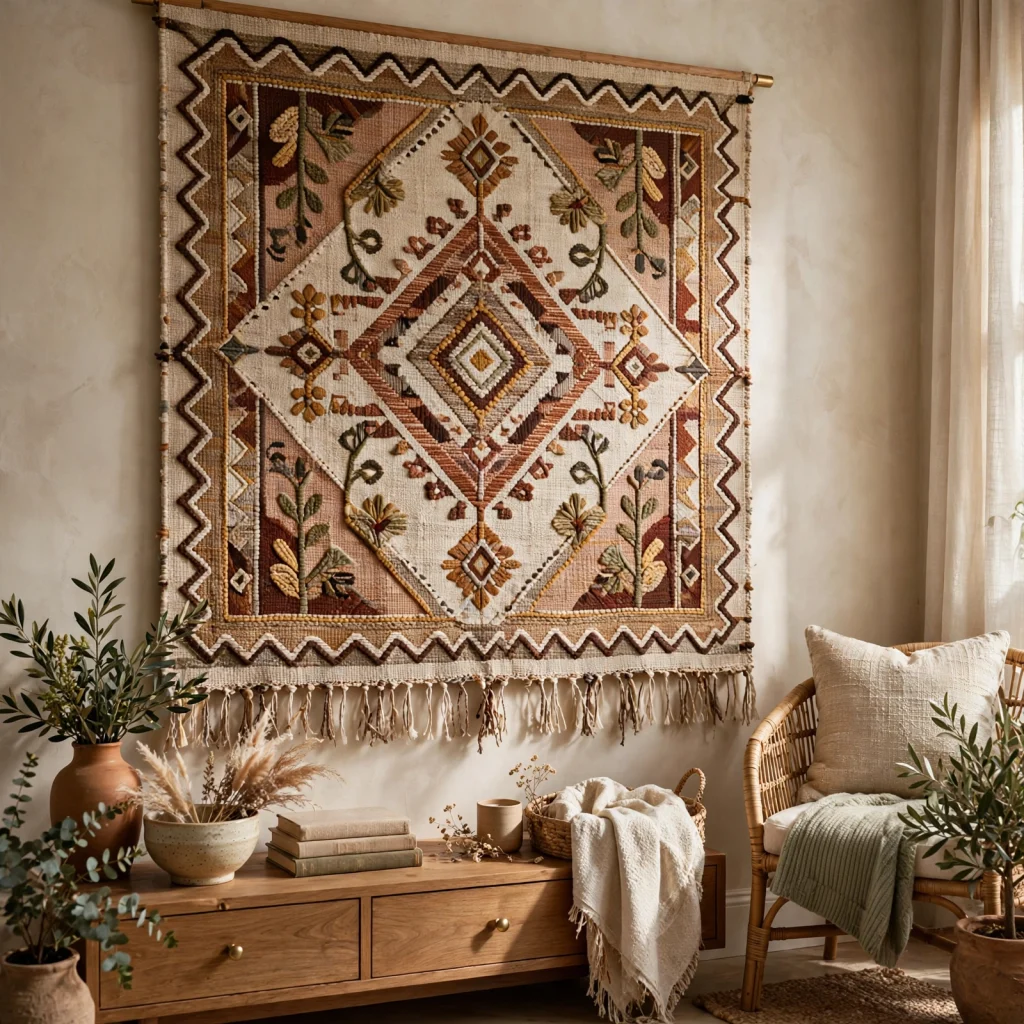
A large fabric panel or tapestry, hung using a simple wood dowel and cord, covers significant wall space with pattern and color at a lower cost than an equivalent piece of framed art. This works particularly well in a bedroom behind a headboard or in a living room as an alternative to a large canvas, especially for renters who want texture without a permanent installation. Choose a substantial cotton or linen weight fabric that hangs with enough structure to avoid looking limp or wrinkled against the wall.
14. Mixed-Media Object Wall
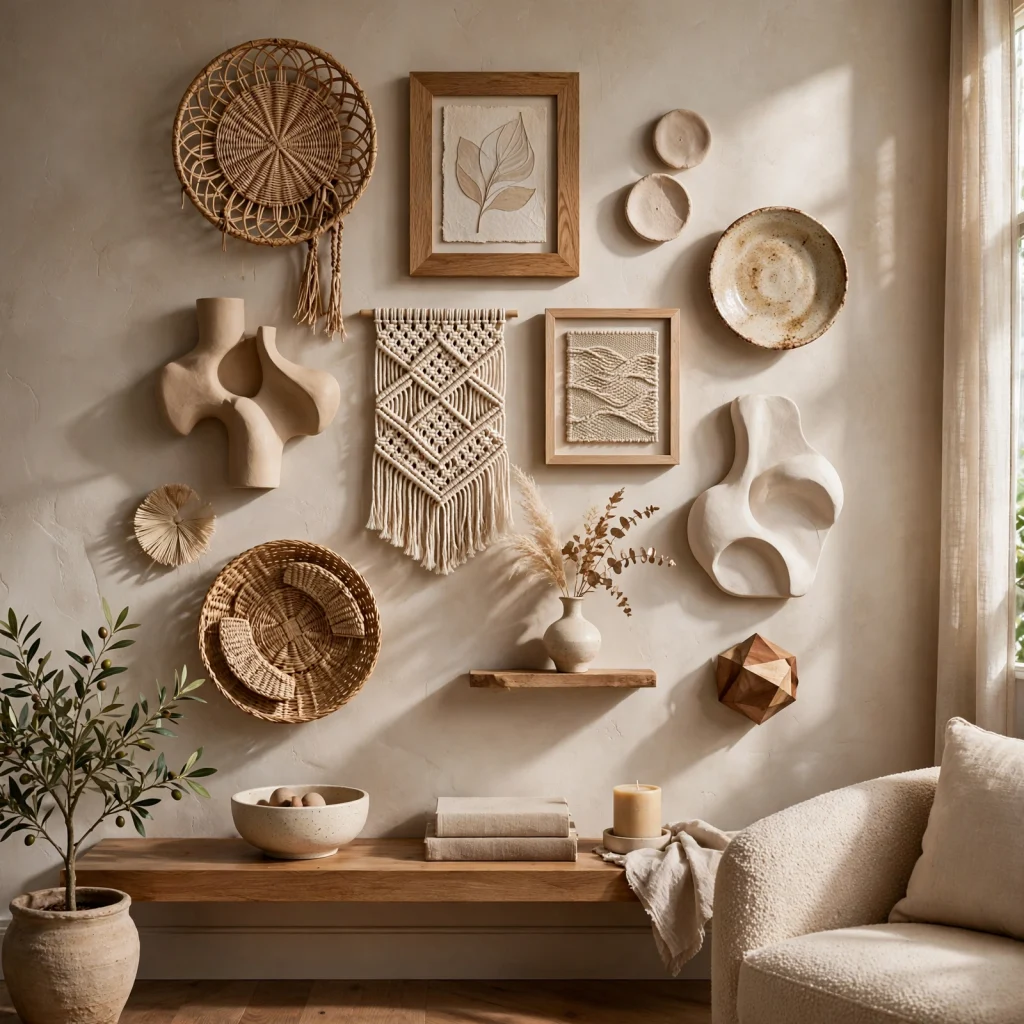
A mixed-media wall combines flat artwork with three-dimensional objects, such as a woven basket, a small shelf, and a framed print, arranged together rather than treating each element separately. This approach adds more visual depth than a flat gallery wall alone, since the varying object depths create actual shadow and dimension rather than a uniform plane. Plan the arrangement with the largest, heaviest objects positioned slightly below eye level, letting smaller and lighter pieces fill in the surrounding space.
15. Framed Mirror Cluster
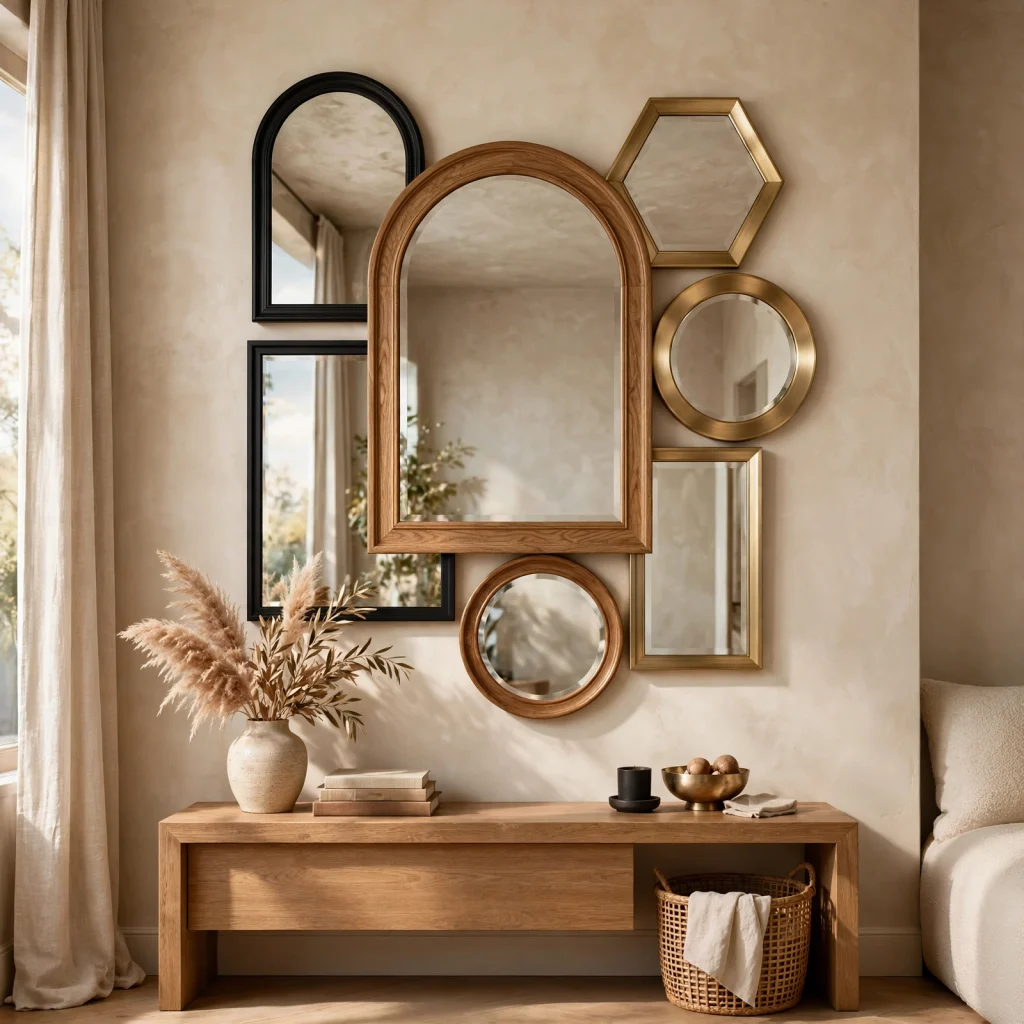
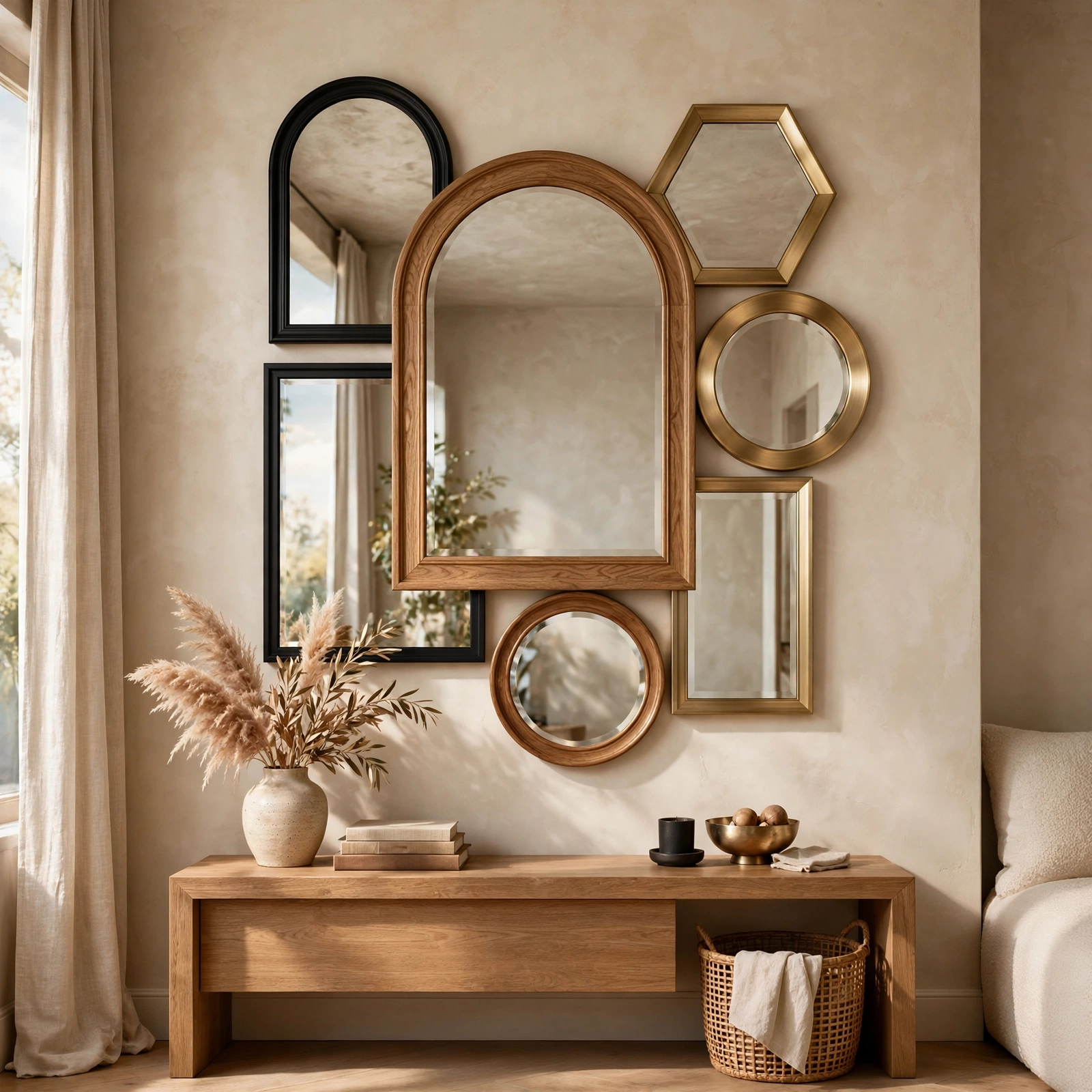
A cluster of small framed mirrors, grouped in varying shapes and sizes similar to a gallery wall layout, multiplies the light-reflecting benefit of a single large mirror while adding more visual texture to the wall. This works well on a narrow hallway wall or above a console table, where a single oversized mirror might feel too heavy for the space. Mix round, oval, and rectangular shapes within the cluster, keeping the frame finishes consistent, such as all brass or all black, so the grouping still reads as intentional.
16. Peel-and-Stick Wallpaper Accent Panel
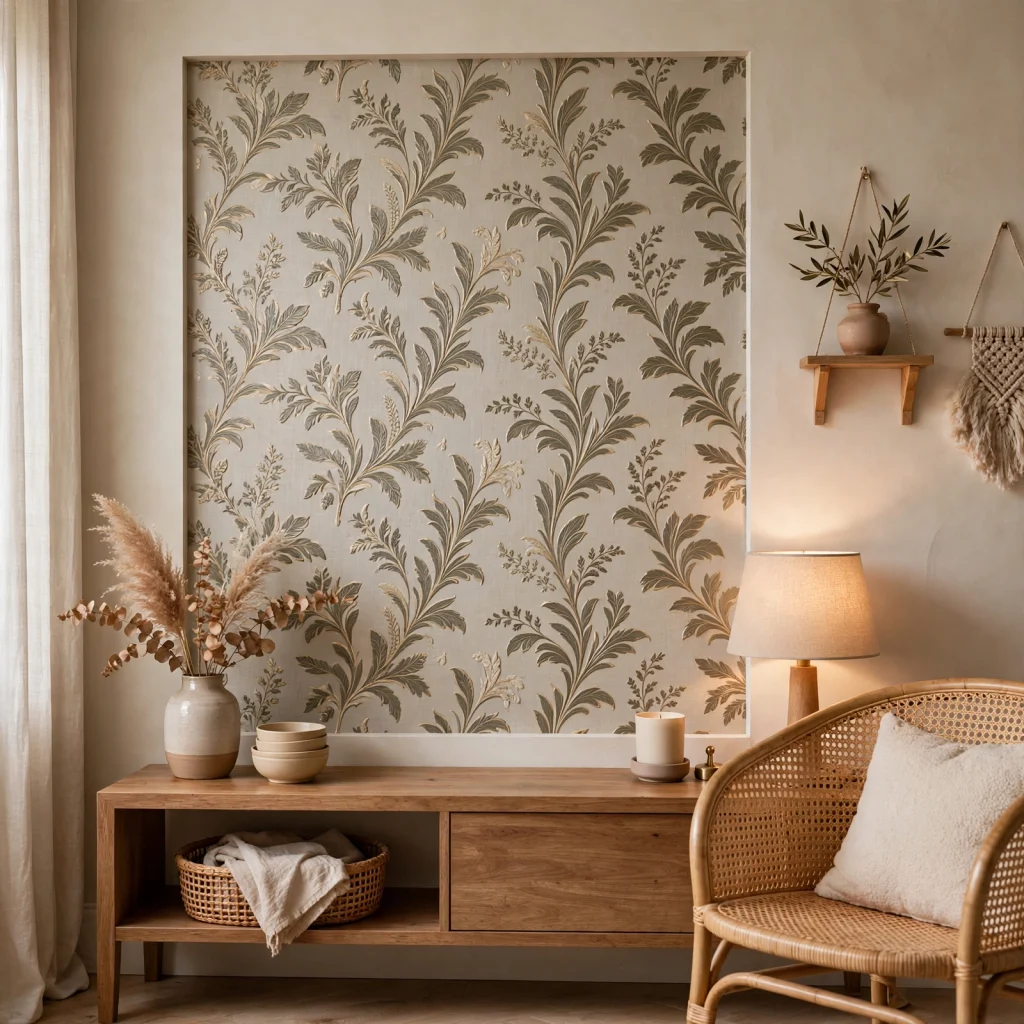
A peel-and-stick wallpaper panel applied to a single defined section of wall, rather than an entire room, delivers pattern and color with minimal commitment and no risk to a rental’s paint. This works particularly well behind a bed’s headboard or within a stairwell landing, where a smaller, contained area benefits from pattern without overwhelming the whole space. Order a sample swatch first to test how the adhesive holds on the specific wall texture, since older plaster surfaces can behave differently than standard drywall.
17. Wall-Mounted Plant Ledge
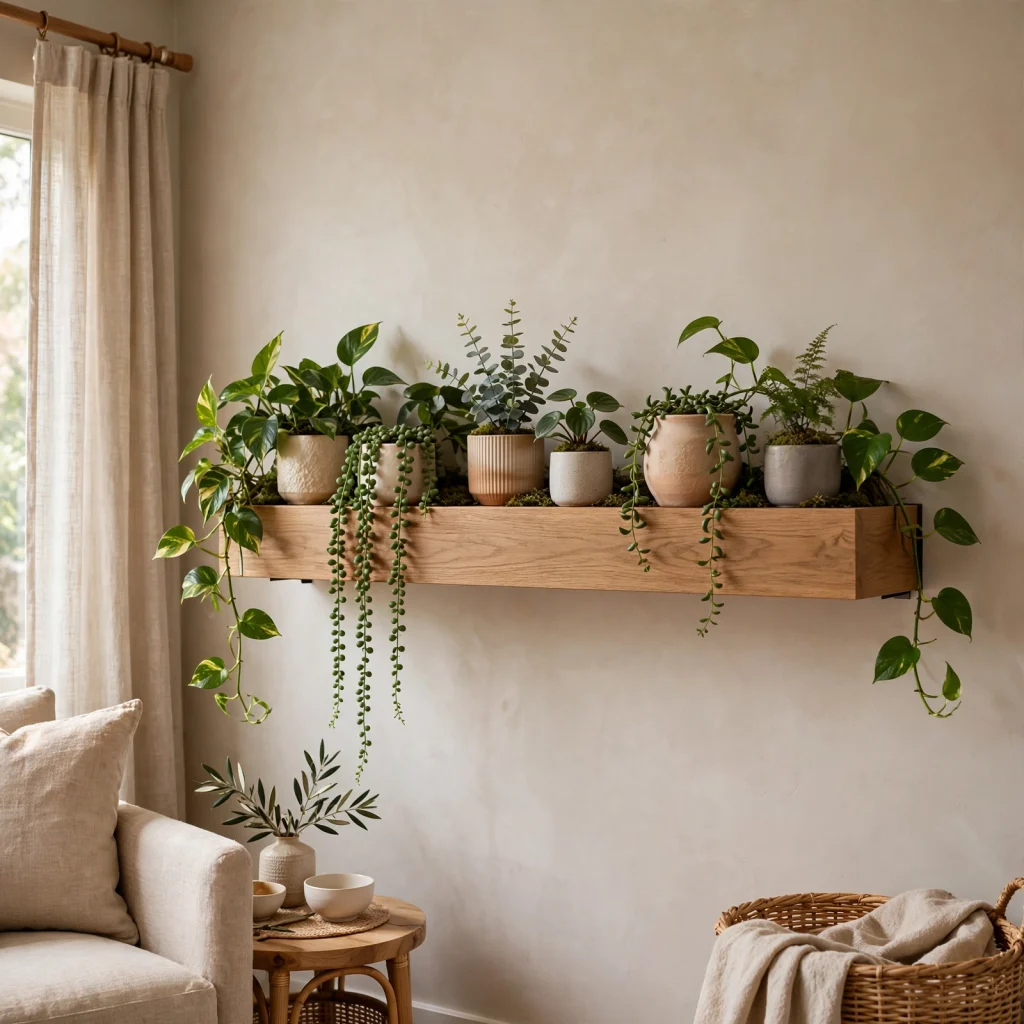
A wall-mounted plant ledge holds a row of small potted plants at a height unreachable by pets, adding greenery to a wall without using any floor or shelf space elsewhere in the room. This works especially well along a stairwell or above a window, where consistent indirect light supports easy-care plants like pothos or succulents. Choose a ledge with a slight lip or rim to prevent pots from sliding, and stagger plant heights along the row for a more layered, natural look.
Shop the Look
An arched sunburst mirror from CB2 delivers the light-bouncing statement piece discussed above, while a set of oak floating picture ledges from IKEA offers flexible, renter-friendly display space. For texture, a handwoven cotton wall hanging from West Elm and a rattan panel set from Anthropologie both add natural dimension. Round out the wall with an oversized black-framed clock from Pottery Barn as a single anchoring focal point.
Common Mistake to Avoid
The most common mistake in home wall decor is hanging artwork too high, a habit often carried over from public spaces like galleries or offices where pieces sit above eye level for a crowd. In a home, the center of a piece should generally fall around 57 to 60 inches from the floor, or roughly 6 to 8 inches above a sofa or headboard, so the art feels connected to the furniture beneath it rather than floating disconnected near the ceiling. Measuring and marking this height before hanging anything prevents the most common wall decor misstep.
FAQs
How do you decorate a large empty wall?
A large empty wall generally calls for either one oversized statement piece, like a large abstract canvas or an oversized mirror, or a full gallery wall arrangement that fills the space with multiple smaller works. The right choice depends on the room’s existing style, since a single bold piece suits a more minimalist space while a gallery wall works better in a room already leaning eclectic or layered. Measuring the wall and planning the arrangement on the floor first helps avoid a final result that feels either too sparse or too cluttered.
What is the best height to hang wall decor?
Most designers recommend centering artwork so its middle point sits between 57 and 60 inches from the floor, which approximates average eye level and applies well to a solo piece on an empty wall. When hanging art above furniture like a sofa or console table, the general rule shifts to roughly 6 to 8 inches above the furniture’s top edge, so the piece feels visually connected rather than floating separately near the ceiling.
How do you hang wall decor without damaging rental walls?
Adhesive picture-hanging strips rated for the frame’s specific weight are the most reliable renter-friendly option, holding securely while removing cleanly from most painted drywall surfaces. Command strips, along with similar adhesive products, work well for frames, small shelves, and even lightweight mirrors, though heavier pieces still require careful weight-rating checks before hanging. Peel-and-stick wallpaper and tension-mounted panels offer additional no-damage options for larger-scale wall treatments beyond individual framed pieces.
What wall decor works well in a small room?
Floating picture ledges, a single oversized mirror, and wall-mounted shelving all add decor to a small room without consuming any floor space, which matters more in tighter square footage than in a larger room. A gallery wall can still work in a small space, but keeping the arrangement to one wall rather than spreading across multiple walls helps avoid visual overload in a compact room. Lighter frame colors and a cohesive palette also help wall decor feel intentional rather than cluttered in limited square footage.
How many pieces should be in a gallery wall?
There’s no fixed number, but most successful gallery walls use somewhere between five and nine pieces, which provides enough variety to feel layered without becoming visually overwhelming. Starting with one larger anchor piece and building outward with progressively smaller frames tends to create better balance than using all similarly sized pieces. Planning the full layout on the floor before hanging anything remains the most reliable way to judge whether the piece count feels right for the wall’s size.
Conclusion
Home wall decor offers far more range than a single centered frame, from a full gallery wall to a woven hanging to an oversized statement mirror, and the right choice depends on your wall’s size, your room’s existing style, and how permanent a change you’re ready to make. These seventeen ideas give you a flexible starting point for filling any blank wall with intention. Save this post to Pinterest for later, and check out our related guide on living room designs for small spaces for more room-by-room styling ideas.
Author Expertise Note
This guide draws on personally hanging and rehanging more than a dozen gallery wall arrangements across four different homes, including the trial and error of getting spacing and height right without a single extra nail hole.